All posts by Jasmine Fellows

How can universities build trust in science?

Previous issues of Australian University Science magazine have emphasised the role of university science in creating knowledge and innovative solutions. A key challenge for the future will be fostering genuine, evidence-based dialogue about the pressing issues confronting our world.

There are no clear answers for how Australia should best navigate climate change, artificial intelligence and our myriad other challenges – but data alone doesn’t build the trust needed to change minds and hearts. Our universities must rethink how science is communicated, who gets to speak and who is heard.

“Public trust in science is essential for empowering our communities and governments to make evidence-based decisions, to ensure the outcomes of scientific research are accepted and embraced by end-users, and to foster the social license of scientists to operate in public institutions,” says Melissa Brown, executive dean of the Faculty of Science at the University of Queensland and immediate past president of the ACDS.

For this purpose, trust in science remains “moderately high” globally, according to a study published in Nature Human Behaviour last year.“

Whilst it was good to see that globally, and particularly in Australia, trust in scientists is moderately high [3.6 globally, 3.9 Australia, on a 5 point scale], this also suggests that there is room for improvement,” says Brown.

Professor Joan Leach, Deputy Vice Chancellor at the Australian National University (ANU) and past director of the Centre for Public Awareness of Science, believes democratising the way we communicate science can be part of the solution.

This approach allows information to flow freely and fairly, encouraging participation from all voices and perspectives. While industry voices are important, Leach says balancing that with a strong government-funded R&D sector is vital.

“People follow the money,” she explains. “If what people see is industries calling the shots because they’re paying the dollar, then we have a problem.“

We’re still very much in ‘telling people about science’ mode. We need to flip that and ask people instead. If you listen to people, they also want research on the environment… and new forms of energy,” Leach says. “People are quite engaged.”

Not about us without us

If listening is key to building trust and moving forward together, who should we be listening to? The diversity of voices at the table is vital. We need to move past a “business as usual” Western science mindset.

In Aotearoa New Zealand, Mātauranga Māori knowledge systems are core to every science degree at the University of Waikato.

Professor Margaret Barbour, Dean Te Aka Mātuatua – School of Science, says co-learning develops students’ ability to think critically and embrace multiple points of view.

“Being creative in the way we’re asking questions, and the kind of questions we’re asking, is always going to expand our knowledge system for the better,” Barbour says.

In Australia, similar lessons are being learned, with universities recognising the need to listen and learn from Indigenous ecological, astronomical, and medicinal perspectives.

The ANU, Macquarie University, UniSA and Murdoch University, for example, offer co-designed units in Indigenous Science. The ACDS has also helped to develop a suite of resources to improve the cultural competency of Australia’s educators. These are all steps towards encouraging participation from a range of people and perspectives.

What’s next?

University science has the opportunity to listen and learn from a broad range of different views to build trust, even beyond the addition of Indigenous perspectives.

There are many ways this may play out. “It’s okay to hold more than one knowledge system in your head at one time,” Barbour says. “We need to be able to say: ‘You will be listened to. Your response and your point of view is important, and we’ll be taking that forward together’.”

Writers: Cristy Burne and Jasmine Fellows

First published in Australian University Science Issue 14

Image: Supplied, Takver from Australia, CC BY-SA 2.0
30 years of championing Australian university science

Image: Supplied

Welcome to Issue 13 of Australian University Science magazine, celebrating 30 years of the Australian Council of Deans of Science! Over this time, scientific discoveries have generated new knowledge and significantly impacted our society and our environment. This issue outlines many inspiring examples of how Australian university science has contributed to these outcomes.

In contemplating these developments, I reflected on my own scientific journey. As an Australian postdoc in London in 1995, I was part of a large team of scientists studying one of the genes responsible for inherited breast cancer. This was such an exciting time as discoveries about DNA and genes, along with technologies for isolating and analysing genes, were unravelling the origins of multiple human diseases, including Huntington’s disease, muscular dystrophy and cancer.

In the subsequent two decades, these discoveries seeded the establishment and growth of multidisciplinary consortiums, biobanks and genetic databases, and thriving biotechnology industries in Australia and overseas. These organisations, resources and industries translated discoveries and developed critical technologies, leading to the wide availability of diagnostics that can predict the risk of genetic disease, detect infectious agents, recommend effective treatments, enable reproduction, enhance agriculture, and support forensic analysis.

Today, university science is driving remarkable achievements in health, environment, energy, communication, education and sustainability at an astonishing pace, with discovery research, technology development and education in universities continuing to be at the heart of every success story.

As we celebrate this milestone, I extend my gratitude to all contributors to this issue, especially Ian Chubb for writing the Foreword. I hope you enjoy reading the stories and I look forward to seeing you at one of our celebratory events during the year!

Written by Professor Melissa Brown, University of Queensland
President, Australian Council of Deans of Science

The engine of progress: science in Australian universities

Image: Supplied

Science in Australian universities has been a steady engine of progress for as long as I can remember – a place where curiosity meets impact, churning out both groundbreaking research and the sharp minds we need for the future. I’ve had a front-row seat to its evolution over the past 30 years, and it’s been a remarkable journey.

Back in the day, teaching and research were funded as one; now, they’re split into distinct streams, pushing universities to chase grants and forge industry ties. Universities have also leaned into partnerships, establishing research hubs that blend academic rigour with industry needs, targeting areas like sustainability, health, and technology – proof of how universities are stepping up to solve big problems. Pursuing global research ambitions isn’t cheap, but the rewards are clear: research output has skyrocketed, and Australian science consistently punches above its weight.

One feature in the latest issue of Australian University Science (Issue 13) that celebrates 30 years of the Australian Council of Deans of Science (ACDS), ‘The rise of big data in science’ (page 10), captures one of the brightest threads in that story. It unpacks how massive datasets are reshaping university research – powering climate models, sharpening agricultural practices with geospatial data, and leaning on maths breakthroughs that birthed AI.

It’s a vivid example of how university science doesn’t just ponder the world; it changes it. I love how it ties back to why this all matters: fundamental research paired with graduates who can think critically and adapt.

Since 1995, when John Rice (Flinders University) kicked off the ACDS, the Council has been a tireless voice – pushing for quality teaching through initiatives like the Science Threshold Learning Outcomes and advocating for research that matters. It’s helped ensure our science graduates aren’t just job-ready but future-ready.

In a shaky geopolitical climate its work fostering collaboration across universities, government, and industry feels more crucial than ever. The challenges are real, but the successes keep this engine of progress humming – that’s why it’s vital the ACDS keep roaring towards their next milestone.

Written by Professor Ian Chubb AC, FAA FTSE FACE FRSN

First published in Australian University Science, Issue 13

The business of universities

Image: Supplied

This opinion piece was written by Professor Aidan Byrne. Professor Byrne’s former roles range from Dean of Science at the Australian National University to ACDS Executive Member, CEO of the Australian Research Council to Provost at the University of Queensland. This has given him a broad view of the changes across the university sector in recent decades.

Australian universities have undergone a profound transformation over the past 30 years. Many of our major universities are in the top 200 globally, which is extraordinary for a country of just 27 million people. This transformation has been driven by Australian universities realising that they have a valuable commodity: the international student, and the capability of delivering quality education.

The shift in student revenue has forced universities to be more like businesses, reshaping not only funding structures but also institutional priorities. Most of the big universities now have a bigger revenue stream outside of what the government gives them, and it’s given them a degree of independence.

Universities have grown into multibillion dollar institutions, with thousands of people within them. They’re straddling the line between public institutions and corporate entities. Compliance demands have grown, and institutions face criticism over issues like vice chancellors’ salaries, which are higher than the public service but much lower than the commercial world of a business of the same scale.

The new revenue streams have enabled a significant investment in research and the development of research-focused institutes within the university. It’s allowed universities to grow to the point where they’re now doing almost 80% of Australia’s public sector research.

The University of Queensland provides an excellent example where, seeded by philanthropic money and government support, the institution was able to build a number of focused institutes. It completely transformed the ranking of this university on the world stage. That focus on research, sustained largely on the back of international student revenue, has provided a tremendous boost to research capability.

The increase in international student numbers and the increased research intensity in these institutions has provided a challenge to the traditional academic employment model. In particular, the discipline profile of teaching the extra load is not the same profile as the research intensive areas.

As a consequence, the old “40/40/20” profile of an academic where there was an expectation of 40% of one’s time spent on teaching and 40% on research is no longer able to be sustained for the majority of the academic workforce. A solution, which is non-optimal was to create research only positions, which have no particular pathway to continuing appointment, and to create a casual teaching workforce where job security is even more tenuous. While many institutions are moving to provide greater security of employment for teaching staff, the discipline mismatch remains an ongoing problem.

Universities are similarly challenged by the concept of academic tenure which makes it extremely difficult for universities to change the academic profile in either the teaching or research domains! The situation is not parallel to the public service wherein staff can be redeployed much more readily.

The government and the community don’t fully appreciate these changes in the university environment, or indeed the value of universities to Australia. They still believe that universities must be public institutions completely beholden to what the government might want to do, but the harsh truth is that they are much more complex. Debates are looming over cuts and caps on the international student market. So it’s crucial that the government – and the public – recognise this positive story of how international students have shaped Australian higher education and research over the past 30 years.

Written by Professor Aidan Byrne, Emeritus Professor, School of Mathematics and Physics, University of Queensland

First published in Australian University Science, Issue 13

The evolution of the ACDS

Image: ESO

The ACDS has been supporting science teaching and research in Australian universities for 30 years. Over this time, the ACDS has advocated for the development and recognition of excellent teaching, for the importance of fundamental research, for better funding in science, and for support for leadership in university science.

We acknowledge the many wonderful Deans, Associate Deans and other people who have helped make the ACDS the voice of university science. Read on to discover a selection of ACDS milestones and achievements, plus key scientific achievements driven by Australian universities.

Explore the timeline in full by reading Australian University Science magazine, Issue 13.

PRE-1995

Various Deans of Science meet as an informal network

1995

ACDS first meets as a constituted organisation, John Rice (Flinders) was the first President

1995

ACDS annual conferences commence, with Deans of Science from all universities invited to join

1998

Accelerating expansion of the universe discovered (Brian Schmidt, ANU)

2001

ACDS commissions its first report: ‘Employment outcomes for science degree holders’

2003

Establishment (first funding) of ARC Centres of Excellence and Federation Fellowships

2004

Establishment of the Australian Learning and Teaching Council (with grants and awards for enhancing the quality of learning and teaching in universities)

2005

ACDS report: ‘Who’s teaching science: meeting the demands for qualified science teachers in Australian secondary schools’

2006

Cervical cancer vaccine approved (Ian Frazer, UQ, Gardasil)

2007

Australian Synchrotron opens, with ANSTO

2008

ACDS appoints its first Executive Director (John Rice) to provide support for the operation and impact of the Council

2008

Associate Deans of Teaching & Learning in Science start meeting at an annual forum

2008

The Bradley Review of higher education recommends significant reforms to funding, regulation and participation

2010

ACDS oversees the Australian Learning and Teaching Council (ALTC) project to establish national Threshold Learning Outcomes (TLOs) for Science degrees (project led by Susan Jones and Brian Yates)

2011

Tertiary Education Quality and Standards Agency established

2012

First quantum bit creation (UNSW)

2012

ACDS report: ‘A background in science: what science means for Australian society’

2012

John Rice (ACDS) appointed to support the science networks and projects funded by the national Office for Learning and Teaching (OLT)

2013

ACDS Teaching & Learning Centre established, Elizabeth Johnson appointed as inaugural Director, various projects in T&L innovation established

2016

ACDS takes over responsibility for the annual Australian Conference on Science and Maths Education (ACSME) (pioneered by Manju Sharma, Stephanie Beams and others)

2017

Associate Deans of Research in Science start meeting at an annual forum

2017

ACDS funds annual projects focused on sector-wide innovations in T&L

2018

Launch of ACDS magazine ‘Australian University Science

2019

ACDS Teaching Fellowships established

2019

ACDS Indigenous science resources project established

2020

ACDS online resource repository to support teaching and learning established

2020

ACDS Deans of Science mentoring program established

2021

ACDS Teaching & Learning grants established

2021

Launch of ACDS Indigenous Science website and community of practice

2021

ACDS–ANSTO Graduate Innovation Forum showcases graduate research to industry

2023

Most distant fast radio burst discovered (Elaine Sadler, University of Sydney)

2023

ACDS formalises commitment to equity, diversity and inclusion via a national policy statement of principles and guidelines

2023

ACDS becomes an incorporated body

2024

ACDS continues its active program including forums, webinars, newsletters, position papers and submissions to government

2024

Australian Universities Accord recommends the reintroduction of the Tertiary Education Commission and close engagement between universities and TAFE

2025

Celebrating 30 years of the ACDS

First published in Australian University Science, Issue 13

30 years of revolution in university science education

Image: Shutterstock

Photo of Merlin Crossley
Professor Merlin Crossley. Credit: Supplied.

It’s called the “sage on a stage”: an expert dispenses information to a hall full of students, who, in theory, listen attentively and take notes. It’s a style of university education that hadn’t changed in centuries. That is until the past 30 years, during which a “revolution” has occurred in Australian university science education, according to Merlin Crossley, deputy vice chancellor of academic quality at UNSW.

COVID had a lot to do with it. The “temporary” shift to online learning never quite went away. The growing diversity of students also nudged university science departments to look at their practices. Where once Australian university students tended to be middle- and upper-class school-leavers, the past 30 years has seen them diversify. There are more mature-aged students, students from different economic, educational, linguistic and cultural backgrounds, and overseas students.

Setting the standard

Professor Elizabeth Johnson, Deakin University. Credit: Supplied.

The changing nature of university science education is not new. In the late 2000s, the Australian Council of Deans of Science established its Teaching and Learning Centre (T&L Centre) to support and drive innovation in university teaching and learning and recognise excellence in education. Amongst its successes was the development of Science Threshold Learning Outcomes (TLOs), first released in 2011.

Brian Yates, emeritus professor, University of Tasmania. Credit: Supplied.

Professor Elizabeth Johnson (Deakin University) was the inaugural director of the ACDS T&L Centre and says the TLOs are the result of one of the largest consultations across Australia on the university science curriculum, developed with teachers, researchers, university leaders, industry and students. “They set the standard for what a science graduate ‘should know and be able to do’,” she says.

Brian Yates, an emeritus professor at the University of Tasmania and ACDS Immediate Past President, was also involved in the development of the Science TLOs. He says that they have been widely adopted across Australia, if not to the letter, certainly to the spirit of the guidelines. They emphasise skills such as understanding the scientific method, critical thinking, science communication and learning how to be self-directed learners.

Student-centered approaches

Photo of Susan Rowland
Susan Roland, vice provost, University of Sydney. Credit: Supplied.

But even before the TLOs, university science education was changing. Where once, students were expected to steer themselves through their university days, students began to demand an approach based on pedagogical evidence, says Susan Rowland, vice provost at the University of Sydney. While the sage on a stage will never be abolished entirely, “there is a more significant expectation of professionalism”.

Many universities now encourage selected academics to be the pace-setters for their more research-centric peers, investigating new learning practices and sharing them with their colleagues. “These are people who are valuable as leaders of the culture around teaching,” she says.

UNSW Dean of Science, Professor Sven Rogge agrees. “The backbone of a great university education is an academic who is both pushing the boundaries of research on the international stage and deeply committed to engaging, high-quality teaching. But what’s often overlooked is the transformative role of education-focused staff – experts in student-centered, modern learning who inspire innovation and lift the entire teaching culture. Through peer leadership and collaboration, they help bring the latest thinking in pedagogy into the lecture theatre, ensuring our students get the very best of both worlds.”

Photo of Sven Rogge
Professor Sven Rogge, UNSW. Credit: Supplied.

New teaching methods are essential in the post-COVID world, where students have voted with their feet and in-person attendance at universities has dramatically declined. But the change has given rise to new, more interactive ways of learning. Short bite-sized videos are a favourite new format for students, perhaps because it reflects their social media worlds. And Rowland says that online lectures can be extremely interactive via the chat channels, allowing students to support each other, debate each other and test ideas with each other in real time – something they could never do in a packed lecture theatre.

Another significant shift in the past 30 years is not just about teaching style, but content. Where more vocational degrees, such as law and engineering, have long encouraged industry to provide practical experience to students, it’s a concept that science has also begun to embrace more enthusiastically in recent years. “It’s a recognition that most graduates from a science degree don’t go into research,” says Yates. Instead, programs are being developed to bring industry into the lecture theatre, and to send students into the labs of industry.

Looking to the future, Yates predicts the introduction of more Indigenous learning systems in science degrees. In December 2024, the ACDS released a guide to including Indigenous knowledge and knowledge systems into tertiary science education.

AI as a trusted learning companion

Rowland sees AI becoming a trusted learning companion for future students. An AI chatbot might be able to ask a student about their understanding of a topic, and then ask them to reflect on where they got the information or how they made a decision. Such conversations with a bot are low stakes for the student – there’s no embarrassment of getting something wrong in front of the entire class – but Rowland says that being asked to think about their methods of learning builds a useful long-term “habit of reflecting and habit of self-assessment”.

Into the future

The release of the Australian Universities Accord in February 2024 will continue to push universities further down the path of professionalised and work-integrated tertiary science education, says Yates. For universities that offer science degrees, the Accord will provide a framework for a more coordinated response to the needs of the nation. It will ensure Australia’s science graduates are equipped with the vital skills needed to shape the future.

Written by Sara Phillips

First published in Australian University Science, Issue 13

Research rewired: how strategic collaboration is changing university science

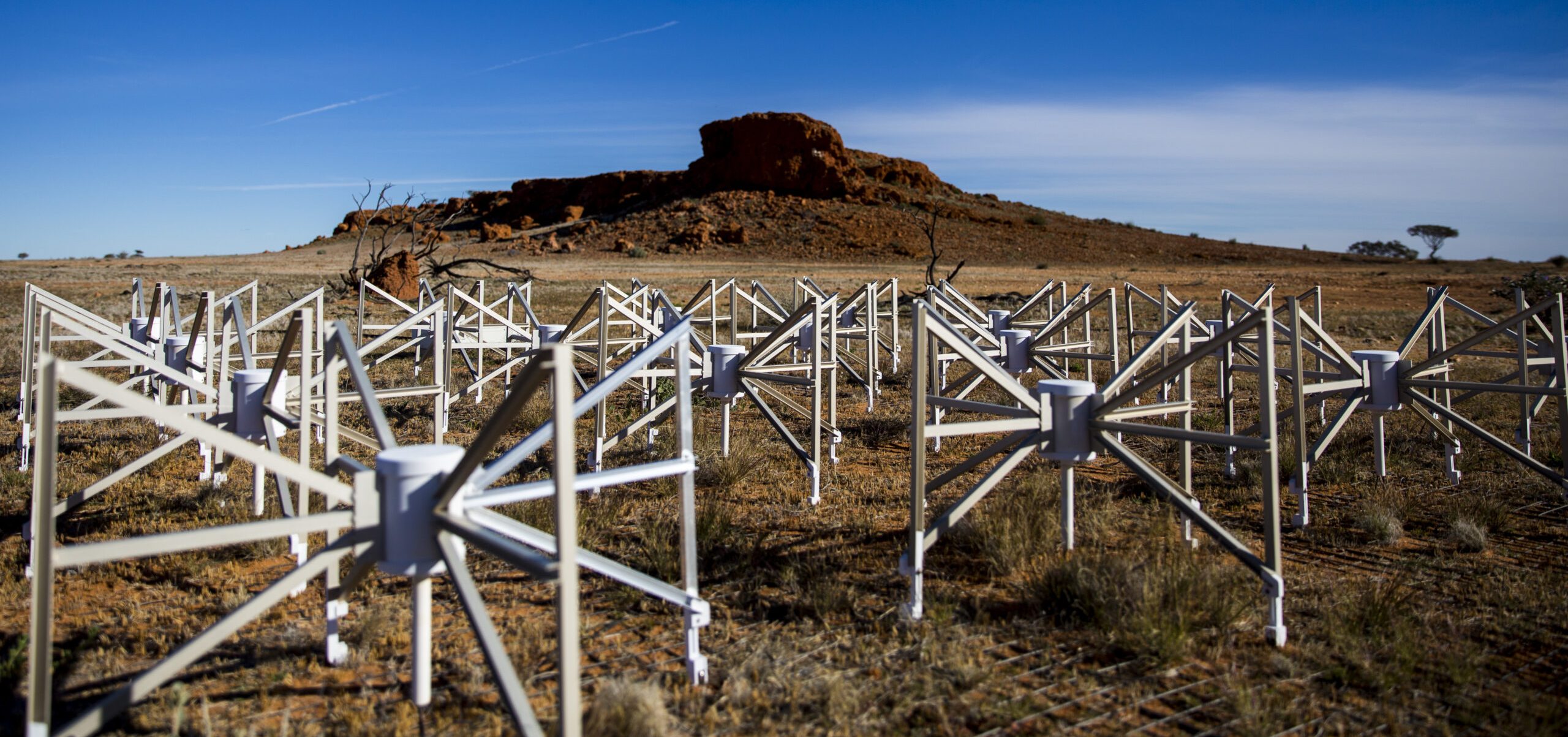
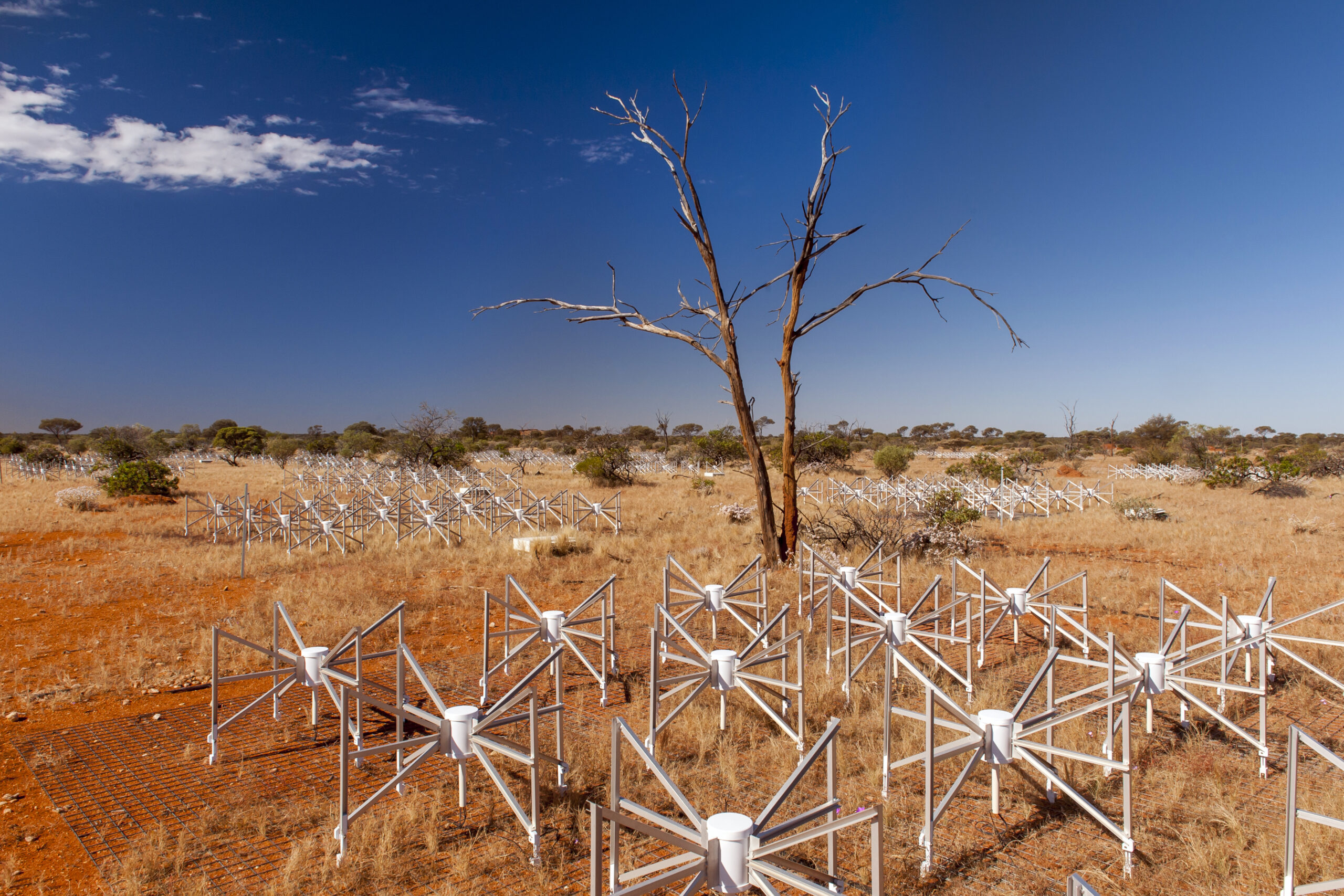
Image: The Murchison Widefield Array, a project of the International Centre for Radio Astronomy Research. Credit: ICRAR/Curtin.

Scientists love the possibilities of a big shiny new instrument. But unfortunately many scientific tools come with a hefty price tag. These are no ordinary tools after all, they are at the extreme of what engineering can produce. That’s why Australian universities have embraced the concept of sharing.

All across Australia, universities buy or barter time in shared facilities in order to do their research. And the philosophy of sharing can pay dividends.

Where a single university might not have the funds to build, maintain and upgrade a high-tech instrument, a shared facility can offer certainty for long-term research.

Scientists can benefit from the expertise of the operators as they take their experimental proposals to them. Experts in microscopy or telemetry, for example, can work with researchers to refine a research proposal using their intimate knowledge of the instrument.

Accessing a shared machine can also bring about serendipitous collaboration with other research groups using the same facility and can increase industry – university collaboration.

Here are three case studies where universities are reaping the benefits of shared infrastructure.

Unlocking the universe

In the red sands of outback Western Australia, huge spider-like metallic instruments stand ready to receive radio waves from outer space. This is the Murchison Widefield Array, a project of the International Centre for Radio Astronomy Research (ICRAR). It is a joint venture between Curtin University and the University of Western Australia (UWA), with funding from the state government, and a key partner in the forthcoming multinational Square Kilometre Array (SKA).

The Murchison Widefield Array is a radio telescope that includes 4,096 spider-like antennas. Credit: Marianne Annereau, 2015.

ICRAR was established in 2009 to support Australia’s bid for the world’s largest telescope, the SKA. The bid was successful and WA is reaping the benefits, supporting more than 250 astronomers, researchers, engineers and data experts.

Steven Tingay (Curtin University), deputy executive director of ICRAR, says that tuning into the radio waves of the universe can teach us fundamental things about where atoms and energy came from. “The universe is the biggest physics laboratory that one can imagine,” he says. ICRAR is particularly interested in working out what happened in the 300,000 years after the Big Bang.

The collaborative nature of ICRAR’s existence extends to its research. “Virtually everything that we do has collaboration from multiple Australian universities, CSIRO, and then internationally,” he says.

Professor Simon Ellingsen (UWA), ICRAR executive director and ACDS executive member, agrees that collaboration is key. “ICRAR has a clear goal – to play a crucial role in the international SKA project by attracting leading experts in multiwavelength astronomy, astrophysics, engineering and data-intensive astronomy.”

The benefits of global collaboration are particularly relevant for radioastronomy according to the ICRAR directors.

Other telescopes worldwide can add little pieces to the overall puzzle of what happened after the Big Bang, allowing Australian universities to be at the forefront of cutting-edge physics.

A source of light

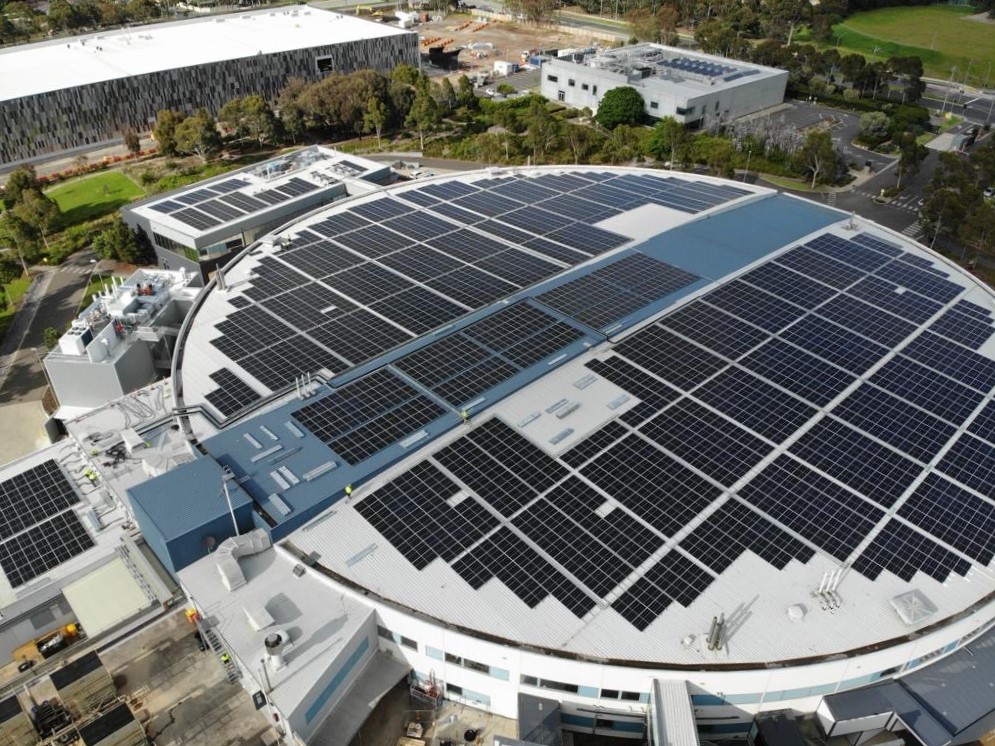
Across the road from Monash University in Clayton, in the suburban sprawl of Melbourne, is an enormous, solar-panel festooned bunker. This is the Australian Synchrotron, operated by ANSTO.

The Australian Synchrotron, operated by ANSTO. Credit: ANSTO.

When synchrotron science took off in the late 1970s, Australian researchers were using overseas facilities. In following decades, organisations including the Australian Academy of Science and the Australian Science and Technology Council recognised the need for a national facility.

It took many years of proposals and several funding partners – including the involvement of several universities – to get a project of this scale off the ground. By 2007 the Australian Synchrotron was up and running for experiments.

In effect, it is a very high-tech X-ray machine, in the sense that it uses light to peer beneath the skin of samples and reveal the internal structure. Time with the ‘beamline’ is allocated on the strength of research proposals and every year, Australian universities, industry and a few international universities compete to access the machine.

The light source has been instrumental in applications such as drug discovery, investigating the COVID virus and in the development of flexible electronics.

“It lets us do things that you can’t imagine doing in a laboratory,” says director and professor Michael James.

Co-locating the synchrotron near Monash has created a research ecosystem in outer Melbourne.

Compared with a similar Canadian facility located far from research centres, “we’re much, much more productive than the Canadian light source.”

Searching via supercomputer

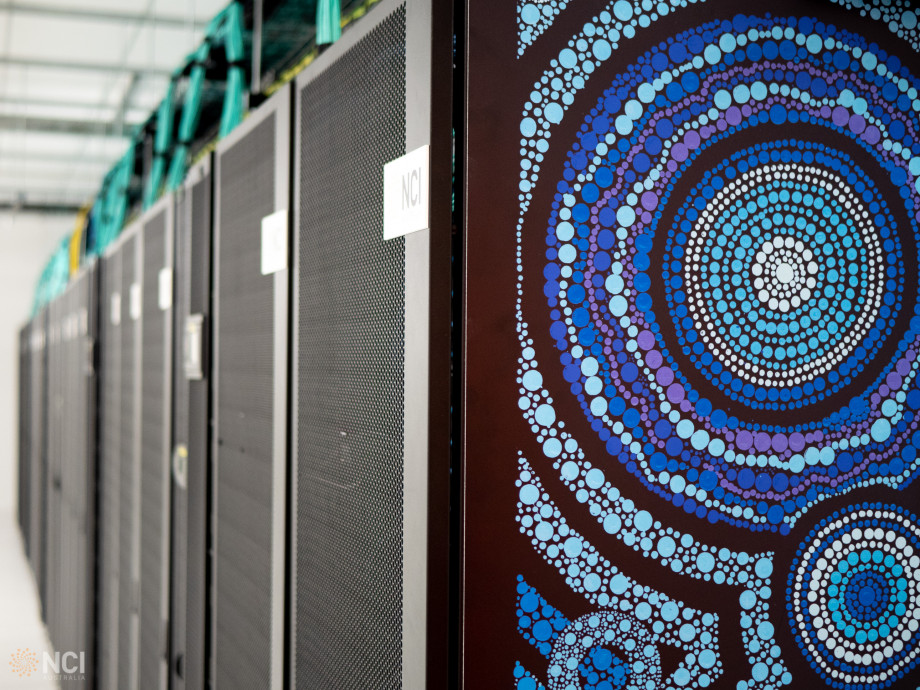
Tucked away in a corner of the Australian National University (ANU) is the National Computer Infrastructure (NCI). It draws a staggering 2 megawatts of power to run its 5,000-node supercomputer, named Gadi, meaning “to search” in the language of the local Ngunnawal people. If an Australian university has a big computing job to do, then Gadi is where they turn.

The National Computer Infrastructure’s supercomputer, Gadi. Credit: NCI.

Lindsay Botten, emeritus professor at the ANU was the NCI’s first director and the architect of its collaborative approach to computing. It was late 2008 and he’d come to NCI fresh from writing a successful grant application for a supercomputer in Sydney. Rather than building their own facility, he asked the NSW team whether they would consider sharing the NCI machine. It made financial and logistical sense and so NCI’s role in being the computational support for Australian university research began.

Rather than bidding for time on the computer for individual projects, Botten established a kind of time-share system, where partners were allocated time according to their financial contribution. They could use this time for whatever research they deemed important. The computer has contributed to research across fields such as climate modelling, cancer research, star formation and artificial intelligence.

Written by Sara Phillips

First published in Australian University Science, Issue 13

The rise of big data in science

Image: Shutterstock

Our growing ability to combine, share and make sense of large and complex datasets is opening the door to huge new opportunities for Australia and the world. Big data is powering climate and weather models, and leading to more sustainable farming with improved yields.

These two examples are just a tantalising glimpse of the possibilities. There are still plenty more big data applications to discover. At the same time, mathematicians are working hard to reduce the energy use of this power hungry beast.

Messy weather

Associate Professor Savin Chand. Credit: Supplied.

In March, Tropical Cyclone Alfred threatened the coast of Brisbane. Thanks to data and modelling, weather forecasts provided Brisbanites with plenty of time to sandbag their homes and prepare for the huge amount of rainfall.

“Continued development in these modelling systems, through innovative approaches, can lead to more accurate predictions of weather systems such as Tropical Cyclone Alfred beyond one week [in advance],” says Savin Chand, an associate professor of applied mathematics and statistics at Federation University.

Weather data is particularly difficult because it doesn’t come neatly in one form. Modelling relies on data from different sources and types, including temperature, pressure, windspeed and rainfall. Our ability to combine heterogeneous data types and sources remains one of the most pressing challenges of big data.

From data predictions to dinner plate

Weather data is also vital to farming and agriculture, where it combines with datasets from genomic analysis, soil and sensor readings, satellite imagery, biosecurity markers, animal trackers and even market trends.

But generating all this data is just the beginning, says Professor Neena Mitter, biotechnologist and deputy vice chancellor associate of global research at Charles Sturt University.

“The real power is in how data can be integrated to make smarter decisions,” Mitter says. “How do we apply this data for solving real world problems?”

Bioinformatics is the discipline at the interface between biology and computer science. Mitter says bioinformatics is already unlocking huge possibilities for food security and sustainability.

“We once had to rely on long breeding cycles and field trials. We can now use genetic data to predict which plants or animals are more likely to thrive in certain conditions, long before they reach the paddock or the farm.”

Professor Neena Mitter, biotechnologist and deputy vice chancellor associate of global research at Charles Sturt University. Credit: Supplied.

A growing energy challenge

Professor Jacqui Ramagge. Credit: Supplied.

Thousands of data centres across the world churn through energy – perhaps 1% of the world’s total – and data is only going to become more important. But mathematics is finding a way to cut back on this energy consumption.

Professor Jacqui Ramagge, executive dean of science, technology, engineering and mathematics at the University of South Australia, and incoming ACDS president, says such a vast amount of energy is used because many computations are done by “brute force”.

Ramagge uses the analogy of a curved line graph. “Suppose you want to know where the line crosses the x-axis, where y is equal to 0”. Computers will find it by looking at every point along the x-axis and evaluating whether y is zero. A human would be far more efficient: they would use a quadratic equation.

In an effort to cut computing energy use, mathematicians are working with computer scientists to develop formulae to help computers find solutions more efficiently. Like using a quadratic equation, only far more sophisticated.

As we increasingly turn to modelling and computation to help us solve global challenges, reduced energy use from computing centres will cut down on electricity bills and also reduce the climate impacts of big data.

Written by Sara Phillips and Cristy Burne

First published in Australian University Science, Issue 13