
University science

How can universities build trust in science?
Universities must rethink how science is communicated, who gets to speak and who is heard.
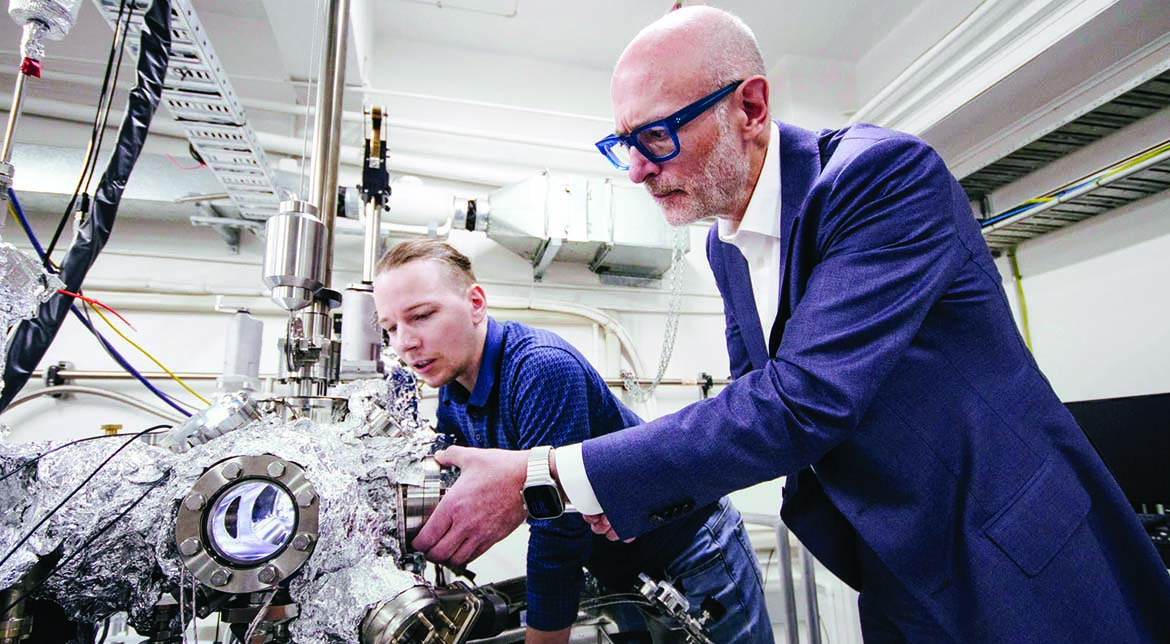
Following the money: how is funding influencing university research?
As funding shifts toward mission-led outcomes, universities face growing pressure to justify every research dollar — but what happens to curiosity and creativity?

Evolution or revolution: how might the Bachelor of Science change the future?
Universities are evolving the format and content of the Bachelor of Science to keep it modern and relevant. So how will it transform next?

A pipeline with a problem: how do we make STEM more inclusive?
From insufficient role models to challenging pathways, intersectional obstacles making it harder for students to choose science. How do we help clear the way?

Can STEM graduates be Australia’s lifeline?
Professor David Lloyd champions STEM apprenticeship programs and other targeted initiatives designed to expand access to university education.
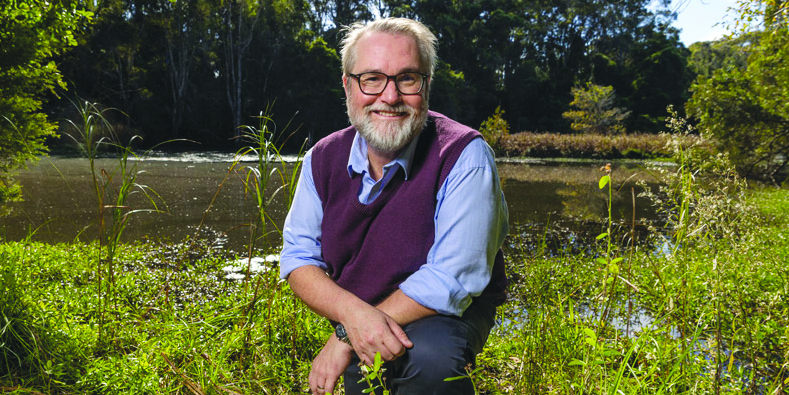
University science: essential for solving Australia’s biggest challenges
Professor Craig T. Simmons, SA Chief Scientist explores the many outputs of Australian University science.
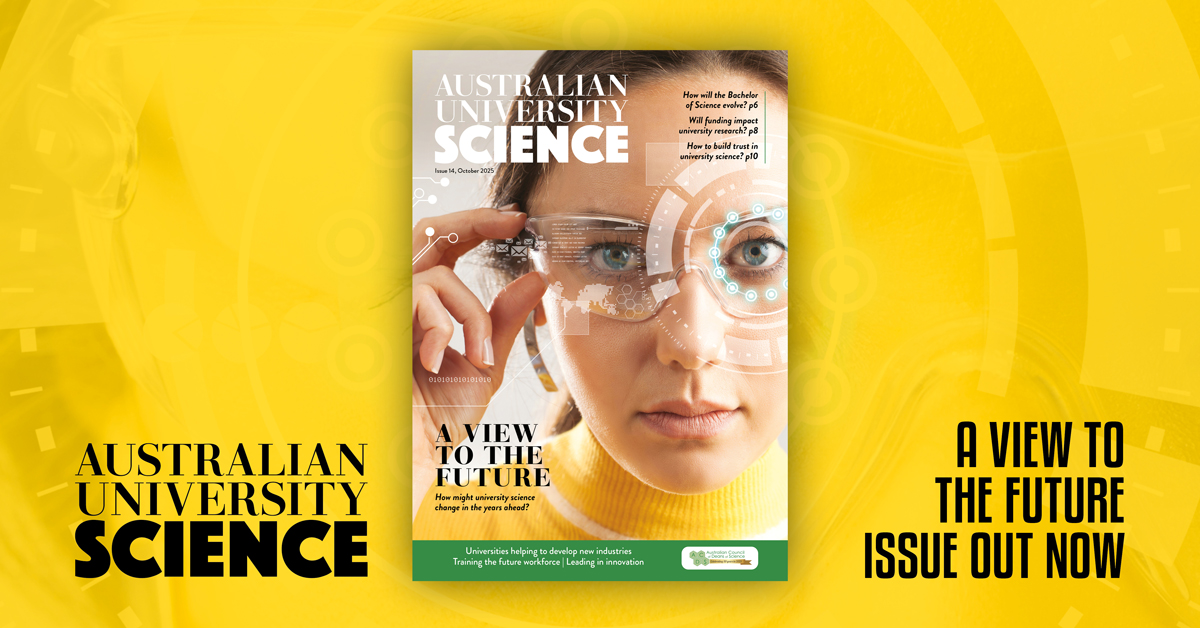
A view to the future: how might university science change in the years ahead?
ACDS President Professor Jacqui Ramagge introduces the latest issue of Australian University Science magazine.
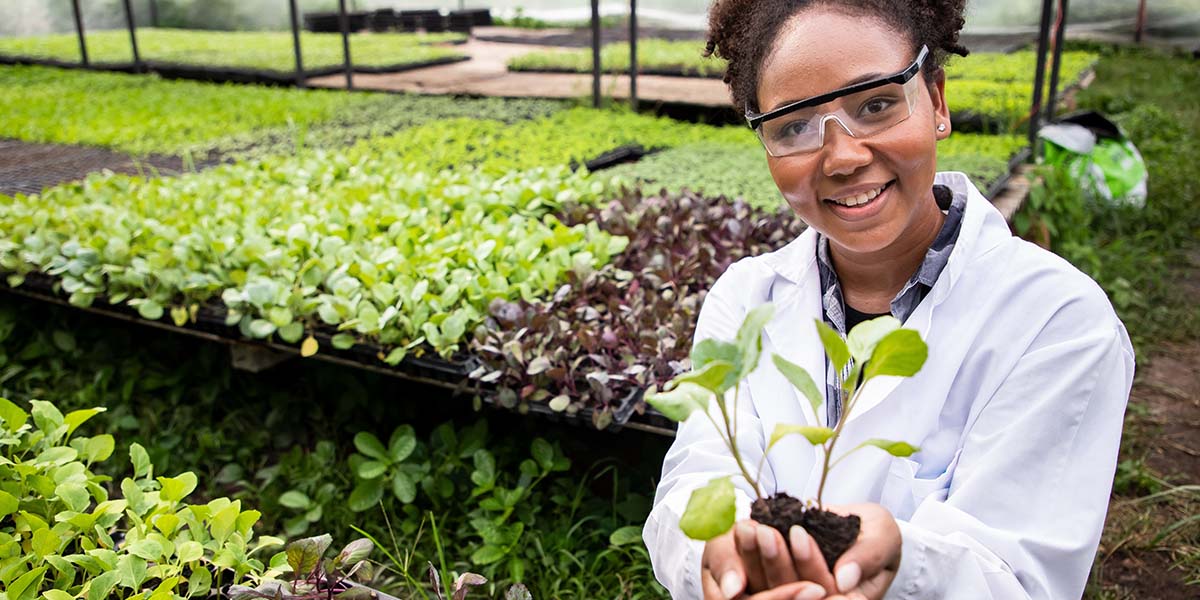
Science education: the hidden engine of Australia’s future
To mark National Science Week 2025, the Australian Council of Deans of Science is urging Australians to recognise the vital role of university science education
30 years of championing Australian university science
A message from Professor Melissa Brown, President, Australian Council of Deans of Science.

The engine of progress: science in Australian universities
Professor Ian Chubb shares how Australian university science churns out both groundbreaking research and the sharp minds we need for the future.

The business of universities
International student income has contributed to Australian universities becoming globally recognised institutions.

The evolution of the ACDS
A timeline celebrating 30 years of the Australian Council of Deans of Science (ACDS).

30 years of revolution in university science education
In a post-COVID world, new trends are emerging in university teaching and learning.
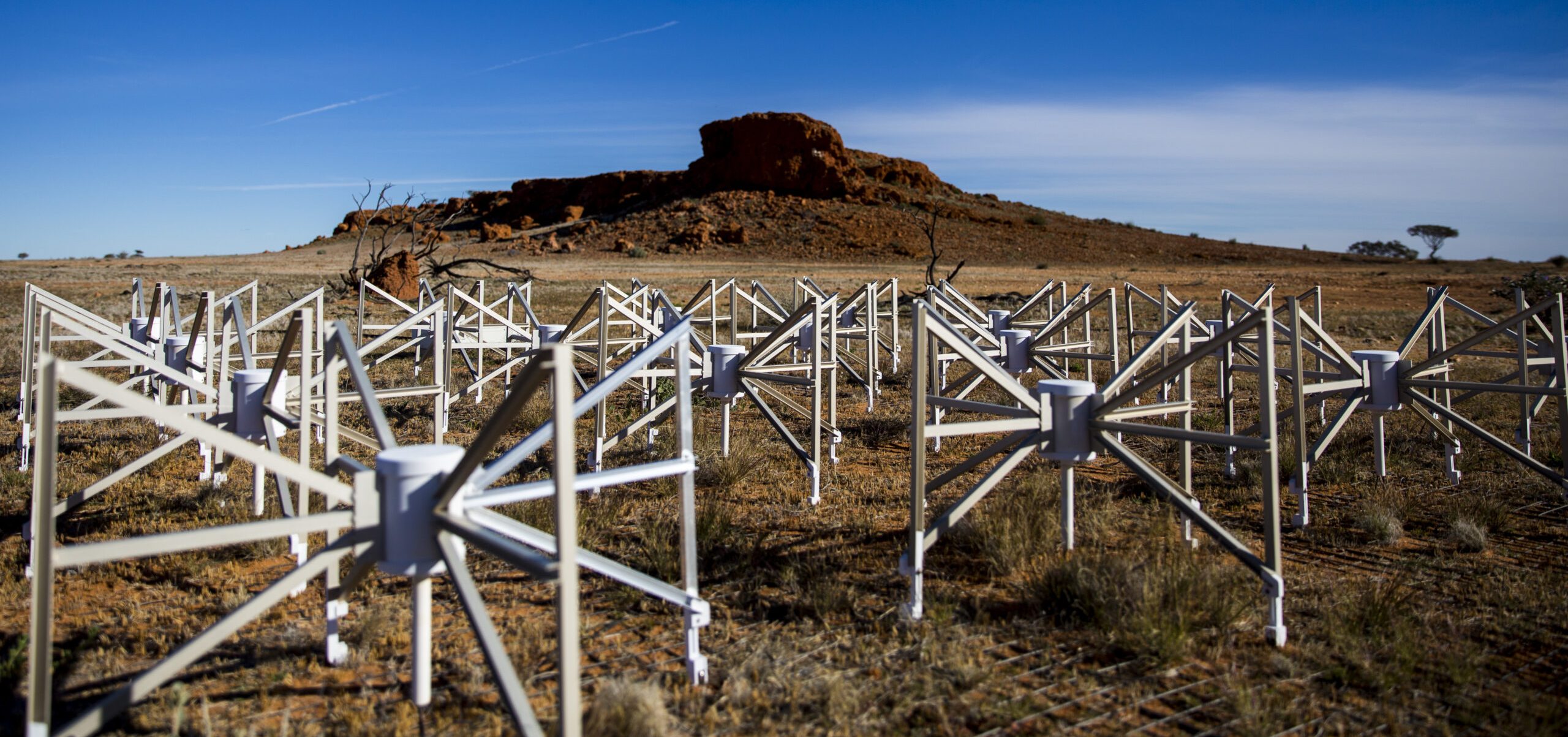
Research rewired: how strategic collaboration is changing university science
Over recent decades, the sharing of university facilities has sparked new opportunities for research excellence.

The rise of big data in science
Since the 1990s, increasingly large datasets have led to amazing findings, but bring wicked challenges that university researchers are racing to solve.
Australian University Science: driving more impactful and rewarding partnerships
The latest issue celebrates innovative collaborations between universities and industries that are driving more impactful and rewarding partnerships.
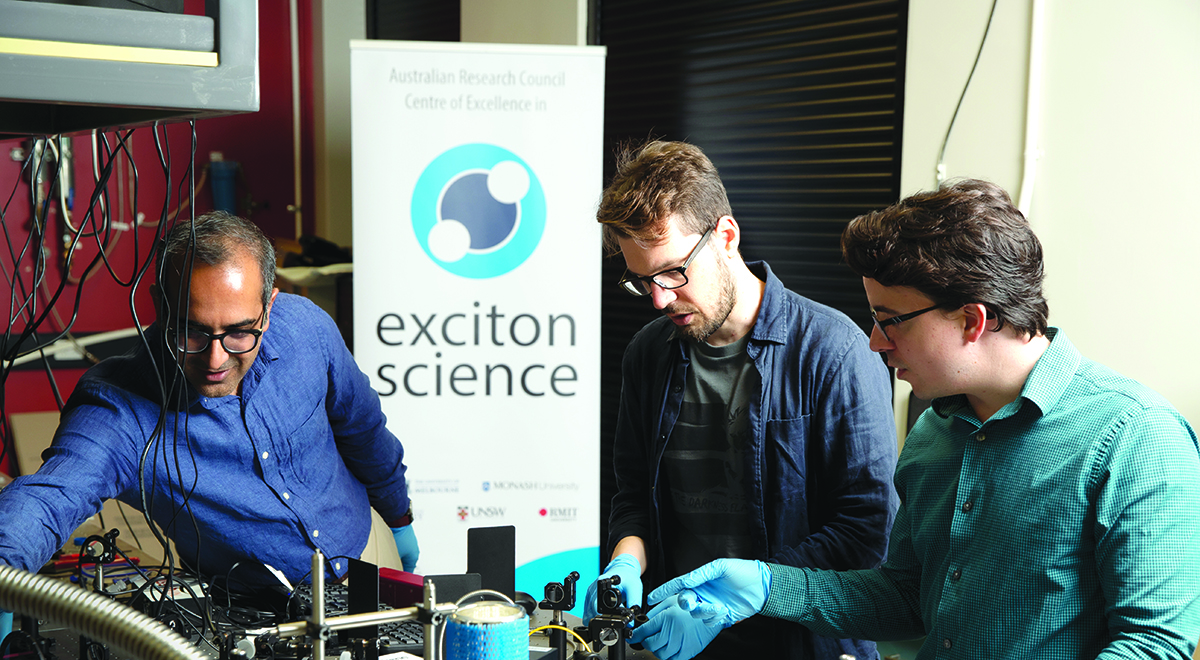
Industry and university science: partnering for impact
University science is the partner innovative Australian businesses need as they take on the tricky mission of scaling for the world stage.

Scientists of the future engaging with industry
Embedding partnerships in undergraduate and postgraduate university science courses drives deeper industry relationships
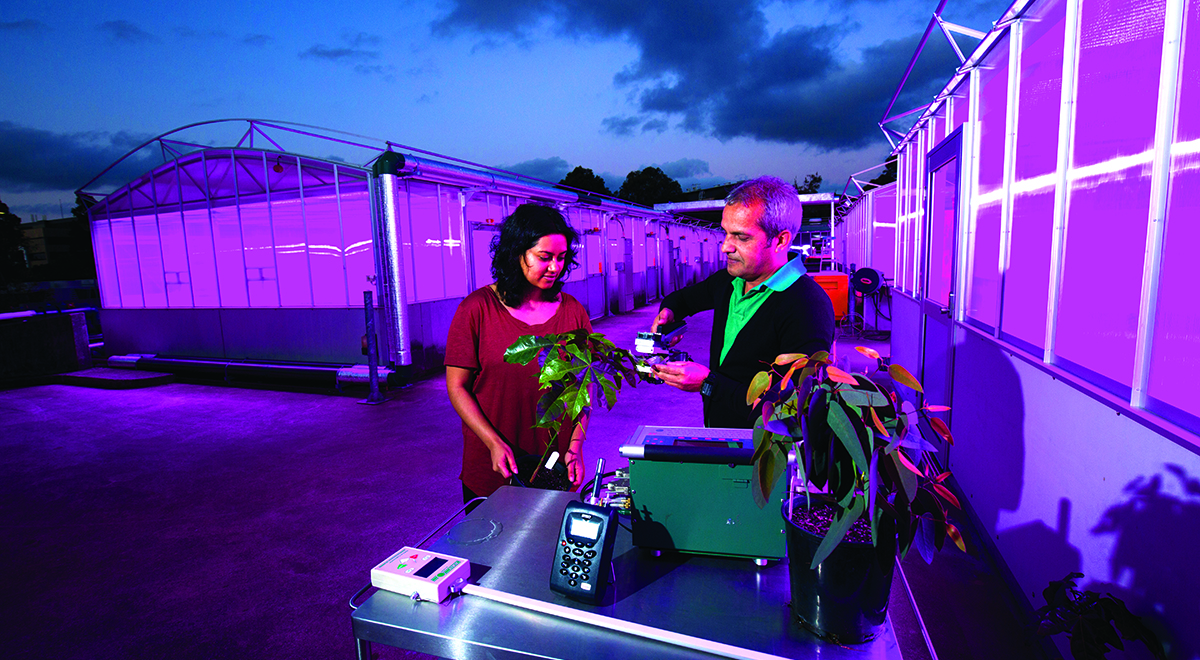
Four examples of successful long-term partnerships between universities and industry
Translating university science for the greater good is often the product of experience, networks and relationships built over several years.

Building networks for success through government initiatives
Beyond its core role to educate and create knowledge, university science plays a critical part in bringing together the people and funding to push Australia forward.
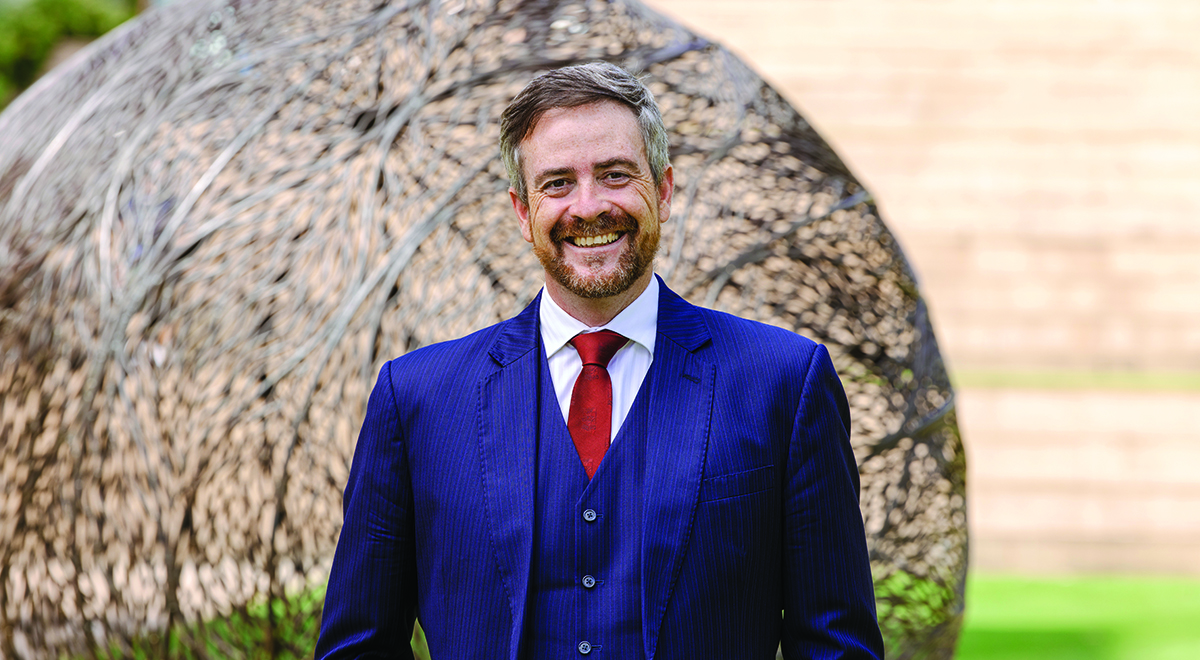
University, industry and government: collaborating for impact
Professor Attila Brungs explores how Australia’s universities and industry have a demonstrated history of joining forces to improve the world through science.
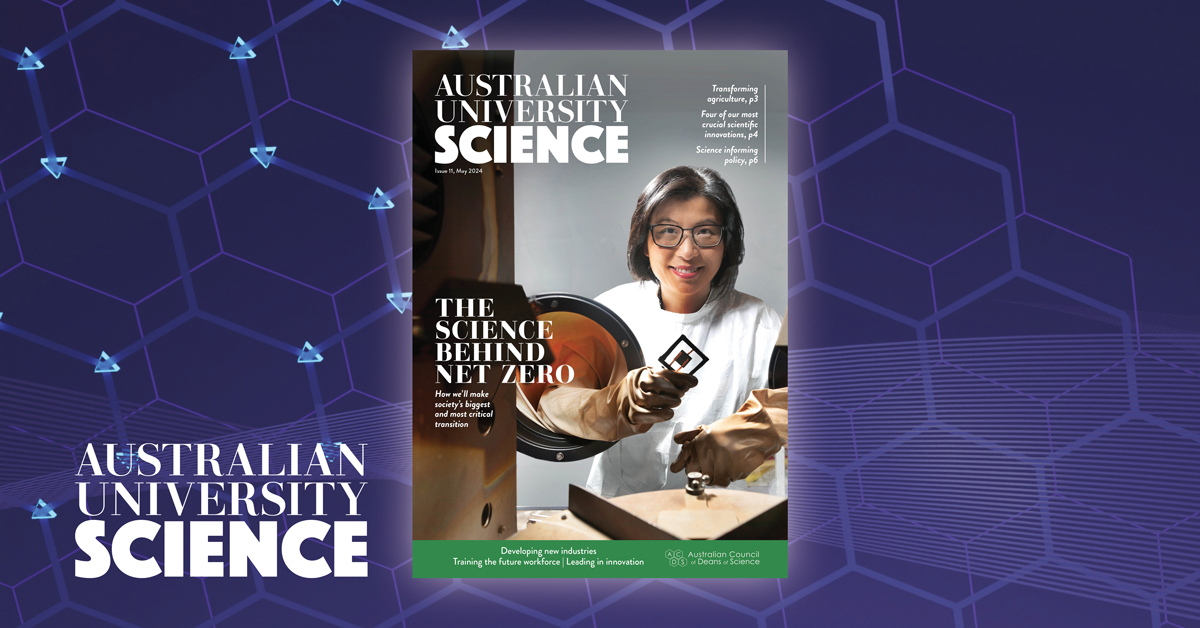
The Science Behind Net Zero: New issue of Australian University Science – out now.
As the world aims to move towards Net Zero emissions, university science is at the forefront of research and innovation.
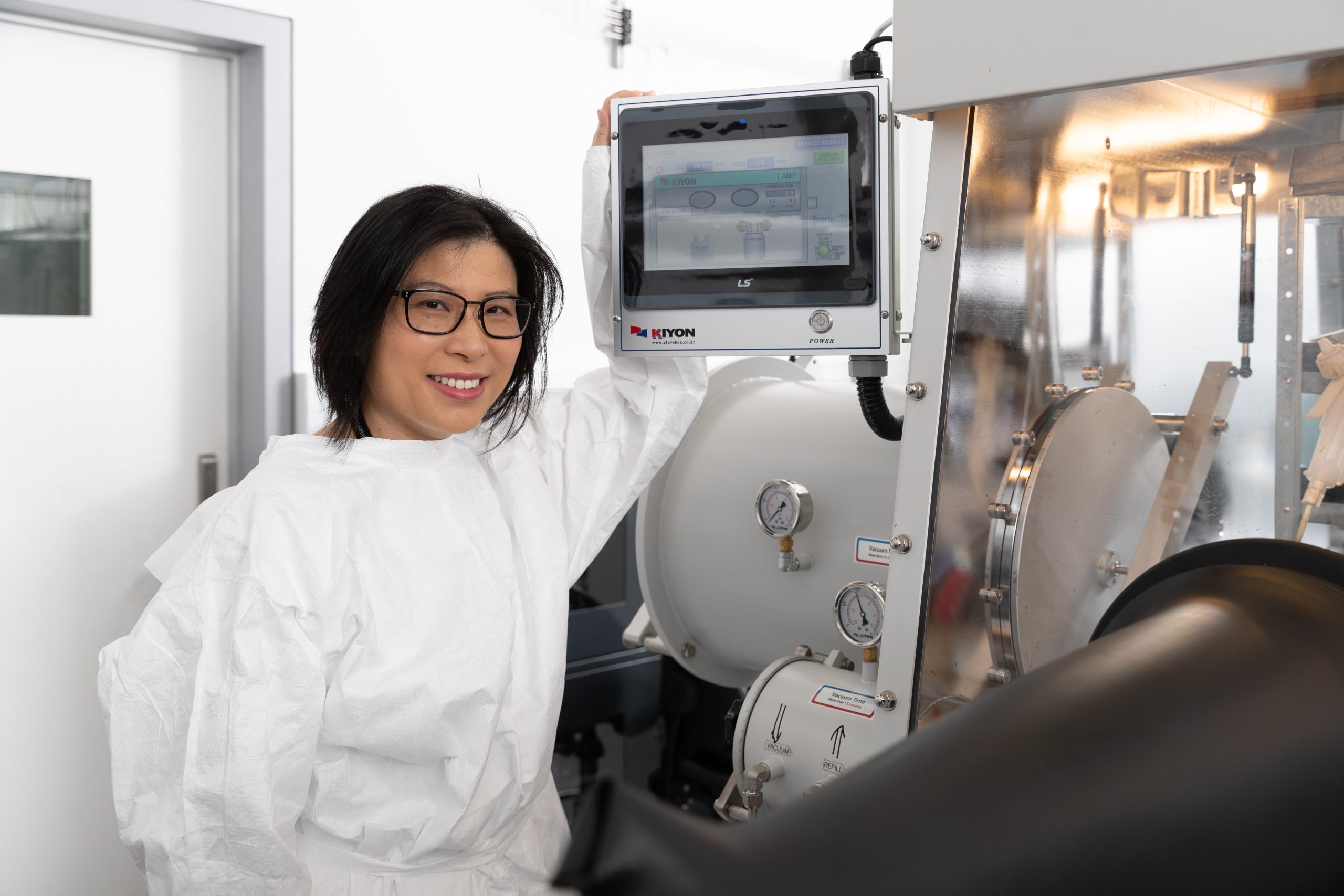
The science behind net zero
Australia’s universities are spearheading the scientific innovations critical to achieving national targets in renewable energy, storage, and reduction of emissions.

University science: poised to deliver on net zero policy
University science is uniquely placed to inform government policy: ensuring debate is grounded in scientific fact, and coordinating between industry, government and society.