
The Universities Accord, released in February 2024, called for an increase in the proportion of university-educated Australians aged 25–34 from 45% currently to 55% by 2050.
That involves doubling the number of uni students to 1.8 million. Meanwhile, the number of students undertaking a STEM degree is heading in the wrong direction. Despite numerous calls from industry and government for more STEM-qualified graduates, the overall picture is a pipeline with a problem.

Dr Jessica Danaher, associate dean of student experience in science at RMIT University, warns that emerging industries – such as in climate action, digital transformation, healthcare and advanced manufacturing – all depend on science graduates.
“There is a risk that companies searching for these skills will be forced to set up elsewhere, impacting Australia’s economy and prosperity,” Danaher says.
Meanwhile STEM disciplines have also been singled out for their lack of diversity. “More than a third of men in tertiary education are studying STEM qualifications,” says Cathy Foley, who was until last year Australia’s Chief Scientist. “But for women, the figure is only 9%.”
And it’s not only gender diversity. Science faculties across Australia are striving to boost diversity in their graduates across socio-economic lines, the rural-city divide, disability and race.
Growing the pool
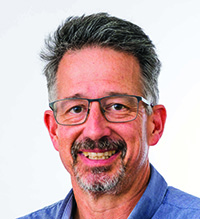
Professor Simon Ellingsen, executive director of the International Centre for Radio Astronomy Research University of Western Australia (UWA) and ACDS executive member, says one way to fill the pipeline is to grow the pool it draws from.
This means finding ways to diversify the kinds of people that a science qualification appeals to. As he sees it, people go into a degree
based on two things: whether they are interested, and whether they are suitably prepared. He says Australia is currently failing potential STEM graduates on both counts.
Danaher and Ellingsen say it’s the classic “if you can’t see it, you can’t be it”: women and girls and people from some minorities don’t have role models of future STEM careers.
“Our society doesn’t really value science and that sort of critical thinking, and so people who show aptitude in that area, they’re not really encouraged,” Ellingsen says.
Programs such as Science in Australia Gender Equity (SAGE), Girls in Science and Technology, Women in STEMM and the Australian Academy of Science’s STEM Women, are attempting to address some of the gender diversity challenges, but diversity is more than gender.
Ellingsen says he believes science is seen by many people as a high-minded passion career, not a workaday income provider, reducing its appeal to some sections of society.
In addition to a cultural shift needed to broaden Australia’s perception of a working scientist, the university preparation path fails many potential STEM enrollees.
Ellingsen says the shortage of good high-school science teachers means there is a risk they will be lured with competitive salaries to elite schools, or other opportunities, leaving the rest of Australia missing out.
“Some of the science and mathematics teaching done in other places is done by staff who are not particularly well-trained, not particularly well-motivated, and not surprisingly, therefore, the students don’t have the best experience,” he says.
Many universities offer catch-up courses for people wanting to prepare for a science degree – both school-leavers and older students.
But Ellingsen says greater coordination between these institutions would bring much-needed efficiencies, with many universities eating up precious resources competing with each other when they could team up.
Science in the regions
Meanwhile, regional universities say that they may have a part to play in encouraging more diversity. Professor Megan Smith, executive dean of the Faculty of Science and Health at Charles Sturt University and ACDS executive member, says that “the thing that regional universities do provide is opportunity.”
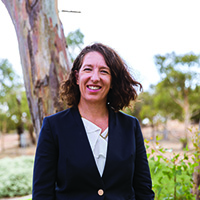
Smith believes the problems regional areas face will be solved by science graduates with local knowledge and that regional students shouldn’t be at
a disadvantage because of their location.
“Regional communities need science and they need a science foundation,” she says. Regional universities mean students can stay in their home areas, while still earning their Bachelor of Science.
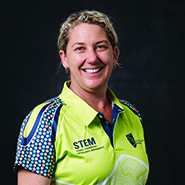
Linda Pfeiffer, Central Queensland University’s (CQU) associate professor and deputy dean of research in the School of Education and the Arts, says that CQU, decentralised across 12 campuses, offers many courses heavy with online only components, which students can undertake at a time that works for them.
It allows people to fit study around work and family commitments, providing a flexibility that is attractive for people in circumstances that don’t fit the typical school-leaver mould.
“We have a lot of people that work, because the cost of living has risen.
People find online more convenient. It saves the travel time, it saves the parking, you know, you can watch it later,” she says.
CQU enrols a high proportion of Indigenous students and the highest proportion of people from low socio-economic circumstances. Courses are designed to tap into local community and knowledge. “We have a lot of connection to the local industries. We have a lot of co-design of our degrees,” says Pfeiffer.
But Dr Laura McKemmish, director of research- and work-integrated learning at UNSW Science, says that universities in major cities can offer a different kind of connection: “In a city, you’ve got the people, you’ve got the facilities, you’ve got the expertise – there’s advantages in being a big city uni.”
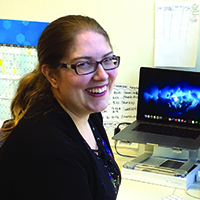
McKemmish believes Australia should work towards different universities offering different STEM experiences, rather than one university trying to be all things. Some universities could focus on industry-focused STEM training, while another could specialise in producing world-class research
scientists, she suggests.
“I actually think it’s really, really healthy when you’ve got both models,” McKemmish says.
Written by: Sara Phillips