
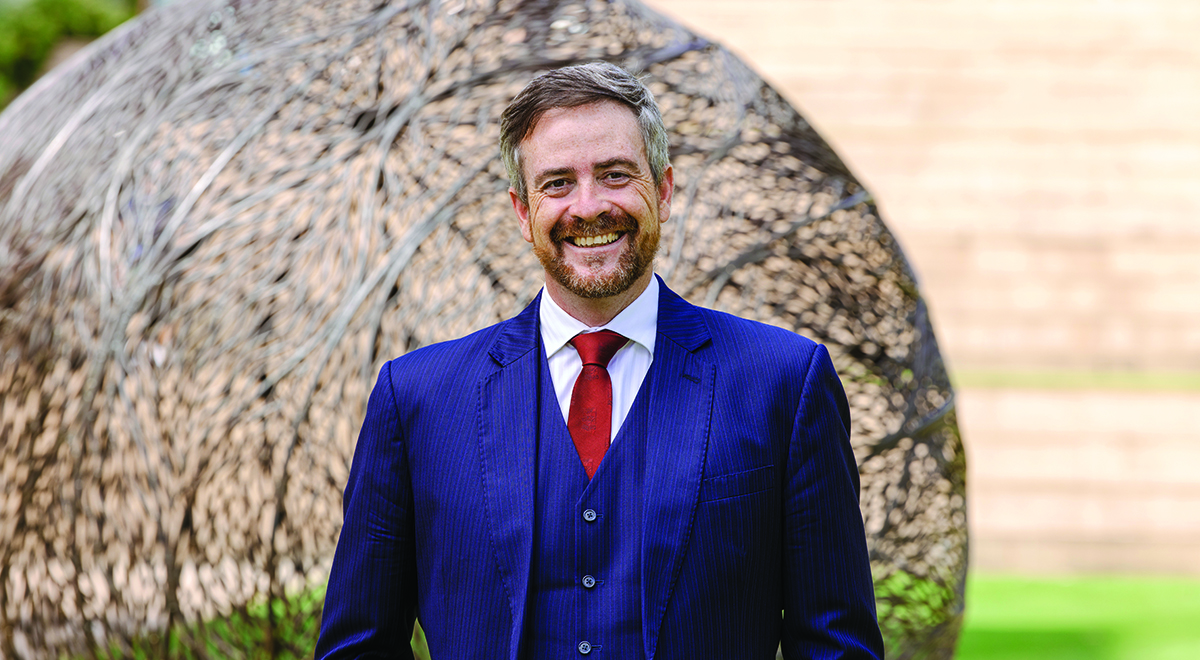
Image: Professor Attila Brungs FTSE FRSN, Vice-Chancellor & President, UNSW Sydney. Supplied.
In early 2022, as the spectre of COVID-19 began to shift, leading RNA scientists from several Australian universities and medical research institutes gathered in Sydney with industry and government partners to open the UNSW RNA Institute.
It was a celebratory occasion, a milestone for Australia’s RNA technology capabilities and research runway, the exigency of which was one of the perverse positives to emerge from the pandemic.
The excitement of university, industry and government partners coming together to share scientific breakthroughs or cutting-edge solutions to pressing global challenges is a special feature of the research pipeline.
There’s a simple reason why. It’s because we know two heads are better than one for driving innovation, for taking a brilliant discovery through to a brilliant solution and for bringing science from the lab to those who can benefit most.
Science. Collaboration. Impact. It’s a powerful triumvirate. It’s underscored in the revitalised National Science and Research Priorities, in the Trailblazer Universities Program, in CRCs, ARC fellowships and many more initiatives.
It’s also at the heart of what UNSW Dean of Science Sven Rogge has championed as Pact for Impact, a collective commitment with partners in industry, not-for-profits and government to improve the world through science and to measure and be accountable for our social, economic and environmental impacts.
Australia’s universities and industry have a demonstrated history of joining forces to improve the world through science.
Let’s capitalise on this momentum with the innovation and creativity to drive our impact even further. Because, just as the National Science and Research Priorities emphasise the collaborations Australia needs to solve our greatest challenges, we know that making a difference, together, just makes sense.
By Professor Attila Brungs FTSE FRSN, Vice-Chancellor & President, UNSW Sydney