
Tag Archives: teaching and learning

The business of universities

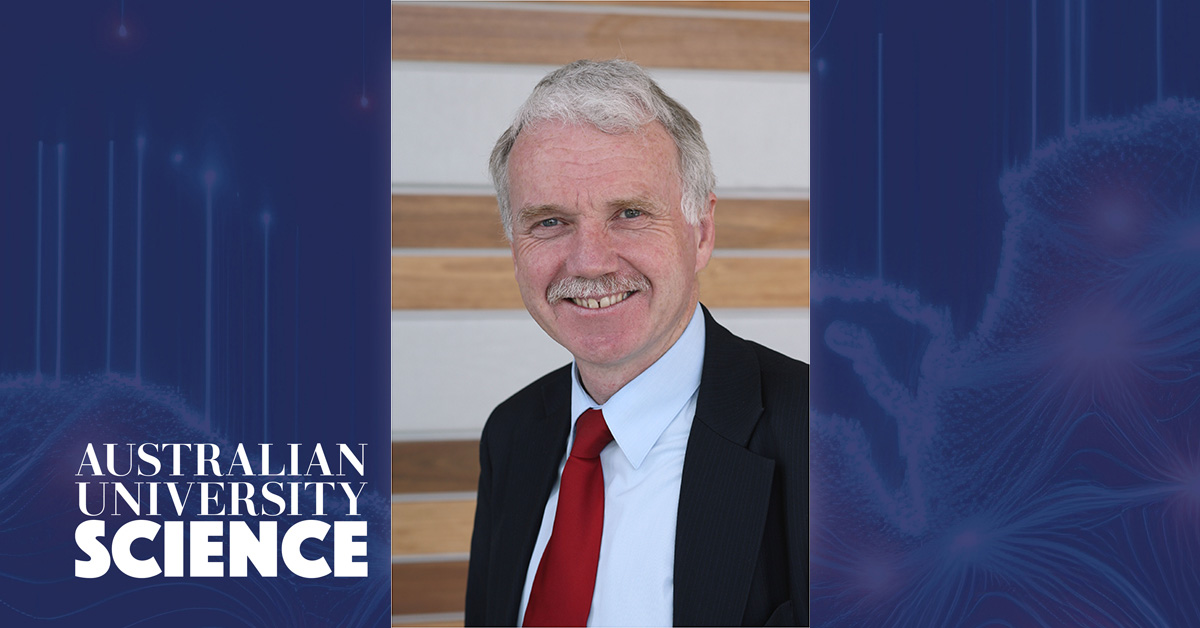
Image: Supplied

This opinion piece was written by Professor Aidan Byrne. Professor Byrne’s former roles range from Dean of Science at the Australian National University to ACDS Executive Member, CEO of the Australian Research Council to Provost at the University of Queensland. This has given him a broad view of the changes across the university sector in recent decades.

Australian universities have undergone a profound transformation over the past 30 years. Many of our major universities are in the top 200 globally, which is extraordinary for a country of just 27 million people. This transformation has been driven by Australian universities realising that they have a valuable commodity: the international student, and the capability of delivering quality education.

The shift in student revenue has forced universities to be more like businesses, reshaping not only funding structures but also institutional priorities. Most of the big universities now have a bigger revenue stream outside of what the government gives them, and it’s given them a degree of independence.

Universities have grown into multibillion dollar institutions, with thousands of people within them. They’re straddling the line between public institutions and corporate entities. Compliance demands have grown, and institutions face criticism over issues like vice chancellors’ salaries, which are higher than the public service but much lower than the commercial world of a business of the same scale.

The new revenue streams have enabled a significant investment in research and the development of research-focused institutes within the university. It’s allowed universities to grow to the point where they’re now doing almost 80% of Australia’s public sector research.

The University of Queensland provides an excellent example where, seeded by philanthropic money and government support, the institution was able to build a number of focused institutes. It completely transformed the ranking of this university on the world stage. That focus on research, sustained largely on the back of international student revenue, has provided a tremendous boost to research capability.

The increase in international student numbers and the increased research intensity in these institutions has provided a challenge to the traditional academic employment model. In particular, the discipline profile of teaching the extra load is not the same profile as the research intensive areas.

As a consequence, the old “40/40/20” profile of an academic where there was an expectation of 40% of one’s time spent on teaching and 40% on research is no longer able to be sustained for the majority of the academic workforce. A solution, which is non-optimal was to create research only positions, which have no particular pathway to continuing appointment, and to create a casual teaching workforce where job security is even more tenuous. While many institutions are moving to provide greater security of employment for teaching staff, the discipline mismatch remains an ongoing problem.

Universities are similarly challenged by the concept of academic tenure which makes it extremely difficult for universities to change the academic profile in either the teaching or research domains! The situation is not parallel to the public service wherein staff can be redeployed much more readily.

The government and the community don’t fully appreciate these changes in the university environment, or indeed the value of universities to Australia. They still believe that universities must be public institutions completely beholden to what the government might want to do, but the harsh truth is that they are much more complex. Debates are looming over cuts and caps on the international student market. So it’s crucial that the government – and the public – recognise this positive story of how international students have shaped Australian higher education and research over the past 30 years.

Written by Professor Aidan Byrne, Emeritus Professor, School of Mathematics and Physics, University of Queensland

First published in Australian University Science, Issue 13

The evolution of the ACDS

Image: ESO

The ACDS has been supporting science teaching and research in Australian universities for 30 years. Over this time, the ACDS has advocated for the development and recognition of excellent teaching, for the importance of fundamental research, for better funding in science, and for support for leadership in university science.

We acknowledge the many wonderful Deans, Associate Deans and other people who have helped make the ACDS the voice of university science. Read on to discover a selection of ACDS milestones and achievements, plus key scientific achievements driven by Australian universities.

Explore the timeline in full by reading Australian University Science magazine, Issue 13.

PRE-1995

Various Deans of Science meet as an informal network

1995

ACDS first meets as a constituted organisation, John Rice (Flinders) was the first President

1995

ACDS annual conferences commence, with Deans of Science from all universities invited to join

1998

Accelerating expansion of the universe discovered (Brian Schmidt, ANU)

2001

ACDS commissions its first report: ‘Employment outcomes for science degree holders’

2003

Establishment (first funding) of ARC Centres of Excellence and Federation Fellowships

2004

Establishment of the Australian Learning and Teaching Council (with grants and awards for enhancing the quality of learning and teaching in universities)

2005

ACDS report: ‘Who’s teaching science: meeting the demands for qualified science teachers in Australian secondary schools’

2006

Cervical cancer vaccine approved (Ian Frazer, UQ, Gardasil)

2007

Australian Synchrotron opens, with ANSTO

2008

ACDS appoints its first Executive Director (John Rice) to provide support for the operation and impact of the Council

2008

Associate Deans of Teaching & Learning in Science start meeting at an annual forum

2008

The Bradley Review of higher education recommends significant reforms to funding, regulation and participation

2010

ACDS oversees the Australian Learning and Teaching Council (ALTC) project to establish national Threshold Learning Outcomes (TLOs) for Science degrees (project led by Susan Jones and Brian Yates)

2011

Tertiary Education Quality and Standards Agency established

2012

First quantum bit creation (UNSW)

2012

ACDS report: ‘A background in science: what science means for Australian society’

2012

John Rice (ACDS) appointed to support the science networks and projects funded by the national Office for Learning and Teaching (OLT)

2013

ACDS Teaching & Learning Centre established, Elizabeth Johnson appointed as inaugural Director, various projects in T&L innovation established

2016

ACDS takes over responsibility for the annual Australian Conference on Science and Maths Education (ACSME) (pioneered by Manju Sharma, Stephanie Beams and others)

2017

Associate Deans of Research in Science start meeting at an annual forum

2017

ACDS funds annual projects focused on sector-wide innovations in T&L

2018

Launch of ACDS magazine ‘Australian University Science

2019

ACDS Teaching Fellowships established

2019

ACDS Indigenous science resources project established

2020

ACDS online resource repository to support teaching and learning established

2020

ACDS Deans of Science mentoring program established

2021

ACDS Teaching & Learning grants established

2021

Launch of ACDS Indigenous Science website and community of practice

2021

ACDS–ANSTO Graduate Innovation Forum showcases graduate research to industry

2023

Most distant fast radio burst discovered (Elaine Sadler, University of Sydney)

2023

ACDS formalises commitment to equity, diversity and inclusion via a national policy statement of principles and guidelines

2023

ACDS becomes an incorporated body

2024

ACDS continues its active program including forums, webinars, newsletters, position papers and submissions to government

2024

Australian Universities Accord recommends the reintroduction of the Tertiary Education Commission and close engagement between universities and TAFE

2025

Celebrating 30 years of the ACDS

First published in Australian University Science, Issue 13