
Image: Shutterstock

It’s called the “sage on a stage”: an expert dispenses information to a hall full of students, who, in theory, listen attentively and take notes. It’s a style of university education that hadn’t changed in centuries. That is until the past 30 years, during which a “revolution” has occurred in Australian university science education, according to Merlin Crossley, deputy vice chancellor of academic quality at UNSW.
COVID had a lot to do with it. The “temporary” shift to online learning never quite went away. The growing diversity of students also nudged university science departments to look at their practices. Where once Australian university students tended to be middle- and upper-class school-leavers, the past 30 years has seen them diversify. There are more mature-aged students, students from different economic, educational, linguistic and cultural backgrounds, and overseas students.
Setting the standard

The changing nature of university science education is not new. In the late 2000s, the Australian Council of Deans of Science established its Teaching and Learning Centre (T&L Centre) to support and drive innovation in university teaching and learning and recognise excellence in education. Amongst its successes was the development of Science Threshold Learning Outcomes (TLOs), first released in 2011.

Professor Elizabeth Johnson (Deakin University) was the inaugural director of the ACDS T&L Centre and says the TLOs are the result of one of the largest consultations across Australia on the university science curriculum, developed with teachers, researchers, university leaders, industry and students. “They set the standard for what a science graduate ‘should know and be able to do’,” she says.
Brian Yates, an emeritus professor at the University of Tasmania and ACDS Immediate Past President, was also involved in the development of the Science TLOs. He says that they have been widely adopted across Australia, if not to the letter, certainly to the spirit of the guidelines. They emphasise skills such as understanding the scientific method, critical thinking, science communication and learning how to be self-directed learners.
Student-centered approaches

But even before the TLOs, university science education was changing. Where once, students were expected to steer themselves through their university days, students began to demand an approach based on pedagogical evidence, says Susan Rowland, vice provost at the University of Sydney. While the sage on a stage will never be abolished entirely, “there is a more significant expectation of professionalism”.
Many universities now encourage selected academics to be the pace-setters for their more research-centric peers, investigating new learning practices and sharing them with their colleagues. “These are people who are valuable as leaders of the culture around teaching,” she says.
UNSW Dean of Science, Professor Sven Rogge agrees. “The backbone of a great university education is an academic who is both pushing the boundaries of research on the international stage and deeply committed to engaging, high-quality teaching. But what’s often overlooked is the transformative role of education-focused staff – experts in student-centered, modern learning who inspire innovation and lift the entire teaching culture. Through peer leadership and collaboration, they help bring the latest thinking in pedagogy into the lecture theatre, ensuring our students get the very best of both worlds.”
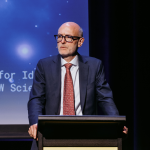
New teaching methods are essential in the post-COVID world, where students have voted with their feet and in-person attendance at universities has dramatically declined. But the change has given rise to new, more interactive ways of learning. Short bite-sized videos are a favourite new format for students, perhaps because it reflects their social media worlds. And Rowland says that online lectures can be extremely interactive via the chat channels, allowing students to support each other, debate each other and test ideas with each other in real time – something they could never do in a packed lecture theatre.
Another significant shift in the past 30 years is not just about teaching style, but content. Where more vocational degrees, such as law and engineering, have long encouraged industry to provide practical experience to students, it’s a concept that science has also begun to embrace more enthusiastically in recent years. “It’s a recognition that most graduates from a science degree don’t go into research,” says Yates. Instead, programs are being developed to bring industry into the lecture theatre, and to send students into the labs of industry.
Looking to the future, Yates predicts the introduction of more Indigenous learning systems in science degrees. In December 2024, the ACDS released a guide to including Indigenous knowledge and knowledge systems into tertiary science education.
AI as a trusted learning companion
Rowland sees AI becoming a trusted learning companion for future students. An AI chatbot might be able to ask a student about their understanding of a topic, and then ask them to reflect on where they got the information or how they made a decision. Such conversations with a bot are low stakes for the student – there’s no embarrassment of getting something wrong in front of the entire class – but Rowland says that being asked to think about their methods of learning builds a useful long-term “habit of reflecting and habit of self-assessment”.
Into the future
The release of the Australian Universities Accord in February 2024 will continue to push universities further down the path of professionalised and work-integrated tertiary science education, says Yates. For universities that offer science degrees, the Accord will provide a framework for a more coordinated response to the needs of the nation. It will ensure Australia’s science graduates are equipped with the vital skills needed to shape the future.
Written by Sara Phillips