Tag Archives: ANU

Research rewired: how strategic collaboration is changing university science

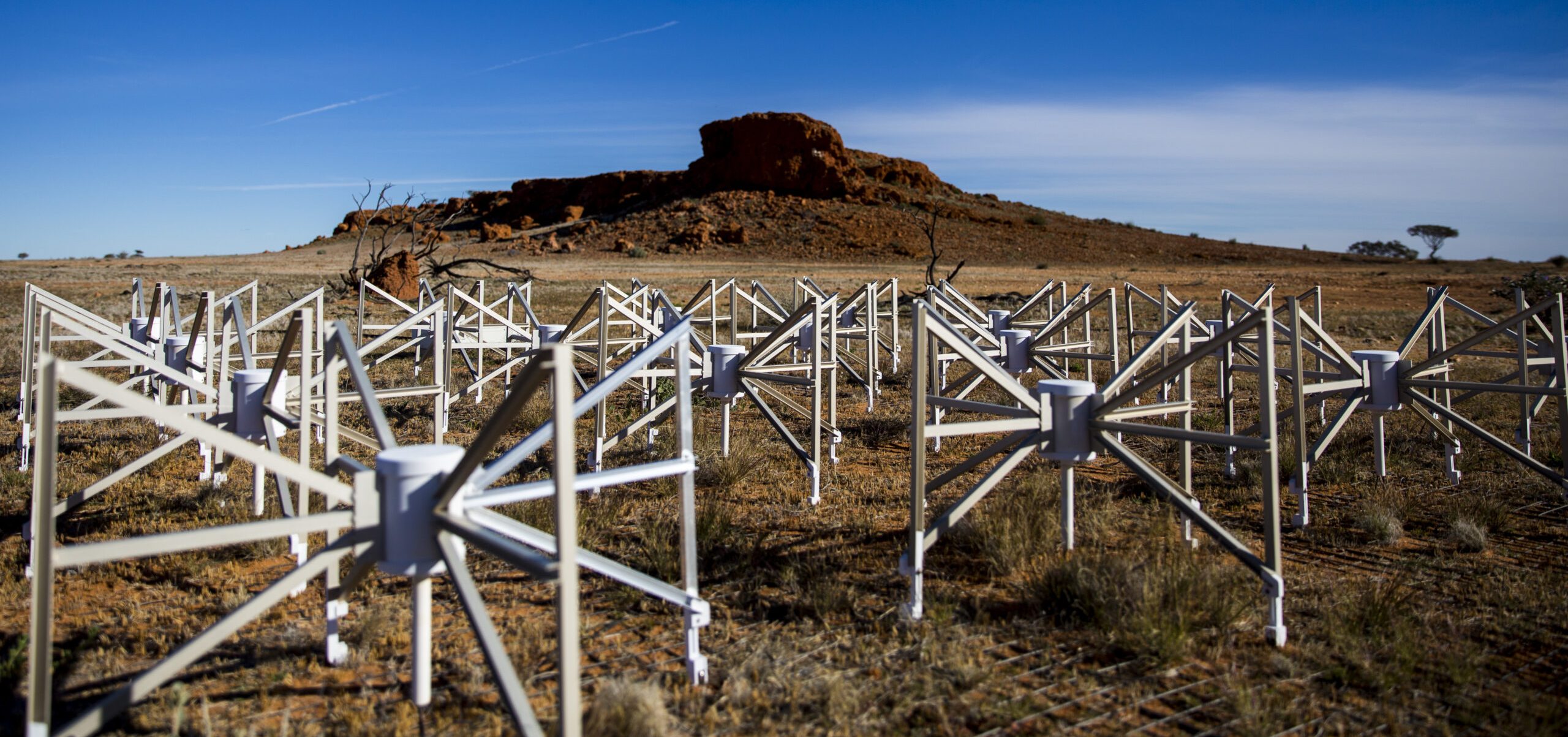
Image: The Murchison Widefield Array, a project of the International Centre for Radio Astronomy Research. Credit: ICRAR/Curtin.

Scientists love the possibilities of a big shiny new instrument. But unfortunately many scientific tools come with a hefty price tag. These are no ordinary tools after all, they are at the extreme of what engineering can produce. That’s why Australian universities have embraced the concept of sharing.

All across Australia, universities buy or barter time in shared facilities in order to do their research. And the philosophy of sharing can pay dividends.

Where a single university might not have the funds to build, maintain and upgrade a high-tech instrument, a shared facility can offer certainty for long-term research.

Scientists can benefit from the expertise of the operators as they take their experimental proposals to them. Experts in microscopy or telemetry, for example, can work with researchers to refine a research proposal using their intimate knowledge of the instrument.

Accessing a shared machine can also bring about serendipitous collaboration with other research groups using the same facility and can increase industry – university collaboration.

Here are three case studies where universities are reaping the benefits of shared infrastructure.

Unlocking the universe

In the red sands of outback Western Australia, huge spider-like metallic instruments stand ready to receive radio waves from outer space. This is the Murchison Widefield Array, a project of the International Centre for Radio Astronomy Research (ICRAR). It is a joint venture between Curtin University and the University of Western Australia (UWA), with funding from the state government, and a key partner in the forthcoming multinational Square Kilometre Array (SKA).
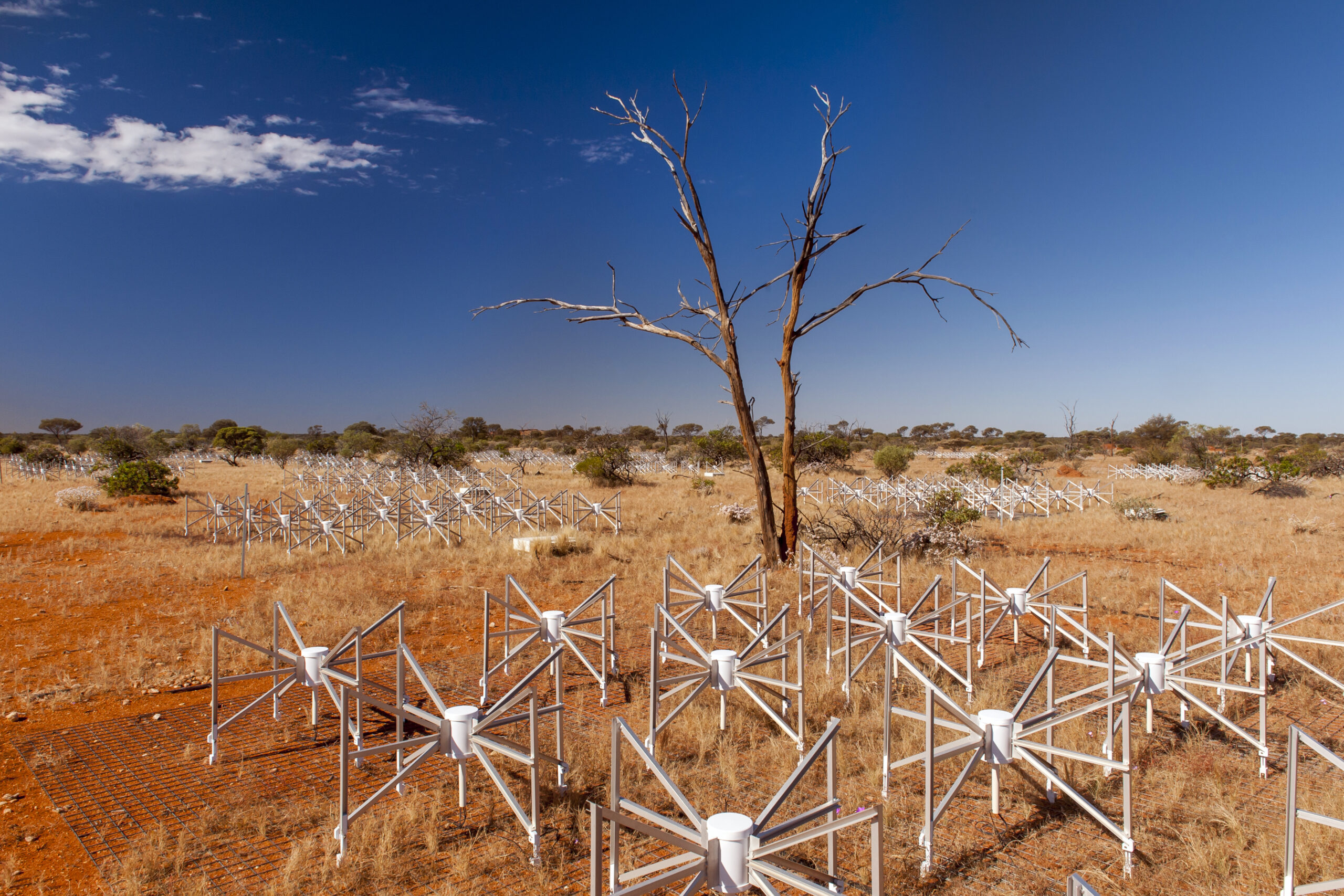
The Murchison Widefield Array is a radio telescope that includes 4,096 spider-like antennas. Credit: Marianne Annereau, 2015.

ICRAR was established in 2009 to support Australia’s bid for the world’s largest telescope, the SKA. The bid was successful and WA is reaping the benefits, supporting more than 250 astronomers, researchers, engineers and data experts.

Steven Tingay (Curtin University), deputy executive director of ICRAR, says that tuning into the radio waves of the universe can teach us fundamental things about where atoms and energy came from. “The universe is the biggest physics laboratory that one can imagine,” he says. ICRAR is particularly interested in working out what happened in the 300,000 years after the Big Bang.

The collaborative nature of ICRAR’s existence extends to its research. “Virtually everything that we do has collaboration from multiple Australian universities, CSIRO, and then internationally,” he says.

Professor Simon Ellingsen (UWA), ICRAR executive director and ACDS executive member, agrees that collaboration is key. “ICRAR has a clear goal – to play a crucial role in the international SKA project by attracting leading experts in multiwavelength astronomy, astrophysics, engineering and data-intensive astronomy.”

The benefits of global collaboration are particularly relevant for radioastronomy according to the ICRAR directors.

Other telescopes worldwide can add little pieces to the overall puzzle of what happened after the Big Bang, allowing Australian universities to be at the forefront of cutting-edge physics.

A source of light

Across the road from Monash University in Clayton, in the suburban sprawl of Melbourne, is an enormous, solar-panel festooned bunker. This is the Australian Synchrotron, operated by ANSTO.
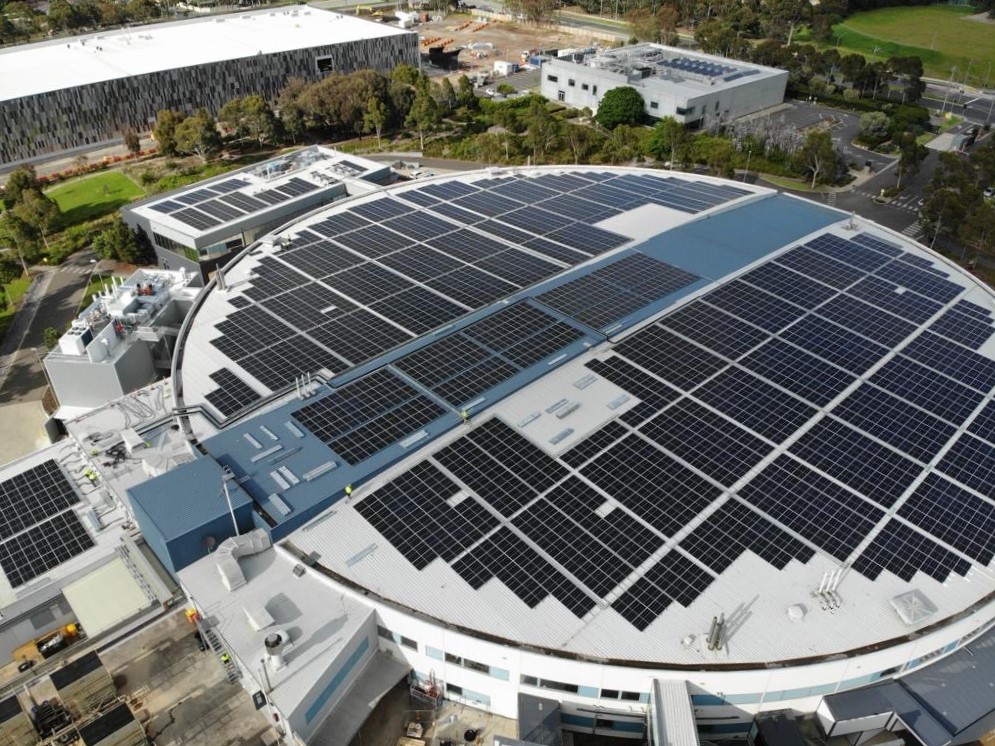
The Australian Synchrotron, operated by ANSTO. Credit: ANSTO.

When synchrotron science took off in the late 1970s, Australian researchers were using overseas facilities. In following decades, organisations including the Australian Academy of Science and the Australian Science and Technology Council recognised the need for a national facility.

It took many years of proposals and several funding partners – including the involvement of several universities – to get a project of this scale off the ground. By 2007 the Australian Synchrotron was up and running for experiments.

In effect, it is a very high-tech X-ray machine, in the sense that it uses light to peer beneath the skin of samples and reveal the internal structure. Time with the ‘beamline’ is allocated on the strength of research proposals and every year, Australian universities, industry and a few international universities compete to access the machine.

The light source has been instrumental in applications such as drug discovery, investigating the COVID virus and in the development of flexible electronics.

“It lets us do things that you can’t imagine doing in a laboratory,” says director and professor Michael James.

Co-locating the synchrotron near Monash has created a research ecosystem in outer Melbourne.

Compared with a similar Canadian facility located far from research centres, “we’re much, much more productive than the Canadian light source.”

Searching via supercomputer

Tucked away in a corner of the Australian National University (ANU) is the National Computer Infrastructure (NCI). It draws a staggering 2 megawatts of power to run its 5,000-node supercomputer, named Gadi, meaning “to search” in the language of the local Ngunnawal people. If an Australian university has a big computing job to do, then Gadi is where they turn.
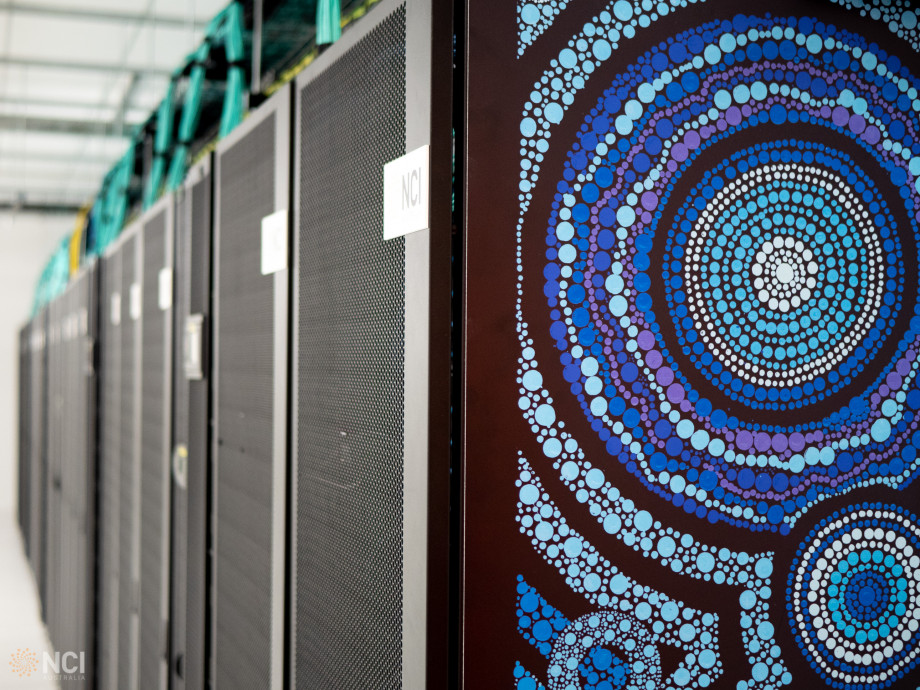
The National Computer Infrastructure’s supercomputer, Gadi. Credit: NCI.

Lindsay Botten, emeritus professor at the ANU was the NCI’s first director and the architect of its collaborative approach to computing. It was late 2008 and he’d come to NCI fresh from writing a successful grant application for a supercomputer in Sydney. Rather than building their own facility, he asked the NSW team whether they would consider sharing the NCI machine. It made financial and logistical sense and so NCI’s role in being the computational support for Australian university research began.

Rather than bidding for time on the computer for individual projects, Botten established a kind of time-share system, where partners were allocated time according to their financial contribution. They could use this time for whatever research they deemed important. The computer has contributed to research across fields such as climate modelling, cancer research, star formation and artificial intelligence.

Written by Sara Phillips

First published in Australian University Science, Issue 13

Discovery helps researchers better understand immune system

A team from The Australian National University (ANU) and Monash University found the immune system can recognise more proteins from viruses and vaccines than previously thought.

“More than 80 per cent of the virus proteins can be recognised by the immune system and used to trigger an immune reaction by the body. This is much more than was expected”, said senior author Professor David Tscharke from the John Curtin School of Medical Research at ANU.

immune system

Professor David Tscharke. (Image credit: Jamie Kidston, ANU)

“This work has unearthed a better understanding of how well viruses and vaccines are recognised by the body.”

Lead author Dr Nathan Croft, from the Monash Biomedicine Discovery Institute (BDI), said the findings will have practical outcomes for new vaccines.

“We can now begin to apply this knowledge to other viruses and to cancer, to pinpoint favourable targets for the immune system,” said Dr Croft.

The team used vaccinia virus to understand how much of a virus is actually recognised and targeted by the immune system.

Vaccinia virus was used as a vaccine to eradicate smallpox and is now repurposed as a tool against other viruses as well as cancers.

“This is a remarkable finding that highlights the power of mass spectrometry to identify the entirety of viral antigens that are exposed to the immune system,” said co-senior author, Professor Anthony Purcell from Monash BDI.

“The translation to human infectious disease is obvious, but the identification of tumor derived antigens is also an exciting area we are developing to drive the precision oncology field and cancer immunotherapy.”

“Our results also show that no part of the virus is hidden from the immune system, no matter what time these parts are produced or how they are used by the virus,” said Professor Tscharke.

The team used a combination of biochemistry, bioinformatics and statistics to identify viral peptides present on the surface of infected cells and analyse the ability of the immune system to see them as foreign targets.

The research, supported by the National Health and Medical Research Council (NHMRC) and the Australian Research Council (ARC) is published in the Proceedings of the National Academy of Sciences (PNAS).

This article was originally published by ANU.

Future tech for a stable climate

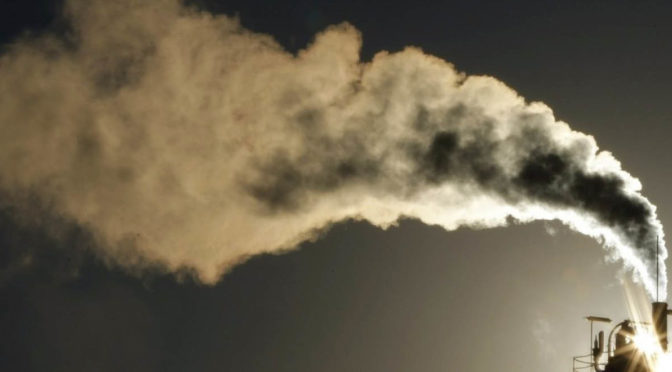
Humans have emitted 1,540 billion tonnes of carbon dioxide gas since the industrial revolution. Credit: REUTERS/Tim Wimborne

Getting climate change under control is a formidable, multifaceted challenge. Analysis by my colleagues and me suggests that staying within safe warming levels now requires removing carbon dioxide from the atmosphere, as well as reducing greenhouse gas emissions.

The technology to do this is in its infancy and will take years, even decades, to develop, but our analysis suggests that this must be a priority. If pushed, operational large-scale systems should be available by 2050.

We created a simple climate model and looked at the implications of different levels of carbon in the ocean and the atmosphere. This lets us make projections about greenhouse warming, and see what we need to do to limit global warming to within 1.5℃ of pre-industrial temperatures – one of the ambitions of the 2015 Paris climate agreement.

To put the problem in perspective, here are some of the key numbers.

Humans have emitted 1,540 billion tonnes of carbon dioxide gas since the industrial revolution. To put it another way, that’s equivalent to burning enough coal to form a square tower 22 metres wide that reaches from Earth to the Moon.

Half of these emissions have remained in the atmosphere, causing a rise of CO₂ levels that is at least 10 times faster than any known natural increase during Earth’s long history. Most of the other half has dissolved into the ocean, causing acidification with its own detrimental impacts.

Although nature does remove CO₂, for example through growth and burial of plants and algae, we emit it at least 100 times faster than it’s eliminated. We can’t rely on natural mechanisms to handle this problem: people will need to help as well.

What’s the goal?

The Paris climate agreement aims to limit global warming to well below 2℃, and ideally no higher than 1.5℃. (Others say that 1℃ is what we should be really aiming for, although the world is already reaching and breaching this milestone.)

In our research, we considered 1℃ a better safe warming limit because any more would take us into the territory of the Eemian period, 125,000 years ago. For natural reasons, during this era the Earth warmed by a little more than 1℃. Looking back, we can see the catastrophic consequences of global temperatures staying this high over an extended period.

Sea levels during the Eemian period were up to 10 metres higher than present levels. Today, the zone within 10m of sea level is home to 10% of the world’s population, and even a 2m sea-level rise today would displace almost 200 million people.

Clearly, pushing towards an Eemian-like climate is not safe. In fact, with 2016 having been 1.2℃ warmer than the pre-industrial average, and extra warming locked in thanks to heat storage in the oceans, we may already have crossed the 1℃ average threshold. To keep warming below the 1.5℃ goal of the Paris agreement, it’s vital that we remove CO₂ from the atmosphere as well as limiting the amount we put in.

So how much CO₂ do we need to remove to prevent global disaster?

Credit: International energy agency

Are you a pessimist or an optimist?

Currently, humanity’s net emissions amount to roughly 37 gigatonnes of CO₂ per year, which represents 10 gigatonnes of carbon burned (a gigatonne is a billion tonnes). We need to reduce this drastically. But even with strong emissions reductions, enough carbon will remain in the atmosphere to cause unsafe warming.

Using these facts, we identified two rough scenarios for the future.

The first scenario is pessimistic. It has CO₂ emissions remaining stable after 2020. To keep warming within safe limits, we then need to remove almost 700 gigatonnes of carbon from the atmosphere and ocean, which freely exchange CO₂. To start, reforestation and improved land use can lock up to 100 gigatonnes away into trees and soils. This leaves a further 600 gigatonnes to be extracted via technological means by 2100.

Technological extraction currently costs at least US$150 per tonne. At this price, over the rest of the century, the cost would add up to US$90 trillion. This is similar in scale to current global military spending, which – if it holds steady at around US$1.6 trillion a year – will add up to roughly US$132 trillion over the same period.

The second scenario is optimistic. It assumes that we reduce emissions by 6% each year starting in 2020. We then still need to remove about 150 gigatonnes of carbon.

As before, reforestation and improved land use can account for 100 gigatonnes, leaving 50 gigatonnes to be technologically extracted by 2100. The cost for that would be US$7.5 trillion by 2100 – only 6% of the global military spend.

Of course, these numbers are a rough guide. But they do illustrate the crossroads at which we find ourselves.

The job to be done

Right now is the time to choose: without action, we’ll be locked into the pessimistic scenario within a decade. Nothing can justify burdening future generations with this enormous cost.

For success in either scenario, we need to do more than develop new technology. We also need new international legal, policy, and ethical frameworks to deal with its widespread use, including the inevitable environmental impacts.

Releasing large amounts of iron or mineral dust into the oceans could remove CO₂ by changing environmental chemistry and ecology. But doing so requires revision of international legal structures that currently forbid such activities.

Similarly, certain minerals can help remove CO₂ by increasing the weathering of rocks and enriching soils. But large-scale mining for such minerals will impact on landscapes and communities, which also requires legal and regulatory revisions.

And finally, direct CO₂ capture from the air relies on industrial-scale installations, with their own environmental and social repercussions.

Without new legal, policy, and ethical frameworks, no significant advances will be possible, no matter how great the technological developments. Progressive nations may forge ahead toward delivering the combined package.

The costs of this are high. But countries that take the lead stand to gain technology, jobs, energy independence, better health, and international gravitas.

– Eelco Rohling, professor of ocean and climate change at the Australian National University (ANU)

This article was first published by the World Economic Forum and The Conversation. Read the original article here.

Collaboration platform welcomes universities

The Australian National University and the University of Western Australia have become the first research institutions in Australasia to join IN-PART, a global university-industry collaboration platform.

Researchers at these universities will have access to a growing community of 2000+ R&D professionals from over 600 businesses in Europe, Oceania, the UK, and the USA, who use IN-PART to collaborate with universities in the commercialisation of academic research.

“The potential of the output from world leading research at Australian institutions is huge, but the limited industrial base means that it is essential we partner with corporate world leaders to realise that potential”, said Professor Michael Cardew-Hall, Pro Vice-Chancellor of Innovation at The Australian National University.

“The ANU has strong links with many partner research institutions worldwide and strategic partnerships with major corporations. However, developing new partnerships that are mutually beneficial is a key strategy for the University”.

The Australian National University (ANU) and the University of Western Australia (UWA) will join 70 universities from the UK, USA, Japan, and Europe — including Cambridge, Cornell, and King’s College London — who currently use IN-PART to publish innovation and expertise from academics who are actively looking to interact with industry.

“We’re very excited about being able to profile our projects to targeted people in relevant industries, and to show people that UWA and Australia are the home of some amazing innovations. Just as our researchers rely on collaborating locally and internationally, tech transfer offices need to look further afield for development partners with particular expertise and routes to market”, said Simon Handford, Associate Director of Innovation at the University of Western Australia.

“Hopefully, IN-PART can help us meet future R&D partners and give more projects the chance of being translated into something that can be put to use”.

Launched in January 2014, IN-PART has facilitated the first point of contact for a range of university-industry collaborations that include licensing deals, co-development projects with joint funding, academic secondments, and long-term research partnerships.

This information was first shared by IN-PART on 11 August 2016.