
Tag Archives: science news

Evolution or revolution: how might the Bachelor of Science change the future?

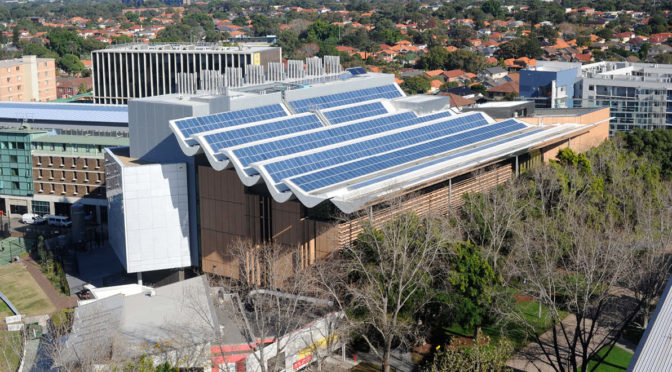
Image: A vision of the future of Macquarie University, as itputs the finishing touches on its new Engineering and Australian Astronomical Optics (AAO) Building. Supplied

University science education is being disrupted by changes in technology, including AI, and by changes in student and employer expectations.

Training versus education

A key part of evolving the Bachelor of Science (BSc) is navigating the balance between vocational training and broader education, according to Brian Yates, emeritus professor at the University of Tasmania and ACDS executive member. While training equips students with job-specific skills for a smooth transition into the workforce, education in a research-led environment fosters more adaptable capabilities like problem-solving and teamwork.

At the moment, Yates sees a strong focus on producing “job-ready” graduates, with curricula packed with industry-relevant knowledge. However, as specialised information becomes
more accessible, he suggests the emphasis might shift from “having knowledge” to developing the skills needed to find and apply it.
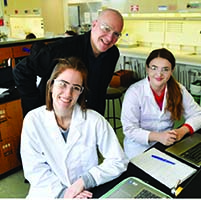
Professor Ingo Koeper, Flinders
University, with students

It’s a view that Professor Ingo Koeper, associate dean of learning and teaching at Flinders University shares, in part.

“I think we need both. We need a solid understanding of foundation in the discipline, but then you have to be able to extrapolate or take that and apply it to various different concepts,” he says.

Job-ready graduates

The problem that Koeper identifies is that science graduates don’t all follow the same career trajectories. Some go into academic research, some go into commercial science, some wind up in unexpected places, such as banking, “because they have critical thinking and analytical brains”.

Therefore he says teaching “job-ready” is a balance
between vocational knowledge and transferable skills.
He believes the BSc of the future could dispense with traditional lectures and move to online or face-to-face workshops, supplemented by in-person practical classes where students can gain hands-on experience in their
chosen discipline of science.

Workshops are a more active form of learning, says Koeper, but they come with a cost. Mass lectures are a financially efficient way of teaching lots of students and are well-suited to identifying important information. More active forms of learning take up more lecturer resources. But the move from mass lectures also opens opportunities.

Personalised learning

Victoria University (VU) has embraced the new hybrid-learning environment with a trial of a new assessment protocol. In recent years VU developed the Block Model, where subjects are run for a four-week intensive block, and students are enrolled in only one subject at a time, so they concentrate and consolidate their learning in one area. Joshua Johnson, chair of the Assessment Taskforce, says that the new “two-lane” assessment embraces AI-assisted learning in the open assessments lane. But in the secure assessments lane, the focus is on practical skills.

“For science education specifically, this includes hands-on experimental work, live data analysis and real-time scientific communication,” he says. Johnson says the framework strikes
a balance between collaborative, hands-on learning essential to science while preparing students for a workforce where technological fluency is paramount.

Macquarie University in Sydney is putting the finishing touches on its new Engineering and Australian Astronomical Optics (AAO) Building.

The $150 million facility – due to be officially opened around February 2026 – will house AAO which designs instrumentation and software for the world’s largest telescopes.

“Students will be going to classes there, but they’ll be walking past a group of professionals that are building an instrument that’s going to go for an international client on a giant telescope in Chile,” says director of the AAO and acting dean of engineering, Richard McDermid.

“I think that it’s great for the students to get exposure to
how professional work happens.” McDermid speculates that the defining feature of the future BSc might be personalised learning, with students able to mix and match their skills or knowledge acquisition, tailored to their personal career trajectory.

Multiple self-directed online units might be pre-prepared so that students can gain relevant skills while the impost on
teaching resources is minimised.

In this vision of the future, practical experience with industry professionals, such as that offered in the new AAO building will be essential. McDermid says students should graduate feeling like they didn’t just spend three years getting information they could have looked up online, but come out feeling that they understand how their potential industries work, because they’ve had experience in them.

“So they stand in an interview situation and talk from experience rather than theory,” he says.

But Macquarie’s edifice is being completed at a time when universities are increasingly exploring the advantages of online learning. The question now is what lessons science schools can take from Macquarie’s engineering co-location project, what a BSc will look like, and whether facilities like the AAO building will be required as we transition to the future.

Written by Sara Phillips
First published in Australian University Science issue 14

Science education: the hidden engine of Australia’s future

To mark National Science Week 2025, the Australian Council of Deans of Science (ACDS) is urging Australians to recognise the vital role of university science education in driving innovation, boosting the economy and shaping better decisions across all sectors.

From research labs to boardrooms, science graduates bring adaptability, problem-solving skills, and critical thinking to industries as diverse as policy, law, business, and technology. And science literacy isn’t just for scientists — it’s a must-have for leaders in every field.

Read why ACDS says universities, governments, and families must back science education as a foundation for Australia’s prosperity and resilience.

Australia Needs to Revalue the Science Degree – Here’s Why

By the Australian Council of Deans of Science – August 2025

In an era defined by climate change, technological disruption and global uncertainty, Australia needs more science graduates—not fewer. Yet science degrees remain underappreciated by many students and parents, for whom a career pathway in engineering, health or law often seems clearer. This perception is misleading and dangerous. As we celebrate National Science Week 2025, let’s reframe this perception.

Science Graduates Are Everywhere

Contrary to popular belief, science graduates are not confined to laboratories. Most work in business, government, policy, education and technology. The career outcomes for science graduates are very good, with 89% of science graduates in full-time paid work three years after graduation, according to the Graduate Outcomes Survey. Many pursue further study, leading to specialised roles in research, policy and innovation.

Science degrees produce versatile thinkers. Employers value adaptability, problem-solving and digital literacy—skills embedded in science education. An exciting initiative is the introduction of STEM Stream by the Australian Public Service, a program designed to give science graduates employment experience across multiple fields.

Science Is a Civic Skill

Science literacy is not optional: it is essential for lawyers drafting environmental legislation, accountants assessing sustainability risks and business leaders navigating technological change. Yet around 90% of university students are non-science majors. Science literacy is about rigorous, creative, systematic thinking and problem-solving—attributes that are critical in every profession. We should encourage every student—regardless of discipline—to engage with science at least once during their degree.

The National Assessment Program for Science Literacy found that students who engaged more frequently in critical and creative thinking activities had significantly higher science literacy. Science isn’t just about knowledge—it’s about the ability to reason, evaluate evidence and make informed decisions in a complex world. A science-literate population will be better able to analyse data and identify misinformation, leading to better decisions on issues such as vaccination, climate change and renewable energy.

Science Tackles the Big Problems

Science graduates are at the forefront of solving global challenges. From climate modelling to food security, they employ tools like data analytics and systems thinking to shape policy and drive innovation. Programs like Monash University’s Bachelor of Science Advanced – Global Challenges and Curtin University’s Bachelor of Multidisciplinary Science are training students to apply science in business, government and community settings to address issues like climate change and sustainable development.

These graduates may not follow a linear career path—but that’s precisely the point. The problems they face are complex, interdisciplinary and evolving. So too must be their education.

A Foundation for the Future Economy

According to a report commissioned by the Office of the Chief Scientist and the Australian Academy of Science, advanced physical and mathematical sciences contribute directly around 11% of GDP annually to the Australian economy. When flow-on effects are included, the total economic impact expands to 22% of national economic activity. Science graduates are not just employable—they are essential to national prosperity.

Universities across Australia are mainstreaming interdisciplinary, project-based learning models that bring together students from science, business, health and the humanities to solve real-world problems. These approaches prepare graduates for the modern workforce, where collaboration across disciplines is key to innovation and impact.

As Deans of Science, we are continuing to evolve science degrees by enhancing professional skills such as communication, cultural competency and work-integrated learning in science courses to strengthen the foundation of life-long learning for our graduates.

A Call to Action

If we want to inspire future generations, we must reframe how we talk about science degrees. They are not fallback options or stepping stones—they are launchpads. Our political leaders should promote science as a foundational skill for all. We encourage all students in vocational degrees (e.g. law, business, education) to study at least one semester of science at university. Governments should invest in science education and career support. And parents should see science not as a career risk, but as a future-proof choice.

Australia doesn’t just need more scientists. It needs more people who think like scientists.

Australia has finally set new science priorities. How can we meet them?

— By Kylie Walker

The Australian government has updated the nation’s science and research priorities, and released a National Science Statement. This marks the first wholesale update on Australia’s vision and plan for the future of science and technology in nearly a decade, with the last set of priorities being handed down by the Abbott government in 2015, and the last science statement in 2017.

Minister for Industry and Science Ed Husic has announced five key priorities:

  • transitioning to net zero
  • support for healthy and thriving communities
  • elevating Aboriginal and Torres Strait Islander knowledge systems
  • protection and restoration of Australia’s environment
  • building a secure and resilient nation.

Given the policy impact of these commitments, it’s worth examining what they mean – and how they should guide Australia’s progress on a number of fronts.

1. Transitioning to a net zero future

While Australia’s emissions per person have been falling, we still emit more than double the carbon dioxide of comparable countries such as the United Kingdom or New Zealand.

Australia is a research leader in battery technology, solar cell technologies and green metals. However, our overall investment in clean energy research, already behind our peers, is falling.

Focused investment in green energy research is needed to cut emissions in hard-to-decarbonise sectors, such as air transport and agriculture.

2. Supporting healthy and thriving communities

Australia is a world leader in medical discoveries – anyone who’s been given the “green whistle” pain reliever by paramedics has felt the effects of Australian medical research. But too often Australian discoveries don’t stay here for development.

Researchers often find they need to move their discoveries to the United States or the European Union to get them into production and into hospitals, ambulances and pharmacies.

Australian health and medical researchers need more support to apply and commercialise their findings here at home. More work is also needed on preventative care, so we can stop illnesses before they start.

Of course, “thriving communities” need more than the best available medical care. They also need connection and resilience. This too can be supported by research – such as findings that show what helps communities bounce back after devastating bushfires.

3. Elevating Aboriginal and Torres Strait Islander knowledge systems

Historically, and to everyone’s detriment, Australia has not done well at recognising, respecting and celebrating the knowledge systems of its First Nations peoples.

But Australia has much to gain by fully embracing Traditional Knowledge as part of its science. This must be done with respect and equity at the forefront: our next steps in weaving together knowledge systems must be led with and bring empowerment to, Aboriginal and Torres Strait Islander peoples and communities.

One recent example is the collaboration between Nyikina Mangala man John Watson and Professor Ron Quinn, who have been turning bark from the Mudjala tree into natural treatments for severe pain.

4. Protecting and restoring Australia’s environment

Australia’s lands and waters are home to an estimated 700,000 native species. Many of these remain undiscovered and many are at risk of extinction.

The last 20 years has seen threatened plant populations decline by 72%, and populations of threatened mammals and birds fall by 38% and 52% respectively.

We need to stop this decline and protect Australia’s natural inheritance, through science-informed measures such as conservation reserves, controlling invasive species, restoring degraded ecosystems and breeding endangered plants and animals.

5. Building a secure and resilient nation

Security and resilience come in many forms. It means protecting our crucial digital infrastructure from cyber attacks. It also means making sure our buildings, roads and energy systems can survive disasters and a changing climate. Protecting our agriculture from pests and diseases also falls under this heading.

Focusing on this priority means broad investment in research across disciplines, bringing together industry and academia.

So, how do we put these priorities into practice?

To meet these priorities, Australia will need greater investment in science and research across the board. While international collaborations are fantastic, we can’t rely on other countries to do this vital research for us.

We’ll need more highly skilled people to do this research – people bringing unique perspectives, ideas and training with them. That means bringing people into STEM (science, technology, engineering and mathematics) careers from more diverse backgrounds.

Unfortunately, we are still conditioning girls to have lower confidence in science than boys. They’re more likely to avoid subjects such as physics and engineering.

In 2021, only 0.5% of Aboriginal and Torres Strait Islander people had a STEM degree, compared with 4.9% of the Australian population, according to the recent Diversity in STEM Review. This needs to change if we are to advance our science and research priorities.

We’ll also need more long-term investment in research infrastructure, and in STEM education and training.

Making a future in Australia

The national science priorities dovetail with the government’s Future Made in Australia initiatives in modern manufacturing, renewable energy and more.

Pulling this off will require partnerships between industry, education and governments. To properly harness the ideas and innovations of researchers, we need to make it easy for them to move from academia to industry and back again.

review of Australia’s research and development funding was announced in this year’s federal budget.

The government could use this to put Australia on a path towards investing 3% of our GDP into Australian research and development – something countries such as the United States, Germany and Japan already do.

Sustained investment in Australian research and development can make the ambitious goals of the new national science statement a reality.

This article first appeared on The Conversation. Kylie Walker is CEO of the Australian Academy of Technological Sciences and Engineering (ATSE) which receives funding from the Department of Education and the Department of Industry, Science and Resources.

Seaweed business roadmap – a new billion dollar industry?

Small business, academia, industry and policy leaders converged on the University of Technology Sydney (UTS) to discuss a roapmap moving forward for Australia’s burgeoning algae industry.

The bioeconomy – materials created from organisms rather than traditional manufacturing or fossil-fuel-based products – is a huge new growth industry for Australia, the Algae Business Summit heard.

“Up to 60% of our manufacturing can come from organisms – the bioeconomy,” said Peter Ralph, the director of the Climate Change Cluster at UTS, a centre focussed on new insights into problems facing marine ecosystems by working at the intersection of the physical and life sciences.

“The bioeconomy can remove and wean us off the carbon economy,” he said.

“This will be a game changer. It’s a trillion dollar economy globally and employs around 17.5 million people.”

READ MORE: Australian University Science Innovation Futures

Industries present at the summit included Pacific Bio, an Australian biotech company whose signature product, RegenAqua, cleans wastewater using seaweed filled water tanks that can be placed near wastewater from councils or aquaculture farms. During this cleaning process, it also creates as a subsidiary product PlantJuice, a fertiliser for farmers.

Also present at the summit was Sampano, supply chain specialist who source local ingredients for global nutraceuticals, and whose biggest success story was developing the science and strategy to replace krill oil in Swisse pharmeceuticals with a vegan seaweed alternative.

Colin McGregor, CEO of BioGenesis, which develops nutraceutical, stock feed and fertiliser products from seaweed, says the potential for algae is vast in a green climate ecology, but it needs policy and regulatory input, something the summit aims in developing within a new roadmap for the industry going forward.


“Algae is the fastest growing plant on the planet. It doubles in mass everyday – compare that to corn, which doubles its mass every 60 days,” says McGregor.

READ MORE: Dr Afsaneh Khansari. Developing seaweed-based materials

“We know that algae has to be part of the solution to feed the planet. Half of all of the world’s photosynthesis is already provided by algae. Climate change and food are the two big opportunities for the future.”

Catriona McCloud, Interim Executive Director, Institute for Antarctic and Marine Studies, said you can replace whole carbon based industries.

“The opportunity is huge,” she said.

Take Asparagopsis, for example, a genus of edible red macroalgae that massively reduces methane emissions from cows.

“We have to come together to share knowledge, understanding and the pathway moving forward. We need to be clear about our purpose and what it means. We need to get people on the journey and be clear about what the benefits are.”

By Heather Catchpole

Science entrepreneur to speak at deep tech acceleration event

The push towards deep tech commercialisation is in the news following the announcement of the $2 billion Research Commercialisation Action Plan from the Federal Government pre-May 2022 budget and election push.

But for an Australia’s science entrepreneur, the business of science and innovation can start at the very beginning of a career – at least that’s the case for ShanShan Wang, an industrial designer who took her university project into a stellar science and innovation career.

ShanShan Wang is the Founder and Chief Executive Officer (CEO) at Roam Technologies, an Australian medical device company focused on portable oxygen, and making oxygen accessible and measurable to everyone.

She has since has won over five international design and innovation awards with her the most recent win of COVID19 NASA International Space Apps Challenge. She has also been named as one of Australia’s youngest innovators and the next generation of disruptive business leaders including Business Insider, AMP Amplify, Sydney Morning Herald and Australia’s Women’s Weekly– AWW Women of the Future. 

Catch ShanShan in conversation at ANSTO’s Accelerating Deep Tech Businesses, the fourth installment in the ANSTO x Science Meets Business Innovation Series. Register here.

From study to business

So many innovations start with a problem. For then UNSW industrial design student Wang, that problem was “what on earth am I going to write my thesis on?”

The answer came in surprising form – she spotted a mother and young child, tugging around a large cylinder, which she later learned was for the supply of pure oxygen. After some research, she realised there hadn’t been much improvement to this method of delivery for a long time, despite many people needing to use oxygen tanks daily. 

“I saw a problem, and I wanted to solve it,” she says.

Wang launched Roam Technologies – and a plan to convert air to oxygen on demand, in a small, easy-to-transport device – in 2014, the year after she graduated from university. Backed by clinical expertise in the field, engineering competancy, regulatory and quality supoort, their product, nicknamed Juno, is a small portable device that can produce oxygen out of ambient air and can regulate oxygen to user activity levels.

Juno leverages gas separation techniques with artificial intelligence to improve health. 

“It’s impactful health,” says Wang. “As COVID-19 has exacerbated a lot of problems that we’re trying to solve, it’s more important than ever.” 

The technology has since been featured in Popular Science, BBC News, Fox News, Business Insider, Huffington Post and more. 

She and her team are accelerating development of the device for regulation approval, before it is released to the wider market.

Accelerating Deep Tech Businesses is the fourth instalment in the ANSTO x Science Meets Business Innovation Series. Bringing together science leaders, deep tech entrepreneurs, academic partners and national organisations, this in-person and online event will be an opportunity to hear from, and connect with, those who embrace challenge-based innovation and collaboration. 

Nominations open for Prime Minister’s Science Prizes

Image: Shutterstock

Peers and colleagues of Australia’s outstanding scientists, research-based innovators and science teachers are urged to nominate them for the 2022 Prime Minister’s Prizes for Science.

Nominations are now open in the seven categories of Australia’s most prestigious science prizes, which award up to a total of $750,000 in prize money.

Minister for Science and Technology Melissa Price said those involved in science and innovation and teachers of science, technology and mathematics can put forward the names of those they wanted to see recognised for their contributions.

“I strongly encourage people to nominate those they know are doing great work in scientific research, research-based innovation, and in science teaching,” Minister Price said.  

“Science, technology and innovation are at the heart of so many of the key opportunities and challenges that lie ahead for Australia. 

“We are working hard to increase the diversity of nominations that are received for the prizes each year – but we need everyone’s help to make this happen. 

“If you know someone who should be recognised, we want to hear from you.

“In 2022 we want to uncover the unsung heroes from all across Australia – people whose work is delivering innovative solutions and creating better ways of working, living and educating in our community.”

The 2022 Prime Minister’s Prizes for Science are: 

  • Prime Minister’s Prize for Science  
  • Prime Minister’s Prize for Innovation  
  • Frank Fenner Prize for Life Scientist of the Year  
  • Malcolm McIntosh Prize for Physical Scientist of the Year  
  • Prize for New Innovators  
  • Prime Minister’s Prize for Excellence in Science Teaching in Primary Schools  
  • Prime Minister’s Prize for Excellence in Science Teaching in Secondary Schools  

The Prime Minister’s Prizes for Science is part of the Inspiring Australia – Science Engagement Program.

Nominations close on 10 February 2022 at 5pm AEDT and can be made at https://business.gov.au/grants-and-programs/prime-ministers-prizes-for-science or https://business.gov.au/grants-and-programs/prime-ministers-prizes-for-science-science-teaching-prizes

Pandemic leaves scientists exposed says science and innovation leader

Dr Katherine Woodthorpe AO is one of Australia’s most influential people in innovation, and the Chair of the Cooperative Research Centres (CRC) Association, recently renamed Cooperative Research Australia.

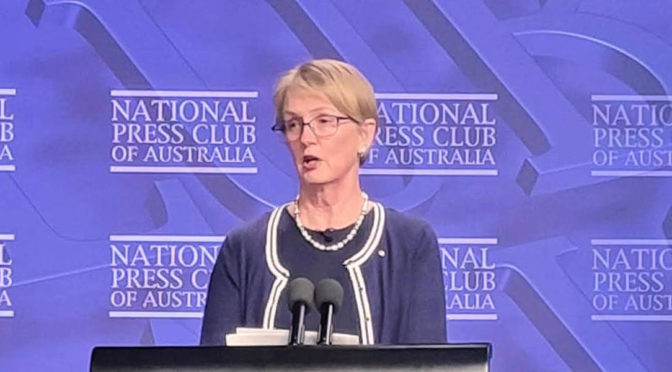
Woodthorpe spoke at the Ralph Slatyer Address on Science & Society at the National Press Club, Oct 20, marking the 30th anniversary of the CRC Program, a hugely successful university and industry partnership program that was begun by Ralph Slatyer, Australia’s inaugural Chief Scientist.

Woodthorpe emphasised the value of the long-running CRC program before going on to warn of the threats misinformation and conspiracy pose to science today.

CRCs deliver high value from collaborative research

“Whether the CRCs have been very commercially focussed or totally researching issues in the public good, they have all had to demonstrate how they will deliver impact in their sector. The combination of user driven research programs and embedded translation programs have led to substantial benefits to Australia, its people and indeed the world,” she said.

These benefits include improvements in the Cochlear Implant for profoundly deaf children, bushfire and natural hazards research and climate students in the Antarctic, to name just a few. Current CRCs in operation include the Future Battery Industries CRC and Digital Health CRC.

“Other great outcomes from CRCs include the 30 day long-wear contact lenses developed in the Vision CRC and sold worldwide; the protective toothpaste sold as “tooth mousse” that you’ve probably seen at your dentist, developed by Oral Health CRC,” she said.

Scientist facing threats from cyber bullies, misinformation and conspiracy

Woodthorpe used the speech to warn of an increase in derision and suspicion towards science.  

“For example, a recent survey showed one in five Australian scientists who have spoken to the media on COVID-19, has subsequently experienced death threats and threats of violence,” she said.

“When the internet became accessible to all, it opened a floodgate of armchair self-defined “researchers” who thought that random anonymous postings on Facebook and Reddit had more credibility than a scientist with years of training and peer-reviewed research; and a loud set of voices started to question the validity of science outcomes.

“Coupled with that, the rise of the lobbyist, often under cover of being an independent research organisation, deliberately set out to undermine the credibility of science and scientists, producing spurious “facts” and figures,” Woodthorpe continued.

“Most scientists eschew the spotlight and really just want to get on with their research, but the world has changed and all of those who know that a better understanding of science can only help and not hinder us need to step up and communicate the value of what we are doing,” she said.

Her message to reporters was: “Don’t amplify the denigrators and conspiracy theorists.

“Balance is not one climate denier vs one climate scientist. It’s 2000 scientists before the denier gets their chance,” she added.

“The angry mob’s loudest voices have a huge pull and even seemingly sensible people have been sucked down their conspiracy black holes. And the effort it takes to refute any one of their articles, tweets or other postings takes an order of magnitude more that it took the conspiracy theorists and their trolls and bots to invent it and disseminate it.”

Tackling autism diagnosis on a national level

Autism is a neurodevelopmental condition characterised by behavioural differences in children, but autism diagnosis is far from straightforward.

Now, the Cooperative Research Centre for Autism Diagnosis (Autism CRC) and the National Disability Insurance Agency (NDIA) have joined forces to implement a national guideline for diagnosing Autism Spectrum Disorder.

The system will improve the highly variable and often delayed diagnoses currently delivered across different state health systems.

This initiative comes at a time when authorities such as the Australian Medical Association (AMA) have recognised autism diagnosis in Australia as an issue in urgent need of attention. Earlier this month, the AMA announced that the speed of diagnosis is of primary concern. 

Over the course of the next year, Professor Andrew Whitehouse, Director of the Autism Research Team at the Telethon Kids Institute, will spearhead collaborative research efforts to establish a national guideline to be published by September 2017.

One of the primary aims of the guideline is to streamline the diagnostic process across Australia and thereby accelerate vital, early-stage diagnoses.

Tackling variability in autism diagnosis

In developing the new guideline, the Autism CRC and NDIA hope to address problems that are rooted as much in the state-run approach to the diagnostic process as they are in the nature of autism itself.

“We don’t know enough about the genetics and neuroscience of autism, so we diagnose based on behaviour,” says Whitehouse. “And the way we appraise the particular behaviours differs quite considerably across states.”

According to Whitehouse, some states may require only one medical health professional to carry out a diagnostic assessment, while others mandate that every patient be consulted by a series of interdisciplinary teams. The level of diagnostic training and tools of assessment also vary greatly across regions, and between rural and metropolitan areas.

These factors impact not only the diagnostic outcome, but also the cost and time involved in reaching a conclusion.

“The variability in how we appraise behaviour associated with autism in Australia has a major effect on the cost of an assessment and the waitlist involved,” says Whitehouse.

A recent Australian study suggested that in Australia, autism diagnosis occurs around three to four years later than recommended, with early treatment key to limiting the effects autism has on an individual’s life.

Given the lack of a standardised, transparent approach to autism diagnosis across Australia, Whitehouse believes some families feel like they have to seek out multiple opinions. Not only does that delay the diagnosis, but it also adds to the emotional and financial strain for families, says Whitehouse.

“In the end, a delay is a cost to the family, as well as the Commonwealth government.”

Working with families for families

Over the course of the next year, the research team plans to work with families, individuals on the spectrum, autism experts, doctors, and service providers to make sure that the national guideline addresses the key issues faced by families and individuals on the autism spectrum today.

Their goal is to create an environment where families and individuals on the autism spectrum of all ages feel that they can trust in the process and can expect equal procedures across the whole of Australia.

“The main focus is not just rigour, but what is feasible to administer on the ground and what is acceptable to families,” says Whitehouse.

Along with the publication itself, plans for distributing the national guideline include extensive training of doctors and medical staff, as well as awareness campaigns for families.

Accelerated access to treatment

The Autism CRC and NDIA hope that a national approach to tackling autism diagnosis will lead to a smoother and more efficient diagnostic process, accelerating access to treatment and effecting more equitable outcomes for everyone living with autism.

“The national guideline is an important way to get all children with autism off to the best start in life, so that every child is afforded equal opportunities,” says Whitehouse.

A successful implementation of the guidelines could also set an example for agencies handling other disabilities.

“With this project, we hope to demonstrate that nationally harmonised protocols in the area of childhood disability are possible, particularly through collaboration with Government agencies,” says Whitehouse.

– Iliana Grosse-Buening

Autism CRC aims to provide the national capacity to develop and deliver evidence-based outcomes through its unique collaboration with the autism community, research organisations, industry and government. Find out more here.

You might also enjoy:

Biobank speeds autism diagnosis

Research commercialisation awards

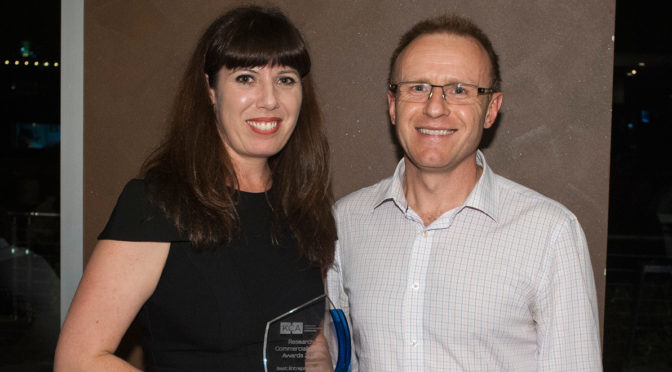
Featured image above: Dr Alastair Hick, KCA Chair and Jasmine Vreugdenburg (UniSA), winner of the Best Entrepreneurial Support Initiative and People’s Choice Award at KCA’s Research Commercialisation Awards. Credit: KCA

The University of New South Wales (UNSW), Curtin University (WA) and the University of South Australia (UniSA) were winners at the Knowledge Commercialisation Australasia (KCA) Research Commercialisation Awards, announced at its annual conference dinner in Brisbane.

Success lay with UNSW which won Best Commercial Deal for securing $20 million capital investment from Zhejian Handian Graphene Tech; Curtin University for the Best Creative Engagement Strategy with The Cisco Internet of Everything Innovation Centre; and UniSA won Best Entrepreneurial Initiative and the People’s Choice Award for its Venture Catalyst which supports student led start-ups.

“These awards recognise research organisations’ success in creatively transferring knowledge and research outcomes into the broader community.  They also help raise the profile of research organisations’ contribution to the development of new products and services which benefit wider society and have the potential that develop the companies that may grow new knowledge based industries in Australia,” says KCA Executive Officer, Melissa Geue.

KCA Chairman and Director of Monash innovation at Monash University, Dr Alastair Hick, says it is important that commercialising research successes are celebrated and made public.

“KCA member organisations work incredibly hard at developing new ways to get technology and innovation out into industry being developed into the products and services of tomorrow. These awards recognise that hard work and also that we must develop new ways of improving the interface between public sector research and industry.

“I am also excited that KCA members are playing an increasing role in helping the entrepreneurs of tomorrow. It is essential that we help develop their entrepreneurial skills and give them the opportunities in an environment where they can learn from skilled and experienced mentors,” says Hick.

Research Commercialisation Awards – winning initiatives

Best Commercial Deal

Zhejian Hangdian Graphene Tech Co (ZHGT) – University of New South Wales (UNSW)

This is an initiative to fund and conduct research on cutting-edge higher efficiency voltage power cables, known as graphene, and on super-capacitors. With $20M capital investment by the Chinese corporation Hangzhou Cable Co., Ltd (HCCL), and UNSW contributing intellectual property as a 20% partner, the objectives are to execute the deal through research and development; manufacturing of research outcomes in Hangzhou; and finally commercialisation.                                                                                                             

Best Creative Engagement Strategy

Cisco Internet of Everything Innovation Centre – Curtin University

The Cisco Internet of Everything Innovation Centre, co-founded by Cisco, Curtin University and Woodside Energy Ltd, is a new industry and research collaboration centre designed to foster co-innovation. With a foundation in radioastronomy, supercomputing and software expertise, it is growing a state-of-the-art connected community focused on leveraging data analytics, cybersecurity and digital transformation network platforms to solve industry problems. The Centre combines start-ups, small–medium enterprises, industry experts, developers and researchers in a collaborative open environment to encourage experimentation, innovation and development through brainstorming, workshops, proof-of-concept and rapid prototyping. By accelerating innovation in next-generation technologies, it aims to help Australian businesses thrive in this age of digital disruption.

Best Entrepreneurial Initiative

Venture Catalyst Program – UniSA

Venture Catalyst supports student led start-ups by providing up to $50k to the new enterprise as a grant. The scheme targets current and recent graduates who have a high tolerance for risk and an idea for a new business venture that is both novel and scalable. The scheme takes an ‘IP and equity free’ approach and encourages students to collaborate with different disciplines and externals to encourage a diverse skill set for the benefit of the new venture. Venture Catalyst is a collaboration between the UniSA and the South Australian Government, and is supported through UniSA Ventures as well as representatives from industry and experienced entrepreneurs.

This year’s Research Commercialisation Awards were judged by commercial leaders of innovation:  Erol Harvey, CEO, MiniFab, Dan Grant, PVC Industry Engagement, LaTrobe University and Anna Rooke, CEO, QUT Creative Enterprise Australia.

About Knowledge Commercialisation Australasia (KCA)

Knowledge Commercialisation Australasia (KCA) is the peak body leading best practice in industry engagement, commercialisation and entrepreneurship for research organisations. They achieve this through delivery of stakeholder connections, professional development and advocacy.

This information was first shared by Knowledge Commercialisation Australasia on 2 September 2016. See all finalists here

A “vinnovative” solution

Barossa Valley brothers Joshua and Simon Schmidt started their South Australian company Vinnovate in 2012 and have developed a bottle closure that releases a solution to reduce the impact of preservatives or add subtle flavours to wine.

When activated, by pressing a button on top of the screw cap, the solution is mixed with the wine and binds to free sulphites, removing their preservative properties and reducing their ability to cause a reaction.

The Vinnovate invention has beaten more than 100 Australian and New Zealand industry innovations to take out the Brancott Estate Winexplorer Challenge.

Co-founder and chief innovation officer Joshua Schmidt says the award – a $35,000 cash prize plus the opportunity to work with Pernod Ricard to bring the product to market – is a huge thrill.

“We believe that the Winexplorer Challenge has validated our idea and it now gives us a springboard from which to go forward,” he says.

Joshua says it will be up to the consumer as to whether they activate the solution or not.

“We’ve found from a lot of market research that more and more people are experiencing a reaction when they drink wine and it’s actually pushing people away from the industry,” he says.

“We wanted to create something that was very similar to an existing screw cap but has an element of functionality because across the wider consumer goods space there is a strong trend towards individualisation.”

img - Industries_primary industries_research and development160422_Screw cap innovation removes wine preservatives at the push of a button_bannerP

Joshua and Simon Schmidt

Sulphites, which release sulphur dioxide, are preservatives widely used in winemaking because of their antioxidant and antibacterial properties.

Common reactions to sulphites include headaches and red, itchy skin.

“Being Barossa boys and children of the industry we set out to find a means so that everyone can enjoy wine,” Joshua says.

“We believe it freshens up the wine as well and allows it to be more of a consumer-centric experience rather than traditionally having to wait for 30 to 60 minutes after opening for the wine to ‘breathe’.”

“We want to do something good for the industry.”

Vinnovate Managing Director Simon Schmidt is a winemaker while Joshua’s background is in marketing, with a particular focus on the pharmaceutical industry.

The Schmidt brothers have developed prototypes and have commenced discussions with a number of wineries around trials.

Joshua says he hopes for a commercial release towards the end of the year.

“It’s our vision to see this as the next generation screw cap closure for wine,” he says.

“We are currently talking to some wineries about this and it’s our goal that this will be inclusive wine packaging.”

“We believe this has tremendous widespread appeal and application just like how Clare Valley was an early adopter of the screw cap 40-odd years ago.”

The Barossa Valley produces world-renowned brands such as Penfolds Grange, Jacob’s Creek and Wolf Blass.

According to the International Organization of Vine and Wine, Australia was the world’s seventh largest wine producing nation in 2015.

South Australia is consistently responsible for almost 50% of Australia’s annual production.

Brancott Estate is a pioneer of New Zealand wine, planting the first sauvignon blanc vines in Marlborough in 1975.

– Andrew Spence

This article was first published by The Lead on 22 April 2016. Read the original article here

Innovation in Western Australia

Science is fundamental for our future social and economic wellbeing.

In Western Australia we’re focusing on areas where we have natural advantages, and an appropriate base of research and industrial capacity. Western Australia’s Science Statement, released by Premier Barnett in April 2015, represents a capability audit of relevant research and engagement expertise in our universities, research institutes, State Government agencies and other organisations. Mining and energy, together with agriculture, are traditional powerhouses, but the science priorities also reflect the globally significant and growing capabilities in medicine and health, biodiversity and marine science, and radio astronomy. It’s a great place to begin exciting new collaborations.

The Science Statement has also helped to align efforts across research organisations and industry. For instance, in 2015 an industry-led “Marine Science Blueprint 2050” was released, followed by the Premier commissioning a roundtable of key leaders from industry, Government, academia and community to develop a long-term collaborative research strategy. These meetings highlighted critical areas of common interest such as decommissioning, marine noise, community engagement and sharing databases.


“Opportunities abound for science and industry to work together to translate research into practical, or commercial, outcomes.”


Science, innovation and collaboration are integral to many successful businesses in Western Australia. In the medical field, a range of technological innovations have broadened the economy and created new jobs. Some of these success stories include Phylogica, Admedus, Orthocell, iCeutica, Dimerix, Epichem and Proteomics International. Another example in this space is the Phase I clinical trial facility, Linear Clinical Research, which was established with support from the State Government – 75% of the trials conducted to date come from big pharmaceutical and biotechnology companies in the USA.

Opportunities abound for science and industry to work together to translate research into practical, or commercial, outcomes. For example, the field of big data analytics is rapidly permeating many sectors. Perth’s Pawsey Centre, the largest public research supercomputer in the southern hemisphere, processes torrents of data delivered by many sources, including radioastronomy as the world’s largest radio telescope, the Square Kilometre Array, is being developed in outback WA. In addition, local company DownUnder GeoSolutions has a supercomputer five times the size of Pawsey for massive geophysical analyses. In such a rich data environment, exciting new initiatives like the CISCO’s Internet of Everything Innovation Centre, in partnership with Woodside, is helping to drive innovation and growth.

Leading players in the resources and energy sector are also taking innovative approaches to enhance efficiency and productivity. Rio Tinto and BHP Billiton use remote-controlled driverless trucks, and autonomous trains, to move iron ore in the Pilbara. Woodside has an automated offshore facility, while Shell is developing its Prelude Floating Liquefied Natural Gas facility soon to be deployed off the northwest coast. Excitingly, 3 emerging companies (Carnegie, Bombora and Protean) are making waves by harnessing the power of the ocean to generate energy.

This high-tech, innovative environment is complemented by a rapidly burgeoning start-up ecosystem. In this vibrant sector, Unearthed runs events, competitions and accelerators to create opportunities for entrepreneurs in the resources space. Spacecubed provides fabulous co-working space for young entrepreneurs, including the recently launched FLUX for innovators in the resource sector. The online graphic design business Canva, established by two youthful Western Australians epitomises what entrepreneurial spirit and can-do attitude can achieve. In this amazingly interconnected world, the sky’s the limit.

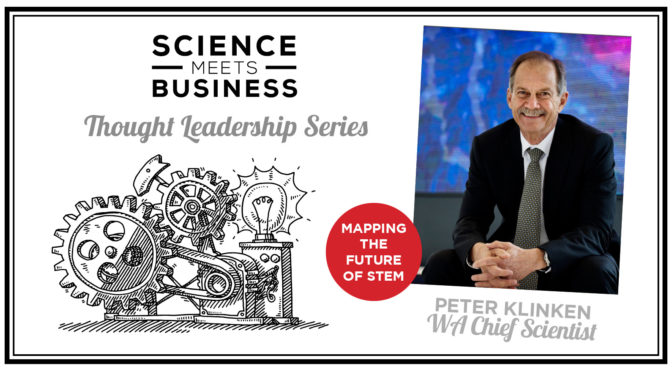
Professor Peter Klinken

Chief Scientist of Western Australia

Read next: Professor Barney Glover, Vice-Chancellor and President of Western Sydney University and Dr Andy Marks, Assistant Vice-Chancellor (Strategy and Policy) of Western Sydney University on Making innovation work.

Spread the word: Help to grow Australia’s innovation knowhow! Share this piece using the social media buttons below.

Be part of the conversation: Share your ideas on innovating Australia in the comments section below. We’d love to hear from you!

Microcapsules for type-1 diabetes

Curtin University researchers are a step closer to establishing a way for people with type-1 diabetes to introduce insulin into the body without the need for injections, through the development of a unique microcapsule.

People with type-1 diabetes, a condition where the immune system destroys cells in the pancreas, generally have to inject themselves with insulin daily and test glucose levels multiple times a day.

Dr Hani Al-Salami from Curtin’s School of Pharmacy is leading the collaborative project using cutting-edge microencapsulation technologies to design and test whether microcapsules are a viable alternative treatment for people with type-1 diabetes.

“Since 1921, injecting insulin into muscle or fat tissue has been the only treatment option for patients with type-1 diabetes,” Al-Salami says.

“The ideal way to treat the illness, however, would be to have something, like a microcapsule, that stays in the body and works long-term to treat the uncontrolled blood glucose associated with diabetes.”

The microcapsule contains pancreatic cells which can be implanted in the body and deliver insulin to the blood stream.

“We hope the microcapsules might complement or even replace the use of insulin in the long-term, but we are still a way off. Still, the progress is encouraging and quite positive for people with type-1 diabetes,” Al-Salami says.

Researchers say the biggest challenge in the project to date has been creating a microcapsule that could carry the cells safely, for an extended period of time, without causing an unwanted reaction by the body such as inflammation or graft failure.

“We are currently carrying out multiple analyses examining various formulations and microencapsulating methods, in order to ascertain optimum engineered microcapsules capable of supporting cell survival and functionality,” Al-Salami says.

The research was conducted in partnership with the University of Western Australia. Click here to read the scientific paper, published in Biotechnology Progress.

– Susanna Wolz

This article was first published by Curtin University. Read the original media release here.


Australia’s STEM workforce

Featured image above from the Australia’s STEM Workforce Report

Australians with qualifications in science, technology, engineering and mathematics (STEM) are working across the economy in many roles from wine-makers to financial analysts, according to a new report from The Office of the Chief Scientist.

Australia’s Chief Scientist Dr Alan Finkel says Australia’s STEM Workforce is the first comprehensive analysis of the STEM-qualified population and is a valuable resource for students, parents, teachers and policy makers. The report is based on data from the 2011 Census, the most recent comprehensive and detailed data set of this type of information. The report will serve as a benchmark for future studies.

“This report provides a wealth of information on where STEM qualifications – from both the university and the vocational education and training (VET) sectors – may take you, what jobs you may have and what salary you may earn,” Finkel says.

“Studying STEM opens up countless job options and this report shows that Australians are taking diverse career paths.”

The report investigates the workforce destinations of people with qualifications in STEM fields, looking at the demographics, industries, occupations and salaries that students studying for those qualifications can expect in the workforce.

STEM workforce

Click here to see an infographic of key facts from the Australia’s STEM Workforce Report

The report found that fewer than one-third of STEM university graduates were female, with physics, astronomy and engineering having even lower proportions of female graduates. Biological sciences and environmental studies graduates were evenly split between the genders. In the vocational education and training (VET) sector, only 9% of those with STEM qualifications were women.

Finkel says that even more worrying than the gender imbalance in some STEM fields, is the pay gap between men and women in all STEM fields revealed in the report. These differences cannot be fully explained by having children or by the increased proportion of women working part-time.

The analysis also found that gaining a doctorate is a sound investment, with more STEM PhD graduates in the top income bracket than their Bachelor-qualified counterparts. However, these same STEM PhD holders are less likely to own their own business or work in the private sector.

Finkel says that preparing students for a variety of jobs and industries is vital to sustaining the future workforce.

“This report shows that STEM-qualified Australians are working across the economy. It is critical that qualifications at all levels prepare students for the breadth of roles and industries they might pursue.”

Click here to download the full Australia’s STEM Workforce report.

Click here to read Alan Finkel’s Foreword, or click here to read the section of the report that interests you.

This information was first shared by Australia’s Chief Scientist on 31 Mar 2016. Read the original media release here

Biobank speeds autism diagnosis

The Autism CRC is building Australia’s first Autism Biobank, with the aim of diagnosing autism earlier and more accurately using genetic markers. Identifying children at high risk of developing autism at 12 months of age was “a bit of a holy grail”, says Telethon Kids Institute’s head of autism research Professor Andrew Whitehouse, who will be leading the Biobank. Researchers think the period between 12–24 months of age is “a key moment” in brain development, he adds.

Autism Diagnosis

Professor Andrew Whitehouse, Head of the Developmental Disorders Research Group at the Telethon Kids Institute

As with other neurodevelopmental disorders, a diagnosis of autism is based on certain behaviours, but these only begin to manifest at a diagnosable level between the ages of two and five. Whitehouse says while there are great opportunities for therapy at these ages, researchers believe an earlier diagnosis will make the therapy programs more effective. Some 12-month-old children already exhibit behaviours associated with the risk of developing autism, for example not responding to their name, but currently doctors can’t conclusively diagnose autism at this early age.

“If we can start our therapies at 12 months, we firmly believe they’ll be more effective and we can help more kids reach their full potential,” says Whitehouse.

The biology of autism varies greatly between individuals, and it appears a combination of environmental factors and genes are involved – up to 100 genes may play a role in its development. Studying large groups of people is the only way to get a full understanding of autism and potentially identify genes of importance.

To do this, the Biobank collects DNA samples from 1200 families with a history of autism – children with autism aged 2–17 years old, who are recruited through therapy service providers, and their parents – as well as samples from control families who do not have a history of autism.

autism diagnosis

DNA samples are taken at the Telethon Kids Institute and sent to the ABB Wesley Medical Research Tissue Bank to be analysed for genetic biomarkers. Credit: Telethon Kids Institute

The samples are then shipped to the ABB Wesley Medical Research Tissue Bank in Brisbane for the Biobank’s creation. Here, they are analysed for genetic biomarkers using genome wide sequencing – determining DNA sequences at various points along the genome that are known to be important in human development. Whitehouse says they are also planning to conduct metabolomic and microbiomic analyses on urine and faeces.

“It’s the biggest research effort into autism ever conducted in Australia,” he says.

The goal is to use the results to develop a genetic test that can be conducted with 12-month-old children who are showing signs of autism. The samples will also be stored at the Biobank for future research.

The aim is to expand internationally, so that researchers can exchange data with teams around the globe who are doing similar work, thus increasing the sample size.

– Laura Boness

If your child has been diagnosed with autism and you would like to find out about participating in the Autism CRC Biobank, click here.

www.autismcrc.com.au

The new carbon industry

The Paris 2015 agreement presented cities with a global challenge. “Buildings and cities contribute upwards of 40% of global carbon emissions,” says Professor Deo Prasad, CEO of the Low Carbon Living CRC (CRCLCL).

Leveraging the knowledge of researchers from the CSIRO and five of Australia’s top universities, as well as experts in the field, the CRCLCL is heading up efforts to deliver a low carbon built environment in Australia. Its ambitious aim is to cut residential and commercial carbon emissions by 10 megatonnes by 2020.

“The CRCLCL is at the forefront of driving technological and social innovation in the built environment to reduce carbon emissions,” says Prasad.

Recognised as a world-leading research organisation by the United Nations Environment Programme, the CRCLCL collaborates with industry partners like AECOM and BlueScope, and universities and governments.

“We’re looking to bring emissions down, and in the process we want to ensure global competitiveness for Australian industry by helping to develop the next generation of products, technologies, advanced manufacturing and consulting services,” says Prasad.

CRCLCL activities range from urban sustainable design and solar energy to software and community engagement.

“By working effectively with government, researchers and industry, we employ an ‘end-user’ driven approach to research that maximises uptake and utilisation,” says Prasad.

– Carl Williams

lowcarbonlivingcrc.com.au

Top 25 insights: spin-off start-ups

Seven leaders of the Top 25 Science Meets Business R&D spin-off companies answer the question: What insights can you share with other R&D spin-off start-ups in Australia?


CATAPULT GROUP INTERNATIONAL LTD

Fill a market need and lead that market; don’t fill a product gap and complicate your market with a technology push.

It doesn’t matter how technical your product or service is, it needs to be easily explained and have a story that resonates for it to be successful in any market, let alone overseas markets.

Shaun_intext

– Shaun Holthouse, Chief Executive Officer


SMARTCAP TECHNOLOGIES PTY LTD

A few words of wisdom.

1. Make sure there is a viable, readily accessible market that is sufficiently large to support a spin-off company.

2. The actual invention is only the trigger to start a company – you are establishing a company that will need to innovate on an ongoing basis if it wants to be successful. Make sure that innovation capability and desire exists and thrives in the spin-off.

3. Identify competent board and management capability to direct the business and generate revenue for the company. Most often the management capability is not the same people who carried out the research, but sometimes it can be. Without the right people running the show, the spin-off will not be successful. 

4. Make sure you have sufficient funding available to get the company through to a viable revenue stream, and ideally flexible funding arrangements. Unexpected things will happen and you need capability to accommodate those changes.

– Kevin Greenwood, Chief Operating Officer


PHARMAXIS LTD

“Most start-ups are focused on development plans that contain binary events and marginal financing. This makes them vulnerable to unforeseen delays and additional development steps that require additional funding.

I believe that we should be looking to generate portfolios of innovation under experienced management teams that give our projects the best chance of success – and adequate funding to reach proof of concept in whatever market we are targeting – but at the same time help to spread risk.

venture capital

– Gary J Phillips, Chief Executive Officer


ACRUX DDS PTY LTD

“Ensuring a strong board, CEO, and a quality management team will be critical to success. The availability of funds for programs is an often-discussed barrier to rapid progress. Underfunded companies and poorly thought-out product concepts or technologies are more likely to fail early.

Michael Kotsanis_intext

– Michael Kotsanis, Chief Executive Officer


SPINIFEX PHARAMCEUTICALS PTY LTD

“1. For biotechnology R&D spin-off start-ups in Australia, major hurdles are the dearth of seed capital as well as access to large follow-on venture funds that are needed to build successful biotechnology companies.

2. There is a mismatch between the 10-year life span of a venture capital fund in Australia and the 15+ years needed to translate research findings into a novel drug or biologic product for improving human health. 

3. Hence, these systemic issues are major impediments to building successful biotechnology companies in Australia and these issues need to be addressed.”

– Professor Maree Smith, Executive Director of the Centre for Integrated Preclinical Drug Development and Head of the Pain Research Group at The University of Queensland


ADMEDUS

Start-up companies may consider moving overseas, especially if the Government stops or reduces the R&D tax rebates and doesn’t establish some innovation stimulus packages.

venture capital

– Dr Julian Chick, Chief Operating Officer


REDFLOW

Nothing ever goes 100% smoothly – perseverance is a prerequisite.

Stuart Smith_intext

– Stuart Smith, Chief Executive Officer

Click here to see the full list of Top 25 Science Meets Business R&D spin-off companies, or for further insights from the Top 25 leaders, read their interviews on attracting venture capital, learning from overseas marketsgetting past the valley of death and overcoming major start-up challenges.

Ocean acidity devastates corals

Featured image above by Kennedy Wolfe

Increasing carbon emissions in the atmosphere from activities such as the burning of fossil fuels and deforestation are changing the chemistry in the ocean. When carbon dioxide from the atmosphere is absorbed by seawater, it forms carbonic acid. The increased acidity, in turn, depletes carbonate ions – essential building blocks for coral exoskeletons.

There has been a drastic loss of live coral coverage globally over the past few decades. Many factors – such as changing ocean temperatures, pollution, ocean acidification and over-fishing – impede coral development. Until now, researchers have not been able to isolate the effects of individual stressors in natural ecosystems.

In an article published in Nature on 24 February 2016, researchers working at the University of Sydney’s One Tree Island Research Station at the southern end of the Great Barrier Reef (GBR) found that they could improve coral development by reversing the acidity of the reef waters.

“Our oceans contribute around $45 billion each year to the economy”

The international team – led by Dr Rebecca Albright from Stanford University in the USA – brought the acidity of the reef water back to what it was like in pre-industrial times by upping the alkalinity. They found that coral development was 7% faster in the less acidic waters.

“If we don’t take action on this issue very rapidly, coral reefs – and everything that depends on them, including wildlife and local communities – will not survive into the next century,” says team member Professor Ken Caldeira.

Destruction of the GBR would not only be a devastating loss because it’s considered one of the 7 Natural Wonders of the World, but would be a great economic blow for Australia.

Our oceans contribute around $45 billion each year to the economy through industries such as tourism, fisheries, shipping, marine-derived pharmaceuticals, and offshore oil and gas reserves. Marine tourism alone generates $11.6 million a year in Australia.

Impact of acidification on calcification

Corals absorb carbonate minerals from the water to build and repair their stoney skeletons, a process called calcification. Despite the slow growth of corals, calcification is a rapid process, enabling corals to repair damage caused by rough seas, weather and other animals. The process of calcification is so rapid it can be measured within one hour.

Manipulating the acidity of the ocean is not feasible. But on One Tree Island, the walls of the lagoons flanking the reef area isolate them from the surrounding ocean water at low tide – allowing researchers to investigate the effect of water acidity on coral calcification.

“We were able to look at the effect of ocean acidification in a natural setting for the first time,” says One Tree Reef researcher and PhD candidate at the University of Sydney, Kennedy Wolfe.

ocean acidity

The University of Sydney’s Kennedy Wolfe collecting water samples on One Tree Reef. Photo credit: Ken Caldeira

In the same week, an independent research team from CSIRO published results of mapping ocean acidification in the GBR. They found a great deal of variability between the 3851 reefs in the GBR, and identified the ones closest to the shore were the most vulnerable. These reefs were more acidic and their corals had the lowest calcification rates – results that supported the findings from One Tree Reef.

Marine biologists have predicted that corals will switch to a net dissolution state within this century, but the team from CSIRO found this was already the case in some of the reefs in the GBR.

“People keep thinking about [what will happen in] the future, but our research shows that ocean acidification is already having a massive impact on coral calcification” says Wolfe.

– Sue Min Liu

Collaborate or crumble

Bookshelves in offices around Australia groan under the weight of unimplemented reports of research findings. Likewise, the world of technology is littered with software and gadgetry that has failed to gain adoption, for example 3D television and the Apple Newton. But it doesn’t have to be this way.

Adoption of research is a critical success measure for Cooperative Research Centres (CRCs). One CRC in particular, the CRC for Water Sensitive Cities, has succeeded in having its research adopted by governments, companies and even the United Nations. Its secret is fruitful collaborations spanning diverse academic disciplines to deliver usable results. These are the kind of collaborations CRCs are well placed to deliver, argues Professor Rebekah Brown, project leader and former Chief Research Officer of the CRC for Water Sensitive Cities and director of the Monash Sustainability Institute.

The best are not always adopted. To change that, says Brown, developers need to know how their research solutions will be received and how to adapt them so people actually want them.

“Physical scientists, for example, benefit from understanding the political, social and economic frameworks they’re operating in, to position the science for real-world application,” she says.

The big-picture questions around knowledge and power, disadvantage and information access, political decision-making, community needs and aspirations, policy contexts and how values are economised – these are the domains of the social sciences. When social science expertise is combined with that of the physical sciences, for example, the research solutions they produce can have a huge impact. In the case of the CRC for Water Sensitive Cities, such solutions have influenced policy, strategy and regulations for the management of urban stormwater run-off, for example. Brown and her colleagues have found it takes a special set of conditions to cultivate this kind of powerful collaborative research partnership.

The CRC for Water Sensitive Cities has seen considerable growth. It started in 2005 as a $4.5 million interdisciplinary research facility with 20 Monash University researchers and PhD students from civil engineering, ecology and sociology. The facility grew over seven years to become a $120 million CRC with more than 85 organisations, including 13 research institutes and other organisations such as state governments, water utilities, local councils, education companies and sustainability consultancies. It has more than 230 researchers and PhD students, and its work has been the basis for strategy, policy, planning and technology in Australia, Singapore, China and Israel.

in text green corridor

Blue and green corridors in urban areas are part of the CRC for Water Sensitive Cities’ research into managing water as the world becomes increasingly urbanised.

In a 2015 Nature special issue, Brown and Monash University colleagues Ana Deletic and Tony Wong, project leader and CEO respectively of the CRC for Water Sensitive Cities, shared their ‘secret sauce’ on bridging the gap between the social and biophysical sciences, which allowed them to develop a partnership blueprint for implementing urban water research.


8 tips to successful collaboration

Rebekah Brown

Professor Rebekah Brown, courtesy of the Monash Sustainability Institute

Cultivating interdisciplinary dialogue and forming productive partnerships takes time and effort, skill, support and patience. Brown and her colleagues suggest the following:

1 Forge a shared mission to provide a compelling account of the collaboration’s overall goal and to maintain a sense of purpose for all the time and effort needed to make it work;

2 Ensure senior researchers are role models, contributing depth in their discipline and demonstrating the skills needed for constructive dialogue;

3 Create a leadership team composed of people from multiple disciplines;

4 Put incentives in place for interdisciplinary research such as special funding, promotion and recognition;

5 Encourage researchers to put their best ideas forward, even if unfinished, while being open to alternative perspectives;

6 Develop constructive dialogue skills by providing training and platforms for experts from diverse disciplines and industry partners to workshop an industry challenge and find solutions together;

7 Support colleagues as they move from being I-shaped to T-shaped researchers, prioritising depth early on and embracing breadth by building relationships with those from other fields;

8 Run special issues of single-discipline journals that focus on interdisciplinary research and create new interdisciplinary journals with T-shaped editors, peer-reviewers or boards.

Source: Brown, R.R, Deletic, A. and Wong, T.H.F (2015), How to catalyse collaboration, Nature, 525, pp. 315-317.


A recent Stanford University study found almost 75% of cross-functional teams within a single business fail. Magnify that with PhD research and careers deeply invested in niche areas and ask people to work with other niche areas across other organisations, and it all sounds impossible. Working against resistance to collaborate requires time and effort.

Yet as research partnerships blossom, so do business partnerships. “Businesses don’t think of science in terms of disciplines as scientists do,” says Brown. “Researchers need to be able to tackle complex problems from a range of perspectives.”

Part of the solution lies in the ‘shape’ of the researchers: more collaborative interdisciplinary researchers are known as ‘T-shaped’ because they have the necessary depth of knowledge within their field (the vertical bar of the T), as well as the breadth (the horizontal bar) to look beyond it as useful collaborators – engaging with different ways of working.

Some scholars, says Brown, tend to view their own discipline as having the answer to every problem and see other disciplines as being less valuable. In some ways that’s not surprising given the lack of exposure they may have had to other disciplines and the depth of expertise they have gained in their own.

“At the first meeting of an interdisciplinary team, they might try to take charge, for example talk but not listen to others or understand their contribution. But in subsequent meetings, they begin to see the value the other disciplines bring – which sometimes leaves them spellbound.

“It’s very productive once people reach the next stage in a partnership where they develop the skills for interdisciplinary work and there’s constructive dialogue and respect,” says Brown.

In a recent article in The Australian, CSIRO chief executive and laser physicist Dr Larry Marshall describes Australians as great inventors but he emphasises that innovation is a team sport and we need to do better at collaboration. He points out that Australia has the lowest research collaboration rates in the Organization for Economic Cooperation and Development (OECD), and attributes this fact to two things – insufficient collaboration with business and scientists competing against each other.

“Overall, our innovation dilemma – fed by our lack of collaboration – is a critical national challenge, and we must do better,” he says.

Brown agrees, saying sustainability challenges like those addressed by the CRC for Water Sensitive Cities are “grand and global challenges”.

“They’re the kind of ‘wicked problem’ that no single agency or discipline, on its own, could possibly hope to resolve.”

The answer, it seems, is interdisciplinary.


Moving forward

Alison Mitchell

Alison Mitchell, courtesy of Vitae

There’s a wealth of great advice that CRCs can tap into. For example the Antarctic Climate & Ecosystems CRC approached statistical consultant Dr Nick Fisher at ValueMetrics Australia, an R&D consultancy specialising in performance management, to find the main drivers of the CRC’s value as perceived by its research partners, so the CRC could learn what was working well and what needed to change.

Fisher says this kind of analysis can benefit CRCs at their formation, and can be used for monitoring and in the wind-up phase for final evaluation.

When it comes to creating world-class researchers who are T-shaped and prepped for research partnerships, Alison Mitchell, a director of Vitae, a UK-based international program dedicated to professional and career development for researchers, is an expert. She describes the Vitae Researcher Development Framework (RDF), which is a structured model with four domains covering the knowledge, behaviour and attributes of researchers, as a significant approach that’s making a difference to research careers worldwide.

The RDF framework uses four ‘lenses’ – knowledge exchange, innovation, intrapreneurship [the act of behaving like an entrepreneur while working with a large organisation] and entrepreneurship – to focus on developing competencies that are part and parcel of a next generation research career. These include skills for working with academic research partners and industry.


– Carrie Bengston

watersensitivecities.org.au

www.acecrc.org.au

Science meets Parliament

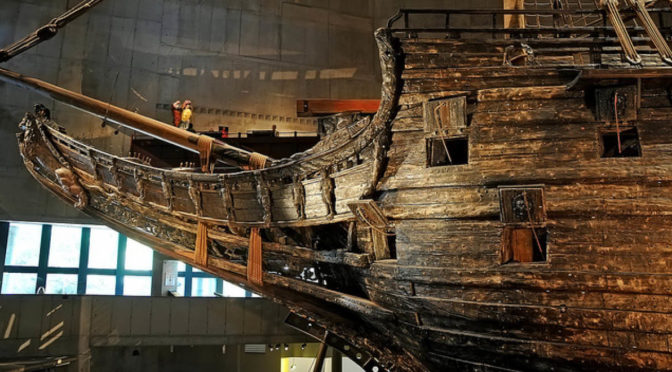
Featured image above: In his  National Press Club address this week Australia’s Chief Scientist, Alan Finkel, says lessons can be learned from The Swedish Vasa warship. Photo courtesy of Dennis Jarvis as per the Creative Commons License, image resized.

Finkel’s speech was the National Press Club address for Science meets Parliament 2016. This two-day event brings together scientists looking for better ways to communicate their research to policy makers.

Over a series of workshops and activities, people from the media, policy advisers and parliamentarians share their insights on developing policy and how to engage key influencers.

With a host of esteemed speakers, the Science meets Parliament program covers topics such as ‘what journalists need to turn your science into news’ and ‘science and politics, how do they mix?’. This year it also addressed what the National Innovation and Science Agenda means for scientists across Australia.

The event’s organisers, Science and Technology Australia, say that Science meets Parliament aims to “build links between scientists, politicians and policymakers that open up avenues for information and idea exchanges into the future”.

It also hopes to “stimulate and inform Parliament’s discussion of scientific issues that underpin Australia’s economic, social and environmental wellbeing”.

At last year’s event, Professor Ian Chubb AC, former Chief Scientist, spoke about the pace of progress over the past 25 years and how science will be a cornerstone for future prosperity.

This year, Australia’s Chief Scientist, Dr. Alan Finkel AO, spoke about a nation in transition, learning from failure and encouraging intelligent innovation. Finkel believes this requires thinking and operating at scale, and collaborative research to manage the issues and interactions that surround bold, innovative technology.

Click here to read the full transcript of Finkel’s address published by The Conversation on 2 March 2016.

Click here to see some of the speeches presented at last year’s event, such as The Messy Nature of the Policymaking Process, Who is Inspiring Australia? and Getting your Science out of the Lab.

– Elise Roberts

Protecting Australian wine

Featured image above: Plant Biosecurity Cooperative Research Centre

Phylloxera is an aphid-like insect that is a pest of commercial grapevines worldwide. The Plant Biosecurity Cooperative Research Centre (PBCRC) is funding a project led by Vinehealth Australia to conduct field trials for a new, accurate, sensitive and cost-effective DNA-based test for detecting the pest.

CEO of Vinehealth Australia, Alan Nankivell, who is leading the project, says phylloxera had a significant economic impact on the wine industry, as “the quality of our wines is based on the quality of our vines”. Eighty per cent of Australia’s vineyards have vines that are own-rooted, rather than grafted onto resistant rootstock; some are very old and the wines produced from these are highly sought after.

Phylloxera (Daktulosphaira vitifoliae) feeds on grapevine roots and leaves them open to bacterial infection, which can result in rot and necrotic death due to cell injury. It destroyed substantial areas of vines in France in the mid-19th century and has affected several winegrowing areas of Australia; the only effective treatment is removing infested vines and replanting with resistant rootstock.

Financially, the cost of managing a vineyard with phylloxera is estimated to range from 10–20% in additional operating costs.

The current method of detection uses a shovel and magnifying glass to inspect sites in areas of low vigour; however, phylloxera may have been present for some time and the test is usually conducted in summer, one of the industry’s busiest seasons.

The new DNA-based test requires 10-cm soil core samples to be taken 5 cm from the vine’s trunk. The samples are then sealed and sent to a lab where they are dried and tested for the presence of phylloxera DNA.

Protecting Australian wine

Alan Nankivell, CEO of Vinehealth Australia, is leading research to develop a new test for phylloxera of grapevines. Photo credit: PBCRC

Nankivell says the incidence of finding phylloxera using the test was very high (around 98%), even when the amounts of phylloxera present were low.

“At the moment, we’re able to find phylloxera at sites any time of the year.”

The new DNA-based test could help prevent the spread of phylloxera in Australia, as those who have it on their property can determine where it is and whether it is spreading.

Sampling in vineyards across Australia over time will establish a baseline for the maintenance of area freedom. Nankivell says with this baseline in place, the quarantine management and farm-gate hygiene of vineyards will improve industry knowledge about where phylloxera is and isn’t.

PBCRC researchers are currently working to establish the most suitable grid pattern for taking the soil core samples.

They will also compare the DNA sample method with two other methods: the ‘shovel method’ and another using emergence traps to catch insects inside an inverted container placed on the soil, to determine performance against selected criteria.

This research strongly supports the wine industry’s focus on identifying and managing biosecurity threats to ensure the ongoing health of grapevines. Healthy vines are the foundation for a prosperous Australian wine industry.

–Laura Boness

To learn more about phylloxera, click here or watch this video about the Phylloxera Rezoning Project carried out in Australia:

Smart ASD detection tool

An estimated one in 50 children have an Autism Spectrum Disorder (ASD). Research from La Trobe University’s Olga Tennison Autism Research Centre (OTARC) shows that the majority of these children are not diagnosed until they are four years old, more than two years after they can be reliably diagnosed and receive life-changing intervention.

The technique underlying ASDetect has been used over the past decade by hundreds of maternal and child health nurses in Australia, as well as early childhood professionals around the world. It has proven to be more than seven times more accurate than the next best tool in the early identification of autism.

Salesforce developed the ASDetect app on a pro bono basis as part of the company’s 1-1-1 integrated philanthropy model, where the company donates 1% of its employee’s time, its products and its equity to support the not-for-profit sector. A team of Salesforce engineers, designers and developers volunteered their time to build the app on the Salesforce platform.

The app uses questions drawn from breakthrough research by La Trobe’s Dr Josephine Barbaro. It gives parents access to video footage from actual clinical assessments and clearly demonstrates the context and expected key behaviours of children at each age.

“ASDetect is an empowering tool for parents who may feel their children are developing differently than expected and are looking for answers. The new ASDetect app is an ideal way to share proven techniques with thousands of parents,” says Barbaro.

Through a series of videos and questions, ASDetect guides parents through the identification of potential “red flag” signs of ASD. These “red flags” can be raised when young children repeatedly do not:

  • make consistent eye contact;
  • share smiles;
  • show their toys to others;
  • play social games;
  • point to indicate interest;
  • respond when their name is called.

Smart ASD Detection Tool

Screenshot of ASDetect app being used by Olga Tennison Autism Research Centre.

“All typically developing infants are motivated to be social, look at other people’s faces, learn from them and copy. Children with ASD are not doing this – and we can now accurately identify this at a much younger age and take action, with the help of parents,” says Barbaro.

The app combines Barbaro’s assessment questions with videos demonstrating the ‘red flag’ behaviours critical in determining the likelihood of ASD in children as young as 12 months. Parents view two videos: one showing a child with ASD, the other showing a typically developing child. Parents then answer questions regarding their own child. The information entered by the parents is automatically sent to OTARC’s database, which also runs on the Salesforce platform, where analysis of individual results is completed. Parents are then sent information via a notification through the app, with advice as to whether they should seek professional help. As ASD can emerge over time, ASDetect includes assessments for children aged 12, 18 and 24 months.

“This is not a replacement for professional assessment; however ASDetect will provide parents with an indication as to whether they should seek a professional opinion from a doctor at a time when intervention will have the biggest impact,” says Barbaro.

Dan Bognar, Senior Vice President, Salesforce APAC says: “The ASDetect app is a great example of leveraging the power of the Salesforce platform to improve the capabilities of health providers and treatment for individuals. Being able to deploy on a global scale means that organisations like OTARC can make a significant impact on society.”

“The development of ASDetect highlights our ethos of giving back as well as our commitment to improving the local communities we operate in. It has been incredibly rewarding for everyone involved, and we look forward to seeing the results of this important initiative,” says Bognar.

Watch ASDetect in action:

https://www.youtube.com/watch?v=uCaQ8ThNyDI

This information was first shared in a press release by La Trobe University on 14 February 2016. Read the press release here

Gravity waves hello

Featured image above credit: NASA/C. Henze

For the first time, scientists have observed ripples in the fabric of spacetime called gravitational waves, arriving at the earth from a cataclysmic event in the distant universe. This confirms a major prediction of Albert Einstein’s 1915 general theory of relativity and opens an unprecedented new window onto the cosmos.

Gravitational waves carry information about their dramatic origins and about the nature of gravity that cannot otherwise be obtained. Physicists have concluded that the detected gravitational waves were produced during the final fraction of a second of the merger of two black holes to produce a single, more massive spinning black hole. This collision of two black holes had been predicted but never observed.

The gravitational waves were detected by twin Laser Interferometer Gravitational-wave Observatory (LIGO) detectors, located in Louisiana and Washington in the USA. The discovery, accepted for publication in the journal Physical Review Letters, was made by the LIGO Scientific Collaboration (which includes the Australian Consortium for Interferometric Gravitational Astronomy (ACIGA) and the GEO600 Collaboration) and the Virgo Collaboration.

Australian scientists from The Australian National University (ANU), the University of Adelaide, The University of Melbourne, the University of Western Australia (UWA), Monash University and Charles Sturt University (CSU), contributed to the discovery and helped build some of the super-sensitive instruments used to detect the gravitational waves.

Leader of the Australian Partnership in Advanced LIGO Professor David McClelland from ANU, says the observation would open up new fields of research to help scientists better understand the universe.

“The collision of the two black holes was the most violent event ever recorded,” McClelland says.

“To detect it, we have built the largest experiment ever – two detectors 4000 km apart with the most sensitive equipment ever made, which has detected the smallest signal ever measured.”

Associate Professor Peter Veitch from University of Adelaide says the discovery was the culmination of decades of research and development in Australia and internationally.

“The Advanced LIGO detectors are a technological triumph and the discovery has provided undeniable proof that Einstein’s gravitational waves and black holes exist,” Veitch says.

“I have spent 35 years working towards this detection and the success is very sweet.”

Professor David Blair from UWA says the black hole collision detected by LIGO was invisible to all previous telescopes, despite being the most violent event ever measured.

“Gravitational waves are akin to sound waves that travelled through space at the speed of light,” Blair says.

“Up to now humanity has been deaf to the universe. Suddenly we know how to listen. The universe has spoken and we have understood.”

With its first discovery, LIGO is already changing how astronomers view the universe, says LIGO researcher Dr Eric Thrane from Monash University.

“The discovery of this gravitational wave suggests that merging black holes are heavier and more numerous than many researchers previously believed,” Thrane says.

“This bodes well for detection of large populations of distant black holes research carried out by our team at Monash University. It will be intriguing to see what other sources of gravitational waves are out there, waiting to be discovered.”

The success of LIGO promised a new epoch of discovery, says Professor Andrew Melatos, from The University of Melbourne.

“Humanity is at the start of something profound. Gravitational waves let us peer right into the heart of some of the most extreme environments in the Universe, like black holes and neutron stars, to do fundamental physics experiments under conditions that can never be copied in a lab on Earth,” Melatos says.

“It is very exciting to think that we now have a new and powerful tool at our disposal to unlock the secrets of all this beautiful physics.”

Dr Philip Charlton from CSU says the discovery opened a new window on the universe.

“In the same way that radio astronomy led to the discovery of the cosmic microwave background, the ability to ‘see’ in the gravitational wave spectrum will likely to lead to unexpected discoveries,” he says.

Professor Susan Scott, who studies General Relativity at ANU, says observing this black hole merger was an important test for Einstein’s theory.

“It has passed with flying colours its first test in the strong gravity regime which is a major triumph.”

“We now have at our disposal a tool to probe much further back into the Universe than is possible with light, to its earliest epoch.”

Australian technology used in the discovery has already spun off into a number of commercial applications. For example, development of the test and measurement system MOKU:Lab by Liquid Instruments; vibration isolation for airborne gravimeters for geophysical exploration; high power lasers for remote mapping of wind-fields, and for airborne searches for methane leaks in gas pipelines.

This information was first shared by Monash University on 12 February 2016. Read their news story here

New vision for Indigenous eye care

Health professionals looking to bridge the gap in eye care for Indigenous communities have designed a new Eye & Vision Care Toolkit.

The toolkit, from the Vision Collaborative Research Centre and the Brien Holden Vision Institute, equips medical practitioners with a set of practical and scalable resources for improved eye health.

Eye problems in Indigenous communities are far higher than non-Indigenous people: rates of blindness in general are six times higher and diabetes-related blindness are 14 times higher.

Furthermore, the National Indigenous Eye Health Survey indicates 94% of vision loss is preventable or treatable.

Remoteness, cultural differences and follow through on health issues from diagnosis to treatment are persistent barriers, says Selina Madeleine, Global Communications Manager of the Brien Holden Vision Institute.

The Indigenous eye care toolkit addresses these identified gaps in the system by allowing health workers to assess current health care practices, and includes referral flowcharts and information that can be sent electronically, as well as eye testing kits.

The toolkit is also made with consideration of Indigenous community perspectives, says Madeleine.

“I don’t think there’s anything quite like this out there, specifically targeting improved eye care outcomes within the Indigenous population,” she adds.

The kit has been used for five years across NSW and the Northern Territory and measurements over the last two years show an increase in optometry examinations from 51% to 97% and in ophthalmology services from 28% to 93%.

Follow through from use of the Indigenous eye care toolkit has also jumped, with the proportion of referred individuals with diabetic retinopathy who saw an ophthalmologist up from 25% to 54%, and those referred for cataracts and who received surgery up from just 3% to 32%.

More funding needed

The toolkit is now being disseminated to hundreds of other health care workers in these states and Madeleine says the Institute plans to role it out further.

“We would like to role this out in other states across Australia because it has been so successful in the places we’ve used it so far.”

Madeline says a lack of funding is all that is preventing the widespread adoption of the toolkit elsewhere.

Guy Fenton

Marine ecosystem impacts

Oceans cover about 71% of the Earth’s surface and contain more than 97% of the planet’s water. An estimated 80% of the world’s population lives within 100 km of the coast, and fish provide the bulk of the protein consumed by humans. But the marine ecosystem impacts of global warming on the biodiversity of ocean waters are difficult to determine.

Increasing concentrations of atmospheric carbon dioxide – the result of activities such as burning fossil fuels and deforestation – are acidifying and warming the world’s oceans.

One of the most widely documented effects of warming, according to Dr Adriana Vergés, senior lecturer in marine biology at the University of New South Wales, is the widening distribution of tropical fish as they move away from equatorial waters towards the poles, resulting in increasing numbers of tropical species appearing in temperate waters.

Oceans of wealth

Dr Adriana Vergés, Marine Ecologist, UNSW, at Gordon’s Bay during Operation Crayweed. Photo by James Sherwood, Bluebottle Films.

The marine ecosystem impacts from this warming has profound implications for the underwater environment and marine life.

“Species have three options in response to changing conditions – they die, adapt or move,” explains Vergés. “We are seeing a lot of movement. And because the rate of change is so fast, the question is: will species be able to keep up?”

The intrusion of tropical fish to temperate waters, referred to as tropicalisation, could have far-reaching repercussions for the health of these waters, their biodiversity and the industries that rely on them.

“When the tropical fish arrive, they overgraze on the seaweed and the whole system begins to shift,” says Vergés. “And we’re starting to see this in oceanic waters around northern NSW, where algal forests are disappearing.”

“In Australia, the two largest fisheries are abalone and rock lobster, whose preferred habitats are algal forests and seagrass meadows. If you lose algal forests, the abalone industry will collapse, with significant consequences for the fishing industry and the economy.”

The Abalone Council Australia Ltd estimates about 4500 tonnes of wild abalone were harvested in Australian waters last year, worth around $180 million. And according to Southern Rock Lobster Ltd, in 2011–12 rock lobster fishing produced around 3000 tonnes, worth nearly $175 million.

Vergés, however, is working to reverse some of the damage to the algal forests that threaten this industry.

Together with a number of volunteers, she is involved in Operation Crayweed, a project that aims to re-introduce crayweed – a vital habitat for lobsters, abalone and crayfish – to the waters around Sydney.

“The project is looking to bring crayweed back to the whole of Sydney. We’ve re-planted crayweed, and it has started to come back – we’re now on to our third generation. It’s a really good news environmental story, and we hope the fisheries will benefit too,” she says.

As well as helping to save the fisheries industry and reduce the marine ecosystem impacts in temperate waters around Sydney, Vergés is also involved in the Scientists in Schools national program, where she sparks enthusiasm for the wonders of the underwater world in seven and eight-year-olds.

“It’s so rewarding – children are natural scientists and they ask all the right questions. Speaking to a group of them is the closest I’ve felt to being a rock star. And they love absolutely anything to do with the sea. They are the best audience without a doubt,” says Vergés.

– Carl Williams