Tag Archives: indigenous knowledge

Australia has finally set new science priorities. How can we meet them?

— By Kylie Walker

The Australian government has updated the nation’s science and research priorities, and released a National Science Statement. This marks the first wholesale update on Australia’s vision and plan for the future of science and technology in nearly a decade, with the last set of priorities being handed down by the Abbott government in 2015, and the last science statement in 2017.

Minister for Industry and Science Ed Husic has announced five key priorities:

  • transitioning to net zero
  • support for healthy and thriving communities
  • elevating Aboriginal and Torres Strait Islander knowledge systems
  • protection and restoration of Australia’s environment
  • building a secure and resilient nation.

Given the policy impact of these commitments, it’s worth examining what they mean – and how they should guide Australia’s progress on a number of fronts.

1. Transitioning to a net zero future

While Australia’s emissions per person have been falling, we still emit more than double the carbon dioxide of comparable countries such as the United Kingdom or New Zealand.

Australia is a research leader in battery technology, solar cell technologies and green metals. However, our overall investment in clean energy research, already behind our peers, is falling.

Focused investment in green energy research is needed to cut emissions in hard-to-decarbonise sectors, such as air transport and agriculture.

2. Supporting healthy and thriving communities

Australia is a world leader in medical discoveries – anyone who’s been given the “green whistle” pain reliever by paramedics has felt the effects of Australian medical research. But too often Australian discoveries don’t stay here for development.

Researchers often find they need to move their discoveries to the United States or the European Union to get them into production and into hospitals, ambulances and pharmacies.

Australian health and medical researchers need more support to apply and commercialise their findings here at home. More work is also needed on preventative care, so we can stop illnesses before they start.

Of course, “thriving communities” need more than the best available medical care. They also need connection and resilience. This too can be supported by research – such as findings that show what helps communities bounce back after devastating bushfires.

3. Elevating Aboriginal and Torres Strait Islander knowledge systems

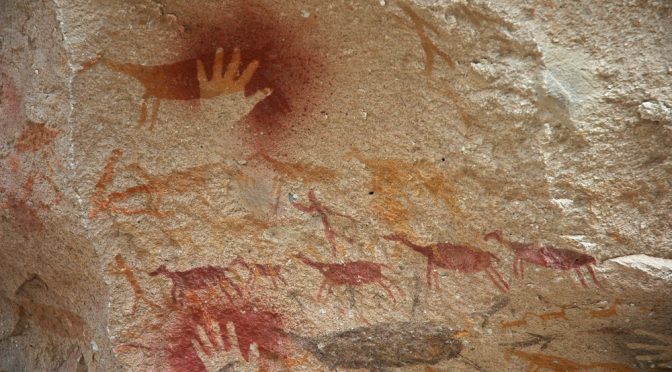
Historically, and to everyone’s detriment, Australia has not done well at recognising, respecting and celebrating the knowledge systems of its First Nations peoples.

But Australia has much to gain by fully embracing Traditional Knowledge as part of its science. This must be done with respect and equity at the forefront: our next steps in weaving together knowledge systems must be led with and bring empowerment to, Aboriginal and Torres Strait Islander peoples and communities.

One recent example is the collaboration between Nyikina Mangala man John Watson and Professor Ron Quinn, who have been turning bark from the Mudjala tree into natural treatments for severe pain.

4. Protecting and restoring Australia’s environment

Australia’s lands and waters are home to an estimated 700,000 native species. Many of these remain undiscovered and many are at risk of extinction.

The last 20 years has seen threatened plant populations decline by 72%, and populations of threatened mammals and birds fall by 38% and 52% respectively.

We need to stop this decline and protect Australia’s natural inheritance, through science-informed measures such as conservation reserves, controlling invasive species, restoring degraded ecosystems and breeding endangered plants and animals.

5. Building a secure and resilient nation

Security and resilience come in many forms. It means protecting our crucial digital infrastructure from cyber attacks. It also means making sure our buildings, roads and energy systems can survive disasters and a changing climate. Protecting our agriculture from pests and diseases also falls under this heading.

Focusing on this priority means broad investment in research across disciplines, bringing together industry and academia.

So, how do we put these priorities into practice?

To meet these priorities, Australia will need greater investment in science and research across the board. While international collaborations are fantastic, we can’t rely on other countries to do this vital research for us.

We’ll need more highly skilled people to do this research – people bringing unique perspectives, ideas and training with them. That means bringing people into STEM (science, technology, engineering and mathematics) careers from more diverse backgrounds.

Unfortunately, we are still conditioning girls to have lower confidence in science than boys. They’re more likely to avoid subjects such as physics and engineering.

In 2021, only 0.5% of Aboriginal and Torres Strait Islander people had a STEM degree, compared with 4.9% of the Australian population, according to the recent Diversity in STEM Review. This needs to change if we are to advance our science and research priorities.

We’ll also need more long-term investment in research infrastructure, and in STEM education and training.

Making a future in Australia

The national science priorities dovetail with the government’s Future Made in Australia initiatives in modern manufacturing, renewable energy and more.

Pulling this off will require partnerships between industry, education and governments. To properly harness the ideas and innovations of researchers, we need to make it easy for them to move from academia to industry and back again.

review of Australia’s research and development funding was announced in this year’s federal budget.

The government could use this to put Australia on a path towards investing 3% of our GDP into Australian research and development – something countries such as the United States, Germany and Japan already do.

Sustained investment in Australian research and development can make the ambitious goals of the new national science statement a reality.

This article first appeared on The Conversation. Kylie Walker is CEO of the Australian Academy of Technological Sciences and Engineering (ATSE) which receives funding from the Department of Education and the Department of Industry, Science and Resources.
Water for country

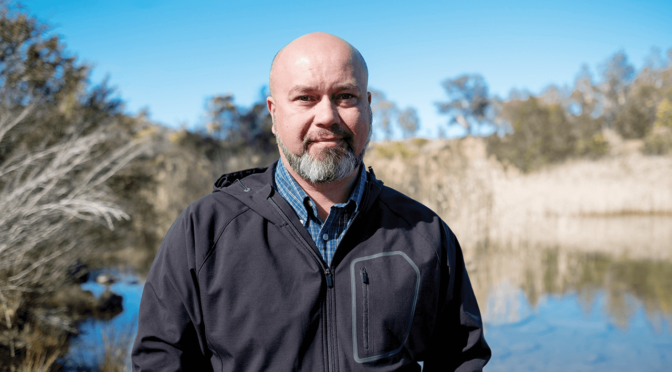
Bradley Moggridge is a Kamilaroi water scientist, a Fellow of the Peter Cullen Water and Environment Trust and a recent Young Tall Poppy Scientist of the Year in the ACT. Managing the aquifers, water catchments and rivers that span Australia’s arid lands lies deep in his blood. “My people have been interested in water for more than 65,000 years,” he says.

Moggridge is a hydrogeologist who recently led Australia’s only Aboriginal water unit at the NSW Department of Primary Industries.

His Master’s thesis, in 2005, at the University of Technology Sydney explored how Aboriginal knowledge was used to understand and access groundwater. “The flexibility that allows exploratory research through university science gave me the opportunity to connect the dots between hydrogeology, hydrogeochemistry and Aboriginal science,” he says.

Moggridge is now completing his PhD at the University of Canberra, where his research links western science with traditional knowledge to develop best-practice methodologies for water planning and management tailored to specific landscapes.

He says that his own heritage, as a Murri man from the Kamilaroi Nation of north-western New South Wales, deeply informs his work.

Australia has been home to thousands of generations of its First Peoples despite its arid landscapes. Traditional knowledge about how to find water sites has been integral to the survival of Aboriginal people, says Moggridge.

“Move away from the coastal regions and the river lands, and your dependence on surface water diminishes. In a dry landscape, knowing when, where and how to find water, where groundwater is the only source of water, that is how our people survived,” he says.

“Aboriginal ways of thinking and managing country involve scientific processes and generations of observation — why there’s a stand of gum trees here, why birds go to a certain place — but it has been regarded as myth and legend.”

Rangers in the Great Sandy Desert cite stories about one dryland location that had previously been a river. “Hydrogeologists drilling there found evidence of a paleo channel,” says Moggridge. “This is old, old knowledge.

Related: Tracing Change: Past Australian Environments

“Our stories hold the key to managing water on this continent. It’s a knowledge system that has survived changes in climate for millennia. Protecting water remains a cultural obligation.

“The support of university science will let me continue my work, applying an Indigenous methodology to the way we manage water.”

Fran Molloy

PATH

>> Bachelor of Environmental Science, Australian Catholic University

>> Master of Science, Hydrogeology and Groundwater management, University of Technology Sydney 

>> Team Leader, Aboriginal Water Initiative, NSW Department of Primary Industries

>> Special Advisor, First Peoples Water, Water Stewardship Australia

>> Indigenous Water Research Specialist, CSIRO

>> Environmental Officer, Camden Council

This article appears in Australian University Science issue 2.

Reaching out to our Indigenous family across the world

The purpose of the Lowitja Institute Aboriginal and Torres Strait Islander Health CRC is to value the health and wellbeing of Australia’s First Peoples. As members of a global Indigenous family, we extend that purpose to our brothers and sisters across the world.

With that in mind, two 2016 activities were key achievements: a collaboration with The Lancet – published in April by the prestigious medical journal under the title ‘Indigenous and Tribal peoples’ health (The Lancet–Lowitja Institute Global Collaboration): a population study’ – and our first international Indigenous health and wellbeing conference.

The collaboration established a clear picture of Indigenous and
Tribal health relative to benchmark populations. It included data on 28 Indigenous populations from 23 countries covering approximately half the world’s 300 million Indigenous people.

What was critical – and unique to this study – was the participation of 65 contributors who were able to identify, at country level, the best-quality data available. Contributors came from all the major global regions: Africa, Asia, the Americas, the Pacific and Arctic Circle.

These regions of the world were also represented in our November conference when, underpinned by a strong cultural and scientific framework, more than 700 delegates met to celebrate, share and strengthen Indigenous knowledges.

Over three days, the program included keynote addresses by national and international experts, sessions arranged around the themes of identity, knowledge and strength, and a conference statement asserting that Indigenous peoples across the world have the right to self-determination, which, in turn underpins the right to health.

Through this work, the Lowitja Institute CRC supports networks of knowledge and collaboration, engages with the 2030 Sustainability Goals to which Australia is a signatory, and connects us to the
wider international community.

The art of collaborative relationships

When we speak of innovation we increasingly couple it with collaboration. Collaboration is regularly promoted as a positive attribute and a productive means to an end.

In my own research, I promote collaboration as a mechanism for including more women in scientific teams in male-dominated fields, and as a mechanism to sustain research when individuals are juggling the competing demands of life and family.

In this context, at one end of the spectrum we might be speaking of the collaboration that characterises teamwork within an organisation, while at the other end of the spectrum we might be speaking of international scientific collaboration that draws geographically dispersed networks together.

My research over the past decade on women in the academy and women in science has heightened my interest in the art of collaboration and how it might encapsulate ‘the way we do things around here’ – our organisational culture.

I am particularly interested in the way in which men are sponsored and socialised into strategic relationships, particularly with business and industry – an opportunity not readily available to most women.

Yet we know little about the social processes that sit behind the scientific production of knowledge, and most of our recognition and reward systems focus on the outstanding individual.

The myth of individual creative genius is a myth that my colleagues who work with remote Indigenous communities – just like those in large international scientific research teams – know is culturally and historically specific.

Those who are privileged to work with Indigenous communities know that collaboration based on deep respect of different ‘ways of seeing,’ encoded in art, language and religion and formulated over extremely long periods of time, is central to sustaining collaborative relationships. Longevity of relationship is particularly highly valued, and the time taken to build respectful collaborative relationships and trust is a critical part of this sustained engagement.

They also know that while knowledgeable individuals are involved, the knowledge is collectively owned and accessible only through well-established protocols.

The art of collaboration is far more than a set of pragmatic, instrumental practices. With a degree of candour, I should state that I am not always a great collaborative partner. I put this down to my academic identity being formed in the discipline of anthropology where the ‘rite de passage’ was years of field research alone in a remote village.

This prepares the aspiring researcher for collaboration from a position of heightened ignorance but not necessarily with academic peers with a common knowledge base. I also evidence deficiencies in two attributes essential to collaboration: time and discomfort with failure.

Innovation demands the time to build teams, network, establish cross-sectoral collaborative relationships, generate and test ideas, fail, learn and start again, and to translate research findings and disseminate these to a range of audiences. It also requires the time for reflection and exercise of the imagination.

Collaboration at its best generates this time and, at its best, offers a safe space to fail.

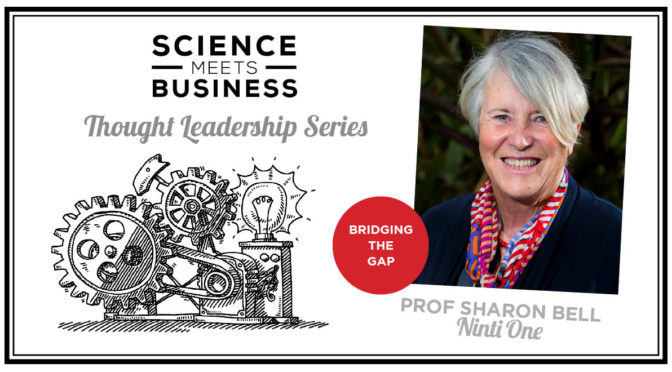
Professor Sharon Bell

Honorary Professor College of Arts and Social Sciences, ANU

Board Member, Ninti One

Read next: Heather Catchpole: Collaboration at a higher scale

Spread the word: Help Australia become a collaborative nation! Share this piece on collaborative relationships using the social media buttons below.

More Thought Leaders: Click here to go back to the Thought Leadership Series homepage, or start reading the Digital Disruption Thought Leadership Series here.