Tag Archives: technology

Software saves rainwater

Featured image above: Stadium Australia in Sydney Olympic Park Credit: Tim Keegan

A dynamic software program utilising kinetic energy is helping buildings with large roof areas in Southeast Asia harvest and recycle rainwater.

Freshwater scarcity and wastage is a global environmental issue, leading to nations such as Malaysia to seek siphonic drainage solutions to help recycle the precious resource.

Researchers at the University of South Australia have developed a software package to help roof drainage companies construct highly effective systems across a range of major infrastructure.

The Adelaide-based university’s Pro-Vice Chancellor of the Division of Information Technology, Engineering and the Environment Simon Beecham said the dynamic program was the first in the world to follow rainfall through its entire cycle to ensure complete effectiveness.

Stadium Australia, which hosted the athletics and opening ceremony at the 2000 Sydney Olympic Games, was the first structure to utilise the technology.

“Now a number of large buildings in Southeast Asia are using this technology, like the airports in Hong Kong and Kuala Lumpur. Malaysia has incorporated it into many of its shopping centres as well,” Beecham says.

“The buildings that were designed with the help of the software are able to harvest every single drop of water.”

The Kuala Lumpur Convention Centre in Malaysia, which hosts a number of large conferences, exhibitions, and concerts, is another big adopter of the technology.

The rainwater collected from the roofs is stored in large tanks and used to irrigate nearby fields or gardens. The recycled water is also used for the flushing of toilets to reduce the reliance on potable water.

Beecham partners with Australian drainage company Syfon to design state-of-the-art systems throughout Australasia.

His software allows Syfon to calculate the size of drainpipes and locate where hydraulic chambers need to be placed.

The company’s name is a play on siphonic systems, the method it uses to harvest rainwater.

Siphonic drainage systems convert open-air water mixtures into a pure water pressure system without any moving parts or electronics. Its hydraulic system allows the pipes to move large quantities of water very quickly.

Beecham says siphonic systems were used because the high pressures they created reduced the amount of additional energy required to pump water.

“Imagine if you had a pen in your hand and held it up and then dropped it to the floor. That’s an example of a solid object converting its potential energy into kinetic energy,” he says.

“Water can do the same thing. You get a very efficient drainage of your water where the pressure is so great it can even go uphill, and it also means you can run horizontal pipes for long distances.

“Its clever design of the hydraulics system creates a vacuum that sucks water in and converts the potential energy of rainfall into kinetic energy.”

This process allows large storage tanks to be placed away from the roof structure if more space is required.

Siphonic systems require a building of more than three stories to work and cannot be applied to residential homes.

-Caleb Radford 

This article was first published by The Lead South Australia on 4th May 2016. Read the original article here

Supercomputer empowers scientists

Creating commercial drugs these days seems to require more time at the keyboard than in the lab as these drugs can be designed on a computer long before any chemicals are combined.

Computer-based simulations test the design created by the theoretical chemist and quickly indicate any potential problems or enhancements.

This process generates data, and lots of it. So in order to provide University of Western Australia (UWA) chemistry researchers with the power to perform these big data simulations the university built its own supercomputer, Pople.

Dr Amir Karton, head of UWA’s computational chemistry lab says the supercomputer is named after Sir John Pople who was one of the pioneers of computational chemistry for which he won a Nobel Prize in 1998.

“We model very large systems ranging from enzymes to nano materials to design proteins, drugs and catalysts, using multi-scale theoretical procedures, and Pople was designed for such simulations,” Karton says.

“These simulations will tell you how other drugs will interact with your design and what modifications you will need to do to the drug to make it more effective.”

Pople was designed by UWA and while it is small compared to Magnus at the Pawsey Supercomputing Centre it gives the researchers exactly what they want.

That being a multi-core processor, a large and very fast local disk as well as 512 GB of memory in which to run the simulations.

Magnus’ power equivalent to 6 million iPads

While Magnus has nearly 36,000 processors—processing power equivalent to six million iPads running at once—Pople has just 2316 processors.

But, Magnus was designed with large computational projects like the Square Kilometre Array in mind whereas Pople provides such services to individual users.

Dr Dean Taylor, the faculty’s systems administrator says the total amount of memory available to Pople amounts to 7.8 TB, and the total amount of disk space is 153 TB, which could fill almost two thousand 80 GB Classic iPods.

By comparison a top-of-the-range gaming PC might have four processors, 16 GB of memory and a 2 TB disk drive.

A large portion of the Intel Xeon processors (1896 cores) were donated by Perth-based geoscience company DownUnder GeoSolutions.

DownUnder GeoSolutions’ managing director Dr Matthew Lamont says it is the company’s way of investing in the future.

Pople will also assist physics and biology research involving the nature of gravitational waves and the combustion processes that generate compounds important for seed germination.

– Chris Marr

This article was first published by ScienceNetwork Western Australia on 30 April 2016. Read the original article here.

Parents and schools connect

Developed by MGM Wireless Limited in Adelaide, South Australia, School Star is a secure mobile phone app that keeps parents in the loop about attendance, functions and other school news.

MGM Wireless invented the world’s first SMS based automated communication solution for schools in 2002.

Almost 1300 schools from around Australia use MGM’s communications system and half of them will be active users of the new School Star app within the next six months.

MGM Wireless CEO Mark Fortunatow said the company plans to take the app internationally after its success in Australia.

“We are formulating plans and strategies and hope to move in to the United States and Canada by the end of the calendar year,” he says.

“We also have partners and people in Shenzhen and Singapore that we have been working with for some time and have a network in place there already.”

School Star has a Facebook-styled news feed that can be regularly updated and is the only school app that allows direct two-way messaging between parents and schools with an SMS failover.

“Parents need a feedback loop. School Star does that and a number of other things that no other school app does,” Fortunatow says.

“Communication through other school apps gets to about 40% of the intended recipients at best.

“School Star will automatically send messages and content by SMS instead if parents run out of mobile data or don’t have access to Wi-Fi – so schools will reach almost 100% of parents.

“It is also unique because it promises a secure environment where only approved users can access school information.”

Schools install MGM’s content management system and enter in relevant news and information for parents.

Parents and students then register themselves using a secure two-factor verification process and once complete will allow users access to school information.

Only registered users from the current school database can use the school specific School Star app. It also allows the schools to ‘lock out’ unwanted users.

MGM ensures that sensitive information like names, photographs, dates, and places are kept secure at all times.

“Schools are loving School Star – they can publish news and send messages with a smooth interface and easy integration path,” Fortunatow says.

“News articles are easy to create, and parents love keeping in touch with what’s going on at the school.”

“School Star includes an engagement dashboard with state-of-the-art analytics so schools know which content is working best.”

School Star is available to download for free in the App Store and Google Play in Australia and will be available in the United States and Canada later this year.

– Caleb Radford

This article was first published by The Lead South Australia on 27th April 2016. Read the original article here.

Brain-powered bionic spine

Featured image above: Strentrode. Credit: University of Melbourne

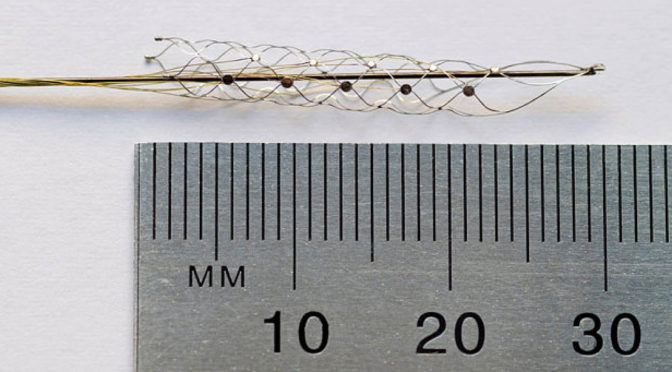
A few years ago, Australian neurology resident Dr Thomas Oxley set out to design a device that uses brain waves to power prosthetic limbs. Today, Oxley’s revolutionary invention is about to enter human trials, giving hope that millions of people paralysed by injury or stroke will soon be able to walk again.

Oxley’s futuristic device – a tiny stent-electrode or ‘stentrode’ –  also promises to predict and halt epileptic seizures and assist people with a range of conditions, from motor neurone and Parkinson’s diseases to compulsive disorders and depression.

In a nutshell, the matchstick-sized gadget will be inserted, without invasive surgery, into a blood vessel next to the brain’s motor cortex. From there it will detect and translate neural activity, such as the intention to walk, and send commands wirelessly to exoskeleton legs.

Detect, translate, transmit and walk. That’s what scientists call brain-machine interface, and it begins with straightforward day surgery to thread the stent up the groin to the brain.

Trials with sheep, published in February 2016 in Nature Biotechnology, revealed that the animals were fine. They were walking and eating within an hour, and had no side effects.

If all goes according to plan following human trials in 2017, Oxley predicts the stentrode could be on the market by the early 2020s.

“We’ve been able to create the world’s first minimally invasive brain recording device that is implanted without high-risk open brain surgery,” says Oxley.

bionic spine

Strentrode diagram. Credit: University of Melbourne

The road to commercialisation

Oxley is in New York to do a two-year fellowship in cerebral angiography at Mount Sinai Hospital, a specialty which employs non-invasive procedures to visualise blood vessels in the brain. It’s a skill directly related to his work in vascular bionics, exploiting the body’s blood vessels and veins for technologically enhanced therapeutic ends.

Remarkably, Oxley co-invented the stentrode while he was a Melbourne University doctoral student, along with MU collaborator Dr Nicholas Opie, a biomechanical engineer.

In 2012 the pair co-founded a startup company called SmartStent Pty Ltd  to refine and prepare the stentrode for market.

Their goal: commercialise what promises to be one of the world’s most important medical inventions.

After building hundreds of stentrode prototypes, the next step is testing the technology with people. “We’re trying to raise A$4 million for the first human trials at Royal Melbourne Hospital,” Oxley notes. “We’re hoping to begin in late 2017.”

Given the life-changing and commercial potential of the stentrode, it’s little wonder that SmartStent moved to Silicon Valley in April 2016. There, Oxley, Opie and cardiologist Rahul Sharma, with Cedars-Sinai Health System in Los Angeles, established Synchron Inc. as their new corporate headquarters. SmartStent remains the Australian subsidiary.

Clearly, Oxley is a man on the move. Given his family tree, it was inevitable. While he was born in Melbourne, until age nine Oxley lived in Geneva, Switzerland, where his father Alan, a former diplomat, was Australia’s Ambassador for Trade. Then it was on to New York when his dad became Australian Ambassador to the General Agreement in Tariffs and Trade (GATT), the predecessor of the World Trade Organization.

The Oxley family is littered with creative people. Oxley has two older sisters. Harriet is a theatre set and costume designer, and Anna is in banking. His mother Sandra completed a Masters in computing science at Columbia University while Alan was at the GATT.

So where did Oxley’s interest in the brain come from? In his early teens Oxley had developed “a bit of an obsession with the brain and consciousness”.

“Dad was intellectually challenging. I figured it would be a smarter move to become interested in areas he didn’t understand,” Oxley replies.

Solving the mysteries of the brain

Medicine seemed a good choice for a kid keen to reverse engineer the brain to solve the mysteries of human consciousness. So Oxley went off to Monash Medical School in Melbourne, finishing in 2006. He completed his residency in internal medicine at Melbourne’s The Alfred Hospital in 2009.

“Then I took a year off to go travelling,” recalls Oxley, who didn’t begin his neurology residency until 2011. “I was travelling and intellectually exploring.”

The Defense Advanced Research Projects Agency (DARPA) was on his ‘to visit’ list. DARPA is an arm of the US Department of Defense. Located in Arlington, Virginia, the agency is responsible for developing emerging military technologies, including biotechnology.

“I’d been reading about their prosthetic limb work for a couple of years,” says Oxley, who got in touch with neurologist Colonel Geoffrey Ling, director of DARPA’s Biotechnologies Office.

After an initial chat, Ling was sufficiently impressed to invite his visitor to develop what Oxley claims became a “pretty blue sky, out there” proposal.

The result? Oxley left Virginia with a promise of US$1.3 million and instructions to put a team together to create and test his device.

“After all that excitement, I came home and had to start my neurology residency. It was a steep learning curve,” says Oxley, who had to tread carefully as a junior resident with potentially large research funding coming in.

Fortunately, Oxley’s PhD supervisor and mentor, Professor Terry O’Brien, was Oxley’s academic champion. He helped negotiate the occasionally challenging politics and opened doors to the range of experts Oxley needed to set up the DARPA-inspired Vascular Bionics Laboratory  at Melbourne University. The two men even leveraged DARPA’s investment into over A$4 million, with grants from Australia’s National Health and Medical Research Council and other Australian bodies.

Oxley completed his residency in 2013, and submitted his doctorate in February 2016. But the rest isn’t history. There’s a stentrode to trial and commercialise. An invention which O’Brien calls the ‘Holy Grail’ of bionics.

– Leigh Dayton

This article was first published by Australian Unlimited on 02 May 2016. Read the original article here.

New digital mentoring project announced

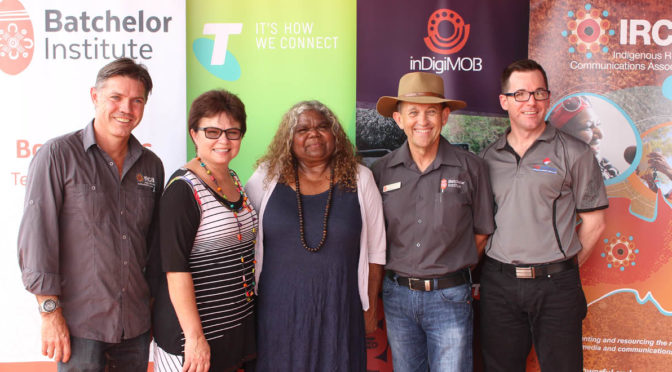
Featured image above: At IRCA’S launch of Indigenous digital mentoring project InDigiMOB. Credit: IRCA

A new digital mentoring project developed by the Indigenous Remote Communications Association (IRCA) was launched by the Minister for Local Government and Community Service, Honourable Bess Price in Arlparra on 15 April 2016.

Committed to addressing digital exclusion experienced by many Indigenous Australians in remote communities, the inDigiMOB program will play a key role in bridging the digital divide. It will establish a network of Indigenous mentors who provide peer-to-peer training and support in digital literacy, cyber safety and internet access in response to local and immediate needs.

“Over the next three years inDigiMOB will help address barriers to the take up and use of digital technology in a number of Indigenous communities in the Northern Territory,” says Daniel Featherstone, General Manager of IRCA.

“With support from local community organisations we will work to ensure remote Indigenous people are not left behind.”

“Where there is affordable and appropriate access, many Indigenous Australians in remote communities are rapid adopters of new digital technology,” says Featherstone.

“However, there are still too many people who lack access and capabilities to fully embrace the social, economic and cultural possibilities of being connected. inDigiMOB will address this and in doing so, create meaningful jobs.”

IRCA will pilot inDigiMOB in Arlparra and several Alice Springs Town Camps with support from delivery partners Batchelor Institute and Tangentyere Council respectively.

inDigiMOB is funded by Telstra.

This article was first published by IRCA on 21 April 2016. Read the original article here.

About IRCA

IRCA is the peak body that represents and advocates for the media and communications interests of remote and very remote Aboriginal and Torres Strait Islander communities in Australia.  IRCA promotes the important role played by remote Indigenous media in maintaining language and culture and providing tools for self-representation and community development.  IRCA supports remote Indigenous media organisations (RIMOs) that have played a key role in the development of the remote media and communications industry in Australia.

www.irca.net.au

Australia’s first nanoscience facility launched

Leading scientific figures, pioneers and representatives from key organisations internationally are visiting Sydney for today’s launch of the Australian Institute for Nanoscale Science and Technology (AINST) – and the official opening of its headquarters – the most advanced facility for nanoscience in the region – where design, fabrication and testing of devices can occur under one roof.

Officially opening the new $150 million Sydney Nanoscience Hub will be Australian Academy of Science’s President Andrew Holmes AM. Senior executives from Microsoft in the USA are also visiting to tour the building, and scientists speaking at the launch include one of Israel’s top physicists, Moti Segev – whose centre at the Technion is collaborating on a project with the University of Sydney and the NSW Government.

Nanoscience is expected to be more impactful this century than the industrial revolution in the 19th century. But “the buildings in which we work, rather than our imaginations, are what’s been limiting the science,” says Associate Professor Michael Biercuk, formerly a consultant to the US government organisation the Defense Advanced Research Projects Agency (DARPA) and now the research leader of a quantum flagship in AINST.

More than six years in the making, the award-winning Sydney Nanoscience Hub was co-funded with $40 million from the federal government, includes teaching spaces alongside publicly available core research facilities that will support  fundamental research as well as the work of startups and established industry.

AINST hosts some of the capabilities of the Australian National Fabrication Facility and of the Australian Microscopy and Microanalysis Research Facility – both co-funded by the National Collaborative Research Infrastructure Strategy (NCRIS). Researchers at the Institute contribute to two Australian Council Centres of Excellence:  the Centre for Ultrahigh bandwidth Devices for Optical Systems (CUDOS); and the Centre for Engineered Quantum Systems (EQuS).

Professor Benjamin Eggleton, the Director of CUDOS who also heads the photonics flagship at AINST, says photonics (the study of photons – the building blocks of light) was already delivering real-world solutions: “Photonics is the backbone of the internet and underpins a $7 trillion industry,” Eggleton says.

“Our team has led the world in photonic-based chip processing and we are now working on building a photonic chip – or a lab on a chip – that may one day be compatible with mobile phones, enabling them to sense environmental pollution or be used for testing blood samples to diagnose health issues.”

Vice-Chancellor Dr Michael Spence says the University-wide AINST reached across traditional disciplinary boundaries.

“The Australian Institute for Nanoscale Science and Technology continues the University of Sydney’s tradition in addressing multidisciplinary issues in a unique way to ensure that we are ready to solve the great challenges of science, engineering and beyond,” he says.

AINST Director, Professor Thomas Maschmeyer, will also head one of five initiating flagships – in energy and environment – and this month announced an investment valued at $11 million from the United Kingdom into a university nano spin-off.

“There is little doubt that society must progressively transition to non-fossil-based energy,” Maschmeyer says.

Professor David Reilly, research leader of the AINST’s quantum measurement and control flagship, says breakthroughs at the nanoscale hold the key to major advances in areas such as artificial intelligence and security.

“The challenge for us over the next few years is to take the physics results that we have probing the basic phenomena of quantum mechanics and see those results turn into technologies.”

Director of the Sydney Nanoscience Hub building Professor Simon Ringer says new science would be enabled through this purpose-built facility for nanoscience – the first in Australia.

“This is the best building of its kind in our region. It will allow us to operate research instruments that enable us to ask questions at the frontiers of science.”

AINST Director of Community and Research, Professor Zdenka Kuncic says the ‘rules of the game’ in nanoscience were still being worked out.

“Perhaps the most exciting aspect of nanoscience is the potential for new discoveries, including in health and medicine,” she says.

“We have only scratched the surface of the new knowledge that remains to be revealed.”

This article was first published by The University of Sydney on 20 April 2016. Read the original article here.

Fighting corrosion in the desert

Natural gas pipelines are a vital part of our infrastructure, bringing energy from distant fields to households and industry. Maintaining the integrity of pipelines is a crucial factor to keeping the gas flowing – a major concern of the Energy Pipelines CRC (EPCRC), which is tasked with enabling safer, more efficient and reliable pipelines to meet Australia’s growing energy needs.

Deakin University PhD student Ying Huo had first-hand experience of the impact of the work of the EPCRC during a three-week industry placement last year, working with a team detecting corrosion in pipelines on just a small section of Australia’s 35,000 km long gas pipeline network.

Corrosion can be caused by a number of factors related to the environment around the pipeline. The damage caused by corrosion can potentially affect the pipeline’s integrity. Inspection technology uses ultrasound and magnetic measurements to find corrosion and determine its area and depth. Pipeline operators can then decide how best to deal with the corrosion.

“Every student should get the chance to get out in the field to see how industry works,” says Huo.

“I was able to observe firsthand how technology and asset management decisions are used to ensure the safe and continued operation of pipelines in Australia.”

This opportunity would not have been possible without the strong collaboration between the Australian pipeline industry and the EPCRC.

– David Ellyard

www.epcrc.com.au

Australia’s biofuture

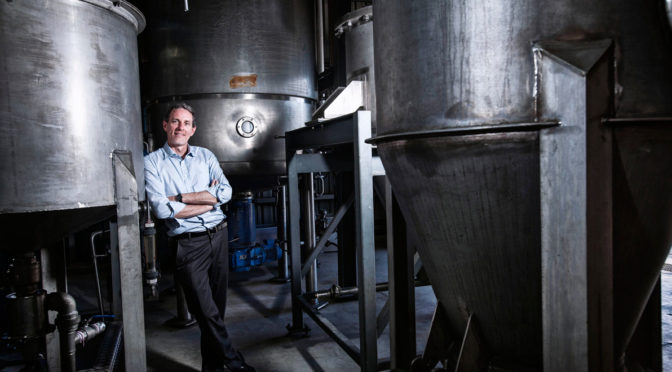
Featured image above: Associate Professor Ian O’Hara at the Mackay Biocommodities Pilot Plant. He is pictured inside the plant with the giant vats used for fermentation. Credit: QUT Marketing and Communication/Erika Fish

QUT is supporting the Queensland Government to develop a strategy, including the creation of a 10-year Biofutures Roadmap, for the establishment of an industrial biotechnology industry in Queensland.

Associate Professor Ian O’Hara, principal research scientist at QUT’s Centre for Tropical Crops and Biocommodities (CTCB), says we are facing big challenges: the world needs to produce 70% more food and 50% more energy by 2050, while reducing carbon emissions.

At the same time, says O’Hara, there are opportunities to add value to existing agricultural products. “Waste products from agriculture, for example, can contribute to biofuel production.”

QUT funded a study in 2014 examining the potential value of a tropical biorefinery in Queensland. It assessed seven biorefinery opportunities across northeast Queensland, including in the sorghum-growing areas around the Darling Downs and the sugarcane-growing areas around Mackay and Cairns.

O’Hara says they mainly focused on existing agricultural areas, taking the residues from these to create new high-value products.

But he sees more opportunity as infrastructure across north Queensland continues to develop.

The study found the establishment of a biorefinery industry in Queensland would increase gross state product by $1.8 million per year and contribute up to 6500 new jobs.

“It’s an industry that contributes future jobs in regional Queensland – and by extension, opportunities for Australia,” O’Hara says.

The biorefineries can produce a range of products in addition to biofuels. These include bio-based chemicals such as ethanol, butanol and succinic acid, and bio-plastics and bio-composites – materials made from renewable components like fibreboard.

O’Hara says policy settings are required to put Queensland and Australia on the investment map as good destinations.

“We need strong collaboration between research, industry and government to ensure we’re working together to create opportunities.”

The CTCB has a number of international and Australian partners. The most recent of these is Japanese brewer Asahi Group Holdings, who CTCB are partnering with to develop a new fermentation technology that will allow greater volumes of sugar and ethanol to be produced from sugarcane.

“The biofuels industry is developing rapidly, and we need to ensure that Queensland and Australia have the opportunity to participate in this growing industry,” says O’Hara.

– Laura Boness

www.qut.edu.au

www.ctcb.qut.edu.au

Nuclear waste solution

Featured image above: Alejandra Siverio-Gonzalez of the Synroc team. Credit: ANSTO

Synroc technology is an innovative and versatile nuclear waste management solution developed by the Australian Nuclear Science and Technology Organisation (ANSTO).

ANSTO’s Synroc technology locks up radioactive elements in ‘synthetic rock’ allowing waste, like naturally occurring minerals, to be kept safely in the environment for millions of years.

Nuclear waste solution

Synroc processing technology immobilises radioactive waste in a durable, solid rock-like material for long-term storage. Credit: ANSTO

Synroc technology offers excellent chemical durability and minimises waste and disposal volumes, decreasing environmental risks and lowering emissions and secondary wastes.

ANSTO’s Synroc team is developing a waste treatment processing plant using Synroc technology for Australia’s molybdenum-99 (Mo-99) waste; Mo-99 is the parent nuclide for technetium-99m, the most widely used radioisotope in nuclear medicine. The plant will be the first of its kind, and will lead the world in managing nuclear wastes from Mo-99 production.

nuclear waste solution

ANSTO’s Synroc technology. Credit: ANSTO

Dr Daniel Gregg, leader of the Synroc waste form engineering team at ANSTO, says the plant will demonstrate Australia’s commitment to providing technology solutions to the global nuclear community.

“We hope to partner with others and build several more plants around the world using Synroc technology,” he says.

nuclear waste solution

Dr Daniel Gregg, leader of the Synroc waste form engineering team at ANSTO. Credit: ANSTO.

Gregg says several countries are looking to build new Mo-99 production facilities, and regulators want assurances that facilities will be able to treat the resulting waste streams.

“With national regulators around the world putting more and more pressure on waste producers to deal with nuclear wastes, opportunities exist for Synroc as a leading option for nuclear waste treatment.” This places Synroc and Australia in an enviable position, adds Gregg.

“Synroc is a cost-effective, environmentally responsible option to treat and appropriately dispose of nuclear wastes without leaving a burden to future generations.”

In developing the plant, the Synroc team has designed process engineering technology and a fully integrated pilot plant that can treat large volumes of waste under a continuous process mode.

The team is also collaborating with national laboratories around the world to demonstrate strategies to treat radioactive waste for commercial benefit.

The focus is on waste streams – such as the growing stockpiles of long-lived nuclear waste – that are problematic for existing treatment methods. The real advantage, says Gregg, is Synroc’s ability to immobilise these problematic waste forms.

“Waste producers are required to immobilise nuclear wastes, and Synroc and Australia will be at the forefront of waste management technology.”

– Laura Boness

nuclear waste solution

The Synroc team. Credit: ANSTO

www.ansto.gov.au/synroc


Algorithms making social decisions

In this Up Close podcast episode, informatics researcher Professor Paul Dourish explains how algorithms, as more than mere technical objects, guide our social lives and organisation, and are themselves evolving products of human social actions.

“Lurking within algorithms, unknown to people and certainly not by design, can be all sorts of unconscious biases and discriminations that don’t necessarily reflect what we as a society want.”

The podcast is presented by Dr Andi Horvath. Listen to the episode below, or read on for the full podcast transcript.

Professor Paul Dourish

Dourish is a Professor of Informatics in the Donald Bren School of Information and Computer Sciences at University of California, Irvine, with courtesy appointments in Computer Science and Anthropology.

His research focuses primarily on understanding information technology as a site of social and cultural production; his work combines topics in human-computer interaction, social informatics, and science and technology studies.

He is the author, with Genevieve Bell, of Divining a Digital Future: Mess and Mythology in Ubiquitous Computing (MIT Press, 2011), which examines the social and cultural aspects of the ubiquitous computing research program. He is a Fellow of the Association for Computing Machinery (ACM), a member of the Special Interest Group for Computer-Human Interaction  (SIGCHI) Academy, and a recipient of the American Medical Informatics Association (AMIA) Diana Forsythe Award and the Computer Supported Co-operative Work (CSCW) Lasting Impact Award.

Podcast Transcript

VOICEOVER: This is Up Close, the research talk show from the University of Melbourne, Australia.

HORVATH: I’m Dr Andi Horvath. Thanks for joining us. Today we bring you Up Close to one of the very things that shapes our modern lives. No, not the technology as such, but what works in the background to drive it: the algorithm, the formalised set of rules governing how our technology is meant to behave.

As we’ll hear, algorithms both enable us to use technology and to be used by it. Algorithms are designed by humans and just like the underpinnings of other technologies, say like drugs, we don’t always know exactly how they work. They serve a function but they can have side-effects and unexpectedly interact with other things with curious or disastrous results.

Today, machine learning means that algorithms are interacting with, or developing other algorithms, without human input. So how is it that they can have a life of their own? To take us Up Close to the elusive world of algorithms is our guest, Paul Dourish, a Professor of Informatics in the Donald Bren School of Information and Computer Science at UC Irvine. Paul has written extensively on the intersection of computer science and social science and is in Melbourne as a visiting Miegunyah Fellow. Hello, and welcome to Up Close.

DOURISH: Morning, it’s great to be here.

HORVATH: Paul, let’s start with the term algorithm. We hear it regularly in the media and it’s even in product marketing, but I suspect few of us really know what the word refers to. So let’s get this definition out of the way: what is an algorithm?

DOURISH: Well, it is a pretty abstract concept so it’s not surprising if people aren’t terrible familiar with it. An algorithm is really just a way of going about doing something, a set of instructions or a series of steps you’ll go through in order to produce some kind of computational result. So for instance, you know, when we were at school we all learned how to do long multiplication and the way we teach kids to do multiplication, well that’s an algorithm. It’s a series of steps that you can go through and you can guarantee that you’re going to get a certain kind of result. So algorithms then get employed in computational systems, in computer systems to produce the functions that we want.

HORVATH: Where do we find algorithms? If I thought about algorithm-spotting say on the way to work, where do we actually encounter them?

DOURISH: Well, if you were to take the train, for instance, algorithms might be controlling the rate at which trains arrive and depart from stations to try to manage a stable flow of passengers through a transit system. If you were to Google something in the morning to look up something that you were going to do or perhaps to prepare for this interview, well an algorithm not only found the information for you on the internet, but it was also used to sort those search results and decide which one was the one to present to you at the top of the list and which one was perhaps going to come further down. So algorithms are things that lie behind the operation of computer systems; sometimes those are computer systems we are using directly and sometimes they are computer systems that are used to produce the effects that we all see in the world like for instance, the flow of traffic.

HORVATH: So Paul, we use algorithms every day in everything, whether it’s work, rest, play, but are we also being used by algorithms?

DOURISH: Well, I guess there’s a couple of ways we could think about that. One is that we all produce data; the things that we do produce data that get used by algorithms. If we want to think about an algorithm for instance that controls the traffic lights and to manage the flow of people through the streets of Melbourne, well, the flow of people through the streets of Melbourne is also the data upon which that algorithm is working. So we’re being used by algorithms in the sense perhaps that we’re all producing the data that the algorithm needs to get its job done.

But I think there’s also a number of ways in which we might start to think that we get enrolled in the processes and effects of algorithms, so if corporations and government agencies and other sorts of people are making use of algorithms to produce effects for us, then our lives are certainly influenced by those algorithms and by the kinds of ways that they structure our interaction with the digital world.

HORVATH: So algorithms that are responsible for say datasets or computational use, the people who create them are quite important. Who actually creates these algorithms? Are they created by governments or commerce?

DOURISH: They can be produced in all sorts of different kinds of places and if you were in Silicon Valley and you were the sort of person who had a brand new algorithm, you might also be the sort of person who would have a brand new start-up. By and large, algorithms are produced by computer scientists, mathematicians and engineers.

Many algorithms are fundamentally mathematical at their heart and one of the ways in which computer scientists are interested in algorithms is to be able to do mathematical analysis on the kinds of things that computers might do and the sort of performance that they might have. But computer scientists are also generally in the business of figuring out ways to do things and that means basically producing algorithms.

HORVATH: One of the reasons we hear algorithms a lot these days is because they’ve caused problems, or at least confusion. Can you give us some tangible examples of where that’s happened?

DOURISH: Sure. Well, I think we see a whole lot of those and they turn up in the paper from time to time, and some are kind of like trivial and amusing and some have serious consequences. From the trivial side and the amusing side we see algorithms that engage in classification, which is an important area for algorithmic processing, and classifications that go wrong, places where an algorithm decides that because you bought one product you are interested in a particular class of things and it starts suggesting all these things to you.

I had a case with my television once where it had decided because my partner was recording Rocky and Bullwinkle, which is an old 1970s cartoon series [for just] America featuring a moose and a squirrel, that I must be interested in a hunting program so it started recording hunting shows for me. So although they’re silly, they begin to show the way that algorithms have a role.

The more serious ones though are ones that begin to affect commerce and political life. A famous case in 2010 was what was called the flash crash, a situation in which the US stock market lost then suddenly regained a huge amount of value, about 10 per cent of the value of their system, all within half an hour, and nobody really knew why it happened. It turned out instead of human beings buying and trading shares, it was actually algorithms buying and trading shares. The two algorithms were sort of locked in a loop, one trying to offer them for sale and one trying to buy them up, and suddenly it spiralled out of control. So these algorithms, because they sort of play a role in so many different systems and appear in so many different places, can have these big impacts and in even those small trivial cases or ones that begin to alert us or tune us to where the algorithms might be.

HORVATH: Tell us about privacy issues; that must be something that algorithms don’t necessarily take seriously.

DOURISH: Well, of course the algorithm works with whatever data it has to hand, and data systems may be more or less anonymised, they may be more or less private. One of the interesting problems perhaps is that the algorithm begins to reveal things that you didn’t necessarily know that your data might reveal.

For example, I might be very careful about being tracked by my phone. You know, I choose to turn off those things that say for instance where my home is, but if an algorithm can detect that I tend to be always at the same place at 11 o’clock at night or my phone is always at the same place at 11 o’clock at night and that’s where I start my commute to work in the morning, then those patterns begin to build up and there can be privacy concerns there. So algorithms begin to identify patterns in data and we don’t necessarily know what those patterns are, nor are we provided necessarily with the opportunity to audit, control, review or erase data. So that’s where the privacy aspects begin to become significant.

HORVATH: Is there an upsurge about societal concerns about algorithms? Really, I’m asking you the question, why should we care about algorithms? Do we need to take these more seriously?

DOURISH: I think people are beginning to pay attention to the ways in which there can be potentially deleterious social effects. I don’t want to sit here simply saying that algorithms are dangerous and we need to be careful, but on the other hand there is this fundamental question about knowing what it is the algorithm is doing and being conscious of its fairness.

On the trivial side, there is an issue that arose around the algorithm in digital cameras to detect faces, when you want to focus on the face. It turned out after a while that the algorithms in certain phones looked predominantly for white faces but were actually very bad at detecting black faces. Now, those kinds of bias aren’t very visible to us, as the camera just doesn’t work. Those are perhaps where as a society we need to start thinking about what is being done for us by algorithms, because lurking within those algorithms, unknown to people and certainly not by design, can be all sorts of unconscious biases and discriminations that don’t necessarily reflect what we as a society want.

HORVATH: Are we being replaced by algorithms? Is this something that’s threatening jobs as we know it?

DOURISH: Well, I certainly see plenty of cases where people are concerned about that and talk about it, and there’s been some in the press in the last couple of years that talk for instance about algorithms taking over HR jobs in human resources, interviewing people for jobs or matching people for jobs. By and large though, lots of these algorithms are being used to supplement and augment what people are doing. I don’t think we’ve seen really large-scale cases so far of people being replaced by algorithms, although it’s certainly a threat that employers and others can hold over people.

HORVATH: Sure. Draw the connection for us between algorithms and this emerging concept of big data.

DOURISH: Well, you can’t really talk about one without the other; they go together so seamlessly. Actually, one of the reasons that I’ve been talking about algorithms lately is precisely because there’s so much talk about big data just now. The algorithms and the data go together. The data provides the raw material that the algorithm processes and the algorithm is generally what makes sense of that data.

We talk about big data not least in terms of this idea of being able to capture and collect, to get information from all sorts of sensors, from all sorts of things about the world, but it’s the algorithm that then comes in and makes sense of that data, that identifies patterns and things that we think are useful or interesting or important. I might have a large collection of data that tells me what everybody in Victoria has purchased in the supermarket for the last month, but it’s an algorithm that’s going to be able to identify within that dataset well, here are dual income families in Geelong or the sort of person who’s interested in some particular kind of product and amenable to a particular kind of marketing. So they always go together; you never have one without the other.

HORVATH: But surely there are problems in interpretation and things get lost in translation.

DOURISH: That’s a really interesting part of the whole equation here. It’s generally human beings have to do the interpretation; the algorithm can identify a cluster. It can say, look, these people are all like each other but it tends to be a human being who comes along and says now, what is it that makes those people like each other? Oh, it’s because they are dual income families in Geelong. There’s always a human in the loop here. Actually, the problem that we occasionally encounter, and it’s like that problem of inappropriate classification that I mentioned earlier, the problem is that often we think we know what the clusters are that an algorithm has identified until an example comes along that shows oh, that wasn’t what it was at all. So the indeterminacy of both the data processing part and the human interpretation is where a lot of the slippage can occur.

HORVATH: I’m Andi Horvath and you’re listening to Up Close. In this episode, we’re talking about the nature and consequences of algorithms with informatics expert Paul Dourish. Paul, given that algorithms are a formalised set of instructions, can’t they simply be written in English or any other human language?

DOURISH: Well, algorithms certainly are often written in English. There’s all sorts of ways in which we write them down. Sometimes they are mathematical equations that live on a whiteboard. They often take the form of what computer scientists call pseudo-code, which looks like computer code but isn’t actually executable by a computer, and sometimes they are in plain English. I used the example earlier of the algorithm that we teach to children for how to do multiplication; well, that was explained to them in plain English. So they can take all sorts of different forms. Really, that’s some of the difficulty about the notion of algorithm is this very abstract idea and it can be realised in many different kinds of ways.

HORVATH: So the difference between algorithms and codes and pseudo-codes are different forms of abstraction?

DOURISH: In a way, yes. Computer code is the stuff that we write that actually makes computers do things, and the algorithm is a rough description of what that code might be like. Real programs are written in specific programming languages. You might have heard of C++ or Java or Python, these are programming languages that people use to produce running computer systems. The pseudo-code is a way of expressing the algorithm that’s independent of any particular programming language. So if I have a great algorithm, an idea for how to produce a result or sort a list or something, I can express it in the pseudo-code and then different programmers who are working in different programming languages can translate the algorithm into the language that they need to use to get their particular work done.

HORVATH: Right. Now, I’ve heard one of the central issues is that we can’t really read the algorithm once it’s gone into code. It’s like we can’t un-cook the cake or reverse engineer it. Why is that so hard?

DOURISH: Well, we certainly can in some cases; it’s not a hard and fast rule. In fact, most computer science departments, like the one here at Melbourne, will teach people how to write code so that you can see what’s going on. But there are a couple of complications that certainly can make it more difficult.

The first is that the structure of computer systems requires that you do more things than simply what the algorithm describes. An algorithm is an idealised version of what you might do, but in practice I might have to do all sorts of other things as well, like I’m managing the memory of the computer and I’m making sure the network hasn’t died and all these things. My program has lots of other things in it that aren’t just the algorithm but are more complicated.

Another complication is that sometimes people write code in such a way that it hides the algorithm for trade secret purposes. I don’t want to have somebody else pick up on and get my proprietary algorithm or the secret source for my business or program, and so I write the software in a deliberately somewhat obscure way.

Then the other problem is that sometimes algorithms are distributed in the world, they don’t all happen in one place. I think about the algorithms for instance that control how data flows across the internet and tries to make sure there isn’t congestion and too much delay in different parts of the network. Well, those algorithms don’t really happen in one place, they happen between different computers. Little bits of it are on one computer and little bits of it are on the other and they act together in coordination to produce the effect that we desire, so it can be often hard to spot the algorithm within the code.

HORVATH: Tell us more about these curious features of algorithms. They almost sound like a life form.

DOURISH: Well, I think what often makes algorithms seem to take on a life of their own, if you will, is that intersection with data that we were talking about earlier, because I said data and algorithms go together. There is often a case for instance where I can know what the algorithm does but if I don’t know enough about the data over which the algorithm operates, all sorts of things can happen.

There’s a case that I like to use as an example that came from some work that a friend of mine did a few years ago where he was looking at the trending topics on Twitter, and he was working particularly with people in the Occupy Wall Street movement who were sure that they were censored because their movement, the political discussion around Occupy Wall Street, never became a trending topic on Twitter. People were outraged, how can Justin Bieber’s haircut be more important than Occupy Wall Street? When they talked to the Twitter people, the Twitter people were adamant that they weren’t censoring this, but nonetheless they couldn’t really explain in detail why it was that Occupy Wall Street had not become a trending topic.

You can explain the algorithm and what it does, you can explain the mathematics of it, you can explain the code, you can show how a decision is made, but that decision is made about a dataset that’s changing rapidly, that’s to do with everything that’s being Tweeted online, everything that’s being retweeted, where it’s being retweeted, where it’s being retweeted, how quickly it’s being retweeted. What the algorithm does, even though it’s a known, engineered artefact, is still itself somehow mysterious.

So the lives that algorithms take on in practice for us when we encounter them in the world or when they act upon us or when they pop up in our Facebook newsfeed or whatever, is often unknowable and mysterious and lively, precisely because of the way the algorithm is entwined with an ever roiling dataset that keeps moving.

HORVATH: I love the term machine learning, and it’s really about computers interacting with computers, algorithms talking to other algorithms without the input of humans. That kind of spooks me. Where are we going?

DOURISH: Yeah. Well, I think the huge, burgeoning interest in machine learning has been spurred on by the big data movement. Machine learning is something that I was exposed to when I was an undergraduate student back more years ago than I care to remember; it’s always been there. But improvements in statistical techniques and the burgeoning interest in big data and the new datasets mean that machine learning has taken on a much greater significance than it had before.

What machine learning algorithms typically do is they identify again patterns in datasets. They take large amounts of data and then they tell us what’s going on in that. Inasmuch are we are generating more and more data and inasmuch as more and more of our activities move online and then become, if you like, “datafiable”, things that can now be identified as data rather than just as things we did, there is more and more opportunity for algorithms, and particularly for machine learning algorithms, to identify patterns within that.

I think the question, as we said, is to what extent one knows what a machine learning algorithm is saying about one. Indeed, even, as I suggested with the Twitter case, even for people who work in this space, even for people who are developing the algorithms, it can be hard for them to know. It’s that sort of issue of knowing, of being able to examine the algorithms, of making algorithms accountable to civic, political and regulatory processes, that’s where some of the real challenges are that are posed by machine learning algorithms.

HORVATH: We’re exploring the social life of algorithms with computer and social scientist Paul Dourish right here on Up Close. And yes, we’re coming to you no doubt thanks to several useful algorithms. I’m Andi Horvath. Let’s keep moving with algorithms. You say that algorithms aren’t just technical, that they’re social objects. Can you tell us a bit more what that means?

DOURISH: Well, I think we can come at this from two sides. One side is the algorithms are social as well as technical because they’re put to social uses. They’re put to uses that have an impact on our world. For example, if I’m on Amazon and it recommends another set of products that I might like to look at, or it recommends some and not others, there’s some questions in there about why those ones are just the right ones. Those are cases where social systems, systems of consumption and purchase and identification and so forth are being affected by algorithms. That’s one way in which algorithms are social; they’re put to social purposes.

But of course, the other way that algorithms are social is that they are produced by people and organisations and professions and disciplines and all sorts of other things that have a grounding in the social world. So algorithms didn’t just happen to us, they didn’t fall out of the sky, we have algorithms because we make algorithms. And we make algorithms within social settings, and they reflect our social ideas or our socially-constructed ideas about what’s desirable, what’s interesting, what’s possible and what’s appropriate. Those are all ways in which the algorithms are pre-social. They’re not just social after the fact but they are social before the fact too.

HORVATH: Paul, you’ve mentioned how algorithms are kind of opaque, but yet you also mention that we need to make them accountable, submit them to some sort of scrutiny. So how do we go about that?

DOURISH: This is a real challenge that a number of people have been raising in the last couple of years and perhaps especially in light of the flash crash, that moment where algorithmic processing produced a massive loss of value on the US stock market. There are a number of calls for corporations to make visible aspects of their own algorithms and processing so that it can be deemed to be fair and above board. If you just think for a moment about how much of our daily life in the commercial sector is indeed governed by those algorithms and what kind of impact a Google search result ordering algorithm has; there’s lots of consequences there, so people have called for some of those to be more open.

People have also called for algorithms to be fixed. This is one of the other difficulties is that algorithms shift and change; corporations naturally change them around. There was some outrage when Facebook indulged in an experiment in order to see whether they could tweak the algorithms to give people happier or less happy results and see if that actually changed their own mood and what kinds of things they saw. People were outraged at the idea that Facebook would tweak an algorithm that they felt, even though it obviously belonged to Facebook, was actually an important part of their lives. So keeping algorithms fixed in some sense is one sort of argument that people have made, and opening things up to scrutiny.

But the problem with opening things up to scrutiny is well, first, who can actually evaluate these things? Not all of us can. And also of course that in the context of machine learning, the algorithm identifies patterns in data, but what’s the dataset that we’re operating over? In fact, we can’t even really identify what those things are, we’re only saying there’s a statistical pattern and that some human being is going to come along and assign some kind of value to that. So some of the algorithms are inherently inscrutable. The algorithm processes data and we can say what it says about the data, but if we don’t know what the data is and we don’t know what examples it’s been trained on and so forth, then we can’t really say what the overall effect and impact is.

HORVATH: Will scrutiny of algorithms, whether we audit or control them, be affected by, say, intellectual property laws?

DOURISH: Well, this is a very murky area, and in particular it’s a murky area internationally, where there are lots of different standards in different countries about what kind of things can be patented, controlled and licensed and so forth. Algorithms themselves are patentable objects. Many people choose to patent their algorithms, but of course patenting something requires disclosing it and so lots of other corporations decide to protect their algorithms as trade secrets, which are basically just things you don’t tell anybody.

The question that we can ask about algorithms is actually also how they move around in the world and those intellectual property issues, licensing rights, patenting and so forth are actually ways that algorithms might be fixed in one place within a particular corporate boundary but also move around in the world. So no one has really I think got a good handle on the relationship between algorithms and intellectual property.

They are clearly valuable intellectual property, they get licensed in a variety of ways, but this is again one of these places where the relationship between algorithm and code is a kind of complicated one. We have developed an understanding of how to manage those things for code; we have a less good understanding right now of how to manage those things for algorithms. I should probably say, since we’re also talking about data, no idea at all about how to do this for data.

HORVATH: These algorithms, they’ve really got a phantom-like presence and yet they’ve got so much potential and possibility. They are practical tools that help with our lives. But what are the consequences of further depending upon the algorithms in our world?

DOURISH: I think it’s inevitable and not really problematic. From my perspective, algorithms in and of themselves are not necessarily problematic objects. Again, if we say that even the things that we teach our children for how to do multiplication are algorithms, there’s no particular problem about depending on that. I think again it’s the entwining of algorithms and data, and one of the things that an algorithmic world demands is the production of data over which those algorithms can operate, and all the questions about ownership and about where that algorithmic processing happens matter.

For example, one manifestation of an algorithmic and data-driven world is one in which you own all your data and you do the algorithmic processing and then make available the results if you so choose. Another version of that algorithmic and [data-centred/data-central] world is one in which somebody else collects data about you and they do all the processing and then they tell you the results, and there’s a variety of steps in between. So I don’t think the issue is necessarily about algorithms and how much we depend on algorithms. Some people have claimed we’re losing our own ability to remember things because now Google is remembering for us.

HORVATH: It’s an outsourced memory.

DOURISH: Yes, that’s right, or there’s lots of things about people using their Satnav and driving into the river, right, because they’re not anymore remembering how to actually drive down the road or evaluate the things in front of them, but I’m a little sceptical about those. I do think the question about how we want to harness the power of algorithmic processing, how we want to make it available to people, and how it should inter-function with the data that might be being collected from or about people, those are the questions that we need to try to have a conversation about.

HORVATH: Paul, I have to ask you, just like we use our brain to understand our brain, can we use algorithms to understand and scrutinise algorithms?

DOURISH: [Laughs] Well, we can and actually, we do. One of the ways in which we do already is that when somebody develops a new machine learning algorithm we have to evaluate how well it does. We have to know is this algorithm really reliably identifying things. We sort of pit algorithms against each other to try to see whether the algorithm is doing the right work and evaluate the results of other kinds of algorithms. So that actually already happens.

Similarly, as I suggested on the internet, the algorithm for congestion control is really a series of different algorithms happening in different places that work cooperative or not in order to produce or not a smooth flow of data. Though we don’t have to worry just yet I think about a sort of war between the algorithms or any kind of algorithmic singularity.

HORVATH: Paul, what do you mean by the singularity? Is this really a Skynet moment?

DOURISH: Well, the singularity is this concept that suggests that at some point in the development of intelligent systems, they may become so intelligent that they can design their own future versions and the humans become irrelevant to the process of development. It’s a scary notion; it’s one I’m a little sceptical about, and I think actually the brittleness of contemporary algorithms is a great example of why we’re not going to get there within any short time.
I think the question though is still how do we want to understand the relationship between algorithms and the data over which they operate? A great example is IBM’s Watson, which a couple of years ago won the Jeopardy TV show, and this was a real breakthrough for artificial intelligence. But on the other hand you’ve got to task, what is it that Watson knows about? Well, a lot of what Watson knows it knows from Wikipedia and I’m not very happy when my students cite Wikipedia and I’m not terribly sure that I need to be afraid of the machine intelligence singularity that also is making all its inferences on the basis of Wikipedia.

HORVATH: Paul, thanks for being our guest on Up Close and allowing us to glimpse into the world of the mysterious algorithm. I feel like I’ve been in the movie Tron.

DOURISH: [Laughs] Yes, well, we don’t quite have the glowing light suits unfortunately.

HORVATH: We’ve been speaking about the social lives of algorithms with Paul Dourish, a professor of informatics in the Donald Bren School of Information Computer Science at UC Irvine. You’ll find a full transcript and more info on this and all our episodes on the Up Close website. Up Close is a production of the University of Melbourne, Australia. This episode was recorded on 22 February 2016. Producer was Eric van Bemmel and audio recording by Gavin Nebauer. Up Close was created by Eric van Bemmel and Kelvin Param. I’m Dr Andi Horvath. Cheers.

VOICEOVER: You’ve been listening to Up Close. For more information visit upclose.unimelb.edu.au. You can also find us on Twitter and Facebook.

– Copyright 2016, the University of Melbourne.

Podcast Credits

Host: Dr Andi Horvath
Producer: Eric van Bemmel
Audio Engineer: Gavin Nebauer
Voiceover: Louise Bennet
Series Creators: Kelvin Param, Eric van Bemmel

This podcast was first published on 11 March 2016 by The University of Melbourne’s Up Close. Listen to the original podcast here

Top 25 insights: spin-off start-ups

Seven leaders of the Top 25 Science Meets Business R&D spin-off companies answer the question: What insights can you share with other R&D spin-off start-ups in Australia?


CATAPULT GROUP INTERNATIONAL LTD

Fill a market need and lead that market; don’t fill a product gap and complicate your market with a technology push.

It doesn’t matter how technical your product or service is, it needs to be easily explained and have a story that resonates for it to be successful in any market, let alone overseas markets.

Shaun_intext

– Shaun Holthouse, Chief Executive Officer


SMARTCAP TECHNOLOGIES PTY LTD

A few words of wisdom.

1. Make sure there is a viable, readily accessible market that is sufficiently large to support a spin-off company.

2. The actual invention is only the trigger to start a company – you are establishing a company that will need to innovate on an ongoing basis if it wants to be successful. Make sure that innovation capability and desire exists and thrives in the spin-off.

3. Identify competent board and management capability to direct the business and generate revenue for the company. Most often the management capability is not the same people who carried out the research, but sometimes it can be. Without the right people running the show, the spin-off will not be successful. 

4. Make sure you have sufficient funding available to get the company through to a viable revenue stream, and ideally flexible funding arrangements. Unexpected things will happen and you need capability to accommodate those changes.

– Kevin Greenwood, Chief Operating Officer


PHARMAXIS LTD

“Most start-ups are focused on development plans that contain binary events and marginal financing. This makes them vulnerable to unforeseen delays and additional development steps that require additional funding.

I believe that we should be looking to generate portfolios of innovation under experienced management teams that give our projects the best chance of success – and adequate funding to reach proof of concept in whatever market we are targeting – but at the same time help to spread risk.

venture capital

– Gary J Phillips, Chief Executive Officer


ACRUX DDS PTY LTD

“Ensuring a strong board, CEO, and a quality management team will be critical to success. The availability of funds for programs is an often-discussed barrier to rapid progress. Underfunded companies and poorly thought-out product concepts or technologies are more likely to fail early.

Michael Kotsanis_intext

– Michael Kotsanis, Chief Executive Officer


SPINIFEX PHARAMCEUTICALS PTY LTD

“1. For biotechnology R&D spin-off start-ups in Australia, major hurdles are the dearth of seed capital as well as access to large follow-on venture funds that are needed to build successful biotechnology companies.

2. There is a mismatch between the 10-year life span of a venture capital fund in Australia and the 15+ years needed to translate research findings into a novel drug or biologic product for improving human health. 

3. Hence, these systemic issues are major impediments to building successful biotechnology companies in Australia and these issues need to be addressed.”

– Professor Maree Smith, Executive Director of the Centre for Integrated Preclinical Drug Development and Head of the Pain Research Group at The University of Queensland


ADMEDUS

Start-up companies may consider moving overseas, especially if the Government stops or reduces the R&D tax rebates and doesn’t establish some innovation stimulus packages.

venture capital

– Dr Julian Chick, Chief Operating Officer


REDFLOW

Nothing ever goes 100% smoothly – perseverance is a prerequisite.

Stuart Smith_intext

– Stuart Smith, Chief Executive Officer

Click here to see the full list of Top 25 Science Meets Business R&D spin-off companies, or for further insights from the Top 25 leaders, read their interviews on attracting venture capital, learning from overseas marketsgetting past the valley of death and overcoming major start-up challenges.

Top 25 insights: valley of death

There are two potential ‘valleys of death’ for R&D spin-off companies. One is in translating their research concepts into prototype products. The other is in maturing from prototype to full commercialisation.

Here, leaders of the Top 25 Science Meets Business R&D spin-off companies answer the question: Which valley of death was most difficult for your company, and what was key to getting over the hurdle?


ADMEDUS

Taking the prototype through to full commercialisation was probably more difficult for us due to the complexities involved.

This included high-tech scale-up manufacturing, which we do at our bio-manufacturing facility in Malaga. Today, we have the ability to expand production as necessary, as well as refine and develop our processes in-house to accommodate new products and product improvements.

There was also a focus on generating sales once CardioCel was commercialised. Just because a product is approved doesn’t necessarily mean that it will be used straight away by the intended customers.

We’ve focused on educating the market about the benefits of CardioCel, such as its biocompatibility and lack of calcification (hardening) at the site of surgery. We’ve also built a strong global sales and marketing team who work closely with our customers to understand their needs.

As a result, we’ve seen continued quarter-on-quarter growth in CardioCel sales, and the product is now used in over 135 heart centres globally.

venture capital

– Dr Julian Chick, Chief Operating Officer


PHARMAXIS LTD

“For pharmaceuticals the so called ‘second valley of death’ is by far the most significant.

Lack of funding often prevents companies from attempting to cross this valley and causes them to license their technology at an earlier stage and to realise rewards as the licensor takes their innovation to market.

For a small company with limited resources, the key to success here is to understand the commercialisation risks, link the higher-risk projects with partners and try to make that step themselves for markets with lower entry costs and higher clinical need.

If done well, they should end up with a portfolio approach with the risks mitigated but still significant opportunity for value appreciation.”

venture capital

– Gary J Phillips, Chief Executive Officer


SMARTCAP TECHNOLOGIES PTY LTD

SmartCap Technologies had substantial industry support to develop the prototype products, however even with this it was a very challenging process to deliver working prototypes. 

SmartCap was exceedingly fortunate in that CRCMining provided substantially more financial support for SmartCap than originally envisaged, enabling it to finally deploy the prototype products. Those prototypes were sufficiently effective to generate commercial interest from some large mining companies.

So despite having robust plans in place, it always helps to have access to further funding, via investors or other stakeholders with a high level of commitment as well as deep pockets, to overcome unforeseen eventualities.”

– Kevin Greenwood, Chief Operating Officer


CATAPULT GROUP INTERNATIONAL LTD

“The biggest hurdle may be the combination of the two – translating research concepts (i.e. technical information associated with the technology) following commercialisation into an immature market.

Catapult‘s technology is not a consumer product and therefore is very high touch in terms of its service and client support. Due to the perceived complexity of the information obtained from the technology, part of the trick is to simplify the underlying research concepts to new markets that need a low touch product.”

Shaun_intext

– Shaun Holthouse, Chief Executive Officer


iCETANA PTY LTD

“I would argue that you should have a prototype – before any spin-off. That way you can at least prove technical viability of your concept. Ideally you would also have done some level of customer validation.

The next step of full commercialisation is definitely the hardest.

In our case it was a matter of finding early customers that were willing to spend time assessing the product and its benefits – even though it was too early to commit to a purchase and full roll-out. This phase was key to understanding the market and adjusting our path.”

– Gary Pennefather, Chief Executive Officer


ACRUX DDS PTY LTD

“The first phase is the most difficult – a poor prototype will show its deficiencies later in development. A prototype needs to demonstrate a safe and efficacious profile, and that it will meet the need you have defined in the target market.”

Michael Kotsanis_intext

– Michael Kotsanis, Chief Executive Officer


SPINIFEX PHARAMCEUTICALS PTY LTD

“Translating research concepts into clinical proof-of-concept [was the most difficult] due to the dearth of venture capital available in Australia at that time.”

– Professor Maree Smith, Executive Director of the Centre for Integrated Preclinical Drug Development and Head of the Pain Research Group at The University of Queensland


ENGENEIC LTD

“We are in the middle of our valley of death translating our platform into the clinic and we have not yet overcome it. Data is key, but one needs the funds to produce the results! So, we are seeking investors wherever we can find them and buddying up to big pharmaceuticals who have the muscle to progress our technology.”

HimanshuandJennifer_intext

– Dr Jennifer Macdiarmid, pictured above with Dr. Himanshu Brahmbhatt, joint Chief Executive Officers and Directors 


REDFLOW LIMITED

“Both were as difficult – but they had different hurdles. Key for both was having the right staff and people to address each hurdle.”

Stuart Smith_intext

– Stuart Smith, Chief Executive Officer


Click here to see the full list of Top 25 Science Meets Business R&D spin-off companies.

Top 25 leaders: Darren Kelly

R&D company Fibrotech Therapeutics has the goal of treating fibrosis, which results from persistent tissue damage and leads to organ failure in more than 45% of diseases. Fibrotech develops orally active anti-fibrotic inhibitors designed to treat underlying pathological fibrosis in kidney and heart failure.

Kelly co-founded Fibrotech with Associate Professor Spencer Williams from the Bio21 Institute, and Dr Henry Krum and Professor Richard Gilbert from the University of Melbourne.

Their goal was to take compounds through early safety studies in animals and humans, before selling on to a pharmaceutical company. They designed compounds off the structure of tranilast, an anti-fibrotic compound, reducing its toxicity and increasing its potential.

Fibrotech was sold to global specialty biopharmaceutical company Shire in 2014 for an upfront US$75 million and further milestone payments of US$482.5 million.

In May 2015, Kelly launched OccuRx to develop drugs to treat ophthalmic disorders associated with retinal fibrosis and inflammation, and aims to take them to Phase 2 clinical trials. “We licensed the technology to administer anti-fibrotics to people with eye disease and fibrosis.”

Fibrotech Therapeutics tops the Top 25 Science Meets Business list of Australia’s most successful R&D companies.

“Key drivers to any biotechnology startup are passion and tenacity, and the desire to make a difference,” says Kelly.

Click here to read the full list of Top 25 Science meets Business R&D spin-off companies, or click here for Top 25 insights into attracting venture capital.

Top 25 insights: venture capital

All research and development (R&D) spin-offs have significant risk attached to their commercialisation, but some cannot overcome the negative perception of that risk to attract the necessary capital.

Here, nine of the Top 25 Science meets Business R&D spin-off companies explain what it was about their product or business strategy that inspired confidence in their investors that theirs would be a viable business venture. 


ACRUX DDS PTY LTD

“An excellent intellectual property position is a key starting point. This is in addition to having a proven concept or great technology. A quality team to back up project execution is paramount. Understanding and being able to explain where your commercialised projects will fit into a market segment in terms of the need they will meet is also important.”

Michael Kotsanis_intext

– Michael Kotsanis, Chief Executive Officer


SMARTCAP TECHNOLOGIES PTY LTD

SmartCap Technologies is a spinoff from CRCMining. CRCMining carries out industry directed research, which ensured that the research into fatigue management technologies was a high priority for the mining industry at the project’s inception.

In SmartCap’s case, the industry support was sufficiently high that Anglo American, one of the world’s largest mining companies, in conjunction with CRCMining, co-funded the development of the prototype commercial SmartCap products.

This ‘incubation’ of the SmartCap technology by a significant end user was extremely important to advancing from research into prototype products. 

The prototype products performed sufficiently well for SmartCap to be selected by two other large mining companies for large supply contracts for fatigue monitoring technology.

So the support of significant end users, along with the commercial contracts the company had in place at that time, provided potential investors with the confidence to invest in SmartCap Technologies.”

– Kevin Greenwood, Chief Operating Officer


PHARMAXIS LTD

Pharmaxis has been restructured following a regulatory setback for our lead product. Rebuilding investor confidence has been critical to our longer term success. To do this we focused on three things:

1. transparency – explaining the business model and being clear about the risks as well as the opportunity;

2. building in meaningful milestones which marked development steps that significantly reduced risk and provided opportunities to realise value;

3. hitting milestones and delivering realistic objectives.”

venture capital

– Gary J Phillips, Chief Executive Officer


ADMEDUS

“I think there are a number of reasons investors are drawn to our business: Admedus has two technology platforms which diversifies the risk for investors; we have a product on market; and we are generating revenue.

The first of the two platforms is our regenerative tissue platform, where we use our proprietary ADAPT tissue engineering process to turn xenograft tissue into collagen bio-scaffolds for soft tissue repair. The second is our Immunotherapies platform, where we work with renowned scientist Professor Ian Frazer and his team to develop therapeutic vaccines for the treatment and prevention of infectious diseases and cancers.

Our lead regenerative tissue product CardioCel, which is used to repair and reconstruct congenital heart deformities and more complex heart defects, has made the journey from prototype to commercial product and is on the market in the USA, Europe and parts of Asia.

Frazer’s previous success with the human papillomavirus vaccine (HPV) program that lead to the USD$2 billion product, Gardasil, is well-recognised and gives investors further confidence in our immunotherapy work.

As a result, Admedus has a good balance of validated science via approved products and an exciting product pipeline working with successful scientists. This balance, along with our diversified program portfolio, gives investors confidence in our business. “

venture capital

– Dr Julian Chick, Chief Operating Officer


REDFLOW

“1. Marketing Potential

2. Uniqueness of the product

3. Difficult to replicate”

Stuart Smith_intext

– Stuart Smith, Chief Executive Officer


CATAPULT GROUP INTERNATIONAL LTD

Catapult‘s initial funding came from the Australian Institute of Sport (AIS), the birthplace of the project that led to the commercialisation of Catapult, and the Australian government

Because the technology was engineered to take elite athlete monitoring from the laboratory to the field, value was seen in the data immediately as there was no precedent for this type of information. A new product category had been formed and Australian Olympians were now able to train in their performance sweet spot without getting injured because their coaches had objective data to guide their lead up to big events.

So this combination of pioneering a new industry in a popular space (elite sport), with the ability to create immediate value, certainly helped with the initial funding.”

Shaun_intext

– Shaun Holthouse, Chief Executive Officer


SPINIFEX PHARAMCEUTICALS PTY LTD

“Neuropathic pain is a large unmet medical need because the currently available drug treatments either lack efficacy and/or have dose-limiting side-effects.

Due to this, my patent-protected angiotensin II type 2 (AT2) receptor antagonist technology – encompassing a potentially first-in-class novel analgesic for the treatment of often intractable neuropathic pain conditions – attracted initial seed capital investment from the Symbiosis Group, GBS Ventures and Uniseed Pty Ltd. In total $3.25M was raised and in mid-2005 the spin-out company, Spinifex Pharmaceuticals was formed by UniQuest Pty Ltd, the main commercialisation company of The University of Queensland.

The raison d’etre for Spinifex Pharmaceuticals at that time was to develop AT2 receptor antagonists as efficacious, well-tolerated first-in-class novel analgesics for relief of neuropathic pain. 

In 2006, I discovered that AT2 receptor antagonists also alleviated chronic inflammatory pain in a rat model. This was quite unexpected as clinically available drug treatments for neuropathic pain, such as tricyclic antidepressants and newer work-alikes as well as gabapentin and pregabalin, do not alleviate chronic inflammatory pain conditions such as osteoarthritis. Thus the potential for small molecule AT2 receptor antagonists to alleviate chronic inflammatory pain conditions was patent protected by UniQuest Pty Ltd in 2006 and subsequently in-licensed to Spinifex Pharmaceuticals for commercialisation. 

As both neuropathic pain and chronic inflammatory pain are large unmet medical needs, Spinifex Pharmaceuticals was able to raise additional venture capital from the initial investors as well as from Brandon Capital to fund Investigational New Drug (IND)-enabling Good Laboratory Practice (GLP) toxicology and safety pharmacology studies, as well as early phase human clinical trials. “

– Professor Maree Smith, Executive Director of the Centre for Integrated Preclinical Drug Development and Head of the Pain Research Group at The University of Queensland


iCETANA

“A different technique or approach to tackling a large and growing global market opportunity.”

– Gary Pennefather, Chief Executive Officer


ENGENEIC LTD

“Investors understood that the intellectual property would be generated in-house and there was no “stacking” from the beginning.

We were fortunate at the outset to meet two venture capitalists and a number of high net worth individuals who saw the potential upside in our business plan, had already had some success with investing in biotech – e.g. Biota – and did not ask ‘who else is in?’.  

That being said, we had very limited time and money to show proof of concept, and only after that and our first patent, did we convince those investors that we had something viable.”

HimanshuandJennifer_intext

– Dr Jennifer Macdiarmid, pictured above with Dr. Himanshu Brahmbhatt, joint Chief Executive Officers and Directors 


Click here to see the full list of Top 25 Science meets Business R&D spin-off companies.

Top 25 R&D spin-offs

For a country that makes up just 0.3% of the world’s population, Australia packs a heavyweight punch in science – generating 3.9% of the world’s research publications. However taking that research to market has proved a broader challenge.

Fostering the commercialisation of research success and encouraging collaboration between industry and researchers is at the forefront of the government’s renewed focus on scientific innovation, with over $1.1 billion earmarked to kickstart the “ideas boom” as part of the National Innovation and Science Agenda.

“Collaboration is key to turning Australian ideas into viable and lucrative commercial products and services,” says Christopher Pyne, Minister for Industry, Innovation and Science, adding that high-tech knowhow plus innovative R&D will drive jobs and wealth in the future.

“We must capitalise on the opportunities that are presenting themselves in the economic transition taking place in Australia by being agile, innovative and creative,” Pyne says.

He notes a range of measures, including the $155 million Industry Growth Fund and the R&D Tax Incentive program, are supporting firms to innovate and drive investment into new high-growth industry sectors.

From industry-funded ventures to university spin-offs and rising star start-ups, these are the Science Meets Business Top 25 Australian research and development spin-off companies.

Click here to see the full list, or continue reading. For further insights from the leaders of the Top 25 R&D spin-off companies, read their interviews on attracting venture capital, learning from overseas marketsgetting past the valley of death, overcoming major start-up challenges and starting up.


FIBROTECH THERAPEUTICS PTY LTD


TYPE: NOT LISTED

CEO: Darren Kelly

SOLD FOR: US$557.5 million

INNOVATION RATIO*: 0.15


Fibrotech develops novel drug candidates to treat fibrosis (tissue scarring) associated with chronic conditions such as heart failure, kidney and pulmonary disease, and arthritis. The company spun out of research by Professor Darren Kelly at the University of Melbourne in 2006, and its principal asset is a molecule, FT011, which helps prevent kidney fibrosis associated with diabetes. In May 2014, in one of Australia’s biggest biotech deals at the time, Fibrotech was acquired by Shire, a Dublin-based pharmaceutical company, for an initial payment of US$75 million. Further payments, based on a series of milestones, will bring the total value of the sale to US$557.5 million, and the deal was awarded Australia’s best early stage venture capital deal in 2014. At the time of the sale, FT011 was in Phase 1b trials for the treatment of renal impairment in diabetics – a market worth US$4 billion annually.

*Innovation ratio = patents published/cited

Founder, CEO & director of Fibrotech Therapeutics, Professor Darren Kelly

Founder, CEO & director of Fibrotech Therapeutics, Professor Darren Kelly


SPINIFEX PHARMACEUTICALS PTY LTD


TYPE: LISTED

MARKET VALUE: $264 million

CEO/President: Dr Tom McCarthy

INNOVATION RATIO: 0.13

SOLD FOR: acquired by Novartis for US$200 million up-front payment plus milestone payments


Spinifex Pharmaceuticals was launched in 2005 to commercialise chronic pain treatments developed by Professor Maree Smith of The University of Queensland. Pharmaceuticals giant Novartis acquired the company in 2015 for a total of US$725 million, based on the promising results in Phase 1b and Phase 2 clinical trials. Spinifex’s treatment targets nerve receptors on peripheral nerves rather than pain receptors in the brain, making it possible to treat the pain from causes such as shingles, chemotherapy, diabetes and osteoarthritis without central nervous system side-effects such as tiredness and dizziness.

Dr Tom McCarthy_intext

CEO/President of Spinifex Pharmaceuticals, Dr Tom McCarthy


ADMEDUS LTD


TYPE: LISTED

MARKET VALUE: $61.88 million

COO: Julian Chick

INNOVATION RATIO: 0.02

REVENUE: $10.2 million


Admedus is a diversified healthcare company with interests in vaccines, regenerative medicine, and the sale and distribution of medical devices and consumables. Currently, the company is developing vaccines for herpes simplex virus and human papillomavirus based on Professor Ian Frazer’s groundbreaking vaccine technology. In the regenerative medicine field, Admedus is the vendor of CardioCel®, an innovative single-ply bio-scaffold that can be used in the treatment of congenital heart deformities and complex heart defects.


BIG 3 – RESMED LTD


TYPE: LISTED

MARKET VALUE: $7.85 billion

CEO: Michael J Farrell

INNOVATION RATIO: 0.02

REVENUE: $1.68 billion


For more than 25 years, ResMed has been a pioneer in the treatment of sleep-disordered breathing, obstructive pulmonary disease and other chronic diseases. The company was founded in 1989 after Professor Colin Sullivan and University of Sydney colleagues developed nasal continuous positive airway pressure – the first successful, non-invasive treatment for obstructive sleep apnoea. Today, the company employs more than 4000 people in over 100 countries, delivering treatment to millions of people worldwide.


BIODIEM LTD


TYPE: NOT LISTED

CEO/Executive Director: Julie Phillips

INNOVATION RATIO: 0.22

REVENUE: $203,809


BioDiem specialises in the development and commercialisation of vaccines and therapies to treat infectious diseases. The Live Attenuated Influenza Virus vaccine technology provides a platform for developing vaccines, including one for both seasonal and pandemic influenza. BioDiem’s subsidiary, Opal Biosciences, is developing BDM-I, a compound that offers a possible avenue for the treatment of infectious diseases that resist all known drugs.


VAXXAS PTY LTD


TYPE: NOT LISTED

CEO/Director: David Hoey


Vaxxas is pioneering a needle-free vaccine delivery system, the Nanopatch, which delivers vaccines to the abundant immunological cells just under the skin’s surface. Preclinical studies have shown that vaccines are effective with as little as one-hundredth of a conventional dose when delivered via a Nanopatch. In 2014, Vaxxas was selected by the World Economic Forum as a Technology Pioneer, based on the potential of Nanopatch to transform global health.


6 ACRUX DDS PTY LTD


TYPE: LISTED

MARKET VALUE: $122.39 million

CEO: Michael Kotsanis

INNOVATION RATIO: 0.01

REVENUE: $25.4 million

Biotech company Acrux was incorporated in 1998 after researchers at Monash University developed an effective new spray-on drug delivery technology that improved absorption through the skin and nails. In 2010, Acrux struck a US$335 million deal with global pharmaceutical company Eli Lilly for AxironTM, a treatment for testosterone deficiency in men. It was the largest single product licensing agreement in the history of Australian biotechnology.

CEO of Acrux, Michael Kotsanis

CEO of Acrux, Michael Kotsanis


PHARMAXIS LTD


MARKET VALUE: $72.9 million

CEO: Gary J Phillips

INNOVATION RATIO: 0.76

REVENUE: $59.25 million

Listed on the ASX in 2003, Pharmaxis has two products on the market: Bronchitol, a treatment for cystic fibrosis; and Aridol, a lung function test to diagnose and assess asthma. In 2015, Pharmaxis sold the rights to a treatment for the liver condition nonalcoholic steatohepatitis, to Boehringer Ingelheim in a deal that could be worth US$750 million.

Garyphillips_in text

CEO of Pharmaxis, Gary J Phillips


OPTHEA PTY LTD


TYPE: LISTED

MARKET VALUE: $42.80 million

CEO/MD: Dr Megan Baldwin

INNOVATION RATIO: 0.01

REVENUE: $939,008

With a focus on ophthalmology, Opthea’s main product is OPT-302 – a treatment for wet age-related macular degeneration – which is currently in a Phase 1/2a clinical trial. Wet macular degeneration is the leading cause of blindness in the Western world. Opthea was formerly known as Circadian Technologies, acting as a biotechnology investment fund before transitioning to developing drugs in 2008.


BENITIC BIOPHARMA LTD


TYPE: LISTED

MARKET VALUE: $63.01 million

CEO: Greg West

INNOVATION RATIO: 0.14

REVENUE: $1.37 million

Benitec Biopharma’s leading product is DNA-directed RNA interference (ddRNAi) – a platform for silencing unwanted genes as a treatment for a wide range of genetic conditions. ddRNAi has broad applications, and can assist with conditions as diverse as neurological, infectious and autoimmune diseases, as well as cancers. The company’s current focus inludes hepatitis B and C, wet age-related macular degeneration and lung cancer.


10 CATAPULT GROUP INTERNATIONAL LTD


TYPE: LISTED

MARKET VALUE: ~$256 million

CEO: Shaun Holthouse

REVENUE: $11.8 million

Catapult makes athletic performance monitoring systems using global and local positioning technologies for more than 750 elite teams, universities and institutions worldwide. The technology was commercialised in 2006 and its IPO in December 2014 raised more than $12 million from investors – including from US billionaire Mark Cuban.

CEO of Catapult, Shaun Holthouse

CEO of Catapult, Shaun Holthouse


11 SMARTCAP TECHNOLOGIES PTY LTD


CEO: Dush Wimal

INNOVATION RATIO: 0.03

TYPE: NOT LISTED

Using a wearable electroencephalograph (EEG), SmartCap monitors driver fatigue by measuring changes in brain activity without significant discomfort or inconvenience. It notifies users when they are fatigued and what time of day they’re most at risk. SmartCap was formally EdanSafe, a CRCMining spin-off company.

CEO of Smartcap, Dush Wimal

CEO of Smartcap Technologies, Dush Wimal


BIG 3 – COCHLEAR LTD


TYPE: LISTED

MARKET VALUE: $4.8 billion

INNOVATION RATIO: 0.05

CEO/PRESIDENT: Chris Smith

REVENUE: $925.6 million

Cochlear delivers hearing to over 400,000 people worldwide through products like the cochlear implant. Pioneered by the University of Melbourne’s Professor Graeme Clark and developed with assistance from The HEARing CRC, the bionic devices were first successfully implanted by the Royal Victorian Eye and Ear Hospital for people with moderate to profound hearing loss. The global company now employs 2800 staff and assists people in 100 countries.

CEO/President of Cochlear, Chris Smith

CEO/President of Cochlear, Chris Smith


12 ECOULT PTY LTD


TYPE: NOT LISTED

CEO: John Wood

Founded by the CSIRO in 2007 to commercialise the UltraBattery, Ecoult was acquired by the East Penn Manufacturing Company in 2010. The UltraBattery makes it possible to smooth out the peaks and troughs in renewable power, functioning efficiently in a state of partial charge for extended periods.


13 QUICKSTEP HOLDINGS LTD


MARKET VALUE: $87.09 million

CEO/MD: David Marino

INNOVATION RATIO: 0.04

REVENUE: $39.51 million

Composite materials company Quickstep was founded in 2001 to commercialise their patented manufacturing process. Working with the aerospace, automotive and defence industries, Quickstep supplies advanced carbon fibre composite panels for high technology vehicles. In 2015, the company increased its manufacturing capacity, establishing an automotive production site in Victoria in addition to their aerospace production site in NSW.


14 ENGENEIC LTD


TYPE: NOT LISTED

JOINT CEOs/DIRECTORS: Dr Jennifer MacDiarmid and Dr Himanshu Brahmbhatt

MARKET VALUE: $178 million

INNOVATION RATIO: 0.03

EnGeneIC’s cancer treatment platform, the EnGeneIC Dream Vector (EDVTM), is a first-in-class cytoimmunotherapy.

The EDV is a nanocell mechanism for delivering drugs and functional nucleic acids and can target tumours without coming into contact with normal cells, greatly reducing toxicity. Above all, the EDV therapeutic stimulates the adaptive immune response, thereby enhancing anti-tumour efficacy. More than 260 patents support the technology, developed entirely by EnGeneIC, giving the company control over its application.

Joint CEOs and directors of EnGeneIC, Dr Jennifer MacDiarmid and Dr Himanshu Brahmbhatt

Joint CEOs and directors of EnGeneIC, Dr Jennifer MacDiarmid and Dr Himanshu Brahmbhatt


15 SNAP NETWORK SURVEILLANCE PTY LTD


TYPE: NOT LISTED

CEO: Simon Langsford

CTO/FOUNDER: Dr Henry Detmold

Snap’s FMx is a unique approach to video surveillance that forms cameras into a network based on artificial intelligence that learns relationships between what the cameras can see. It enables advanced real-time tracking and easier compilation of video evidence. Developed at the University of Adelaide’s Australian Centre for Visual Technologies, the system is operational at customer sites in Australia, Europe and North America.


16 ORTHOCELL LTD


TYPE: LISTED

MARKET VALUE: $32.89 million

MD: Paul Anderson

INNOVATION RATIO: 0.81

REVENUE: $1.69 million

Orthocell develops innovative technologies for treating tendon, cartilage and soft tissue injuries. Its Ortho-ATI™ and Ortho-ACI™ therapies, for damaged tendons and cartilage, use the patient’s cells to assist treatments. Its latest product, CelGro™, is a collagen scaffold for soft tissue and bone regeneration.


17 REDFLOW


TYPE: LISTED

MARKET VALUE: $111.3 million

CEO: Stuart Smith

INNOVATION RATIO: 0.16

REVENUE: $265,436

As the demand for effective energy storage grows, RedFlow’s zinc-bromide flow batteries are gaining attention. RedFlow has outsourced its manufacturing to North America to keep up with demand, while the company’s research and development continues in Brisbane.

CEO of Redflow, Stuart Smith

CEO of Redflow, Stuart Smith


18 MINIFAB PTY LTD


TYPE: NOT LISTED

CEO: Dr Erol Harvey

INNOVATION RATIO: 2

Since 2002, precision engineering company MiniFAB has completed more than 900 projects for customers across the globe. MiniFAB provides a complete design and manufacturing service, and has developed polymer microfluidic and microengineered devices for medical and diagnostic products, environmental monitoring, food packaging and aerospace.


19 RAYGEN RESOURCES PTY LTD


TYPE: NOT LISTED

CEO: Robert Cart

INNOVATION RATIO: 0.74

RayGen’s power generation method involves an ultra high efficiency array of photovoltaic cells, which receive focused solar energy from heliostats (mirrors) that track the sun, resulting in high performance at low cost. In December 2014, RayGen and the University of New South Wales (UNSW) collaborated to produce the highest ever efficiency for the conversion of sunlight into electricity. The independently verified result of 40.4% efficiency for the advanced system is a game changer, now rivalling the performance of conventional fossil power generation.

Robert Cart_intext

CEO of RayGen Resources, Robert Cart


BIG 3 – CSL LTD


TYPE: LISTED

MARKET VALUE: $44.93 billion

CEO/MD: Paul Perreault

INNOVATION RATIO: 0.05

REVENUE: US$5.6 million

CSL is Australia’s largest biotechnology company, employing over 14,000 people across 30 countries. The company began in 1916, when the Commonwealth Serum Laboratories was founded in Melbourne. It was incorporated in 1991, and listed on the ASX in 1994. Since that time, CSL has acquired established plasma protein maker CSL Behring, and Novartis’ influenza vaccine business, and has become a global leader in the research, manufacture and marketing of biotherapies.


20 CARNEGIE WAVE ENERGY LTD


TYPE: LISTED

MARKET VALUE: $88.38 million

MD: Dr Michael Ottaviano

INNOVATION RATIO: 0.21

REVENUE: $1.72 million

Carnegie Wave Energy’s CETO technology converts ocean swell into zero-emission renewable power and desalinated freshwater. Ten years of research at test sites off the coast of Western Australia, along with over $100 million in local and foreign investment, has helped grow the company’s global profile.

A recent £2 million grant from the Scottish government boosted stock prices.


21 DYESOL LTD


TYPE: LISTED

MD: Richard Caldwell

MARKET VALUE: $110.13 million

INNOVATION RATIO: 0.12

REVENUE: $1.44 million

Dyesol Limited (ASX: DYE) is a renewable energy supplier and leader in Perovskite Solar Cell (PSC) technology – 3rd Generation photovoltaic technology. The company’s vision is to create a viable low-cost source of electricity with the potential to disrupt the global energy supply chain and energy balance.

MD of Dyesol, Richard Caldwell

MD of Dyesol, Richard Caldwell


22 EVOGENIX LTD


TYPE: NOT LISTED

SOLD FOR: $207 million

INNOVATION RATIO: 0.11

EvoGenix began as a startup in 2001 to commercialise EvoGene™, a powerful method of improving proteins, developed by the CSIRO and the CRC for Diagnostics. It acquired US company Absalus Inc in 2005, then merged with Australian biotechnology company Peptech in 2007, to form Arana Therapeutics. In 2009, Cephalon Inc bought the company for $207 million.


23 MURADEL PTY LTD


TYPE: NOT LISTED

CEO/MD: David Lewis

REVENUE: $4.18 million

With a vision to create sustainable energy through renewable biofuels, Muradel is a joint venture between the University of Adelaide, Murdoch University and SQC Pty Ltd. Their $10.7 million Demonstration Plant converts algae and biosolids into green crude oil. Muradel has plans for upgrades to enable the sustainable production of up to 125,000 L of crude oil, and to construct a commercial plant capable of supplying over 50 megalitres of biocrude from renewable feedstocks.


24 iCETANA


TYPE: NOT LISTED

CEO: Gary Pennefather

INNOVATION RATIO: 0.05

iCetana’s ‘iMotionFocus’ technology employs machine learning to determine what is the ‘normal’ activity viewed by each camera in a surveillance system and alerts operators when ‘abnormal’ events occur. This enables fewer operators to monitor more cameras with greater efficiency.


25 PHYLOGICA LTD


TYPE: LISTED

MARKET VALUE: $33.82 million

CEO: Dr Richard Hopkins

INNOVATION RATIO: 0.09

Phylogica is a drug discovery service, and the owner of Phylomer® Libraries, the largest and most structurally diverse suite of natural peptides. It has worked with some of the world’s largest drug companies, including Pfizer and Roche, to uncover drug candidates.


The Top 25 Science Meets Business R&D spin-off companies was written by Refraction Media in consultation with universities, industry and funding bodies, and supported by data from Thomson Reuters.

The research compiled by Refraction was judged by a panel comprising of: Dr Peter Riddles, biotechnology expert and director on many start-up enterprises; Dr Anna Lavelle, CEO and Executive Director of AusBiotech; and Tony Peacock, Chief Executive of the Cooperative Research Centres Association. The panel considered the following: total market value, annual turnover, patents awarded and cited, funding and investment, growth year-on-year, social value, overseas expansion and major partnerships.

Apps for youth mental health

Last month, the Young & Well Cooperative Research Centre (Young & Well CRC) launched Goalzie, a smartphone app designed to promote positive social networking for young people aged 12–17. The game-based app gets young people to set challenges for each other and help their friends achieve the set challenges. Consequences for not achieving these goals include things like washing the family car.

“Young people are far more likely to seek help if they feel supported by their peers and are in an environment which makes help-seeking normal,” says CEO of Young & Well CRC, Associate Professor Jane Burns.

Mental health disorders haven risen dramatically for this age group in the last 16 years, with a recent report showing a jump from 2.9% to 5.0% in major depressive disorders among 12–17-year-olds.

Tim Sloane, a teacher at a secondary school in Sydney, says that during his six years as a student year advisor dealing with student welfare issues, he encountered cases of anxiety, depression, bullying and low self-esteem.

At his school there are different strategies in place to support student mental health and wellbeing, including mentoring programs.

Sloane says the use of online youth mental health tools would be an effective way to help young people take control of their own mental wellbeing, particularly with issues they may find difficult to discuss.

School authorities are legally required to report any cases involving child or drug abuse to police and government authorities. While this mandatory reporting is intended to protect students, Sloane says it may create a hurdle to getting help, and online technologies can be beneficial to starting a dialogue.

National surveys conducted by Young & Well CRC with Beyond Blue, and by Mission Australia found that young people turn to technologies for answers or solutions, ahead of general practitioners, psychologists, teachers or chaplains, adds Burns.

“We think about online tools as support systems for early intervention for preventing mental illness,” says Burns.

Youth mental health online

The Young & Well CRC has launched a number of online campaigns and apps, addressing issues, from cyberbullying to healthy habits and managing day-to-day stress.

Apps for youth mental health

Goalzie smartphone app developed by Young & Well CRC

Created by PhD candidate Sally Bradford in collaboration with the Young & Well CRC, myAssessment is an app aimed at helping young people assess their own mental health, to reduce obstacles in getting appropriate treatment. Trials of this app at headspace National Youth Mental Health Foundation, showed the app increased the rate of disclosure of sensitive issues to clinicians by up to 10 times.

Together with online youth help service ReachOut, the Young & Well CRC also launched the app NextStep earlier last month, which aims to connect young people with the right mental health support for their situation.

“We see technologies as part of a holistic support system of care, and we think that professions have been far too slow in recognising that this is an incredibly important resource and tool available to them,” says Burns.

Sue Min Liu

Connecting graduates with businesses

Gaining industry experience and seeing how their research can have practical applications is important to early career researchers. Universities and industry are now working together to help provide graduates with the opportunity to work on commercial solutions for real-life problems.

Sally Bradford won the 2015 Showcasing Early Career Researchers competition, and is a PhD candidate in clinical psychology at the University of Canberra. She developed an electronic mental health assessment app allowing physicians to diagnose and support their patients’ previously undisclosed issues. Bradford’s research is part of a larger collaborative project with the Young and Well CRC.

https://www.youtube.com/watch?v=qdS9BzWEafE&feature=youtu.be

Perth-based cancer immunotherapy research group Selvax Pty Ltd has entered a commercial partnership with Curtin University. They signed a two-year contract to develop anti-cancer immunotherapy treatments in November 2015, after CEO Tony Fitzgerald saw value in Curtin Senior Research Fellow Dr Delia Nelson’s ten years of research into immunological agents.

“We want access to innovative research to make practical use of what researchers are discovering,” says Fitzgerald.

These industry partnerships aren’t new. “It’s a well-trodden path in the USA,” says Fitzgerald.

“But it’s not as common in Australia – we’re great at innovating, but not great at commercialising our work.”

Perth-based energy company Bombora Wave Power needed to know what sensors would work underwater with its unique wave energy converter (WEC), so they partnered with Edith Cowan University (ECU) through the university’s Industry and PhD Research Engagement Program, which matches Western Australian PhD candidates with industry. ECU graduate Gary Allwood researched ways of using optical fibre sensors to measure load and stress on the WEC system’s membrane.

“The partnership allowed me to do things that haven’t been done before, like use optical fibres as sensors instead of electrical sensors,” says Allwood, who will work with Bombora Wave Power to test the sensors.

There are other, similar Australian programs. CRCs offer a number of scholarships across 14 different fields of research, giving PhD students a chance to gain industry experience.

Monash University started its Graduate Research Interdisciplinary Programs (GRIPs) in early 2015, allowing PhD students to solve real-world problems through collaborative research.

The Chemicals and Plastics GRIP has 20 industry partners offering training and funding, including Dulux and 3M. One student is treating coffee grounds to create a fertiliser to improve the soil quality of agricultural land.

“This is an exciting and innovative model for postgraduate education that encourages interdisciplinary and industry-engaged practice,” says Monash University’s Vice-Provost for Graduate Education, Professor Zlatko Skrbis.

– Marisa Wikramanayake

Smart Contact Lens

The University of Adelaide in South Australia worked closely with RMIT University to develop small hi-tech lenses to filter harmful optical radiation without distorting vision.

Dr Withawat Withayachumnankul from the University of Adelaide helped conceive the idea and says the potential applications of the technology included creating new high-performance devices that connect to the internet.

“With advanced techniques to control the properties of surfaces, we can dynamically control their filter properties, which allow us to potentially create devices for high data rate optical communication or smart contact lenses,” he says.

“There is also the potential for it to have Wi-Fi access points and connection to external devices.”

The small lenses could also be used to gather and transmit information on a small display.

While there are numerous possible applications of the device, Withayachumnankul says the original purpose of the lens was an alternative to radiation protective goggles.

“We used a stretchable material called PDMS (Polydimethylsiloxane) and put some nano-material structures inside that layer which interacts with light,” he says.

“The functionality of the device is that the lens filters the light while maintaining a fully transparent structure, and can protect the eyes from radiation.”

Tiny artificial crystals termed “dielectric resonators” were used to help manipulate the waves of light.

The resonators are a fraction of the wavelength of light (100–500 nanometres) and are 500 times thinner than human hair.

“The current challenge is that the dielectric resonators only work for specific colours, but with our flexible surface we can adjust the operation range simply by stretching it,” Withayachumnankul says.

The materials used to make the lens have proven to be biocompatible and do not create any irritation to the eyes, making the device safe to wear.

Findings of the research were published in leading nano-science journal ACS Nano and were undertaken at RMIT’s Micro Nano Research Facility.

The discovery comes after scientists from the University of South Australia’s Future Industries Institute this month successfully completed “proof of concept” research on a polymer film coating that conducts electricity on a contact lens, with the potential to build miniature electrical circuits that are safe to be worn by a person.

– Caleb Radford

This article was first published by The Lead on 19 February 2016. Read the original article here.

Text mining gold

Karin Verspoor, Associate Professor in the Department of Computing and Information Systems at the University of Melbourne and Deputy Director of the University of Melbourne Health and Bioinformatics Centre, describes her early fascination with computers and exposure to multiple languages as key drivers for her becoming a computational linguist.

“When I was nine years old my parents bought me a programmable games console, and I discovered that I really enjoyed getting computers to do things from my imagination – it appealed to my logic and creativity.”

Karin went on to study BASIC – a high-level computer programming language developed for non-scientists that was popularised in the 1980s when the home computer market exploded.

Born in Senegal on the west coast of Africa to Dutch parents, Karin’s formative experience with the games console drove her study for an undergraduate degree with double major in Computer Science and Cognitive Sciences at Rice University in Houston, Texas. “I was drawn to the question of how to get computers to think and understand language,” Karin says.

“It was the perfect course because it combined computing, psychology, philosophy and linguistics.”

On completing her undergraduate studies, Karin swapped the heat of Texas for the cooler climate of Scotland, where she undertook a Master’s degree and PhD in Cognitive Science and Natural Languages at the University of Edinburgh. After finishing the PhD and doing a short stint as a research fellow at Macquarie University in Sydney working on the Dynamic Document Delivery project, which looked at generating natural language texts on demand, Karin left academe for a very different world: the business of start-ups.

“It was arguably the most exciting period of my career – I was involved in two start-ups with amazing ideas,” Karin says. “One of them was trying to build a thinking machine that was going to predict the stock market. It was crazy and so much fun, but it died after the dotcom bubble crash.”

Although the second start-up was much more successful, Karin missed the world of research and so took up a position at the prestigious Los Alamos National Laboratory in New Mexico, where she was able to leverage her business experience and pursue applied research in computational methods for the extraction and retrieval of knowledge from databases and information systems.

“Los Alamos was the home of the human genome project, and it was there I got into computational biology,” explains Karin, “I started working on text mining in the published molecular literature, which eventually led me to the University of Colorado and an opportunity to work exclusively in biomedical text mining.”

Text mining is the analysis of a natural language text – like English or French – by a computer. It’s used to discover and extract new information by linking together data from different written sources to generate new facts or hypotheses.

Karin’s current work at the University of Melbourne involves applying text mining to the field of biomedical research. “The rate of scientific publications is dramatically increasing in the biomedical space,” explains Karin, “The most important biomedical research repository called PubMed, hosted by the United States National Library of Medicine, has indexed over 25 million research publications.”

The multi-disciplinary nature of current biomedical research combined with the huge amounts of published material means that scientists today must stay abreast of a much broader range of literature to stay up-to-date.

“We’re looking to develop an automated computer system that analyses words to discover the relationships between them – to provide researchers with a tool that allows them to ask more structured questions and receive more targeted information,” Karin says.

– Carl Williams

Smart ASD detection tool

An estimated one in 50 children have an Autism Spectrum Disorder (ASD). Research from La Trobe University’s Olga Tennison Autism Research Centre (OTARC) shows that the majority of these children are not diagnosed until they are four years old, more than two years after they can be reliably diagnosed and receive life-changing intervention.

The technique underlying ASDetect has been used over the past decade by hundreds of maternal and child health nurses in Australia, as well as early childhood professionals around the world. It has proven to be more than seven times more accurate than the next best tool in the early identification of autism.

Salesforce developed the ASDetect app on a pro bono basis as part of the company’s 1-1-1 integrated philanthropy model, where the company donates 1% of its employee’s time, its products and its equity to support the not-for-profit sector. A team of Salesforce engineers, designers and developers volunteered their time to build the app on the Salesforce platform.

The app uses questions drawn from breakthrough research by La Trobe’s Dr Josephine Barbaro. It gives parents access to video footage from actual clinical assessments and clearly demonstrates the context and expected key behaviours of children at each age.

“ASDetect is an empowering tool for parents who may feel their children are developing differently than expected and are looking for answers. The new ASDetect app is an ideal way to share proven techniques with thousands of parents,” says Barbaro.

Through a series of videos and questions, ASDetect guides parents through the identification of potential “red flag” signs of ASD. These “red flags” can be raised when young children repeatedly do not:

  • make consistent eye contact;
  • share smiles;
  • show their toys to others;
  • play social games;
  • point to indicate interest;
  • respond when their name is called.
Smart ASD Detection Tool

Screenshot of ASDetect app being used by Olga Tennison Autism Research Centre.

“All typically developing infants are motivated to be social, look at other people’s faces, learn from them and copy. Children with ASD are not doing this – and we can now accurately identify this at a much younger age and take action, with the help of parents,” says Barbaro.

The app combines Barbaro’s assessment questions with videos demonstrating the ‘red flag’ behaviours critical in determining the likelihood of ASD in children as young as 12 months. Parents view two videos: one showing a child with ASD, the other showing a typically developing child. Parents then answer questions regarding their own child. The information entered by the parents is automatically sent to OTARC’s database, which also runs on the Salesforce platform, where analysis of individual results is completed. Parents are then sent information via a notification through the app, with advice as to whether they should seek professional help. As ASD can emerge over time, ASDetect includes assessments for children aged 12, 18 and 24 months.

“This is not a replacement for professional assessment; however ASDetect will provide parents with an indication as to whether they should seek a professional opinion from a doctor at a time when intervention will have the biggest impact,” says Barbaro.

Dan Bognar, Senior Vice President, Salesforce APAC says: “The ASDetect app is a great example of leveraging the power of the Salesforce platform to improve the capabilities of health providers and treatment for individuals. Being able to deploy on a global scale means that organisations like OTARC can make a significant impact on society.”

“The development of ASDetect highlights our ethos of giving back as well as our commitment to improving the local communities we operate in. It has been incredibly rewarding for everyone involved, and we look forward to seeing the results of this important initiative,” says Bognar.

Watch ASDetect in action:

https://www.youtube.com/watch?v=uCaQ8ThNyDI

This information was first shared in a press release by La Trobe University on 14 February 2016. Read the press release here

Farm tech saves harvest

The state produced 7.2 million tonnes of grain in 2015–16, slightly down on the 7.6 million tonnes harvested in 2014–15. Although it was the seventh consecutive year the state was above its 10-year average, the result was well below the five-year average of 8.2 million tonnes.

Wheat again led the way with 4.3 million tonnes while barley contributed 1.9 million tonnes.

Grain Producers SA CEO Darren Arney says it was a rollercoaster season courtesy of a slow start followed by a cold, wet winter and a very hot, dry spring.

“In the end it was quite incredible that we actually had the harvest that we did,” he says.

“The crops had the potential to yield another 15–20% if we’d had a normal spring so it could have been 8–9 million tonnes of grain.”

Arney says a fall in world grain prices generally had been offset by a falling Australian dollar.

He says varietal advances resulting in better strains of wheat and barley, more efficient matching of fertilisers and the strategic use of herbicides were among advances helping to achieve productivity gains.

“A similar rainfall year was probably 2007 where we produced 5.5–6 million tonnes so we’ve picked up 20–25% because of advancements in research and development and advancements in cropping systems,” says Arney.

The Upper South East and Western Eyre Peninsula regions recorded below average harvests while the Eastern Eyre Peninsula and Mid North regions experienced relatively good seasons, helping them to produce about a million tonnes each.

Extreme weather conditions in late November resulted in a fire in the Pinery area, which spread rapidly and burnt approximately 85,000 ha.

About 22,500 ha of unharvested crops were burnt with estimated crop losses of 60,000 tonnes of grain, 33,000 tonnes of hay and 50,000 tonnes of straw. The fire also destroyed 18,000 sheep and 87 cattle.

Agriculture Minister Leon Bignell says the farm gate value of the crop was estimated at $1.8 billion and the export value was estimated at $2.2 billion.

“Despite the challenging season, South Australia’s grain sector continues to be a powerhouse industry generating more than $4.6 billion in revenue in 2014–15, with approximately 85% exported around the world,” he says.

Primary Industries and Resources South Australia Grains Industry Account Manager Dave Lewis says overall the yields were highly variable.

“Wheat crops were generally more affected by the hot, dry finish with significant tonnages downgraded,” he says.

The future of grain research in South Australia has been secured through a joint $50 million investment by the State Government and the Grains Research and Development Corporation (GRDC).

Bignell says the five year deal included $25 million from GRDC and $25 million in-kind support from the State Government’s South Australian Research and Development Institute (SARDI).

“SARDI is the nation’s leading research provider in farming systems for low to medium rainfall areas, crop protection and improvement as well as projects such as the National Oat Breeding Program,” he says.

“SARDI will commit staff, equipment and resources to the value of $25 million and the GRDC will match the State Government’s investment with a cash investment.”

In other South Australian agriculture news, the State Government has welcomed the Federal Government’s decision to relocate offices of the GRDC and Fisheries Research and Development Corporation to Adelaide.

The latest results from the State Government’s soil improvement project have confirmed sandy soils can be greatly improved, resulting in increased grain yields.

Bignell says the New Horizons Project had shown vastly improved crop production at three trial sites through managing the top 50 cm of soil, rather than the traditional top 10 cm.

– Andrew Spence

This article was first published by The Lead on 10 February 2016. Read the original article here.

Love Hertz

James Cook University researchers have found sex sells when it comes to luring male mosquitoes.

Senior Research Officer Brian Johnson and Professor Scott Ritchie set out to make a cheap and effective audio lure for scientists collecting male Aedes aegypti mosquitoes – the species that carries dengue and yellow fever.

They found a tone of precisely 484 Hertz, the frequency of a female Aedes aegypti’s wings, brought 95% of male mosquitoes to the trap.

Johnson says the device cost around $20 and could be run by itself for weeks. “We started with a cheap mobile phone and moved to an even cheaper MP3 player. There are no harmonics, it’s a pure tone and very simple to produce.”

Love Hertz

The effectiveness of the audio lure is easy to see: when it’s switched on, mosquitoes flock to the device, and fly away as soon as it’s turned off, as can be seen in the video.

The invention of the audio trap is timely: male mosquitoes do not bite, but new anti-mosquito strategies involve capturing and sterilising them before releasing them to breed unsuccessfully with females.

“There are a number of projects underway,” says Johnson. “They required capturing and releasing tens of thousands of male mosquitoes, but most traps are aimed at capturing females.”


He says there was no chance of eliminating mosquito populations by trapping males alone, as only a few needed to survive to continue the breeding cycle.

The scientists also found that female mosquitoes were completely oblivious to the sound of male wing beats. “There’s no real need for females to respond to male overtures,” says Johnson.

The team is now optimising the trap for field use and coordinating with trap manufacturers to add the feature to their products.

This article was first published by James Cook University on 6 January 2016. Read the original article here.

Computer vision saves lives

It is one of the last areas of pathology testing to be automated: diagnosing which strain of bacteria is contained in potentially infected samples such as urine, sputum, wound swabs and fecal samples.

And doing it faster could save lives, allowing more rapid diagnosis of infections and early choice of the right line of treatment.

South Australian company LBT Innovations Ltd has worked with the University of Adelaide to develop an automated tool for diagnosing infections. Known as APAS – Automated Plate Assessment System – the technology incorporates computer vision to hasten the time required to detect infections in samples from patients.

“APAS accurately captures, reads and interprets bacterial cultures significantly faster than a trained scientist,” says LBT Innovations CEO Lusia Guthrie.

“Once incorporated into pathology services, we anticipate this technology will create significant cost reductions and save lives.”

After conducting clinical trials of APAS with more than 10,000 patient samples in Australia and USA, LBT Innovations is submitting the technology to the US Food and Drug Administration for approval as a diagnostic tool.

Improving old technology

Although over 130 years old, the use of gel plates to grow and identify bacteria still sits at the heart of modern diagnostic services.

For example, if you have a suspected urinary tract infection, a small sample of your urine will be smeared over a plate of solid gel. After incubation, a scientist examines the plate to classify any bacteria that have grown. Appropriate drug treatment can then be selected. The whole process takes 3–4 days, sometimes up to an entire week.

“Although around 70% of cultured plates are actually negative for bacteria, it typically takes a whole shift of human workers to sort through which ones need further analysis,” Guthrie says.

“APAS will significantly reduce this sample processing time.”

Cutting time from the analytical process will have an impact through reducing labour costs, allowing patients shorter lengths of stay in hospitals and freeing up microbiologists to focus on positive samples that require immediate specialist attention.

“We’re currently conducting market research to calculate the impact of this in dollar terms,” says Guthrie.

Industry and university collaboration

LBT Innovations worked with University of Adelaide’s Australian Centre for Visual Technologies (ACVT) to develop the plate reading capability in APAS.

“APAS consists of an image capture system linked to a computer loaded with algorithms that allow the plates to be categorised based on their appearance,” explains Professor Anton Van Den Hengel, Director at ACVT.

“One of the keys to successfully developing this technology has been to embed our engineer Rhys Hill within the LBT Innovations offices for the duration of the project.”

“With clear communication and a strong working relationship, it’s been a collaborative process of technology development,” says Van Den Hengel.

The intellectual property associated with APAS is fully owned by LBT Innovations.

Market for better, faster diagnostics

The latest clinical tests show that APAS algorithms are working for diagnosis of urinary cultures, with over 98% accuracy in detecting bacterial growth on plates.

Urinary tract infections are estimated to affect 150 million people each year globally, and the societal costs – including health care and time missed from work – are approximately US$3.5 billion per year in the USA alone.

Other samples that require plate culture and analysis for diagnosis include stool (bowel infections), sputum (respiratory tract infections), wound swabs (skin and tissue infections) and blood (septicaemia).

LBT Innovations plans to expand APAS testing for approval in all these fields. The company estimates there are 27,000 laboratories globally that can immediately benefit from APAS. The largest of these facilities process about 4000 plate samples every day.

“Laboratories are under pressure to process more samples and to do it faster, despite limits on budgets and human resources,” explains Guthrie.

“Once it’s approved, we plan to launch APAS in Australia and then roll it out into the USA, Canada, UK and Europe.”

LBT Innovations created a joint venture with German engineering company Hettich AG to fully develop commercial products that incorporate APAS technology with sophisticated plate-handling robotics.

– Sarah Keenihan

Extreme researcher

“Curious, stubborn, argumentative – at times,” is how climate change researcher Dr Sarah Perkins-Kirkpatrick, research fellow at UNSW’s Climate Change Research Centre (CCRC), describes herself. Qualities which, combined with her passion for science, have seen her awarded an Australian Research Council Discovery Early Career Researcher Award (DECRA).

Extreme researcher

The award recognises the importance of her work on the influence of anthropogenic climate change on extreme weather events, and is supporting her research into a particular event that receives less attention than storms, floods or droughts, but potentially has more impact on human health and the environment.

“My research explores how heatwaves have changed, why they change, and how they will change in the future,” explains Perkins-Kirkpatrick, “as well as looking at how we measure them, and how to detect the human contribution from climate change that is affecting them.”

Heatwaves are prolonged periods of unusually hot weather and, according to the website Scorcher (developed by Perkins-Kirkpatrick), they kill more people annually than any other natural disaster. They can also damage infrastructure such as power supplies, which can become overloaded during peak air-conditioner use, and rail networks, where prolonged periods of intense heat can buckle train lines.

“Heatwaves are highly regional and very complex events, and are driven by changes in background temperatures due to climate change, but also things like weather systems, soil moisture, and long-term variability like the El Nino/Southern Oscillation,” explains Perkins-Kirkpatrick.

“Measuring them is not an easy task, as good quality daily temperature data are needed. Fortunately, there are good datasets available in Australia so we have a good picture of how they are changing here. Unfortunately, this is not the case for many parts of the world, such as South America, Africa and India.”

The subject matter sounds exciting but, according to Perkins-Kirkpatrick, she spends much of her time in front of a computer screen number-crunching.

“On a day-to-day basis, I’m processing big data from observations collected from all over Australia as well as those that are done globally. We’re not meteorologists, so we don’t go out and release weather balloons. For people like me, it’s very much about processing data,” says Perkins-Kirkpatrick.

The ability to analyse, interpret and discern trends in large datasets suggests Perkins-Kirkpatrick’s maths abilities are well honed. She admits, however, that a bad decision in high school has meant playing catch-up on her maths.

“Something that I didn’t do was keep up with my maths. I was pretty good at it in school, but I just never understood why I was learning differential equations, integrals … I just didn’t see the point. Lo and behold, I hit my career now, and I’m, ‘OK, whoops’,” she says.

Perkins-Kirkpatrick partly blames her older sister for this, who advised her not to take higher maths at school: “You’ll never need it,” her sister told her. So Perkins-Kirkpatrick’s advice to her younger self would be: “Don’t listen to your older sister, she doesn’t always know best.”

Although heatwaves are synonymous with summer, they can also develop in winter. They may not pack the punch of the sweltering temperatures experienced during summer, but they can have a disastrous effect on crops such as fruit trees, by interfering with their reproductive systems and inhibiting growth.

So how has climate change influenced heatwaves in the recent past, and what does the future hold?

“We can say with a high degree of certainty that heatwaves have increased since at least the 1950s,”explains Perkins-Kirkpatrick, “and that’s the case for pretty much everywhere on the globe where we’ve got good enough measurements.”

“Canberra over the last 50 years, for example, has seen a doubling in the number of heatwave days. Melbourne hasn’t seen much of a change in the number of heatwaves, but they have become hotter over the last 60 years. And Sydney has seen the heatwave season starting up to two or three weeks earlier.”

And the future looks anything but encouraging. According to Perkins-Kirkpatrick, the frequency, intensity and magnitude of heatwaves are all increasing, with frequency increasing fastest; and what is particularly concerning, these trends are also accelerating, meaning the rate of change is increasing too.

As with other areas of climate change research, Perkins-Kirkpatrick is attempting to make predictions; so it’s hardly surprising her favourite film reflects this.

Back to the Future is pretty much my favourite movie trilogy of all time,” she says, recalling her childhood. “I recently gave a talk on how, in climate change, we look into the future, and managed to slip in a reference to Back to the Future.”

– Carl Williams