Tag Archives: innovation

Virtual diving with David Attenborough

Award-winning naturalist David Attenborough has brought some of the world’s most remote environments into our living rooms with documentaries like Planet Earth and Life.

But now you can be side-by-side with Attenborough as you are immersed in a prehistoric ocean and the Great Barrier Reef in two virtual reality films screening at the Australian Museum.

The virtual reality experiences were created by innovative UK-based studio Alchemy VR and are presented at the museum in partnership with Samsung.

In First Life, viewers travel back 540 million years and come face-to-face with ancient sea creatures such as giant shrimp-like predator Anomalocaris and the spine-covered Hallucigenia. While Attenborough guides you through the seamlessly animated ocean, you can explore all 360 degrees of the visuals.

But in Great Barrier Reef Dive things get even more real. Filmed at the museum’s own Lizard Island Research Station as part of David Attenborough’s Great Barrier Reef  TV series, viewers explore the world’s largest reef system in a bubble-like submarine. Turn to your right, and David is seated next to you gazing at the multitudes of fish, sharks and coral surrounding the submarine. The real-world footage also gives viewers a glimpse at the devastating effects of coral bleaching.

While virtual reality is still seen as a novelty by many, Kim McKay, CEO of the Australian Museum, says the technology is a game-changer for engaging the public in museum experiences.

“Virtual reality is a powerful new way of transporting us to the most extraordinary places on our planet, and David Attenborough is the perfect guide,” says Kim McKay, CEO of the Australian Museum. “It revolutionises the way people experience museums.”

The virtual reality films are also setting a new benchmark for educating viewers about the natural world in a compelling way.

“VR is opening up new frontiers for how Australians create, consume and interact with content,” says Phillip Newton, Corporate Vice President and Chief Marketing Officer at Samsung Electronics. “What better way to be fully immersed in our innovative technology than through these experiences?”

The two films are showing at the Australian Museum until 9th October 2016.

– Gemma Conroy

Featured image credit: Alchemy

Is it possible to reverse ageing?

Featured image above: reverse ageing.

Since successful genome sequencing was first announced in 2000 by geneticists Craig Venter and Francis Collins, the cost of mapping DNA’s roughly three billion base pairs has fallen exponentially. Venter’s effort to sequence his genome cost a reported US$100 million and took nine months. In March, Veritas Genetics announced pre-orders for whole genome sequencing, plus interpretation and counselling, for US$999.

Another genetics-based start-up, Human Longevity Inc (HLI), believes abundant, relatively affordable sequencing and collecting other biological data will revolutionise healthcare delivery. Founded by Venter, stem cell specialist Robert Hariri and entrepreneur Peter Diamandis, it claims to have sequenced more human genomes than the rest of the world combined, with 20,000 last year, a goal of reaching 100,000 this year and over a million by 2020.

HLI offers to “fully digitise” a patient’s body – including genotypic and phenotypic data collection, and MRI, brain vascular system scans – under its US$25,000 Health Nucleus service. Large-scale machine learning is applied to genomes and phenotypic data, following the efforts at what Venter has called “digitising biology”.

The claim is that artificial intelligence (AI) can predict maladies before they emerge, with “many” successes in saving lives seen in the first year alone. The company’s business includes an FDA-approved stem cell therapy line and individualised medicines. The slogan “make 100 the new 60” is sometimes mentioned in interviews with founders. Their optimism is not isolated. Venture capitalist Peter Thiel admits he takes human growth hormone to maintain muscle mass, confident the heightened risk of cancer will be dealt with completely by a cancer cure, and plans to live to 120.


“We understand what the surgeon needs and we embed that in an algorithm so it’s full automated.”


Bill Maris, CEO of GV (formerly Google Ventures), provocatively said last year that he thinks it’s possible to live to 500. An anit-ageing crusader, biological gerontologist Dr Aubrey de Grey, co-founder and chief science officer of Strategies for Engineered Negligible Senescence (SENS, whose backers include Thiel), has claimed that people alive today might live to 1000.

Longevity expectations are constantly being updated. Consider that, in 1928, American demographer Louis Dublin put the upper limit of the average human lifespan at 64.8. How long a life might possibly last is a complex topic and there’s “some debate”, says Professor of Actuarial Studies at UNSW Michael Sherris.

He says there have been studies examining how long a life could be extended if certain types of mortality, such as cancer, were eliminated, points out Sherris.

“However, humans will still die of something else,” he adds. “The reality is that the oldest person lived to 122.”

Will we see a 1000-year-old human? It isn’t known. What is clear, though, is that efforts to extend health and improve lives have gotten increasingly sophisticated.

The definition of bioengineering has also grown and changed over the years. Now concerning fields including biomaterials, bioinformatics and computational biology, it has expanded with the ability to apply engineering principles at the cellular and molecular level.


Reverse ageing

A team led by Professor Jason Cooper-White at the University of Queensland’s Australian Institute for Biotechnology and Nanotechnology (AIBN) recently published research showing a novel stem cell screening method, a “lab on a chip”, almost. The credit card-sized device looks a boon for productivity. According to AIBN, it is able to run “8,100 experiments at one time”, deliver a five- to ten-fold increase in stem cell differentiation, and decrease the cost of this by 100 to 1,000 by reducing cell media culture used. The Cooper-White Lab focusses on “cardiac and vascular development, disease and regeneration”. Among many awards, Professor Cooper-White last year picked up the Aon Risk Solutions Regenerative Medicine Award. Credit: AIBN


Editing out problems to reverse ageing

What if, further than reading and comprehending the code life is written in, it could also be rewritten as desired? A technique enabling this with better productivity and accuracy than any before it, has gotten many excited about this possibility.

“In terms of speed, it’s probably 10 times as quick as the old technology and is five to 10 times as cheap,” says Professor Robert Brink, Chief Scientist at the Garvan Institute of Medical Research’s MEGA Genome Engineering Facility.

The facility uses the CRISPR/Cas9 process to make genetically-engineered mice for academic and research institute clients. Like many labs, Brink’s facility has embraced CRISPR/Cas9, which has made editing plant and animal DNA so accessible even amateurs are dabbling.

First described in a June 2012 paper in Science, CRISPR/Cas9 is an adaptation of bacteria’s defences against viruses. Using a guide RNA matching a target’s DNA, the Cas9 in the title is an endonuclease that makes a precise cut at the site matching the RNA guide. Used against a virus, the cut degrades and kills it. The triumphant bacteria cell then keeps a piece of viral DNA for later use and identification (described sometimes as like an immunisation card). This is assimilated at a locus in a chromosome known as CRISPR (short for clustered regularly spaced short palindromic repeats).

In DNA more complicated than a virus’s, the cut DNA is able to repair itself, and incorporates specific bits of the new material into its sequence before joining the cut back up. Though ‘off-target’ gene edits are an issue being addressed, the technique has grabbed lots of attention. Some claim it could earn a Nobel prize this year. There is hope it can be used to eventually address gene disorders, such as Beta thalassemias and Huntington’s disease.

“Probably the obvious ones are gene therapy, for humans, and agricultural applications in plants and animals,” says Dr George Church of Harvard Medical School.

Among numerous appointments, Church is Professor of Genetics at Harvard Medical School and founding core faculty member at the Wyss Institute for Biologically Inspired Engineering. Last year, a team led by Dr Church used CRISPR to remove one of the major barriers to pig-human organ transplants – retroviral DNA – in pig embryos.


You can have what are called, ‘universal donors’. That’s being used, for example, in making cells that fight cancer.


“We’re now at the point where it used to be that you would have to have a perfect match between donor and recipient of human cells, but that was because you couldn’t engineer either one of them genetically,” he says. “You can engineer the donor so that it doesn’t cause an immune reaction. Now, you can have what are called, ‘universal donors’. That’s being used, for example, in making T cells that fight cancer – what some of us call CAR-T cells. You can use CRISPR to engineer them so that they’re not only effective against your cancer, but they don’t cause immune complications.”

Uncertainty exists in a number of areas regarding CRISPR (including patent disputes, as well as ethical concerns). However, there is no doubt it has promise.

“I think it will eventually have a great impact on medicine,” believes Brink. “It’s come so far, so quickly already that it’s almost hard to predict… Being able to do things and also being able to ensure everyone it’s safe is another thing, but that will happen.”

And as far as acceptance by the general public? Everything that works to overcome nature seems, well, unnatural, at least at first. Then it’s easier to accept once the benefits of are apparent. Church – who believes we could reverse ageing in five or six years – is hopeful about the future. He also feels the world needs people leery about progress, and who might even throw up a “playing God” argument or two.

“I mean it’s good to have people who don’t drive cars and don’t wear clothes and things like that, [and] it’s good to have people who are anti-technology because they give us an alternative way of thinking about things,” he says.

“[Genetic modification] is now broadly accepted in the sense that in many countries people eat genetically-modified foods and almost all countries, they use genetically-modified bacteria to make drugs like Insulin. I think there are very few people who would refuse to take Insulin just because it’s made in bacteria.”


Reverse ageing

The Australian Centre of Excellence in Electromaterials Science (ACES) at the University of Wollongong, is a leader in biological 3D printing. Alongside three other universities, it offers the world’s first masters degree in biofabrication. The highly-interdisciplinary role of biofabricator “melds technical skills in materials, mechatronics and biology with the clinical sciences” says ACES Director, Professor Gordon Wallace. One of its projects is “layered brain-like structures”. Using layered bio-ink made of carbohydrates and neurons, the work adds to progress on a “bench-top brain”. Such a brain would be hugely useful for new drugs and electroceuticals. Professor Wallace, recently in the news for the BioPen stem cell printer, believes, in the coming years and with regulatory approval, cartilage for preventing arthritis, islet cells to treat diabetes, and stem cells will all be biofabricated treatments. Credit: ACES


A complete mindshift

Extended, healthier lives are all well and good. However, humans are constrained by the upper limits of what our cells are capable of, believes Dr Randal Koene.

For that and other reasons, the Dutch neuroscientist and founder of Carbon Copies is advancing the goal of Substrate Independent Minds (SIM). The most conservative form (relatively speaking) of SIM is Whole Brain Emulation, a reverse-engineering of our grey matter.

“In system identification, you pick something as your black box, a piece of the puzzle small enough to describe by using the information you can glean about signals going in and signals going out,” he explains, adding that the approach is that of mainstream neuroscience. “The system identification approach is used in neuroscience explicitly both in brain-machine interfaces, and in the work on prostheses.”

No brain much more complicated than a roundworm’s has been emulated yet. Its 302 neurons are a fraction of the human brain’s roughly 100 billion.

Koene believes that a drosophila fly, with a connectome of 100,000 or so neurons, could be emulated within the next decade. He is reluctant to predict when this might be achieved for people.

There’s reason for hope, though, with research at University of Southern California’s Center for Neural Engineering pointing the way.

 “The people from the [Theodore] Berger lab at USC, they’ve had some really good results using the system identification approach to make a neural prosthesis,” Koene says.

Koene counts being able to replace the function of part of a brain as the “smallest precursor” to whole brain emulation, with the end goal a mind that can operate without a body.


reverse ageing

Professor Milan Brandt, Technical Director of RMIT’s $25 million Advanced Manufacturing Precinct, has led the university in numerous collaborative projects. These include an Australian-first 3D printed spinal replacement with Anatomics, a vertebral cage for a patient with a deformity and excruciating back pain.  Other endeavours include the university’s provisionally patented Just-In-Time patient-specific bone implant method. To be useful away from its creators, the process – which creates implants with lattice-like mesh structures that emulate the weight and flex of bone – needs to be usable by surgeons with no prior experience with 3D printing. “We understand what the surgeon needs and we embed that in an algorithm so that it’s fully automated,” Dr Martin Leary tells create. Credit: RMIT


 – Simon Lawrence

This article was originally published in the July 2016 issue of create – Engineers Australia‘s member magazine. Read the original article here.

How to balance gender in STEM

Sobering statistics on gender disparity were released by the Office of the Chief Scientist in early 2016 as part of a report on STEM-based employment. These followed the federal government’s National Innovation and Science Agenda (NISA) announcement of a $13 million investment to encourage women to choose and stick with STEM careers. So, what are the issues for men and women entering STEM graduate pathways today and how can you change the game?

The rate of increase in female STEM-qualified graduates is outstripping that of males by 6 per cent. Overall, however, women make up just 16% of STEM-qualified people, according to the Chief Scientist’s March 2016 report, Australia’s STEM Workforce.

Recognising that more needs to be done, a cohort of exceptional female and male leaders in academia and industry is developing two strategic approaches that will receive the bulk of the new NISA funding. These are the industry-led Male Champions of Change initiative, and the Science in Australia Gender Equity (SAGE) pilot, run the Australian Academy of Science and the Australian Academy of Technological Sciences and Engineering.

SAGE was founded by Professors Nalini Joshi and Brian Schmidt (a Nobel laureate) with a view to creating an Australian pilot of UK program the Athena SWAN Charter. Established in 2005, Athena SWAN was described by the British House of Commons as the “most comprehensive and practical scheme to improve academics’ careers by addressing gender inequity”.

Since September 2015, 32 organisations have signed up for Australia’s SAGE pilot, which takes a data analysis approach to affect change. Organisations gather information such as the number of women and men hired, trained and promoted across various employment categories. They then analyse these figures to uncover any underlying gender inequality issues, explains Dr Susan Pond, a SAGE program leader and adjunct professor in engineering and information technologies at the University of Sydney. Finally, participating organisations develop a sustainable four-year action plan to resolve the diversity issues that emerge from the analyses.

Women occupy fewer than one in five senior researcher positions in Australian universities and institutes, and there are almost three times as many male than female STEM graduates in the highest income bracket ($104K and above). The Australia’s STEM Workforce report found this wealth gap is not accounted for by the percentage of women with children, or by the higher proportion of females working part-time.

There are, however, some opportunities revealed by the report. While only 13% of engineering graduates are female, 35% of employees with engineering degrees are female, so a larger proportion of women engineers are finding jobs. Across all sectors, however, employment prospects for STEM-qualified women are worse than for non-STEM qualified women – a situation that’s reversed for men.

Part of the problem is that graduates view academic careers as the only outcome of a STEM degree – they aren’t being exposed to careers in industry and the corporate sector, says Dr Marguerite Evans-Galea, a senior research leader at the Murdoch Childrens Research Institute and co-founder of Women in Science Australia.

“There are so many compounding issues in the academic environment: it’s hypercompetitive, you have to be an elite athlete throughout your entire career,” she says. “This impacts women more because they are often the primary caregivers.”

An increased focus on diversity in STEM skills taught at schools, however, is changing the way women relate to careers in the field, Marguerite says.

“There are opportunities for women because, with diversified training, we can realise there is a broad spectrum of careers. A PhD is an opportunity to hone your skills towards these careers.”

In the workforce, more flexible work arrangements and greater technical connectivity are improving conditions for women at the early-career level but, as Marguerite points out, there is still a bottleneck at the top.

“I’m still justifying my career breaks to this day,” she says. “It’s something that travels throughout your entire career – and this needs to change.”

Part of the issue is the way we measure success, as well as gender disparity, on career and grant application review panels – and this won’t change overnight.

“How we define merit may be different if there are more women in the room,” Marguerite adds. “There will be a more diverse range of ideas. Collaborations and engagement with the public may be valued more, as well as your ability to be an advocate and be a role model to other women in STEM. Paired with essential high-quality research, it could provide a broader lens.”

-Heather Catchpole

This article was first published on Postgraduate Futures on 29 May 2016. Read the original article here.

Cancer research investment boost

Featured image above: Cancer research at the Cancer Therapeutics Cooperative Research Centre has received a funding boost. Credit: CTx

The Chief Executive of the Cancer Therapeutics Cooperative Research Centre (CTx), Dr Warwick Tong, announced last week that a majority of its current partners have chosen to reinvest their share of the recent cash distribution from CTx back into the organisation.

In January 2016 CTx licensed its PRMT5 Project to MSD (known as Merck in the US and Canada) in a landmark deal and received over $14 million dollars as its share of the signature payment. Novel drugs arising from the project will be developed and commercialised by Merck. Potential future milestone payments and royalties will also be shared within the partnership.

“Our 2013 application to the Department of Industry CRC Programme outlined the intent to actively secure reinvestment of funds from any commercialisation success back into our cancer drug development activities”, said Tong. “To have this commitment from our partners is the validation and support we wanted.

“The more than seven million dollars will boost our ability to deliver new cancer drugs for adults and children”.

“CTx has made great use of its partnership network to deliver this project,” said Professor Grant McArthur Chair of the CTx Scientific Advisory Board. “The reinvestment is a very positive recognition by the partners that CTx will continue to provide benefits for patients and strengthen translational cancer research in Australia”.

This article was first published by the Cancer Therapeutics Cooperative Research Centre on 29 June 2016. Read the original article here.

To read more articles on research funding, visit:

$22.6 million research funding – A round of applications is expected to open in August for 11 newly funded Cooperative Research Centre (CRC) projects.

Australian research funding infographic – The latest OECD figures reveal how Australia’s science and research funding compares with other countries.

Australian research funding infographic

Featured image above: CSIRO has received significant budget cuts in recent years. Credit: David McClenaghan

The election is rapidly approaching, and all major parties – Liberal, Labor and Greens – have now made announcements about their policies to support science and research.

But how are we doing so far? Here we look at the state of science and research funding in Australia so you can better appreciate the policies each party has announced.

The latest OECD figures show that Australia does not fare well compared with other OECD countries on federal government funding research and development.

As a percentage of GDP, the government only spends 0.4% on research and development. This is less than comparable nations.

CC BY-ND

But looking at total country spending on research and development, including funding by state governments and the private sector, the picture is not so bleak: here Australia sits in the middle among OECD countries.

CC BY-ND

Over the years, there have been hundreds of announcements and new initiatives but this graph indicates that, in general, it has been a matter of rearranging the deck chairs rather than committing to strategic investments in research.

The Paul Keating Labor government made some investments. During the John Howard Liberal government’s years, there were ups and downs. The Kevin Rudd/Julia Gillard Labor governments were mostly up. And in Tony Abbott’s Liberal government, the graph suggests that it was mostly down with science.

CC BY-ND

Over the past decade, there have been some minor changes in funding to various areas, although energy has received the greatest proportional increase.

CC BY-SA

This pie chart reminds us that the higher education sector is a major provider of research and is highly dependent on government funding. It also tells us that business also conducts a great deal of research.

CC BY-ND

The timeline below shows that the government does listen and respond when issues arise. It has recognised the importance of the National Collaborative Research Infrastructure Scheme (NCRIS), the Australian Synchrotron and sustainable medical research funding by different initiatives.

But, sadly, one must remember that funding is effectively being shifted from one domain to another, and it has seldom been the case that significantly new commitments are made. The balance of red and blue shows how one hand gives while the other takes funding away.

CC BY-SA

This useful graph highlights the fact that Australian Research Council (ARC) funding now amounts to little more than the National Health and Medical Research Council’s funding.

This is remarkable, given that the ARC funds all disciplines, including sciences, humanities and social sciences, while the NHMRC essentially focuses on human biology and health.

CC BY-SA

This graphic also highlights the lack of any sustained funding strategy. The only clear trend is that the investment in the ARC has gradually declined and the NHMRC has grown.

This, in part, reflects the undeniable importance of health research. But it is also indicative of effective and coherent organisation and communication by health researchers. This has been more difficult to achieve in the ARC space with researchers coming from a vast array of disciplines.

– Merlin Crossley, Deputy Vice-Chancellor Education and Professor of Molecular Biology, UNSW Australia
– Les Field, Secretary for Science Policy at the Australian Academy of Science, and Senior Deputy Vice-Chancellor, UNSW Australia
This article was first published by The Conversation on June 22 2016. Read the original article here.

Big data, big business

Featured image above: Plume Labs use pigeons to monitor air quality in London. Credit: Plume Labs

Optimising highway networks, mapping crime hotspots and producing virtual reality sporting experiences based on real-life games: these are just a few of the exciting outcomes that new businesses are now achieving with complex data analysis. More and more startups are using readily available data to create products and services that are game changers for their industries.

Big data, for example, is what lies behind Uber’s huge success as a taxi alternative; the company optimises processes by using data analysis to predict peak times, journey time and likely destinations of passengers. Many other companies are now using data to produce technology-based solutions for a range of issues and even designing new ways to collect data.

A weather station and umbrella all in one

Wezzoo, a Paris-based start-up company, has designed a smart umbrella that tells users when it’s going to rain. The ‘oombrella’, as it’s been dubbed, is strikingly iridescent, sturdy in design, and presents a data-based solution to staying dry. It will send a notification to a smart phone 15 minutes before predicted rain and also send a reminder when it’s been left behind on a rainy day.

The oombrella itself is also a mobile weather station, able to detect temperature, atmospheric pressure, light and humidity. “Each oombrella will collect data and share it with the community to make hyperlocal weather data more accurate,” says the company.

Real-time meteorological information from each oombrella is uploaded to Wezzoo’s existing social weather service app. More than 200,000 people already use the app and upload their own weather reports from all over the world, creating a more interactive and collaborative approach to weather observation. This data, as well as information from weather stations is used to create personalised predictions for oombrella users.

‘Pigeon Air Patrol’ monitors pollution

Plume Labs, in collaboration with DigitasLBi and Twitter UK, have literally taken to the skies with their latest air pollution monitoring project, Pigeon Air Patrol. They recently strapped lightweight air-quality sensors to the backs of 10 London-based pigeons to gather data on pollution in the city’s skies. For the duration of the project, the public could tweet their location to @PigeonAir and receive a live update on levels of nitrogen dioxide and ozone, the main harmful gases in urban areas. Not only did this innovative project help collect data in new ways, it raised awareness of air pollution in large cities.

“Air pollution is a massive environmental health issue, killing nearly 10,000 people every year in London alone,” says Romain Lacombe, Plume Labs’ CEO.

“Air pollution is an invisible enemy, but we can fight back: actionable information helps limit our exposure, improve our health and well-being, and make our cities breathable.”

Plume’s core focus is tracking and forecasting ambient pollution levels to allow city dwellers to minimise harmful exposure to polluted air. Their free phone app – the Plume Air Report – uses data from environmental monitoring agencies and public authorities to provide individuals with real-time information on air pollution safety levels at their locations. With the use of environmental Artificial Intelligence, the app predicts air pollutant levels for 300 cities and 40 countries with double the accuracy of traditional forecasting methods. “Predictive technologies will help us take back control of our environment,” Lacombe says.

The company, whilst still small, has managed to raise seed funding from French banks. It plans to build a business based on aggregating data, though is also open to developing hardware.

Innovative data collection methods are not only good for science, it seems; they can also be a strong foundation for business.

This article was first published by the Australian National Data Service on 24 May 2016. Read the original article here.

Continuous deployment

Imagine you work as a developer for Etsy. In case you haven’t heard of Etsy, it is a marketplace where people around the world connect, both online and offline, to make, sell and buy unique goods. It has 1.5 million sellers, almost 22 million active buyers, and in 2014 it had gross merchandise sales of almost $2 billion. So you could say it’s doing quite well.

Now let’s just say you happen to notice a problem with the Etsy website, or perhaps you think of a way it could be improved. At most organisations you would probably tell your manager about the problem, who would probably tell his or her manager, and after waiting a few weeks you might then get approval to make your desired change. In short, you have very limited ability to make changes you believe are important.

At Etsy it’s a completely different story. When I met up with Chad Dickerson, Etsy’s CEO and chairman, in their Brooklyn offices in New York, he told me that anyone in the team can make a change to the Etsy website whenever they see a need. (Etsy.com had over 40 million unique views per month when we spoke; at the time of writing it has around 60 million.)

‘We do something on the engineering team called continuous deployment’, explains Dickerson. ‘That’s a fancy way of saying that we’ve given every software developer, every product manager the ability to change the site at any time. Back in 2009 when we started this approach, not many companies were doing this. Typically, websites do a release every two weeks. We release or do code deploys about 35 times a day [this has since increased to up to 50 times per day]. The really exciting thing is that there’s no central authority that manages the releases.’

In practice, the developers at Etsy manage the releases with each other. ‘If I’m a developer and I’m making a change to the site, I get into what’s called a push queue. I tell everyone else that I’m about to push code and it’s almost like the whole neighbourhood is watching you’, says Dickerson.

Every single person at Etsy has the ability to do this without explicit approval. It’s very, very decentralised and very, very fast. And if you ever go for a tour around Etsy’s head office in Brooklyn, you will see monitors with all kinds of charts and graphs showing how many code deploys they have done in a day.

Through continuous deployment, the team at Etsy is always experimenting and gathering data. ‘We are able to push things out and test, push things out, test, push things out, test, on a really rapid basis’, says Dickerson. ‘We’re able to learn about products and make changes for the better pretty much constantly. If you have a two-week release cycle, you can only learn new things every two weeks. In our case, you learn something new every 20 minutes, which is really exciting.’

One final key benefit of continuous deployment is that the approach has a bias towards action. In an organisation where releases are done only every couple of weeks, or every month or so, it becomes so easy for someone to suggest improvements and for that suggestion to get lost in the noise. ‘I think when you can deploy code at any time and make a change at any time, it makes it a lot harder to say “We should do this”, because the answer is: ‘just do it’, says Dickerson.

By giving everyone in the organisation the power to make real change, innovation is dramatically enhanced. You might be thinking, ‘There is no way I would trust my team to make changes to a website that is getting 40 million unique views a month’. But think about it from an Etsy developer’s point of view. There is no way they are going to make a change without feeling very confident it will make the website better, because all eyes are on them.

Etsy certainly isn’t the only large web-based organisation that encourages continuous deployment. Vimeo, one of the world’s largest video-sharing websites, has exactly the same policy. Any given day will see over 30 changes deployed to vimeo.com.

‘You can’t keep track of all the pushes that go on because they’re constantly fixing, they’re constantly upgrading. We just try not to do things on Friday afternoons!’ says
 Dae Mellencamp, Vimeo’s president.

The essence of continuous
 deployment is that it grants employees autonomy over their 
work. People have the freedom to fix things that need fixing, and make 
improvements where they see fit.
Continuous deployment doesn’t require managerial approval, nor does it involve a manager simply telling an employee what to do.

continuous deployment

Dr Amantha Imber is the Founder of Inventium, Australia’s leading innovation consultancy.

Find out more about her latest book, the Innovation Formula, here.

Software saves rainwater

Featured image above: Stadium Australia in Sydney Olympic Park Credit: Tim Keegan

A dynamic software program utilising kinetic energy is helping buildings with large roof areas in Southeast Asia harvest and recycle rainwater.

Freshwater scarcity and wastage is a global environmental issue, leading to nations such as Malaysia to seek siphonic drainage solutions to help recycle the precious resource.

Researchers at the University of South Australia have developed a software package to help roof drainage companies construct highly effective systems across a range of major infrastructure.

The Adelaide-based university’s Pro-Vice Chancellor of the Division of Information Technology, Engineering and the Environment Simon Beecham said the dynamic program was the first in the world to follow rainfall through its entire cycle to ensure complete effectiveness.

Stadium Australia, which hosted the athletics and opening ceremony at the 2000 Sydney Olympic Games, was the first structure to utilise the technology.

“Now a number of large buildings in Southeast Asia are using this technology, like the airports in Hong Kong and Kuala Lumpur. Malaysia has incorporated it into many of its shopping centres as well,” Beecham says.

“The buildings that were designed with the help of the software are able to harvest every single drop of water.”

The Kuala Lumpur Convention Centre in Malaysia, which hosts a number of large conferences, exhibitions, and concerts, is another big adopter of the technology.

The rainwater collected from the roofs is stored in large tanks and used to irrigate nearby fields or gardens. The recycled water is also used for the flushing of toilets to reduce the reliance on potable water.

Beecham partners with Australian drainage company Syfon to design state-of-the-art systems throughout Australasia.

His software allows Syfon to calculate the size of drainpipes and locate where hydraulic chambers need to be placed.

The company’s name is a play on siphonic systems, the method it uses to harvest rainwater.

Siphonic drainage systems convert open-air water mixtures into a pure water pressure system without any moving parts or electronics. Its hydraulic system allows the pipes to move large quantities of water very quickly.

Beecham says siphonic systems were used because the high pressures they created reduced the amount of additional energy required to pump water.

“Imagine if you had a pen in your hand and held it up and then dropped it to the floor. That’s an example of a solid object converting its potential energy into kinetic energy,” he says.

“Water can do the same thing. You get a very efficient drainage of your water where the pressure is so great it can even go uphill, and it also means you can run horizontal pipes for long distances.

“Its clever design of the hydraulics system creates a vacuum that sucks water in and converts the potential energy of rainfall into kinetic energy.”

This process allows large storage tanks to be placed away from the roof structure if more space is required.

Siphonic systems require a building of more than three stories to work and cannot be applied to residential homes.

-Caleb Radford 

This article was first published by The Lead South Australia on 4th May 2016. Read the original article here

Parents and schools connect

Developed by MGM Wireless Limited in Adelaide, South Australia, School Star is a secure mobile phone app that keeps parents in the loop about attendance, functions and other school news.

MGM Wireless invented the world’s first SMS based automated communication solution for schools in 2002.

Almost 1300 schools from around Australia use MGM’s communications system and half of them will be active users of the new School Star app within the next six months.

MGM Wireless CEO Mark Fortunatow said the company plans to take the app internationally after its success in Australia.

“We are formulating plans and strategies and hope to move in to the United States and Canada by the end of the calendar year,” he says.

“We also have partners and people in Shenzhen and Singapore that we have been working with for some time and have a network in place there already.”

School Star has a Facebook-styled news feed that can be regularly updated and is the only school app that allows direct two-way messaging between parents and schools with an SMS failover.

“Parents need a feedback loop. School Star does that and a number of other things that no other school app does,” Fortunatow says.

“Communication through other school apps gets to about 40% of the intended recipients at best.

“School Star will automatically send messages and content by SMS instead if parents run out of mobile data or don’t have access to Wi-Fi – so schools will reach almost 100% of parents.

“It is also unique because it promises a secure environment where only approved users can access school information.”

Schools install MGM’s content management system and enter in relevant news and information for parents.

Parents and students then register themselves using a secure two-factor verification process and once complete will allow users access to school information.

Only registered users from the current school database can use the school specific School Star app. It also allows the schools to ‘lock out’ unwanted users.

MGM ensures that sensitive information like names, photographs, dates, and places are kept secure at all times.

“Schools are loving School Star – they can publish news and send messages with a smooth interface and easy integration path,” Fortunatow says.

“News articles are easy to create, and parents love keeping in touch with what’s going on at the school.”

“School Star includes an engagement dashboard with state-of-the-art analytics so schools know which content is working best.”

School Star is available to download for free in the App Store and Google Play in Australia and will be available in the United States and Canada later this year.

– Caleb Radford

This article was first published by The Lead South Australia on 27th April 2016. Read the original article here.

Brain-powered bionic spine

Featured image above: Strentrode. Credit: University of Melbourne

A few years ago, Australian neurology resident Dr Thomas Oxley set out to design a device that uses brain waves to power prosthetic limbs. Today, Oxley’s revolutionary invention is about to enter human trials, giving hope that millions of people paralysed by injury or stroke will soon be able to walk again.

Oxley’s futuristic device – a tiny stent-electrode or ‘stentrode’ –  also promises to predict and halt epileptic seizures and assist people with a range of conditions, from motor neurone and Parkinson’s diseases to compulsive disorders and depression.

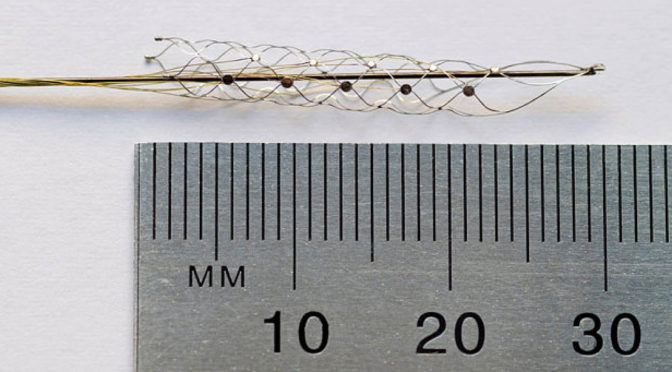
In a nutshell, the matchstick-sized gadget will be inserted, without invasive surgery, into a blood vessel next to the brain’s motor cortex. From there it will detect and translate neural activity, such as the intention to walk, and send commands wirelessly to exoskeleton legs.

Detect, translate, transmit and walk. That’s what scientists call brain-machine interface, and it begins with straightforward day surgery to thread the stent up the groin to the brain.

Trials with sheep, published in February 2016 in Nature Biotechnology, revealed that the animals were fine. They were walking and eating within an hour, and had no side effects.

If all goes according to plan following human trials in 2017, Oxley predicts the stentrode could be on the market by the early 2020s.

“We’ve been able to create the world’s first minimally invasive brain recording device that is implanted without high-risk open brain surgery,” says Oxley.

bionic spine

Strentrode diagram. Credit: University of Melbourne

The road to commercialisation

Oxley is in New York to do a two-year fellowship in cerebral angiography at Mount Sinai Hospital, a specialty which employs non-invasive procedures to visualise blood vessels in the brain. It’s a skill directly related to his work in vascular bionics, exploiting the body’s blood vessels and veins for technologically enhanced therapeutic ends.

Remarkably, Oxley co-invented the stentrode while he was a Melbourne University doctoral student, along with MU collaborator Dr Nicholas Opie, a biomechanical engineer.

In 2012 the pair co-founded a startup company called SmartStent Pty Ltd  to refine and prepare the stentrode for market.

Their goal: commercialise what promises to be one of the world’s most important medical inventions.

After building hundreds of stentrode prototypes, the next step is testing the technology with people. “We’re trying to raise A$4 million for the first human trials at Royal Melbourne Hospital,” Oxley notes. “We’re hoping to begin in late 2017.”

Given the life-changing and commercial potential of the stentrode, it’s little wonder that SmartStent moved to Silicon Valley in April 2016. There, Oxley, Opie and cardiologist Rahul Sharma, with Cedars-Sinai Health System in Los Angeles, established Synchron Inc. as their new corporate headquarters. SmartStent remains the Australian subsidiary.

Clearly, Oxley is a man on the move. Given his family tree, it was inevitable. While he was born in Melbourne, until age nine Oxley lived in Geneva, Switzerland, where his father Alan, a former diplomat, was Australia’s Ambassador for Trade. Then it was on to New York when his dad became Australian Ambassador to the General Agreement in Tariffs and Trade (GATT), the predecessor of the World Trade Organization.

The Oxley family is littered with creative people. Oxley has two older sisters. Harriet is a theatre set and costume designer, and Anna is in banking. His mother Sandra completed a Masters in computing science at Columbia University while Alan was at the GATT.

So where did Oxley’s interest in the brain come from? In his early teens Oxley had developed “a bit of an obsession with the brain and consciousness”.

“Dad was intellectually challenging. I figured it would be a smarter move to become interested in areas he didn’t understand,” Oxley replies.

Solving the mysteries of the brain

Medicine seemed a good choice for a kid keen to reverse engineer the brain to solve the mysteries of human consciousness. So Oxley went off to Monash Medical School in Melbourne, finishing in 2006. He completed his residency in internal medicine at Melbourne’s The Alfred Hospital in 2009.

“Then I took a year off to go travelling,” recalls Oxley, who didn’t begin his neurology residency until 2011. “I was travelling and intellectually exploring.”

The Defense Advanced Research Projects Agency (DARPA) was on his ‘to visit’ list. DARPA is an arm of the US Department of Defense. Located in Arlington, Virginia, the agency is responsible for developing emerging military technologies, including biotechnology.

“I’d been reading about their prosthetic limb work for a couple of years,” says Oxley, who got in touch with neurologist Colonel Geoffrey Ling, director of DARPA’s Biotechnologies Office.

After an initial chat, Ling was sufficiently impressed to invite his visitor to develop what Oxley claims became a “pretty blue sky, out there” proposal.

The result? Oxley left Virginia with a promise of US$1.3 million and instructions to put a team together to create and test his device.

“After all that excitement, I came home and had to start my neurology residency. It was a steep learning curve,” says Oxley, who had to tread carefully as a junior resident with potentially large research funding coming in.

Fortunately, Oxley’s PhD supervisor and mentor, Professor Terry O’Brien, was Oxley’s academic champion. He helped negotiate the occasionally challenging politics and opened doors to the range of experts Oxley needed to set up the DARPA-inspired Vascular Bionics Laboratory  at Melbourne University. The two men even leveraged DARPA’s investment into over A$4 million, with grants from Australia’s National Health and Medical Research Council and other Australian bodies.

Oxley completed his residency in 2013, and submitted his doctorate in February 2016. But the rest isn’t history. There’s a stentrode to trial and commercialise. An invention which O’Brien calls the ‘Holy Grail’ of bionics.

– Leigh Dayton

This article was first published by Australian Unlimited on 02 May 2016. Read the original article here.

New digital mentoring project announced

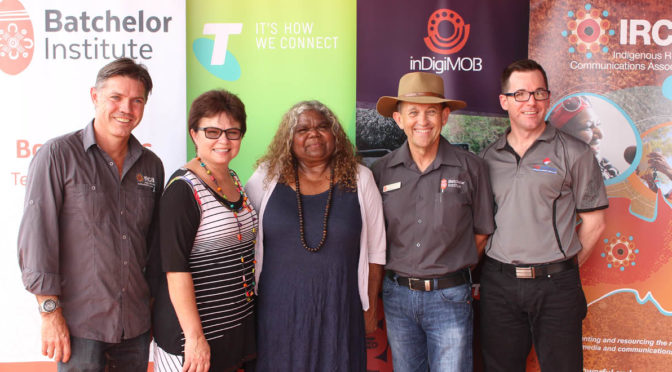
Featured image above: At IRCA’S launch of Indigenous digital mentoring project InDigiMOB. Credit: IRCA

A new digital mentoring project developed by the Indigenous Remote Communications Association (IRCA) was launched by the Minister for Local Government and Community Service, Honourable Bess Price in Arlparra on 15 April 2016.

Committed to addressing digital exclusion experienced by many Indigenous Australians in remote communities, the inDigiMOB program will play a key role in bridging the digital divide. It will establish a network of Indigenous mentors who provide peer-to-peer training and support in digital literacy, cyber safety and internet access in response to local and immediate needs.

“Over the next three years inDigiMOB will help address barriers to the take up and use of digital technology in a number of Indigenous communities in the Northern Territory,” says Daniel Featherstone, General Manager of IRCA.

“With support from local community organisations we will work to ensure remote Indigenous people are not left behind.”

“Where there is affordable and appropriate access, many Indigenous Australians in remote communities are rapid adopters of new digital technology,” says Featherstone.

“However, there are still too many people who lack access and capabilities to fully embrace the social, economic and cultural possibilities of being connected. inDigiMOB will address this and in doing so, create meaningful jobs.”

IRCA will pilot inDigiMOB in Arlparra and several Alice Springs Town Camps with support from delivery partners Batchelor Institute and Tangentyere Council respectively.

inDigiMOB is funded by Telstra.

This article was first published by IRCA on 21 April 2016. Read the original article here.

About IRCA

IRCA is the peak body that represents and advocates for the media and communications interests of remote and very remote Aboriginal and Torres Strait Islander communities in Australia.  IRCA promotes the important role played by remote Indigenous media in maintaining language and culture and providing tools for self-representation and community development.  IRCA supports remote Indigenous media organisations (RIMOs) that have played a key role in the development of the remote media and communications industry in Australia.

www.irca.net.au

Australia’s first nanoscience facility launched

Leading scientific figures, pioneers and representatives from key organisations internationally are visiting Sydney for today’s launch of the Australian Institute for Nanoscale Science and Technology (AINST) – and the official opening of its headquarters – the most advanced facility for nanoscience in the region – where design, fabrication and testing of devices can occur under one roof.

Officially opening the new $150 million Sydney Nanoscience Hub will be Australian Academy of Science’s President Andrew Holmes AM. Senior executives from Microsoft in the USA are also visiting to tour the building, and scientists speaking at the launch include one of Israel’s top physicists, Moti Segev – whose centre at the Technion is collaborating on a project with the University of Sydney and the NSW Government.

Nanoscience is expected to be more impactful this century than the industrial revolution in the 19th century. But “the buildings in which we work, rather than our imaginations, are what’s been limiting the science,” says Associate Professor Michael Biercuk, formerly a consultant to the US government organisation the Defense Advanced Research Projects Agency (DARPA) and now the research leader of a quantum flagship in AINST.

More than six years in the making, the award-winning Sydney Nanoscience Hub was co-funded with $40 million from the federal government, includes teaching spaces alongside publicly available core research facilities that will support  fundamental research as well as the work of startups and established industry.

AINST hosts some of the capabilities of the Australian National Fabrication Facility and of the Australian Microscopy and Microanalysis Research Facility – both co-funded by the National Collaborative Research Infrastructure Strategy (NCRIS). Researchers at the Institute contribute to two Australian Council Centres of Excellence:  the Centre for Ultrahigh bandwidth Devices for Optical Systems (CUDOS); and the Centre for Engineered Quantum Systems (EQuS).

Professor Benjamin Eggleton, the Director of CUDOS who also heads the photonics flagship at AINST, says photonics (the study of photons – the building blocks of light) was already delivering real-world solutions: “Photonics is the backbone of the internet and underpins a $7 trillion industry,” Eggleton says.

“Our team has led the world in photonic-based chip processing and we are now working on building a photonic chip – or a lab on a chip – that may one day be compatible with mobile phones, enabling them to sense environmental pollution or be used for testing blood samples to diagnose health issues.”

Vice-Chancellor Dr Michael Spence says the University-wide AINST reached across traditional disciplinary boundaries.

“The Australian Institute for Nanoscale Science and Technology continues the University of Sydney’s tradition in addressing multidisciplinary issues in a unique way to ensure that we are ready to solve the great challenges of science, engineering and beyond,” he says.

AINST Director, Professor Thomas Maschmeyer, will also head one of five initiating flagships – in energy and environment – and this month announced an investment valued at $11 million from the United Kingdom into a university nano spin-off.

“There is little doubt that society must progressively transition to non-fossil-based energy,” Maschmeyer says.

Professor David Reilly, research leader of the AINST’s quantum measurement and control flagship, says breakthroughs at the nanoscale hold the key to major advances in areas such as artificial intelligence and security.

“The challenge for us over the next few years is to take the physics results that we have probing the basic phenomena of quantum mechanics and see those results turn into technologies.”

Director of the Sydney Nanoscience Hub building Professor Simon Ringer says new science would be enabled through this purpose-built facility for nanoscience – the first in Australia.

“This is the best building of its kind in our region. It will allow us to operate research instruments that enable us to ask questions at the frontiers of science.”

AINST Director of Community and Research, Professor Zdenka Kuncic says the ‘rules of the game’ in nanoscience were still being worked out.

“Perhaps the most exciting aspect of nanoscience is the potential for new discoveries, including in health and medicine,” she says.

“We have only scratched the surface of the new knowledge that remains to be revealed.”

This article was first published by The University of Sydney on 20 April 2016. Read the original article here.

Making innovation work

The ubiquity of the term, ‘innovation’ in the Australian political, business and social lexicon risks diffusing its meaning and, worse, its broader uptake in the national interest. Identifying the true meaning and value of innovation requires we significantly rethink the way we approach the generation of ideas and their application into society.

The current transactional approach to innovation in Australia generally eschews direct supports in favour of tax incentives which, unusually in a global context, comprise roughly 90% of government expenditure on innovation. This is like a vending machine approach to innovation, one in which all attention is focused on the end product and little or no concern is directed towards understanding, or better still, enabling and improving the mechanics of its delivery.

If we are to be more expansive and impactful in our approach to innovation then we need to engage it in its fullest sense and not just concern ourselves with input and output triggers. This requires we focus on identifying the factors that both comprise and, more importantly, help create successful innovation ecosystems.

making innovation work

Prime Minister Malcolm Turnbull visits Western Sydney University’s LaunchPad – an initiative to support startups and technology based businesses in Western Sydney. Credit: Sally Tsouta

Strengthening literacy in science, technology, engineering and mathematics (STEM) disciplines from a very early age affords us a bedrock on which to build workforce capacity and the intellectual capital necessary to generate and sustain innovation. Existing educational structures will need to adapt and change in a way that both responds to and supports the highly fluid and dynamic features of a thriving innovation ecosystem. Adjusting curriculums or modifying our expectations of graduate attributes, while important exercises, will not get us to where we need to be.


“The development of the skills-base required to drive sustainable innovation will both depend on and necessitate a very deliberate blurring of the borders between business, industry and education.”


According to last year’s ‘New Work Order‘ report by the Foundation for Young Australians, “70% of young Australians currently enter the workforce in jobs that will be radically affected by automation”. Add to this an expected average of 17 job changes for each of these new workers over the course of their working lives and it is clear that career narratives within the mooted ‘Ideas Boom‘ will be conditionally diverse and non-linear.

Disrupted, diverse and adaptive career pathways demand innovative responses from business as well as the education sector. The development of the skills-base required to drive sustainable innovation will both depend on and necessitate a very deliberate blurring of the borders between business, industry and education. The key to making this work is not so much an exercise in imposing demarcations on the role each of these groups perform collectively, rather it is centred upon letting go.

When circumstances conspire, Australia’s public research entities and business can produce remarkable innovations, as is evidenced by world leading inroads in, for example, solar technology, quantum computing and medical research; but we need to rely on more than circumstance and a dwindling linkage and research infrastructure funding pool.

While it is early days, universities and business are – in incubator, accelerator, and shared strategic (precinct) spaces – forming the beginnings of the deliberately diffused collaborative relationships needed to build sustainable innovation ecosystems. Encouragingly, the policy and funding frameworks put forward by the National Innovation and Science Agenda offer much to support this process.

The real determinant of our success in innovation will be the aspirations and behaviours of the emerging generation of workers. Diversity in career experience will be the attractor to study STEM disciplines, not curriculum reform. If we get it right, STEM skills will be seen as essential navigation tools in an as yet unknown adventure through a thriving innovation ecosystem where business, industry and universities coalesce to disrupt, diffuse and diversify in the interest of ideas.

Professor Barney Glover and Dr Andy Marks

Vice Chancellor and President of Western Sydney University Assistant Vice Chancellor (Strategy and Policy) of Western Sydney University 

Read next: Dr Cathy Foley, Deputy Director and Science Director of CSIRO’s Manufacturing Flagship on the Path to a ‘right-skilled’ workforce.

Spread the word: Help to grow Australia’s innovation knowhow! Share this piece using the social media buttons below.

Be part of the conversation: Share your ideas on innovating Australia in the comments section below. We’d love to hear from you!

Innovation in Western Australia

Science is fundamental for our future social and economic wellbeing.

In Western Australia we’re focusing on areas where we have natural advantages, and an appropriate base of research and industrial capacity. Western Australia’s Science Statement, released by Premier Barnett in April 2015, represents a capability audit of relevant research and engagement expertise in our universities, research institutes, State Government agencies and other organisations. Mining and energy, together with agriculture, are traditional powerhouses, but the science priorities also reflect the globally significant and growing capabilities in medicine and health, biodiversity and marine science, and radio astronomy. It’s a great place to begin exciting new collaborations.

The Science Statement has also helped to align efforts across research organisations and industry. For instance, in 2015 an industry-led “Marine Science Blueprint 2050” was released, followed by the Premier commissioning a roundtable of key leaders from industry, Government, academia and community to develop a long-term collaborative research strategy. These meetings highlighted critical areas of common interest such as decommissioning, marine noise, community engagement and sharing databases.


“Opportunities abound for science and industry to work together to translate research into practical, or commercial, outcomes.”


Science, innovation and collaboration are integral to many successful businesses in Western Australia. In the medical field, a range of technological innovations have broadened the economy and created new jobs. Some of these success stories include Phylogica, Admedus, Orthocell, iCeutica, Dimerix, Epichem and Proteomics International. Another example in this space is the Phase I clinical trial facility, Linear Clinical Research, which was established with support from the State Government – 75% of the trials conducted to date come from big pharmaceutical and biotechnology companies in the USA.

Opportunities abound for science and industry to work together to translate research into practical, or commercial, outcomes. For example, the field of big data analytics is rapidly permeating many sectors. Perth’s Pawsey Centre, the largest public research supercomputer in the southern hemisphere, processes torrents of data delivered by many sources, including radioastronomy as the world’s largest radio telescope, the Square Kilometre Array, is being developed in outback WA. In addition, local company DownUnder GeoSolutions has a supercomputer five times the size of Pawsey for massive geophysical analyses. In such a rich data environment, exciting new initiatives like the CISCO’s Internet of Everything Innovation Centre, in partnership with Woodside, is helping to drive innovation and growth.

Leading players in the resources and energy sector are also taking innovative approaches to enhance efficiency and productivity. Rio Tinto and BHP Billiton use remote-controlled driverless trucks, and autonomous trains, to move iron ore in the Pilbara. Woodside has an automated offshore facility, while Shell is developing its Prelude Floating Liquefied Natural Gas facility soon to be deployed off the northwest coast. Excitingly, 3 emerging companies (Carnegie, Bombora and Protean) are making waves by harnessing the power of the ocean to generate energy.

This high-tech, innovative environment is complemented by a rapidly burgeoning start-up ecosystem. In this vibrant sector, Unearthed runs events, competitions and accelerators to create opportunities for entrepreneurs in the resources space. Spacecubed provides fabulous co-working space for young entrepreneurs, including the recently launched FLUX for innovators in the resource sector. The online graphic design business Canva, established by two youthful Western Australians epitomises what entrepreneurial spirit and can-do attitude can achieve. In this amazingly interconnected world, the sky’s the limit.

Professor Peter Klinken

Chief Scientist of Western Australia

Read next: Professor Barney Glover, Vice-Chancellor and President of Western Sydney University and Dr Andy Marks, Assistant Vice-Chancellor (Strategy and Policy) of Western Sydney University on Making innovation work.

Spread the word: Help to grow Australia’s innovation knowhow! Share this piece using the social media buttons below.

Be part of the conversation: Share your ideas on innovating Australia in the comments section below. We’d love to hear from you!

Overcoming academic barriers to innovation

In the Government’s National Innovation and Science Agenda, the messaging is as important as the content.

The agenda states that our future prosperity and well-being are intimately tied to the nation’s ability to innovate, that is, to draw on new ideas to develop new products and services.

This is of course not a new concern. For more than three decades governments have noted that Australia languishes at the low end of international measures of innovation and, in particular, lags well behind other developed nations when it comes to links between university research and the world of business.


“There is clearly a great deal more that can and must be done if we are to truly make the most of our national potential, and if we are to remain competitive in a knowledge-intensive global economy.”


Over the years many programs have been developed to remedy this state of affairs, and across the country we can see the fruits of these endeavours. Webs of connections have developed among our universities nationally, and from universities to the wider world of industry, government, professionals and the wider community.

But there is clearly a great deal more that can and must be done if we are to truly make the most of our national potential, and if we are to remain competitive in a knowledge-intensive global economy.

The fact that we remain behind the international pack in building productive links between our university researchers and those who might put research to practical use indicates that concerted efforts are needed at all levels to overcome some persistent barriers.

One of those barriers comes from what might be thought of as ‘business as usual’ within universities. One of the strengths of universities is that they provide a home for independent-minded and highly intelligent people to pursue their passions and to delve at depth into their areas of speciality.

This strength can be a weakness, however, if universities as a whole are unable to coordinate and support academic expertise in ways that make the whole more than the sum of the parts.

Even the most powerful universities, such as Harvard in the U.S., have long struggled with this issue.

At QUT we have sought to break the mould by making partnerships an integral feature of our research by, for example, establishing research institutes which are not stand-alone ‘research hotels’ but instead bring together researchers from multiple disciplines to work on carefully selected themes, alongside people who can make best use of the research findings.

This approach is most fully developed in health research, at the Institute of Health and Biomedical Innovation (IHBI), which is complemented by a range of research partnerships. These include other universities, research institutes, hospitals and other public health and clinical players, including the recently established Translational Research Institute.

The goal is not just to translate research into better health products and practice, but also to develop new interdisciplinary models of education and training. Particular examples are the following:

Examples of interdisciplinary models

1. The Centre for Emergency and Disaster Management within IHBI has been developing its international links, hosting 14 present and future leaders from the Maldives, the Philippines and Pakistan for a five-week intensive training program in 2014 to advance disaster risk reduction and management.

2. QUT’s Medical Engineering Research Facility (MERF) at the Prince Charles Hospital Chermside provides a comprehensive suite of research and training facilities in one location. MERF allows researchers in medical and healthcare robotics to develop applications that will be able to be translated directly to human use. Fellowships have been supported by orthopaedics company Stryker to provide training and research in hip and knee replacement surgery, and Professor Ross Crawford has supervised more than 40 PhD students in orthopaedic surgery techniques, with many of these students working in robotics.

Many of these initiatives are relatively new, and sustaining them will require commitment from all partners and ongoing innovation in our own models of working. QUT is determined to see that not only these efforts flourish, but that they also provide a model for innovation and partnerships in other fields. This is evidenced through the following examples.

Providing a model for innovation and partnerships in other fields

1. QUT has put considerable investment over time not only into the institutes but also into ensuring they integrate seamlessly with the rest of the university. For example, developing models of funding and recognition of research outputs that work across institute and faculty boundaries. This enables researchers to move between their academic “home” and the research institute, in contrast to the usual stand-alone model of a research institute.

The institute model is being extended in QUT’s Institute of Future Environments (IFE) which also adopts a multidisciplinary thematic focus to research in major areas of challenge in our natural, built and virtual environments. It also incorporates a range facilities on and off campus, including the Central Analytical Research Facility (CARF), the Samford Ecological Research Facility (SERF), the Banyo Pilot Plant Precinct and the Mackay Renewable Biocommodities Pilot Plant.

2. Within IHBI, research is being translated into improved therapies and support services for patients. Professor David Kavanagh launched a $6.5 million e-mental health initiative in 2014 to train primary health practitioners in the use of e-mental health services. Professor Kenneth Beagley led the development of a new oral vaccine that shows promise for protection against herpes simplex virus and Dr Willa Huston has developed a new chlamydia diagnostic for infertility in women.

3. The IFE’s Centre for Tropical Crops and Biocommodities researchers have had a significant breakthrough with the world’s first human trial of pro-vitamin A-enriched bananas. The genetically modified bananas have elevated levels of betacarotene to help African children avoid the potentially fatal conditions associated with vitamin A deficiency. This work has been supported by the Bill and Melinda Gates Foundation.

Professor Peter Coaldrake AO

Vice-Chancellor of QUT

Read next: Dr Krystal Evans, CEO of the BioMelbourne Network on Gender equality and innovation.

Spread the word: Help to grow Australia’s innovation knowhow! Share this piece using the social media buttons below.

Be part of the conversation: Share your ideas on innovating Australia in the comments section below. We’d love to hear from you!

Nuclear waste solution

Featured image above: Alejandra Siverio-Gonzalez of the Synroc team. Credit: ANSTO

Synroc technology is an innovative and versatile nuclear waste management solution developed by the Australian Nuclear Science and Technology Organisation (ANSTO).

ANSTO’s Synroc technology locks up radioactive elements in ‘synthetic rock’ allowing waste, like naturally occurring minerals, to be kept safely in the environment for millions of years.

Nuclear waste solution

Synroc processing technology immobilises radioactive waste in a durable, solid rock-like material for long-term storage. Credit: ANSTO

Synroc technology offers excellent chemical durability and minimises waste and disposal volumes, decreasing environmental risks and lowering emissions and secondary wastes.

ANSTO’s Synroc team is developing a waste treatment processing plant using Synroc technology for Australia’s molybdenum-99 (Mo-99) waste; Mo-99 is the parent nuclide for technetium-99m, the most widely used radioisotope in nuclear medicine. The plant will be the first of its kind, and will lead the world in managing nuclear wastes from Mo-99 production.

nuclear waste solution

ANSTO’s Synroc technology. Credit: ANSTO

Dr Daniel Gregg, leader of the Synroc waste form engineering team at ANSTO, says the plant will demonstrate Australia’s commitment to providing technology solutions to the global nuclear community.

“We hope to partner with others and build several more plants around the world using Synroc technology,” he says.

nuclear waste solution

Dr Daniel Gregg, leader of the Synroc waste form engineering team at ANSTO. Credit: ANSTO.

Gregg says several countries are looking to build new Mo-99 production facilities, and regulators want assurances that facilities will be able to treat the resulting waste streams.

“With national regulators around the world putting more and more pressure on waste producers to deal with nuclear wastes, opportunities exist for Synroc as a leading option for nuclear waste treatment.” This places Synroc and Australia in an enviable position, adds Gregg.

“Synroc is a cost-effective, environmentally responsible option to treat and appropriately dispose of nuclear wastes without leaving a burden to future generations.”

In developing the plant, the Synroc team has designed process engineering technology and a fully integrated pilot plant that can treat large volumes of waste under a continuous process mode.

The team is also collaborating with national laboratories around the world to demonstrate strategies to treat radioactive waste for commercial benefit.

The focus is on waste streams – such as the growing stockpiles of long-lived nuclear waste – that are problematic for existing treatment methods. The real advantage, says Gregg, is Synroc’s ability to immobilise these problematic waste forms.

“Waste producers are required to immobilise nuclear wastes, and Synroc and Australia will be at the forefront of waste management technology.”

– Laura Boness

nuclear waste solution

The Synroc team. Credit: ANSTO

www.ansto.gov.au/synroc


Top 25 insights: spin-off start-ups

Seven leaders of the Top 25 Science Meets Business R&D spin-off companies answer the question: What insights can you share with other R&D spin-off start-ups in Australia?


CATAPULT GROUP INTERNATIONAL LTD

Fill a market need and lead that market; don’t fill a product gap and complicate your market with a technology push.

It doesn’t matter how technical your product or service is, it needs to be easily explained and have a story that resonates for it to be successful in any market, let alone overseas markets.

Shaun_intext

– Shaun Holthouse, Chief Executive Officer


SMARTCAP TECHNOLOGIES PTY LTD

A few words of wisdom.

1. Make sure there is a viable, readily accessible market that is sufficiently large to support a spin-off company.

2. The actual invention is only the trigger to start a company – you are establishing a company that will need to innovate on an ongoing basis if it wants to be successful. Make sure that innovation capability and desire exists and thrives in the spin-off.

3. Identify competent board and management capability to direct the business and generate revenue for the company. Most often the management capability is not the same people who carried out the research, but sometimes it can be. Without the right people running the show, the spin-off will not be successful. 

4. Make sure you have sufficient funding available to get the company through to a viable revenue stream, and ideally flexible funding arrangements. Unexpected things will happen and you need capability to accommodate those changes.

– Kevin Greenwood, Chief Operating Officer


PHARMAXIS LTD

“Most start-ups are focused on development plans that contain binary events and marginal financing. This makes them vulnerable to unforeseen delays and additional development steps that require additional funding.

I believe that we should be looking to generate portfolios of innovation under experienced management teams that give our projects the best chance of success – and adequate funding to reach proof of concept in whatever market we are targeting – but at the same time help to spread risk.

venture capital

– Gary J Phillips, Chief Executive Officer


ACRUX DDS PTY LTD

“Ensuring a strong board, CEO, and a quality management team will be critical to success. The availability of funds for programs is an often-discussed barrier to rapid progress. Underfunded companies and poorly thought-out product concepts or technologies are more likely to fail early.

Michael Kotsanis_intext

– Michael Kotsanis, Chief Executive Officer


SPINIFEX PHARAMCEUTICALS PTY LTD

“1. For biotechnology R&D spin-off start-ups in Australia, major hurdles are the dearth of seed capital as well as access to large follow-on venture funds that are needed to build successful biotechnology companies.

2. There is a mismatch between the 10-year life span of a venture capital fund in Australia and the 15+ years needed to translate research findings into a novel drug or biologic product for improving human health. 

3. Hence, these systemic issues are major impediments to building successful biotechnology companies in Australia and these issues need to be addressed.”

– Professor Maree Smith, Executive Director of the Centre for Integrated Preclinical Drug Development and Head of the Pain Research Group at The University of Queensland


ADMEDUS

Start-up companies may consider moving overseas, especially if the Government stops or reduces the R&D tax rebates and doesn’t establish some innovation stimulus packages.

venture capital

– Dr Julian Chick, Chief Operating Officer


REDFLOW

Nothing ever goes 100% smoothly – perseverance is a prerequisite.

Stuart Smith_intext

– Stuart Smith, Chief Executive Officer

Click here to see the full list of Top 25 Science Meets Business R&D spin-off companies, or for further insights from the Top 25 leaders, read their interviews on attracting venture capital, learning from overseas marketsgetting past the valley of death and overcoming major start-up challenges.

Top 25 insights: venture capital

All research and development (R&D) spin-offs have significant risk attached to their commercialisation, but some cannot overcome the negative perception of that risk to attract the necessary capital.

Here, nine of the Top 25 Science meets Business R&D spin-off companies explain what it was about their product or business strategy that inspired confidence in their investors that theirs would be a viable business venture. 


ACRUX DDS PTY LTD

“An excellent intellectual property position is a key starting point. This is in addition to having a proven concept or great technology. A quality team to back up project execution is paramount. Understanding and being able to explain where your commercialised projects will fit into a market segment in terms of the need they will meet is also important.”

Michael Kotsanis_intext

– Michael Kotsanis, Chief Executive Officer


SMARTCAP TECHNOLOGIES PTY LTD

SmartCap Technologies is a spinoff from CRCMining. CRCMining carries out industry directed research, which ensured that the research into fatigue management technologies was a high priority for the mining industry at the project’s inception.

In SmartCap’s case, the industry support was sufficiently high that Anglo American, one of the world’s largest mining companies, in conjunction with CRCMining, co-funded the development of the prototype commercial SmartCap products.

This ‘incubation’ of the SmartCap technology by a significant end user was extremely important to advancing from research into prototype products. 

The prototype products performed sufficiently well for SmartCap to be selected by two other large mining companies for large supply contracts for fatigue monitoring technology.

So the support of significant end users, along with the commercial contracts the company had in place at that time, provided potential investors with the confidence to invest in SmartCap Technologies.”

– Kevin Greenwood, Chief Operating Officer


PHARMAXIS LTD

Pharmaxis has been restructured following a regulatory setback for our lead product. Rebuilding investor confidence has been critical to our longer term success. To do this we focused on three things:

1. transparency – explaining the business model and being clear about the risks as well as the opportunity;

2. building in meaningful milestones which marked development steps that significantly reduced risk and provided opportunities to realise value;

3. hitting milestones and delivering realistic objectives.”

venture capital

– Gary J Phillips, Chief Executive Officer


ADMEDUS

“I think there are a number of reasons investors are drawn to our business: Admedus has two technology platforms which diversifies the risk for investors; we have a product on market; and we are generating revenue.

The first of the two platforms is our regenerative tissue platform, where we use our proprietary ADAPT tissue engineering process to turn xenograft tissue into collagen bio-scaffolds for soft tissue repair. The second is our Immunotherapies platform, where we work with renowned scientist Professor Ian Frazer and his team to develop therapeutic vaccines for the treatment and prevention of infectious diseases and cancers.

Our lead regenerative tissue product CardioCel, which is used to repair and reconstruct congenital heart deformities and more complex heart defects, has made the journey from prototype to commercial product and is on the market in the USA, Europe and parts of Asia.

Frazer’s previous success with the human papillomavirus vaccine (HPV) program that lead to the USD$2 billion product, Gardasil, is well-recognised and gives investors further confidence in our immunotherapy work.

As a result, Admedus has a good balance of validated science via approved products and an exciting product pipeline working with successful scientists. This balance, along with our diversified program portfolio, gives investors confidence in our business. “

venture capital

– Dr Julian Chick, Chief Operating Officer


REDFLOW

“1. Marketing Potential

2. Uniqueness of the product

3. Difficult to replicate”

Stuart Smith_intext

– Stuart Smith, Chief Executive Officer


CATAPULT GROUP INTERNATIONAL LTD

Catapult‘s initial funding came from the Australian Institute of Sport (AIS), the birthplace of the project that led to the commercialisation of Catapult, and the Australian government

Because the technology was engineered to take elite athlete monitoring from the laboratory to the field, value was seen in the data immediately as there was no precedent for this type of information. A new product category had been formed and Australian Olympians were now able to train in their performance sweet spot without getting injured because their coaches had objective data to guide their lead up to big events.

So this combination of pioneering a new industry in a popular space (elite sport), with the ability to create immediate value, certainly helped with the initial funding.”

Shaun_intext

– Shaun Holthouse, Chief Executive Officer


SPINIFEX PHARAMCEUTICALS PTY LTD

“Neuropathic pain is a large unmet medical need because the currently available drug treatments either lack efficacy and/or have dose-limiting side-effects.

Due to this, my patent-protected angiotensin II type 2 (AT2) receptor antagonist technology – encompassing a potentially first-in-class novel analgesic for the treatment of often intractable neuropathic pain conditions – attracted initial seed capital investment from the Symbiosis Group, GBS Ventures and Uniseed Pty Ltd. In total $3.25M was raised and in mid-2005 the spin-out company, Spinifex Pharmaceuticals was formed by UniQuest Pty Ltd, the main commercialisation company of The University of Queensland.

The raison d’etre for Spinifex Pharmaceuticals at that time was to develop AT2 receptor antagonists as efficacious, well-tolerated first-in-class novel analgesics for relief of neuropathic pain. 

In 2006, I discovered that AT2 receptor antagonists also alleviated chronic inflammatory pain in a rat model. This was quite unexpected as clinically available drug treatments for neuropathic pain, such as tricyclic antidepressants and newer work-alikes as well as gabapentin and pregabalin, do not alleviate chronic inflammatory pain conditions such as osteoarthritis. Thus the potential for small molecule AT2 receptor antagonists to alleviate chronic inflammatory pain conditions was patent protected by UniQuest Pty Ltd in 2006 and subsequently in-licensed to Spinifex Pharmaceuticals for commercialisation. 

As both neuropathic pain and chronic inflammatory pain are large unmet medical needs, Spinifex Pharmaceuticals was able to raise additional venture capital from the initial investors as well as from Brandon Capital to fund Investigational New Drug (IND)-enabling Good Laboratory Practice (GLP) toxicology and safety pharmacology studies, as well as early phase human clinical trials. “

– Professor Maree Smith, Executive Director of the Centre for Integrated Preclinical Drug Development and Head of the Pain Research Group at The University of Queensland


iCETANA

“A different technique or approach to tackling a large and growing global market opportunity.”

– Gary Pennefather, Chief Executive Officer


ENGENEIC LTD

“Investors understood that the intellectual property would be generated in-house and there was no “stacking” from the beginning.

We were fortunate at the outset to meet two venture capitalists and a number of high net worth individuals who saw the potential upside in our business plan, had already had some success with investing in biotech – e.g. Biota – and did not ask ‘who else is in?’.  

That being said, we had very limited time and money to show proof of concept, and only after that and our first patent, did we convince those investors that we had something viable.”

HimanshuandJennifer_intext

– Dr Jennifer Macdiarmid, pictured above with Dr. Himanshu Brahmbhatt, joint Chief Executive Officers and Directors 


Click here to see the full list of Top 25 Science meets Business R&D spin-off companies.

Top 25 R&D spin-offs

For a country that makes up just 0.3% of the world’s population, Australia packs a heavyweight punch in science – generating 3.9% of the world’s research publications. However taking that research to market has proved a broader challenge.

Fostering the commercialisation of research success and encouraging collaboration between industry and researchers is at the forefront of the government’s renewed focus on scientific innovation, with over $1.1 billion earmarked to kickstart the “ideas boom” as part of the National Innovation and Science Agenda.

“Collaboration is key to turning Australian ideas into viable and lucrative commercial products and services,” says Christopher Pyne, Minister for Industry, Innovation and Science, adding that high-tech knowhow plus innovative R&D will drive jobs and wealth in the future.

“We must capitalise on the opportunities that are presenting themselves in the economic transition taking place in Australia by being agile, innovative and creative,” Pyne says.

He notes a range of measures, including the $155 million Industry Growth Fund and the R&D Tax Incentive program, are supporting firms to innovate and drive investment into new high-growth industry sectors.

From industry-funded ventures to university spin-offs and rising star start-ups, these are the Science Meets Business Top 25 Australian research and development spin-off companies.

Click here to see the full list, or continue reading. For further insights from the leaders of the Top 25 R&D spin-off companies, read their interviews on attracting venture capital, learning from overseas marketsgetting past the valley of death, overcoming major start-up challenges and starting up.


FIBROTECH THERAPEUTICS PTY LTD


TYPE: NOT LISTED

CEO: Darren Kelly

SOLD FOR: US$557.5 million

INNOVATION RATIO*: 0.15


Fibrotech develops novel drug candidates to treat fibrosis (tissue scarring) associated with chronic conditions such as heart failure, kidney and pulmonary disease, and arthritis. The company spun out of research by Professor Darren Kelly at the University of Melbourne in 2006, and its principal asset is a molecule, FT011, which helps prevent kidney fibrosis associated with diabetes. In May 2014, in one of Australia’s biggest biotech deals at the time, Fibrotech was acquired by Shire, a Dublin-based pharmaceutical company, for an initial payment of US$75 million. Further payments, based on a series of milestones, will bring the total value of the sale to US$557.5 million, and the deal was awarded Australia’s best early stage venture capital deal in 2014. At the time of the sale, FT011 was in Phase 1b trials for the treatment of renal impairment in diabetics – a market worth US$4 billion annually.

*Innovation ratio = patents published/cited

Founder, CEO & director of Fibrotech Therapeutics, Professor Darren Kelly

Founder, CEO & director of Fibrotech Therapeutics, Professor Darren Kelly


SPINIFEX PHARMACEUTICALS PTY LTD


TYPE: LISTED

MARKET VALUE: $264 million

CEO/President: Dr Tom McCarthy

INNOVATION RATIO: 0.13

SOLD FOR: acquired by Novartis for US$200 million up-front payment plus milestone payments


Spinifex Pharmaceuticals was launched in 2005 to commercialise chronic pain treatments developed by Professor Maree Smith of The University of Queensland. Pharmaceuticals giant Novartis acquired the company in 2015 for a total of US$725 million, based on the promising results in Phase 1b and Phase 2 clinical trials. Spinifex’s treatment targets nerve receptors on peripheral nerves rather than pain receptors in the brain, making it possible to treat the pain from causes such as shingles, chemotherapy, diabetes and osteoarthritis without central nervous system side-effects such as tiredness and dizziness.

Dr Tom McCarthy_intext

CEO/President of Spinifex Pharmaceuticals, Dr Tom McCarthy


ADMEDUS LTD


TYPE: LISTED

MARKET VALUE: $61.88 million

COO: Julian Chick

INNOVATION RATIO: 0.02

REVENUE: $10.2 million


Admedus is a diversified healthcare company with interests in vaccines, regenerative medicine, and the sale and distribution of medical devices and consumables. Currently, the company is developing vaccines for herpes simplex virus and human papillomavirus based on Professor Ian Frazer’s groundbreaking vaccine technology. In the regenerative medicine field, Admedus is the vendor of CardioCel®, an innovative single-ply bio-scaffold that can be used in the treatment of congenital heart deformities and complex heart defects.


BIG 3 – RESMED LTD


TYPE: LISTED

MARKET VALUE: $7.85 billion

CEO: Michael J Farrell

INNOVATION RATIO: 0.02

REVENUE: $1.68 billion


For more than 25 years, ResMed has been a pioneer in the treatment of sleep-disordered breathing, obstructive pulmonary disease and other chronic diseases. The company was founded in 1989 after Professor Colin Sullivan and University of Sydney colleagues developed nasal continuous positive airway pressure – the first successful, non-invasive treatment for obstructive sleep apnoea. Today, the company employs more than 4000 people in over 100 countries, delivering treatment to millions of people worldwide.


BIODIEM LTD


TYPE: NOT LISTED

CEO/Executive Director: Julie Phillips

INNOVATION RATIO: 0.22

REVENUE: $203,809


BioDiem specialises in the development and commercialisation of vaccines and therapies to treat infectious diseases. The Live Attenuated Influenza Virus vaccine technology provides a platform for developing vaccines, including one for both seasonal and pandemic influenza. BioDiem’s subsidiary, Opal Biosciences, is developing BDM-I, a compound that offers a possible avenue for the treatment of infectious diseases that resist all known drugs.


VAXXAS PTY LTD


TYPE: NOT LISTED

CEO/Director: David Hoey


Vaxxas is pioneering a needle-free vaccine delivery system, the Nanopatch, which delivers vaccines to the abundant immunological cells just under the skin’s surface. Preclinical studies have shown that vaccines are effective with as little as one-hundredth of a conventional dose when delivered via a Nanopatch. In 2014, Vaxxas was selected by the World Economic Forum as a Technology Pioneer, based on the potential of Nanopatch to transform global health.


6 ACRUX DDS PTY LTD


TYPE: LISTED

MARKET VALUE: $122.39 million

CEO: Michael Kotsanis

INNOVATION RATIO: 0.01

REVENUE: $25.4 million

Biotech company Acrux was incorporated in 1998 after researchers at Monash University developed an effective new spray-on drug delivery technology that improved absorption through the skin and nails. In 2010, Acrux struck a US$335 million deal with global pharmaceutical company Eli Lilly for AxironTM, a treatment for testosterone deficiency in men. It was the largest single product licensing agreement in the history of Australian biotechnology.

CEO of Acrux, Michael Kotsanis

CEO of Acrux, Michael Kotsanis


PHARMAXIS LTD


MARKET VALUE: $72.9 million

CEO: Gary J Phillips

INNOVATION RATIO: 0.76

REVENUE: $59.25 million

Listed on the ASX in 2003, Pharmaxis has two products on the market: Bronchitol, a treatment for cystic fibrosis; and Aridol, a lung function test to diagnose and assess asthma. In 2015, Pharmaxis sold the rights to a treatment for the liver condition nonalcoholic steatohepatitis, to Boehringer Ingelheim in a deal that could be worth US$750 million.

Garyphillips_in text

CEO of Pharmaxis, Gary J Phillips


OPTHEA PTY LTD


TYPE: LISTED

MARKET VALUE: $42.80 million

CEO/MD: Dr Megan Baldwin

INNOVATION RATIO: 0.01

REVENUE: $939,008

With a focus on ophthalmology, Opthea’s main product is OPT-302 – a treatment for wet age-related macular degeneration – which is currently in a Phase 1/2a clinical trial. Wet macular degeneration is the leading cause of blindness in the Western world. Opthea was formerly known as Circadian Technologies, acting as a biotechnology investment fund before transitioning to developing drugs in 2008.


BENITIC BIOPHARMA LTD


TYPE: LISTED

MARKET VALUE: $63.01 million

CEO: Greg West

INNOVATION RATIO: 0.14

REVENUE: $1.37 million

Benitec Biopharma’s leading product is DNA-directed RNA interference (ddRNAi) – a platform for silencing unwanted genes as a treatment for a wide range of genetic conditions. ddRNAi has broad applications, and can assist with conditions as diverse as neurological, infectious and autoimmune diseases, as well as cancers. The company’s current focus inludes hepatitis B and C, wet age-related macular degeneration and lung cancer.


10 CATAPULT GROUP INTERNATIONAL LTD


TYPE: LISTED

MARKET VALUE: ~$256 million

CEO: Shaun Holthouse

REVENUE: $11.8 million

Catapult makes athletic performance monitoring systems using global and local positioning technologies for more than 750 elite teams, universities and institutions worldwide. The technology was commercialised in 2006 and its IPO in December 2014 raised more than $12 million from investors – including from US billionaire Mark Cuban.

CEO of Catapult, Shaun Holthouse

CEO of Catapult, Shaun Holthouse


11 SMARTCAP TECHNOLOGIES PTY LTD


CEO: Dush Wimal

INNOVATION RATIO: 0.03

TYPE: NOT LISTED

Using a wearable electroencephalograph (EEG), SmartCap monitors driver fatigue by measuring changes in brain activity without significant discomfort or inconvenience. It notifies users when they are fatigued and what time of day they’re most at risk. SmartCap was formally EdanSafe, a CRCMining spin-off company.

CEO of Smartcap, Dush Wimal

CEO of Smartcap Technologies, Dush Wimal


BIG 3 – COCHLEAR LTD


TYPE: LISTED

MARKET VALUE: $4.8 billion

INNOVATION RATIO: 0.05

CEO/PRESIDENT: Chris Smith

REVENUE: $925.6 million

Cochlear delivers hearing to over 400,000 people worldwide through products like the cochlear implant. Pioneered by the University of Melbourne’s Professor Graeme Clark and developed with assistance from The HEARing CRC, the bionic devices were first successfully implanted by the Royal Victorian Eye and Ear Hospital for people with moderate to profound hearing loss. The global company now employs 2800 staff and assists people in 100 countries.

CEO/President of Cochlear, Chris Smith

CEO/President of Cochlear, Chris Smith


12 ECOULT PTY LTD


TYPE: NOT LISTED

CEO: John Wood

Founded by the CSIRO in 2007 to commercialise the UltraBattery, Ecoult was acquired by the East Penn Manufacturing Company in 2010. The UltraBattery makes it possible to smooth out the peaks and troughs in renewable power, functioning efficiently in a state of partial charge for extended periods.


13 QUICKSTEP HOLDINGS LTD


MARKET VALUE: $87.09 million

CEO/MD: David Marino

INNOVATION RATIO: 0.04

REVENUE: $39.51 million

Composite materials company Quickstep was founded in 2001 to commercialise their patented manufacturing process. Working with the aerospace, automotive and defence industries, Quickstep supplies advanced carbon fibre composite panels for high technology vehicles. In 2015, the company increased its manufacturing capacity, establishing an automotive production site in Victoria in addition to their aerospace production site in NSW.


14 ENGENEIC LTD


TYPE: NOT LISTED

JOINT CEOs/DIRECTORS: Dr Jennifer MacDiarmid and Dr Himanshu Brahmbhatt

MARKET VALUE: $178 million

INNOVATION RATIO: 0.03

EnGeneIC’s cancer treatment platform, the EnGeneIC Dream Vector (EDVTM), is a first-in-class cytoimmunotherapy.

The EDV is a nanocell mechanism for delivering drugs and functional nucleic acids and can target tumours without coming into contact with normal cells, greatly reducing toxicity. Above all, the EDV therapeutic stimulates the adaptive immune response, thereby enhancing anti-tumour efficacy. More than 260 patents support the technology, developed entirely by EnGeneIC, giving the company control over its application.

Joint CEOs and directors of EnGeneIC, Dr Jennifer MacDiarmid and Dr Himanshu Brahmbhatt

Joint CEOs and directors of EnGeneIC, Dr Jennifer MacDiarmid and Dr Himanshu Brahmbhatt


15 SNAP NETWORK SURVEILLANCE PTY LTD


TYPE: NOT LISTED

CEO: Simon Langsford

CTO/FOUNDER: Dr Henry Detmold

Snap’s FMx is a unique approach to video surveillance that forms cameras into a network based on artificial intelligence that learns relationships between what the cameras can see. It enables advanced real-time tracking and easier compilation of video evidence. Developed at the University of Adelaide’s Australian Centre for Visual Technologies, the system is operational at customer sites in Australia, Europe and North America.


16 ORTHOCELL LTD


TYPE: LISTED

MARKET VALUE: $32.89 million

MD: Paul Anderson

INNOVATION RATIO: 0.81

REVENUE: $1.69 million

Orthocell develops innovative technologies for treating tendon, cartilage and soft tissue injuries. Its Ortho-ATI™ and Ortho-ACI™ therapies, for damaged tendons and cartilage, use the patient’s cells to assist treatments. Its latest product, CelGro™, is a collagen scaffold for soft tissue and bone regeneration.


17 REDFLOW


TYPE: LISTED

MARKET VALUE: $111.3 million

CEO: Stuart Smith

INNOVATION RATIO: 0.16

REVENUE: $265,436

As the demand for effective energy storage grows, RedFlow’s zinc-bromide flow batteries are gaining attention. RedFlow has outsourced its manufacturing to North America to keep up with demand, while the company’s research and development continues in Brisbane.

CEO of Redflow, Stuart Smith

CEO of Redflow, Stuart Smith


18 MINIFAB PTY LTD


TYPE: NOT LISTED

CEO: Dr Erol Harvey

INNOVATION RATIO: 2

Since 2002, precision engineering company MiniFAB has completed more than 900 projects for customers across the globe. MiniFAB provides a complete design and manufacturing service, and has developed polymer microfluidic and microengineered devices for medical and diagnostic products, environmental monitoring, food packaging and aerospace.


19 RAYGEN RESOURCES PTY LTD


TYPE: NOT LISTED

CEO: Robert Cart

INNOVATION RATIO: 0.74

RayGen’s power generation method involves an ultra high efficiency array of photovoltaic cells, which receive focused solar energy from heliostats (mirrors) that track the sun, resulting in high performance at low cost. In December 2014, RayGen and the University of New South Wales (UNSW) collaborated to produce the highest ever efficiency for the conversion of sunlight into electricity. The independently verified result of 40.4% efficiency for the advanced system is a game changer, now rivalling the performance of conventional fossil power generation.

Robert Cart_intext

CEO of RayGen Resources, Robert Cart


BIG 3 – CSL LTD


TYPE: LISTED

MARKET VALUE: $44.93 billion

CEO/MD: Paul Perreault

INNOVATION RATIO: 0.05

REVENUE: US$5.6 million

CSL is Australia’s largest biotechnology company, employing over 14,000 people across 30 countries. The company began in 1916, when the Commonwealth Serum Laboratories was founded in Melbourne. It was incorporated in 1991, and listed on the ASX in 1994. Since that time, CSL has acquired established plasma protein maker CSL Behring, and Novartis’ influenza vaccine business, and has become a global leader in the research, manufacture and marketing of biotherapies.


20 CARNEGIE WAVE ENERGY LTD


TYPE: LISTED

MARKET VALUE: $88.38 million

MD: Dr Michael Ottaviano

INNOVATION RATIO: 0.21

REVENUE: $1.72 million

Carnegie Wave Energy’s CETO technology converts ocean swell into zero-emission renewable power and desalinated freshwater. Ten years of research at test sites off the coast of Western Australia, along with over $100 million in local and foreign investment, has helped grow the company’s global profile.

A recent £2 million grant from the Scottish government boosted stock prices.


21 DYESOL LTD


TYPE: LISTED

MD: Richard Caldwell

MARKET VALUE: $110.13 million

INNOVATION RATIO: 0.12

REVENUE: $1.44 million

Dyesol Limited (ASX: DYE) is a renewable energy supplier and leader in Perovskite Solar Cell (PSC) technology – 3rd Generation photovoltaic technology. The company’s vision is to create a viable low-cost source of electricity with the potential to disrupt the global energy supply chain and energy balance.

MD of Dyesol, Richard Caldwell

MD of Dyesol, Richard Caldwell


22 EVOGENIX LTD


TYPE: NOT LISTED

SOLD FOR: $207 million

INNOVATION RATIO: 0.11

EvoGenix began as a startup in 2001 to commercialise EvoGene™, a powerful method of improving proteins, developed by the CSIRO and the CRC for Diagnostics. It acquired US company Absalus Inc in 2005, then merged with Australian biotechnology company Peptech in 2007, to form Arana Therapeutics. In 2009, Cephalon Inc bought the company for $207 million.


23 MURADEL PTY LTD


TYPE: NOT LISTED

CEO/MD: David Lewis

REVENUE: $4.18 million

With a vision to create sustainable energy through renewable biofuels, Muradel is a joint venture between the University of Adelaide, Murdoch University and SQC Pty Ltd. Their $10.7 million Demonstration Plant converts algae and biosolids into green crude oil. Muradel has plans for upgrades to enable the sustainable production of up to 125,000 L of crude oil, and to construct a commercial plant capable of supplying over 50 megalitres of biocrude from renewable feedstocks.


24 iCETANA


TYPE: NOT LISTED

CEO: Gary Pennefather

INNOVATION RATIO: 0.05

iCetana’s ‘iMotionFocus’ technology employs machine learning to determine what is the ‘normal’ activity viewed by each camera in a surveillance system and alerts operators when ‘abnormal’ events occur. This enables fewer operators to monitor more cameras with greater efficiency.


25 PHYLOGICA LTD


TYPE: LISTED

MARKET VALUE: $33.82 million

CEO: Dr Richard Hopkins

INNOVATION RATIO: 0.09

Phylogica is a drug discovery service, and the owner of Phylomer® Libraries, the largest and most structurally diverse suite of natural peptides. It has worked with some of the world’s largest drug companies, including Pfizer and Roche, to uncover drug candidates.


The Top 25 Science Meets Business R&D spin-off companies was written by Refraction Media in consultation with universities, industry and funding bodies, and supported by data from Thomson Reuters.

The research compiled by Refraction was judged by a panel comprising of: Dr Peter Riddles, biotechnology expert and director on many start-up enterprises; Dr Anna Lavelle, CEO and Executive Director of AusBiotech; and Tony Peacock, Chief Executive of the Cooperative Research Centres Association. The panel considered the following: total market value, annual turnover, patents awarded and cited, funding and investment, growth year-on-year, social value, overseas expansion and major partnerships.


Women in science and business

Academia has a checkered history of elevating women in science. While many leading women scientists to-date have acted as truly innovative researchers – Marie Curie for example – much of the way science is celebrated has innate bias.

Scientists are ranked by academic achievement – promotions and grants, recognition and awards – all emphasising papers published and cited, fellowships received and so on.

Enabling women in science

Australia needs to clearly develop a new platform of scientific achievement – in which, according to the $1.1 billion National Innovation and Science Agenda (NISA), innovation is “critical to improving Australia’s competitiveness, standard of living, high wages and generous social welfare net”.

NISA notes several important factors, but fails to clearly set an agenda for women in science to succeed within the new innovation framework. For instance, it cites:

“We will introduce, for the first time, clear and transparent measures of non-academic impact and industry engagement when assessing university research performance.”

These factors are also critical in removing barriers to career advancement for women in science who have taken a career break, and whose academic output is less than men in equivalent positions as a result.

It also notes that women hold “around a quarter of STEM [science, technology, engineering and maths] and ICT [information and communications technology] related jobs and are significantly underrepresented in high-level research positions. We need to engage more girls in STEM and computing, and provide pathways to progress their interest across the education system and into careers.”

To address this NISA has earmarked $13 million to improve opportunities for women in science and STEM more broadly. How this money will be spent is unclear.

There is a strong and clear need to alter the way that scientific achievements are acknowledged when looking at scientists’ track records, grants eligibility and promotional opportunities. We need to reward collaboration, to allow other career achievements along with citations and impact factor to be part of the recognition process.

We need to alter many things about the way scientists are recognised to promote women in science, from looking for bias in the language we use to valuing the mentorship provided by scientists in a more inclusive and meaningful way.

There needs to be flexibility, appropriate leave and allowances for travel factored into work in science. Education around bias is important, and much could be learned from the corporate sector here.

This is not the time to take baby steps in addressing gender equity for women in science. We need to take great strides, and look to the government for greater leadership in addressing this sooner rather than later.

– Heather Catchpole, Editor, KnowHow magazine

Science Meets Business women’s success stories

Science Meets Business profiles celebrate the women in science today.

[huge_it_portfolio id=”3″]

Science meets Parliament

Featured image above: In his  National Press Club address this week Australia’s Chief Scientist, Alan Finkel, says lessons can be learned from The Swedish Vasa warship. Photo courtesy of Dennis Jarvis as per the Creative Commons License, image resized.

Finkel’s speech was the National Press Club address for Science meets Parliament 2016. This two-day event brings together scientists looking for better ways to communicate their research to policy makers.

Over a series of workshops and activities, people from the media, policy advisers and parliamentarians share their insights on developing policy and how to engage key influencers.

With a host of esteemed speakers, the Science meets Parliament program covers topics such as ‘what journalists need to turn your science into news’ and ‘science and politics, how do they mix?’. This year it also addressed what the National Innovation and Science Agenda means for scientists across Australia.

The event’s organisers, Science and Technology Australia, say that Science meets Parliament aims to “build links between scientists, politicians and policymakers that open up avenues for information and idea exchanges into the future”.

It also hopes to “stimulate and inform Parliament’s discussion of scientific issues that underpin Australia’s economic, social and environmental wellbeing”.

At last year’s event, Professor Ian Chubb AC, former Chief Scientist, spoke about the pace of progress over the past 25 years and how science will be a cornerstone for future prosperity.

This year, Australia’s Chief Scientist, Dr. Alan Finkel AO, spoke about a nation in transition, learning from failure and encouraging intelligent innovation. Finkel believes this requires thinking and operating at scale, and collaborative research to manage the issues and interactions that surround bold, innovative technology.

Click here to read the full transcript of Finkel’s address published by The Conversation on 2 March 2016.

Click here to see some of the speeches presented at last year’s event, such as The Messy Nature of the Policymaking Process, Who is Inspiring Australia? and Getting your Science out of the Lab.

– Elise Roberts

Connecting graduates with businesses

Gaining industry experience and seeing how their research can have practical applications is important to early career researchers. Universities and industry are now working together to help provide graduates with the opportunity to work on commercial solutions for real-life problems.

Sally Bradford won the 2015 Showcasing Early Career Researchers competition, and is a PhD candidate in clinical psychology at the University of Canberra. She developed an electronic mental health assessment app allowing physicians to diagnose and support their patients’ previously undisclosed issues. Bradford’s research is part of a larger collaborative project with the Young and Well CRC.

https://www.youtube.com/watch?v=qdS9BzWEafE&feature=youtu.be

Perth-based cancer immunotherapy research group Selvax Pty Ltd has entered a commercial partnership with Curtin University. They signed a two-year contract to develop anti-cancer immunotherapy treatments in November 2015, after CEO Tony Fitzgerald saw value in Curtin Senior Research Fellow Dr Delia Nelson’s ten years of research into immunological agents.

“We want access to innovative research to make practical use of what researchers are discovering,” says Fitzgerald.

These industry partnerships aren’t new. “It’s a well-trodden path in the USA,” says Fitzgerald.

“But it’s not as common in Australia – we’re great at innovating, but not great at commercialising our work.”

Perth-based energy company Bombora Wave Power needed to know what sensors would work underwater with its unique wave energy converter (WEC), so they partnered with Edith Cowan University (ECU) through the university’s Industry and PhD Research Engagement Program, which matches Western Australian PhD candidates with industry. ECU graduate Gary Allwood researched ways of using optical fibre sensors to measure load and stress on the WEC system’s membrane.

“The partnership allowed me to do things that haven’t been done before, like use optical fibres as sensors instead of electrical sensors,” says Allwood, who will work with Bombora Wave Power to test the sensors.

There are other, similar Australian programs. CRCs offer a number of scholarships across 14 different fields of research, giving PhD students a chance to gain industry experience.

Monash University started its Graduate Research Interdisciplinary Programs (GRIPs) in early 2015, allowing PhD students to solve real-world problems through collaborative research.

The Chemicals and Plastics GRIP has 20 industry partners offering training and funding, including Dulux and 3M. One student is treating coffee grounds to create a fertiliser to improve the soil quality of agricultural land.

“This is an exciting and innovative model for postgraduate education that encourages interdisciplinary and industry-engaged practice,” says Monash University’s Vice-Provost for Graduate Education, Professor Zlatko Skrbis.

– Marisa Wikramanayake

Firing up our start-ups

Stories of ‘unicorn’ Initial Public Offerings and billionaires in their 30s are great. But it’s the creation of quality jobs that truly makes innovation a national priority.

A recent report from the Office of the Chief Economist showed Australia added about one million jobs from 2006–11. Start-up companies added 1.4 million jobs, whereas older companies shed 400,000 jobs over the same period. But it’s not any start-up that matters; only 3.2% of start-ups take off in a dramatic fashion, providing nearly 80% of those new jobs. While Australia has a relatively high rate of companies starting up, the key seems to be getting more of them into high-growth mode.

When Israel faced a massive influx of immigrants after the collapse of the Soviet Union in 1990, it turned to innovation as a means of providing jobs. Given the country’s lack of natural resources, they didn’t have a choice. A population of four million people taking in one million more meant Israel had to become an innovative economy.

They grew their investment in research and development dramatically – to the point where Israel is now one of only two countries consistently spending more than 4% of GDP on R&D.

Israel has translated that spending into high-tech export success. Now, multinational technology company Intel employs over 10,000 Israelis. The Israeli Government is hands-on in its approach to de-risking early stage companies. But this is not achieved through government spending alone. In fact, the Israeli Government’s share of total R&D spending is just one-third of that of Australia, and its higher education sector is just one half. Business carries the lion’s share of R&D spending in Israel, making up 80% of the total, compared with 60% in Australia.

in text graph2

If we want jobs, we need innovation. We are in a unique period when there seems to be complete political agreement on this point. If we want innovation, we should take lessons from wherever we can learn them to develop the Australian system. A lesson from Israel is to use government spending more effectively at the early stages of company development to shift more start-ups into high-growth mode. If we could double the current 3.2% of today’s start-ups that become high-growth companies, we could provide more rewarding jobs for Australia’s future.

Israel concentrates almost 100% of its government innovation support for business on small and medium-sized enterprises. The comparable figure for Australia is 50% – a big hint for what we could do differently to fire up our start-up sector.

–Tony Peacock

Tony Peacock is CEO of the Cooperative Research Centres Association and founder of KnowHow.