All posts by Heather Catchpole

Medical device could save lives

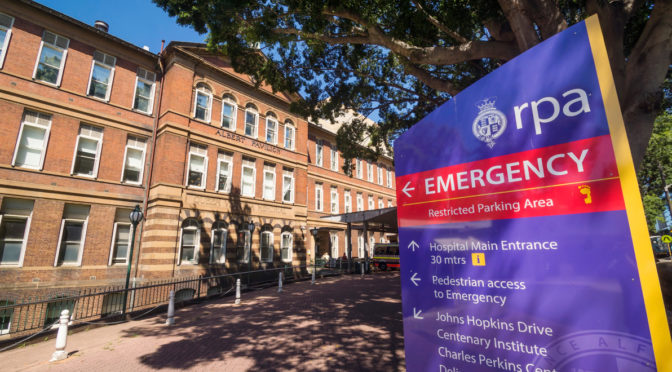
An award-winning medical device could save lives. The ECGx/Medibase system, developed by the Medical Engineering Database Solutions (MEDS) team of students from RMIT University in Melbourne, is a groundbreaking technology used in ambulances to allow a patient’s electrocardiogram (ECG) information to be shared with doctors at the hospital in advance of the ambulance’s arrival, leading to more efficient care and improved patient survival.

Jaad Cabbabe, project leader for the MEDS team, explains that the “eureka” moment for the idea came during a discussion with a doctor who used to work in the emergency department at the Alfred Hospital in Melbourne. “The idea just clicked,” says Cabbabe.

“It offered a solution to a real problem that exists in hospitals and is not currently being addressed.”

Although ambulances in Australia use state-of-the-art ECGs with communication capabilities, the current technology doesn’t transmit patient data to doctors in advance of an ambulance’s arrival to hospital, which means doctors have to wait for vital patient information before they can formulate a diagnosis and treatment plan. Also, within hospitals ECGs are currently shared between doctors by fax or scanned photograph – methods that are neither efficient nor secure.

The ECGx/Medibase system transmits a patient’s ECG data to a central database, where medical professionals can access it, leading to a reduction in waiting times for diagnosis and treatment. The system has the capacity to save time, facilitate information sharing, improve consultations and decision-making, and allow doctors to more precisely target the needs of patients.

The ECGx/Medibase system is designed to be technology “agnostic”, or designed to to allow communication between the range of technologies currently being used by ambulances and hospitals.

The system won the prestigious Telstra University Challenge 2015: Connected World award in September. Cabbabe says the win has given the team a huge benefit through access to Telstra’s technical and commercial expertise and resources, helping them plan ahead, with the ultimate aim of commercialising the system. The team has also been invited to apply to muru-D, Telstra’s technology incubator, which provides upfront funds and state-of-the-art facilities for new technology start-ups.

The system is currently at the prototype stage, and requires further technical development before it can be considered for a field trial. “The next six months developing the working prototype will be key,” says Cabbabe. “But the real world application and the various [ECG] technologies we are proposing to work with is our biggest technical challenge.” The ECG technologies used in ambulances are not currently able to communicate with hospital systems, posing a technical challenge for the team.

Other challenges include navigating legal and regulatory hoops for medical devices, and passing their third year exams.

– Carl Williams

Fire and ice

A project to chart the history of fires in the Southern Hemisphere during the past 100,000 years is using a surprising natural resource: ice.

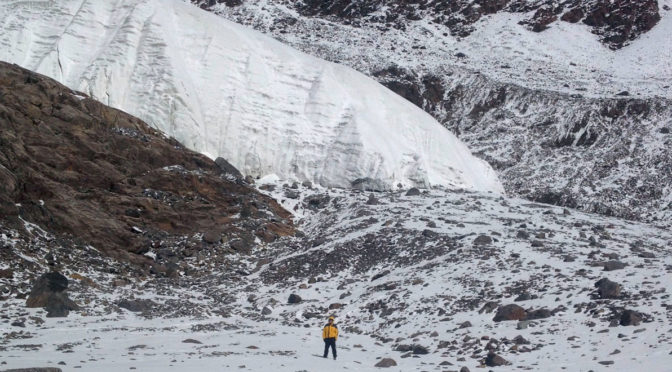
The record of bushfires in Australia, South Africa and South America is revealed in tiny particles of soot trapped in deep ice across Antarctica.

Led by Dr Ross Edwards, an Associate Professor in physics and astronomy at the John De Laeter Centre for Isotope Research, the research is being carried out by a Curtin University team that’s collaborating with an international group of scientists to analyse a 750 m-long core drilled from pristine Antarctic ice.

The concentrations of soot in the ice are minute (ranging from 20 parts per trillion to one part per billion) and extremely sensitive equipment is needed to detect them. “It took many years to come up with a method to analyse and detect these tiny particles,” says Edwards.

“Most of the fires on Earth are in the Southern Hemisphere, and the only way to understand the long-term impact of soot on the atmosphere is through Antarctic ice,” he explains.


“Antarctic ice is like the Earth’s hard drive. Up to now we’ve only been able to open a few of its folders, but now we’re starting to see that there is much more information than we thought.”


Antarctica is ideal for studying Southern Hemisphere fires. “It’s the remotest region on Earth, so any particles that get there are really well mixed, giving the background levels. Of course, there are no natural fires there. It’s a remote viewing point,” Edwards says.

Tracking bushfire history could shed light on past ecosystems and increase our understanding of Earth’s climate. Edwards hopes to go all the way back to a period before the El Niño Southern Oscillation phenomenon (which drives the climate in the Southern Hemisphere) became established. He also hopes to quantify the human influence on fires, by looking at ice that formed before people arrived in South America and Australia.

“The problem now is that we are overwhelmed with data and it takes a long time to work through it,” Edwards says.

Ways to work out from which continent the soot has come are still being developed, but Edwards has already noticed that fires were most common when Australia had been through a wet period. High rainfall in the interior of Australia leads to more vegetation growth, which then fuels fires when the dry weather returns.

Next, Edwards wants to analyse a core that covers a million years of data – and he’s already working with national and international collaborators to develop that project.

Clare Pain

More information means better predictions

In the era of ‘big data’, researchers are reaping the rewards and making better predictions from working with increasingly vast amounts of information about our planet. And datasets don’t get much larger than those used for modelling climatic events and simulating the impacts of global warming on the Earth’s surface.

The primary tools for modelling the climate are Atmosphere–Ocean General Circulation Models (AOGCMs). To improve the credibility of AOGCMs, the World Climate Research Programme established the Coupled Model Intercomparison Project (CMIP). This facilitates comparison of different models to identify common deficiencies and stimulate investigation into their possible causes.

Better predictions: CMIP5

CMIP5 is the fifth phase of CMIP and a multi-model framework of unprecedented scale. It incorporates many more simulations than earlier versions, including those based on historical concentrations, experiments for investigating climate sensitivity, and four emission scenarios reflecting differing potential pathways to 2100.

Use of datasets produced by CMIP5 is widespread: several thousand researchers access the CMIP5 datasets via the Earth System Grid website, and 28 modelling groups worldwide work on models that input to CMIP5 activity. Over 1000 peer-reviewed papers using the datasets have been published in a range of respected climate journals, for example: Journal of Climate (184 papers), Geophysical Research Letters (129 papers), and Climate Dynamics (122 papers).

“Being the latest generation, the CMIP5 models are the most valuable resource we have in the field.”

In Australia, researchers at The Centre for Australian Weather and Climate Research, a partnership between the Bureau of Meteorology and CSIRO, have employed output from CMIP5 models to further our understanding of the current climate in the Pacific region and make better predictions about future climate.

The research, undertaken as part of the Pacific-Australia Climate Change Science Adaptation Planning (PACCSAP) program, provides insights into the current and future impacts of climate change on the Pacific and the implications for communities in the region.

The work further reinforces the strong credentials of climate research in Australia, which also boasts centres such as the ARC Centre of Excellence for Climate System Science at the University of New South Wales (see Share issue 21).

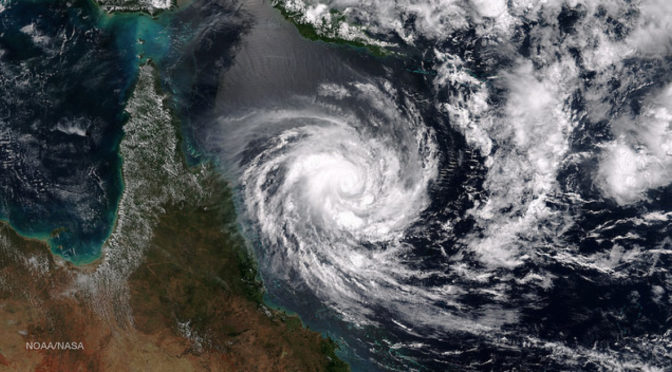
One of the research streams of PACCSAP has projected the impact of extreme weather events, such as tropical cyclones, onto the region’s future climate. The output from CMIP5 models was key to simulating the conditions for the genesis and behaviour of tropical cyclones.

“Being the latest generation, the CMIP5 models are the most valuable resource we have in the field,” says Dr Sally Lavender, Research Scientist at CSIRO’s Oceans and Atmosphere division. “The real advantage with CMIP5 is there are more models than the previous generation with a broader set of experiments, and all the models are much better in terms of sophistication. They also tend to be higher resolution and more have sub-daily time fields which, for modelling tropical cyclones, is very important.”

Dr Lavender is currently working to extend previous research using CMIP5 models to observe why and where cyclones form, and what determines their tracks. “We’re analysing the CMIP5 models to see how well they represent those processes in the real world to produce a selection of models that are good at representing tropical cyclones over the Australian region. We can then use these models to generate more informed projections of tropical cyclones under future climate scenarios.”

Research to date shows there is likely to be a reduction in the overall frequency of tropical cyclones in the Australian region; however, the proportion of high intensity cyclones is likely to increase. That needs to be taken into account in future building standards and disaster readiness planning.

Story provided by Refraction Media.

Originally published in Share, the newsletter magazine of the Australian National Data Service (ANDS).

Dr Alan Finkel will be Australia’s new Chief Scientist

Featured photo: Greg Ford/Monash University

New Chief Scientist Dr Alan Finkel will take over the role once the sitting Chief Scientist, Professor Ian Chubb, finishes his five-year stint in the job on 31 December this year.

Finkel was most recently Chancellor of Monash University, a post he has held since 2008. He is also the President of the Australian Academy of Technological Sciences and Engineering (ATSE).

New Chief Scientist Finkel is an outspoken advocate for science awareness and popularisation. He is a patron of the Australian Science Media Centre and has helped launch popular science magazine, Cosmos.

He is also an advocate for nuclear power, arguing that “nuclear electricity should be considered as a zero-emissions contributor to the energy mix” in Australia.

The Australian Academy of Science (AAS) President, Professor Andrew Holmes, welcomes the expected appointment of Finkel to the new Chief Scientist role.

“The Academy is looking forward to the government’s announcement, but Finkel would be an excellent choice for this position. I’m confident he would speak strongly and passionately on behalf of Australian science, particularly in his advice to government,” he says.

“The AAS and ATSE have never been closer; we have worked together well on important issues facing Australia’s research community, including our recent partnership on the Science in Australia Gender Equity initiative.”

Holmes also thanked outgoing Chief Scientist for his strong leadership for science in Australia, including establishing ACOLA as a trusted source of expert, interdisciplinary advice to the Commonwealth Science Council.

“Since his appointment, Chubb has been a tireless advocate of the fundamental importance of science, technology engineering and mathematics (STEM) skills as the key to the country’s future prosperity, and a driving force behind the identification of strategic research priorities for the nation,” says Holmes.

This article was first published on The Conversation on 26 October 2015. Read the original article here.

Expert reactions:

Karen Taylor is Founder and Business Director of Refraction Media

“Finkel is an energetic advocate for STEM across all levels of society, from schools and the general public to corporate leaders. We’re excited and optimistic about the fresh approach science and innovation is enjoying.” 

Professor Emeritus Sir Gustav Nossal is Emeritus Professor in the Department of Pathology at the University of Melbourne

“This is truly the most fantastic news. Finkel is an extraordinary leader. He has proven himself in personal scientific research. He has succeeded in business in competitive fields. It is difficult to think of anyone who would do this important job with greater distinction.”

Dr Ross Smith is President of Science & Technology Australia

“Finkel has a profound understanding of the place of science in a flourishing modern economy, as a scientist, entrepreneur and science publisher of real note. We look forward to working closely with Finkel, as we jointly pursue better links between STEM and industry.”

$1.5 billion in funding for university research

More than $1.5 billion will be available over four years to support Australia’s world-class university research following the introduction of new laws into Parliament today.

Minister for Education and Training Senator Simon Birmingham said the Higher Education Legislation Amendment (Miscellaneous Measures) Bill 2015 would guarantee $1.538.9 million for university research programmes funded through the Australian Research Council (ARC) from 2015 through to 2019.

“Up to $748.3 million in ARC grants will be available in the 2017–18 financial year, while up to $739.6 million will be available in 2018–19,”says Birmingham.

“This legislation secures funding for the Future Fellowships programme after the previous Labor Government left a funding cliff that provided zero dollars for a Future Fellows Scheme from 2015 onwards.”

“High quality research can help save lives, protect the environment, raise living standards for people around the world, create business opportunities and efficiencies, and drive the innovation and creativity needed for the jobs of the future.”

Birmingham says the new legislation also honoured Prime Minister Malcolm Turnbull’s commitment to NZ Prime Minister John Key in Auckland last week to extend Australia’s student loans scheme to New Zealand citizens who have been long-term residents of this country since childhood.

“If the Bill is passed this year, an estimated 2600 New Zealanders will be eligible for loans to help them study at university, or for higher level vocational education and training qualifications, in 2016,” Birmingham says.

The Bill follows legislation currently before the Parliament which allows data sharing between Australia and New Zealand to support the Australian Government’s requirement for anyone who moves overseas to continue to pay back their Australian student loan just as they would if they lived in Australia.

The Bill will also make Torrens University Australia eligible for research block grant funding, placing it on an equal footing for university research funding as other Australian private universities, and recognise Ballarat University’s name change to Federation University.

– Senator the Hon Simon Birmingham, Minister for Education and Training

This article was originally published on 22 October in a media release by the Department of Education and Training Media Centre. Read the original article here.

One small step for open data…

NASA has a plan. Not one, in this case, about spaceships and astronauts, but something far more ‘down to earth’: open data. The organisation’s Plan for Increasing Access to the Results of Scientific Research was first published in late 2014, laying out NASA’s commitment to open up its datasets for international reuse. Full implementation of the plan is set to be in place from October 2015.

The plan aims, in NASA’s words, to “ensure public access to publications and digital data sets arising from NASA research, development, and technology programs”.

Done properly, opening up complex data sets for public analysis and reuse can lead to new and exciting discoveries, sometimes by those with nothing more than a keen amateur interest (or perhaps obsession) with the topic.

NASA is fully aware of this potential. It says it wants to support researchers to make new findings based on its data, not just in the US but around the globe. As if to prove the point, NASA’s Data Stories website highlights a number of case studies of people reusing its datasets in original applications, such as a ‘Solar System Simulator’ created by Canadian website developer Martin Vezina.

NASA also knows it needs to show commitment to scientific integrity and the accuracy of its research data and wants to encourage others to do the same. So by publishing its own datasets, NASA’s team are setting a benchmark for researchers hoping to grab a slice of the organisation’s annual research investment – a whopping US$3 billion. A condition of funding those research contracts, outlined in the 2014 document, is that researchers must develop their own data management plans describing how they will provide access to their scientific data in digital format. One small step for open data, one giant leap for new scientific discovery?

“This plan will ‘ensure public access to publications and digital data sets arising from NASA research, development, and technology programs’.”


How public data is being reused: The Australian Survey of Social Attitudes

The Australian Survey of Social Attitudes (AuSSA) is the main source of data for the scientific study of the social attitudes, beliefs and opinions of the nation.

It measures how those attitudes change over time as well as how they compare with other societies, which helps researchers better understand how Australians think and feel about their lives. Similar surveys are run in other countries, meaning data from AuSSA also allows us to compare Australia with countries all over the world.

Access to the AuSSA data has allowed independent researchers to explore changes in social attitudes in Australia over time. For example, Andrew Norton (now at the Grattan Institute in Melbourne) has analysed AuSSA to examine changes in attitudes towards same sex relationships between 1984 and 2009, noting the major shifts in favour of same sex relationships during that period.

AuSSA is often used as a reference point for public policy debate. A number of media articles have been based on its findings, discussing topics as diverse as climate change, the welfare state and the kindness of Australians.

Similarly Australian Policy Online includes 18 different papers making use of AuSSA, including papers on perceptions of democracy, population growth, cultural identity and tax policy.

AuSSA datasets can be accessed via its website.

With thanks to Steve McEachern, Director of the Australian Data Archive at Australian National University.


Story provided by Refraction MediaOriginally published in Share, the newsletter magazine of the Australian National Data Service (ANDS).

Featured image source (above): NASA.


Prime Minister’s Prizes for Science

Australian scientists and science educators have been honoured at the annual Prime Minister’s Prizes for Science. The awards, introduced in 2000, are considered Australia’s most prestigious and highly regarded awards, and are given in recognition of excellence in scientific research, innovation and science teaching.

The awards acknowledge and pay tribute to the significant contributions that Australian scientists make to the economic and social betterment in Australia and around the world, as well as inspiring students to take an interest in science.

Previous winners include Professor Ryan Lister (Frank Fenner Prize for Life Scientist of the Year in 2014) for his work on gene regulation in agriculture and in the treatment of disease and mental health, and Debra Smith (Prime Minister’s Prize for Excellence in Science Teaching in Secondary Schools in 2010) for her outstanding contribution in redefining how science is taught in Queensland and across the rest of Australia.

This year’s winners were announced by the Prime Minister, Malcolm Turnbull and Christopher Pyne, Minister for Industry, Innovation and Science at a press conference at Parliament House in Canberra yesterday, which was also attended by the Chief Scientist, Professor Ian Chubb.

The 2015 recipients are:

This year’s winner of the Prime Minister’s Prize for Science is Professor Graham Farquhar, Distinguished Professor of the Australian National University’s (ANU) Research School of Biology , a Chief Investigator of the Australian Research Council’s (ARC) Centre of Excellence for Translational Photosynthesis, and leader of the Science and Industry Endowment Fund project on Forests for the Future: making the most of a high [CO2] world.

Professor Farquhar’s models of plant biophysics has led to a greater understanding of cells, whole plants and forests, as well as the creation of new water-efficient wheat varieties. His work has transformed our understanding of the world’s most important biological reaction: photosynthesis.

Farquhar’s most recent research on climate change is seeking to determine which trees will grow faster in a carbon dioxide enriched atmosphere. “Carbon dioxide has a huge effect on plants. My current research involves trying to understand why some species and genotypes respond more to CO2 than others,” he says. And he and colleagues have uncovered a conundrum: global evaporation rates and wind speeds over the land are slowing, which is contrary to the predictions of most climate models. “Wind speed over the land has gone down 15% in the last 30 years, a finding that wasn’t predicted by general circulation models we use to form the basis of what climate should be like in the future,” he says. This startling discovery means that climate change may bring about a wetter world.

“Our world in the future will be effectively wetter, and some ecosystems will respond to this more than others.”

Professor Farquhar will also receive $250,000 in prize money. Looking forward he is committed to important projects, such as one with the ARC looking at the complex responses of plant hydraulics under very hot conditions.

“It’s important to understand if higher temperatures will negatively affect the plants in our natural and managed ecosystems, and if higher temperatures are damaging, we need to understand the nature of the damage and how we can minimise it.”

You can find out more about the 2015 winners including profiles, photos and videos here.

– Carl Williams

Science beats sport at the 2015 Publish Awards

Photo from left: Refraction founders Heather Catchpole and Karen Taylor-Brown, with Production Manager Heather Curry and Publishing Co-ordinator Jesse Hawley.

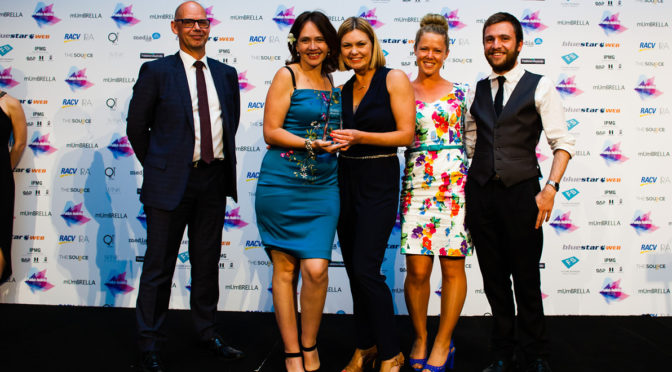
Refraction Media, a Sydney-based publishing start-up, was announced Australia’s Best Small Publisher at the 2015 Publish Awards. Specialising in STEM (science, technology, engineering and maths), Refraction Media came out on top in a category that included sport, luxury and lifestyle at the industry’s night-of-nights.

The jurors at the 2015 Publish Awards said:

“Refraction Media outclassed the other entrants. For a start up operation that’s only two years old, the company has managed to capitalise on an untapped market with incredible skill and with many clever, innovative and successful media streams.”

Publishing’s leaders, representing titles such as Vogue, the Australian Women’s Weekly and Gourmet Traveller, competed for accolades at the 2015 Publish Awards alongside youth disrupters such as Junkee, Vice and Pedestrian.tv while business and industry like In the Black and Australian Pharmacist brought their A-game.

Amongst the glitz and glamour at the 2015 Publish Awards, science valiantly flew its flag with New Scientist‘s Australasia reporter Michael Slezak a finalist for Journalist of the Year (Consumer/Custom) and COSMOS magazine’s Editor-in-Chief, Dr Elizabeth Finkel, a finalist for Single Article of the year for her piece ‘The buzz around brain stimulation‘.

With a strong presence on the main stage and by sharing the language and aesthetics of mass publishers, science publishers are taking science out of a niche audience and placing it firmly at the centre of a dynamic industry of interactivity, sharing and scrolling.

As science, technology, engineering and maths (STEM) becomes more visual, accessible and dynamic, especially to Australia’s youth, engagement and participation rates will climb. This future STEM-skilled workforce is critical to Australia’s future prosperity. STEM graduates will facilitate innovation and collaboration.

Refraction Media fills a unique niche in the market that connects science and technology with the general public. Since its launch in 2013, Refraction has printed over half a million magazines across eight titles, shared 16 in-depth science study guides with schools, produced 13 3D animations, edited 17 scientific white papers, developed two e-learning platforms and created the worldwide, one-and-only virtual tour of a nuclear reactor.

Refraction produce two websites, for news at the nexus of research and industry, www.sciencemeetsbusiness.com.au; and careerswithcode.com.au, which aims to inspire high school students to combine their passion – whether it’s music, arts, business, sports or the environment – with STEM skills to create the careers of the future.

Refraction Media has demonstrated that rather than being ‘niche’, specialising in science uncovers a world of opportunity and discovery.


Building a dream

Professor Zongping Shao dreams of an inexpensive electric car that can drive 500 km on a single charge with a battery that reaches 80% capacity within half an hour.

The clean energy researcher works with scientists around the world to make lithium-ion batteries more efficient, spearheading the development of electric cars globally.

Lithium-ion batteries are typically used in smartphones and portable electronics but Shao is working on more powerful batteries for use in transportation and large-scale energy storage. While electric cars with lithium-ion batteries are already available, Shao says they are expensive and can be dangerous.

“We’re trying to reduce the price of the lithium battery and also to increase the safety and performance. It’s very complicated, as we need to both develop the material and design the battery.”

Shao hopes to see electric cars make up 5% of the vehicles on the road within the next five years. “It’s a challenge we have to face. We are going to run short of petrol in the near future, and electric cars may be the better solution.”

Shao’s other main field of research is the development of solid oxide fuel cells that can convert hydrocarbons into electricity and be used to generate clean power. He is working on a high-temperature, low-emission fuel cell that operates at 500–800°C. This would be able to directly convert hydrocarbons such as natural gas or coal into electricity. It would be “much more efficient than a conventional power plant,” he says.

In 2010, at the age of 37, Shao won the National Natural Science Foundation of China’s Distinguished Young Scientist Award – the highest honour for Chinese researchers under the age of 45. He worked in Europe, the US and China before finding a home at Curtin University.

Shao says he enjoys the freedom to research and the support the university provides. “I like to work on something that is still unknown – that’s very attractive to me. And we make a lot of friends all over the world – there’s a lot of cooperation.”

Michelle Wheeler

Passage of the Medical Research Future Fund Bill

The successful passage of legislation to establish the Medical Research Future Fund (MRFF) Bill 2015 will significantly benefit the health and wellbeing of thousands of Australians. It will also strengthen Australia’s position as a global leader in medical research, says Professor James McCluskey, Deputy Vice Chancellor Research at The University of Melbourne.

“The full $20 billion accumulated in the fund will double Australia’s investment in medical research. This will allow more commercial spinoffs to be captured for the benefit of Australians through innovation, leading to economic activity and new, highly-skilled jobs,” says McCluskey.

With an initial contribution of $1 billion from the uncommitted balance of the Health and Hospitals Fund, and $1 billion provided per year until it reaches $20 billion, the MRFF will support basic and applied medical research – and will be the largest of its kind in the world.

To ensure the MRFF meets the needs of the medical research community, amendments to the Bill include directing funding towards transitional research, which attracts added research funding from the commercial sector. Also included are suggestions by the Australian Green Party, such as ensuring that funding for the Medical Research Council will not be shifted to the MRFF.

By providing an alternative source of funding to the National Health and Medical Research Council (NHMRC), the MRFF will make Australia more competitive with other countries that already have multiple funding agencies.

The UK, for example, has the Medical Research Council – the equivalent of the NHMRC – as well as the $40 billion funded Welcome Trust; a charitable foundation that invests in medical research. The USA also has a number of very generous funding sources, such as the Bill and Melinda Gates Foundation, the National Institutes of Health and the Howard Hughes Medical Research Foundation.

Researchers from the health, university, industry and independent medical research institute sectors will be able to access MRFF. It may also include interdisciplinary sectors such as medical physics, big data analytics and others contributing to national health and medical outcomes.

“Importantly, MRFF will also include initiatives that are currently not well supported by public research funding schemes,” says McCluskey. “For example, joint research with government or pharma [the pharmaceutical industry] in the development of new drugs and medical devices.”

The exact fields to be targeted will be determined by the Minister for Health, Sussan Ley. Advice will come from an independent board of experts including the CEO of NHMRC and eight experts in medical research and innovation, health policy, commercialisation, experience and knowledge in philanthropy, consumer issues, and translation of research into applications in frontline medical practice. The Minister will announce the members of the board shortly.

The MRFF will be established following Royal Assent of the Bill.

– Carl Williams

Three CRC women named in 100 Women of Influence   

Professor Jane Burns, Scientia Professor Veena Sahajwalla and Ms Pat Anderson AO have recently been named Women of Influence in the Australian Financial Review and Westpac 100 Women of Influence Awards.

Professor Jane Burns, CEO of the Young and Well CRC, which researches the health and wellbeing of young people, was the category winner for social enterprise and not-for-profit. Burns was also a Victorian finalist in the 2012 Telstra Business Women’s Awards and was listed in the Financial Review and Westpac Group 100 Women of Influence in 2012.

Professor Veena Sahajwalla is a Project Leader in the Low Carbon Living CRC, working on innovative sustainable low carbon products from waste materials for the built environment. 

Pat Anderson is the Chairperson of the CRC for Aboriginal and Torres Strait Islander Health (The Lowitja Institute), which has led reform into Aboriginal and Torres Strait Islander health research by working with communities, researchers and policymakers. Anderson was the winner in the public policy category.

crca.asn.au

Tracing change: past Australian environments

Curtin University researchers are creating snapshots of past Australian environments using the minute traces left behind by plants, animals and microorganisms. Dr Svenja Tulipani and Professor Kliti Grice from the WA-Organic and Isotope Geochemistry Centre looked for clues in sediments at Coorong National Park, South Australia, to find out how this system of coastal lagoons has changed since European settlement.

The Coorong Wetland is an ecologically significant area, but human water management practices and severe drought have led to increased salinity and less biodiversity, Tulipani explains. By examining microscopic molecular fossils, known as biomarkers, and their stable carbon and hydrogen isotopes, the researchers have identified the types of organisms that previously lived in the area, uncovering evidence for changes in water level and salinity due to changes in carbon and hydrogeological cycles.

“We found significant changes that started in the 1950s, at the same time that water management was intensified,” Tulipani says. “It affects the whole food web, including the birdlife and ecology,” Grice adds.


“We found significant changes that started in the 1950s, which was the same time that the water management was intensified.”


The project used Curtin’s world-class instruments for gas chromatography-mass spectrometry, as well as a new instrument that is capable of even better analysis.

“It allows for a new technique that reduces sample preparation time as the organic compounds can be analysed in more complex mixtures, such as whole oils or extracts of sediments and modern organisms,” Tulipani explains. “We can also identify more compounds this way.”

Tulipani has been able to use samples taken from the remote Kimberley region to examine an extinction event around 380 million years ago. Grice says the techniques are particularly relevant to the evolution of primitive vascular plants during this time period.

“In some locations of the Pilbara region, you can look at very early life from more than 2.5 billion years ago. You can go back practically to the beginning of life.”

Michelle Wheeler

Saving grains

Each year, the fungal disease tan spot costs the Australian economy more than half a billion dollars. Tan spot, also known as yellow spot, is the most damaging disease to our wheat crops, annually causing an estimated $212 million in lost production and requiring about $463 million worth of control measures. Fungal disease also causes huge damage to barley, Australia’s second biggest cereal crop export after wheat. It should come as no surprise, then, that the nation’s newest major agricultural research facility, Curtin University’s Centre for Crop and Disease Management (CCDM), is focusing heavily on the fungal pathogens of wheat and barley.

Launched in early 2014, with the announcement of an inaugural bilateral research agreement between Curtin and the Australian Government’s Grains Research and Development Corporation (GRDC), the CCDM already has a team of about 40 scientists, with that number expected to double by 2016.

“We are examining the interactions of plants and fungal pathogens, and ways and means of predicting how the pathogen species are going to evolve so that we might be better prepared,” says CCDM Director, Professor Mark Gibberd.

An important point of difference for the centre is that, along with a strongly relevant R&D agenda, its researchers will be working directly with growers to advise on farm practices. Influencing the development and use of faster-acting and more effective treatments is part of the CCDM’s big-picture approach, says Gibberd. This encompasses both agronomy (in-field activities and practices) and agribusiness (the commercial side of operations).

“We want to know more about the issues that challenge farmers on a day-to-day basis,” explains Curtin Business School’s John Noonan, who is overseeing the extension of the CCDM’s R&D programs and their engagement with the public. The CCDM, he explains, is also focused on showing impact and return on investment in a broader context.

Two initiatives already making a significant impact on growers’ pockets include the tan spot and Septoria nodorum blotch programs. Tan spot, Australia’s most economically significant wheat disease, is caused by the fungus Pyrenophora tritici-repentis. Septoria nodorum blotch is a similar fungal infection and Western Australia’s second most significant wheat disease.

Curtin University researchers were 2014 finalists in the Australian Museum Eureka Prize for Sustainable Agriculture for their work on wheat disease. Their research included the development of a test that enables plant breeders to screen germinated seeds for resistance to these pathogens and subsequently breed disease-resistant varieties. It’s a two-week test that replaces three years of field-testing and reduces both yield loss and fungicide use.

When fungi infect plants, they secrete toxins to kill the leaves so they can feed on the dead tissue (toxins: ToxA for tan spot, and ToxA, Tox1 and Tox3 for Septoria nodorum blotch). The test for plant sensitivity involves injecting a purified form of these toxins – 30,000 doses of which the CCDM is supplying to Australian wheat breeders annually.

“We have seen the average tan spot disease resistance rating increase over the last year or so,” says Dr Caroline Moffat, tan spot program leader. This means the impact of the disease is being reduced. “Yet there are no wheat varieties in Australia that are totally resistant to tan spot.”

“The development of fungicide resistance is one of the greatest threats to our food biosecurity, comparable to water shortage and climate change.”

Worldwide, there are eight variants of the tan spot pathogen P. tritici-repentis. Only half of them produce ToxA, suggesting there are other factors that enable the pathogen to infiltrate a plant’s defences and take hold. To investigate this, Moffat and her colleagues have deleted the ToxA gene in samples of P. tritici-repentis and are studying how it affects the plant-pathogen interaction.

During the winter wheat-cropping season, Moffat embarks on field trips across Australia to sample for P. tritici-repentis to get a ‘snapshot’ of the pathogen’s genetic diversity and how this is changing over time. Growers also send her team samples as part of a national ‘Stop the Spot’ campaign, which was launched in June 2014 and runs in collaboration with the GRDC. Of particular interest is whether the pathogen is becoming more virulent, which could mean the decimation of popular commercial wheat varieties.


Wheat fungal diseases can regularly cause a yield loss of about 15–20%. But for legumes – such as field pea, chickpea, lentil and faba bean – fungal infections can be even more devastating. The fungal disease ascochyta blight, for example, readily causes yield losses of about 75% in pulses. It makes growing pulses inherently risky, explains ascochyta blight program leader, Dr Judith Lichtenzveig.

In 1999, Western Australia’s chickpea industry was almost wiped out by the disease and has never fully recovered. With yield reliability and confidence in pulses still low, few growers include them in their crop rotations – to the detriment of soil health.

Pulse crops provide significant benefit to subsequent cereals and oilseeds in the rotation, says Lichtenzveig, because they add nitrogen and reduce the impact of soil and stubble-borne diseases. The benefits are seen immediately in the first year after the pulse is planted. The chickpea situation highlights the need to develop new profitable varieties with traits desired by growers and that suit the Australian climate.

The CCDM also runs two programs concerned with barley, both headed by Dr Simon Ellwood. His research group is looking to develop crops with genetic resistance to two diseases that account for more than half of all yield losses in this important Australian crop – net blotch and powdery mildew.

Details of the barley genome were published in the journal Nature in 2012. The grain contains about 32,000 genes, including ‘dominant R-genes’ that provide mildew resistance. The dominant R-genes allow barley plants to recognise corresponding avirulence (Avr) genes in mildew; if there’s a match between a plant R-gene and pathogen Avr genes, the plant mounts a defence response and the pathogen is unable to establish an infection. It’s relatively commonplace, however, for the mildew to alter its Avr gene so that it’s no longer recognised by the plant R-gene.

“This is highly likely when a particular barley variety with a given R-gene is grown over a wide area where mildew is prevalent, as there is a high selection pressure on mutations to the Avr gene,” explains Ellwood. This means the mildew may become a form that is unrecognised by the barley.

Many of the malting barley varieties grown in Western Australia, with the exception of Buloke, are susceptible to mildew. This contrasts with spring barley varieties being planted in Europe and the USA that have been bred to contain a gene called mlo, which provides resistance to all forms of powdery mildew.

Resistance to net blotch also occurs on two levels in barley. “As with mildew, on the first level, barley can recognise net blotch Avr genes early on through the interaction with dominant R-genes. But again, because resistance is based on a single dominant gene interaction, it can be readily lost,” says Ellwood. “If the net blotch goes unrecognised, it secretes toxins that allow the disease to take hold.”

On the second level, these toxins interact with certain gene products so that the plant cells become hypersensitised and die. By selecting for barley lines without the sections of genes that make these products, the crop will have a durable form of resistance. Indeed, Ellwood says his team has found barley lines with these characteristics. The next step is to determine how many genes control this durable resistance. “Breeding for host resistance is cheaper and more environmentally friendly than applying fungicides,” Ellwood adds.

“This is a massive achievement, and we have already shown that the use of more expensive chemicals can be justified on the basis of an increase in crop yield.”


Numerous fungicides are used to prevent and control fungal pathogens, and they can be costly. Some have a common mode of action, and history tells us there’s a good chance they’ll become less effective the more they’re used. “The development of fungicide resistance is one of the greatest threats to our food biosecurity ahead of water shortage and climate change,” says Gibberd. “It’s a very real and current problem for us.”

Fungicides are to grain growers what antibiotics are to doctors, explains Dr Fran Lopez-Ruiz, head of the CCDM’s fungicide resistance program. “The broad-spectrum fungicides are effective when used properly, but if the pathogens they are meant to control start to develop resistance, their value is lost.” Of the three main types of leaf-based fungicides used for cereal crops, demethylation inhibitors (DMIs) are the oldest, cheapest and most commonly used.

Lopez-Ruiz says that to minimise the chance of fungi becoming resistant, sprays should not be used year-in, year-out without a break. The message hasn’t completely penetrated the farming community and DMI-resistance is spreading in Australia. A major aim within Lopez-Ruiz’s program is to produce a geographical map of fungicide resistance. “Not every disease has developed resistance to the available fungicides yet, which is a good thing,” says Lopez-Ruiz.

DMIs target an enzyme called CYP51, which makes a cholesterol-like compound called ergosterol that is essential for fungal cell survival. Resistance develops when the pathogens accumulate several mutations in their DNA that change the structure of CYP51 so it’s not affected by DMIs.

In the barley disease powdery mildew in WA, a completely new set of mutations has evolved, resulting in the emergence of fungicide-resistant populations. The first of these mutations has just been identified in powdery mildew in Australia’s eastern states, making it essential that growers change their management tactics to prevent the development of full-blown resistance. Critical messages such as these are significant components of John Noonan’s communications programs.

tan spot

tan spot

tan spot

The CCDM is researching solutions to plant diseases such as powdery mildew in barley (above top), and Septoria nodorum blotch (above middle) in wheat, with Dr Caroline Moffat (above bottom) leading a program to tackle the wheat tan spot fungus.


Resistance to another group of fungicides, Qols, began to appear within two years of their availability here. They are, however, still widely used in a mixed treatment, which hinders the development of resistance. Lopez-Ruiz says it’s important we don’t end up in a situation where there’s no solution: “It’s not easy to develop new compounds every time we need them, and it’s expensive – more than $200 million to get it to the growers”.

The high cost of testing and registering products can deter companies from offering their products to Australian growers – particularly if, as in the case of legumes, the market is small.

To help convince the Australian Pesticides and Veterinary Medicines Authority that it should support the import and use of chemicals that are already being safely used overseas, the CCDM team runs a fungicide-testing project for companies to trial their products at sites where disease pressures differ – for example, because of climate. This scheme helps provide infrastructure and data to fast-track chemical registrations.

“This is a massive achievement, and we have already shown that the use of more expensive chemicals can be justified on the basis of an increase in crop yield.”


A global problem

More than half of Australia’s land area is used for agriculture – 8% of this is used for cropping, and much of the rest for activities such as forestry and livestock farming. Although Australia’s agricultural land area has decreased by 15% during the past decade, from about 470 million to 397 million ha, it’s more than enough to meet current local demand and contribute to international markets.

Nevertheless, the world’s population continues to grow at a rapid rate, increasing demands for staple food crops and exacerbating food shortages. Australia is committed to contributing to global need and ensuring the sustained viability of agriculture. To this end, Professor Richard Oliver, Chief Scientist of Curtin’s Centre for Crop and Disease Management (CCDM), has established formal relationships with overseas institutions sharing common goals (see page 26). This helps CCDM researchers access a wider range of relevant biological resources and keep open international funding opportunities, particularly in Europe.

“The major grant bodies have a very good policy around cereal research where the results are freely available,” says Oliver. “There’s also the possibility to conduct large experiments requiring lots of space – either within glasshouses or in-field – which would be restricted or impossible in Australia.” It’s a win-win situation.

Branwen Morgan
 

Foundations for Success

The hugely successful career of John Curtin Distinguished Professor Richard Oliver didn’t get off to a perfect start. First, he was not accepted into medical school and, crestfallen, he decided to study biochemistry. As a student, he fainted taking blood from a rabbit, so he turned his attention to plants. It was a fortunate decision and the serendipitous launch to a career that’s since brought huge benefits to Australian farming.

UK-born Oliver began his studies at Bristol University, where he received a “rigorous education in biochemistry” – much of which he has been using ever since. In 1982, realising the potential of the then-infant science of molecular biology, he went to work at Denmark’s Carlsberg Laboratory to train in new genetics techniques.

After accepting a lectureship in molecular biology at the University of East Anglia in the UK, he decided to work on the genes that make plants resistant to disease: an area of great importance but about which little was known at the time.

Working on a fungus that attacks tomatoes, Oliver looked at the interactions from both sides – building up a picture of the plant genes that conveyed resistance and the genes of the fungus that made it virulent. During the next 15 years, he pioneered techniques to analyse plant-fungal interactions. A job as a professor back at the Carlsberg Laboratory gave him the resources to start really making an impact, and soon he was in Australia working on fungal diseases of wheat and barley – first at Murdoch University, then at Curtin University.

Oliver is now the Chief Scientist at Curtin’s new Centre for Crop and Disease Management, made possible by $100  million in funding over the next five years from the university and the government Grains Research Development Corporation (GRDC). “It’s the biggest grant in the history of Curtin University,” Oliver says.

“Up to now, we’ve had two major success stories,” he says of work that preceded the grant. One involved selecting for wheat varieties that are not affected by proteins produced by fungal pathogens. The other involved alerting the farming community about crop management techniques to improve the control of major fungal diseases.

As a GRDC adviser, Oliver had the task of convincing farmers that the organisation was spending their money wisely. It wasn’t easy in the early days, but it’s not as difficult now that his two success stories are saving Australian farming up to $200 million every year.

Oliver believes an excellent university education underlies his success. “What’s important in your education is not the specific information you learn, but the ability to carry on learning.” Perhaps his career had the perfect start after all.

Clare Pain

Four things to protect yourself from cyberattack

It’s easy to get lost in a sea of information when looking at cybersecurity issues – hearing about hacks and cyberattacks as they happen is a surefire way to feel helpless and totally disempowered.

What follows is a sort of future shock, where we become fatalistic about the problem. After all, 86% of organisations from around the world surveyed by PwC reported exploits of some aspect of their systems within a one year period. That represented an increase of 38% on the previous year.

However, once the situation comes into focus, the problem becomes much more manageable. There are a range of things that can we can easily implement to reduce the risk of an incident dramatically.

For example, Telstra estimates that 45% of security incidents are the result of staff clicking on malicious attachments or links within emails. Yet that is something that could be fairly easily fixed.

Confidence gap

There is currently a gap between our confidence in what we can do about security and the amount we can actually do about it. That gap is best filled by awareness.

Many organisations, such as the Australian Centre for Cyber Security, American Express and Distil Networks provide basic advice to help us cope with future shock and start thinking proactively about cybersecurity.

The Australia Signals Directorate (ASD) – one of our government intelligence agencies – also estimates that adhering to its Top Four Mitigation Strategies would prevent at least 85% of targeted cyberattacks.

So here are some of the top things you can do to protect yourself from cyberattack:

1 Managed risk

First up, we need to acknowledge that there is no such thing as perfect security. That message might sound hopeless but it is true of all risk management; some risks simply cannot be completely mitigated.

However, there are prudent treatments that can make risk manageable. Viewing cybersecurity as a natural extension of traditional risk management is the basis of all other thinking on the subject, and a report by CERT Australia states that 61% of organisations do not have cybersecurity incidents in their risk register.

ASD also estimates that the vast majority of attacks are not very sophisticated and can be prevented by simple strategies. As such, think about cybersecurity as something that can managed, rather than cured.

2 Patching is vital

Patching is so important that ASD mentions it twice on its top four list. Cybersecurity journalist Brian Krebs say it three times: “update, update, update”.

Update your software, phone and computer. As a rule, don’t use Windows XP, as Microsoft is no longer providing security updates.

Updating ensures that known vulnerabilities are fixed and software companies employ highly qualified professionals to develop their patches. It is one of the few ways you can easily leverage the cybersecurity expertise of experts in the field.

3 Restricting access means restricting vulnerabilities

The simple rule to protect yourself from cyberattack is: don’t have one gateway for everything. If all it takes to get into the core of a system is one password, then all it takes is one mistake for the gate to be opened.

Build administrator privileges into your system so that people can only use what they are meant to. For home businesses it could mean something as simple as having separate computers for home and work, or not giving administrator privileges to your default account.

It could also be as simple as having a content filter on employee internet access so they don’t open the door when they accidentally click on malware.

4 Build permissions from the bottom up

Application whitelisting might sound complicated, but what it really means is “deny by default”: it defines, in advance, what is allowed to run and ensures that nothing else will.

Most people think of computer security as restricting access, but whitelisting frames things in opposite terms and is therefore much more secure. Most operating systems contain whitelisting tools that are relatively easy to use. When used in conjunction with good advice, the result is a powerful tool to protect a network.

The Australian Signals Directorate released a video in 2012 with an overview of cyber threats.

Protect yourself from cyberattack: Simple things first

Following these basic rules covers the same ground as ASD’s top four mitigation strategies and substantially lowers vulnerability to protect yourself from cyberattack. If you want to delve deeper, there are more tips on the ASD site.

There are many debates that will follow on from this, such as: developing a national cybersecurity strategy; deciding if people should have to report an incident; the sort of insurance that should be available; what constitutes a proportionate response to an attack; and a whole range of others.

Each of those debates is underpinned by a basic set of information that needs to be implemented first. Future shock is something that can be overcome in this space, and there are relatively simple measures that can be put into place in order to make us more secure. Before embarking on anything complicated, you should at least get these things right to protect yourself from cyberattack.

This article was first published by The Conversation on 16 October 2015. Read the original article here.

Continents collide

Collecting rock samples at 5200 m on a recent trip to the Tibetan Plateau, Professor Simon Wilde, from the Department of Applied Geology at Curtin University, was pleased to have avoided the symptoms of altitude sickness. The last time he conducted fieldwork in a similar environment had been about 20 years before in Kyrgyzstan, Central Asia, and he’d managed then to also avoid altitude headaches. Nonetheless, he says, Tibet was tough. Due to the atmospheric conditions, the Sun was intensely strong and hot but the ground was frozen. “It’s a strange environment,” he says.

Wilde was invited by scientists at the Guangzhou Institute of Geochemistry, part of the Chinese Academy of Sciences, to collect volcanic rock samples at the Tibetan site. The region is geologically significant because it is where the Indian tectonic plate is currently “driving itself under the Eurasian plate”, he explains. During their recent field trip, Wilde and his Chinese colleagues collected about 100 kg of rocks, which were couriered back to Guangzhou and Curtin for study. The researchers will be drawing on a variety of geochemistry techniques to analyse the material as they try to paint a picture of what happens when two continents collide, gaining insight into the evolution of Earth’s crust.

“We’re trying to unravel a mystery in a sense,” says Wilde. “We don’t have the full information, so we’re trying to use everything we can to build up the most likely story.”

The Guangzhou geochemists will be analysing trace elements in the rock samples to uncover information about their origins and formation. Back at Curtin, Wilde is working on determining the age of zircon crystals collected from the site, using a technique called isotopic analysis. This involves measuring the ratios of atoms of certain elements with different numbers of neutrons (isotopes) to reveal the age of crystals based on known rates of radioactive decay.

It’s work that’s providing a clearer picture of Earth’s early crustal development and is an area in which Wilde is internationally renowned (see profile, p18).

Gaining an idea of the past distribution of Earth’s continental crust has implications for the resources sector, Wilde explains. “It’s important for people working in metallogeny [the study of mineral deposits] to see where pieces of the crust have perhaps broken off and been redistributed,” he says. “There could be continuation of a mineral belt totally removed and on another continent.”


Continents collide: Copper in demand

Professor Brent McInnes, Director of the John De Laeter Centre for Isotope Research, is also interested in the collision of tectonic plates – to help supply China’s increasing demand for domestic copper. “The rapid urbanisation of China since the 1990s has created a significant demand for a strategic supply of domestic copper, used in air conditioners, electrical motors and in building construction,” explains McInnes. Most of the world’s supply of copper comes from a specific mineral deposit type known as porphyry systems, which are the exposed roots of volcanoes formed during tectonic plate collisions.

McInnes’ research involves taking samples from drill cores, rock outcrops and mine exposures in mountainous regions around the world to be studied back in the lab. Specifically, he and his research team are able to elucidate information about the depth, erosion and uplift rate of copper deposits using a technique called thermochronology – a form of dating that takes into account the ‘closure temperature’, or temperature below which an isotope is locked into a mineral. Using this information, scientists can reveal the temperature of an ore body at a given time in its geological history. This, in turn, provides information with important implications for copper exploration, such as the timing and duration of the mineralisation process, as well as the rate of exposure and erosion.

“Institutions such as the Chinese Academy of Sciences have been awarded large research grants to investigate porphyry copper deposits in mountainous terrains in southern and western China, and have sought to form collaborations with world-leading researchers in the field,” says McInnes.

“We’re trying to unravel a mystery, in a sense. We don’t have the full information, so we’re trying to use everything we can to build up the most likely story.”


Continents collide: Interpreting species loss

Professor Kliti Grice, founding Director of the WA-Organic and Isotope Geochemistry Centre, researches mass extinctions. As an organic and isotope geochemist, Grice (see profile, p12) studies molecular fossils in rock sediments from 2.3 billion years ago through to the present day, also known as biomarkers. These contain carbon, oxygen, hydrogen, nitrogen, or sulphur – unlike the rocks, minerals and trace elements studied by inorganic geochemists Wilde and McInnes.

Grice uses tools such as tandem mass spectrometry, which enables the separation and analysis of ratios of naturally occurring stable isotopes to reconstruct ancient environments. For example, carbon has two stable isotopes – carbon-12 and carbon-13 – and one radioactive isotope, carbon-14. The latter is commonly used for dating ancient artefacts based on its rate of decay. A change in carbon-12 to carbon-13 ratios in plant molecules, however – along with a change in hydrogen – can reveal a shift in past photosynthetic activity.

Grice has uncovered the environmental conditions during Earth’s five mass extinction events and has found there were similar conditions in the three biggest extinctions – the end-Permian at 252 million years ago (Ma), end-Triassic at 201 Ma and end-Devonian at 374 Ma. Among other things, there were toxic levels of hydrogen sulphide in the oceans. Grice discovered this by studying molecules from photosynthetic bacteria, which were found to be using toxic hydrogen sulphide instead of water as an electron donor when performing photosynthesis, thereby producing sulphur instead of oxygen.

“The end-Permian and end-Triassic events were almost identical in that they are both associated with massive volcanism, rising sea levels and increased run-off from land, leading to eutrophication,” Grice explains. Eutrophication occurs when introduced nutrients in water cause excessive algal growth, reducing oxygen levels in the environment. “There were no polar ice caps at these times, and the oceans had sluggish circulations,” she adds.

In 2013, Grice co-authored a paper in Nature Scientific Reports documenting that fossils in the Kimberley showed that hydrogen sulphide plays a pivotal role in soft tissue preservation. This modern day insight is valuable for the resources sector because these ancient environments provided the conditions for many major mineral and petroleum systems. “When you have these major extinction events associated with low oxygen allowing the organic matter to be preserved – along with certain temperature and pressure conditions over time – the materials break down to produce oil and gas,” Grice says.

For example, the Permian-Triassic extinction event – during which up to 95% of marine and 70% of terrestrial species disappeared – produced several major petroleum reserves. That includes deposits in Western Australia’s Perth Basin, says Grice, “and probably intervals in the WA North West Shelf yet to be discovered.”

Gemma Chilton

Molecular detective studies mass extinction events

When the Earth warmed and the oceans turned toxic with hydrogen sulfide about 250 million years ago, up to 95% of marine life and 70% of terrestrial species were wiped out – the largest of five mass extinction events in Earth’s history. Much of what we know about these is thanks to research by John Curtin Distinguished Professor Kliti Grice – organic and isotope geochemist and founder of Curtin’s WA-Organic and Isotope Geochemistry Centre within the Institute for Geoscience Research and the John De Laeter Centre for Isotope Research. Grice studies the molecular signatures of chemicals that have been made by micro-organisms, plants and animals, and deposited in lakes and oceans, thousands or even hundreds of millions of years ago.

Her work requires a deep knowledge of biochemical pathways, geology, chemistry, ecology, stable isotopes within organic molecules, and cutting edge analytical techniques in order to interpret clues left behind in rocks and determine which organisms lived in certain aquatic regions and when.

“I look at everything from about 2.3 billion years ago, through to the present day, including recovery after the mass extinction events,” she says. “Most people know about the dinosaur mass extinction, which was unique because it was due to a meteorite impact,” she says. But the other mass extinctions were caused by changes in the atmosphere and oceans.

Grice is working on the Triassic-Jurassic extinction, which occurred about 200 million years ago when supercontinent Pangaea began to break up. “There was a lot of carbon dioxide and flood basalts from volcanic eruptions. We established that the same conditions existed in the oceans then as they did in the largest mass extinction event 50 million years earlier,” she says. These events were biochemically driven, with environmental events leading to high carbon dioxide and hydrogen sulfide in bodies of water.

Grice’s research is also relevant to petroleum and mineral exploration, as well as to modern day climate and environmental changes. “We work with people across disciplines including geologists, engineers, mathematicians, biologists and geographers,” she says.

Grice is passionate about working with PhD students and early and mid-career scientists and helping them develop. “I like sharing my enthusiasm and ideas – seeing young scientists grow, helping them with their research and providing opportunities, including visits to different parts of the globe.”

Michelle Wheeler

Supercontinent Revolution

Professor of geology at Curtin University Dr Zheng-Xiang Li considers himself a very lucky man. Born in a village in Shandong Province, East China, he fondly remembers the rock formations in the surrounding hills. But he was at school during the end of the Cultural Revolution – a time when academic pursuit was frowned upon and it was very hard to find good books to read. “Fortunately, I had some very good teachers who encouraged my curiosity,” recalls Li.

He went on to secure a place at the prestigious Peking University to study geology and geophysics. And in 1984, when China’s then leader Deng Xiaoping sent a select number of students overseas, Li took the opportunity to study for a PhD in Australia. With an interest in plate tectonics and expertise in palaeomagnetism, he’s since become an authority on supercontinents.

It is widely accepted that the tectonic plates – which carry the continents – are moving, and that a supercontinent, Pangaea, existed 320–170 million years ago. Li’s research
is aimed at understanding how ‘Earth’s engine’ drives the movement of the plates.

His work has been highly influential, showing that another supercontinent, Rodinia, formed about 600 million years before Pangaea. And evidence is mounting that there was yet another ancient supercontinent before that, known as Nuna, which assembled about 1600 million years ago.

Li suspects there is a cycle wherein supercontinents break up and their components then disperse around the globe, before once again coming together as a new supercontinent.

“The supercontinent cycle is probably around 600 million years. We are in the middle of a cycle: halfway between Pangaea and a fresh supercontinent,” he says.

“We are at the start of another geological revolution. Plate tectonics revolutionised geology in the 1960s. I think we are now in the process of another revolution,” Li adds, undoubtedly excited by his work.

“The meaning of life can be described by three words beginning with ‘F’ – family, friends and fun,” he says. “And for me, work falls in the fun part.”

Clare Pain

A Remarkable Career

Compelled to move to Perth in 1972 because “there were no meaningful jobs in geoscience in the UK at the time”, John Curtin Distinguished Professor Simon Wilde carved out an illustrious career in the decades that followed his PhD at the University of Exeter.

“My work is largely focused on Precambrian geology, divided between Northeast Asia, the Middle East, India and Western Australia,” explains Wilde, from the Department of Applied Geology at Curtin University. In 2001, Wilde received extensive media attention for his discovery of the oldest object ever found on Earth – a tiny 4.4 billion-year-old zircon crystal dug up in the Jack Hills region of Western Australia.

His zircon expertise and vast knowledge of early-Earth crustal growth and rock dating have taken him to many of the key areas in the world where Archean (more than 2.5 billion-year-old) rocks are exposed. Of these international investigations, perhaps the most impressive have been his contributions to understanding the geology of North China. Part of the first delegation of foreign researchers to visit the Aldan Shield in Siberia in 1988, along with several top Chinese geoscientists, Wilde has since fostered friendships and collaborations with colleagues in five top Chinese universities, as well as the Chinese Academy of Sciences and the Chinese Academy of Geological Sciences.

“I have been to China more than 100 times and published more than 100 papers on Chinese geology, including major reviews of the North China Craton and the Central Asian Orogenic Belt, where I am a recognised expert.”

The Institute for Geoscience Research (TIGeR) at Curtin University is designated as a high-impact Tier 1 centre – the most distinguished research grouping within the university – providing a focus for substantial activity across a specific field of study. Wilde stepped down as Director in February 2015, having championed TIGeR research, provided advice and allocated funding for the eight years since the Institute was formed. He is confident that his research and the foundations he has built for the centre will continue to support innovative geoscience and exciting collaboration initiatives – in which he is certain to continue playing a major part.

Ben Skuse

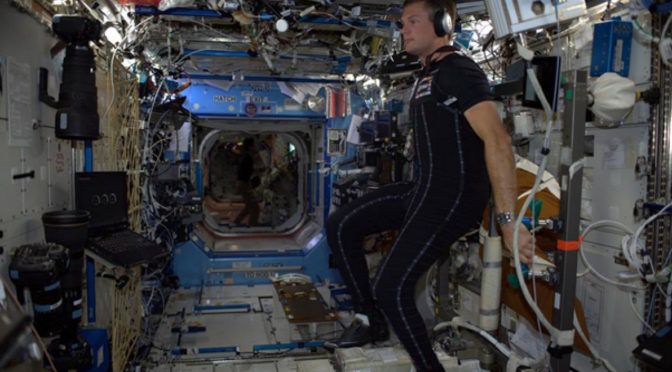
Australian-designed SkinSuit worn on Space Station

It’s a long way from Melbourne to outer space, but that’s how far a SkinSuit invented at RMIT for astronauts has travelled as it undergoes trials that are – quite simply – out of this world.

The brainchild of aerospace engineer, RMIT alumnus and senior research associate Dr James Waldie, the SkinSuit has been worn by an astronaut inside the International Space Station (ISS) for the first time.

Denmark’s first astronaut, Andreas Mogensen, spent 10 days in the ISS last month and pulled on the SkinSuit to test its effectiveness in the weightless conditions.

Inspired by the striking bodysuit worn by Cathy Freeman at the 2000 Sydney Olympics, Waldie and his collaborators have spent more than 15 years getting the suit into space.

“Seeing live video of Andreas wearing SkinSuit on board the ISS was thrilling – I felt an enormous sense of achievement that my concept was finally in orbit,” Waldie said.

Skin-tight and made of bi-directional elastics, SkinSuit has been designed to mimic the impact of gravity on the body to reduce the debilitating physical effects space flights have on astronauts’ bodies.

In the weightless conditions in space, astronauts can lose up to 2% bone mass per month.  Their spines can also stretch by up to 7cms, with most suffering mild to debilitating pain.  Following flight, astronauts have four times the risk of herniated discs as the general population.

It was while watching the Sydney Olympics, and seeing Freeman in her distinctive, skin-tight running suit that Waldie first wondered if such an outfit could help mimic the conditions on the ground for astronauts in orbit.

“Given the impact of atrophy on astronauts in space, I wondered if a suit like the one worn by Freeman could fool the body into thinking it was on the ground rather than in space, and therefore stay healthy,” he said.

The special design of the suit means it can impose a gradual increase in vertical load from the wearer’s shoulders to their feet, simulating the loading regime normally imposed by bodyweight standing on earth.

For the ISS flight, the European Space Agency wanted to explore if the suit could counteract the effects of spaceflight on the spine.

“We believe if we can reduce spinal elongation in space, we can reduce the stress on the intervertebral discs,” Waldie said.

“This should help with pain in-flight, and the chances of slipped discs post-flight.”

The suit has undergone rigorous ground and parabolic flight trials before being selected for the ISS mission.  It also had to pass a spaceflight qualification programme.

As the inventor and a Principal Investigator, Waldie flew to the European Astronaut Centre in Cologne, Germany, for the first on-orbit trial and was elated to see SkinSuit had finally been tested in space.

“It was really exciting but also very humbling, as there are so many people that have dedicated so much effort to this success. To share their passion, and see it all come to fruition, has been amazing.”

SkinSuit has been developed in collaboration with scientists from the Massachusetts Institute of Technology, Kings College London and the European Space Agency.  The suit was manufactured by Italian firm Dainese, best known for producing motorbike leathers for racing.

Enjoying his first space flight, European Space Agency astronaut Mogensen tested SkinSuit over two days as part of an operational and technical evaluation.

He took frequent height measurements, comfort and mobility surveys, skin swabs for hygiene assessments, and also exercised with the suit on the station’s bicycle ergometer.

Mogensen has since returned to Earth but is yet to publicly report his findings as he undergoes extensive debriefing.

Waldie spent more time at ESA in Germany with his collaborators, workshopping further design, sizing and manufacturing refinements for SkinSuit with his RMIT colleagues Arun Vijayan and Associate Professor Lijing Wang from the School of Fashion and Textiles.

This article was first published by RMIT University. Read the original article here.

Featured photo by European Space Agency. European Space Agency astronaut Andreas Mogensen wearing the SkinSuit on board the International Space Station. 

Quantum computing breakthrough

A team of Australian engineers have made a quantum computing breakthrough. They built a quantum logic gate in silicon for the first time, making calculations between two qubits of information possible – and thereby clearing the final hurdle to making silicon quantum computers a reality.

The significant advance, by a team at the University of New South Wales (UNSW) in Sydney appeared in the international journal Nature.

Facing the future

As the world becomes more urbanised, with 70% of people now living in cities, “there is an urgent need to make them more sustainable, more energy efficient, safer and cleaner,” says Dr Marlene Kanga, iOmniscient’s director. “Our products enable this to be done intelligently using video data from different sources to complement text and numerical data.”

The company’s technology can analyse images from anywhere – TV, YouTube, security cameras and personal and public sources – and from that provide real-time responses in complex and crowded environments. The technology can be employed wherever there are cameras.

It pinpoints faces in a crowd, counts people, manages crowds, detects abandoned objects, recognises license plates, and matches drivers to their vehicles. The technology works in more than 120 languages, including Arabic scripts and numerals and can operate indoors or outdoors, even in the harshest climates. It also accepts inputs from audio and chemical sensors.

The system has already been installed in oil and gas plants from Azerbaijan to Mexico, in airports, on railway systems including China’s High Speed Rail network, on campuses such as the University of San Francisco, and in Iraq’s Karbala mosque. As Rustom Kanga, CEO of iOmniscient puts it: “We can do everything that any video analysis supplier can do and do it better – and many things that no one else can do.”

Using mobile devices, iOmniscient’s software can also “monitor garbage and vandalism, understand traffic congestion, assess riots and commotions and provide inputs for big data systems analysing information relevant to a city,’’ adds Kanga. “The technology has its own ‘smarts’, with the ability to minimise nuisance alarms, diagnose itself, and determine whether all cameras are working effectively.”

Dr Marlene Kanga

Dr Marlene Kanga

The starting point for this remarkable technology was a single patent acquired in 2001 from the CRC for Sensor Signal and Information Processing. Founders Marlene and Rustom Kanga and Ivy Li then invested extensively in the company to expand its scope and product range. Today, it has 26 patents covering multiple technologies. Sales are mainly made through major systems integrators such as Siemens and Motorola. They also partner with other major technology providers like Microsoft, EMC and Oracle.

The company is working on improving its technology through four engineering centres in Sydney, Toronto, Chennai and Singapore, where they continue to develop robust in-house technology, train postgraduates, and maintain a strong lead in the ownership of its intellectual property.


FAST FORWARD

Name: iOmniscient

HQ: Sydney

R&D: 26 patents covering multiple technologies

Reach: Azerbaijan, Canada, China, India, Iraq, Mexico, USA, Singapore

At a glance: Established in 2001, iOmniscient is one of Australia’s great software export success stories. 95% of sales are overseas and it has offices in Canada, Singapore, India and more.

– Paul Hendy

Plantic Technologies: Green and clean

Plastics rule our daily lives but they are often made from petrochemicals linked to environmental damage. With the urgency to find degradable, non-polluting alternatives, Plantic Technologies is emerging as a key player in the market.

Plantic Technologies uses starch derived from corn – a renewable source material – which is heated and put through a chemical modification process called hydroxypropylation to plasticise it.

“The new material consists of a sandwich of corn-based product between two thin layers of recyclable plastics, which results in a product with ultra-high gas-barrier film performance and increased shelf life for meat, fish and dairy,” says CEO Brendan Morris.

Plantic Technologies

Brendan Morris

The company is now one of Australia’s innovation success stories, having set up resin, film and sheet bio-manufacturing plants in Melbourne and Jena, Germany, backed by an R&D investment of more than $2 million per year.

It’s been a long process since the CRC spin-off company was formed in 2001, with several capital raisings and a listing on the London Stock Exchange in 2007 before privatisation in 2010. Sales have been doubling since 2012, thanks to new products.

Coles supermarkets have adopted the range for their meat and dairy trays, as have Profish Food in the Netherlands, California’s Excelline Foods, and Multivac in New Zealand. The crucial point about Plantic’s eco-plastic range is that its trays and sheets can be directly substituted for traditional materials in the supply chain.

Although most of their products feed into supply chains in Australia and New Zealand, the company’s sights are set on America, as well as new Japanese and Korean retailer channels. “We’re certainly not finished yet and we are working towards a fully biodegradable version of eco plastic,” says Morris.

Plantic Technologies


FAST FORWARD

Name: Plantic Technologies

HQ: Melbourne

R&D: >$2 million/year

Reach: Europe, USA, New Zealand, plans for Asia

At a glance: Established in 2001, Plantic Technologies is a bioplastics manufacturing spin-off from the CRC for International Food Manufacture and Packaging Science. It now employs more than 100 people.

– Paul Hendy

Leading the revolution

Cochlear implants have become synonymous with Australia’s innovation history. Inventor and surgeon Professor Graeme Clark put the first implant into patient Rod Saunders in 1978. Since then, Cochlear – the company that commercialised the cochlear implant – has been developing hearing products that improve the lives of hundreds of thousands of children and adults worldwide.

Today, Cochlear maintains its market competitiveness with aggressive R&D, research arrangements with 100 universities, and a strong leadership team. CRC partners have also helped maintain Cochlear’s position as world leader in implantable technology. For example, the Contour Advance Electrode array is now fitted to more cochlear implant patients worldwide than any other electrode design in the history of the field.

In return, the CRCs have gained access to a world-leading industry partner, and have helped contribute a value to Cochlear of approximately $120 million.

Cochlear’s Contour Advance Electrode is fitted to patients around the world.

Cochlear’s Contour Advance Electrode is fitted to patients around the world.

In April 2013, the CRC and Cochlear relationship entered a new era: the Australian Hearing Hub (AHH) at Macquarie University officially opened with an inaugural symposium managed by the HEARing CRC. The AHH
will provide the CRC with a Sydney base, as well as access to new facilities, including the world’s only magnetoencephalographic imager (MEG) that can be used with cochlear implant users to explore hearing centres in the brain, and how they adapt to cochlear implant hearing sensations. They have also developed a new 3D, real-world acoustic test environment.

“The potential impact for hearing health from this innovation worldwide is enormous.”

“This is a sensational example of what can be done through partnership,” says Associate Professor Jim Patrick, Chief Scientist at Cochlear Limited.


FAST FORWARD

Name: Cochlear Limited

HQ: Sydney

R&D: $500 million in 5 years (to 2014)

Reach: Africa, Europe, USA, Middle East, Asia-Pacific as of 2012

At a glance: Listed in 1995, Cochlear Limited is one of Australia’s most celebrated advanced manufacturing success stories. It employs 2700 people in 25 countries with manufacturing sites in Sydney, Sweden, Belgium and the US.

– Paul Hendy