All posts by Heather Catchpole

Annual honorific awards

Scientists who are leading the world on solar energy efficiency, helping to develop one-shot flu vaccines, and making portable biosensors to detect viruses are among the winners of the Australian Academy of Science’s annual honorific awards.

Each year the Academy presents awards to recognise scientific excellence, to researchers in the early stage of their careers through to those who have made life-long achievements.

This year’s announcement includes 17 award winners across astronomy, nanoscience, mathematics, chemistry, physics, environmental science and human health.

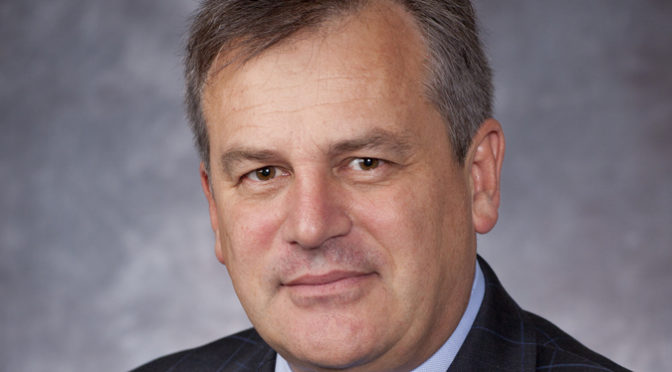
Professor Martin Green, sometimes known as the “father of photovoltaics”, has won the prestigious Ian Wark Medal and Lecture for his world-record breaking work improving solar efficiency.

annual honorific awards

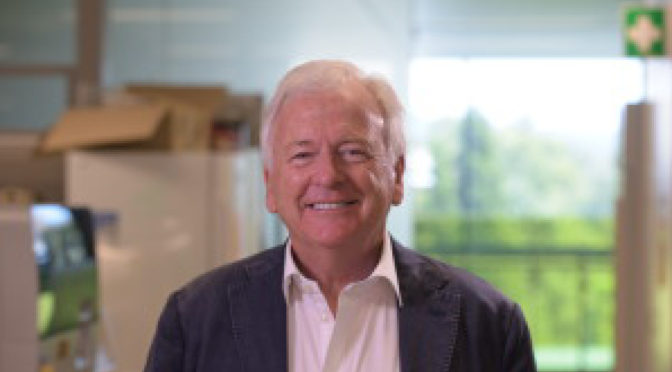
Professor Martin Green

Dr Jane Elith and Associate Professor Cyrille Boyer, who recently won awards in the Prime Minister’s Prizes for Science, will be the recipients of this year’s Fenner and Le Févre prizes.

annual honorific awards

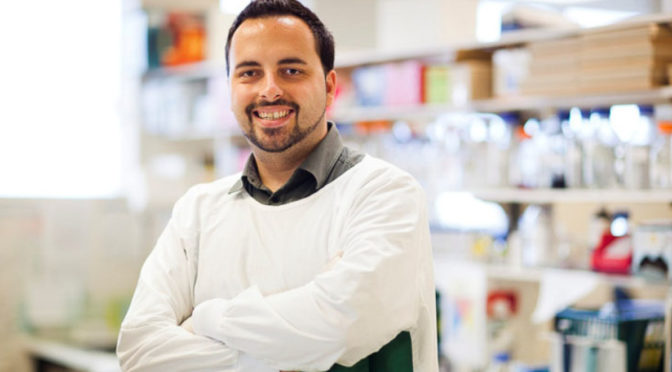
Dr Jane Elith

annual honorific awards

Associate Professor Cyrille Boyer

The Academy President, Professor Andrew Holmes congratulated all the award winners for their work.

“These scientists are simply inspirational. They are working at the leading edges of their fields and of human knowledge, and they are developing innovations that will change and improve our society, our economy and our health,” says Holmes.

“This list of winners represents the best of Australia’s leading and emerging scientists; from researchers doing fundamental research to those building next generation technologies,” says Holmes.

The awards will be formally presented at the Academy’s annual three day celebration of Australian science, Science at the Shine Dome, in Canberra in May 2016.

Read more about the awardees and their research here.

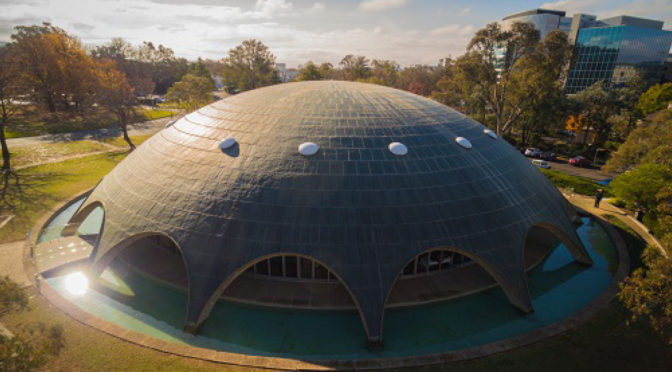
This article was shared in a media release by the Australian Academy of Science on 23 November 2015. Featured image above: Aerial Shine Dome May 2015 credit Adi Chopra.

Partnering for research impact

The Cooperative Research Centres Program (CRC) links research, education and end users, creating a synergy that fosters innovation. Now in its 24th year, the program has led to the development of beneficial new technologies in areas as diverse as contact lenses, financial markets and advanced composite materials.

Defence is just one beneficiary of the CRC Program. For example, lifesaving improvements have been made to body armour and vehicle protection as a result of research into advanced materials and manufacturing techniques.

Safeguarding Australia will depend on our ability to use science and technology to increase the effectiveness of our people and systems. No single research organisation can meet all of Australia’s future needs – collaboration is key. The CRC Program has enabled participants – universities, publicly-funded research organisations and industry – to significantly increase the impact of their science and technology through teamwork.

“No single research organisation can meet all of Australia’s future needs – collaboration is key.”

The Defence Science and Technology Organisation (DSTO) is supporting the new Data to Decisions CRC. This CRC will focus on creating the tools, techniques and workforce to unlock big data. Specific areas include tracking and sensor fusion techniques, visual analytics, cyber data, elastic search tools, speech and text processing, and detecting objects of interest in large imagery datasets.

Through the CRC Program, DSTO will continue to work with industry and publicly-funded agencies to create a vibrant culture of innovation, nurture the next generation of scientists and ensure that research has real impact.

– Dr Alex Zelinsky

Oceans of wealth

As the driest inhabited continent, and the country with the sixth largest coastline, Australia is poorly endowed with freshwater but fringed by huge expanses of ocean.

We often take it for granted but access to clean drinking water is a critical issue in a growing number of regions around the world. In Perth, drinking water has traditionally been sourced from surface water dams and groundwater reserves. But these supplies have significantly diminished since the 1980s through the combined impacts of rapid urban growth and protracted drought conditions. And with the southwest of Australia expected to suffer more severely than other parts of the continent from the impact of climate change, the situation is only expected to worsen.

The Water Corporation of Western Australia has been intensively exploring diversified options for boosting Perth’s drinking water, focusing on climate-independent sources. The most innovative option has been to use advanced treated wastewater to replenish groundwater resources impacted by the drying climate.

To help with their investigations, they turned to Curtin experts, including water chemist Dr Cynthia Joll. As Deputy Director of the Curtin Water Quality Research Centre (CWQRC), Joll is part of a team that researched the performance of the wastewater treatment procedures to make the process both safe and viable. Joll explains there are a large number of potential micropollutants that might need to be removed from a city’s wastewater before it can be safely recycled as drinking water. These include residual pharmaceuticals such as antibiotics, hormones and pain relief medications found in urine.

“The Centre developed the vast majority of the analytical methods for detecting these chemicals in treated wastewaters and then looked to see whether they were in secondary and tertiary – or advanced – treated wastewater,” says Joll.

The research ensured the WA Department of Health approved a pilot water recycling plant. The plant produced advanced treated wastewater of drinking quality, which was pumped into the groundwater aquifer. As a result, they completed a successful groundwater replenishment trial by the end of 2012, which was dubbed a “highly viable” option for securing WA’s drinking water supplies in the drying climate.

In late 2013, the WA government announced that groundwater replenishment was to go ahead as a major new climate-independent water source for Perth. It’s predicted that, by 2060, as much as 20% of Perth’s drinking water is likely to be supplied using this approach. The advanced treated wastewater will be used to replenish groundwater supplies that won’t be drawn for drinking purposes for decades. By the time it is added to Perth’s water supply and subjected to the drinking water treatment process, it will have been naturally filtered by passing through groundwater aquifers, Joll explains.

The CWQRC is also involved in a wide range of fundamental and applied research into other water quality issues. For Joll, who’s been fascinated by water quality chemistry for many years, it’s been particularly thrilling as a scientist to be involved in work of such high public significance. “To help bring it to full scale has been fabulous,” she says, adding that the success of the research means the work of the CWQRC is creating interest in other regions around the world that are already, or are anticipating, experiencing drinking water limitations.

Water resources

Ocean colour image from the MERIS instrument, European Space Agency (ESA).

Engineers at Curtin are also working on a water supply issue. As drinking water is pumped into cities, or wastewater is pumped out, small bubbles can form as the result of a drop in pressure from falling supplies in reservoirs or fluctuations in wastewater usage. These bubbles can damage the pumps that control supply.

Dr Kristoffer McKee, a lead researcher in Curtin’s rotating machine health monitoring project, and colleagues are analysing the vibrations made by the bubbles as they form. When the bubbles enter a pump, the pump applies pressure to the liquid, causing the bubbles to pop (implode) which releases energy. At its peak, millions of bubbles pop within milliseconds of each other.

“This popping eats away at the metal on the ‘impeller’ blades in the pump,” says McKee. As a result, this phenomenon decreases the pump’s ability to apply pressure and push the liquid in the desired direction. “It sounds like you’re pumping gravel.”

The process makes holes in the impeller blades, causing the pumps to seize up. But by the time technicians can detect the telltale sounds, the damage has already begun, says McKee. “It can cost many thousands of dollars to take a pump offline and change an impeller.” He says their approach has been to try to detect the start of the process, called cavitation, before damage becomes significant.

Building on the results of work by a University of Western Australia colleague, and in collaboration with Queensland University of Technology researchers, the Curtin University engineers placed accelerometers (sensors which measure acceleration associated with vibrations) on pumps in Queensland towns. They found they could use the data to map cavitation in 3D to show how a pump changes as cavitation occurs, says McKee.

“Once you see cavitation starting, you can stop your pump and make sure the pressure is correct,” he adds. It’s early days yet and the work needs more field testing, but the research could cut industry costs significantly.

“By 2060, as much as 20% of Perth’s drinking water is likely to be supplied by groundwater replenishment.”

Water resources

Ocean colour image from the MODIS instrument, NASA.

The push to apply research outcomes is strong across Curtin, including in the field of marine and freshwater research. Much of this work is carried out at the university under the auspices of the Australian Sustainable Development Institute, which brings Curtin researchers together on research proposals that relate to sustainable development.

“It’s all about tackling the key issues facing society,” explains the Institute’s Executive Director, Mike Burbridge. “We know that there’s increasing pressure on water and water resources. The cross-disciplinary approach is hugely important at Curtin, but especially in the sustainability space. Major innovations have come about by taking ideas from one area and applying them in another.”

An interdisciplinary approach to solving oceanographic problems has become a hallmark of Curtin’s Centre for Marine Science and Technology (CMST), which fosters research connections across the university’s Departments of Imaging and Applied Physics, Applied Geology, and Environment and Agriculture, as well as with external organisations such as the Western Australian Energy Research Alliance, the Integrated Marine Observing System and the Australian Maritime College.

“It sets us apart from other marine science groups around Australia. We seem to have carved quite a niche for doing that within the Southern Hemisphere and beyond,” says Dr Christine Erbe, Director of the CMST. Erbe is working with a multidisciplinary team at the CMST within Curtin’s physics department in the area of bioacoustics to monitor and analyse the sounds made by marine animals and people at the beach (see News, p6).

Water resources

Perth drinking water will be replenished with reclaimed and treated wastewater.

In one project, researchers are looking at how to detect sharks in the water using off-the-shelf sonar systems – the type used by private and commercial fishermen that work by emitting acoustic signals reflected off objects in the water. “Many of us have engineering and physics backgrounds and apply that to biology,” says Erbe.

Professor David Antoine, head of Curtin’s Remote Sensing and Satellite Research Group, applies his expertise in the opposite direction, combining his background as a biologist with the use of highly sophisticated physics techniques to interpret changes in ocean colour.

Ocean colour activity is affected by the amount and type of particulate matter present – from phytoplankton to sediment. This matter affects how light penetrates into, and is scattered by, water. It can be expressed in physical terms such as the absorption (how much light is taken in by the water itself, as well as the particles or dissolved substances it contains) and reflectance (how much light is being scattered back compared to how much enters at the surface).

“If you have strong absorption, the water will look darker and you will have less light coming out of the water,” explains Antoine. Less absorption results in more scattering of light and different ocean hues. Understanding the changing spectral signatures that result from this play of light enables scientists to quantify, for example, amounts of phytoplankton – the tiny plants that float in ocean surface waters and drive marine food chains.

“Like terrestrial plant life, phytoplankton contains many pigments, particularly chlorophyll,” says Antoine. “And chlorophyll absorbs preferentially in the blue range on the visible light spectrum.”

As phytoplankton concentration increases in an area of ocean, the spectral signature of the water shifts from deep to light blue, then to green or brown, indicating a very large concentration of phytoplankton and highly productive waters. This can be measured in surface waters using an instrument called a radiometer – deployable from a ship, for example, or across huge areas via satellites.

While referred to as ‘satellite imagery’, it involves more than looking at nice pictures, Antoine says. His team is doing a rigorous quantitative analysis of the measured signal on each pixel of the image to look at geophysical properties and determine attributes such as phytoplankton concentration. “That can mean millions of individual observations on just one image, and billions of them when many years of observations are collected over the entire planet.”

This kind of understanding can be applied, for example, in the local and global management of fish stocks, which rely on patterns of phytoplankton production. And because phytoplankton carry out photosynthesis – absorbing CO2 and releasing oxygen – understanding where, when and how much of this resource there is can provide vast amounts of information about the global carbon cycle. This, in turn, has major implications for managing climate change.

The potential significance of phytoplankton in this area is enormous, says Antoine, explaining that huge numbers of tiny plants floating across the world’s oceans act as a major sink for atmospheric carbon, sequestering around 50 gigatonnes of carbon per year. This is as much carbon fixation as is carried out by terrestrial plants, and the plankton uses about 500 times less biomass because it is more efficient at photosynthesis. A significant part of the CO2 released in the atmosphere by human activity is absorbed by this process and eventually sinks to the deep ocean and is buried in the ocean floor.

There’s perhaps no better indicator of how all of Earth’s habitats – marine, freshwater and terrestrial – are all intimately linked.

Karen McGhee

New Innovation and Collaboration Centre to stimulate growth

Business growth, and driving innovation and entrepreneurship in South Australia is the focus of the new Innovation and Collaboration Centre (ICC), being launched today at the University of South Australia (UniSA).

A strategic partnership between UniSA, the Government of South Australia and anchor industry partner Hewlett Packard Enterprise, the ICC is set to help business and industry turn their ideas into market success, building on South Australia’s growing reputation as the state for innovation and enterprise.

By leveraging world class Hewlett Packard Enterprise and UniSA expertise in business growth, creative thinking, commercialisation, and technology, the ICC will support the life cycle from idea/startup to growth and expansion for businesses and industry organisations.

The Centre will provide a unique multidisciplinary environment where SME’s and entrepreneurs can access a wide range of services and expertise to help them develop their products and grow their business.

These services include business management, strategy and marketing (UniSA Business School), business growth (Centre for Business Growth), commercialisation (UniSA Ventures), digital video marketing (Centre for Digital Video Intelligence), design (Match Studio) and technology (HPE and UniSA IT).

The ICC will also run technology and innovation-based business support programs, start-up workshops for individuals and groups, and workshops designed to meet the needs of small-to-medium-sized businesses. These tailored events, along with business model evaluation and business development diagnostic clinics, will help those businesses learn how to address challenges and achieve growth.

UniSA Vice Chancellor, Professor David Lloyd, says the ICC is set to become a commercialisation pipeline for new innovations, creating opportunities to help South Australian businesses flourish.

“The ICC is built on a strategic partnership which will see business benefit from UniSA’s knowledge in business growth and commercialisation, combined with Hewlett Packard Enterprise’s technological expertise and the support of the South Australian Government,” Lloyd says.

“It’s a partnership which champions the growth of SA’s business sector through a collaborative, dynamic and supportive environment, and it’s one which will help educate the professionals of tomorrow, as our students will be able to generate their business ideas and utilise the resources of the Centre.”

Premier Jay Weatherill said the government was proud to support the collaboration between The University of South Australia and Hewlett Packard Enterprise.

“Innovation is key to transforming the State’s economy and our vision is to position South Australia globally as a start-up destination,” Weatherill says.

“The Innovation and Collaboration Centre will be an incubator for businesses wanting to explore new ideas and it will provide world-class resources and support to accelerate the growth of start-ups, small businesses and student entrepreneurs.”

Hewlett Packard Enterprise, South Pacific Managing Director Nick Wilson says he is thrilled with the partnership.

“Hewlett Packard Enterprise’s role in establishing the centre is a direct reflection of our dedication to enabling innovation that transforms industries, markets and lives,” Wilson says.

“Investing more in Science, Engineering, Technology and Mathematics is vital for the economic future of our region, and will help to strengthen relationships between industry, the public sector and the higher education sector.”

The ICC will initially be based at City West campus prior to relocating to UniSA’s Health Innovation Building, part of the South Australian Health and Biomedical Precinct on North Terrace, due for completion in 2018.

This article was first published by The University of South Australia on 16 November 2015. Read the original release, here.

Dengue research gets Grand Challenges Explorations grant

The University of Queensland announced today that it is a Grand Challenges Explorations winner, an initiative funded by the Bill & Melinda Gates Foundation. Research groups led by Professor Paul Young of the School of Chemistry and Molecular Biosciences, and Professor Matt Cooper at UQ’s Institute for Molecular Bioscience will pursue an innovative global health and development research project, titled Next-gen diagnostics for field-based surveillance of Wolbachia and arboviral infections in wild mosquitoes.

Grand Challenges Explorations (GCE) funds individuals worldwide to explore ideas that can break the mould in how we solve persistent global health and development challenges. Young and Cooper’s project is one of more than 50 Grand Challenges Explorations Round 15 grants announced today by the Bill & Melinda Gates Foundation.

To receive funding, Young and Cooper and other Grand Challenges Explorations winners demonstrated in a two-page online application a bold idea in one of five critical global heath and development topic areas. The foundation will be accepting applications for the next GCE round in March 2016.

The project aims to develop a portable tool to detect mosquitoes carrying dengue fever. Dengue virus is estimated to infect up to 400 million people globally each year. The next-generation diagnostic tool, which can be used in a field setting, uses quantum dot nanoparticles in a simple, cheap assay to measure the presence of a dengue virus protein. The test is also able to detect Wolbachia carrying mosquitoes. Wolbachia is a naturally occuring bacterium that has been added to mosquitoes to reduce their susceptibility to dengue and other viruses. “The idea is to test mosquitoes in the field for the presence of dengue as an early warning surveillance system,” Young says.

“We need to get the best tests we have out of the lab and into the field, where they can help identify dengue and track prevention measures in real time.  Identifying hot spots early could help us get on top of epidemics before they break out,” says Cooper.

UQ Alumnus Dr Joanne Macdonald of the University of the Sunshine Coast is also a Global Challenges Exploration winner, and will pursue a project entitled: A rapid field test for detecting infected mosquitoes.  Project team members include her former supervisor Professor Roy Hall of UQ’s School of Chemistry and Molecular Biosciences. Macdonald has developed a simple diagnostic test able to detect multiple pathogens that reduces costs compared to performing individual assays, and does not require specialised equipment.


About Grand Challenges Explorations

Grand Challenges Explorations is a US$100 million initiative funded by the Bill & Melinda Gates Foundation. Launched in 2008, over 1160 projects in more than 60 countries have received Grand Challenges Explorations grants. The grant program is open to anyone from any discipline and from any organisation. The initiative uses an agile, accelerated grant-making process with short two-page online applications and no preliminary data required. Initial grants of US$100,000 are awarded two times a year. Successful projects have the opportunity to receive a follow-on grant of up to US$1 million.


The University of Queensland


The University of Queensland (UQ) is one of Australia’s leading research and teaching institutions, ranked in the world’s top 50 by the QS World University Rankings and the Performance Ranking of Scientific Papers for World Universities. The University is the oldest and largest in Queensland, with 50,000-plus students engaged in more than 400 degree programs. UQ has been educating people to create change for a better world for more than a century, producing more than 225,000 graduates since opening in 1911, including more than 11,500 PhDs, a Nobel laureate, the CEO of a Fortune 500 company and leaders in government, law, science, public service and the arts.

This article was first published by the University of Queensland on 13 November 2015. Read the original article here.

New therapy calms inflammation in ‘butterfly’ skin

Children with the rare genetic disease Epidermolysis Bullosa face a lifetime of pain due to constant blistering of their skin and other body surfaces. But a new therapy calms inflammation in ‘butterfly’ skin.

The University of South Australia’s Dr Zlatko Kopecki has developed a product to help these kids. The product could potentially treat all people with inflammatory skin conditions.

“We have identified a harmful protein that impairs skin healing in these so-called ‘butterfly children’, and created a new product to address this,” explains Kopecki.

“More broadly, the new therapy we have developed may improve recovery from all kinds of wounds.”

Epidermolysis Bullosa occurs due to failure in scaffold-like structures that link skin cells to each other. With the normal protective barrier to the outside world now leaky, the child’s immune system is forced onto on a never-ending circuit of high alert and repair.

“If the children manage to survive the numerous infections they endure in early childhood, they die from skin cancers induced by this constant cycle,” says Kopecki.

The new therapy for Epidermolysis Bullosa dampens harmful inflammation in the skin by blocking the activity of a protein known as Flightless.

“When extracellular Flightless protein is mopped up by specific neutralising antibodies we have developed, it results in improved healing of blistered skin and improved cellar migration,” says Kopecki.

The effectiveness of the antibody in reducing skin inflammation in mice is described in a recent paper published by Kopecki with colleagues at the Women’s and Childrens’ Health Research Institute, University of South Australia and University of Adelaide.

The researchers are now focused on transitioning this finding to create a new therapy that works in humans.

“We hope to run our first clinical trials in 2016 and aim to develop a marketable product within five years,” says Kopecki.

The new therapy would be a welcome relief for the 500,000 people worldwide who suffer from Epidermolysis Bullosa.

It may also open up new opportunities to treat impaired skin healing due to diabetes, aging, burns and skin blistering, which together cost the Australian federal government in excess of AU$2.6 billion per year.

Kopecki presented his research at Fresh Science South Australia 2015. Fresh Science is a national program that helps early-career researchers find and share their stories of discovery.

– Sarah Keenihan

This article was first published on 5 November 2015 on The Lead and was also shared by Science in Public.

Winner of the 2015 CSL Florey Medal

The winner of the 2015 CSL Florey Medal, Professor Perry Bartlett, will be presented with the award by Health Minister the Hon Sussan Ley at 9 pm (Canberra time) tonight in the Great Hall, Parliament House in Canberra.

Bartlett is putting people with dementia on treadmills. He has already reversed dementia and recovered spatial memories in mice through exercise. During the next year he’ll find out if exercise will have the same impact in people with dementia. Then he’ll look at depression.

Underpinning these projects is the idea that the brain is constantly changing. Learning, memory, mood and many other brain functions are, in part, regulated by the production of new neurons. When Bartlett started exploring the brain in 1977 the mature brain was regarded as static and unchangeable. He challenged this dogma and his work has led to a transformation in our understanding of the brain.

In 1982 Bartlett predicted that there were stem cells in the brain. In 1992 he found them in mouse embryos then in adult mice. A decade later he isolated them from the forebrain. His next big project was building up the Queensland Brain Institute from ten people to 500 in a little more than a decade. The Institute has unleashed a new generation of neuroscientists whose discoveries range from using ultrasound to treat Alzheimer’s disease to finding stem cells associated with mood, spatial learning and more.

Now Bartlett is about to start clinical trials to determine if exercise really can reverse dementia in humans and if the ageing brain can repair itself. Dementia affects more than 300,000 Australians and many more cases are expected as our population ages. It’s a devastating condition and the direct cost to the community is more than $5 billion a year. The impact on families is beyond measure.

The CSL Florey Medal has been presented every two years since 1998 by the Australian Institute of Policy and Science (AIPS). The award recognises significant achievements in biomedical science and human health advancement. It carries a cash prize of $50,000 and has been supported by CSL since 2007.

“Thanks to Bartlett we now know the adult brain can repair itself. His work offers the potential to transform treatment and management of dementia and depression,” says CSL’s Chief Scientist, Dr Andrew Cuthbertson. “CSL is proud to support this award which both recognises excellence in research, and creates role models for the next generation.”

“In winning the CSL Florey Medal, Bartlett joins an elite bunch of Australian medical researchers who have followed in the footsteps of Howard Florey,” says AIPS director Camille Thomson. “To quote Sir Robert Menzies, ‘In terms of world wellbeing, Florey was the most important man ever born in Australia’.”

Bartlett is the Foundation Professor of Neuroscience at the University of Queensland and was the founding Director of the Queensland Brain Institute.

This announcement was kindly shared by Science in Public earlier today.

JCU scientists are mangrove CHAMPs

JCU scientists are mangrove CHAMPs. A team at JCU is mapping tidal wetlands via photography from air, sea, land and space. The results will feed into their Coastal Habitat Archive and Monitoring Program (CHAMP).

The study is being done on behalf of Gladstone Ports Corporation and involves indigenous rangers from the Gidarjil Development Corporation and local community volunteers.

It will monitor the condition of shorelines, specifically tidal wetlands like mangroves, saltmarsh and saltpans, in the Port Curtis and Port Alma region as part of the company’s Environmental Research and Monitoring Program.

JCU scientists are mangrove CHAMPs

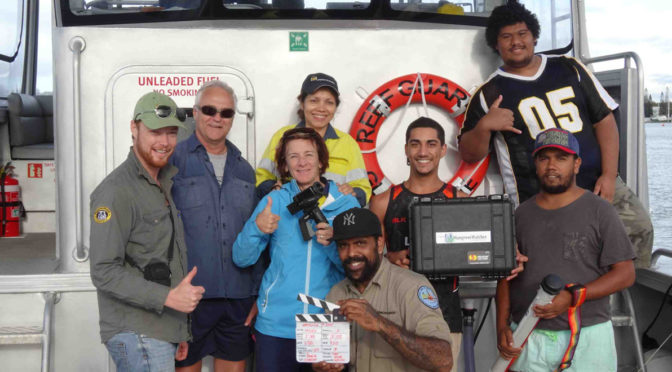
A ranger from the Gidarjil Development Corporation with a volunteer. Image courtesy of JCU.

JCU’s Dr Norm Duke says the result will be a detailed assessment of tidal wetland habitat and shoreline stretching from the Fitzroy River mouth east of Rockhampton to Rodds Bay north of Seventeen Seventy. It will include river estuaries and shoreline and will detail coastal habitat extent, condition and change over time.

He says the data will be a boon for scientists, environmental managers and those who like to fish. With a unique view from helicopters and boats.

“We can show things you can’t see from a satellite. When you look straight down you can’t easily see tree height or dieback to the same extent. From the air and from boats, you get an oblique and lateral view that allows you to see processes and indicators of change over larger areas, like impacts by storms, flooding, sea level rise, pollution and other damage.”


He says eventually the system would mature to the point where a user could select a location and see a picture of that place and also see how it had changed over time.

“At the moment, we don’t have smart ways to systematically evaluate what is happening to our shorelines. And, big changes are expected, as shoreline development expands, with pollution events, coupled with severe storms, sea level rise and other aspects of climate change. We really need to know how our coastal environments are changing.”

Duke says mangroves and saltmarshes were critical parts of the shoreline environment. “Three quarters of seafood species depend on tidal wetlands, and mangroves have a huge role in reducing storm surges, flooding and cyclone impacts. They store five times more carbon than other forests, and trap up to 80% of land-based run-off.”

They are also an early warning system. “If there are changes in coastal environments, mangroves are going to show them. So, healthy mangroves mean healthy upstream catchments, and healthy seagrasses and corals,” he says.

The data will become part of an open data archive, available free of charge to anyone who can make use of it. Duke says the plan is to eventually map and risk evaluate Australia’s entire coastline in the same way.

This article was first published by JCU on 5 November 2015. Read the original article here.

Discovery dates birth of Himalayas

Discovery dates birth of Himalayas. An international team of scientists has discovered the first oceanic microplate in the Indian Ocean – helping identify when the initial collision between India and Eurasia occurred, leading to the birth of the Himalayas. 

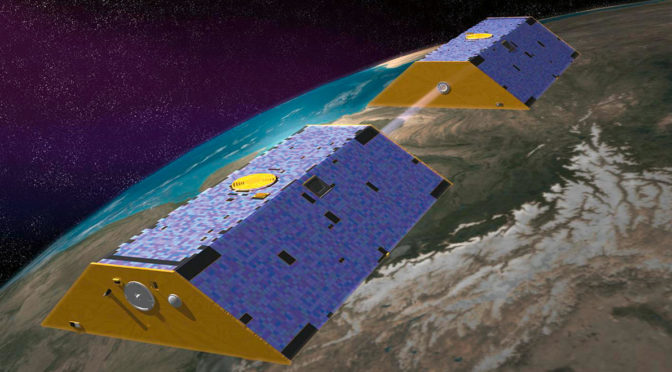
Although there are at least seven microplates known in the Pacific Ocean, this is the first ancient Indian Ocean microplate to be discovered. Radar beam images from an orbiting satellite have helped put together pieces of this plate tectonic jigsaw and pinpointed the age for the collision, whose precise date has divided scientists for decades.

Discovery dates birth of Himalayas

Reported in Earth and Planetary Science Letters, the team of Australian and US scientists believe the collision occurred 47 million years ago when India and Eurasia initially smashed into each other. 

Researchers led by the University of Sydney’s School of Geosciences discovered that crustal stresses caused by the initial collision cracked the Antarctic Plate far away from the collisional zone and broke off a fragment the size of Australia’s Tasmania in a remote patch of the central Indian Ocean. 

Authors Professor Dietmar Müller and Dr Kara Matthews from the University of Sydney, and Professor David Sandwell from the Scripps Institution of Oceanography, have named the ancient Indian microplate the Mammerickx Microplate, after Dr Jacqueline Mammerickx, a pioneer in seafloor mapping. 

The Mammerickx Microplate rotation is revealed by a rotating pattern of grooves and hills that turn the topography of the ocean floor into a jagged landscape. These so-called ‘abyssal hills’ record a sudden increase in crustal stress, dating the birth of the Himalayan Mountain Range to 47 million years ago. 

The ongoing tectonic collision between the two continents produces geological stresses that build up along the Himalayas and leads to numerous earthquakes every year – but this latest finding indicates how stressed the Indian Plate became when its northern edge first collided with Eurasia.

The new research shows that 50 million years ago, India was travelling northwards at speeds of some 15 cm per year – close to the plate tectonic speed limit. Soon after it slammed into Eurasia crustal stresses along the mid-ocean ridge between India and Antarctica intensified to breaking point. A chunk of Antarctica’s crust broke off and started rotating like a ball bearing, creating the newly discovered tectonic plate. 

The discovery was made using satellite radar beam mapping from space, which measures the bumps and dips of the sea surface caused by water being attracted by submarine mountains and valleys, combined with conventional marine geophysical data. 

Lead author Matthews explains: “The age of the largest continental collision on Earth has long been controversial, with age-estimates ranging from at least 59–34 million years ago.” 

“Knowing this age is particularly important for understanding the link between the growth of mountain belts and major climate change.” 

Co-author Müller says: “Dating this collision requires looking at a complex set of geological and geophysical data, and no doubt discussion about when this major collision first started will continue, but we have added a completely new, independent observation, which has not been previously used to unravel the birth of this collision.”  

“It is beyond doubt that the collision must have led to a major change in India’s crustal stress field—that’s why the plate fragmentation we mapped is a bit like a smoking gun for pinning down the collision age.” 

Co-author Sandwell from the Scripps Institution of Oceanography says humans had explored and mapped remote lands extensively, but the same was not true for our ocean basins. 

“We have more detailed maps of Pluto than we do of most of our own planet because about 71% of the Earth’s surface is covered with water,” says Sandwell.

“Roughly 90% of the seafloor is uncharted by ships and it would take 200 ship-years of time to make a complete survey of the deep ocean outside continental shelves, at a cost of between US$2–3 billion.”

“That’s why advances in comparatively low-cost satellite technology are the key to charting the deep, relatively unknown abyssal plains, at the bottom of the ocean.”  

The paper, ‘Oceanic microplate formation records the onset of India–Eurasia collision’, was published in Earth and Planetary Science Letters last week. 

This news was shared in a media release by the University of Sydney on 9 November 2015. 

Potential in the north of Australia

Businessman Romeo Roxas, who owns a cattle ranch in California and is in the process of buying for than $20 million worth of cattle station in the Northern Territory, commented in The Australian Financial Review yesterday about the potential in the north of Australia – comparing it to America’s west 200 years ago.

The Northern Australia Investment Forum, currently being held in Darwin from 8–10 November, is an invitation-only event offering international companies the opportunity to meet with proponents of projects in Australia and to hear from senior government ministers about what is being done to further enhance Australia’s investment attractiveness.

Read more about growing Australia’s north below.


NEW OPPORTUNITIES abound for Australia’s farm industries to expand food exports into Asian markets following landmark free trade agreements with Japan and Korea in 2014.

The Japan-Australia Economic Partnership Agreement (JAEPA) came into force on 15 January 2015, allowing Australian exporters to benefit from two rounds of tariff cuts in the first half of this year. The Korea-Australia Free Trade Agreement (KAFTA) took effect on 12 December 2014, and eliminates tariffs for 84% of Australia’s exports to Korea.

The past Minister for Industry and Science, Ian Macfarlane, welcomed the agreements as delivering long-term benefits to the national economy, particularly to research and agriculture.

“This is a huge opportunity as Japan is our second largest trading partner and Korea is our fourth, with combined two-way goods and services trade worth more than $100 billion,” he said.

Beef, dairy, honey, herbs, cordials, juices and soft drinks were just a few examples of homegrown food exports that will benefit from greater access to Asian markets, he said.


OVER 25 YEARS, the CRC Program has helped target and secure access to Asia for some of Australia’s biggest food export industries. Australian scientists working in areas such as plant and livestock genetics, food processing, soil nutrients, biosecurity, and improved supply chain management have been vital to establishing links with Asian universities and business leaders.

The Australian Seafood CRC developed new markets for dried, salted and brined products such as mussels, scallops and squid in Japan and Hong Kong. The former CRC for Beef Genetic Technologies used genomics to improve the quality of beef export products and secure new markets in Asia, and the Sheep CRC has made Australian lamb a premium product.

The Desert Knowledge CRC, which transitioned into the CRC for Remote Economic Participation (CRC-REP) and its research consultancy Ninti One, also worked on developing primary industry opportunities for Northern Australia that could benefit Indigenous communities. These include precision pastoral management technologies, potential bush food industries and barramundi aquaculture.

The Asian Development Bank estimates that Asia will account for almost half of the world’s economic output by 2050, and there will be strong global competition for the region’s markets and investment. Australia currently accounts for only 5% of global food trade, although our food exports are worth more than $30 billion a year. At current production levels, we could supply around 2% of Asia’s food requirements. But could we increase that figure significantly if Northern Australia was developed to grow, and transport, more crops for Asian markets?


IN 2014, THE COALITION government commissioned a White Paper on Developing Northern Australia – an area north of the Tropic of Capricorn stretching around three million square kilometres across Western Australia, the Northern Territory and Queensland.

A decade ago, agricultural production in Northern Australia was worth around $4.4 billion a year, and was dominated by beef, sugar and bananas. By 2010, this grew to $5.2 billion – around 11% of Australia’s total agricultural production – and included crops such as guar beans, chia, chickpeas, soybeans and wild rice.

In a submission to the Federal Government’s National Food Plan Green Paper in 2012, Australian-owned company SunRice emphasised the critical role of water in food production.

“This is a huge opportunity… with combined two-way goods and services trade worth more than $100 billion.”

“Australia’s food security is directly related to water security,” the SunRice submission said. “At the peak of the recent drought when water allocations to rice farmers were reduced to almost zero, rice production in Australia fell from an annual average above one million tonnes to just 19,000 tonnes. This level of production was far short of meeting even our domestic needs, and is a prime example of the importance of water in growing food to feed our nation and others.”

Rice is being grown again in the Burdekin region in north Queensland, and there are suggestions that improved genetics and better understanding of the northern climate could secure Australia’s rice industry against future dramatic production losses due to prolonged drought.


AUSTRALIA IS A GLOBAL leader in sustainable rice production, with around 1500 farms in New South Wales and Victoria feeding up to 20 million people a day around the world.

Potential in the north of Australia

Australian-owned company SunRice submitted a statement to the Australian Federal Government emphasising that our future food security relies on the availability of water.

Our rice farmers are the world’s most water efficient, using 50% less water than the global average to produce each kilogram of rice. They were also Australia’s first farm sector to develop a biodiversity strategy and a plan to reduce greenhouse emissions. Rice was an early, and enduring, success story for the CRCs. The CRC for Sustainable Rice Production started in 1997 at the Yanco Agricultural Institute, near Leeton in the Murrumbidgee Irrigation Area, and concluded on 30 June 2005. It is a classic example of how a CRC can fast-track research results by working with partners in academic research, industry, government and – in this case, specifically – rice research colleagues in China and Japan. In just over seven years, the CRC’s many achievements included better pest controls, improved plant breeding systems, better milling and drying techniques, sustainable irrigation levels, a groundwater management program that was adopted as a UNESCO benchmark, new rice-based food products, and an assessment of salt tolerant wild rice varieties that could be grown in Northern Australia.

In 2003, the CRC’s director Dr Laurie Lewin was awarded one of Australia’s most prestigious science awards, the Farrer Memorial Medal, for his work with the CRC in breeding new rice varieties that are better suited to Australian conditions. In his recipient’s oration, Lewin stressed the importance of genetics to future global food security.

“Recent improvements in plant breeding have been rapid and it is now an exciting time to be involved in this science,” he said. “The rice genome has been sequenced and breeders now have a range of exciting tools to meet the important challenges. It is only 50 years since the Watson and Crick model for DNA was published, but the new genetics has given access to new tools including genetic markers and genetic transformation techniques.”


THE CSIRO ESTIMATES that the area for potential irrigated agriculture, supported by groundwater, in Northern Australia is between 50,000–120,000 ha. But water is only part of the solution to developing northern agriculture and new markets in Asia.

In a Food and Fibre Supply Chain study with the Australian Bureau of Agricultural and Resource Economics, the CSIRO identified three challenges to expanding agriculture in the north to supply Asian markets: sourcing capital investment, cost-efficient production and supply, and establishing new and viable export markets.

GrowNORTH is a research and development consortium that evolved from a Federal Government pledge to develop a northern agriculture CRC, prior to Macfarlane and Prime Minister Tony Abbott announcing plans to create five Industry Growth Centres under the Industry Innovation and Competitiveness Agenda.

“The north isn’t likely to become Asia’s food bowl, but it has the potential to become a reliable and important exporter of high quality food and seriously smart research skills.”

GrowNORTH CEO Mike Guerin says that harnessing the economic potential of the north proved to be “a wicked problem” – a social planning term that means there are complex and often conflicting interdependencies – in the past, chiefly because of “imposed ideas” that ignored geographic, social and climatic differences.

“Large-scale agriculture in the north is a high risk investment, and there have been failures in the past largely because of inadequate planning, financing and management. There’s also been a tendency to ignore, or attempt to work against, what makes the north a unique region,” he says.

“Sustainable development in the north is possible, but it must benefit all Australians. It can’t be viewed as a kind of frontier goldrush for lucrative Asian markets. The north isn’t likely to become Asia’s food bowl, but it has the potential to become a reliable and important exporter of high quality food and seriously smart research skills.

“If we get it right – and we accept that we will need to take the time, resources and patience to do that – Australia can gain a global reputation for using transformative research and economic modelling to create a world-class example of sustainable regional development.

“We will be a world leader in sustainable development, and researchers will come to the north to see how it’s done.”


GUERIN SAYS RESEARCH must look at “bigger picture” issues
in the north, rather than narrowly focusing on advancing single industries.

“We need to look at infrastructure, community support, building a skilled workforce that lives in the north, environmental outcomes, competing land uses and ways that agricultural diversity can benefit local economies,” he says.

“It’s a huge undertaking, and there will be valuable lessons along the way, but the benefits will be significant.”

Rod Reeve, managing director of the CRC-REP, says that building
robust local economies across remote areas in the north is vital to the region’s development. The CRC is working on plans to create more than 100 new Aboriginal and Torres Strait Islander businesses in the north over the next decade, as well as more than 1200 small-to-medium enterprises.

It also aims to increase the productivity of remote pastoral
industries by around $300 million, and has developed a technology that could revolutionise the way cattle are managed in rangelands across the world. Reeve explains this technology as a remote sensing system that allows pastoral station managers to track and weigh cattle at watering points across a huge area, and to manage nutritional feeding programs.

“It’s an innovative system that gathers data on things like the numbers and profiles of the herd, conditions for market, growth rates and whether cows are pregnant or dry,” he says.

“All this can be done remotely, and potentially could replace the expense of aerial mustering which stresses cattle and makes them lose condition.”

The technology was developed by Ninti One and is in the final stages of a pilot study prior to commercialisation and local manufacture.

“We’re hoping it can be manufactured in Alice Springs,” says Reeve. “All the technology has been tested and developed in remote areas in the north, so it would be great to see its commercialisation go on to benefit a local economy.

Rosslyn Beeby

seafoodcrc.com

sheepcrc.org.au

crc-rep.com

nintione.com.au

Data sharing out of the blue

In Greek mythology, the Argo was a ship sailed by Jason and his Argonauts in their quest for the legendary Golden Fleece. Today, marine industries and modern-day sailors on a different kind of quest also make use of an Argo. For almost 15 years, the Argo international ocean-monitoring project has been collecting and data sharing climate and oceanography research through sensor-equipped floats.

Australian researchers play a key role in this latter-day Argo, jointly led by the national science agency CSIRO and the University of California and involving 31 countries. Dr Peter Oke, a CSIRO Ocean Modelling and Data Assimilation Research Scientist for Australia’s own ocean forecasting system BLUElink, says Argo has changed the way researchers do business, encouraging data sharing and reuse, and spawning new systems like BLUElink.

“The Argo community has really led the way in creating a data sharing culture. By making data access free and open, it’s breaking down the silos once set up to collect and protect observations.”

“The Argo community has really led the way in creating a data sharing culture. By making data access free and open, it’s breaking down the silos once set up to collect and protect observations,” he says. BLUElink is an ocean forecasting system built on Argo data and the Ocean Forecasting Australia Model. CSIRO, the Bureau of Meteorology and the Royal Australian Navy collectively run the project, established in 2001. Forecasts are based on data including temperature, salinity, sea levels and currents, all measured in real-time at different locations and depths by the autonomous Argo floats.

In 2014, Oke and his colleagues used BLUElink to provide intelligence in the search for Malaysian Airlines Flight MH370, which vanished with 239 passengers on board.

“We dropped all tools in our support for the search. We made educated guesses about the splash points and used BLUElink to look at where the debris was most likely to go,” says Oke.

Then, in July this year, a wing part washed up on Réunion Island east of Madagascar. “We did historical runs to backtrack with BLUElink to see if the debris could be from the plane. Argo data was a key component.”

Argo float being deployed. Image source: ARGO.

Argo float being deployed. Image source: ARGO.

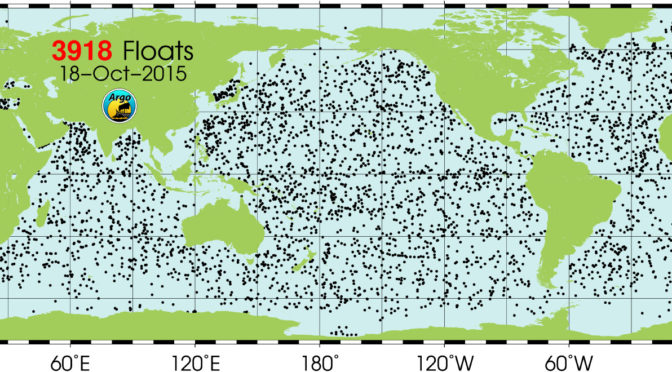
The current locations of over 3800 Argo floats appear on a map like confetti across the oceans. Each float’s sensors collect temperature and salinity data profiles at depths of up to 2000 m. Every 10 days the floats come to the surface to relay data to satellites. More than 10,000 profiles per month provide oceanographers, climate scientists and others with comprehensive subsurface ocean data, accessible via the IMOS (Integrated Marine Observing System) web portal. Since 1998, Argo data sharing has generated dynamic maps of ocean currents and resulted in over 2000 scientific research papers.

As for BLUElink, its users range from marine industries such as shipping companies to individuals like surfers and sailors. Each year, using forecasts from BLUElink, sailors in the famous Sydney to Hobart yacht race are briefed on the conditions they’ll encounter on some of the world’s roughest seas.

Argo data improve safety for oil and gas workers and help analyse risks of oil spills on sensitive coastlines. Data sharing also inform decisions about fishing area boundaries and catch limits.

Oke is particularly excited that the field of operational oceanography, which aims to make ocean monitoring and prediction routine. He sees improved ocean forecasts resulting from the Global Ocean Data Assimilation Experiment (GODAE), which is exploring how BLUElink can be used more efficiently. Data from sensors on marine gliders closer to shore will also be integrated with Argo data sharing to create new coastal models.

“One day, thanks to Argo, we’ll see ocean forecasts as reliable as the weather forecasts that we check-in on every day,” Oke says.

Story provided by Refraction Media.

Originally published in Share, the newsletter magazine of the Australian National Data Service (ANDS).


Featured image source (above): ARGO.

Argo is a major contributor to the WCRP ‘s Climate Variability and Predictability Experiment (CLIVAR) project and to the Global Ocean Data Assimilation Experiment (GODAE). The Argo array is part of the Global Climate Observing System/Global Ocean Observing System GCOS/GOOS). Discover more about data sharing and Argo here.

Smart home design gets AccuRate

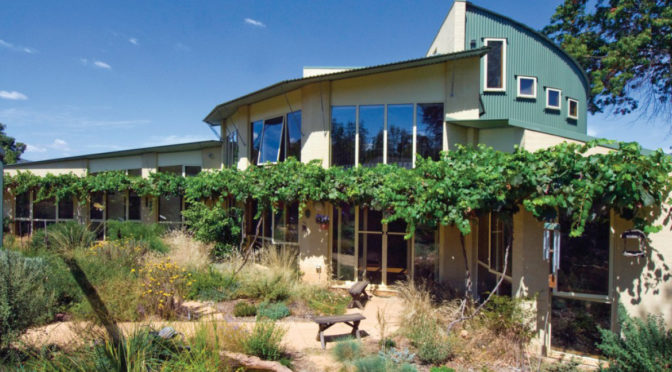
There is a growing demand for energy efficient houses. Featured image © CSIRO, CT Image Technology. 

Smart home design gets AccuRate

Today, more than ever before, home owners are demanding cost-effective, sustainable comfort – and that means finding smarter ways to make home heating and cooling affordable.

Despite the rising cost of housing, Australians have remained undeterred from their dream of home ownership. But if committing to a mortgage and a home build isn’t scary enough these days, the costs of heating and cooling it certainly might be!

Yes, we are creatures of comfort, and although we love our sunburnt country – droughts and flooding rains and all – the many climate variables in this beautiful land can pose a challenge when it comes to maximising energy efficiency in the design of our homes.

So our clever energy scientists asked: What if we could find a way of to model how particular house designs respond to certain climates, and then, at minimum cost, tweak their energy efficiencies to suite?

And they did it!

Drawing on the decades of experience and research in house energy modelling upon which the Nationwide House Energy Rating Scheme (NatHERS) is based, the team came up with AccuRate – a smart software tool that can calculate a home’s annual heating and cooling energy requirements down to an hourly rate.

The benchmark simulation software can assess a home’s energy requirements in up to 69 different climatic zones in Australia and rate its comfort level based on its annual energy requirements for heating and cooling. Homes are rated according to a ‘0–10 stars’ system – the higher the stars the more comfortable and energy efficient the homes are.

AccuRate can model up to 50 living spaces and 99 zones within a home, and takes into consideration the impact of variables such as insulation, natural ventilation, air leakage, thermal mass, roof spaces, sub-floor spaces, skylights, horizontal reflective air gaps, windows and external shading structures like trees, fences and the neighbour’s house.

AccuRate compares well to similar programs in Europe and the US and is available commercially from Energy Inspection. It is the benchmark software set by the Australian Government DCCEE for compliance to the building code. By flipping or rotating buildings and apartments, the software allows a designer to explore how different orientations might maximise energy and comfort. Additional AccuRate modules test sustainability parameters outside of energy efficiency ratings like lighting and water usage.

AccuRate is just one of the way we are supporting Australia’s transition to a prosperous, secure and lower emissions energy future.


Want to learn more?

During November, thousands of Australians will experience the power of renewable energy when they they hop on our Infinity Swing – a giant eight-person swing that generates real renewable energy to power a stunning light and sound show. Find out about the Infinity Swing and our other top energy innovations here.

– Ali Green

This story was first published by CSIRO on 6 November 2015 as part of their energy focused Infinity Campaign. Read the original story here.

Quantum computing revolution

Technology that encodes information in photons (particles of light) could lead to vastly increased speeds of telecommunications and computing and significantly enhanced levels of cybersecurity – and a quantum computing revolution.

However, to date, quantum information processing has only been shown in some materials, many of which would be impractical to manufacture because of limitations of size, or the need to keep them at ultra-low (cryogenic) temperatures.

Now, for the first time, researchers from the University of Technology Sydney (UTS) have developed a room temperature, thin material that emits single photons. The results were announced in a letter published in Nature Nanotechnology on 26 Oct 2015.

Quantum information processing

Quantum computing revolution

UTS research team, from left: Igor Aharonovich, Trong Toan Tran, Kerem Bray, Mike Ford and Milos Toth.

Quantum information processing seeks to use photons to encode information to create a quantum ‘bit’ of information, or qubit. Qubits are to quantum computers what bytes are for computers today – a vital ‘unit’ of information. But qubits can operate much faster than the bytes we use in computing today, and because of their nature could revolutionise not only computing speeds but also cybersecurity, as they can encrypt information in a near flawless system.

Previously, single-photon-emitting devices have been created in semiconductors such as diamond and silicon carbide, or exotic materials such as nanocrystal quantum dots or carbon nanotubes, the researchers say. But ideally, a quantum computing chip would need to be created from a product that is easily manufactured.

“We found the first 2D, single photon emitter that works at room temperature,” said Professor Mike Ford, Associate Dean (Research and Development), Faculty of Science at UTS and co-author of the new study.

“There are other 2D materials that emit single photons but you have to freeze them down to liquid nitrogen or liquid helium temperatures [-200°C to -269°C],” he said.

Two-dimensional materials are crystalline structures consisting of a single layer of atoms. A well-known 2D material is graphene – a hexagonal lattice of carbon atoms. Researchers at UTS used defects in single layers of hexagonal boron nitride to explore the materials’ quantum emitting properties and found that it was able to emit a single photon in one unimaginably tiny pulse of light.

Quantum computing revolution

Image by UTS: 2D nano-flakes emit red photons for quantum communication technologies.

“That’s important because one of the big goals is to make optical computer chips that can operate based on light rather than electrons, therefore operating much faster with less heat generation,” said Ford.

“Traditional LEDs [Light Emitting Diodes] emit a stream of photons. But by making light sources that emit one photon at a time, you can control the emission of individual photons,” he said.

This is critical to the development of quantum communication technologies because single photons are needed in order to tap into the quantum effects of particles.

“The emission of individual photons is important for quantum communications because it means that encryption techniques can be put in place to make systems more secure,” said Ford.

“You can create very secure communication systems using single photons,” explained Associate Professor Igor Aharonovich. “Each photon can be employed as a qubit (quantum bit, similarly to standard electronic bits), but because one cannot eavesdrop on single photons, the information is secure.”

Quantum computing revolution

This breakthrough could open new opportunities in quantum optics, a field of quantum physics dealing specifically with the interaction of photons with matter, and could herald the beginning of a transition to technologies and devices using photons, rather than electrons, to carry information.

Because hexagonal boron nitride emits quantum photons at room temperature, it can be placed into very small devices, like nanophotonic circuits.

“This material is very easy to fabricate,” said PhD student Trong Toan Tran. “It’s a much more viable option because it can be used at room temperature; it’s cheap, sustainable and is available in large quantities.”

“Ultimately we want to build a ‘plug and play’ device that can generate single photons on demand, which will be used as a first prototype source for scalable quantum technologies that will pave the way to quantum computing with hexagonal boron nitride,” he said.

– Carl Williams

Doorway to cancer data

Precision medicine is opening the doorway to cancer data and offering hope to cancer patients. The power of genomics and the masses of data it creates is transforming cancer research and allowing personalised treatments with more proven effects.

Like hundreds of other cancer researchers, Mark Ragan and his team at The University of Queensland’s Institute for Molecular Bioscience (IMB) need to design experiments based on data from human and cancer genetics. Using data chips and next generation sequencing they must assemble their genetic data, interpret it to understand what genes their data refer to by comparison with other samples, and then classify patients’ cancer into subtypes. If they can’t match to an existing subtype, they identify a new one. Ragan says this intensive work requires access to as much genetic data as possible.

“It would literally be impossible without the data reuse that TCGA and other genome research programs offer”

Doorway to cancer data

Luckily, there are portals with this type of data. One of the first to start collecting cancer genome data was the The Cancer Genome Atlas (TCGA). The initials TCGA also make up the four-letter code of nucleotide bases thymine, cytosine, guanine and adenine that DNA uses to ‘write’ genetic information.

Doorway to cancer data

Photo by Richard Ricciardi.

TCGA was started by the US National Institutes of Health (specifically the National Cancer Institute and the National Human Genome Research Institute) in 2006. Ragan says its initial goal was to generate data from researchers across research institutions on two cancer types. Early success expanded the initial goal to collect and profile more than 10,000 samples from over 20 tumour types. While the sample collection phase ended in 2013, data reuse ensures the data generated from those samples are still being analysed. Over 2700 papers have been published by TCGA data so far, including Australian researchers.

The data portal for the TCGA is “amazing” says Ragan. “It’s a really powerful portal that lets you ask questions and interrogate gigantic amounts of cancer genome data, including sequences, survival rates and subtype classifications.”

“Just about everything in it is open access, and the raw data, which isn’t open access, is made available by applying through research institutions’ ethics committees.”

A newer initiative inspired by the success of TCGA, the International Cancer Genome Consortium (ICGC), is an international project in which Ragan’s colleagues play a part. ICGC is built on the TCGA project, which provides about 60% of the patient data in ICGC’s Data Coordination Center. ICGC aims to cover 50 tumour types and currently funds 78 international cancer genome projects like the Australian project at IMB.

“Our research into breast cancer subtypes and survival would literally be impossible without the data reuse that TCGA and other genome research programs offer. We can tell if we’ve discovered a new cancer subtype or not, or even whether the existing data need reinterpreting,” says Ragan.


New treatments

Knowing a patient’s cancer subtype allows more tailored, evidence-based treatment, potentially increasing survival rates and quality of life by allowing clinicians to more confidently focus on prescribing the drugs most likely to succeed for a particular patient.

One of the exciting things Ragan and other researchers are finding from the data is that some quite different cancer types have a similar genetic basis. This means drugs to treat one type of cancer, such as breast cancer, could be used for another, such as ovarian cancer.

“Instead of waiting 10 years for a new drug to be developed, patients may be able to be treated straight away with a drug that’s already available for another cancer,” says Ragan.

That’s good news for patients, and it also makes drug development, which can cost hundreds of millions of dollars per drug, more cost-effective. This potentially creates a larger market for a given drug, and makes some drugs financially viable that otherwise wouldn’t get to market.

Story provided by Refraction Media.

Originally published in Share, the newsletter magazine of the Australian National Data Service (ANDS).

Small scale, big consequences

The nanoscale is so tiny it’s almost beyond comprehension. Too small for detection by the human eye, and not even discernible by most laboratory microscopes, it refers to measurements in the range of 1–100 billionths of a metre. The nanoscale is the level at which atoms and molecules come together to form structured materials.

The Nanochemistry Research Institute — NRI — conducts fundamental and applied research to understand, model and tailor materials at the nanoscale. It brings together scientists – with expertise in chemistry, engineering, computer simulations, materials and polymers – and external collaborators to generate practical applications in health, energy, environmental management, industry and exploration. These include new tests for cancer, and safer approaches to oil and gas transportation. Research ranges from government-funded exploratory science to confidential industry projects.


The NRI hosts research groups with specialist expertise in the chemical formation of minerals and other materials. “To understand minerals, it’s often important to know what is going on at the level of atoms,” explains Julian Gale, John Curtin Distinguished Professor in Computational Chemistry and former Acting Director of the NRI. “To do this, we use virtual observation – watching how atoms interact at the nanoscale – and modelling, where we simulate the behaviour of atoms on a computer.”

The mineral calcium carbonate is produced through biomineralisation by some marine invertebrates. “If we understand the chemistry that leads to the formation of carbonates in the environment, then we can look at how factors such as ocean temperature and pH can lead to the loss of minerals that are a vital component of coral reefs,” says Gale.

This approach could be used to build an understanding of how minerals are produced biologically, potentially leading to medical and technological benefits, including applications in bone growth and healing, or even kidney stone prevention and treatment.

Gale anticipates that a better understanding of mineral geochemistry may also shed light on how and where metals are distributed. “If you understand the chemistry of gold in solution and how deposits form, you might have a better idea where to look for the next gold mine,” he explains.

There are also environmental implications. “Formation of carbonate minerals, especially magnesium carbonate and its hydrates, has been proposed as a means of trapping atmospheric carbon in a stable solid state through a process known as geosequestration. We work with colleagues in the USA to understand how such carbonates form,” says Gale.

Minerals science is also relevant in industrial settings. Calcium carbonate scaling reduces flow rates in pipes and other structures in contact with water. “As an example, the membranes used for reverse osmosis in water desalination – a water purification technology that uses a semipermeable membrane to remove salt and other minerals from saline water – can trigger the formation of calcium carbonate,” explains Gale. “This results in partial blockage of water flow through the membrane, and reduced efficiency of the desalination process.”

A long-term aim of research in this area is to design water membranes that prevent these blockages. There are also potential applications in the oil industry, where barium sulphate (barite) build-up reduces the flow in pipes, and traps dangerous radioactive elements such as radium.

Another problem for exploration companies is the formation of hydrates of methane and other low molecular weight hydrocarbon molecules. These can block pipelines and processing equipment during oil and gas transportation and operations, which results in serious safety and flow assurance issues. Materials chemist Associate Professor Xia Lou leads a large research group in the Department of Chemical Engineering that is developing low-dose gas hydrates inhibitors to prevent hydrate formation. “We also develop nanomaterials for the removal of organic contaminants in water, and nanosensors to detect or extract heavy metals,” she says.

“To understand minerals, it’s often important to know what is going on at the level of the atom.”


The capacity to control how molecules come together and then disassociate offers tantalising opportunities for product development, particularly in food science, drug delivery and cosmetics. In the Department of Chemistry, Professor Mark Ogden conducts nanoscale research looking at hydrogels, or networks of polymeric materials suspended in water.

“We study the 3D structure of hydrogels using the Institute’s scanning probe microscope,” says Ogden. “The technique involves running a sharp tip over the surface of the material. It provides an image of the topography of the surface, but we can also measure how hard, soft or sticky the surface is.” Ogden is developing methods for watching hydrogels grow and fall apart through heating and cooling. “We have the capability to do that sort of imaging now, and this in situ approach is quite rare around the world,” he says.

Ogden also conducts chemical research with a group of metals known as lanthanoids, which are rare-earth elements. His recent work, in collaboration with the Australian Nuclear Science and Technology Organisation (ANSTO), discovered unique elongated nanoscale structures.

“We’ve identified lanthanoid clusters that can emit UV light and have magnetic properties,” explains Ogden. “Some of these can form single molecule magnets. A key outcome will be to link cluster size and shape to these functional properties.” This may facilitate guided production of magnetic and light-emitting materials for use in sensing and imaging technologies.

“If you understand the chemistry of gold … then you might have a better idea of where to start looking for the next gold mine.”


The NRI is working across several areas of chemistry and engineering to develop nanoscale tools for detecting and treating health conditions. Professor Damien Arrigan applies a nanoscale electrochemical approach to detecting biological molecules, also known as biosensing. He and his Department of Chemistry colleagues work at the precise junction between layered oil and water.

“We make oil/water interfaces using membranes with nanopores, some as small as 15 nanometres,” he says. “This scale delivers the degree of sensitivity we’re after.” The scientists measure the passage of electrical currents across the tiny interfaces and detect protein, which absorbs at the boundary between the two liquids. “As long as we know a protein’s isoelectric point – that is, the pH at which it carries no electrical charge – we can measure its concentration,” he explains.

The technique enables the scientists to detect proteins at nanomolar (10−6 mol/m3) concentrations, but they hope to shift the sensitivity to the picomolar (10−9 mol/m3) range – a level of detection a thousand times more sensitive and not possible with many existing protein assessments. Further refinement may also incorporate markers to select for proteins of interest. “What we’d like to do one day is measure specific proteins in biological fluids like saliva, tears or serum,” says Arrigan.

The team’s long-term vision is to develop highly sensitive point-of-need measurements to guide treatments – for example, testing kits for paramedics to detect markers released after a heart attack so that appropriate treatment can be immediately applied.

Also in the Department of Chemistry, Dr Max Massi is developing biosensing tools to look at the health of living tissues. His approach relies on tracking the location and luminescence of constructed molecules in cells. “We synthesise new compounds based on heavy metals that have luminescent properties,” explains Massi. “Then we feed the compounds to cells, and look to see where they accumulate and how they glow.”

The team synthesises libraries of designer chemicals for their trials. “We know what properties we’re after – luminescence, biological compatibility and the ability to go to the part of the cell we want,” says Massi.

For example, compounds can be designed to accumulate in lysosomes – the tiny compartments in a cell that are involved in functions such as waste processing. With appropriate illumination, images of lysosomes can then be reconstructed and viewed in 3D using a technique known as confocal microscopy, enabling scientists to assess lysosome function. Similar approaches are in development for disease states such as obesity and cancer.

Beyond detection, this technique also has potential for therapeutic applications. Massi has performed in vitro studies with healthy and cancerous cells, suggesting that a switch from detection to treatment may be possible by varying the amount of light used to illuminate the cells.

“A bit of light allows you to visualise. A lot of light will allow you to kill the cells,” explains Massi. His approach is on track for product development, with intellectual property protection filed in relation to using phosphorescent compounds to determine the health status of cells.

Improving approaches to cancer treatment is also an ongoing research activity for materials chemist Dr Xia Lou, who designs, constructs and tests nanoparticles for targeted photodynamic therapy, which aims to selectively kill tumours using light-induced reactive oxygen species.

“We construct hybrid nanoparticles with high photodynamic effectiveness and a tumour-targeting agent, and then test them in vitro in our collaborators’ laboratories,” she says. “Our primary interest is in the treatment of skin cancer. The technology has also extended applications in the treatment of other diseases.” Lou has successfully filed patents for cancer diagnosis and treatment that support the potential of this approach.


Spheres and other 3D shapes constructed at the nanoscale offer potential for many applications centred on miniaturised storage and release of molecules and reactivity with target materials. Dr Jian Liu in the Department of Chemical Engineering develops new synthesis strategies for silica or carbon spheres, or ‘yolk-shell’-structured particles. “Our main focus is the design, synthesis and application of colloidal nanoparticles including metal, metal oxides, silica and carbon,” says Liu.

Most of these colloidal particles are nanoporous – that is, they have a lattice-like structure with pores throughout. The applications of such nanoparticles include catalysis, energy storage and conversion, drug delivery and gene therapy.

“The most practical outcome of our research would be the development of new catalysts for the production of synthetic gases, or syngas,” he says. “It may also lead to new electrodes for lithium-ion batteries.” Once developed, nanoscale components for this type of rechargeable battery are expected to bring improved safety and durability, and lower costs.


Atomic Modelling matters in research

Professor Julian Gale leads a world-class research group in computational materials chemistry at the NRI. “We work at the atomic level, looking at fundamental processes by which materials form,” he says. “We can simulate up to a million atoms or more, and then test how the properties and behaviour of the atoms change in response to different experimental conditions.” Such research is made possible through accessing a petascale computer at WA’s Pawsey Centre – built primarily to support Square Kilometre Array pathfinder research.

The capacity to model the nanoscale behaviour of atoms is a powerful tool in nanochemistry research, and can give direction to experimental work. The calcium carbonate mineral vaterite is a case in point. “Our theoretical work on calcium carbonate led to the proposal that the mineral vaterite was actually composed of at least three different forms,” Gale explains. “An international team found experimental evidence which supported this idea.”

NRI Director Professor Andrew Lowe regards this capacity as an asset. “Access to this kind of atomic modelling means that our scientists can work within a hypothetical framework to test whether a new idea is likely to work or not before they commit time and money to it,” he explains.

Scientists at Curtin’s Nanochemistry Research Institute investigate minerals at an atomic level, which can, for example, build an understanding of mineral loss in coral reefs.

Scientists at Curtin’s Nanochemistry Research Institute investigate minerals at an atomic level, which can, for example, build an understanding of mineral loss in coral reefs.


New direction

Formally established in 2001, the Nanochemistry Research Institute began a new era in 2015 through the appointment of Professor Andrew Lowe as Director. Working under his guidance are academic staff and postdoctoral fellows, as well as PhD, Honours and undergraduate science students.

An expert in polymer chemistry, Lowe’s research background adds a new layer to the existing strong multidisciplinary nature of the Institute. “Polymers have the potential to impact on every aspect of fundamental research,” he says. “This will add a new string to the bow of Curtin University science and engineering, and open new and exciting areas of research and collaboration.”

Polymers are a diverse group of materials composed of multiple repeated structural units connected by chemical bonds. “My background is in water-soluble polymers and smart polymers,” explains Lowe. “These materials change the way they behave in response to their external environment – for example, a change in temperature, salt concentrations, pH or the presence of other molecules including biomolecules. Because the characteristics of the polymeric molecules can be altered in a reversible manner, they offer potential to be used in an array of applications, including drug delivery, catalysis and surface modification.”

Lowe has particular expertise in RAFT dispersion polymerisation, a technique facilitating molecular self-assembly to produce capsule-like polymers in solution. “This approach allows us to make micelles, worms and vesicles directly,” he says, describing the different physical forms the molecules can take. “It’s a novel and specialised technique that creates high concentrations of uniformly-shaped polymeric particles at the nanoscale.” Such polymers are candidates for drug delivery and product encapsulation.

Sarah Keenihan

Australia: nation of inventors or innovators?

If Australia wants to become more than just a land made up of quarries, farms and tourist beaches, it has to ensure more scientists and engineers are trained to drive innovation, warns Dr Katherine Woodthorpe, Chair of the Antarctic Climate and Ecosystems Cooperative Research Centre, and panellist at last week’s inaugural Science Meets Business event.

The event, hosted by Science and Technology Australia, aimed to “kickstart a reshaped and refreshed conversation on ways to boost collaboration between Australia’s great businesses and scientists”.

Speakers at the event came from a wide range of industry, government and research, each presenting their ideas for an innovative future.

Keynote speaker Dr Larry Marshall, CEO of CSIRO, celebrated ‘deep tech’ as an ecosystem of plenty, responsible for 100% of US jobs last year. In his experience, deep tech entrepreneurship creates a virtuous cycle of innovation.
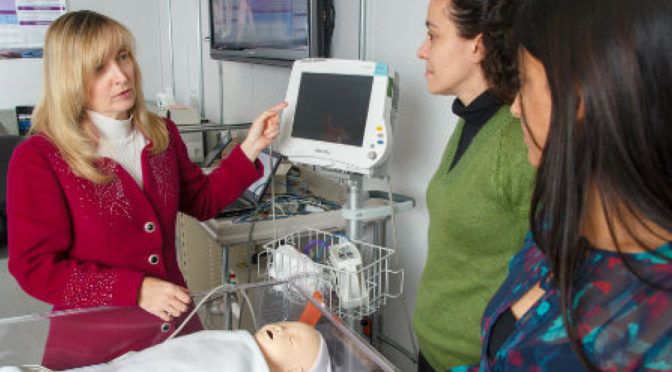
Marshall wants to meet industry halfway, working together to understand what customers want. This is not an overnight solution, he warned. “Both CSIRO and Australia will be in beta for the next five years.”

In exploring problems of “diagnosis and lifting the game”, Ken Boal, Vice President at CISCO Australia and New Zealand, said businesses should lean in more, connect with universities and help in the translation of research to the wider community.

Australia: nation of inventors or innovators?

Intrinsic to this translation of research outcomes is a STEM outreach program to schools. Professor Ian Frazer AC, Head of the Diamantina Institute at the University of Queensland, identified the roots of the problem beginning where schools focus on students achieving high-performance marks. Science is tough, and often students are advised to choose an easier subject to maximise their score. He also emphasised the need to place greater value on science and teachers.

Hugh Bradlow, Telstra’s Chief Scientist, suggested that technology could be part of the education solution. If technology is able to reduce costs of education, then perhaps we can pay our teachers more and attract a higher calibre of staff, he proposed.

The Hon Karen Andrews MP, representing Prime Minister Malcolm Turnbull, believes business and science need each other, and Australia needs both. Even though we don’t know what the jobs of the future are going to be, we know there will be core skills required, like coding and data science, she explained. Maths and statistics will be in high demand, alongside creative thinking and entrepreneurship. Andrews is putting together an action plan to connect industry and research.

While the official announcement was still under wraps, Australia’s next Chief Scientist Alan Finkel encouraged a celebration of Australia’s achievements and an effort to build upon the engagement that already exists, like relationships between Rio Tinto and the University of Sydney, and GlaxoSmithKline and Monash University.

Woodthorpe suggested that superannuation funds have a role to play in Australia’s innovation growth, and that fund managers need to realise this in order to support their next generation of members. Another barrier to innovation is the lack of digital experience in the top 300 ASX companies. Boards need to see technology as a future business model, not a piece of equipment, she said.

Newly returned from the US and now heading up Commercial Strategy at the Kinghorn Centre for Clinical Genomics at the Garvan Institute, Dr Russell J Howard has had recent success at raising capital for a new venture. He believes the three key imperatives to commercialisation success are:

  1. To nurture smart capital, and to show founders how to create good intellectual property;
  2. To create an innovative environment;
  3. To enable access to experienced management – people who have experience in commercialisation.

Finally, Mr Peter Yates AM, Deputy Chairman of the Myer Family Investments talked about his own support of start-ups. He likes to collect entrepreneurs rather than artists – in 15 years both have usually increased in value!

– Karen Taylor-Brown, CEO and Publisher at Refraction Media

Radar for driverless cars

Cohda Wireless, a global leader in in V2X (vehicle to everything) technology, demonstrated its V2X-Radar yesterday on the streets of Adelaide, South Australia.

The single antenna provides a new sensor for cars, including driverless cars, that can detect buildings, road signs and even older vehicles not equipped with car-to-car communications.

Unlike current technologies, Cohda’s V2X-Radar is unaffected by rain, snow or fog, and can ‘see’ around corners.

Cohda Wireless will demonstrate their V2X-Radar at the International Driverless Cars Conference, being held in Adelaide between 5–6 November and culminating with the first on road demonstration trials of driverless cars in the Southern Hemisphere as part of the ARRB Australian Driverless Vehicle Initiative.

Cohda Wireless CEO Dr Paul Gray says the V2X-Radar is a low-cost addition to a standard V2X system that adds radar functionality to the V2X connected car and “improves their view of the world”.

“V2X systems are essential for driverless cars, extending their view beyond that of traditional sensors,” he says.  “V2X-Radar pushes this even further, allowing driverless cars to sense the environment in ways not previously imagined.”

“This technology has the opportunity to revolutionise the industry by addressing some of the key constraints of the technology so far.”

According to Gray, the V2X-Radar uses the IEEE 802.11 compliant wireless signals of current V2X systems to share sensor information between vehicles and infrastructure.

These radio signals bounce off walls, road signs and other vehicles as they travel from transmitter to receiver. V2X-Radar can use these radio waves to identify objects within that environment, including non-V2X equipped vehicles.

Combined with a 3D map, the V2X-Radar can provide highly accurate positioning and can also instantly detect vehicle speeds via Doppler measurements.

Cohda’s V2X-Radar is a software application that works with standard transmissions from any V2X system, whether it’s on a vehicle or on the roadside.

“The radar is standards-compliant, requiring no additional hardware in a V2X-equipped vehicle and no additional on-air messages. All it needs is our software in the receiving vehicle. V2X-Radar Currently works with the NXP Roadlink chipset,” says Gray.

Gray says V2X-Radar solved the ‘chicken-or-egg problem’ of delivering value for drivers in the early days when only a few ‘connected cars’ were on the road.

“The challenge of deploying V2X is providing clear benefits for early adopters,” he says. “V2X-Radar solves this problem because it uses standard V2X radio signals to sense the surrounding environment, transforming a standard V2X communications system into a 360-degree car radar.”

Delphi Automotive PLC, a company that will supply GM with connectivity technology to let cars “talk” with one another and provide drivers with critical safety in formation, uses Cohda’s safety applications software.

This story was first published on 2 November 2015 by The Lead. Read the original story here.

Telescope project funding boost

Featured photo above by Rob Millenaar

The Curtin University-led Murchison Widefield Array (MWA) radio telescope project has been awarded an Australian Research Council (ARC) grant to upgrade its performance by a factor of ten.

The $1,000,000 grant, part of the ARC Linkage Infrastructure, Equipment and Facilities (LIEF) scheme, announced today by the Minister for Education and Training, Senator the Hon Simon Birmingham, will double the number of telescope antennas to 256 and quadruple the footprint of the MWA to 28 square kilometres.

Professor Steven Tingay, Director of the MWA at Curtin University, says the upgrades would make the telescope ten times more powerful in its exploration of the evolution of the Universe.

“By increasing the number of telescope antennas and the surface area of the MWA, the telescope will strengthen tenfold, like a weightlifter capable of lifting 100 kg suddenly being able to lift 1000 kg,” says Tingay.

Tingay described the MWA as a ‘time machine’ designed to look back in time more than 12 billion years, to watch the formation of the first stars and galaxies in the Universe, less than one billion years after the Big Bang.

“The MWA has been operating for almost three years and has collected over seven petabytes of data already, the equivalent of almost half a million High Definition movies,” he says.

“With the upgrade that this grant provides, we will able to collect even more and better data, helping to advance our understanding of the last unstudied phase of cosmic evolution.”

An international consortium of 15 organisations from Australia, USA, India and New Zealand built and operate the MWA, led by Curtin University.

As a result of the new funding, two new organisations will be added to the MWA consortium; Western Sydney University and the University of Toronto, Canada, increasing the MWA’s national and international reach.

The MWA is one of three official precursor telescopes for the much larger, billion-dollar scale Square Kilometre Array (SKA) and is the only SKA precursor to be fully operational for science. Half of the SKA will be built at the same site as the MWA, the CSIRO’s Murchison Radio-astronomy Observatory, over the next decade.

Key science, engineering and computing developments for the SKA are being tested and verified by the MWA, providing critical expertise to the SKA project. This includes working closely with key national initiatives such as the Pawsey Supercomputing Centre.

In the last two years, more than 70 scientific publications have been developed from MWA data. The MWA team also recently won a prestigious award for the telescope’s scientific impact from Thomson Reuters.

– April Kleer

This article was first published on 30 October by Curtin University. Read the original article here.

Flexible electronic devices

The RMIT scientist behind stretchy UV sensors has the chance to work with international partners and turn her flexible electronic devices into commercial products, after winning a Victoria Fellowship.

With a fascination for flexible electronic devices, Dr Madhu Bhaskaran has dedicated her research to bringing science fiction gadgets closer to real life.

“My research focus has been to design flexible electronic devices with highly functional characteristics while being optically transparent,” Bhaskaran, co-leader of the RMIT Functional Materials and Microsystems Research Group, says.

Her concepts and designs have been rewarded with a life-changing opportunity – a prestigious Victoria Fellowship awarded by the Victorian Government.

The fellowship recognises innovation and skill in science, technology, engineering and mathematics.

Bhaskaran is one of 12 Victorian Fellows in 2015, who each receive a travel grant of up to $18,000 for a short-term overseas study mission to assist in developing a commercial idea or to undertake specialist training or career development not available in Australia.

Together with Deputy Vice-Chancellor, Research and Innovation and Vice-President, Professor Calum Drummond – who won the Victoria Prize for Science and Innovation in the Physical Sciences – Bhaskaran represented RMIT at last week’s Victorian Endowment for Science, Knowledge and Innovation awards ceremony.

“I am thrilled to have won this fellowship as it is a wonderful way for me to expand my collaborative network and learn new aspects of my field of research,” she says.

“The state-of-the-art equipment at the MicroNano Research Facility at RMIT has made this research a possibility.”

Earlier this year, together with PhD researcher Philipp Gutruf, Bhaskaran made her mark in the media internationally with her incredible wearable sensor patches, which detect harmful UV radiation known to trigger melanoma and dangerous toxic gases such as hydrogen and nitrogen dioxide.

Much like a nicotine patch, the sensor can be worn on the skin and, in the future, will be able to link to electronic devices to continuously monitor UV levels and alert the user when radiation hits harmful levels.

The sensors are cheap and durable – attributes which could see flexible electronics and sensors eventually become an integral part of everyday life.

“This new class of electronics is promising for designing novel systems such as in vitro pH sensors, transient and printable electronic devices, sensory robotic skin, and wearable flexible electronic devices,” Bhaskaran says.

Functional oxides, or metal oxides, used in electronic devices, are known for their versatility and high performance, but are notorious for their fragility and high temperature synthesis.

“With the demand for flexible electronics, the challenge remains in the integration of these functional oxides with polymeric plastics like in bank notes,” Bhaskaran says.

“I have developed a unique transfer process which would help overcome this challenge, and with this process, I have also created gas and UV sensors.”

Bhaskaran says the Victoria Fellowship would give her a valuable opportunity to gain international exposure at leading research institutions in the US, UK, Switzerland, and would lead to discussions with industry partners to potentially commercialise the product.

“The insights gained by visiting these research groups and industries will enable me to realise practical technology and open up more opportunities for research funding and industry linkages benefitting RMIT and Victoria,” she says.

Flexible electronic devices

Bhaskaran was presented the 2015 Victoria Fellowship in Physical Sciences by Victorian Minister for Industry, Lily D’Ambrosio.

Be true to you: Applications are open to study the Master of Engineering (Micro-Nano Engineering) in July 2016.

– Chanel Bearder

This story was originally published by RMIT University on 19 October 2015. Read the original story here.

Beneath the surface

CSIRO scientists have revealed how much water lies beneath the surface of the parched Pilbara landscape in a study to help safeguard the resource as mining and agriculture expands in the region and the climate changes.

The $3.5 m Pilbara Water Resource Assessment project found the area’s extreme heat evaporates up to 14 times more water than falls as rain – highlighting the region’s dependence on groundwater.

The work also revealed 8–30 mm of rainfall is required to make the rivers and streams flow, and that the region is getting hotter and drier in some areas and wetter in others.

CSIRO hydrologist and study leader Dr Don McFarlane says researchers now have a framework to study the impacts of mining and better manage local water use.

The mining industry abstracts about 550 gigalitres of water a year in the area and half of that is used for ore processing, dust suppression and consumption.

Beneath the surface

Iron ore being transported by rail in the Pilbara. Credit: CSIRO

One gigalitre is the equivalent of Subiaco Oval, a stadium in Western Australia, filled to the brim. This figure is expected to double by 2042.

“Mine sites are often separate enough from each other not to interact… however current mining and new mines are increasingly below the water table requiring very large volumes to be extracted and there are several areas where multiple mines are interacting with each other,” Dr McFarlane says.

The Pilbara is a land of extremes, suffering through some of the hottest temperatures in the country, while its unpredictable rainfall comes mostly from summer thunderstorms and cyclones.

“It [the study] puts streamflow and recharge volumes into relative perspective,” he says.

“Nine aquifer types were identified and they interact in complex ways with each other and especially with streamflow.”

Beneath the surface

The pipeline that takes water to the West Pilbara Water Supply Scheme. Credit: CSIRO

In addition, the WA Government is investing $40 million to expand irrigated agriculture and enlarge the Pilbara’s grazing industry.

The research, which was funded by industry and government, analysed climate data since 1910, the relationship between rainfall and runoff since 1961 and how that impacts groundwater levels over an area of 300,000 km– an area which is slightly larger than New Zealand.

The researchers say streamflow leaks through riverbeds and is the main source of aquifer replenishment.

According to the three-year study, groundwater-dependent ecosystems expanded and contracted with the weather but the number has remained stable during the past 23 years.

Dr McFarlane says analysis of satellite remote sensing images could play a role in monitoring the future impacts of climate, grazing, fire, feral animals and mining on groundwater-dependent ecosystems and vegetation.

– 

This article was first published by Science Network Western Australia. Read the original article here.

Using Big Data to save tiny lives

Computer scientist Carolyn McGregor has developed a disruptive technology utilising big data, that is set to start a new era in personalised medicine. Her life-saving Artemis IT platform analyses patterns in data such as heartbeats and breathing in newborn babies and spots problems before they are apparent to medical staff. The approach has great potential to save lives and is now being applied beyond the neonatal intensive care ward to astronauts and tactical response units.

In 1999, computer scientist Carolyn McGregor found herself in a neonatal ward in Sydney’s Nepean Hospital, surrounded by newborn babies, each connected to a range of medical monitoring devices.

“I was watching all of these medical devices flash different numbers, alarms going off, and I was just looking at the sheer volume of the data and thinking there’s just such a rich source of data here and wondering what was happening with all the data that was on the screen,” she recalls.

McGregor, Canada Research Chair in Health Informatics based at the University of Ontario Institute of Technology, Oshawa, Canada discovered that measurements were being jotted down on paper charts every 30 or 60 minutes. “I thought, these numbers are changing every second or even faster. There’s so much we could potentially do with all of that,” she says.

That meeting was the spark for McGregor’s work in the use of big data in neonatal health and she is now a leading international researcher in critical-care health informatics. Before moving to Canada in 2007, McGregor established, grew and led Health Informatics Research at Western Sydney University, where her internationally recognised research was supported by over $1 million in grant funding from sources such as the Australian Research Council and the Telstra Broadband Fund. This was foundational research that led to her going on to establish her award winning Artemis Platform.

Typically a nurse in an intensive care ward watches a patient’s breathing and heartbeat, essentially to make sure they’re still alive and haven’t gone into cardiac arrest or another life threatening situation. But as McGregor suspected, the data can tell doctors and nurses so much more than that, when harnessed and analysed properly.

Subtle changes in the pattens of breathing, heart rate and other indicators can all show changes in the patient’s condition that might indicate something more serious, but are undetectable from traditional observation.

For instance, neonatal sepsis is the leading cause of death among new-born babies in both the developing and developed world.

“If you watch the behaviour of the heart, the heartbeat actually starts to become very regular or more regular if the body’s coming under stress, like it does when you have an infection. So because we watch every beat of the heart, we can tell if we’re starting to see a regular heart rate. Couple that with some other indicators and it gives doctors a better tool to help them to say this is probably infection,” says McGregor.

The Artemis platform which McGregor and her research team have developed records more than 1200 readings every second, helping doctors harness and manage all of the information that the medical devices produce, and providing a mechanism to analyse all that information in complex ways.  It allows them to choose which indicators and conditions they want to monitor, and track those important subtle changes.

It is a lifesaving technology  for the tiny patients where a few hours can make a major difference in recovery rates. “We can see these patterns sometimes 24 hours before the baby starts to really succumb and show signs of an aggressive infection,” McGregor says. Neonatal infections can cause lifelong health care issues for sufferers, such as with their lungs.

Along with improving outcomes for individual patients, the technology has the potential to help health care systems save money. For instance, if a baby acquires an infection in the neonatal unit then the length of their stay is typically doubled – a two-month stay becomes a four-month stay. Identifying and treating these infections earlier has the potential to slash these times.

So far the Artemis platform is being used in partnering hospitals in Canada, China and the USA. It has developed to the point where it is scalable and will be rolled out to more hospitals in the near future.

McGregor says neonatal babies are arguably the most complex patient population, so solving a problem for them first, means it will be easier to solve for other populations. Indeed, McGregor’s work has applications beyond neonatal critical care. Variations in the heartbeat, for instance, can indicate a viral or bacterial infection, the onset of depression, drowsiness, or post-traumatic stress disorder.

It also has application beyond the traditional healthcare sector. A conversation with former Canadian astronaut Dave Williams led to a joint project with the Canadian Space Agency and NASA on how the technology can be used to monitor the health of astronauts when they travel into space.

Astronauts share several similarities with neonatal babies, McGregor says. “Both have to do with adaption. There’s a physical body change when a baby is born, and when it’s born early the change happens before the body’s ready. The lungs have to start to functioning to provide oxygen to the body and the heart changes its function when you’re born. And when an astronaut goes into space, they have to deal with weightlessness, there is a risk from radiation and the impact of weightlessness on the body can cause problems. We need monitoring systems to help watch the body adapt,” she says.

There are plans to use the system on NASA’s planned journey to Mars in the next couple of decades, because there will be weeks at a time when the alignment of the moon and the planets cut the astronauts off from communication with Earth.

McGregor is also working with tactical response teams. When soldiers or police have to clear a building or rescue a hostage, their adrenalin can surge and their heart rate can accelerate to such an extent that they’re at risk of passing out. A platform called Athena gathers and monitors the soldiers’ physical indicators as they complete  virtual reality training and provides analytics of how their body is behaving during the training activity. In this way they can understand how they are behaving in those scenarios which  helps them learn how to control their physical reactions.


McGregor grew up in the Hills district of Sydney’s north-west and says she always had an affinity with maths and enjoyed logic puzzles, so her maths teacher suggested she study computing after finishing school.

She enrolled in computer science at the University of Technology Sydney and at the same time worked at St George bank as a computer science cadet. Following her studies, she joined and ultimately led a project at St George to set up what was then called an executive information system and would now be referred to as big data. “It was the first of the new type of computing systems to analyse the way the business ran as opposed to the computing systems that we originally had which were systems to help the company run,” she says.

After a stint at Woolworths using data to understand what customers were buying and how to group products in the store to induce them to spend more, McGregor enrolled at the University of Technology Sydney to do her PhD in computer science, and then began to teach part time at Western Sydney University.

It was then that Dr Mark Tracy, a neonatologist from the Nepean Hospital, approached Western Sydney University and said he’d like to work with the computing and maths departments because he had more data than he knew what to do with – a visit that set McGregor on her current path.

McGregor says the practical experience that many Australians gain during education by being required to spend time working in companies while they study, is invaluable and an opportunity that many other countries do not provide.

As McGregor completed her undergraduate degree, she was one of only five women in a class of around 100. Sometimes women in science and IT can have inferiority complexes she says.  But a well-functioning innovative environment needs different perspectives and people of different backgrounds, genders and cultures, she says.

“So for women I would say, acknowledge the skill set that you have and the abilities that you have. You have a fantastic potential to make a significant difference in the technology space.”

Australian workers are highly regarded overseas, she says. “I think the Australian culture is to just get in, contribute, make a difference, get it done. We have a very good reputation as a highly skilled workforce to come into companies, whether you’re bringing innovation or you’re just bringing commitment,” says McGregor.

While McGregor currently bases herself in Canada, she is is  an honorary professorial fellow at the University of Wollongong, south of Sydney which enables her to supervise students in Australia and also to bring her research to Australia.

McGregor says she is inspired by the possibilities for further innovations in the use of big data for medical research.

“I really think we’re just at that tip of the iceberg of a whole new wave of doing research in the medical space,” she says.

“This is the new face of health care. In partnership with genomics, for every individual using fitbits and other personalised devices, the way forward will be to manage your own health and wellness. We are building the platforms and tools to do this.”

– Christopher Niesche

This article was first published by Australia Unlimited on 29 October 2015. Read the original article here.

Read more about Carolyn McGregor here.

Measuring change

Using a combination of satellite data and ground observations, spatial scientists are able to measure water use, land changes and climate variability with greater accuracy than ever before. Professor of Geodesy Will Featherstone at Curtin is measuring the rate at which land in Perth is sinking due to water drawn from the city’s underground aquifers.

“As the water gets pulled out, the weight of the rocks on top causes the land to subside,” he says. “We’re using satellite techniques, GPS, plus a radar technique called InSAR, where we take a radar picture of Perth every 11 days. We stack all these images together to deduce the subsidence.”

The study is also being used to correct records of sea level rise in Perth, which have been exaggerated in some places because of the sinking land. The team is also working further afield, using precision satellite measurement techniques to stave off conflict over water distribution in Northeast Africa.

Using data from the Gravity Recovery and Climate Experiment (GRACE) satellites, spatial scientist Associate Professor Joseph Awange has been able to show that between 2002 and 2011, Egypt over-extracted water from the Nile Basin for irrigation purposes.

The satellite data also showed a sharp drop in rainfall across the region in November and December 2010 and a decline in rainfall over the 10-year study period in the Ethopian Highlands.

Awange says measuring water use in the Nile Basin can determine if countries are abiding by the 1929 Nile Water Agreement to share the world’s longest river.

Analysing satellite data could show which countries are over-extracting water from the Nile. “If the upstream countries use a lot of the water, then the chance is that the downstream countries such as Egypt will not have enough to sustain them,” says Awange.

“Egypt has threatened several times that they’re ready to go to war if the upstream countries extract more than is necessary,” he says.

Michelle Wheeler

EMU High-Resolution Backscattering Spectrometer

Watch this animation to see how neutrons travel through the EMU Backscattering Spectrometer and are scattered from a sample. EMU is one of a suite of neutron-scattering instruments at ANSTO (Australian Nuclear Science and Technology Organisation) based at the Bragg Institute.

Atoms move in a variety of ways, for example by vibrating, oscillating and rotating within a material, and this can have a huge effect on the material’s properties and function. EMU reveals dynamics in protein samples, for example, helping scientists to better understand human biology – ultimately leading to better drug design.

EMU will open up a new energy window to the Australian research community, one that cannot easily be accessed with X-ray or optical spectroscopy, though some of the same physics or chemistry can sometimes be tackled with NMR or muon-spin resonance.

EMU is funded as part of the Australian Government’s Super-Science Initiative.  Its conceptual design was completed in early 2010. Find out more at ANSTO.

New tool for grapevines

Featured image: courtesy of Wine Australia

A new tool for grapevines, a free phone app developed by University of Adelaide researchers, will help grape growers and viticulturists manage their vines by giving a quick measure of vine canopy size and density.

The iPad and iPhone app uses the devices’ camera and GPS capability to calculate the size and density of the vine canopy and its location in the vineyard. The aim is to help users monitor their vines and manage the required balance between vegetative growth and fruit production. 

The development of the app – called VitiCanopy – has been supported by Wine Australia as part of a wider project investigating the relationships between vine balance and wine quality. 

“Overcropped vines or vines with excessive canopy are referred to as ‘out-of-balance’ – generally being associated with lower quality fruit and hence lower returns,” says project leader Dr Cassandra Collins, Senior Lecturer in Viticulture with the School of Agriculture, Food and Wine.

“To achieve vine balance, grapevines require enough leaf area to ripen the fruit and produce a desired fruit quality, but not too much that it’s detrimental to fruit development through shading or a higher incidence of disease.” 

Vine balance can be measured as a ratio of leaf area to fruit yield. Traditional ways, however, of measuring leaf area are tedious, laborious and time-consuming and can damage the vines – or alternatively it can require expensive and complex instruments. 

“Our app offers a very simple way to measure leaf area index (LAI),” says chief investigator Dr Roberta De Bei. “This measurement can then be related to fruit yield for an assessment of vine balance as well as capture canopy variation across a vineyard. The GPS capability of the app means that information gathered can also be mapped.” 

The research and development team also included Professor Steve Tyerman and Associate Professor Matthew Gilliham, University of Adelaide, and Dr Sigfredo Fuentes, University of Melbourne, and Treasury Wine Estates.

Wine Australia’s Research Development and Extension Portfolio Manager, Dr Liz Waters, says this new app will help viticulturists optimise vine balance for best grape quality. 

“Wine Australia is committed to helping viticulturists manage their vines to maximise quality, profit and sustainability and to improve competitiveness across the grape and wine community. We encourage growers to explore this new tool to help them get the most from their vineyards,” says Waters. 

The app is available from Apple’s app store. To use the app a grower takes a standardised image of the vine canopy. The app then analyses the image and calculates LAI, taking into account the canopy shape and density, and recording the time and location of the image. An android version of the app is being developed. 

The University’s commercialisation company, Adelaide Research & Innovation (ARI), has supported the release of the app. The project was supported by Wine Australia, the University of Adelaide Wine Future initiative (formerly the Wine2030 Research Network) and The Vineyard of the Future.

This article was first published on 22 October by the University of Adelaide. Read the original article here.


About Wine Australia

Wine Australia supports a competitive wine sector by investing in research, development and extension (RD&E), growing domestic and international markets and protecting the reputation of Australian wine.

Wine Australia is funded by grape growers and winemakers through levies and user-pays charges and the Australian Government, which provides matching funding for RD&E investments. 

Wine Australia is the trading name of the Australian Grape and Wine Authority, a Commonwealth statutory authority established under the Australian Grape and Wine Authority Act 2013.