All posts by Heather Catchpole

$7.8 million funding for Aussie ideas


Funding of $7.8 million to take bright Aussie ideas to the world

The Assistant Minister for Innovation, Wyatt Roy announced that a further 17 Australian companies will receive commercialisation grants under the Entrepreneurs’ Programme.

The Entrepreneurs’ Programme is the Australian Government’s flagship initiative for business competitiveness and productivity at the firm level.

The $7.8 million has been offered to assist the 17 Australian companies launch their innovative products, processes or services into the global marketplace and help advance Australian industries.

Some of the products, processes or services include:
• a device to optimise carbon use and maximise gold recovery for the gold mining industry
• a software and training platform for the agribusiness sector to help improve farm profitability, business management and sustainability
• a real-time, cloud-based data management system for intelligent buildings and smart cities
• laser-based 3D printing for lighter, more easily produced metal components for aerospace and defence applications
• advanced manufacturing for reliable, cheaper and highly efficient silicon solar cells
• a world-first clinical diagnostics device to help assess the health of the human gut.

The Entrepreneurs’ Programme commercialisation grants help Australian entrepreneurs, inventors and businesses address the challenges associated with commercialising novel intellectual property.

It aims to:
• accelerate the commercialisation of novel intellectual property in the form of new products, processes and services;
• support new businesses based on novel intellectual property with high growth potential; and
• generate greater commercial and economic returns from both public and private sector research and facilitate investment to drive business growth and competitiveness.

Further information on Entrepreneurs’ Programme and the grant recipients is available on business.gov.au or call 13 28 46.

This information was first shared in a media release by the Australian Government Department of Industry, Innovation and Science on 19 January 2016.

Green frontier

Many Australians have a poor fibre intake, according to the Australian Institute of Health & Welfare. Marine ecologist, entrepreneur and Honorary Research Fellow at the University of Wollongong Dr Pia Winberg explains how it is possible to improve the gut microbiome through introducing seaweed soluble dietary fibres in the western diet.

The gut microbiome is the population of microorganisms within our bodies, estimated at around 100 trillion (10 microbes per cell). At this scale, scientists are recognising the role our gut microbiome plays in many areas of health, including inflammatory diseases such as arthritis, cardiovascular conditions such as atherosclerosis and mental health disorders such as depression.

“We are now starting to understand how the microbiome is involved with the prevention of the many disorders due to chronic lifestyle of a poor gut, specifically one that is deficient in a diversity of fibre.”

Australia’s first commercial seaweed farm, Venus Shell Systems, was established by Winberg in 2013 and produces a unique bioactive extract from green seaweed. The extract can be ingested as soluble dietary fibre.

“Brown and red seaweed cultivation took off in the 1940s but we’re among the first to cultivate green seaweed. We can grow it on a land around twenty times faster than any other land crop,” says Winberg.

Venus Shell Systems is completing a study to explore how the extract could improve gut health.

“We did a full-scale clinical trial called BioBelly. We fed the extract to 65 people for six weeks to look at the effects of seaweed soluble dietary extracts on the gut microbiome,” Winberg explains.

Winberg is excited about the changes the extract has made in livestock gut flora patterns, and is looking forward to seeing whether there are similar effects in the human microbiome. BioBelly trial results are due in February, and already participants have provided positive anecdotal feedback and want to continue with the trial.

Green frontier

As a prebiotic, the green seaweed extract functions as food for the extensive microbial species that already exist inside of us, serving to boost the diversity of beneficial ones. This contrasts to probiotics where new microorganisms are selectively consumed.

Winberg and researchers at the University of Wollongong are studying green seaweed gels as part of new bioprinting research. The gels, used as a new ‘bioink’, provide a suitable material for cells to be grown in.

“The structure of green seaweed molecules is actually more similar to the human cell matrix – the glue holding our cells together. It’s exciting to explore how these gels can be used.”


Despite the applications of seaweeds in food and medicine, Winberg says Australia is yet to take part in the global seaweed industry.

“It’s a six billion dollar global crop for food production alone. Australia can excel, not by being the biggest seaweed industry, but by being the most quality controlled and sustainability focused.

– Guy Fenton

Researchers ride new sound wave to health discovery

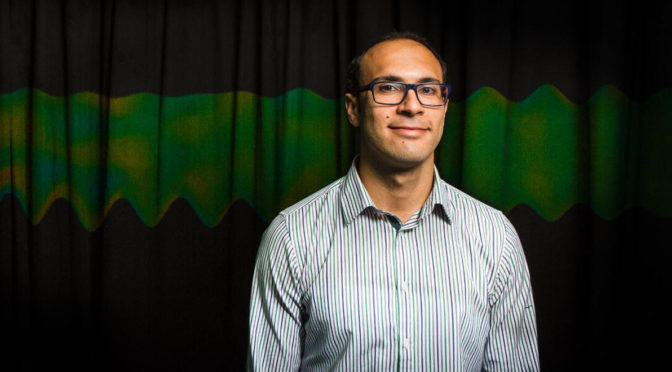
Feature image: RMIT researcher Dr Amgad Rezk

Acoustics experts at RMIT University have created a new class of sound wave – the first in more than half a century – in a breakthrough they hope could lead to a revolution in stem cell therapy.

The RMIT team combined two different types of acoustic sound waves called bulk waves and surface waves to create a new hybrid: “surface reflected bulk waves”.

The first new class of sound wave discovered in decades, the powerful waves are gentle enough to use in biomedical devices to manipulate highly fragile stem cells without causing damage or affecting their integrity, opening new possibilities in stem cell treatment.

Dr Amgad Rezk, from RMIT’s Micro/Nano Research Laboratory, said the team was already using the discovery to dramatically improve the efficiency of an innovative new “nebuliser” that could deliver vaccines and other drugs directly to the lung.

“We have used the new sound waves to slash the time required for inhaling vaccines through the nebuliser device, from 30 minutes to as little as 30 seconds,” Rezk says.

“But our work also opens up the possibility of using stem cells more efficiently for treating lung disease, enabling us to nebulise stem cells straight into a specific site within the lung to repair damaged tissue.

“This is a real game changer for stem cell treatment in the lungs.”

The researchers are using the “surface reflected bulk waves” in a breakthrough device, dubbed HYDRA, which converts electricity passing through a piezoelectric chip into mechanical vibration, or sound waves, which in turn break liquid into a spray.

“It’s basically ‘yelling’ at the liquid so it vibrates, breaking it down into vapour,” Rezk says.

Bulk sound waves operate similar to a carpet being held at one end and shaken, resulting in the whole substrate vibrating as one entity. Surface sound waves on the other hand operate more like ocean waves rolling above a swimmer’s head.

“The combination of surface and bulk wave means they work in harmony and produce a much more powerful wave,” says Rezk, who co-authored the study with PhD researcher James Tan.

“As a result, instead of administering or nebulising medicine at around 0.2 ml per minute, we did up to 5 ml per minute. That’s a huge difference.”

The breakthrough HYDRA device is improving the effectiveness of a revolutionary new type of nebuliser developed at RMIT called Respite. Cheap, lightweight and portable, the advanced Respitenebuliser can deliver everything from precise drug doses to patients with asthma and cystic fibrosis, to insulin for diabetes patients, and needle-free vaccinations to infants.

The HYDRA research has been published in the scientific journal Advanced Materials.

This article was first shared by RMIT University on 8 January 2016. Read the original article here.

Love Hertz

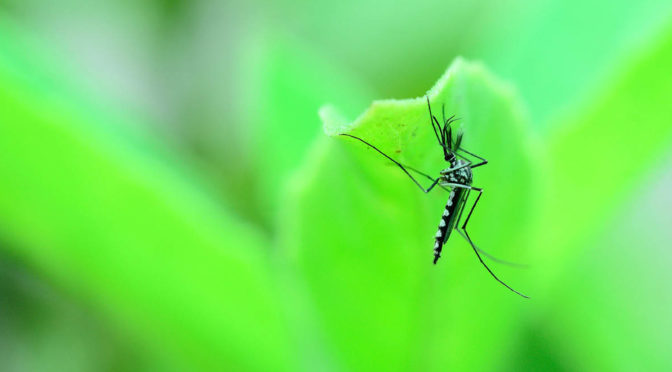
James Cook University researchers have found sex sells when it comes to luring male mosquitoes.

Senior Research Officer Brian Johnson and Professor Scott Ritchie set out to make a cheap and effective audio lure for scientists collecting male Aedes aegypti mosquitoes – the species that carries dengue and yellow fever.

They found a tone of precisely 484 Hertz, the frequency of a female Aedes aegypti’s wings, brought 95% of male mosquitoes to the trap.

Johnson says the device cost around $20 and could be run by itself for weeks. “We started with a cheap mobile phone and moved to an even cheaper MP3 player. There are no harmonics, it’s a pure tone and very simple to produce.”

Love Hertz

The effectiveness of the audio lure is easy to see: when it’s switched on, mosquitoes flock to the device, and fly away as soon as it’s turned off, as can be seen in the video.

The invention of the audio trap is timely: male mosquitoes do not bite, but new anti-mosquito strategies involve capturing and sterilising them before releasing them to breed unsuccessfully with females.

“There are a number of projects underway,” says Johnson. “They required capturing and releasing tens of thousands of male mosquitoes, but most traps are aimed at capturing females.”


He says there was no chance of eliminating mosquito populations by trapping males alone, as only a few needed to survive to continue the breeding cycle.

The scientists also found that female mosquitoes were completely oblivious to the sound of male wing beats. “There’s no real need for females to respond to male overtures,” says Johnson.

The team is now optimising the trap for field use and coordinating with trap manufacturers to add the feature to their products.

This article was first published by James Cook University on 6 January 2016. Read the original article here.

Lizards trained to not eat cane toads

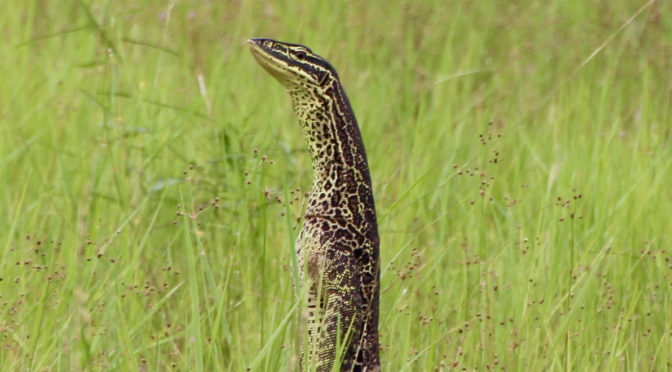
Featured image above:  Trained floodplain monitor lizard tripods to get a better view of approaching researchers.

Australian researchers have taught free-ranging goannas to avoid eating poisonous cane toads about to invade their study area – a floodplain in the remote Kimberley wilderness.

“After training, giant monitor lizards, known as goannas, survived when the toads arrived, whereas untrained lizards were immediately killed,” says PhD candidate Georgia Ward-Fear, who led the research under supervision from University of Sydney Eureka Award-winner Professor Rick Shine with colleague Dr Gregory Brown.

Lizards trained to not eat cane toads

Balanggarra Rangers Herbert and Wesley Alberts, and Georgia Ward-Fear (L-R) with a captured floodplain goanna.

Worldwide, invasive species cause devastating impacts on native predator populations. The 7 kg, yellow-spotted monitor, or floodplain goanna, is central to Aboriginal culture and plays a pivotal ecological role.

In Australia, the spread of cane toads has caused catastrophic population declines in many native predators because of fatal poisoning when toads are ingested. Smaller predators often survive because the toads they attack are small enough to make them sick but not kill them. Small toads contain much less poison than large adult toads. So, the predators learn not to eat toads.

Immediately prior to the arrival of toads at a remote floodplain at Oombulgurri in the Kimberley region of northwestern Australia, researchers offered small (non-lethal) cane toads to wild lizards. Follow-up trials confirmed just one or two toad meals were enough to convince a goanna not to eat another toad.

The trained lizards then went on to ignore the large toads that arrived a few months later. Eighteen months after the study started, many of the trained lizards are still alive despite the presence of toads.

The research led by University of Sydney is published today in the journal Biology Letters in the paper: ‘Ecological immunization: in situ training of free-ranging predatory lizards reduces their vulnerability to invasive toxic prey’. 

The work was carried out in collaboration with the Western Australian Department of Parks and Wildlife and Balanggarra Rangers.

Lizards trained to not eat cane toads

Balanggarra Ranger Quentin Gore radio tracking a floodplain monitor.

Shine says the findings suggest a potential buffer against invasive species impacts by targeting vulnerable natives rather than feral pests.

“This study shows that exposure to small cane toads can immunise free-ranging predators against the toad invasion,” Shine says. “It sets the framework for a bold new method of conservation.”

Brown concludes that “Releasing small toads just before the invasion front arrives could prolong the lives of native predators”.

This article was shared in a media release by the University of Sydney on 6 January 2016. 

The Year in Science

In an incredible year we’ve visited Pluto, found water on Mars and launched a new way of marking how researchers will be ranked. We’ve also created new antibiotics, 3D printed body parts and discovered new species. We reflect on the year in science in 2015.

10. ‘Collaborate or crumble’ rather than ‘publish or perish’ becomes science’s new mantra

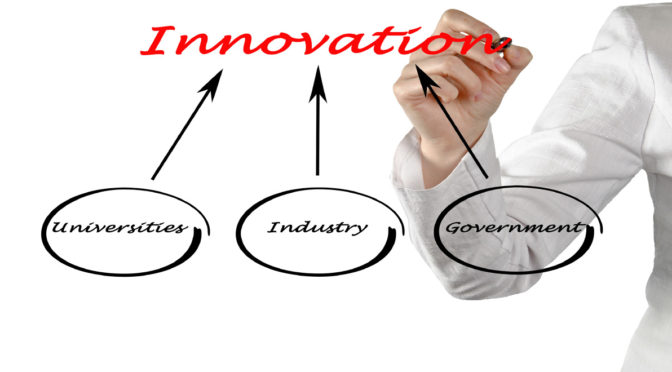
In December 2015 Australia’s Prime Minister Malcolm Turnbull launched the National Innovator and Science Agenda. In addition to a gamut of new funds for existing projects, the agenda focussed on bridging a long-recognised gap in research and commercialisation.

While the tune is not new. by putting new funds into the equation, the agenda pushes research collaboration much further than the Federal government had before, including incentives for researchers to succeed based on their efforts in collaborating with industry as well as through publication of academic papers.

Turnbull called it ‘collaborate or crumble’ rather than ‘partner or perish’. And with little backlash from the scientific public, the initiative may just transform Australia into the ‘ideas economy’ Turnbull seems to be seeking.

9. Bonanza of animal diversity discovered in the Himalayas

If you thought there as nothing new under the Sun, the discovery of a monkey whose upturned nose causes it to sneeze in the rain, a blue-eyed frog and a snake-headed fish that can survive four days out of the water will surely make you think again.

The finds were just a few of the over 200 new species announced this year after a five-year trawl through the Himalayan region in India and Nepal. Conservationists emphasised how these new discoveries prove we need to act rapidly to avoid losing species we’ve never yet met.

8. The first new antibiotic is developed in 30 years

OLYMPUS DIGITAL CAMERA

As if it hadn’t been a big enough year in science to date, researchers at Northeastern University in Boston, Massachusetts, and colleagues announced they has found a new class of antibiotics that could battle the increasing dilemma of antibiotic resistance.

By clever use of an ‘i-chip’ that allowed them to cultivate single bacterium from soil samples, the researchers screen 50,000 types of soil-dwelling bacteria searching for antibiotics that killed resistant bacteria like the hospital acquired infection MRSA.

7. Three parent in vitro fertilisation ok-ed in UK

A controversial technique that allows researchers to combine healthy mitochondria from one female donor with the egg of another and then fertilise it led to headlines of ‘three parent IVF’.

While the reality is a long way from this, the new technique offers a ray of hope for people with genetic disorders that stem from defective mitochondria (an organelle with functions in energy production and respiration found in most of our cells.

Defective mitochondria can lead to diseases such as ALS and muscular dystrophy). The procedure was ok-ed for the first time in the UK and could be used to produce babies from 2016.

6. Patients receive implants of 3D bodyparts

This year in science 3D printing of human body parts took a leap forward as a technique designed by the CSIRO was used to 3D-print a titanium ribcage and sternum for a Spanish man suffering from cancer in the chest wall.

With 3D-printed organs in the pipeline, the success of the technique opens up the mind-boggling possibilities in printing made to order body parts.

5. Commercial quantum computing gets closer

1000-Qubit-chip_2-582x388


Ok so you can’t go down the shops to buy yourself a computer so fast that it will make computers of today around the world totally defunct.

But the promise of quantum computing, which relies on the weirdness of particles at very small scales (more on that later), got a step closer with two announcements in this year in science (or science + tech really).

One, the amazing team at the UNSWAustralia for the first time created a qubit on a silicon chip – a qubit being a piece of quantum information much like a traditional computer ‘bit’.

So some background – bits of information in computing are effectively a series of yes or no style ‘bits’ of information – like binary code of 0s and 1s. Quantum bits on the other hand posses the remarkable ability to be 1 and 0 at the same time – until you measure on part of a quantumly entangled particle.

Think of it as the coyote from Road Runner not succumbing to gravity until he realises that he’s midway off the cliff (in which case he is tragically entangled with the ground and both falling and not falling until such a time as his trajectory is measured).

In addition, Google announced that its quantum machine D-wave was upgraded from 512 to over 1000 qubits – making it 100 million times faster than computers today,

Trouble is, it takes a massive amount of energy to run as it needs to be kept at supercool temperatures. So not practical yet.

4. Scientists discover fossils of a new species of human ancestor: Homo naledi

Homo_naledi_holotype_specimen_(DH1)

Just when you thought you’d sent Christmas cards to all of your relatives, anthropologists in South Africa announce a jaw-dropping discovery of over 15 individuals – including jaws, craniums, foot and hand bones – of a human ancestor mysteriously trapped in an inaccessible cave near Johannesburg.

So inaccessible were the bones that a team of small-bodied women were recruited to unearth the bones as most men couldn’t access the cave. The hand in particular showed that Homo naledi – which is yet to be dated but it is hoped may be a missing link between Australopithecines and Homo species – is curved and so was likely used for frequent climbing.

However other bones showed much more modern features, leading to it’s Homo status.

3. Climate agreement reached in Paris – so what’s next?

As December drew the year in science to a close, people worldwide hoped that the COP21 deal would finally set some global standard for keeping carbon dioxide emissions to a level that will avoid catastrophic climate change. Despite last minute haggling over terminology, the deal happened.

While governments worldwide will or won’t take action, they have at least agreed in spirit to keep global climate change ‘well below 2 degrees C’.

But with enough legacy carbon emissions to push a rise of at least 1.6 degrees C as is, just how will we achieve this? And what role can scientists play?

Predicting climate change, optimising and improving renewable energy technology and capturing current carbon emissions are a few of the ways in which science can rise to the challenge, as are more ‘out there’ ideas such as geoengineering.

2. Water on Mars discovered

It was the announcement of 2015. Dark streaks on Mars valleys known as Recurring Slope Lineae were the long awaited evidence that Mars has liquid water.

As we all went to watch The Martian, many of us wondered. Could there really be life yet to be discovered on the Red Planet?

1. No.1 in the year in science: meet Pluto

snakeskin_thumb

After nine years and 4.8 billion km, New Horizons reaches Pluto, and surprises us with tall mountains, dunes and flowing glaciers.

It has a heart, or rather, a large, heart-shaped plain where resurfacing of the planet has happened as recently as 100 million years ago (recent for a 4-billion-year old dwarf planet). It has 3-km tall mountains, flowing glaciers – possible of gas – a hydrocarbon rich atmosphere that would tint its skies blue and a red and yellow surface despite being covered in front as its atmosphere sublimates and falls to the ground.

When New Horizons flew by after a nine-year journey, Pluto stunned us all in 2015 when we got to take a look for the first time, and as the ultimate champion achievement of this year in science, proved that science, technology and engineering can combine to take us further than we ever dreamed.

Heather Catchpole

Meet the innovators

Following Prime Minster Malcolm Turnbull’s National Innovation and Science Agenda (NISA) announcement last week, The Australian published the ‘Knowledge Nation 100’, showcasing the who’s who of Australia’s superstar innovators.

The list, supported by The Office of the Chief Scientist and the Knowledge Society, was launched on December 10, the same week as Australian technology company Atlassian launched on the NAZDAQ Stock Market.

Science Meets Business contacted some of the top Australian innovators featured on the list to explain their hurdles in transforming ideas into commercialisation and how NISA is set to change the innovation game.

In a related article in The Australian, Turnbull says start-ups are a good launchpad for innovators even if they don’t succeed.

“If you start a new business and it doesn’t work out, you have learned something, your employees have learned something, they have earned income, paid taxes. The ecosystem benefits.”

The Knowledge Nation 100 innovators will meet at a summit in March to promote how innovation with science, technology, engineering and maths (STEM) will drive change in the economy, create jobs and enhance Australia’s prosperity through economic growth.

Educate to innovate

Founded in 2002 as a start-up to develop products for software developers and project managers, Atlassian made a market cap of $5.7 billion last week after jumping 32% on the first day of trading.

The success comes as a shock to the dominance of new age, cloud-based software, while Atlassian gets nearly 73% of its sales from traditional on-premise software.

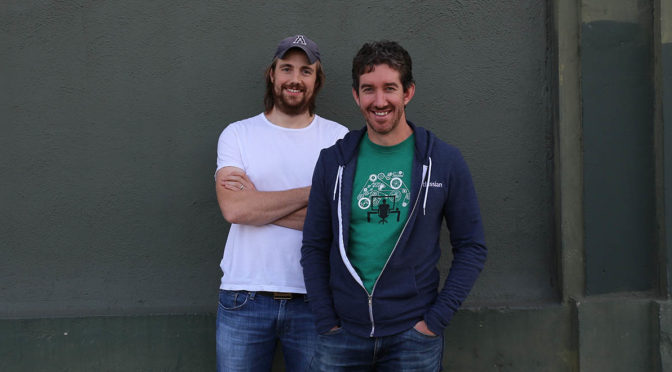
Speaking on ABC’s 7.30 Report, Scott Farquhar, co-founder and CEO, advised: “unless we innovate, unless we build things that operate on a world stage, we’ll reduce Australia’s prosperity”.

Farquhar also cautions: “Today, we need to educate more and more people in STEM subjects… and particularly we need to focus on women because women are underrepresented in those areas. In a world where STEM is going be important to the future prosperity of Australia, having women on the sidelines is a big loss for Australia”.

The research/commercial sector communication gap

unimelbbionicsinstituteOne of Australia’s leading innovators, for over 30 years, Professor Robert Shepherd, Director, Bionics Institute, University of Melbourne has worked across medicine, computing and engineering, and made significant scientific and commercial contributions. From driving the FDA approval of Cochlear Ltd in 1985, providing hearing to people with hearing impairments, he has overseen expansion of the Bionics Institute to develop the bionic eye and neurobionic platform technology.

Despite his success Shepherd explains, “Australia has a very poor record of communication between the research and commercial sector – I am optimistic that the NISA will provide significant incentive and leadership to bring these two sectors closer together.”

He believes this should include greater options for university students and research scientists to train in research commercialisation and entrepreneurship. This will open the gate to more research savvy CEO’s and CSO’s. 

Taking leadership opportunities

Dr Bronwyn Evans has been CEO of Standards Australia since 2013 and is Chair of the governments Medical Technologies & Pharmaceuticals Growth Centre.

By bringing over 30 years experience as an engineering executive in power generation, engineering education, Standards creation and medical devices, Evans aims to capitalise on medical research in Australia to make it a hub for medical technology in the Asia-Pacific.

Evans’ success has grown from taking risks in foreign economies and new cultural landscapes having “accepted the role as the Asia Service Manager for GE Healthcare Ultrasound business based in Singapore.”

She explains, “This fitted with my overall career aspirations of C-Suite leadership and ultimately gave me P&L responsibility and leadership opportunities across all of the economies in Asia and taught me to be effective in new cultural environments.”

Evans sees the NISA as just one part of a bigger picture and that “It’s the attitude and approach behind these agendas that will drive the economic output.” 

A culture that empowers innovators

As a technology entrepreneur, Ken Kroeger leads Seeing Machines, an innovative company supplying image-processing technology that monitors human fatigue and distraction for vehicle operators.

To Kroeger the success of the company is strengthened by its inherent values for our own safety. “If you’re anything but a one person company, you need a culture that empowers people to bring their best to the table.”, Kroeger says.

“The key is to provide an environment that attracts and retains talent – this takes an understanding of what motivates people. At Seeing Machines, having a strong vision to save lives on our roads is important to all our employees.”

Kroeger also demonstrates the importance of collaboration having established partners with Samsung and Caterpillar, the world leading manufacturers of construction and mining products; collaborations that encompass both risk and opportunity.

He explains, “Every problem presents a risk and an opportunity to do something differently.” He adds, “At Seeing Machines, we felt the downturn in the mining industry earlier than most, so we were proactive in shifting our mining technology business to Caterpillar and launched a fleet product that has potential to take our life saving technology to a scale that we’ve never done before.”

– Guy Fenton


Kickstarting the innovation culture

On Monday 7 December, in his first major policy announcement since becoming Prime Minister in September 2015, Malcolm Turnbull unveiled an innovation package to drive an “ideas boom” in Australia.

Speaking at CSIRO in Canberra, Turnbull and Minister for Industry, Innovation and Science, Christopher Pyne announced $1 billion in government spending over four years. The funds, says Turnbull, will kickstart an innovation culture in Australia.

“This statement is an absolutely critical part of securing our prosperity. The big shift is cultural – if we can inspire people to be innovative, the opportunities are boundless,” says Turnbull.

The plan outlines 25 measures across four key areas: culture and capital; embracing risk; incentivising early-stage investment in startups; and addressing governance issues through the establishment of two new bodies to oversee the plan: the Innovation and Science Sub-Committee of Cabinet, chaired by the Prime Minister, and newly established independent advisory board, Innovation and Science Australia.

These, according to Pyne, will “put science and innovation at the heart of government policy”.

“I wrote a list of expectations before I went in and got to tick everyone of them,” says Dr Tony Peacock, Chief Executive of the Corporate Research Centres Association (CRCA). “Now startups will be much better placed to raise their own funds,” he says.

According to Peacock, by changing the insolvency laws, such as reducing the default bankruptcy period from three years to one, and making it easier for startups to gain access to capital, “the government has put the ball back in the innovator’s court”.

The biomedical and biotechnology industries have also welcomed the announcement.

“We are keen to see this positive policy transformed into action that makes a difference to Australia’s ability to commercialise and benefit from our world-class research and development,” says Dr Anna Lavelle, CEO of biotechnology organisation AusBiotech.

The plan represents a major step forward for science innovation in Australia, according to Dr Peter French, CEO and managing director of biopharmaceuticals company Benitec Biopharma, and “is the most exciting and refreshing statement of vision for Australia that I have seen from our politicians”.

French, named this month one of Australia’s “Innovators of Influence” by the Australian Science Innovation Forum, says that ”rewarding academics for working with industry is well intentioned, but without safeguards, could end up being counter productive to Australian innovation”.

The package includes a $100 million boost to the CSIRO budget, reversing the $110 million cut under the Abbot Government last year. The Government will also co-invest with the private sector in the $200 million CSIRO Innovation Fund for new spin-out and startup companies and services created by research institutions. Biomedical research will also benefit from a $250 million Biomedical Translation Fund.

These funds will support investment in spin-off and startups, to develop and commercialise promising products and services from Australia’s research community.

Science research will receive an injection of funding, with $520 million for the Australian Synchrotron facility and $294 million for the Square Kilometre Array over the next decade. The National Collaborative Research Infrastructure Strategy (NCRIS) will also receive $1.5 billion to deliver world-class research facilities to Australian researchers in Australia and abroad.

The package also includes a $36 million Global Innovation Strategy to support collaboration between Australian researchers and businesses with their international counterparts. Landing pads for Australian startups and entrepreneurs will be established in Tel Aviv, Silicon Valley and three other key locations around the globe.

There will also be a $99 million investment in programs to improve digital literacy and skills in STEM amongst young Australians. And $13 million will be made available to increase opportunities for women working in research and STEM industries and start-ups.

“Innovation and Science are two sides of the same coin, and this plan will bring them both together: driving jobs, growth and investment and igniting a national ‘can-do’ attitude,” says Pyne.

– Carl Williams

Start-ups targeted for support

Start-up businesses have been targeted for a high level of support in the PM’s Innovation statement, with major changes to tax regulations relating to investment in new businesses.

The National Innovation and Science Agenda (NISA) is Prime Minister Malcolm Turnbull’s first major economic policy launch since ousting Tony Abbott. It pledges an additional $1.1 billion of government spending over the next four years to foster investment in science and new technology.

Turnbull – a key player in Australian internet pioneer OzEmail in the 1990s – is well known for his support for the start-up sector.

Yesterday’s announcement follows on from the release of a report by the Australian Advanced Manufacturing Council (AAMC) on Sunday calling for a raft of changes to how Australia encourages and retains innovative businesses.

Both the report and the government Innovation statement highlight the success of the UK Seed Enterprise Investment Scheme, which has attracted more than AUD$500 million in its first two years of operation, money that has been invested in some 2900 companies.

The Australian scheme, which the government intends to launch in 2016, will offer a 20% tax refund on investments up to $200,000 per investor, per year, and a 10-year capital gains exemption on investments held for three years.

The AAMC report, How Australia Compares, examined the international competitiveness of taxation systems in encouraging investment capital, finding Australia ranked 10th out of the 12 nations compared. The report claims the existing R&D-based incentives have been outstripped by the incentives offered by international competitors.

AAMC chairman John Pollaers said: “This is an area of increasing competition internationally. As the report shows, our R&D tax credits are competitive.  But this is not giving us the edge. If we rest solely on our R&D scheme, we will get left further and further behind.”

In launching the new policy, Mr Turnbull asked, “What is going to drive Australian prosperity in the years ahead?” Where the mining boom that has supported the Australian economy in the recent past was tied to external demand, “our innovation agenda is going to help create the modern, dynamic 21st century economy Australia needs”, providing the foundation for a new type of economy.

While the government and the AAMC report each agree on the creation of a Seed Enterprise Investment Scheme-type fund, the report calls for more far-reaching reforms to the tax system, including reducing corporate tax on profits from Australian-generated IP to 10%.

The tax breaks for start-up businesses are among 24 new policy measures included in the Innovation statement; these aim to increase connections between businesses, scientific institutions such as CSIRO, and universities, as well funding to encourage high school students in STEM (science, technology, engineering and mathematics) subjects.

– Adrian Regan

No backing away

We have had periods of better funding of some areas of science. We’ve had periods where it was easier for university researchers to get grants. But we’ve never had a time when the major parties have been competing to improve the whole innovation system with such vigour. Australia’s future will be better for it.

Yesterday’s National Innovation and Science Agenda (NISA) announced by the Prime Minister and Minister for Industry, Innovation and Science, is a new, higher, benchmark. There is over $1 billion in 25 or so measures, but the NISA goes a lot further – it puts new governance on innovation and science in Australia. We will now have a Cabinet subcommittee for Innovation and Science.

Innovation Australia becomes Innovation and Science Australia, with statutory powers. These measures alone should mean we finally get an Australian Innovation System that is worthy of the name, “system”. More important than the new money is the fact that it is virtually all ongoing funds. In my opinion, Ian Chubb will retire a satisfied man having railed against the endless “non-ongoing” science programs that wind-up just as they start performing. No longer will we have the farce of our national infrastructure facing closure every year or so.

I went into this morning’s briefing with a list of 12 expectations: five things I expected; five I hoped for; one I dreamed for; and one I hoped the government wouldn’t go for. I’m pleased to say, that I was able to tick every box. The government has blown past my expectations and delivered a great package.

There are a few minor issues. For example, start-ups might face a funding drought until the tax deduction rules are in place. Who is going to invest if a 20% tax advantage is just around the corner? Fast and effective implementation is needed.

The Prime Minister made it clear that NISA is a start. He sees constant adjustment and an agile approach. This is needed. Not only is it necessary in the economic climate that we face, but in the political environment as well. The Australian Labour Party (ALP) got in early last Friday with a raft of proposals on innovation – many we see in this package. A political environment where parties are battling it on a contest of ideas about Australia’s future? That’s exciting for sure.   The government won’t be able to use NISA as a one-off to keep a few people happy. They’ll need to keep reviewing and improving — I cannot see the ALP backing away from innovation and science anytime soon.

You can view the National Innovation and Science Agenda here.

– Dr Tony Peacock

KnowHow founder Tony Peacock is the CEO of the CRC Association and 2014 Monash University Churchill Fellow at The Winston Churchill Memorial Trust.

Science and business are centre stage

Science and innovation take centre stage today at the government’s launch of its National Science and Innovation Agenda.

High on the list of priorities is the focus on connecting the brightest minds in science and business to drive novel solutions and employment-boosting enterprises.

Refraction Media, publisher of the Science Meets Business website, welcomes the focus on collaborative partnerships between research and industry – connecting science and business.

“Australian scientists are producing world-class research within academia, research institutes and industry,” says Karen Taylor-Brown, Publisher at Refraction Media.

Taylor-Brown cites Australia’s development of the bionic ear and CSIRO’s pioneering wi-fi work as high profile examples of Australian innovation.

Lesser known is the 3D-absorbent fabric developed by CSIRO and Textor Technologies, which is being used in the next generation nappy by global brand Huggies; Vision CRC’s ongoing work in contact lens technology worn by millions worldwide; and the Total Channel Control System to rejuvenate outdated irrigation systems. Total Channel Control is now used around the world, and was jointly developed by the former CRC for Sensor Signal and Information Processing, and Rubicon Water.

“The opportunity lies in opening the doors of science to a dynamic and responsive business community.”

Businesses that work hand in hand with research organisations to innovate are three times more likely to prosper and grow.

– Karen Taylor-Brown

Science Meets Business is an independent news hub that celebrates and shares stories of Australian innovation while connecting the worlds of science and business.

“We need to link problems with skills, and the National Science and Innovation Agenda is certainly a step in the right direction,’ says Taylor-Brown.

Science Meets Business The New Class, how Australian innovation is making an impact on the world stage as businesses and researchers forge ahead into foreign markets

http://sciencemeetsbusiness.com.au/the-new-class/

For more information, contact Refraction Media, Karen@refractionmedia.com.au

Refraction Media recognised as ‘Innovators of Influence’

Publishers and content company Refraction Media have been named by the Australian Science and Innovation Forum and the Australian Academy of Technological Sciences and Engineering as one of 2015’s Innovators of Influence.

The Australian Science and Innovation Forum and the Australian Academy of Technological Sciences and Engineering have announced today that Refraction Media have been included as part of the 2015 Innovators of Influence list. The list was selected on Wednesday 2 December by a panel of ATSE Fellows and former Clunies Ross awardees.

Congratulations to the 2015 Innovators of Influence:

Dr Peter French – Peter developed a single shot cure for hepatitis C called TT-034. This is the first time gene therapy has been used to treat viral disease.

Dr Catherine Robinson – Cathy has developed an innovative program for biosecurity stakeholder engagement strategies which assesses the risk and social impact of biosecurity decisions.

Heather Catchpole and team members at Careers with Code – Heather and her team Careers with Code have pioneered a national initiative to assist high school students develop skills in the area of digital technologies in order to forge the careers of the future. Their program is supported by Google.

Dr Catherine Ball – Cathy is developing world class long-range drone technology for environmental and engineering projects. Her technologies have been used in the oil and gas industry, as well as to protect wildlife.

Professor Tony Weiss – Tony has developed an advanced pipeline of products based on elastin with applications in a number of areas including skin rejuvenation, scar remodelling, skin tissue repair and wound healing, and surgical glues / sealants.

Professor Maree Smith – Maree developed the first orally active analgesic in more than two decades for neuropathic pain.

Guest speakers for this inspiring new initiative were Dr Alan Finkel AM FTSE, President of the Australian Academy of Technological Sciences and Engineering, and Associate Professor Jan Tennent, Chief Executive Officer Biomedical Research Victoria.

Specialists in science, technologist, engineering and maths (STEM), Refraction Media produce magazines, websites, animations and e-learning tools that drive a narrative of innovation, adaptability and future change.

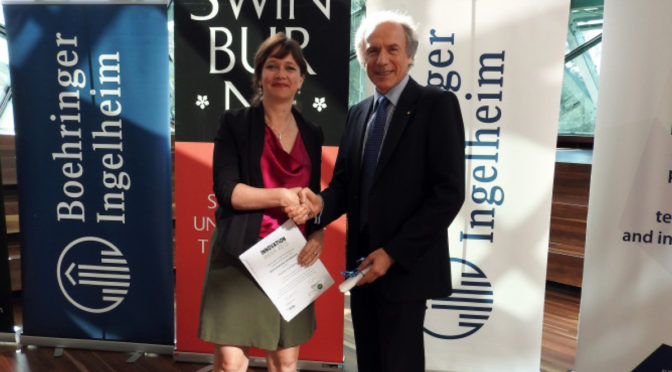
Co-founder and Creative Director Heather Catchpole accepted the award from incoming Chief Scientist Alan Finkel at a presentation in Federation Square in Melbourne today.

Innovators of Influence

The ASIF offered their congratulation to Refraction Media, who partner with Google Australia to produce Careers with Code, an information hub and magazine aimed at encouraging Australian high school students to combine computer science skills with their passion or ‘X’ factor.

“This new award seeks to recognise individuals and teams who are in the process of putting novel scientific, technological or engineering ideas and research to use. Through this award, we hope to bring recognition to the great work you are undertaking at the stage when you need it – when growing and scaling your innovation,” said the ASIF.

“We also hope to highlight the diversity and possibilities of innovation that is being undertaken by a growing community of science and technology innovators and entrepreneurs in Australia.”

Co-founder and Creative Director Heather Catchpole says: “This is a significant recognition of the role that science, engineering, technology and maths plays in inspiring a generation of people with the skills to innovate and problem-solve in their careers, and to move quickly across disciplines.”

“Today’s students will work in careers that don’t exist yet, and use technology that isn’t around today. They will need the business skills, entrepreneurship and knowhow to help Australia to thrive in a competitive global marketplace while facing the challenges of massive population growth, rapid industrialisation and climate change.

“We need people who have the skills and knowledge to adapt to significant global change. In Careers with Code, we’re emphasising STEM skills and the narratives of ‘CS + X’ ­– combining computer science skills with your passion – to address declining enrolments in ICT in Australian universities and to showcase the exciting career paths available through STEM.”

In 2015, Refraction Media distributed 175,000 copies of Careers with Code – 50 to every high school in Australia.

“In 2015 the level of enrolments is 82% less than it was in 2000,” says Catchpole.

“Particularly concerning is the low levels of females in engineering and ICT, both major employers in Australia. In fact ICT is one of the fastest growing employment areas, but just one in five ICT workers today are women,” she says.

“More than pure coding and tech support, computer science gives us insights into how we live today and helps define how we will live in future. It’s a dynamic, all-pervasive field that sees multi-disciplinary professionals at the forefront of invention, discovery and innovation,” says Catchpole.

Refraction Media was recently awarded Best Small Publisher in Australia by Publish Australia, beating a competitive platform of sports, lifestyle and fashion titles.

Interviews

Co-founder and Creative Director

Heather Catchpole

0401068975

heather@refractionmedia.com.au

Co-founder and Executive Publisher

Karen Taylor

0414218575

Karen@refractionmedia.com.au

More info about Refraction Media:

Refraction was founded in 2013 by Karen Taylor-Brown and Heather Catchpole as a publishing and content creation company specialising in science, technology, engineering and maths (STEM). Their vision is to inspire a smarter future where we take responsibility for our place on the planet, celebrate creativity and knowhow, and the value of STEM to create better health, wealth and economy.

In 2014 Refraction partnered with Google Australia on Careers with Code, a print, electronic and mobile magazine that emphasises skills, adaptability and entrepreneurship in partnership with STEM: science, technology, engineering and maths.

The narrative of Careers with Code stems from CS + X – where X represents your passion. Careers with Code investigates the role of CS in areas such as marine archaeology, robotics, intelligence, medical technology and research, business analysis, user experience research, app development, space mining, music, art, big data, policy, social health and more.


Innovation and Science on Turnbull agenda

Prime Minister Malcolm Turnbull recently announced the creation of a National Innovation and Science Agenda which includes funding, tax incentives and a strong focus on education initiatives to up the ante for Australia in terms of its innovation output.

The policy comes off the back of increased push since the Prime Minister gained office on the need to position Australia more strongly in the global economy and to facilitate a rapid move from traditional income from resources and manufacturing to one based on ‘ideas and entrepreneurship’.

Early announcements include:

  • $8 million in a network of incubators helping start-ups get the resources, knowledge and networks they need to take their ideas to the world
  • New arrangements to encourage collaboration between researchers and industry, including streamlining and refocussing a greater proportion of research block grant funding toward collaboration, with an addition $127 million in funding
  • Over 10 years: $520 million for the Australian Synchrotron, $294 million for the Square Kilometre Array, and $1.5 billion for the National Collaborative Research Infrastructure Strategy (NCRIS)
  • A $36 million Global Innovation Strategy to support businesses and researchers to collaborate with their global counterparts on research with landing pads established for Australian entrepreneurs and startups in Tel Aviv, Silicon Valley and three other key locations
  • $99 million investment in programmes to boost digital literacy and skills in science, technology, engineering and mathematics (STEM) amongst young Australians
  • $13 million to increasing opportunities for women in research, STEM industries, startups and entrepreneurial firms

The Minister for Industry, Innovation and Science, Christopher Pyne, said: “The release of the Agenda is just the beginning. The next step will be a national discussion around this new way of thinking and doing, and the importance of innovation and science to our future.

“We will highlight the successes to date and inspire all Australians to be involved in shaping our future and harnessing the potential of our ideas,” Mr Pyne said.

More on this to come.

– Heather Catchpole

Stellar chamaeleon had astronomers fooled for years

It is the brightest infrared star in the Northern sky but a University of Sydney student has found that astronomers have for years been mistakenly interpreting the dust in the environment of a famous star that lies 450 light years from Earth.

The star CW Leo, also going by the moniker IRC+10216, would be the second brightest star in the sky if our eyes could see infrared light. Images of its circumstellar environment released today reveal substantial evolution occurring over a span of more than eight years, with none of the previously identified bright spots in fact containing the star, which is now believed to be buried in its own dust.

Graduate student Paul Stewart has reconstructed images from 2000–2008, which are more akin to a changing inkblot pattern than a star, including high angular resolution images from stellar occultations by the rings of Saturn observed with the Cassini spacecraft.

Astrophysicist Professor Peter Tuthill, who has been supervising the work, last month with scientists in the USA published the first-ever images of a newborn infant planet. Tuthill says the new images made it clear that the red giant’s clumps and plumes of hot dust being ejected had confused generations of astronomers, who interpreted them as key structural elements to the system.

CW Leo is one of the most extensively studied evolved stars, believed to be on the cusp of planetary nebula formation ­– the process ending the red giant’s life is potentially already under way.

The findings and images will be published today in the Monthly Notices of the Royal Astronomical Society (MNRAS).

Lead author Paul Stewart says observing the star was like peering into a roiling cauldron of heat and dust as the star’s appearance slowly evolved ­ but the changes became even more dramatic recently.

“In the space of a couple of years, it has completely shed its familiar identity and adopted an entirely new visage,” Stewart says.

An animation of the evolution becoming more dramatic near the end is below, and images showing the change over eight years are here.

Stellar chamaeleon

Animation of the stellar Œevolution, sourced from Paul Stewart and Peter Tuthill, University of Sydney.

Tuthill, who is co-author of the paper, reflected: “This is one of those humble moments when nature reminds us all who is boss. For the past 20 years, many astronomers, ­and I count as one, ­have tried to put a skeleton underneath the clumpy images we see”.

The new work demonstrated that none of the previously identified structures in IRC+10216’s circumstellar environment were persistent and therefore could not be representative of the alignment or position of the star.

Tuthill says: “In trying to find an underlying structure to the clumps and blobs, we have seen little more than our own preconceptions reflected back at us ­ like a giant celestial Rorschach Ink Blot Test”.

Whatever future studies will reveal, it is perhaps the observation of this star that is the end in itself, Stewart says: “The real excitement is the extreme physics ­CW Leo is a swollen luminous giant poised at the most self-destructive phase of its existence.”

“It is literally tearing itself apart under its own glare, hurling dense clouds of dust and gas out into the galaxy, dying amidst its own glorious final fireworks display.”

This article was first shared by the University of Sydney on 4 December 2015. Read the original article here.

Evaluating Chinese medicine

The China-Australia International Research Centre for Chinese Medicine is a joint initiative between RMIT’s School of Health Sciences, Guangdong Provincial Academy of Chinese Medical Sciences and the Guangdong Provincial Hospital of Chinese Medicine.

Researchers at the centre based at RMIT and Guangdong have published two monographs through World Scientific that will inform tertiary education and clinical practice by providing a reference of clinically-evaluated Chinese medicine treatments for 26 common medical conditions.

Professor Charlie Xue, Centre Co-Director and Head of the School of Health Sciences, says the monographs were a significant contribution to the field.

“This publication is a major milestone in the international development of Chinese medicine as a form of evidence-based integrative healthcare,” Xue says.

“Chinese medicine practitioners can refer to these books for guidance on the herbal medicine formulas, specific herbs and acupuncture points that can best treat their patients, and be informed by the current best evidence for their decision-making.

“These publications are also of significant value for students of evidence-based Chinese medicine and for academics involved in teaching or in clinical studies of Chinese medicine.”

“We have chosen the conditions that are commonly treated by Chinese medicine practitioners as our priorities and adopted a ‘whole evidence assessment’ approach.”

Updates to the publications will be conducted every five years to ensure currency of evidence.

Formed in 2013 after five years of successful collaboration between the partners, the China-Australia International Research Centre for Chinese Medicine aims to conduct high impact traditional and complementary medicine research that contributes to the provision of evidence-based health care to the community.

RMIT Vice-Chancellor and President, Martin Bean CBE, says the University had made significant contributions to the promotion of evidence-based Chinese medicine development over the last seven years.

“By engaging deeply with Guangdong Provincial Academy of Chinese Medical Sciences we’re helping to advance the cause of Chinese medicine globally,” Bean says.

“Australia leads the international development of Chinese medicine in the western world through effective partnerships with key institutions in China.”

Martin says as more people around the world used acupuncture and herbal medicine, scientific validation of Chinese medicine therapies was absolutely essential.

“This will provide a base for effective integration of Chinese medicine international healthcare systems as stipulated in the World Health Organisation’s traditional medicine strategies.”

The publications, Evidence-Based Clinical Chinese Medicine: Vol 1 Chronic obstructive pulmonary disease (COPD) and Evidence-Based Clinical Chinese Medicine: Vol 2 Psoriasis Vulgaris, offer an up-to-date “whole evidence” analysis of the Chinese medicine management of disease, with references to classical Chinese medicine literature and contemporary clinical literature, as well as clinical trial outcomes and reviews of experimental studies.

Rebecca McGillivray

This article was first shared by RMIT on 20 November 2015. Read the original article here.

Which businesses are at COP21 and why?

The 21st meeting of the Conference of the Parties (or COP21) is underway, with the goal of hammering out a deal to reduce global carbon emissions top of the agenda.

As well as leaders from 147 countries, there are a number of CEOs and senior managers of the world’s biggest corporations, industry associations and trade policymakers also present among the 50,000 attendees.

Business has a significant stake in the talks. Company representatives will play a key role in shaping the agenda and there are more than 180 business events planned in Paris.

The UN climate chief Christiana Figueres has called for “business involvement at the highest levels” at COP21, while UK prime minister, David Cameron, called for a stronger role for business in his address.

Climate change is “too large for governments alone to deal with” and businesses need “long-term certainty for investment,” he said.

So which are the businesses that participate in COP meetings? Will COP21 result in meaningful action by business or will it be another massive greenwashing exercise under the benevolent gaze of the United Nations?

Renewables and tech

While a wide range of industry sectors participate at COP meetings the usual suspects are not hard to identify.

First, there are the “good guys” – companies in the renewable energy business and technology companies offering products and services for environmental protection, energy efficiency, water and soil conservation, and “clean agriculture”.

Then, there are the “bad guys” – oil and gas companies, mining corporations, electricity generators and other fossil fuel-based industries, eagerly promoting their green credentials.

COP21

One of the good guys? Bill Gates promoting innovation at COP21. EPA/Ian Langsdon/Pool

But perhaps the most influential groups are the various industry and trade associations that directly and indirectly lobby policy makers.

Industry associations such as the Confederation of European Paper Industries, European Steel Association, European Association of Metals and the International Association of Oil and Gas Producers regularly lobby EU climate policy makers, advocating business friendly policies.

They also provide technical advice on their preferred climate policies, mobilise support from other industry associations and organise meetings and dinners between CEOs and policy makers.

A recent report by the Policy Studies Institute found that 77% of the Fortune 500 corporations lobbied climate policy makers through their trade associations.

Global carbon price

Every corporation, industry association, and myriad “responsible business” coalitions appear to agree that what business needs to agree on above all else is a global carbon price.

The economic logic is that a carbon price can incentivise low carbon innovation and provide a stable policy framework for business.

The problem of course is that a price on carbon and emissions trading, while being cost effective and efficient for business, will have little if any effect on absolute greenhouse emissions.

This is because it will take a relatively high carbon price (to the order of US$30–US$40 per ton according to experts) to shift investments to cleaner energy sources.

With the current price of carbon under the EU’s Emissions Trading Scheme languishing at around US$6 a ton though, there is little incentive for companies to make these investments.

Plus, a price on carbon simply serves to raise the cost of fossil fuel energy and does nothing to lower the costs of alternative energy sources. All the major oil companies have internal carbon prices in place, yet they continue to invest in fossil fuels.

The likely result

COP21 will likely see businesses set aspirational goals committing to move to 100% renewable energy sources, they will make numerous climate pledges, and they will mobilise support for carbon pricing and emissions trading.

But there will be no concrete commitments or deadlines.

Business can already boast its support for COP21. A consortium of companies has given £25 million to the conference – for which it has taken flak from green groups.

Sponsors include some of the largest carbon emitters in the world: EDF Energy, Engie (which accounts for nearly half of France’s annual carbon output), Air France (which has opposed emissions reductions in the aviation sector), and BNP Paribas (one of the top ten global coal lending banks during 2005–2013). BMW, Coca-Cola and BT are also sponsors of the event.

Ultimately business involvement at COP21 will ensure there is no “distortion of competitiveness in the global market” as the International Chamber of Commerce Climate Working Group puts it.

And as long as business-friendly proposals continue to define climate policy, as they have in the past, there can never be any meaningful climate action.

Business as usual will continue, despite all the pledges and climate summits. Climate policy, friendly or otherwise, needs to drive business if new business models are to emerge – not the other way round.

Otherwise, as environmentalist Bill McKibben warns us “even before we run out of oil, we will be running out of planet”.

This article was first shared by The Conversation on 2 December 2015. Read the original article here.

Winning the space race

Dr Abigail Allwood is an earth science alumnus from the Queensland University of Technology (QUT) who took her research to NASA – where she now works in planetary chemistry and astrobiology as the first woman and the first Australian to lead a project team for life on Mars.

This inspiring video explores Allwood’s return home, and her six-day tour travelling around Queensland sharing her Mars research to students and the public.

During her tour, Allwood participated in ten educational events, mostly based at QUT, including a panel discussion with esteemed journalist Robyn Williams from Radio National in Sydney.

“Space exploration is one of the greatest sources of inspiration for young minds.” 

The themes of Allwood’s presentations cover how space can be a gateway fascination for young people, encouraging them into scientific enquiry. Her presentations also describe how doing an earth science degree led to her becoming an astrobiologist at NASA. And of course, her talks cover the possibility of finding life on Mars…

Allwood gave presentations to high school and research students, describing her atypical journey from studying geology in Australia to working on the Mars mission with NASA.

– Jesse Hawley

Animal welfare pioneers launch groundbreaking portal

Experts from across the nation and overseas are finalising Australia’s first tertiary animal welfare and ethics project, culminating in its launch at the University of Sydney today at 3:30 p.m. by the ‘father’ of animal welfare science, the UK’s Emeritus Professor John Webster.

Emeritus Professor Webster is among international and local experts who have helped develop the One Welfare portal – an online, interactive resource being launched today – which has brought together all the veterinary faculties in Australia and New Zealand.

Professor Webster, from the United Kingdom’s University of Bristol, arrived in Australia last week and will embark on a national speaking tour until 10 December.

Leading author Professor Webster is a key proponent of the Five Freedoms. Developing the framework from a call for basic rights, such as the ability to stand, stretch and lie down, to a proposal encompassing a stress-free environment and enabling the expression of normal behaviour through conditions that avoid mental suffering.

“There is a growing expectation as society is increasingly relying on animals for consumption and even companionship, that we have a responsibility to do this in a more humane manner,” says Webster.

To improve animal welfare across Australia and remain abreast of emerging issues, a consortium led by the University of Sydney applied to the Australian Government’s Office of Learning and Teaching for funding for what has become the One Welfare portal.

“This has been a truly national collaboration involving animal welfare scientists who are leaders in their fields,” says McGreevy, the chief investigator for the project.

Among the resources that the portal now boasts are: dozens of veterinary scenarios showcasing ethical dilemmas; a validated online reflection tool for students to use on annual basis to assess their views on animal sentience; a custom-built online debating tool called Chatterbox™; over 300 essays on animal welfare science and an app (doglogbook) that has been developed for dog owners to report their dogs’ day-to-day activities and help veterinarians assess the animals’ quality of life.

Australian and New Zealand veterinary schools have been participating in workshops from Monday 30 November through to Wednesday 2 December at the University of Sydney as part of the One Welfare program.

Participating universities in One Welfare, being launched today, comprise: University of Sydney; University of Queensland; Charles Sturt University; University of Melbourne; University of Adelaide; Massey University; James Cook University and Murdoch University.

WHAT: One Welfare portal launch, Wonder Dog tricks
WHEN: 3:30–4:30 p.m., 1 December
WHERE: Darlington Conference Centre, City Road, near Butlin Avenue, University of Sydney

This article was first shared by The University of Sydney on 1 December 2015. 

Australian researchers develop Big Data tool to test new medicines

Australian scientists have developed a rapid detection tool to map the effects of new medicines already on the market, potentially saving millions of health practitioners from prescribing medicines with lesser-known yet serious side effects.

Lead researcher Dr Nicole Pratt, a senior research fellow at the University of South Australia‘s School of Pharmacy and Medical Sciences, has been working with the Asian Pharmacoepidemiology Network (AsPEN) to develop a mathematical algorithm that charts the temporal relationship between a new medicine and reports of adverse side effects around the globe.

“At the time a new medicine is first released onto the market less than 50% of the side effects are known.”

The rapid detection tool is able to quickly analyse large population datasets of up to 200 million people, containing information about the time a patient is prescribed a new medicine (captured at the point of purchase) and recorded hospitalisation events.

“We look at the link between starting a new medicine and a hospitalisation event and determine whether there is an association between those two events,” says Pratt.

At the time a new medicine is first released onto the market less than 50% of the side effects are know.

On average, new medicines are tested on less than 2000 people before they are prescribed – too few to determine if rarer, serious side effects exist.

Pratt’s rapid detection tool has the potential to become a real time surveillance tool for drug administration bodies, researchers and general practitioners, helping them to identifying the effects of new medications before they lead to widespread complications.

“We’d like to see it reach the point where we are constantly looking at the data and trying to capture problems as soon as they happen rather than let them happen for years and years and then do a big study to find that there have been a whole heap of heart attacks.”

The tool is already being used in several countries, including Japan, Korea, Taiwan, Canada and Australia to look at the side effects of a heartburn medication prescribed for reflux, and a medication for diabetes associated with heart failure.

In analysing the populations’ use of the heartburn medication, “all of the datasets found very similar results in terms of this medicine causing serious gastrointestinal infections,” says Pratt.

But when they analysed the diabetes medication, Pratt says they started to see differences between the five countries, indicating the drug might have a different effect on people depending on their ethnic background.

“When we looked at the association in the Asian population, we weren’t able to see the effect, but when we looked in the Caucasian population in Australia and Canada, we found the association.

“So the application is to start to look at whether there is some genetic differences in the way people respond to medicines and know what the risks and the benefits might be across ethnicities,” she says.

One of the challenges Pratt faced in developing the highly mathematical tool has been making it accessible for more people.

She says UniSA Professor Libby Roughead has been instrumental in helping her to apply the numerical tool visually in a “real-world” healthcare setting.

At the moment, “the datasets are held by either the governments or the hospitals in each of the countries, but the actual output of the tool should be available to general practitioners, scientists and regulators,” says Pratt.

“So what we are trying to do is visually provide an output to the people who are going to use it at the point of prescribing medicines.”

“Some of the things we’ve been trying to do is look at how the data can tell you stories, rather than just give you numbers.”

At the moment the tool produces a visual graph charting when medicines are prescribed and superseded across populations, while highlighting peaks in adverse effects at certain points in time.

“I’d like to see s this work integrated into the regulatory systems of all these countries and make it a world-wide surveillance system.”

Pratt met with her colleagues from AsPEN in Thailand this week, to discuss the global expansion of the rapid detection tool.

This article was first published by The Lead on 24 November 2015. Read the original article here.

The Great Barrier Reef protects against tsunamis

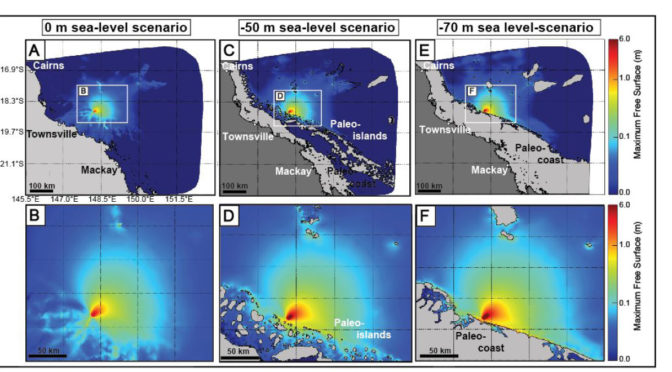
Featured image above shows landslide and tsunami simulations at 0m, -50m and -70m sea-level scenarios and landslide distribution and geomorphology. Credits: Webster et al, University of Sydney.

What has developed into the Great Barrier Reef was not always a barrier reef – it was once a fringing reef and did not offer the same protective quality. This is because the coast at this time was much closer to the source of the tsunamis, says lead author of the paper, Associate Professor Jody Webster, from the Geocoastal Research Group at the University of Sydney.

The research shows a shallow underwater landslide occurred 20,000–14,000 years ago, which caused a tsunami 2–3 metres high. The tsunami could have impacted Aborigines living at the time along estuaries and on islands off the paleo-coastline, which has since receded under the rising sea levels that followed the last ice age.

Animation of ancient tsunami:

https://www.youtube.com/watch?v=Poi1ZKNCgjk&feature=youtu.be

A submarine landslide 70m below sea-level causes a tsunami, which travels along the paleo-coastline. Credit: Dr Jon Hill, University of York.

The 7km-wide landslide occurred off the edge of the continental shelf causing the tsunami on the paleo-coastline lying between Airlie Beach and Townsville.

Details of the discovery of the submarine landslide and tsunami were published this week in Marine Geology. The international team of researchers used sophisticated computer simulations to recreate what the tsunami would have looked like.

Webster says similar landslides under the sea could occur without our knowledge.

“There is a relatively low chance that a similar submarine landslide with the potential to cause a tsunami of up to three metres or more would happen today,” Webster says.

“However, if one did occur, our findings suggest that the Great Barrier Reef is doing us a great service because of its ability to absorb some of that potential wave energy.”

Just how much energy would be absorbed and what the extent of damage could be done by rising sea levels and tsunamis or king tides is the subject of future research.

In reaching their findings, Dr Jon Hill from the University of York created visual simulations of the tsunami impact at today’s sea level, as well as at a depth of -70m, where the paleo-coastline was before it receded to its current position and was replaced at the shelf edge by the formation of the Great Barrier Reef.

The research team has named the submarine landslide the Viper Slide because of its location adjacent to Viper Reef.

“The discovery of the Viper Slide is the first solid evidence that submarine landslides existed on the Great Barrier Reef,” says Dr Robin Beaman from James Cook University – a member of the expedition that mapped the slide.

The early edition of the paper, ‘Submarine landslides on the Great Barrier Reef shelf edge and upper slope: a mechanism for generating tsunamis on the north-east Australian coast?’, was published by the international journal Marine Geology.

This article was first shared by The University of Sydney on 25 November 2015. 

Koala genome reveals its secrets

It has long been thought that low levels of koala genetic diversity are a reason for their declining populations and local extinctions but researchers from the University of Sydney and James Cook University have found this is not the case.

For the first time the koala genome (Phascolarctos cinereus) has been studied across the species range, revealing that koalas have good levels of genetic diversity.

Previous research has shown many marsupials have low genetic diversity, which is often a sign of inbreeding and mating with kin and is not unusual in animals with declining populations.

This new study, conducted in partnership with San Diego Zoo and the non-government organisation, Science for Wildlife, used cutting-edge genetic technology to answer critical questions about koala conservation. In the ground-breaking study, the group applied whole-genome DNA sequencing to show that koalas still maintain higher levels of genetic diversity than originally thought.

The findings were published recently in the journal Conservation Genetics.

Professor Herman Raadsma from the University of Sydney’s Faculty of Veterinary Science says contrary to popular opinion, the research showed koalas were as diverse as many other wild species.

“These results show the genetic diversity of the koalas sampled from all key locations on the east coast of Australia is far from being inbred,” Raadsma says.

The koala genome has recently been sequenced

Image credit: Monal Lal

James Cook University’s Associate Professor Kyall Zenger says the finding was exciting, given that koala numbers had been declining to the point where they were listed at risk of becoming endangered.

“To effectively manage koalas across Australia and in captivity we must understand how genetically diverse these populations are – how ‘fit’ they are,” Zenger says.

Shannon Kjeldsen, a PhD student working on the project at James Cook University, says her research also showed that although koalas varied greatly in appearance in southern and northern Australia, there was very little evidence that there were different species – bringing into question the current recognition of the existence of three distinct sub-species.

“We know that it would be unwise to move koalas between these regions because they live in different climates and have adapted to different environments, but we do not know where the management boundaries lie,” Kjeldsen says.

Associate Professor Zenger says management and implementation of a national koala conservation program was vitally important to protect this charismatic species.

“Until now there has been a lack of species-wide information to help coordinate conservation efforts,” Associate Professor Zenger says.

The universities are working with Dr Kellie Leigh from Science for Wildlife and Jennifer Tobey from the San Diego Institute for Conservation Research.

Science for Wildlife director Dr Leigh says the development was extremely exciting. “It offers a tool to understand how all koala populations are genetically linked,” Leigh says. The tool should also enable better management of captive breeding populations.

Tobey says: “The Australian research gives for the first time a clear view on how captive populations can be mapped to the national koala population, and to manage breeding to maximise genetic diversity.”

The project is funded and supported by an Australian Research Council Linkage Project grant, with industry funding and in-kind support from partners San Diego Zoo Koala Education & Conservation Program and James Cook University, the University of Sydney and Science for Wildlife.

This article was first shared by The University of Sydney on 20 November 2015. Read the original article here.

Food recall app

For Prof Andreas Lopata, his ‘eureka’ moment came during the frozen mixed berries and hepatitis A food scare in April 2015: “I thought, ‘what about an app to warn people of food recalls?’” explains the molecular immunologist and ARC Future Fellow based at the College of Public Health, Medical and Veterinary Sciences, James Cook University.

In collaboration with his PhD student Michael Sheridan, Lopata set about developing a food recall app called FoodRecall Aus AppTM – the first app of its kind in Australia, which works by sending out daily RSS news feeds from the Food Standards Australia New Zealand (FSANZ) and Australian Food News websites.

The news feeds alert users to recently recalled food products, and includes information about the reason for the recall and the location of the outlets (such as stores, suppliers and so on).

After initially struggling to secure backers for the project, the duo decided to fund the project themselves, with the FSANZ providing the technical expertise to access the RSS feeds.

Food recall, as defined by FSANZ is “an action taken to remove from sale, distribution and consumption foods which may pose a safety risk to consumers”. Once a food product is identified as being potentially harmful to the public, a recall can occur after consultation between state and territory government authorities and the product’s supplier, who could be the manufacturer or importer.

“With over 80 food recalls so far this year, 2015 has seen the highest number of food recalls ever recorded in the history of FSANZ,” says Lopata.

“Many have been imported coconut-based products, like coconut milk and other drinks containing undeclared dairy milk, which are often not subject to the same strict guidelines around production and labeling as those manufactured in Australia.”

Frozen seafood, fruit and vegetables are among the many processed foods Australia imports, according to the Australian Department of Agriculture and Water Resources.

Processed foods are food products that have gone through many processing steps and often contain additives, artificial flavourings and other chemical ingredients. During these varied and often complex processing stages, there is significant potential for mislabeled or contaminated food to enter the Australian food chain.

Recent endorsement by the Environmental Health Association of Australia means that the app can now be used by environmental health officers, whose role is to enforce public health and safety regulations and conduct inspections of premises where food is kept to ensure that it is handled and stored in a safe and hygienic manner.

Lopata believes the food recall app could also provide valuable food safety information to parents living in remote communities who have children with food allergies.

“Around 10% of Australian children have a food allergy,” says Lopata. “In north Queensland, the nearest specialist allergy clinic is around 1500 km away in Brisbane. Our app could raise awareness and access to information in remote communities on food product recalls that relate to allergens, like peanuts and seafood as well as toxins in food.”

Lopata is also looking to extend the app to cover countries such as New Zealand, Thailand, Vietnam and Indonesia, which currently don’t have this type of service.

According to The Australian Dairy Industry, published in 2011 by PwC Australia, over 50% of Australian dairy products are exported – with 30% going to South-East Asian countries. “We hope we will raise awareness of food safety among countries across Asia,” says Lopata.

– Carl Williams

Growth factor

The Jack Hills are part of an ancient landscape of scorched red earth in the Pilbara region of Western Australia. But it wasn’t until 2001, when a rock from the hills was brought 800 km south to Curtin University’s John De Laeter Centre for Isotope Research (JDLC), that scientists discovered just how ancient this landscape really is. The Curtin scientists dated zircon crystals in the sample at 4.4 billion years, making it the oldest known Earth rock.

This groundbreaking research required a sophisticated measurement of trace elements in the crystal, and there are very few facilities in the world where this could have taken place. Zircon traps uranium in its crystal structure when it is formed. In principle, the radioactive decay of uranium into lead is like a ticking clock. If you can accurately measure how much lead has been created and how much uranium remains in a particular sample, you can work out when the crystal was formed. To do this, and to arrive at an age with an uncertainty of just 0.2%, Curtin researchers called upon the $4 million Sensitive High Resolution Ion Micro Probe (SHRIMP), the flagship technology of the JDLC. There are fewer than 20 SHRIMPs in the world, and Curtin is home to two of them.

“Zircon is like diamond – it’s forever,” explains JDLC Director, Professor Brent McInnes. Being a very hard and chemically inert material, zircon lasts for billions of years. The JDLC has world-renowned expertise in dating rocks by analysing the uranium-lead decay process in zircon.

The JDLC is also regularly put to more practical uses, such as aiding resource exploration in Western Australia. The SHRIMPs are the centrepieces of a suite of equipment worth $25 million, including scanning electron microscopes, transmission electron microscopes, ion beam milling instruments, laser probes and mass spectrometers.

“We are an open access lab,” explains McInnes. “These instruments can run 24 hours a day, seven days a week.” The JDLC collaborates with research groups around the world and also assists the Geological Survey of Western Australia to make maps used to attract investment in mining and petroleum exploration. Chinese Academy of Geological Sciences researchers use the instruments to do similar work in China, controlling the Perth-based SHRIMPs remotely from Beijing.

The JDLC facilities have also been used to solve practical problems for industry partners. When exploration company Independence Group NL found tin in a gravel bed at the base of a WA river, they turned to the JDLC to help identify the origins of the ore. Was it from a local source or had it been transported from elsewhere and deposited in the riverbed? Using SHRIMP, the JDLC team measured the quantities of trace uranium and lead elements in the tin ore cassiterite and calculated its age. When they performed similar measurements on zircon from local granite, they found its age was the same. This showed the tin was local, and helped the Independence Group pinpoint the precise locations to drill exploratory holes. “We have an incredible set of research tools that can be deployed to help industry reduce the risks and costs of exploration,” says McInnes.
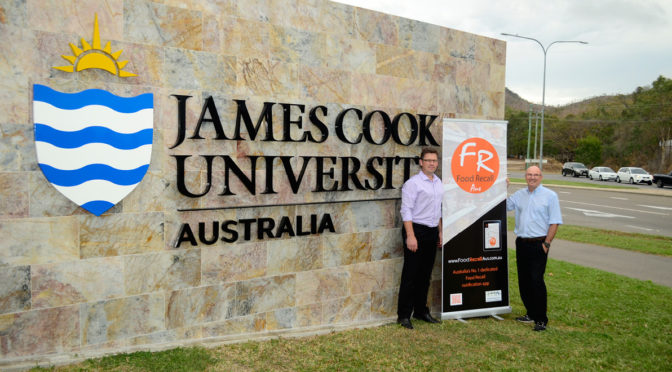
“Recognising the gap, Curtin has set up a dedicated funding program, called Kickstart, to help translate lab research into commercial ventures.”


Collaborating with industry is a commonplace activity for John Curtin Distinguished Professor and Deputy Pro Vice Chancellor – Faculty of Science and Engineering, Moses Tadé. Industry possesses considerable experts, he says, yet still tends to approach academics when looking at something more fundamental. Tadé’s group brings a range of skills to the table, including expertise in multi-scale modelling, computational flow dynamics, reaction engineering and optimisation modelling. Collaboration is highly beneficial for both sides, he says.

Ongoing projects include the development of solid oxide fuel cells with a Melbourne-based fuel cell company, and a project in partnership with a petroleum industry multinational to remove mercury from oil and gas.     In recent years, sponsorship from leading minerals and exploration companies Chevron Australia and Woodside Energy has supported the growth of the Curtin Corrosion Engineering Industry Centre, of which Tadé is Director. The Centre looks to develop practical solutions to the problem of corrosion in gas pipelines, which can lead to costly leaks and dangerous explosions.

In another project, led by chemical engineer Professor Vishnu Pareek, Curtin has teamed up with Woodside to develop a more efficient way to regasify liquefied natural gas. Currently, natural gas from Australia is liquified so it can be transported efficiently by ship to overseas markets, particularly China. But once it gets there, the regasification process can burn up to 2% of the product. A new process being developed at Curtin uses the energy in the ambient air to aid regasification – a more efficient solution that will both increase profits and reduce CO2 emissions. “It’s very exciting,” says Tadé. “A big thing for the environment.”

Curtin has become a busy hub of innovation, with a spate of spin-off companies being created to translate the research. “We have a focused effort on commercialisation and research outcomes,” explains Rohan McDougall, Director of IP Commercialisation at Curtin.

Public funding of science and engineering research can often only take new technology to a certain level of development such as ‘proof-of-concept’. Securing funds from investors to turn pre-commercial work into a real-world product is tough as investors are wary at this early high-risk stage. “The gap is traditionally known as the ‘valley of death’,” says McDougall. Recognising this gap, Curtin has set up a dedicated funding program, called Kickstart, to help translate lab research into commercial ventures.

in-text1

The John De Laeter Centre for Isotope Research, led by Professor Brent McInnes (left) – which has a team of scientists, including Associate Professor Noreen Evans (right), and a $25 million suite of equipment – assists resource exploration in Western Australia.

The John De Laeter Centre for Isotope Research, led by Professor Brent McInnes (above top) – which has a team of scientists, including Associate Professor Noreen Evans (above bottom), and a $25 million suite of equipment – assists resource exploration in Western Australia.

As well as the extra funding, commercialisation is aided at Curtin by strong links with the venture capital community and industry, which advise on commercialisation routes and intellectual property. The university also encourages an innovation environment by running contests in which staff and students describe technologies they     are working on and that may have commercial applications.

This commercialisation focus has reaped dividends in terms of successful spin-off companies. In the medical space, Neuromonics sells a device for the treatment of the auditory condition tinnitus. In digital technology, iCetana has developed a video analytics technology for security applications. Skrydata, a data analytics company, provides a service for extracting patterns from big data. Sensear has developed sophisticated hearing equipment technology for high-noise environments such as oil and gas facilities.

One of the biggest recent success stories has been Scanalyse, which in 2013 won the prestigious Australian Museum Rio Tinto Eureka Prize for Commercialisation of Innovation. Scanalyse grew out of a collaboration between Curtin and Alcoa, one of the world’s largest aluminium producers. Alcoa called on Curtin’s experts to find a way to analyse the grinders used in their mills. Every time a grinder wore out, it was costing ~$100,000/hour in downtime. It was crucial to monitor the condition of these machines, but this required someone to climb inside and take measurements. Through their 2005 collaboration with Alcoa, spatial scientists at Curtin developed a laser scanning system capable of measuring 10 million points in just 30 minutes.

“At the same time, they developed a software tool that could be applied more generally,” explains McDougall. “So the business was established to look at the application of that technology to mills and other mine site equipment.”

Scanalyse has since found customers in more than 20 countries and is making an impact worldwide. In 2013, it was bought by Finnish engineering giant Outotec.

Cathal O’Connell

A planet in the making

An international team of scientists in Australia and the United States has captured the first-ever images of a planet in the making. The accumulation of dust and gas particles onto a new planet – the process by which the planet continues to form and grow – has been directly observed for the first time.

None of the nearly 1900 planets previously discovered and confirmed outside our Solar System (called exoplanets) are in the process of formation. 

The findings of the scientists, led by University of Arizona graduates Steph Sallum and Kate Follette and including the University of Sydney’s Professor Peter Tuthill, have been published in the journal Nature.  
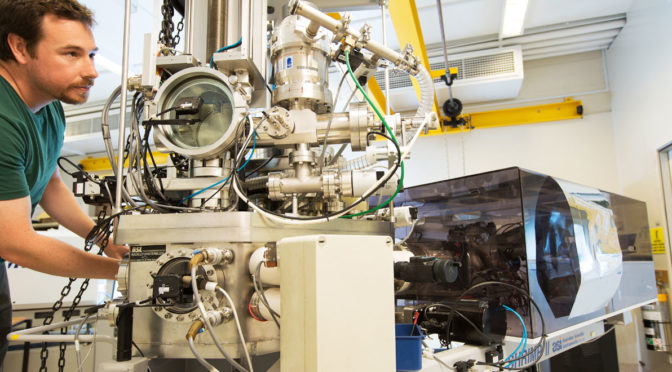
https://www.youtube.com/watch?v=vp37oQgTmX4

A star known as LkCa 15, located 450 light years from Earth, has been observed exhibiting all the trappings of an expectant parent: it is surrounded by a vast disc of dust and gas, making an ideal environment for planets to grow from; the dust shows distinct signs of disturbance – something within has eaten away part of the disc. 

Co-author of the paper, Tuthill, says the images provided unambiguous evidence.

“This is the first time we’ve imaged a planet that is definitely still in the process of forming.” 

A planet in the making

Composite image of LkCa 15 in which blue shows the MagAO data taken at H-alpha, and green and red show the LBT data taken at Ks and L’ bands. The greyscale is a previously published millimeter image of the disk. NOTE: pixilation is because of the way the image was formed. Credit University of Arizona.

The photo provided the proof: “The difficulty had been that when you have indirect evidence, there are always alternate explanations that might fit the data,” says Tuthill. 

Researchers are just now being able to image objects that were close to and much fainter than a nearby star, thanks to specialised instruments. These include the Large Binocular Telescope, or LBT– the world’s largest telescope, located on Arizona’s Mount Graham, and the University of Arizona’s Magellan Telescope and its Adaptive Optics System, MagAO, located in Chile.

Capturing sharp images of distant objects was challenging, in large part because of atmospheric turbulence, says Professor Laird Close, Follette’s graduate adviser.

“When you look through the Earth’s atmosphere, what you’re seeing is cold and hot air mixing in a turbulent way that makes stars shimmer,” says Close. “To a big telescope, it’s a fairly dramatic thing; you see a horrible looking image.” The breakthrough was possible because the Large Binocular Telescope was purpose-built, incorporating a novel imaging technique to sharpen the images. 

Meanwhile, Close and Follette used Magellan’s adaptive optics system MagAO independently to corroborate the discovery. Using MagAO’s unique ability to work in visible wavelengths, they captured the planet’s ‘hydrogen alpha’ spectral fingerprint, the specific wavelength of light that LkCa 15 and its planets emit as they grow. 

When cosmic objects are forming, they get extremely hot, and because they are forming from hydrogen, those objects all glow a deep red, which astronomers refer to as H-alpha, a particular wavelength of light. 

That single shade of red light was emitted by both the planet and the star as they underwent the same growing process, says Follette. 

“We were able to separate the light of the faint planet from the light of the much brighter star and to see that they were both growing and glowing in this very distinct shade of red,” she says.

Tuthill says the results were only made possible because of the application of a lot of very advanced new technology to the business of imaging the stars. 

“It’s fantastic to see these cutting-edge instruments now enabling us to make such exciting discoveries.” 

The paper, ‘Accreting protoplanets in the LkCa 15 transition disc’, was published in Nature at 5 a.m. on 19 November Australian Eastern Daylight Time.

This article was first shared by The University of Sydney on 19 November 2015. Video credit: Created by Andrew Shuta (University of Arizona), conceptualized by Laird Close (University of Arizona), disk and planet illustration modified from NASA/JPL-Caltech image, greyscale VLA disk image from Andrea Isella (Rice), all other LkCa 15 images from the LBT and Magellan telescopes, see Sallum et al. Nature 2015 for details.