All posts by Heather Catchpole

Diversity brings a competitive advantage

Experts increasingly cite diverse thinking as key to securing long-term organisational success. McKinsey and Company‘s 2015 Diversity Matters report found that across the Canada, Latin America, the United Kingdom and the USA, companies in the top quartile for gender diversity were 15% more likely to have financial returns above their national industry medians. But with women comprising a mere 20% of the Australian technology sector, a lack of gender diversity is threatening the competitive advantage of Australian organisations.

Enterprises have long preached the importance of gender diversity. But were their efforts genuine? Or could they have been a strategic guise to project false integrity across an expectant market? There were certainly individuals championing female progression. But the movement was not perceived as integral to success, and so did not become a key priority for most organisations beyond façade – until now.

Times are changing, and innovating to sustain a competitive advantage is now crucial for an enterprise’s survival. With diverse thinking increasingly perceived as a tool to cultivate innovation effectively and inexpensively – why wouldn’t organisations sincerely support female progression within the workplace? After all, it translates into business benefit.

With a more prevalent understanding that female input is essential for a prosperous future, impassive words are finally being put into action. Organisations are now examining approaches to support and progress women within the workplace, and to encourage women to consider a STEM pathway.

Unfortunately, changing business priorities do not always equate to a sudden change in mindset across an entire organisation. Yet with leadership and business strategy genuinely backing female advancement, an unprecedented opportunity presents itself for women – and should be leveraged.

These issues form some of the key themes at the 2016 Women in Tech. conference, which is bring together a group of amazing women and men to address problems in the sector and help all in attendance build their skills and careers. Click here for more information about Women in Tech.

– Yasmine Finbow

Predicting property yields

Featured image above: property rental ratios in Melbourne ranging from 7.5% (Blue) to 1.5% (Red) annually. Credit: University of Melbourne

Researchers from the University of Melbourne have created a system to model and predict house values and rental rates at the individual property level.  The comparison of these two values offers insight into rental yields in the market; an import metric that can be used by buyers, sellers, investors and renters to help make informed choices.

Dr Gideon Aschwanden and Dr Andy Krause from the Melbourne School of Design in the Faculty of Architecture, Building and Planning say that rental yields are a critical driver of rental and housing costs and acts as a key indicator for property bubbles.

“In this volatile Melbourne property market, buyers want to ensure the safety of their investment. Our recent analysis of property sales and rental returns will better inform investors with location information, helping them to invest their money more securely,” says Aschwanden.

According to the researchers, rental yields of the property market as a whole need to be properly evaluated as they may be a leading indicator of bubble creation. By understanding changes in yields, safety measures can be enacted that may help prevent or dampen a sudden collapse in the market. Buyer’s decisions are driven by costs.

With first time homeowners renting out their property to pay off the mortgage to the point where they can afford it they need to estimate their rental income and property yield. Using a unique dataset of home sales and rentals from the Australian Property Monitors, the researchers investigated the spatial and temporal changes in residential rental yields across the Melbourne metropolitan region from June 2010 to June 2015.

Using data supplied by Domain, they matched properties that have been both sold and rented during the study period. After adjusting for market changes, these two observations were compared, to develop a property-specific estimate of rental yield.

“Starting with the entire metropolitan region, we then calculated yields at the level of local government area (LGA), statistical local area level 1 (SLA1), post code, suburb, and at a property-specific level,” says Aschwanden.

“Looking at the entire metropolitan region, our rental yield calculations allowed us a direct look at variations by neighbourhood, street and even specific building, in the case of apartments,” he says.

The detailed analysis showed that apartments offer higher yields than detached houses. This difference has widened over time, with yields from houses falling off >0.5% from June 2013 to June 2015 while yields on apartments have held somewhat steady since 2013.

“Looking at influencing factors, location shows the highest impact. Within the Metropolitan area of Melbourne, a 6% spread of rental yields ranging between 1.5% and 7.5% is visible. This is much higher than the decline of 0.5% observed over the last three years or the impact of distance to train stations of 0.5%.”

Evidence showing variation within postcodes will help investors to make a much more refined evaluation of the decision to purchase a property. Changes within and between localities may have a more significant impact on returns than changes over time.

This article was first published by The Melbourne Newsroom on 18 May 2016. Read the original article here.

Kick-starting student startups

Gone are the days when students enrol in university with the ultimate aim of being employed by a large company. Today, students are looking for more than just a degree and a set career path to follow. “Forty per cent of our students say that they don’t want jobs,” says Attila Brungs, Vice Chancellor of the University of Technology, Sydney (UTS). “They want to create their own career path as entrepreneurs.”

To help kick-start these ambitions, UTS has launched the Hatchery and Hatchery+ pre-incubator and incubator programs. Far from typical classroom learning, the Hatchery programs are open to students from all faculties and offer a cross-disciplinary, hands-on environment to develop startup skills. In addition to classes, workshops and networking events, students are given access to their own co-working space and the support of industry mentors.

The timing could not be better. It is estimated that tech startups could contribute $100 billion to Australia’s gross domestic product by 2030. But according to the recent report Boosting High-Impact Entrepreneurship in Australia commissioned by Australia’s former Chief Scientist Ian Chubb, Australian innovation continues to lag behind countries like South Korea and the United Kingdom. Despite producing around 43,000 STEM publications annually, tech startups currently make up just 0.06% of all Australian businesses.

The report pointed out that universities hold the key to creating fast-growing and globally competitive new businesses. There was an emphasis on making entrepreneurship more accessible to innovation-driven students by fostering industry partnerships, encouraging a stronger startup culture and developing more incubator programs – similar to the Hatchery.

The six-week Hatchery pre-incubator program is aimed at students considering an entrepreneurial career and focuses on the development of innovative business ideas. The program uses a range of practical approaches, such as teaching students how to design prototypes with limited materials and how to pitch ideas to investors. The Hatchery also gives participants the opportunity to connect with industry powerhouses like Microsoft, the Commonwealth Bank of Australia Innovation Lab and ABC Innovation.

Annette McClelland is a UTS Master of Business Administration (MBA) student who also manages the teen mental health website biteback.org.au for The Black Dog Institute. She is taking part in the Hatchery to explore how she can use technology to improve children’s education.

“Learning alongside people from such diverse backgrounds is helping me turn my ideas into a business,” she says. “I definitely feel more prepared to collaborate with people from different fields than I did when I graduated with my Arts degree in 2012.”

For standout business ideas, UTS recently launched Hatchery+, a three-month incubator program that supports the growth of early-stage startups founded by UTS students or alumni. Hatchery+ offers its startups free access to their own co-working space, clinics on business topics ranging from IP law to web development, and continual support from mentors. The program also includes some funding towards business development and an introduction to potential investors.

intext_vicky1

At the UTS Hatchery+ launch, program mentor Vicky Lee spoke about her experience as a student founder of the successful online textbook resource, Zookal.

One of the seven startups participating in Hatchery+ is Psykinetic, a social enterprise that produces life-improving technologies for people with severe disabilities like cerebral palsy. Founded by biomedical engineer and futurist presenter Dr Jordan Nguyen, Psykinetic’s products include a thought-controlled wheelchair and eye-tracking software to enable people with disabilities to use keyboards.

After just a few weeks of being involved with Hatchery+, Jordan says that Psykinetic is ready for further investment. He says that the program has enabled him to focus on certain aspects of his startup that had been neglected like accounting and administration. “It’s been a great opportunity to tie up loose ends that we hadn’t yet thought of,” he says. “It’s so exciting to get a clearer idea of how to give your business the best possible start instead of cutting corners down the line without even realising.”

Hatchery+ offers participants the dedicated support of industry mentors like Vicki Lay, a former student founder of the successful online textbook resource Zookal. For UTS MBA student Leah Callon-Butler, the opportunity to discuss ideas with experienced entrepreneurs has been invaluable for the development of her startup NeoWip, a digital hub that aims to help Australian businesses expand across the globe in a fast and cost-effective way.

“Being able to bounce ideas off industry experts who have been-there-done-that allows me to leverage a wealth of validated learning that already exists in the Australian startup community,” she says. “The mentor relationships have really accelerated the growth and development of my company.”

While Australia has been slow to support a startup culture, the Hatchery and Hatchery+ join a growing number of startup facilities provided by Australian universities, such as Western Sydney University’s Launch Pad and the University of Wollongong’s iAccelerate hub. “I’m excited by the impact that these programs are going to have,” says Brungs. “Cross-disciplinary collaboration is key to innovation and advancement.”

– Gemma Conroy

Sport statistics offer transport solutions

Featured image credit: Jimmy Harris

Fremantle Dockers and West Coast Eagles fans could improve their team’s on-field chances by yelling out to the players to pass the ball, according to a new complex mathematical network theory.

University of Western Australia (UWA) statistics whizz Calum Braham has developed and applied his theory against AFL ball-passing statistics supplied by Champion Data, for the 2014 Premiership Season.

The theory means he can show that teams which distributed the ball more evenly between players were the most likely to win.

But it could also enable teams to acquire supplementary statistical information by applying the method to their own team’s network.

“One example is the closeness centrality, which measures how well a player is connected to other players in their network,” Braham says.

“As would be expected, Matt Priddis has the highest value for the Eagles and Nat Fyfe for Fremantle,” he says.

“Players with high scores for the betweenness centrality…were Jack Darling and Shannon Hurn for the Eagles and Lee Spurr and Nat Fyfe for the Dockers.”

Betweenness centrality is the measure of the extent to which a certain player connects to other players on their team and contributes to the transport of the ball towards the goals.

Teams could use this information to supplement existing performance statistics, Braham says.

“I have shown how complex network methods can provide useful statistical information about football, which goes beyond the data that clubs obtain through other methods,” he says.

UWA applied mathematics professor Michael Small, who guided Braham’s research, says the basic principal of the theory could be applied to other ball sports.

“One of the unique advantages in applying the theory to Australian Rules football is that it’s a very loose and fluid game, with players not held in a stringent position,” Small says.

“In other sports where people are required to stay close to a pre-determined position the results of the analysis may be very different, but there is no reason it wouldn’t work for them as well,” he says.

The aim of the research was to develop tools of complex network theory and show how they can be applied to social dynamics in team sports and other transport problems including industrial logistical inefficiencies.

“For example, the state’s many mineral processing industries would benefit from this type of development because the process from mine site to refinement and shipping involves many interconnected and interdependent steps that can be modelled with these techniques,” Small says.

– Rueben Hale

This article was first published by ScienceNetwork Western Australia on 9 May 2016. Read the original article here.

Remote mobile communication

Building telecommunication infrastructure in third world countries and remote locations has been a key issue for a number of years.

About 1.5 billion people in developing nations have no reliable phone service and up to 80% do not have access to internet.

Researchers at Flinders University in South Australia have developed a highly secure mobile system to assist emergency service units worldwide.

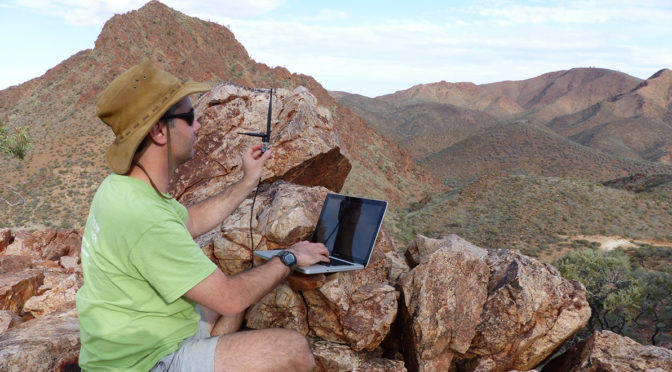
The Serval Project includes a free app for Android devices and a mesh extender. The extender, which runs on USB power, is a small box that acts as a Wi-Fi hub or radio transmitter.

Project leader Paul Gardner-Stephen says the device was intended as a simple and inexpensive remote communication alternative that could help people in the event of a crisis.

“It has Wi-Fi so your phone can talk to the box, and then the box can talk to other boxes by Wi-Fi but also by long-range VHF radio that can go many kilometres under ideal conditions,” he says.

“The combination of these things creates networks that can cover large areas and people without requiring any infrastructure at all.”

remote mobile

Serval Mesh Extender

The aim of the project is to give the Serval mesh extenders to emergency relief teams in disaster situations so they can establish communication channels in remote areas.

Gardner-Stephen says users who do not have the app in times of crisis could download it with the help of the extender and have it ready for immediate use.

“The combination that we’re doing is really quite unique in giving people the opportunity to build a communications network anywhere,” he says.

“We want this to be something that is easier to use than any one of these other communication apps that you can get on smart phones.

“For this to help as many people as it can in the world it needs to be free. To do it any other way is to put unnecessary and undesirable barriers between people.”

The software is completely open sourced and gives people the freedom to develop their own app to work with the system or build their own Serval mesh box.

The Institute of Electrical and Electronics Engineer’s (IEEE) Humanitarian Technology Challenge lists data connectivity and communication resources for isolated health offices as one of the top three solutions of reducing poverty and improving health services.

Serval first trialled its technology at the 610 kmArkaroola Wilderness Sanctuary in the rugged Flinders Ranges, 600 km north of Adelaide.

It was developed in conjunction with the New Zealand Red Cross with further support coming from the Networked Infrastructureless Cooperation for Emergency Response (NICER) project in Germany.

The project was one of five winners in the Pacific Humanitarian Challenge where it received AUD$279,000, which will be used to make technical improvements. It has also received grants from the United States and the Netherlands.

Countries in the Pacific region are highly susceptible to natural disasters including tropical cyclones, floods, and earthquakes.

The mobile phone system will extend testing to pilot the program in the Pacific over the next 18 months ahead of its first large scale rollout in the region.

Fiji, Vanuatu and the Solomon Islands have been shortlisted as potential destinations.

Arkaroola Wilderness Sanctuary Co-Director Margaret Sprigg said Arkaroola’s rugged mountainous terrain was the perfect location to test the Serval system.

“To have a system that can be field-based and portable for search-and-rescue scenarios is absolutely amazing,” she said.

“To be able to get some sort of antenna or base station up on a hill gives you access to so much more country. Its design is remarkable.”

– Caleb Radford

This article was first published by The Lead on 11 May 2016. Read the original article here.

Software saves rainwater

Featured image above: Stadium Australia in Sydney Olympic Park Credit: Tim Keegan

A dynamic software program utilising kinetic energy is helping buildings with large roof areas in Southeast Asia harvest and recycle rainwater.

Freshwater scarcity and wastage is a global environmental issue, leading to nations such as Malaysia to seek siphonic drainage solutions to help recycle the precious resource.

Researchers at the University of South Australia have developed a software package to help roof drainage companies construct highly effective systems across a range of major infrastructure.

The Adelaide-based university’s Pro-Vice Chancellor of the Division of Information Technology, Engineering and the Environment Simon Beecham said the dynamic program was the first in the world to follow rainfall through its entire cycle to ensure complete effectiveness.

Stadium Australia, which hosted the athletics and opening ceremony at the 2000 Sydney Olympic Games, was the first structure to utilise the technology.

“Now a number of large buildings in Southeast Asia are using this technology, like the airports in Hong Kong and Kuala Lumpur. Malaysia has incorporated it into many of its shopping centres as well,” Beecham says.

“The buildings that were designed with the help of the software are able to harvest every single drop of water.”

The Kuala Lumpur Convention Centre in Malaysia, which hosts a number of large conferences, exhibitions, and concerts, is another big adopter of the technology.

The rainwater collected from the roofs is stored in large tanks and used to irrigate nearby fields or gardens. The recycled water is also used for the flushing of toilets to reduce the reliance on potable water.

Beecham partners with Australian drainage company Syfon to design state-of-the-art systems throughout Australasia.

His software allows Syfon to calculate the size of drainpipes and locate where hydraulic chambers need to be placed.

The company’s name is a play on siphonic systems, the method it uses to harvest rainwater.

Siphonic drainage systems convert open-air water mixtures into a pure water pressure system without any moving parts or electronics. Its hydraulic system allows the pipes to move large quantities of water very quickly.

Beecham says siphonic systems were used because the high pressures they created reduced the amount of additional energy required to pump water.

“Imagine if you had a pen in your hand and held it up and then dropped it to the floor. That’s an example of a solid object converting its potential energy into kinetic energy,” he says.

“Water can do the same thing. You get a very efficient drainage of your water where the pressure is so great it can even go uphill, and it also means you can run horizontal pipes for long distances.

“Its clever design of the hydraulics system creates a vacuum that sucks water in and converts the potential energy of rainfall into kinetic energy.”

This process allows large storage tanks to be placed away from the roof structure if more space is required.

Siphonic systems require a building of more than three stories to work and cannot be applied to residential homes.

-Caleb Radford 

This article was first published by The Lead South Australia on 4th May 2016. Read the original article here

Supercomputer empowers scientists

Creating commercial drugs these days seems to require more time at the keyboard than in the lab as these drugs can be designed on a computer long before any chemicals are combined.

Computer-based simulations test the design created by the theoretical chemist and quickly indicate any potential problems or enhancements.

This process generates data, and lots of it. So in order to provide University of Western Australia (UWA) chemistry researchers with the power to perform these big data simulations the university built its own supercomputer, Pople.

Dr Amir Karton, head of UWA’s computational chemistry lab says the supercomputer is named after Sir John Pople who was one of the pioneers of computational chemistry for which he won a Nobel Prize in 1998.

“We model very large systems ranging from enzymes to nano materials to design proteins, drugs and catalysts, using multi-scale theoretical procedures, and Pople was designed for such simulations,” Karton says.

“These simulations will tell you how other drugs will interact with your design and what modifications you will need to do to the drug to make it more effective.”

Pople was designed by UWA and while it is small compared to Magnus at the Pawsey Supercomputing Centre it gives the researchers exactly what they want.

That being a multi-core processor, a large and very fast local disk as well as 512 GB of memory in which to run the simulations.

Magnus’ power equivalent to 6 million iPads

While Magnus has nearly 36,000 processors—processing power equivalent to six million iPads running at once—Pople has just 2316 processors.

But, Magnus was designed with large computational projects like the Square Kilometre Array in mind whereas Pople provides such services to individual users.

Dr Dean Taylor, the faculty’s systems administrator says the total amount of memory available to Pople amounts to 7.8 TB, and the total amount of disk space is 153 TB, which could fill almost two thousand 80 GB Classic iPods.

By comparison a top-of-the-range gaming PC might have four processors, 16 GB of memory and a 2 TB disk drive.

A large portion of the Intel Xeon processors (1896 cores) were donated by Perth-based geoscience company DownUnder GeoSolutions.

DownUnder GeoSolutions’ managing director Dr Matthew Lamont says it is the company’s way of investing in the future.

Pople will also assist physics and biology research involving the nature of gravitational waves and the combustion processes that generate compounds important for seed germination.

– Chris Marr

This article was first published by ScienceNetwork Western Australia on 30 April 2016. Read the original article here.

Parents and schools connect

Developed by MGM Wireless Limited in Adelaide, South Australia, School Star is a secure mobile phone app that keeps parents in the loop about attendance, functions and other school news.

MGM Wireless invented the world’s first SMS based automated communication solution for schools in 2002.

Almost 1300 schools from around Australia use MGM’s communications system and half of them will be active users of the new School Star app within the next six months.

MGM Wireless CEO Mark Fortunatow said the company plans to take the app internationally after its success in Australia.

“We are formulating plans and strategies and hope to move in to the United States and Canada by the end of the calendar year,” he says.

“We also have partners and people in Shenzhen and Singapore that we have been working with for some time and have a network in place there already.”

School Star has a Facebook-styled news feed that can be regularly updated and is the only school app that allows direct two-way messaging between parents and schools with an SMS failover.

“Parents need a feedback loop. School Star does that and a number of other things that no other school app does,” Fortunatow says.

“Communication through other school apps gets to about 40% of the intended recipients at best.

“School Star will automatically send messages and content by SMS instead if parents run out of mobile data or don’t have access to Wi-Fi – so schools will reach almost 100% of parents.

“It is also unique because it promises a secure environment where only approved users can access school information.”

Schools install MGM’s content management system and enter in relevant news and information for parents.

Parents and students then register themselves using a secure two-factor verification process and once complete will allow users access to school information.

Only registered users from the current school database can use the school specific School Star app. It also allows the schools to ‘lock out’ unwanted users.

MGM ensures that sensitive information like names, photographs, dates, and places are kept secure at all times.

“Schools are loving School Star – they can publish news and send messages with a smooth interface and easy integration path,” Fortunatow says.

“News articles are easy to create, and parents love keeping in touch with what’s going on at the school.”

“School Star includes an engagement dashboard with state-of-the-art analytics so schools know which content is working best.”

School Star is available to download for free in the App Store and Google Play in Australia and will be available in the United States and Canada later this year.

– Caleb Radford

This article was first published by The Lead South Australia on 27th April 2016. Read the original article here.

Brain-powered bionic spine

Featured image above: Strentrode. Credit: University of Melbourne

A few years ago, Australian neurology resident Dr Thomas Oxley set out to design a device that uses brain waves to power prosthetic limbs. Today, Oxley’s revolutionary invention is about to enter human trials, giving hope that millions of people paralysed by injury or stroke will soon be able to walk again.

Oxley’s futuristic device – a tiny stent-electrode or ‘stentrode’ –  also promises to predict and halt epileptic seizures and assist people with a range of conditions, from motor neurone and Parkinson’s diseases to compulsive disorders and depression.

In a nutshell, the matchstick-sized gadget will be inserted, without invasive surgery, into a blood vessel next to the brain’s motor cortex. From there it will detect and translate neural activity, such as the intention to walk, and send commands wirelessly to exoskeleton legs.

Detect, translate, transmit and walk. That’s what scientists call brain-machine interface, and it begins with straightforward day surgery to thread the stent up the groin to the brain.

Trials with sheep, published in February 2016 in Nature Biotechnology, revealed that the animals were fine. They were walking and eating within an hour, and had no side effects.

If all goes according to plan following human trials in 2017, Oxley predicts the stentrode could be on the market by the early 2020s.

“We’ve been able to create the world’s first minimally invasive brain recording device that is implanted without high-risk open brain surgery,” says Oxley.

bionic spine

Strentrode diagram. Credit: University of Melbourne

The road to commercialisation

Oxley is in New York to do a two-year fellowship in cerebral angiography at Mount Sinai Hospital, a specialty which employs non-invasive procedures to visualise blood vessels in the brain. It’s a skill directly related to his work in vascular bionics, exploiting the body’s blood vessels and veins for technologically enhanced therapeutic ends.

Remarkably, Oxley co-invented the stentrode while he was a Melbourne University doctoral student, along with MU collaborator Dr Nicholas Opie, a biomechanical engineer.

In 2012 the pair co-founded a startup company called SmartStent Pty Ltd  to refine and prepare the stentrode for market.

Their goal: commercialise what promises to be one of the world’s most important medical inventions.

After building hundreds of stentrode prototypes, the next step is testing the technology with people. “We’re trying to raise A$4 million for the first human trials at Royal Melbourne Hospital,” Oxley notes. “We’re hoping to begin in late 2017.”

Given the life-changing and commercial potential of the stentrode, it’s little wonder that SmartStent moved to Silicon Valley in April 2016. There, Oxley, Opie and cardiologist Rahul Sharma, with Cedars-Sinai Health System in Los Angeles, established Synchron Inc. as their new corporate headquarters. SmartStent remains the Australian subsidiary.

Clearly, Oxley is a man on the move. Given his family tree, it was inevitable. While he was born in Melbourne, until age nine Oxley lived in Geneva, Switzerland, where his father Alan, a former diplomat, was Australia’s Ambassador for Trade. Then it was on to New York when his dad became Australian Ambassador to the General Agreement in Tariffs and Trade (GATT), the predecessor of the World Trade Organization.

The Oxley family is littered with creative people. Oxley has two older sisters. Harriet is a theatre set and costume designer, and Anna is in banking. His mother Sandra completed a Masters in computing science at Columbia University while Alan was at the GATT.

So where did Oxley’s interest in the brain come from? In his early teens Oxley had developed “a bit of an obsession with the brain and consciousness”.

“Dad was intellectually challenging. I figured it would be a smarter move to become interested in areas he didn’t understand,” Oxley replies.

Solving the mysteries of the brain

Medicine seemed a good choice for a kid keen to reverse engineer the brain to solve the mysteries of human consciousness. So Oxley went off to Monash Medical School in Melbourne, finishing in 2006. He completed his residency in internal medicine at Melbourne’s The Alfred Hospital in 2009.

“Then I took a year off to go travelling,” recalls Oxley, who didn’t begin his neurology residency until 2011. “I was travelling and intellectually exploring.”

The Defense Advanced Research Projects Agency (DARPA) was on his ‘to visit’ list. DARPA is an arm of the US Department of Defense. Located in Arlington, Virginia, the agency is responsible for developing emerging military technologies, including biotechnology.

“I’d been reading about their prosthetic limb work for a couple of years,” says Oxley, who got in touch with neurologist Colonel Geoffrey Ling, director of DARPA’s Biotechnologies Office.

After an initial chat, Ling was sufficiently impressed to invite his visitor to develop what Oxley claims became a “pretty blue sky, out there” proposal.

The result? Oxley left Virginia with a promise of US$1.3 million and instructions to put a team together to create and test his device.

“After all that excitement, I came home and had to start my neurology residency. It was a steep learning curve,” says Oxley, who had to tread carefully as a junior resident with potentially large research funding coming in.

Fortunately, Oxley’s PhD supervisor and mentor, Professor Terry O’Brien, was Oxley’s academic champion. He helped negotiate the occasionally challenging politics and opened doors to the range of experts Oxley needed to set up the DARPA-inspired Vascular Bionics Laboratory  at Melbourne University. The two men even leveraged DARPA’s investment into over A$4 million, with grants from Australia’s National Health and Medical Research Council and other Australian bodies.

Oxley completed his residency in 2013, and submitted his doctorate in February 2016. But the rest isn’t history. There’s a stentrode to trial and commercialise. An invention which O’Brien calls the ‘Holy Grail’ of bionics.

– Leigh Dayton

This article was first published by Australian Unlimited on 02 May 2016. Read the original article here.

Disruptive microgrid clusters

Microgrids are independently managed, locally-generated energy grids that allow communities to supply and manage their own power supply.

A prime example of a microgrid is WA’s Alkimos Beach project, which will use lithium-ion batteries and rooftop solar to power a new housing development.

“Microgrids are becoming more of a reality than ever before, and not only for remote communities, but also on an urban and utility scale,” Curtin University’s Professor Arindam Ghosh says.

“They’re reliable, energy-diverse and environmentally friendly, and these advantages are driving microgrid research and development.”

Because urban microgrids can connect or disconnect from the main grid as required, they can also provide backup when the main grid goes down, Ghosh says.

For example, when Japan’s 2011 tsunami knocked out Sendai City’s power grid for weeks, the microgrid at its local university didn’t blink, using fuel cells, solar panels and natural gas turbines to power its way through the entire disaster.

But any grid can be knocked out when demand exceeds supply.

Cooperative resource sharing

“The main problem with microgrids is that you have limited resources,” Ghosh says.

“You might not have sufficient backup to cope with peak energy loads, which means there’s the possibility that your grid will go down.”

The answer is to create microgrid clusters, Ghosh says.

His research indicates that connecting independently managed microgrids enables mutual support during peak demand periods.

“Say you know you’re able to supply your microgrid with four generators, but for some reason—maintenance or failure—you lose one generator, you might have a shortfall of twenty or thirty kilowatts, and that’s enough for your microgrid to collapse,” he says.

“That’s when you need to ask your neighbour for help.”

If your microgrid is connected with a neighbour’s microgrid, you could fill your shortfall with their excess supply, but managing this sharing can become complicated, especially where grids are connected using a simple switch.

Ghosh’s simulations employed the more sophisticated option of connecting with a back-to-back converter.

“With a back-to-back converter, I have control over how much power I can take from my neighbour, and how much power I can send…it allows me to give you ‘X’ amount of power, but to keep the rest for myself,” he says.

Ghosh says reducing power demand during peak times is also essential.

– Cris Burne

This article was first published by ScienceNetwork WA on23 April 2016. Read the original article here.
A “vinnovative” solution

Barossa Valley brothers Joshua and Simon Schmidt started their South Australian company Vinnovate in 2012 and have developed a bottle closure that releases a solution to reduce the impact of preservatives or add subtle flavours to wine.

When activated, by pressing a button on top of the screw cap, the solution is mixed with the wine and binds to free sulphites, removing their preservative properties and reducing their ability to cause a reaction.

The Vinnovate invention has beaten more than 100 Australian and New Zealand industry innovations to take out the Brancott Estate Winexplorer Challenge.

Co-founder and chief innovation officer Joshua Schmidt says the award – a $35,000 cash prize plus the opportunity to work with Pernod Ricard to bring the product to market – is a huge thrill.

“We believe that the Winexplorer Challenge has validated our idea and it now gives us a springboard from which to go forward,” he says.

Joshua says it will be up to the consumer as to whether they activate the solution or not.

“We’ve found from a lot of market research that more and more people are experiencing a reaction when they drink wine and it’s actually pushing people away from the industry,” he says.

“We wanted to create something that was very similar to an existing screw cap but has an element of functionality because across the wider consumer goods space there is a strong trend towards individualisation.”

img - Industries_primary industries_research and development160422_Screw cap innovation removes wine preservatives at the push of a button_bannerP

Joshua and Simon Schmidt

Sulphites, which release sulphur dioxide, are preservatives widely used in winemaking because of their antioxidant and antibacterial properties.

Common reactions to sulphites include headaches and red, itchy skin.

“Being Barossa boys and children of the industry we set out to find a means so that everyone can enjoy wine,” Joshua says.

“We believe it freshens up the wine as well and allows it to be more of a consumer-centric experience rather than traditionally having to wait for 30 to 60 minutes after opening for the wine to ‘breathe’.”

“We want to do something good for the industry.”

Vinnovate Managing Director Simon Schmidt is a winemaker while Joshua’s background is in marketing, with a particular focus on the pharmaceutical industry.

The Schmidt brothers have developed prototypes and have commenced discussions with a number of wineries around trials.

Joshua says he hopes for a commercial release towards the end of the year.

“It’s our vision to see this as the next generation screw cap closure for wine,” he says.

“We are currently talking to some wineries about this and it’s our goal that this will be inclusive wine packaging.”

“We believe this has tremendous widespread appeal and application just like how Clare Valley was an early adopter of the screw cap 40-odd years ago.”

The Barossa Valley produces world-renowned brands such as Penfolds Grange, Jacob’s Creek and Wolf Blass.

According to the International Organization of Vine and Wine, Australia was the world’s seventh largest wine producing nation in 2015.

South Australia is consistently responsible for almost 50% of Australia’s annual production.

Brancott Estate is a pioneer of New Zealand wine, planting the first sauvignon blanc vines in Marlborough in 1975.

– Andrew Spence

This article was first published by The Lead on 22 April 2016. Read the original article here

New digital mentoring project announced

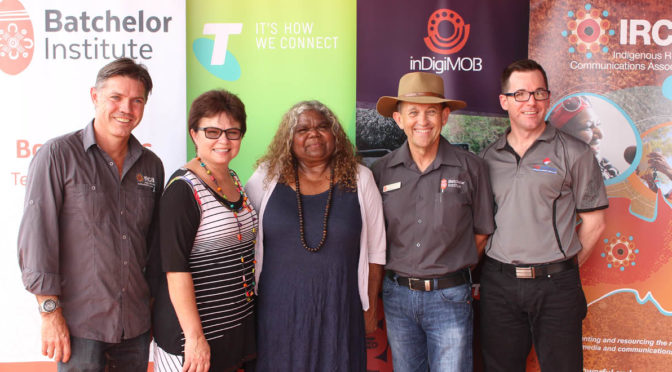
Featured image above: At IRCA’S launch of Indigenous digital mentoring project InDigiMOB. Credit: IRCA

A new digital mentoring project developed by the Indigenous Remote Communications Association (IRCA) was launched by the Minister for Local Government and Community Service, Honourable Bess Price in Arlparra on 15 April 2016.

Committed to addressing digital exclusion experienced by many Indigenous Australians in remote communities, the inDigiMOB program will play a key role in bridging the digital divide. It will establish a network of Indigenous mentors who provide peer-to-peer training and support in digital literacy, cyber safety and internet access in response to local and immediate needs.

“Over the next three years inDigiMOB will help address barriers to the take up and use of digital technology in a number of Indigenous communities in the Northern Territory,” says Daniel Featherstone, General Manager of IRCA.

“With support from local community organisations we will work to ensure remote Indigenous people are not left behind.”

“Where there is affordable and appropriate access, many Indigenous Australians in remote communities are rapid adopters of new digital technology,” says Featherstone.

“However, there are still too many people who lack access and capabilities to fully embrace the social, economic and cultural possibilities of being connected. inDigiMOB will address this and in doing so, create meaningful jobs.”

IRCA will pilot inDigiMOB in Arlparra and several Alice Springs Town Camps with support from delivery partners Batchelor Institute and Tangentyere Council respectively.

inDigiMOB is funded by Telstra.

This article was first published by IRCA on 21 April 2016. Read the original article here.

About IRCA

IRCA is the peak body that represents and advocates for the media and communications interests of remote and very remote Aboriginal and Torres Strait Islander communities in Australia.  IRCA promotes the important role played by remote Indigenous media in maintaining language and culture and providing tools for self-representation and community development.  IRCA supports remote Indigenous media organisations (RIMOs) that have played a key role in the development of the remote media and communications industry in Australia.

www.irca.net.au

Australia’s first nanoscience facility launched

Leading scientific figures, pioneers and representatives from key organisations internationally are visiting Sydney for today’s launch of the Australian Institute for Nanoscale Science and Technology (AINST) – and the official opening of its headquarters – the most advanced facility for nanoscience in the region – where design, fabrication and testing of devices can occur under one roof.

Officially opening the new $150 million Sydney Nanoscience Hub will be Australian Academy of Science’s President Andrew Holmes AM. Senior executives from Microsoft in the USA are also visiting to tour the building, and scientists speaking at the launch include one of Israel’s top physicists, Moti Segev – whose centre at the Technion is collaborating on a project with the University of Sydney and the NSW Government.

Nanoscience is expected to be more impactful this century than the industrial revolution in the 19th century. But “the buildings in which we work, rather than our imaginations, are what’s been limiting the science,” says Associate Professor Michael Biercuk, formerly a consultant to the US government organisation the Defense Advanced Research Projects Agency (DARPA) and now the research leader of a quantum flagship in AINST.

More than six years in the making, the award-winning Sydney Nanoscience Hub was co-funded with $40 million from the federal government, includes teaching spaces alongside publicly available core research facilities that will support  fundamental research as well as the work of startups and established industry.

AINST hosts some of the capabilities of the Australian National Fabrication Facility and of the Australian Microscopy and Microanalysis Research Facility – both co-funded by the National Collaborative Research Infrastructure Strategy (NCRIS). Researchers at the Institute contribute to two Australian Council Centres of Excellence:  the Centre for Ultrahigh bandwidth Devices for Optical Systems (CUDOS); and the Centre for Engineered Quantum Systems (EQuS).

Professor Benjamin Eggleton, the Director of CUDOS who also heads the photonics flagship at AINST, says photonics (the study of photons – the building blocks of light) was already delivering real-world solutions: “Photonics is the backbone of the internet and underpins a $7 trillion industry,” Eggleton says.

“Our team has led the world in photonic-based chip processing and we are now working on building a photonic chip – or a lab on a chip – that may one day be compatible with mobile phones, enabling them to sense environmental pollution or be used for testing blood samples to diagnose health issues.”

Vice-Chancellor Dr Michael Spence says the University-wide AINST reached across traditional disciplinary boundaries.

“The Australian Institute for Nanoscale Science and Technology continues the University of Sydney’s tradition in addressing multidisciplinary issues in a unique way to ensure that we are ready to solve the great challenges of science, engineering and beyond,” he says.

AINST Director, Professor Thomas Maschmeyer, will also head one of five initiating flagships – in energy and environment – and this month announced an investment valued at $11 million from the United Kingdom into a university nano spin-off.

“There is little doubt that society must progressively transition to non-fossil-based energy,” Maschmeyer says.

Professor David Reilly, research leader of the AINST’s quantum measurement and control flagship, says breakthroughs at the nanoscale hold the key to major advances in areas such as artificial intelligence and security.

“The challenge for us over the next few years is to take the physics results that we have probing the basic phenomena of quantum mechanics and see those results turn into technologies.”

Director of the Sydney Nanoscience Hub building Professor Simon Ringer says new science would be enabled through this purpose-built facility for nanoscience – the first in Australia.

“This is the best building of its kind in our region. It will allow us to operate research instruments that enable us to ask questions at the frontiers of science.”

AINST Director of Community and Research, Professor Zdenka Kuncic says the ‘rules of the game’ in nanoscience were still being worked out.

“Perhaps the most exciting aspect of nanoscience is the potential for new discoveries, including in health and medicine,” she says.

“We have only scratched the surface of the new knowledge that remains to be revealed.”

This article was first published by The University of Sydney on 20 April 2016. Read the original article here.
Thrill of discovery

The thrill of discovery is what biochemist Marilyn Anderson relishes in her work. “It’s a feeling you can’t even imagine: when you’re the first person to solve a problem,” she says.

Anderson is a Professor of Biochemistry at the La Trobe Institute for Molecular Science (LIMS) and the Chief Science Officer of Hexima, a biotechnology company embedded in LIMS. Anderson co-founded Hexima in 1998 following her discovery of naturally occurring insecticidal and antifungal molecules in the reproductive parts of plants.

The team at Hexima are exploiting these molecules to develop genetically modified crops that are protected from insect predation and fungal infections – a game changer for agriculture. Research in this area is ongoing, as insects are developing resistance to the commonly used BT toxin, an insecticide produced by the bacterium Bacillus thuringiensis, and new insecticidal genes are needed. “It’s a huge market,” says Anderson.

“We will not be able to feed and clothe humanity if we don’t have insect and fungal-resistant plants.”

Anderson did a BSc (Hons) at the University of Melbourne and then completed her PhD in biochemistry at La Trobe University. Her enthusiasm for this field is clear: “I’m still knocked over by just how amazing biology is, and how things have evolved to work”.

After graduating, Anderson was drawn to “the revolution of the time – the beginning of gene cloning and molecular biology”. She moved to the USA and worked on diabetes at the University of Miami before transferring to Cold Spring Harbor to conduct cancer research. “We were paving the way. It was extremely exciting because while I was at Cold Spring Harbor the first oncogenes, or cancer-causing genes, were discovered,” she says.

Expertise in molecular biology was internationally sought after at the time and was the crux of much interdisciplinary research. In 1982 Anderson was offered a job with Laureate Professor Adrienne Clarke AC at the Plant Cell Biology Research Centre at the University of Melbourne. “That was a big switch for me,” says Anderson. “I’d been working on cancer and this was a botany school.” Together, Anderson and Clarke were able to discover the gene that prevents self-pollination, or inbreeding, in flowering plants.

Now a leader in the scientific community, Anderson is not only a director at Hexima; she is also on the La Trobe University Council and was inducted into the 2014 Victorian Honour Roll for Women for her scientific achievements.

Gender equality and supporting women in science are two things Anderson is passionate about. “There’s a lot of work to be done just to give women equal opportunity,” she says. “There are many talented female scientists here at Hexima, and I enjoy mentoring women and helping them through the early stages of their career.”

Anderson conducts workshops with secondary students that focus on women in science, and she’s part of Supporting Women in Science (SWIS), a new association at La Trobe that gives guidance to female postgraduate researchers in STEM.

“This is a proactive program to direct universities to pay more attention to gender diversity.”


Anderson will be speaking at Women in Science, an event hosted by La Trobe University for Melbourne Knowledge Week in May 2016. The panel discussion will centre on the underrepresentation of women in STEM careers. The MC will be science journalist Robyn Williams. Panel speakers will also include NHMRC Biomedical Fellow of the Peter MacCullum Cancer Centre, Misty Jenkins; Head of La Trobe’s School of Engineering and Mathematical Sciences, Wenny Rahayu; and nanotechnology research assistant and nominee for Women’s Weekly Women of the Future Award in 2015, Elana Montagner. For more information and to register for the event, head to www.latrobe.edu.au/womeninscience.


Cherese Sonkkila

Innovating Australia

Australia faces a challenging period in shifting towards an ‘innovation economy’, with a drive towards greater participation in science and technology; an increased focus on commercialisation success; and partnering research with industry. But how will we get there?

In this unique series, leaders from government, industry and academia share their vision for Australia’s innovation future, including Australia’s Chief Scientist Alan Finkel, Telstra’s CTO Vish Nandlall, CEO of AusBiotech Anna Lavelle, entrepreneur, surgeon and inventor Fiona Woods, Chief Defence Scientist Alex Zelinksy, and the Vice Chancellors from QUT, Peter Coaldrake, and Western Sydney Uni Barney Glover, and many more.

Read the Thought Leadership Series: Australia’s Innovation Future, here. Commentaries will be published throughout the week.

The path forward

There is no doubt that Australian R&D often punches far above its weight for the size of the nation’s population. But for too long Australian invention has stalled at the crucial points in moving research from lab to marketplace. From a nation of thinkers, there has been too little product. Buoyed by the rich resources in the landscape, we have rested on our laurels, riding the sheep’s back or relying on our mineral wealth.

There are notable exceptions. Most Australians, for example, are familiar with the success of the cochlear implant, invented by Professor Graeme Clark and pioneered with a team of surgeons at Melbourne’s Royal Victorian Eye and Ear Hospital. This clever little device is now distributed in over 120 countries and has helped over 320,000 hearing-impaired patients. In the inaugural 2016 Top 25 Science Meets Business R&D spin-off list, this and other less familiar success stories – including companies just starting to make their mark – were noted and celebrated.

In December 2015, the Turnbull government pushed an agenda on innovation – the so-called #ideas boom. The innovation agenda clearly indicates that Australia must move from a resource-based economy to a knowledge-based economy. It highlights the poor track record of research commercialisation, and low rates of collaboration between industry and research organisations. The Organisation for Economic Cooperation and Development rates Australia as last or second last on the level of collaboration against other developed nations. So how much further forward does the ideas boom push us, and what more can be done?

The December 2015 agenda throws $1.1 billion towards steps to address stagnation in research commercialisation and business growth in STEM. This includes $200 million industry incentive to work with the CSIRO and Australian universities, and a 20% non-refundable tax offset for early stage investors. There’s also money for Australian businesses looking to relocate overseas, bonuses for universities collaborating and resources allocated towards raising awareness of the importance of STEM in education.

While the money sounds great, transitioning towards a knowledge economy is more than just a fiscal move – it requires a fundamental shift in the notion of what it is to be Australian. The pathway towards this mental reimagining is far from clear, and will involve people in business, education, research and communication industries to change their thinking, develop ideas and set in motion a totally different model of achievement.

In this thought leadership series, those stepping up to deliver on this challenge describe their vision of science, technology, engineering, maths, and medicine – in the way we do the research and in how we benefit from these fields – to describe their first step towards this brave new world. – Heather Catchpole

Read the Thought Leadership Series: Australian Innovation Future, here.

Contributors

Dr Alan Finkel AO, Chief Scientist of Australia

Dr Anna Lavelle, CEO and Executive Director of AusBiotech

Professor Peter Coaldrake AO, Vice-Chancellor of QUT

Dr Krystal Evans, CEO of the BioMelbourne Network

Professor Peter Klinken, Chief Scientist of Western Australia

Professor Barney Glover, Vice-Chancellor and President of Western Sydney University and Dr Andy Marks, Assistant Vice-Chancellor (Strategy and Policy) of Western Sydney University

Dr Cathy Foley, Chief of CSIRO’s Division of Materials Science and Engineering

Dr Alex Zelinsky, Chief Defence Scientist and Head of the Defence Science and Technology Group

Vish Nandlall, Chief Technology Officer of Telstra

Professor Fiona M Wood, FRACS AM, Director of the Burns Service of Western Australia and the Burn Injury Research Unit at the University of Western Australia

Everyday this week

John Pollaers, Chairman of the Australian Advanced Manufacturing Council

Robert Hillard, Managing Partner of Deloitte Consulting

Kim McKay AO, CEO and Executive Director of the Australian Museum

Philip Livingston, Founder and Managing Director of Redback Technologies

Science in the spotlight

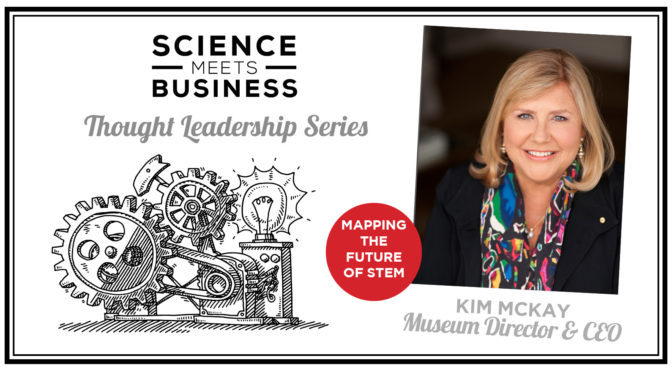
There has never been a better time to work in science communication, but as the Executive Director and CEO of the Australian Museum – Australia’s first museum and second oldest science institution – I may be a little biased.

The popularity of science is growing thanks to the rise of social media. Translating this increased street credibility into tangible, sustainable benefits for both the Australian Museum and the scientists we employ is high on my agenda – because we can’t ask others to innovate if we aren’t innovating ourselves.

Most people only see the public facing side of the Australian Museum, for example the exhibitions and collections that are open for public viewing, and don’t know about the tremendous scientific research undertaken by the Australian Museum Research Institute (AMRI). The AMRI conducts research into pests and invasive species, which provides vital information and solutions to common problems that impact on our agricultural industries. It is also home to one of the most advanced wildlife genomic laboratories in Australia, and its experts work with customs and quarantine departments on cases involving illegally imported and exported species.

Despite the manifold practical applications of the research we conduct, many people still don’t realise that museums are deeply engaged in science and science education. Naturally, some scientists are reluctant to champion and promote the vital work that they do.

As the first person from a marketing and communications background to take the reins at the museum, I am firmly focused on communicating the work of the AMRI and the public programs at the Australian Museum. It’s my job to help identify the stories that put science in the spotlight, to educate the public on the value of science.

Forming strong relationships with the media and collaborating with the corporate world – to not only generate revenue but also to put STEM on the agenda beyond the usual circles – is a smart strategy.

The AMRI works with the airline industry on tackling problematic bird strikes by analysing tissue samples of bird remains to identify the species and determine whether the flock can be safely relocated. Recently, the Australian Museum Lizard Island Research Station, located 270 km north of Cairns, assisted climate scientists to identify the worst coral bleaching event ever reported on the Great Barrier Reef.

In the past, scientific institutions may have been reticent to form mutually-beneficial partnerships with industry, but I believe that sponsorship deals and philanthropy are key to the long-term relevance and viability of scientific organisations.

In many ways, the collection at the Australian Museum reflects the work and research we undertake. We have more than 18 million specimens and a cultural collection of more than one million objects from Australian Indigenous cultures, the Pacific Islands and South-East Asia. We also have the largest Egyptian collection in Australia.

But today, it isn’t enough to let your work do the talking. To ensure innovative STEM solutions spark ideas in the wider community and create a snowball effect, it takes the active communication of scientific research and the benefits it can provide – both from a sustainability and economic perspective. The STEM community must continue to share news of its work, to inspire and foster innovation in future generations.

Kim McKay AO

Executive Director & CEO, Australian Museum

Read next: Robert Hillard, Managing Partner of Deloitte Consulting, on Disruptive STEM.

Spread the word: Help to grow Australia’s innovation knowhow! Share this piece using the social media buttons below.

Be part of the conversation: Share your ideas on innovating Australia in the comments section below. We’d love to hear from you!

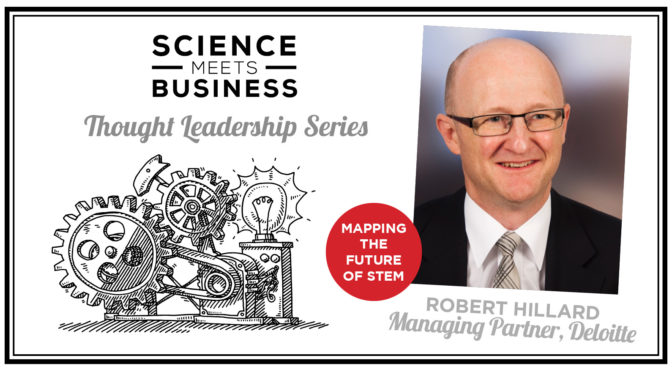
Disruptive STEM

Wherever you turn these days you see the term “digital disruption”. For those of us lucky enough to be educated in the STEM disciplines – science, technology, engineering and mathematics – we probably feel empowered and excited by this disruption and the changes it brings.

But the same sense of optimism is not true for everyone – because where there is technological disruption, business and social disruption tend to follow.

Electronic communication like email, for example, has almost completely taken over traditional mail. Mainstream bookstores are a shadow of their former selves due to massive online bookstores, and paper books are becoming obsolete due to increased use of digital devices for reading.

But these changes to traditional professions that created and distributed these products has cost jobs, and not everyone who lost a job has been able to transfer their skills into a new role in the digital economy.

Innovation has caused changes in areas such as transport, energy and financial services, and will ultimately leave more people at a disadvantage due to job loss than anything we’ve seen so far. Department stores, for example, could be wiped out in Australia, while banks could be taken over by FinTech innovators.

Disruption spurred on by digital technology is extending into new fields of engineering. Batteries will take houses off-grid and electric vehicles will do away with yearly car services. These changes could leave car dealerships without a source of service income and power utilities without a market.

The birth of the internet removed advantages for large businesses in terms of scale and geography, and allowed small businesses to compete equally with larger companies. But after 20 years, the larger online businesses still have the advantage of scale. As more people use the same search engine, for example, the algorithms for that search engine become stronger. And if a greater number of people use the same online social network, the reach of that network increases exponentially.

We can use technology to improve access to capital while maintaining a safe financial system. We can find better ways to access products and services without doing away with stores. We can make the move from fossil fuels to renewables while keeping a highly skilled engineering capability employed.


“The future depends on those with a STEM education.”


Those with STEM skills have the ability to channel their knowledge, skills and innovative flair to develop new applications of technology, as well as encourage its application to achieve greater benefits for society. The future depends on those with a STEM education.

Robert Hillard

Managing Partner, Deloitte Consulting & Fellow of the Australian Computer Society

Read next: John PollaersChairman of the Australian Advanced Manufacturing Council, on Australia’s best lever for a thriving, high-tech manufacturing sector.

Spread the word: Help to grow Australia’s innovation knowhow! Share this piece using the social media buttons below.

Be part of the conversation: Share your ideas on innovating Australia in the comments section below. We’d love to hear from you!

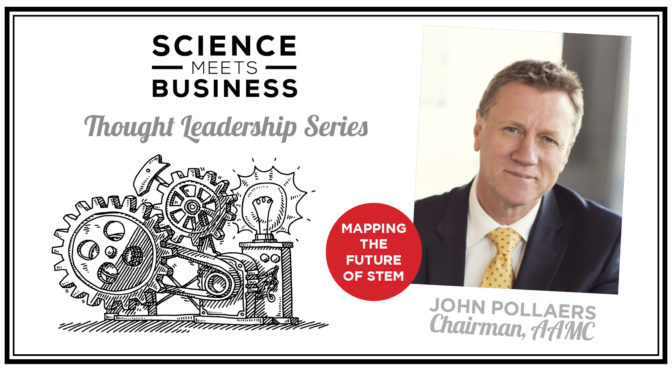
The advanced manufacturing flagship

We have a rich seam of transformative advanced manufacturers in Australia who are not only securing their own future; they are helping to underpin a sustainable Australian economy.

But our future in an uncompromising global economy is precarious. Few decision-makers in OECD countries believe they will remain prosperous without a thriving, high-tech manufacturing sector.

A prosperous Australia depends on supplying higher value solutions to the world – and the recent national focus on science, technology, engineering and mathematics (STEM) education is fundamental to this aspiration.

How can we, as a nation, facilitate this growth? The Federal Government’s Innovation and Science Agenda released last December is the most substantial recognition we have seen that advanced manufacturing is the future face of Australian industry. The agenda pulls a number of policy “levers”, and places unprecedented emphasis on leveraging our research excellence for greater commercial outcomes.

Of all the interventions of governments, however, the defence procurement “lever” obliterates all others.

Manufacturing’s best hope lies in “flagship” projects like Australia’s future submarine and shipbuilding programs. Some economists have estimated the knowledge spillovers from such programs produce multiplier impacts 2–3 times the initial investment. For example, one study estimates the Gripen multi-role combat aircraft project in Sweden generated at least 2.6 times the government investment in terms of additional production, and skills and knowledge transfer. What large national projects can mean for jobs growth, technology diffusion, skills development and market development in the short term is important. What they mean in the longer term is critical.


“The digitisation revolution will be a key enabler for Australian manufacturers to enter the global supply chain – it conquers distance and helps bring ideas into production sooner.”


For the advancement of Australian industry, we must ensure that Australian companies are actively engaged in the high value technology creation and development of large defence contracts. And these companies must be able to sustain their businesses through exports. Denmark and Sweden provide good examples of countries successfully exporting their defence capabilities. If Australia does not do the same, we doom our high value defence manufacturers to the same fate as the automotive sector.

Technological change doesn’t just bring disruption; it also brings opportunity. The digitisation revolution will be a key enabler for Australian manufacturers to enter the global supply chain – it conquers distance and helps bring ideas into production sooner. Digitisation will enable Australian manufacturers to leap ahead of many of our competitor nations.

And embracing the digital age requires greater emphasis on STEM education. In many industries and countries, the most in-demand occupations or specialties did not exist 10 or even five years ago, and the pace of change is set to accelerate. By one popular estimate, 65% of children entering primary school today will ultimately end up working in completely new job types that don’t yet exist.

With a thriving advanced manufacturing sector, employing a higher proportion of skilled engineers and scientists and successfully investing in research and development in order to stay at the leading edge in their sectors, we can ensure Australia’s continued prosperity.

John Pollaers, Chairman of the Australian Advanced Manufacturing Council

Read next: Vish Nandlall, Telstra’s Chief Technology Officer, on the skills we really need to be teaching our children.

Spread the word: Help to grow Australia’s innovation knowhow! Share this piece using the social media buttons below.

Be part of the conversation: Share your ideas on innovating Australia in the comments section below. We’d love to hear from you!

Innovation in life sciences

The community of Australian life science innovators are clever, focused and driven. Yet many fail to achieve their commercial goals. Sometimes this because of the science – which is not yet sufficiently developed for the commercial path.

Sometimes it is inexperienced management or governance. But usually, the key barrier is access to capital. Australia has talent and good ideas aplenty, but our small economy and lack of risk capital produces challenges not seen in bigger economies, like the USA. “Yes,” I hear you saying.

What about other smaller nations? It is true that some Scandinavian countries and Israel perform very well. But when the culture, government structures, location and many other factors are taken into account, the comparisons with Australia – although very useful– are not equivalent.

In order to optimise our performance and deliver both social and economic benefits, the current conversation at the Federal level is well directed. We need an approach that is system-oriented; that considers the international exemplars and how they can be applied in the Australian context, and pays attention to capital access.


“The strength of biotechnology for our economic future is clear, but to realise its vast potential will take radically new thinking and an entrepreneurial attitude.”


When the Biomedical Translation Fund (BTF) was announced as part of the Turnbull Government’s National Innovation and Sciences Agenda (NISA) in December 2015, it was welcomed by AusBiotech as a game-changing package that will transform Australia’s ability to commercialise.

The biotechnology and medical technology sectors are particularly excited by the ability of the program’s investment to be a multiplier and make available much-needed capital to translate our research from universities and medical research institutes into products and services – including medical therapies and cures, medical devices, digital heath solutions, diagnostics and vaccines.

Fund manager, GBS Ventures, which specialises in the life sciences has invested $400 million in 30 companies in recent years and reports it has attracted $5 in private money for every $1 of public money invested.

So far as this can be extrapolated to the new fund, the BTF could be the catalyst for over $2.5 billion to flow into the sector.

The BTF is envisaged as a for-profit investment program of $250 million that is to be matched by an additional $250 million from private investors, so creating a $500 million capital pool available for commercialisation of biotech and medtech projects.

Funding would be engaged, inter alia, before and during clinical trials and product registration stages. The investments by the BTF and its private co-investors are likely to fall in the range of $5 million to $20 million per project.

This is great news for a cash-starved sector.

The strength of biotechnology for our economic future is clear, but to realise its vast potential will take radically new thinking and an entrepreneurial attitude. How we make and fund these new technologies by attracting capital is key.

AusBiotech is pleased to see the Government has been listening to calls for a focus on translation.

Australian life science companies attracted almost $2 billion in deals over the last 18 months, which illustrates that the sector is attractive to investors and demonstrates a good pool of quality technology, talent and opportunity that the BTF will now exploit. Finance from the BTF, along with the R&D Tax Incentive scheme is a powerful, one-two punch that will make a material difference to success in life sciences.

Dr Anna Lavelle

Chief Executive Officer, AusBiotech

Read next: Professor Peter Coaldrake AO, Vice-Chancellor of QUT on Overcoming academic barriers to innovation.

Spread the word: Help to grow Australia’s innovation knowhow! Share this piece using the social media buttons below.

Be part of the conversation: Share your ideas on innovating Australia in the comments section below. We’d love to hear from you!

Engineering solutions

From a purely engineering perspective, all real world problems are solvable. Nobody would choose to be a design engineer unless they deeply believed in their own ability to solve problems through creativity and a deliberate methodology – identify the problem, analyse it, build a prototype, test it, iterate, deliver the solution.

In the real world, of course, the challenges are much more difficult. Social, political and economic considerations prevail, often ruling out the elegant solutions that an engineering approach would suggest.

Let me give you an example: climate change. The problem is clear: global temperatures are rising, ice sheets are melting and oceans are acidifying. The analysis is clear: human activities, including the burning of fossil fuels for energy, are leading to rising levels of carbon dioxide in the atmosphere and are driving the problem. The imperative is clear: cut emissions – and do it quickly.

The pure engineering solution would involve massive installations of solar and wind, backed up by natural gas turbines, hydrogen storage, pumped hydro storage and battery storage to handle the intermittency, and investment in new hydroelectric and nuclear electricity generation.


“The challenge for engineers when it comes to these large-scale, socially complex issues is to work closely with colleagues across the humanities and social sciences to build solutions that communities can and will take forward.”


Once the existing electricity supply is decarbonised, the amount of low emissions electricity generated would be doubled or tripled so that liquid fossil fuels for transport and natural gas for heating could be rapidly replaced by low emissions electricity.

If only human affairs were so straightforward!

The challenge for engineers when it comes to these large-scale, socially complex issues is to work closely with colleagues across the humanities and social sciences to build solutions that communities can and will take forward.

But not all challenges are as wicked as climate change. The engineering method delivers handsomely in the corporate world, most often in collaboration with marketing, psychology and customer support systems. Smartphones, automobiles, improved building technologies and advanced materials are just some of the myriad examples.

The engineering method is also very applicable to organisational management. The evidence based, non-ideological problem solving approach of engineering can serve leaders from the shop floor to the corporate board.

When it comes to politics, in some countries (such as Germany) engineers are highly valued. But in Australia, they’re far less visible. I don’t know why that is so, but perhaps we need to be teaching charisma as a graduate attribute in Australian engineering faculties.

At the very least, we should be making crystal clear to our engineering students their opportunity to contribute to society outside of their profession.

Dr Alan Finkel AO

Australia’s Chief Scientist

Read next: Dr Anna Lavelle, CEO and Executive Director of AusBiotech on Innovation in Australian life sciences.

Spread the word: Help to grow Australia’s innovation knowhow! Share this piece using the social media buttons below.

Be part of the conversation: Share your ideas on innovating Australia in the comments section below. We’d love to hear from you!

Path to a ‘right-skilled’ workforce

The world is changing and changing fast! Several studies, such as Australia’s Future Workforce released by CEDA last year, tell us that 40% of the jobs we know today will not exist in 15 years. So what do we need to do be ready for this? Here is my four-step plan:

1. Need for basic science literacy

The need of a base level of science literacy is growing as our society becomes increasingly dependent on technology and science to support our daily lives[1]. However, the number of school children undertaking science and mathematics in their final years at high school is dropping at alarming rates.

Those who can use devices and engage with new technology are able to participate better in the modern world. Those unable to are left behind.

Because Australia has high labour costs, and as robotics and other automated technologies replace many jobs, school education needs to inspire young Australians to realise that science is both a highly creative endeavour, and a pathway to entrepreneurial and financial success.

We need to inspire a wider range of personality types to consider post-school science and engineering training and education as a pathway to build new businesses.

2. Need to broaden the scope of university education

Currently Australian universities are highly motivated to direct research and teaching activities towards academic excellence, as this is the recognised measure of university performance.

Industry experience and methods of solving industrial problems are not generally seen as components of the metrics of academic excellence.

We need to increase the focus on developing entrepreneurial skills and industry exposure and engagement during university education.


“If we are to achieve improvements in economic stimulus by R&D investment, it will be necessary to lift the skills base and the absorptive capacity of Australian companies.”


3. Need to lift industry skills

It is essential that businesses and technologists better understand people’s needs and wants, so they can be more successful in designing and producing products and services that increase their competitiveness locally, and allow them to enter the global market. They can do this by using the opportunities that digital-, agile-, e- and i-commerce can offer.

If we are to achieve improvements in economic stimulus by R&D investment, it will be necessary to lift the skills base and the absorptive capacity of Australian companies.

Recent statistics demonstrate that Australian manufacturing is characterised by a high vocational education and training (VET) to university-educated workforce ratio. If we are to move to a more advanced industry focus in Australia, this ratio needs to change – not necessarily by reducing the number of VET-qualified employees, but through the development of higher-value positions that necessitate a university science, technology, engineering and mathematics (STEM) educated workforce.

In industrial settings, complexities occur where the adoption of design-led innovation principles can make a difference. Recent research has indicated that the application of design-led innovation by Australian companies can be the forerunner of future success.

4. Embracing the full human potential

As future capacity builds through the initiatives mentioned above, there is a need to engage the full spectrum of capability that is already trained in STEM.

There is latent capability there for the taking if we capitalise on the opportunities that a diverse workforce has to offer.

Development of approaches to attract and retain women, people of different cultures, broader age groups including the young and the old, and all socioeconomic classes, has the potential to lift our workforce skill set.

Time is running out. We need to act now.

Dr Cathy Foley

Deputy Director and Science Director, CSIRO Manufacturing Flagship

Read next: Dr Alex Zelinsky, Chief Defence Scientist and Head of the Defence Science and Technology Group on how National security relies on STEM.

Spread the word: Help to grow Australia’s innovation knowhow! Share this piece using the social media buttons below.

Be part of the conversation: Share your ideas on innovating Australia in the comments section below. We’d love to hear from you!

[1] Science, Technology, Engineering and Mathematics: Australia’s Future, A Report from the Office of the Chief Scientist, September 2014.

Making innovation work

The ubiquity of the term, ‘innovation’ in the Australian political, business and social lexicon risks diffusing its meaning and, worse, its broader uptake in the national interest. Identifying the true meaning and value of innovation requires we significantly rethink the way we approach the generation of ideas and their application into society.

The current transactional approach to innovation in Australia generally eschews direct supports in favour of tax incentives which, unusually in a global context, comprise roughly 90% of government expenditure on innovation. This is like a vending machine approach to innovation, one in which all attention is focused on the end product and little or no concern is directed towards understanding, or better still, enabling and improving the mechanics of its delivery.

If we are to be more expansive and impactful in our approach to innovation then we need to engage it in its fullest sense and not just concern ourselves with input and output triggers. This requires we focus on identifying the factors that both comprise and, more importantly, help create successful innovation ecosystems.

making innovation work

Prime Minister Malcolm Turnbull visits Western Sydney University’s LaunchPad – an initiative to support startups and technology based businesses in Western Sydney. Credit: Sally Tsouta

Strengthening literacy in science, technology, engineering and mathematics (STEM) disciplines from a very early age affords us a bedrock on which to build workforce capacity and the intellectual capital necessary to generate and sustain innovation. Existing educational structures will need to adapt and change in a way that both responds to and supports the highly fluid and dynamic features of a thriving innovation ecosystem. Adjusting curriculums or modifying our expectations of graduate attributes, while important exercises, will not get us to where we need to be.


“The development of the skills-base required to drive sustainable innovation will both depend on and necessitate a very deliberate blurring of the borders between business, industry and education.”


According to last year’s ‘New Work Order‘ report by the Foundation for Young Australians, “70% of young Australians currently enter the workforce in jobs that will be radically affected by automation”. Add to this an expected average of 17 job changes for each of these new workers over the course of their working lives and it is clear that career narratives within the mooted ‘Ideas Boom‘ will be conditionally diverse and non-linear.

Disrupted, diverse and adaptive career pathways demand innovative responses from business as well as the education sector. The development of the skills-base required to drive sustainable innovation will both depend on and necessitate a very deliberate blurring of the borders between business, industry and education. The key to making this work is not so much an exercise in imposing demarcations on the role each of these groups perform collectively, rather it is centred upon letting go.

When circumstances conspire, Australia’s public research entities and business can produce remarkable innovations, as is evidenced by world leading inroads in, for example, solar technology, quantum computing and medical research; but we need to rely on more than circumstance and a dwindling linkage and research infrastructure funding pool.

While it is early days, universities and business are – in incubator, accelerator, and shared strategic (precinct) spaces – forming the beginnings of the deliberately diffused collaborative relationships needed to build sustainable innovation ecosystems. Encouragingly, the policy and funding frameworks put forward by the National Innovation and Science Agenda offer much to support this process.

The real determinant of our success in innovation will be the aspirations and behaviours of the emerging generation of workers. Diversity in career experience will be the attractor to study STEM disciplines, not curriculum reform. If we get it right, STEM skills will be seen as essential navigation tools in an as yet unknown adventure through a thriving innovation ecosystem where business, industry and universities coalesce to disrupt, diffuse and diversify in the interest of ideas.

Professor Barney Glover and Dr Andy Marks

Vice Chancellor and President of Western Sydney University Assistant Vice Chancellor (Strategy and Policy) of Western Sydney University 

Read next: Dr Cathy Foley, Deputy Director and Science Director of CSIRO’s Manufacturing Flagship on the Path to a ‘right-skilled’ workforce.

Spread the word: Help to grow Australia’s innovation knowhow! Share this piece using the social media buttons below.

Be part of the conversation: Share your ideas on innovating Australia in the comments section below. We’d love to hear from you!

Gender equality and innovation

Australia needs to be more innovative in our approach to gender equity. It’s time to do things differently and be bolder in our commitment to diversity.

During my training as a medical researcher, women represented more than 50% of my undergraduate class and almost 75% of my PhD peer group. But the pipeline approach has failed; putting 50% of women into the science system at a junior level has not seen 50% of women in senior leadership pop out the other end. And it’s been this way for more than 20 years.

In 2016 men continue to hold the majority of Australia’s top leadership positions in science, research, innovation and business. The next generation will always be different, but we cannot place the burden of gender equity on those who follow us. We need to lead from the top and from the front, creating a pull-through effect that draws women through the pipeline and enables them to lead.

Insist on inclusiveness

Equity is everyone’s issue, and we need to insist on inclusiveness. Speak up about all male conference panels, research grant teams, boards and committees – especially if you’re involved in them. Call it when you see it, and provide a pathway to change; reach out with the names of women who could participate and promote conscious consideration of diversity.


“Innovation is a people-driven process that thrives on diverse thinking and views. To build a strong, resilient and successful innovation ecosystem, Australia needs to harness the talents of both men and women.”


If it matters, measure it

Everyone is accountable for equity. Scientists and managers alike know you need to measure what matters in order to understand it. Organisations should collect data and report on all aspects of gender equity in the workplace, and be open and transparent in sharing that information.

Look out as well as in

A lack of women in leadership is not unique to the science and research sector. We need to investigate and consider programs and policies that have had impact in other industries. There is no silver bullet solution or single way to address all of the challenges around diversity. We need to do all that we can to support women at all career stages, and at all places along the pipeline.

Innovation is a people-driven process that thrives on diverse thinking and views. To build a strong, resilient and successful innovation ecosystem, Australia needs to harness the talents of both men and women. Diverse teams make better decisions, and to innovate during times of transformation, Australia will need all hands on deck – an inclusive ecosystem that values and promotes women.

Dr Krystal Evans

Chief Executive Officer of the BioMelbourne Network

Learn more: Click here to see a timeline of gender equality in Australian education and the workplace put together by Open Colleges

Read next: Professor Peter Klinken, Chief Scientist of Western Australia on innovation in Western Australia.

Spread the word: Help to grow Australia’s innovation knowhow! Share this piece using the social media buttons below.

Be part of the conversation: Share your ideas on innovating Australia in the comments section below. We’d love to hear from you!

Innovation in Western Australia

Science is fundamental for our future social and economic wellbeing.

In Western Australia we’re focusing on areas where we have natural advantages, and an appropriate base of research and industrial capacity. Western Australia’s Science Statement, released by Premier Barnett in April 2015, represents a capability audit of relevant research and engagement expertise in our universities, research institutes, State Government agencies and other organisations. Mining and energy, together with agriculture, are traditional powerhouses, but the science priorities also reflect the globally significant and growing capabilities in medicine and health, biodiversity and marine science, and radio astronomy. It’s a great place to begin exciting new collaborations.

The Science Statement has also helped to align efforts across research organisations and industry. For instance, in 2015 an industry-led “Marine Science Blueprint 2050” was released, followed by the Premier commissioning a roundtable of key leaders from industry, Government, academia and community to develop a long-term collaborative research strategy. These meetings highlighted critical areas of common interest such as decommissioning, marine noise, community engagement and sharing databases.


“Opportunities abound for science and industry to work together to translate research into practical, or commercial, outcomes.”


Science, innovation and collaboration are integral to many successful businesses in Western Australia. In the medical field, a range of technological innovations have broadened the economy and created new jobs. Some of these success stories include Phylogica, Admedus, Orthocell, iCeutica, Dimerix, Epichem and Proteomics International. Another example in this space is the Phase I clinical trial facility, Linear Clinical Research, which was established with support from the State Government – 75% of the trials conducted to date come from big pharmaceutical and biotechnology companies in the USA.

Opportunities abound for science and industry to work together to translate research into practical, or commercial, outcomes. For example, the field of big data analytics is rapidly permeating many sectors. Perth’s Pawsey Centre, the largest public research supercomputer in the southern hemisphere, processes torrents of data delivered by many sources, including radioastronomy as the world’s largest radio telescope, the Square Kilometre Array, is being developed in outback WA. In addition, local company DownUnder GeoSolutions has a supercomputer five times the size of Pawsey for massive geophysical analyses. In such a rich data environment, exciting new initiatives like the CISCO’s Internet of Everything Innovation Centre, in partnership with Woodside, is helping to drive innovation and growth.

Leading players in the resources and energy sector are also taking innovative approaches to enhance efficiency and productivity. Rio Tinto and BHP Billiton use remote-controlled driverless trucks, and autonomous trains, to move iron ore in the Pilbara. Woodside has an automated offshore facility, while Shell is developing its Prelude Floating Liquefied Natural Gas facility soon to be deployed off the northwest coast. Excitingly, 3 emerging companies (Carnegie, Bombora and Protean) are making waves by harnessing the power of the ocean to generate energy.

This high-tech, innovative environment is complemented by a rapidly burgeoning start-up ecosystem. In this vibrant sector, Unearthed runs events, competitions and accelerators to create opportunities for entrepreneurs in the resources space. Spacecubed provides fabulous co-working space for young entrepreneurs, including the recently launched FLUX for innovators in the resource sector. The online graphic design business Canva, established by two youthful Western Australians epitomises what entrepreneurial spirit and can-do attitude can achieve. In this amazingly interconnected world, the sky’s the limit.

Professor Peter Klinken

Chief Scientist of Western Australia

Read next: Professor Barney Glover, Vice-Chancellor and President of Western Sydney University and Dr Andy Marks, Assistant Vice-Chancellor (Strategy and Policy) of Western Sydney University on Making innovation work.

Spread the word: Help to grow Australia’s innovation knowhow! Share this piece using the social media buttons below.

Be part of the conversation: Share your ideas on innovating Australia in the comments section below. We’d love to hear from you!