All posts by Heather Catchpole

Gender equity through Athena SWAN

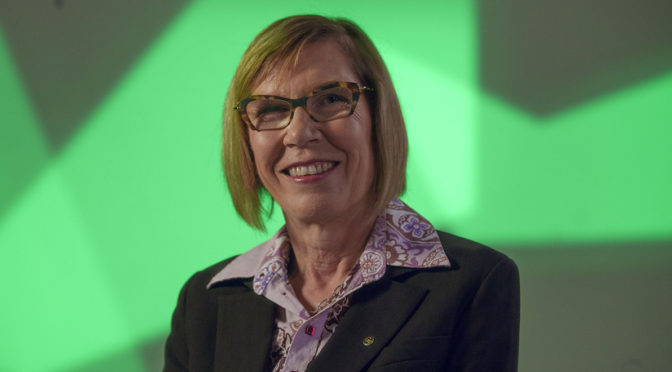
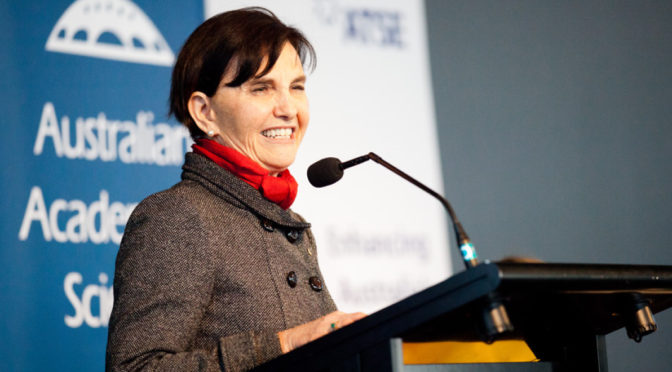
Featured image above: Dr Susan Pond speaking about gender equity at the 2016 SAGE Symposium. Credit: Australian Academy of Science

Led as a joint venture by the Australian Academy of Science (AAS) and the Academy of Technology and Engineering (ATSE), Science in Australia Gender Equity (SAGE) is conducting an Australian pilot of the UK’s Athena SWAN Charter.

SAGE works towards a vision that women and men will be equally represented in STEMM (science, technology, engineering, mathematics & medicine) disciplines in our higher education and research organisations, including in leadership roles.

Despite the fact that higher education enrolments by gender in Australia reached parity in 1988, the percentage of women gaining the rank of full professor in most faculties has remained consistently below 20% to the current day.

This failure to achieve gender equity matters because the Australian higher education and research sectors are:

  • leaking female talent;
  • wasting some of their best people;
  • failing to benefit from the additional range of perspectives and backgrounds they would bring to the table; and
  • losing the opportunity to perform better.

It matters because gender equity is a moral and business imperative. It matters because of the challenge of innovation.

Key to Australia’s economic competitiveness and growth, innovation requires an increasing national proficiency in STEMM. Innovation will be driven by the ability of our higher education and research institutes to generate breakthrough ideas and produce excellent STEMM graduates. It will be driven by the ability of these graduates to translate breakthrough ideas into innovative products and services.

SAGE has adopted the Athena SWAN Charter because it provides a rigorous, system-wide process of gender equity data collection, evaluation and consultation in order to identify the gaps between policies and practices and establish detailed action plans for change.

It requires institutions to demonstrate in their Athena SWAN Award application that they have undertaken and acted upon honest self-appraisal and self-reflection, starting at the leadership level.

The process is transparent – all applications for an Athena SWAN award are made public.

To ensure integrity and rigour, and to assess how Athena SWAN might boost productivity and outcomes in the Australian STEMM landscape, the SAGE Pilot will:

  • commission an independent evaluation of the Pilot;
  • adapt and tailor the Athena SWAN framework to the Australian context;
  • focus on Australian-specific areas such as Indigenous Australians in STEMM;
  • use analytics on pooled data to design informed and evidence-based solutions;
  • identify issues in gender equity that are common across institutions and require policy change across the sector; and
  • through the peer-review process, identify and document best practices that are shown to be working in STEMM.

SAGE and the Athena SWAN pilot in Australia are good news stories.

The bad news is that the widespread resistance to women pursuing careers is longstanding. The feminist, Betty Friedan, whose 1963 book “The Feminine Mystique” changed the lives of many women in the US and worldwide, framed this as “The Problem that has No Name.”

The bad news is that gender discrimination in society is not necessarily intentional or overt. It is unconscious and deeply ingrained in our societal psyche. It flourishes under the radar and is very hard to overturn.

Such discrimination emerges in strange circumstances – for example when women act in ways that aren’t considered sufficiently feminine, or when women advocate for themselves.

Men and women in large part unconsciously find these women unseemly; find them overly demanding and unlikeable.

Hillary Clinton, as an example, is suffering this curse of unlikeability. Scholars agree that it is largely because of her gender.

As Rebecca Sheehan from the US Studies Centre at the University of Sydney wrote recently, “Clinton’s ratings dropped significantly each time she sought political power through electoral office – whether running for US Senate or presidency.

“However, once she achieved positions of power, her approval ratings increased. As Secretary of State, she had an approval rating of 66% (a number Obama himself never reached), and was arguably the most respected politician in the US.

“Now, more than half the country can’t stand her.

“The swings in opinion and their timing suggest that her apparent likeability problem is not only – or not actually – about her. Instead, it’s more about a broader dislike of women who challenge the traditional gender order.”

In her just-released book, What Works – Gender Equality by Design, Professor Iris Bohnet addresses head on how such unconscious bias holds us back in achieving gender equity and why de-biasing each and every individual’s mind has proven to be difficult and expensive.

Bohnet’s emphasis is on de-biasing organisations instead of individuals, as is that of Athena SWAN. She demonstrates that taking this approach has great impact, often at surprisingly low cost and high speed. This is where the Athena SWAN Charter comes to the fore.

Athena SWAN seeks to call out gender inequality by providing evidence for its existence and negative impacts. Athena SWAN seeks to design out from our universities and research organisations the systems that entrench the status quo of gender inequality.

We must work together, men and women, to ensure that Australia’s universities, research organisations and innovation systems can take advantage of our full talent pool.

– Dr Susan Pond AM, FTSE FAHMS

This article is an edited extract from Dr Susan Pond’s speech presented at the 2016 Science in Australia Gender Equity Symposium.

Research startups accelerate CSIRO science

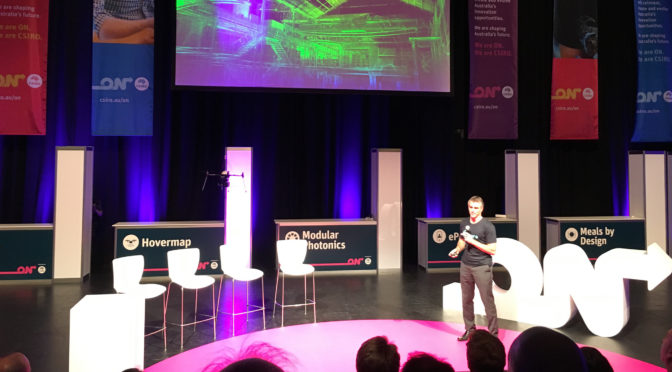
Featured image above: Research startups pitch at the ON Accelerate demo night. Hovermap have developed intelligent software that will allow drones to map indoor environments.

There are now over 30 accelerator and incubator programs in Australia, but CSIRO’s ON accelerator is the only one focused on equipping research startups with the tools they need to grow.

“It’s the first time a program of this sort has been offered for the research community on this scale,” says Elizabeth Eastland, the General Manager for Strategy, Market Vision and Innovation at CSIRO.

Just six months ago, Eastland was the Director of the University of Wollongong’s iAccelerate program, but moved to CSIRO having been “blown away by what this program can offer researchers”.

At the ON Accelerate Demo event held on Thursday 7 July, Eastland introduced 11 research startups who pitched their products to Sydney’s venture capital investors. In contrast to the young faces that dominate many of Australia’s accelerators, last night’s ON cohort were led by experienced researchers, engineers, developers and entrepreneurs.

Two of the research startups revealed big plans for the agriculture industry. A group called Future Feed is selling seaweed supplements that aim to reduce livestock greenhouse gas emissions by 80%. Another team has created wireless trapping technology to help farmers detect fruit fly infestations.

Fruit Fly costs farmers US$30 billion in fruit and vegetable production around the world, but this isn’t the only global challenge that the ON research startups have been tackling. The presenter from Modular Photonics pointed out last night that the world’s internet demand is about to outstrip its fibre capacity.

His group is commercialising new photonics hardware compatible with both old internet fibre and the new fibre being developed by the top telecommunications providers.

On the health front, another of the research startups, ePAT unveiled new facial recognition software to detect pain levels in people who cannot speak, such as children and elderly people with moderate to severe dementia. Their vision is that “no patient who cannot speak will suffer in silence in pain”.

ON Accelerate had major success earlier this year when a German company launched a gluten free beer brewed from barley commercialised by a startup from last year’s ON cohort. That startup, known as Kebari, is in now the process of developing another form of gluten free grain for use in food.

Kebari co-founder and scientist Dr Phil Larkin spoke at yesterday’s research startups event, saying ON Accelerate had taught him about ‘flearning’ – learning from failure – and the importance of interrogating the entire delivery chain to validate the value of a solution.

CSIRO Principal Research Scientist and RapidAIM team leader Dr Nancy Shellhorn said that the program had given her much faster access to the market and much better insight into customer needs.

“It’s given me and the RapidAIM team a runway to the science of the future that will be truly impactful,” said Shellhorn.

Program Mentor Martin Duursma also spoke at the research startups event, saying that startup skills are very transferable to research teams because they are all about trying something, gathering feedback, making improvements and repeating the process.

“Startup skills are really just a variant of the scientific method,” said Duursma.

And scientists will have greater access to the ON research startups program next year, with a dramatic increase in the interest of universities. Eastland says that 21 of Australia’s 40 universities have now signed on to be ON partners. Macquarie University and Curtin University led the pack with their involvement this year. UNSW Australia, the University of Technology Sydney and Monash University are among those jumping on board for the next round.

– Elise Roberts


ON Accelerate Research Startups

The below information was first shared by CSIRO. Read the original list and team members here.

1. Hovermap

The future of asset inspection.

“Every year, Australia loses billions of dollars due to infrastructure failures, spends billions of dollars on inspecting its aging assets and loses some of its bravest men and women who take the risk to do this dull and dangerous job. Utility companies and governments are turning to Unmanned Aerial Vehicles (UAVs) to reduce costs and improve safety. However, current UAVs are ‘dumb and blind’ so require expert pilots and can’t fly in many places.

Our solution is an intelligent UAV with advanced collision avoidance, non-GPS flight and accurate 3D mapping capabilities – all tailored to suit industrial inspection requirements. Hovermap is the ultimate inspection tool of the future that can be used to safely and efficiently inspect hard-to-reach assets and collect extremely high fidelity data in previously unreachable places. It is suitable for inspecting telecommunication towers, bridges, power line assets and smoke stacks. This innovative technology will reduce risks, improve safety and efficiency and lower costs, all of which benefit customers and businesses.”

2. Suricle

Changing the face of polymers.

“We change the face of polymers by embedding functional particles into the surface to give them new and useful properties. Our patented technology paves the way for development of many new, innovative materials and products.

An immediate area of application is to protect high-value marine sensors from biofouling. The unwanted growth of marine organisms causes signal attenuation, sensor malfunction, increased weight and unwanted drag due to ocean currents. There are many thousands of marine sensors deployed globally, costing up to $120K each, which require frequent cleaning to keep them in service.

Suricle are focusing on treating adhesive polymer films with antifouling properties for attachment to sensors to mitigate biofouling. Kits containing this film will be sold via our e-commerce store for application in the field by the end-users, offering savings of thousands of dollars per year in reduced maintenance costs.”

3. RapidAIM

Supporting and growing global fruit and vegetable export markets

“Fruit Fly are the number one biosecurity issue in fruit and vegetable production. Globally US$30b worth of fruit and vegetable production is lost due to fruit fly, and $US18b in global trade is threatened by the pest.

Millions of fruit fly traps across the globe are checked manually, causing delay and risking outbreaks. This can close markets!

RapidAIM is a new era in biosecurity. We provide a service of real-time alerts for the presence and location of fruit fly using wireless trapping technology. This immediate data-driven decision service allows biosecurity agencies, growers and agronomists to respond rapidly to fruit fly detection to control the pest.

This allows for targeted workflow, the protection of existing markets and supports the development of new trading opportunities.”

4. ExByte

Predictive data analytics for preventative maintenance of infrastructure assets including water 

“Each year 7,000 critical water main breaks occur in Australia resulting in billions of dollars in rectification and consequence cost. In contrast, the cost of preventative maintenance is only 10 per cent of the reactive repair cost. The ExByte team has developed a disruptive technology that uses data analytic techniques to predict failure probability based on learned patterns, offering a solution to accurately predict water pipe failures resulting in effective preventative maintenance and a reduction in customer interruptions.”

5. Future Feed

A natural feed additive from seaweed that dramatically reduces livestock methane and increases production.

“The world is under increasing pressure to produce more food and producing more food is contributing to climate change. Livestock feed supplementation with FutureFeed is the solution. It can improve farm profitability and tackles climate change. FutureFeed can also provide farmers access to other income streams through carbon markets and provide access to premium niche markets through a low carbon footprint and environmentally friendly product.”

6. elumin8

An energy efficiency product that empowers households to understand and reduce their energy consumption.

“It is very difficult for households to improve their energy efficiency and transition to a sustainable future as current solutions are boring, costly and confusing. Elumin8 solves this problem by providing tailored energy information via a unique communication channel, allowing homeowners to directly engage with their home in a human and personable way as though it was another member of the family. Elumin8 also guides the household step by step along the journey to energy independence by improving energy efficiency and taking the risk and confusion out of installing solar and batteries.

We do this by collecting electricity data from a single sensor and use unique algorithms to disaggregate the data and determine appliance level consumption. Social media applications and advanced analytics are then utilised to connect the homeowner with their home allowing instant and humanised communication to ensure they are engaged with their energy use.”

7. Coviu

An online face-to-face business transaction platform.

“The way we work is changing. We need tools to enable those changes.

Traditional video conferencing tools are clunky and do not support experts like coaches, clinicians or lawyers in delivering and charging for their professional services online.

Coviu is the solution. Professionals get a frictionless and easy-to-use solution for setting up online consulting rooms and invite clients to rich interactive consults. One click and your client is talking to you in their browser – no software installations, no complicated call setup.

Coviu is a groundbreaking new video and data conferencing technology that works peer-to-peer allowing for massive scalability, speed and affordability.”

8. Reflexivity

A process that helps mining companies proactively manage community sentiment before conflict occurs.

“When resources companies lose the trust of the communities they work alongside, conflict occurs. Projects take twice as long to develop as they did a decade ago and cost 30 per cent more than they should because of social conflict. Companies don’t have the tools to systematically understand what their communities think about them, and communities have few constructive ways to feel heard.

Reflexivity has solved this problem by providing our customers with a sophisticated data analytic engine that translates community survey data we collect into prioritised opportunities for trust building and risk mitigation strategies. Our analytics identify those factors that build and degrade trust in a company, in the minds of community members; our customers are then able to invest resources and energy into the issues that matter most. Using mobile technology, our data streams to our customers in real time via a subscription model.

We have engaged over 14,000 community members in eight countries, and generated $1.5m in revenue in the last three years. And while we started in mining, our process is valuable wherever these relationships are important. We are building a service delivery platform to scale up our process and we are seeking support and advice to turn our successful global research program into a successful global business.”

9. Meals by Design

Healthy convenience never tasted so good!

“Ready-to-eat convenience doesn’t have to result in dissatisfaction and guilt. By bringing together the latest innovations in food manufacturing, including High Pressure Thermal processing, and an understanding of the nutritional needs of a diverse population, cuisine favourites can be prepared in a convenient format without compromising eating satisfaction or, importantly, nutrition.

Meals by Design develops premium and customisable meal solutions that cater to nutritional and functional needs, offering healthy convenience without compromise.”

10. ePAT

Real-time pain assessment through facial recognition technology for patients that cannot verbally communicate.

“Imagine you are in excruciating pain, but you can’t tell anyone. This is the reality for millions of non-communicative people world-wide, such as those with moderate to severe dementia. ePAT’s point of care apps utilise facial recognition technology to detect facial micro-expressions which are indicative of pain, to provide these people with a voice.”

11. Modular Photonics: big fast data

Passive fibre-optic technology that significantly increases data transmission capacity.

“Modular Photonics uses a novel integrated photonic chip to enhance the data rate across existing multimode fibre links by 10x and more. The technology enables multiple data channels in parallel without the length restrictions imposed by conventional multimode fibre links.”

Graduate employment in a changing world

How do you best set yourself up to get your dream job in a competitive marketplace? What are the skills that you need to succeed in graduate employment, and how can you determine these skills when technology, the global economy and the make-up of the skilled workforce are rapidly changing?

As the government stands poised on a knife’s edge, Science Meets Business set out to determine the top ways skilled workers can position themselves in today’s uncertain times, and the best future prospects for graduate employment. Our panel of thought leaders considered the importance of the skills that aren’t taught in our universities – how to network, pitch yourself, stay a specialist but garner the ability to work across a broad range of disciplines, with people from a variety of fields.

Getting out of your comfort zone

Scientists becoming marketers, industry business developers that can speak to research – different timelines, different prerogatives, different values, varied benchmarks of success, and the struggle towards a gender equitable workforce. These are just of a few of the road bumps on the path towards a new economy based on skills and services, ideas and inventions, rather than resources.

Job requiring skills in STEMM (science, technology, engineering, maths and medicine) grew at about 1.5 times the rate of other jobs in recent years, according to the Australian Bureau of Statistics. That’s great news.

But ensuring our STEMM-skilled workforce has the best opportunities for graduate employment requires more than a passion for work.

Competition in graduate employment

More graduates today are looking for work than there have been for the last 24 years – a record 11.6% of graduates in Australia in 2014 were seeking full-time graduate employment – without success, according to the 2014 Graduate Destinations report from Graduate Careers Australia.

In this competitive workplace, we must ensure not only that we prepare our graduates for success – creating, skilled, agile workers – but that we have the economy that can support them in the future.

How do we get there? We asked our panel of experts to map the path.

Heather Catchpole

Co-founder, Refraction Media

Read next: Victor RodriguesChief Software Architect at Cochlear, on what makes a prospective graduate stand out in the crowd.

People and careers: Meet graduates and postgraduates who’ve paved brilliant, cross-disciplinary careers here, find further success stories here and explore your own career options at postgradfutures.com

Spread the word: Help to grow Australia’s graduate knowhow! Share this piece using the social media buttons below.

Be part of the conversation: Share your ideas on creating and propelling top Australian graduates. We’d love to hear from you!

More Thought Leaders: Click here to go back to the Thought Leadership Series homepage, or start reading the Australian Innovation Thought Leadership Series here.

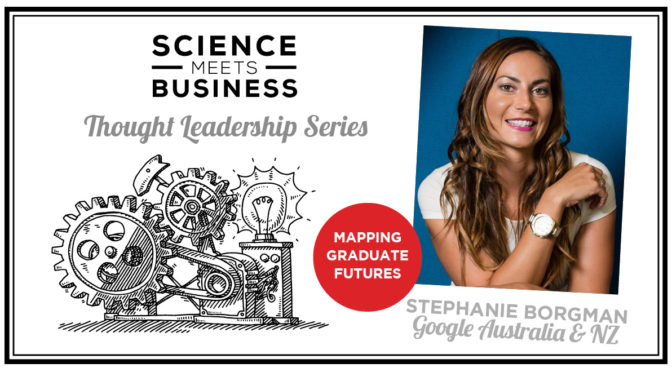
The value of Google interns

When you think of internships at Google you might think of interns riding around the office on scooters, eating endless supplies of free food and playing video games.

But when we talk to interns, that’s not why they come to Google.

Google interns come to work on products that affect millions of people around the world. They want to build technology that help people live happier and easier lives – products that change the way people access information, do business, learn and connect with each another.

In fact, when we surveyed students the most important factor influencing a decision to apply to Google was the opportunity to make an impact on the world. The least important factor was the famous perks. Students tell us they want to do cool things that matter.

In our Sydney office, Google interns get to work on products like Google Maps, which are used by one billion people around the world. They get to build crisis maps that are used in times of natural disaster.

And they’re working on some of the world’s coolest technology challenges, like how to make cars smarter, and how to build products for the next billion people who will be online.

Each year we host interns in order to inspire and encourage the next generation of tech innovators. Google interns gain valuable hands on experience and mentorship on Google teams. Students with fresh ideas are introduced to Google’s culture of innovation and will initiate some of our newest and interesting projects.

Interns bring in their big questions and then use Google’s resources to help them build the answers, as part of a team. The strongest Google interns are people who thrive on collaboration. People who enjoy working with others to find creative solutions to problems. This is how great answers are built.


To build more answers, we need interns from diverse backgrounds who aren’t afraid to fail. They are curious, and they love to learn and learn from their mistakes.”


Combining a degree in computer science (CS) with another discipline means students are more prepared to work across teams to build products for the world. Computer science, combined with another discipline brings with it new insights and new ways of approaching things. Students can combine CS with other passions in areas like music, retail, finance and health. They learn how to think big and rethink what is possible across any industry.

Internships also provide an opportunity to work with people with different attributes, experiences and points of view. Those differences make us stronger, more productive and more innovative. Intern programs like the Google STEP program (Summer Trainee Engineering Program) provide university students from traditionally under-represented groups in computer science with practical experience working on a software project early in their degree. They create opportunities that get students excited about Google, and inspired by a future career in technology.

Our mission has always been to ask the big questions and build better answers. To build more answers, we need interns from diverse backgrounds who aren’t afraid to fail. They are curious, and they love to learn and learn from their mistakes.

Despite interns eating more food than the rest of us at Google, they come in because they are excited about their work. We look forward to every intern season when we have another group of students working on some of the biggest challenges in technology across the globe.

Stephanie Borgman

People Programs Specialist, Google Australia/NZ

Read next: Leeanne BondChief Software Architect at Cochlear, on how thinking like an engineer can make a world of difference in business.

People and careers: Meet graduates and postgraduates who’ve paved brilliant, cross-disciplinary careers here, find further success stories here and explore your own career options at postgradfutures.com

Spread the word: Help to grow Australia’s graduate knowhow! Share this piece using the social media buttons below.

Be part of the conversation: Share your ideas on creating and propelling top Australian graduates. We’d love to hear from you!

More Thought Leaders: Click here to go back to the Thought Leadership Series homepage, or start reading the Australian Innovation Thought Leadership Series here.

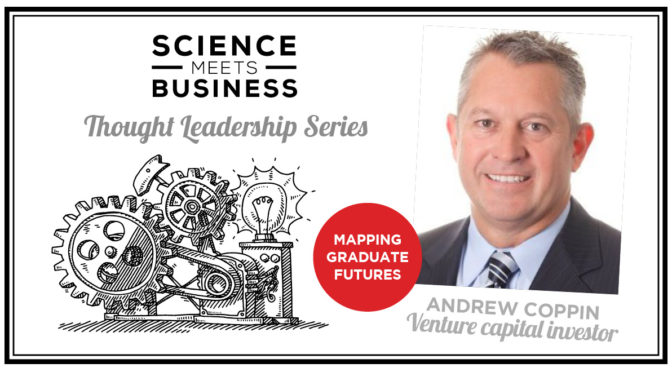
Founders fuelled by STEM

As a full time angel investor and venture capital investor I spend a considerable amount of my time meeting with founders from all walks of life. Ten years back that group would have largely consisted of a few random, risk-taking entrepreneurs and a bunch of computer science grads punching out code. My, how times have changed.

In this current “Innovation Era” it seems the whole world is seeking to get digital and disrupt something. The backgrounds, skills and mindsets in the startup scene are now far more diverse… and what a huge asset that is to the local ecosystem and future of innovation in Australia.

Most comforting to me over the past few years has been the increasing number of founders I’ve encountered from some formal STEM background that’s not just computer science, and how they are putting their ideas to the test. Diversity of thinking, ideas and actions seems to be the DNA of a healthy ecosystem. If we are to create a vibrant, sustainable innovation ecosystem in Australia then we must promote this sort of risk taking through academia and into commercialisation programs.

On a recent tour of Silicon Valley with the current cohort of the muru D accelerator program from Sydney, I had the pleasure of spending time with the founders of astro-educational startup Quberider and underwater inspections company Abyss Solutions.


“It was a pleasure to see these young STEM professionals stand up, pitch and impress some of the world’s most experienced startup investors with their passion and ideas that have true global application.”


Solange Cunin launched Quberider while still studying a Bachelor of Science and Engineering at UNSW, majoring in aerospace, aeronautical and astronautical engineering. Quberider’s director Sebastian Chaoui is undertaking a Bachelor of Engineering and Mechatronics at UTS, majoring in robotics and automation engineering. Abyss Solutions founder Masood Naqshbandi has a Masters in Materials Chemistry and Photonics from the University of Sydney. His highly qualified team hold a number of PhDs and masters degrees between them.

It was a pleasure to see these young STEM founders stand up, pitch and impress some of the world’s most experienced startup investors with their passion and ideas that have true global application. Their diverse skills, intimate knowledge of their subject matter and practical “can-do” attitudes put them in great stead to impress. So did the experiences they shared visiting one of the leading hubs of global startups and innovation.

If we are to create a truly innovative society in Australia that can help make the world a better place, then we need to foster entrepreneurialism among the excellent talent from our leading universities. Support from corporate incubators and accelerators to share business acumen will further accelerate their success. Supportive global capital will surely follow.

Andrew Coppin

Director, Bardama Startup Fund, Affirmative Investments and Timezone Group International

Read next: Attila BrungsVice-Chancellor and President of UTS, sheds light on how we can equip new generations of graduates with the right skills to compete in a changing global market.

People and careers: Meet graduates and postgraduates who’ve paved brilliant, cross-disciplinary careers here, find further success stories here and explore your own career options at postgradfutures.com

Spread the word: Help to grow Australia’s graduate knowhow! Share this piece using the social media buttons below.

Be part of the conversation: Share your ideas on creating and propelling top Australian graduates. We’d love to hear from you!

More Thought Leaders: Click here to go back to the Thought Leadership Series homepage, or start reading the Australian Innovation Thought Leadership Series here.

Engineering careers in business

Looking back, I’m so pleased that I chose to study maths and science at school – even though at the time I had no idea of the opportunities this would bring. Thirty years on, I’m a professional engineer and director of a fascinating portfolio of companies. These span a range of engineering and resources sectors such as electricity generation, retail, water, natural gas and minerals. I’m glad I chose an engineering career, and that many more women are now joining me in this industry.

Identifying business purpose

I’m hearing a lot about purpose in business – establishing why we are in business – and that resonates as much or more with customers than what our products are and how we sell them. STEM education can give us the practical and analytical tools to help identify the why, and then deliver the what and the how.

Today’s graduates need systems thinking – an understanding of the interactions between components of an organisation, product or problem – to work across disciplinary boundaries. This is crucial to developing sustainable solutions that will enable our society to transition from the industrial era to the digital era, and embrace the disruption of business with the rise of consumer power.


“Many of the most interesting challenges facing businesses require a broad understanding of economics, finance, politics, marketing and communication, as well as skills in STEM areas.”


Encouraging STEM education more broadly in our society

Girls (and boys) start out with a fascination for science as they explore the world during early childhood, but many seem to lose this fascination as they develop into adults. Fortunately, we know how to stimulate interest in STEM using hands-on activities, engaging role models and examples of real-world achievements. Results for the effort are fantastic.

My husband and I have experienced this first hand with our daughter who pronounced in Year 1 that ‘science was boring’, only to be subjected to a very successful intervention from her parents (one an amateur astronomer and myself an engineer). We are still on the watch for any dimming curiosity.

The Leeanne Bond Scholarship at The University of Queensland provides financial assistance for a first year female engineering student. It encourages pursuit of the wonderful engineering careers there are for women as well as men. In addition to showing passion, ability and need, all applicants write an essay on engineering and business. It’s clear from these essays that these young women aspire to shape their world and engage with business and society to achieve their goals.

Integrators, disruptors and translators in engineering careers

I’m very encouraged by the interest in coding and robotics for young children we see today. Having started my engineering career in an era of Fortran programming and computer cards – programming that is now done on laptops and mobiles – I’m keeping up-to-date with information technology and social media. I see the nexus between traditional mature large-scale, capital-intensive industries I know well like utilities and manufacturing, and the newer, radical, disruptive, emerging business models like 3D printing and ecommerce as exciting – and I want to be part of it.

Many of the most interesting challenges facing businesses, such as sustainability, require a broad understanding of economics, finance, politics, marketing and communication, as well as skills in STEM areas. To tackle these challenges, engineers and scientists work in cross-disciplinary project teams of people with diverse backgrounds and qualifications.

A great example of the rising need for cross-disciplinary skills is in the personal transportation industry, where technological disruption is ripe. I recently heard a senior executive from a European car manufacturer speak of the need to fuse engineering and technology skills. In the race to develop electric and autonomous vehicles, today’s car companies are adding coding expertise to their traditional engineering teams and aspiring disrupters like Apple and Google are hiring engineers to work alongside their technology staff.

It is an exciting time to be an engineer in business!

Leeanne Bond

Director, Breakthrough Energy

Read next: Victor RodriguesChief Software Architect at Cochlear, on getting into a top graduate program.

People and careers: Meet graduates and postgraduates who’ve paved brilliant, cross-disciplinary careers here, find further success stories here and explore your own career options at postgradfutures.com

Spread the word: Help to grow Australia’s graduate knowhow! Share this piece using the social media buttons below.

Be part of the conversation: Share your ideas on creating and propelling top Australian graduates. We’d love to hear from you!

More Thought Leaders: Click here to go back to the Thought Leadership Series homepage, or start reading the Australian Innovation Thought Leadership Series here.

Preparing graduates for the future of work

A new future of work is looming – one that is driven by the rapid pace of technological development and new approaches for interacting with colleagues and customers. In this future, STEM graduates are in higher demand than ever. They will find their place at the forefront of emerging industries – virtualisation, creative intelligence, robotics, data science are just to name a few – where they will co-exist with peers from a wealth of other disciplines.

As educators, we know the increasing importance of STEM skills in a world in which almost 40% of jobs that exist today are likely to disappear in the next 10–15 years. We know that today’s graduates will have 20–30 jobs over the course of their working lives. How can we prepare these graduates to respond to existing workforce needs, and perhaps more crucially, to workforce needs in industries that don’t yet exist?

First, we must fundamentally rethink the skills people will need, and how we support them acquiring these skills. Many of these will be numeracy and digital skills, such as those involved in data analytics and coding. Others will be sense-making skills that will enable people to absorb a wide variety of information to inform decision-making in a changing and complex environment.  The future workforce will also rely on very sophisticated interaction skills to facilitate collaboration in virtual, real and cross-cultural contexts.

The enterprises of tomorrow will not only need a greater prevalence of multifaceted digital and STEM capacity, but they will need more “boundary crossing” and creative problem solving skills in our STEM graduates. Underpinning this is an almost ubiquitous level of numeracy and digital literacy that does not currently exist in society.

There are many things universities can do to optimise the opportunities available to our STEM graduates, to ensure our graduates are agile, future-focused, committed to innovation and responsive to ongoing shifts in industry. To begin with, we can support the development of well-rounded STEM graduates, to more systematically emphasise the critical importance of cross-disciplinary training.

The ability of students to take their discipline expertise in science and engineering and apply it across a vast range of questions, jobs and sectors has always existed, but we need to be more deliberate about this into the future. We can embed collaborative, entrepreneurial, critical thinking and interpersonal skills at the core of all our courses. We can deliver educational experiences that champion student-led modes of learning, and treat students like professionals from the moment they commence their university careers. We can emphasise internships, work placements and volunteer opportunities that give students a taste of the world outside the classroom – be this in businesses, R&D laboratories or start-ups. We can involve industry more deeply in our assessment processes.

We can also provide development opportunities both on and off campus that encourage students to place their STEM skills in a wealth of exciting new contexts, from entrepreneurship programs to workshops in design thinking, and combined STEM/creative intelligence degrees. This has the added advantage of providing more visibly attractive opportunities for STEM graduates, increasing those Australians choosing STEM careers.

Similarly for non-STEM graduates, as well as much of the above, embedding contextual numeracy and increased data literacy into our courses will be vital.

If our aim is to create a generation of graduates who will lead the development of new and emerging sectors, and who will carve out competitive advantages for Australia, then we must focus on preparing them for the brave new world ahead. Let’s equip them to become creators, innovators and global thinkers with the capacity to untangle the wicked problems inherent in the future of work.

Attila Brungs

Vice-Chancellor and President, University of Technology, Sydney

Read next: Innes WilloxCEO of the Australian Industry Group, highlights the huge demand for STEM skills in today’s workforce and discusses why it’s paramount for students to gain industry experience while studying.

People and careers: Meet graduates and postgraduates who’ve paved brilliant, cross-disciplinary careers here, find further success stories here and explore your own career options at postgradfutures.com

Spread the word: Help to grow Australia’s graduate knowhow! Share this piece using the social media buttons below.

Be part of the conversation: Share your ideas on creating and propelling top Australian graduates. We’d love to hear from you!

More Thought Leaders: Click here to go back to the Thought Leadership Series homepage, or start reading the Australian Innovation Thought Leadership Series here.

Building STEM skills

There has been a lot of talk about the need to get more students studying STEM skills –science, technology, engineering and mathematics – to equip them for the jobs of tomorrow. For Australia to have the right mix of high value jobs and industries to maintain or improve our quality of life, we need more people with the digital and data-related skills that these jobs require.

A natural assumption would be that the reason we need to encourage students to study science and other STEM skills is to boost our research clout – the cohort of technically trained people within Australia’s university and publicly funded research laboratories. While of course Australia’s research capabilities are a pivotal element of our innovation ecosystem, this misses the point.

In my view, the areas where we desperately need more graduates with STEM skills include industry, government, politics and the entrepreneurial domain.

The ability to use complex data to make evidence-based decisions has never been more critical for decision-making – whether that be in the corporate boardroom, the executive suite, or the cabinet room. Most of the global challenges we face – from climate change to cyber crime – require a sophisticated understanding of STEM and basic STEM skills.

Technology offers solutions to many emerging problems. But experience from the nuclear debate to genetically modified crops tells us that when communities aren’t equipped with a good understanding of the scientific process and complexities behind these issues, it is extraordinarily difficult to secure the societal license required to introduce transformative technological solutions.

But the kicker is entrepreneurship – where young people have some of the best opportunities to harness rapidly emerging technological disruption to create high-value jobs. There is no question that many of these opportunities come from the STEM disciplines. We need to create opportunities where young people studying STEM skills are exposed to entrepreneurial ecosystems, have the chance to see first–hand what it takes and give it a go.


“We can’t afford to wait for more girls to select these traditionally male-dominated careers – we need to be proactive in creating pathways and incentives for girls to enter these fields.”


There are some STEM fields where we need to focus serious effort on getting more girls to engage. In particular, IT and engineering. Both areas are so critical to Australia’s future that we simply can’t afford to be building on half our talent base.

We can’t afford to wait for more girls to select these traditionally male-dominated careers. We need to be proactive in creating pathways and incentives for girls to enter these fields. We also need to provide much better systems and cultures to retain our capable women in STEM and research.

One simple thing we can do is profile and celebrate those female role models who are currently making an impact and are the top of their game in these STEM fields. The recently launched SAGE initiative will be pivotal in helping address the dire under-representation of women at the most senior levels in Australia’s universities and research organisations.

It’s worth noting that research, development, innovation and discovery are all about building from what’s already known. They’re about asking new questions and connecting existing knowledge. This is, at its heart, a creative process. We can’t forget that one of the critical elements in nurturing our most outstanding future engineers and scientists lies in supporting children to engage in the creative arts alongside STEM.

Tanya Monro

Deputy Vice Chancellor Research and Innovation, University of South Australia

Read next: Stephanie Borgman, People Program Specialist at Google Australia/NZ, on how internships offer mutual opportunities for students and businesses.

People and careers: Meet graduates and postgraduates who’ve paved brilliant, cross-disciplinary careers here, find further success stories here and explore your own career options at postgradfutures.com

Spread the word: Help to grow Australia’s graduate knowhow! Share this piece using the social media buttons below.

Be part of the conversation: Share your ideas on creating and propelling top Australian graduates. We’d love to hear from you!

More Thought Leaders: Click here to go back to the Thought Leadership Series homepage, or start reading the Australian Innovation Thought Leadership Series here.

Getting into a top graduate program

An excellent graduate program helped accelerate my career progress.

I arrived in Australia at the turn of the century. The trigger for leaving South Africa to move here was a little-known industrial automation software called Citect. I was inspired by this Australian invention, that back then was simply the most advanced, most innovative software in its industry.

It had been less than 10 years since I graduated from university with an Electrical Engineering degree, but the first five years were the most formative. The company that employed me as a fresh graduate had a fantastic graduate program, and equipped me with essential skills that have served me well for the past 25 years.

Today I look back on the 16 years I have been at Cochlear – another great Australian innovation – and am proud to have been part of an organisation that excels at nurturing young talent.


An undervalued characteristic is curiosity, coupled with the eagerness to experiment without the fear of failure.”


I’ve witnessed many excellent graduate programs develop in Australia and I believe they are vital for helping young professionals to realise their full potential. We’ve been running our own graduate program at Cochlear for the last 10 years. Many of the graduates who began their careers in that program are now in leadership positions and excelling at their jobs. One of the reasons it has been so successful is because Cochlear focuses on hiring people with skills that set them up for success.

Possessing the technical fundamentals taught in STEM-based degrees is only part of what we look for in a prospective graduate. Other important attributes are intuition, creativity, critical thinking, communication skills and the ability to work collaboratively within and between multidisciplinary teams.

Collaboration in particular has become such an important attribute in a young people entering graduate programs. I cannot emphasize enough the need to develop this ability early, especially when aspiring to leadership roles. The days of the lone, genius contributor have all but gone. Today, the projects and startups that produce ground-breaking products achieve this because of the team-collaboration factor. Nothing says this more outspokenly than when Atlassian listed on The NASDAQ Stock Market and named their stock symbol “TEAM”.

Perhaps another undervalued characteristic in graduates is curiosity, coupled with the eagerness to experiment without the fear of failure. A number of companies have a graduate program that formalises this process. Google and Atlassian are two companies that have successfully implemented 20% experiment time. There are countless examples of successful products that were born from these programs, such as Gmail, AdSense and Google News.

Often in an interview I will ask a candidate what they do in their spare time – the things they don’t put on their resumes, which might indicate a genuine thirst for knowledge.

Looking more closely at the foundation of Australian graduates, I’d like to add a few thoughts on STEM education in schools. In a 2014 Australian Mathematical Sciences Institute report, Kelly Roberts provides some disturbingly low participation rates of women in STEM subjects in high school. As the father of two daughters, my hope is that education systems will improve in order to draw out the innate inquisitiveness of young kids.

Let us build on that capability at an early age and nurture it. Let us teach them reasoning and critical thinking skills as young as possible. These skills are the means to building a stronger Australia.

Victor Rodrigues

Chief Software Architect, Cochlear 

Read next: Andrew Coppin, venture capital investor, on the changing demographic of founders in today’s startup scene.

People and careers: Meet graduates and postgraduates who’ve paved brilliant, cross-disciplinary careers here, find further success stories here and explore your own career options at postgradfutures.com

Spread the word: Help to grow Australia’s graduate knowhow! Share this piece using the social media buttons below.

Be part of the conversation: Share your ideas on creating and propelling top Australian graduates. We’d love to hear from you!

More Thought Leaders: Click here to go back to the Thought Leadership Series homepage, or start reading the Australian Innovation Thought Leadership Series here.

Industry experience propels graduates

STEM education and industry experience are key to delivering relevant skills in the information-rich modern economy. When it comes to important capabilities such as active learning, critical thinking and complex and creative problem solving, STEM qualified employees are the most highly ranked.

Australia clearly needs more STEM-qualified people entering the workforce. Over recent years, occupations requiring STEM qualifications have grown 1.5 times faster than all other occupation groups. Unfortunately, only 15% of the current working age population have a STEM qualification (Certificate III or above).

Research by the Office of the Chief Scientist with Deloitte Access Economics demonstrates the nature of STEM skills sought by employers. Eighty-two per cent of employers believe employees with STEM qualifications are valuable to the workplace. Over 70% consider their STEM staff as among the most innovative. The important link between STEM skills and innovation is also highlighted in the Australian Government’s new National Innovation and Science Agenda.

Business must collaborate with universities and other STEM educators to re-focus graduate capabilities. There are concerns around the ability of current university graduates to meet workforce challenges. The Australian Industry Group‘s Workforce Development Needs Surveys report that employers continue to experience difficulties recruiting STEM qualified workers – both technicians and professionals.

Quality is as much an issue as quantity. The proportion of employers saying recruits lack relevant qualifications doubled between 2012 and 2014. Dissatisfaction also rose with regards to lack of employable skills and industry experience.


“All graduates are better prepared to contribute productively in the workplace if they have the opportunity to integrate theory with industry experience while at university.”


Graduates are taking longer to find employment after the completion of their studies. All graduates are better prepared to contribute productively in the workplace if they have the opportunity to integrate theory with industry experience while at university.

Work integrated learning is critical to improving graduate quality and employability. The Australian Industry Group (Ai Group) is working with Universities Australia on a number of initiatives to improve student-industry accessibility, including the National Framework for Work Integrated Learning.

Businesses recognise that productivity of graduates can be higher sooner if the new recruits understand business environments and cultures, can problem solve, take initiative and work well in teams. Those businesses that collaborate and practice work integrated learning see its value in the graduates they take on board.

To improve innovation collaboration in Australia, we need action from government, universities, and industry. Ai Group is part of the Innovative Manufacturing Cooperative Research Centre, which helps connect researchers and their work with small and medium sized businesses. That is where the potential for genuine industry transformation lies.

A broader effort by industry to build collaboration skills and practices is also needed. The cultural barriers to collaboration may be higher in Australia than elsewhere, but they are not set in stone. Industry participation and partnership with universities must be bolder and strongly integrated with approaches to graduate employability.

Innes Willox

CEO, Australian Industry Group

Read next: Tanya MonroDeputy Vice Chancellor Research and Innovation at the University of South Australia, on why STEM skills are key to Australia’s prosperity.

People and careers: Meet graduates and postgraduates who’ve paved brilliant, cross-disciplinary careers here, find further success stories here and explore your own career options at postgradfutures.com

Spread the word: Help to grow Australia’s graduate knowhow! Share this piece using the social media buttons below.

Be part of the conversation: Share your ideas on creating and propelling top Australian graduates. We’d love to hear from you!

More Thought Leaders: Click here to go back to the Thought Leadership Series homepage, or start reading the Australian Innovation Thought Leadership Series here.

Fast-tracking women in STEM

Featured image above: Jane Elith from the University of Melbourne is an early career researcher, yet in the field of environment and ecology, she is the 11th most cited author worldwide over the past 10 years, and is the only Australian woman on the highly cited list. Women in STEM represent just 18% of academic positions in Australia.

Advocacy for gender equity in science is changing, with men as likely as women to make the case for increased participation for women in STEM, former Sex Discrimination Commissioner Elizabeth Broderick says.

And there’s a simple business case as to why: “No one of us can ever be as good as all of us acting together,” says Broderick, who served as Sex Discrimination Commission from 2007–2015 and in 2010 founded the Male Champions of Change group, which brings together some of Australia’s most influential and diverse male CEOs and Chairpersons.

“Women represent such a small percentage of [staff at the] professorial level and organisation leading level, and yet 50% of our talent resides in women,” Broderick told 320 delegates at the SAGE symposium on Friday 24 June.

SAGE is Australia’s Science and Gender Equity initiative to promote gender equity for women in STEM. Broderick will chair the program, which with the Male Champions of Change group will receive the bulk of the $13 million National Innovation and Science Agenda funding to support women in STEM careers.

Practical initiatives for women in STEM

SAGE runs the Athena Swan Charter, which takes a data analysis approach to effect change in organisations, which then work towards a series of awards based on the success of their gender equity programs.

On Friday SAGE announced that another eight organisations including the Burnet Institute, Federation University Australia, James Cook University, Defence Science and Technology Organisation, Bond University, Macquarie University, University of the Sunshine Coast, and the Australian Astronomical Observatory had signed on for the charter, bringing total participation in Australia to 40 research and academic institutions.

Women make up just 16% of the STEM-qualified workforce, according to the Chief Scientist’s March 2016 report, Australia’s STEM Workforce.

“At a turning point”

“We are at a conscious turning point for enabling equity for women scientists. We need role models that can unconsciously change perceptions,” says Dr Susan Pond AM, Co-Chair of SAGE and Interim Chief Operating Officer and Adjunct Professor in Sustainability at the United States Studies Centre at the University of Sydney.

Broderick adds that while women comprise more than half of graduates and postgrads in STEM, they comprise just 18% of academic positions. “The absence of women perpetuates the absence of women.”

“If we don’t actively and intentionally include women, the system will unintentionally exclude them.”

The gender pay gap also sits at around 18%, Broderick says.

Two practical ways the Male Champions of Change addresses gender equity for women in STEM is through the ’50:50, if not why not’ and the panel pledge, says Broderick.

In the panel pledge, males commit to speaking at events only if there is equal representation by women in STEM, and reserve the right to pull out even at the last minute if this isn’t happening.  The Male Champions of Change developed the ’50:50, if not why not’ slogan in response to gender inequity.

“In our DNA”

Seeking out and addressing gender imbalance “ought to be in our institutional DNA”, Australia’s Chief Scientist, Dr Alan Finkel, told the symposium.

Fewer than one-third of graduates in 2011 (the latest figures available from the Australian census) were women in STEM, says Finkel.

“I look to universities to not just reflect society today, but to model the society of tomorrow.”

– Heather Catchpole

$22.6 million research funding

The Australian Government just announced that it will invest $22.6 million in new research funding for 11 CRC-Projects (CRC-Ps), with funding to start from July 2016. The Department of Industry, Innovation and Science received ninety-one applications in the first round for CRC-Ps, speaking volumes to the level of interest by business as well as the highly competitive nature of the bid process.

CRC-Ps were developed by the government in response to the Miles Review handed down last year. David Miles recommended that three rounds be held every year. The next CRC-P round is expected to open in August 2016 with outcomes announced in November and funding from January 2017. The schedule for anticipated CRC and CRC-P funding rounds can be found here.

“Improving collaboration between researchers and industry to cultivate a more innovative and entrepreneurial economy is a key pillar of the Government’s National Innovation and Science Agenda,” said the Minister for Industry, Innovation and Science, The Hon Christopher Pyne.

“We’ve placed industry at the front and centre of the CRC Programme so we can build on our strengths in high quality research to improve the competitiveness, productivity and sustainability of Australian industries.”

Successful CRC-P 1st Selection Round Projects can be found here.

Funded Projects

  • The future integrated driver monitoring solution for heavy vehicles
  • Hydrocarbon fuel technology for hypersonic air breathing vehicles
  • Printed solar films for value-added building products for Australia
  • Translational R&D to accelerate sustainable omega-3 production
  • CRC-P for Innovative Prefabricated Building Systems
  • An antibody based in vitro diagnostic for metastatic cancer
  • High performance optical telemetry system for ocean monitoring
  • Combined carbon capture from flue gas streams and mineral carbonation
  • Strengthening Australia’s radiopharmaceutical development capabilities
  • Innovation in Advanced Multi-Storey Housing Manufacture
  • Future Oysters CRC-P

Outcomes of stage one of the 18th selection round of CRCs are expected in July and applications will open for those invited to Stage Two. Final outcomes are expected to be known by the end of the year.

This article was first published by the CRC Association on 22 June 2016. Read the original article here

Continuous deployment

Imagine you work as a developer for Etsy. In case you haven’t heard of Etsy, it is a marketplace where people around the world connect, both online and offline, to make, sell and buy unique goods. It has 1.5 million sellers, almost 22 million active buyers, and in 2014 it had gross merchandise sales of almost $2 billion. So you could say it’s doing quite well.

Now let’s just say you happen to notice a problem with the Etsy website, or perhaps you think of a way it could be improved. At most organisations you would probably tell your manager about the problem, who would probably tell his or her manager, and after waiting a few weeks you might then get approval to make your desired change. In short, you have very limited ability to make changes you believe are important.

At Etsy it’s a completely different story. When I met up with Chad Dickerson, Etsy’s CEO and chairman, in their Brooklyn offices in New York, he told me that anyone in the team can make a change to the Etsy website whenever they see a need. (Etsy.com had over 40 million unique views per month when we spoke; at the time of writing it has around 60 million.)

‘We do something on the engineering team called continuous deployment’, explains Dickerson. ‘That’s a fancy way of saying that we’ve given every software developer, every product manager the ability to change the site at any time. Back in 2009 when we started this approach, not many companies were doing this. Typically, websites do a release every two weeks. We release or do code deploys about 35 times a day [this has since increased to up to 50 times per day]. The really exciting thing is that there’s no central authority that manages the releases.’

In practice, the developers at Etsy manage the releases with each other. ‘If I’m a developer and I’m making a change to the site, I get into what’s called a push queue. I tell everyone else that I’m about to push code and it’s almost like the whole neighbourhood is watching you’, says Dickerson.

Every single person at Etsy has the ability to do this without explicit approval. It’s very, very decentralised and very, very fast. And if you ever go for a tour around Etsy’s head office in Brooklyn, you will see monitors with all kinds of charts and graphs showing how many code deploys they have done in a day.

Through continuous deployment, the team at Etsy is always experimenting and gathering data. ‘We are able to push things out and test, push things out, test, push things out, test, on a really rapid basis’, says Dickerson. ‘We’re able to learn about products and make changes for the better pretty much constantly. If you have a two-week release cycle, you can only learn new things every two weeks. In our case, you learn something new every 20 minutes, which is really exciting.’

One final key benefit of continuous deployment is that the approach has a bias towards action. In an organisation where releases are done only every couple of weeks, or every month or so, it becomes so easy for someone to suggest improvements and for that suggestion to get lost in the noise. ‘I think when you can deploy code at any time and make a change at any time, it makes it a lot harder to say “We should do this”, because the answer is: ‘just do it’, says Dickerson.

By giving everyone in the organisation the power to make real change, innovation is dramatically enhanced. You might be thinking, ‘There is no way I would trust my team to make changes to a website that is getting 40 million unique views a month’. But think about it from an Etsy developer’s point of view. There is no way they are going to make a change without feeling very confident it will make the website better, because all eyes are on them.

Etsy certainly isn’t the only large web-based organisation that encourages continuous deployment. Vimeo, one of the world’s largest video-sharing websites, has exactly the same policy. Any given day will see over 30 changes deployed to vimeo.com.

‘You can’t keep track of all the pushes that go on because they’re constantly fixing, they’re constantly upgrading. We just try not to do things on Friday afternoons!’ says
 Dae Mellencamp, Vimeo’s president.

The essence of continuous
 deployment is that it grants employees autonomy over their 
work. People have the freedom to fix things that need fixing, and make 
improvements where they see fit.
Continuous deployment doesn’t require managerial approval, nor does it involve a manager simply telling an employee what to do.

continuous deployment

Dr Amantha Imber is the Founder of Inventium, Australia’s leading innovation consultancy.

Find out more about her latest book, the Innovation Formula, here.

Data driven communities

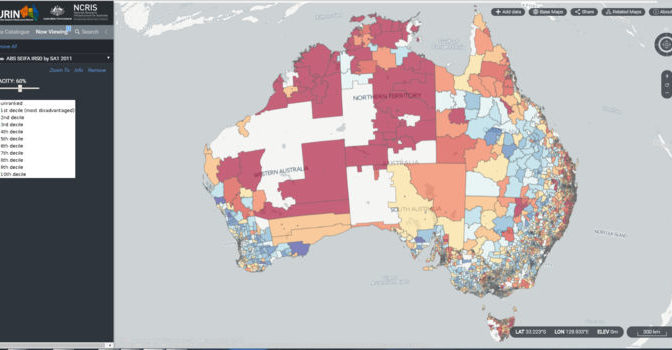
Featured image above: the AURIN Map implements a geospatial map publicly available online. Credit: Dr Serryn Eagelson, AURIN

Ildefons Cerdà coined the term ‘urbanisation’ during his Eixample (‘expansion’) plan for Barcelona, which almost quadrupled the size of the city in the mid-19th century.

Cerdà’s revolutionary scientific approach calculated the air and light inhabitants needed, occupations of the population and the services they might need. His legacy remains, with Barcelona’s characteristic long wide avenues arranged in a grid pattern around octagonal blocks offering the inhabitants a city in which they can live a longer and healthier life.

Since Cerdà’s time, urban areas have come a long way in how they are planned and improved, but even today disparities are rife in terms of how ‘liveable’ different areas are. “Liveability is something that I’ve been working on most recently,” says Dr Serryn Eagelson, Data, Business and Applications Manager for the Australian Urban Research Infrastructure Network (AURIN).

Eagelson describes her work in finding new datasets as a bit like being a gold prospector. “It encompasses walkability, obesity, clean air, clean water – everything that relates to what you need in order to live well.”

In collaboration with more than 60 institutions and data providers, the $24 million AURIN initiative, funded by the Australian Government and led by The University of Melbourne, tackles liveability and urbanisation using a robust research data approach, providing easy access to over 2,000 datasets organised by geographic areas. AURIN highlights the current state of Australia’s cities and towns and offers the data needed to improve them.

“We have provided AURIN Map to give communities the opportunity to have a look at research output,” says Eagelson. Normally hidden away from public eyes, the information in the AURIN Map can be viewed over the internet and gives communities an unprecedented opportunity to visualise and compare the datasets on urban infrastructure they need to lobby councils and government for improvements in their area.

Recently, AURIN has teamed up with PwC Australia – the largest professional services company in the world – to pool skills, tools and data. “We’re also working with PwC in developing new products,” adds Eagelson. “It’s quite complicated but PwC’s knowledge is giving us new insights into how data can be used for economic policy.”

The Australian National Data Service (ANDS) also has strong links with AURIN, having undertaken a number of joint projects on topics such as how ‘walkable’ neighbourhoods are, which can then be used to plan things like public transport accessibility (even down to where train station entrances and exits should be located); urban employment clusters, which can aid decision-making on the location of businesses; and disaster management, where the collaborators developed a proof-of-concept intelligent Disaster Decision Support System (iDDSS) to provide critical visual information during natural disasters like floods or bushfires.

“I’m probably most excited by a project releasing the National Health Service Directory – a very rich dataset that we’ve never had access to before,” says Eagelson. “It even includes the languages spoken by people who run those services, and that data’s now being used to look at migrants to Australia, where they move from suburb to suburb, and how their special health needs can be best catered for – so this information has a big public health benefit.”

This article was first published by the Australian National Data Service in May 2016. Read the original article here.

Using nanoparticles to transform glass

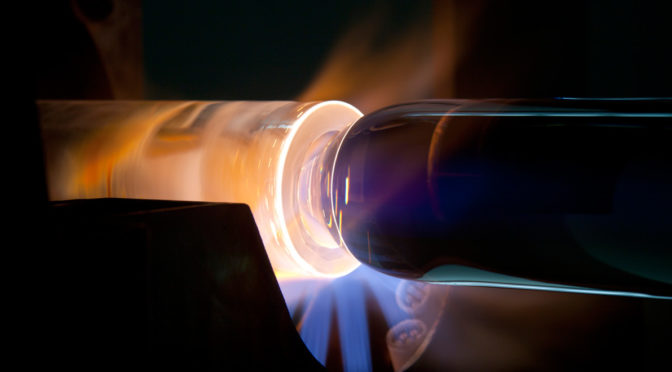
Featured image above: the making of a glass optical fibre

The innovative method was developed by researchers from The University of Adelaide in South Australia, which enables the glass to hold transparency and proceed into various shapes including very fine optical fibres.

Principal researcher Tim Zhao says this new method of injecting upconversion nanoparticles into glass could have multiple applications including remote nuclear radiation sensors, interactive 3D display screens and biomedical engineering equipment.

“For example, neuroscientists currently use dye injected into the brain and lasers to be able to guide a glass pipette to the site they are interested in,” he says.

“If fluorescent nanoparticles were embedded in the glass pipettes, the unique luminescence of the hybrid glass could act like a torch to guide the pipette directly to the individual neurons of interest.”

Upconversion nanoparticles are able to convert near infrared radiations with higher energy emissions or visible light.

They exhibit unique luminescent properties and show great potential for imaging and biodetection assays.

Zhao, a researcher at the University of Adelaide’s Institute for Photonics and Advanced Sensing (IPAS), says previous methods of integrating upconversion nanoparticles into glass did not allow researchers to have control over the nanoparticle properties, making it difficult to disperse.

“The key to our method was finding a balanced temperature. We heated the glass at a really high temperature, about 550-575°C, making it really homogenous to return its optical properties,” he says.

“After it was melted we lowered the temperature down as low as possible. Lowering the temperature makes it foam like water and then like honey at room temperature. At that point we enter in our nanoparticles and the glass helps it all disperse in time.”

Although the new method was developed with upconversion nanoparticles, researchers believe their new “direct-doping” approach can be generalised to other nanoparticles with interesting photonic, electronic and magnetic properties.

“We’ve seen remarkable progress in this area but the control over the nanoparticles and the glass compositions has been limited, restricting the development of many proposed applications,” says project leader Professor Heike Ebendorff-Heideprem.

“With our new direct doping method, which involves synthesising the nanoparticles and glass separately and then combining them using the right conditions, we’ve been able to keep the nanoparticles intact and well dispersed throughout the glass.

“We are heading towards a whole new world of hybrid glass and devices for light-based technologies.”

The research was conducted in collaboration with Macquarie University and University of Melbourne. It was published online in the journal Advanced Optical Materials.

– Caleb Radford

This article was first published by The Lead on 7 June 2016. Read the original article here.

Portable paper sun sensor

Summer is a wonderful time for trips to the beach, outdoor barbecues and sunbathing. But too much sun can result in sunburn, which is the main cause of skin cancer. Because the time it takes to get burned depends on many factors, it is not easy to tell when to seek shade.

To help people stay safe, researchers report in ACS Sensors the development of a paper-based sensor for monitoring sun exposure given different skin tones and sunscreen levels.

Most currently available UV sensors require high-tech gadgets to operate, such as smartphones or wearable devices. Recently, single-use, disposable sunburn sensors have come onto the market. However, some of these sensors use substances that are potentially harmful to people or the environment. Others are only good for specific skin tones.

Thus, J. Justin Gooding and colleagues from UNSW Australia set out to create a disposable sunburn sensor that is inexpensive, is composed entirely of safe and benign materials and can be easily calibrated to take into account different skin tones and Sun Protection Factors (SPFs) of sunscreens that are applied on the skin.

The group created a sun-exposure sensor by inkjet printing titanium dioxide, a nontoxic and inexpensive compound, and a food dye on paper. When enough UV radiation hits the sensor, titanium dioxide causes the dye to change colour, warning people to get out of the sun or apply more sunscreen.

To adjust the sensor for various skin tones and sunscreen use, the group added UV neutral density filters that can speed up or slow down the discolouration time of the sensor.

The researchers acknowledge funding from the Australian Research Council Centres of Excellence funding scheme.

This article was first published by ACS on 25 May 2016. Read the original article here.

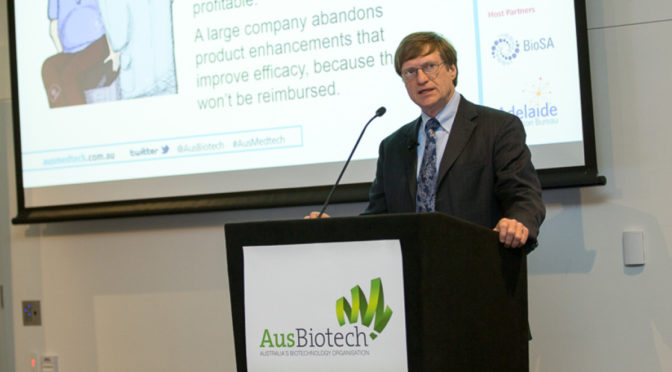
Demanding data for better healthcare

Featured image above: President of Cook Advanced Technologies Neal Fearnot discusses issues facing the global healthcare sector at AusMedtech. Credit: AusMedtech

The medical sector has long been searching for faster, cheaper, better data to improve patient responses to medical devices and therapies. More data is also needed to help inform investment decisions in research and technology, meet regulatory requirements and validate new products entering the market.

Pressure on each of these activities is increasing as the world’s population ages, and more people require healthcare. The rising demand for data is also a product of new regulatory organisations and legislative measures, which aim to protect society from poor technology. In Europe, for example, one of the proposed new directives from the European Commission is for some medical device companies to provide post-market clinical data for their products annually, which will require ongoing data collection from patients and customers.

Problems surrounding the need for data extend well beyond the cost and time required to run clinical trials and build new platforms to deal with data. Major issues lie in moving data between the many parts of the healthcare industry that have traditionally operated separately, such as biomedical and pharmaceutical companies, research facilities, medical practitioners and hospitals.

The separation between these entities means that healthcare data sits in ‘data silos’, and efforts to connect the information held by each party are held back by logistical, social and political barriers, such as public concern over the loss of privacy if health records are shared.

These issues and potential solutions were examined in detail by industry leaders at the AusMedtech conference held in May. AusMedtech is an annual event run by AusBiotech, which brings together representatives from across the medical industry to showcase health innovations and examine issues facing the sector.

“In order to ensure a medical therapy or device remains safe, effective and performing correctly, companies have to figure out how to get feedback data from their products continually,” says Neal Fearnot, Vice President of Cook Group Incorporated in the USA, and key speaker at AusMedtech. “That’s a global challenge.”

One of the major focuses of the conference was how to employ a “patient-centric” approach in solving this problem.

“Of all the stakeholders that we have, the patient is the most important,” says Fearnot. “The rest of us in the industry have to think about how to make policy, equipment and procedures more effective so that when the patient needs healthcare, they get what they need.”

On the one hand, this means asking patients to drive change. Lee Hickin, Microsoft’s commercial lead for the Internet of Things, was at the conference to talk about the future of health IT. He says that in order to break down existing data silos, patients need to demand connectivity.

“They need to say to the creators of these products, ‘Why isn’t your product connectable? Why doesn’t it communicate with other services?’.”

The industry hopes that if patients can get a hold of their own data, they will be empowered to make better health decisions, which will in turn reduce the burden on medical facilities.

While Microsoft is not a traditional member of the medical industry, Hickin says they see self-care as core to the future evolution of healthcare.

“We believe that as we as individuals become more aware of our health, we will take more care of our health.”

The topic was raised in a different light at Meditech, a separate medical technology event in May by the Warren Centre. Cochlear’s Chief Software Architect Victor Rodrigues was a panellist at the event, and made the point that when it comes to self-care technologies, people are often afraid of losing contact with a physician.

But Hickin believes that’s not the aim of these technologies. “It’s not about replacing clinical and consultation health,” he says. “It’s just about the individual knowing what their physical state is.”

– Elise Roberts

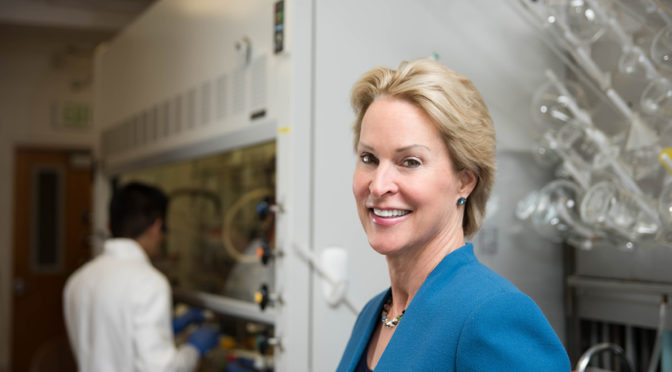
First woman wins Millenium Technology Prize

Featured image above: Frances Arnold. Credit: Caltech

Frances Arnold, the Dick and Barbara Dickinson Professor of Chemical Engineering, Bioengineering and Biochemistry at the California Institute of Technology (Caltech), has been awarded the Millennium Technology Prize for her “directed evolution” method, which creates new and better proteins in the laboratory using principles of evolution. The Millennium Technology Prize, worth one million euros (approximately A$1.5 million), is the world’s most prominent award for technological innovations that enhance the quality of people’s lives.

Directed evolution, first pioneered in the early 1990s, is a key factor in green technologies for a wide range of products, from biofuels to pharmaceuticals, agricultural chemicals, paper products, and more.

The technique enlists the help of nature’s design process — evolution — to come up with better enzymes, which are molecules that catalyse, or facilitate, chemical reactions. In the same way that breeders mate cats or dogs to bring out desired traits, scientists use directed evolution to create desired enzymes.

“We can do what nature takes millions of years to do in a matter of weeks,” says Arnold, who is also director of the Donna and Benjamin M. Rosen Bioengineering Centre at Caltech. “The most beautiful, complex, and functional objects on the planet have been made by evolution. We can now use evolution to make things that no human knows how to design. Evolution is the most powerful engineering method in the world, and we should make use of it to find new biological solutions to problems.”

Directed evolution works by inducing mutations to the DNA, or gene, that encodes a particular enzyme. An array of thousands of mutated enzymes is produced, and then tested for a desired trait. The top-performing enzymes are selected and the process is repeated to further enhance the enzyme’s performance. For instance, in 2009, Arnold and her team engineered enzymes that break down cellulose, the main component of plant-cell walls, creating better catalysts for turning agricultural wastes into fuels and chemicals.

“It’s redesign by evolution,” says Arnold. “This method can be used to improve any enzyme, and make it do something new it doesn’t do in nature.”

Today, directed evolution is at work in hundreds of laboratories and companies that make everything from laundry detergent to medicines, including a drug for treating type 2 diabetes. Enzymes created using the technique have replaced toxic chemicals in many industrial processes.

“My entire career I have been concerned about the damage we are doing to the planet and each other,” says Arnold. “Science and technology can play a major role in mitigating our negative influences on the environment. Changing behavior is even more important. However, I feel that change is easier when there are good, economically viable alternatives to harmful habits.”

“Frances is a distinguished engineer, a pioneering researcher, a great role model for young men and women, and a successful entrepreneur who has had a profound impact on the way we think about protein engineering and the biotechnology industry,” says David Tirrell, the Ross McCollum-William H. Corcoran Professor of Chemistry and Chemical Engineering at Caltech. “The Millenium Technology Prize provides wonderful recognition of her extraordinary contributions to science, technology, and society.”

Arnold received her undergraduate degree in mechanical and aerospace engineering at Princeton University in 1979. She earned her graduate degree in chemical engineering from UC Berkeley in 1985. She arrived at Caltech as a visiting associate in 1986 and became an assistant professor in 1987, associate professor in 1992, professor in 1996, and Dickinson Professor in 2000.

She is the recipient of numerous awards, including in 2011 both the Charles Stark Draper Prize, the engineering profession’s highest honor, and the National Medal of Technology and Innovation. Arnold is one of a very small number of individuals to be elected to all three branches of the National Academies—the National Academy of Engineering (2000), the Institute of Medicine (2004), and the National Academy of Sciences (2008)—and the first woman elected to all three branches.

“I certainly hope that young women can see themselves in my position someday. I hope that my getting this prize will highlight the fact that yes, women can do this, they can do it well, and that they can make a contribution to the world and be recognised for it,” says Arnold.

The Millennium Technology Prize is awarded every two years by Technology Academy Finland (TAF) to “groundbreaking technological innovations that enhance the quality of people’s lives in a sustainable manner,” according to the prize website. The prize was first awarded in 2004. Past recipients include Sir Tim Berners-Lee, creator of the World Wide Web; Shuji Nakamura, the inventor of bright blue and white LEDs; and ethical stem cell pioneer Shinya Yamanaka. Arnold is the first woman to win the prize.

– Whitney Clavin

This article was first published by Caltech on 24 May 2016. Read the original article here.

First low carbon finder app

In an Australian first, the tourism business community in the Blue Mountains has proved that a low carbon future for businesses and users is possible, with the launch today of one of the most extensively researched low carbon regional programs.

The Blue Mountains Low Carbon Living program released its website and web app designed to support and promote businesses that have reduced their carbon footprint and at the same time provide residents and visitors an opportunity to reduce theirs by choosing low carbon services.

Of 200 Blue Mountains visitors and 100 residents surveyed in April 2016 regarding their own carbon footprint,  94% said they were concerned and 85% said they were prepared to choose business services with a low carbon footprint.  Nearly 70% also said they would use a website or app that identified local businesses that had achieved reduction ratings to make their choice.

Funded by the CRC for Low Carbon Living (CRCLCL), the new web and app program can be easily transferred to other communities and is set to be taken up by other regions in NSW and nationally.

CRCLCL project leader and Executive Director of the Blue Mountains World Heritage Institute (BMWHI) Dr John Merson says the audit techniques developed for the 30 local businesses in the pilot program, along with the rating scheme and website were designed to be easily transferrable to other communities.

“Overall our audits reviewed the business’ energy, water and waste usage, advised on how to be more efficient in using carbon based resources,  then assessed what they had done and calculated the carbon reduction.  From this we provided a gold, silver or bronze rating for the website,” says Merson.

“Some businesses have achieved up to 15% carbon reductions in one year with many having further plans to increase this figure by adding more solar or introducing water recycling, for example.

“Businesses involved in the project include hotels, bed and breakfasts, restaurants, cafes plus transport and activity providers.  Their incentive to be involved is that by lowering their carbon footprint they will attract more customers who in turn seek to lower their own footprint by using low carbon services. 

“The website is ultimately a way of promoting the businesses’ carbon reduction achievements and at the same time providing residents and visitors with the opportunity to support them.”

One local business given a gold rating – Silvermere Guest House – have  not only reduced their energy use through solar systems, but also their potable water use by around 40% through a variety of recommended water saving initiatives. They are planning further energy savings over the next 12 months including the introduction of a solar powered robotic lawn mower. 

“Our plans include increasing the number of solar panels and purchasing a rechargeable robot lawn mower to replace the current petrol burning mowers,” says owner Cathy.

According to CRCLCL CEO Professor Deo Prasad, worldwide tourism accounts for 5% of greenhouse gas emissions and makes up 5.6% of Australia’s emissions so the new website and app package was a significant achievement.

“Now we have a proven low carbon audit system, website and app package available through this project, more business communities and carbon emission conscious individuals in Australia and around the world can benefit as it is rolled out and further developed,” says Prasad.

“We are very pleased with what this project has achieved and what it has to offer for a low carbon future.” 

Today’s launch was held in Katoomba and included a variety of presentations from local business leaders and researchers.

This information was first shared by the Low Carbon Living CRC on 26 May 2016.

Fighting poverty and championing equality

Featured image above: Laura Boykin (centre) and her colleagues.

The University of Western Australia‘s biologist Dr Laura Boykin has long been fascinated by science. But it wasn’t until she started working in East Africa to help farmers that she truly realised its power to make a difference.

Once she did that, she was hooked.

It’s this feeling of making a difference that lures her to some of the poorest regions on earth to understand and control whiteflies (Aleyrodidae), and their menace on the cassava crop that feeds some 800 million people in the developing world.

Understanding whitefly and its impact on cassava not only increases yields but also tackles poverty. Aiding the crop’s growth is quite literally saving lives.

“Cassava is dying at an alarming rate and a lot of people are worried that if this plant is not on farms there’s going to be a large portion of people without enough to eat,” Boykin says.

So now does she help? Whiteflies kill cassava by transmitting viruses to the plant when they feed on it.

The native whiteflies are increasingly turning to cassava as a food source as temperatures warm and other food sources disappear.

Boykin and her colleagues from East Africa have come to realise there are many different sorts of whitefly, with varying degrees of impact.

in text_lauraboykin

Laura Boykin with some of the farmers she seeks to help through her scientific work. Credit: Laura Boykin.

So they have been studying the genome sequence of the whiteflies to determine which ones pose the most risk. And they hope to eventually develop a whitefly-resistant variety of cassava.

In the meantime, Boykin and her colleagues help where they can by advising farmers when to plant what species of food in a bid to prevent whitefly impact.

In doing so, they are also building the capacity of East African scientists wanting to work on genomes and the supercomputing required to decode DNA sequencing.

Helping her fellow scientists in this way is what really fires her up.

“If you look around in science, you’ll see it’s a white person’s game,” she says.

“I don’t think that’s right and it’s boring. Scientists in East Africa are brilliant – they just don’t have the same access to resources. So I want to do everything I can to help remove those barriers.

“When I’m in a nursing home I’m not going to remember the papers I’ve written, I’m going to remember the people—that’s what gets me out of bed and makes me so excited about my work.”

Boykin is sharing tales of her fight against the whitefly at Pint of Science Australia.

– Samille Mitchell

This article was first published by ScienceNetwork WA on 21 May 2015. Read the original article here.

Transforming Australian automotives

More than $3 million in Australian Research Council (ARC) funding has been awarded to RMIT to establish a new centre that will support the transformation of the nation’s automotive industry.

Funded by the ARC Industrial Transformation Research Hub scheme, the RMIT Centre in Lightweight Automotive Structures brings together 31 world-leading scientists and industrial engineers from 16 organisations from Australia, Germany, the United Kingdom and the USA.

Professor Calum Drummond, Deputy Vice-Chancellor Research and Innovation and Vice-President at RMIT, says the grant builds on the university’s commitment to help shape a vibrant Australian manufacturing sector in the global economy.

“RMIT’s distinctive approach to connected education and research links creative ideas with technical knowledge and focuses on the challenges and opportunities emerging around the world,” says Drummond.

“Australia’s automotive industry is undergoing a major structural change, due to the cessation of motor vehicle assembly by the end of 2017.

“This places more than 260 local component manufacturers, which form Australia’s automotive supply chain, under extreme pressure.

“The new centre aims to assist the transformation of Australia’s automotive industry from vehicle production to exporting engineering services and locally manufactured high-value products.”

The strategic partnership with Ford Motor Company, Deakin University, the Australian National University, Australian Rollforming Manufacturers, Composite Materials Engineering, Quickstep Automotive, Capral Aluminium, MTM Automotive Components, CSIRO, dataM, Sheet Metal Solutions, Shape Corporation, University of Bristol, Michigan Technological University, Friedrich Alexander University of Erlangen, and Imperial College London will collectively invest $11.6 million over five years to train industry-focused researchers.

The Centre’s Director is Professor Chun Wang from the School of Engineering, who is also the Director of the Sir Lawrence Wackett Aerospace Research Centre at RMIT.

Wang says the aim is to develop new lightweight materials, advanced manufacturing processes, energy storage designs, and rapid non-destructive evaluation techniques, which are a key to reducing carbon dioxide (CO2) emissions in transportation.

“More importantly, we hope the centre will accelerate the transformation of Australia’s automotive industry – now facing unprecedented structural adjustment – from vehicle production to the export of design and engineering services, high-value products and novel technology solutions.”

The ARC Industrial Transformation Research Hub scheme is designed to engage Australia’s best researchers in issues facing the new industrial economies and training the future workforce.

The scheme supports collaborative research activity between the Australian higher education sector and industry designed to focus on strategic outcomes not independently realisable.

 Petra van Nieuwenhoven

This article was first published by RMIT University on 17 May 2016. Read the original article here.

Chatting with chatbots

Human communication goes beyond words. It is complex, rich in nuances and frequently includes non-verbal signs. Yet despite our technological limitations it is not impossible for some aspects of communication to be emulated by a machine with surprising effect.

This has been part of the challenge in developing Harlie (Human and Robot Language Interaction Experiment), a smartphone chatbot app developed by researchers from the CSIRO’s e-health research program and the University of Queensland.

It’s primarily aimed at people who may have trouble conversing including those with neurological conditions such as Parkinson’s disease and dementia, or even autism.

The following dialog excerpt took place between a human who has autism, let’s call him Chris (pseudonym), and Harlie.

Harlie: Are you part of a community group?

Chris: Um, yes I am.

Harlie: I see. I hear that community groups often offer the opportunity to craft and build things. Is that something you enjoy doing?

Chris: Oh yes I do. This is really exciting.

Harlie: I see. What kind of things do you wish you could make one day?

Chris: Wooden train.

Harlie: That sounds like a great thing to aspire to. What project would recommended to a beginner like me?

Chris: Uh huh a bird feeder.

Harlie: Thanks. I will add that to my list. What supplies would I need to buy for my toolkit?

Chris: Ah hammer, nails, good supply of wood.

But Harlie, like all other artificial intelligent (AI) programs, has no concept of community groups, woodwork or anything else for that matter. That is to say it has no sentience.

And alas, sentient chatbots are seemingly light years beyond our reach. But is sentience needed to convey ideas, feelings and activities?

To some degree, no.

Chatbot programmers, or botmasters, develop and maintain a large repository of responses to the plethora of input statements that could be made by the user.

The way most modern chatbots operate is illustrated in this figure.

image-20160511-18128-mxft6n

The typical chatbot brain is a tree-like structure. Credit: David Ireland

Phrases that could be uttered by a human are grouped together to form branches. At the end of the branch, is the leaf, or a piece of code that is executed by the machine.

This code could simply be “respond with ‘Hi human'” or it could be a machine learning algorithm determining the appropriate response based on current semantics and context.

This is where the exciting research is happening.

New branches are added continuously through conversations and feedback with potential customers, as is the case with Harlie, or through self-learning as was seen in the disastrous example of Microsoft’s social media chatbot Tay, which was shut down within a day of going live earlier this year after declaring, among other controversial tweets, that “Hitler was right”.

A more successful use of AI was revealed earlier this month in the USA. Students studying artificial intelligence at the Georgia Institute of Technology discovered that “Jill”, one of the teaching assistants responding to their emails regarding a course, was actually a computer powered by IBM’s Watson analytics system.

Jill’s responses were simply based on the answers to questions that previous students had asked about the course. As the college points out, students tend to ask the same questions over and over and after some initial tinkering, Jill was able to answer students with about 97% certainty.

The ELIZA effect

Attempts to create a convincing conversation with a machine have been going on for decades.

The first chatbot was called ELIZA. Developed in 1966, the program was created by Joseph Weizenbaum at MIT. This program was unparalleled because for the first time a machine could seemingly converse with a human.

ELIZA emulated a psychotherapist’s responses to would-be patients in replies generated for typed, text-only conversations.

By identifying key words and phrases, ELIZA was able to respond with surprising intelligibility and insight. In fact, it was so highly personified by some users that they would spend hours conversing and refused to share conversation records with researchers.

This phenomenon become known as the ELIZA effect. An excerpt of a famous ELIZA transcript that was published in 1966 between ELIZA and a young woman is given below.

Human: Well, my boyfriend made me come here.

ELIZA: Your boyfriend made you come here?

Human: He says I’m depressed much of the time.

ELIZA: I am sorry to hear you are depressed.

Human: It’s true. I am unhappy.

ELIZA: Do you think coming here will help you not to be unhappy?

Human: I need some help, that much seems certain.

ELIZA: What would it mean to you if you got some help?

Human: Perhaps I could learn to get along with my mother.

ELIZA: Tell me more about your family.

Modern day

Since ELIZA, computer power has increased at an exponential rate, but how far have we come towards a next generation of chatbots? Voice recognition is now an accepted part of smartphone technology with Google Now and Apple’s Siri. But what about developments in actual conversations with AI?

An annual AI competition is held where human judges speak to different chatbots whose developers are seeking the coveted Loebner prize and the deadline for entries this year is 1 July. The winner is decided by judges who determine the most human-like chatbot.

A prominent entry and winner in 2013 was the Mitsuku chatbot, which was designed for more general typed conversation.

The Mitsuku website provides a Turing test to gauge humans perceptions of the chatbot.

The human user is either connected to a real human or Mitsuku. Results show that on average, 12% of people thought they were talking to a human when in fact they were talking to a machine.

Here is a dialog excerpt from Mitsuku showing her apparent wit:

Human: What’s the difference between a man and a woman?

Mitsuku: A man – a male human being. A woman is a man built to more complete specifications.

Human: That’s not what I meant.

Mitsuku: Oh sorry, what do you mean?

Human: What does a man have a woman doesn’t?

Mitsuku: A well paid job?

Last year’s winner of the Loebner prize was called Rose and it is possible to have a spoken conversation with the chatbot on some web browsers. She too can be quite witty, and talkative too.

The future

Microsoft’s CEO, Satya Nadella said at an event in March that chatbots will have, “as profound an impact as previous shifts we’ve had”. Much like the shift that occurred with the introduction of the graphical user interface, the web browser or touchscreen.

But there are numerous challenges ahead and building a convincing chatbot requires enormous amounts of data and time.

Microsoft’s Tay showed us the dangers of using shortcuts by crowd-sourcing unchecked new branches into Tay’s brain.

In contrast, the Mitsuku developer has taken the long road and constantly refined Mitsuku’s digital brain since 2004.

Nevertheless, the possibility of Harlie helping users who struggle with communication, or of Mitsuku providing a convincing partner, suggests talking machines may go beyond current smartphone use in making hotel bookings and providing directions, and become something much more in the next generation.

– Dr David Ireland, Dr Christina Atay and Dr Jacki Liddle

This article was first published by The Conversation on 18 May 2016. Read the original article here.