All posts by Karen Taylor-Brown

Polymer batteries a step closer

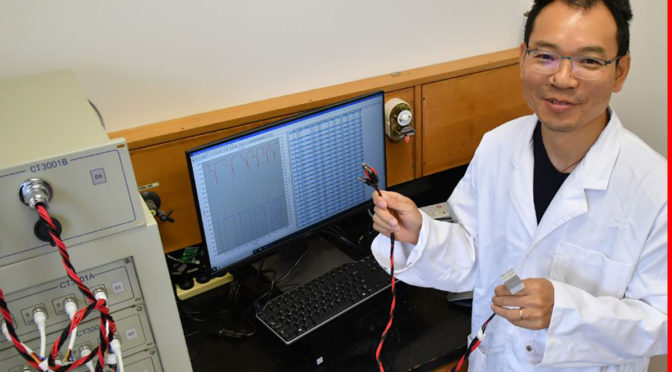
Dr Zhongfan Jia developing better battery storage capability for electroactive polymer ‘organic radical batteries’ at his Flinders University laboratory.

An international research team including Flinders University has moved closer to developing a more sustainable, rechargeable ‘organic’ battery model by doubling its energy storage capability.

With the aim to one day power small electronic devices and divert toxic waste from landfill, researchers at Flinders University with Chinese collaborators have used a catalysis strategy to produce two-electron storage in organic radical batteries, or ‘ORBs’ – a big advance in improving their storage capability.

The emerging rechargeable battery technology uses more environmentally friendly materials than current metal-based batteries. ORBs can be made from sustainable organic compounds to reduce reliance on lithium and cobalt mining. These rare materials are usually not recycled in modern batteries and end up in rubbish.

However, the takeover of ORBs in electronics and other small device markets has so far been limited because of their lower capacity than commercialised lithium-ion batteries.

Previous research has found only one electron can be reversibly stored in the materials, which only provides the battery with a maximum capacity of 110 mAh/g.

“Catalysis has been widely used in lithium-based batteries such as lithium-oxygen batteries and lithium-sulphur batteries to improve their energy and power performance,” says senior lecturer in chemistry Dr Zhongfan Jia, a research leader at Flinders University’s Institute for Nanoscale Science and Technology.

The research team firstly apply this strategy to ORBs and successfully achieve reversible two-electron storage in a polymer-based ORB.

Dr Jia’s research team has recently reported all-organic polymer battery with a cell voltage of 2.8 V, which is one of the highest voltages in organic batteries. Now, this work further doubles the energy storage capability.

“This battery can deliver a capacity of 175 mAh/g, which is comparable to the commercialised lithium-ion battery, making a step closer to the practical use of ORBs.

“Our next goal is to combine these advances to develop organic batteries that can be implemented in consumer electronics,” Dr Jia says.

The article, ‘Anthraquinone-Catalyzed TEMPO Reduction to Realize Two-Electron Energy Storage of Poly(TEMPO-methacrylate)’ 2022 by Wenbiao Li, Shangxu Jiang, Yuan Xie, Xiaoqing Yan, Fugang Zhao, Xinchang Pang, Kai Zhang and Zhongfan Jia has been published in ACS Energy Letters DOI: 10.1021/acsenergylett.2c00063.

Also see the previous article, An All-Organic battery with 2.8 V output voltage (2022) by Shangxu Jiang, Wenbiao Li, Yuan Xie, Xiaoqing Yan, Kai Zhang and Zhongfan Jia was published in Chemical Engineering Journal DOI: 10.1016/j.cej.2022.134651.

CaptionDr Zhongfan Jia developing better battery storage capability for electroactive polymer ‘organic radical batteries’ at his Flinders University laboratory.

Meet Clive, UniSA’s first off-the-shelf quadruped 

Image: Supplied, UniSA

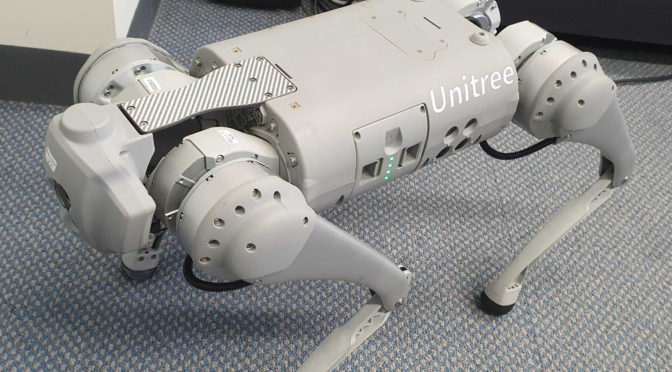
Weighing in at just 13 kilograms, with a price tag of $25,000, and equipped with 13 motors and multiple on-body cameras, Clive is the newest addition to the Australian Research Centre for Interactive and Virtual Environments (IVE), based at Mawson Lakes.

His mentor, Dr James Walsh, an Enterprise Fellow at UniSA STEM, says the autonomous robot is the first university-owned quadruped in South Australia and will help advance research in multiple areas. The robot is a Unitree Go 1.

“Quadrupeds like Clive are now commonly used for remote inspections by defence, space, mining and utility companies, and for search and rescue, but we are interested in taking his capabilities much further,” Dr Walsh says.

“He’s going to prove invaluable in our augmented and virtual reality research at IVE, helping us to see how Clive perceives the world and how we can leverage that for everyday scenarios.

“People have different reactions to quadrupeds like Clive. Some people find him confronting as they don’t know how he sees or perceives them, given that he can act autonomously,” Dr Walsh says.

“We want to find a way for Clive to be able to communicate with those around him, so he becomes less of a black box and more of a two-way communication between human and robot.”

Dr Walsh says it’s possible that quadrupeds could become commonplace at airports, where strict licensing and regulations restrict the use of aerial drones.

“We can install the same cameras and sensing equipment in quadrupeds that we do in aerial drones. Clive could do inspections at Adelaide Airport, for example, without the risk of being sucked into a jet engine.”

The multiple cameras fixed around his body ensure that Clive has an almost 360-degree view of his environment, allowing him to recognise objects and people, and eventually understand human gestures.

“Technology like this is the ultimate demonstration of STEM in action. It brings together electrical and mechanical engineering, maths and computer science and shows us what is possible when we merge all these different skills,” Dr Walsh says.

Footage of Clive is available at https://youtu.be/vlqerxq5TyM

New data shows health not registering as a major election issue

Health was a dominant issue in the 2016 and 2019 elections, yet according to
media monitoring data powered by Meltwater and analysed by London Agency, it is failing to
cut through in the media coverage and on social platforms despite the country being in the
midst of a pandemic.

This defies popular consensus earlier this year that the election would be a referendum on
the government’s handling of COVID-19. That health hasn’t been a priority makes the task of
getting a message out in the media that much harder for medical technology, IVD and
pharmaceutical companies.

Samples taken from two recent weeks of the campaign (April 20-26 and April 27 – 3 May)
found Labor has consistently maintained the higher share of voice over the Coalition in
traditional and social media, with other parties struggling to land at all. Share of voice is
defined as the of total number of media stories and social media conversations about an
organisation, compared to those of its competitor.

While plenty of policies have been announced by both major parties, this data suggests only  a couple have been driving the bulk of the media discussions on health.

In the week leading up to April 26, trending themes skewed towards the Coalition, which  would explain why words such as “economy”, “political marketing opportunity” and “truth”  appeared frequently; all terms associated with discussions on the Prime Minister. 

The past week has the seen the focus switch to the cost-of-living crisis, with related terms  such as “inflation”, “interest rates” and “mortgage” featuring prominently. 

In both weeks, health took a back seat to more salient as war in the east and economic  issues in the west raged on. 

When you dissect health as an election issue*, the Coalition leads in terms of volume of  coverage, owning 52% of the discussion. However, it also trends more negatively on  sentiment at 36% and only 13% positivity, compared to Labor’s even split for negative and  positive coverage at 22%.

The disparity in sentiment correlates closely to the key themes dominating health  discussions on both parties. 

Labor is running on a traditional platform of aged care, Medicare and funding for hospitals,  which pulls through in media coverage. 

Conversely, the word “cuts” appears frequently in Coalition-focused health stories, while the  Prime Minister’s misplaced “blessed” comment on not having children with disability drew  fierce criticism. Actual policy announcements appear to have been lost in the noise, which  will be a concern for the government. 

Interestingly, the Coalition’s attack lines aimed at Labor for re-running the 2016 ‘Mediscare’  campaign have not carried into social media conversations. Conservative-supporting News  Corp titles running quotes from key Coalition spokespeople have done most of the heavy  lifting on this topic.

Some key events driving the election discussions around health in the media: 

April 1: Labor goes big on aged care in the Budget 

April 13: Labor pledges to establish Medicare bulk billed urgent care clinics. Greens call for gender surgery to go on Medicare. 

April 17: Senator Anne Ruston announced as the candidate to take over from Greg Hunt as  health minister if the coalition is re-elected. Reporting of the appointment focussed on  Ruston’s historic comments on the sustainability of Medicare, which in turn produced a drag  on sentiment in the coverage. 

April 21: PM criticized for saying he is “blessed” to not have children with disability. Dylan  Alcott and Labor respond which further amplified the negative coverage. 

John Emmerson, Manager Director of specialist healthcare communications agency London  Agency, says it is surprising that COVID-19 has been a tepid issue so far this campaign. 

“So far in this election health has been the dog that hasn’t barked. The pandemic has  dominated our lives for the last two years, so it is surprising that reporting of the federal  election hasn’t followed trends seen in state elections where the handling of the pandemic  has been decisive in the final outcome. 

“It’s far for from over, but what we’re seeing are more traditional issues dictating the health  discussion. This is probably welcome news for a COVID-weary electorate, but the health  industry should note the pandemic dividend is only temporary and now might be the time to  start preparing for what comes next.” 

Scientists discover new phage therapy combination to combat antibiotic-resistance

A preclinical study led by Monash University scientists has found that using a combination of phages and antibiotics may be far more effective against bacterial infections than using the agents individually.

The study, published today in EBioMedicine, has wide ranging implications for antibiotic resistant bacterial infections – described by the World Health Organization (WHO), as one of the greatest threats to global health.

Phage therapy is the use of bacterial viruses to clear a bacterial infection. In recent years there has been growing interest in the use of phage therapy as a potential treatment to combat antibiotic-resistant infections.

“However, questions remain around the efficacy of phage therapy as a treatment option,” said study author Dr Jeremy Barr, from the Monash University’s School of Biological Sciences, and the Centre to Impact AMR.

“This has been obfuscated by the fact that clinical phage therapy is almost always administered alongside antibiotics, making it difficult to determine the efficacy of phage therapy.”

In this study the researchers used a phage-antibiotic combinationagainst the world’s leading antibiotic-resistant superbug – Acinetobacter baumannii.

In previous work, the researchers showed that phages can kill antibiotic resistant A. baumannii, but in doing so they found that phage-resistant mutants emerged; similar to how antibiotic-resistance emerges with prolonged antibiotic use, phage-resistance also occurs.

“We found that while A. baumannii rapidly became phage-resistant, in doing so they were also resensitised to the same antibiotics they use to resist,” said lead study author Fernando L. Gordillo Altamirano, from the Monash School of Biological Sciences.

“Applying this knowledge, we conducted a pre-clinical trial using animal models and found that the combined use of phages and antibiotics led to significantly improved treatment outcomes than either antibiotics or phage therapy alone.”

Dr Barr said of particular note the findings explained the mechanism through which the combination of these two agents had resulted in a superior treatment effect.

“We have been able to confirm that, even in complex living systems, treatment with our characterised phages can reliably steer bacteria towards a phage-resistant variant that is re-sensitised to antibiotics.”

The researchers had hypothesised that the success of the combination therapy in vivo was due to the emergence of phage-resistant mutants exhibiting antimicrobial resensitisation, followed by targeted treatment with the resensitised antibiotic.

“We believe further research in the field is likely to lead to the discovery of innovative uses of combination therapies using phages and antibiotics in combination, rather than proposing phages as a substitute to antibiotics,” said Dr Barr.

Industry-backed plan to navigate Australian biotech into the future

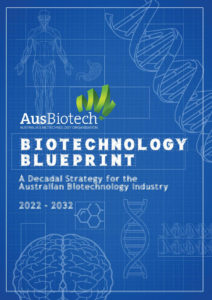
For the first time in 20 years, Australia’s biotechnology sector has united to launch the Biotechnology Blueprint: A Decadal Strategy for the Australian Biotechnology Industry – a shared industry vision and ‘blueprint’ navigating the biotech ecosystem as it aspires to build solid companies, create more jobs, commercialise more biotechnologies, build sovereign capabilities, and deliver greater benefits and returns to Australia and all Australians.

With COVID-19 serving as an important reminder that Australia will need our biotech industry to help it face uncertain future threats, including the ongoing and increasingly common chronic health challenges, there has never been a more important time to proactively plan and shape the coming decade as a community and as an industry.

This valuable opportunity has been realised through the development of a clear decadal plan for the Australian biotechnology industry, as it strives to maximise on Australia’s vibrant and valuable sector, and identify the steps that should be taken in the near term to ensure that positive future is realised.
As the voice of Australia’s biotechnology industry, AusBiotech has led the development of the Biotechnology Blueprint (Blueprint) over the past two years, and it comprises of the contribution of almost 350 individuals and organisations, all working to realise the potential of biotechnology in our society.
AusBiotech CEO Lorraine Chiroiu said, “Australia has a wealth of innovative medicines, vaccines, and medical technologies being developed; to support them reaching Australian patients and improve and extend the quality of human life, we need to focus on creating the right environment for companies to innovate and grow, build dedicated research infrastructure, and enlist the Australian healthcare system as an active partner.”

“The Biotechnology Blueprint is, at its core, a ‘blueprint’ for societal good, and through its implementation, we can herald an era of Australian discovery, translation and innovation. It’s a chance to achieve great things for Australian biotech, Australia, and Australians.”

The Australian biotech industry’s vision is that over the coming decade it will: become a more mature, vibrant ecosystem; with a more established global and domestic standing; and be a stronger, more positive contributor to the Australian economy and its population.

Presenting a solutions-based approach, the Blueprint responds to well-articulated, stubborn issues that the industry has grappled with for years, including: access to capital to feed the need for commercialisation, clinical development and growth; growing companies through the commercialisation pathway and reaching market; gaps in technology transfer and commercialisation support; and incentives and structural supports along the pipeline.
The Blueprint aligns with the Federal Department of Health’s new ‘Biotechnology in Australia – Strategic Plan for Health and Medicine’, released as part of the 2022-23 Budget, and was first announced at AusBiotech’s CEO Forum in Canberra in 2019. These long-term commitments traversing election cycles are critical to structurally support Australia’s biotechnology sector and to deliver on the vision and the strategic investments that will solidify and strengthen Australia’s sovereignty and global standing in biotechnology.

Download it here.

UNSW receives major crypto gift to fund open-source AI tool to prevent pandemics

UNSW Sydney has received the largest known cryptocurrency donation to an Australian higher education institution, which will support an open-source tool providing pandemic early warning signals.

Ethereum co-founder Vitalik Buterin has gifted USDC$4M to establish the Shiba Inu OSINT Initiative, funded by his Balvi Filantropic Fund and led by UNSW’s Kirby Institute, to prevent future global pandemics.

Buterin’s crypto gift – which has converted to $AU5.3 million – will support the further development of EPIWATCH, an open-source intelligence (OSINT) tool developed by UNSW Kirby Institute’s Professor Raina MacIntyre to provide pandemic early warning signals.

EPIWATCH development began in 2016 and is underpinned by extensive research and testing. It harnesses open-source data and uses artificial intelligence to create early warnings. The tool works by scanning millions of items of publicly available online data, such as social media and news reports, for early signals of epidemics. It uses vast amounts of data in real time, detecting changes to what is considered ‘normal’ reports about health concerns. This is much quicker than waiting for formal reporting through doctors and laboratories. EPIWATCH does not replace formal reporting, but allows earlier warnings of epidemics that can be formally investigated by health authorities.

The gift will allow the team at UNSW’s Kirby Institute, spear-headed by Prof. MacIntyre, head of the Biosecurity Research Program, to make EPIWATCH accessible to low-and middle income countries.

“Imagine if someone had detected COVID-19 before it spread around the world – that is our vision,” said Prof. MacIntyre.

“Using AI and real-time open-source data, EPIWATCH does not depend on people making reports. It is a great equaliser and can overcome weak health systems and censorship.”

The OSINT tool has been developed so far thanks to grants from the National Health and Medical Research Council (NHMRC) and Medical Research Future Fund (MRFF). The Shiba Inu OSINT Initiative will enable EPIWATCH to be used in low and middle-income countries where Prof. Macintyre says it is needed most.

“To be most effective, it needs to be accessible in local languages and used widely at the grass roots level down to villages and small towns around the world. This will give us the best prospect of preventing pandemics,” said Prof. MacIntyre.

Buterin said, “The earlier we can detect new epidemics as they come, the more quickly we can start developing treatments or even stop them before they become large. Open analysis of public data is an excellent alternative to more intrusive forms of monitoring, which are also often only available to governments and other high bidders but closed to the public. By contrast, an open source and open access approach that allows researchers, including members of the public, to work collaboratively across the world can be more easily improved and scaled to detect new pandemics wherever they begin.”

The gift from the Balvi Filantropic Fund is UNSW’s first crypto gift and is believed to be the largest crypto gift accepted by an Australian higher education institution. Buterin has already made significant philanthropic contributions for social impact, including to improve the COVID response in India (India Crypto Relief Fund) and to support Ukrainian relief.

Professor Attila Brungs, Vice-Chancellor and President of UNSW Sydney said:

“We are delighted to receive such generous support from the Balvi fund to establish the Shiba Inu OSINT initiative.

“We have seen the ravages of the COVID-19 pandemic around the world in the past two years. By making EPIWATCH accessible in lower income countries, the Shiba Inu OSINT Initiative has the potential to avert future world crises like pandemics. It’s a powerful opportunity to drive meaningful social change and far better health outcomes, not just for the people in those countries but for everyone globally.

Universities blaze a trail to commercialise defence research

Today, Wednesday 20 April, the Defence Trailblazer: Concept to Sovereign Capability (CSC) bid, led by the University of Adelaide in partnership with the University of New South Wales, has been endorsed to assist the country’s economic recovery under the Trailblazer Universities Program.

A government commitment of $50 million in cash over four years will be matched by $50 million of funding from the two universities and $10 million from the CSIRO. More than $140 million will be invested in the project by over 50 industry partners located around the country bringing the total value of the program to approximately $250 million.

It is estimated that CSC will have a net economic benefit to the Australian economy of $1.5 billion over ten years and will deliver more than 2500 FTE jobs over four years directly linked to the activities of the program.

CSC aims to create a new trust-based cross-sector culture founded on shared risk, shared problem solving, shared success, and a shared sense of strategic urgency.

Industry and academia will support Defence’s pull-through of leading-edge capabilities, including dual-use technologies, to sustain the ability of the Australian Defence Force (ADF) to defend national security interests in a highly volatile geo-strategic environment.

The project will create a step change in the Australian defence innovation culture to enable research and industry innovators to quickly fix on the Department of Defence’s priority research translation challenges, rapidly secure capital for collaborative ideation, proto-type potential solutions, commercialise the winners in defence and civilian markets, and accelerate the transition of competitive advantage capabilities into the hands of ADF operators.

Both universities have deep partnering arrangements with some of Australia’s largest defence companies and SMEs and new companies spun out of them. Researchers will pivot to solve complex defence problems alongside industry in both Defence and civilian market sectors. Government, industry and universities will drive together in new ways to push concept demonstrators across the “valley of death” and into manufacturing. The universities will drive outwards towards entrepreneurial and commercial outcomes-driven collaboration.

In partnership with industry, the universities have secured investment and commitments to integrate emerging technologies, and scale manufacturing, support the Australian Defence Force (ADF) capability and to capitalise on dual-use technologies in the following priority areas:

  • Quantum Materials, Technologies & Computing
  • Defensive Hypersonics & Countermeasures
  • Information Warfare & Advanced Cyber Technologies
  • Robotics, Autonomous Systems & AI (RAS-AI)
  • Defence Space Technologies

Over 80 per cent of industry commitments to the program are from Australia-based SMEs: an unprecedented level of commitment.This involvement of SMEs underlines the potential to upscale Australia’s sovereign defence capability, support national security and drive economic growth through commercialisation in dual-use technology areas.

Significant support for CSC, that has been forthcoming from the broad range of industry partners, will be leveraged to produce high-quality research, design and development outcomes. This will form the basis of CSC’s commercialisation output, which will be of significant benefit to the Australian economy and assist in its post-pandemic recovery.

CSC will allocate substantial seed funding ($34 million) to enable innovators in industry and universities to create deployable prototypes of disruptive technologies to meet Defence’s priority future requirements. Successful commercialisation of these technologies in defence and dual-use market opportunities will be enabled through a $126 million Advanced Innovation Fund. These two funding streams underscore the focus of CSC to commercialise technology and grow the Australian economy.

Australia’s defence innovation community will be strengthened by enabling more people across all sectors to see their career goals reflected in a deeper commitment to national defence including initiatives to drive diversity in the workforce

Benefits from CSC will be felt in the longer term through plans for a centre of expertise in research commercialisation that will assist other universities and industry partners to leverage potential in other sectors of the economy.     

Comments about the successful Defence Trailblazer: Concept to Sovereign Capability bid:

Ms Christine Zeitz, General Manager Asia Pacific, Northrup Grumman & CSC Chair Designate

“The Defence Trailblazer will transform the nature of the relationship between the academic sector, defence industry and the Department of Defence, compelling universities to pivot outwards towards entrepreneurial and commercial outcomes-driven collaboration. Our policies, processes, services, workforce incentives and rewards will be realigned to this new approach.

”CSC will address the pressing requirement for a strategic response from industry and academia to the strategic threat environment. It is imperative that we adopt new approaches, to drive research translation and sovereign manufacturing as key industry inputs to defence capability.”

Major General Susan Coyle, Head of Information Warfare, Australian Defence Force

“The Defence Trailblazer: Concept to Sovereign Capability program signals the start of a closer relationship between Defence, research organisations and defence industry that will see Australia’s sovereign defence capability significantly strengthened.

“Mutually reinforcing this relationship is the key to accelerating the translation of research into commercialised and deployable Australian Defence Force capabilities.

“New technology developed under CSC will sustain the Australian Defence Force’s ability to defend national security interests in a highly volatile geo-strategic environment.”

Professor Peter Høj, Vice-Chancellor and President, University of Adelaide:

“The University of Adelaide is proud to be named alongside our partner, the University of New South Wales, to assist the country’s economic recovery with the Defence Trailblazer: Concept to Sovereign Capability project.

“CSC will result in a profound and transformative change to our defence innovation landscape, and will meet a long-held ambition to build more sovereign capability for the Australian defence sector.

“The University of Adelaide will apply its research expertise in defence-relevant areas, notably quantum materials, hypersonic countermeasures, information warfare, space and artificial intelligence, to help improve Australia’s sovereign capaibility.

“CSC will grow Australian prosperity by creating new sovereign defence capabilities and strengthening supply chain resilience, all nested in the national interest.”

Professor Attila Brungs, Vice-Chancellor and President, University of New South Wales:

“We are delighted to be able to work with the University of Adelaide and industry partners on research projects that develop into real word outcomes. The program will drive a step change for Australia in the defence related industries. 

“University-industry collaboration is imperative to ensure that research gets translated into outcomes that benefit all of Australia. We have a proud track record at UNSW of quantum, cyber, hypersonics, robotics and space technology research which are supporting Australia’s national capability.”

Dr Stephen Rodda, Chief Innovation & Commercialisation Officer, University of Adelaide and bid-lead for the project

“CSC will expand Australia’s defence industry capabilities to develop and service international export markets with strategic partners through measures including assistance to develop supply chains, transfer of IP protection expertise, transfer of cybersecurity expertise, and promotion of government and private support programs to deliver new technologies for the defence sector and, importantly, civilian markets, where possible.

“With more than $140 million committed by industry in our to Defence Trailblazer CSC in less than two months and a total program value of $250 million, a clear signal has been sent by industry about the appetite for strategic risk in the defence industry and the desire to leverage the skills and capabilities within our university sector.

“More than 80% of companies already committed to participate in CSC are Australian owned, and all are Australian based, which underpins the value of our proposal for sovereign capability and national security.”

Non-invasive skin cancer treatment manufactured by ANSTO in Southern Sydney

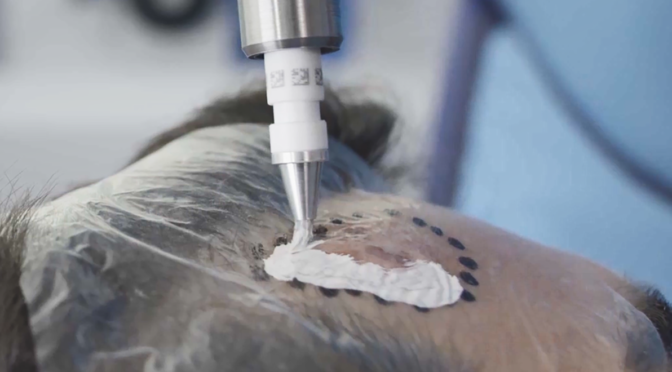
ANSTO has been licensed as the Australian manufacturing partner of an innovative, non-invasive treatment for non-melanoma skin cancer (NMSC).

OncoBeta’s epidermal radioisotope therapy, Rhenium-SCT® (Skin Cancer Therapy) has already been used to successfully treat 1,900 NMSC lesions from patients around the world. And now OncoBeta is increasing activities in Australia alongside the International Registry and the EPIC-Skin study (Efficacy of Personalised Irradiation with Rhenium-SCT – for the treatment of non-melanoma skin cancer) – researching the efficacy, safety, quality of life, treatment comfort and cosmetic outcomes.

The innovative, non-invasive therapy utilises the radioisotope Rhenium-188 and is applied only to the area requiring treatment, sparing healthy tissue.

“We’re very proud to team up with OncoBeta to establish local manufacturing of Rhenium-SCT® on our campus and to see Australian patients gain access to this innovative new therapy. Our core mission is to improve the health of Australians and to support industry – this partnership enables us to do both,” Mr Jenkinson said.

“ANSTO is the leader in nuclear science in Australia and has extensive experience in the advanced manufacturing of nuclear medicines for the diagnosis and treatment of a range of diseases including cancer.”

ANSTO’s General Manager of Business Development and Commercialisation Rosanne Robinson added, “we’re excited that OncoBeta has joined our growing innovation community on our Lucas Heights Campus in Sydney,. It is focused on attracting entrepreneurs and innovative companies who want to leverage the opportunity to be co-located with ANSTO and to access our unique expertise in the nuclear industry.”

OncoBeta recently announced the commencement of the EPIC-Skin study with the world’s very first patients being treated at Gold Coast. ANSTO will be manufacturing and supplying the Rhenium-188 to all study centres in Australia.

The global incidence of non-melanoma skin cancers has been increasing over recent decades. It is estimated there are over 7 million non-melanoma skin cancer cases reported globally each year.[1] [2]

Non-melanoma skin cancer is the most common type of cancer in Australia with 374,000 people treated each year.[3]


[1] Global Burden of Disease Cancer Collaboration, et al. JAMA Oncol. 2019;5(12):1749-1768.

[2] Ciążyńska M, et al. Sci Rep. 2021;11(1):4337.

[3] Staples et al 2006

ANSTO Live Event: Accelerating deep tech businesses

In-person and online event: Friday 20 May 2022 

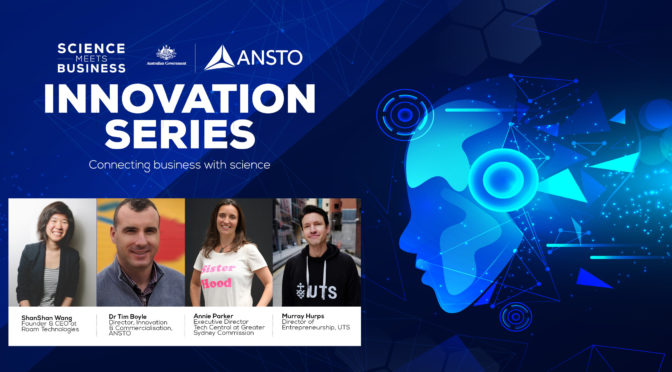
Accelerating Deep Tech Businesses is the fourth instalment in the ANSTO x Science Meets Business Innovation Series. Bringing together science leaders, deep tech entrepreneurs, industry, academic partners and national organisations, this in-person and online event will be an opportunity to hear from, and connect with, those who embrace challenge-based innovation and collaboration. 

Join a dynamic live panel discussion examining the opportunities and challenges facing deep tech businesses across fields such as health, space, energy, the environment and advanced manufacturing. 

Panelists include: 

  • Shan Shan Wang, Founder and Chief Executive Officer at Roam Technologies. She formed Roam Technologies in 2014 to enhance people’s quality of life through novel health technologies.
  • Dr Tim Boyle, Director, Innovation and Commercialisation at ANSTO. He is the responsible officer and founder of the nandin Innovation Centre, a deep technology centre for commercialisation, experimentation, and entrepreneurial learning.
  • Annie Parker, Executive Director Tech Central at Greater Sydney, who has a proven track record of building ecosystems, launching & running startup accelerator programmes & in delivering business results in high profile commercial roles.
  • Murray Hurps,  Director of Entrepreneurship for UTS, leading the work of the University to inspire and support technology-enabled entrepreneurs.

Attend the event in person at ANSTO and network with people who are also exploring how government, industry and science research can work together to make the most of Australia’s deep tech strengths. 

ANSTO’s innovation centre, nandin, is a place where science and technology entrepreneurs, startups and graduates come together, to challenge, design, innovate and commercialise, creating new jobs in the high-growth industries of tomorrow.

Located within the ANSTO Innovation Precinct in Southern Sydney and set amongst Australia’s most significant research infrastructure, nandin is home to a vibrant community of startups, graduates and industries developing ingenious solutions to solve unmet challenges in our world.

Plant-based patties, lab-grown meat and insects: how the protein industry is innovating

Image: Shutterstock

As demand for alternative protein sources grows, Australians are increasingly looking for options that are healthy, sustainable and ethically made.

At CSIRO, we have produced a “protein roadmap” to guide investments in a diverse range of new products and ingredients. We believe plant-based patties, lab-made meat and insects are just some of the foods set to fill Australian fridges by 2030.

The roadmap sketches out the foundations for a future with greater choice for consumers, and better outcomes for Australian producers across all types of protein.

Changing protein preferences

Australia is one of the world’s largest per-capita beef consumers, but there has been a steady decline in consumption over the past two decades.

The most common reason for eating less red meat is cost, followed by concerns related to health, the environment, and animal welfare.

At the same time, meat consumption among the middle class in countries such as China and Vietnam has been rising.

This shift in demand is creating an opportunity for protein producers to expand and diversify.

Producing plant-based protein locally

The plant protein industry is still small in Australia. However, it is ramping up rapidly.

The total number of plant-based protein products on grocery shelves has doubled over the past year to more than 200. Recent data from the Australian Bureau of Statistics shows demand for these products has increased by about 30% in the past two years.

Plant-based food products are made by processing various plant ingredients (such as wholegrains, legumes, beans, nuts and oilseeds) into food products, including breads, pasta, and alternatives to meat and dairy.

A bird's eye view of a plant-based patty in one hand and a cup of legumes in the other hand.
Legumes are often used to create plant-based patties. Shutterstock

Lupins, chickpeas and lentils can be turned into plant-based burgers, while protein powders can be made from faba or mung beans.

Most plant-based products available now are either imported or made in Australia using imported ingredients, so there is plenty of room for Australian producers to enter the industry.

The story behind the steak

Meat will continue to be a staple in many people’s diets for years to come.

When we do eat meat, Australian consumers are increasingly asking questions about where their meat came from. On this front, “digital integrity” systems can be a useful solution.

These systems track everything from the origin of ingredients, to nutrition, sustainable packaging, fair trade and organic certifications. They also keep a record of associated labour conditions, carbon footprint, water use, chemical use, animal welfare consideration, and impacts to biodiversity and air quality.

One example is made by Sydney-based firm NanoTag Technology: a unique micro-dot matrix pattern printed on the packaging of meat products which, when scanned with a pocket reader, verifies the authenticity of the product. Buyers can see the product’s pack date, batch number and factory of origin.

Seafood is also an important source of healthy and low-fat protein. Demand is growing for local, inexpensive white-flesh fish such as barramundi and Murray cod.

While Australia produces 11,000 tonnes of white-flesh fish annually, it also imports almost ten times this amount to help meet annual demand.

Responding to this demand, the Australian aquaculture industry has ambitions to reach 50,000 tonnes of homegrown produce by 2030.

Fermented foods

Precision fermentation is another technology for creating protein-rich products and ingredients – potentially worth A$2.2 billion by 2030.

Traditional fermentation involves using microorganisms (such as bacteria and yeast) to create food including yoghurt, bread or tempeh.

In precision fermentation, you customise the microorganisms to create new products. The US-based Every Company, uses customised microorganism strains to create a chicken-free substitute for egg white. Similarly, Perfect Day has created a cow-free milk.

Man made meats

Still want to eat meat, but are concerned about animal welfare or environmental impacts? Cultivated or cell-based meat is biologically similar to the regular variety, but the animal cells are grown in a lab, not a farm.

Meat sample in open disposable plastic cell culture dish in modern laboratory or production facility. Concept of clean meat cultured in vitro from animal somatic cells.

Australian company Vow is making pork and chicken, as well as kangaroo, alpaca and water buffalo meat using cells from animals. These products are not yet commercially available, though chef Neil Perry did use some of them to create a menu in 2020.

Edible insects

Edible insects, such as crickets and mealworms, have been part of cuisines around the world for millennia, including Australian First Nations Peoples.

Insects have a high nutritional value, are rich in protein, omega-3 fatty acids, iron, zinc, folic acid and vitamins B12, C and E.

Insect farming is also considered to have a low environmental footprint, and requires less land, water and energy.

Australian company Circle Harvest sells a range of edible insect products including pastas and chocolate brownie mixes enriched with cricket powder.

Protein is vital to our health. However, until now its production has placed strain on the health of most other ecosystems. CSIRO’s protein roadmap offers not only sustainability, but also more choice for consumers and opportunities for Australian producers.

Katherine Wynn, Lead Economist, CSIRO Futures, CSIRO and Michelle Colgrave, Professor of Food and Agricultural Proteomics, CSIRO

This article is republished from The Conversation under a Creative Commons license. Read the original article.

Engineers Australia CEO receives prestigious Women in Industry award

Engineers Australia CEO Dr Bronwyn Evans AM has been honoured with the Women in Industry Excellence in Engineering Award at a gala dinner in Melbourne.

Dr Evans was acknowledged as an outstanding engineer and trailblazer in her field – she was the first woman to graduate from electrical engineering at Wollongong University and her career has taken her from industry and academia to the boardroom.  

The first woman to occupy the role of CEO at Engineers Australia, Dr Evans was previously the first female CEO of Standards Australia, where she was instrumental in improving the standards development process and was elected to a global role on the ISO’s governing President’s Committee.

She has held a plethora of non-executive positions, many on a volunteer basis, in areas including Industry4.0, STEM, industry-academia connections, construction and innovation.

Dr Evans is a Chartered engineer and Honorary Fellow of Engineers Australia. In 2021, she was awarded an honorary doctorate by Swinburne University and appointed as a Member (AM) of the Order of Australia for significant service to engineering, to standards and to medical technology.

In accepting the award, Dr Evans said there was still much work to do to increase the number of women in industry.

“Nights like tonight are important so we can celebrate our successes. However, we still need to have difficult conversations about education, bias, assumptions and missed opportunities for women in industry,” she said.

We know we will have succeeded when women are represented 50 per cent top to bottom.  I urge all of us here tonight to use our profiles and our influence to be role models and to be champions for the amazing women who are joining our industries and professions.”

Category sponsor BAE Systems said they were particularly proud to sponsor the Engineering Excellence category in 2021.

“We have female engineers to thank for many of the world’s greatest innovations, yet they make up only 12% of engineers employed in Australia. Awards such as these are important to not only celebrate achievement but to also provide inspiration to others to break down barriers and excel in the engineering industry”, they said.

The Women in Industry Awards recognise outstanding women from the industrials sector – those who work in mining, road transport, manufacturing, engineering, logistics, bulk handling, waste management, rail and infrastructure.

Engineering diamonds to unlock computing potential

Image: Supplied

La Trobe University has formed a partnership to pioneer new diamond fabrication techniques, aiming to accelerate the development of a low-cost, portable alternative to supercomputers.

As part of the Research Hub for Diamond Quantum Materials, researchers at La Trobe, RMIT University and Australian-German quantum computing hardware company, Quantum Brilliance, will engineer the diamond computer chip that sits at the heart of diamond quantum computers.

La Trobe Pro Vice-Chancellor (Graduate & Global Research) Professor Chris Pakes, said diamond-based quantum computing is already disrupting digital platforms that underpin a wide range of industries, including science, health and agriculture.

“Unlike other quantum-based supercomputers sitting in large server-based formats, diamond-based quantum computers are low-cost, portable technologies able to operate at room temperature,” Professor Pakes said.

“This enables them to be used in a broad range of edge applications, which may not be possible with supercomputers, such as satellites, health environments and manufacturing.”

Professor Pakes said the partnership will leverage both universities’ expertise in diamond growth, surface imaging and engineering, and combine it with Quantum Brilliance’s industry experience and manufacturing capabilities.

“All three organisations have world-leading expertise and resources in diamond material sciences – making the hub well placed to develop innovative new approaches to advanced manufacturing in this important future industry,” Professor Pakes said.

Co-founder and Chief Scientific Officer of Quantum Brilliance, Marcus Doherty, said the hub is another example of collaborative research efforts advancing diamond-based quantum technology and delivering economic benefit to Australia in the years to come.

“Through our partnership with La Trobe University and RMIT University, we will develop the fabrication techniques necessary to enhance the performance of diamond-based quantum computers, to deliver real-world solutions to a broad spectrum of industries,” Mr Doherty said.

The hub is already pursuing several multi-million dollar research projects that are pioneering new diamond fabrication techniques. These Australian-based projects are partially funded by the Australian Research Council (ARC) and Quantum Brilliance. 

The research hub is designed to not only make great strides in developing synthetic diamond accelerators, but to create a network of experts in diamond material science for future industry advancements in both countries.

Australia’s first national space mission central to budget 2022-23

The Australian Government is establishing Australia’s first ever national space  mission as part of a plan for a stronger future. This is an historic investment that will strengthen Australia’s sovereign capability as well as grow the sector and create hundreds of new jobs. 

The 2022-23 Budget includes $1.16 billion to 2038-39 and $38.5 million per annum  ongoing for the first phase of a National Space Mission for Earth Observation, which  will see Australia design, build, and operate four new satellites. 

Led by the Australian Space Agency, this Mission will make Australia more  self-sufficient when it comes to critical Earth Observation data, while also growing  capability and job opportunities that will set the industry up for future success. 

Minister for Science and Technology Melissa Price said this was the most significant  investment ever made in Australia’s civil space sector. 

“The information we get from Earth observation satellites is central to our everyday  life – from forecasting the weather and responding to natural disasters through to  managing the environment and supporting our farmers,” Minister Price said.  

“This investment reinforces the Government’s commitment to growing  space capability here at home so we can remain safe and secure, and create  important economic opportunities. 

“This in an investment both for the now and the future of the Australian space sector.  

“Developing and launching these first four Australian satellites will create the  foundation of industry know-how for more complex space missions next decade. That means more expertise and more jobs right here in Australia in this critical  industry.

“It will also solidify our relationships with like-minded countries so we can continue to  draw on the data from their satellites for the benefit of all Australians.” 

It is estimated the project will create more than 500 jobs over the first four years of  the build phase, with an anticipated supplier network of more than 100 companies  from across Australia.  

The National Space Mission will be led by the Australian Space Agency in  partnership with Geoscience Australia, CSIRO, the Bureau of Meteorology and  Defence

The Budget also includes: 

∙ $65.7 million over five years from 2021-22 to set the conditions for rocket  launch from Australia and fast track the launch of space assets and research  projects by Australian businesses and researchers; 

∙ $12.1 million over five years from 2021-22 (and $0.3 million per year ongoing)  to remove cost recovery requirements under the Space (Launches and  Returns) Act 2018 and undertake a regulatory reform program to streamline  interactions with industry; 

∙ $9.5 million over two years from 2021-22 to develop a Space Strategic  Update to provide direction on future funding opportunities and align  Australia’s space efforts; 

∙ $3.0 million in 2022-23 to extend the International Space Investment initiative  and continue building relationships with international space agencies; and 

∙ $25.2 million to expand the International Space Investment initiative and  provide funding for Australian businesses and research organisations to work  on projects with the Indian Space Research Organisation and the broader  Indian space sector. 

This funding takes the total amount committed by the Government to the civil space  sector to well over $2 billion since the Coalition Government established the Australian Space Agency in 2018. 

That is in addition to the $85.9 million the Morrison Government has committed to  space industry skills and jobs right here in Australia as part of the $1.3 billion Modern  Manufacturing Initiative.  

It’s part of the Government’s commitment to triple the size of the space sector by  2030 to $12 billion and create an extra 20,000 new jobs. 

The Budget also includes $37.4 million to 2025-26 to establish a new CSIRO Research Translation Start program to build further cooperation between our  researchers and industry and supercharge their commercialisation journeys. 

The Government is investing $63.6 million to 2025-26 and $1.5 million per annum ongoing to further support the important work of the Australian Institute of Marine  Science (AIMS), including funding to remediate AIMS’ wharf at Cape Cleveland,  south of Townsville, Queensland. 

Minister Price said the Government recognised the incredible role science and  technology played in changing lives and creating new industries, and this investment  was further proof of their importance. 

“We are harnessing science and technology to help our businesses commercialise  their great ideas and create the high-value jobs for Australians which we need for the  future.” 

Minister for Science and Technology Melissa Price

“This Budget demonstrates that we are not only shooting for the stars, but also  securing our future prosperity here at home through the Morrison Government’s  economic recovery plan.” 

The Budget also includes:  

∙ $33.4 million over two years from 2021-22 (including $14.4 million in capital  funding) to the National Measurement Institute to deliver essential  measurement standards and services that underpin business continuity and  international trade; 

∙ $5.3 million over two years from 2021-22 to improve the National Science and Technology Council’s provision of science and technology advice to the  Government and to continue support of the Prime Minister’s Prizes for  Science event; 

∙ $4.7 million over four years from 2022-23 to continue support for the Women in STEM Ambassador initiative and the Future You national digital  awareness-raising initiative; and 

∙ $2.0 million over four years from 2021-22 to extend the Superstars of STEM  Program, to continue raising the profile of Australian women in STEM and  inspire the next generation. 

This year’s Budget builds on the Government’s investments of $12 billion for  science, research and innovation related programs and activities in 2020-21 and  $11.8 billion in last year’s Budget – the two largest ever single annual investments  for the sector.  

Alongside this investment, there are a number of specific initiatives the Government  has committed to across the sector, including:  

∙ $42.4 million to grow the pool of women in STEM by providing up to 500  university scholarships, co-funded with industry. 

∙ More than $450 million in funding for CSIRO to ensure the continuation of  critical scientific research in a range of priority areas. 

∙ More than $530 million from 2019-20 to 2024-25 for a wide range of ANSTO  activities, including research, nuclear medicine production, asset  maintenance and waste management. 

∙ $124 million to make Australia a world leader in artificial intelligence through the AI Action Plan.  

∙ More than $387 million in funding to meet Australia’s commitments as co-host  of the Square Kilometre Array radio telescope.

The 2022-23 Budget is securing Australia’s future prosperity and helping our industries to grow by harnessing science and technology to deliver a strong  economy with more jobs.

Rocketing Aussie space manufacturing into the future

Image: Shutterstock

A national network with a mission to advance local space manufacturing and future launches in Australia is being backed with $52 million from the Australian Government.  

The Government has announced funding for the $157 million Australian Space Manufacturing Network under the Collaboration Stream of the $1.3 billion Modern Manufacturing Initiative.  

As one of Australia’s largest sovereign space manufacturers, Gilmour Space Technologies will work with a range of partners and universities to create a manufacturing and test hub and an advanced manufacturing facility to produce launch vehicles and satellites.  

The funding will also support the Bowen Orbital Spaceport in North Queensland, preparing its launch pad to fire rockets into orbit.  

The industry-led network will support Australia’s growing space sector to see great Aussie ideas go all the way from initial concepts, to commercialisation and finally to launch right here on home soil.  

Over the next five years, it’s expected the project will support more than 850 new jobs, including 350 space manufacturers in highly skilled engineering and technical roles.  

Minister for Industry, Energy and Emissions Reduction Angus Taylor said the Government’s investment in the project will help unlock further collaboration between small and medium businesses and researchers to see launch vehicles and satellites take off to space. 

“Australia’s space sector has already taken leaps and bounds and is globally recognised. The race is on in the $600 billion global space economy and the Australian Space Manufacturing Network will help cement the incredible opportunities for local companies to be part of the excitement of launch,” Minister Taylor said.  

“From testing to manufacture, to assembly and finally launch, this project will harness great Aussie know-how to attract further private investment and create hundreds of high-skilled and high-value jobs. This is a big win for Queensland jobs.

“Through the work of the Australian Space Agency we already know that space technologies are playing an increasingly important role on earth, supporting navigation systems which draw on them in our cars and smartphones and by farmers to monitor the health of their crops.”

Minister for Science and Technology Melissa Price said this was another example of how the Government was growing the space sector for the benefit of all Australians.

“This investment will rocket us toward our goal of tripling the size of the Australian space sector to $12 billion and creating up to an extra 20,000 new jobs by 2030,” Minister Price said.

“Space and manufacturing go hand in hand. By backing this project we are ensuring Australia can deliver across the entire space supply chain, from design and manufacturing through to launch and operation. 

“It also emphasises to our young people that there are a range of jobs with all different skills that are available to them in space, from actual rocket scientists through to space tradies.”

Member for Fadden Stuart Robert said the funding demonstrates the Government’s commitment to growing the manufacturing sector and creating local jobs.

“We are investing in Australian manufacturers to make them more competitive, resilient and able to scale-up to secure the industries of the future.

“Gilmour Space Technologies are a great example of a local manufacturer using cutting-edge innovation and ingenuity to compete in global markets, while keeping jobs right here on the Gold Coast.”

$32m for groundbreaking projects combining industry and research 

Image: Shutterstock

Projects to develop an mRNA vaccine for bacterial infections and a device to treat heart failure are among 13 industry-led joint research projects sharing in more than $32 million in funding from the Morrison Government.

The successful projects under round 12 of the Cooperative Research Centre Projects (CRC-P) initiative will enable Australian industry and research organisations to take their innovative technologies to the next level.

They will help create mRNA-based therapeutics and clean energy inventions, as well as other incredible job-creating solutions to improve our lives.

They will also leverage a further $56 million of cash and in-kind contributions from 62 project partners.

The projects include:

  • Denteric,whichwith its partners will use its $1.2 million grant to develop an mRNA vaccine for chronic human bacterial infections, building on the recent success of COVID-19 vaccines.
  • Jupiter Ionics, which with its partners will use its $2.65 million grant to further its world-leading technology for the production of green ammonia to eventually see the local manufacture of fertilises for agricultural sectors. 
  • QHeart, which with its partners will use its $2.75 million grant to continue work on its “pumpless” and non-surgical balloon heart assist device that can treat hypertension heart failure. 

The Government is also opening applications for CRC-P round 13 grants, with a focus on projects that align to the National Manufacturing Priority areas.

Minister for Science and Technology Melissa Price said CRC-Ps helped strengthen links between industry and research organisations. 

“These projects show how incredible problem solving is possible when businesses team up with researchers to address challenges that affect our lives and how we work,” Minister Price said.

“Not only do CRC Projects lead to tangible outcomes which can improve our future prosperity and open up our businesses to new and exciting markets, but they can create new jobs for Australians.

“These projects and the others in round 12 show the type of ingenuity and research firepower we have in Australia and that the Morrison Government is proud to back. I look forward to more partnerships in round 13.”

Since the first round of CRC Projects in 2016, the Government has awarded more than $408 million in funding under the CRC-P Program to support 189 projects. 

These projects include more than 900 cooperating partners from industry, research, government and community organisations, and are leveraging $910 million in partner contributions.

CRC-Ps can run for up to three years and must have at least two Australian industry partners, including one small or medium sized business, and one Australian research organisation partner.

A full list of successful round 12 projects is available at: business.gov.au

For more information on round 13 visit: business.gov.au

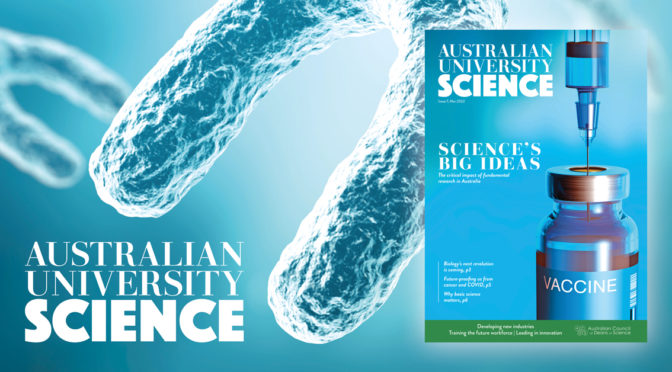
Australian University Science: Big Science’s Big Ideas

View the latest issue of Australian University Science: Big Science’s Big Ideas.

From curiosity, observation, decades-long investigation and the odd bright idea, stems the knowledge that is the progenitor of massive advances in our social and economic wellbeing.

While applied research may often be in the spotlight thanks to easily translatable outcomes, it relies on and exists in a symbiosis with the continued act of fundamental research and discovery.

Take CRISPR’s dramatic impact on biology, or the development of quantum technology for example. New foods and fuels, medical advances and other translatable research outcomes rely on the way fundamental research has shaped our ideas and the permeable flow of ideas between fundamental and translatable research.

In this issue, we explore how Australian University Science in the last two decades has built the scaffolding upon which our technology, health and engineering and applied sciences operate.

Published by Refraction Media.

Four fundamental science success stories

Image: PERC solar cells have revolutionised solar photovoltaic. Shutterstock

1. Bringing new hope for paralysis 

In a two-year, world-first human trial run by the University of Melbourne, two people with paralysis have had a small device called Stentrode inserted under the skull at the top of their heads.

Associate Professor Tom Oxley, the inventor of Stentrode, was a University of Melbourne PhD student back in 2011 when he began exploring the idea of placing the electrodes in the brain via blood vessels through a vein in the neck. In 2012, he teamed up with colleague and biomedical engineer Associate Professor Nicholas Opie to develop and trial the device. 

The device transmits signals to a computer, which translates the signals into commands like “click” and “drag”. The study participants can now search the internet, write emails and check their online banking.

2. Revolutionising laser research  

Lasers were invented by US physicist Theodore Maiman in the 1960s and promptly picked up by mainstream media and James Bond movies as death rays. Fast-forward to today and they are used in multiple industries, medical practice and research. 

University of South Australia and the University of Adelaide are now collaborating with the Department of Defence’s Science and Technology Group (DST) to build a new type of high-powered laser that combines multiple smaller lasers, fine-tuning the manufacturing process so it is cheaper and more efficient. 

DST says the ultrashort- and short- pulsed lasers are orders of magnitude more powerful than standard lasers and capable of vaporising or liquidising objects. 

“Our miniature laser technology and manufacturing processes are world-leading and will supercharge the DST’s laser system program,” says UniSA physicist Professor David Lancaster.

3. PERC solar cells

In September 1983, University of New South Wales School of Photovoltaic and Renewable Energy Engineering Scientia Professor Martin Green’s lab set the first world record for silicon solar cell efficiency — 18%. Later that year, in his report to the Australian National Energy Research, Development and Demonstration Program, Green suggested adding an extra layer on the back of a traditional cell architecture to improve light capture near the rear surface and optimise electron capture.

Known as PERC solar cells, this technology has revolutionised solar photovoltaics, raising efficiency and lowering the cost. These cells are now a commercial standard throughout the world, powering 85% of all new solar panel modules.

Green, who won the Global Energy Prize in 2018, spent three decades developing the idea with successive teams. PERC solar cells are now 40% efficient, with sales exceeding 

US$10 billion in 2017, and predicted to surpass US$1 trillion by 2040. It is estimated that they will save Australia at least $750 million in power production costs over the next decade.

4. Nanotech imaging advances

Nanotechnology has its roots in the 1980s, when the new scanning tunnelling microscopes allowed scientists to see and manipulate individual atoms. For five years, La Trobe University’s Prof Brian Abbey and Dr Eugeniu Balaur have worked on modifying the surface of conventional microscope slides at the nanoscale. 

The human eye can distinguish up to 10,000 different colours, but is far less sensitive to variations in intensity, which makes the addition of colours helpful when interpreting images. Typically, to identify cancer cells, medical imaging relies on staining or labelling cells to render them visible under the microscope, but it is still challenging to distinguish cancer cells from benign lesions.

Cancerous cells and healthy cells interact with light differently. Abbey and Balaur modified the microscope slide surfaces to make cancerous cells ‘light up’ with specific colours. The microscope slide developed from the research, NanoMslide, promises to revolutionise medical imaging.

“The key breakthrough came six years ago when we realised that, rather than working to improve microscopes, we could instead exploit recent breakthroughs in nanotechnology to revolutionise the humble microscope slide,” says Abbey.

Professor Ian Frazer AC explores the case for curiosity.

Image: Professor Ian Frazer AC, The University of Queensland Diamantina Institute and Institute for Molecular Bioscience 

Investing in fundamental research is vital for Australia’s edge in innovation.

Much research is driven by curiosity. This is often thought of inappropriately as ‘blue-sky’ research — the stereotypical scientist in their lab, pursuing their personal interest, with little or no thought to the utility of the outcome.

In reality, curiosity-driven research is generally undertaken because the researcher wants to understand something puzzling about us and our world. The answers to these puzzles can provide huge leaps in knowledge and often lead to translatable research outcomes that have a profound impact on society.

My own research segued from renal medicine to an interest in immunology and pathology, and subsequently into the way the body recognises and responds to genital warts — which are caused by one of the more-than-200 types of human papilloma viruses (HPV).

The last part of the 20th Century saw genomics come of age. Basic, curiosity-driven research into papilloma viruses, and the way these viruses incorporate their genetic information into the DNA of infected cells, led to the discovery that viruses can be responsible for cervical and other cancers. 

In 1990, Chinese virologist Dr Jian Zhou and I cloned the genes for the papillomavirus surface proteins and expressed them in cells, using knowledge drawn from decades of work on the smallpox virus.

Some viruses, including HPV, can be difficult to grow in the lab, so instead we used our understanding of the HPV genome to develop a method to encourage HPV proteins to self-assemble into virus-like particles — provoking a host immune response and enabling a vaccine that prevents HPV-associated cervical — and other — cancers.

That vaccine, Gardasil, was approved by the Therapeutic Goods Association in 2006. A year later, Australia became the first country to roll out a national HPV vaccination program.

Hundreds of millions of people worldwide have now received this vaccine. Research that began with basic science, and benefitted from continuous engagement with basic science, eventually showed both a commercial outcome and a practical benefit: saving lives.

“Research that began with basic science, and benefitted from continuous engagement with basic science, eventually showed both a commercial outcome and a practical benefit: saving lives.”

Professor Ian Frazer AC
Image: Shutterstock

But basic science is far more than the translatable research outcomes it might enable. It is also the catalyst for significant advances in our social and economic wellbeing. 

Fundamental mathematical analysis of signal processing research led to the internet, while basic physics underpins the giant radio telescope arrays now operating in Western Australia. CRISPR research has had a dramatic impact on plant and human biology, and the development of quantum technology has likewise impacted energy production and computer technology. In short, curiosity-driven research happening at university science departments around Australia has delivered significant practical changes in our lives over the last several decades.

Science is not linear: it progresses more like a roller-coaster, in leaps, bounds and loops while keeping the train of human progress on track.

The technologies, engineering and health benefits we will rely on in the next decades will only happen through continued support of the basic ‘blue-sky’ research at Australian universities happening today.

Big Science’s Big Ideas: CRISPR. From Cancer to Covid

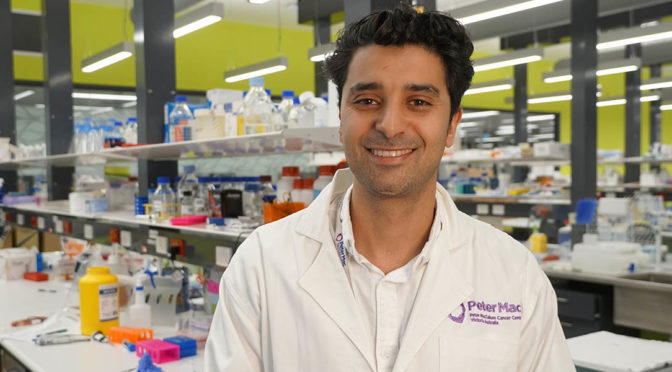
Image: Dr Mohamed Fareh from the Peter MacCallum Cancer Centre was able to flip his research into children’s cancer treatments to new methods for antiviral drugs.

CRISPR is a powerful gene-editing tool used by bacteria in their arms race against viral infection. The term was coined by Spanish microbiologist Francisco Mojica in the 1990s; by 2010, microbiologists had shown that the CRISPR-associated protein CRISPR-Cas9 acts as molecular “scissors” to precisely cut and edit DNA. 

In 2015, Russian-US PhD student Sergey Shmakov identified CRISPR-Cas13, a protein that edits RNA rather than DNA, reducing the risk of unintended effects on non-targeted genes.

When Cas13 was discovered, Dr Mohamed Fareh was a postdoctoral researcher at the Delft University of Technology in the Netherlands.

“I was really interested in understanding the molecular mechanisms bacteria deploy to fight invading viruses,” he says.

Fareh joined Melbourne’s Peter MacCallum Cancer Centre (Peter Mac) in 2018. In 2019, he and Professor Joe Trapani collaborated with the Children’s Cancer Institute in Sydney to show that Cas13 could successfully eliminate the abnormal RNA that drives a range of childhood cancers.

From Cancer to COVID-19

When the COVID-19 pandemic hit in early 2020, Fareh had a “bold and wild idea” to reprogram the CRISPR-Cas13 tool to silence the SARS-Cov-2 virus behind the disease.

“SARS-Cov-2 is an RNA virus, so it was a perfect target,” he says. 

When the SARS-Cov-2 viral sequence was released by scientists in Wuhan, Fareh and his team at Peter Mac were able to design guide RNA that reprogrammed the CRISPR tool to target small, non-replicating segments of the SARS-Cov-2 genome.

Fareh then approached Professor Sharon Lewin, Director of the Peter Doherty Institute for Infection and Immunity, co-located with Peter Mac at the University of Melbourne. Together with virology postdoctoral researcher Dr Wei Zhao, Lewin and Fareh were able to show that CRISPR could achieve more than 90 per cent suppression of the live virus in infected mammalian cells.

Game-changer for pandemics 

The CRISPR-Cas13 tool targets the SARS-Cov-2 genome and cuts it, stopping the virus from replicating. The researchers have demonstrated that the CRISPR tool remains robust whencombatting viral mutations.

“Even if the virus mutates, the tool remains effective. We can target diff erent strains with a single drug,” Fareh says.

He says the work is a game-changer for future pandemics. Traditional antiviral drugs target proteins and are extremely challenging to develop in a short period of time. In contrast, the CRISPR-Cas13 tool can be reprogrammed rapidly to fight other viruses such as influenza, Ebola, HIV and many more — as long as the virus’ genome is known.

“We can quickly reprogram it to target any new virus that may emerge in the future,” Fareh says.

As scientific understanding of CRISPR and its associated proteins evolves, more life-saving treatments will be developed. Fareh says there is a continuum between basic and translational science at Peter Mac and the Doherty Institute.

“When you master basic research, it gives you unique opportunities to translate it to something important, like targeting viral or tumour cells,” he says.

Writer: Nadine Cranenburgh

Big Science’s Big Ideas: The Case for Blue-Sky Science

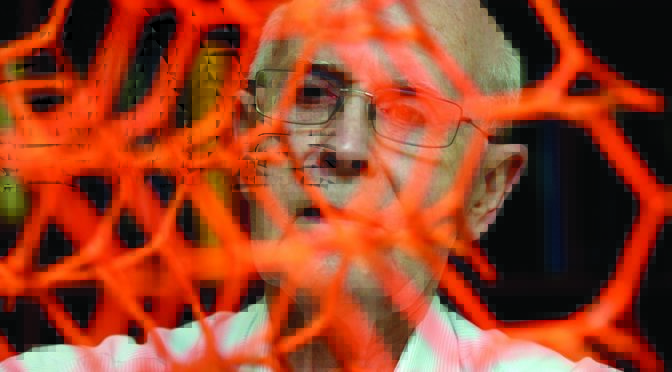
Image: Professor Richard Robson, University of Melbourne, pioneered a new field of chemistry. Supplied.

Translational research is seen as the end-point, but innovation, impact and income come as much — if not more — from fundamental science at Australian universities.

Good science, at its core, is a marriage of imagination and application; the synthesis of a wild idea and a mind rigorous enough to prove it. The Australian scientific landscape is replete with original and world-changing innovations: the Cochlear implant, cutting-edge immunotherapy, spray-on skin, the ultrasound, the pacemaker. 

We have scientists making world-first breakthroughs in quantum computing, agricultural innovations to combat climate change, inventions that will shape the very nature of the ‘new space race’, and game-changing discoveries in nanofabrication and genetics.

Despite punching above our weight in terms of creative discovery, our research community has for many decades shouldered the critique that we are all brains and no bank. As such, commercialisation has become a critical focus of the contemporary Australian research community, as well as the policy of successive Federal and State governments to varying degrees of success. 

Most recently, the Morrison government made the decision to pressure the Australian Research Council to restrict the majority — a whopping 70% — of its grant funding to six key manufacturing priorities. These include space, defence, recycling and clean energy, medical products, food and beverage, and resource and mining tech. 

Translating innovation into viable commercial endeavours is important, but there is also a strong case to be made for the long-term, often unpredictable value of fundamental, ‘blue-sky’ research. While investment in fundamental research is consistently a much smaller percentage of research budgets, it underpins the most revolutionary — and often most lucrative — outcomes. 

While OECD countries devote just 22% of their research budgets to basic research, one study found that approximately 80% of medicines, for example, could trace their origins to “one or several basic discoveries”.

“Whether you’re in the social sciences or natural sciences, chemistry, physics or whatever, it’s nearly impossible to predict the impact of research when you do it,” says Professor Pall Thordarson, Director of the University of New South Wales RNA Institute and president-elect of the Royal Australian Chemical Institute. 

“Something that might look completely obscure turns out sometimes to be the research that has the biggest pay-off .”

Today’s science, tomorrow’s tech

It is that ambiguous pay-off  that presents such a problem when it comes to funding. Not only are science’s outcomes, by their very nature, uncertain, but they routinely take 20 or more years to materialise.

“It’s part of a continuum,” says Prof Calum Drummond, Deputy Vice-Chancellor of Research and Innovation at RMIT University. “It’s important to do fundamental research, to front-load the pipeline for societal benefit.

“In terms of the translation, you’re not always going to get immediate translation, but you may advance a body of knowledge and, ultimately, someone else might be able to use that advance or build on it to create new technologies, new products, new processes, down the line.”

Building potential

In 1974, University of Melbourne Professor Richard Robson began building models. They were large, complex constructions made from coloured wooden balls and rods designed for undergraduate chemistry students, to illustrate the composition and bonds that form crystalline structures. Little could he know that his attempts to demonstrate inorganic particle composition would be the progenitor of an entire new branch of scientific discovery that underpins one of the most exciting commercial innovation prospects in contemporary Australian science.

Unless you’re a chemist, you may not have heard of MOFs. The acronym stands for “metal organic frameworks”: nanofabricated inorganic/organic hybrids with very high surface area ratios that give them some special and extremely useful properties. Today, MOFs are being used in everything from next-generation fuel research to targeted drug delivery and high-performance batteries. 

Australian startup Airthena uses MOFs to draw CO2 from the air for industrial use. Researchers from RMIT are using MOFs to create next-generation gas masks. At Monash University they are using MOFs to convert seawater into potable drinking water using nothing but the power of the sun. None of this would have been possible without Robson’s original exploration of the potential of mapping, designing and redesigning crystalline structures.

Training for emerging skills

Dr Daniel Mansfi eld is a senior lecturer in the mathematics department at UNSW. After five years of blue-sky research into a hunch about some ancient stone tablets, he discovered evidence that the Babylonians used what we today think of as Pythagorean geometry in their land surveying — 1000 years before Pythagoras was even born.

Aside from the potential future usefulness of new ways of conceptualising maths, Mansfield argues there is strong educational value in discovery for its own sake.

“To me, the value of doing this kind of research is not that I can get a patent out of it. It’s because that stuff  is awesome for inspiring the next generation of mathematicians,” he says. 

“How are you going to inspire a roomful of 500 students or now, these days, a Zoom class of 500 students?” he says. “How are you going to get them to tune in and actually listen to what you’re saying?”

And it’s those inspired minds who will be the ones feeding our research pipeline.

The dollar sign

University of Sydney graduate and former research fellow, Dr Ilana Feain, is an astrophysicist and commercialisation specialist with more than one startup under her belt. She says a passion for science underpins all her commercial experience and success.

“Thinking back to my PhD, all I wanted to do was understand how galaxies formed, how stars formed, the interaction of black hole energy,” she says. “That got me out of bed in the mornings and nothing else mattered.”

Her drive to understand the fundamental principles of the universe eventually led her to commercial ventures as varied as medical imaging and satellite communication technology.

“We were able to do that off  the back of some patents and innovations that would not have occurred had I not had that university background in astronomy imaging,” she says.

Feain was part of the group that spun off the startup Quasar. Their ambitious mission is to reimagine a technology originally designed for astronomy and space observation to produce satellite ground station facilities. This will play a huge role in managing the massive volume of satellites joining our sky to satisfy our seemingly endless appetites for data.

“Quasar is a perfect example of innovation and pure research for the sake of radio astronomy and understanding how galaxies form in the universe being translated into solving what is essentially a massive telecommunications bottleneck in satellite downlinks,” says Feain.

“Obviously, boundary conditions in place are important. But blue-sky research underpins almost everything.”

Writer: Rachael Bolton

Big Science’s Big Ideas: Biology’s Monumental Evolution

Image: Professor Claudia Vickers, Chief Scientific Officer at Provectus Algae, an Australian biotech company taking synthetic biology to commercilisation. Synthetic biology could contribute to major breakthroughs in new fuels, improved agriculture, advanced manufacturing and health outcomes. Supplied.

For Dr Yu Heng Lau, bacteria are like tantalising boxes of microscopic Lego. Most bacterial cells host proteins that assemble themselves into cage-like compartments housing chemical reactions and metabolic processes. In his lab at the University of Sydney, Lau and his team are exploring how to re-engineer these protein cages into tiny factories that could manufacture new and improved medicines, materials and catalysts. 

One of Lau’s main projects is designing protein cages that can convert carbon dioxide into useful products such as biofuels. This involves building simpler, customised versions of the photosynthetic architecture found in cyanobacteria. “We basically want to mimic and improve on this natural process,” says Lau.

Getting this carbon-fixing hack to function in the real world requires a deep understanding of how biology works at its most basic level, says Lau. This means answering key questions, such as how enzymatic reactions behave inside protein cages and, ultimately, whether they can be planted inside a cell. “What we’re most interested in as a lab is understanding the fundamentals of how biology puts things together,” says Lau. 

Creating a nature-enhancing toolkit

Lau’s plug-and-play approach to solving health, energy and agricultural challenges is a textbook example of synthetic biology in action. Synthetic biology has its foundations in the 1953 discovery of DNA’s structure, and builds on the vision of scientists like Waclaw Szybalski in the 1970s to move from a “descriptive phase” (looking at the biology that exists) to a “synthetic phase” (devising and building whole new genomes). 

As recombinant DNA technology became more sophisticated, scientists moved on from simply transferring threads of genetic material from one organism into another and began modifying and combining sequences to program fresh biological functions. 

By the early 2000s, researchers began approaching biology like an integrated circuit, simplifying it so it could be easily tweaked or bolted together from scratch. Applying this classical engineering philosophy to living systems laid the foundation for creating standardised genetic building blocks, taking synthetic biology from a seemingly far-fetched idea to a platform technology.  

Today, thanks to massive advances in basic research into genetic engineering, synthesis and sequencing technologies in the past half century, synthetic biology is achieving these visions of functional systems built out of DNA, proteins and other organic molecules.  

Researchers working in this rapidly growing discipline are molecular biologists, geneticists and chemists, who are developing practical solutions ranging from mRNA vaccines for COVID-19 to plant-based meat that “bleeds”.

“We operate in these classical engineering faculties of design, build, test and learn,” says Professor Claudia Vickers, a molecular biologist who did her PhD at the University of Queensland and is now Chief Scientific Officer at Australian synthetic biology company Provectus Algae, a biotech startup specializing in the optimization of algae to produce high-value compounds for use in a wide array of industries. 

Fuelling the next biological revolution

The economic potential is huge. By 2040, this burgeoning field of science could generate $27 billion a year and create 44,000 jobs. Over the past two decades, Australian university science has fuelled the field’s meteoric rise from a fledgling discipline to a powerhouse already delivering real-world outcomes.

From the beginning, university students were breathing life into the new science. In 2007, students from the University of Melbourne were the fi rst Australian team to participate in the International Genetically Engineered Machine (iGEM) competition, which challenges students to use synthetic biology to solve problems, from developing new fuels to creating sustainable materials for fashion, and investigating drought resilience in crops.

Now, 20 universities include synthetic biology in their research programs. Ten of these are affiliated with the ARC Centre of Excellence for Synthetic Biology, headquartered at Macquarie University in Sydney. “It’s been really powerful and quite exponential in terms of building and growing the field in Australia,” says Vickers.

Synthetic genomes

While solving real-world problems is the driving force of synthetic biology, fundamental science is the engine powering it. To design a tailor-made biological circuit, researchers need to develop a set of rules that enable them to predict and control the components they’re working with. But unlike bolting together an electrical circuit, biology is often a mess of complexity and unknowns.

“If you don’t understand a system, it’s very hard to build it predictively,” says Vickers. “To do that, you need to understand the fundamentals of biology.”

For almost a decade, Dr Tom Williams has been busy trying to grasp the fundamentals of yeast, synthetic biology’s superstar organism. Based at Macquarie University, Williams is a research fellow working on Yeast 2.0 — an international consortium of universities building the first synthetic eukaryotic genome. 

Rather than synthesising the yeast genome in its entirety, Williams and his colleagues are figuring out how to create a stripped-down, minimal genome that includes only functional genetic components. This streamlined yeast strain will have a built-in system that allows non-essential genes to be deleted, inverted, duplicated or shuffled at the flick of a switch, paving the way for genetic combinations nature has never seen before. 

“Although we’re making one synthetic genome to begin with, we have the capacity to make infinite versions of it in the future,” says Williams, who completed his PhD at the University of Queensland in 2014, making him one of Australia’s first synthetic biology postgraduates.

Creating new fuels from scratch

Yeast is already an industrial workhorse, with US biotech company Ginkgo Bioworks tinkering with its genetic make-up to produce chemicals, pharmaceuticals, foods and other materials. Vickers is also stretching yeast beyond its traditional ‘beer, bread and wine’ capabilities, with her team exploring how it can be used to sustainably manufacture isoprenoids, the largest class of natural organic plant compounds, which are used to create valuable products like biofuels and industrial chemicals.

Once complete, the versatile Yeast 2.0 genome could be customised to create valuable products more efficiently than standard strains. Building the synthetic strain chromosome by chromosome could also help answer big questions in biology, such as how much genomes can be trimmed down.

While synthetic biology is set to become a handy tool for solving massive global challenges, fundamental research will remain at the heart of the discipline, particularly when it comes to training tomorrow’s bright minds, says Williams.

“Synthetic biology really builds on decades of fundamental research in genetics, biochemistry and microbiology,” he says. “On top of that, fundamental research trains the people that are required for the field to make an impact in industry.”

Writer: Gemma Conroy

5 reasons to switch to cloud hosting

Data is the new gold and digital innovation is re-shaping every facet of every business. It’s expected that by 2030 data collection and analysis will become the basis of all future service offerings and business models. The cost of data loss, or even interruption to a business is enormous and the consequences can be severe. 

Increasingly, start-ups as well as small and medium businesses are turning to the cloud to take advantage of the many benefits cloud hosting provides. 

Here are five reasons your organisation needs cloud hosting such as a Virtual Data Centre (VDC)

1- Low costs: As your business grows, so do the IT costs. Business growth means the need for more data storage and hardware. Not to mention a larger IT team to maintain and update local machines. Cloud hosting is a low cost solution for infrastructure services. 

2- Data backup and recovery: In today’s unpredictable world, where fires, floods, pandemics are part of the daily grind, it is important that your data is double backed up and can be recovered no matter what happens. Disaster recovery planning is key to the success of your startup. 

3- Security: All the functionality of your cloud infrastructure and data storage needs to be secure. In today’s fast-paced world while you are busy growing your business, it is important that you remain free of the stress of ransomware, security or any other threat to your site, app or data. 

4- Scalable: Doesn’t matter if you are a company of 2 or 20 or 200 or if what your annual turnover is. Whether your business requirements change every month. Cloud infrastructure solutions such as VDC offer scalable solutions where you decide what you want, how much and for how long you want the solution. You will be able to scale it further or scale back whenever you like with this option. 

5- Pre-built and custom cloud provision: Solutions such as VDC require the least technical support, you will have pre-built options which you will be able to customise based on your requirements. And when there is 24×7 support such as at Servers Australia, the process of adopting such solutions becomes ever easy and doable. 

To learn more about cutting-edge approaches to cloud technology, the true cost of outages and restoration time, and how to address data security and ransomware risks, the Roadmap for Cloud Infrastructure Success in 2022‘ live webinar is a must attend. 

Register here. 

Research captures dynamic atomic interactions in a promising sodium ion battery material

An approach that combines advanced neutron and X-ray scattering techniques and theoretical modelling has provided insights into the dynamic interactions in promising materials for sodium-ion batteries.

Although much progress has been made using scientific techniques to capture atomic level information of battery materials and their evolution while operating, a study published in the Journal of the American Chemical Society reports on the dynamic interactions of atoms in a battery material.

“Seeing how things move and how motion occurs is actually quite an important parameter for materials used in batteries,” said A/Prof Neeraj Sharma, co-author of paper and an expert on batteries.

“In an operating battery that is charging and discharging, atoms will be moving all over the place.

“The established approach is to use something called impedance to look at movement as a whole or at the bulk-scale, and then deconvolute to estimate the contribution of the individual components.

“What we have shown here is that it is possible to focus in on different atoms, in this case, the sodium ions that diffuse through the structure. We found that these ions were coupled to phosphate anions that rotate.

“It was not only the sodium ions that were moving but the phosphate framework as well in a coordinated paddle wheel-type motion,” said A/Prof Sharma.

“When you have a clear picture of this motion, you can start to think about the overall dynamics of the system.”

Quasi-elastic neutron scattering (QENS) experiments on the material, magnesium-doped sodium orthophosphate (Na3–2xMgxPO), using the high-resolution backscattering spectrometer Emu at ANSTO’s Australian Centre for Neutron Scattering provided insights into the sodium ion diffusion mechanism and confirmed the dynamic orientational disorder of the phosphate atoms.

First author, Dr Emily Cheung, a PhD candidate at the time from the University of NSW, carried out the experiments using Emu under the supervision of senior instrument scientist Dr Nicolas de Souza.

Preliminary investigations to characterise the structure of the material were undertaken by co-author Prof Max Avdeev of ANSTO and the University of Sydney using neutron powder diffraction on the high-resolution powder diffractometer Echidna before the experiments on Emu.

“We usually apply QENS to study the dynamics of hydrogen atoms and organic molecules in diffusion processes. The signal from sodium atoms is more challenging but resolvable,” said Dr de Souza.

“When you have a material that is a good conductor, you don’t necessarily know how many mobile ions there are,” said Dr de Souza.

“Being able to determine that and determine whether the diffusion was fast or slow with empirical data from QENS and theoretical calculations is very useful,” he added.

The diffraction data suggested six possible orientations of the phosphorous atoms that were bound to oxygen and sodium atoms.

The investigators estimated that 2 out of 12 sodium cations per unit cell participated in long-range diffusion.

The research also proposed two possible diffusion pathways, that were dependent on the coordination of the phosphate-sodium binding.

One of these pathways was found to be the preferred diffusion model using a theoretical framework that was consistent with the experimental data.

“It was necessary to distinguish any phosphate-bound sodium from other sodium that does not participate in phosphate rotations,” said A/Prof Sharma.

To do this, the investigators developed a theoretical model of long-range sodium ion diffusion using a jump matrix construction for a simplified system.

The approach was first conceived in the 1970s and 1980s but became less used because of the mathematical complexity of new materials designed for next-generation batteries.

Both A/Prof Sharma and Dr de Souza affirm that the modelling developed to identify the contributions of sodium atoms, that scatter neutrons both coherently and incoherently, was a considerable achievement by the first author Dr Emily Cheung.

“We have made some progress in identifying why the material is a good conductor,” said Dr de Souza.

“The theoretical framework that has been developed can be used by investigators in studies on other materials,” he added.

ANSTO Instrument scientist Dr Anton Stampfl is also a co-author on the publication.

Scientists from the University of California San Diego also contributed to the research providing valuable insight into the materials, their synthesis and their performance parameters.

Aussie scrubs manufacturer puts sustainability and science at the forefront of medical wear

Based in Sydney, Founder Parry Laxman and his local team made it a mission to incorporate innovation, functionality and sustainability to create ‘wearable safety’ using a unique anti-viral and anti-bacterial technology called Arma Tech. 

With COVID confirming the necessity of scientifically proven protection for medical workers, the technology-based fabrics are researched, refined, modified and tested to keep apparel free from microorganisms.

Kangarama’s goal from the beginning was to produce Australian designed scrubs with the planet at the forefront, with the garments made from 48% recycled post-consumer water bottles. Kangarama also uses Oeko-Tex certified environmentally friendly dyes and is packed in compostable packaging.

Each apparel has been approved by ISO standards for skin irritation and cytotoxicity, with the results showing that there are no side effects of the garment’s fabric, allowing it to be worn daily with comfortability. 

Owner Parry Laxman: “COVID inspired me to start Kangarama whilst being in the textile industry. It got me thinking that there must be something we can do to apply anti-viral and anti-bacterial technology onto fabrics, and after a lot of research and trials we found the right way.”

Keeping with the Australian theme the name ‘Kangarama’ is a completely unique word, created by the company combining an iconic Australian animal, the Kangaroo, with the verbal sound of armour. 

The brand’s mission is to provide ‘wearable safety’ that is also durable and comfortable, whilst still being fashionable. With a clear purpose their medical wear has been thoughtfully created so those in the healthcare industry can make sustainable choices while knowing they are protected with the most up to date technology.