All posts by Karen Taylor-Brown

Big data, big business

Featured image above: Plume Labs use pigeons to monitor air quality in London. Credit: Plume Labs

Optimising highway networks, mapping crime hotspots and producing virtual reality sporting experiences based on real-life games: these are just a few of the exciting outcomes that new businesses are now achieving with complex data analysis. More and more startups are using readily available data to create products and services that are game changers for their industries.

Big data, for example, is what lies behind Uber’s huge success as a taxi alternative; the company optimises processes by using data analysis to predict peak times, journey time and likely destinations of passengers. Many other companies are now using data to produce technology-based solutions for a range of issues and even designing new ways to collect data.

A weather station and umbrella all in one

Wezzoo, a Paris-based start-up company, has designed a smart umbrella that tells users when it’s going to rain. The ‘oombrella’, as it’s been dubbed, is strikingly iridescent, sturdy in design, and presents a data-based solution to staying dry. It will send a notification to a smart phone 15 minutes before predicted rain and also send a reminder when it’s been left behind on a rainy day.

The oombrella itself is also a mobile weather station, able to detect temperature, atmospheric pressure, light and humidity. “Each oombrella will collect data and share it with the community to make hyperlocal weather data more accurate,” says the company.

Real-time meteorological information from each oombrella is uploaded to Wezzoo’s existing social weather service app. More than 200,000 people already use the app and upload their own weather reports from all over the world, creating a more interactive and collaborative approach to weather observation. This data, as well as information from weather stations is used to create personalised predictions for oombrella users.

‘Pigeon Air Patrol’ monitors pollution

Plume Labs, in collaboration with DigitasLBi and Twitter UK, have literally taken to the skies with their latest air pollution monitoring project, Pigeon Air Patrol. They recently strapped lightweight air-quality sensors to the backs of 10 London-based pigeons to gather data on pollution in the city’s skies. For the duration of the project, the public could tweet their location to @PigeonAir and receive a live update on levels of nitrogen dioxide and ozone, the main harmful gases in urban areas. Not only did this innovative project help collect data in new ways, it raised awareness of air pollution in large cities.

“Air pollution is a massive environmental health issue, killing nearly 10,000 people every year in London alone,” says Romain Lacombe, Plume Labs’ CEO.

“Air pollution is an invisible enemy, but we can fight back: actionable information helps limit our exposure, improve our health and well-being, and make our cities breathable.”

Plume’s core focus is tracking and forecasting ambient pollution levels to allow city dwellers to minimise harmful exposure to polluted air. Their free phone app – the Plume Air Report – uses data from environmental monitoring agencies and public authorities to provide individuals with real-time information on air pollution safety levels at their locations. With the use of environmental Artificial Intelligence, the app predicts air pollutant levels for 300 cities and 40 countries with double the accuracy of traditional forecasting methods. “Predictive technologies will help us take back control of our environment,” Lacombe says.

The company, whilst still small, has managed to raise seed funding from French banks. It plans to build a business based on aggregating data, though is also open to developing hardware.

Innovative data collection methods are not only good for science, it seems; they can also be a strong foundation for business.

This article was first published by the Australian National Data Service on 24 May 2016. Read the original article here.

Ocean acidity devastates corals

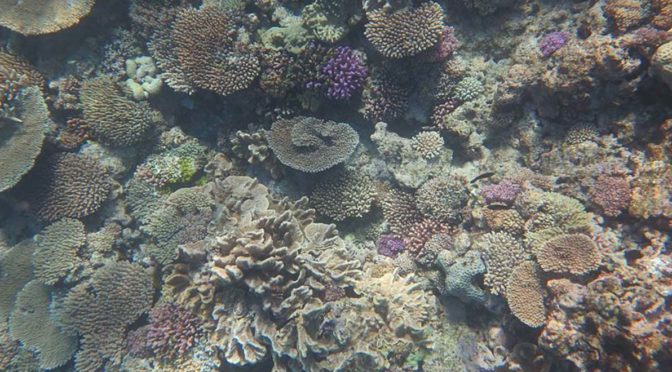
Featured image above by Kennedy Wolfe

Increasing carbon emissions in the atmosphere from activities such as the burning of fossil fuels and deforestation are changing the chemistry in the ocean. When carbon dioxide from the atmosphere is absorbed by seawater, it forms carbonic acid. The increased acidity, in turn, depletes carbonate ions – essential building blocks for coral exoskeletons.

There has been a drastic loss of live coral coverage globally over the past few decades. Many factors – such as changing ocean temperatures, pollution, ocean acidification and over-fishing – impede coral development. Until now, researchers have not been able to isolate the effects of individual stressors in natural ecosystems.

In an article published in Nature on 24 February 2016, researchers working at the University of Sydney’s One Tree Island Research Station at the southern end of the Great Barrier Reef (GBR) found that they could improve coral development by reversing the acidity of the reef waters.

“Our oceans contribute around $45 billion each year to the economy”

The international team – led by Dr Rebecca Albright from Stanford University in the USA – brought the acidity of the reef water back to what it was like in pre-industrial times by upping the alkalinity. They found that coral development was 7% faster in the less acidic waters.

“If we don’t take action on this issue very rapidly, coral reefs – and everything that depends on them, including wildlife and local communities – will not survive into the next century,” says team member Professor Ken Caldeira.

Destruction of the GBR would not only be a devastating loss because it’s considered one of the 7 Natural Wonders of the World, but would be a great economic blow for Australia.

Our oceans contribute around $45 billion each year to the economy through industries such as tourism, fisheries, shipping, marine-derived pharmaceuticals, and offshore oil and gas reserves. Marine tourism alone generates $11.6 million a year in Australia.

Impact of acidification on calcification

Corals absorb carbonate minerals from the water to build and repair their stoney skeletons, a process called calcification. Despite the slow growth of corals, calcification is a rapid process, enabling corals to repair damage caused by rough seas, weather and other animals. The process of calcification is so rapid it can be measured within one hour.

Manipulating the acidity of the ocean is not feasible. But on One Tree Island, the walls of the lagoons flanking the reef area isolate them from the surrounding ocean water at low tide – allowing researchers to investigate the effect of water acidity on coral calcification.

“We were able to look at the effect of ocean acidification in a natural setting for the first time,” says One Tree Reef researcher and PhD candidate at the University of Sydney, Kennedy Wolfe.

ocean acidity

The University of Sydney’s Kennedy Wolfe collecting water samples on One Tree Reef. Photo credit: Ken Caldeira

In the same week, an independent research team from CSIRO published results of mapping ocean acidification in the GBR. They found a great deal of variability between the 3851 reefs in the GBR, and identified the ones closest to the shore were the most vulnerable. These reefs were more acidic and their corals had the lowest calcification rates – results that supported the findings from One Tree Reef.

Marine biologists have predicted that corals will switch to a net dissolution state within this century, but the team from CSIRO found this was already the case in some of the reefs in the GBR.

“People keep thinking about [what will happen in] the future, but our research shows that ocean acidification is already having a massive impact on coral calcification” says Wolfe.

– Sue Min Liu

Apps for youth mental health

Last month, the Young & Well Cooperative Research Centre (Young & Well CRC) launched Goalzie, a smartphone app designed to promote positive social networking for young people aged 12–17. The game-based app gets young people to set challenges for each other and help their friends achieve the set challenges. Consequences for not achieving these goals include things like washing the family car.

“Young people are far more likely to seek help if they feel supported by their peers and are in an environment which makes help-seeking normal,” says CEO of Young & Well CRC, Associate Professor Jane Burns.

Mental health disorders haven risen dramatically for this age group in the last 16 years, with a recent report showing a jump from 2.9% to 5.0% in major depressive disorders among 12–17-year-olds.

Tim Sloane, a teacher at a secondary school in Sydney, says that during his six years as a student year advisor dealing with student welfare issues, he encountered cases of anxiety, depression, bullying and low self-esteem.

At his school there are different strategies in place to support student mental health and wellbeing, including mentoring programs.

Sloane says the use of online youth mental health tools would be an effective way to help young people take control of their own mental wellbeing, particularly with issues they may find difficult to discuss.

School authorities are legally required to report any cases involving child or drug abuse to police and government authorities. While this mandatory reporting is intended to protect students, Sloane says it may create a hurdle to getting help, and online technologies can be beneficial to starting a dialogue.

National surveys conducted by Young & Well CRC with Beyond Blue, and by Mission Australia found that young people turn to technologies for answers or solutions, ahead of general practitioners, psychologists, teachers or chaplains, adds Burns.

“We think about online tools as support systems for early intervention for preventing mental illness,” says Burns.

Youth mental health online

The Young & Well CRC has launched a number of online campaigns and apps, addressing issues, from cyberbullying to healthy habits and managing day-to-day stress.

Apps for youth mental health

Goalzie smartphone app developed by Young & Well CRC

Created by PhD candidate Sally Bradford in collaboration with the Young & Well CRC, myAssessment is an app aimed at helping young people assess their own mental health, to reduce obstacles in getting appropriate treatment. Trials of this app at headspace National Youth Mental Health Foundation, showed the app increased the rate of disclosure of sensitive issues to clinicians by up to 10 times.

Together with online youth help service ReachOut, the Young & Well CRC also launched the app NextStep earlier last month, which aims to connect young people with the right mental health support for their situation.

“We see technologies as part of a holistic support system of care, and we think that professions have been far too slow in recognising that this is an incredibly important resource and tool available to them,” says Burns.

Sue Min Liu

Safety of chromium questioned

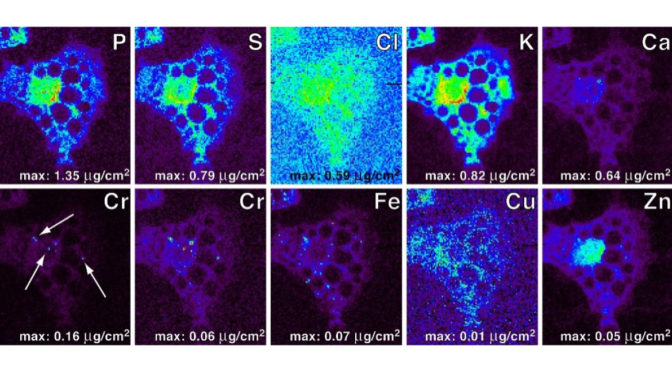
Featured image by The University of Sydney: The synchrotron’s high energy x-ray beam allowed scientists to identify chromium spots throughout the cell. By using a second high energy beam focused at these spots, the scientists were able to tell that the cell had converted into the carcinogenic form of chromium. The spots are identified by the arrows in this image.

An Australian research team found chromium is partially converted into a carcinogenic form when it enters cells.

Chromium is a trace mineral found primarily in two forms. Trivalent chromium(III) picolinate and a range of other chromium(III) forms are sold as a nutritional supplements, while hexavalent chromium(VI) is its ‘carcinogenic cousin’. The latter gained notoriety from the book and 2000 movie, Erin Brockovich, which linked an elevated cluster of illnesses, including cancer, to hexavalent chromium in the drinking water of the Californian town of Hinkley.

The University of Sydney and UNSW researchers’ concerns are based on a study published in the prestigious chemistry journal, Angewandte Chemie.

Controversy remains over whether the dietary form of chromium is essential for humans, with an increasing body of evidence indicating it is not safe for humans.

Supplements containing chromium are consumed for the purported treatment of metabolic disorders, such as insulin resistance and type 2 diabetes, but chromium’s mechanism of action in the body is not well understood.

Supplements containing chromium are also commonly used for weight loss and body building with some containing up to 500 micrograms per tablet.

The US National Academy of Sciences has estimated up to 200 micrograms of chromium is a safe and adequate daily dietary intake for adults. Australia’s current National Health and Medical Research Council Nutrient Reference Values, which are currently under review, recommend 25–35 micrograms of chromium daily as an ‘adequate intake’ for adults.

In the latest study, the Australian research team treated animal fat cells with chromium(III) in the laboratory. It then created a map of every chemical element contained within the cell using an intense X-ray beam at a facility known as a synchrotron.

The team, led by Professor Peter Lay from the University of Sydney’s School of Chemistry and Dr Lindsay Wu, now with UNSW’s School of Medical Sciences, travelled near to Chicago to Argonne National Laboratory to perform the experiments in collaboration with colleagues at Argonne’s, the Advanced Photon Source, a US Department of Energy Office of Science User Facility that generates ultra-bright, high-energy X-rays.

“The high energy X-ray beam from the synchrotron acted as a fluorescent microscope, which allowed us to not only see the chromium spots throughout the cell but also to determine whether the spots were chromium(III) or a combination of chromium(III) chromium(V) and chromium(VI),” says Wu, who conducted the study while based at the University of Sydney.

“The health hazards associated with exposure to chromium are dependent on its oxidation state. We were able to show that oxidation of chromium inside the cell does occur, meaning it loses electrons and transforms into a carcinogenic form.”

Additional experiments have since been conducted at Australia’s National Beamline Facility and the Photon Factory in Tsukuba Japan, (operated by the Australian Synchrotron) that has helped clarify the carcinogenic nature of chromium(V) and chromium(VI) formed in cells.

Lay says with the latency period for chromium(VI)-related cancers often greater than 20 years, the finding raised concerns about the possible cancer-causing qualities of chromium compounds and the risks of taking chromium nutritional supplements long term or in high doses.

“With questionable evidence over the effectiveness of chromium as a dietary supplement, these findings should make people think twice about taking supplements containing large doses of chromium,” Lay says.

“However additional research is needed to ascertain whether chromium supplements significantly alter cancer risk.”

The researchers said the findings are very unlikely to apply to trace amounts of chromium(III) found in food.

The research was supported by the Australian Research Council, the Australian Synchrotron Research Program and the Australian Synchrotron.

This article was first published by The University of Sydney on 11 January 2016. Read the original article here.

New vision for Indigenous eye care

Health professionals looking to bridge the gap in eye care for Indigenous communities have designed a new Eye & Vision Care Toolkit.

The toolkit, from the Vision Collaborative Research Centre and the Brien Holden Vision Institute, equips medical practitioners with a set of practical and scalable resources for improved eye health.

Eye problems in Indigenous communities are far higher than non-Indigenous people: rates of blindness in general are six times higher and diabetes-related blindness are 14 times higher.

Furthermore, the National Indigenous Eye Health Survey indicates 94% of vision loss is preventable or treatable.

Remoteness, cultural differences and follow through on health issues from diagnosis to treatment are persistent barriers, says Selina Madeleine, Global Communications Manager of the Brien Holden Vision Institute.

The Indigenous eye care toolkit addresses these identified gaps in the system by allowing health workers to assess current health care practices, and includes referral flowcharts and information that can be sent electronically, as well as eye testing kits.

The toolkit is also made with consideration of Indigenous community perspectives, says Madeleine.

“I don’t think there’s anything quite like this out there, specifically targeting improved eye care outcomes within the Indigenous population,” she adds.

The kit has been used for five years across NSW and the Northern Territory and measurements over the last two years show an increase in optometry examinations from 51% to 97% and in ophthalmology services from 28% to 93%.

Follow through from use of the Indigenous eye care toolkit has also jumped, with the proportion of referred individuals with diabetic retinopathy who saw an ophthalmologist up from 25% to 54%, and those referred for cataracts and who received surgery up from just 3% to 32%.

More funding needed

The toolkit is now being disseminated to hundreds of other health care workers in these states and Madeleine says the Institute plans to role it out further.

“We would like to role this out in other states across Australia because it has been so successful in the places we’ve used it so far.”

Madeline says a lack of funding is all that is preventing the widespread adoption of the toolkit elsewhere.

Guy Fenton

Marine ecosystem impacts

Oceans cover about 71% of the Earth’s surface and contain more than 97% of the planet’s water. An estimated 80% of the world’s population lives within 100 km of the coast, and fish provide the bulk of the protein consumed by humans. But the marine ecosystem impacts of global warming on the biodiversity of ocean waters are difficult to determine.

Increasing concentrations of atmospheric carbon dioxide – the result of activities such as burning fossil fuels and deforestation – are acidifying and warming the world’s oceans.

One of the most widely documented effects of warming, according to Dr Adriana Vergés, senior lecturer in marine biology at the University of New South Wales, is the widening distribution of tropical fish as they move away from equatorial waters towards the poles, resulting in increasing numbers of tropical species appearing in temperate waters.

Oceans of wealth

Dr Adriana Vergés, Marine Ecologist, UNSW, at Gordon’s Bay during Operation Crayweed. Photo by James Sherwood, Bluebottle Films.

The marine ecosystem impacts from this warming has profound implications for the underwater environment and marine life.

“Species have three options in response to changing conditions – they die, adapt or move,” explains Vergés. “We are seeing a lot of movement. And because the rate of change is so fast, the question is: will species be able to keep up?”

The intrusion of tropical fish to temperate waters, referred to as tropicalisation, could have far-reaching repercussions for the health of these waters, their biodiversity and the industries that rely on them.

“When the tropical fish arrive, they overgraze on the seaweed and the whole system begins to shift,” says Vergés. “And we’re starting to see this in oceanic waters around northern NSW, where algal forests are disappearing.”

“In Australia, the two largest fisheries are abalone and rock lobster, whose preferred habitats are algal forests and seagrass meadows. If you lose algal forests, the abalone industry will collapse, with significant consequences for the fishing industry and the economy.”

The Abalone Council Australia Ltd estimates about 4500 tonnes of wild abalone were harvested in Australian waters last year, worth around $180 million. And according to Southern Rock Lobster Ltd, in 2011–12 rock lobster fishing produced around 3000 tonnes, worth nearly $175 million.

Vergés, however, is working to reverse some of the damage to the algal forests that threaten this industry.

Together with a number of volunteers, she is involved in Operation Crayweed, a project that aims to re-introduce crayweed – a vital habitat for lobsters, abalone and crayfish – to the waters around Sydney.

“The project is looking to bring crayweed back to the whole of Sydney. We’ve re-planted crayweed, and it has started to come back – we’re now on to our third generation. It’s a really good news environmental story, and we hope the fisheries will benefit too,” she says.

As well as helping to save the fisheries industry and reduce the marine ecosystem impacts in temperate waters around Sydney, Vergés is also involved in the Scientists in Schools national program, where she sparks enthusiasm for the wonders of the underwater world in seven and eight-year-olds.

“It’s so rewarding – children are natural scientists and they ask all the right questions. Speaking to a group of them is the closest I’ve felt to being a rock star. And they love absolutely anything to do with the sea. They are the best audience without a doubt,” says Vergés.

– Carl Williams

Computer vision saves lives

It is one of the last areas of pathology testing to be automated: diagnosing which strain of bacteria is contained in potentially infected samples such as urine, sputum, wound swabs and fecal samples.

And doing it faster could save lives, allowing more rapid diagnosis of infections and early choice of the right line of treatment.

South Australian company LBT Innovations Ltd has worked with the University of Adelaide to develop an automated tool for diagnosing infections. Known as APAS – Automated Plate Assessment System – the technology incorporates computer vision to hasten the time required to detect infections in samples from patients.

“APAS accurately captures, reads and interprets bacterial cultures significantly faster than a trained scientist,” says LBT Innovations CEO Lusia Guthrie.

“Once incorporated into pathology services, we anticipate this technology will create significant cost reductions and save lives.”

After conducting clinical trials of APAS with more than 10,000 patient samples in Australia and USA, LBT Innovations is submitting the technology to the US Food and Drug Administration for approval as a diagnostic tool.

Improving old technology

Although over 130 years old, the use of gel plates to grow and identify bacteria still sits at the heart of modern diagnostic services.

For example, if you have a suspected urinary tract infection, a small sample of your urine will be smeared over a plate of solid gel. After incubation, a scientist examines the plate to classify any bacteria that have grown. Appropriate drug treatment can then be selected. The whole process takes 3–4 days, sometimes up to an entire week.

“Although around 70% of cultured plates are actually negative for bacteria, it typically takes a whole shift of human workers to sort through which ones need further analysis,” Guthrie says.

“APAS will significantly reduce this sample processing time.”

Cutting time from the analytical process will have an impact through reducing labour costs, allowing patients shorter lengths of stay in hospitals and freeing up microbiologists to focus on positive samples that require immediate specialist attention.

“We’re currently conducting market research to calculate the impact of this in dollar terms,” says Guthrie.

Industry and university collaboration

LBT Innovations worked with University of Adelaide’s Australian Centre for Visual Technologies (ACVT) to develop the plate reading capability in APAS.

“APAS consists of an image capture system linked to a computer loaded with algorithms that allow the plates to be categorised based on their appearance,” explains Professor Anton Van Den Hengel, Director at ACVT.

“One of the keys to successfully developing this technology has been to embed our engineer Rhys Hill within the LBT Innovations offices for the duration of the project.”

“With clear communication and a strong working relationship, it’s been a collaborative process of technology development,” says Van Den Hengel.

The intellectual property associated with APAS is fully owned by LBT Innovations.

Market for better, faster diagnostics

The latest clinical tests show that APAS algorithms are working for diagnosis of urinary cultures, with over 98% accuracy in detecting bacterial growth on plates.

Urinary tract infections are estimated to affect 150 million people each year globally, and the societal costs – including health care and time missed from work – are approximately US$3.5 billion per year in the USA alone.

Other samples that require plate culture and analysis for diagnosis include stool (bowel infections), sputum (respiratory tract infections), wound swabs (skin and tissue infections) and blood (septicaemia).

LBT Innovations plans to expand APAS testing for approval in all these fields. The company estimates there are 27,000 laboratories globally that can immediately benefit from APAS. The largest of these facilities process about 4000 plate samples every day.

“Laboratories are under pressure to process more samples and to do it faster, despite limits on budgets and human resources,” explains Guthrie.

“Once it’s approved, we plan to launch APAS in Australia and then roll it out into the USA, Canada, UK and Europe.”

LBT Innovations created a joint venture with German engineering company Hettich AG to fully develop commercial products that incorporate APAS technology with sophisticated plate-handling robotics.

– Sarah Keenihan

Extreme researcher

“Curious, stubborn, argumentative – at times,” is how climate change researcher Dr Sarah Perkins-Kirkpatrick, research fellow at UNSW’s Climate Change Research Centre (CCRC), describes herself. Qualities which, combined with her passion for science, have seen her awarded an Australian Research Council Discovery Early Career Researcher Award (DECRA).

Extreme researcher

The award recognises the importance of her work on the influence of anthropogenic climate change on extreme weather events, and is supporting her research into a particular event that receives less attention than storms, floods or droughts, but potentially has more impact on human health and the environment.

“My research explores how heatwaves have changed, why they change, and how they will change in the future,” explains Perkins-Kirkpatrick, “as well as looking at how we measure them, and how to detect the human contribution from climate change that is affecting them.”

Heatwaves are prolonged periods of unusually hot weather and, according to the website Scorcher (developed by Perkins-Kirkpatrick), they kill more people annually than any other natural disaster. They can also damage infrastructure such as power supplies, which can become overloaded during peak air-conditioner use, and rail networks, where prolonged periods of intense heat can buckle train lines.

“Heatwaves are highly regional and very complex events, and are driven by changes in background temperatures due to climate change, but also things like weather systems, soil moisture, and long-term variability like the El Nino/Southern Oscillation,” explains Perkins-Kirkpatrick.

“Measuring them is not an easy task, as good quality daily temperature data are needed. Fortunately, there are good datasets available in Australia so we have a good picture of how they are changing here. Unfortunately, this is not the case for many parts of the world, such as South America, Africa and India.”

The subject matter sounds exciting but, according to Perkins-Kirkpatrick, she spends much of her time in front of a computer screen number-crunching.

“On a day-to-day basis, I’m processing big data from observations collected from all over Australia as well as those that are done globally. We’re not meteorologists, so we don’t go out and release weather balloons. For people like me, it’s very much about processing data,” says Perkins-Kirkpatrick.

The ability to analyse, interpret and discern trends in large datasets suggests Perkins-Kirkpatrick’s maths abilities are well honed. She admits, however, that a bad decision in high school has meant playing catch-up on her maths.

“Something that I didn’t do was keep up with my maths. I was pretty good at it in school, but I just never understood why I was learning differential equations, integrals … I just didn’t see the point. Lo and behold, I hit my career now, and I’m, ‘OK, whoops’,” she says.

Perkins-Kirkpatrick partly blames her older sister for this, who advised her not to take higher maths at school: “You’ll never need it,” her sister told her. So Perkins-Kirkpatrick’s advice to her younger self would be: “Don’t listen to your older sister, she doesn’t always know best.”

Although heatwaves are synonymous with summer, they can also develop in winter. They may not pack the punch of the sweltering temperatures experienced during summer, but they can have a disastrous effect on crops such as fruit trees, by interfering with their reproductive systems and inhibiting growth.

So how has climate change influenced heatwaves in the recent past, and what does the future hold?

“We can say with a high degree of certainty that heatwaves have increased since at least the 1950s,”explains Perkins-Kirkpatrick, “and that’s the case for pretty much everywhere on the globe where we’ve got good enough measurements.”

“Canberra over the last 50 years, for example, has seen a doubling in the number of heatwave days. Melbourne hasn’t seen much of a change in the number of heatwaves, but they have become hotter over the last 60 years. And Sydney has seen the heatwave season starting up to two or three weeks earlier.”

And the future looks anything but encouraging. According to Perkins-Kirkpatrick, the frequency, intensity and magnitude of heatwaves are all increasing, with frequency increasing fastest; and what is particularly concerning, these trends are also accelerating, meaning the rate of change is increasing too.

As with other areas of climate change research, Perkins-Kirkpatrick is attempting to make predictions; so it’s hardly surprising her favourite film reflects this.

Back to the Future is pretty much my favourite movie trilogy of all time,” she says, recalling her childhood. “I recently gave a talk on how, in climate change, we look into the future, and managed to slip in a reference to Back to the Future.”

– Carl Williams

Bioinformatician on the move

In 2001, the Human Genome Project, an international research project whose goal was to determine the sequence of genes that make up a human being, successfully mapped the human genome – the set of genetic instructions, like a recipe book, that contains all the information needed to assemble and form a person.

Thousands of individual human genomes have now been mapped, generating a vast amount of information on the structure and function of genes and revealing a highly complex and intricate genetic landscape that has led to new insights in biology, human evolution and the diagnosis of genetic disorders, such as Huntington’s disease and cystic fibrosis.

Bioinformatician on the move

Harriet Dashnow, a PhD student in the Bioinformatics Group at the Murdoch Childrens Research Institute (MCRI) in Melbourne, is one of the intrepid explorers navigating this terrain. Her research is seeking to understand how variations in the location and pattern of specific genes can lead to genetic disorders.

“One of the problems is that we’re very good at understanding simple mutations inside genes,” explains Dashnow, “but it’s clear that there are lots of different kinds of variation we don’t understand, and we have a lot of trouble testing for. So the focus of my PhD is to look at a particular type of variation called a microsatellite or a short tandem repeat.”

Short tandem repeats (STRs) are sequences of deoxyribonucleic acid (DNA) – the molecule that contains most of the genetic instructions for all living organisms – comprising 2–5 base pairs, which repeat throughout a human genome. Base pairs, linked nitrogen-containing biological compounds represented by A-T and C-G, are the building blocks of DNA.

Short tandem repeats can appear at thousands of different locations throughout the human genome, and are noteworthy for their high diversity within the population as well as their high mutation rates.

A repeated sequence, for example ATATATAT, will have a different number of copies of AT from one person to the next: “This is a kind of variation that we’re not good at measuring,” explains Dashnow, “so my work is trying to measure this variation so we can look for it in a clinical setting and figure out when it’s causing a disease.

“Genetic disorders such as ataxia [a dysfunction of the nervous system that affects movement] are often caused by these kinds of repetitive mutations, but it’s actually quite difficult to test for these using genome sequencing.”

Enter the interdisciplinary field of bioinformatics, which employs the power of computer science, statistics and engineering to analyse and interpret biological data in order to tackle some of the most challenging questions facing biology today.

“When I was undertaking the biochemistry and genetics part of my undergraduate degree I was starting to hear how computational methods were being used to solve biological questions,” says Dashnow. “It became increasingly clear to me that was the direction biology was going in. So it was going to be important for people to have these computational skills.”

Dashnow, who clearly thrives on challenges, undertook a double degree in science and arts – with majors in biochemistry, genetics and psychology – at the University of Melbourne. And she believes this has proved to be highly beneficial: “It has given me the ability and confidence to write, which has been incredibly valuable, and it’s something that people who just study science don’t always get an opportunity to explore.”

Although she enjoyed the experience of studying literature and psychology as part of her arts degree, Dashnow is a scientist at heart. “I’ve always wanted to be a scientist ever since I was very little. In primary school I thought I wanted to be a physicist, but when I started to take science classes in high school I became really fascinated by biology and genetics, and how genes make us who we are,” she says, recalling the moment when her path in science became apparent to her.

After graduating, Dashnow took up a position as a bioinformatician at the Victorian Life Sciences Computation Initiative (VLSCI), working on the Melbourne Genomics Health Alliance project, whose aim is to integrate genomics – the study of the structure and function of genes – into everyday healthcare.

“It will become more and more common to sequence people’s genomes when they get sick,” says Dashnow. “So understanding and interpreting information provided by genome sequencing will allow us to diagnose more diseases and come up with appropriate treatments.”

Dashnow did a Master’s degree in Bioinformatics at the University of Melbourne then worked at VLSCI for over a year before starting a PhD. The research she is now undertaking for her PhD follows on from her Master’s work, and has already been recognised through the awarding of a highly competitive MCRI PhD top-up scholarship.

Dashnow is currently visiting the Broad Institute, a world-class genomics and biological research centre that emerged from initiatives at Harvard University and the Massachusetts Institute of Technology, where she will undertake collaborative research on muscle disorders, furthering her knowledge and understanding in the field.

– Carl Williams

Tesla’s Elon Musk calls for carbon tax

Elon Musk, engineer, inventor and CEO of Tesla Motors is calling for the introduction of a carbon tax. In an address to students at Pantheon-Sorbonne University in Paris, Musk called for nations to adopt a carbon tax in order to speed up the transition from carbon-emitting fossil fuels to renewable energy technologies.

Attended by representatives from nearly 200 countries, the Paris Climate Summit is the 21st meeting of the Conference of the Parties (COP21) to the United Nations Framework Convention on Climate Change. The aim of summit is to achieve a legally binding agreement to limit global warming to 2°C above pre-industrialised levels – a threshold, most scientists believe, that if exceeded will lead to dangerous and irreversible climate change.

Speaking at the university, a side event to the Paris Climate Summit, Musk urged students to campaign and lobby governments to implement policy introducing a price on carbon.

“To make it neither a left or right issue, we should make it a revenue-neutral carbon tax,” explains Musk.

“By progressively increasing the carbon tax and reducing tax in other areas like consumption taxes or VAT, would give companies time to react, so a phased approach should be adopted.”

By placing a price on carbon, the cost of generating power from energy resources such as coal, oil, natural gas and other fossil fuel-based derivatives – a major cause of man-made climate change – would increase. And, depending on the level at which the price is set, could shift investment from ‘dirty’ generators, such as coal-fired power plants, to cleaner renewable energy technologies such as PV, solar, wind and geothermal.

“If countries agree to an appropriately priced and targeted carbon tax, we could see a transition [to clean energy] that has a 15- to 20-year timeframe as opposed to a 40- or 50-year timeframe,” says Musk.

Musk, who’s scheduled to address delegates at the Paris talks to outline his ideas for mitigating climate change, is critical of previous climate summits: “The Paris talks are likely to bring about degrees of success, but nothing came out of the Copenhagen climate talks, where there was a net increase, rather than decrease in global warming. We need to send a clear message that this time there needs to be significant change,” he says.

Musk, however, is optimistic about positive outcomes of COP21. A position supported by a movement emerging from the talks, with billionaires like Bill Gates, Mark Zuckerberg, Richard Branson and other high profile entrepreneurs, pledging to kick-start a “new economic revolution” based on investment in renewables.

Australia is well placed to benefit from increased investment in renewables. According to a recent report from the Energy Supply Association of Australia, 15% of Australian homes have solar panels installed – the highest rate in the world. A fact acknowledged by Musk, who has indicated that he sees Australia as the first market for Tesla’s Powerwall battery storage technology units, which could be available in Australia by the end of 2015.

– Carl Williams

Women engineers kick-start STEMM

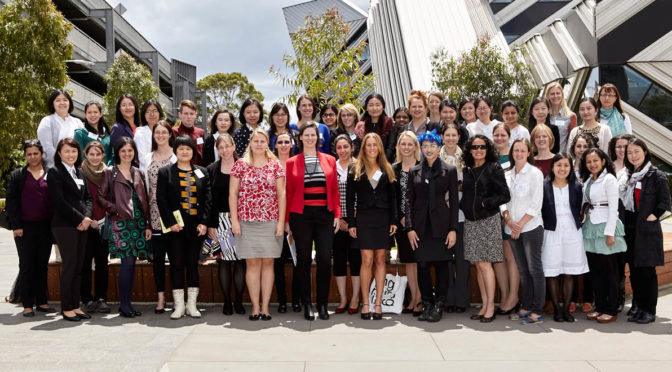
Monash University’s Faculty of Engineering recently hosted the inaugural meeting of the Future Women Leaders Conference. The two-day workshop, held on the 26–27 November 2015 at the university’s Clayton campus in Victoria, was attended by around 50 women engineers from across Australia, New Zealand and Malaysia.

The workshop seeks to narrow the gender gap and improve gender diversity among engineering researchers, by providing support and practical information to female post-doctorates, lecturers and PhD candidates working in the engineering sector on how to manage the pressures faced by female academic engineers.

“The Future Women Leaders Conference is the first of its kind,” says Professor Ana Deletic, Associate Dean of Research at the Faculty of Engineering at Monash.

“The focus is on inspiring women in engineering to pursue an academic career, as well as providing opportunity for them to learn from the success of other female engineers.“

Gender diversity is still a major challenge for the science, technology, engineering, mathematics and medicine (STEMM) disciplines in Australia. This is particularly true for engineering, where, according the Workplace Gender Equality Agency (WGEA) report: A strategy for inclusiveness, well-being and diversity in the engineering workplace, women make up less than 12% of the workforce.

The majority of the workshop’s attendees are post-doctoral researchers seeking to transition to an academic position. This is a critical time in the life of female researcher engineers – at this point the gender gap widens significantly.

“We’re truly excited about this gathering – we see it as a fundamental step in increasing diversity in engineering,” says Professor Karen Hapgood, Head of Department for Chemical Engineering at Monash University and co-chair of the workshop with Deletic.

“The group is likely to form a peer mentoring network as a result of this event, which will provide valuable ongoing support for attendees. Engineering research is a highly competitive field, so this kind of support is particularly beneficial.”

The workshop, which featured inspirational stories from successful women engineers from across the country, including Monash Provost and Senior Vice-President Professor Edwina Cornish and Dr Leonie Walsh from The Office of the Lead Scientist in Victoria, sought to address the gender gap by providing valuable insights in to the challenges faced by women in engineering.

The networking element of the workshop, according to Deletic, was particularly valuable. “Many attendees had not met other people in their situation, and were eager to talk through the common challenges they face,” says Deletic.

Monash University, together with another 32 Australian institutions, is also taking part in the Science in Australia Gender Equity pilot. Launched on 16 September 2015, the pilot is an initiative of the Australian Academy of Science in partnership with the Australian Academy of Technological Sciences and Engineering that seeks to improve gender equity practices, representation and retention in STEMM.

– Carl Williams

Portrait of an engineer-politician

A passionate engineer, Karen Andrews is proof that studying science, technology, engineering and maths (STEM) can propel you along an exciting and varied career path.

This path has led to her current role as Assistant Minister for Science and Federal Member for McPherson in Queensland. The engineer in her, however, is omnipresent.

“I’m delighted that my role in politics takes me right into the engineering sphere,” Karen says. “I always enjoyed being an engineer, and quite frankly if I get the opportunity to introduce myself as an engineer or a politician, I will always go for engineer.”

Karen’s interest in engineering started early. “When I was eight years old I remember being absolutely fascinated by the washing machine,” says Karen, recounting a childhood memory, “and how the agitator turned the same amount in a clockwise and anti-clockwise direction every time.”

This curiosity of how things work drove Karen to study engineering at Queensland University of Technology (QUT), where, in 1983, she and a fellow student were the first two female graduates in mechanical engineering from the university.

Karen Andrews

Karen Andrews, Assistant Minister for Science

According to Graduate Careers Australia, with women representing less than 9% of bachelor degree graduates in mechanical engineering in 2014, and the gender imbalance increasing as female participation in STEM wanes, there is still a dearth of women entering STEM.

As a trailblazer for women in engineering, Karen believes barriers to women entering STEM can be overcome.

“Some of the limitations are self-imposed,” Karen believes. “We should be making sure that as girls are going through the education system, they understand that every career choice is open to them. And with careers advisors too, we have to make sure there isn’t an unintentional gender bias in the advice that’s being given to women.”

After graduating, Karen cut her teeth working at power stations and petrochemical sites across Queensland and interstate. This was the mid-1980s, a time of significant industrial volatility in the Australian oil industry.

Karen’s supervisory role often meant receiving delegations from shop stewards; individuals elected by workers to represent them in dealings with management. “Shop stewards were pointing out to me the reasons why they couldn’t do the things I was asking them to do,” says Karen, as she described some of her early experiences in this demanding environment. “This encouraged me to go off and study industrial relations (IR). I was attracted to IR to see how I could make things better at the work place.”

As a natural communicator, Karen pursued her interests in IR joining the Chamber of Manufacturers as an industrial advocate in the Metals, Engineering and Construction industry.

“If you’re going to communicate, first and foremost you have to be a good listener,” explains Karen. “You have to listen to what people are saying to you in the first place before you can respond and work through a solution.”

With Karen’s communication skills honed in IR, and refined while running her own Human Resources and IR consultancy, Karen decided to pursue a long-held interest in politics. And with characteristic drive and determination she was elected for the seat of McPherson, southern Gold Coast in 2009.

“The adversarial parts of IR are similar to the adversarial parts of politics, says Karen. “In IR you are working closely with employers and employees trying to achieve an outcome that’s in the best interests of that business. The same thing applies in politics, but on a larger scale because you’re looking at what is in the best interests of Australia.”

Karen’s engineering background and career path afford her a unique perspective on the potential future for STEM in Australia.

“I think there will be exciting new careers in analysing big data,” says Karen. “So we’ll need people who are going to be able to analyse that data and turn it into usable information. So I think there will be plenty of opportunities for data analysts and people with higher maths skills.”

“There will also be lots of opportunities in the coming years in astronomy, and particularly is marine sciences where we are already world-leaders,” says Karen.

– Carl Williams

Mosquito urban wetlands

After a stint working as an environmental consultant trawling swampland in Sydney and Wollongong, Jayne Hanford has gone back to uni to do a postgrad researching one of Australia’s least favourite invertebrates – mosquitoes.

“Bugs are really cool,” says Jayne, with characteristic enthusiasm. “They’re like little aliens when you look at them under a microscope, and there’s a lot of diversity.”

Jayne’s research at The University of Sydney looks at what conditions can create mosquito-free urban wetlands and preserve urban wetland biodiversity.

“I’m the only person researching the aquatic environment – there are people working on tic pathogens, bees, spiders, ants and bats in urban areas,” says Jayne, describing the diversity of research being undertaken at her lab.

There is currently little research on biodiversity in urban wetlands – and what research is available is somewhat disjointed.

While the conditions conducive for mosquitoes are well understood in natural wetlands, as are the conditions for creating high biodiversity, these findings haven’t been applied to urban wetland ecology.

“I hadn’t really thought about mosquitoes before, I was more interested in the protection of biodiversity, and thought it would be interesting to look at that in an urban context,” says Jayne.

Her main supervisor at the uni, Associate Professor Dieter Hochuli is focused on urban ecology, so Jayne took the opportunity to undertake research into how biodiversity and mosquito populations are linked in urban wetlands.

“The councils I’ve spoken to would really like to know if their wetlands do have mosquitoes because it influences how they manage them in the future.”

As wetland vegetation are often good breeding grounds for mosquitoes, Jayne’s research will assist councils to understand the biodiversity value of a wetland and whether it poses a risk to public health from mosquito-borne diseases.

This understanding will lead to better management of a wetland’s biodiversity while minimising risks from mosquitos. And could allow for the integration of biodiversity and stormwater and wastewater management strategies with public health programs.

“My research will look at what we need to create a really good network of wetlands for conservation in urban areas that tick all the boxes,” explains Jayne.

“They must be visually appealing, be places for recreation, provide a habitat for wildlife, improve water quality, minimise mosquito or weed infestations – and avoid making people sick. People can walk their dogs around them, and they benefit biodiversity.”

– Carl Williams

Can driverless cars save the planet?

The widespread introduction of driverless cars could play a significant role in reducing car ownership and oil consumption by as much as 90%, according to an Australian researcher.

Driverless cars, in combination with a rail transport network for high-density and longer trips, would achieve resource savings and reduce greenhouse gas emissions, according to Dr Gary Ellem  from the Tom Farrell Institute for the Environment at the University of Newcastle.

Ellem spoke at the Geological Society of Australia’s Forum: Powering Sydney in to the Future last week.

His claim is backed up by research published in July 2015 by Lawrence Berkeley National Laboratory in Nature Climate Change showing that per-mile greenhouse gas emissions could be reduced by up to 90% for driverless, electric cars when compared with petrol-powered private cars.

According to Ellem, Australia’s dependence on the private car is proving to be a major economic, energy and climate security issue, and is estimated to cost the Australian economy around $1 trillion in car and oil imports over the next decade.

Ellem says there are two distinct paths being taken in developing a commercial driverless car.

“One group of companies is looking to build an autonomous car for personal use that they will sell you, and the other is trying to build a car that could be shared. The second approach is predicated on offering a service,” he says.

Driverless cars employed as shared car service could reduce the total number of cars on the road, reducing embodied greenhouse gas emissions from car manufacturing. And because they will likely be electric-powered cars, there will be savings in imported liquid fuels, and will help in the shift to alternative energy.

Driverless vehicles are already operating in many parts of the world, such as Heathrow Airport in London, where autonomous vehicles are used to transport passengers. Similar systems are in use at Morgantown in the United States, Masdar City in the United Arab Emirates and in Suncheon, South Korea.

Considerable progress, however, still needs to be made until we see completely driverless cars travelling our city streets and freeways.

“The timeline we’re talking about is possibly full autonomy by about 2025 or 2030, with increasing levels of autonomy in between,” says Ellem.

Prototypes on public roads June2015

Untapped opportunity

Ellem believes there are significant economic opportunities for Australia to contribute to the sector, as the driverless cars bring together the digital economy, smart manufacturing, transport, planning, and the energy and research sectors.

There have already been significant breakthroughs across a range of driverless car technologies.

Sensors, such as radars, digital cameras, and remote sensing systems like Google’s LIDAR are reducing in size and cost, and are increasingly being integrated in to mass production cars.

Graphics processors are also becoming smaller, cheaper and faster, and are increasingly being targeted at driverless car applications.

“Pretty much every auto manufacture on the planet has a driverless vehicle program,” says Ellem.

“I spend part of my time being a futurist. So when a new technology appears, I try to work out whether it’s incremental or transformational. The driverless car looks to be far more transformational than incremental and can offer a transport service that improves on the private passenger car.”

Carl Williams

Housing industry could save auto jobs

The manufacture of prefabricated buildings and the subsequent growth of a modular housing industry in Australia may hold the key to saving jobs from the auto industry, says Professor Peter Newman of Curtin University’s Sustainability Policy Institute.

The closure of Ford Australia’s Broadmeadows and Geelong car manufacturing plants by October 2016 will lead to hundreds of redundancies, and bring about the loss of traditional manufacturing and engineering skills.

The Australian Manufacturers Workers Union has said that it fears more jobs would go as the impact from the plant closures affects the wider auto parts industry.

But growing the prefab housing industry could utilise these skills and processes, says Newman.

The car manufacturing process is highly automated, however skills are still required to manage these processes. “It’s in the transfer of these management and associated skills to modular building fabrication where the opportunities lie,” says Newman.

“Modular building construction has been around since the 1960s when the development of lean manufacturing techniques and skills by the Toyota car company were transferred to other industries, including the construction of buildings.”

“This formed the basis for how the Japanese economy took off. Modular buildings currently represent around about 60-70% of the market in Japan, and about 50% in Europe,” says Newman.

In 2012, the prefabrication buildings industry was worth $90 billion worldwide according to Newman, but at only 3% of the current Australian building sector, he predicts that it will grow to 10% by 2020.

Newman believes that without a transformation of the buildings industry in Australia, overseas companies could seize the opportunity, which could lead to job losses in the building sector.

“A new profession has emerged bringing together digital control systems with many different kinds of industrial processes. Given modern engineering practices and the use of computers, you definitely need engineers, but you also need people trained in computing skills. There is a cross-over with old disciplines,” says Newman.

Newman believes that because modular buildings are a disruptive technology, their uptake in Australia will be determined by demand. Given, however, that modular buildings can be erected 30–40% faster than conventional buildings — and therefore cost less — they could be a solution to current concerns over housing affordability facing many of Australia’s capital cities.

“Modular buildings also enable innovative design that makes high-density redevelopment much more popular,” says Newman.

Ausco modular, an award winning modular residential housing company based in Western Australia, designed, manufactured and installed 20 double storey, three and four bedroom homes in Moranbah, Queensland in just five months.

Significant savings in greenhouse gas emissions can also be achieved. Newman estimates that modular buildings can be up to 30–40% less carbon intensive when occupied compared with buildings constructed using traditional practices. Prefab buildings also generate 10–20% less CO­2e emissions in their construction, particularly when compared with buildings constructed from brick and cement.

To assist in the transformation of the building industry in Australia, the Universities of Melbourne, Sydney and Curtin have recently been awarded $4 million to establish the Australian Research Council Training Centre for Advanced Manufacturing of Prefabricated Housing.

The centre aims to foster collaboration between universities and industry by providing innovative training for researchers in skills that will be key to unlocking the potential growth of the modular building industry.

Carl Williams

Why DVDs are the new cool tech

In this era of big data, storage capacity is everything. To store the vast amount of data being generated requires an increasing number of large data centres. Some of which are industrial scale operations, consuming as much electricity as a small town.

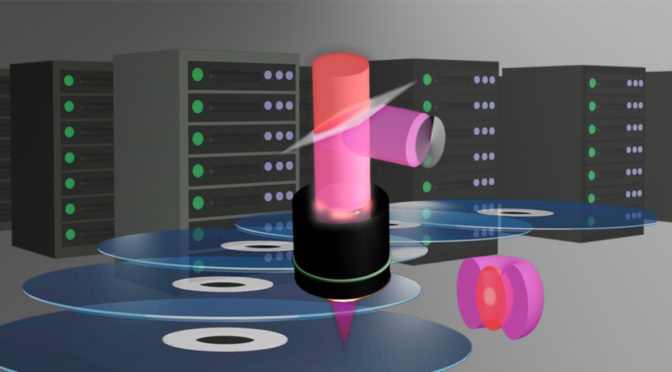
In the quest for greater storage capacity technology, researchers at Swinburne University have achieved a technological breakthrough by increasing the storage capacity of DVDs from a meagre 4.7 gigabytes to a staggering 1000 terabytes. This is the equivalent of storing 50,000 high-definition movies.

Rapid commercialisation of the research has positioned it as a finalist under the best commercial deal category for the 2015 .

“Our first motivations were scientific curiosity: could we increase the storage capacity of the disc?” says the lead researcher Professor Min Gu. “The storage capacity of optical discs is determined by the number of dots that can be burned in to the disc, which in turn is determined by the wavelength of the laser used to burn the dots.”

“To put more dots on the disc beyond conventional DVDs, we had to address a physical limit. Our approach overcame the minimum dot size determined by the law to produce an extremely tiny spot of light.” Each dot on the disc is a binary digit, or bit, representing 0 or 1.

Optical discs have significant advantages over other data storage technologies – such as hard disk drives, USB flash drives and SD cards – in terms of cost, longevity and reliability. However, their low storage capacity has been their major limiting factor.

hf

Professor Min Gu, lead researcher at Swinburne University demonstrates the technology used to massively increase the storage capacity of DVDs.

Using nanotechnology, Gu and his colleagues Dr Xiangping Li and Dr Yaoyu Cao have developed a technique using two laser beams, instead of the conventional single beam, with different colours for recording onto the disc.

One beam, referred to as the ‘writing beam’ records the information, while the second beam inhibits the writing beam, essentially playing an anti-recording function. This produces a spot of light nine nanometres in effective diameter – around one ten thousandth the width of a human hair.

“One data centre at the moment can be the size of a football stadium. We can reduce the size to one box of discs,” explains Gu. The impact of this technology, however, goes beyond just storage capacity, and has significant implications for energy consumption.

“Big data storage already consumes 3% of electricity. If we record all the information produced by Australia in 2011, we have to use all the electricity consumed for domestic use that year. Optical discs are what we call ‘cool technology’ they don’t require cooling systems, and they also have along life times of around 20-30 years.”

Gu describes how the technology has progressed from publication of the research (co-first authored by Dr Zongsong Gan) in Nature Communications in 2013, to commercialisation.

“Two weeks after we published the results we received a call from the investment advisor for Optical Archive Inc. saying that ‘your technology will be very useful for big data.’”

Optical Archive Inc, which licensed the technology,  was purchased by Sony Corporation of America in May 2015.

Gu believes that the first prototype of the technology will be available in around three years’ time.

Carl Williams

Multi-million-dollar deal brings UQ pain drug closer to reality

A chronic pain treatment discovered at The University of Queensland is a step closer to clinical use, with a global pharmaceutical giant acquiring the Australian-founded company developing the drug.

Spinifex Pharmaceuticals has been acquired by Novartis International AG for an upfront cash payment of $US200 million (about $A260 million), plus undisclosed clinical development and regulatory milestone payments.

Spinifex is a biopharmaceutical company founded by UQ commercialisation arm UniQuest.

UQ Vice-Chancellor and President Professor Peter Høj welcomed the acquisition and congratulated those involved.

“This is one of the largest Australian biotech deals in history, and is a stunning outcome for the company, the researchers and the investors,” Professor Høj said.

“Spinifex builds on the unprecedented commercial translation achievements of UQ, which includes the world’s first cancer vaccine, Gardasil.

“It is a shining example of UQ’s determination to take research from excellence to what I call ‘excellence plus’, developing a product that has potential to improve the lives of people around the world.”

Spinifex is developing the drug candidate EMA401, an oral treatment for chronic pain, particularly neuropathic pain (a type of nerve pain), without central nervous system side effects.

The technology is based on a discovery by UQ’s Professor Maree Smith.

Professor Smith said the acquisition brought EMA401 a step closer to the people who needed it most.

“Chronic pain can be a debilitating condition, most commonly associated with cancer chemotherapy, post-herpetic neuralgia (a painful condition that can follow shingles), diabetes, peripheral nerve injury and osteoarthritis.

“It’s wonderful to see this deal eventuate, bringing a much-needed treatment option a little closer to reality for the millions of pain sufferers around the world,” Professor Smith said.

UQ pain researcher Professor Maree Smith

UQ pain researcher Professor Maree Smith

UniQuest CEO Dr Dean Moss said Dr Smith’s work was at the cutting edge of pain research.

“Her achievements and expertise have contributed to the formation of the recently-launched Queensland Emory Drug Discovery Initiative (QEDDI),” Dr Moss said.

QEDDI, a collaboration between UQ and Emory University in the US, will see the development of drugs to combat health issues including cancer, diabetes, inflammatory disorders and infectious diseases.

EMA401 is a novel angiotensin II type 2 (AT2) receptor antagonist being developed as a potential first-in-class oral treatment.

Professor Smith and UQ’s Dr Bruce Wyse’s research identified AT2 receptor antagonists as inhibitors of neuropathic and inflammatory pain in preclinical models.

Spinifex is supported by a syndicate of investors, including UniQuest, NovoVentures (Novo A/S), Canaan Partners, GBS Venture Partners, Brandon Capital Partners and UniSeed (a venture fund operating at the Universities of Melbourne, Queensland and New South Wales).

Dragonfly eyes inspire machine vision

Mechanical Engineering PhD Student Zahra Bagheri at the University of Adelaide in South Australia says that despite having low visual acuity and brains no bigger than a grain of rice, dragonflies are remarkably good at tracking prey.

“They’re not like mammals which have developed very good brains, and they have very low resolution eyes compared to other animals, but they can catch their prey more than 97 per cent of the time while they’re moving at very high speeds in very cluttered environments,” Bagheri says.

“That means they have adopted very efficient methods for target tracking.”

Bagheri is part of a team of engineers and neuroscientists that have used those methods to develop a machine vision algorithm that can be applied in a virtual reality simulation, allowing an artificial intelligence system to ‘pursue’ an object.

Her project is a combination of neuroscience, mechanical engineering and computer science, building on years of research in to insect vision already undertaken at the University of Adelaide.

Zahra Bagheri and Benjamin Cazzolato with the robot that will use the newly developed machine vision algorithm.

Zahra Bagheri and Benjamin Cazzolato with the robot that will use the newly developed machine vision algorithm.

“Detecting and tracking small objects against complex backgrounds is a highly challenging task. Consider a cricket or baseball player trying to take a match-winning catch in the outfield,” Bagheri explains.

“They have seconds or less to spot the ball, track it and predict its path as it comes down against the brightly coloured backdrop of excited fans in the crowd – all while running or even diving towards the point where they predict it will fall!”

This is known as selective attention. Dr Steve Wiederman is leading the dragonfly project, and conducted the original research recording the responses of neurons in the dragonfly brain.

“Selective attention is fundamental to humans’ ability to select and respond to one sensory stimulus in the presence of distractions,” Dr Wiederman says.

“Precisely how this works in biological brains remains poorly understood, and this has been a hot topic in neuroscience in recent years,” he says.

“The dragonfly hunts for other insects, and these might be part of a swarm – they’re all tiny moving objects. Once the dragonfly has selected a target, its neuron activity filters out all other potential prey.”

“It has diverse applications. It can be used in surveillance, wildlife monitoring, smart cars and even bionic vision.”

The team has emulated that ability with their algorithm. Rather than trying to perfectly centre the target in its field of view, Bagheri says the system locks on to the background and lets the target move against it.

“This reduces distractions from the background and gives time for underlying brain-like motion processing to work. It then makes small movements of its gaze and rotates towards the target to keep the target roughly frontal,” Bagheri says.

Because the algorithm is based on a dragonfly’s small brain and limited vision, it can rival insects’ abilities as well as those of more elaborate machine vision systems – all with relatively low complexity.

“It’s shown that we can do it with very low resolution cameras and very limited computational resources. It doesn’t need high-performance computers or anything like that.”

This bio-inspired “active vision” system has been tested in virtual reality worlds composed of various natural scenes. The Adelaide team has found that it performs just as robustly as the state-of-the-art engineering target tracking algorithms, while running up to 20 times faster.

“We are hoping to test it on a robot – we’re working on that right now. It has diverse applications. It can be used in surveillance, wildlife monitoring, smart cars and even bionic vision.”

Bagheri is lead author of the paper, titled Properties of Neuronal Facilitation that Improve Target Tracking in Natural Pursuit Simulations, which was published this week in the Journal of The Royal Society Interface.

This article was published on The Lead on the 11th June 2015. Read the original article.

Australia’s energy future

Australia’s renewable resources include wind, solar, wave and geothermal energy, and there’s significant research happening to improve generation and storage technologies to overcome the inherent disadvantage of intermittent flow.

The Australian Renewable Energy Agency (ARENA) has completed 32 projects and is managing more than 200 others, including several large-scale solar photovoltaic (PV) plants and wind farms, which are considered the most advanced technologies in terms of making a short-term impact on our renewable electricity generation.

Australia’s CRC for Renewable Energy (ACRE), which operated 1996–2004, developed a state-of-the-art facility for testing grid-connected renewable energy systems, as well as small-capacity wind turbines for remote generation.

Australian scientists at the CRC for Polymers (CRC-P) have made big strides in the development of flexible, lightweight solar cells, which CEO Dr Ian Dagley describes as the “antithesis” of rigid rooftop solar cells. These lightweight cells offer intriguing possibilities: their flexibility means they can be placed on a variety of surfaces, from walls to windows, and they can operate indoors to help charge electrical devices.

They’re also attractive because they’re considerably cheaper to manufacture than silicon solar cells. Dagley says his CRC-P team has been working on refining the manufacturing technique, which uses low-cost components and reel-to-reel printers. One of the goals is to increase the lifespan of the cells, which is about five years, whereas rigid cells last roughly 30 years.

Meanwhile, the CRC for Low Carbon Living (CRCLCL) is looking at ways to dramatically reduce greenhouse gas emissions by developing smarter, more energy efficient buildings and cities. CEO Dr Deo Prasad says lower carbon buildings can be realised by optimising design to ensure maximum energy efficiency, through integration of next-generation technologies, such as solar PV cladding and heat and electricity capture systems for on-site energy offsets, and by using more sustainable building materials that need less energy to extract, process and manufacture. At the suburb and city scale, Prasad says decentralised renewable energy generation, reliable storage and smart grids, linked with information and communications technology-based intelligence, will lower carbon impacts.

“We recognise there is not going to be a silver bullet solution to carbon reductions,” says Prasad. “The approach needs to be holistic and driven by industry and governments.”

There are challenges associated with increased renewable energy levels, but Australia’s National Electricity Market seems to be handling integration well so far, says Dr Iain MacGill, joint director of the UNSW Centre for Energy and Environmental Markets. Studies by the Australian Energy Market Operator show it’s possible to operate the national grid with 100% renewables. “It won’t be cheap – just a lot cheaper than unchecked climate change,” MacGill says.

Russell Marsh, director of policy for the Clean Energy Council, emphasises the importance of commitment. “Investors need long-term certainty to ensure a rate of return,” says Marsh. “The Federal Government needs to lock in a firm, long-term target.”

MacGill agrees that the right policies can incentivise investment, but adds that it requires leadership and social consensus. “Australia is contradictory on clean energy. We have an early history and remarkable success in renewable energy deployment, and fantastic renewable resources. But we are also among the world’s largest coal and gas exporters,” he says.

“Will we take a leadership role, or do all we can to keep our international coal and gas customers buying from us?”

energy5


Remodelling energy

While coal and gas continue to be our dominant energy sources, the once-burgeoning renewables industry has been hindered by the Federal Government’s recent review of the Renewable Energy Target (RET). The review recommended scrapping the 20% target for renewable electricity generation by 2020, resulting in political deadlock and investor uncertainty across the renewable energy sector.

Bloomberg New Energy Finance’s Australian head, Kobad Bhavnagri, says the review was especially damaging because it came “very close to making retroactive changes to a policy”.

“Whenever retroactive changes are made to policy it becomes, essentially, Ebola for investors,” he says. “When governments act unpredictably and destroy the value of existing assets, it scares people – for a long time.”

Australia generates more carbon emissions per person than any other OECD country. One-third are generated by the electricity sector, in which coal and natural gas account for roughly 85% of generating capacity. Renewables, mostly from hydropower, account for about 15%.

Reaching the 20% target during the next five years will not be cheap. At the time of the review it was estimated that another $18 billion of investment would be required to reach the target.

But the costs associated with increased generating capacity are yet to be weighed against the costs of potentially catastrophic climate change. Scientists have warned a 2°C increase in overall average temperatures from pre-industrial levels is the limit our planet can withstand before the effects of climate change become irreversible.

In December 2014, following the release by the International Energy Agency (IEA) of its report World Energy Outlook 2015, the agency’s chief economist and director of global energy economics, Dr Fatih Birol, told Bloomberg’s Business Week that global investment in renewable energy needs to quadruple to a yearly average of $1.6 trillion until at least 2040, to stay below that warming threshold.

Some of the world’s biggest economies have taken note. Estimates by the Climate Interactive indicate the US-China emissions deal, if implemented in full, could keep some 580 billion tonnes of CO2 out of the atmosphere between now and 2030 – more than all global fossil fuel emissions from 1990 to 2013.

In 2014 – while China spent US$64 billion on large-scale clean energy projects, increasing its 2013 total by about US$10 billion – the USA spent nearly US$13 billion on utility-scale renewables and continued to expand production of its almost carbon-neutral shale gas reserves (see here for Australia’s progress).

Research by Bloomberg New Energy Finance found Australian investment in large-scale renewable energy in 2014 was US$223 million – the lowest in more than a decade. 2014 saw Australia nose-dive from 11th largest investor in commercial clean energy projects to 39th, behind developing nations such as Honduras and Myanmar.


The 2040 outlook

If Australia is serious about boosting its capacity for renewable energy, 2040 is a good deadline, says Iain MacGill, joint director (engineering) for the Centre for Energy and Environmental Markets at UNSW Australia – by then we’ll need “a major infrastructure transition”.

Russell Marsh is Director of Policy for the Clean Energy Council, the peak body representing Australia’s clean energy sector. “With the right level of support we could see the deployment of renewable energy at least double between 2020–2040,” he says. “But if the target is not extended beyond 2020, it is unlikely that we will see further growth.”

This view is backed by the Australian government’s Bureau of Resources and Energy Economics (BREE). In a November 2014 report looking towards mid-century electricity production, it reported “In the absence of potential new policy initiatives, the relative shares of fossil fuels and renewables in electricity generation are not likely to change significantly”.

In fact, BREE’s projections show renewable generating capacity remaining stable, meeting 20% of Australia’s total demand from 2020–2050. In this scenario, coal-fired power would still account for 65% of electricity by mid-century.

There are concerns that the current policy uncertainty is reaching a tipping point, which could see companies exiting Australia or going into distress.

Policy uncertainty  is taking a toll on  the business end of renewable energy.

Policy uncertainty is taking a toll on the business end of renewable energy.

In July 2014, RenewEconomy reported that Recurrent Energy, a US solar power plant developer being acquired by Canadian Solar, was planning to cease its Australian operations, citing concerns over policy uncertainty. Several other large international renewable energy companies, including Spain’s Acciona and US-based First Solar, have warned of possible exits, should the Renewable Energy Target be amended.

MacGill says exits are inevitable. “Why would an internationally focused renewable energy company stay if there is no prospect for their projects to go forward?

“They can, should and will depart at some point,” he says. “And with their departure, we will lose institutional capacity – such as people, money and industrial knowhow – which will inevitably
slow our ability to deploy clean energy, and increase its costs.”

Marsh agrees the risk to the industry is significant. “Every day, week and month that goes by with a cloud hanging over support for the renewable energy industry are days, weeks and months when our international competitors are racing ahead of us – and reaping billions of dollars in investment in this global growth market.”

Dr Deo Prasad, CEO of the CRC for Low Carbon Living, says that while the effects aren’t as dramatic, policy uncertainty also impacts the research community, especially “end-user driven projects where collaboration is essential”.

“Many a research direction and focus has had to change over the years, for the worse, due to policy uncertainty,” he adds.

Myles Gough

CRC for Low Carbon Living

CRC for Polymers (CRC-P)

Exploring carbon capture and storage futures

The Great Ocean Road, about 200 km southwest of Melbourne, draws millions of tourists to view the spectacular cliffs and limestone stacks known as the Twelve Apostles, carved by relentless Bass Strait waves and winds. But this region is as rich in fossil fuels as it is in scenic beauty, and several commercial gas fields have been opened in the Otway Basin along the continent’s southern margin.

There is also the CRC for Greenhouse Gas Technologies’ (CO2CRC) flagship carbon capture and storage (CCS) trial: the CO2CRC Otway Project – the world’s largest demonstration of its kind.

Since the project started in 2008, the Australian government, US Department of Energy and CRC partners have funded the injection of more than 65,000 tonnes of CO2 into the Otway Basin’s depleted gas fields, without leakage or measurable effect on soil, groundwater or atmosphere.

The project was further boosted by $25 million in Australian government funding in February this year. “The wide-scale deployment of CCS is critical to reduce carbon emissions as quickly and cost-effectively as possible,” says CO2CRC chief executive Tania Constable. “This funding will enable CO2CRC to embark on a new program of research to improve CCS technologies.”


Australia is well-endowed with natural resources. Its known uranium reserves are the world’s largest, and it is rich in natural gas. Traditionally, the most important resource has been coal: Australia has the fourth largest coal reserves globally and is the world’s second biggest coal exporter behind Indonesia. Coal exports – which have grown 5% annually over the past decade – will earn $36 billion in 2014–2015.

Figures like these have led Prime Minister Tony Abbott to declare coal “an essential part of our economic future”. Professor Chris Greig, Director of the University of Queensland’s Energy Initiative, a cohort of research expertise across all energy platforms, anticipates the country will continue to be reliant on fossil fuels, including coal, until at least mid-century. But just how far beyond that depends on how the world – particularly China, one of Australia’s biggest coal customers – addresses future climate change.

In 2014, the US-China emissions deal set China a goal to source 20% of its energy from zero-emissions sources and peak its CO2 emissions by 2030. In August 2014, amid worsening public sentiment over air pollution, the Beijing Municipal Environmental Protection Bureau announced that it would be phasing out coal-fired power in the capital’s six main districts by 2020.

China has been pouring money into the development of renewable energy technologies, spending an estimated US$64 billion on large-scale clean energy projects in 2014 alone. This was five times more than the next biggest spender, according to market analyst Bloomberg New Energy Finance. China is also investing heavily in CCS technologies, with at least 12 projects currently underway.

energyin3


There are several pathways toward reducing emissions from the electricity sector – from the adoption of nuclear energy and greater uptake of renewable sources and natural gas, to more efficient power plants and modified diesel engines that can burn liquefied coal. CCS, however, is one of the most promising methods for reducing emissions from coal-fired power stations. Capture technologies isolate and pump CO2 underground to be stored in the pores of rocks (see graphic page 29).

Rajendra Pachauri, who until early 2015 was Chair of the Intergovernmental Panel on Climate Change, told the UN 2014 Climate Summit in New York, in September 2014: “With CCS it is entirely possible for fossil fuels to continue to be used on a large scale”.

Dianne Wiley, CO2CRC’s program manager for CCS, says CO2 capture technologies are already available to install. Their deployment is limited by high costs, but there have been strong successes. Wiley points to the commercial scale Boundary Dam Integrated Carbon Capture and Sequestration Demonstration Project in Saskatchewan, Canada – the world’s first large-scale power plant to capture and store its carbon emissions – as a good example of what’s possible with CCS technology. It became operational in October 2014 and, its operators say, is already “exceeding performance expectations”. The CAN$1.3 billion cost of the system should drop by around 30% in subsequent commercial plants, says Brad Page, CEO of the Global CCS Institute.


Greig says that investment decisions in favour of CCS in Australia won’t happen until more work is done to find high-capacity storage basins around the continent that can safely and reliably store CO2 emissions for several decades.

Constable says the recent injection of capital from the Federal Government to the Otway Project will help the CRC take the necessary steps to meet this challenge. She says it will “lower the costs of developing and monitoring CO2 storage sites, enhance regulatory capability and build community confidence in geological storage of CO2 as a safe, permanent option for cutting emissions from fossil fuels”.

Retrofitting CCS technology to existing plants isn’t an option: Greig likens that to “building a brand new garage onto the side of a house that’s falling down – you just don’t do it”. CCS would therefore require investment in new coal-fired power stations.

“A well-conceived energy policy for the electricity generation sector would see ageing, low-efficient plants replaced with high-efficiency ultra-supercritical [coal] plants,” says Greig, adding that these plants have lower emissions simply by virtue of their efficiency and could achieve emissions reductions of 25% compared to existing plants.


How CCS works

energyinset1

The first step of carbon capture and storage (CCS) is capture. It involves separating CO2 from other gases in the exhaust stream from a fossil fuel power plant or some other industrial facility. This can be done with solvents that absorb CO2 or with ceramic and polymer membranes that act as filters. Once isolated, CO2 is compressed into a state in which the difference between liquid and gas can no longer be distinguished. It is then transported via pipeline to a prospective storage site. Here, the CO2 is injected into an underground reservoir, such as a geologic formation or depleted oil field. The CO2 has to enter the rocks without fracturing them, and can then be stored underground for thousands of years.

Myles Gough

CO2CRC

Farmers wired up

Professor Ian Atkinson, the Director of JCU’s eResearch program, leads the Digital Homestead research project that set out in 2012 to evaluate how information and communications technology, particularly NBN and sensor technologies, could improve northern cattle grazing.

The program was started with $700,000 from the Queensland Smart State grant and brought together researchers from JCU, CSIRO, QUT and the Queensland Department of Agriculture and Fisheries.

The team fitted solar powered behaviour and tracking collars to cows and installed walk-over weigh stations to monitor their condition. They used satellite technology to keep an eye on pasture performance and grazing capacity and sensors to collect data on weather and water levels in dams.

They then tied all the inputs together into a ‘digital dashboard’ farmers could access from their PCs, providing real-time statistics on cattle and the property at a glance.

Atkinson said the parts of the system were relatively simple, but once they were integrated and connected they made a great difference. “Farmers don’t want shiny gadgets. It’s simple, on-farm analytics that can make a significant difference to profits,” he said.

“We’re currently focused on integration, and translation of research. There is some great stuff coming, and the industry needs to get ready to take best advantage of it,” he said. “Extras such as bore monitoring, farm security and even open gate alarms are, or soon will be available, and the priority now is to get the system into the hands of farmers and business as the true NBN roll-out reaches more rural areas within the next year.”

The research team carried out trials at CSIRO’s Landsdown Research Station near Townsville and in September last year began a commercial stage trial at the Queensland Department of Agriculture, Fisheries and Forestry’s SpyGlass Research Station near Charters Towers.

The next stage will involve working with industry to develop strategies and process to translate the research outcomes into the hands of producers.

 The Northern Australian beef industry returns about $5.7 billion a year to the Australian economy and accounts for about 5 per cent of all jobs in the north.

Designing the future

Mr David Hobbs demonstrates the OrbIT Gaming System and Orby Controller to a young child. Photo courtesy of the South Australian Department of State Development.

Laura Diment and David Hobbs are both former students and now staff at the new Flinders University campus at Tonsley, a world-class facility that brings multiple disciplines of STEM research together with industry. Diment and Hobbs began their Biomedical Engineering studies within the School of Computer Science, Engineering and Mathematics (CSEM), and have each received international acclaim for developing assistive technologies that enable children with disabilities to make the most out of the creative potential of modern software.

Hobbs, currently completing a PhD in rehabilitative engineering, has received significant attention for his work creating an accessible computer gaming system that incorporates a unique orb-shaped controller nicknamed ‘Orby’. The novel trackball controller can be operated without the need for fine motor skills. This makes it accessible for children with cerebral palsy, who are often unable to use mainstream controllers.

The novel trackball controller nicknamed 'Orby'.

The novel trackball controller nicknamed ‘Orby’.

The gaming system and 15 interactive games developed for Orby have been a huge success with the 18 families that trialled the technology, with most reporting increased social closeness for the period Orby was in their homes.

For Hobbs, whose main motivation for studying engineering is the potential to ‘give back’ to society, this is an ideal result. He is now in the processes of commercialising Orby and hopes it will eventually be available to families, though is quick to note the difficulties in finding a balance between the inevitable costs of research and development and creating an affordable end product.

It is clear, however, that Hobbs relishes the challenge; a past recipient of both Fulbright and Churchill scholarships, he is determined to keep building upon assistive capacity of the technology. Trials will soon begin investigating the potential of Orby to help in the recovery of stroke patients.

Making a splash

laura_thumb

First-class Honours student, Laura Diment, is also keen to use her STEM skills to help people who need it most. Diment chose to spend her compulsory five-month industry placement during her third year of study at a leading rehabilitation centre in Toronto, Canada – following the footsteps of Hobbs, who mentored her exchange from back in Australia. Here, she began creating Splashboard, an art program that uses Microsoft Kinect’s infrared technology to enable children with cerebral palsy to create musical art on screen. The technology can track movement in three dimensions, allowing children to interact with buttons on screen that trigger colour tools and sound by waving their arms.

Diment, who has since won a number of awards nationally and internationally for her creation, acknowledges the benefits of the opportunity to build industry partnerships early on in her Biomedical Engineering degree. “The future really is about connecting the industry and research earlier on, because they know what’s going to be beneficial in the long run.”

From these solid foundations in research and industry, Diment looks to be building a formidable career. She starts her PhD in Oxford as a John Monash scholar later this year, where her research will focus on creating a future in which developing countries have access to the skills and expertise necessary to design their own assistive technologies, rather than having to rely on Western-developed finished products that are ‘posted across’.

Much the same as Hobbs, Diment is confident in the capacity of STEM careers to create a better world. “We are designing the future,” she says.

With such bold ambitions, it seems only fitting that these two are working in Flinders’ new campus in the Tonsley business hub. The centre is quite literally amplifying the work that STEM disciplines at Flinders are capable of; the Biomedical Engineering discipline now takes up more than double its original size in order to make the most of the opportunities in this new environment. “People can come to us or work alongside us; it’s much more flexible and approachable.” Hobbs is grateful to have had the opportunity to help shape the new campus; “It’s a once in a generational opportunity… now it’s really up to us to maximise what we’ve been given and to do the best job we can.”

Breana Macpherson-Rice