All posts by Karen Taylor-Brown

Universities: incubators of invention

Just about every technology that becomes a global success, triggering disruptive changes in industry and society, began in a university and took years to ripen. Often, the bigger the success, the longer it may have gestated.

Take the internet: first established between universities in the late 1960s, but not widely adopted by industry and consumers until the 1990s. Artificial intelligence is today a seemingly unstoppable juggernaut burrowing into every nook and cranny of modern life, and it began with basic research at universities in the 1950s.

“Most of the big Australian science blockbusters — like the HPV vaccine or the Cochlear implant — are firmly rooted in university research,” said Tony Peacock, former long-time CEO of the Cooperative Research Centres Association. An Adjunct Professor at the University of Canberra, he now chairs the boards of two biomedical companies.

“And the big CSIRO winners, like Wi-Fi and the polymer contact lens, relied on deep collaboration with Macquarie University and UNSW.”

It’s not just in Australia. “History is filled with examples of fundamental research undertaken in universities, driven by the curiosity of researchers, finding significant applications that could never have been imagined,” said Prof Kate Smith-Miles, a professor of mathematics and statistics, and Associate Dean (Enterprise & Innovation) for the Faculty of Science at the University of Melbourne. It took mathematical breakthroughs to make the internet and MRI scans possible, and “fundamental understanding of DNA led to modern techniques of DNA sequencing and genetic engineering.”

Building a value chain

Successful innovation requires disparate players to become fellow travellers and find ways to connect and collaborate to create a value chain, said Prof Caroline McMillen, the Chief Scientist for South Australia, and former Vice Chancellor of the University of Newcastle.

She cited the example of ‘rust belt’ cities — such as Albany, New York, or Eindhoven in The Netherlands — where a combination of visionary thinkers, local universities, government initiatives and start-ups transformed old industries into smart new products by integrating information technology, sensors, big data, new materials, and automation.

“These communities went through remarkable economic and social transitions when traditional manufacturing moved offshore,” McMillen said. “That seismic shift also created a burning need for new ideas, and they focused on universities in ways they hadn’t before. New industries arose, based on some existing skills or the manufacturing base. But that needed active partnerships, especially between research and businesses.”

Take Akron, Ohio, once the tyre-making capital of the world — home of Goodyear, Firestone and others; “Polymers were their core expertise,” she said. “What else could they do with plastics and rubber?” From the depths of the 1990s doldrums, Akron is now one of the world’s leading polymer centres with more than 400 companies manufacturing polymer-based materials for everything from lipstick to medical devices.

Successes like these have been slower in Australia — partly because businesses are hesitant and unfamiliar with universities, and partly because universities were in the past less entrepreneurial and more interested in advancing their research agenda. That’s changing.

“Things like intellectual property management at universities and contracting out are still slower here than overseas,” said Peacock. “But researchers are getting more skilled at working with business. Not seeing companies as simply a funding source for a project is a big change in mindset. And more companies are learning their way around universities.”

While universities are an important link in the value chain of innovation, that’s not how many Australian companies see them. “But I think there’s growing recognition of the value universities can offer. Very often, things might start with a simple job they need help with, and then a relationship develops,” he added.

“There’s no one way to do collaboration,” said McMillen. “But it all starts with a conversation.”

Written by Wilson da Silva
It is rocket science! University science must be supported at all levels

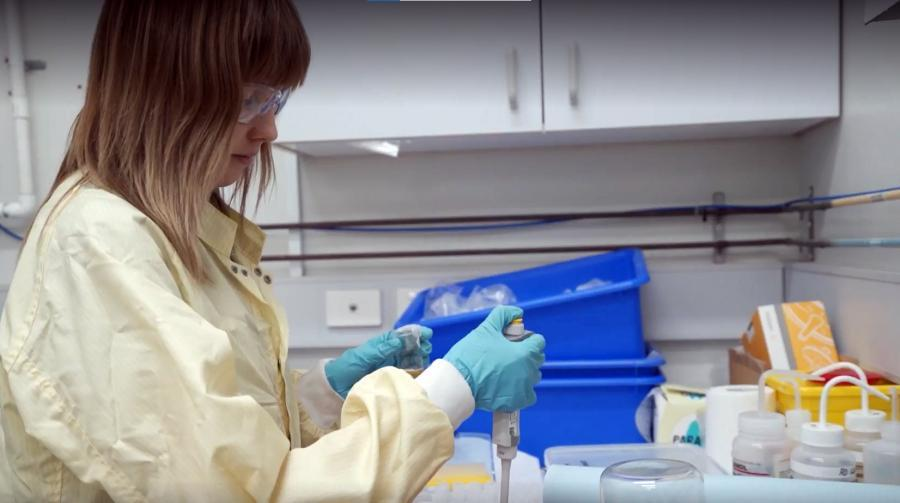
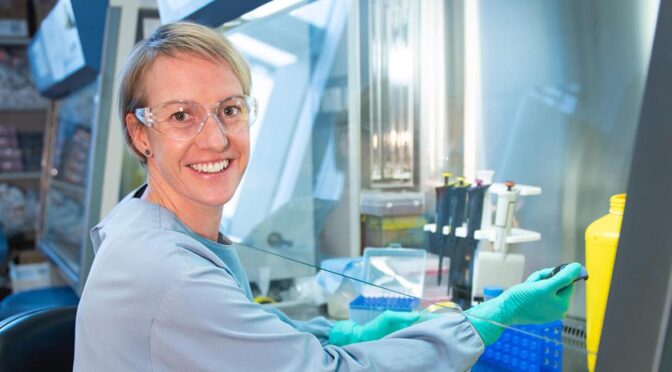
Image: Dr Anna Coussens, Laboratory Head in Infectious Diseases and Immune Defence Division, WEHI. Supplied

University science research falls into two categories when it comes to funding. On one side: fundamental research, generally supported directly by universities or by Australian Research Council (ARC) grants. On the other side is funding directed at commercial outcomes. For this, researchers often look to industry partners, and apply for National Health and Medical Research Council grants, ARC Linkage projects, Co-operative Research Centre programs and others.

This duality, however, oversimplifies the complex, iterative process of university science. Researchers work across every part of the spectrum, from seeking fundamental knowledge to developing participatory outcomes that include benefits to end users, influence on policy, commercial partnerships and outcomes.

“At WEHI (Walter and Eliza Hall Institute), our successes, particularly in cancer and malaria drugs, have involved over 20 years of basic science,” said Dr Anna Coussens, Laboratory Head in Infectious Diseases and Immune Defence Division. 

“Understanding the fundamental processes of cells and their interaction with pathogens allows us to identify potential targets for drug development. Everyone is working on fundamental questions, and together we can come up with ideas that create real clinical outcomes.”

Working with community and industry

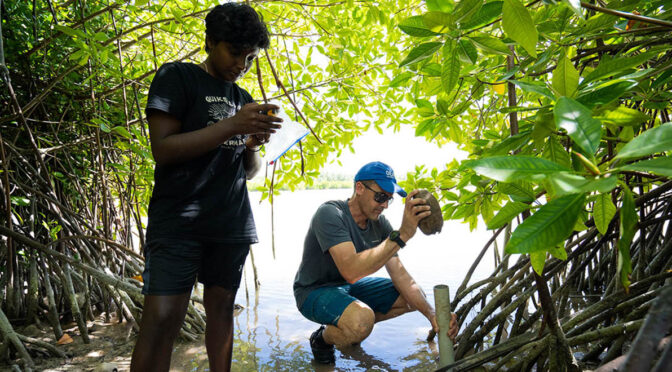
Environmental scientist Professor Peter Macreadie, head of Deakin University’s Blue Carbon Lab, says their work is rooted in both fundamental research and practical outcomes. His lab collaborates with end users, including community and industry, to ensure “real-world impact for the communities we serve, from governments and industry to everyday people — and the planet as well.

“We’re on site with these companies and on field, we’re making sure our Indigenous partners are on board as well,” he said. “Without universities we wouldn’t have the data to back up the concept of the wealth of natural capital.”

Collaboration is an integral part of university science, resulting in exchanges of ideas that lead to innovation and progress. For example, innovations in tuberculosis (TB) diagnosis and management helped countries with robust TB public health systems to respond more quickly and appropriately to COVID-19, said Coussens.

This research continuum in science can be compared to a value chain in business: a progression of activities that allows us to build and develop solutions — even when we don’t know what they will turn out to be. Unlike in business, however, university science has an intrinsic value at the start: changing the very way we see the world. 

The instrinsic value of research

It’s impossible to know what direction fundamental research will go: and questioning its value is like asking what use a newborn baby is. It might grow up to be a nurse who looks after you. But their worth goes far beyond that. 

Today, science is delivering innovation from previous decades faster than ever before. Quantum technologies took 100 years to mature, molecular biology 70 years, AI just 50. Expedited development of COVID-19 vaccines is expected to benefit the development of other vaccines as well.

To better reflect how researchers work, collaborative spaces like universities need funding at all stages of research, from the first seed of an idea to its outcome. The massive philanthropic investment of funding during COVID-19 is a case in point: a huge network of people came together to create a strong ‘pull’ on the research sector. The science research ecosystem was able to quickly respond, leveraging existing networks, broad knowledge and the innovative applications of this knowledge. “Philanthropy created a quick turnaround on research funding. It shows what you can do quickly if you try,” said Coussens.

To foster industry growth, it’s crucial to understand the intrinsic value of university science, how good our value chains are and which are our important ones — including their limitations and what the ultimate applications might be. 

There are 19 quantum-related companies in Australia that have received funding and investment of over $400 million in recent years. Speaking at the CSIRO Quantum Commercialisation Forum recently, Minister for Industry and Science Ed Husic said quantum is a good example of how Australia can be world leaders, and not just focus on “small parts of the value chain”. 

“Investment in innovation, science and research lays the foundation for ground-breaking technologies and improved products and processes,” he said.

The case for this surely begins with university science.

Written by Heather Catchpole

Four areas where fundamental research brings benefits to society and the economy.

Image: Professor Peter Macreadie, Director, Blue Carbon Lab, Deakin University

Fundamental university science research has drawn inspiration from the Great Barrier Reef’s carbon storage capacity, the plant world’s ultra-efficient storage and transport structure, the reinvention solid state physics to develop new materials for electronic efficiency and advanced agricultural to nourish future outposts in space.

1. Oceans: Raising natural capital

Oceans of ecosystem data from decades of environmental science at Australian universities provide a wealth of information on the value — natural beauty aside — of the Great Barrier Reef. Researchers led by Deakin University’s Blue Carbon Lab (including director Prof Peter Macreadie, left) have identified that — through conserving and restoring coastal and marine ecosystems — the reef has enormous capacity to store carbon dioxide. Seagrass meadows and mangrove forests within the reef’s coastal catchment areas already sequester an astonishing 111 million tonnes of carbon. Damage to catchments could result in greater carbon emissions, boosting the argument for reef protection. Restoring 90,000 hectares of land throughout the reef’s catchments could enable an extra five million tonnes of carbon to be captured by 2100. In fact, coastal wetlands can capture and store carbon in the ground 10 times faster Reathan nearby rainforests. 

2. Energy capture: Inspiration from plants

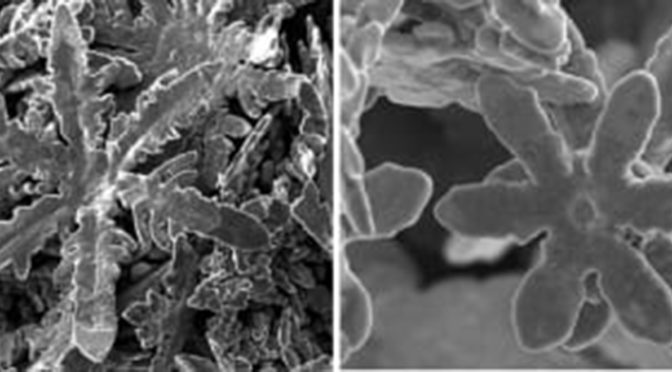
Western plant science traces its roots to Ancient Greece, and has long provided inspiration across different disciplines. Drawing on a network of expertise across plant science, energy research and engineering, RMIT University researchers are looking at the leaf structure of the western sword fern as inspiration for the development of a graphene-based capture and storage of solar energy. Their research revealed that sword fern leaves, packed with veins, are extremely efficient at storing energy and moving water within the plant. This led to the creation of a prototype electrode based on this leaf design. By combining it with supercapacitors, the researchers were able to dramatically improve the solar energy storage capacity. Elements of the prototype are based on flexible thin-film technology, potentially allowing a solar storage solution that is less bulky and rigid than current solar cells, and which could have many uses: including car panels, smartphones, and watches. 

3. Better electronics: Reduce power, boost efficiency

Our insatiable appetite for electronic devices has led to a rapid increase in energy use, with information technology now responsible for 8% of the world’s electricity consumption. Experts predict the technology currently powering these devices simply can’t keep up. The materials of the future that will cater for rapid advances in technology are ideated in the hallways of university science — but it takes a village. FLEET, the ARC Centre of Excellence in Future Low-Energy Electronics Technologies, is a collaboration of Monash, ANU, RMIT, UNSW, the University of Queensland, Swinburne, and the University of Wollongong, with 18 other Australian and international research institutions. Combining the expertise of 200 researchers, FLEET aims to create a new generation of ultra-low energy electronics based on novel materials, that would allow devices to ‘switch’ at much lower voltages, resulting in far less energy use. The physicists, materials scientists and engineers of FLEET are reinventing solid state physics to develop new materials that harness the strange effects of quantum mechanics to attain the crowning ambition of room temperature, zero-resistance electrical pathways.

4. Plant factories: Food and medicine in space

Future outposts on the Moon or Mars will be unable to bring all they need from Earth, so they will need to grow their own food, and create medicines and materials. That’s the mission of the ARC Centre of Excellence in Plants for Space, based at the University of Adelaide and involving Flinders, the University of Melbourne, UWA and La Trobe, as well as eight companies and 20 research institutions in Australia and overseas, including NASA.

Known as P4S, the centre plans to cultivate new varieties of plants that can grow in controlled environments. This expertise relies on years of Australian science advances in agriculture in some of the most challenging climates on Earth. Breakthroughs from the new centre will be immediately applicable on Earth, since we also face sustainability challenges in food and biomaterial production — such as lack of water, the need to recycle nutrients and avoid waste — and will fast-track current research on controlled environment agriculture and vertical farming.

H2X Global Selected for the AWS Clean Energy Accelerator 3.0

H2X Global Limited (H2X) announced today that it has been selected as one of the 15 startups
that will participate in the Amazon Web Services (AWS) Clean Energy Accelerator 3.0, a high-pace, non-equity dilutive accelerator designed to facilitate collaborations with mature startups developing breakthrough clean energy technologies. The program is focused on fostering innovation and rapid growth of clean energy technology, which is needed to address the global climate crisis.


“The ground-breaking innovations, products and solutions displayed in the previous Clean Energy Accelerator programs have offered an inspiring glimpse into the energy systems of the future, and chart a path towards accelerating decarbonization at scale,” said Howard Gefen, General Manager of Energy and Utilities, AWS.


“We’re pleased to welcome H2X into the Clean Energy Accelerator 3.0, and work together to take on one of the greatest challenges of our generation.”


“We are excited to join the AWS Clean Energy Accelerator and work towards overcoming clean energy and decarbonization challenges,” said H2X, Founder and CEO, Brendan Norman. “Through this program we can help define and shape the future of clean energy innovation.”


Primary focus areas of the AWS Clean Energy Accelerator 3.0 include: advanced materials; carbon capture, utility and storage; economic hydrogen generation, transport, and use; energy storage; grid modernization; energy security and reliance.


The program is designed to spur co-innovation through energy collaborations, and is centered on the needs of mature startups from across the globe. Through the program, industry and thought leaders will mentor startups on topics like energy, digital competency, investment, public policy, innovation, and advanced research. Leading energy organizations will work with selected startups on addressing clean energy and decarbonization challenges, while AWS provides guidance in accelerating experimentation, expanding automation, and delivering deep insights by leveraging the cloud.


The AWS Clean Energy Accelerator 3.0 will include 12 weeks of virtual and in-person programming, kicking off in Seattle in April. The program will have an expanded reach and scope, which includes international exchange sprints to foster tech innovation hubs around the world, including one in the UAE, in collaboration with Masdar City. The Clean Energy Accelerator 3.0 will culminate with the Innovation Showcase that will be held at the 2023 United Nations Climate Change Conference (COP 28) next November in Dubai. The event will include CEA startups showcasing their clean energy technology innovations, and highlights on the latest CEA-driven clean energy technology pilot programs. Click here to pre-register for the Clean Energy Accelerator Innovation Showcase and receive the latest program updates.

Learn more about the AWS Clean Energy Accelerator.

Bitter news: concurrent, increasing climate hazards could impact global coffee supply

Image: Coffee is a sensitive crop vulnerable to climate change. Supplied CSIRO

New research from CSIRO, Australia’s national science agency, and the University of Southern Queensland, has confirmed that global coffee production is facing major threats due to increasing and concurrent hazards fuelled by climate change. 

The researchers found that across the top 12 coffee producing regions globally, climate hazards – like extremes in temperature and rainfall – had increased in every region between 1980 to 2020 and are occurring in multiple locations at the same time. 

Published in PLOS Climate the research provides the first look at the changing nature of concurrent hazards to coffee production on a global scale.

Research scientist Doug Richardson, who led the research while at CSIRO, said coffee was a sensitive crop vulnerable to climate change. 

“Coffee crops can fail if the annual average temperature and rainfall is not within an optimal range,” Dr Richardson said.

“The frequency of climate events has been increasing over the last 40 years and we see clear evidence of global warming playing a role, as the predominant types of climate hazards have shifted from cold and wet to warm and dry.

“Since 1980, global coffee production has become increasingly at risk of synchronised crop failures, which can be driven by climate hazards that affect multiple coffee-producing areas simultaneously,” he said.

CSIRO scientist James Risbey said certain recurring climate patterns are important predictors of hazards in coffee growing regions. 

“The El Niño-Southern Oscillation (ENSO) – a recurring climate pattern affecting the tropics and extratropics – can help predict hazards in some regions like tropical South America, Indonesia and Vietnam.” Dr Risbey said. 

“The good news is that ENSO appears to have less of an impact on Southern Brazil, the world’s biggest producer of Arabica coffee. 

“Southern Brazil could therefore help to dampen coffee production shocks felt elsewhere during significant ENSO events like prolonged cool weather (La Niña) or warm weather (El Niño),” he said. 

Previous international research found that land suitable for growing coffee globally could be reduced by up to 50 per cent by 2050.

Charis Palmer joins Refraction Media as its new Managing Editor

Refraction Media, Australia’s leading STEM (science, technology, engineering and maths) media company, has recently appointed Charis Palmer as its new Managing Editor. 

Joining the company with 20 years experience in journalism and publishing, Charis is a highly sought-after specialist in technology, media and startups, who holds a particular expertise in focussing on breaking down complex information for general and business audiences. 

She has managed teams of journalists in roles including Chief of Staff and Head of Digital Strategy for The Conversation, CEO of Schwartz Pro – an experiment in business journalism for policymakers, and Asia Pacific Editor at 360info, a regional wire agency with content written by researchers. 

“We interviewed some excellent candidates for this unique hands-on role and Charis’ experience and passion for STEM won us over,” says Refraction Media co-founder Heather Catchpole. “We’re looking forward to working with Charis and taking our flagship title CareerswithSTEM.com to the next level.”

Refraction Media works closely with organisations such as Google, the Commonwealth Bank of Australia, ANSTO and the National Careers Institute as well as most Australian universities and federal and state government agencies to spearhead a popular STEM careers platform for high school students and graduates, as well as deliver strategy and insights into the future of work, research and innovation.  

“The common goal of both Refraction Media and our clients is to inspire a smarter future where everyone has access to the exciting STEM jobs of the future,” says Karen Taylor-Brown, Refraction Media co-founder. 

Careers with STEM is a multiplatform careers inspiration hub that reaches 1 million students a year through a combination of digital and print media delivered directly to Australian secondary schools and universities, events, online career quizzes and videos. 

“By connecting with students as they are making critical career choices, Careers with STEM challenges stereotypes, celebrates diversity and showcases a myriad of career pathways,” says Karen Taylor-Brown

Careers with STEM is an integral part of a successful employer branding strategy and a talent pipeline builder. 

Charis will join Refraction Media’s leadership team bringing her news nouse and client solutions model to our customers. 

Karen Taylor-Brown and Heather Catchpole, co-founders, Refraction Media

Nuclear science informing risk assessments during offshore decommissioning

Image: Shutterstock

Environmental scientists at ANSTO have been undertaking research to gain a better understanding of the potential impact of contaminants on decommissioned offshore oil and gas infrastructure since 2017.

The research will help inform whether all decommissioned infrastructure needs to be completely removed (as the legislation currently stands).

A scale may form within subsea pipes during operation, much like cholesterol on the inside of arteries.  These scales may contain naturally occurring radioactive materials (NORMs) as contaminants.

There is currently a knowledge gap on the potential impact of these contaminants on the marine ecosystem as industry and regulators try to assess if some assets may be left in place.

Some research has suggested the subsea infrastructure may be beneficial and act as an artificial reef.

Algae, oysters, coral and other invertebrates colonise the pipelines during operations and will likely exist for many years after operations cease if the pipe is left on the seabed.

A recent experiment in the aquatic labs (part of the Vivarium facility) at ANSTO was carried out to gain baseline information on the effects of exposure of naturally occurring radioactivity on marine algae, that are usually the first marine organisms to take up residence on the outside of pipelines.

Dr Tom Cresswell, who is leading the research for ANSTO, said that PhD candidate Amy MacIntosh (pictured below)  had set up a unique experiment with a sealed radioactive source in ANSTO specialist laboratories.

The source was placed at different distances from the algae for 72 hours.

“This period is equivalent to chronic exposure that you expect in the undersea environment. We are assessing if there is any impact on growth rates and the ability of the algae to photosynthesise UV light for energy.”

“We use a variety of techniques in environmental toxicology, radioecology, radiochemistry and materials science and access a suite of nuclear and accelerator facilities for a holistic understanding of the fate of key contaminants that may be present in pipeline scales,” explained Dr Cresswell.

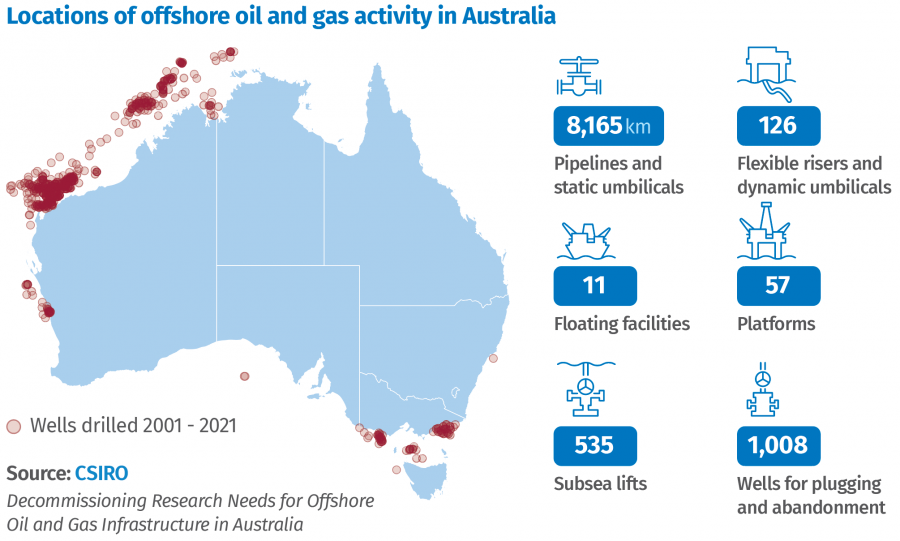
The goal is to minimise decommissioning costs, which have been estimated at $60 billion for more than 65 offshore installations scheduled for decommissioning in the next 30 years, while ensuring the highest levels of environmental protection.

In previous work, ANSTO scientists measured the levels of NORM contaminants in pipe scale and developed a model of potential radioactivity dose to biota.

Laboratory organism exposures associated with this work suggested the impacts might be negligible.

Gathering more data will be important in informing risk assessments during decommissioning planning.

ANSTO has considerable expertise in monitoring both natural and anthropogenic radioactivity in the environment as well as field experience.

Mercury has also been detected in pigging dust collected at the end of a subsea gas pipeline.

A comprehensive assessment determined the amount of mercury concentration, its chemical forms and potential for interactions with marine organisms.  Investigations were supported by the production of mercury radioisotope tracers in the OPAL multi-purpose reactor.

The chemical form of mercury, which directly impacts its mobility and potential uptake by marine organisms was determined using the X-ray absorption spectroscopy beamline at the Australian Synchrotron. Controlled laboratory tests conducted at Lucas Heights suggested the form of mercury was inert and not readily taken up by marine organisms.

ANSTO is involved in an International Atomic Energy Agency (IAEA) Working Group on NORM remediation from the oil and gas industry and is collaborating with European researchers and regulators on offshore infrastructure in the North and Norwegian Seas.

Thousands of native plants are unphotographed, and citizen scientists can help fill the gaps

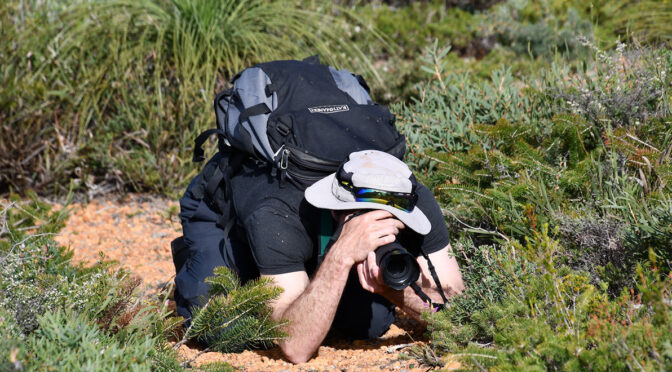
Image: A citizen scientist taking a photo of plants in the field copy. Photo: Thomas Mesaglio.

Scientists have documented plant species for centuries to help us understand and protect the incredible diversity of flora in our world. But according to new research, many have never actually been photographed in their natural habitats – and that’s a problem.

Researchers from UNSW Sydney and the Australian Institute of Botanical Science, part of the Royal Botanic Gardens and Domain Trust, surveyed 33 major online databases of plant photographs to examine the photographic record of Australian plant species. The findings, published in New Phytologist, reveal out of 21,077 native Australian vascular plant species, almost 20 per cent lack a verifiable photograph.

Lead author of the study and UNSW Science PhD student Thomas Mesaglio says Australia is one of the richest areas in the world for native species.

“It was surprising to see how many plant species had just line drawings, illustrations, paintings, or even no media at all,” Mr Mesaglio says.

Dr Hervé Sauquet, co-author of the study and Senior Research Scientist at the Australian Institute of Botanical Science, is based at the National Herbarium of New South Wales.

“All species of plants ultimately rely on specimens in herbarium collections for their identification,” Dr Sauquet says. “Yet, even in this digital age where most herbarium specimens have been scanned and are accessible on the web, photos of live plants in the wild remain in critical need.”

Senior author of the study from UNSW Science Associate Professor Will Cornwell says a lack of detailed photos can have real consequences. Many plant species that are difficult to identify in the wild may go extinct if scientists cannot properly identify them with the help of photos. 

“We had assumed every plant species would have simply been photographed by someone, somewhere, throughout history. But it turns out this isn’t the case,” says A/Prof. Cornwell.

“This is where citizen scientists can come in and help us fill this gap with their photos.”

Gaps in the photographic record

Photographs can help botanists and taxonomists who work with plant specimens by preserving characteristics like flower colour that get lost over time in their samples. They can also show additional features, such as the orientation of leaves or bark appearance, and add ecological context.

“Having a comprehensive photographic set helps us to be confident in our identifications,” Mr Mesaglio says. “Particularly when it is practically challenging to collect and preserve the entire plant, photos complement the physical voucher by showing the soil type, the habitat it’s growing in, and other species growing alongside it.”

But it turns out not all plant groups are photographed equally. Just as some animals receive less attention than others, there might also be a bias against less charismatic plants.

The study found the most well–photographed plant groups tend to be shrubs or trees with more noticeable or spectacular features, such as colourful flowers. Banksia, for example, is one of only two Australian plant genera with more than 40 species to have a complete photographic record. Meanwhile, the family with the most significant photo deficit was Poaceae – commonly known as grasses – with 343 unphotographed species.

“We noticed a charisma deficit, so the species that tend to be harder to see are the ones missing out,” Mr Mesaglio says. “They may have innocuous or pale-looking flowers or be smaller and harder to spot grasses, sedges and herbs.”

Geography also affected the photographic record. While most species across the south-eastern states of Australia have comprehensive records, Western Australia had the largest void, with 52 per cent of all unphotographed species found there.

“The primary ‘hotspots’ for unphotographed Australian plants are areas with high plant diversity, but the environments are rugged and often difficult to access, particularly by road,” Mr Mesaglio says. “But it means there’s an exciting opportunity to visit these locations because we might capture something that has never before been photographed.”

Activating citizen scientist snaps

It’s one thing to have comprehensive photographic records for professional scientists to use in identification guides. But when the plant world is under threat from multiple fronts, including habitat clearing and climate change, photos can help engage the public in plant science.

“People can engage with, sympathise with, and get much more excited about plants with photographs, which is vital when our natural environments are more at risk than ever,” Mr Mesaglio says.

“Because digital photography is so accessible now, anyone can also help make a meaningful contribution to science using the camera in their pocket.”

Using a platform like iNaturalist, keen citizen scientists can have their snaps identified by experts and share the data with aggregators like the Atlas of Living Australia and the Global Biodiversity Information Facility to be used in research and conservation.

“Since April last year, we’ve identified nearly 10 per cent of those previously unphotographed species thanks to members of the public uploading their photographs and experts who’ve kindly identified them,” Mr Mesaglio says. “There could be many more in personal collections or behind paywalls just waiting to be shared.”

The researchers recommend a standardised system for scientific plant photography be developed, starting with a requirement in the International Code of Nomenclature for Plants to include at least one field photograph where possible in new species descriptions. They also suggest all new species descriptions be published as Open Access in searchable databases with Creative Commons licensing to maximise their usage.

“We also suspect more photos exist, but they’re hidden away on social media or behind scientific paywalls that aren’t accessible, discoverable, or searchable,” Mr Mesaglio says.

“Of the species with photographs, many have a single photo. We not only want to capture those unrepresented species but also continue building the photographic record for all species.

“Doing so will help us identify, monitor and conserve our native species for generations to come.”

Stress test kit could boost koala joey survival

Image: Koala joey at Wildlife Rescue Education and Rehabilitation Murphys Creek. Credit, UQ

Mortality rates of orphaned koala joeys could be greatly reduced by a non-invasive stress test kit being trialled by University of Queensland researchers.

Instead of having to take blood, the UQ-led research has enabled a joey’s stress levels to be measured through samples of their faecal droppings.  

Dr Edward Narayan from UQ’s School of Agriculture and Food Sciences said the method speeds up what is normally a very laborious process.

“Traditional testing kits are in limited supply and are very process intensive, so it can be quite difficult to run tests like this routinely,” Dr Narayan said.

“We’ve validated an easy-to-use kit using our own in-house biological substance test that avoids invasive bloodwork.

“Instead, it seeks out specific biomarkers in koala joey faeces that are strong indicators of stress, making for a very accurate and useful rehabilitation tool.”

With the mortality rate of rehabilitating joeys steadily climbing, Dr Narayan said the stress test kit will play a critical role in slowing the rate of joey deaths.

“There is very little understood about the causes of joey mortality in care, but we know stress is a significant contributor, so wildlife hospitals and carers need an easy way to test for it,” Dr Narayan said.

“The goal of this research is to provide carers with tools to understand whether their clinical intervention and care protocols are working.

“Koala joeys can be orphaned at a very delicate stage in their lives due to habitat destruction, vehicle collisions, dog attacks, bush fires and many other factors.

“These joeys need extra special care with specific diet and husbandry requirements, so a lot of work is being done to improve their care.

“Our test kit will be a vital scientific means of knowing whether the stress levels of koalas are improving with care interventions, and if needed, changes can be made quickly.”

The Koala Hospital in Port Macquarie will be one of the first conservation and rehabilitation groups to adopt the use of stress test kits.

Hospital vet Dr Shali Fischer said the test kits have the potential to revolutionise the care of recovering juvenile koalas.

“Joeys that come into care are often compromised at admission, which means it is a struggle from day one,” Dr Fischer said.

“Having the capacity to monitor cortisol levels and identify trends would help us identify what the stressors are affecting these joeys which may enable better husbandry practices to be developed.

“The development of better handling methods through the use of the stress test kit will be hugely beneficial.”

Networking the Monash research and innovation ecosystem

Image: Shutterstock

Last week, Mr Matt Fregon MP, Victorian Member for Ashwood, officially launched the Monash Precinct Network, which will further accelerate the growth of the City of Monash as an international destination of global research and enterprise.

The Network, the creation of which has been led by Monash University as a founding partner, brings together business, science and education organisations with government to foster the collaboration and connections needed to ensure ongoing innovation, support the development of talent and communities, boost competitiveness and create jobs.

The Network will be at the heart of the expanding Monash Technology Precinct that is centred on Monash University’s Clayton campus, and is an established ecosystem of globally connected innovators and businesses, including major research organisations, international companies and local start-ups.

“The Monash Technology Precinct is one of Australia’s strongest and fastest growing ecosystems of global research, education, innovation and industry. Centred around Monash University’s Clayton campus, it is a hub of discovery and ideas, new ventures, skills and jobs creation across future-focused industries, health and sustainable development,” said Monash President and Vice-Chancellor Professor Margaret Gardner AC.

“It is also home to the Victorian Heart Hospital, newly opened at our Clayton campus, where world-class health care is combined with leading research and professional training.

“The Monash Precinct Network will further accelerate the growth of this ecosystem by fostering collaboration and interconnection, driving innovation, creating commercial opportunities and developing pipelines of global talent.”

The recent opening of the Victorian Heart Hospital – the new home of Monash’s Victorian Heart Institute – is the latest milestone in the expansion of the Monash Technology Precinct. Other recent investments in the Precinct include Moderna’s new mRNA vaccine manufacturing facility, now under construction; the Medicines Manufacturing Innovation Centre, the Victorian Health Innovation Centre; the Australian Cyclotron; the Smart Manufacturing Hub; a new National Vaccine and Therapeutics Lab; and the Victorian Government’s announcement of a $560 million upgrade to the Monash Medical Centre.

“The Network will be the nexus between high-growth and innovation-focused organisations and individuals in industry, education, research and government that is locally and globally connected,” said Monash Deputy Vice-Chancellor (Enterprise and Engagement) and Senior Vice-President Professor Doron Ben-Meir.

The Monash Precinct Network is open to all innovation-focused organisations with a presence in the Monash and wider Southeast Melbourne region.

Chief Scientist calls for a national conversation to develop a new set of national science priorities

Image: Dr Cathy Foley, Australia’s Chief Scientist

I know March can be crunch time for many academics, with students returning to campus
and grant applications due. But this year, I need to add another thing to your list: I’m calling
for all hands on deck as I lead a national conversation about the revitalisation of Australia’s
Science and Research Priorities on behalf of the Australian Government.


These priorities will identify critical challenges facing Australia and will need us to double
down on research activity to address them.


Science doesn’t stand still, but our current list of priorities date from 2015. They don’t
reflect a world where gravitational waves have been discovered, and where claims of
quantum advantage are a grail being fought over by major players like Google and IBM.

The last priorities were developed before COVID, the massive rise in remote working, the global
race to create a COVID vaccine, and the breakthroughs in mRNA technologies. There are
many things we need to consider now that weren’t considered eight years ago: AI chatbots,
increasingly extreme climate change and weather events, the acceleration of species
extinctions, and Indigenous knowledge of country are just a few.


That’s why Australian Government has asked me to lead a national conversation to identify
challenges, strengths and opportunities that will inform the development of a draft list of
priorities for consideration and further consultation during the year.


I will note, the Science and Research Priorities are not intended to be a complete list of the
research Australia does – but they should reflect the most important challenges and
opportunities where science and research has a role. A set of agreed priorities provides
clarity to industry, investors and the international community about Australia’s focus, and
will help guide government policies and investment.


They do not preclude investment in research in other areas. The research block grant
funding model, for example, provides flexible funding across the research pipeline, giving
universities autonomy to invest outside of the priorities. Fundamental, or blue-skies,
research remains a crucially important part of the science and research system, as the
cradle for new ideas and the place where knowledge is built.


I am encouraging people from all walks of life to have their say – young and old, from cities
to the outback and from every background. I want to hear from the science and research
community, from industry, community groups and the wider public on this. During March, I
am convening a series of roundtables in every state and territory, alongside sector-specific
meetings. It’s easy for anyone to join the conversation by making a submission to the online
portal available at https://consult.industry.gov.au.

Provided by Dr Cathy Foley

Webinar: Exploring the impact of decommissioning oil and gas infrastructure

Wednesday 12 April 2023 12noon AEDT

The decommissioning of oil and gas structures in the Australian marine environment has been a topic of increasing concern in recent years. Researchers and industry are striving to gain a better understanding of the potential impact of contaminants on marine life. This research can provide real data to support decisions around whether decommissioned infrastructure needs to be completely removed (as the legislation currently stands).

Some research has suggested the subsea infrastructure may be beneficial and act as an artificial reef. The removal of these structures can actually have significant impacts on the marine ecosystem, including the loss of habitat and potential harm to marine life. 

ANSTO, the Australian Nuclear Science and Technology Organisation, has conducted extensive research on the impacts of decommissioning offshore oil and gas platforms. 

Join this discussion exploring the environmental impacts of decommissioning oil and gas structures and how organisations can collaborate to ensure that the process is carried out in an environmentally responsible manner and minimal cost. 

This webinar is FREE to attend and registration is essential. Secure your spot by clicking the button below.

Panellists include: 

Hosted by Science Broadcaster, Lee Constable

More on this topice: Nuclear science informing risk assessments during offshore decommissioning

Big battery powering large-scale energy storage solutions

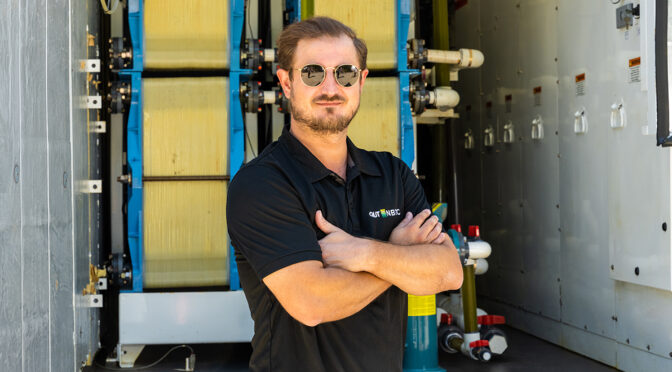
Image: NBTC Project lead Dr Joshua Watts (pictured) from the QUT Faculty of Science. Supplied

QUT is collaborating with Energy Storage Industries – Asia Pacific (ESI) and the Future Battery Industries Cooperative Research Centre (FBICRC) to enable large-scale energy storage solutions to help meet clean energy targets set by state and federal governments.

The Queensland Government’s Energy and Jobs Plan – released in September 2022 – sets a target of 70% renewables in the energy grid by 2032.

Deputy Premier Steven Miles said the Queensland Energy and Jobs Plan was already creating new jobs in new industries like battery manufacturing.

“Large-scale iron flow batteries are the cutting edge of the energy revolution, and that innovation is happening right here in Queensland thanks to the support of the Palaszczuk Government,” the Deputy Premier said.

“As we invest in more solar and more wind, the demand for large-scale batteries and storage will increase to ensure Queensland’s energy is reliable and affordable, these new batteries are perfect to support our energy grid.

“Testing the biggest large-scale iron flow battery at QUT’s Banyo facility is another step toward meeting our renewable energy targets.

“Construction is also underway in Maryborough for Australia’s first, large-scale iron flow battery manufacturing facility, being development by ESI.

“Bringing manufacturing home is a key part of the Queensland Energy and Jobs Plan, we have the opportunity to design and manufacture these batteries here in Queensland by Queenslanders.”

NBTC Project lead Dr Joshua Watts from the QUT Faculty of Science said effective long-duration energy storage – such as flow batteries – is necessary to meet those targets and to support the intermittency of renewable energy such as wind and solar. 

A flow battery contains two chemical solutions, separated by a membrane, with electricity stored and released through changes in the oxidation state of metal ions dissolved in solution.

“This particular battery shows great potential in providing large-scale long-duration energy storage solutions to store energy for distribution when the wind is not blowing and the sun is not shining,” Dr Watts said.

“It’s not the type of battery you would buy for the backyard, but more targeted toward large-scale solar and wind farms, or new community developments where they’re looking to build in more localised energy generation and distribution networks.”

The ‘Energy Warehouse’ iron flow battery being commissioned and tested at the NBTC is a 12-metre-long containerised system and is designed to be used for large-scale energy generation and distribution support for the electricity grid.

“Energy Warehouse systems have the potential to store solar energy generated by residential solar arrays to assist with the management of excess energy that the current electricity transmission infrastructure can’t handle,” Dr Watts said.

He said lithium batteries were more compact, but the cost of scaling lithium batteries for long-duration storage applications can potentially be an issue for large-scale applications.
Iron flow batteries are better suited for large-scale applications, offering ease of scalability for long-duration energy storage applications.

“Iron flow batteries are well suited for long-duration applications due to the nature of the energy storage mechanism, which is achieved through dissolved metal salts in aqueous solution. So, you just increase the electrolyte volume, and you increase the capacity. You only need to make the tank bigger,” Dr Watts said.

Other advantages of iron flow batteries are that they are environmentally benign, fully recyclable and offer a potential lower cost per kWh for long-duration storage applications.

Dr Watts said the potential for local manufacturability of the iron flow systems is high because they use simplified componentry. They mainly comprise PVC pipes, water pumps and fiberglass tanks assembled in a 12-metre container.

“There’s potential then to reskill workers moving out of the coal-fired power station industry who have similar skill sets in maintaining plant equipment.”

Dr Watts said iron flow batteries have an advantage when it comes to enlarging, repurposing or recycling.

“Iron flow batteries utilise a weakly acidic iron chloride solution which is non-toxic, simplifying the refurbishment and recycling process for these systems,” said Dr Watts.

The NBTC, at Banyo on Brisbane’s northside, is one of the flagship projects funded by the FBICRC grant program, and the first facility of its kind in Australia. It is one example of QUT’s nation leading efforts in accelerating new energy storage solutions in support of Australia’s decarbonisation efforts.

“The NBTC will reduce costs by allowing local battery system manufacturers to test and certify their products to Australian and international standards right here. Previously companies would rely on overseas testing facilities in the US, Japan and Europe,” said Dr Watts.

“Activating that local support will enable local manufacturers and industry to get their products to market quicker and at reduced cost,” Dr Watts said.

“Enabling domestic manufacturing of battery cells and systems is critical to realising our clean energy targets, and with the current global demand there will definitely be an export market for these products as well,” Dr Watts said.

“But we’re also working with partners to develop safer systems, safer materials that go into cells, and safer control methodologies.”

Dr Watts and his team have recently been demonstrating the iron flow battery’s features to a range of Government Sponsored Enterprises (GSEs) and private energy companies at the NBTC.

“And we’ll be going through – over the next three months or so – a rigorous testing regime in collaboration with potential off takers to test the battery under different use conditions to get these batteries out into the wild supporting the energy grid as soon as possible,” Dr Watts said.

“The next step is to support ESI in pilot manufacturing efforts to establish onshore large-scale manufacturing of the systems to meet local supply.”

The Queensland Government’s recently released battery industry opportunities for Queensland discussion paper has highlighted that a broad range of mature players across the entire battery value and supply chain currently call Queensland home, with a lot of exciting opportunities on the horizon to value add and deliver a strong local battery economy supporting both domestic and export markets.

“QUT is keen to continue its support of ESI and other local battery industry partners, and with the extensive roadmap and support provided by the Queensland Government, broaden our collaborative efforts to continue to deliver real-world solutions in support of meeting our clean energy and sustainability targets,” Dr Watts said.

Energy Storage Industries – Asia Pacific (ESI) Managing Director Stuart Parry said the commissioning was a significant step towards securing Queensland’s future as a renewable energy superpower.

“Commissioning of this leading-edge technology puts the state on track to accelerate renewable energy storage as part of the Queensland Energy and Jobs Plan to address climate change.

“The National Battery Testing Centre has already demonstrated the potential of iron-flow technology, and this will be the first of many batteries that will support jobs and provide reliable energy across the state.

“Thanks to QUT for their invaluable contribution, the Future Battery Industries Cooperative Research Centre for the funding they provide to the facility and the Queensland Government for their support,” Mr Parry said.

Smart stitches to reduce infection and simplify post op monitoring   

Image: Professor Elisa Hill-Yardin, Dr Shadi Houshyar and Professor Justin Yeung inspect a prototype of the filament. Credit: RMIT

A new antimicrobial suture material that glows in medical imaging could provide a promising alternative for mesh implants and internal stitches. 

Surgical site infections are one of the most common medical infections, occurring in 2 to 4% of patients post-surgery. For some procedures, such as vaginal mesh implants to treat prolapse, infection rates can be much higher, leading to a ban on that procedure in 2018 in Australia. 

Study lead author and Vice Chancellor’s Senior Research Fellow, Dr Shadi Houshyar, said their suture was being developed in partnership with clinicians specifically for this type of procedure. 

“Our smart surgical sutures can play an important role in preventing infection and monitoring patient recovery and the proof-of-concept material we’ve developed has several important properties that make it an exciting candidate for this,” said Houshyar, from RMIT University’s School of Engineering. 

Lab tests on the surgical filament, published in OpenNano, showed it was easily visible in CT scans when threaded through samples of chicken meat, even after three weeks. It also showed strong antimicrobial properties, killing 99% of highly drug-resistant bacteria after six hours at body temperature.  

Houshyar said the team was not aware of any commercially available suture products that combined these properties. 

How they did it 

The multidisciplinary team led by RMIT – included nano-engineering, biomedical and textile experts working in partnership with a practicing surgeon – used the university’s cutting-edge textile manufacturing facility to develop their proof-of-concept material. 

The suture’s properties come from the combination of iodine and tiny nanoparticles, called carbon dots, throughout the material.  

Carbon dots are inherently fluorescent, due to their particular wavelength, but they can also be tuned to various levels of luminosity that easily stand out from surrounding tissue in medical imaging.  

Attaching iodine to these carbon dots, meanwhile, provides them with their strong antimicrobial properties and greater X-ray visibility. 

Houshyar said carbon nano dots were safe, cheap and easy to produce in the lab from natural ingredients.  

“They can be tailored to create biodegradable stitches or a permanent suture, or even to be adhesive on one side only, where required,” she said.  

“This project opens up a lot of practical solutions for surgeons, which has been our aim from the start and the reason we have involved clinicians in the study.” 

Clinical possibilities 

Consultant colorectal surgeon and Professor of Surgery at the University of Melbourne, Justin Yeung, was involved in the study. He said it addressed a real challengefaced by surgeons in trying to identify the precise anatomical location of internal meshes on CT scans. 

“This mesh will enable us to help with improved identification of the causes of symptoms, reduce the incidence of mesh infections and will help with precise preoperative planning, if there is a need to surgically remove this mesh,” he said. 

“It has the potential to improve surgery outcomes and improve quality of life for a huge proportion of women, if used as vaginal mesh for example, by reducing the need for infected mesh removal.” 

“It may also significantly reduce surgery duration and increase surgical accuracy in general through the ability to visualise mesh location accurately on preoperative imaging.”  

Next steps 

Study co-author from RMIT’s School of Health and Biomedical Sciences, Professor Elisa Hill-Yardin, said the next steps were pre-clinical trials.  

“While this research is early stage, we believe we’re onto something very promising that could help a lot of people and are really keen to speak with industry partners interested in working with us to take it further,” she said.  

“We see potential especially in vaginal mesh implants and similar procedures.” 

The research team used Australia’s leading university-based textile manufacturing facilities at RMIT’s Centre for Materials Innovation and Future Fashion to produce the proof-of-concept material.  

Next, they will produce larger suture samples to use in pre-clinical trials, which they have just received seed funding for from RMIT.  

Smart suture with iodine contrasting nanoparticles for computed tomography’ is published in OpenNano (DOI: 10.1016/j.onano.2022.100120). 

A science future fund to supercharge economic growth: Budget 2023

Image: Shutterstock

Creating a visionary Science Future Fund that could generate economic returns of up to $2.3 billion a year would help offset mounting social services spending pressures on the nation’s finances and start to reverse Australia’s dangerously low investment in income-generating R&D. 

In its pre-Budget submission, Science & Technology Australia has proposed the new future fund as a clever way for the Albanese Government to implement its election pledge to boost Australia’s research and development investment “… getting it closer to the 3 per cent of GDP achieved in other countries.”

Applying CSIRO economic models to the proven example of the Medical Research Future Fund, the peak body says a new Science Future Fund could generate economic returns of up to $2.3 billion a year for Australia – at no future cost to the Budget after its initial capitalisation. 

Science & Technology Australia President Professor Mark Hutchinson said it would powerfully advance the Prime Minister’s ambition of an economic future “powered by science” and the Deputy Prime Minister’s pledge that the Albanese Government will be “the Science Government”.

“Supercharging Australian discovery science would unleash a new golden era of breakthrough discoveries to power our nation’s economic development in the decade ahead,” he said.

“By creating an ambitious new Science Future Fund, the Government can forge an enduring legacy to put science investments beyond short-term funding cycles.”

“This fund would be a gamechanger for Australian economic growth.” 

“It would match the ambitions of our global technological allies and rivals; safeguard our national security and sovereign capability in an era of escalating global economic uncertainty; future-proof local jobs; and deliver a more prosperous future for all Australians.”

An astute and agile strategy is urgently needed to drive the transformation of Australia’s economy and lift our nation up the value chain. 

The analysis by STA shows that this Science Future Fund could inject $650 million every year from investment income into science breakthroughs, generating a massive $2.3 billion in new economic returns for the country every year. 

A Science Future Fund would be a legacy-defining move to ensure Australia doesn’t fall behind its global economic competitors, who are rapidly scaling up their strategic investments in science.

“Right now the world is locked in a fierce science and technology race, as other countries strategically invest to secure their own economic futures through science breakthroughs and innovation,” said Science & Technology Australia CEO Misha Schubert.

“In the US, the CHIPS and Science Act will supercharge science by a massive $52 billion – something US President Joe Biden calls a “once in a generation investment in America itself”. The UK is also dramatically ramping up public investment in R&D.”

“Australia must be every bit as bold in our ambition to be a global science and technology superpower,” Ms Schubert said.

As with the MRFF, the Science Future Fund would be a ‘locked box’ of capital, invested with a mandate of generating strong annual returns. These returns would then be used to transform Australia’s discovery science research – helping us to be first to technological breakthroughs and pursue ‘moonshot’ programs that need long-term investments. 

“This is a prudent and proven model to deliver long-term sustainability without recurring expenditure in future Budgets.”

“Australia faces an array of serious economic challenges – sluggish growth, a productivity crisis, real wages going backwards, and a growing Budget deficit.”

“A Science Future Fund would powerfully tackle each of these challenges. It will deliver breakthroughs that will turbocharge productivity, generate new higher wage jobs, and return income to the economy to fix the Budget deficit.”

Science & Technology Australia’s full pre-Budget submission can be found here.

World’s largest initiative to elevate the visibility of women heading to Antarctica

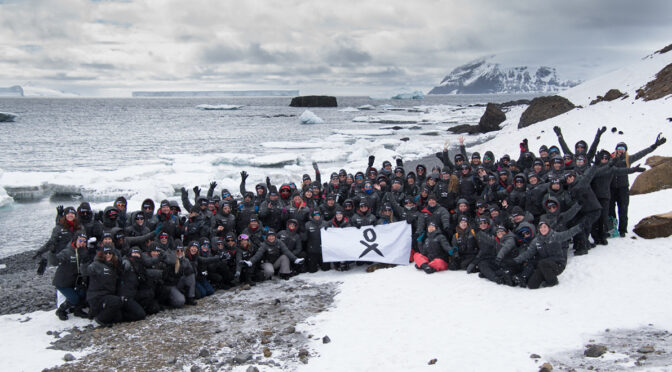
Image: Homeward Bound participants at Brown Bluff, Antarctica in 2019. This was the last voyage to Antarctica before the COVID-19 pandemic put a stop to global travel. Credit: Will Rogan.

Almost 180 women who are leaders from 25 countries will voyage on two ships to Antarctica in November to ensure the sustainability of the planet. 

The women are part of the Homeward Bound global initiative, which was set up to elevate the visibility of women leading with a STEMM background (science, technology, engineering, medicine and maths). 

“Antarctica is the inspiration for collaboration for these leaders, a place to be inspired to work together,” Homeward Bound CEO Pamela Sutton-Legaud says.

“Seeing first-hand this dramatic landscape under attack from the climate cements the intention for the women to collaborate as leaders.”

The Homeward Bound participants have completed an 11-month virtual leadership program prior to the life-changing three-week voyage to Antarctica. 

The women who are voyaging come from a diverse range of STEMM fields and from every continent including Australia, Panama, Zimbabwe, Saudi Arabia, Mexico and Germany. The group includes a shark behaviorist, a space engineer, and an emergency physician. 

Examples of projects the participants have previously collaborated on include: 

  • global review of gender inequality in STEMM; 
  • ANTARCTICA NOW, a group of alumnae who are lobbying for new Marine Protected Areas in Antarctica; 
  • scientific paper on the effects of the big increase of plastic pollution during the COVID-19 pandemic on marine life and human health. 

Homeward Bound was literally a dream by leadership expert Fabian Dattner in 2015 and developed in collaboration with Australian co-founders: conservation ecologist Dr Justine Shaw and polar marine ecologist Professor Mary-Anne Lea

Ms Dattner says the COVID pandemic had a measurably negative impact on women’s leadership globally, “despite the fact that we know, in 12 out of 16 well-researched leadership capabilities, women excel”. 

“I have been staggered to learn the very real and present challenges for many women to rise up in the STEMM fields, above and beyond what women face generally,” Ms Dattner says. “At a time when evidenced based decisions matter, more women leading is crucial.” 

In 2016, the Homeward Bound idea became reality when 76 women and an all women faculty voyaged to Antarctica. The first voyage was featured in a documentary.

International figures who have are part of Homeward Bound include global climate change leader, Christiana Figueres (Executive Secretary of the United Nations Framework Convention on Climate Change 2010 – 2016) and Musimbi Kanyoro, former president and CEO of the Global Fund for Women. 

So far, more than 600 women from more than 80 countries have participated in the program which is now in its eighth year. There are two voyages to Antarctica in November: one will depart Ushuaia, Argentina on November 3, and the other will depart Puerto Madryn, Argentina on November 12. 

ACCIONA has supported Homeward Bound since 2018, sharing the common goal of supporting female leadership talent in key STEMM disciplines to meet future challenges. 

The ‘flip-flop’ qubit: realisation of a new quantum bit in silicon controlled by electric signals

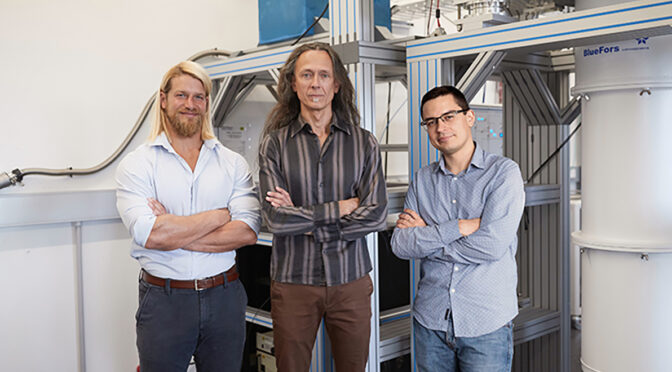
Image: Dr Tim Botzem, Professor Andrea Morello and Dr Rostyslav Savytskyy in the quantum computing lab at UNSW Sydney. Photo: Richard Freeman/UNSW

A team led by Professor Andrea Morello has just demonstrated the operation of a new type of quantum bit, called ‘flip-flop’ qubit, which combines the exquisite quantum properties of single atoms, with easy controllability using electric signals, just as those used in ordinary computer chips.

A deliberate target: electrical control of a single-atom quantum bit

“Sometimes new qubits, or new modes of operations, are discovered by lucky accident. But this one was completely by design,” says Prof. Morello. “Our group has had excellent qubits for a decade, but we wanted something that could be controlled electrically, for maximum ease of operation. So we had to invent something completely new.”

Prof. Morello’s group was the first in the world to demonstrate that using the spin of an electron as well as the nuclear spin of a single phosphorus atom in silicon could be used as ‘qubits’ – units of information that are used to make quantum computing calculations. He explains that while both qubits perform exceptionally well on their own, they require oscillating magnetic fields for their operation.

“Magnetic fields are difficult to localise at the nanometre scale, which is the typical size of the individual quantum computer components. This is why the very first proposal for a silicon quantum bit envisaged having all the qubits immersed in a uniform oscillating magnetic field, applied across the whole chip, and then using local electric fields to select which qubit gets operated.”

A few years ago, Prof. Morello’s team had a realisation: by defining the qubit as the combined up-down / down-up orientation of the electron and the nucleus of the atom would permit controlling such qubit using the electric fields alone. Today’s result is the experimental demonstration of that visionary idea.

“This new qubit is called ‘flip-flop’ because it’s made out of two spins belonging to the same atom – the electron and the nuclear spin – with the condition that they always point in opposite directions,” says Dr Rostyslav Savytskyy,  one of the lead experimental authors of the paper, published in Science Advances.

Read more: New quantum computing feat is a modern twist on a 150-year-old thought experiment

“For example, if the ‘0’ state is ‘electron-down / nucleus -up’ and the ‘1’ state is ‘electron-up / nucleus-down’, changing from ‘0’ to ‘1’ means that the electron ‘flips’ up and the nucleus ‘flops’ down. Hence the name!”

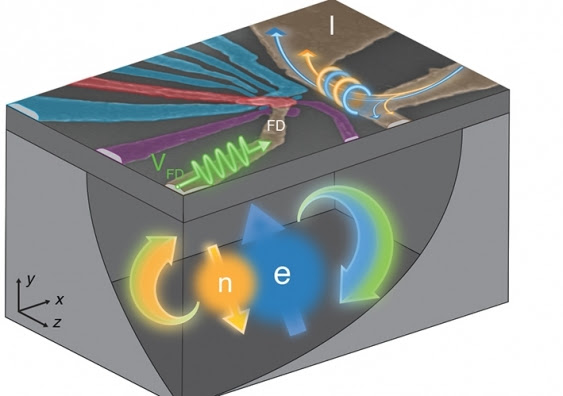
A diagram showing the alternate spins of an electron and a phosphorus atom nucleus

Sketch of the silicon nanoelectronic device that hosts the ‘flip-flop’ qubit. The nuclear spin (“n”, in orange) and the electron spin (“e”, in blue) flip-flop with respect to each other while always pointing in opposite directions. Image: Supplied

The theory predicted that by displacing the electron with respect to the nucleus, one could program arbitrary quantum states of the flip-flop qubit.

“Our experiment confirms that prediction with perfect accuracy,” says Dr Tim Botzem, another lead experimental author.

“Most importantly, such electron displacement is obtained simply by applying a voltage to a small metallic electrode, instead of irradiating the chip with an oscillating magnetic field. It’s a method that much more closely resembles the type of electrical signal normally routed within conventional silicon computer chips, as we use every day in our computers and smartphones.”

Read more: New spin control method brings billion-qubit quantum chips closer

A promising strategy to scale up to large quantum processors

The electrical control of the ‘flip-flop’ qubit by displacing the electron from the nucleus is accompanied by a very important side effect. When a negative charge (the electron) is displaced away from a positive charge (the nucleus), an electric dipole is formed. Placing two (or more) electric dipoles in each other’s proximity gives rise to a strong electrical coupling between them, which can mediate multi-qubit quantum logic operations of the kind required to perform useful quantum computations.

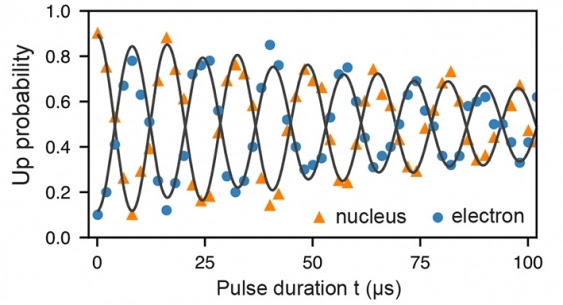
A diagram showing the probability of the nucleus and electron pointing up

Experimental measurement of the probability of finding the nuclear and the electron spins pointing ‘up’. The data shows clearly the flip-flopping dynamics, where the two spins swap orientation multiple times as the electrical driving signal is progressively applied. Image: Supplied

“The standard way to couple spin qubits in silicon is by placing the electrons so close to each other that they effectively ‘touch’,” says Prof. Morello.

“This requires the qubits to be placed on a grid of a few 10s of nanometres in pitch. The engineering challenges in doing so are quite severe. In contrast, electric dipoles don’t need to ‘touch’ each other – they influence each other from the distance. Our theory indicates that 200 nanometres is the optimal distance for fast and high-fidelity quantum operations.

“This could be a game-changing development, because 200 nanometres is far enough to allow inserting various control and readout devices in between the qubits, making the processor easier to wire up and operate.”

Net zero for Australia’s built environment is possible by 2040

Researchers from UNSW Sydney have developed a national reference guide to help Australia hit its net zero targets. The free online resource provides a pathway to achieving ‘whole of life’ net zero carbon for Australian buildings by 2040.  

Race to Net Zero Carbon: A Climate Emergency Guide for New and Existing Buildings in Australia is a 40-page guide which details critical information about materials and construction best practices to help architects, engineers and planners transform the building industry towards net zero carbon buildings.  

“Our guide draws on Australian climate data but has global applicability,” says Professor Deo Prasad, who is lead researcher of the guide. Prof. Prasad is recognised as a national leader in the field of sustainable buildings and among the leading advocates for sustainability in Australia.  

The guide is the first to detail a holistic approach to achieving net zero and fills knowledge gaps on net zero carbon buildings. 

Net zero means balancing greenhouse gas emissions produced by humans with emissions taken out of the atmosphere. 

“This guide provides a deeper level of knowledge on how this sector can rapidly move towards net zero carbon buildings in the short term. Using science-based evidence and analytics, the guide maps a clear roadmap to achieving net zero by 2040 in the building industry. It goes beyond the aspirational and into the achievable,” Prof. Prasad says. 

The true carbon footprint of a building 

With the Intergovernmental Panel on Climate Change’s 2021 Report labelling ‘Code Red for Humanity’, there is an urgent need to reduce carbon emissions globally, and the building industry is a prime opportunity sector. 

The world’s built environment is responsible for 37 per cent of global energy-related greenhouse gas emissions. In Australia, it is responsible for one-fifth of all our emissions. 

Carbon emissions within the built environment occur across all stages of a building’s life cycle. 

“Historically, most professionals have only focussed on reducing the operational carbon footprints of buildings,” says Prof. Prasad. “Operational carbon refers to what is required for the building to run once it is built, like energy use in heating or cooling.” 

Operationally carbon–friendly buildings are fully powered from on-site and off-site renewables, which offset the buildings carbon emissions.  

Meanwhile, embodied carbon footprints, which are accrued before a building is even constructed, have usually been overlooked by the industry.  

“There are significant amounts of emissions embedded in the materials and construction of the building itself and these need to be addressed and offset in order for our built environment to be truly net zero,” says Prof Prasad. 

“Our guide goes deeper than just operational offsetting. It illustrates a ‘whole of life’ approach to buildings – considering where building material comes from, how they are transported to the construction site, and so on.” 

The best way to minimise the embodied carbon footprint is by retrofitting and reducing materials in use. If that’s not possible, then employing low-carbon materials such as green steel and concrete alternatives during the construction process is best, which is what the guide provides a roadmap for. 

Opportunities to improve Australia’s circular economy 

The guide also details post-life opportunities for buildings destined to be demolished – creating opportunities to expand the circular economy.  

“Buildings don’t have a cradle to grave life cycle,” says Prof. Prasad. “It’s more like cradle to cradle. Materials from demolished buildings can go on to have a future life through recycling and reuse.” 

“For example, it’s possible to avoid demolishing old or undesirable buildings as their concrete structures can stay put and the building can be refurbished.  

“Timber, aluminium and glass can be reused or recycled somehow into new products.”  

Building codes must push to drive carbon down 

The challenge in the building industry right now is to get past one-off cases and move into a mainstream situation where net zero construction is the norm. Prof. Prasad hopes the guide will also help Australia position itself as a leader in the global race to net zero in construction.  

“While the global community is aiming for net zero by 2050, the building sector has much greater potential and opportunity to reach net zero operational emissions by 2030 and a 60 per cent reduction in embodied carbon by 2030,” he says. “These are the goals our guide aims to achieve.”  

“While our guide details advanced knowledge and research, practical design approaches, and benchmarks and targets for industry to be informed, there is another vital lever required to make net zero possible. 

“Governments should mandate net zero construction codes, which will push for best performance to achieve net zero. They should lead by example and ensure all public buildings are net zero carbon and provide subsidies and rebates to incentivise change.” 

If this is done, not only will Australia achieve net zero in built environment in the short term, we will also create markets for new products and technologies which will benefit the economy.  

“It’s not only about eliminating worst practices. It’s about adopting best practices, which, policy-wise, is also economically the right thing to do,” Prof. Prasad says. 

“Most countries will be looking at low embedded carbon products, technologies and systems in the future. The government needs to see this as an opportunity to become a leader by promoting innovation in this space.” 

This approach does not force additional costs to buildings, but the conversation helps to find the best investment approach to net zero carbon given the appetite for a cleaner and more sustainable future for all. 

Clients should be more proactive in driving net zero  

Of all the stakeholders in the construction and building industry, it is the clients that have the most power to drive change towards net zero. It is essential to have a client-designer conversation about achieving net zero targets within the 2030 timeframe. 

“Our guide has all the knowledge the industry needs to achieve net zero – a roadmap that shows it can be done and, most importantly, the type of conversation clients can have with designers or government.” 

Prof. Prasad says while the guide has been developed with practitioners in mind, its implementation throughout the industry will help advocate for widespread reform to construction from the top down.

“It’s essential that the industry – be it clients, government or designers – start speeding up the race to net zero carbon before it becomes too late in the climate emergency.” 

Race to Net Zero Carbon is a short guide based on a book by the same researchers Delivering on a Climate Emergency: Towards a Net Zero Carbon Built Environment. The book is recommended for practitioners who want more in-depth information about how their projects can achieve net zero. 

Antibiotic innovation helps fight against superbugs

Image: Priscila Cardoso, PhD candidate and lead researcher and Dr Celine Valery, principal supervisor, RMIT. Supplied

RMIT scientists have created a new type of antibiotic that can be rapidly re-engineered to avoid resistance by dangerous superbugs.  

Developed by PhD candidate Priscila Cardoso and principal supervisor Dr Céline Valéry from RMIT’s School of Health and Biosciences, the antibiotic has a simple design that allows it to be produced quickly and cost-effectively in a lab. 

Named Priscilicidin, the antibiotic’s amino acid building blocks are small, so it can be tailored to tackle different types of antimicrobial resistance.  

With the World Health Organization calling antimicrobial resistance “one of the top ten global public health threats facing humanity”, developing new antibiotics is more urgent than ever. 

Professor Charlotte Conn, one of Cardoso’s PhD supervisors, said given that urgency, Priscilicidin was an exciting breakthrough for public health. 

Priscilicidin is a type of antimicrobial peptide. These peptides are produced by all living organisms as the first defense against bacteria and viruses. 

After reviewing the literature on antimicrobial peptide molecular engineering, the team designed and tested 20 short peptides before settling on Priscilicidin as the best candidate. 

“The pharmaceutical industry generally tests thousands of compounds before getting a lead candidate. In our case, only 20 designs were necessary to create an entire new family of antibiotics,” Valéry said. 

Conn said Priscilicidin was based on a natural antibiotic peptide, which made it less likely to cause antimicrobial resistance compared to existing conventional antibiotics.  

“Current natural antibiotics are expensive and difficult to make on a large scale. They also break down quickly in the body,” she said 

“Priscilicidin combines the advantages of small molecular design, which means it’s quick and inexpensive to synthesise in a lab, with the advantages of natural antibiotics.” 

How does Priscilicidin work? 

Priscilicidin was derived from Indolicidin, a natural antibiotic found in cows’ immune systems.  

The team’s research, published in January 2023 in the Women in Nanoscience 2022 special issue of Frontiers in Chemistry, showed Priscilicidin was highly active against resistant microbial strains such as golden staph, E. coli bacteria and candida fungi.  

Priscilicidin works by disturbing the membrane of the microbes, eventually killing the cell.  

“Attacking this outer layer makes it harder for the bacteria to evolve and resist treatment,” said Valéry.  

Lab tests showed Priscilicidin had a similar antimicrobial activity as Indolicidin on common bacterial and fungal infections. 

A new arsenal of topical and oral antibiotics 

The team’s research shows Priscilicidin’s molecules naturally self-assemble into hydrogel form, making it ideal for creating antibiotic gels and creams.  

Valéry said when new drugs were created, scientists needed to consider the drug’s pharmaceutical formulation.  

This includes the drug’s form (capsule or cream, for example) and processes involved. Priscilicidin’s natural hydrogel form meant they can bypass some of that formulation process, Valéry said. 

“The fact we can control the viscosity of Priscilicidin means we can contemplate many applications as different products, diversifying the types of treatments to stop antimicrobial resistance,” she said. 

While the team are predominantly investigating Priscilicidin for topical applications, they are not ruling out oral applications.  

“In theory, you could choose all means of administration for Priscilicidin, but none of them have been tested yet,” Conn said. 

“We have an oral delivery technology at RMIT for protein and peptide drugs, which will allow antimicrobial peptides to be administered orally. We are currently looking at Priscilicidin as a candidate for this test.” 

“Rational design of potent ultrashort antimicrobial peptides with programmable assembly into nanostructured hydrogels” is published in Frontiers in Chemistry (DOI: 10.3389/fchem.2022.1009468). 

This research was led by RMIT University in collaboration with CSIRO and Aikenhead Centre for Medical Discovery. 

Co-authors are Priscila Cardoso, Samuel Appiah Danso, Andrew Hung, Chaitali Dekiwadia, Nimish Pradhan, Jamie Strachan, Brody McDonald, Kate Firipis, Jacinta F. White, Arturo Aburto-Medina, Charlotte E. Conn and Céline Valéry. 

Breaking ground: Moderna’s big build begins

Image: Monash University President and Vice-Chancellor Professor Margaret Gardner AC joined other dignitaries including state and federal ministers and Moderna representatives for a ground breaking ceremony at the new Moderna vaccine manufacturing facility.

In an important milestone for securing access to mRNA vaccines and enhancing medical research and development in Australia, global biotech Moderna has commenced construction of its new manufacturing facility at Monash University’s Clayton campus in Melbourne’s south east.

Construction work comes less than four months after Monash was selected as the site for the new facility that was first announced in March as part of a 10-year strategic partnership between Moderna and the Federal and Victorian governments.

It will be Moderna’s first manufacturing site to be built in the Southern Hemisphere and the first to be built on a university campus. The facility is expected to open in 2024, subject to regulatory approvals, and will produce up to 100 million vaccine doses each year, including vaccines for COVID-19, influenza and respiratory syncytial virus (RSV).

Located within the Monash Technology Precinct, at the corner of Blackburn and Wellington roads, the facility will join a host of world-leading research and technology facilities already established in the precinct, including CSIRO, Australian Synchrotron, Victorian Heart Hospital, and Melbourne Centre for Nanofabrication.

Monash University President and Vice-Chancellor Professor Margaret Gardner AC said Moderna’s facility will further strengthen the Precinct, which is already established as one of Australia’s strongest ecosystems of globally-connected innovators and enterprises across technology, manufacturing, health, sustainable development and education.  

“The Monash Technology Precinct brings together some of Australia’s most significant and unique research and technology centres, platforms and facilities to attract innovative and world-leading research and investment in future-focused disciplines,” said Professor Gardner.

The facility will be complemented by the Monash Centre for Advanced mRNA Medicine Manufacturing and Workforce training, which Monash is establishing in partnership with the Victorian Government.

“Together, Moderna’s production facility and the new Centre combine two critical elements of an mRNA innovation ecosystem that will deliver long-term health and economic benefits for the community, and strengthen Monash’s position at the forefront of mRNA/RNA therapeutic,” Professor Gardner said.

Monash is at the cutting-edge of mRNA/RNA therapeutics development, including the development of an mRNA vaccine candidate, which is now undergoing Phase 1 clinical trials with the Peter Doherty Institute for Infection and Immunity.

In 2020, the Federal Government provided just over $1.5 million through its Medical Research Future Fund (MRFF) to Monash and the Doherty Institute to begin the clinical trial process.

In June 2021, the Victorian Government granted Monash University $5 million through mRNA Victoria to manufacture the vaccine.

New chatbot goes online to fight image-based abuse

Image-based abuse – when someone takes, shares or threatens to share nude, semi-nude or sexual images or video without consent – has become a growing issue, experienced by 1 in 3 Australians surveyed in 2019.  

Lead researcher behind the creation of ‘Umibot’,  Professor Nicola Henry from RMIT University’s Social and Global Studies Centre, said ‘deepfake’ content (fake videos or images generated using AI), incidents where people are pressured into creating sexual content and being sent unsolicited sexual images or videos also count as image-based abuse.  

“It’s a huge violation of trust that’s designed to shame, punish or humiliate. It’s often a way for perpetrators to exert power and control over others,” said Henry, who is an Australian Research Council Future Fellow.  

“A lot of victim-survivors we talked to just want the issue to go away and the content to be taken down or removed but often they don’t know where to go for help.”  

That is what this pilot chatbot is here to address.   

The idea came to Henry after conducting interviews with victim-survivors about their experiences of image-based abuse.  

While the people she spoke to had diverse experiences, Henry said they often did not know where to go for help and some did not know that what had happened to them was a crime.  

“The victim-survivors we interviewed said they were often blamed by friends, family members and others and made to feel ashamed, which made them even more reluctant to seek help,” said Henry. 

Dr Alice Witt, an RMIT Research Fellow working on the project with Henry, said Umibot is not a replacement for human support, but it is designed to help people navigate complex pathways and provide them with options for reporting and tips on collecting evidence or how to keep safe online.  

“It is not just for victim-survivors,” said Witt.  

“Umibot is designed to also help bystanders and even perpetrators as a potential tool to prevent this abuse from happening.”  

How does Umibot work? 

Users can type questions for Umibot, or they can select answers from a set of options.  

Umibot also asks users to identify whether they are over or under 18 and if they need help for themselves, help for someone else, or are concerned about something they have done. This will inform what sort of support and information they get to suit their experiences. 

Henry says Umibot is the first of its kind that is dedicated to victim-survivors of image-based abuse.  

“There are other chatbots out there that more broadly help people who’ve experienced different online harms, but they are not focused on image-based abuse and they don’t have the same hybrid functionality that allows users to type questions to the chatbot,” said Henry. 

A new approach to chatbot design 

Created with the support of an Australian Research Council Future Fellowship grant, Henry and Witt worked with Melbourne-based digital agency Tundra to create Umibot using Amazon Lex, an artificial intelligence service for building natural language chatbots. 

“We know victim-survivors of image-based abuse face a spectrum of experiences over and above image-based abuse, so we developed Umibot as a fully inclusive and trauma-informed empowerment tool to support people who have diverse experiences and come from different backgrounds,” Henry said. 

The team also worked with a diverse range of consultants and did an independent accessibility audit to make sure Umibot was as compliant as possible with global accessibility standards for people with disabilities. 

“Our main ethical challenge was to make sure Umibot didn’t cause any harm or trauma, or make the user feel burdened,” said Witt. 

“A lot of victim-survivors are not ready to talk to a person about their experiences, so teaching Umibot how to be empathetic and helpful is a way for them to seek support without any pressure.” 

Next steps for Umibot 

With Umibot available to use right now, the researchers are hoping to develop a Umibot Version 2 for victim-survivors, bystanders and perpetrators of image-based abuse in the next few years.  

“We hope that Umibot will not only empower victim-survivors to find support, but also help us create ‘best practice’ guidelines for designing, developing and deploying digital tools and interventions for addressing online harms more broadly,” said Witt.  

You can access Umibot here

UniSA welcomes female high flyers and second jetliner simulator

Image: Shutterstock

Females now account for 30 per cent of UniSA’s aviation students, defying trends in a male dominated industry where women make up just six per cent of the Australian aviation workforce.

The milestone is another win for UniSA, following the recent installation of its second simulator – based on the Airbus A320™ – at its Mawson Lakes campus, adjacent to Parafield Airport in Adelaide’s northern suburbs.

The new simulator now sits alongside the Boeing 737™ model, providing UniSA’s aviation students with the only opportunity in Australia to train in cockpits based on the two most popular jetliners in the world.

UniSA Aviation Program Director Daniel Kwek says students will gain a competitive advantage on graduation, receiving training on both Boeing and Airbus based flight simulators, incorporating virtual and augmented reality.

“The simulators are excellent training devices in themselves, saving lives and money, and we have taken this a step further by introducing VR goggles,” Kwek says. “This will allow students to fully immerse themselves in the flying experience.”

Dean of Programs at UniSA STEM, Professor Abelardo Pardo, says UniSA’s aviation students get the best of both worlds – extensive professional tuition and practical experience through the simulators and on-site training, delivered by Flight Training Adelaide (FTA) at Parafield Airport, located near the campus.

“Parafield is not a large commercial airport, but the third busiest in Australia and has all the infrastructure and features that make it a powerful training resource for students wanting to become commercial pilots,” Prof Pardo says.

FTA has just signed a new three-year contract with UniSA to deliver flight training and theory for UniSA’s aviation students.

Aviation student Georgia Ho Wing Tung is one of 300 international aviation students at UniSA. She has relocated from Hong Kong to complete a three-year Bachelor of Aviation (Pilot).

“I chose to study at UniSA because it offers practical experience at one of the busiest airports in Australia,” Wing Tung says. “It’s like putting yourself into a reality situation, making flying more challenging but also preparing you really well for your career after graduation.”

The upside for current students is that they will graduate on the other side of the COVID-19 pandemic curve, filling job vacancies created by mass pilot layoffs and early retirement.

“There has never been a better time to study aviation because the sector is going to demand a very large number of pilots in the coming years and our aviation graduates will be in the box seat,” Prof Pardo says.

The achievements are being celebrated on the eve of International Civil Aviation Day on Wednesday 7 November 2022.

I’m dreaming of a zinc Christmas?! Intricate ‘snowflakes’ created in liquid metal

It’s beginning to look a lot like Christmas at UNSW Sydney’s School of Chemical Engineering where researchers have grown crystals made of zinc that look like snowflakes – inside a liquid metal.

The team predominantly used zinc metal dissolved in liquid gallium as the solvent, creating distinctive structures that often resembled those of six-branched snowflake crystals.

Apart from their structural beauty, these liquid metal-grown crystals can enable future processes for making catalytic materials for producing hydrogen from organic fuels. The metallic crystals can also be specially formulated, during their synthesis and extraction, to make semiconductors for electronic and optical devices of computers, mobile phones and solar cells of the future.

The team’s findings have now been published in a paper in Science, with first author and former PhD student Dr Shuhada A. Idrus-Saidi and co-first/corresponding author Dr Jianbo Tang explaining how the shape of the zinc crystals can be adapted depending on a range of different inputs.

Various crystal structures are possible given amended concentrations of the solute, the time taken to grow the crystals, as well as the temperature and pressure within the system.

“In a broad sense, our method is useful for making various types of metallic crystals with selected facets,” Dr Tang said.

“This enables us to control not only the shape of the crystals that are grown, but also their performance in applications such as catalysis, where different exposed crystal facets can make a significant difference.”

During their experiments, the team – which also includes UNSW Professor Kourosh Kalantar-Zadeh and co-authors from multiple UNSW schools, MacDiarmid Institute for Advanced Materials and Nanotechnology (New Zealand), Australian National University, RMIT University and University of Sydney – had to solve the problem of extracting the crystals from the liquid gallium.

The high surface tension of the gallium makes it complicated to isolate the crystals once they have formed. The solution was to apply a voltage so the surface tension was reduced and the synthesised crystals could then be filtered out as the gallium was passed through a porous membrane.

When zinc was used as the solute, the crystals formed in the liquid gallium strongly resembled snowflakes, stemming from the hexagonal lattice structure of zinc itself.

The team also used a variety of other metals as solutes, such as tin, bismuth, silver, nickel and platinum which created their own unique crystal shapes.

In the case of zinc, varying the growth conditions (such as time, temperature, and pressure) gave rise to substantial structural changes.

The observations indicated that increasing the growth duration, in general, led to larger crystals being formed.

Increasing the temperature also typically increased the size of the crystals, as well as producing many more 12-branched structures which occur when two overlapping hexagonal crystal seeds grow concurrently – as they do with snowflakes.

Simple fractal shapes were obtained when zinc crystals were grown at elevated pressure (5 bar) and the overall result of the work is the possibility to greatly expand the accessible crystal library using the new process.

“The findings advance the understanding of crystal growth using liquid metals as the solvent and present a viable method for extracting these crystals,” Professor Kalantar-Zadeh said.

“The use of liquid metals offers a largely unexplored pathway toward the growth of metallic nanostructures that does not rely on reactive soluble precursors, enabling unimpeded growth and leading to the formation of complex solidification patterns.”

The researchers say that being able to grow crystals with specific facets is important when they are subsequently utilised in catalysis.

“In some catalytic reactions, for example in the conversion of carbon dioxide, it happens much faster on one facet of the crystal compared to another. Designing materials and structures with selected facets is called facet engineering and it is becoming important where there is a need to create a particular facet to improve catalytic efficiency,” Dr Tang said.

“For a certain process it may be better to have a square-shaped crystal for catalysis, or a flatter shape, and we can see from this research how we can synthesise that facet depending on the various input parameters.”

“This is the same process that happens in the air with snowflakes, but now we are able to do it with crystals in liquid metal.”

Cyber security experts identify new threat to blockchain technology

Image: Shutterstock

A study from Charles Darwin University (CDU) and the University of Tehran in Iran has identified a new cyber threat that brings into doubt blockchain security for use in critical infrastructure.

The joint study has called the new cyberthreat a misleading attack because of its intention of deceiving miners.

Miners make computations to validate transactions on a blockchain to keep it up to date and are given cryptocurrency as payment. This system is under attack with this new strategy to mislead miners. 

CDU Professor Mamoun Alazab said the attack misleads blockchain miners by stealing some of their computational power and redirecting it to a different chain or fork.

Miners receive compensation for using their computational power to verify transactions on a specific cryptocurrency’s block chain.

“The misleading attack is orchestrated by someone who redirects some miners computational power to a different chain, so that it (the attacker) can outrun the main chain and thus make its fork the dominant one,” Professor Alazab said. 

“The chain, that miners are being misdirected to, is engineered to lose in the competition, and so is the main chain. All is for the attacker’s chain to win and become dominant. This vulnerability can also boost the success of other types of blockchain attacks.”

Professor Alazab said this new attack method on blockchain was concerning because its rates of success were high and blockchain technology was being used in critical infrastructures.

“There is this perception that blockchain, such as Bitcoin, is safe and secure from attack,” he said.

“But this new misleading attack, along with some high-profile attacks that have cost millions of dollars, has shown that blockchain technology, particularly Bitcoin, is not as secure as we think, or as it needs to be for use in critical infrastructure.”   

University of Tehran’s Dr Ghader Ebrahimpour and Dr Mohammad Sayad Haghighi were also involved in the research that uncovered the details of the new malicious attack on Bitcoin.

“If preventive or compensative measures are not taken, this attack can undermine the trust to a blockchain security and lower its value,” Dr Ebrahimpour said.

“If such a blockchain is ever used in critical infrastructure or financial systems, huge impacts can be expected,” Dr Sayad Haghighi said.

The study into misleading attacks, “Can Blockchain be Trusted in Industry 4.0? Study of a Novel Misleading Attack on Bitcoin,” was published recently in the IEEE Transactions on Industrial Informatics.

Professor Alazab said that Bitcoin’s blockchain technology was vulnerable, but that misleading attack was not possible on Ethereum’s blockchain technology because of the tracking system.

Professor Alazab said there may be different solutions to the threat.

“One is to change the design and remove the block reward. The miners then have to be rewarded out of transactions commissions,” he said.

“The concept of uncle block reward, similar to that of Ethereum, can also help in mitigating the problem.”

Professor Alazab said there were other solutions to make block parallel blockchains.