
All posts by Karen Taylor-Brown

Cybernetics: study this new type of engineering bringing together people and tech      

Established in 2021, the ANU Master of Cybernetics is a unique and cutting-edge degree that combines top tech with social sciences. The aim? Building a new generation of experts who will help shape the tech future we want to live in.

The field of cybernetics is concerned with complex systems, has ties with the early development of artificial intelligence, and has applications across areas ranging from engineering to psychology.

Australian National University (ANU) offers a Master of Applied Cybernetics that provides transformational education experience, drawing upon high-impact research, and creating meaningful engagements with industry and the broader community. Alumni have gone on to senior leadership roles in digital, data and AI in federal and state governments, non-profits and industry, as well as on to PhDs with top global universities.

ANU’s School of Cybernetics is a non-traditional school based in the College of Engineering, Computing and Cybernetics at the Australian National University. It is a world-first postgraduate program in cybernetics.

And ANU is encouraging candidates who may have professional experience, but not an undergraduate degree to apply.

Multiple scholarships are available to remove barriers to entry and encourage diversity.

Find out more and apply for the 2024 Master of Applied Cybernetics here.

“I had no idea how my skills could be of use”

As a mid-career lawyer, Julian Vido was working in the community legal sector when he became interested in tech – specifically, how technology systems in the real world could contribute to new and existing injustices.

“While I wanted to see more responsible approaches to technology in the world, I had no idea how my skills could be of use,” says Julian. He figured the job of tackling these problems was the domain of people with computer science backgrounds – not Arts/Law grads like him.

Then he discovered the School of Cybernetics at ANU in Canberra, which “advocates for and teaches a different approach to how we engineer technology”. Julian completed the ANU Master of Applied Cybernetics in 2021.

“Applied Cybernetics calls on thinkers and doers from an array of different disciplines to contribute their expertise to the challenges we face in bringing artificial intelligence systems safely to scale,” he explains.

Only a small cohort of students go through the ANU Master of Applied Cybernetics in any given year, and enrolment is by competitive application. Julian was one of 11 students in 2021, and in 2023, there are just 20 places (2023 applications close 9 September 2022). No undergraduate degree is required, with applications open to any candidates who meet professional experience levels of assumed knowledge. People with diverse academic and career pathways are encouraged, with scholarships available.

“Rich, interdisciplinary learning experience”

For Julian, delving into the world of tech meant a steep learning curve. “Every week the curriculum presented a new thorny engineering problem that took me far from the familiar legal world I had previously known,” he says.

“From computer science to machine learning, data science and robotics – and yes, there was plenty of coding!”

These disciplines are mixed in with lessons in anthropology, media studies, sociology, design, creative writing, art history and photography. 

“Bringing these otherwise disparate corners of the academy together made for a rich, interdisciplinary learning experience, which shifted the way I thought about technology,” he says.

Julian says that completing the Master’s program was “completely different” from what he remembers of his experience as an undergraduate student. Big, crowded lecture halls and cramming for exams were replaced by a small, tight-knit group of fellow students who “collaborated daily on the challenges of building responsible technology systems”. Projects included prototyping solutions to e-waste, carbon emissions, over-policing, facial recognition biases and gender violence.

Julian is now combining his legal background with cybernetics for his PhD investigating how justice can be embedded in the design and implementation of technology systems.

In this video, Ned Cooper reflects on his experience in the ANU Master of Applied Cybernetics program.

This post was brought to you in partnership with the Australian National University School of Applied Cybernetics.
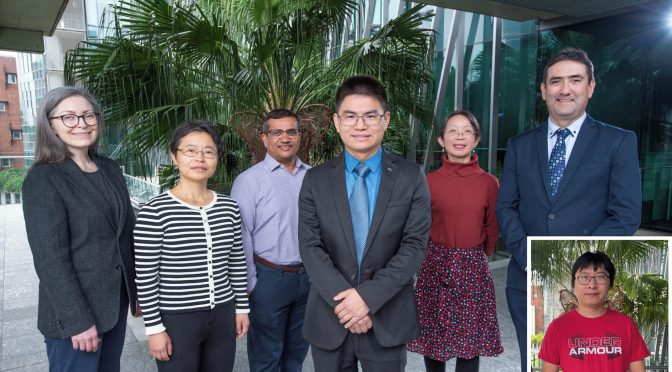

ARC research hub to pave the way towards zero-emission power generation technologies

Image from left: Professor Jennifer MacLeod, Associate Professor Ting Liao, Professor Prashant Sonar, Professor Zhi-Gang Chen, Professor Hongxia Wang, Professor Jose Alarco, inset: Dr Xiaolei Shi

Its aim is to develop sustainable zero-emission power generation technologies to convert gaseous waste into valuable products and create scalable pathways to market for driving industry transformation.

The research hub has significant support from industry, with a further $8.55 million cash and in-kind contributions from national and international industry partners.

Hub director Professor Zhi-Gang Chen, from the QUT School of Chemistry and Physics and Centre for Materials Science, said the aim of  the 19 researchers from six Australian universities was to develop a new energy, storage and carbon conversion system which would contribute to Australia’s goal of net-zero emissions by 2050.

“We will develop zero-emission power generation technologies for harvesting sustainable electricity from waste industrial heat and environment, and store electricity in ‘green’ batteries to enable conversion of atmospheric emissions into usable products,” Professor Chen said.

“Our next step is to develop batteries to store this energy that will be high-performance, low-cost, high-safety, high-energy density and have a long-life cycle.

“This will provide the energy to transform gaseous waste pollutants, including CO2 (carbon dioxide), from the atmosphere and convert the CO2 into the building blocks of important chemicals for sustainable developments that benefit society.”

Professor Zhi-Gang Chen said the hub would deliver a new type of renewable energy and high-value materials that would be transformative for industry, the economy, and society.

He said the project’s aim was to stimulate the emerging industry of sustainable energy to help meet Australia’s carbon neutrality targets.

Aussie start-up microFleet lands $500K iMOVE CRC backing to take on global $300bn e-micromobility market

Image: Shutterstock

iMOVE Cooperative Research Centre has backed Australian company microFleet with $500,000 funding to launch a patent-pending invention called OneDock, which could see Australia seize a golden opportunity in the booming e-micromobility market tipped to be worth $300bn by 2030.

microFleet is a sister company of Electric Vehicles Pty Ltd, which has a longstanding contract with Australia Post for the supply and maintenance of e-bikes for its 2,000 plus national fleet.

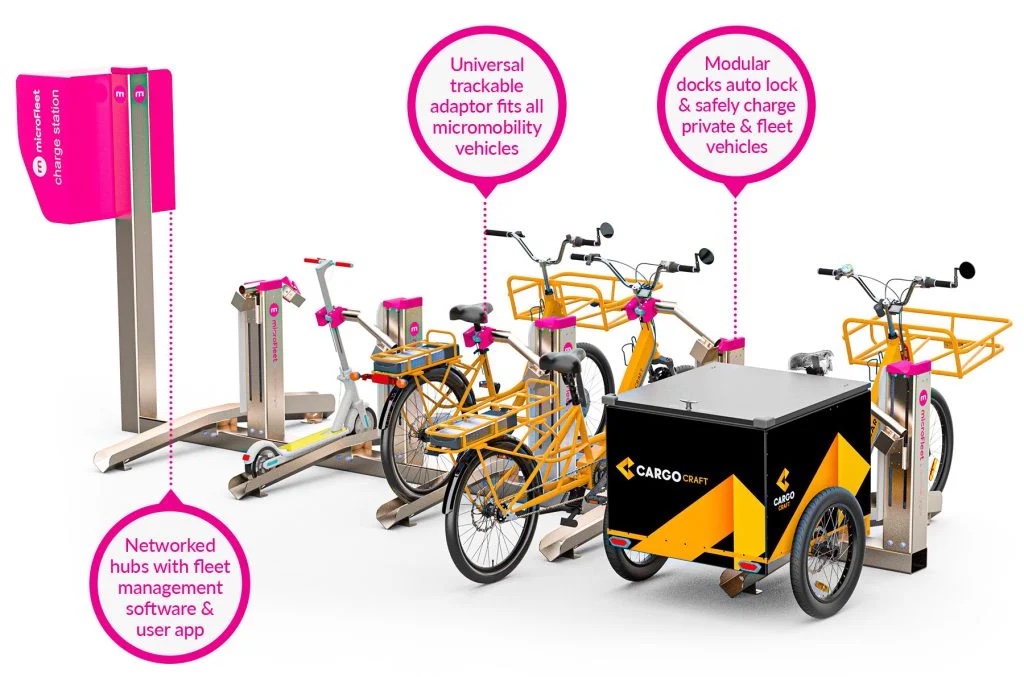
OneDock is a universal charging and parking station for electric bikes, scooters, and other light electric vehicles. It’s the world’s first mechanical and digital technology platform to enable universal micromobility tracking, docking, charging and sharing, whether privately-owned or part of a public/corporate fleet.

Image: Supplied

The technology’s implications for urban transportation are profound, promising cities a future where the integration of e-micromobility is not just seamless but also sustainable and efficient. For users, it means no more hunting for charging points or worrying about running out of power mid-ride.

microFleet is in talks with New York City representatives, with aims to be among an elite cadre of companies to roll out e-micromobility charging systems in 2024. A successful negotiation could translate to a staggering 70,000 OneDocks gracing the streets of the Big Apple.

The innovation comes at a crucial time, especially considering the alarming trend from New York in 2022, where ad hoc lithium battery charging resulted in 216 fires, 147 injuries, and six fatalities.

It has been estimated the global e-micromobility charging market will be worth $67bn by 2030, and microFleet aims to capture 2% market share worth $1.35bn.

The company aims to install 100,000 smart docking points in Australia and 1 million globally by 2030.

iMOVE CRC – part of the Australian Government’s Cooperative Research Centres network – funded microMobility under its Impact Extension Program for Australian companies to accelerate the development of ground-breaking technology, products and services in the transport sector.

iMOVE managing director Ian Christensen said:

“In a world where the transportation sector is undergoing rapid transformation, driven by both technological advancements and environmental imperatives, solutions like OneDock are not just desirable; it’s essential.”

“microFleet’s OneDock is the embodiment of the future of urban mobility and transportation. It’s sustainable, user-centric, and primed for global adoption. It’s green, it’s smart, and it’s what cities need. This is a game-changer and iMOVE CRC is proud to be part of this transformative journey.”

OneDock inventor and microFleet COO Al Reid said:

“The future of urban transportation is not in massive cars or sprawling highways. It’s in efficient, green, and user-friendly solutions like e-bikes, e-scooters, and the infrastructure that supports them. With OneDock, microFleet is not just imagining this future, we’re building it.”

“This is a golden export opportunity for Australia. However, our ambition transcends beyond a product; we’re envisioning cities where transportation is seamless, eco-friendly, and efficient. The backing from iMOVE is a monumental step towards realising this vision on a global scale.”

OneDock will have its international launch in Europe in 2024 at a series of leading trade fairs for the cycling and micromobility industries.

Conference maps AI revolution set to overhaul every industry

  Image: Shutterstock

Hosted by the WA Data Science Innovation Hub based at Curtin, the Data and AI for Business  Conference and Exhibition is an annual conference of the brightest minds in data science that seeks to  map the future of AI for businesses.  

Among this year’s presenters included Western Australia’s Minister for Innovation and the Digital  Economy, the Honourable Stephen Dawson, Triple J presenter, mathematician and author Adam  Spencer, Chief Scientist at UNSW.ai and author Professor Toby Walsh and mathematician, data analyst  and TV presenter Lily Serna. 

WA Data Science Innovation Hub Director Mr Alex Jenkins said AI would cause significant disruptions  and present unprecedented opportunities in every sector of the economy.  

“I can not overstate the revolutionary power that artificial intelligence will have over every business  across all industry sectors with AI estimated to contribute $22 trillion to global gross domestic product by  2030,” Mr Jenkins said. 

“The AI era will herald an exciting opportunity to ensure every school student gets access to a world class education regardless of their background or wealth and stands to revolutionise the way we offer healthcare and conduct medical research, improving the health outcomes of every Australian.  

“The AI revolution is well underway, and businesses of all sizes are already seeing the benefits of  integrating AI and data into their operations. It’s this type of technology that will transform every sector of  our economy – and if your business, workplace or organisation isn’t thinking about how artificial  intelligence can change the way you do things, you’re already on the backfoot.” 

The theme of this year’s conference was exploring the artificial intelligence revolution with a focus on  business competition as well as diversity and inclusion including neurodiversity in data science.  

The WA Data Science Innovation Hub is a State Government initiative, supported by Curtin University,  which aims to ensure WA remains at the forefront of the digital revolution by increasing the uptake,  education, training and awareness of data science in Western Australia. For more information about the Data and AI for Business Conference and Exhibition, visit here. 

Proton battery promises cheap energy storage that’s kinder to nature

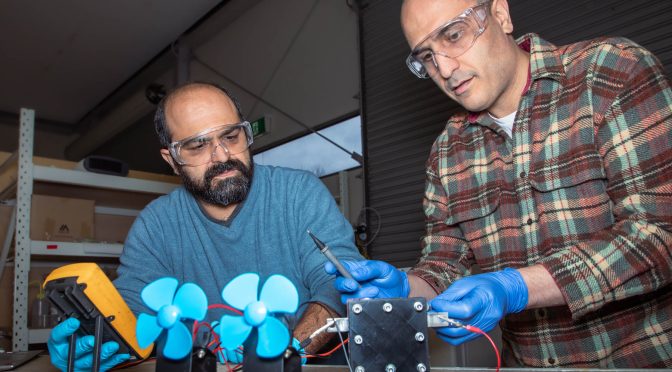
Image: Shahin Heidari (left) and Seyed Niya with the proton battery operating two small fans in the RMIT (RMIT supplied)

Engineers in Melbourne are vying for pole position in the global race to make a cheap rechargeable battery for storing solar energy that does not rely on scarce natural resources.

Their latest experimental ‘proton battery’ could one day be developed to power homes, vehicles and devices – without the end-of-life environmental challenges of lithium-ion batteries. RMIT University has patented the latest developments in this technology internationally.

The battery uses a carbon electrode to store hydrogen that has been split from water, and then works as a hydrogen fuel cell to produce electricity.

The RMIT team is now embarking on a two-year research collaboration with Italian-based international automotive component supplier, Eldor Corporation, to develop and prototype this technology. RMIT has been collaborating with Eldor over the past five years on the same technology.

Lead researcher Professor John Andrews said recent design improvements to their proton battery meant it was becoming competitive as a carbon-neutral alternative to lithium-ion batteries.

“As the world shifts to intermittent renewable energy to achieve net-zero greenhouse emissions, additional storage options that are efficient, cheap, safe and have secure supply chains will be in high demand,” said Andrews, from RMIT’s School of Engineering.

“That’s where this proton battery – which is a very equitable and safe technology – could have real value and why we are keen to continue developing it into a viable commercial alternative.

“There are also no end-of-life environmental challenges with a proton battery, since all components and materials can be rejuvenated, reused or recycled.”

What has the RMIT team achieved with their latest battery?

The team has demonstrated the proton battery as a working device that can power several small fans and a light for several minutes.

Andrews said their latest battery’s storage capacity of 2.2 wt% hydrogen in its carbon electrode was nearly three times that of their 2018 prototype, and more than double other reported electrochemical hydrogen storage systems.

“Our battery has an energy-per-unit mass already comparable with commercially-available lithium-ion batteries, while being much safer and better for the planet in terms of taking less resources out of the ground,” he said.

“Our battery is also potentially capable of very fast charging.

“The main resource used in our proton battery is carbon, which is abundant, available in all countries and cheap compared to the resources needed for other types of rechargeable battery such as lithium, cobalt and vanadium.”

The planet’s supply of lithium is concentrated in just a few countries, while other metals such as cobalt that go into lithium batteries are becoming increasingly scarce and costly.

The recent performance gains have been achieved by design changes that enhance electrochemical reactions in the battery.

How does the proton battery work?

During charging, the RMIT proton battery splits water molecules to generate protons, which bond to a carbon electrode.

Andrews said the proton battery avoids the energy-wasting steps of storing hydrogen gas at high pressure, and then splitting these gas molecules again in fuel cells.

“When discharging, protons are released again from the carbon electrode and pass through a membrane to combine with oxygen from the air to form water – this is the reaction that generates power,” he said.

“Our proton battery has much lower losses than conventional hydrogen systems, making it directly comparable to lithium-ion batteries in terms of energy efficiency.”

What are the next steps?

“We are looking forward to developing this technology further in Melbourne and Italy, in partnership with Eldor Corporation, to produce a prototype battery with a storage capacity that meets the needs of a range of domestic and commercial applications,” Andrews said.

“The aim of this collaboration is to scale up the system from the watt to the kilowatt and ultimately to the megawatt scale.”

Research to merge human brain cells with AI secures national defence funding

Image: Shutterstock

The new research program, led by Associate Professor Adeel Razi, from the Turner Institute for Brain and Mental Health, in collaboration with Melbourne start-up Cortical Labs, involves growing around 800,000 brain cells living in a dish, which are then “taught” to perform goal-directed tasks. Last year the brain cells’ ability to perform a simple tennis-like computer game, Pong, received global attention for the team’s research.

According to Associate Professor Razi, the research program’s work using lab-grown brain cells embedded onto silicon chips, “merges the fields of artificial intelligence and synthetic biology to create programmable biological computing platforms,” he said. 

“This new technology capability in future may eventually surpass the performance of existing, purely silicon-based hardware.

“The outcomes of such research would have significant implications across multiple fields such as, but not limited to, planning, robotics, advanced automation, brain-machine interfaces, and drug discovery, giving Australia a significant strategic advantage.”

The project garnered funding from the prestigious Australian grant body because the new generation of applications of machine learning, such as self-driving cars and trucks, autonomous drones, delivery robots, intelligent hand-held and wearable devices, “will require a new type of machine intelligence that is able to learn throughout its lifetime,” Associate Professor Razi said.  

This “continual lifelong learning” means machines can acquire new skills without compromising old ones, adapt to changes, and apply previously learned knowledge to new tasks—all while conserving limited resources such as computing power, memory and energy. Current AI cannot do this and suffers from “catastrophic forgetting”. 

In contrast, brains excel at continual lifelong learning. 

The project’s aim is to grow human brain cells in a laboratory dish, called the DishBrain system, to understand the various biological mechanisms that underlie lifelong continual learning.

“We will be using this grant to develop better AI machines that replicate the learning capacity of these biological neural networks. This will help us scale up the hardware and methods capacity to the point where they become a viable replacement for in silico computing,“  Associate Professor Razi said. 

WEHI’S Professor Doug Hilton  appointed as CSIRO Chief Executive

Image: Supplied

Professor Hilton is a molecular and cellular biologist, Director of the Walter and Eliza Hall Institute of Medical Research (WEHI), the Lorenzo and Pamela Galli Chair in Medical Biology and head of the Department of Medical Biology in the Faculty of Medicine, Dentistry and Health Sciences at the University of Melbourne. 

For the past 14 years, under his direction, WEHI has grown to become a multi-disciplinary organisation that makes fundamental discoveries and works with partners to translate these into improved outcomes in cancer, infectious and immune diseases, developmental disorders and diseases of ageing. 

A biologist investigating blood cell production and how cells communicate with each other, throughout his period as Director of WEHI, Professor Hilton has continued an active research program. He and his team hold more than 20 patents and have translated their research through collaboration with venture capitalists and the biopharmaceutical industry. 

On announcing the appointment of Professor Hilton, Chair of the CSIRO Board, Kathryn Fagg, AO said: “Professor Hilton will be a great asset to CSIRO, as the national science agency strives to solve our greatest challenges. 

“Doug is a much-respected researcher, leader and communicator of the better outcomes science can deliver. His fourteen years leading WEHI have been exemplified by his passion for research, mentoring and supporting young researchers, building the infrastructure to support the creativity of researchers and a dedication to translating research to improve the lives of Australians.

“Beyond research, Doug has emphasised the importance of strong institutional cultures, and furthered diversity in science. A member of the Champion of Change Coalition and a board member of Australians Investing in Women, he has led initiatives to boost gender equality and diversity, and address better representation of women in senior roles in the Australian medical research sector.”

Commenting on his appointment, Professor Hilton said: “CSIRO is a unique national treasure, there to deliver science for the benefit of the community. The intent of CSIRO and my personal values are completely aligned, and I am looking forward to leading CSIRO as we work to solve our nation’s greatest challenges.”

“I will join CSIRO, after leading WEHI where our staff and students strive to help people live healthier for longer. At CSIRO I know that same sentiment will be there and that’s incredibly important to me. I’m looking forward to meeting the researchers and those that support and enable them, and to hearing about the science.”

The appointment follows eight years served by Dr Larry Marshall, who completes his third and final term as Chief Executive in June 2023. Kathryn Fagg thanked Dr Marshall for his leadership of the 100-year-old organisation, which since 2016 has seen CSIRO invest $425m in Horizon 3 future research, identify six National Challenges to focus on solving, launch Missions to tackle big, seemingly impossible problems and play a key role in the global response to COVID-19.

Kirsten Rose, CSIRO’s Executive Director Future Industries has been appointed Acting Chief Executive from 1 July.

Cubesats: how you can be involved in space exploration without spending millions

Image: Wikimedia by Svobodat, reproduced under Creative Commons licence

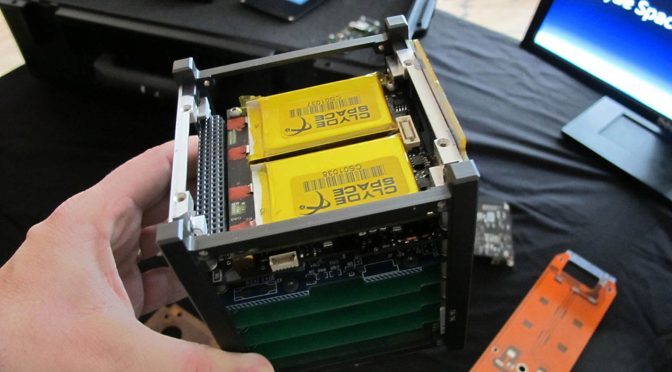
Cubesats – lunchbox-sized satellites that can undertake space-based experiments, make observations or relay communication signals – are currently being used by NASA to help try to find water on the Moon and aid their astronauts on future missions there.

Those missions could well include the first woman and the first Black man to undertake a lunar mission after Christina Koch and Victor Glover were named in the crew for Artemis II, which is expected to fly-by the Moon in 2024.

But crucially, it’s not just billion-dollar national space agencies that can take advantage of the versatility and low cost of tiny cubesats.

Given the components can be bought commercially off-the-shelf, they offer the chance for businesses and organisations to get involved who might never have conceived of exploring space.

UNSW Sydney’s Professor Andrew Dempster is the Director of the Australian Centre for Space Engineering Research (ACSER) and says many people may not understand how simple it is nowadays to get something into space.

“The real benefit of cubesats is their plug-and-play nature,” he says. “If anybody wants to launch a cubesat it’s easy to buy all the spacecraft equipment you need and then design and build whatever payload you want to integrate.

“That might be a sensor to measure something in or from space, a camera for taking images, or even broadcasting communications over a wide area by sending the signal up into space and redirecting it back down to Earth.

“Many people think it costs millions of dollars to launch a satellite into space – and that’s true for the traditional fully sized satellites. But for a cubesat it might only be $100,000-$150,000 to buy all the components and pay for it to be launched.

“There are companies, such as NanoRacks, who are involved with the International Space Station and will put your cubesat on a cargo spacecraft to the ISS and then release it into space from a specially designed deployment pod.”

*****

WHAT ARE CUBESATS?

Cubesats are a class of miniature satellite that are made up of ‘Units’ measuring 10cm x 10cm in size.

The majority of cubesats launched are 2, 3 or 6 Units in size.

Cubesats typically consist of essentials such as a power system, communication system, and propulsion system (if necessary), as well as scientific or experimental payloads.

The payload can vary depending on the mission objectives and can include scientific instruments, cameras, or technology demonstrations.

Because of their small size, cubesats can be easily stowed on board rockets, which are being launched at an increasingly common rate thanks to the growth of private companies such as SpaceX, and in our neighbourhood (New Zealand), Rocketlab.

Cubesats have been used for Earth observation, climate monitoring, communications experiments, technology demonstrations, and even interplanetary missions.

In future, they could also be increasingly used to make breakthroughs in space weather monitoring, asteroid detection, and other areas of astrophysics.

Prof. Dempster says there are many opportunities for businesses, industries and schools around Australia to take an interest in cubesats, either in terms of their design and production, or the payloads that can be put onto them.

So far the potential remains largely untapped, although the upcoming CubeSatPlus Innovation & Development Workshop being run by ACSER is trying to change all that.

“We talk about ‘spinning in’. That is, people in other industries who may be interested in space but at the moment they think it’s just too hard, or just too expensive.

“For them, cubesats are possibly a great place to start. We know there are services that may be useful to people and businesses outside the space sector. It’s just about informing them and linking them to the relevant experts.

“It might not be obvious how what you are doing can be associated with and benefit from space in general and cubesats in particular. But people involved with 3D printing, or those who make pressure vessels, they may never have considered space applications – but that kind of work could be very useful on some space missions.

“Similarly, tests that you can do on materials or components in space can be very useful, such as testing in a vacuum, or testing the effects of radiation.”

Despite their versatility, cubesats unfortunately can suffer from reliability issues.

NASA report from 2019 which analysed the success rate of small-satellite missions launched between the years 2000 and 2016 admitted: “The implication of the data is that for modern small satellite missions, almost one out of every two small satellite missions will result in either a total or a partial mission failure.”

Prof. Dempster is hopeful that discussions between experts in the space industry will make cubesats more robust and less likely to fail.

“We call this topic ‘Mission Assurance’, because regrettably what happens with too many cubesats is they get launched and they simply don’t work,” he says.

“We want cubesats to be more reliable. That is to manage the existing risks better or create developments that overcome some of the risks.”* ACSER’s CubeSatPlus 2023 Innovation and Development Workshop takes place at UNSW Sydney on July 5 & 6.

STEM Jobs in Defence are not what you think: Careers with STEM: Defence magazine out now

Image: CareerswithSTEM.com

As advances in technology impact all our lives, new jobs and careers are emerging to keep up with the rapidity of change. At the same time, globalisation and the mass automation of many formerly manual tasks and data collection are encouraging new visions of what it means to be human in a complex, extraordinary world where artificial intelligence and biotechnology are leaping ahead. 

Nowhere are these changes more important than in securing the safety of our nation. Defence is leading the way in embracing new technologies and new ways of doing business. Our STEM professionals work at the leading edge of technical innovation, ensuring our Navy, Army and Air Force personnel are equipped with the best technologies, knowledge and know-how.

We do STEM for a purpose. In Defence, we recognise that STEM is more than just a collection of subjects; it’s a way of thinking – asking questions, considering data and evidence and being curious. It’s also about striving for a deep understanding of the problems — and being creative.

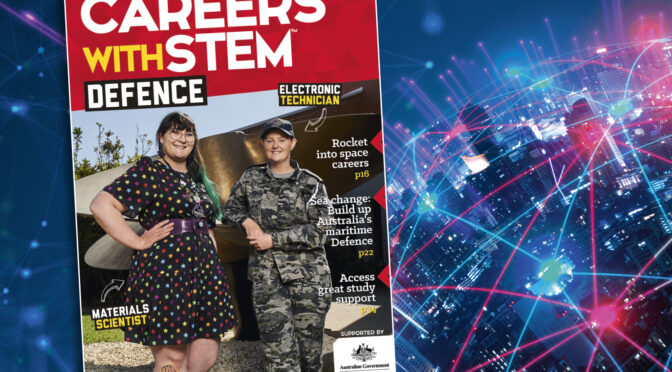
Read more in this comprehensive 36pp Careers with STEM: Defence magazine

These are the skills we need to address the most pressing Defence and security STEM is more than school subjects Science, technology, engineering and mathematics are the keys to tomorrow’s world STEM is more than just a collection of subjects; it’s a way of thinking – asking questions, considering data and evidence and being curious. It’s also about striving for a deep understanding of the problems — and being creative. 

These are the skills we need to address the most pressing Defence and security challenges. Defence is intent on growing a STEM workforce that draws on the best and brightest f rom across Australian society, ensuring a diversity of background, thought and perspectives, which is so important for true discovery and innovation. I commend to you this latest edition of Careers with STEM: Defence. 

In it you will find real-world career profiles that are bound to inspire, as well as practical tips and advice from Defence personnel in a range of exciting fields. 

Yours in STEM,

Professor Tanya Monro AC

About Careers with STEM: Defence

Find your dream career in Defence with our secret formula: Defence + X, where X equals your interest, another field or a life-changing goal. Think Defence + cyber security = cyber warfare operator; Defence + robots = army mechatronic and electrical engineer; or Defence + space = satellite engineer. And at the core of these careers? Some serious STEM skills, of course!

Defence includes a huge range of jobs in the Australian Public Service, as well as in the Australian Defence Force, made up of Navy, Army and Air Force. You’ll get to work on really important projects and learn a lot of new things, plus build teamwork, leadership and problem-solving skills that will be useful in any job you do. And there are unique jobs you can do working in STEM and Defence that you won’t find anywhere else!

Careers with STEM: Defence 2023 is filled with real-world career profiles bound to inspire, as well as practical tips and advice from Defence personnel in a range of exciting fields. We explore 7 ‘X’ areas of interest in this special 2023 edition: Space, Maritime, Quantum, Cyber Security, Food & Agriculture, Apprenticeships and Robotics & AI.

Defence boosting women’s participation in key STEM programs

Image: Supplied, Dept of Defence

To help secure a workforce that better represents the diverse talent of our nation, the Department of Defence will work towards implementing a fifty per cent target for women’s participation across key research and innovation career pathways.

This change will apply to Defence’s Australian Public Service (APS) science, technology, engineering and mathematics (STEM) entry level programs, including the STEM Cadetship Program and the Research and Innovation Pathway of the Defence Graduate Program.

These entry level programs currently have a women’s participation rate of twenty five per cent – the target would double the participation rate, and demonstrates a serious commitment to increasing the number of women working in STEM.

“Increased STEM targets at Defence open significant opportunities for women to amplify our Force’s capabilities,” said the Hon Matt Thistlethwaite MP, Assistant Minister for Defence.

“We’re backing efforts to attract STEM talent to Defence’s challenging, yet rewarding, field of innovation and technology. NAVIGATE is our mechanism to build a team of top-notch specialists.”

“NAVIGATE, launched with explicit gender goals, underscores that determined participation targets bring tangible results.”

In addition to boosting women’s participation in entry level programs, Defence will also set a fifty per cent target for women’s participation for the successful pilot, the NAVIGATE program. Based on the success of the pilot in 2022, NAVIGATE will now be an ongoing program in the Department of Defence.

“By setting targets for women’s participation in our STEM entry programs we draw more fully on our nation’s talent pool, allowing Defence science to deliver greater impact to the ADF,” said Professor Tanya Monro , Chief Defence Scientist,.

“Continuing to ensure the success of women requires strong leadership and a commitment to change, so I’m incredibly proud of these bold targets.”

The NAVIGATE program brings experienced STEM professionals into Defence from industry and academia. This broadens the diversity of Defence’s APS workforce and while also providing participants with a unique experience and supporting them to thrive as STEM leaders.

“Defence’s transformation agenda includes becoming an exemplar in attracting, training, retaining and providing career opportunities for women. These measures demonstrate in practical terms how we are taking steps to achieve this,” said Professsor Munro.

The NAVIGATE program received over 800 applications from the public and private sector STEM community in 2022. Defence set a target of forty per cent women’s participation rate and achieved a rate of forty three percent. Defence will work toward a fifty per cent women’s participation rate.

NAVIGATE applications close 25 June 2023.

Refraction Media celebrates 10 year milestone in STEM media

Refraction Media is a celebrated STEM-specialist media and education agency. Publishers of Careers with STEM, ScienceMeetsBusiness.com.au and a host of STEM-related publications including KnowHow magazine, and Australian University Science, Refraction Media was created with a vision to create a smarter future. 

Working with visionary clients, a lean and exceptionally talented staff and a roster of top-notch writers, producers, designers, videographers, Karen and Heather quickly built Refraction Media into Australia’s leading STEM media agency, winning best Small Publishers of the Year in 2015, and twice being listed as Telstra Small Business Finalists in 2014 and 2015.

“We work collaboratively with organisations who share our vision and want to work together to create a world where everyone has access to the fast-growing and high-paying STEM careers, says Karen Taylor-Brown. “We believe every Australian should have access to and representation in STEM careers.”

In 2016, Refraction Media went international, taking popular STEM careers magazine Careers with Code, established with the support of Google in 2014, to the US and New Zealand. The publication was listed as part of Barack Obama’s Computer Science for all Initiative in 2016. 

Over 2 million Careers with STEM magazines have since been distributed free to schools – with the support of sponsors including Google, The Commonwealth Bank, Telstra and ANSTO, and many of Australia’s leading STEM universities.

Now a hub for careers engagement in STEM including quizzes, videos, events, and hundreds of positive STEM role models, Careers with STEM reaches 1 million people annually, with over 50% high school students and 20% of online traffic university graduates. It is still distributed free to all Australian secondary schools, filling a yawning gap in STEM careers education at schools, despite STEM jobs growing twice as fast as jobs in other areas and a continuing disparity in gender employment and study, particularly in technology and engineering.

“Challenge has always been that many young Austrlaians don’t see themselves in STEM. This might be because of stereotypes, it might be because they have no access to STEM professionals or they have an outdated perception of what STEM jobs are. We aim to challenge those barriers, working alongside other amazing Australian organisations, and see more women, First Nations and other diverse members in STEM,” says Heather Catchpole. 

In addition to creating Careers with STEM, Refraction Media works with over 200 clients to create custom products raging from a virtual tour of ANSTO’s nuclear reactor, an ongoing strategy re-imagining our understanding of university science, and professional learning and classroom resources addressing vaping and youth, young driver safety, and Indigenous STEM education with leading Indigenous organisations.

Download Careers with STEM’s 2023 impact report.

Founders Karen Taylor-Brown and Heather Catchpole credit working collaboratively with clients, and employing and contracting Australia’s leading talent in media in hitting this important 10 year milestone in business.

Want to work with Refraction Media? Email us to start a conversation, karen@refractionmedia.com.au 

Sea cucumbers: the marine delicacy that can deter diabetes

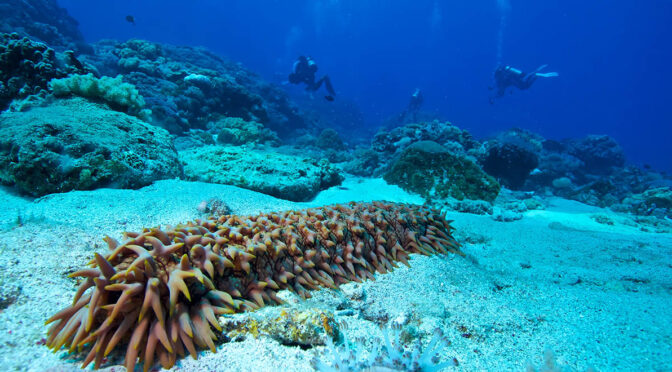
Exploring the medicinal properties of sea cucumbers (Holothuria scabra), researchers found that processed dried sea cucumber with salt extracts can inhibit a compound that is associated with increased risk of diabetes, thereby reducing the likelihood of the disease.

To date, there is no commercially available therapeutic agent to inhibit the formation of this compound, called Advanced Glycation End product (AGE).

AGEs form when proteins and/or fats combine with sugars in the bloodstream. When accumulated in high levels, they increase diabetic complications, including heart disease, Alzheimer’s, Parkinson’s, kidney disease, and cancer.

Lead researcher, UniSA’s Dr Permal Deo, says understanding how the bioactive compounds in sea cucumbers can inhibit AGEs could protect against these diseases.

We know that an accumulation of AGEs is associated with complications of type 2 diabetes, so strategies to prevent this may reduce the risk of developing diabetic complications,” Dr Deo says.

“Biologically active novel compounds in medicinal plants and foods are potential therapeutic agents to prevent diabetic complications.

“Sea cucumbers are known to have a range of therapeutic properties, including anti-inflammatory and antioxidant properties, so we wanted to explore their bioactive compounds as AGE inhibitors.

“We found that processed dried sea cucumber with salt extracts and collagen can significantly inhibit AGEs by lowering a range of sugar related metabolites in the body and reducing the risk of diabetes.”

In Australia, almost 1.3 million people have type 2 diabetes. Globally, about 422 million people have diabetes, with 1.5 million deaths directly attributed to the disease each year.

Almost 60 per cent of all cases of type 2 diabetes can be delayed or prevented with changes to diet and lifestyle.

“These results provide sound evidence that sea cucumbers could be developed as a functional food product to help battle the onset of diabetes and diabetic-complications.”

Novel approach offers cheap, reliable positioning systems for robots

The research was published and presented on May 29 at the annual IEEE International Conference on Robotics and Automation ICRA2023 – the premier international robotics conference – this year held in London.

Lead researcher QUT PhD student Connor Malone said there were many Visual Place Recognition (VPR) techniques and positioning methods out there, and each tried to tackle a different problem, and each one worked better in some circumstances than others.

“Sometimes a robot needs to operate in places where environmental conditions change, you might have snow, rain or lighting conditions, or even just temporal or structural changes with buildings. And so different techniques tend to tackle different problems,” Mr Malone said.

“What we are proposing is a system that can switch between those different techniques in response to different problems in the environment. So rather than the impossible goal of having one solution that does everything, we use the solutions that are already made to make a more robust system.”

“A naive approach would be to run all of these different techniques in parallel and use the ones that appear to be working better at a particular time, but this is very computationally intensive,” Mr Malone said.

“We have run a known single high-performance technique all the time and can predict – without having to run them all – which of the other techniques to add in to get the best performance.

“This system could potentially be used on any sort of autonomous vehicle platform. A lot of the testing and data sets that we used were from self-driving car applications.”

“The particular focus of this system is about getting more bang for your buck. So, making cheap platforms, with cheap sensors and not a lot of computer power,” Mr Malone said.

The research conducted by QUT PhD student Connor Malone; Dr Tobias Fischer, a lecturer in the School of Electrical Engineering & Robotics; former QUT Research Fellow Stephen Hausler, now a research scientist at CSIRO; and Joint Director at the QUT Centre for Robotics and Australian Research Council Laureate Fellow, Professor Michael Milford, involved reviewing many data sets that generally consist of many images.

“We reviewed sequential images as a vehicle drove through an environment and labelled those images as to which particular techniques will work for that particular image,” Connor Malone said.

“We then developed training systems that we call ‘neural networks’, which are in essence are AI systems to help them to learn for a particular image which technique is going to work the best,” Mr Malone said.

“The AI system is learning which of these conditions that it is having to account for – so whether it’s a difference in the appearance of a place, the lighting conditions, or seasonal changes,” Mr Malone said.

Professor Michael Milford from the QUT School of Electrical Engineering & Robotics said that their experiments have shown that the approach works well in various challenging environmental conditions.

“The old approach can drive up the cost of the computer hardware or slow down the speed at which the robot can operate, which is not good from a commercial or usability perspective.”

“Everybody is trying to go for the holy grail of one system that fits everything and thus we have ended up with many different systems that are good at different things. We do this switching mechanism, where the images come in, it switches between different techniques, but it is done in a very computationally cheap way.

“It does not take a lot of hardware and resources to actually do this. And the time that it takes to decide the switching is exceedingly small,” Professor Milford said.

The research is partially funded by Amazon via an Amazon Research Award, with additional support from Michael Milford’s ARC Laureate Fellowship and QUT Robotics.Novel approach offers cheap, reliable positioning systems for robots

Repair, reuse and recycle: dealing with solar panels at the end of their useful life

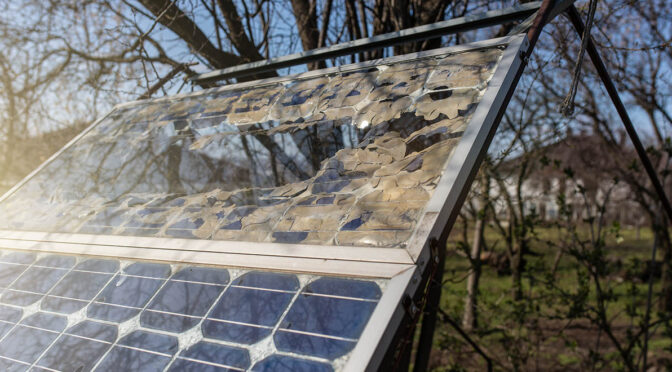
Dealing with redundant solar panels, or photovoltaic (PV) modules, is looming to be a major waste issue for Australia in the next decade.

In Australia, solar power is one of the country’s leading renewable energy sources with rooftop solar PV installed in more than 3.3 million homes.

Sadly, approximately 90 per cent of these systems might ultimately end up in landfill once they need to be replaced.

A 2016 report by the International Energy Agency estimates Australia will generate 145,000 tonnes of waste from PV panels by 2030.

UNSW solar expert, Dr Richard Corkish from the Australian Centre for Advanced Photovoltaics, based at UNSW Sydney’s School of Photovoltaics and Renewable Energy Engineering, says the sustainability principles of ‘Reduce, Reuse and Recycle’ should be applied to the end-of-life management of all PV modules.

“We’ve seen a huge uptake in both small-scale and large-scale PV deployment in the last decade as the world moves towards renewable energy sources,” he says.

“The industry standard for most solar panels’ lifespan is 25 to 30 years which means solar systems installed more than 15 years ago will soon be approaching their end-of-life.

“Additionally, in the last decade, we’re seeing a growing trend of replacing PV modules even though they are in perfect working condition. A lot of people installed small expensive systems some years ago but rather than adding on to them, they’ve been convinced to replace them altogether.

“From a manufacturing point of view, the photovoltaics research community is trying to lengthen the life of the modules by making them more resilient to the environment, particularly moisture and oxygen.

“The goal is to extend the life, so they last up to 50 years which means we won’t need to make nearly as many in the future. If we suddenly need to ramp manufacturing, we’ll find there are some materials, including silver and aluminium, that will be at risk of being in low supply.”

Avoiding landfill

Up to 95 per cent of the materials used to make a solar panel can be recycled, with the most valuable parts being the silicon, aluminium frames, and silver – which is mainly used in the front contacts of the module.

For panels that are recycled, the most common process in Australia results in the panels being put through a standardised shredding machine where they are broken into smaller pieces. These pieces are then down-cycled into other products such as an additive in the production of construction bricks concrete or even roadbase. 

Dr Rong Deng, Research Fellow from the UNSW School of Photovoltaics and Renewable Energy Engineering, says the biggest problem with the current process is the inability to extract the rare metals in the panels whilst keeping costs down.

“To be reused, solar panels components need to be carefully separated to avoid contamination with other materials. Manufacturers will only reuse materials that have a high purity – which is difficult to achieve,” says Dr Deng, who was named in the 2022 Forbes 30 under 30 Healthcare and Science List.

“The current process is a temporary solution. It’s great if all panels are recycled because we want to avoid it ending up in landfill. But if we think ahead, the materials we’re using right now are not always going to be readily available later.

“The silver embedded inside the cells is highly sought-after because of its value in pure form. However, the challenge we face is how we do that cheaply and without adding to our carbon footprint.

“But if continue down the path of using non-specialised technology to recycle PV modules, then we’ll still continue to end up with parts that are contaminated with other materials which is not a sustainable solution.”

Cost of disposal

The management and disposal of PV modules varies between each state and territory. In Australia, only Victoria have officially banned solar panels from ending up in landfill, meaning they need to be taken to e-waste drop off points to be recycled. Under a new proposed recycling expansion program, Queenslanders will soon be banned from dumping solar panels in landfill in the next decade.

However, consumers and businesses can expect to pay between $10 to $20 per panel to recycle, plus any freight or removal fees. In states that do not have a policy on recycling solar panels, this extra cost could be a massive deterrent to recycling and more of a reason to dispose of them in a landfill facility, says Dr Deng.

“If you have a system of 10 panels on your roof, you’re going to pay at least $200 to dispose of them,” she says.

“The Australian Government have signalled potentially adding PV modules to the Product Stewardship Scheme. Similar schemes are already in place for other goods such as car tyres and plastic bottles.”

A Product Steward Scheme is an approach which involves taking responsibility for the full life cycle of a product. It promotes and supports the principles of circular economy and schemes can be voluntary, made mandatory by Government or done in partnership with industry.

Dr Corkish says if everyone who imports, designs, produces, sells, and uses PV modules has a shared responsibility for reducing the environmental impact – then it would further incentivise manufacturers to invest in better PV recycling technology.

“There needs to a system in place where costs are recouped from the industry so that cost imposed on new modules can pay for the recycling of the old ones,” says Dr Corkish, Chief Operating Officer of the Australian Centre for Advanced Photovoltaics.

“However, the caveat is in the long service life of PV modules. Because they last up to 30 years, the companies who are currently active in the market were not necessarily the ones manufacturing the older panels on rooftops today.

“But the bottom line is that end-of-life PV systems will be a future environmental problem unless we address it now.”

Better and cheaper testing

For newer models of PV systems, homeowners can track and compare energy output through an online system or mobile app. However, Dr Corkish says some homes are prematurely upgrading their solar systems well before they need to.

“Whilst there’s huge potential for reuse of PV modules, the lack of affordable testing to ensure the panels still meet electrical safety standards means many make their way to landfill,” he says.

“Sometimes the backsheets are the first thing to go but they can sometimes be repaired or replaced. If the diodes fail, they can be replaced too.

“Sometimes panels still haven’t reached their full life yet and we don’t want that to go to waste.”

Is the future of PV recycling looking bright?

Australia is no stranger to the solar PV system. UNSW Engineering’s Professor Martin Green is a world-renowned expert, leading the development of market-dominating PERC technology which has improved the quality of both the top and the rear surface of standard silicon solar cells.

Dr Deng recognises that recycling of PV modules in Australia is still in its infancy with only a handful of recycling facilities available in the country. She says there’s a lot to learn from countries in Europe who are far ahead in terms of addressing the problem.

Early adopters of small-scale rooftop PV systems, such as Germany and Netherlands, have been acting with much more urgency in terms of finding viable technologies to recycle older PV panels, which are coming up to their end-of-life phase.

“Countries in Europe have built the prototypes for separation technologies and have several pilot lines to test the feasibility. But most importantly, they have the motivation to do it,” she says. 

“In Australia, we’re still waiting for the waste bomb that is predicted when all these PV modules come to the end-of-life, so there’s less incentive for local companies to invest in the technology.

“At some point, there will not be enough landfill to dispose of PV modules – nor will there be enough resources to build them. So, it’s imperative we find a sustainable solution to recycle them now.”

RMIT University backs Vietnam with new $250m strategic investment fund

Last week, in the presence of Australia’s Prime Minister, the Honourable Anthony Albanese MP, RMIT University announced the next phase of its Country Commitment to Vietnam, including a AUD $250 million strategic investment fund.  

This fund will see RMIT invest in education, research, partnerships and campus infrastructure, as Vietnam’s leading international university, contributing to the country’s social and economic goals.    

The first outcome of this fund will be RMIT’s Hanoi Industry and Innovation Hub, creating a gateway between local Vietnam-based partners and international expertise.  

The Hub will support collaboration between Hanoi’s communities, Government and industries on key priorities, including smart and sustainable cities, regional collaboration, emerging technologies, and social innovation.  

In addition to RMIT’s renowned undergraduate and postgraduate offerings, the Hub will cultivate a higher skilled and more adaptive workforce through short-form education solutions and workforce training. 

“As Australia’s largest higher educational institution in-country and recognised as the exemplar of international education in Vietnam, we’re proud of the contribution that RMIT has made to Vietnam over the past 23 years,” said RMIT Vice-Chancellor and President, Professor Alec Cameron.  

“Education has the power to transform lives, communities and economies, so we’re committed to partnering with Vietnam for the long term, to support its rise to a high-income country by 2045.”    

In the 50th year of diplomatic relations between Australia and Vietnam, this significant investment by RMIT will play a key role in supporting the ambitions of the Australia-Vietnam Enhanced Economic Engagement Strategy to double two-way investment between our two countries. 

$1m impact fund to bring new transport sector tech innovations to market

iMOVE Cooperative Research Centre (CRC) has announced a $1 million funding program for Australian companies to accelerate the development of ground-breaking technology, products and services in the transport sector.

iMOVE’s Impact Extension Program (IEP) aims to bring to market ideas, products, and services aligned to its existing range of research programs (see below).

The fund is open to any company with an ABN, with no requirement to partner with an academic institution. It’s an open call for Australian businesses big and small to pitch their ideas with the two best transport sector innovations to get $500,000 each.

Companies can also make more than one application, meaning they can put all of their best R&D ideas forward, rather than relying on one for success.

The $1m direct-to-company funding program aims to boost further the already substantial impact being generated by iMOVE under the Australian Government’s Cooperative Research Centres (CRC) program.

iMOVE CRC managing director Ian Christensen said iMOVE’s goal is to spur the development of innovative solutions that promise to significantly reshape the national transport and mobility landscape.

“Many ground-breaking ideas and research inside Australian companies are not fully realised due to lack of resources for development and implementation. The iMOVE Impact Extension Program aims to overcome these hurdles, turning ambitious ideas into reality and benefiting society through advancements in transport and mobility.”

To be eligible, projects must align with iMOVE’s research areas and show a credible pathway to implementation that will achieve substantial impact in the sector.

Applications close at 5pm on June 30, with application materials and terms and conditions available at https://imoveaustralia.com/news-articles/intelligent-transport-systems/iep-announcement/

A Q&A video is also available: https://www.youtube.com/watch?v=rISEz_cdc6c&ab_channel=iMOVEAustralia

IP developed with iMOVE CRC funding is retained by the companies.

About iMOVE CRC Research Areas

iMOVE CRC engages in a diverse range of research areas that are crucial to the evolution of the transport and mobility sector in Australia. These include the study and development of Intelligent Transport Systems (ITS), autonomous vehicles, and how to optimise supply chains and freight systems. Additional research includes optimising public and active transport, reducing urban congestion, and improving road safety. Through its extensive collaborative network of industry, government, and university researchers, iMOVE CRC is committed to driving significant advancements in Australia’s transport systems. See a full list of iMOVE CRC projects and research areas here: https://imoveaustralia.com/projects-listing/

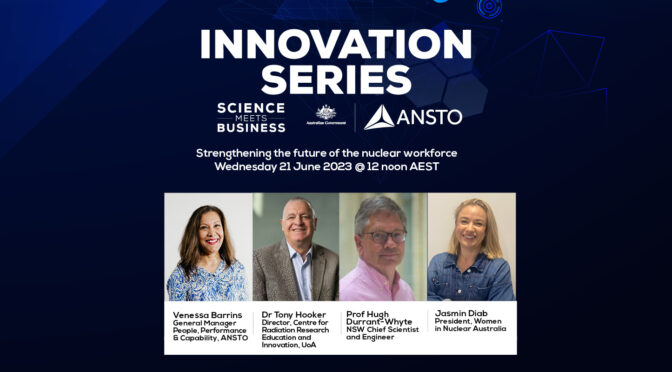
Strengthening the future of the nuclear workforce

Webinar: Wednesday 21 June, 12pm (AEST)

The future nuclear workforce will need a diverse range of skills, knowledge, and experience to meet the challenges of an evolving nuclear industry.

To continue to help mitigate climate change, provide life-saving nuclear medicines, play a key role in advanced manufacturing and develop cutting-edge space and Defence technologies, we’ll need a large and robust workforce of trained and highly skilled nuclear professionals.

“The demand for talent in the nuclear sector is set to soar. Talented, qualified and trained professionals who can conceptualise, develop and engineer nuclear innovations and operate them will be in high demand. That’s a huge challenge; and opportunity,” says Venessa Barrins, ANSTO’s General Manager People, Performance & Capability.

This opportunity will require a collaborative approach from government, universities and industry to identify the skills and resources required; and it won’t just be engineers and physicists, but also lawyers, regulatory experts, naval architects, policy advisers and communications experts. It  will require a concerted effort to attract more young people to the profession, an increased commitment to diversity and inclusion to maximise the skills in the profession, and the development of a ‘nuclear mindset’ across all industries. 

Register for this free webinar to explore and discuss the huge opportunities in growing a dynamic and impactful future nuclear workforce. 

This webinar is FREE to attend and registration is essential. Secure your spot by clicking the button below.

Speakers

Venessa Barrins, General Manager People, Performance & Capability, ANSTO

With almost 30 years of Human Resources (HR) experience, Venessa has worked at global investment banking and some of Australia’s top financial institutions. Since joining ANSTO in 2012, she has implemented a wide range of HR initiatives to meet  organisational strategies.

Venessa is currently developing ANSTO’s strategic nuclear workforce plan, focusing on recommendations and actions for a long-term sustainable workforce. This plan will provide insights into the nuclear workforce sector in both Australia and from a global perspective – forming a key part of ANSTO’s overall workforce planning.

Dr Tony Hooker, Radiation Biologist, University of Adelaide

A/Prof Tony Hooker is a radiation biologist with research interests in the mechanisms of radiation induced damage. Tony returned to academia in Oct 2019 as the inaugural Director of the Centre for Radiation Research, Education, and Innovation at the University of Adelaide after 12 years as the Principal Radiation Health Advisor for the SA govt. 

Professor Hugh Durrant-Whyte, NSW Chief Scientist & Engineer

Hugh is a world-leading authority on machine learning and robotics, and applications in areas including cargo handling, mining and defence. In his career he has worked with many major companies and has co-founded three successful start-up companies. He is particularly well known for his work with Patrick in delivering the automated container terminals in Brisbane and Port Botany, and for his work with Rio Tinto in pioneering and delivering the automated “Mine of the Future”.

Jasmin Diab, President of Women in Nuclear Australia

Jasmin is a mum, leader, nerd and diversity advocate. Jasmin joined the Australian Army in 2001 and after graduating from the Australian Defence Force Academy and Royal Military College Duntroon, was allocated to the Royal Australian Engineers as a Combat Engineer.

With a background in explosive ordnance disposal, Jasmin has spent the majority of her career providing operational and training support in countering chemical, biological, radiological, nuclear and explosive threats and has seen operational service both domestically and overseas. She has just completed her tenure as a Commanding Officer of an Engineer Regiment. 

Jasmin is a big advocate for thinking differently and is a co-founder of the Defence Entrepreneurs Forum Australia (DEF Aus) which encourages bottom-up conceptual innovation. She is also the President of Women in Nuclear Australia, the Oceania representative on the Women in Nuclear Global executive, a member of the ARPANSA Nuclear Safety Committee and a Fellow with Engineers Australia. Jasmin has a Bachelor of Science, in physics and chemistry, a Masters in Defence and Military Studies and a Masters in Engineering Science (Nuclear Engineering).

The ANSTO Innovation Series

The ANSTO Innovation Series is a regular virtual meet-up that focuses on the key capacities of ANSTO’s people, partners and facilities and how they are meeting global challenges in sustainable industries, medicine, advanced manufacturing and in accelerating small business.

Delivered as a quarterly webinar, the ANSTO Innovation Series features an expert panel exploring the latest science, industry and start-up opportunities, including innovations in energy storage, nuclear medicine and health, engineering new materials and accelerating deep tech business.

The ANSTO Innovation Series is produced in partnership with STEM-specialist publishers, Refraction Media, publishers of Science Meets Business, and hosted by leading science journalist, Lee Constable.

About ANSTO

The Australian Nuclear Science and Technology Organisation (ANSTO) is the home of Australia’s most significant national infrastructure for research. Thousands of scientists from industry and academia benefit from gaining access to state-of-the-art instruments every year.

ANSTO researchers work on global science and technology challenges, and operate landmark research infrastructure including one of the world’s most modern nuclear research reactors, OPAL; as well as a comprehensive suite of neutron beam instruments at the Australian Centre for Neutron Scattering; the Australian Synchrotron; the National Imaging Facility Research Cyclotron; and the Centre for Accelerator Science. ANSTO also hosts the nandin innovation centre, one of Australia’s few deep technology hubs facilitating industry engagement and research translation.

Subscribe to our regular innovation and research news updates to get notification of the webinars

ANSTO and UNSW scientists unlock Australia’s bushfire history using stalagmites

A collaboration between ANSTO and UNSW researchers has led to a new method for reconstructing the country’s fire history using cave stalagmites.

The new approach, published in Reviews of Geophysics, could help inform future bushfire hazard reduction strategies and improve our understanding of how past fire regimes have been influenced by climate, land-use change, and human activity.

The research team, including UNSW researchers Professor Andy Baker and Dr Micheline Campbell and ANSTO researchers Dr Pauline Treble, Dr Liza McDonough, and Nevena Kosarac (UNSW Honours graduate and AINSE awardee), used stalagmites from Yanchep National Park in Western Australia to construct a timeline of past bushfires.

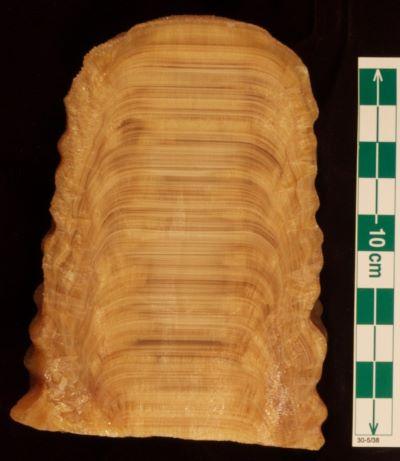
Stalagmite
Stalagmite sample in cross-section. Image credit: Dr Pauline Treble.  

Metals leached from ash following fire events are incorporated into the stalagmites.

The team analysed these leached metals using ICP-MS techniques and X-ray fluorescence microscopy (XFM) at the Australian Synchrotron with the help of instrument scientists, Dr David Paterson, Dr Daryl Howard, and Henri Wong.

The resulting trace metal data enabled the team to count and date peaks in metal concentrations resulting from the ash, revealing a record of past fires.

Samples mounted at the Synchrotron
Stalagmite samples mounted on the X-ray Fluorescence Microscopy (XFM) instrument at the Australian Synchrotron. Image credit: Dr Micheline Campbell. 

The team’s dataset is the world’s first to use stalagmites to reconstruct individual past fire events.

It includes pre- and post-colonial burning regimes for Yanchep National Park and could be applied to other fire-prone regions around the world.

The team’s findings are also detailed in an Editors’ Vox article “Using Cave Formations to Investigate Ancient Wildfires”, which highlights the potential for environmental proxy archives to improve our understanding of historical fire behaviour and human-climate-fire relationships.

Australia has experienced an increasing trend in extreme fire weather and a longer fire season in recent decades.

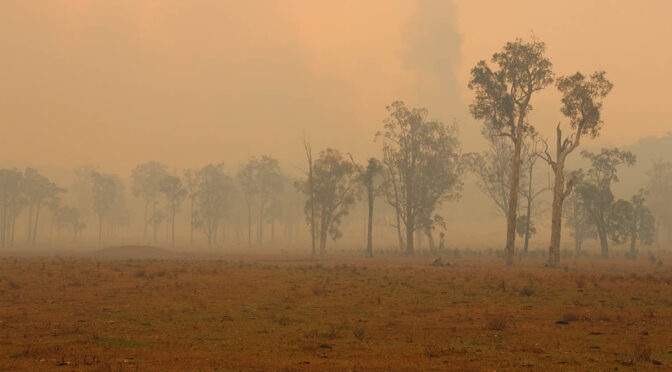
In 2019-2020, bushfires destroyed almost 17 million hectares of land, highlighting the need for a better understanding of past fire behaviour.

The new method could inform changes to bushfire hazard reduction strategies in Australia and elsewhere.

Related research has already informed changes to the NSW Department of Planning and Environment policy on hazard reduction burns in karst areas in NSW National Parks.

Future studies will aim to reconstruct the severity of historical bushfires and wildfires using the same technique.

This could provide valuable insights into how past fire regimes have varied over time and inform efforts to prevent and manage bushfires in the future.

As climate change continues to increase the risk of extreme weather events, such research will become increasingly important for managing the risks of bushfires and other natural disasters.

Science & Technology Australia Launches Ambitious STEM Career Pathways Survey

Science & Technology Australia (STA), the peak body representing the country’s scientific and technological community, has launched the STEM Career Pathways survey. This comprehensive survey aims to capture the most up-to-date insights into current conditions and career patterns for scientists, technologists, mathematicians, and engineers in Australia. The survey’s outcomes will serve as a foundation for future policies and decision-making processes at the highest levels.

The STEM Career Pathways survey will inform research commissioned by the Office of the Chief Scientist for the Prime Minister’s National Science and Technology Council.  It aims to address the pressing challenges faced by professionals in the STEM sector. By gathering crucial information on workloads, conditions, career development, and opportunities for transitioning between industry and research, it will offer a comprehensive understanding of the STEM landscape.

Participants are encouraged to share their experiences, whether thriving in their current STEM careers or considering alternative paths. The survey seeks to uncover factors influencing career decisions, examine patterns of career planning versus improvisation, and learn from those who have transitioned away from STEM fields.

The survey, which is open to all individuals with a STEM qualification, allows respondents to remain anonymous and takes approximately 10 minutes to complete. As an incentive for participation, all survey respondents have the opportunity to enter a draw for two $500 JB HiFi vouchers.

As the survey data is analysed, STA anticipates that the results will provide valuable insights to guide future policies, foster informed decision-making, and support the growth and advancement of individuals pursuing careers in science, technology, engineering, and mathematics in Australia.

The STEM Career Pathways survey’s successful completion marks a significant step towards empowering STEM professionals and ensuring a thriving and inclusive future for the Australian STEM sector.

AI in education under examination

Image: Shutterstock

It’s yet another tech that teachers must quickly get on top of, but is artificial intelligence, or AI in education here to stay? And can it work to the advantage of time-poor teachers and work as an assistive tool or is it just a smarter way to cheat the system? This week, the Australian government announced a probe into the use of AI in schools. So what might it mean for teachers?

The Standing Committee on Employment, Education and Training launched the review on Wednesday 24 May, the first governmental inquiry into AI. Also this week, educators from round Australia met at the AI in Education conference in Sydney, and Refraction Media was there.

David de Carvalho, CEO of the Australian Curriculum, Assessment and Reporting Authority (ACARA), said that students need to be empowered to use AI wisely, and acknowledged that tech advances like AI mean that we are increasingly unable to predict the future of work, and need to prepare for improving society.

Cameron Paterson, Director of Learning Wesley College, says the use of Chat GPT to write essays is already rife, but that AI in education offers opportunities also.

“This generation will learn to work with AI and robots. For educators, AI means better teaching, less work, better lesson plans, and scaffolds for those plans that will need support.”

Education has quickly become the battleground for many of us to even understand how AI will impact society. This week, CEO of OpenAI, Sam Altman, the creators of Chat GPT, said AI could be smarter than “experts” in 10 years. Many schools this year quickly blocked Chat GPT, some have since re-thought the ban.

Speaking at the conference this week, Michael Rafe, Acting Head of History at Loreto Normanhurst school in Sydney, who uses AI in education, emphasised that AI in itself is not a creative tool.

“AI is not creative, but it’s a powerful research tool. For example, it’s effective at summarising complex articles, and good for consolidating knowledge and information.

“It’s great at instantaneous feedback for students (put in a paragraph and ask for targeted feedback, for example, and it can identify strengths and weaknesses and focus on the thesis statement or linking paragraphs, and whether students are analysing the evidence).”

Ali Kadri, CEO of The Islamic College of Brisbane, agrees that schools need to accept that AI will be a big part of education, and that we need to equip students for the future.

“Students have grown up with smart phones – they are very comfortable with tech.
This technology is so new even the experts aren’t experts.”

Dr Tara Smith, an early career academic from the University of Sydney, says that it’s important to focus students on the ethics of AI.

“One piece of advice for teachers: play with it and look at its capabilities. Be aware that it’s changing very fast. Have conversations about ethics.”

Prof Matt Bower, Interim Dean School of Education, Macquarie University, added: “AI is poised to have a transformative impact on the education field”.

“Teachers won’t be replaced but the role of a teacher will change.”

WATCH: What is Artificial Intelligence?

Prof Rose Luckin, from University College London, told the conference that for years, she’s been enthusiastic about AI in education, but in the last six months this has changed.

“We need to be strategic, rather than tactical, and value human intelligence. At the moment, a small number of wealthy people are directing us. I used to think AI in Education was a force for good, but I now worry that the power is in the hands of the wrong people.

“Data is the power behind AI but it is unrefined. Data can also be the power behind human intelligence, and human intelligence is so much richer than AI.

“ChatGPT doesn’t understand, it just collates words together. Are we endowering AI with more intelligence than they have?”

“Using AI in Education means tackling some of the big educational challenges. We need to educate people about AI: what AI is good at and how to use AI effectively and responsibly.”

First published on CareerswithSTEM.com, by Heather Catchpole.

Women alienated from STEM careers by entrenched workplace cultures

Women pursuing careers in science, technology, engineering, and maths are still fighting an uphill battle in Australian workplaces, despite a spike in girls studying STEM subjects in schools and universities.

That’s the finding from a new report released by the University of South Australia today. The report includes feedback and recommendations from 75 professionals and students working in or interested in the sector, who have participated in a series of think tanks over the past 12 months.

The South Australian Academy for Gender Equity in STEM (SAAGES) report details a lengthy list of obstacles that women and non-binary people face in the STEM workforce. They include:

  • An unsupportive or hostile work culture
  • Entrenched, pervasive attitudes – in the workplace, community and within families – that associate STEM careers with men and not women
  • Unconscious bias perpetuating gender stereotypes in many workplaces, including the misplaced belief that women (especially mothers) have different skill sets to men
  • Inequitable language in the workplace and media, reinforcing gendered stereotypes, including emphasising ‘masculine’ technical skills over ‘feminine’ soft skills
  • Inflexible work practices
  • Lack of female role models in senior leadership positions.

Lead report author Dr Deborah Devis says the feedback demonstrates that Australia has a long way to go to achieve gender equity in the STEM workforce.

“These obstacles raised by women working in the sector should be a red flag as they continue to exacerbate critical STEM industry workforce shortages across the country,” Dr Devis says.

“There are hundreds of ‘women in STEM’ programs across Australia but the impact of these programs is unclear.

“We have seen a significant increase in girls studying STEM subjects in schools and undergraduate degrees, but only a small increase in postgraduate programs and young women pursuing STEM careers. The number of women holding senior management roles in STEM industries is also very low.”

To find solutions to these challenges, the UniSA SAAGES taskforce has produced specific recommendations to support three STEM groups: future employees, current employees, and leaders.

  • Future employees: Mentoring, outreach positions, network building programs (including young entrepreneurs), building relationships between students and companies
  • Current employees: fertility policies, workplace flexibility, equal pay parental leave, evaluation of internal culture
  • Leaders: inclusive leadership training, rewarding equitable leaders, non-financial leadership incentives for women, men’s advocacy for women.

Report co-author, Dr Florence Gabriel, says diversity is essential for business success in the modern world.

“Diversity is not just an ethical concern or a box to tick. According to a recent study of 1000 companies worldwide, those in the top 25% for gender diversity were found to be 21% more likely to be more profitable and 27% more likely to be more creative,” Dr Gabriel says.

“These high-performing companies not only had more women on their staff; they also had a greater gender mix in their senior leadership.”

In Australia, only 16% of the STEM skilled workforce are women while 90% of women with a STEM qualification work in non-STEM related fields, according to the Australian Academy of Science.

The feedback from women who took part in the think tanks suggests that STEM careers are no longer considered “nerdy” or “unpopular”, but they remain difficult environments for women to thrive in.

An unsupportive – even hostile – work environment was named as the main reason women left jobs in STEM.

Inflexible work hours and a failure among many employers to acknowledge that the burden of unpaid care work for children and older parents still falls disproportionately on women is another major obstacle.

Increasing work flexibility would go a long way towards encouraging women to pursue and continue working in STEM careers, the report says, although companies should avoid creating a gender divide where only women are expected to take advantage of flexible work arrangements.

“It is also crucial that men advocate for women in the STEM workforce by actively supporting gender equity and promoting diversity and inclusion. It should be an entrenched belief, not an exercise in box ticking,” Dr Gabriel says.

The report can be accessed here: https://unisa.edu.au/siteassets/academic-units/unisa-education-futures/docs/report-from-insight-to-action-strategies-for-cultivating-equity-and-empowering-women-in-industry.pdf

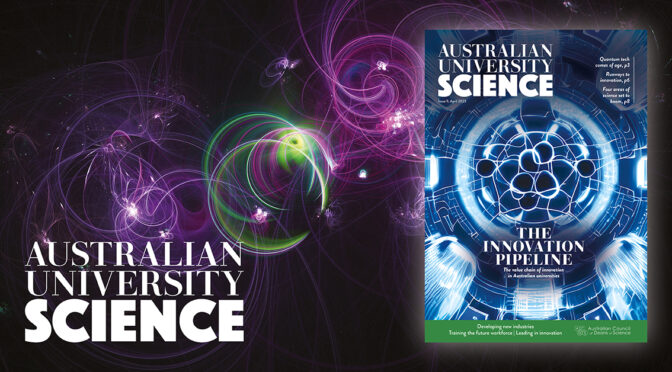
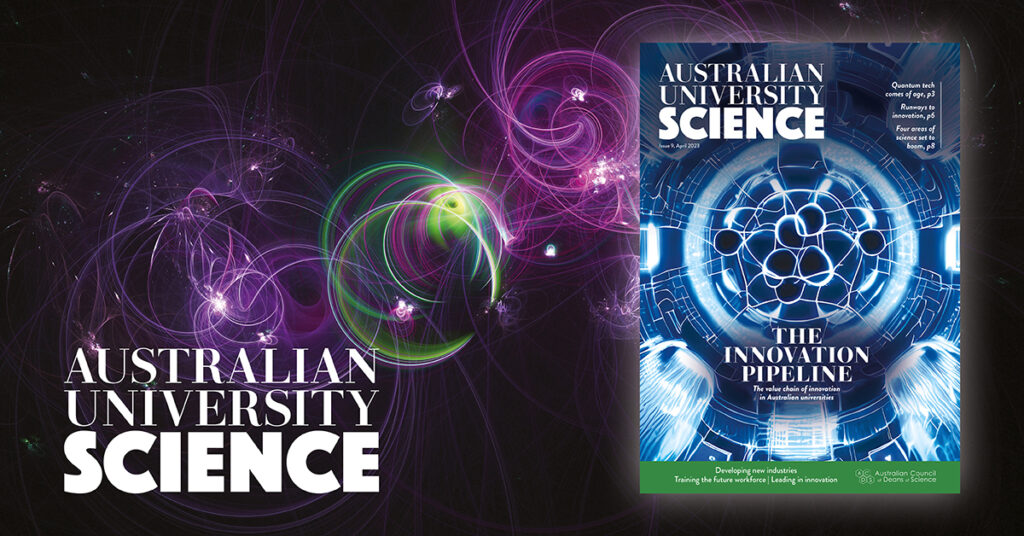
The innovation pipeline. The value chain of Australian universities. Australian University Science – Issue 9.

Australian University Science is a bi-annual publication that highlights the interplay between university research and industry. Produced by the Australian Council of Deans of Science, it reaches a targeted list of politicians, industry leaders and research professionals in Australia and overseas through print and digital production and the website ScienceMeetsBusiness.com.au

The latest issue asserts that the university-science research value chain is complex, iterative, and has value at all stages. There are many steps along the ‘runway’ of innovation and all of us — the researchers, the end users, those of us in leadership, and those just starting out — play a role in its ultimate course.

University science outcomes include high-profile commercialisable research, such as green hydrogen or quantum information systems technology,  “blue sky” research and its new directions. It also drives policy change and creates community knowledge.

View this issue online and discover brief and compelling case studies of Australian university science as value chains across environmental, physical, chemical and biological sciences, with timelines of takeoff from fundamental to applied research.

Features

Universities: Incubators of Invention

Runways to innovation

Four areas of science set to boom

About Australian University Science

Australian University Science is a publication that explores the achievements of university science in building Australia’s sovereign capability.

Australia’s strong science research and training is integral to driving new economies. Universities have a critical role as partners in establishing innovation and technological change in industry. As science delivers new insights and tools, new industries are emerging, and people with science skills will be essential to these new industries.

Australian University Science magazine highlights these stories, showcasing exceptional
science teams and Australian science graduates working in industry. To provide feedback
or suggestions, subscribe or order additional copies, visit www.acds.edu.au/AustUniScience.

Published April 2023 by STEM specialists, Refraction Media

Two new totemic technologies that will disrupt the future: quantum and synthetic biology.

Image: Dr Tim Botzem, Professor Andrea Morello and Dr Rostyslav Savytskyy in the quantum computing lab at UNSW Sydney. Photo: Richard Freeman/UNSW

The last 50 years have seen an explosion of technologies borne out of the complex interchange between basic university research and commercial partnerships that have gone on to transform the world. Here are two new totemic technologies that will disrupt the future, and how they came to be.

Synthetic biology

Mixing biology, engineering, and computer science, synthetic biology is the design and assembly of artificial biological systems or the re-engineering of existing ones. It is accelerating biotechnology in industrial and medical fields and creating new sustainable methods of manufacturing and energy production. Applications include biofuels, novel vaccines and therapies, engineering agriculture to improve yields, and resistance to pests and climate change.

The global synthetic biology market was worth an estimated $14.15 billion in 2021, and growing rapidly: it is expected to reach $45.7 billion by 2026. Australia’s Synthetic Biology Roadmap estimates that, by 2040, synthetic biology could generate $27 billion in annual revenue for Australia and create 44,000 new jobs. 

Notable Australian companies are Samsara Eco, an Australian start-up that uses enzyme-based technology to break down plastic into its core molecules; and Starpharma, which uses nanoscale polymers for drug targeting. Leading universities are the University of Melbourne, Monash University, the University of Sydney, Macquarie University, the University of Queensland, and UNSW.


Macquarie University researchers have engineers brewers yeast, Saccharomyces cerevisiae, to create alternative foods could one day solve some of our most complex problems relating to sustainably addressing food security. Image: Wiki/Mogana Das Murtey and Patchamuthu Ramasamy 

  • 1953 Double helix structure of DNA discovered. University of Cambridge: James Watson, Francis Crick, Rosalind Franklin, Maurice Wilkins
  • 1972 Recombinant DNA technology developed. Stanford University; University of California San Francisco: Stanley Cohen, Herbert Boyer (Boyer co-founds Genentech Inc in 1976; first gene patent issued 1980)
  • 1972 Synthesis of the first complete artificial gene. University of Wisconsin Madison: Har Gobind Khorana
  • 1977. First complete genome sequenced. University of Cambridge: Frederick Sanger
  • 2010 Creation of the first synthetic cell. J. Craig Venter Institute; U.S. National Institute of Standards and Technology; Massachusetts Institute of Technology: Elizabeth Strychalski, John Glass, Lijie Sun, James Pelletier, Andreas Mershin, Neil Gershenfeld, Kim Wise, Nacyra Assad-Garcia, Bogumil Karas, Thomas Deerinck, Mark Ellisman, Ray-YuanChuang
  • 2022 First fully synthetic yeast genome for wine. Macquarie University; University of Adelaide; Australian Wine Research Institute; NSW Department of Primary Industries: Thomas Williams, Hugh Goold, Ian Paulsen, Isak S. Pretorius, Anthony Borneman, Dariusz Kutyna, Cristobal Onetto, Daniel Johnson

Quantum computing

Creating computers that operate on the principles of quantum mechanics — the physics of how matter and energy behave at subatomic level — has long been recognised as potentially powerful, if impossibly complex. 

Unlike today’s ‘classical’ computers, which process information in binary bits (0s and 1s), quantum computers rely on ‘quantum bits’, or qubits, which can exist in multiple states at once. Known as superposition, this allows a multitude of computation strategies — some exponentially faster, some simultaneous — that are far beyond modern computers. 

Another key property, entanglement, allows quantum computers to process data in parallel. Although a nascent technology that is delicate and unstable, quantum computers are already used to simulate chemical and molecular interactions to help discover new drugs or novel materials. 

As they scale up over the next decade, quantum computers will revolutionise cryptography, financial modelling, and chemical engineering, solve complex optimisation problems such as scheduling and routing, and accelerate types of machine learning algorithms. 

The global quantum computing market is valued at an estimated $15.3 billion, and growing fast, due to enormous expenditure by governments and commercial companies. The market for quantum computing is predicted to reach $186 billion by 2030. It’s predicted quantum computing will generate $2.2 billion in Australian revenue by 2030 and nearly $6 billion by 2045, creating 8700 new jobs by 2030 and 19,400 by 2045. 

Notable Australian companies are PsiQuantum, which is developing a quantum computer based on silicon photonics; Silicon Quantum Computing, focusing on single-atom qubits for information processing; and Diraq, which relies on spin qubits and existing technology used by today’s classical computers. 

Leading universities are UNSW, the University of Sydney, the University of Melbourne, Monash University, and the University of Queensland.

In 1994, US maths professor Peter Shor devised a quantum algorithm capable of factoring large numbers quickly, breaking secure cryptographic systems. Quantum computing has since grown into a multi-billion dollar industry with world-leading research happening in Australian universities.

  • 1980 Proposes using superposition and entanglement in computation. Moscow State University, Russia: Yuri Manin
  • 1980 Develops a theoretical mathematical model for quantum computation. Argonne National Laboratory, USA: Paul Benioff
  • 1982 Details how quantum mechanics could be used to perform calculations impractical or impossible for classical computers. California Institute of Technology, USA: Richard Feynman
  • 1994 Devises a quantum algorithm capable of factoring large numbers quickly, breaking secure cryptographic systems. Massachusetts Institute of Technology, USA: Peter Shor
  • 1998 Concept and development of a scalable quantum computer in silicon. University of New South Wales: Bruce Kane, Michelle Simmons
  • 2001 First use of Shor’s factoring algorithm in a quantum system. Stanford University; IBM Almaden Research Centre, USA: Isaac Chuang, Lieven Vandersypen, Matthias Steffen, Gregory Breyta, Costantino Yannoni, Mark Sherwood
  • 2012 First quantum algorithms run on silicon quantum computer. University of New South Wales: Jarryd Pla, Andrew Dzurak, Andrea Morello, Kuan Tan, Juan Dehollain, Wee Lim, John Morton, Floris Zwanenburg, David Jamieson

Written by Wilson da Silva

The value of university science

Dr Katherine Woodthorpe, President of the Australian Academy of Technological Sciences and Engineering explores the true value of university science.

I moved from science to business, and as such I’m deeply passionate about the research that delivers impact. 

Growing up, I knew that the only thing I wanted to be was a scientist. I did a PhD in chemistry before moving into the commercial world as director and chair of multiple high-profile organisations with a basis in science. I was on the board of several Co-operative Research Centres (CRCs) as well as Sirtex, a listed ASX100 company making a liver cancer treatment, developed with the ongoing research contributions of the University of Western Australia. Sirtex was ultimately sold offshore for A$1.9 billion.

While this commercialisation story is one measurement of innovation involving university research, it’s by no means the only one. The university-science research value chain is complex, iterative, and has value at all stages. There are many steps along the ‘runway’ of innovation and all of us — the researchers, the end users, those of us in leadership, and those just starting out — play a role in its ultimate course.

Heading for growth

Universities are fertile ground for innovative growth. At every point of the research value chain, the uncovering of new knowledge, driving of new processes, and a broad network of highly skilled people can create different outcomes. Today’s biodiversity research is tomorrow’s global virus response, and today’s fundamental space studies are tomorrow’s data-driven insights (which is how Wi-Fi originated in radiophysics research).

This is partly why the Australian Academy of Science recently called for Australian Research Council (ARC) grants to restore and safeguard support for fundamental research. The networking, technical capacity, collaboration and ideation within university science supports new insights and drives whole new industries.

It is also important to note that many university-led centres and industry collaborations deliver pure public good research. The Bushfire and Natural Hazards CRC, (now Natural Hazards Research Australia), which I chaired, is a partnership of 29 university partners and multiple state, local, and national associations, governments, and agencies. It has saved countless lives through communication of bushfire risk. 

Another organisation I had a long involvement with was the Antarctic Climate and Ecosystems (ACE) CRC, a multidisciplinary partnership of 23 national and international organisations of which the University of Tasmania was a valuable partner. The ACE CRC informed governments to drive policy change in protecting Antarctic waters and land, as well as developing a greater understanding of the role of Antarctica in the global climate engine.

Cementing outcomes

The scope of university science outcomes is huge. It includes high-profile commercialisable research, such as green hydrogen or quantum information systems technology,  “blue sky” research and its new directions: it also drives policy and understanding that is essential as we face a challenging future. 

This is the bedrock upon which we must build to deliver further impact down the line. Without these ‘runways’ of research, we won’t have the innovation to deliver future commercial and public good benefits for Australia and the world. 

Written by Dr Katherine Woodthorpe, President, Australian Academy of Technological Sciences and Engineering