All posts by Karen Taylor-Brown

National Innovation Challenge for Australia’s First Lunar Rover Arm Design Opens

Image: Supplied

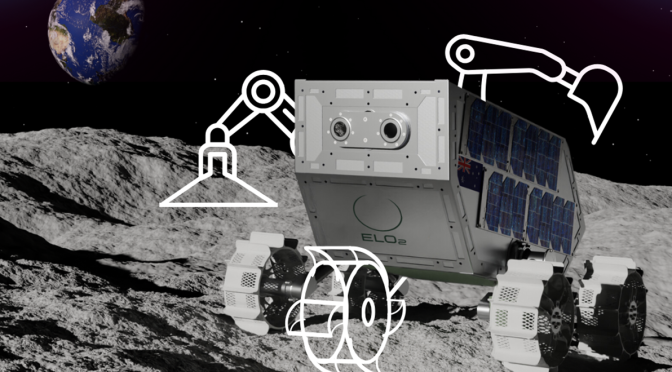
The Australian Space Agency, in collaboration with NASA’s Artemis program, is embarking on an ambitious journey to design Australia’s first lunar rover. The ELO2 Big Dipper Lunar Regolith Acquisition Challenge is an open invitation for innovators and enthusiasts to be a part of this groundbreaking mission.

Hosted by Freelancer.com, the challenge revolves around the design of a Regolith Sample Acquisition Device, a crucial component of the lunar rover. This device will be responsible for collecting lunar soil samples (regolith) and transporting them to an In-situ Resource Utilisation (ISRU) facility managed by NASA. The overarching goal is to extract oxygen from the lunar regolith, paving the way for sustained human presence and exploration on the Moon and beyond.

“Our mission is to foster new horizons in the Australian space sector, focusing on the collaboration and projects that will help Australia build expertise and supply chains for critical technologies,” said Joseph Kenrick, Program Manager at Lunar Outpost Oceania and Technical Lead for ELO2.

“We will build on experience and lessons learned from the development of Lunar Outpost’s Lunar Voyage 1 and Lunar Voyage 2 MAPP rovers. By actively contributing to NASA’s Artemis program, we are leading the way for a technology-led innovation funding model with government, industry and research partners to sustain growth in the Australian space industry.”

More in-depth details surrounding the challenge, including guidelines, timelines, prize allocations, and the criteria for concept proposals can be accessed here: https://www.freelancer.com/contest/2323850

Challenge Information

Imagine a lunar rover perched upon the Moon’s surface, tasked with the objective of gathering and transporting lunar regolith to be used to extract oxygen. This mission will help pave the way for sustained human presence and exploration on the Moon and beyond.

In this Phase 1 challenge, the objective is to design a Regolith Sample Acquisition Device that can be attached to an Australian designed rover for the collection of lunar soil (regolith) and deposit at an In-situ Resource Utilisation (ISRU) facility run by NASA. Phase 2 will provide the opportunity to integrate what is learnt from feedback and testing of Phase 1 winning designs into a set of design recommendations that will be useful for implementation.

Entrants don’t have to be an engineer or space expert to participate in this challenge, or even need to have experience with CAD design. All it takes is an idea, and a commitment to communicate it. ELO2 and Freelancer.com will provide resources to help get entrants started on a simple CAD program so that they can share their ideas via this platform.

Prizes

Up to 10 designs will be chosen as winning submissions in this phase, to share in a prize pool of AU$15,000 during the first phase. Winners of Phase 2 will share in a prize pool of $3,000.

Beyond monetary rewards, winners will have the opportunity to engage with experts, have their designs showcased online and tested by groups throughout Australia.

Challenge Rules

The challenge is open to Australian Residents/Citizens or a team with at least one Australian Resident as a contributing member. All submissions must originate from Australia or have been substantially transformed in Australia. Submissions must be made in English, and communication related to the challenge will be conducted in English.

For more information about the challenge, head to Freelancer.

UNSW Sunswift Racing claims Bridgestone World Solar Challenge victory after wind drama in Outback

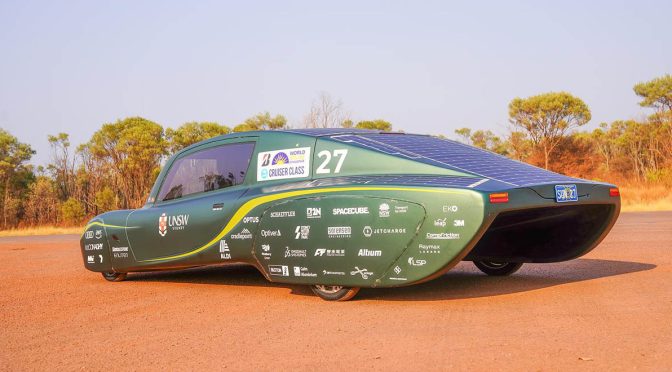
Image from Sunswift Racing

UNSW Sydney’s student-built Sunswift 7 solar-powered car has been declared the winner of the Bridgestone World Solar Challenge (Cruiser Class) after strong winds wiped out the entire race.

The Sunswift car was dominantly leading the points classification on day four of the 3600km race from Darwin to Adelaide last week, before weather conditions threw the competition into disarray.

Competitors in the Cruiser Class were required to arrive at Coober Pedy from Alice Springs (a distance of around 650km) before 5pm – but they were all severely hampered by the wind.

The conditions put such a toll on all the car’s batteries that none of the five entrants still racing at that point were able to complete the stage in the allotted time, and they were all subsequently ruled out of the rest of the Challenge.

Race organisers subsequently announced that the final results would be based on the standings from the previous checkpoint at Tennant Creek, where Sunswift was well ahead of its rivals in first place.

In the Cruiser Class event, positions are based not purely on which car drives the fastest, but instead on a points system which takes into consideration the energy usage of the car, the number of people inside the car and also therefore its ‘practicality’, as well as the time taken to complete each stage.

Sunswift was significantly ahead on points throughout the race until the unfortunate conclusion due to carrying three passengers plus its driver, as well as being ahead of the other Cruiser cars on the road in each completed stage.

Despite that, the team still had to wait until a final scrutineering session on Saturday when a panel of judges gave an additional score to each car based on criteria such as design innovation, environmental impact, ease of access and egress, occupant space and comfort, ease of operation (driving and charging), versatility, and style and desirability.

Sunswift received high marks from the judges and the team were officially announced as Cruiser Class champions at an awards event in Adelaide on Sunday evening.

Following all calculations, Sunswift finished top of the rankings to claim the trophy, ahead of the University of Minnesota in second place, with Team Solaride from Estonia taking third.

It is the first time an Australian car has won the Cruiser Class category in the World Solar Challenge since it was first introduced back in 2015.

Sunswift 7 already holds a Guinness World Record after completing 1,000km on a single charge in under 12 hours in December 2022.

Sunswift Racing team principal, Professor of Practice Richard Hopkins, said: “I could not be more proud of this team for what they have achieved.

“The work the students have done is simply amazing and I can only say positive things because they have been so focused and committed and professional.

“This is called a Challenge for a reason – and it is obviously not an easy race. When you are competing against the best in the world you have to go right to the edge of what is possible. And when you are at the very margins then something uncontrollable like the wind can play a big part.

“But overall what we achieved is a massive success. We were the fastest car in the pre-race time-trial, we were ahead on the road, we were ahead on points and we travelled further than any other team.”

Bridgestone World Solar Challenge race director Chris Selwood AM acknowledged the difficult conditions all the teams faced on the stage into Coober Pedy.

“The teams in this event are testing cutting edge technology, often not in market and driving beyond the range of current electric vehicles,” he said.

“To win the Cruiser Class takes a combination of strategic energy management, endurance and more than a little style. These solar electric cars, designed to bring the green to the mainstream, have never been about being first across the line.”

Sunswift 8: say hi to hydrogen

With the 2023 World Solar Challenge now complete, the team of student engineers that makes up the UNSW Sunswift project will now focus on developing and building a brand-new car in 2024 that might not even be allowed to race in the WSC due to current regulations.

That’s because Sunswift 8 is likely to feature hydrogen fuel cells, in addition to solar panels.

Current designs indicate it will be a two-seater sports car that is capable of completing laps of Mount Panorama, where the famous Bathurst 1000 race takes place, only 20-30 seconds slower than the fastest V8 Supercars.

It also promises to be more environmentally-friendly with the chassis potentially made of hemp and flax rather than carbon fibre.

“Sunswift 8 won’t just be a hybrid, it will be a tri-brid, utilising solar, batteries and hydrogen fuel cells in combination,” Prof. Hopkins said.

“It means the car could potentially run on all three of those technologies, or just one at a time. Potentially there will be a little dial on the steering wheel to select which is being used.

“If you are just going round the corner to the shops you maybe just select solar. If the car is being used to drive to Canberra then perhaps you use battery and hydrogen. And if you are doing a lap of Bathurst then you might choose all three to give it the full beans.”

Mass coral breeding methods amidst raft of breakthroughs to protect reefs

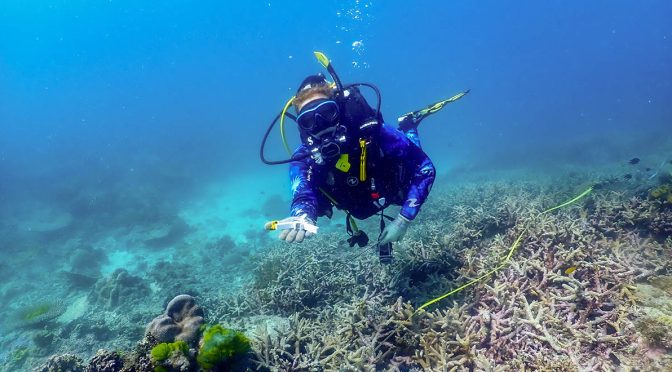
Image: Wave Energy Experiements. Credit Gemma Molinaro, AIMS

These semi-automated and robotic methods make it possible to increase the number of corals bred in aquaculture from a few thousand a year to tens of millions.

This is just one of a raft of scientific and engineering breakthroughs that have been made through the Reef Restoration and Adaptation Program (RRAP) – the world’s largest R&D program to protect an ecosystem from climate change. The program aims to provide the critical step-change needed to achieve coral reef restoration at scale and give real hope for the future of the world’s reefs.

The World Meteorological Organization confirmed July was the world’s hottest month ever recorded, with ocean temperatures reaching the highest level ever for this time of year. This has already sparked catastrophic bleaching on coral reefs in the Florida Keys and the Caribbean and scientists are warning ocean temperatures are likely to continue to rise as the impacts of climate change intensify.

To prepare for these warming ocean temperatures, we’ve been focused on developing solutions that will enable millions of heat tolerant corals to be planted on the Great Barrier Reef, and coral reefs around the world.

The breakthroughs that will help coral reefs resist, adapt to, and recover from warming ocean temperatures include:

  • Semi-automated and robotic methods to mass produce corals and year-round coral propagation methods
  • The acceleration of heat tolerance of several coral species in the lab
  • Seeding devices engineered to deliver these coral babies en masse to reefs in a way that enhances survival in their vulnerable first year
  • Cryopreserving over a trillion coral sperm which are ready to be thawed and used to re-populate damaged reefs
  • The development of new models which vastly improve our ability to predict where interventions are best deployed, and how well they will function
  • Building prototypes for fogging and cloud brightening machines that can shade corals from heat and light intensity, and could reduce the impact of heatwaves.

Great Barrier Reef Foundation Managing Director Anna Marsden said: “The recent heat records are underscoring what the science has been telling us – coral reefs are on the frontline of climate change and global emissions reduction remains the most important action we can take to secure their future.

“However, warming ocean temperatures are locked in, meaning emissions reductions alone are no longer enough to safeguard coral reefs for the next generation. We must pioneer a toolbox of solutions to help protect the reefs we have left, restore lost reefs and help corals adapt to warming ocean temperatures.”

Reef Restoration and Adaptation Program Executive Director Dr Cedric Robillot said: “The speed at which climate change impacts are unfolding on coral reefs around the world is alarming and current restoration efforts can’t keep up.

“These breakthroughs are game changing as they are designed to be applied at scales of thousands of square kilometres – completely transcending current notions of coral reef repair, which are mostly done by hand on a few square metres of reef.

“We’ve been able to achieve this by bringing together a diverse group of 350 experts including biologists, data scientists, ecologists, engineers, geographers, mathematicians and social scientists to work alongside Traditional Owners and passionate Reef community members. And it’s working – we’ve made more advances in coral reef restoration science in the past three years than we have in the past three decades.”

Reef Restoration and Adaptation Program partner quotes

The Australian Institute of Marine Science acting CEO Basil Ahyick highlighted the importance of building fundamental knowledge to develop end-to-end solutions that can be applied at scale on the Great Barrier Reef and other reef systems around the world.

“The challenge is enormous. Using our state-of-the-art National Sea Simulator facility and research vessels, we are pushing the boundaries of coral aquaculture to develop large-scale, tech-driven breeding and coral seeding techniques to help fast-track reef recovery. We are also developing ways to enhance coral heat tolerance to help safeguard Australian reefs for a warmer future.

“These innovations are supported by lasting relationships with Traditional Owners.

“If and when the time comes, decisions will be guided by information we are gaining from field studies, and ecological and decision models we are developing to determine where and when these efforts will be most effective.”

CSIRO Environment, Energy and Resources Executive Director Peter Mayfield believes it’s an important time to be a part of the Reef Restoration and Adaptation Program as it looks ahead to piloting new restoration approaches developed over the last three years.

“With our partners we have developed ways to collect coral larvae from heathy reefs and move these to reefs that need help to recover. Our environmental modelling is showing us how reef ecosystems will respond to this extra help under climate change – so we know it’s worth doing,” Dr Mayfield said.

The University of Queensland Executive Dean of the Faculty of Science Professor Melissa Brown said: “UQ is proud to be contributing to the outcomes of the RRAP program, leveraging our long-

standing commitment to combatting global reef ecosystem challenges, and the outstanding facilities at the UQ Heron Island Research Station.

“As part of RRAP, our scientists are investigating methods to stabilise damaged reef surfaces where dead or degraded corals have become loose and unconsolidated rubble, preventing or slowing reef recovery.

“Rubble stabilisation as a reef restoration technique is in its infancy, but could prove to be an invaluable tool in saving our precious Reef.”

QUT Executive Director, Industry Engagement, Dr Erin Rayment, said: “QUT is developing technologies and interventions to help prevent coral bleaching and restore the reef, in collaboration with communities and stakeholders.

“Our scientists have created a world-first way to easily count baby coral using state-of-the-art computer vision and artificial intelligence. We are developing processes to translate research into real-world actions to restore the reef,” Dr Rayment said.

“Significantly, our researchers are collaborating across QUT and with partners like AIMS to amplify the impact of our work. This is demonstrated in the recent project that developed an adhesive that sticks coral to reef rubble for reef re-seeding and stabilisation projects.”

Southern Cross University Deputy Vice Chancellor (Research and Academic Capability) Professor Mary Spongberg said: “Given the sea temperatures we have seen this year in the Northern Hemisphere, techniques such as Cloud Brightening and Fogging may prove critical to the preservation of the Great Barrier Reef, as bleaching and heat stress seem inevitable. The work our researchers have undertaken as part of the RRAP has prepared us to deal with these increasingly catastrophic climate conditions.”

James Cook University Deputy Vice Chancellor, Research, Professor Jenny Seddon said: “JCU is proud to be a partner of RRAP and has played a crucial role in the Program’s research outcomes.

“We have made breakthroughs in coral aquaculture research to boost coral larval survival and promote coral production, such as seeding new corals. JCU has also played a central role in a collaborative monitoring project, based at Moore Reef off the Cairns’ coast, with scientists working alongside Traditional Owners, tourism operators and the community to design, train local partners, and successfully implement citizen-science based monitoring of RRAP’s coral seeding field trials,” Professor Seddon said.

The Reef Restoration and Adaptation Program is funded by the partnership between the Australian Government’s Reef Trust and the Great Barrier Reef Foundation, partners include the Australian Institute of Marine Science, CSIRO, the Great Barrier Reef Foundation, The University of Queensland, Queensland University of Technology, Southern Cross University and James Cook University.

Scientists from UNSW Sydney reveal biases in the field of coral reef research

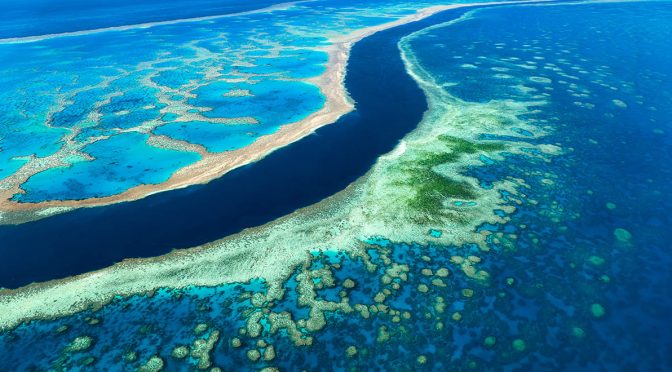
Image: Shutterstock

Coral reefs support approximately 25 per cent of marine species, and are essential to coastal economies, such as the fishing and tourism industries, to name a few. But coral reefs worldwide are at risk due to climate change and are on the brink of collapse. 

The global decline of coral reefs has encouraged extensive research. Now, scientists from UNSW Sydney have assessed the current landscape of coral health research to reveal biases in the field.  

The team discovered that most papers on coral reef research are published from within the US and Australia, while researchers from countries with large coral reefs, such as The Maldives and Papua New Guinea, are underrepresented. As these reefs are also on the brink of collapse, the UNSW research team emphasises the importance of local experts to be included. 

They also identified key topic areas that are underrepresented within the existing literature, including coral bioerosion and the microbiome, both of which are important to paint a more complete picture of the state of our reefs.  

The team hope the findings published today in the Journal of Ecological Solutions and Evidence will help inform marine ecologists on the understudied areas of coral research, increase funding in underrepresented countries and raise public trust in science.  

“The idea behind this research was to take stock of what information we have, like a bird’s eye view of the research,” says Samantha Burke, a PhD candidate and lead author on the study from the UNSW School of Biological, Earth & Environmental Sciences (BEES).  

“We wanted to provide clear data on the topic areas that we’ve looked at, as well as the areas that require further research, and also to provide some ideas and evidence-backed directions for where we can improve coral health research as a whole.”

Taking a holistic view of the research 

For the study, the team synthesised 335 literature papers on coral health and documented a number of key characteristics, such as details of the authors – including affiliated country – the key themes explored in the papers, the methods used in each publication and the research integrity of the study. They also used systematic maps to report the state of knowledge within the field, identifying research gaps, most studied themes, and timelines of when topics gained popularity.  

“By weaving together these different techniques, we can get a more holistic view of what’s missing, and perhaps some explanations as to why there are certain biases within the field,” says Ms Burke.  

The final part of the methodology is a critical appraisal using a set of predetermined criteria for transparency and rigour within research. For example, whether these studies openly share the data and type of analysis they used.  

“I think it’s important for people to be held accountable,” says Ms Burke. “We want to push this research area into a better place, not just within the field itself, but also in terms of public trust in science as a whole.” 

Highlighting biases in the field 

Key study topics identified were climate change and coral resilience, at 50 per cent and 42 per cent, respectively. Bioerosion of corals – the removal of coral material by other living reef organisms – was the least studied.  

“Through this analysis, we have revealed key gaps in coral health topics for further review, particularly when considering conservation policy,” says Ms Burke. “Bio-erosion and the coral microbiome – the bacteria that lives in its tissues – are not fully understood yet. These two facets, particularly the coral microbiome, could drastically change our understanding of how coral health is affected by climate change and human activities.”  

While their analysis found that the authors of these papers are highly interconnected, they discovered that authors from countries such as Maldives and Papua New Guinea, are not as represented within the literature as they should be for the amount of coral reefs within those ocean territories.  

This bias, referred to as academic colonialism, omits the knowledge base of the researchers who live and breathe the threats to and benefits of these major coral reef systems. The team warn that this could leave certain threats unaddressed and certain reefs unprotected from the stressors that lead to reef decline. 

“So, for example, as we had seen that most of the researchers are coming from America, it might explain why we have so much research on coral bleaching, because there have been lots of coral bleaching events that have been well documented in the Caribbean and Hawaii, compared to events that are happening in other coral reefs, for example, disease outbreaks in the Coral Sea, right off the coast of Indonesia.” 

Additionally, using citation information and alternative metrics of impact, the data also provide a sense of the reach of the research within and outside of academia, for example, whether work has been used in policymaking or conservation practices. 

The team found that over 80 per cent of papers stated that the review’s primary purpose was to inform coral conservation. However, data the team collected from a citation repository also revealed that the reviews were only cited in policy 0.565 times, on average.  

“We were surprised to find that very little of the research was actually reaching outside of academia. Incorporating research in policy could be improved through greater research accessibility and continuing to gather public interest in coral reefs.” 

Increasing public trust in science 

The researchers hope that in being transparent about the current research landscape, they can encourage higher standards of research integrity. “Identifying areas where we can make science more accessible to the public is definitely going to improve how we can engage with our intended audiences as researchers.” 

By highlighting countries with large coral reef ecosystems, such as The Maldives and Indonesia, which are underrepresented in the literature, Ms Burke hopes that these biases can be addressed with changes in funding.  

“These local researchers provide a wealth of knowledge and are intimately familiar with the community’s relationship with coral reefs. When we include these researchers in studies of coral health, we tap into a great source of information and encourage a passion for coral reef conservation in the public.” 

Importantly, the methods used in the study are very reproducible, systematic processes that scientists in other areas of research can use to conduct similar assessments in their field of interest.  

“These methods are relatively new to ecology, and especially new in terms of marine ecology,” says Ms Burke. “So, seeing these techniques get picked up in other topics could provide a better picture of what’s going on in our reefs and what’s going on in our oceans.”

Ultimately, the team hope that this research will push coral health research in a new direction – one that produces research of higher quality, collaboration, and efficiency. 

“As coral reefs decline, we should also aim to rebuild public trust in research and strengthen the evidence base for the imperative conservation of our reefs.”

Deep freezing native plants at risk of extinction

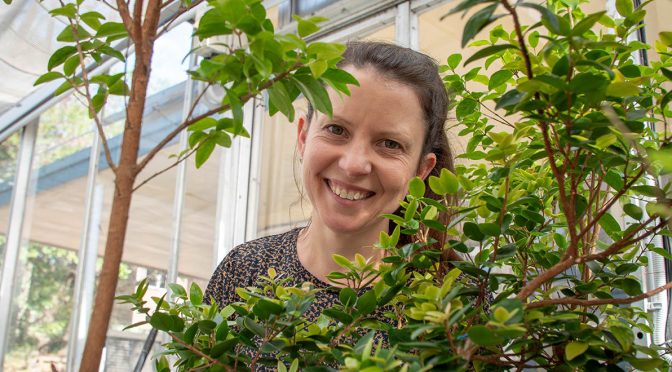
Image: Dr Alice Hayward in the greenhouse with a gossia plant. Credit: Megan Pope, UQ

A process similar to that used to store human embryos is being used by scientists at The University of Queensland to save native Australian plants under threat from the invasive fungus, myrtle rust.

Teams from UQ’s Queensland Alliance for Agriculture and Food Innovation and Botanic Gardens of Sydney are cryogenically preserving tissue from some of the most impacted plants of the Myrtaceae family, including native guava and rainforest shrubs and trees.

Dr Alice Hayward said the spread of myrtle rust has placed hundreds of Myrtaceae species under pressure, with some now at risk of extinction.

“Myrtle rust affects the ability of the worst impacted species to reproduce and some of these species are no longer producing seed in the wild,” Dr Hayward said.

“On top of this, seeds from affected rainforest species often cannot be stored in a seed bank as they don’t survive the standard drying or freezing processes.

“To prevent them from being wiped out by the fungus, we are hoping to bring those species into the lab and place them into a frozen but living state using a process called cryopreservation.

“This enables them to be safely secured while other researchers work out how to deal with myrtle rust in the environment.

“To do this we take a tiny shoot, treat it with special protectants and plunge it into liquid nitrogen where it can be stored indefinitely,” Dr Hayward said.

“We can then revive that shoot tip and use tissue culture to multiply it and produce plants that could be put back into the wild.

“We are trying to preserve those species that we know are at most risk of extinction in the immediate future, to capture that biodiversity before it’s too late.”

The process is not simple.

UQ’s Dr Chris O’Brien used the technique to create a cryopreservation protocol for avocado.

“To develop a cryopreservation protocol for each species you must optimise every step of the process to ensure the survival of the shoot tip, which is a lot of work,” Dr O’Brien said.

“That includes a tissue culture system that delivers nutrients and the correct requirements for the plant to survive, as well as how best to treat the tissue to dehydrate it before it can be stored in liquid nitrogen.”

Despite the complexity, Dr Hayward said the conservation work was something she was passionate about.

“For each plant species we need a different tissue culture formulation, as even within a species, different individuals can sometimes require different treatments,” Dr Hayward said.

“We’ll be working with a team from Botanic Gardens of Sydney based at the Australian PlantBank at the Australian Botanic Garden Mount Annan to develop protocols for six species.

“Once the protocols are developed, the species will be safely stored in PlantBank’s cryopreservation tank.

“We are doing something important that can contribute to protecting the unique Australian biodiversity and environment that we call home.”

The UQ team is part of a collaborative Australian Research Council project team, led by Professor Ricardo Mancera at Curtin University in Western Australia.

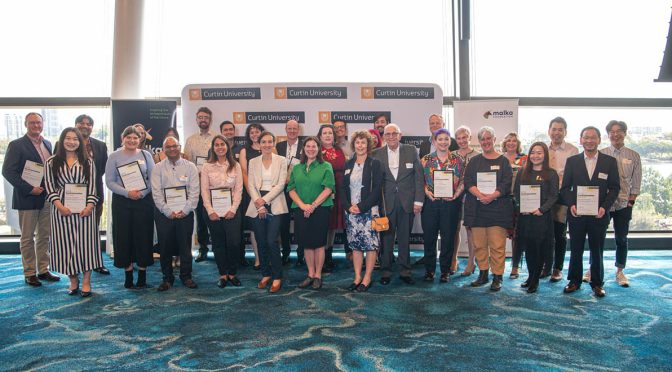
Green hydrogen project takes Curtinnovation Awards’ biggest prize

The water electrolysis method developed by Curtin University Professor Zongping Shao and PhD candidate Ms Jiayi Tang works on unpurified water sources, including seawater. Their approach uses an alternative catalyst that costs just one tenth of existing methods and could produce green hydrogen at 60 per cent of the current cost.

Curtin Deputy Vice-Chancellor Research, Professor Melinda Fitzgerald congratulated the new generation of innovators.

“This year’s field of finalists was incredibly impressive, and I want to congratulate all of them for their outstanding work in trying to solve some of the world’s most difficult challenges,” Professor Fitzgerald said.

“As the global call for decarbonisation intensifies, it’s especially pleasing to see this year’s Griffith Hack Winner go to a project that is focussed on solving the energy needs of the future.

“I look forward to following Professor Shao and Ms Tang, along with all the Curtinnovation teams as they continue their journeys towards commercialisation of their fantastic innovations.”

The green hydrogen project was one of 10 bold new products and services named winners at the Curtinnovation Awards 2023 event, including a deployable sensor system capable of flying under the radar to track aircraft and satellites, a theory based chatbot designed to support mental health in young people, an AI-driven model to predict the quality of a pineapple that doesn’t damage the fruit, and a leading national education platform that is improving access to school content.

The annual Curtinnovation Awards recognise Curtin’s commitment to transforming exceptional research into new products and services that benefit the community, with leading research acknowledged across Curtin’s Faculties of Science and Engineering, Health Sciences, Business and Law and Humanities. Prizes are also awarded for the top submissions from a Curtin Entrepreneurs program graduate, the Learning and Teaching department, International or Student team, and the Trailblazer prize for the submission that can benefit the critical minerals and resources industry. 

The winners from the 2023 Curtinnovation Awards include:

  • Griffith Hack Overall Winner – Green Hydrogen: an electrolyser to produce green hydrogen from untreated water

The two existing methods for extracting hydrogen from water have their limitations: one process requires ultrapure water and an expensive catalyst, the other requires significantly higher energy inputs for the same level of hydrogen production. Curtin researchers have created a new water electrolysis method that employs unpurified water sources, including sea water. Their approach uses an alternative catalyst that costs just one tenth of existing methods, calculated to offer up to a 38% cost saving in hydrogen production. This exciting development could be a cost effective, plentiful source of hydrogen that contributes to the achievement of global zero carbon goals. 

Team: Professor Zongping Shao and Ms Jiayi Tang

Video: Watch the team video here.

  • Business & Law Award –Curtin ANI Research: An automated self-service market research solution​ for SMES

ANI Research is a self-serve, market research platform that helps businesses understand their customers’ needs, identify new opportunities, test new products and make data-driven decisions. The fully automated platform draws from a bank of proven questions to create a customised survey with associated analysis and data presentation templates. Data is collected via shareable survey links or consumer panel services, and the statistically validated analytics are applied to the results. Rather than only providing data to the business, the automated analysis and interpretation assists in creating true insight.  Disrupting the domain of full-service market research agencies, ANI Research’s affordable subscription model makes rigorous market research accessible to even the most modestly funded organisations and start-ups and empowers and educates clients to make informed data-driven decisions. 

Team: Professor Billy Sung, Dr Sean Lee. 

Video: Watch the team video here.

  • Curtin Entrepreneurs Award- Tempo: A two-sided marketplace for health providers and health professionals

Tempo is a new web app designed to help address Australia’s growing healthcare needs. The innovative two-sided platform helps healthcare providers find available, qualified practitioners to fill shifts quickly in a variety of healthcare settings, while allowing freelance healthcare professionals the chance to nominate their availability, and to negotiate their pay rate for each shift they accept. Previously, agencies have acted as the hub between professionals and providers, but the Tempo app now gives all parties greater flexibility. The web app offers self-employed healthcare professionals more control over their work-life balance, helping avoid burnout, while healthcare providers who have previously relied on a time-consuming booking process, now have instant access to a pool of practitioners with just one post.  

Team: Ms Nicola Cuthbert

Video: Watch the team video here.

  • Health Sciences Award- MYLO: A novel mental health chatbot

Manage Your Life Online, or MYLO, is an AI web-based chatbot that generates specific questions for individual users, prompting users to ask questions they may not have thought to ask themselves. The app is designed to emulate ‘Method of Levels’ therapy, which encourages users to listen to themselves. It also uses elements of Perceptual Control Theory, prompting users to find ways to change their perception of challenges they face to better manage their life and emotions. Users are able to rate the helpfulness of each question, informing and improving future questioning. The Curtin MYLO project team has forged strong ties around the globe with mental health service providers, commercial entities and development partners interested in researching, funding and distributing MYLO. In the future, the team anticipate translations of the app to other languages and platforms to support a wider international audience.   

Team: Professor Warren Mansell, Ms Aimee-Rose Wrightson-Hester, Professor Melanie Johnston-Hollitt, Mr Joel Dunstan, Mx Georgia Anderson

Video: Watch the team video here.

  • Humanities Award- Marri Gum Dye: a natural dye extract from the Western Australian Marri gum

With the global textile industry seeking out sustainable alternatives to toxic synthetic dyes, this offers a new, energy-efficient method to produce a natural dye from the iconic Western Australian marri tree. Marri gum contains up to 70% soluble and insoluble tannins, giving it the potential to become an effective natural dye, but up until now, the insoluble elements, which cause colour inconsistences, have proven difficult to remove. The discovery is an efficient way to separate the soluble and insoluble fractions of the gum in cold water to create a water-soluble extract that produces yellow-brown colours on cloth, or with the addition of a food-grade reducing agent, pink to pinkish-red hues.   The next step is a collaboration with Aboriginal artists participating in the Noongar Arts Program who are exploring natural, locally made dyes for the creation of their work. The team envisages a commercialisation model led by Noongar businesses for harvesting and producing the dye, with the support of state and federal government initiatives. 

Team: Ms Helen Coleman 

Video: Watch the team video here.

  • International Award- Pine-sense: A new AI-driven model to predict pineapple quality based on skin colours

The humble pineapple fruit is popular worldwide, with the global pineapple market forecast to reach US$23.1 billion by 2026. However, current methods to test the flavour profile and quality of a pineapple prior to sale are time consuming and invasive, destroying the fruit in the process. Researchers at Curtin Malaysia have developed Pine Sense, a non-destructive AI method that identifies a correlation between the colour of the fruit’s shell and its sweetness or acidity.  An image of each pineapple is separated from its background, and its colour data is assessed through quality prediction modelling. Pine Sense’s ability to quickly and accurately assess pineapples, without destroying the fruit, makes it possible to grade individual fruit for different sectors of the market during processing. With Malaysia producing on average 400,000 to 600,000 tons of pineapples yearly, this new innovation aims to benefit the local and wider pineapple market by helping producers identify higher quality varieties, while reducing product waste. 

Team:  Dr Christine Yeo Wan Sieng, Mr Eric Chua Yong Hong (Curtin Malaysia)

Video: Watch the team video here.

  • Learning & Teaching Award- Elucidate Education: a not-for-profit education platform

Elucidate Education is Australia’s largest not-for-profit education platform, making upper secondary school learning resources accessible to all students, regardless of their circumstances.  Curtin students have joined forces with a large team of university volunteers to create curriculum-based textbooks, online content and videos that are already proving to be effective. To date, 82,000 students globally have accessed the material, with many expressing a preference for these learning resources.  While the textbooks are available for purchase by all students and high schools, Elucidate Education also uses a two-for-one donation model aimed at supplying every third textbook for free to students who are financially disadvantaged, or who are under-resourced due to regional isolation. Following its initial roll-out in Western Australia and Victoria, Elucidate Education has an Australia-wide expansion plan to increase the number of volunteers writing textbooks for middle and upper school learning. The team is also developing a production studio for the creation of educational content.  

Team: Mr Christian Bien, Mr Jack Anderson, Mr Patrick Catambay, Ms Hannah Knight, Mr Ben Whitten 

Video: Watch the team video here.

  • Science & Engineering Award- Space Domain Awareness: a deployable sensor system

Curtin researchers have harnessed their expertise in imaging distant galaxies to create a highly portable and ‘invisible’ radar system, with exciting potential applications for the defence and aerospace industries. The Space Domain Awareness (or SDA) system was designed in-house and looks for reflections of FM radio and TV station signals that have bounced off objects in the sky.  Using this method, the SDA system does not broadcast its position, unlike conventional radar systems, which transmit a dedicated signal and look for its reflections. By employing techniques from radio astronomy applications, such as low noise amplification of weak signals, the SDA system has the capability to track aircraft or even objects in orbit thousands of kilometres away. The highly portable system was manufactured in Western Australia and can be deployed by a small team in under two hours. 

Team: Associate Professor Randall Wayth, Ms Emmaline Yearsley, Mr Jake Jones, Ms Aoife Stapleton, Ms Mia Walker, Mr Luke Verduyn

Video: Watch the team video here.

  • Student Award- MacroMop: Enhanced immune cells to remove diseased tissue

A special type of immune cell could offer an alternative treatment pathway for patients with infections that have become immune to antibiotics, or patients with cancers that are not responding to chemotherapy. The cells, known as macrophages and microglia, consume and remove infected and damaged tissue in a process known as phagocytosis. A team of Curtin researchers have identified a novel protein, present in the macrophage cell, that when increased, dials up the rate and capacity of phagocytosis. These ‘super active’ macrophages could potentially be applied or injected into specific infection sites or tumours to ‘consume’ the diseased tissue more quickly. While macrophage therapy is currently being explored, the use of this protein is new and presents a novel way to increase the utility of macrophage therapy. The next phase of research will look into the potential of other further therapeutic uses, such as improving the skin condition of burns patients, enhancing pathogen recognition by macrophages in infections, and modifying the environment of solid tumours. 

Team: Ms Melissa Eccles, Dr Benjamin Dwyer, Associate Professor Giuseppe Verdile

Video: Watch the team video here

  • Trailblazer Award- Hydrobe®: a scalable carbon capture process

Finding ways to capture and recycle carbon discharged by heavy industries is critical to achieving net zero emissions targets. Western Australian company Hydrobe has developed a new, sustainable approach to decarbonisation that uses a biological process to convert carbon into algal biomass, without generating new carbon. Hydrobe is using Curtin research to quantify and improve the effectiveness of recycling carbon into organic carbon while co-producing hydrogen. As Hydrobe’s core technology doesn’t require high heat or pressure, the cost, size and energy footprint of large-scale photosynthetic reactor systems are reduced. A recent independent study has confirmed the viability of Hydrobe’s process at scale, and an ability to produce hydrogen for less than USD$2 per kilogram. 

Team: Mr Brent Bonadeo (Co-Founder and Executive Director, Hydrobe), Mr Duncan Anderson (Chair, Hydrobe), Mr Jaco Zandberg (Head of Research & Development, Hydrobe), Dr Nadia LeineckerDr Milinkumar Shah, DrSufia Hena, Associate Professor Tejas Bhatelia. 

Video: Watch the team video here.

Construction begins on world-first natural gas research facility

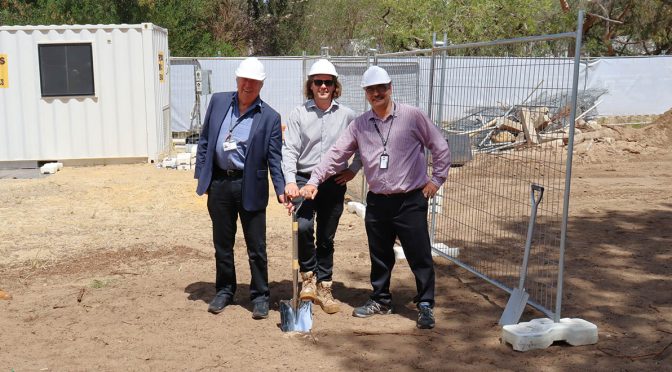
Image: Curtin Corrosion Centre Director and Emeritus Professor Brian Kinsella, Chevron Australia Gorgon FEI Team Lead Michael Krachler, and Curtin Project Lead Dr Ammar Al Helal.

Building work has begun on a landmark natural gas research facility which could significantly shape future offshore projects around the world.

Curtin University and Chevron Australia are partnering on a $4 million Extreme Service Flow Loop facility, which broke ground today at Technology Park, near the University’s Bentley campus.

Project Chief Investigator Dr Ammar Al Helal said natural gas is vital to transition to clean energy and the innovative research project aims to revolutionise how offshore facilities manage corrosion, which can be a costly and time-consuming challenge.

“The flow loop will be made from Hastelloy, a high nickel alloy able to withstand extreme corrosive conditions,” Dr Al Helal said.

“It will simulate various corrosive conditions found inside pipelines and other high-flow environments in the industry.

“This will allow operators to better measure and predict the effects of corrosion on a given project, which will not only reduce costs but also reduce the risk of damage to infrastructure and the environment.”

The Curtin and Chevron project will not only offer an Australian-based alternative to overseas testing but will also be the only flow loop in the world capable of mimicking corrosive conditions in the presence of mercury vapour, which in other facilities can result in escalated costs, lengthy time delays and limited control over testing.

Curtin Corrosion Centre Director and Emeritus Professor Brian Kinsella said the flow loop would also be an invaluable training opportunity, with several PhD research programs using it to obtain data for controlling corrosion.

“The projects will train students in the use of pressure vessels and flow equipment important for work in the petroleum industry,” Professor Kinsella said.

“The flow loop will be available to other companies for research and development purposes after the completion of the Chevron research program.

“This partnership is an excellent example of academia and industry working together for the mutual benefit of all.”

Phase one of the project is the construction of a building with special facilities which will house the flow loop, which will be installed once the building is completed.

“Today, we are witnessing the successful outcomes of the diligent efforts of the internal corrosion team, brilliantly led initially by the late Dr Ahmed Barifcani and supported by team members Dr Al Helal and Darwin Hartono,” Professor Kinsella said.

Refraction Media celebrates 10 years of busting STEM stereotypes

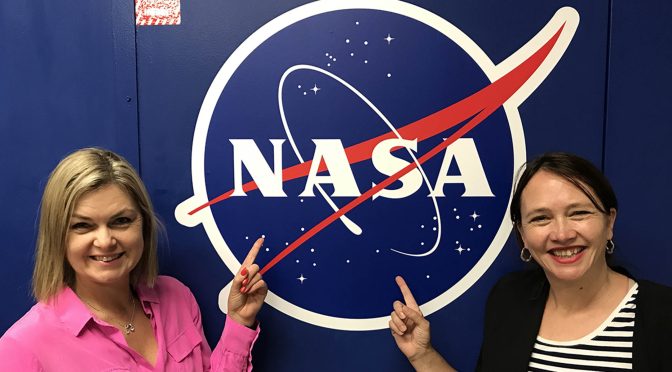
Refraction Media co-founders Karen Taylor-Brown and Heather Catchpole location at NASA’s Ames Research Center in California’s Silicon Valley, producing the US edition of Careers with Code. Image: Supplied.

In 2014, Meghan Trainor was singing ‘All About That Bass’, everything was ‘basic’ and ‘software developer’ was the number one job. Most young people had stereotyped ideas about the hoodie-wearing tech guy, and less than 2% of students were graduating computer science. It was also the year the very first edition of Careers with Code magazine was released, with Google as a founding sponsor. 

We headed to Google in Sydney, photographed people on scooters and in plant-filled offices, and packed the magazine with stories of how people really worked in tech – like product manager Ganesh Shankar, who worked with doctors to help safely share patient data outside of isolated environments during the largest Ebola outbreak in history in March 2014. 

In that first issue, we created the concept of STEM + X (where ‘X’ stands for your passion or goal), and focused on busting stereotypes about people working in tech. We featured the Aussie founders of Atlassian, software engineers behind the tech for ‘design-your-own’ shoe fashion, and programmers working on marine sonar technology.

In 2015, Careers with Code went global to the United States and New Zealand, and in 2016 the mag was promoted by then US President Barack Obama.

In 10 years, we’ve distributed 2 million free magazines to high schools across the globe, expanding to a different area of STEM for each school term, and creating special issues on everything from quantum technologies to space, defence, and even digital retail.

We’ve made 26 Job Kits that deep dive into special areas like metaverse engineer, machine learning engineer, game designer, and software developer (we still need them!).

Through events, free mags, websites and newsletters, we’ve reached well over 4 million people.

Today, Australia has a goal to hire 1.2 million new workers in tech by 2030, while New Zealand’s digital tech sector is growing at 10.4% per year. And with mega advances in AI and data, we need to ensure equitable development of technology, with more women, people of colour, people with disabilities and First Nations people working in technology.

Enrolment rates for women in IT degrees have increased from 13% to 18% in the five years from 2015 to 2020. There’s still a long way to go, and so much inspiration that you’ll find in this 10th issue.

Make sure you also check out this website to find your ‘X’, plus quizzes and videos to help you find a career in tech, whatever your interests are.

Electronic sensor the size of a single molecule a potential game-changer

Piezoresistors are commonly used to detect vibrations in electronics such as smart phones for counting steps. Image: Shutterstock

Australian researchers have developed a molecular-sized, more efficient version of a widely used
electronic sensor, in a breakthrough that could bring widespread benefits.

Piezoresistors are commonly used to detect vibrations in electronics and automobiles, such as in smart
phones for counting steps, and for airbag deployment in cars. They are also used in medical devices
such as implantable pressure sensors, as well as in aviation and space travel.

In a nationwide initiative, researchers led by Dr Nadim Darwish from Curtin University, Professor Jeffrey
Reimers from the University of Technology Sydney, Associate Professor Daniel Kosov from James Cook
University
, and Dr Thomas Fallon from the University of Newcastle, have developed a piezoresistor that
is about 500,000 times smaller than the width of a human hair.

Dr Darwish said they had developed a more sensitive, miniaturised type of this key electronic component, which transforms force or pressure to an electrical signal and is used in many everyday applications.

“Because of its size and chemical nature, this new type of piezoresistor will open up a whole new realm
of opportunities for chemical and biosensors, human-machine interfaces, and health monitoring devices,” Dr Darwish said.

“As they are molecular-based, our new sensors can be used to detect other chemicals or biomolecules
like proteins and enzymes, which could be game-changing for detecting diseases.”

Dr Fallon said the new piezoresistor was made from a single bullvalene molecule that when mechanically
strained reacts to form a new molecule of different shape, altering electricity flow by changing resistance.

“The different chemical forms are known as isomers, and this is the first time that reactions between them have been used to develop piezoresistors,” Dr Fallon said.

“We have been able to model the complex series of reactions that take place, understanding how single
molecules can react and transform in real time.”

Professor Reimers said the significance of this was the ability to electrically detect the change in the
shape of a reacting molecule, back and forth, at about once every 1 millisecond.

“Detecting molecular shapes from their electrical conductance is a whole new concept of chemical
sensing,” Professor Reimers said.

Associate Professor Kosov said understanding the relationship between molecular shape and
conductivity will allow basic properties of junctions between molecules and attached metallic conductors to be determined.

“This new capability is critical to the future development of all molecular electronics devices,” Associate
Professor Kosov said.

Opinion: We must future-proof Australia’s high-performance-computing framework

High performance computing (HPC) has been a mainstay of research institutions worldwide
for five decades, turbocharging scientific invention and innovation in numerous fields.


From groundbreaking medical research for new cancer treatments to the search for the first
stars and galaxies, HPC has consistently played an instrumental role in many home-grown
Discoveries. 

Yet, as the demand for well-supported HPC resources continues to grow, Australia’s existing
infrastructure is significantly constraining researchers. Serious issues that are impeding
progress include hardware limitations and reliability, as well as a lack of support with respect
to software development, maintenance and optimisation. 

Currently, researchers must compete for time on Australia’s national facilities: the Pawsey
Supercomputing Research Centre and the National Computational Infrastructure.

Unfortunately, requests for time far exceed the time available. Put simply, these facilities are
oversubscribed which is impeding research.

Also, the constant and rapid advance of computing technology, combined with an increasing
diversity of researcher needs, means more and more end-users either lack or cannot access
the expertise required to effectively leverage HPC. This is being compounded by the rise of
computationally hungry artificial intelligence (AI), which is increasingly becoming a standard
tool in research. Many early-career researchers, and those unfamiliar with the niche skillset
required to use HPC effectively, are disadvantaged. 

In addition, researchers often face prolonged wait times from application to allocation. This is
another impediment to the timely publication of results in a fast-paced world of research
Races. 

When researchers cannot access the HPC resources they need, the flow-on effects are
extensive, including a much longer runway for commercialisation or simply missed
opportunities for innovation. 

To address these challenges, the model which governs how HPC resources are allocated
could be refined. Providing researchers with more autonomy and flexibility to select their
HPC provider from a group that includes certified commercial facilities would ensure they get
the fit-for-purpose resources they need, when they need them. 

Globally, precedents have been set with respect to HPC funding for both national and
commercial providers. For instance, the UK Meteorological Office announced a move to the
cloud with a £1.2 billion investment to capitalise on the power of commercial HPC. 

As the proliferation of AI intensifies the demand for agile HPC solutions is more crucial than
ever. Commercial HPC providers procure hardware just in time, bypassing the limitations of
multi-year cycles. This approach ensures that researchers receive timely access to the latest
Resources.

Moreover, commercial HPC companies can prioritise tailored solutions, with HPC experts
dedicated to addressing each researcher’s distinct needs and challenges, empowering them
to focus solely on their scientific endeavours.

The Albanese Government’s agreement to all 10 recommendations of the Review of the
Australian Research Council Act 2001 is welcome. It’s also encouraging to see that Federal
Education Minister Jason Clare is likewise focussed on strengthening Australia’s research
landscape, ensuring it remains responsive to contemporary challenges.

The HPC sector is looking forward to the review and is committed to collaborating with the
Government to support scientific advancement in diverse sectors such as health, defence,
space exploration, life sciences, and environmental research.

Written by Stuart Strickland, Chief Operating Officer, DUG Technology

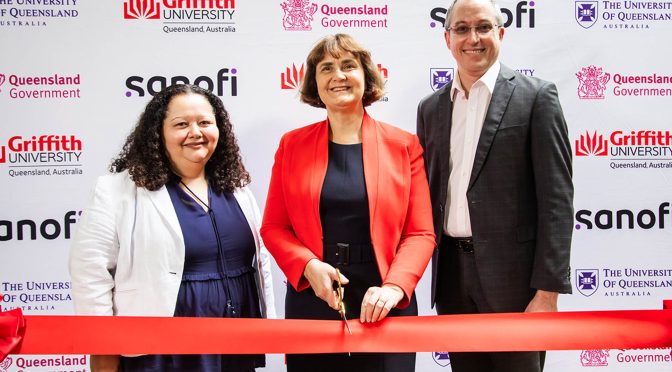
Sanofi partnership brings global research development to Gold Coast

Image: Dr Iris Depaz, Managing Director TSH & Country Medical Lead, Sanofi AuNZ, Vice Chancellor and President Professor Carolyn Evans, Griffith University, Acting Deputy Director General, Mark Tierney – Queensland State Government. Supplied.

Sanofi, one of the world’s leading healthcare companies, has  progressed its partnership with Griffith University by officially opening its latest research  site at the university’s Gold Coast campus, which will bring global biomedical research  and development (R&D) to the Coast.  

The partnership forms part of the Translational Science Hub (TSH), an exciting  collaboration that links world-class researchers in Queensland, and now the Gold Coast, with scientists at the Sanofi mRNA Centre of Excellence in France and the United States  to develop the next generation of immunisations.  

A first of its kind, TSH is a $280 million partnership between Sanofi, the Queensland  Government, Griffith University, and the University of Queensland that is putting the  Sunshine State at the forefront of mRNA vaccine development and biomedical research  in Australia. 

Operating at the cutting-edge of science, Griffith University offers state-of-the art  technology and leading experts in infectious disease, vaccine development and mRNA  technology, presenting strong foundations for successful research collaboration in  mRNA science. 

“Queensland is home to world-class research facilities and a highly-skilled workforce driving the development of new vaccines and healthcare  breakthroughs,” says Queensland Deputy Premier, Hon. Steven Miles MP.

“The fact that Sanofi, one of the world’s largest healthcare  companies, chose Queensland to reshape 21st century medicine is a strong  sign of things to come, and a significant milestone for the Gold Coast and  Griffith University.”

The Translational Science Hub will initially focus on the evaluation of a new generation  of mRNA vaccines. mRNA is expected to herald new vaccines that instruct certain cells  to produce proteins that are recognised by the immune system to mount a defence. 

“This partnership sees Griffith University as a burgeoning biotech hub on the  Gold Coast,” says Vice Chancellor and President Professor Carolyn Evans, Griffith University.

Researchers based on the Gold Coast will use Griffith University infrastructure and  technology to better understand mRNA vaccine technology, which will help to optimise  the platform to produce better vaccines and expand its use in the development of  therapies to treat a variety of diseases.  

First-of-its-kind vaccines for chlamydia, acne and even some cancers, plus improved  vaccines for influenza and RSV, will be developed on the Gold Coast and across  Queensland.  

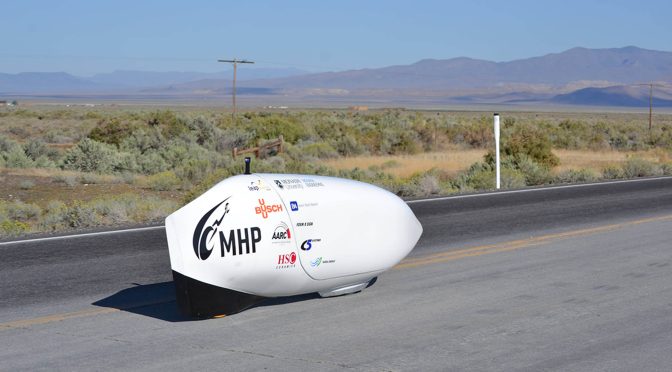
Monash team breaks record for human powered bicycle

Image: Monash Human Power’s 2023 vehicle ‘Bilby’ on location in Nevada.Supplied by Monash University

Two engineering students from Monash University have officially broken the Australian single track speed record for a human powered vehicle, achieving speeds of 116 kilometres per hour(kmh) on a flat desert track at the World Human Powered Speed Challenge held in Nevada, United States.

Monash Human Power (MHP) is a student-led engineering team from Monash University. Since 2015 they have been designing, manufacturing and racing fully enclosed human-powered vehicles (HPV) to push the limits of human speed.

HPV use reclining bicycles in an aerodynamically engineered vehicle. This engineering approach takes into account the sustainable and eco-friendly aspects of possible future travel options.

Students Kit Kirby and Alastair Haslam were two of four riders in this year’s team. They finished second and third respectively in the men’s single-track competition, behind former world professional track cycling champion François Pervis of France. The Monash team’s other two riders, Oscar Varney and Chris Hall, also achieved speeds greater than 110 kmh in runs during the week-long competition.

“Having the chance to go highway speeds under my own power creates a feeling I have been chasing since I rode at the OzHPV Speed Trials last year. The team and I have worked tirelessly to get to where we are and it has been amazing to be able to perform in an event this special with them,” Kit Kirby said.

“The test location is on State Route 305 with a speed limit of 70 mph so after the speed trials this year, powered solely by my own two legs, I had the rare thrill of being ceremoniously delivered a speeding ticket!”

“For me, the simple joy of cycling is being able to do what a car can, using nothing but my legs and my Weet-bix,” Chris Hall said.

“Everyone knows going fast is fun, and riding Bilby at 110kmh is the coolest thing I’ve ever done on a bike.”

Their 2023 bike, named Bilby, is the third they have built and features extensive modifications and improvements to the frame and drivetrain and to the aerodynamics of the external shell, which have been extensively tested in the Monash wind tunnel.

MHP Chief Operating Officer Jessica Mark said over the next year the team will be working through all the insights gathered from the World Human Powered Speed Challenge. 

“We’re designing and engineering our Version 4 bike so we move straight into analysing our results and how we can improve the next model,” Ms Mark said. 

“We’re also in the process of developing a tricycle with the aim of being able to enter more local HPV competitions and try something new as a team.”

Team CEO Sydney Buntine started out as a materials team member in 2019, and says MHP has its sights set on breaking a new world speed record.

“My involvement with MHP has been an extremely enriching and fulfilling journey, being able to work with such a talented and passionate group of students and faculty all working towards achieving excellence in engineering performance and design,” said Mr Buntine. 

“I am so proud of the whole team, but reaching speeds of 116.39 kmh is just the beginning of what we are capable of!”

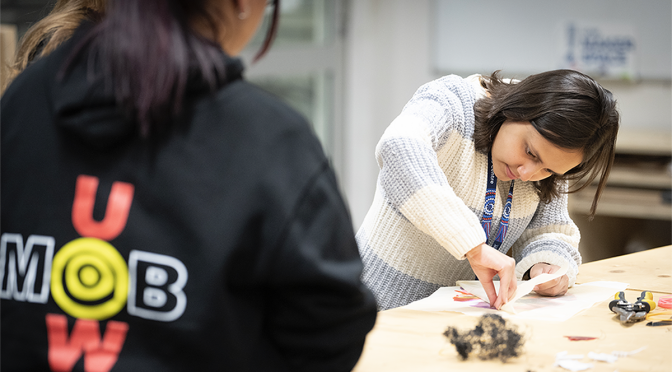
CSIRO invests $500K to help Indigenous students pursue futures in STEM

Image: The CSIRO Indigenous STEM Scholarship will provide opportunities for Indigenous students to explore careers in science, technology, engineering or mathematics. ©  Paul Jones

Australia’s national science agency, CSIRO, has bestowed more than half a million dollars to the University of Wollongong (UOW) to enable more Aboriginal and Torres Strait Islander students to pursue a future in STEM (Science, Technology, Engineering and Mathematics).  

The CSIRO Indigenous STEM Scholarship was first established in 2019 with the help of a $30,000 gift from the organisation to support two Indigenous STEM students throughout their studies.   

The scholarship will now be awarded in perpetuity following a further $500,000 gift from CSIRO.

This is part of CSIRO’s commitment in supporting the pipeline of Aboriginal and Torres Strait Islander talent which saw the agency contribute more than $5M to Indigenous STEM Scholarships this year. 

The partnership between CSIRO and UOW will provide one new scholar with $5000 each year for the duration of their degree. It is aimed at Indigenous students who are undertaking a full-time Science, Technology, Engineering or Mathematics degree.  

Zara Button, who is studying a Bachelor of Environmental Science (Honours), was the 2021 recipient of the CSIRO Indigenous STEM Scholarship and said the financial support of the scholarship has enabled her to focus on her future career and her wellbeing.

“The money from the CSIRO scholarship means I have been able to work less and spend more time doing meaningful activities that could further my career or health. It has also given me confidence in myself that my hard efforts are being recognised,” Zara said.

“I would like to thank the CSIRO for donating generous amounts of money to Indigenous STEM students like me. The money goes a long way in supporting my studies and encouraging me to keep going with it.

“It is so important to utilise Indigenous knowledge in all faculties, including in STEM, whether it be in the bushfire research I am involved with, or medicine and other areas.”

Dr Chris Bourke, a Gamillaroi man and Director of Indigenous Science and Engagement at CSIRO, said the organisation was delighted to be providing practical support to nurture the next generation of Indigenous STEM superstars.

“Growing an Indigenous STEM pipeline will enable the science and technology sector, and CSIRO in particular, to engage with Indigenous talent, embed Indigenous knowledge and expertise and to foster thriving careers in science and research for Aboriginal and Torres Strait Islander people,” Dr Bourke said. 

“These scholarships are a very practical step because we know that adequate financial support for Indigenous university students is a key factor to overcoming barriers to entry and success in higher education.” 

Professor Patricia M Davidson, UOW Vice-Chancellor and President, said the partnership between the University and the CSIRO would foster the next generation of Indigenous talent in STEM.  

“The CSIRO scholarships will enable students to explore and expand on their interests in STEM, fields that are vital to the future of our communities, our economy and our nation, without fear of financial stress,” Professor Davidson said.

“This significant investment demonstrates the true power of philanthropy, by enriching the lives of Indigenous students and setting them up for a bright and prosperous future.”

Jaymee Beveridge, Vice-President (Indigenous Strategy and Engagement) and Director of Woolyungah Indigenous Centre at UOW, said she was proud to see more financial support for Indigenous students who are interested in forging a career in the thriving industries of STEM.

“I am thrilled that these scholarships from CSIRO will enable UOW to truly support Aboriginal and Torres Strait Islander students to achieve their potential, tackle the big issues of tomorrow, and become the future leaders in the fields of STEM,” Ms Beveridge said.

“Continued partnerships and commitments through scholarships create very real opportunities. They connect students with ongoing projects and research that have a direct effect on our Country, our People and ultimately our future. This investment in our students sends a message that our knowledge and voices are essential in STEM developments.”

Learn more about the CSIRO Indigenous STEM Scholarship.

Find out more about Indigenous employment opportunities at CSIRO.

Project aims to produce cheap, highly efficient, environmentally friendly solar cells

QUT has partnered with two Australian companies working in solar research and development on the project to produce perovskite solar cells that are significantly cheaper than traditional solar cells with comparable efficiency.

The lead investigator on the team Professor Hongxia Wang from the QUT School of Chemistry and Physics and the QUT Centre for Materials Science said a consortium led by Halocell Energy, including First Graphene and QUT, was awarded a grant of $2,028,773 from the Australian government’s Cooperative Research Centres Project, or CRC-P initiative.

“QUT will deliver expertise in material development, facilities for advanced material characterisation and testing, and assistance in developing carbon inks using low-cost carbon materials and graphene in collaboration with Halocell and First Graphene for roll-to-roll production of perovskite cells and modules,” Professor Wang said.

“It’s a three-year project with a total funding size of more than $5.26 million,” Professor Wang said.

Professor Wang said the key project outcomes were likely to include replacement of high-cost precious metal-based conductor materials with cost-effective carbon-based composite materials and up-scaling the production process to allow high volume, ultra-low-cost production of the perovskite solar cells.

“This will facilitate the commercialisation of perovskite photovoltaics in Australia using all Australian raw materials, improving energy security and providing significant job opportunities as a primary and enabling technology for other small to medium-sized enterprises,” Professor Wang said.

The project is led by Halocell CEO Paul Moonie (Halocell), and the team includes Dr Minh Tam Hoang, a Postdoctoral Fellow from the QUT School of Chemistry and Physics; Dr David Pham (Chief Science Officer, Halocell), and Dr Ian Martin (R&D Manager, First Graphene).

The perovskite solar cells will be manufactured using Halocell’s roll-to-roll production process at the company’s Wagga Wagga plant, in southern New South Wales.

Solar cell efficiency is the measure of how much sunlight a solar cell can convert into electricity.
Mr Moonie said perovskites solar cells offered many advantages over traditional silicon solar cells.

Silicon cells have reached the peak of their technical innovation but perovskites solar cells have already demonstrated their efficiency of more than 26 per cent within ten years of research and development.

Mr Moonie said among the advantages of perovskite solar cells is that they could be applied on flexible substrate using low cost roll-to-roll production processes.

“And perovskite cells are quite simply better for the planet with a significantly smaller manufacturing footprint, far less energy intensive with much less toxic waste material than existing photovoltaics technology.”

Graphene is a one-atom-thick layer of carbon atoms arranged in a hexagonal lattice. It is the building block of graphite, which is used, among other things, in pencil tips.

Michael Bell, managing director and CEO of First Graphene, said previous research had found that cells made with alternative carbon-based materials outperform conventional silicon cells in low and artificial light conditions, including indoor environments in relation to generating and supplying power for niche applications.

“Validation of these graphene-based materials will help build a strong business case for full-scale commercial production of both perovskite cells and the materials needed to make them in large volumes,” Mr Bell said.

Minister opens new high-tech robotics manufacturing facility Sydney

Image: Supplied

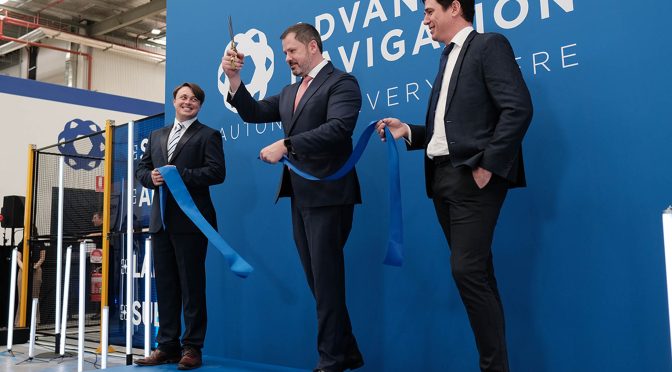
Australian AI-based robotics and navigation firm Advanced Navigation has opened a new high-tech robotics facility for autonomous systems at UTS Tech Lab in Sydney’s Botany.

The facility will allow the company to scale up the manufacturing of its digital fibre-optic gyroscope (DFOG) technology, Boreas, which can be used in applications from spacecraft to submarines where GPS is not available.

It will also be used to home research collaborations with UTS, including indoor positioning technology that helps members of the visually impaired community navigate safely inside underground train stations.

At the opening, Advanced Navigation CEO Xavier Orr described how he started Advanced Navigation with fellow University of Western Australia electronics engineering student Chris Shaw, to commercialise his university thesis on AI based inertial navigation.

The company has since gone on to raise millions in funding, including a $108 million round in November. Its tech is being used by Amazon in driverless trucks, for the Indy autonomous race car competition, and in wind turbines.

“Thanks to our continued work with universities throughout Australia this has led to the development of several world-first technologies from AI navigation systems, underwater acoustics and drone fleet platforms, to autonomous underwater robots and more recently our navigation systems set for space. 

“While Advanced Navigation has been around for just under 10 years these innovations are based on decades of research from prominent institutions and universities throughout Australia,” Shaw said.

UTS Dean of Engineering and IT Peta Wyeth said: “Like most great partnerships, our relationship with Advanced Navigation started small and is evolving into a multi-faceted interaction over time. 

“Together we are creating new ways of working, thinking and imagining future possibilities.”

Opened in 2018, the UTS Tech Lab is a multidisciplinary research facility that supports bespoke industry-led partnerships designed to drive innovation and growth in engineering and IT.

Wyeth said while the Lab had made “impressive inroads,” it had just scratched the surface. “Our vision is to be the go-to place  for industry partners to work with expert academics, a place where researchers and students can work hand in hand with industry.”

During the event the Advanced Navigation co-founder Chris Shaw thanked Lucy Turnbull for helping connect the company with UTS. The Turnbulls are investors in the company.

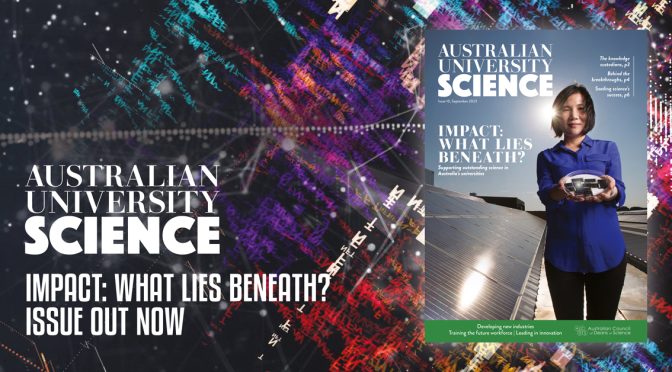
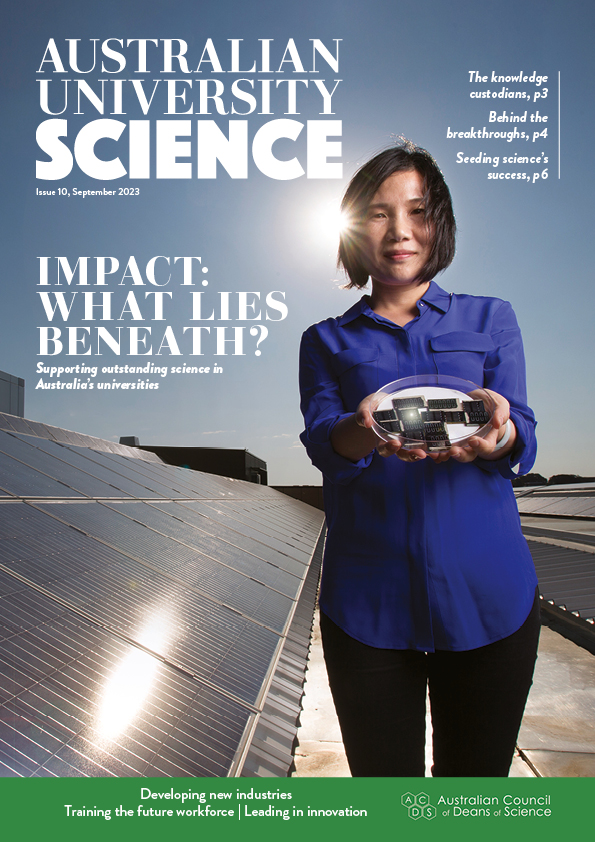
Latest issue of Australian University Science out now!

Impact: What lies beneath?

Australia’s strong science research and training is integral to driving new economies. Universities have a critical role as partners in establishing innovation and technological change in industry. 

As science delivers new insights and tools, new industries are emerging, and people with science skills will be essential to these new industries. Australian University Science magazine highlights these stories, showcasing exceptional science teams and Australian science graduates working in industry. 

This 10th issue of Australian University Science uncovers the impact of university science on the future workforce, innovation and knowledge.

About Australian University Science

Published by Refraction Media, a STEM-specialist media and communications agency, and publisher of this website, Australian University Science highlights the interplay between university research and industry. It reaches a targeted list of politicians, industry leaders and research professionals in Australia and overseas through print and digital production and the website ScienceMeetsBusiness.com.au. It is published bi-annually.

View full issue here.

Nurturing the spirit of human discovery

Image: Shutterstock

Science, at its core, is more than a collection of theories, experiments and discoveries. It’s the human spirit — a dynamic blend of knowledge, individual enquiry and human connections — that powers our understanding of the world and beyond. Nowhere is this more evident than in the labs and lecture halls of our universities.

“To me, the soul of science is about fostering curiosity and empowering communities. It’s about generating knowledge, not adhering to rigid frameworks,” says Associate Professor Parwinder Kaur, a molecular biologist at the University of Western Australia (UWA) and also the Director of DNA Zoo Australia.

Kaur’s background is a powerful illustration of how human experiences and stories form the fabric of science. Her passion for science was sparked as a child in India, when she observed how biotechnology helped her uncle fight agricultural pests and diseases. However, upon graduating from Punjab Agricultural University, she found herself at risk of being ‘boxed into’ her burgeoning specialisation and unable to follow the natural evolution of her curiosity into further research. This led Kaur to Australia’s university ecosystem, where she was able to pursue a PhD in plant pathology at UWA.

“I came here, I was nurtured, I was able to do some amazing work,” she says.

Since then, Kaur’s career journey has been testament to the impact of science that is responsive, collaborative and curiosity driven. Her PhD evolved into postdoc research in plant genetics, including co-authoring the world’s first complete genome sequence of the subterranean clover – a key annual Australian pasture legume. 

A collaboration with genomics experts at Baylor College of Medicine, in Houston, Texas, which stemmed from that study, then laid the groundwork for DNA Zoo — an ambitious global initiative to create a library of complete DNA maps for threatened plant and animal species. UWA is a leader among the over 120 collaborating partners, across nine countries, that compose the ‘zoo’. “It is one of the most collaborative consortiums I have ever had the pleasure of working with,” Kaur says.

Kaur was in Houston, at the founding lab of DNA Zoo, when the pandemic broke out, presenting another opportunity to adapt knowledge across disciplines. Researchers at DNA Zoo redirected their focus and applied their expertise to develop a DNA test for the new virus.

 “This was a new problem that we had the tools to address. We had capacity in the lab, it was just looking at the same thing from a different perspective and asking a different question,” Kaur explains. 

“Collaboration is key,” she adds. “You don’t need to know everything, just the right people, who can support you when tackling big questions.”

The power of diverse connections

Universities nurture science by creating environments conducive to natural enquiry, environments that embrace exploration and the power of learning from mistakes. 

“The great thing about universities is that you are free to explore your imagination and attack things that you find of interest,” says Professor James Whisstock, an ARC Laureate Fellow and Senior Principal Research Fellow at the National Health and Medical Research Council at Monash University’s Biomedicine Discovery Institute.

Whisstock celebrates universities as incubators of the human connections – whether serendipitous encounters or strategic partnerships — that so often spark scientific ideas and innovation. “Universities create an environment where people are thrown together, and that’s where ideas grow,” he says.

When Whisstock’s lab discovered that our immune system’s “killing machines” were closely related to bacterial toxins — a finding that bridged two distinct scientific disciplines and informed both fields — it highlighted the power of cross-disciplinary collaboration within a university environment. 

“Suddenly, there’s this wealth of information from another field that became relevant to ours,” he says. “Biology is an enormous network. The problem is, we don’t know most of the connections. When you’re able to make those connections, the multiplier effect is enormous.”

Biology isn’t the only field that benefits from the power of multidisciplinary co-operation. For instance, Professor Maria Forsyth, a renowned energy storage and corrosion science expert at Deakin University, notes the complex field of energy transition as an area where collaboration is vital. 

“We’re only going to make the transition by encouraging change in thinking and community awareness,” she says.

In one project, Forsyth brought together chemistry PhD students and law students to develop ethical and regulatory frameworks for a battery recycling program. “They were teaching law students about battery chemistry, and we were learning from the law students about the legal and social aspects,” she says.

Curiosity and collaboration

It’s clear universities are more than academic institutions; they are vibrant ecosystems that accommodate scientists who come from a range of backgrounds and are often seeking academia’s unique environment. 

“Universities provide a safe space for extraordinary people who change the world in surprising ways,” Whisstock says.

Forsyth embodies this. As a noted mentor in her field, she has supported the careers of hundreds of young scientists — many of whom have gone on to become research partners — and she was recently named a finalist for the 2023 Eureka Prize for Outstanding Mentor of Early Researchers.

Creating a culture that recognises the importance of failure and exploration on the path to progress is critical, Forsyth says. “Sometimes, what fails leads to the next innovation. It’s about building knowledge and seeing that as success.”

For instance, in her domain of energy storage science, she notes that progress isn’t always about a breakthrough. “Everyone’s waiting for the big breakthrough in battery technology, and of course we want that too, but that’s not what science is about,” she says. “Ultimately, every little piece of science that we do is building on a foundation of knowledge.”

Innovating and clearing obstacles

In the future, Kaur says, we need to acknowledge a shift from a prestige-driven model to a knowledge-driven one. “Universities should be places for following curiosity, not chasing prestige. I never signed up for a race towards H-index,” she says, referring to the popular measure of a scientist’s research output.

Forsyth echoes this sentiment, cautioning that the race for publication in ‘high-impact’ journals can dampen curiosity and innovative thinking. She also champions smaller research groups as more conducive to nurturing scientists, saying, “I would encourage both younger researchers and leaders to work closely with a small, engaged group to find excitement in their work, instead of spreading themselves too thin.”

The heart of scientific progress remains steadfast: the people. They’re the ones whose curiosity leads them down untrodden paths, the collaborators who understand that the most complex problems require diverse minds, and the risk-takers who aren’t afraid of failure because they know it often precedes groundbreaking discovery.

Despite the headwinds Kaur faced from disciplinary silos early in her career, she is living proof of the power of the individual to challenge the status quo, and she is positive about how universities can help nurture this human spirit of science.

“It has been an absolute privilege to be part of the workforce in the university sector, as you get to break new grounds towards knowledge creation and translate existing knowledge into real-world applications working with the best and brightest, while also inspiring the next generation,” she says. 

Written by: Gemma Chilton

First published in Australian University Science. Issue 10 2023

4 ways Australian university science is driving discovery

1. Universities develop the capacity of new generations to engage in it.

The next generation of graduates are the ones who will push the boundaries of science in Australia. It’s a cohort whose numbers rose to a seven-year high of 47,000 in 2021, the STEM equity monitor shows, while a report from Victoria University found the cumulative total of PhDs in Australia touched 185,000 in 2021. 

These graduates and postdocs have already made their mark on the world. Industry internships from the Australian Mathematical Sciences Institute (AMSI) allow the likes of University of Wollongong’s Carrie Wilkinson to better understand how regional properties face bushfire threats in a changing climate, as part of research done in partnership with the NSW Government. Grads like Carrie form part of the 141 ARC Discovery Early Career Research Awards for STEM projects in 2022. This culture of innovation develops by actively throwing together students with academic and industry mentors, who can provide insight into how new ideas fit into their chosen field.

2. Academics exchange ideas and support the exploration of those ideas with industry, community and one another.

Without the exploratory nature of science, whole industries wouldn’t exist. For example, electromagnetic theory led to X-rays and Albert Einstein’s description of the photoelectric effect was the basis for quantum theory — and lasers. Today, human genome mapping and molecular biology have completely changed how we understand disease and agriculture.

Academics also engage with citizen scientists on projects, such as the RMIT-UNSW urban microclimate project in 2018-19. The Threatened Species Recovery Hub, between 2014 and 2021, was a collaboration between people from the Larrakia Nation around Darwin and dozens of scientists from universities around Australia. These partnerships are the result of decades of work by universities to create open communication and networks, so scientists can share their own expertise with businesses and communities located in Australia.

3. University science has ideas and techniques accessible to those looking for solutions to problems.

Australian universities are the primordial soup where commercialised IP based on science is cultured, but they’re also the stewards of the science whose effects might not be felt — not immediately, at least. For example, university researchers have been pushing quantum science forward since the 1980s but it was only in 2017 that UNSW was able to turn some of that knowledge into Australia’s first quantum computing company, Silicon Quantum Computing. Universities support those early ideas with equipment, laboratories, telescopes, microscopes, mass spectrometers, biological containment facilities, clean rooms and funding. But these institutions also hold channels open, allowing those ideas to be used to solve problems communities face, such as in environmental science or industry.

4. Science is a custodianship of knowledge that evolves in a nonlinear fashion. 

Serendipity plays a part in scientific breakthroughs; for example, 2011 Science Minister’s Prize for Life Scientist of the Year winner Min Chen wasn’t looking for a new kind of chlorophyll when she found it. But it came after years of hard work and collaborations with others. Universities’ role as junctions where ideas are exchanged and explored, and scientists network with others nationally and internationally, creates the opportunity for seemingly serendipitous moments to happen more regularly. It is as important as providing the microscopes and labs also needed to make breakthroughs happen.

Written by: Rachel Williamson

First published in Australian University Science. Issue 10 2023

Behind the breakthroughs – the realm of quantum

An industry estimated to be worth $2.2 billion by 2030, and $6 billion by 2045. Up to 19,400 new jobs. That’s what Industry and Science Minister Ed Husic says quantum technologies offer Australia. “I can’t emphasise this enough, quantum technologies will be truly transformative,” he says. 

Australian quantum capability has been many decades in the making, with a foundation possible only through the university ecosystem. 

Professor Hans Bachor is regarded as a pioneer of quantum optics in Australia. The field barely existed when Bachor arrived at Australian National University (ANU) as a postdoctoral scientist in 1981. “With a small team of researchers, I started exploring photonics — the quantum nature of light,” he recalls. 

Improvements in the early days were incremental, and funded largely by the university. “We were basically ticking off, bit by bit, a long list of [requirements] that needed to be met before you could call a machine a quantum sensor, computer or encryptor,” he says. “Critically, the research community also built necessary fabrication facilities and clean rooms on site, and custom-made equipment was possible thanks to personal ties with colleagues in the USA and Germany.” 

Other universities were building quantum science capability in the late 1980s and early 1990s, too. At the University of Queensland, Professor Halina Rubinsztein-Dunlop built cold-atom capability, and Professor Robert Clark established research teams and infrastructure such as the National Pulsed Magnetic Laboratory at the University of New South Wales (UNSW). This capability was later absorbed into the Special Research Centre for Quantum Computer Technology, which became the ARC Centre of Excellence for Quantum Computer Technology (CQCT). 

Throughout this time, dozens of graduate students and post-doctoral researchers were being trained in the emerging avenues of research. Along with this growing expertise, new collaborations were formed, and the huge potential of the research drew further investment and exploration amongst university science. 

In 2003, Bachor was appointed founding director of the ARC Centre of Excellence for Quantum-Atom Optics (ACQAO), established to study atoms and light at the quantum level and to explore options for future quantum technologies. Partner institutions were ANU, Swinburne University of Technology and the University of Queensland. 

“That was a big step forward, as it brought together expertise across universities, provided long-term funding, and allowed us to present a united front with strong leadership,” he says. 

“It also ensured we had a continuous pipeline of the highest-ranking
university scientists working together within Australia. 

“For equipment, we received grants through the National Collaborative Research Infrastructure Strategy, and CSIRO Optics made us unique devices with non-linear crystals.”

Data’s new day

Quantum research that Bachor and colleagues undertook across multiple Australian universities led to new, highly sensitive measurement techniques and approaches for optical communication and data storage. 

Quantum technology takes advantage of the unique properties of matter and light – even down at the tiny scales of atoms, electrons and single particles.

“When you have exquisite control over light and matter, you can reveal quantum properties that can be exploited for communication, cryptography, computing and sensing in new ways,” says Sally Shrapnel, Associate Professor in physics at the University of Queensland. 

“This enables us to perform tasks that until now simply were not possible.”

Shrapnel is Deputy Director at EQUS — the ARC Centre of Excellence for Engineered Quantum Systems, which includes the University of Queensland, Australian National University, Macquarie University, the University of Sydney and the University of Western Australia. She says the ARC’s Centre of Excellence program has been a key part of bolstering Australian universities’ quantum research capabilities.

“Centres of Excellence are one of the main vehicles to enable high-quality research in Australia,” Shrapnel says.

“They’re well-funded, multi-node centres creating networks of expertise that can interface with government, industry and community.”

Bachor says in the early days the centres played an important role in giving researchers the time needed to build a successful endeavour.

 “The first generation of Centres of Excellence lasted about seven or eight years, which was long enough to get us an international reputation, to attract people, and to form collaborations with Europe and the USA. So the whole thing flourished.”

Into industry

Australia has now produced more than 2,500 PhDs in quantum technology research and development in 30 years, and several major quantum tech companies have spun out of this research. But the greatest strength to emerge is one of continuous innovation in physics. 

“The technologies are now at the stage where they’re attracting big money – but that doesn’t negate the ongoing importance of the university sector,” Shrapnel says. “The potential for quantum technologies relies on every step in the chain, so we’ve still got to keep doing quality foundational work, including ongoing investment in students studying pure maths and pure physics.”

Bachor says universities remain a critical part of maximising quantum promise.

“While money, technology and access to equipment are all important for getting the most from quantum, having access to the right people is crucial. Companies need scientists who have a PhD – the training you get at a university is the essential process.”  

And while quantum delivers on the promise of decades of exploratory research, the depth of the innovation in this area is just beginning to bear fruit. 

“Australia offers a culture of academic freedom, openness to ideas, and an amazing willingness to pursue goals that are ambitious,” says pioneering quantum researcher Professor Michelle Simmons. By developing the capacity of new generations to engage in revolutionary research like this, Australia has placed itself “several years ahead” of the US in the race to build a quantum computer.

Written by: Sarah Keenihan

First published in Australian University Science. Issue 10 2023

Australia’s leading engineers and technologists call for net zero by 2035

In a new position statement, the organisation which represents nearly 900 of Australia’s most distinguished engineers and applied scientists, recommends immediate, substantial and concerted action to rescue the dwindling window for limiting global warming to 1.5 degrees Celsius.

In the face of increasing catastrophic weather, and as the UN Climate Ambition Summit gets underway in New York, the Academy has stated that Australia and the world are at a crossroads. Scientific evidence must be heeded, and more ambitious targets are needed to drive technological innovation, catalyse regulatory change, upskill the workforce, roll out the necessary infrastructure and spur a massive boost to investment across the economy to support decarbonisation.

The Academy is calling for a national effort across all Australian sectors, governments, and industries to set an ambitious benchmark for innovation which will equip the nation to become the renewable energy superpower it aspires to be, said ATSE President Dr Katherine Woodthorpe AO FTSE.

“The science is unequivocal, the climate induced catastrophes are irrefutable. ATSE calls for leaders across every Australian sector to join us in making Australia a frontrunner amongst global peers, in setting an ambitious target of net zero greenhouse gas emissions by 2035.

“This science-based target will set a critical benchmark for Australian action, incentivising investment and giving a clear signpost to industry and governments to drive rapid deployment of existing and mature low-carbon technologies, as well as rolling out emerging technologies and exports.

“To meet this ambition, with the Federal Government in the driver’s seat, Australia should prioritise upskilling our workforce, and develop and urgently apply evidence-based solutions across all industry sectors – particularly in energy, transportation, manufacturing, construction, minerals and agriculture.

“Meeting this target will be a monumental challenge, but with immediate and large-scale action to invest in skills and infrastructure, as well as political, policy and regulatory support at all levels, it is achievable,” said Dr Woodthorpe.

The position statement also calls for a national net zero emissions policy and implementation framework that prioritises the challenge and addresses the opportunity to transform Australia’s economy; a zero-waste approach to supply chains; and reducing the impacts of human activity on biodiversity.

“We congratulate the Federal Government on the significant progress to date. However, we are making up for lost time and the pace of our low-carbon transition today, determines our tomorrow. Setting an ambitious target, based on science, which will act as a lightning rod for urgent government, industry and academic collaboration, is a no regrets step toward a net zero future.

ATSE commits to working across government and industry leadership to advise on best practice policy settings and supports urgently reducing Australia’s greenhouse gas emissions.

Project aims to produce cheap, highly efficient, environmentally friendly solar cells

Image:  Professor Hongxia Wang from the QUT School of Chemistry and Physics and the QUT Centre for Materials Science 

QUT has partnered with two Australian companies working in solar research and development on the project to produce perovskite solar cells that are significantly cheaper than traditional solar cells with comparable efficiency.

The lead investigator on the team Professor Hongxia Wang from the QUT School of Chemistry and Physics and the QUT Centre for Materials Science said a consortium led by Halocell Energy, including First Graphene and QUT, was awarded a grant of $2,028,773 from the Australian government’s Cooperative Research Centres Project, or CRC-P initiative.

“QUT will deliver expertise in material development, facilities for advanced material characterisation and testing, and assistance in developing carbon inks using low-cost carbon materials and graphene in collaboration with Halocell and First Graphene for roll-to-roll production of perovskite cells and modules,” Professor Wang said.

“It’s a three-year project with a total funding size of more than $5.26 million,” Professor Wang said.

Professor Wang said the key project outcomes were likely to include replacement of high-cost precious metal-based conductor materials with cost-effective carbon-based composite materials and up-scaling the production process to allow high volume, ultra-low-cost production of the perovskite solar cells.

“This will facilitate the commercialisation of perovskite photovoltaics in Australia using all Australian raw materials, improving energy security and providing significant job opportunities as a primary and enabling technology for other small to medium-sized enterprises,” Professor Wang said.

The project is led by Halocell CEO Paul Moonie (Halocell), and the team includes Dr Minh Tam Hoang, a Postdoctoral Fellow from the QUT School of Chemistry and Physics; Dr David Pham (Chief Science Officer, Halocell), and Dr Ian Martin (R&D Manager, First Graphene).

The perovskite solar cells will be manufactured using Halocell’s roll-to-roll production process at the company’s Wagga Wagga plant, in southern New South Wales.

Solar cell efficiency is the measure of how much sunlight a solar cell can convert into electricity.
Mr Moonie said perovskites solar cells offered many advantages over traditional silicon solar cells.

Silicon cells have reached the peak of their technical innovation but perovskites solar cells have already demonstrated their efficiency of more than 26 per cent within ten years of research and development.

Mr Moonie said among the advantages of perovskite solar cells is that they could be applied on flexible substrate using low cost roll-to-roll production processes.

“And perovskite cells are quite simply better for the planet with a significantly smaller manufacturing footprint, far less energy intensive with much less toxic waste material than existing photovoltaics technology.”

Graphene is a one-atom-thick layer of carbon atoms arranged in a hexagonal lattice. It is the building block of graphite, which is used, among other things, in pencil tips.

Image:  Professor Hongxia Wang from the QUT School of Chemistry and Physics and the QUT Centre for Materials Science 

Michael Bell, managing director and CEO of First Graphene, said previous research had found that cells made with alternative carbon-based materials outperform conventional silicon cells in low and artificial light conditions, including indoor environments in relation to generating and supplying power for niche applications.

“Validation of these graphene-based materials will help build a strong business case for full-scale commercial production of both perovskite cells and the materials needed to make them in large volumes,” Mr Bell said.

Bringing science’s workforce forward

Image: Professor Brian P. Schmidt, AC FAA FRS, Vice-Chancellor & President, The Australian National University. Supplied

Australia is home to some of the world’s best universities. The scientific research and teaching that takes place at these universities can change the world and make all of our lives better. 

It can lead to new products, jobs and industries that we couldn’t even have imagined in the early days of the research cycle. 

I know this firsthand. Work in my own area of astro-particle physics has underpinned features of our daily lives like Wi-Fi, digital cameras, GPS, the internet and even iPhone touch screens — world-changing by-products of our quest to understand the universe.

But we need to make sure our universities can continue to deliver on this promise for future generations. It’s important to think about how we fund and translate scientific research in Australia today, so that basic curiosity-driven science can continue to change the world in ways we can’t yet imagine.

We have to create an environment where there is enough stability that our brilliant young scientists can focus on their work, without being constantly stressed about career progression.

Science is constantly moving forward not because of a handful of brilliant individuals, but because we step forward together. That’s the beauty of science — people sharing ideas and discoveries so they can be built upon. 

We need to focus on how we treat young researchers, and how we bring women and a whole diverse range of people from non-traditional backgrounds into science specifically — and also into academia in general. 

I was lucky enough to be part of a Nobel Prize-winning discovery and if we want more of these at Australian institutions, we need to support our young researchers, and provide them with career structures that offer some certainty. 

I’m about to make a big change, heading back to my first love: scientific research and teaching. It will be very different to my time spent running a university. But my love for the university environment is undimmed.

I can’t wait to see what the next chapter in Australian science brings. 

Professor Brian P. Schmidt
AC FAA FRS

Vice-Chancellor & President,
The Australian National University 

First published in Australian University Science, Issue 10 2023

STEM Diversity Review recommendations welcomed by peak body

Image: Shutterstock

Science & Technology Australia, Australia’s peak body for scientists and technologists has welcomed Draft Recommendations of the Pathway to Diversity in STEM review panel as “a powerful exhortation to stay the course and double down” on proven diversity-driving initiatives with new long-term investments to forge systemic and cultural change.


Science & Technology Australia also backed draft proposals to create a Diversity in STEM Council, strengthen STEM teaching in schools and tackle job insecurity in STEM research careers.


STA backed a call for successful women and diversity in STEM initiatives to be granted “significant and
sustained funding” over longer time frames to help drive long-term systemic and cultural change.
Science & Technology Australia CEO Misha Schubert said it was crucial to build on the strong evidence-based success of initiatives that were already working powerfully to deepen diversity in STEM.


“It’s so important that we stay the course on proven changemaking programs like Superstars of STEM, which sits at the very heart of diversity in the STEM ecosystem as a central resource and talent source that powers a wide array of diversity in STEM programs and initiatives,” she said.


“If proven successes like the Superstars of STEM program had Government funding scaled up and secured for a whole decade, it would dramatically turbo-charge all of the other efforts and proposals to drive systemic and cultural change in STEM workplaces.”


The Superstars of STEM program has trained over 150 strongly diverse women and non-binary STEM talents to be high-profile expert media commentators in STEM. The review references the program’s proven success – which has raised the profile of diverse STEM role models and inspired over 65,000 schoolchildren about STEM.


The program is designed with a strong intersectionality and diversity framework. The 2023 Superstars of STEM include 5% Aboriginal and Torres Strait Islander Superstars, 21% who speak a language other than English, 28% who are people of colour, 20% are LGBTQIA+, 18% rural, 3% with a disability, and 3% non-binary.


“Programs like Superstars of STEM are rewriting society’s expectations on what a scientist looks like and
inspiring the next generation by developing a powerful cohort of highly-visible diverse STEM role models.”


“Australia needs to build on this success by backing what is working, strengthen coordination across
government, and complement programs like Superstars of STEM with legislative and policy changes to drive systemic and cultural shifts across society to diversify our future STEM workforce. This report is a significant step on that journey.”


“We congratulate the expert panel – Sally-Ann Williams, Mikaela Jade, and Dr Parwinder Kaur – on their
outstanding work so far, welcome the Draft Recommendations, and look forward to continuing to work
productively with government and the sector to drive the next waves of change.”

About Science & Technology Australia

Science & Technology Australia is the nation’s peak body representing more than 115,000 scientists and
technologists. We’re the leading policy voice on science and technology. Our flagship programs include
Science Meets Parliament, Superstars of STEM, and STA STEM Ambassadors.

Generation STEM Links: Internships to meet business needs

Image: Supplied, CSIRO


TDMN, founded by Domenic Ammendolia, provides businesses with a shopping trolley and cart
management system to reduce the environmental, social, and financial costs of lost, stolen, and
abandoned shopping carts and trolleys.


COVID-19 provided TDMN valuable downtime to refine its products and improve research and
development efforts. It also gave Domenic time to reflect on the importance of training and
guidance.


This led him to participate in Generation STEM Links, an internship program that assists businesses
to attract young talent, provides recruitment support and a $2,500 grant on completion of the
internship. The initiative helped TDMN with cost control and cash flow management and brought
fresh perspectives and innovative ideas.


Domenic also acknowledged the advantages of the program’s candidate filtering process. He said the
Generation STEM Links team saved them a significant amount of time.


As part of her 12-week internship with TDMN, Macquarie University student Emma Kaelin learnt
new skills in native coding for Apple and Android, and successfully launched six apps for TDMN.

Image: Macquarie University student Emma Kaelin. Supplied, CSIRO

The experience was invaluable. Emma has been able to apply her new knowledge from the
internship to her university studies, giving her an edge in the job market.


Domenic emphasised the long-term value of investing in skilled interns, as the initial training
investment can lead to significant contributions and growth for the company.


“I often question those who hesitate, asking them to reflect on their experiences. As business
owners, we have a responsibility to provide opportunities for young Australians and contribute to
their development,” Domenic said.


TDMN has since welcomed Emma as an ongoing employee, along with two new Generation STEM
Links interns.


Contact the team to learn more about Generation STEM Links

About Generation STEM


Generation STEM is a 10-year initiative to attract, support, and retain NSW students in STEM.
Managed by CSIRO, Australia’s national science agency, the program is made possible by the NSW
Government’s $25 million endowment to the Science and Industry Endowment Fund (SIEF).