All posts by Karen Taylor-Brown

Inexpensive materials for high-performance batteries of the future

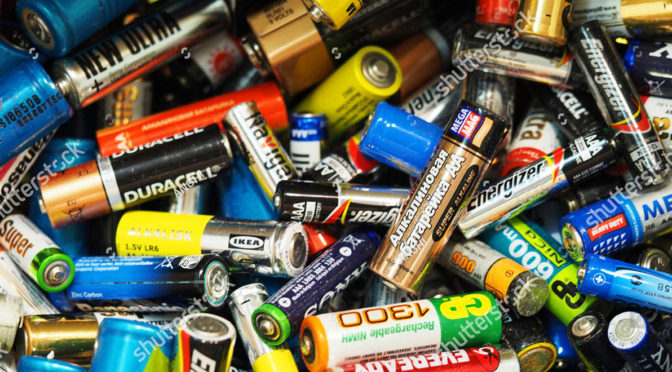
A new study has shown for the first time how inexpensive materials can be used in high-performance batteries of the future.

The study, published last week in ACS Energy Letters, is a collaboration between Monash University, the India Institute of Technology Bombay-Monash Research Academy, and Deakin University.

Scientists and engineers have been focused on finding a more sustainable way of using lithium batteries which rely on scarce resources and is challenging to produce on a large scale at affordable prices.

But now scientists have shown that using a ‘carbon cloth collector’ can improve the sulfur utilisation of batteries, which would make them more efficient.

“Batteries of the future are necessary because in various significant market areas they form a vital part of the transition away from fossil fuels,” said study author Professor Douglas MacFarlane, from the Monash University School of Chemistry.

“Integration of renewables into the grid is hampered by the variability of the supply, and battery storage either in the home or at the wind/solar farm is seen as a necessary, but currently very expensive, component of the system” he said.

The research was conducted through a highly innovative PhD program in the IITB-Monash Research Academy – a partnership between the Indian Institute of Technology Bombay (IITB), India and Monash University.

Deakin University, with expertise  in the  prototyping and scale up of the batteries, also played a key role in the study. The research is part of a longer term collaboration between Monash, Deakin and the ITTB funded through an Australia India Strategic Research Fund (AISRF) project aimed at developing affordable high-performance batteries.

“The most immediate application of these batteries in India could be in local transportation applications, for example in the Auto-Rickshaws that are extensively used in Asia as well as smaller electric vehicles (EVs),” said study author, Professor Maria Forsyth, from Deakin University.

“In Australia we could see such batteries powering EVs, and they could also be used for home battery storage,” she said.

The study describes outstanding performance for a high-energy density room-temperature sodium-sulfur (RT Na-S) battery, with the discovery that a simple chemical activation of a carbon cloth current collector (which researchers fill with a sulfur-based liquid electrolyte ) could allow  a Na-S battery to operate at near its theoretical voltage and deliver an energy density of just under 1kWh/kg of Sulfur.

The appeal of the Na-S battery is that the raw materials, sodium salts and sulfur are very commonplace and inexpensive.

The battery operates at room temperature and can be charged and discharged at reasonable rates, for example 1/2 an hour charging and discharging.

The carbon cloth is the key to the development. By activating it in a simple process it becomes a catalytic agent in the discharge process of the sulfur electrode, leading to a higher overall voltage and extended cycle life.

Celebrating 30 years of CRC success

The Hon Karen Andrews, MP, Minister for Industry, Science and Technology reflects on 30 years of CRC success.

It’s 30 years since the Cooperative Research Centres (CRC) Program was established. During this period, it has boosted productivity, grown the economy and created jobs.

It provides government grant funding to support industry-led collaborative research partnerships, with matching contributions from partners.

Since the program’s inception in 1990, the Government has committed more than

$4.8 billion to support the establishment of 225 CRCs, while industry and research partners have committed $14.9 billion in cash and in-kind contributions.

Since CRC Projects (CRC-P) was added to the program in 2015, 111 CRC-Ps have been established, providing opportunities for small and medium enterprises to participate in collaborative research.

The Australian Government has committed $755 million to the CRC Program in the forward estimates to 2022–2023.

The CRC Program also helps create a highly skilled workforce with research capability in industry. CRCs have supported more than 4000 PhD students since the program commenced, with a majority having found employment with industry or research end-users following graduation.

CRC success stories include:

  • The Sheep CRC, which launched in 2001 and operated until 2019. During this period the gross value of the Australian sheep industry increased from $5.6 billion to more than $8.5 billion.  
  • The Deep Exploration Technologies CRC developed the RoXplorer® coiled tubing drill rig, which is regarded as the biggest breakthrough in drilling technology in the past 50 years.
  • The HEARing CRC, which developed an innovation underpinning Cochlear medical devices that has improved the quality of life for millions of people.

Continuing CRC work includes: 

  • The Tasmania-based Blue Economy CRC, established in 2019, which is projected to increase the value of seafood production to $5 billion by 2050. It will allow for 50 postdoctoral fellowships and 50 PhDs to train scientists and engineers for the aquaculture, offshore renewable energy and engineering sectors.
  • The Future Battery Industries CRC, which is developing opportunities for specialist battery manufacturing in Australia and funding 40 PhD students to undertake an education and training program to build a workforce to support Australia’s future battery industries.

The CRC Program is a proven model for industry and research collaboration and has my strong, ongoing support. I wish all involved every success in the future.

– The Hon Karen Andrews, MP, Minister for Industry, Science and Technology

Fast facts:

  • 5: The number of Excellence in Innovation awards presented in 2019 for outstanding examples of the transfer of CRC research results, knowledge and technologies that have been developed for communities, companies and government agencies.
  • 30 years: The CRC Program’s age. It was officially launched by the Australian Government in 1990. In three decades, 225 CRCs have been funded, fostering research in fields addressing major challenges facing Australia.
  • $1.1 billion: The money funded by the Australian Government since 2013 to CRC Project grants dedicated to fostering new technologies.
  • 4: New CRCs started in June 2019: Blue Economy CRC, SmartSat CRC, Future Food Systems CRC and Future Battery Industries CRC.
  • 56: The number of organisations working in collaboration with the Autism CRC at the end of the 2018-2019 reporting period.
  • $600 million:  The independently valued benefit of research and adoption activities, over 15 years, conducted by the CRC for Water Sensitive Cities in 2019, at a benefit-cost ratio of 1:6.

Satellites and AI to help fight bushfires

The SmartSat CRC is already proving its worth.

Australia’s $245 million SmartSat CRC was launched in September 2019 and immediately kickstarted a practical test of its potential contribution to communities. Australia’s devastating 2019-2020 bushfires focused attention on every aspect of bushfire management: prediction, warning, response and recovery. The SmartSat CRC is concentrating on one particular problem area.

A persistent challenge for firefighters is tracking a fire front in real time, says University of Queensland researcher, Professor Stuart Phinn, one of SmartSat CRC’s program leaders. 

To direct firefighting resources, emergency managers need high spatial resolution images that can be updated “every couple of minutes”, says Phinn, who is program director for the SmartSat CRC’s Next Generation Earth Observation Data Services program. “You can do that from drones, but you can’t fly drones or aircraft through smoke and cloud all of the time.”

The answer may lie in space-based sensors. The SmartSat CRC could integrate new modes and AI-enhanced algorithms on existing and future Earth observation satellites to provide an increasingly accurate, real-time picture of a bushfire.

Seeing through smoke 

This is a tough ask; visual sensors or thermal imagers operating at the wavelengths used specifically to look for fires are attenuated slightly by smoke and heavily by cloud. Synthetic Aperture Radar is an advanced technology that captures images at 500 times the resolution of everyday radar. It sees through cloud but isn’t sensitive to temperature, although it might detect differences between burnt and unburnt trees to help map burning areas.

AI-enabled fusion of the two types of sensor data could deliver a coherent picture if the right algorithms and operating system are in place aboard a satellite.

One of the SmartSat CRC’s primary focus areas is to map bushfires and other natural disasters. Phinn’s research integrates the CRC’s three main programs — Communications, Intelligent Platforms and Earth Observation.

“In some cases, we need to upload information from the ground to augment or update the models and algorithms in the satellite. That’s Program 1,” he says.

“Essentially, you’d have a capable storage and processing facility aboard the platform itself: that’s Program 2. And then Program 3 is using the right data and the right processing approach, which is the Earth observation and data analytics side of it, combined with intelligent platforms and algorithms to give us intelligent products and services,” he says. 

Funding the dream

These are early days for the CRC and a number of projects and proposals along these lines will emerge as the university and industry partners, including Nova Systems, BAE Systems and Airbus, kick off their research. And a link is also developing with the Bushfire & Natural Hazards CRC with project leader Dr Marta Yebra, who is working at the Australian National University on remote sensing of bushfire fuel conditions.

Mapping fire fronts from space in real-time is achievable, says Phinn.

“We know which algorithms we’d put on these platforms and how to refine them. As the algorithms get better, we’re gradually improving the mapping and monitoring we do. There’s no way we’d have had funding to do that before this CRC.” — Gregor Ferguson

smartsatcrc.com

Digital Health: Better for you

Sarah Keenihan discovers how digital health, improved data integration and innovative manufacturing are making Australians healthier.

COVID-19 has accelerated Australia’s demand for digital health delivery. But even before this change, Professor Tim Shaw was pressing for greater integration of everyday technologies into healthcare. 

“It’s crazy we don’t use simple technologies for better health management,” says Shaw, who is Director of Research and Workforce Capacity at the Digital Health CRC. “There are simple technologies we can apply, and most of these already exist .”

The Digital Health CRC is working with industry partners — such as healthcare solutions company HMS — to deliver personalised healthcare messages for patients with chronic heart conditions. They are developing interactive voice response systems for this purpose and also plan on utilising text messages and emails.

More broadly, the CRC aims to improve the use of data for informed decision-making by doctors, and refine services and models of care in general practice and hospitals.

“Data can empower teams on the floor,” says Shaw. “We want to equip clinicians with access to useful information.”

The Digital Health CRC has 80 industry partners, including 16 universities.

“You can’t do digital health without industry,” says Shaw. “Working in the CRC environment helps us to be more nimble, more agile, and to focus on innovation without being bogged down. But we’re still powered by academic expertise.”

Aged care, and health at a distance

Assisted aged care is a health area ready for innovation through technology. With partners Aged and Community Services Australia and the Aged Care Guild, the Digital Health CRC recently created the Living Better Lab to trial technologies to improve delivery of aged care services. 

Enhancing the health of Australians living outside our main cities is another key focus for the CRC. 

“It’s a question of equity”, says Professor Suzanne Robinson, Flagship Director for the Rural and Remote team. Relatively low access to health services partially explains why Australians living in rural and remote areas have shorter lives and higher levels of disease and injury. 

“We’re working to apply digital technology to help all Australians access health services,” says Robinson. “The CRC provides the right environment to pilot ideas for managing health outside urban centres.” 

The Digital Health CRC is working with the WA Country Health Service to expand technology application through their telehealth platforms.  

Long-distance sharing of digital images and patient records between urban and rural doctors, and expanded use of artificial intelligence, may bridge health gaps between city and country dwellers. 

New materials for knee repair

It’s not just data that can transform Australia’s health; new materials are also being developed. Orthopaedic care is a good example, where clinicians seek effective solutions to fix faulty bones and joints. 

Torn or ruptured ligaments are a big part of this problem. Orthopaedic surgeon Nick Hartnell estimates a global annual market of around $14 billion for replacement parts, taking into account procedures to knees, shoulders and ankles. 

Hartnell devised a uniquely Australian solution: kangaroo tendons. 

As head of startup Bone Ligament Tendon Pty Ltd, he’s working as part of a $6.9 million Innovative Manufacturing CRC (IMCRC) project to explore the viability of roo tendons to form donor ligaments in human patients. Allegra Orthopaedics and the University of Sydney are also partners. 

“It could be as fast as two to three years to get to market,” says Hartnell. “We’re making really good progress already.” 

In Australia, rates of surgical reconstruction of the anterior cruciate ligament (ACL) — a fibrous band that stabilises the knee joint — have increased during the past decade. 

“There’s no question the numbers of operations are going up and more of them are in young patients and women,” says Hartnell. 

He says the standard approach for ACL repair is to take a piece of tendon from another part of the human body — usually the hamstring — and replace the faulty one within the knee. But ligament failure is quite common using this method. 

Kangaroo tendons are strong, long and easily available

Enter kangaroo tendon, which is strong, long and easily available. “We collect tendons from animals that have already been culled for the human and pet meat markets,” says Hartnell. The tendons are then treated in the lab to prepare for insertion. 

To counter the risk of detachment from the bone, replacement roo ligaments are secured within recipient knees using 3D-printed ceramic biodegradable screws. 

“The patient’s own bone grows into innovative screws and the original materials dissolve away over time,” explains David Chuter, CEO and Managing Director at IMCRC. 

“There’s lots of interest in the commercialisation of these screws for other orthopaedic uses as well.”  

It’s a good example of how an innovation can have benefits beyond what it was originally designed for. 

“Patients, the healthcare system, state governments and even insurance companies may all see the benefits of this innovation in the long run,” says Chuter. 

“Manufacturing like this is rapidly moving towards being an enabler for many industries.”  

You never know where technology will take you.

Digitalhealthcrc.com

imcrc.org

3D tech solution keeps trains moving

Keeping trains on schedule during peak hour is a major challenge for rail operators, with crowds often causing trains to ‘dwell’ at stations for longer than usual. This can force delays and longer commutes, as well as reduce the number of trains running across the network. 

The Rail Manufacturing CRC (RMCRC) has teamed up with the University of Technology, Sydney (UTS) and integrated services company Downer to solve this problem. They developed Dwell Track, a tool that combines 3D camera technology and algorithms to track the movement of passengers on rail platforms in real time.

Rail operators can use this data to manage crowds at peak times and keep schedules running smoothly.

It can also help them to make quicker decisions when managing busy platforms, such as increasing overhead announcements and providing signs that show passengers where to stand.

“Not only does Dwell Track have the potential to reduce travel time and delays for passengers, it could also increase the number of passengers served on the train network,” says Larry Jordan, Research Director at RMCRC.

The system, which was trialled at Wynyard Station in the city’s CBD, includes 16 camera devices, a mobile-based tool that shows captured camera data and dashboards that provide analytics summaries. 

Hervé Harvard, director of UTS Rapido, a research unit that develops technology solutions for industry, says understanding the needs of rail operators was central to the project’s success. 

“We wanted to understand how rail operators would use the product and design a solution that would actually meet their needs,” says Harvard. “It’s a very user-centred design as a result.”

Gemma Conroy

rmcrc.com.au

Packaging up a perfect PhD in food waste

Researcher Ruby Chan joined the Fight Food Waste CRC as a PhD student through RMIT and she is already exploring innovative ways to recycle packaging more effectively to prevent food waste.

While undertaking a Master’s degree in design innovation and technology at the Royal Melbourne Institute of Technology (RMIT), Chan designed single-use tableware and food containers from plant-based polymers and repurposed agricultural fibres such as corn husks, which are fully compostable after use.

The innovation holds an Australian patent.

“There’s a real tug-of-war going on around sustainability and packaging,” says Chan, adding that Australia has committed to sustainable packaging targets in 2025, and has also joined a global target to halve food waste by 2030.

“Packaging — including plastic packaging — has an important role to play in reducing food waste,” she says. While consumers often have a knee-jerk reaction against packaging, the greenhouse gas emissions from producing and distributing food are often higher than the impact of appropriate packaging solutions, adds Chan.

She says there’s a packaging impact see-saw where increased packaging results in less food waste, but you have to balance out the environmental impact. “When you get everything right [appropriate design and amount of packaging] then the packaging impacts are less than if the food was to go to waste.

“We need to educate the wider community to differentiate between types of packaging and understand their use and role in product protection, and also how to dispose of them properly.” 

Chan is scoping out her research at present, exploring the different packaging types found in supermarkets. “This includes resealable packaging, modified atmosphere packaging for meats and even packaging that regulates the exchange of gases to keep vegetables fresh,” she says, adding that access to a wide range of industries through the CRC makes it the ideal place to do this research.

FightFoodWasteCRC.com.au

It’s time for a food-waste fight

Business as usual with food waste has serious consequences for the climate and the economy. Fran Molloy reports

Australia’s agriculture industry produces some of the freshest and healthiest food in the world. Workers in the agrifood industry spend long hours preparing soils, planting seeds, watering and fertilising crops, and carefully harvesting and transporting foods to market. But nearly half of all the food we produce goes to waste.

“Food waste is a really huge issue, wasting about $20 billion every year in Australia alone. It’s also the third biggest emitter of greenhouse gases,” says Dr Steven Lapidge, CEO of the Fight Food Waste CRC.

The Fight Food Waste CRC began in 2018 and has 50 industry and 10 research partners bringing $63 million cash and $57 million in-kind contributions over the 10-year term. The CRC will reduce food waste throughout the supply chain, transform unavoidable waste into high-value products and run programs to deliver a national behaviour change program.

In developed countries such as Australia, around half of food waste occurs in households. The rest occurs across the supply chain, from agriculture, to post-harvest, to processing, delivery, distribution and food services.

More than 70 per cent of Australians want to reduce food waste, says Lapidge. “We are following up our first big study around household food waste behaviour with an economic study to work out how much food people throw away each year and what that costs the average household.”

From second-best to a brand new market

One food waste win is happening in the potato industry, where around 40 per cent of premium potatoes destined for supermarket shelves are ‘graded out’ for flaws such as size, shape or blemishes. Lapidge says the CRC is working on a large market opportunity. Australia currently imports 20,000 tonnes of potato starch for commercial use which could easily divert waste potatoes to develop a starch industry.

“Through the CRC, four of our largest commercial potato growers have come together to develop alternative value chains for the graded-out potatoes that currently go to low-value uses such as composting, animal feed and even landfill,” he says.

Lapidge explains that most individual growers would struggle to develop a large-scale potato starch production facility on their own, but working together through a CRC makes this and other alternatives feasible. These second-best potatoes could be turned into potato starch, but may have even better value as nutraceuticals or prebiotics, which have a higher value.

Another similar project underway with Swinburne University and Swiss Wellness involves diverting wine industry waste – grape marc – into valuable products. “Grape seed extract is one of the most popular products in the nutraceutical market and has got well demonstrated benefits as an antioxidant, yet we import all our grape seed extract from overseas,” says Lapidge.

He says the CRC’s Transform program diverts waste from horticultural production — such as grape seeds or potatoes that don’t make the grade — into nutraceuticals and other products, which saves money but also generates new high-value income streams.

“Residual waste streams can even be turned into bioplastics or biofuels,” says Lapidge.

FightFoodWasteCRC.com.au

Waste reduction in other food CRCs Reducing waste through a circular food economy

FOOD AGILITY CRC

The Queensland University of Technology (QUT) and Lendlease are part of a Food Agility CRC project using technology to develop a prototype community composting system, and establish Australia’s first sustainable food city at Yarrabilba in southeast Queensland. Residents are rewarded with ‘green credits’, to be exchanged for food-based goods and services. This urban agriculture model can be applied in other cities and towns.

FoodAgility.com

Reducing waste with vertical urban indoor farms

FUTURE FOOD SYSTEMS CRC

The Australian Centre for Robotic Vision at QUT is developing automated protected cropping technologies in partnership with vertical farming entrepreneurs Greenbio Group. The vertical hydroponics facility in Brisbane supports 25,000 plants, using less than half the water and a quarter of the space of traditional hydroponic systems. Vertical farms also have less post-harvest spoilage and waste.

 FutureFoodSystems.com.au

Adapting to angry summers: Australian Bushfires

From her bush block in the Blue Mountains, Bianca Nogrady considers how researchers will tackle the ‘new normal’ for severe bushfire weather.

On February 7, 2009, several bushfires in Victoria burned through 450,000 hectares over two days, destroying more than 2000 homes, killing 173 people plus an estimated one million wild and domestic animals. 

Between September 2019 and March 2020, hundreds of bushfires burned through almost 19 million hectares across Australia, destroying more than 2500 homes, killing more than one billion birds, animals and insects, and driving many species to the brink of extinction. But the death toll was lower, at 33 people. 

Every one of those lives lost was a tragedy that devastated families, friends, colleagues and communities. But given the unprecedented scale, ferocity and duration of this season’s fires, the fact that comparatively few lives were lost suggests that since Black Saturday, we have made profound changes to the way we predict, understand and respond to bushfires. 

Many of those changes have come about because of the collaborative research undertaken by the Bushfire & Natural Hazards Cooperative Research Centre.

“We strongly believe the work of the CRC has been instrumental in reducing the death toll out of these fires,” says Dr Richard Thornton, Chief Executive Officer of the Bushfire & Natural Hazards CRC (BNH CRC). The relatively low death toll from the 2019–2020 bushfire season is astonishing to many people working with bushfires, especially given that there were several days during the season when conditions were as catastrophic as those experienced during the 2009 Black Saturday fires. 

Getting better, earlier warnings

One of the areas of change is communication: how, where, why and to whom emergency warnings are delivered, and the content and wording of those warnings. Communication has been an active area of research from the early days of the original Bushfire CRC, which was established in 2003 and morphed into a focal program of the current BNH CRC from 2013.

Associate Professor Amisha Mehta, a risk and crisis communications expert at the Queensland University of Technology (QUT) Business School, has been working with the BNH CRC on risk communication during bushfires and other natural hazards.

She says the wording of risk and emergency warnings is a delicate balancing act between trust and encouraging individual responsibility. 

“In our co-designed messages, we have enhanced trust but at the expense of reducing people’s perception of personal responsibility,” says Mehta. “So we learn from that and talk about ways to maintain trust and enhance or build people’s ability or confidence in being able to take the actions needed.”

Extensive research on how people respond to emergency warnings and risk messages has led to some bushfire and emergency agencies changing the wording of their message headings. The three tiers of ‘Advice’, ‘Watch and Act’ and ‘Emergency Warning’ are classifications firmly embedded into the way emergency management organisations work since the Black Saturday bushfires.

However, those headings don’t necessarily reflect the way individuals think in a bushfire situation. Instead, some agencies are switching to what Mehta describes as more ‘community-minded’ language. “Instead of ‘emergency warning’, the lead is ‘leave now’, or ‘leave immediately’, or ‘shelter in place’, so it’s the behaviour that is captured in the heading,” she says. 

After those headings comes more detailed information about the location and type of hazard, timing and other aspects. 

For example, the Queensland Fire and Emergency Services have amended their headings to ‘Advice: monitor conditions’, ‘Watch and Act: conditions are changing’, and ‘Emergency: you are in danger’. 

Mehta and her colleagues’ research also showed that adding a reason for the warning helped the message get across. “If you add a rationale, such as ‘leaving now is your safest option’, even though it makes the message longer, it enhances residents’ self-efficacy, so it makes them feel more confident in taking the behaviour.”

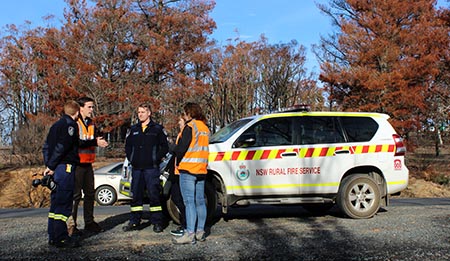
NSW Rural Fire Service and BNH CRC researchers. Image: BHN CRC

When to leave and who to tell

Another active area of CRC-led research is when and to whom those messages should be sent. 

Bushfire predictions have taken a quantum leap forward in recent years with the development of a variety of computerised modelling systems that can predict bushfire risk from as far out as one year ahead of a season to an hour-by-hour update on where a bushfire is likely to spread or its embers land.

Two products helping fire agencies calculate risk are Phoenix and SABRE Fire. Ben Twomey is a fire behaviour analyst and executive manager of advanced capability in the Queensland Fire and Emergency Services, and he works with both these fire modelling systems. “Part of the reason for the comparatively low number of deaths this season is the prediction capability and our ability to get people out of the way of fires that we know are going to be catastrophically bad,” he says. 

Phoenix is a fire simulator program developed by the Bushfire CRC and the University of Melbourne. It characterises fire spread across the landscape based on forecast weather — temperature, humidity, wind speed and direction — fuel maps, topography of the landscape, wind modification by the landscape, vegetation, the fire history of an area and other factors such as roads, fire breaks and rivers.

When that data is put into the system, along with weather inputs to account for factors like the effect of pyrocumulonimbus, the output is a map forecasting where that fire is likely to spread to in the next hours and days. 

But as anyone who has ever tried to plan a picnic knows, the weather forecast is a probabilistic prediction; it offers a likelihood — not a certainty — of the weather being a certain way. To account for that element of uncertainty, there’s SABRE Fire. 

“We don’t know those inputs with a great deal of certainty and we’d rather be broadly right than precisely wrong,” says Twomey. 

SABRE Fire calculates a range of scenarios by varying some of the inputs at random, like a much higher wind speed or much lower humidity, “so when we talk about worst case scenarios, theoretically it’s already built in”.

When fire controls the weather

There are some wildcards in fire behaviour modelling and pyroconvective fire behaviour is one of those. This refers to the enormous weather systems that can develop above intense fires — so-called ‘fire thunderstorms’ — and drastically alter weather and fire behaviour. “It’s like putting a chimney on top of the fire and getting a nice big draw around the edge – it goes berserk,” says Twomey.  

Research by the BNH CRC has worked out the minimum heat required for these pyrocumulonimbus systems to develop in various environments, which should help better forecast these events and allow for their incorporation into fire behaviour modelling. 

This research will be part of the next generation of fire spread models, which includes weather modelling conducted by the Bureau of Meteorology, as well as in more real-time models being developed with CSIRO and capable of being used in control centres just like Phoenix. 

Even with all the best predicting, forecasting and messaging, people and properties are still being caught in bushfires. Understanding how and why that happens is the question Dr Josh Whittaker from the University of Wollongong and the BNH CRC is trying to answer.

After fires have passed through, Whittaker and colleagues visit those communities and interview residents about their awareness of bushfire risk, what planning and preparations they had done before the fire, what information and warnings they received and how they responded. 

“Those findings are fed back into fire services to help them better communicate with communities and better prepare them for bushfire in the future,” says Whittaker. 

Having worked on many fires since the devastating Black Saturday bushfires, Whittaker says there is always a wide range of preparedness levels in the community.

“There always seem to be people who have done little or nothing to prepare and therefore have difficult experiences in fires,” he says. “Through to the other end of the spectrum, where people are very well prepared and are either able to safely leave, as is their plan, or remain to defend their farms or houses.”

Understanding those decisions is critical to helping shape messaging and awareness campaigns about bushfire preparedness. Whittaker says one interesting finding is how many people in bushfire-exposed areas are unaware they are even at risk.

One change he has seen over time is greater focus and understanding of the ‘leave early’ message during bushfires.

There’s also greater awareness of the high level of planning and preparation that is required by anyone thinking of staying to defend their property. And it seems the most important message is being heard: don’t leave anything to the last minute.

Moving forward

There is a mountain of research to be done after this bushfire season, which will help researchers understand what contributed to the severity of this season and how well predictions, preparedness and response systems worked. But there is also the question of how Australia’s experience of bushfires will change in the future. 

There is also population growth and how that changes the relationship between humans and the bush. There is the question of settlement strategies and decisions by local and state governments, and what role the insurance industry will play in that.

There are new technologies that will present opportunities and challenges, when it comes to preparedness and response to bushfires. And finally, there is perhaps the greatest challenge of all: climate change.

 bnhcrc.com.au

Blue light helps the body clock tick

While we rely on electric light bulbs, television screens and mobile devices, they also break our body’s innate links to bright sunlit days and dark nights, perhaps dimly illuminated by the moon and stars, and often cost us sleep. 

That sleep loss doesn’t come cheap: inadequate shut-eye cost the Australian economy $66.3 billion in 2016-17 through a loss of wellbeing and productivity.

Flooding the night with light affects the human production of melatonin – a hormone that helps regulate sleep. However, new research from the Alertness CRC shows the brightness of artificial light is not the main problem — it’s the amount of blue light in a light source that most impacts our internal clocks.

“High dosages of electric light at night can be very confusing for the body clock and leads to disrupted sleep that, over time, affects people’s health and mood,” says Monash University neuroscientist Associate Professor Sean Cain, a circadian rhythms expert. This is partly why many long-term shift workers experience health issues, he adds.

“At the same time, we need people to be alert at work, particularly when they are operating in safety-critical roles, so that’s when exposure to more blue light becomes important.”

The Alertness CRC, in collaboration with Australian SME Versalux Lighting Systems and Monash University, have developed MelaGen™ — LEDs that can be programmed to vary blue light content across any single building environment. This dynamic approach regulates visual and non-visual light to maximise wellbeing.

“MelaGen™ can assist in resetting circadian rhythms and promoting good quality sleep,” says Vince Macri, National Product Manager, Healthcare at Versalux.

He says the MelaGen™ system can also enhance vision and improve health, safety, performance and wellbeing in the workplace. — Brendan Fitzpatrick

AlertnessCRC.com

Rostering for better health and productivity

Australia’s growing connection to the global economy ensures it is open for business 24/7. While people in health, transport and emergency services have historically worked around the clock, globalisation expands work hours beyond nine-to-five for people across increasingly varied industries.

Shift work and irregular rostered hours can worsen workers’ health, safety and productivity. As Australians work longer, more unconventional hours, there’s

greater demand on employers to reduce workplace risks by putting fatigue management plans in place.

The Alertness CRC has brought Australian optimisation software company Opturion and Monash University together to create the world’s first software program that automatically applies fatigue rules to create better staff rosters.

“AlertSafe® Rostering is a cloud-based integrated rostering system that helps employers design an optimal roster that takes into account employees’ constraints and preferences, and seeks to limit and mitigate worker fatigue,” says Alan Dormer, CEO of Opturion.

He says avoiding fatigue caused by a poorly designed roster will help reduce industrial accidents. “Research shows that avoiding fatigue, mistakes and non-conformances can be reduced by up to 30 per cent. Initial results from the Monash Medical Centre trial are similar. Other benefits are increased productivity and a reduction in sickness absence.”

The engine room behind the software is a complex algorithm offering sophisticated fatigue management in roster building, roster management, human capital management, and time and attendance systems. AlertSafe® can highlight fatigue risk on an individual, team and enterprise level.

“We can design a fatigue-mitigating roster that is better for employees and can reduce costs to employers,” says Monash University and Alertness CRC theme leader Professor Mark Wallace.

— Brendan Fitzpatrick

 alertnesscrc.com

Future-proofing our soils

Australian soils are subject to many kinds of stress, such as compaction, erosion and low rainfall. Poor soil can have a huge impact on our agricultural productivity.

The CRC for High Performance Soils (Soil CRC) is bringing together scientists, industry and farmers to research practices that help farmers to improve their soil. The CRC includes university, farmer group and state government partners.

“The CRC is bringing new technologies and ideas into farming systems with the goal of making them more resilient,” says Dr Lukas Van Zwieten, who leads a Soil CRC program focusing on applying research to solve multiple soil issues at once. “This means farms may function for a longer period going into water stress and when the drought breaks, they bounce back more quickly.

“Water is the main limiting factor for crop and pasture productivity in Australia,” adds Van Zwieten. Compaction due to large machinery used on farms can compound these issues, as can soil chemical constraints such as sodicity, which make it harder for water to penetrate the soil.

Natural improvements

Once farmers harvest their crops, farmland can remain fallow for months or even years. Soil CRC researchers — including Professor Terry Rose at Southern Cross University, one of the project leaders within the program — are looking at using that time to grow plants specifically selected to improve soil resilience. They have trial plots for sugar cane and grain crops across Australia, including in northern Queensland, New South Wales and South Australia.

“Sugar cane production in northern Queensland is often affected by pests called nematodes, which eat the sugar cane roots,” says Van Zwieten. “So CRC researchers are trialling the use of a kind of mustard plant that has biofumigant activity to decrease the amount of these nematodes in the soil.”

The researchers are also trialling using cover crops that add extra nutrients to the soil when they break down. One of these plants is a large legume called Sunn Hemp or Indian Hemp (Crotalaria juncea) which can fix its own nitrogen from the atmosphere. It also has a large root system that creates a lot of biomass, becoming food for microbial life.

“Like any other animal, microbes have to eat,” says Van Zwieten. “And what they eat is organic material. Like you or I might eat a piece of bread, microbes eat organic compounds exuded from roots and the biomass from plant matter left over from the harvest. 

By growing cover crops, farmers can maximise organic inputs into soil, increasing microbial abundance and biodiversity, and potentially increase plant-available nutrients for future crops across Australia.”

CRC researchers are also using plants to physically open the soil to reduce compaction. “The tillage radish has a large taproot which basically opens the soil. As it breaks down, you get large holes in the soil, so when it rains you’ve got an easy pathway for water.”

The CRC researchers will test the soil in a lab to see how it performs when exposed to water stress. “We are hoping these mixed-species cover crops will result in bigger, better yields and yields that might be more resilient to weather variability,” says Van Zwieten. “That’s what farmers need.

“Where farming systems or chemical inputs are becoming more difficult to use due to restrictions and cost, these types of alternative management practices are becoming more important.” 

— Cherese Sonkkila

Soilcrc.com.au

Towards diverse boards: Pathways to directorship

The most common undergraduate degree for ASX 50 CEOs is science. However, when it comes to the boardroom, Australia lacks technical literacy, according to a recent member survey by the Australian Institute of Company Directors

Although three-quarters of members said their organisation had an innovation vision, more than half said innovation rarely, if ever, featured on their board’s agenda. Also, worryingly, only around one-third of members felt their board possessed the right skills and expertise to properly consider modern technology, and only 3 per cent of directors had personal expertise in science and technology. 

While having scientists on boards is certainly a step in the right direction, technical expertise is not the only form of diversity a board would benefit from. Australia also has a problem when it comes to gender diversity on boards, with less than one-third of people on ASX 200 boards being women.

The CRC Association commissioned Women on Boards to conduct a survey on CRC board diversity. Among other things, it showed women’s representation had only slightly improved throughout the decade.  

The session at Collaborate Innovate 2019, where the results were presented, prompted a question from a talented CRC program manager, to the effect of, “How does a young researcher ever get onto a board?”

I found the answer from the stage — which was essentially to go and do a $10,000 course — unsatisfying. So did the individual who asked the question, noting that their employer was unlikely to send anyone who was not already a senior manager on a course at that level.  

This year, the CRC Association has responded with its new board diversity initiative, ‘Towards Diverse Boards: Pathways to Directorship’. We have partnered with the Governance Institute of Australia to offer 20 people from groups currently under-represented on boards to undertake the Institute’s Certificate in Governance Practice or Certificate in Governance for Not-for-Profits. The Certificates will be completed online and are heavily subsidised to reduce the barrier to entry.

But we know access to formal education is not enough to facilitate change. While the participants are studying, we’ve organised some incredible coaches on various aspects of best practice: the Minister for Industry, Science and Technology, The Hon Karen Andrews MP; head of the Australian Space Agency, Dr Megan Clark; former president of the World Federation of Engineering Organisations, Dr Marlene Kanga; CEO of the Governance Institute of Australia, Megan Motto; former chief scientist of South Australia, Dr Leanna Read; and the chair of the CRC Association, Belinda Robinson. 

We’re also partnering with Dr Ruby Campbell, managing partner and founder of ProVeritas Group and author of Scientists in Every Boardroom: Harnessing the Power of STEMM Leaders in an Irrational World.

In order to spread the message further, every Towards Diverse Boards participant will receive a complimentary copy of Scientists in Every Boardroom, as will every Collaborate Innovate 2021 conference attendee. I hope they will find it useful and that it serves to remind them of their role in encouraging more scientists and other kinds of diversity on boards. After all, research shows us that diversity pays off.

Tony PeacockTony Peacock is the CEO of the Cooperative Research Centres Association.

Towards smarter transport

Transport affects every one of us every day, even if we stay at home. Better (more convenient, faster/more efficient, more reliable, more comfortable…) transport systems improve lives, communities and industries, but there are many challenges to overcome to make it happen.

On one hand we have disruption and constant evolution in passenger transport. With the stream of new entrants into this space comes a raft of questions for traditional transport service providers, particularly state and local governments. 

On the other hand we have the fragmented, low-margin world of freight, which desperately needs to collaborate to improve, but is subject to significant commercial sensitivities that impede willingness to go down that path. 

Ten years is a necessary amount of time to conduct significant R&D, but also a challenging timeframe in a fast-changing transport environment.

We are pleased to be delivering some things years before we anticipated — in particular, the momentum that has built around Mobility as a Service (MaaS) — but we can also reference the growth in number and capability of journey-planning apps for mobile phones. Our research into MaaS has already expanded from an initial investigation into consumer attitudes, to a real-world trial happening in Sydney delivering valuable insights.

It is research that pushes us closer to fully integrated transport services in our increasingly crowded cities, enabling people to reduce their dependence on single-occupant vehicles. 

Some research areas remain worthy of ongoing investigation and trial, but are proving to be further off than previously anticipated, such as automated vehicles. They were once a frenzy of media commentary and speculation, yet the complexities of getting a computer to mimic a human driver and the challenge of winning community acceptance of this technology are now much clearer. 

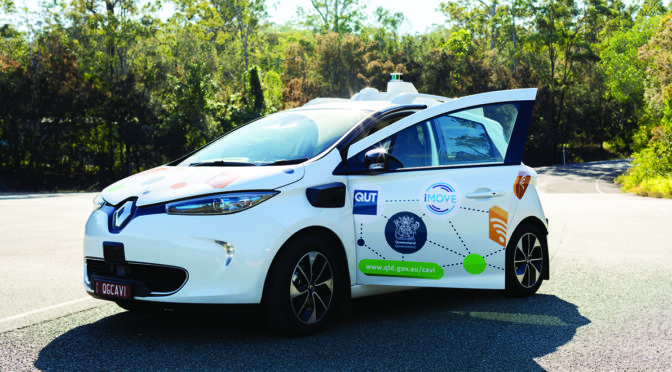
Queensland is particularly active in Australia’s research into the benefits and challenges of vehicle connectivity and the safety and efficacy of highly automated vehicles. 

There is also some movement in collaboration to improve freight, albeit of a much less disruptive nature. Last year, we completed the well-received Freight Data Requirements Study on behalf of the Federal Department of Infrastructure to assist them with their development of the National Freight and Supply Chain Strategy. The department is now drawing on that study to inform their development of the National Freight Data Hub. We believe supply chains will greatly benefit from improved visibility, and this is supported by a suite of projects — currently information — that will devise practical and realistic ways to achieve this.

Another way our partners are looking to deliver better transport is by being more holistic. Integration of our transport and land planning is not a new concept, but it is one that deserves renewed attention for its potential to achieve simultaneously favourable social, environmental and economic outcomes.

There is already much diversity in the 39 projects in the iMOVE portfolio, and every day brings new opportunities.

Trends are emerging in what we have learnt and how we can build on this for future activities. 

Transport needs to continue widening its collaborations and embrace national coordination to ensure the benefits are shared as we all progress towards a better transport future — whether we choose to leave the house or not!

 imoveaustralia.com

Transforming manufacturing: Industry 4.0

Embracing deep tech is transforming Australia’s manufacturing sector.

Manufacturing in Australia has faced big challenges, as well as embraced big opportunities, in recent decades as globalisation impacts supply chains, competition ramps up internationally, and consumer markets expand and demand new, innovative products.

Despite the challenges, the sector is an important part of the Australian economy, employing around one million people — the seventh biggest employing industry — and accounting for 11 per cent of annual export earnings.

The Innovative Manufacturing CRC (IMCRC) runs from 2015 to 2022 and aims to accelerate Australian manufacturing into the fourth industrial revolution (Industry 4.0), helping companies transform into high-value, high-knowledge-based businesses that will flourish in the digital economy. 

“Australia’s manufacturing sector is seeing a new generation of high-tech advanced manufacturers emerge,” says David Chuter, CEO and Managing Director of IMCRC. “We hope to strengthen them and the sector to be resilient to future disruptions and ensure Australia has national capabilities that are also world relevant.”

Manufacturing has been hit hard by free-trade deals and competition from low-wage economies in recent decades, but globalisation goes both ways, he says.

“We’re now seeing companies embracing innovation in every aspect of their business, undertaking extensive research, adopting advanced manufacturing techniques and looking overseas for growth.”

IMCRC works closely with local manufacturers to co-fund industry-led research collaborations that help companies explore innovative business models and new technologies, adopt additive manufacturing and advanced materials, apply automation and robotics to improve processing and use sensors and data analytics to streamline production and boost reliability.

To date, IMCRC has more than 30 research projects approved in all primary industry sectors across Australia.

“Our role is more than just co-funding manufacturing research projects that help catalyse the uptake of Industry 4.0 technologies, although that’s part of it,” says Chuter.

Most businesses in Australia’s manufacturing sector are small and medium enterprises with revenue below $10 million and employing fewer than 20 people. 

IMCRC’s Industrial Transformation Program helps SMEs become advanced manufacturers to support the wider cause of manufacturing transformation.

The program offers SMEs education and advocacy resources to help them rethink their business operations and adopt a new approach to manufacturing, constantly enhance and improve their processes and embrace advanced digital technologies to drive value for business and consumers.

IMCRC has developed a business diagnostic tool called futuremap®. Since the 2018 launch, the CRC has run more than 50 futuremap® workshops across Australia, guiding hundreds of local manufacturers through identifying areas of improvement in their business.  

Upgrading Mattress Manufacturing

David Kaplan, Founder and Managing Director of Melbourne-based manufacturer Sleep Corp, attended a futuremap® workshop before embarking on an Industry 4.0 research project with Swinburne University, co-funded by IMCRC.

“We’re embracing Industry 4.0 systems so that Sleep Corp can continue as a proud Australian-owned and made manufacturer on the world stage, delivering exceptional products as efficiently and as cost-effectively as possible,” he says.

Sleep Corp was founded in 1980 and produces the Protect-A-Bed brand of mattress protectors sold in Australia and New Zealand, as well as other top-of-bed consumer and commercial-grade ranges.  Since January 2019, the company has been working with Swinburne University to develop a novel Virtual Manufacturing System (VMS) to fully automate their manufacturing plant.

The VMS will connect robotics-based machinery to a digital twin, so product manufacture is faster and more flexible, and can quickly adapt to meet customer requirements while remaining cost-competitive.

imcrc.org

Cloud software to improve mining efficiency

Global demand for minerals shows few signs of slowing down, but decreased volumes of high-grade ore deposits remain. With tighter regulations in place to lessen the environmental impact of mining, conventional extraction methods are no longer sufficient and mining efficiency is key.

The Cooperative Research Centre for Optimising Resource Extraction (CRC ORE) has developed the Integrated Extraction Simulator (IES), a modelling system designed to improve mining efficiency.

“The IES software product has been designed as a complete mine-to-concentrate decision support system,” says Nick Beaton, who heads up the IES program at CRC ORE

He says the cloud-based software lets mining engineers test possible changes that could be made in mining efficiency processes, then compare different scenarios across different time frames. 

With modelling done in a virtual mine, a team of experts can collaborate on the simulation, all accessing the model simultaneously from anywhere in the world to test changes in the design, layout and operation of both the mining process and the concentrator in ways that can optimise metal production and reduce its environmental footprint.

“We’ve used IES to plan continuous improvement initiatives in the mine-to-mill operations and to optimise multiple mining and processing scenarios across the life of the mine,” says Beaton.

 The IES can be used across different mining and processing procedures, starting from drill and blast, through all the stages of processing, from comminution to flotation to leaching.

Each process and each piece of equipment in the mine is configured using IES software to create a processing flowsheet, which is calibrated using historical surveys, mass balances and model-fitting exercises.

The simulator is trained by using historical data and refining its predictions, comparing these with the previous years’ operational data from the plant. Once the IES is trained to predict past performance accurately — with some fine-tuning applied — it is switched to optimise-mode. 

“This is where it gets interesting,” says Beaton. A lot of expensive computing happens next, but by using fully scalable cloud-based processing power, IES users aren’t outlaying for expensive computing equipment that lies idle most of the time.   

Mapping ore bodies in critical detail 

Engineers can do a mass simulation of every block in the ore body to test different mining and processing scenarios, even combining multiple rock types in the ore stream.

“The result provides the planning engineers with a 3D virtual view of the metallurgical landscape which they can use to optimise extraction and calculate recovery, throughput, operating cost per tonne, power consumption and even CO2 emissions,” says Beaton.

“Within IES, you can access models built by the best researchers in the industry, from blasting experts to leaders in comminution, separation and flotation.” 

Beaton says the IES system is being used to optimise processing operations by CRC ORE participants BHP, Teck, Anglo American and AngloGold Ashanti at mines in Australia, South America, Canada and Africa. 

In one example, IES helped improve the profitability of Anglo American’s Los Bronces mine in Chile by 5-6%.

“This is significant for the mine and for the whole industry,” says Beaton.

— Brendan Fitzpatrick

crcore.org.au

All together now: Building better, diverse teams

Diversity ensures better research, better business and better societies, reports Claire Harris.

Diverse teams that include people of different gender, culture, age, neurological diversity and perspective  are more effective, innovative and profitable. 

Yet for many Australian research and development organisations, including most CRCs, achieving workplace diversity and the resulting positive impact is still a work in progress.

A lack of diversity not only limits available talent, it’s bad for research and business, and doesn’t deliver what our communities need, says the Hon Karen Andrews, Minister for Industry, Science and Technology. 

“By ensuring STEM represents the society in which we live, we can better understand changing needs and develop more innovative and thoughtful solutions in response,” she says.

Gender is a prominent diversity issue for STEM and is pervasive from childhood onwards. From high school, girls are under-represented in STEM and technology subjects. At tertiary level, low overall participation in STEM education means the number of women in the STEM workforce is not increasing at a substantial rate. 

It’s not just STEM fields where there’s a problem. In the Australian workforce, women have lower work participation rates than men and also earn less, with the weekly pay gap currently at 13.9 per cent.

The Australian Government’s Advancing Women in STEM (2019) report notes other key factors influencing females’ decisions to enter and remain in STEM education and careers include bias and stereotyping, career insecurity, a lack of flexible work arrangements and a lack of female role models.

A level playing field 

Improving gender diversity is not simply a matter of fairness. “Gender diverse companies are 15 per cent more likely to financially outperform their counterparts, and it is estimated an extra six per cent of women in the workforce could add $25 billion to Australia’s GDP,” says Andrews. “Imagine if we had the full participation of women in STEM in history up to now — what discoveries, cures, breakthroughs and inventions we could have had.”

Tony Peacock, CEO of the Cooperative Research Centres Association (CRCA), says a few years ago CRCs were “a long way short of where we should be” in addressing the imbalance. These days, while the “light bulbs have gone on”, he says he is still encouraging CRCs to try harder. 

“If we see boards or leadership teams with imbalance from a gender point of view, as a start, our response has been, ‘Why would you close yourself off to all the talent?’ If you’re operating an innovation business, you can’t ignore diversity.”

Peacock says the CRCA has looked at how best to assist CRCs to implement more effective diversity policies. This includes setting a strategic objective, and outcomes related to greater diversity of CRC boards, management and scientific teams, and a 50:50 gender split for leadership positions. He believes taking the first step of measuring, and publishing the results publicly has had an effect.

“Newer CRCs in particular are asking for guidance about how to run their organisation, and they are implementing good practice where possible,” he says. “As well as pushing our CRCs at the leadership level, we also encourage policies and programs to enable up-and-comers. 

“One of the strengths of the CRC model is flexibility and being able to design the way that people are employed and are able to contribute over time. For example, implementing ways for people to work hours that are suitable for their families, or having the support for childcare while travelling for meetings or conferences.”

Runs on the board

Around 21 per cent of Australians have a non-European background and three per cent have an Aboriginal or Torres Strait Islander background, but only 11.3 per cent of directors of ASX 200 companies are culturally diverse, according to the CRCA.

To address future diversity at the board level, the CRCA has recently launched the Pathways to Directorship program. It will fast-track 100 people towards board positions during a five-year period. Peacock says professionals from all disciplines in science, technology, engineering and maths (STEM) who identify as under-represented and from both member and non-member organisations of the CRCA are encouraged to apply.

It’s an initiative that complements Minister Andrews’s support for increased diversity on boards. “In 2016, the Government set a target of women holding 50 per cent of government board positions overall and men and women each holding at least 40 per cent of positions on individual boards,” she says. 

“The Department of Industry, Innovation and Science has committed to working with stakeholders, including the CRC Advisory Committee and the CRCA, to improve diversity, including for gender, within CRCs and their boards. In saying that, there’s more work to do.”

Kicking goals

According to Peacock, during the CRC bidding process, leadership teams are working very quickly and adaptably, so they often review their teams. Many of the recently established CRCs are doing an “awesome job” harnessing diversity, he says. 

“It is often a matter of doing the best they can with what they’ve got initially, but the CRCA advises them throughout the process,” says Peacock. 

“One of the strengths of the CRC model is that they are adaptive and can implement best practice policies very fast. Sometimes the CRCA does push and I’ve asked questions such as, ‘Why is it that everyone in the room seems to have a very similar background?’

“I think there is a role for government, in the guidelines, to make sure people stop and pay attention, but I feel we’ve played a fairly useful role because we coach and advise along the way.”

Changing mindsets and policies is the key. “Thankfully, we’ve moved far past the, ‘Hey, it’s not fair,’ sentiment to, ‘It’s stupid not to consider diversity,’” he adds.

Andrews says building a diverse and inclusive workplace should be a core part of any organisation’s business. “Senior leaders should listen to their employees’ experiences to drive change. Addressing inequality in STEM is about more than just addressing the numbers. We need to challenge our systems and practices.”

 Crca.asn.au

Diversity drives innovation

The CEO and Managing Director of the Innovative Manufacturing CRC (IMCRC), David Chuter sees diversity as a key driver for innovation. By embracing diversity in all aspects of its research collaborations, the CRC encourages industry, researchers and staff to explore new avenues and innovate. For example, IMCRC’s Just In Time Implants project combines 3D printing, robotic surgery and advanced manufacturing to create tailored implants for bone cancer patients. It brings together a diverse team of roboticists, material scientists, additive manufacturers, business experts and clinicians from two universities, a hospital and a global medical technology company. 

“By expanding the scope of our research projects, bringing in expertise via third-party collaborations across all industry sectors and establishing an inclusive collaboration culture, we have seen some significant investment in Australia,” says Chuter.

 Imcrc.org

Communities creating solutions: Autism

“Evidence shows that the best solutions are co-designed with the communities who need them,” says Cheryl Mangan, Manager, Research Translation at the Autism CRC, the world’s first national cooperative research effort focused on autism.

“A big part of what I do is bring together multidisciplinary teams that include autistic individuals, researchers and technology development partners to create solutions to problems they could not solve alone.”

More than two thirds of young people on the autism spectrum are unemployed or underemployed, but the CRC is developing a web application to help change that. 

Mangan is a co-leader on the MyWay Employability project, a smart web application that allows young people on the spectrum to plan and prepare for their working life with a focus on strengths and career interests.

“All of the information and resources are co-produced with the autistic community,” says Mangan. “One of the most beautiful things about working with young people on the spectrum is that they’re really honest and very constructive, which is necessary in any co-design.”

Mangan says that co-producing with communities means the solutions are relevant, effective and have the greatest chance of impact. “It is so important that the community has ownership of the solution; then they will find value in it and use it.”

 — Cherese Sonkkila

Gender equity in CRCs – BY THE NUMBERS

31: Average percentage of female CRC senior staff. The manufacturing sector has the highest average (41%) followed closely by medical services (39%)

22: The proportion of CRCs with policies for a target percentage of female representation in board and/or senior positions by the end of the CRC phase.

28: Percentage of women on CRC boards in 2018, up from 17.3% in 2010.

The future of battery power

Nadine Cranenburgh investigates the next-gen of stored-energy technology.

Peak-proof renewable energy, advanced manufacturing growth and a long-lasting phone charge have one thing in common: battery innovation. The CRC for Future Battery Industries (FBICRC) and the CRC-P for Advanced Hybrid Batteries are charging up to take Australia’s homegrown industry to the next level.

Investment bank UBS predicts the worldwide market for batteries will grow to $US134-$US426 billion ($AU199-$AU636 billion) by 2030 — driven by increased demand for renewable energy storage, government-mandated uptake of electric vehicles and consumer electronics sales. Another key factor is the decreasing cost of lithium-ion batteries, which has plummeted by 85 per cent during the past decade.

Australia exports battery minerals such as lithium, nickel and cobalt. But according to the CEO of FBICRC, Stedman Ellis, the nation has the opportunity to capitalise on our mineral wealth, homegrown research and technical expertise to establish local R&D, manufacturing and recycling facilities.

“We have the minerals the world needs to support demand over the next 10-20 years,”says Ellis. “The challenge, and opportunity, is to move downstream and become a price-maker and not a price-taker.”

The FBICRC, based at Curtin University in Western Australia, received $25 million in Federal Government funding in April 2019. Additionally, 58 partners from industry, academia and government have pledged $110 million of support during the FBICRC’s six-year lifespan.

Finding a niche

Market researcher Mordor Intelligence predicts North America and the Asia-Pacific region will be hotspots for the global battery market over the next five years, with the United States, India and China playing important roles.

Ellis says that while it will be difficult for Australia to compete in the bulk production market, local manufacturers could find a niche in specialised industries such as defence. There is also an opportunity to establish recycling and re-use facilities to meet domestic needs and those of the Asia-Pacific region.

Australia could also find a competitive edge in the safe, environmentally responsible production of high-quality materials. For example, a high proportion of the cobalt used in battery production is mined in the Congo, Africa, where workers are poorly protected from safety hazards.

FBICRC estimates battery industries will deliver a $2.5 billion benefit to the Australian economy during the next 15 years. To quantify the employment, economic and investment outcomes, FBICRC has commissioned a project led by the Perth USAsia Centre and the University of Western Australia to determine how we can best leverage the regional requirements and opportunities through international partnerships, business development and government policy design.

The CSIRO will also map the current skills and capabilities of Australia’s battery industries as a baseline to measure future growth.

Linking the value chain

The goal of the FBICRC is to tackle industry-identified gaps in the battery value chain, from mining and processing through to battery manufacturing and recycling. Progress has already been made on the next step after mining, with the first fully automated lithium hydroxide manufacturing facility outside China launching operations in Kwinana, an outer suburb of Perth. Wesfarmers-owned Kidman Resources plans to build a second plant in the same industrial area, but has delayed its final investment decision until early 2021.

Two of FBICRC’s flagship projects address gaps further down the value chain: bedding-down the precursors for local manufacture of cathodes and a national battery-testing facility to verify the operation of Australian-made and imported cells.

Professor Peter Talbot, FBICRC Program Manager, says Australia’s battery minerals could be processed locally to make the precursors for battery manufacture [cathodes, anodes and electrolytes] rather than being exported.

“Australia has had a strong cohort of battery scientists for many years, but they have had to work overseas because we didn’t have that industry [locally],” he says.

To demonstrate our domestic capability for battery manufacture, Talbot established a demonstration facility at Banyo Pilot Plant at the Queensland University of Technology (QUT) — the first in Australia to take raw materials and process them into finished, commercial batteries.

“It’s not just about showing it’s possible, it’s about helping industry get up to speed,” says Talbot.

The National Battery Testing Facility will be designed to test the real-life operation of a wide range of battery cells, from familiar cylindrical lithium-ion cells through to grid-scale vanadium redox flow batteries. It will be co-located with QUT’s hydrogen pilot plant and store solar energy in a microgrid to avoid destabilising the wider electricity network. The energy stored in the batteries being tested will be used to power an electrolyser, which produces green hydrogen.

Hybrid approach

While lithium-ion batteries dominate the current market, they have limitations. The $3 million CRC-P for Advanced Hybrid Batteries is working to modify the properties of batteries to reduce cost and increase efficiency and capacity. It is led by manufacturing company Calix Global, in collaboration with Deakin University’s Institute for Frontier Materials (IFM) and BAT-TRI Hub research centre, as well as chemical manufacturer Boron Molecular.

IFM Research Fellow Dr Robert Kerr says hybrid lithium-ion batteries replace the graphite anode in conventional lithium-ion cells with higher-powered lithium titanate (LTO) with various cathode materials. 

“It still operates under very similar principles, but you can achieve higher power density.”

Calix will experimentally produce nano-active cathode materials for hybrid batteries at its BATMn flash calcination reactor in Bacchus Marsh, Victoria, which can produce up to 250kg per hour. The company is currently prototyping a lithium manganese oxide cathode which has potential applications in electric vehicles, energy storage and portable electronics.

Calix is also working with the FBICRC to investigate more efficient extraction of lithium from spodumene ore.

“Calix will investigate whether flash calcination technology could be exploited to improve recovery rates and economics of lithium beneficiation and processing,” says Dr Matt Boot-Handford, R&D Manager for Batteries and Catalysts at Calix.

 fbicrc.com.au

Beyond lithium batteries 

Professor Peter Talbot, FBICRC Program Manager, says Australia has identified alternative options to lithium-ion batteries. For example, WA-based Australian Vanadium recently supplied a 320kWh vanadium redox flow battery (VRFB) to store solar energy on a dairy farm in Meredith, Victoria. The battery was manufactured in the US with vanadium ore mined in Australia and locally processed into an electrolyte solution.

VRFBs, developed by chemists at the University of New South Wales, use large tanks of liquid electrolyte to store energy. They are a safer and more recyclable alternative to lithium-ion batteries for renewable energy storage, particularly in remote or regional areas where space is not an issue.

Lithium-sulfur batteries, sodium-ion and sodium-air batteries could also be future alternatives, particularly in high temperature or hazardous environments.

“Materials in sodium batteries are abundant, cheap and benign,” says IFM Research Fellow Dr Robert Kerr.

Physicist appointed as CSIRO Chief Scientist

Australia’s national science agency has appointed Dr Cathy Foley to the position of CSIRO Chief Scientist – a unique role which will help champion science, its impact and contribution to the world.

Dr Foley is a world-renowned physicist and science leader most noted for her work developing superconducting devices and systems which have assisted in unearthing over $6 billion in minerals worldwide.

Dr Foley will start in the role at the end of September. She said her priority will be promoting science, STEM and women in science.

“Australia’s future prosperity will be fuelled by science,” Dr Foley said.

“Science which creates new industries, new jobs and shapes the minds and aspirations of our future leaders.

“We can’t keep thinking about science as something which is locked away in a lab. It connects and drives everything we touch and do.

“I’m looking forward to not just spreading the word, but helping shape the science agenda and raising the profile of the role of women in STEM.”

Dr Foley is currently the Deputy Director and Science Director of CSIRO’s manufacturing business unit. She has been an advocate for women in science, for the communication of science and science education over the past 30 years.

She is credited with helping to create LANDTEM, a technology which uses superconductors to detect minerals deep underground. In 2015, Cathy and her team were awarded the prestigious Clunies Ross award for the innovation.

CSIRO Chief Executive Dr Larry Marshall said Dr Foley was an incredible leader and scientist.

“Cathy is a great contributor, with a passion for turning excellent science into powerful solutions for Australia,” he said.

“I am looking forward to seeing her make this role her own, and bringing the voice of CSIRO science to help Australia navigate a path to prosperity through global disruption.”

Dr Foley was awarded a Public Service Medal on Australia Day in 2003. In the same year, she won the Eureka Prize for the promotion of science.

In 2013 she was awarded the NSW Premier’s Award for Woman of the Year. She is a Fellow of the Institute of Physics in the UK, Past-President of both the Australian Institute of Physics and Science and Technology Australia that represents 65000 Australian scientists and a Fellow of the Academy of Technological Sciences and Engineering (ATSE) and past national winner of the Telstra Business Women’s Award for Innovation in 2009.

She joined the CSIRO Division of Applied Physics in 1985 as a National Research Fellow, being promoted to Senior Research Scientist in 1991, Principal Research Scientist in 1996, Senior Principal Research Scientist in 2000 and Chief Research Scientist in 2008.

First published by  CSIRO

STEM shortage presents roadblock to Defence jobs

The Australian Government is channelling $200 billion into Defence jobs and capability over the coming decade to recapitalise the Australian Defence Force.

Accompanying this is the development of the ‘Workforce Behind the Defence Force’ (WBDF) campaign – the roughly 3,000 plus SMEs and 25,000 employees that constitute Defence industry in Australia.

Over the next decade, this STEM-enabled workforce will need to expand substantially to support the production and maintenance of submarines, ships, armoured vehicles and Defence infrastructure; as well as the protection of information assets and capabilities through intelligence, reconnaissance and surveillance.

But a nationwide STEM skills shortage, exacerbated by ‘brain drain’ to overseas opportunities and Australia’s falling rank on the global talent competitiveness index, are posing significant roadblocks to the government’s investment plans.

Attracting, nurturing and retaining talent is critical to the fulfilment of the Integrated Investment Program (IIP); but all the measures indicate that further interventions are needed to bolster the Defence community to meet the challenge in front of it.

In recognition of this, the Department of Defence is developing a long- term Defence Industry Skilling and STEM Strategy – a major national endeavour to support the development of a skilled workforce and help meet future capability requirements.

As part of the strategy the Department is undertaking a Defence Industry Skilling Survey, currently open to public contributions.
The survey – which has already seen a tremendous uptake – will play a critical role in informing the Strategy and helping the Department and government better understand industry’s HR challenges.

Dr. Sheridan Kearnan, First Assistant Secretary Defence Industry Policy, Strategic Policy & Intelligence Group at the Department of Defence is behind the initiative and will be speaking at the ADM STEM in Defence Summit – to be held 21 August 2018 in Canberra.

Addressing an audience of Defence, Education and Industry leaders, she will share details of the survey including current progress and a discussion on how its results may affect all relevant stakeholders.

Find more information about the STEM in Defence conference here.

First published by Informa, 2018

Breast cancer probe detects deadly cells

Featured image above: Dr Erik Shartner with the prototype optical fibre sensor, which can detect breast cancer during surgery. Credit: University of Adelaide

An optical fibre probe has been developed to detect breast cancer tissue during surgery.

Working with excised breast cancer tissue, researchers from the University of Adelaide developed the device to differentiate cancerous cells from healthy ones.

Project leader at the Centre of Excellence for Nanoscale BioPhotonics (CNBP) Dr Erik Schartner said the probe could reduce the need for follow-up surgery, which is currently required in up to 20 per cent of breast cancer cases.

“At the moment most of the soft tissue cancers use a similar method during surgery to identify whether they’ve gotten all the cancer out, and that method is very crude,” he says.

“They’ll get some radiology beforehand which tells them where the cancer should be, and the surgeon then will remove it to the best of their ability.

“But the conclusive measurements are done with pathology a couple of days or a couple of weeks after the surgery, so the patient is sown back up, thinks the cancer is removed and then they discover two weeks later with a call from the surgeon that they need to go through this whole traumatic process again.”

The probe allows more accurate measurements be taken during surgery, with the surgeon provided with information via an LED light.

Using a pH probe tip, a prototype sensor was able to distinguish cancerous and healthy cells with 90 per cent accuracy.

The research behind the probe, published today in Cancer Research, found pH was a useful tool to distinguish the two types of tissue because cancerous cells naturally produce more acid during growth.

Currently the probe is aimed for use solely for treating breast cancer, but there is some possibility for it to be used as both a diagnostic tool and during other removal surgeries.

“The method we’re using, which is basically measuring the pH of the tissue, actually looks to be common across virtually all cancer types,” Schartner says.

“We can actually see there’s some scope there for diagnostic application for things like thyroid cancer, or even melanoma, which is something we’re following up.

“The question is more about the application as to how useful it is during surgery, to be able to get this identification, and in some of the other soft tissue cancers it would be useful as well.”

Earlier this year, researchers from CNBP also developed a fibre optic probe,  which could be used to examine the effects of drug use on the brain.

Schartner said both probes were noteworthy because they were far thinner than previously developed models at only a few microns across.

“The neat thing we see about this one is that it’s a lot quicker than some of the other commercial offerings and also the actual sample size you can measure is much smaller, so you get better resolution,” he says.

Researchers on the probe hope to progress to clinical trials in the near future, with a tentative product launch date in the next three years.

Also in Adelaide, researchers at the University of South Australia’s Future Industries Institute are developing tiny sensors that can detect the spread of cancer through the lymphatic system while a patient is having surgery to remove primary tumours, which could also dramatically reduce the need for follow up operations.

– Thomas Luke 

This article was first published by The Lead South Australia on 29 November 2016. Read the original article here.

GSK Award for Research Excellence winners

Australian researchers exploring “dimmer switch” medicines that could help patients with obesity, diabetes and schizophrenia, have won the prestigious GSK Award for Research Excellence.

The ground-breaking research by Professors Arthur Christopoulos and Patrick Sexton from Monash University offers hope for people with chronic conditions. According to the researchers, medicines that can be “turned up” or “turned down” rather than “on and off“ will give doctors more variability to tailor treatment to a patient’s medical needs. Medicines based on this principle will allow patients to lead a more normal life without the side effects associated with existing drugs.

Their research into G protein-coupled receptors (GPCRs) has begun to unravel the complexities of drug action that could lead to more targeted medicines. The “dimmer switch” of a protein, known as the allosteric site, allows the targeted protein to be dialled up or down in a way that was not previously possible.

Both professors were congratulated on winning the GSK Award for Research Excellence at the annual Research Australia Awards in Sydney. The award is well recognised among the Australian medical research community and includes an $80,000 prize that will help the winners progress their work.

“Many medicines have unwanted side effects because they work by simply turning receptors on or off, even though we know that most of these proteins have the potential for more graded levels of response that can become highly relevant in the contexts of tissue specificity, disease and individual patient profiles. We have discovered a more tailored way to exploit this functionality, by targeting regions on the receptors that act more like dimmer switches rather than on/off switches,” says Sexton.

Both professors are world leaders in the study of G protein-coupled receptors (GPCRs), the largest class of drug targets, and the application of analytical pharmacology to understand allosteric modulation. In recent years their work has challenged traditional views of how medicines were thought to work.

“We have found molecules that can subtly dial up or dial down the effect of the receptor protein, or even ‘dictate’ which pathways it can or can’t signal to. This means we could in theory treat a range of diseases with this approach more effectively and safely by avoiding some of the side effects associated with standard on/off-type drugs.”

“Because an allosteric mechanism is more subtle and ‘tuneable’, medicines based on this principle can allow patients to lead a more normal life, especially those with chronic conditions,” says Christopoulos.

The GSK Award for Research Excellence is one of the most prestigious awards available to the Australian medical research community. It has been awarded since 1980 to recognise outstanding achievements in medical research with potential importance to human health.

Dr Andrew Weekes, Medical Director, GSK Australia, said GSK is proud to be able to support local researchers with the Award, now in its 36th year.

“The award has been given to some remarkable people over the years, many of whom are eminent academics in their field. GSK is honoured to support the research community and excited by their discoveries, which we believe will one day help patients,” says Weekes.

Professor Christopoulos said winning the GSK Award for Research Excellence is a great recognition of the efforts of all the scientists who have worked in this area over the years, often in the face of early scepticism.

“Science relies on the efforts and insights generated from dedicated people over many years. For us, this award is thus also an acknowledgement and testament to our colleagues, collaborators, students and postdocs who have helped us take a theoretical concept to the point where today we are creating a new paradigm in drug discovery,” says Christopoulos.

“This award will greatly assist us in progressing our research on allosteric modulation into new areas, and accelerate the possibility of helping patients suffering from a range of diseases that represent global health burdens but remain sub-optimally treated,” says Sexton.

Among the previous recipients of the GSK Award for Research Excellence are Australia’s most noted scientific researchers, including Professor Tony Basten (1980), Professor Nicos Nicola (1993) and Professor Peter Koopman (2007). The 2015 GSK Award for Research Excellence was awarded to James McCluskey (University of Melbourne) and Jamie Rossjohn (Monash University) for their research into the immune system.

This information on the GSK Award for Research Excellence was first shared as a media release by GSK on 17 November 2016. 

Luxury watch brand partners with nanotech

Featured image above: Christophe Hoppe with his new Bauselite luxury watch casing. Credit: Flinders University/Bausele.

In 2015, Bausele became the first Australian luxury watch brand to be invited to Baselworld in Switzerland – the world’s largest and most prestigious luxury watch and jewellery expo. Its success is, in part, thanks to a partnership with nanotechnologists at Flinders University and a unique new material called Bauselite.

Founded by Swiss-born Sydneysider Christophe Hoppe, Bausele Australia bills itself as the first “Swiss-made, Australian-designed” watch company. 

The name is an acronym for Beyond Australian Elements. Each watch has part of the Australian landscape embedded in its crown, or manual winding mechanism, such as red earth from the outback, beach sand or bits of opal.

But what makes the luxury watches unique is an innovative material called Bauselite developed in partnership with Flinders University’s Centre of NanoScale Science and Technology in Adelaide. An advanced ceramic nanotechnology, Bauselite is featured in Bausele’s Terra Australis watch, enabling design elements not found in its competitors.

NanoConnect program fosters industry partnership

Flinders University coordinates NanoConnect, a collaborative research program supported by the South Australian Government, which provides a low-risk pathway for companies to access university equipment and expertise.

It was through this program that Hoppe met nanotechnologist Professor David Lewis, and his colleagues Dr Jonathan Campbell and Dr Andrew Block.

“There were a lot of high IQs around that table, except for me,” jokes Hoppe about their first meeting.

After some preliminary discussions, the Flinders team set about researching the luxury watch industry and identified several areas for innovation. The one they focused on with Hoppe was around the manufacture of casings.

Apart from the face, the case is the most prominent feature on a watch head: it needs to be visually appealing but also lightweight and strong, says Hoppe, who is also Bausele’s chief designer.

The researchers suggested ceramics might be suitable. Conventional ceramics require casting, where a powder slurry is injected into a mould and heated in an oven. The process is suitable for high-volume manufacturing, but the end product is often hampered by small imperfections or deformities. This can cause components to break, resulting in wasted material, time and money. It can also make the material incompatible with complex designs, such as those featured in the Terra Australis.

New material offers ‘competitive edge’

Using a new technique, the Flinders team invented a unique, lightweight ceramic-like material that can be produced in small batches via a non-casting process, which helps eliminate defects found in conventional ceramics. They named the high-performance material Bauselite.

“Bauselite is strong, very light and, because of the way it is made, avoids many of the traps common with conventional ceramics,” explains Lewis.

The new material allows holes to be drilled more precisely, which is an important feature in watchmaking. “It means we can make bolder, more adventurous designs, which can give us a competitive advantage,” Hoppe says.

Bauselite can also be tailored to meet specific colour, shape and texture requirements. “This is a major selling point,” Hoppe says. “Watch cases usually have a shiny, stainless steel-like finish, but the Bauselite looks like a dark textured rock.”

Bauselite made its luxury watch debut in Bausele’s Terra Australis range. The ceramic nanotechnology and the watch captured the attention of several established brands when it was featured at Baselworld.

Advanced manufacturing hub in Australia

Hoppe and the Flinders University team are currently working on the development of new materials and features.

Together they have established a joint venture company called Australian Advanced Manufacturing to manufacture bauselite.  A range of other precision watch components could be in the pipeline.

The team hopes to become a ‘centre of excellence’ for watchmaking in Australia, supplying components to international luxury watchmaking brands.

But the priority is for the advanced manufacturing hub to begin making Bausele watches onshore: “I’ve seen what Europe is good at when it comes to creating luxury goods, and what makes it really special is when people control the whole process from beginning to end,” says Hoppe. “This is what we want to do. We’ll start with one component now, but we’ll begin to manufacture others.”

Hoppe hopes the hub will be a place where students can develop similar, high-performance materials, which could find applications across a range of industries, from aerospace to medicine for bone and joint reconstructions.

– Myles Gough

This article was first published by Australia Unlimited on 10 November 2016. Read the original article here

Prestigious science prizes winners announced

Featured image above: Professor Richard Shine is the winner of the Prime Minister’s Prize for Science. The PM’s prizes for science celebrate excellence in scientific research, innovation and teaching. Credit: Terri Shine

Meet the winners of this year’s Prime Minister’s Prizes for Science, worth a total of $750,000.

Prime Minister’s Prizes for Science

Richard Shine – defending Australia’s snakes and lizards

Prizes

Credit: Prime Minister’s Prizes for Science/WildBear

Prime Minister’s Prize for Science

Northern Australia’s peak predators—snakes and lizards—are more likely to survive the cane-toad invasion thanks to the work of Professor Richard Shine.

Using behavioural conditioning, Shine and his team have successfully protected these native predators against toad invasion in WA.

He has created traps for cane toads, taught quolls and goannas that toads are ‘bad,’ and now plans to release small cane toads ahead of the invasion front, a counterintuitive ‘genetic backburn’ based on ‘old school’ ideas that his hero Charles Darwin would have recognised.

Following in the footsteps of Darwin, Shine loves lizards and snakes.

“Some people love model trains, some people love Picasso; for me, it’s snakes.”

For his work using evolutionary principles to address conservation challenges, Professor Richard Shine from The University of Sydney has been awarded the 2016 Prime Minister’s Prize for Science.

Michael Aitken—fairness underpins efficiency: the profitable innovations saving Australia billions

Prizes

Credit: Prime Minister’s Prizes for Science/WildBear

Prime Minister’s Prize for Innovation

Global stock markets are fairer and more efficient thanks to the work of Professor Michael Aitken. Now he’s applying his information technology and markets know-how to improve health, mortgage, and other markets. He says there are billions of dollars of potential savings in health expenditure in Australia alone, that can go hand in glove with significant improvements in consumers’ health.

Aitken and his team created a service that captures two million trades per second, enabling rapid analysis of markets.

Then he created the SMARTS system to detect fraud. Bought by Nasdaq Inc., it now watches over most of the world’s stock markets.

One of the companies he established to commercialise his innovations was sold for $100 million and the proceeds are supporting a new generation of researchers in the Capital Markets Cooperative Research Centre.

Now his team of IT researchers are taking on health and other markets with a spin-off company and large-scale R&D program that are identifying large-scale inefficiencies and fraud in Australia’s health markets.

A powerful advocate of scientific and technological innovation, Professor Michael Aitken from the Capital Markets Cooperative Research Centre has been awarded the 2016 Prime Minister’s Prize for Innovation for creating and commercialising tools that are making markets fair and efficient.

Colin Hall – creating new manufacturing jobs by replacing glass and metal with plastic

Prizes

Credit: Prime Minister’s Prizes for Science/WildBear

Prize for New Innovators

Dr Colin Hall and his colleagues have created a new manufacturing process that will allow manufacturers to replace components made from traditional materials like glass, in cars, aircraft, spacecraft, and even whitegoods—making them lighter and more efficient.

Their first commercial success is a plastic car wing-mirror. The Ford Motor Company has already purchased more than 1.6 million mirror assemblies for use on their F-Series trucks. The mirrors are made in Adelaide by SMR Automotive and have earned $160 million in exports to date. Other manufacturers are assessing the technology. And it all started with spectacles.

Hall used his experience in the spectacle industry to solve a problem that was holding back the University of South Australia team’s development of their new technology. He developed the magic combination of five layers of materials that will bind to plastic to create a car mirror that performs as well as glass and metal, for a fraction of the weight.

For his contribution to creating a new manufacturing technology, Dr Colin Hall from the University of South Australia receives the inaugural Prize for New Innovators.

Richard Payne – re-engineering nature to fight for global health

Prizes

Credit: Prime Minister’s Prizes for Science/WildBear

Malcolm McIntosh Prize for Physical Scientist of the Year

Richard Payne makes peptides and proteins. He sees an interesting peptide or protein in nature, say in a blood-sucking tick. Then he uses chemistry to recreate and re-engineer the molecule to create powerful new drugs, such as anti-clotting agents needed to treat stroke.

His team is developing new drugs for the global challenges in health including tuberculosis (TB), malaria, and antibiotic-resistant bacterial infections. They’re even developing synthetic cancer vaccines. His underlying technologies are being picked up by researchers and pharmaceutical companies around the world and are the subject of four patent applications.

For his revolutionary drug development technologies, Professor Richard Payne from The University of Sydney has been awarded the 2016 Malcolm McIntosh Prize for Physical Scientist of the Year.

Kerrie Wilson – conservation that works for governments, ecosystems, and people

Prizes

Credit: Prime Minister’s Prizes for Science/WildBear

Frank Fenner Prize for Life Scientist of the Year

What is the value of the services that ecosystems provide—services such as clean air, water, food, and tourism? And what are the most effective ways to protect ecosystems? Where will governments get the best return on their investment in the environment? These questions are central to the work of Associate Professor Kerrie Wilson.

Wilson can put a value on clean air, water, food, tourism, and the other benefits that forests, rivers, oceans and other ecosystems provide. And she can calculate the most effective way to protect and restore these ecosystems. Around the world she is helping governments to make smart investments in conservation.

For example, in Borneo she and her colleagues have shown how the three nations that share the island could retain half the land as forest, provide adequate habitat for the orangutan and Bornean elephant, and achieve an opportunity cost saving of over $50 billion.

In Chile, they are helping to plan national park extensions that will bring recreation and access to nature to many more Chileans, while also enhancing the conservation of native plants and animals.

On the Gold Coast, they are helping to ensure that a multi-million-dollar local government investment in rehabilitation of degraded farmland is spent wisely—in the areas where it will have the biggest impact for the natural ecosystem and local communities.

For optimising the global allocation of scarce conservation resources Associate Professor Kerrie Wilson receives the 2016 Frank Fenner Prize for Life Scientist of the Year.

Suzy Urbaniak – turning students into scientists

Prizes

Credit: Prime Minister’s Prizes for Science/WildBear

Prime Minister’s Prize for Excellence in Science Teaching in Secondary Schools

Geoscientist Suzy Urbaniak combined her two loves—science and education—by becoming a science teacher 30 years after finishing high school. But she couldn’t believe it when she saw how little the teaching styles had changed over the years.

“I decided then that I wanted to make a difference. I wanted to turn the classroom into a room full of young scientists, rather than students learning from textbooks,” Urbaniak says.

Starting out as a geoscientist, Urbaniak found that while she knew all the theory from school and university, she didn’t have any hands-on experience and didn’t feel as though she knew what she was doing.

She realised there needed to be a stronger connection between the classroom and what was happening in the real world, out in the field, and took this philosophy into her teaching career at Kent Street Senior High School.

“The science in my classroom is all about inquiry and investigation, giving the students the freedom to develop their own investigations and find their own solutions. I don’t believe you can really teach science from worksheets and text books.”

For her contributions to science teaching, and inspiring our next generation of scientists, Suzy Urbaniak has been awarded the 2016 Prime Minister’s Prize for Excellence in Science Teaching in Secondary Schools.

Gary Tilley – creating better science teachers

Prizes

Credit: Prime Minister’s Prizes for Science/WildBear

Prime Minister’s Prize for Excellence in Science Teaching in Primary Schools

Gary Tilley is mentoring the next generation of science and maths teachers to improve the way these subjects are taught in the classroom.

“In over 30 years of teaching, I’ve never seen a primary school student who isn’t curious and doesn’t want to be engaged in science. Once they’re switched onto science, it helps their literacy and numeracy skills, and their investigative skills. Science is the key to the whole thing,” Tilley says.

Tilley recognised a long time ago that the way science was taught in primary schools needed to change. So he has taken it upon himself to mentor the younger teachers at his school, and helps train science and maths student teachers at Macquarie University through their Opening Real Science program.

At Seaforth Public School, he and his students have painted almost every wall in their school with murals of dinosaurs and marine reptiles, and created models of stars and planets, to encourage excitement and a love for science. The school is now known by local parents as the ‘Seaforth Natural History Museum’.

“Communicating science, getting children inspired with science, engaging the community and scientists themselves with science to make it a better place for the kids—that’s my passion,” Tilley says.

For his contributions to science teaching, and mentoring the next generation of science teachers, Gary Tilley has been awarded the 2016 Prime Minister’s Prize for Excellence in Science Teaching in Primary Schools.

This information on the 2016 Prime Minister’s Prizes for Science was first shared by Science in Public on 20 October 2016. Read the original article and the full profiles here.

You might also enjoy: 

Eureka Prize Winners of 2016

IP at the root of Australia’s wheat industry

Intellectual property has had a large role to play in moving wheat breeding from being almost entirely publicly funded in the 1990s to being completely funded by the private sector today.

Wheat accounts for more than a quarter of the total value of all crops produced in Australia. In terms of all agricultural commodities produced nationwide, wheat is second only to cattle. In the 2015/16 season, the Australian Bureau of Agricultural and Resource Economics and Sciences forecasted the gross value of wheat to be $7.45 billion, with exports worth $5.8 billion.

Western Australia leads the way in wheat exports, generating half of Australia’s total annual wheat production and sending more than 95 per cent offshore. A major export avenue for Western Australian growers is the wheat used for the production of noodles. One million tonnes of Udon noodle grain is exported to Japan and Korea every year at a value of $350 million.

The Australian wheat industry has gone through significant transformation in the last 20 years and the Australian IP Report 2015 shows innovation in wheat breeding is quite healthy. Over the past decade, Triticum (the scientific genus for wheat) has had the third highest number of plant breeder’s rights (PBR) applications submitted in Australia, behind only Rosa (roses) and Prunus (trees and shrubs).

The Plant Breeder’s Rights Act 1994 (PBR Act) allows an owner of a plant variety the ability to not only sell their variety, but also to collect royalties at any point in its use. This provision led to the introduction of end point royalties (EPR) in the years following the PBR Act’s ratification. For wheat growing, this is a royalty paid on the total grain harvested by the growers of a PBR protected variety.

Kerrie Gleeson of Australian Grains Technologies explains how EPR have invigorated the wheat industry saying, “Prior to the year 2000, 95 per cent of wheat breeding programs were in the public sector, either funded by universities, Grains Research and Development Corporation (GRDC) levies, or state governments.”

Moving ahead to the present day, Australian wheat breeding is now completely funded by the private sector due to the income generated by EPR.

Before EPR, royalties were paid to breeders when they sold their seed to farmers. Tress Walmsley, CEO of InterGrain, estimates that while a new variety of grain costs around $3 million to breed, under the old seed-based royalty system breeders only received around $50 000 per variety. This was a commercially unsustainable system and saw a decline in public investment for developing new varieties.

The EPR system radically changed the commercial value of developing new grain varieties in Australia. By deferring collection of royalties to the time of harvest, the initial cost of purchasing seed is lower.

An example of the EPR system in action is ‘Drysdale’, a wheat variety developed by CSIRO to cope with Australia’s low rainfall. Currently a royalty of $1 is charged to famers for every tonne produced. While this may not seem like much, considering the production of wheat averages around 25 million tonnes per year, the return from EPR really adds up.

Income received from EPR helps support the continuing research into developing new varieties and reduces the reliance on public funding.

The advantage of the EPR system is that plant breeders share the risk with farmers. If a harvest is low, for example during a drought, the farmers will be affected, and as a result the returns to the breeders through the EPR will be down. This gives breeders an incentive to develop varieties that are resilient and high yielding; the more successful the crop is, the bigger the return for both breeders and growers.

THE AUSTRALIAN WHEAT INDUSTRY HAS GONE THROUGH SIGNIFICANT TRANSFORMATION IN THE LAST 20 YEARS.

Wheat breeding in Australia is now a highly competitive industry. The major wheat breeding companies now have access to new technologies and resources through foreign investment and partnerships.

The EPR system in Australia has been dominated by wheat. The first EPR variety was released in 1996. Over 260 EPR varieties are listed for the 2015/16 harvesting season. Of these varieties, over 130 are wheat.

However, implementing the EPR system has seen its share of challenges. “When we first launched back in 1996…we actually had almost two competing systems”, Tress says. “We had one system commence in Western Australia which I was responsible for, and then we also had a company start an end point royalty system on the east coast.”

“Initially each plant breeding company, each state government and each seed company worked independently. We really made the big gains when we came together and worked it out collectively”, she says.

The development of an EPR industry collection system began in 2007 when a number of Australia’s major plant breeding organisations formed the EPR Steering Committee.

“The key component is working with the grain growers and listening to their feedback and making changes to how we collect the EPR so it is actually an easier system for them to utilise”, says Tress. “The industry standard license was one of our first achievements.”

The EPR is ultimately reliant on the honesty of farmers declaring the varieties they are growing. “Our system works in finding ways where the PBR Act gives you the level of protection you need, and you dovetail in contract law where you need some extra assistance”, adds Tress.

The integrity of EPR collection is maintained in various ways, including harvest declaration forms and reports from grain traders and bulk handlers. An industry standard contract has also been developed to simplify the collection process. The competitive nature of the EPR system means farmers are given a choice when deciding on which grain to grow. If they are paying a royalty on seed they are growing, they want to be confident the crop is high yielding, disease resistant and suitable for their region.

Even though research and development into wheat has been growing in recent years, the industry faces ongoing challenges. While Australia has so far avoided the notoriously devastating Ug99, a fungal wheat stem rust which can cause entire crops to be lost, farmers do tackle other varieties of stripe, stem and leaf rusts across the country. Nationwide, 72 per cent of Australia’s wheat growing area is susceptible to at least one rust pathogen.

This highlights the importance of continued investment into the development of new wheat breeds.

“We need the research to create high-yielding, disease and pest resistant agricultural crops,” Professor Philip Pardey says, who was a keynote speaker at the 2015 International Wheat Conference held in Sydney.

The International Year of Pulses aims to raise awareness of the nutritional benefits of pulses as part of sustainable food production. The celebration is an opportunity to encourage connections throughout the food chain – and one Australian team of researchers is ahead of the game.

Murdoch University professor John Howieson is now working on a new licence structure for the upcoming release of lebeckia. This grain, originally from South Africa, is considered the ‘holy grail’ breakthrough to rectify the shortage of summertime feed for livestock.

The new National Innovation and Science Agenda will support further agricultural research both with research funds and through programs that bring together universities, researchers and producers. You can find out more at innovation.gov.au.

This article was originally published by IP Australia in IP – Your Business Edge Issue 1 2016. Read the original article here.