
Tag Archives: waste

Packaging up a perfect PhD in food waste

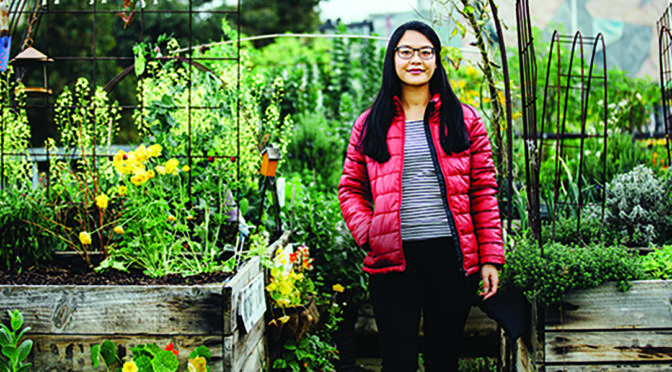
Researcher Ruby Chan joined the Fight Food Waste CRC as a PhD student through RMIT and she is already exploring innovative ways to recycle packaging more effectively to prevent food waste.

While undertaking a Master’s degree in design innovation and technology at the Royal Melbourne Institute of Technology (RMIT), Chan designed single-use tableware and food containers from plant-based polymers and repurposed agricultural fibres such as corn husks, which are fully compostable after use.

The innovation holds an Australian patent.

“There’s a real tug-of-war going on around sustainability and packaging,” says Chan, adding that Australia has committed to sustainable packaging targets in 2025, and has also joined a global target to halve food waste by 2030.

“Packaging — including plastic packaging — has an important role to play in reducing food waste,” she says. While consumers often have a knee-jerk reaction against packaging, the greenhouse gas emissions from producing and distributing food are often higher than the impact of appropriate packaging solutions, adds Chan.

She says there’s a packaging impact see-saw where increased packaging results in less food waste, but you have to balance out the environmental impact. “When you get everything right [appropriate design and amount of packaging] then the packaging impacts are less than if the food was to go to waste.

“We need to educate the wider community to differentiate between types of packaging and understand their use and role in product protection, and also how to dispose of them properly.” 

Chan is scoping out her research at present, exploring the different packaging types found in supermarkets. “This includes resealable packaging, modified atmosphere packaging for meats and even packaging that regulates the exchange of gases to keep vegetables fresh,” she says, adding that access to a wide range of industries through the CRC makes it the ideal place to do this research.
FightFoodWasteCRC.com.au

Water smart cities

Work at the Cooperative Research Centre for Water Sensitive Cities will play a vital role in safeguarding the water supplies of our cities, managing our waste as a resource and protecting cities from floods – making them water smart cities.


Vertical gardens

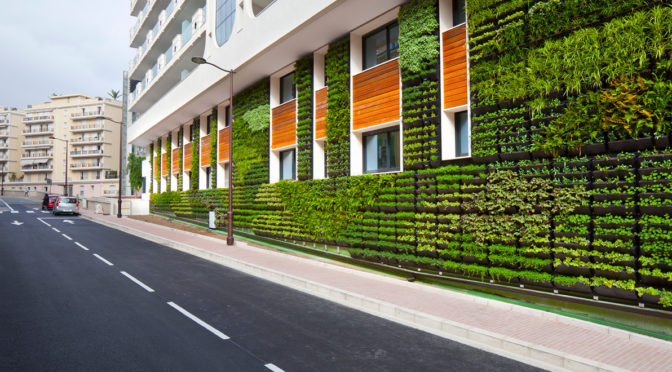
A space-saving way to beautify buildings, vertical gardens increase urban biodiversity and improve local microclimates. With water supplies under increasing demand, the gardens must be able to flourish using sustainable watering practices. Perth landscaping firm Deep Green and CRC partner, the City of Subiaco, designed a vertical garden for a local library. Tailored to the local climate and using native plants that require minimal water, it is the first vertical garden in WA and it thrived in its first summer. CRC researchers are developing technologies that will enable the gardens to treat greywater from the buildings for reuse in landscape watering and to flush toilets in the same buildings. In Australia, this could save up to 50% of typical household water usage.


Water smart cities: urban wetlands

“Cities in Australia and the world are all facing significant challenges related to growing populations, water being one of them. Liveability within the city is very much dependent on how we manage water,” says Professor Wong. Artificial wetlands constructed in our cities are one of the most promising technologies for a sustainable, water-sensitive future, providing a way to process stormwater run-off while creating public amenities. The bodies of water act as holding reservoirs, trapping sediments and pollutants, while vegetation provides a biofilter that removes and, in some cases, converts pollutants into harmless substances. The CRC for Water Sensitive Cities is working to improve the technology and adapt it to treat not only stormwater during wet spells, but also wastewater and polluted groundwater during dry periods.


Water smart cities: hidden treasure in our sewers

Eliminating nitrogen, phosphorus and potassium from wastewater is an energy-intensive process necessary to avoid toxic algal blooms in our waterways. But in the right formulation, these elements can be used to make a precious resource: agricultural fertiliser. Led by Dr Damien Batstone, researchers from the Advanced Water Management Centre at the University of Queensland are developing a technique that uses bacteria to extract the nutrients, transforming the waste into fertiliser. Initial testing on farms has been successful and, in an added benefit, the approach generates methane, which can be burnt to generate electricity, improving energy efficiency.

– Jude Dineley

watersensitivecities.org.au