All posts by Heather Catchpole

How to engage people in science

Featured image: Dr Alan Finkel AO at Science meets Parliament 2017 with Sally-Ann Williams, Engineering Community & Outreach Manager for Google Australia 

Dr Finkel spoke about how to engage people with science at the 18th Science meets Parliament event in Canberra today. One of his key messages was to develop your elevator pitch.

“Identify the key idea and write it up as a 100-word media release, then try it out on a politician.”

The need to develop simple, clear pitches to engage people with science was echoed by Buzzfeed political reporter and panellist Alice Workman, who gave the example of the viral ‘big chicken’ video on twitter as exemplifying the ‘simple, no BS’ idea that can rapidly get picked up in media. The video, released yesterday, was retweeted 35,000 times.

While science research often cannot be distilled into one thought bubble, like any news story, science stories need a simple pitch that everyone can understand, Workman told the group of 200 scientists gathered for the two-day event.

“I think the bigger problem is trying not to use complicated words, but also to whittle stories down to their basics. Journalists are under the pump, and journalism is a business.”

Four key tools to engage people in science

Engaging an audience beyond clickbait requires a deep understanding of your audience, access to influential people and being prepared, said Dr Finkel, who listed attitude, ambassadors, access and ammunition as four key tools for science advocacy.

He emphasised having an open attitude to engage people with science.

“You can’t assume your audience knows the facts. You can always assume they have the capacity to learn.”

He also said that it was important for science to have ambassadors, and that his office was in ‘early consideration’ of a program that mirrored internships such as the volunteer internship program which allows students and professionals to learn from US congress – and which funds them for up to one year to learn about the political process there.

“Could we create the same process for Australia? It takes a person of integrity and awareness to be an ambassador. We need to create the same qualities in ambassadors for science,” said Finkel.

Access to politicians is tempered by a difference in timescales at which science and politics operate, he said.

“Research timeframes are long; the window to operate in politics is short. How then can we hit the window where the evidence and the opportunities align? This event is one. Another is the Commonwealth Science council for which the PM is chair. This allows politicians and researchers to identify areas of shared opportunity in areas such as expanding the economy and navigating risks.”

Before approaching politicians, or others you need to engage, Finkel advocated preparing your pitch as ammunition for the encounter, as well as consulting widely, gaining supporters and identifying paths to funding.

Science meets Parliament is held over two days in Canberra and includes a televised National Press Club address, and a day at Parliament House, where delegates meet privately with parliamentarians.

Heather Catchpole

Have your call to action ready

Featured image: delegates make their way to meetings with members of Parliament at Science meets Parliament

Krystal, when you first attended Science meets Parliament (SmP), how did you prepare for your research pitch?

I first attended SmP in 2011, when I was a medical research scientist and a founding member of The Australian Early- and Mid-Career Researcher Forum. I had just been involved in the 2011 “Discoveries Need Dollars” campaign to protect medical research funding in Australia, and was keen to advocate not only for my research, but for the wider research sector.

The best way to prepare for any pitch is to know your audience. I was meeting with the Hon Judi Moylan, an MP from Western Australia, and so I researched her interests and background. I found that she was strong supporter of women’s issues and the diabetes community, and so was able to talk with her about the latest research in this area as well as ways to support women in science, technology, engineering and maths (STEM).

It was also important for me to connect with the other SmP delegates who were going to be in the same meeting to understand their key messages and how we could align and support each other’s objectives. We wanted to make sure each of us got time to pitch our own individual areas, as well as giving a positive, cohesive message about the importance of funding, fellowships and support for the future of research in Australia more broadly.

Lastly, I took some prepared material with me to leave behind. Not a big long report, but a one-pager outlining some of the issues facing researchers in Australia and some policy recommendations and actions to address the issues. It is important to put forward solutions, not just focus on the problems; to provide ideas and a call to action on what needs to be done to build Australia’s science and research future.

Did it have the desired outcome? What would you do differently next time?

I have been so excited over the past six years to see the increased support for women in STEM and the rising awareness of the need to support early- and mid-career researchers, who are our future science leaders.

This has been achieved by the work of many, many people and organisations, and I have been proud to be one of those voices advocating for change.

It is so important that our leaders and decision makers hear from a diversity of people on issues, so never underestimate the power of your voice to be a part of positive change and science advocacy.

Describe your experience at Science meets Parliament. What did you think of the event?

Attending SmP was a key part of my professional development in terms of understanding the political process and how to engage with politicians. It was an insight into a whole new world of how decisions about science and research are made and when and how scientists can contribute to policy agendas.

It was also an amazing networking experience – make sure you bring plenty of business cards and if you don’t have some, get some! It was fantastic to meet politicians from all across the political spectrum, and also to connect with other SmP delegates.

The connections I made at SmP with delegates who were passionate about science communication and science advocacy have stayed with me throughout my career and have created many ongoing opportunities over the years.  

What advice do you have for other researchers who are trying to turn their knowledge into action?

When communicating your message, think about it like storytelling – have a beginning, a middle and an end. To begin, outline the problem, the middle is what could be achieved if you address the problem, and the end is the call to action on what you want to see happen next.

Always have a clear “ask” on what you want the person you’re meeting with to do next – and be specific. If a Minister says, “I understand the problem – what do you think I should do about it?” you need to have a clear pathway for action.

It’s also important to talk about who benefits from your research and to make it relevant not only to politicians, but to the wider community in terms of what you are trying to achieve.

Be positive. Don’t just talk about the problem, talk about the solutions. In fact, make sure you spend more time putting forward ideas for action than repeating the issues.

Be creative – don’t just ask for more money. Politicians are always meeting with people asking for more funding for their area of interest, so you also need to be able to provide ideas on what can be done without increasing the spend. Perhaps it is a policy change, a reallocation of existing resources or a need to raise the profile and awareness of an issue. Make it personal and customised, so that the person you are meeting with has a clear sense of exactly what you are asking them to do next and how they can work with you to bring about change.

Be useful. Politicians are busy people, with limited time and resources. If you can be an expert advisor to them, a “scientist on call” to provide them with information, background and insights, then you can build a trusted and respected relationship.

What have been the major challenges in getting your science heard by policymakers in Australia, and how have you overcome them?

Nothing is more powerful than engaging with the public and being able to show policymakers that the community cares about your science as much as you do. Having support from those who will benefit from your research – whether they’re farmers, patients, industry or community groups – will always add weight to your messages.

Science is mostly paid for by taxpayers, so leveraging support from the broader community can boost your voice and help to get your message heard by policymakers.

How do you think the relationship between science and politics in Australia compares with other countries, and what lessons could we take from overseas?

I would love to see more internships, where scientists are embedded in politicians’ offices so that they can experience government processes first-hand and contribute their knowledge and analytical skills to policymaking.

The American Association for the Advancement of Science in the US has some incredible internship opportunities and I think Australia would benefit from schemes such as these. It would break down the barriers between science and politics, build greater understanding on both sides and create ongoing relationships between researchers and our elected representatives.

Click here to find out more about Science meets Parliament.

Make your expertise available

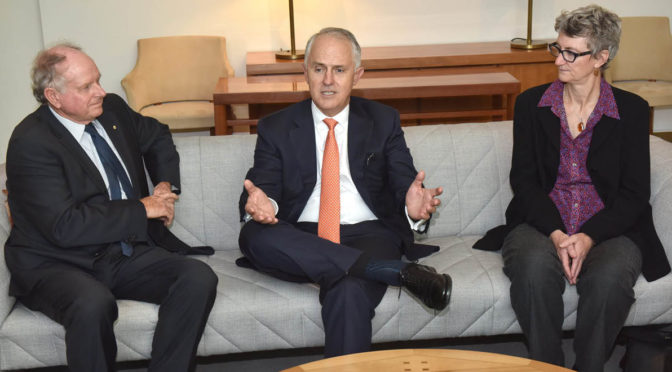
Featured image: President of Science & Technology Australia, Professor Jim Piper (left), hosts a meeting between Science meets Parliament delegates and Prime Minister Malcolm Turnbull (centre) in 2016

Darren, what’s your particular area of research and how can it help to inform policy in Australia?

I am a medical researcher, working to understand the biology of cancer and neurodegeneration, and use that knowledge to design new therapies. Both diseases have a huge health and financial impact in Australia and internationally, and with an ageing population this impact will only increase, with obvious implications for health funding and policy.

When you first attended Science meets Parliament, how did you prepare for your research pitch?

I really didn’t know what to expect so I was actually pretty underprepared. I won’t make that mistake this time!

Did your pitch have the desired outcome? What would you do differently next time?

I had a great discussion with a Greens senator from Western Australia who had a strong interest in environmental issues. We talked about the importance of science in understanding the environment and gathering data as a foundation for drafting good evidence-based policy in areas such as fisheries management and forestry. In some ways I didn’t really have to do much convincing! 

This time I plan to research the electorate of the parliamentarians I’ll meet and the issues that might be important in that context. I’ll make sure I understand the issues they have flagged as important to them and think about how my background and research interests might align with those issues. I also plan to ask them questions to find common ground for discussion.

Describe your experience at Science meets Parliament (SmP). What did you think of the event?

I was really enthused by SmP, and impressed by the level engagement of the politicians and policymakers who attended. I found it an invaluable learning experience and a fantastic opportunity to meet scientists across a broad spectrum of specialities.

Seeing the workings of government up close (if only briefly) was a real eye opener and the various briefings and workshops were constructive and informative. I still draw on the things I learnt there.

In many ways it was a catalyst to me becoming much more interested and active in science policy and communication.

What advice do you have for other researchers who are trying to turn their knowledge into action?

Keep a constructive mindset and focus on how science might help, rather than just presenting a list of problems or complaints.

Listen to the concerns and issues that are important and make yourself available as a source of expertise and advice on the process and outcomes of science by fostering relationships.

Be aware that politics and policy development work to different timelines and use different language to science.

Try to take a bipartisan approach.

What have been the major challenges in getting your science heard by policymakers in Australia, and how have you overcome them?

The most difficult barriers to progress have been the relatively regular turnover of ministers, a challenging funding environment (which always seems to dominate discussions) and hostile attitudes to evidence and rejection of “expertise” in some quarters. 

Overcoming these is really challenging and incredibly time-consuming. My approach is to attempt to build dialogue wherever possible, and to be proactive in making science relevant and interesting to the general public.

I take every opportunity I can to tell people about the outcomes and process of science. Public support for science might eventually translate into it being heard at the policy level.

How do you think the relationship between science and politics in Australia compares with other countries, and what lessons could we take from overseas?

I believe we can learn a lot from other countries. For example, we could benefit from aspects of science and policy partnering schemes employed in the UK, science diplomacy schemes in the US, and the appointment of ministers with relevant experience and qualifications in places like Canada.

Most government departments in the UK have a Chief Scientific Adviser (CSA) to provide scientific advice and PhD students can undertake three-month internship placements in the Government Office for Science.

The American Association for the Advancement of Science (AAAS) have a Centre for Science Diplomacy which aims to use to promote scientific cooperation as an essential element of foreign policy.

What are you most looking forward to at Science meets Parliament this year, and what do you hope to see more of in the future?

I look forward to meeting interesting and driven people, gaining new insights and hopefully gaining some traction with politicians about the importance of science and its ability to help drive the health and prosperity of Australians.

Click here to find out more about Science meets Parliament.

Dare to talk about your ideas

Featured image: Science meets Parliament delegates meet with former Prime Minister Tony Abbott in 2014

Anne-Sophie, what’s your area of research and how can it help to inform policy in Australia?

My area of expertise is in plant pathology and plant physiology. When I was a researcher, I worked on projects that aimed to improve crop production through biotechnologies. I left research in November 2015 and I am now working in science regulation.

I attended Science meets Parliament (SmP) in 2015 to talk about my advocacy efforts regarding diversity and gender balance in research. The projects I was running at that stage, such as an interview series known as The League of Remarkable Women in Science, offered a snapshot of Australian science, featuring women from all backgrounds and all areas of STEM.

These projects were a way to better understand what it means to be a woman in Australian science and what can be done to improve gender balance in research.

When you first attended Science meets Parliament, how did you prepare for your pitch?

Before the event, I made sure I spoke with people who had previously attended SmP. I also sought the advice of my mentors, who helped me define (and refine) my pitch.

The first day of SmP was incredibly useful, as it allowed me to fine-tune what I wanted to say and clarify my expectations from the conference.

Did it have the desired outcome? What would you do differently next time?

It did! I knew that attending SmP would be very productive, but I wasn’t expecting it would make such a difference. By attending SmP, I was able to initiate discussions with the Hon Karen Andrews, who went on to co-chair an event I ran for National Science Week later that year. I would have never dreamed of this happening!

Describe your experience at Science meets Parliament. What did you think of the event?

SmP was a very positive, even transforming event for me. It allowed me to interact with people I would have never met otherwise, and created opportunities that would not have arisen otherwise.

On a more personal level, attending SmP felt very special; I am originally from overseas, and I would never have imagined that I would converse with members of Parliament, let alone invite them to be part of events I was organising.

I have stayed in touch with some of the attendees I met during SmP. Many of them are now good friends of mine, or people I have run events and projects with. It has been a highly positive experience indeed!

What advice do you have for other researchers who are trying to turn their knowledge into action?

Dare to talk about your ideas! I used to think that the projects I was running were not important enough to attract interest from members of Parliament. I thought that I would waste their time. But it turned out to be the opposite. I believe researchers often underestimate the impact that our knowledge and projects can have.

What have been the major challenges in getting your science advocacy efforts heard by policymakers in Australia, and how have you overcome them?

The issues I was focusing on turned out to be of great interest to the members of Parliament I met. They all knew women working in science or had worked in science themselves, and they were convinced that changes had to be made. So I would say that it was actually quite easy to be heard by policymakers.

How do you think the relationship between science and politics in Australia compares with other countries, and what lessons could we take from overseas?

I have the feeling that building relationships between science and politics is somehow easier here in Australia than, for example, in France. I would never have had the opportunity of meeting members of Parliament in France the way I did during SmP. Such meetings are limited to high-ranked, senior scientists.

What do you hope to see more of at Science meets Parliament in the future?

I am hoping to see a greater focus on the crucial issues Australian science urgently needs to address. For example, what can be done to improve diversity in research? How do we stop losing so many talented early-career scientists? How do we address the harassment and bullying issues that are so prevalent?

Click here to find out more about Science meets Parliament.

Collaboration at a higher scale

Collaboration is a simple idea. You can teach it to a child: ask a child to share something and soon enough they will. Although they may initially react by turning away or looking down, given enough impetus they’re soon leaping around enjoying the benefits and challenges of shared play.

Scale it up to groups, organisations, industries, and academia, and it can seem complex. Industry has a commercial imperative; traditionally researchers sought more lofty goals or truths. Both universities and industry want to protect their IP. Working out the details is a legal wrangle; ensuring a shared vision when you don’t share the same location is a constant gamble.

Successful collaborations must have some form of flexibility or adaptability, yet large organisations can be slow in moving together, and in moving forward.

Technology has shifted the pace, as well as the level of expectation in terms of team collaboration. Tech companies have collaboration in their DNA, and cloud technology and automation are driving us faster towards collaborating closely – often with people we have never physically met.

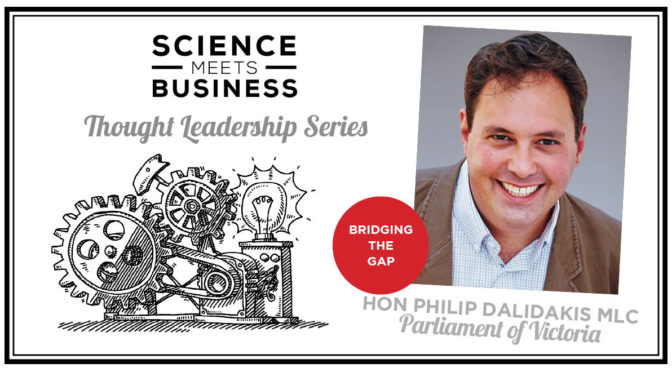
Our level of trust is changing, and is threatened by a jumpy global attitude towards people who are different from us, and the prevalence in our lives of internet connected devices. Yet as the Hon Philip Dalidakis MP points out, cybersecurity is a collaboration opportunity as much as it is a shared risk.

To remain relevant, to keep pace in this shifting landscape – to compete in a global marketplace and as part of the world’s fast-moving network of research that forms the global brains trust – that will not happen unless we dramatically shift our perspective.

Technology has tethered us to the world and taken away the scourge of distance. Suddenly we’re accessible as a country in a way we have never been before.

Collaboration opens up opportunities as well as presenting challenges. It has long been happening at the level of individuals, as people from industry, research, community and government form alliances of interests. Our challenge is now to upscale. And it’s a tough one.

We may not have the same processes and infrastructure as other countries in developing the impetus to push our burden of change, Sisyphus-style, up this mountain.  But as these thought leaders demonstrate, we are taking some great strides – and are at least like the reluctant child, now looking up towards the benefits of collaboration. 

collaboration

Heather Catchpole

Head of Content, Refraction Media

Read next: Jan Janssen, Senior Vice President of Design & Development at Cochlear, takes a look at multidisciplinary collaboration that underpins the world’s most sophisticated solutions.

Spread the word: Help Australia become a collaborative nation! Share this piece on collaboration using the social media buttons below.

More Thought Leaders: Click here to go back to the Thought Leadership Series homepage, or start reading the Digital Disruption Thought Leadership Series here.

How to move mountains

Collaboration has long been identified as an important requirement for success in business and indeed wider society. As the world changes, however, this requirement is changing too, and in many instances it is not just important, but vital for success.

Those organisations that struggle to make it central to their operations can be at a serious disadvantage. It is a case of collaborate or crumble.

We live in a world that is very complex and getting more so. This means today’s societal challenges are also getting harder to resolve. And as much as we would like simple solutions to complex problems, they usually don’t exist. Sophisticated, multi-faceted solutions are more often the only way to address complex challenges.

At Cochlear we are very familiar with such a challenge: hearing loss. Hearing loss is already a recognised global public health issue, with the World Health Organisation estimating that over 360 million people worldwide suffer from disabling hearing loss.

It is a health issue with significant medical, social and economic impacts. And with populations in many countries getting older, the problems are likely to get amplified.

Addressing the hearing loss challenge requires a sophisticated, multidisciplinary approach. The technology challenge alone involves over 30 different science and engineering specialities required to develop an implantable hearing solution that addresses severe to profound hearing loss.

And that is just the product, which on its own won’t do anything. It needs to be clinically validated for different age segments and approved by more than 20 regulatory bodies around the world. Policy makers and health insurers need to be convinced of the technology’s efficacy in order to improve access and funding. And we need to work with industry organisations, consumer groups, government and media to elevate the importance of hearing loss and the treatments available.

This of course can’t happen by a single person or team – it requires collaboration between numerous disciplines and professionals who contribute to different parts of the problem at different stages.

As we work to address more complex problems, we are also facing a paradox: on the one hand we need deeper and deeper expertise in specific areas because breakthroughs in one specialty area can have huge impacts on the total solution. And on the other hand we need some breadth too – specialists who can reach out from their niche to the broader teams that they are working with, both locally and globally, to understand the big picture problem and to help construct the end-to-end solution. Collaboration and being able to connect the dots are critical skills as they allow the solution to work in the real world.

Collaboration is vital in today’s world. It enables problem solvers to work together, extract value from diverse speciality areas and focus on large, important challenges. Without it we would crumble, but with it we can build a better future.

Jan Janssen

Senior Vice President, Design & Development, Cochlear

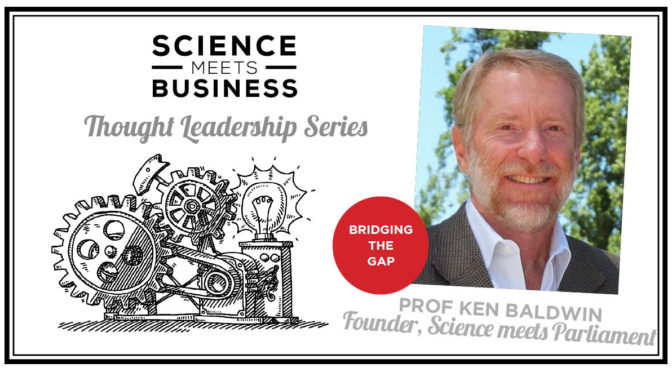
Read next: Professor Ken Baldwin, Director of the Energy Change Institute at ANU and founder of Science meets Parliament, offers a way forward for evidence-based policy in Australia.

Spread the word: Help Australia become a collaborative nation! Share this piece on a multidisciplinary approach to collaboration using the social media buttons below.

More Thought Leaders: Click here to go back to the Thought Leadership Series homepage, or start reading the Digital Disruption Thought Leadership Series here.

Speak up for STEM and give facts a chance

As science and technology researchers, practitioners and enthusiasts, we feel very strongly that our community should think analytically and use scientific information to inform their decisions, as individuals and as a nation.

We hope our leaders in politics, business and in the media incorporate the lessons and findings of science and technology into their decision-making about health, energy, transport, land and marine use – and recognise the benefits of investing in great scientific breakthroughs and technological inventions.

But how do we ensure critical thinking is applied in decision-making? How do we incorporate and apply scientific findings and analysis in the formulation of policy, and encourage strong, strategic investment in research?

The only way is to become vocal and proactive advocates for STEM.

Scientists and technologists must see ourselves as not only experts in our field, but also as educators and ambassadors for our sector. Scientists are explicitly taught that our profession is based on logic; that it’s our job to present evidence and leave somebody else to apply it.

For people who’ve made a career of objectivity, stepping out of that mindset and into the murky world of politics and policy can be a challenge, but it’s a necessary one.

The planet is heading towards crises that can be solved by science – food and water security, climate change, health challenges, extreme weather events. It’s arguably never been more important for scientists and technologists to step outside our comfort zone and build relationships with the media, investors, and political leaders. We need to tell the stories of science and technology to solve the species-shaking challenges of our time.

A plethora of opportunities exist for STEM researchers and practitioners to improve and use their skills in communication, influence, marketing, business, and advocacy. As the peak body representing scientists and technologists, Science & Technology Australia hosts a variety of events to equip STEM professionals with the skills they need, while connecting them with the movers and shakers in those worlds.

Science meets Parliament is one of these valuable opportunities, and has been bringing people of STEM together with federal parliamentarians for 18 years. Others include Science meets Business and Science meets Policymakers.

We can provide the forum, but it’s up to STEM professionals to seize the opportunity by forging relationships with our nation’s leaders in politics, business and the media. We must ensure the voice of science is heard and heeded – not just on the day of an event, but every day.

Currently STEM enjoys rare bilateral political support; a National Innovation and Science Agenda; and a new Industry, Innovation and Science Minister, Senator Arthur Sinodinos, who has indicated his intention to continue to roll it out.

As we encounter our fourth science minister in three years, however, we cannot rest on our laurels and allow science and technology to slide down the list of priorities. Bigger challenges are also mounting, with the profession of science correspondent virtually dead in Australia and the international political culture favouring opinion and rhetoric over established fact and credibility.

Scientists and technologists must resist their natural tendency to humility, and proactively sort the nuggets of truth from the pan of silty half-truth. We must actively work to influence public debate by pushing evidence-based arguments into the media, and into the political discourse.

When our society starts assuming that we should make substantial and long-term investment in research; when the methods and findings of science and technology are routinely incorporated into shaping policy and making important decisions for the nation – we’ll consider our job to be well done.

Kylie Walker

CEO, Science & Technology Australia

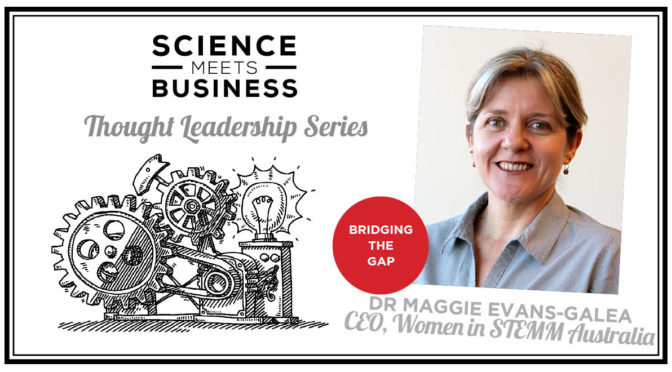
Read next: Dr Maggie Evans-Galea, Executive Director of ATSE’s Industry Mentoring Network in STEM, paints a picture of Australia’s science and innovation future – one that requires a major cultural shift.

Spread the word: Help Australia become a collaborative nation! Share this piece on science and technology using the social media buttons below.

More Thought Leaders: Click here to go back to the Thought Leadership Series homepage, or start reading the Digital Disruption Thought Leadership Series here.

Creating a secure and resilient economy

Collaboration is a term frequently used in business and across many industries. It’s one I have come to hear often across my Small Business, Innovation and Trade portfolios, and it is also a term that causes much confusion – what exactly is collaboration?

I am regularly asked this when I talk about collaboration and why I think it’s important. I concede that it can sometimes be thrown around so much that it starts to look like a meaningless buzzword, and has perhaps become something of a cliché used by people when they want to look like they’re solving problems or pursuing innovation.

That being said, I genuinely believe in the importance of collaboration. It’s important that we work with others, that we share our knowledge and our resources to get better outcomes to the challenges we are facing.

With the world becoming increasingly digitised, it has never been more important for collaboration to occur across all sectors of our own economy, and across global economies.

The online world knows no geographical boundaries. So we have no choice but to collaborate. We need to work with our industry bodies, with global organisations and other governments to ensure we have the best capabilities to deal with whatever comes our way.

The challenge of cyber crime

The ever growing cybersecurity industry is the perfect example of why we need global collaboration. Cybersecurity not only safeguards the digital economy so that it can continue to grow, generate jobs and create a resilient economy into the future, it also ensures our online privacy and prevents cyber crime.

The Internet of Things (IoT), along with other technologies, is creating an almost totally connected world – gone are the days when we only needed to worry about protecting our personal computers. Instead we now need to protect vast networks of devices that span our offices, building sites, shopping centres, public transport systems and homes.

In 2016, the average Australian household had nine internet connected devices. While this may seem like quite a substantial number, it is expected to more than triple to 29 by 2020 and will also include devices such as fridges, televisions and indeed entire households that will run remotely.

Predicting patterns of cyber crime

While the IoT offers exciting opportunities to enhance our lives, it also offers opportunities for hackers to commit cyber attacks. Unlike traditional forms of crime, these attacks don’t just come from people living in your neighbourhood, state or country, they can come from anywhere in the world at any time of the day and from any device.

The only way we can ensure that we are best prepared to deal with these attacks is if we can predict patterns of cyber crime and learn how to mitigate it – this is where collaboration becomes crucial.

Shared knowledge is not just a good way to combat cyber crime, it is in fact the only way we will be able to succeed against it. The biggest problem with combating cyber crime is the speed at which technology advances – meaning it is vital that various agencies and organisations around the world are working together and sharing their knowledge and experience concurrently.

While the benefits of working together to combat the world’s biggest form of crime has its benefits, collaboration across the cybersecurity industry is itself is very valuable with the potential to create huge economic benefits for those in the game. Currently, cybersecurity industry’s estimated worth is over US$71 billion globally. This value is expected to double by 2020.

This industry has the potential to be a huge driver for Australian jobs and the economy, which is why Victoria is investing heavily in collaboration and collocation of allied interests.

In the past two years we have created Australia’s biggest cybersecurity cluster right in the heart of Melbourne. This hub includes Data61, the digital research arm of the CSIRO and Australia’s leading digital research agency; and the Oceania Cyber Security Centre, which brings together eight Victorian universities and major private sector partners.

Collocating at the Goods Shed in Melbourne’s Docklands precinct, the Oceania Cyber Security Centre will also work in partnership with Oxford University’s world-leading Global Cyber Security Capacity Centre, Israel’s Tel Aviv University, and the State of Virginia, the largest defence state in the USA.

These organisations and initiatives are undoubtedly reputable and capable of doing great things. Combining their knowledge and resources in a collaborative way creates an internationally connected cybersecurity powerhouse.

In Victoria, we are now leading Australia’s cybersecurity industry and emerging as a dominant player in the Asia Pacific but we cannot do it alone – we have acknowledged that, we have made moves to change that. In doing so we are increasing our cybersecurity capabilities and helping our allies to increase theirs.

While cybersecurity is a great example of how collaboration is currently working to secure the future of our digital economy, in many jobs and across many industries the situation is the same. In truth, it is simple – if you don’t work with others and learn from their mistakes or value their skills, you are sure to fail.

Hon Philip Dalidakis MP

Victorian Minister for Small Business, Innovation & Trade

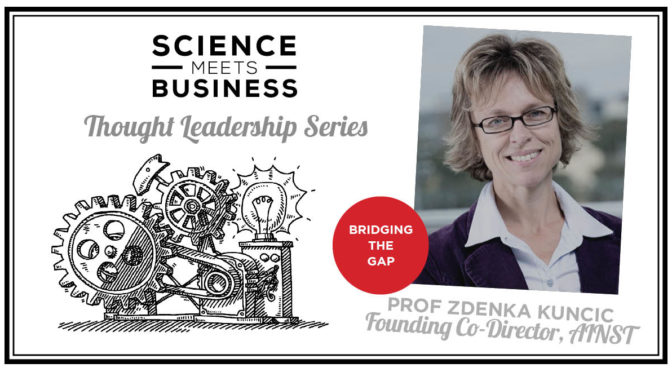
Read next: Professor Zdenka Kuncic, Founding Co-Director of AINST, sheds light on opportunities to collaborate and accelerate through the U2B model.

Spread the word: Help Australia become a collaborative nation! Share this piece on collaboration against cyber crime using the social media buttons below.

More Thought Leaders: Click here to go back to the Thought Leadership Series homepage, or start reading the Digital Disruption Thought Leadership Series here.

Crossing the cultural divide

Australia’s future health and economy is a vibrant, interactive ecosystem with science, technology, engineering and maths (STEM) at its core. STEM is central – and essential – to Australia’s ongoing success in the next 50 years. Australia is considered an incredible place to do cutting-edge research, pursue blue-sky ideas and commercialise innovative products. Pioneering discoveries fuel the innovation process. Students cannot wait to enrol in science and maths. Policies are developed using peer-reviewed evidence and broad consultation. Aspirational goals are backed by practical solutions and half of our STEM leaders are women – it’s the norm.

Sounds good doesn’t it?

To excel in science and innovation, however, Australia needs a major culture shift. We can all ‘talk the talk’, but as OECD figures demonstrate, we cannot ‘walk the walk’. Australia rates lowest compared to other OECD countries when it comes to business-research collaborations – not just large businesses, but small to medium-sized enterprises as well.

Academia blames industry. Industry blames academia. Everyone blames the government. It’s time to turn the pointing finger into a welcoming handshake and engage across sectors to actually make innovation happen.

Literally thousands of researchers in this country want to see our academic and industry leaders reach across the divide and make change happen. With every decision made, their future is impacted.

Paradigm-shifting science and innovation takes time and requires a diverse workforce of highly-skilled researchers and professionals that specialise in these fields.

The lack of a skilled workforce and poor collaboration are significant barriers to innovation. As part of the National Innovation and Science Agenda, the industry engagement and impact assessment aims to incentivise greater collaboration between industry and academia by examining how universities are translating their research into social and economic benefits.

Australian academic institutions have begun to break down silos within their own research organisations with some success. In medical research for example, the breadth and scale of interdisciplinary collaborative projects has expanded exponentially – spanning international borders, requiring a range of skills and expertise, terabytes of data, and years of research.

Research teams have become small companies with synergistic subsidiaries – diagnostic, basic, translational and clinical teams – working toward a common goal.

Yet their engagement with industry is low. Industry struggles to navigate the ever-changing complex leadership structures in higher education and research. When you speak one-on-one with researchers and industry leaders, however, they seem almost desperate to cross the divide and connect! It’s a detrimental dichotomy.

How can we harness the full potential of our research workforce?

We can energise innovation by fostering a culture that values basic research as well as translation of discoveries to product, practice and policy. A culture that opens the ivory tower and is not so sceptical of industry-academia engagement. That responds to failure with resilience and determination rather than deflating, harsh judgement. That sees the potential of our young researchers.

We need to lose the tall poppy syndrome and openly celebrate the success and achievement of others. We must hold ourselves to higher standards and in particular, women must be equally recognised and rewarded for their leadership.

As a nation, we must ensure we are prepared and resourced for the challenges ahead. Not only do we need the best equipment and technologies, but we also need a readily adaptable workforce that is highly-skilled to address these issues.

To facilitate a culture shift and increase engagement with business and industry, we need to provide researchers the skills and know-how, as well as opportunities to hone these skills. Young researchers are ready to engage and hungry to learn; and they must be encouraged to do so without penalty.

They then need to be connected with industry leaders to identify the qualities and expertise they need to strengthen, and to extend their network.

We can change this now. The solution is not expensive. It is simply about letting down our guard and providing real opportunities to meet, to connect, to network, to exchange ideas and expertise – and to share that welcoming handshake.

Dr Marguerite Evans-Galea

Executive Director, Industry Mentoring Network in STEM, Australian Academy of Technological Science and Engineering, Melbourne

CEO and Co-founder, Women in STEMM Australia

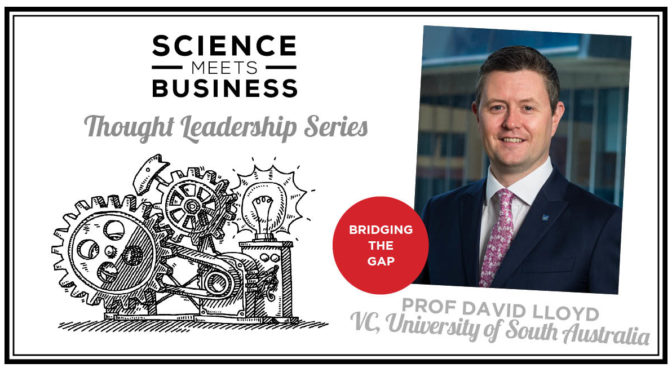
Read next: Professor David Lloyd, Vice Chancellor of the University of South Australia, believes university and industry have a shared purpose.

Spread the word: Help Australia become a collaborative nation! Share this piece on science and innovation using the social media buttons below.

More Thought Leaders: Click here to go back to the Thought Leadership Series homepage, or start reading the Digital Disruption Thought Leadership Series here.

Evidence-based policy in action

Science has evolved over many centuries to become an integral part of modern society, underpinning our health, wealth generation and cultural fabric. This process has been distinguished by an implicit collaboration between science and business, government, and the wider community.

However, the integration of science with evidence-based policy has – in this century – often been wilfully disregarded by politicians in many countries, who either cherry-pick or completely ignore the science when it does not accord with their political agenda. Most recently in the United States, we have seen “alternative facts” supplant scientific and other evidence bases in the “post-fact” era.

While surveys continue to show that the vast majority of people still support and believe in the benefits of science, the politicisation of science has inevitably raised seeds of doubt, or polarised many people’s world view.

So it is important now, more than ever, to reinforce with politicians the value and respect for science in the creation of evidence-based policy.

In Australia, a key connection between science and politics is the annual “Science meets Parliament” (SmP) event, which began in 1999, and which today is organised by Science and Technology Australia.  This unique event, that each year brings together hundreds of scientists and the Australian Parliament, owes its success to the way in which it saturates Parliament with science for two days; the great majority of parliamentarians are engaged in the all-pervasive nature of this important scientific exchange.

There are three key outcomes of SmP that distinguish it from a lobbying event:

1. Scientists both young and old – through their enthusiasm for their research – convey the excitement and the benefits of science to parliamentarians, thereby helping to close the “virtuous cycle” that supports science in society;

2. Scientists, at the same time, develop an appreciation for the process of government, contributing significantly to their professional development;

3. Finally, lasting networks are created between parliamentarians and scientists. They go beyond the meetings at SmP, and enable scientific engagement with Parliament to extend more broadly, both geographically and throughout scientific and parliamentary careers.

These networks, and the collaborations that they engender, are key to ensuring the ongoing contribution of science to government decision-making and evidence-based policy, and thereby to enhancing the role of science in our society.

As is the case with science and industry, it is important to continuously innovate in our governance processes; without this, the political system cannot respond to the changing needs of the community.

Science, through events like Science meets Parliament, is a key part of that evolution. We must work tirelessly to reinvigorate this engagement, and to counter those who might seek to cherry-pick and subvert the science that underpins our evidence-based society.

Professor Kenneth Baldwin

Director, Energy Change Institute, Australian National University

Founder, Science Meets Parliament

Read next: Kylie Walker, CEO of Science & Technology Australia, sheds light on the platforms that allow researchers to forge relationships with Australia’s decision-makers.

Spread the word: Help Australia become a collaborative nation! Share this piece on collaboration towards evidence-based policy using the social media buttons below.

More Thought Leaders: Click here to go back to the Thought Leadership Series homepage, or start reading the Digital Disruption Thought Leadership Series here.

Bringing business to uni

Prime Minister Turnbull coined the catchphrase “collaborate or crumble” in December 2015 as he launched the $5 billion National Innovation and Science Agenda (NISA).

The phrase replaced the longstanding “publish or perish” dictum to engage university researchers with NISA’s ambitious goals. Since then, universities have implemented several of the recommendations from the Watt Review, which was tasked with bringing into force changes to university research funding models to incentivise collaboration with business.

NISA simultaneously introduced financial incentives and initiatives to boost the innovation performance of Australian business.

Some of these opportunities can be leveraged within the framework of the business to business (B2B) model. Considerably more could be leveraged from the still relatively unexploited university to business (U2B) model.

Bringing university to business

A key advantage of the university to business model is that universities aren’t driven by the company bottom line. In principle, this should make cooperation and collaboration significantly easier to manage than in the B2B model.

To take advantage of the NISA incentives and initiatives, however, new U2B collaborations need to be established.

This is a challenge, because university research and Australian business have traditionally existed in parallel universes. One practical strategy is universities opening the doors to their own research hubs.

Established as “knowledge transaction spaces”, similar to industry-led Knowledge Hubs, university research hubs are ideal for university to business interactions because they engage researchers from a broad range of disciplines, with diverse skills sets – a veritable smorgasbord of intellectual resources all in one place.

The Charles Perkins Centre Hub at the University of Sydney, for example, is a melting pot of researchers in metabolic disease, and was established deliberately to be highly interdisciplinary and de-shackled from conventional biomedical research approaches.

Indeed, its approach is strongly aligned with the “convergence” strategy advocated by the Massachusetts Institute of Technology in their 2016 report, based on an earlier white paper.

The University of Sydney’s newest research hub is the Sydney Nanoscience Hub, part of the Australian Institute for Nanoscale Science and Technology. Although STEM-focused, nanoscience and nanotechnology involves diverse disciplines and has broad applications, some of which cannot even be imagined.

While quantum computing is attracting enormous interest from business, some researchers are looking to biology for inspiration to design next-generation nanotechnology devices. Why biology? Because every interaction between molecules in living organisms occurs on nano-scales.

In fact, some proteins are even referred to as “nano-machines” and because they operate so efficiently in such a busy, compact environment, they potentially hold the clue to discovering how to make practical quantum computers work in the real world.

Similarly, bio-inspired nanotechnology devices, designed to emulate brain-like adaptive learning, open up the possibility of neuromorphic “synthetic intelligence” hardware in next-generation autonomous systems.

Such synthetically intelligent robots could be sent to remote, unexplored places, such as the deep ocean or deep space. They could be used in place of real humans without requiring any pre-programming; information processing and critical decision making would occur on the fly, in real time – just as if they were real humans.

Collaborate and accelerate

The benefits of collaboration may seem obvious, but sometimes it is worth stating the obvious from different perspectives. When people interact, they self-organise, forming groups that operate collectively to achieve imperatives as well as unexpected outcomes.

These outcomes would otherwise not be possible at the individual level – the whole is indeed greater than the sum of its parts. We experience this every day now through social media.

In the internet age that we find ourselves in today, it has never been more important to collaborate, simply because of the sheer volume of information we have access to and the increasing rate at which this data is growing.

We cannot feasibly keep up with this as individuals, but as teams, we can.

Knowledge can be gained by individuals much more effectively through interactions with others than by searching the internet or reading a research publication.

That new shared information can be applied more efficiently. This means that through collaboration, researchers and business can accelerate their progress on the path to success, however they each choose to measure it. 

Professor Zdenka Kuncic

Founding Co-Director, Australian Institute for Nanoscale Science and Technology, The University of Sydney

Read next: Professor Andrew Rohl, Director of the Curtin Institute for Computation, compares academic collaboration with partnerships that involve industry. 

Spread the word: Help Australia become a collaborative nation! Share this piece on the university to business collaboration model using the social media buttons below.

More Thought Leaders: Click here to go back to the Thought Leadership Series homepage, or start reading the Digital Disruption Thought Leadership Series here.

Coming to the table

While it may not be immediately obvious, universities and industry have a shared purpose: universities focus on educating people and creating new knowledge; industry seeks to be more innovative, productive and diverse. Our shared purpose is in delivering solutions to help tackle social challenges and drive economic growth.

We’re in the midst of a global knowledge economy and universities are a vital centre of competence for end-users such as industry. Industry and the professions get the benefit of universities’ research and intellectual capacities. Universities get access to stimulating questions, new challenges and opportunities for our students.

Collaboration works when you have something the other party wants. Being open to collaboration begets other collaboration and it leads on from there.

That being said, universities are a business like any other. We may not be commercial organisations but we’re pro-commercial. And in business you have to supply what the market wants.

The European universities where I began my career are active collaborative institutions and I saw an opportunity to bring this ethos to the University of South Australia, an institution that has a history of working with industry and the professions.

In the four years that I have been Vice Chancellor of the institution I have seen the growth of more than 2500 partnerships that range from guest lectureships to program advisory boards to co-creators of program content.

One great example of collaboration is the one we have with Hewlett Packard Enterprise (HPE). We co-developed a 4-year Honours degree, the Bachelor of Information Technology (Honours) (Enterprise Business Solutions) which offers 12 month paid internships for students. HPE has also become an Anchor Industry Partner in our Innovation and Collaboration Centre for students and start-ups and they’re a Foundation Partner in our new Museum of Discovery that’s due to open in 2018.

I have also seen the breaking down of silos within my own institution as we plan our new education precinct, which will be a focal point of educational innovation and enterprise.

The first partnership is with the State government, the schooling sector and the university. This was followed by partnerships between our engineering people, our environmental management experts, our architects and interior designers to build a precinct that will ultimately accommodate all facets of education.

We’re extending transdisciplinary approaches to education by engaging social work, psychology and other areas to contribute to the learning and holistic development of young people.

Having sat on both sides of the table I have seen collaboration work, and not work. It works when you have a shared vision of the project and you can see what each party stands to gain. You also need to know to walk away early if you know something is not going to work.

Ultimately collaboration allows you to do what you do even better.

I don’t know if the question is ‘Collaborate or crumble’. Collaborate or become increasingly irrelevant might be more apposite.

Professor David Lloyd

Vice Chancellor, UniSA

Read next: Hon Philip Dalidakis MP, Victorian Minister for Small Business, Innovation & Trade, discusses cybersecurity as a perfect example of turning a challenge into a collaboration opportunity.

Spread the word: Help Australia become a collaborative nation! Share this piece on university partnerships using the social media buttons below.

More Thought Leaders: Click here to go back to the Thought Leadership Series homepage, or start reading the Digital Disruption Thought Leadership Series here.

Research collaboration in the startup scene

Australia produces great research. But despite this, we somehow still manage to rank last in the OECD for collaboration between research and business.

It’s a disconnect that is well documented: a 2014 Department of Education report noted a low proportion of researchers working in business and academic industry research publications. A report by the Australian Academy of Technology and Engineering revealed a distinct lack of university research collaboration with industry and other end users. And the recently released Innovation and Science Australia report declared Australian industry unable to commercialise research.

Though the naysayers may abound, all hope is certainly not lost. There are steps that Australian research institutions and the startups that represent the future of business can take to overcome the disconnect and engage in effective research collaboration.

1. Establish a direct link between research institutions and startups

Working in research and industry silos will always present a challenge to collaboration. So, the first step to bridging the research collaboration gap is to create a direct line of access between universities and startups.

The easiest way to reach the largest number of startups is to create direct lines to innovation hubs, such as technology-focused incubators that work with startups and scale-ups that could benefit from accessing the research capabilities that are nurtured within Australian universities. 

This could take the form of a mutually-beneficial partnership, such as an industry secondment program for PhD students. Students would benefit from industry experience, while industry gains access to cutting-edge research capabilities and a potential talent pool for recruitment.

Whatever the partnership might look like in practice, by finding mutually beneficial solutions and cementing them within a concrete program, collaboration will likely be a natural outcome.

2. Understand and account for your differences

In any collaboration, working together requires working around the limitations of the other party.

As an example, the open nature of academic science can at times conflict with industry needs to protect the technologies they use. Academic research often moves more slowly due to its long-term focus, compared to industrial R&D that is driven by commercial deadlines and time-sensitive product development.

Understanding these differences upfront will allow collaborative measures and hedges to be set in place when forming a research collaboration to ensure neither party’s prerogatives are being infringed upon.

3. Identify and work towards common ground in your research collaboration

Once links have been created and differences understood and catered for, common ground can be identified, interests aligned and goals established.

Research could listen to the pain points of industry and formulate research that addresses the pain points, rather than trying to pitch a predefined project.

Conversely, industry might consider involving university research throughout the lifecycle of a project, rather than in an ad hoc fashion, to create a long-term culture of interdisciplinary collaboration and give greater meaning to research projects.

Regular interaction in the form of formal and informal meetings will ensure the research collaboration stays on track to meeting the objectives of both parties – particularly as they are likely to evolve.

By implementing all the above, our startups may have some chance of tapping into the brains of our prized research institutions to achieve sustainable and accelerated growth in the future.

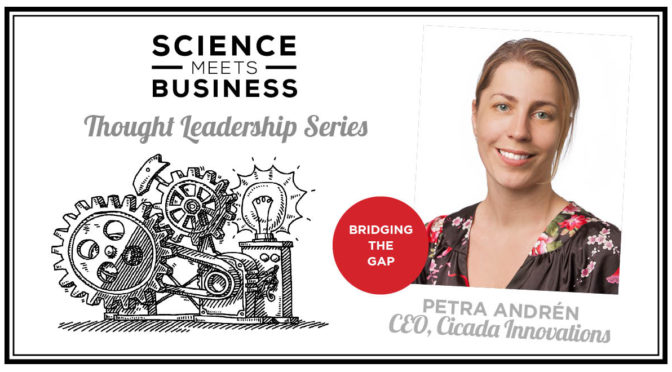
Petra Andrén

CEO of Cicada Innovations

Read next: Professor Sharon Bell, board member of Ninti One, examines different approaches to collaboration and debunks the myth of individual creative genius.

Spread the word: Help Australia become a collaborative nation! Share this piece on research collaboration using the social media buttons below.

More Thought Leaders: Click here to go back to the Thought Leadership Series homepage, or start reading the Digital Disruption Thought Leadership Series here.

Working collaboratively means welcoming tension

Most of us recognise that in specific situations, collaboration is the ideal mode of delivery. We are also getting instinctively better at understanding when it is needed.

For example, we know we need to collaborate if achieving our aims requires a creative solution developed in a complex environment, breadth of expertise, or buy-in and shared ownership from stakeholders. Interestingly, these are often the higher impact challenges or issues we face.

We also know that working collaboratively is almost always challenging. Collaborative efforts are prone to failure and often don’t quite deliver on our expectations. 

Knowing all these things increases the importance of being able to collaborate well when it is required. But this requires diagnosing why it so often goes awry.

Through some 400 collaborative projects over the last decade at Collabforge, we’ve learned a great deal about working collaboratively. We’ve found that understanding the challenges provides valuable cues for setting yourself up for success.

1. Missing “chair”

You and I know what collaboration means, but as a society, we don’t.

There is a gap in our shared understanding. Because collaboration is in our DNA, we get fooled into thinking that we have a common reference point we can rely on – a “chair” we can sit in when needed.

But when it comes to working collaboratively, there are no broadly accepted definitions or methodologies that we can take for granted like there are with project management. So often we fall on our bums when we try to sit in this missing chair.

2. Missing “team”

Collaboration is a team sport.

All great teams need to build their collective capability together. No one would ever expect a team to win a match without first practicing as a team.

Yet organisations regularly form new teams to tackle new challenges, without resourcing the teams to build collaborative capability prior to being expected to deliver.

We expect professionals to be competent collaborators straight out of the gate, in whatever situation we throw them at. However, we’ve likely all had the experience of feeling we are great at working collaboratively, only to discover that in certain situations and with certain people, we aren’t so great after all.

3. Missing “elephant”

When collaborating with other organisations, an implicit question is always, “will we ride your elephant or mine?”

To get their work done, collaboratively or otherwise, organisations rely upon a large and complex integration of culture, processes and tools – an “elephant” their staff members ride.

No one is excited to get down off their elephant and climb onto another unknown and likely cantankerous beast. And frankly, this isn’t a very collaborative undertaking.

However, taking a more collaborative approach and creating a new shared set of culture, tools and processes is often expensive, time intensive and risky. This amounts to launching and managing an elephant breeding program.

Even the task of deciding who will take on these risks, costs and energy can kill a collaboration before it begins.

Preparing to succeed when working collaboratively

1. Invest in building collaboration capability proportionately to the impact you expect it to deliver.

If the outcomes from an initiative are 80% dependent upon great collaboration, then use this percentage as an indicator of the level of resourcing you should commit to building and supporting collaborative capability.

2. Invest time upfront to establish common ground.

Whenever collaboration is an important part of the mix, you’ll get the most out of thinking and talking about it early in the process. Discuss key terms, concepts and assumptions about processes, tools, and, of course, the expected outcomes and impact of your collaboration.

3. Practice working collaborating as a team, separately from the responsibility of delivery.

Ideally from the outset, create opportunities for collaboration that are fun, engaging and decoupled from delivery. For example, ask the group to build a prototype of the imagined outcome in Lego.

4. Facilitate a regular rhythm of collaborative interactions.

The biggest risk to collaborative initiatives is flagging momentum and dropping balls in handovers between organisations. Having a regular and facilitated rhythm of interaction is key to maintaining momentum, continuity and building collective capability.

5. Design for growth while welcoming tension.

Collaborations generate value through the process of resolving tensions within groups. For example, every new participant will necessarily introduce tension and challenges as they are brought up to speed.

Without the challenge of diverse ideas and approaches, groupthink reigns, with peer pressure and conformity shutting down the “hard conversations”. When this happens, the fitness and value of the group’s output drops dramatically.

Therefore, it’s essential to enter collaborations expecting diversity and the challenge of ideas, but to also design processes for resolving these tensions before progressing to the next stage.

While collaboration still largely inhabits the realm of “art”, the likelihood of success is dramatically increased by practice that is supported by theory and method. The first step in working collaboratively is to build shared understanding of the inherent barriers so that we can align better together to overcome them.

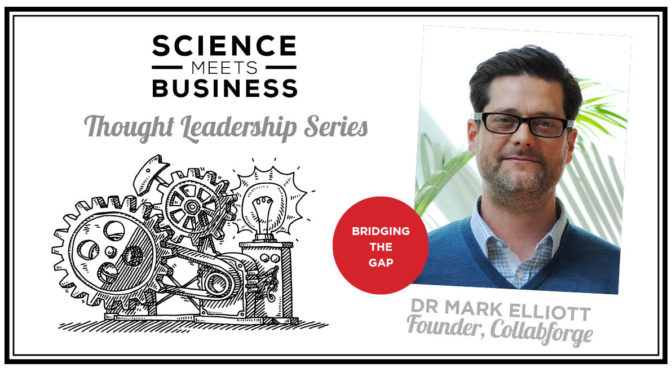
Dr Mark Elliott

Managing Director and Founder, Collabforge

Read next: Petra Andrén, CEO of Cicada Innovations, uncovers the collaborative mechanisms that are vital to successful research, industry and startup activity.

Spread the word: Help Australia become a collaborative nation! Share this piece on working collaboratively using the social media buttons below.

More Thought Leaders: Click here to go back to the Thought Leadership Series homepage, or start reading the Digital Disruption Thought Leadership Series here.

The art of collaborative relationships

When we speak of innovation we increasingly couple it with collaboration. Collaboration is regularly promoted as a positive attribute and a productive means to an end.

In my own research, I promote collaboration as a mechanism for including more women in scientific teams in male-dominated fields, and as a mechanism to sustain research when individuals are juggling the competing demands of life and family.

In this context, at one end of the spectrum we might be speaking of the collaboration that characterises teamwork within an organisation, while at the other end of the spectrum we might be speaking of international scientific collaboration that draws geographically dispersed networks together.

My research over the past decade on women in the academy and women in science has heightened my interest in the art of collaboration and how it might encapsulate ‘the way we do things around here’ – our organisational culture.

I am particularly interested in the way in which men are sponsored and socialised into strategic relationships, particularly with business and industry – an opportunity not readily available to most women.

Yet we know little about the social processes that sit behind the scientific production of knowledge, and most of our recognition and reward systems focus on the outstanding individual.

The myth of individual creative genius is a myth that my colleagues who work with remote Indigenous communities – just like those in large international scientific research teams – know is culturally and historically specific.

Those who are privileged to work with Indigenous communities know that collaboration based on deep respect of different ‘ways of seeing,’ encoded in art, language and religion and formulated over extremely long periods of time, is central to sustaining collaborative relationships. Longevity of relationship is particularly highly valued, and the time taken to build respectful collaborative relationships and trust is a critical part of this sustained engagement.

They also know that while knowledgeable individuals are involved, the knowledge is collectively owned and accessible only through well-established protocols.

The art of collaboration is far more than a set of pragmatic, instrumental practices. With a degree of candour, I should state that I am not always a great collaborative partner. I put this down to my academic identity being formed in the discipline of anthropology where the ‘rite de passage’ was years of field research alone in a remote village.

This prepares the aspiring researcher for collaboration from a position of heightened ignorance but not necessarily with academic peers with a common knowledge base. I also evidence deficiencies in two attributes essential to collaboration: time and discomfort with failure.

Innovation demands the time to build teams, network, establish cross-sectoral collaborative relationships, generate and test ideas, fail, learn and start again, and to translate research findings and disseminate these to a range of audiences. It also requires the time for reflection and exercise of the imagination.

Collaboration at its best generates this time and, at its best, offers a safe space to fail.

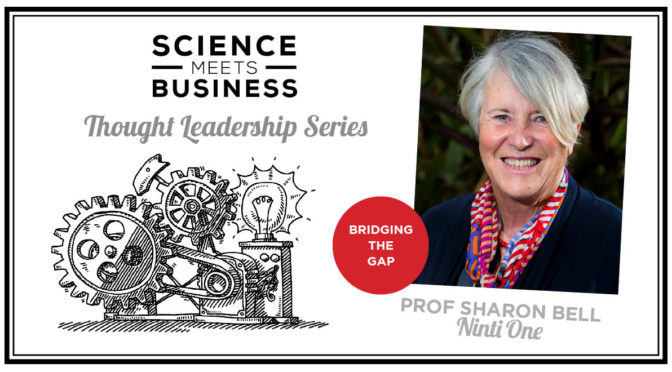
Professor Sharon Bell

Honorary Professor College of Arts and Social Sciences, ANU

Board Member, Ninti One

Read next: Heather Catchpole: Collaboration at a higher scale

Spread the word: Help Australia become a collaborative nation! Share this piece on collaborative relationships using the social media buttons below.

More Thought Leaders: Click here to go back to the Thought Leadership Series homepage, or start reading the Digital Disruption Thought Leadership Series here.

Environments for collective creation

Having lived and worked in Australia for almost three years now, I’ve heard a lot of talk about collaboration and why it is important to Australia’s future. Unfortunately, it has often been my experience that old habits and ways of working are not facilitating the hoped-for gains that collaboration and collaborative environments could bring this lucky country.

Why is collaboration so difficult?

Collaboration is time-consuming and uncomfortable, especially if you are working with people whose cultures, values and key performance indicators are different from your own. It also requires compromise, and people protecting the status quo may find it is strategically logical to avoid this.

Likewise, collaboration involves the neutral review of data, insights and experiences, followed by open ideation, debate, co-creation and co-design, which can be risky for those who like to pre-determine outcomes before meetings even commence.

Nonetheless, it is generally accepted, in terms of knowledge exchange and value creation, that collaboration in the aggregate results in net positive returns on investment. In short, improving collaboration holds the promise of better research, bigger impacts, more jobs and greater wealth for Australian research-intensive institutions, industry, government and society.

So how can we grease the wheels of collaboration so it is easier, faster and more impactful?

Collaborative environments enable our collective capacity

First, we need to embrace new ways of working, including world-class collaborative environments. Ideally these are custom-built, but really what is required are open, flexible spaces, modern audio and video equipment, and furniture and whiteboards on wheels to enable fast and easy reconfiguration.

Second, we need to embrace the idea that skilled and neutral co-design facilitators and knowledge workers can dramatically accelerate the quality and quantity of outputs, especially in complex organisations and systems.

Think of how the human brain works. Each of us is limited to our knowledge, experiences and perspectives. However, if we bring together 60+ individuals – preferably representing a variety of cultures, disciplines, sectors and perspectives – and organise them to go through a well-designed series of modules in collaborative environments, it is possible to get the group of individuals to function like a vast neural network – a collective brain that can co-create, co-design and co-own outputs.  

Third, and most importantly, we can no longer afford to regard community life – whether in academy or corporation – as a zero-sum game. Rather, we need to be humble, generous and confident enough to set aside our vested interests and work together to find a better way.

We need to respect the evidence, embrace the risks and trust the collective knowledge, talents and wisdom of those around us to create something bolder, richer and grander than we can ever achieve if we continue to work alone or in silos.

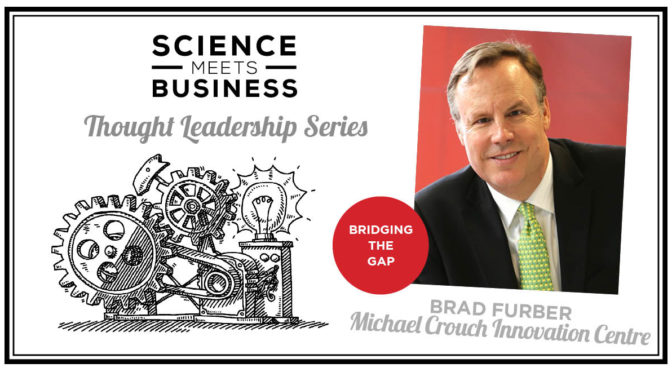
Brad Furber

COO, Michael Crouch Innovation Centre

Read next: Dr Mark Elliott, founder of Collabforge, offers five steps organisations can follow to dramatically increase their chances of successful collaboration.

Spread the word: Help Australia become a collaborative nation! Share this piece on collaborative environments using the social media buttons below.

More Thought Leaders: Click here to go back to the Thought Leadership Series homepage, or start reading the Digital Disruption Thought Leadership Series here.

Successful collaboration unpacked

Contrary to popular belief university researchers are good at collaborating, but often this is limited to collaborations with other university researchers. In fact, the Nature Index, one of the many university ranking systems, produces multiple rankings of world universities – one of which is based solely on successful collaboration with other universities.

So, what are the prerequisites for successful collaboration?

I believe there are three key ingredients:

  1. Awareness of the drivers of each institution in the collaboration
  2. A shared understanding of the problem the collaboration is trying to solve
  3. Trust between the people collaborating

The most recent Nature Index list of the Top 100 bilateral collaborators provides some interesting insights into the collaboration process. Almost all collaborations in this list are between institutions in the same country, and often within the same city.

Harvard University and the Massachusetts Institute of Technology top the list with most collaborations, while the only entry that includes Australian institutions is one involving Curtin University and The University of Western Australia. In both cases, the collaborating institutions are strong rivals.

What does this data suggest about why there is so much collaboration occurring between university researchers?

The first prerequisite is a given because at the highest level the drivers for all universities are essentially the same. The shared understanding often comes quite quickly as the collaborators are often experts in the field they are working in, and therefore start with a common vocabulary.

Building trust is the most time-consuming part of collaborating, but as the bilateral data above shows, close physical proximity helps and trust can be built between researchers – even when their institutions are in competition.

What about collaborations with industry?

In Australia, there is a lack of appreciation in universities of industry drivers and vice versa.

In the Cisco IoE Innovation Centre, located on the Curtin University campus, Cisco, Woodside and Curtin have developed an innovation centre and workplace for customers, partners, start-ups, universities and open communities. One significant outcome of the first year of operation is an understanding within the three founding members of their drivers and differing corporate cultures, which has proven to be a relatively time-consuming process.

A shared understanding of the problem is often also a challenge, as a different vocabulary is spoken by the collaborating parties. In the past, the model was often that the industry partner provided money and left the university researchers to solve the problem, contributing little input into the process. This often led to a suboptimal solution or a solution to another problem than what was intended.

In our projects at the Cisco IoE Innovation Centre, we meet as a joint industry and academic team on a weekly or fortnightly basis, which allows us to develop a shared understanding of the problem and evolving solution. Finally, building trust is always an involved process, which can be made easier between industry and academia because of the absence of competition between the collaborating organisations.

In summary, the secret to successful collaboration between academia and industry is no different to one within academia, provided additional attention is paid by both parties to cultural differences and the development of a lingua franca.

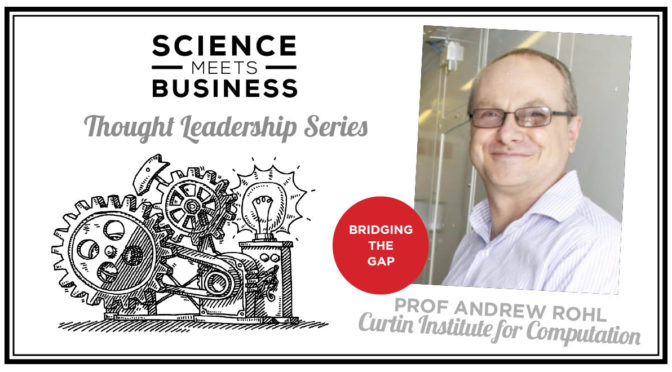
Professor Andrew Rohl

Director, Curtin Institute for Computation

Read next: Brad Furber, COO of the Michael Crouch Innovation Centre at UNSW Australia, paves the path to easier, faster and more impactful collaboration.

Spread the word: Help Australia become a collaborative nation! Share this piece on successful collaboration using the social media buttons below.

More Thought Leaders: Click here to go back to the Thought Leadership Series homepage, or start reading the Digital Disruption Thought Leadership Series here.

Wound healing clinic to change lives

A dedicated wound healing clinic – the first in Australia – opens on Tuesday, 7 March. It draws together a pool of specialist wound healing talent that includes a vascular surgeon, nurse practitioners, an advanced podiatrist and specialist wound nurses in one spot to treat and assess chronic wounds.

The clinic, Wound Innovations, is in Spring Hill, Brisbane and accessible to all Australians via the Spring Hill teleclinic, which connects patients and health professionals with a specialist from Wound Innovations through videoconferencing facilities. Wound Innovations also offers education for health professionals and will be a site for clinical trials and other research projects. 

Living with a serious wound is incredibly debilitating. “Wounds are painful and can exude a fluid. People with a wound can suffer from a lack of mobility and this leads to less social interaction, and isolation,” explains Dr Ian Griffiths, CEO of the Wound Management Innovation Co-operative Research Centre (CRC), which runs Wound Innovations.

“Often people are afraid to go out because of the smell from their wounds. It can take you down a very dark path.”

Dr Griffiths says there is medical research linking wounds with depression as well as dementia.

The teleclinic takes high resolution photos of each patient’s wounds to monitor progress and the patient provides feedback, while wound healing experts make recommendations for future care. Appointments may attract a Medicare rebate.

Griffiths expects the wound healing clinic and teleclinic to be a life changer for patients and plans to open other wound healing clinics with specialised teams in capital cities around Australia.

He also expects dramatic savings to the Australian healthcare system as fewer people with wounds will end up in hospital. The Wound CRC estimates that wound healing and management costs the Australian healthcare system $2.85 billion a year, but this is considered a conservative figure and one that covers only the tip of the iceberg.

Griffiths hopes big institutions such as aged and residential care homes will join the clinical service and teleclinic. Some have large percentages of residents who need constant, ongoing wound care. “I know of one aged care home with 38% of residents with chronic wounds,” says Griffiths.

Some of the worst wounds to treat stem from chronic diseases such as diabetes. There are more than 4400 amputations in Australia because of diabetic foot wounds and every 30 seconds a lower limb is lost around the world.

Funded by the Federal Government, the Wound CRC has carried out industry led research since 2010. One research project showed that 78% of patients with venous leg ulcers will heal over a 12-week period by using best practice wound care, including compression bandaging.

Patients in many of the CRC’s studies live with the ulcers for 10 to 20 years. In one case, a patient lived with ulcers for 54 years. At the time, Wound CRC was recruiting patients for a project studying wounds that did not clear up after 12 weeks.

The CRC’s extensive wound healing research stretching over seven years is helping the 433,000 Australian patients who are suffering from chronic wounds at any one time. Their research covers diabetic foot ulcers, burns, skin tears, acute surgical wounds and pressure injuries.

For more information visit woundinnovations.com.au or call 1300 968 637.

Research-industry collaboration guide part 1

Innovation and Science Australia recently released its performance review of Australia’s innovation, science and research system, finding that while we’re above average at creating knowledge, we’re poor at applying and transferring it, so our researchers’ wonderful innovations frequently fail to (a) improve lives in the real world, and (b) earn a return on our nation’s significant investment in research.

There’s often a huge crevasse between research organisations, such as universities, and commercial companies, in any industry: a gap in understanding and a potential grave for hopes and dreams. Over a couple of decades of product research, development and commercialisation in international markets, I have crossed that crevasse many times.

For Cochlear, I led ten significant collaborative agreements and participated in five others, involving more than 25 research organisations around the world. Cochlear’s annual R&D budget was around AUS$90 million, or up to 17% of sales.

I have insights to share about building bridges across the research-industry gap for mutual advantage and to benefit society. This is the first in a series of posts about improving research-industry collaboration, in which I will share lessons both from personal experience and recent research into best practice.

Whichever side you’re starting from, below are five steps to build research-industry partnerships for successful technology transfer. In this post, I have focused on the first step. I will explore the other steps in greater detail in subsequent posts.  

1. Develop a culture and practices that promote partnership

Successful research-industry collaboration can often be attributed to executive members of a research organisation who understand business, or have worked in industry. They can empathise with potential industry partners, promote research-industry collaboration by being effective champions and mentors in their own organisation, and provide the continuity in strategy and resourcing needed to maintain a partnership.

Senior businesspeople with a research background can similarly build bridges from the industry side. For example, in my experience, it was much easier to establish research-industry collaboration when surgeons with whom Cochlear had a commercial relationship also had an academic role at a university.

If you’re not at the top of your organisation, and can’t find a senior bridge-builder to mentor you and champion your cause, there’s still much you can do to establish productive research-industry collaboration, even from a cold start.

If you’re a researcher, you can find potential industry partners in the sector/s relevant to your research, and start to understand the problems they need to solve, via: industry conferences; company websites and annual reports; LinkedIn profiles and posts; and other business media, including blogs, etc. If you’re from industry, use similar channels devoted to academic and research organisation communications to seek out the leading experts in relevant areas.

The collaborations I developed for Cochlear had varied origins, e.g: a conversation at a conference; a university actively seeking collaborators to achieve its vision of being at the bleeding-edge of technology; an existing collaborator recommending another researcher who had the expertise we needed; mutual friends introducing me to a researcher because they knew about our shared interests; a local sales team developing a relationship with a university on which I built.

However you find them, when you meet a potential partner, ask questions and listen carefully to the answers. How does the company serve its customers and what stands in the way of improving the customer experience? How might the researcher shine a light on, or solve the company’s problems, or even open new markets for the company?  

Be prepared to invest significant face-to-face time getting to know each other on a human level and building trust and understanding. Research-industry collaboration is usually seeded by mutual connections and personal contact, and it only ever grows with shared interests and values.

2. Build a strong foundation for your partnership

Once the willingness to work together has been established, a deeper conversation is required to define the problem/s you are best positioned to solve together, the nature of the relationship, and the benefits each party could expect from it.

3. Manage the risk of your research-industry collaboration

A company considers spending on research an investment in product or service development, but research can be speculative and may not result in the outcome desired by the industry partner, so risk-mitigation strategies are essential.

4. Use your teams to best effect

By encouraging broad participation within both organisations, across a range of disciplines, and including customers or end-users, you can ensure that the project is solving real and important problems, the solution/s will be adopted, and the mutual benefits of the partnership fully realised.

5. Measure your impact

So that the value of the collaboration to each partner can be appreciated, it’s important to measure its impact on the customer experience as well as each party’s bottom lines.

To learn more about Steps 2–5 of research-industry, please watch this space for subsequent posts.

– James Dalton, gemaker

Click here for information about gemaker’s industy engagement training program for researchers.

research-industry collaboration

With an engineering background, James combines strategic marketing mastery and product development expertise, derived from decades of experience with leading global companies, especially Cochlear. In 2010, he won the Engineers Australia Design Excellence Award and the Red Dot Award for Product Design. He is named as the inventor on six patents. His current role as Commercialisation Manager with gemaker is to support diverse clients – researchers, inventors, startups and expanding businesses – through the many stages of commercialisation, including idea validation and protection, industry engagement, funding acquisition, product development, and marketing.

Sowing the seeds of technology transfer

Originally I trained as a chemist, but recently I’ve been thinking about the commercialisation of research outcomes – our area of expertise at gemaker – in botanical terms. At the risk of sounding like hippie Neil from ‘The Young Ones’, I’ll explain by asking you to consider the timeless wonder of a seed…

The seed represents a new idea, resulting from years of work by researchers in a university or similar institution. Given the right conditions, the seed will grow into an entirely new variety of plant. The innovative ideas of researchers have the potential to improve our lives in myriad ways, so the metaphorical plant could be a new source of food or medicine, or it might produce an exquisite perfume, or superior wood.

Having created a seed with wonderful potential the researcher needs someone like a farmer, to sow the seed and grow it, producing a bumper harvest. In other words, the researcher needs an industry client.

Like a farmer, the industry client has customers to please, and if customers want crisper apples, the farmer won’t waste time and money cultivating redder roses. The wisest researchers engage with industry clients to learn about market problems and demands before commencing R&D, then create seeds to meet needs.

To reach the targeted market, innovations need funding like plants need water – and more than just a drip feed. Without adequate funding for pest control (IP protection), viable mutations (prototyping), taste testing (beta testing) the researcher’s seed will never grow to fruition. It may look like a plant that’s been sitting at the supermarket for weeks losing value as it dries up and dies.

How do customers like them apples?

With funding, innovators can prove their concept: how do customers like them apples? Beta testing delivers feedback to guide product or service refinements before market entry, as well as creating an opportunity to acquire valuable early-adopter testimonials for marketing purposes.

To grow tall, new products and services need the sunlight of strategic marketing to shine on them. In the energising glow of a strong campaign, online and in traditional media, the innovation will thrive. With effective marketing, yields are maximised; without it, even the greatest innovations shrivel and die.

We do our best to help innovators achieve their optimal commercial outcome, whether this is a spin-off from a research organisation, growing sales of the product or service, licensing agreements, or sale of a business. Like anything worthwhile, the commercialisation process takes time. Few innovators achieve ‘overnight’ success, but it’s possible: you can produce strawberries in just two months. If you plant an apple tree, it takes six to ten years to bear fruit.

Like farming, commercialisation is challenging, and we all depend on it being done well. Better research-industry engagement, enhanced professionalism in technology transfer, supportive government policies and improved funding strategies will all help to turn more of our researchers’ discoveries into new Australian industries, achieving a better future for us all. To quote the wisdom of Neil: ‘This self-sufficiency thing really is amazing.’

How does gemaker help?

Gemaker helps researchers to:

• Match their research to commercial applications
• Find industry partners
• Source consistent commercialisation funding
• Identify how to best protect their intellectual property, and
• Sell their wonderful seeds so they can grow to fruition for everyone’s benefit

We keep an eye on the sky (we study global market trends and government policy changes), searching for rainclouds (grants and other sources of funding) that could hydrate seedlings (spin offs and startups). If necessary, we’ll dig an irrigation channel and perform a rain-dance (to attract angel investors or venture capitalists).

– Natalie Chapman

Australian innovation system in focus

The most comprehensive review of the Australian innovation system ever conducted was released this week by Innovation and Science Australia (ISA). If it was your child’s school report, you’d be saying we better have a serious discussion over dinner.
 
The conversion might go something like:

ISA: “We’ve had this discussion before, Australia. We’ve got your report and it’s OK but when are you going to really step up?”

Australia: “It’s not bad though. The Knowledge Creation teacher likes me.”

ISA: “It’s not a matter of whether the teacher likes you, or you like the teacher. We just want the best for you and if you are going to have a great future, you’ve got to put in the hard work across the board, not just in the areas you enjoy. Everyone likes you, Australia, but that’s different to doing the best you can.”

Australia: “Yeah, I know I could do more in transfer and application, but you want me to be like Israel or Singapore and they never have any fun and just work all the time”.

 ISA: “We’ve never said you can’t have fun. But at some stage you need to put your head down and get on with some serious work.”

Australia: “Yeah, yeah, I know….”
 
You get the picture. The full report on the Australian innovation system can be found here.

The report concentrates on the three areas of knowledge creation, knowledge transfer and knowledge application and establishes 20 measures across these. Clear benchmarks are set out between Australia’s performance and the average of the top five OECD performers, which gives a pretty clear guidance for future improvement.

The 20 measures were whittled down from an initial group of over 200 and they’ll be the basis for measuring the impact of future policy change. The report’s performance assessment is fairly general across the three key areas, rather than specific at the program level.

The rubber will hit the road during the coming phase as ISA pulls together a strategic plan for innovation and science in Australia to 2030. It’s hard to disagree at the moment when the conclusions are that we need to do better in a number of general areas. The contentious part will come much more in the strategic planning and implementation stage where change will be needed.

The performance review, which runs to over 200 pages and more than 700 references, provides an excellent baseline for future evaluation and Innovation and Science Australia deserves credit for publication of this important body of work.

It has the potential to become the reference material for judging performance of programs and their contribution to an overall Australian innovation strategy. At the very least, the assessment identifies which programs are regularly, thoroughly and transparently reviewed and those that are not.

An obvious part of the coming strategic plan will be to ensure all parts of the Australian innovation system are independently reviewed on a regular basis so their contribution to the overall strategy is maximised.

But this is not just a report for the government or ISA, where they should be tasked to simply fix things. It should be used across business, research organisations and all levels of government because it pulls together international data and lays out clearly where we stand as a country.

The assessment is a solid base to build on and could give the much needed longer-term vision needed for innovation in Australia.

– Dr Tony Peacock, CEO of the CRC Association

Click here to read the Performance Review of the Australian Innovation, Science and Research System 2016.

This piece on the Australian Innovation System was first published by the CRC Association on 7 February 2017. Read the original article here

Decision-making with science

Many scientists are keen to communicate research they believe can help inform decision-making, from public opinion to the policy of our governments.

But the will of scientists to abandon intellectual “ivory towers” does not in itself ensure a more prominent role for science in any decision-making.

Consider the appointment of a climate change sceptic and an anti-vaccination proponent to the new White House administration of US president Donald Trump.

Does this signify a prioritisation of emotions, personal beliefs and social media savviness above facts? If so, then ensuring a role for research evidence in decision-making may be one of the greatest challenges facing the science community.

A risky and uncertain world

In July 2016, we attended a think tank with a group of early- and mid-career peers, at the Australian Academy of Science (AAS) in Canberra.

One aim was to better understand and improve on how scientists from many disciplines can communicate their research to decision makers, including any risk and uncertainty.

science in decision-making

Cover of the report from our think tank discussions. Australian Academy of Science, Author provided

A detailed report, Living in a Risky World, from that think tank meeting is released by the AAS today. We have compiled a technical summary and here are some of highlights.

Which evidence to consider in decision-making?

All scientific research is subject to varying degrees of uncertainty. This can arise from a number of issues such as incomplete knowledge or variability in the phenomena being researched.

A goal of research is to reduce any uncertainties through study and experimentation, and to improve the accuracy by which uncertainties are defined.

Even the most scientifically-informed decision-making contains positive and negative risks resulting from the uncertainty.

The extent to which this uncertainty influences decision-making is often unclear and difficult to evaluate.

For example, published uncertainties in climate change projections have been used to rebuke and discredit scientific evidence and delay policy action.

Uncertainties associated with environmental health risks and future earthquake risks have been used to justify health, engineering and land-use policy developments of a precautionary nature.

Reporting on the status of the Great Barrier Reef in the past has omitted any form of uncertainty.

The importance of including an uncertainty assessment has now been recognised in advice to the Queensland Government. But it remains unclear how best to quantify the uncertainty and communicate it in a way that helps decision making.

The challenge for scientists

Scientists see it as best-practice to characterise and include any uncertainties in their research when publishing in peer-reviewed journals. But the scientific community lacks consensus about the most effective way to communicate science and uncertainty to decision-makers.

For example, are absolute or relative probabilities more effective when publicly communicating risk? Should uncertainties be included in weather forecasts, bushfire trajectories or tsunami inundation predictions?

Our discussions revealed that our risk communication experiences and perspectives varied across our diverse fields of expertise.

This included our use of language, our target audiences, the types of risks we communicate (economic vs life and death) and the cultures and protocols of our host institutions.

But we also found consensus. We do not live in a “post-truth” world where science evidence is offered but not considered. Nor do we live in an “ivory tower” world where science evidence is needed but not offered.

Rather, we live in a world with increasing diversity and complexity in decision-making. This world offers real challenges.

However it also provides opportunities for scientists with diverse skills and priorities to communicate and engage with decision-makers. This includes those who acquire, interpret and communicate scientific data, through to those who engage in science arbitration and advocacy.

How to improve communication with decision-makers

In our report we recommend a new plan for scientists to adopt when doing any evidence-based communication with decision-makers.

A key element of this plan is to develop a common language on risk and uncertainty communication. This will make sure lessons learned may be more easily translated across distinct scientific disciplines.

We recommend that scientists explicitly state the motivations that underlie their scientific experimentation and modelling processes. That way decision-makers can better understand the role of the science in assisting with any decision they make.

We also recommend that both scientists and decision-makers keep a record of how research evidence and uncertainty was considered in any decision-making scenarios. This should include whether the research was asked for or offered, how the evidence and uncertainties were communicated, and how all this was received and considered.

The need for feedback

If the research did influence any decision, then it will be important to know how. If the research was not used in the decision-making process, it will be important to understand why.

Was it because uncertainties were not understood, inadequately represented, or exceeded tolerable thresholds?

Perhaps the models themselves were not easy for decision-makers to understand? This could mean modifications are needed to increase their utility.

Were other societal, political or fiscal factors prioritised? Are all of these factors able to be objectively analysed and justified?

And what approaches are available to scientists who conclude that research has been unjustly used by decision-makers?

In our experience there is a large variability in the way decision-makers provide documentation on how scientific advice they received actually informed the decision making process.

Both the public and the media have a role to play in encouraging these forms of documentation.

The uptake of any science evidence and the understanding of scientific uncertainty by decision-makers remains sparsely documented. This includes any influence of public and media communications, structured science communication workshops, involvement in science advisory panels, and other science engagement strategies.

So hopefully our plan for a more unifying language across the science community, and a concerted effort to document communication experiences, should help scientists who want to contribute their work to any decision-making processes that may guide future policies.

– Mark Quigley, Associate Professor, University of Melbourne, Adrian Ickowicz, Research scientist, Data61 et. al. For the full list of authors, click here.

This article was first published by The Conversation on 1 February 2017. Read the original article here.

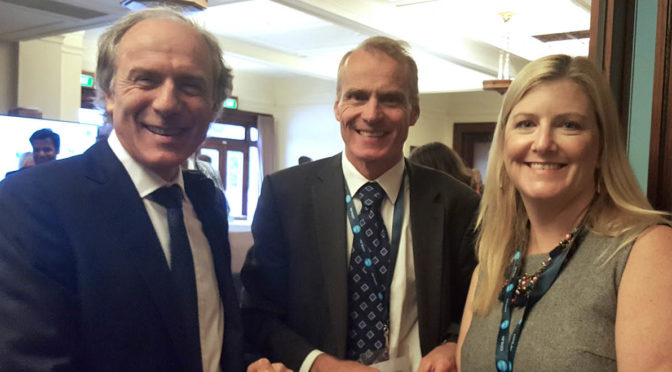
Graphene innovation lowers cost of production

Graphene is a carbon material that is one atom thick.

Its thin composition and high conductivity means it is used in applications ranging from miniaturised electronics to biomedical devices.

These properties also enable thinner wire connections; providing extensive benefits for computers, solar panels, batteries, sensors and other devices.

Until now, the high cost of graphene production has been the major roadblock in its commercialisation.

Previously, graphene was grown in a highly-controlled environment with explosive compressed gases, requiring long hours of operation at high temperatures and extensive vacuum processing.

CSIRO scientists have developed a novel “GraphAir” technology which eliminates the need for such a highly-controlled environment.

The technology grows graphene film in ambient air with a natural precursor, making its production faster and simpler.

“This ambient-air process for graphene fabrication is fast, simple, safe, potentially scalable, and integration-friendly,” says CSIRO scientist Dr Zhao Jun Han, co-author of the paper published in Nature Communications.

“Our unique technology is expected to reduce the cost of graphene production and improve the uptake in new applications.”

GraphAir transforms soybean oil – a renewable, natural material – into graphene films in a single step.

“Our GraphAir technology results in good and transformable graphene properties, comparable to graphene made by conventional methods,” says CSIRO scientist and co-author of the study Dr Dong Han Seo.

With heat, soybean oil breaks down into a range of carbon building units that are essential for the synthesis of graphene.

The team also transformed other types of renewable and even waste oil, such as those leftover from barbecues or cooking, into graphene films.

“We can now recycle waste oils that would have otherwise been discarded and transform them into something useful,” Seo says.

The potential applications of graphene include water filtration and purification, renewable energy, sensors, personalised healthcare and medicine, to name a few.

Graphene has excellent electronic, mechanical, thermal and optical properties as well.

Its uses range from improving battery performance in energy devices, to cheaper solar panels.

CSIRO are looking to partner with industry to find new uses for graphene.

Researchers from The University of Sydney, University of Technology Sydney and The Queensland University of Technology also contributed to this work.

This article was first published by CSIRO on 31 Jan 2017. Read the original article here.
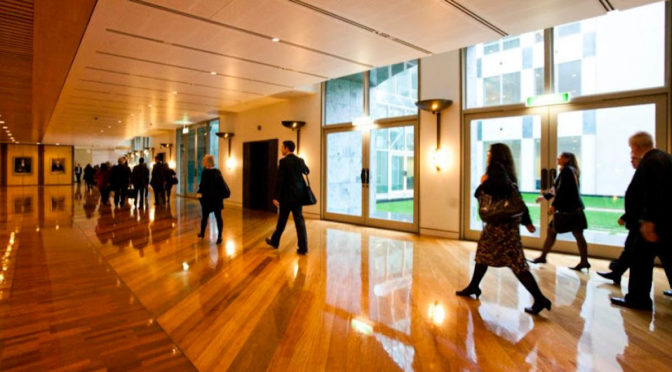
Hyperloop fires up Aussie students

Featured image above: rendering of the VicHyper hyperloop pod on the streets of Melbourne 

A team of Australian university students is playing a major role in revolutionising the future of transportation technologies. They are working on what futurist entrepreneur Elon Musk describes as a ‘cross between a Concorde, a railgun and an air hockey table’ – the Hyperloop. 

The group, from RMIT University in Melbourne, is led by engineering graduates Matthew O’Callaghan and Zachary McClelland, and is one of 30 finalists from 1,700 entrants from around the world working on a Hyperloop pod design.

Musk, known for his roles with PayPal, Tesla Motors and SpaceX, was inspired to explore the viability of Hyperloop technologies after being frustrated by the lack of cost-effective high-speed trains in the US. 

SpaceX – Musk’s rocket and spacecraft company – subsequently sponsored a global Hyperloop competition to design a transportation pod that will travel at speeds of up to 1,200 kilometres per hour levitated on a cushion of air or magnets inside a vacuum-sealed tube. 

It is envisaged the pods will eventually carry goods and people across large distances in a short time, providing greater efficiency than cars, trains and aircraft. Imagine, advocates say, ordering a pizza from your favourite restaurant 600 kilometres away and having it delivered to your home in 30 minutes. 

“What this can provide for the world is just amazing,” says 24-year-old O’Callaghan, who was inspired to enter the competition after growing up in the regional Australian city of Mildura. 

“It could transfer goods, and connect cities, particularly in Australia where they are so far apart. All of our cities can become suburbs. You could live in Melbourne and work in Sydney and commute every day.”

Hyperloop poised to become reality

hyperloop

VicHyper Co-founders L-R Matthew O’Callaghan and Zachary McClelland

O’Callaghan’s and McClelland’s project, named VicHyper, is supported by RMIT University and several Australian corporate partners. It is focused on building a braking system for the high-speed pods – a crucial part of the vehicle’s design.

The team travelled to Texas for the first in-person judging event in January 2016 where 115 designs, narrowed down from the almost 2,000 initial entries, were in competition. VicHyper returned to Melbourne with the ‘Braking Subsystem Technical Excellence Award’ and advanced to the next round. 

In late January 2017, the VicHyper team will return to the US as the only team from the Southern Hemisphere and compete in tests at the SpaceX track facility in Los Angeles. Other teams represent universities from the US, Canada, Spain, Germany, India and Japan, as well as a non-student team formed by members of the social media platform Reddit.

The VicHyper pod resembles a futuristic bobsleigh: 3.6 metres long, 1.3 metres wide and approximately one-metre high. It will demonstrate an electromagnetic braking system and friction brakes for low speeds or emergencies. 

As O’Callaghan explains, the system is more complicated than it sounds – or appears on paper. The team has spent several sleepless nights trying to bridge the gap between theory and reality. 


Motivated by innovation and change for good 

O’Callaghan graduated from RMIT with an aerospace engineering degree keen to pursue a career where he could “push the boundaries of innovation.

“I wanted to put my expertise into something that could benefit the greater community,” he says. “There is all this amazing technology out there we can use in amazing ways. I really want to help make a change.”

O’Callaghan read a white paper written by Musk about Hyperloop technology and was hooked by the concept. When SpaceX announced its competition for students, O’Callaghan knew this was an opportunity he couldn’t miss. 

He coaxed friend Zachary McClelland to join the him on the project and, with backing from RMIT, their paper sketches became reality.

“RMIT has been a huge support, providing access to technical staff and facilities, financial help, workspaces, logistics and transportation,” O’Callaghan says. “Without RMIT we wouldn’t be heading to the US. 

“I think they liked that it wasn’t just two guys with an idea on a piece of paper. We knew it was important to win people over and show them we really were going to do this. It is not just a pipe dream – pardon the pun.”

The Hyperloop concept has evolved beyond plans and may soon be reality. One company investing in Hyperloop technology has a development partnership with the city of Dubai in the United Arab Emirates, and another has announced an agreement to explore constructing a link between Bratislava in Slovakia and Prague in the Czech Republic.

Diverse team brings hyperloop best talent 

Hyperloop

RMIT University’s VicHyper team

VicHyper is now a 30-strong team boasting electrical and mechanical aerospace engineers, industrial designers, graphic and website designers, and a media and public relations team. All team members are graduates or current students at RMIT.

“We really pushed to have a good gender, racial, skill and cultural balance on the team,” O’Callaghan says. “If you have a diverse environment, everybody has something unique to bring to the table.”

It’s not yet known what will happen after the competition. According to O’Callaghan, success can be measured in many ways. Primarily, he’s satisfied that Australian ideas have been recognised in a global competition where the majority of talent is from the US and Europe. 

“We wanted to show that Australia is at the forefront of this kind of technology – and that our team is straight out of university,” O’Callaghan says. 

“Nobody really knows what happens next but I am looking forward to what the outcome is. I definitely want to continue working on this technology and bring it to fruition.”

– Matthew Hall

This article was first published by Australia Unlimited on 26 Jan 2017. Read the original article here