All posts by Heather Catchpole

Risky business

To build research-industry partnerships for successful technology transfer, Step 1 is to develop a culture and practices that promote partnership and Step 2 is to build a strong foundation for your partnership. At this point, you (a research organisation and a commercial company) have established a relationship based on trust and understanding, and are on the verge of serious commitment.

Researchers should be aware that collaboration with Company A may restrict you from jumping into bed with Company B, particularly if A and B are competitors. In business as in love, consider whether monogamy suits you before beginning a long-term partnership.

It’s hard to imagine D-I-V-O-R-C-E when you’ve just fallen in love, but any country-and-western singer and I would recommend that, before you make any vows, you should invest in couples counselling and a pre-nuptial agreement. It’s time to…

Manage risk (Step 3)

A company considers spending on research to be an investment in product or service development. Any investment carries risk, but investing in experimentation is high risk: the research may not result in the outcome desired by the industry partner, or it may take longer and cost more than anticipated to achieve that outcome.

An example from my experience at Cochlear was a surgical tool that showed promise in laboratory testing, but trials in a simulated operating theatre revealed that it was impractical for routine surgical use. Unfortunately, this issue could not be resolved, so the project did not proceed further.

The company’s decision-makers will be held accountable for the performance of their investment and so should seek to minimise or mitigate the associated risk. The research partner should share that aim, if they want a long-term relationship with the company, or a good reputation in the industry.

Risk management is hard for early-stage, ground-breaking research where the outcome is unknown and likelihood of failure is high. It’s easier for late-stage research such as product prototyping, especially where the new product’s capabilities can be demonstrated using standard components in simulated conditions.  For instance, a low-risk project to develop an augmented-reality surgical training system involved the novel integration of existing software and hardware.

Some of the most useful risk management strategies are:

  • seeding the project team with people who have the experience and skills to straddle the industry/research divide
  • nominating a divide-straddling project manager with authority to set and revise the scope, schedule and budget
  • breaking the work into small chunks with shorter timeframes
  • clearly defining roles, responsibilities and deliverables
  • linking the achievement of milestones to payments, and
  • monitoring progress with regular project reviews and making timely decisions when issues emerge.

Expect and plan for administrative overheads, including legal and reporting costs. Best practice is to establish an umbrella agreement that covers the ‘big picture’ of the partnership, with a series of smaller agreements covering specific projects. The latter should use a project management framework to define each project’s scope, resources, timeframe, deliverables and milestones, and the team members’ roles and responsibilities.  If these administrative aspects of collaboration are treated with contempt, stakeholder issues can escalate rapidly, leading to relationship breakdown.

In some industries, such as medical technology and pharmaceuticals, legal compliance is an important consideration in collaboration, requiring additional documentation, such as a formal contract including a detailed scope-of-work. In my experience, the researchers – usually university academics – with whom Cochlear collaborated were often also medical professionals involved in purchase decisions for their practices.  A contract and scope-of-work demonstrates that any payments are for legitimate research and not an inducement to do business with the company.

Often it’s legal and commercial issues that are the main hurdles in establishing research-industry collaboration. Companies want to own any intellectual property (IP) generated through the collaboration to give them freedom to operate – for example, to use the research results to support the product claims – and to gain advantage over competitors. A company will not participate in a partnership if the ownership of the relevant IP is complicated, or likely to be contested. Legal assignments or similar agreements can simplify IP ownership.

Once you’ve done all you can to manage risk, feel free to release the doves, scatter the rose petals and process down the aisle. But if you hope to see cobwebs grow on your unused pre-nup, remember that the happiest marriages are those supported by the extended family on both sides. That’s why my next post will be about using your teams to best effect (Step 4). My final post in this series will be about measuring your impact (Step 5), because every marriage has a legacy. Watch this space.

research-industry collaboration

– James Dalton, gemaker

Click here for information about gemaker’s industy engagement training program for researchers.

Industry placements pave the way to success

Industry placements for CRC students have been an integral part of the CRC Programme since it began in 1991. While students contribute to solving real-world problems of industry, industry partners mentor students on the commercial side of their field and help produce industry-ready graduates who can hit the ground running.

Rebecca Athorn did a PhD, supported by the Pork CRC, investigating increased feeding and progesterone in young pigs during their first pregnancy and the effects on embryo survival. Part of her project was conducted in a commercial piggery owned by Australian pork producer Rivalea.

Athorn’s work showed that feeding the first-time mothers more didn’t affect the size of their litters, but did make the mothers healthier and live longer.

As well as delivering a practical improvement to commercial piggery practices, the study put Athorn in the spotlight for potential employers.

“I was approached by Rivalea as to my interest in working for them after I finished my PhD,” says Athorn. Several of her colleagues also partnered with Rivalea for their Honours projects before joining the company as employees.

“Having been known to the company and having positive references from those they worked with definitely helped,” says Athorn.

Even students with previous work experience in the field can benefit from an industry placement, says Tracy Muller. She worked with the CSIRO and the Prairie Swine Centre in Canada on pig welfare before entering the Pork CRC’s Industry Placement Program (IPP) at SunPork Farms and starting a PhD to identify and reduce lameness in pigs.

“The IPP has positively impacted on my ‘entry’ into the industry,” says Muller. “Together with the support of SunPork Farms, it has certainly progressed my career in the past four years, since graduating from university 14 years ago.”

– K J Lee

Read more about Australia’s CRCs in KnowHow 2017

Review highlights lagging performance

In early February, Innovation and Science Australia (ISA) – a statutory board tasked with providing whole-of-government advice on all innovation, science and research matters – released the Performance Review of the Australian Innovation, Science and Research System 2016 (the ISR System Review).

The review’s findings demonstrate that, while the Australian ISR system has its strong points, we are lagging well behind comparable countries and without concerted action we are bound to fall farther behind.

Our innovation performance is determined by three key activities: how well we create knowledge; how well we transfer that knowledge to different parts of the system; and how well our businesses apply knowledge in developing new goods and services and bringing them to market.

The assessment of these key activities, as compared to similar and competitor nations, is summarised in a novel “performance scorecard”. This scorecard, which includes 20 relevant metrics, will allow ISA to track the ISR system’s performance into the future.

Creating knowledge is, as expected, a point of strength. In both our number of researchers per capita and the proportion of highly cited publications produced, we sit in the top 10 internationally.

However, the scorecard also confirms our relatively poor performance in the transfer and application of our knowledge creation into new products and services. This is partially explained by our low rates of collaboration and mobility among research institutions and businesses.

In the proportion of researchers employed by businesses we came in at 28 out of 36 comparable countries. Perhaps of most concern is that out of OECD countries we came in last for collaboration between business and research institutions. Collaboration, of course, is essential for the exchange of ideas, sparking creative insight and driving innovation activity.

While the ISR System Review contains no recommendations, it is now the ISA’s task to prepare a strategic plan for the Australian innovation, science and research system to 2030.  

This plan will be delivered to government later this year following consultation with stakeholders. Throughout the plan’s development, ISA will seek to draw upon stakeholder expertise in addressing key questions, such as:

How can we bring more firms, in more sectors, closer to the innovation frontier?

How can government become more innovative?

What does an innovative Australian workforce capable of meeting future challenges look like and how can it best be built?

How can we ensure Australian innovative businesses are seamlessly connected to international value chains and flows of knowledge, capital and talent?

The 2030 strategic plan offers a chance to outline a broad vision for Australia’s medium and long term, without sacrificing the ability to make recommendations to government for adjustments to the ISR system that are needed now. This will be a challenging piece of work that promises to deliver real value for the ISR system.

The Cooperative Research Centres Association is a powerful voice for the interests of the sector and ISA look forward to drawing upon the association’s expertise.

– Tim Powell, ISA

Find out more: Innovation & Science Australia

Read about the latest CRC discovery in KnowHow 2017

Nimble funding for CRC-Ps

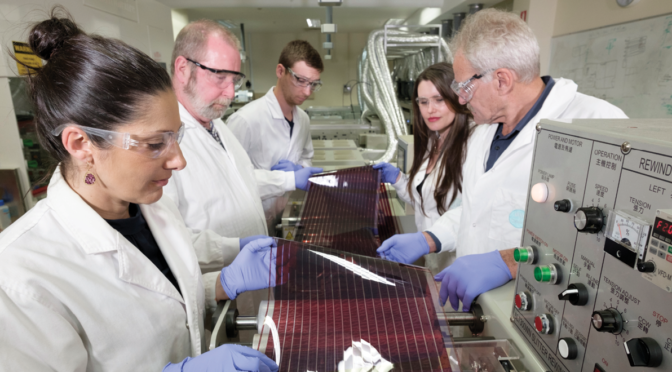
Featured image above: CSIRO, Norwood Industries and Solafast staff inspect a length of printed solar film. Credit: CSIRO

The new, nimble, business-led funding rounds that led to the Cooperative Research Centre Projects (CRC-Ps) are winning praise across industry, government and academia for their fast turnaround time, focus, and appeal to small-to-medium enterprise.

With the second round of successful grants announced in early February 2017, there are now a total of 28 projects granted funds ranging from $425,000 to $3 million through the CRC-P initiative.

CRC Association CEO Tony Peacock says the initiative came out of a recommendation made by the Miles Review for “smaller collaborations operating on short project timelines with simpler governance and administration arrangements and less funding”.

“I think CRC-Ps will probably become more important to the start-up sector because it is a significant amount of money early in a company’s development,” says Peacock.

One such start-up benefiting from CRC-P funding is Solafast who, in partnership with CSIRO and Norwood Industries, received $1.6 million to help develop building materials that integrate flexible, printed solar films.

“The product we’re creating will look much better than standard solar panels on a roof, be quicker and easier to install, and allows for more flexible building design,” says Leesa Blazley, Solafast’s Director of Business Development.

The project brings together CSIRO’s expertise in printed solar films, Norwood’s experience in commercial printing, and Solafast’s roll-formed cladding. It is a partnership that is aiming to deliver a proof-of-concept product within two years.

“By the end of the project we’ll have a working prototype and be close to scaling up for commercial release,” says Blazley.  “Without the funding it would have been very difficult to develop a product that was market ready.”

CSIRO’s Dr Fiona Scholes, who is also working on the Solafast project, says the CRC-P funds are well geared towards the needs of CSIRO’s small and medium-sized enterprises (SME) industry partners.

“What we have found through our interactions with the Australian manufacturing industry is that they’re not short of ideas – they’ve got a real thirst for innovation – but the stumbling block is almost always lacking the funds to make something meaningful happen,” says Scholes, Group Leader in Industrial Innovation at CSIRO Manufacturing.

“Having that requirement to have an SME on these projects is accommodating the Australian manufacturing innovation ecosystem in a relevant way.”

Another CRC-P is using the funding opportunity to significantly advance an important diagnostic test that could help pick up metastatic cancer a lot earlier than is currently possible.

Dr John Deadman, CEO of Chemocopeia, which is leading this CRC-P, says the funding has been essential to moving the diagnostic test from theoretical to practical.

“Chemocopeia and the CSIRO had developed an understanding of the biological side of the project, but we didn’t have the expertise around setting up an assay system to clinical standard in an accredited format that would be able to be used rigorously and robustly,” Deadman says. 

With $582,500 from the CRC-P initiative, they have joined forces with Innoviron and 360biolabs, and are well on their way to developing the diagnostic assay.

“At the end of the year we hope to have a reproducible and robust system that we can start to test clinical samples with,” explains Deadman.

He also says that the set-up of the CRC-P funding is unique in fostering a greater focus among participants. “What’s good is it’s trying to tackle a specific problem rather than just make a particular stage in a bigger project.”

In the pipeline

The first round of CRC-P funding, which was announced in June 2016, funded 11 projects in total:

  • Integrated driver monitoring solution for heavy vehicles
  • Hydrocarbon fuel technology for hypersonic air breathing vehicles
  • Printed solar films for value-added building products for Australia
  • R&D to accelerate sustainable omega-3 production
  • Innovative prefabricated building systems
  • An antibody-based in-vitro diagnostic for metastatic cancer
  • High-performance optical telemetry system for ocean monitoring
  • Combined carbon capture from flue gas streams and mineral carbonation
  • Improving Australia’s radiopharmaceutical
    development capabilities
  • Innovation in advanced multi-storey housing manufacture
  • Future oysters

The second round, announced in February 2017, funded the following projects:

  • Large area perovskite photovoltaic material coating on glass substrate
  • High-power density motors incorporating advanced manufacturing methods
  • New super high oleic bio-based oil
  • Manufacturing of high performance building envelope systems
  • Lightweight automotive carbon
    fibre seats
  • Targeting tropomyosin as anti-cancer therapy
  • Glass technologies and photovoltaics in protected cropping
  • Modelling navigational aids in tidal inlets
  • Field deployable unit for the detection of perfluorinated contaminants
  • Universal solar module inspection and data storage system
  • Targeted therapy for sleep apnoea
  • Enhanced market agility for tea tree industry
  • Tech-enabled care for head trauma
  • Industrialisation of a diagnostic biosensor for bladder cancer
  • Wear life extension via surface engineered laser cladding for mining
  • Graphene supply chain certification
  • Power efficient wastewater treatment

– Bianca Nogrady

Find out more about the CRC Programme 

Read more CRC discovery in KnowHow 2017

Testing zero-energy homes

Featured image credit: D-Max Photography

The CRC for Low Carbon Living (CRCLCL) has announced $500,000 in funding for a new national zero-energy homes project. The project will research consumer attitudes and aim to influence the building industry to construct new dwellings to zero-energy standards.

At present the energy efficiency of a home is measured according to the Nationwide House Energy Rating System (NatHERS). This star rating system measures the energy required to heat and cool a home, with new buildings being required to meet a minimum six-star rating.

Zero-energy homes, on the other hand, are homes that are carbon neutral across the year – they produce as much (or more) energy than they consume. All aspects of energy consumption are accounted for – not just heating and cooling, but also lighting, appliances and so on.

Project lead Dr Josh Byrne, senior research fellow with Curtin University’s Sustainability Policy Institute, believes that the current six-star requirement is merely “eliminating worst practice”. He has built two 10-star rated homes as part of his project, Josh’s House, which was part of the CRCLCL’s Living Labs project near Fremantle in Western Australia. Now he’s keen to bring zero-energy homes into the mainstream.

“It’s not just about bunging on more solar panels to offset the power usage, it’s about how the houses can be designed to perform better thermally,” Byrne says. “We know that simple things like orientation, cross-ventilation, and building air tightness can all dramatically reduce the build performance.”

The project team will be working with developers and builders from three different climate areas – WA, the ACT and Queensland – to design and build zero-energy display homes and present them alongside conventional homes to gauge the response from consumers. Instead of focusing on the sustainability benefits, they want to see how the public thinks zero-energy homes stack up on liveability. “We’re really interested in seeing how people respond to the look, feel and comfort of the zero-energy homes,” Byrne says.

The researchers will then present this data to the regulatory bodies, in the hope that an evidence-based approach will help shift the common perceptions that sustainable building practices are too costly and that there is no market demand for these homes.

With 100,000 new homes being built in Australia each year, moving to zero-energy homes would reduce carbon emissions by 700,000 tonnes. California has committed to achieving this by 2020, and members of the European Union are doing the same. Byrne thinks it’s more than possible here. “I would like to see us setting a realistic goal of achieving that within 10 years,” he says.

Find out more at LOWCARBONLIVINGCRC.COM.AU

Read more CRC discovery in KnowHow 2017

Revitalising urban slums

A plan to revitalise 24 urban slums in two cities has received a $38 million grant from the Wellcome Trust and Asian Development Bank. An international research consortium, led by Monash University, will undertake a five-year research project drawing on previous water sensitive city research programs in Australia, China, Singapore and Israel.

Cities today are facing many challenges related to liveability and water security, such as water scarcity due to a changing climate, increasing density – making societies more vulnerable to heat, flood conditions and waterway pollution – and water-related energy usage and transport.

“A water sensitive city is basically reflecting on the notion of how we can better manage water within a city that is susceptible to all those challenges,” says Professor Tony Wong, CEO of the Cooperative Research Centre for Water Sensitive Cities (CRCWSC), which is a member of the consortium.

Within a water sensitive city, the technology and urban landscape designs aim to make the city more resilient to droughts, floods and other climatic factors – through the use of green technology embedded in buildings and public spaces, and heat mitigation.

Such cities increase water security by improving inhabitants’ access to rainwater and recycled wastewater. Through a co-design process and by empowering members of the community with knowledge to foster their cities, they evolve towards cities consisting of informed, water sensitive communities.

The landscape designs and green technology required vary: the focus in a first-world city, such as Melbourne, is about liveability, water security, equality and heat mitigation. Developing-world cities often have acute problems related to public health, such as faecal contamination of land and waterways due to poor or non-existent sewerage services, and after floods.

CRCWSC’s focus has previously been on embedding green technology and landscape design as part of retrofitting developed cities. This has delivered the proof-of-concept of how water sensitive urban design and green technology can create both amenities and attractions.

“That proof-of-concept is now being adapted to look at how we would fundamentally improve the environmental quality of developing countries,” says Wong.

The project will focus on adopting a water sensitive approach to the revitalisation of 12 slums in Makassar, Indonesia, and another 12 in Suva, Fiji; two cities of different densities and different social and regulatory considerations.

“We are looking at a Pacific Island city and an Asian city to demonstrate how the concept of water sensitivity would be adapted to those social institutional conditions, while still able to embed good design and good technology into the solution,” Wong says.

Find out more at crcwsc.org.au

– Laura Boness

Read more CRC discovery in KnowHow 2017

Lost satellite?

Featured image above: the Nanoracks CubeSat launcher on the Japanese arm of the International Space Station

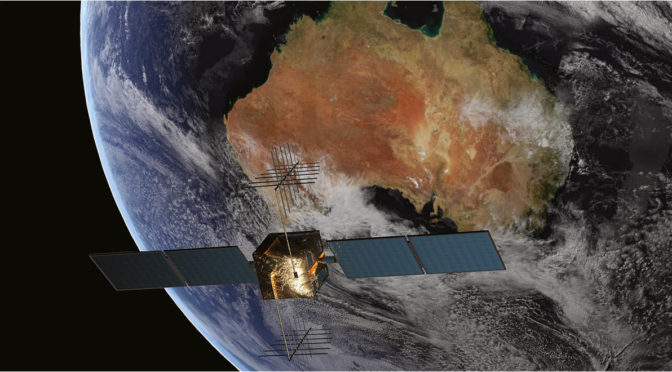
The first Australian satellite in 15 years, UNSW-EC0, was successfully deployed from the International Space Station, but the UNSW engineers who built it were unable to establish contact when it made its first pass above Sydney.

UNSW-EC0 was ejected from the station at 3:25pm AEST on 26 May, and made its first pass over Sydney at 4:21pm. Engineers at UNSW’s Australian Centre for Space Engineering Research (ACSER) were unable to pick up the signal it is meant to send to confirm the cubesat is operating as designed.

“We’re not overly concerned yet,” said Elias Aboutanios, project leader of the UNSW-EC0 cubesat and deputy director of ACSER. “We’re troubleshooting a number of scenarios for why we didn’t detect it, from checking our ground equipment to exploring the possibility that the batteries might have discharged. But at the moment, we just don’t know.”

“If it is the batteries, the satellite has solar panels and will be able to recharge,” said Joon Wayn Cheong, a research associate at UNSW’s School of Electrical Engineering and Telecommunications and technical lead of the UNSW-EC0 cubesat. “But because it was deployed in the Earth’s shadow, we have to wait for it to make a few orbits before it has recharged, especially if it’s tumbling. So it could be 24 to 48 hours.”

The International Space Station, or ISS, will make four more passes over Sydney on Friday 25 May, and the UNSW team of 15 researchers and students will again try to establish contact, and run a series of tests for scenarios to explain the lack of a signal.

UNSW-EC0 is one of three Australian research satellites – two of them built at the UNSW – that blasted off just after on April 19 from Cape Canaveral Air Force Station in Florida. Its mission is to explore the little-understood region above Earth known as the thermosphere, study its atomic composition as well as test new robust computer chips and GPS devices developed at UNSW.

In addition, its chassis is made entirely from 3D-printed thermoplastic, itself an experiment to test the reliability of using  3D-printing to manufacture satellites, making them cheaper and much more customisable.

The cubesat is part of an international QB50 mission, a swarm of 36 small satellites – known as ‘cubesats’ and weighing about 1.3 kg each – that will carry out the most extensive measurements ever undertaken of the thermosphere, a region between 200 and 380 km above Earth. This poorly-studied and usually inaccessible zone of the atmosphere helps shield Earth from cosmic rays and solar radiation, and is vital for communications and weather formation.

“These are the first Australian satellites to go into space in 15 years,” said Andrew Dempster, director of ACSER at UNSW, and a member of the advisory council of the Space Industry Association of Australia. “There have only been two before: Fedsat in 2002 and WRESAT in 1967. So we’ve got more hardware in space today than Australia’s had in its history.”

UNSW-EC0 was deployed from the ISS from a Nanoracks launcher, a ‘cannon’ that eject cubesats at a height of 380 km (the same as the ISS), allowing them to drift down to a lower orbit where they can begin their measurements.

“This zone of the atmosphere is poorly understood and really hard to measure,” said Aboutanios. “It’s where much of the ultraviolet and X-ray radiation from the Sun collides with Earth, influencing our weather, generating auroras and creating hazards that can affect power grids and communications.

“So it’s really important we learn a lot more about it. The QB50 cubesats will probably tell us more than we’ve ever known about the thermosphere,” he added.

QB50 is a collaboration of more than 50 universities and research institutes in 23 countries, headed by the von Karman Institute (VKI) in Belgium. “This is the very first international real-time coordinated study of the thermosphere phenomena,” said VKI’s Davide Masutti. “The data generated by the constellation will be unique in many ways and they will be used for many years by scientists around the world.”

This article was first published by UNSW Engineering. Read the original article here.

The Disruptors

Disruption can mean a lot of things. Dictionary definitions include “a forcible separation” or division into parts. More recently it has come to mean a radical change in industry or business. This brings to mind huge technological innovations. But what if it’s as simple as realising that a handheld device for detecting nitrogen could also be used to gauge how much feed there is in a paddock; that drones can be adapted to measure pest infestations; that communities can proactively track the movement of feral animals.

These are just some of the projects that Cooperative Research Centres (CRCs) are working on that have the capacity to change crop and livestock outcomes in Australia, improve our environment and advance our financial systems.

Data and environment

Mapping pest threats

Invasive animals have long been an issue in Australia. But a program developed by the Invasive Animals CRC called FeralScan is taking advantage of the widespread use of smartphones to combat this problem.

The program involves an app that enables landholders to share information about pest animals and the impacts they cause to improve local management programs.

Peter West, FeralScan project coordinator at the NSW Department of Primary Industries, says the team wouldn’t have thought of a photo-sharing app without genuine community consultation.

The project has been running for six years and can record sightings, impacts and control activities for a wide range of pest species in Australia, including rabbits, foxes, feral cats, cane toads and myna birds. West says that it now has 70,000 records and photographs, and more than 14,000 registered users across the country.

Disruptors

“For regional management of high-impacting pest species, such as wild dogs, what we’re providing is a tool that can help farmers and biosecurity stakeholders detect and respond quickly to pest animal threats,” says West.

“It enables them to either reprioritise where they are going to do control work or to sit down and work with other regional partners: catchment groups, local biosecurity authorities and the broader community.”

The app won the Environment and Energy Minister’s award for a Cleaner Environment in the field of Research and Science excellence at the Banksia Foundation 2016 Awards in December. Recent improvements to the app include the ability to monitor rabbit bio-control agents.Plans for the future include upgrading the technology to alert farmers to nearby pest threats, says West.

Find out more at feralscan.org.au

Revising disaster warnings

Also in the information space, the Bushfire and Natural Hazards CRC (BNHCRC) is investigating reasons we don’t pay attention to or ignore messages that notify us of an impending fire or floods. Researchers are using theories of marketing, crisis communications and advertising to create messaging most likely to assist people to get out of harm’s way.

“The way we personally assess risk has a big impact on how we interpret messages. If I have a higher risk tolerance I will probably underestimate risk,” says Vivienne Tippett, BNHCRC project lead researcher and professor at Queensland University of Technology. “We’ve worked with many emergency services agencies to assist them to reconstruct their messages.”

Instead of an emergency message with a brief heading, followed by the agency name and then a quite technical paragraph about weather conditions and geography, Tippett’s team has worked on moving the key message up to the top and translating it into layperson terms. For example, a message might now say something like: “This is a fast-moving, unpredictable fire in the face of strong winds.”

Tippett’s team is constantly working with emergency services to make sure their findings are made use of as quickly as possible. “The feedback from the community is that yes, they understand it better and they would be more likely to comply” she says.

Find out more at bnhcrc.com.au

AgTech

Measuring plant mass and pests in crops

The Plant Biosecurity CRC is using unmanned aerial systems (UAS or drones) to improve ways to detect pest infestations in vast crops. Project leader Brian McCornack is based at the Kansas State University in the US.

“The driver for using unmanned aerial systems has been in response to a need to improve efficiency [reduce costs and increase time] for surveillance activities over large areas, given limited resources,” says McCornack. “The major game-changer is the affordability of existing UAS technology and sophisticated sensors.”

Disruptors

Unmanned aerial vehicle Credit: Kansas State University

The project is now in its third year and adds an extra layer of data to the current, more traditional system, which relies on a crop consultant making a visual assessment based on a small sample area of land, often from a reduced vantage point.

The international collaboration between the US and the Australian partners at QUT, Queensland Department of Agriculture and Fisheries, and the NSW Department of Primary Industries means the project has access to a wide range of data on species of biosecurity importance.

disruptors

Unmanned aerial system (drone) pilots, Trevor Witt (left) and Dr Jon Kok (right) from the Plant Biosecurity CRC project, discuss data collected from a hyperspectral camera. Credit: Brian McCornack, Kansas State University

The CRC for Spatial Information (CRCSI) has also been working on repurposing an existing gadget, in this case to improve the accuracy of estimating pasture biomass. Currently, graziers use techniques such as taking height measurements or eyeballing to determine how much feed is available to livestock in a paddock. However, such techniques can result in huge variability in estimates of pasture biomass, and often underestimate the feed-on-offer.

Professor David Lamb, leader of the Biomass Business project, says graziers underestimate green pasture biomass by around 50%. There could be a huge potential to improve farm productivity by getting these measures right.

Through case studies conducted on commercial farms in Victoria, Meat and Livestock Australia found that improving feed allocation could increase productivity by 11.1%, or up to $96 per hectare on average, for sheep enterprises, and 9.6% ($52 per hectare) for cattle enterprises.

The CRCSI and Meat and Livestock Australia looked at a number of devices that measure NDVI (the normalised difference vegetation index), like the Trimble Green Seeker® and the Holland Crop Circle®. The data collected by these devices can then be entered into the CRCSI app to provide calibrated estimates of green pasture biomass.

Graziers can also create their own calibrations as they come to understand how accurate, or inaccurate, their own estimates have been. These crowd-sourced calibrations can be shared with other graziers to increase the regional coverage of calibrations for a range of pasture types throughout the year.

Find out more at pbcrc.com.au and crcsi.com.au

Using big data on the farm

In July 2016, the federal government announced funding for a partner project “Accelerating precision agriculture to decision agriculture”. The Data to Decisions Cooperative Research Centre (D2D CRC) has partnered with all 15 rural research and development corporations (RDCs) on the project. 

“The goal of the project is to help producers use big data to make informed on-farm decisions to drive profitability,” says D2D CRC lead Andrew Skinner.

He says that while the project may not provide concrete answers to specific data-related questions, it will provide discussion projects for many issues and concerns that cross different rural industries, such as yield optimisation and input efficiencies. 

Collaboration between the 15 RDCs is a first in Australia and has the potential to reveal information that could shape a gamut of agricultural industries. “Having all the RDCs come together in this way is unique,” says Skinner. 

Global markets

The Capital Markets CRC, in conjunction with industry, has developed a system that allows it to issue and circulate many digital currencies, securely and with very fast processing times – and because it is a first mover in this space, has the potential to be a global disruptor.

Digi.cash is a spinoff of the Capital Markets CRC and is specifically designed for centrally issued money, like national currencies. 

“Essentially we have built the printing press for electronic coins and banknotes, directly suited to issuing national currencies in digital form, as individual electronic coins and banknotes that can be held and passed on to others,” says digi.cash founder Andreas Furche.

A currency in digi.cash’s system is more than a balance entry in an accounts database, it is an actual encrypted note or coin. The act of transfer of an electronic note itself becomes the settlement. This is in contrast to legacy systems, where transaction ledgers are created that require settlement in accounts. So there is no settlement or clearing period.

“We have a advantage globally because we were on the topic relatively early and we have a group of people who have built a lot of banking and stock exchange technologies in the past, so we were able to develop a product which held up to the IT securities standards used in banking right away,” says Furche.

Digi.cash is currently operating with a limit of total funds on issue of $10 million. It is looking to partner with industry players and be in a leading position in the development of the next generation financial system, which CMCRC says will be based on digitised assets.

Find out more at digi.cash

Defence

Passive radar, as developed by the Defence Science and Technology Group (DST), has been around for some time, but is being refined and re-engineered in an environment where radiofrequency energy is much more common.  

As recognition of the disruptive capabilities of this technology, the Passive Radar team at DST was recently accepted into the CSIRO’s innovation accelerator program, ON Accelerate.

Active radar works by sending out a very large blast of energy and listening for reflections of that energy, but at the same time it quickly notifies anyone nearby of the transmitter’s whereabouts.

“Passive radar is the same thing, but we don’t transmit any energy – we take advantage of the energy that is already there,” explains passive radar team member James Palmer.

The technology is being positioned as a complement for active radar. It can be used where there are more stringent regulations around radar spectrum – such as the centre of a city as opposed to an isolated rural area. Radio spectrum is also a finite resource and there is now so much commercial demand that the allocation for Defence is diminishing.

Although the idea of passive radar is not a new one – one of the first radar presentations in the 1930s was a passive radar demonstration – the increase in radiofrequency energy from a variety of sources these days means it is more efficient. For example, signals from digital TV are much more suited to passive radar than analogue TV.

“We are at the point where we are seeing some really positive results and we’ve been developing commercial potential for this technology,” Palmer says. “For a potentially risky job like a radar operator the ability to see what’s around you [without revealing your position], that’s very game changing.”

There is also no need to apply for an expensive spectrum licence. The Australian team is also the first in the world to demonstrate that it can use Pay TV satellites as a viable form of background radiofrequency energy. The company name Silentium Defence Pty Ltd has been registered for the commercial use of the technology.

Find out more at silentiumdefence.com.au

– Penny Pryor

For more CRC discovery, read KnowHow 2017.

You might also enjoy Beat the News with digital footprints.

Shining a light on space debris

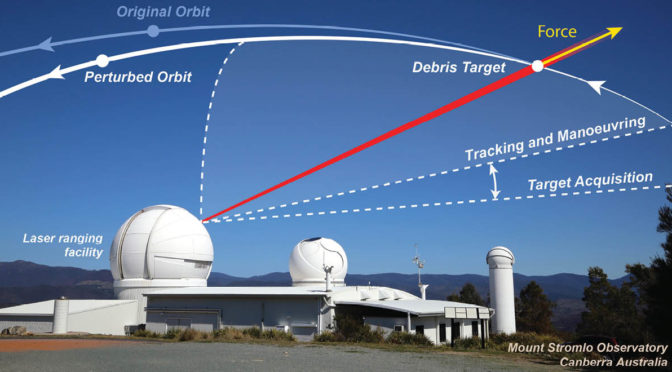
Featured image above: high-power lasers can gently nudge space debris out of the way of an operating satellite. Photo: Lyle Roberts

Each piece of debris in low earth orbit circles the planet around every 90 minutes, placing $1 trillion worth of space infrastructure at risk of collision and serious damage.

In May last year, a window on the International Space Station was chipped by a small piece of space debris believed to be a tiny flake of paint, which highlights the potential for more significant damage.

The idea of changing the orbit of debris using the photon pressure from lasers has been around for a while, but the Space Environment Research Centre (SERC) in Canberra is getting close to demonstrating proof of the concept. They plan to launch dummy satellites, each the size of a shoebox, into low orbit (around 570km) and fire at them with ground-based lasers to slow them down. The satellites will be equipped with sensors that can measure the amount of light hitting the target and the changes in orbit achieved with each pass.

In theory, this technique could be used to bring objects closer to Earth so that they eventually burn up in the atmosphere.

“These are very small forces; you need to know a long way in advance there’s going to be a collision. You can then use the photon pressure to change the orbit over time,” says Dr Steve Gower, general manager of SERC.

SERC plans to launch the first satellite in late 2018 and begin the demonstration phase the following year. The key industry participants on the project are EOS Space Systems and Lockheed Martin, and the project will use  all-Australian technology.

While this technique lacks the precision required to stop a speeding fleck of paint, it could be effective in manoeuvring objects with a high surface-area-to-mass ratio – think the size and weight of a computer monitor.

“We want a large surface area so we can use the maximum amount of particles of light, or photons, hitting the object,” says Gower.

This research program applies the knowledge gleaned from SERC’s other programs, which focused on tracking objects and predicting collisions. If successful, the potential for commercialisation includes offering conjunction analysis so satellite owners can move their assets out of the way of approaching debris or remove the offending space junk before a possible collision.

Find out more at serc.org.au

– Chloe Walker

For more CRC discovery, read KnowHow 2017.

You might also enjoy Finding Space Industry’s Next Elon Musk.

Early career researchers take the stage

The Showcasing Early Career Researchers Competition celebrates good research that is well communicated. Entrants were asked to submit a 30-second video conveying the aim of their research. Five finalists were selected from 41 entrants to attend the 2017 CRC Association Annual Conference in Canberra, to give a 5-minute presentation. An audience vote at the Collaborate Innovate conference determined the winner. 

Meet the five Showcasing Early Career Researchers finalists and see a 30 second snapshot of their work. 

WINNER 2017

JULIE BEADLE – The HEARing CRC

HEARING LOSS IN OLDER ADULTS

early career researchers

Many older adults struggle to understand speech in everyday noisy situations, even when they perform well on traditional hearing tests. For my PhD, I am investigating how age-related changes in cognitive functioning contribute to this all too common situation. I aim to develop a listening test that is reflective of communication in real life and examine how age and cognitive skills like attention and memory are related to performance on this test.

Watch Julie’s video

FINALISTS 2017 

JACQUILINE DEN HOUTING – Autism CRC

TOO ANXIOUS TO ACHIEVE

early career researchers

Around 40% of autistic people experience anxiety, and autistic people also tend to underperform academically. In the non-autistic population, a link between these two issues has been found.

In my research, I am using assessments of anxiety and academic achievement with a group of autistic students, to identify whether the same link exists within the autistic community. These findings could inform support options for autistic students, allowing for improved mental health and academic outcomes.

Watch Jacquiline’s video

DORIS GROSSE – Space Environment Research Centre

MANAGING SPACE DEBRIS

early career researchers

Several 100,000 space debris objects orbiting Earth are threatening to collide with and destroy our satellites networks. To prevent those collisions, a ground based laser can be aimed at the debris objects moving them out of the way with the help of photon pressure. The atmosphere, however, distorts the laser beam. The Adaptive Optics system that I am building compensates for those distortions so that the laser beam can be focused correctly on the object in space and hence preventing collisions.

Watch Doris’s video

TOMAS REMENYI – Antarctic Climate & Ecosystems CRC

TACKLING CLIMATE CHANGE

Early career researchers

The Climate Futures Team translates fine-scale, regional climate model output into useful, usable tools that are used by decision makers in industries across Australia. Our focus is on working closely with industry during research design, and throughout the process, to ensure the outputs of our research are directly relevant to our stakeholders and align with their decision making frameworks.

Watch Tomas’s video

MELISSA SCOTT – Autism CRC

WORKPLACES FOR ALL

Early career researchers

Despite people with autism having high levels of skills and the desire to work, they remain unemployed. Many employers are hesitant to hire people with autism due to their lack of confidence and knowledge about autism. To assist employers to better understand autism and their specific needs in the workplace, the Integrated Employment Success Tool (IEST) has been developed. The IEST is a practical “tool kit” with strategies to help employers tailor the workplace for success for people with autism.

Watch Melissa’s video

This article on the Showcasing Early Career Researchers Competition was first published by the CRC Association. Read the original article here.

New defence funding announced

Featured image above: New defence funding announced for multidisciplinary teams of researchers. Credit: Commonwealth of Australia, Department of Defence

The AUSMURI program allocates $25 million to Australian researchers to work across defence projects.

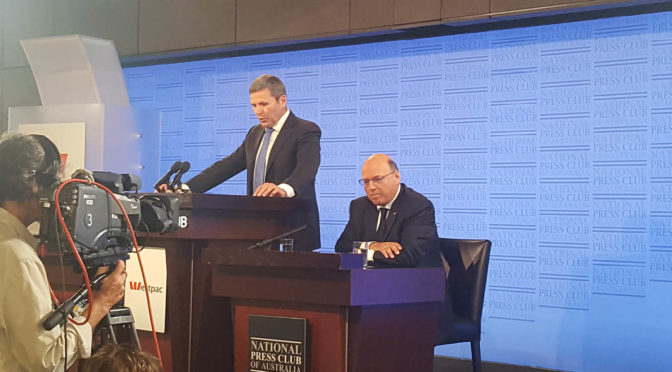
The defence program was launched on the 23 May by the Minister for Defence Industry, the Hon Christopher Pyne MP.

The program will leverage the existing US Multidisciplinary University Initiative (MURI) grant program, which is administered by the US Department of Defense, Minister Pyne said.

Speaking about the program at the Collaborate Innovate conference in Canberra today, Chief Defence Scientist Alex Zelinsky said the intellectual property (IP) of the research will be owned by universities taking part in the program.

The winning bids – which will compete against American colleges seeking funding – will be announced in March 2018.

The defence program will provide grants to support multi-disciplinary teams of Australian university researchers who collaborate with US academic colleagues on high priority projects for future Defence capabilities.

Nine priority areas for defence funding

Dr Zelinsky identified these nine areas today and also spoke about which priority areas will be the focus for Defence Cooperative Research Centres (CRCs), which will be based on the existing CRC programme, which has been running since the 1990s and has funded over 200 CRCs across multiple areas.

While CRCs are industry led research collaborations, DCRCs will operate on a ‘top down’ approach, said Zelinsky. Minister Pyne is expected to announce the first three Defence CRCs shortly.

“We believe they will be a vital element in delivering under the Next Generation Technology fund,” Zelinsky told Science Meets Business. The NGT will invest $730 million in “emerging and future technologies” to 2026.

The nine priority areas of the NGT are: space capabilities, integrated intelligence, enhanced human performance, advanced sensors, quantum technologies, multidisciplinary materials science, trusted autonomous systems, medical countermeasure products, and cyber.

“We are sponsoring R&D through the NGT fund and developing this through the Defence Innovation Hub. This requires interaction with the outside world – we’re no longer trying to do everything in house. We want to get the best minds to be applied to our problems,” said Zelinsky.

“We want the best people working on tough problems. That needs significant, deep collaboration. Defence is going to be driven by innovation.”

– Heather Catchpole

Collaborate to learn, learn to collaborate

One of the most marked changes in science and innovation in Australia in recent years is the attitude to collaboration. As we hold Collaborate | Innovate | 2017, there doesn’t seem to be any argument or concern over the importance of collaboration. It’s one of those things that is so well accepted that it seems strange to even remember when the value of collaboration was questioned and even argued against.

A decade ago, it was not uncommon to be virtually shunned in the scientific community for advocating a multidisciplinary approach to a problem or seeing industry as a partner to work with. The image of the lone scientist plugging away at a problem was often raised as the ideal way of doing science – if he or she was just left alone, well-funded, great things would happen.

The turnaround in attitude has been marked. I’ve seen a presentation from a demographer claiming that the fastest growing job in Australia is baristas. But I reckon Pro Vice-Chancellor Engagement, or some variation of that title, couldn’t be far behind. Universities and other research organisations have scrambled hard over the past few years to improve their level of interaction with industry. There doesn’t seem to be any resistance to the argument that Australia must improve its level of collaboration between the academic and industry sectors.


“It is in all our interests to learn more about the process of collaboration itself, so that we can continually improve.”


Winning the argument for more collaboration is only the first step. It doesn’t automatically follow that the resulting collaborations will be optimal, or even productive. Successful collaboration consists of getting a series of things right. Done right, collaboration means the whole adds up to more than the sum of the parts. Done poorly, it can be a mess.

That’s why Collaborate | Innovate | 2017 doesn’t just hammer away on the need for collaboration. It concentrates on the skills needed for good, productive collaboration. Collaborators need to be trusted partners and that can take more time and more effort than people anticipate. Collaborators may not be ready at the same time, or there may be a big differential in power or culture. These are speed bumps, not barriers.

The collaboration potential of an individual or organisation is not set in stone. It can, and does, change over time. It can be enhanced with experience, education and culture. Similarly, a dud policy can kill it off. It is in all our interests to learn more about the process of collaboration itself, so that we can continually improve.

The Cooperative Research Centres Programme has more than a quarter of a century of experience in relatively large-scale, complex collaborations. The money is of course vital to enabling great collaborations to deliver brilliant results. But collaboration is much more than an ingredient in seeking funding – it is a key to unlocking great innovation, which will result in much greater rewards than any government funding program. Deciding to collaborate is important; learning to collaborate well is vital.

Find out more at crca.asn.au

– Tony Peacock is CEO of the Cooperative Research Centres Association and founder of KnowHow.

You might also enjoy Tony Peacock’s commentary, Firing up our startups.

Beat the News with digital footprints

Every day we produce an almost unfathomable amount of data. Posting on Twitter, Facebook, Instagram and YouTube. Commenting in chat rooms; blogging; trading stock tips; and decorating hacks in niche forums. We broadcast what we’re eating, feeling and doing from our GPS-equipped smartphones, sharing maps of our runs, photos from shows, and news that gets us cranky or inspired.

The details of our passing moods are all there, creating a vital if virtual public pulse.

Dr Brenton Cooper’s Data to Decisions (D2D) CRC team checks this pulse and, by extracting signals from our collective digital footprint, shows where we’re going next.

Are we gearing up to strike? Or celebrate? Is disease spreading? What effect will an interest rates hike have? Are we about to toss out the government, or move money out of the market?

Whatever the social disruption, D2D CRC’s Beat The News ™ forecasting system can issue a warning – before it happens. In March 2016, it accurately forecasted the impact of an anti-coal port protest in Newcastle, NSW. The following May, no ships could move during the protest blockade, costing an estimated $20 million.


“This warning system tells you what might happen, when it will happen and why.”


Social media monitoring is already a billion-dollar industry, and Cooper, who is D2D CRC’s Chief Technology Officer, knows “there are plenty of tools that help you understand what’s happening right now. But this tells you what might happen, when it will happen and why.”

This sort of heads-up will be invaluable. D2D CRC’s first collaborators are Australia’s defence and national security agencies, whose analysts now have a Beat The News ™ dashboard that sifts through about two billion data points a day.

“These are people paid to understand the political climate, but they can’t read everything,” explains Cooper. “That’s where machine-enablement certainly helps.”

Maybe the agencies are watching Indonesian politics and want to know if there might be some unrest in the capital Jakarta. Beat The News ™ analyses a huge volume of open-source information, combining structured and unstructured data from a wide range of sources. It geo-locates posts, extracts key words, topics, trends and hashtags, and measures sentiment.

“Once we’ve done those types of data enrichments, we then pump it through a variety of models,” says Cooper, “to automatically and accurately predict the answer.”

The potential applications are many, so the CRC recently trademarked Fivecast™ – “as in forecast, only one better,” says Cooper – to take the system to market, whether as a spin-off company, licensing to a partner, or licensing the IP to a third party.

US company Dataminr has raised more than US$130 million from investors for its real-time analytics, but Cooper says Fivecast™ will offer a further capacity – event prediction. It’s the only predictive geopolitical risk analytics platform on the market. Corporate risk consultancies are already interested. Their clients include global mall conglomerates alert to anything that might stop people enjoying their shopping.

Find out more about Beat The News ™ at d2dcrc.com.au

– Lauren Martin

You might also enjoy ‘Disrupting Terrorism and Crime’. Sanjay Mazumdar, CEO of the Data to Decisions CRC (D2D CRC), takes a look at what the national security sector can learn from Big Data disruption.

Supercomputer study unlocks secrets of brain

In the seven-year study just released, RMIT University researchers – led by Professor Toby Allen and including Dr Bogdan Lev and Dr Brett Cromer – modelled how protein “switches” are activated by binding molecules to generate electrical signals in the brain. 

The findings, which involved hundreds of millions of computer processing hours, pave the way for understanding how brain activity can be controlled by existing and new drugs, including anaesthetics.

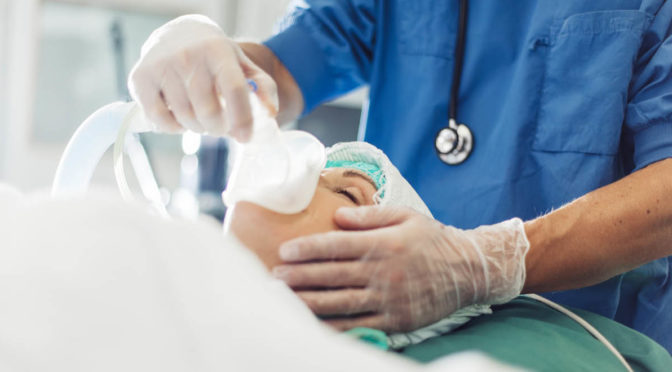
General anaesthetics work by blocking “on” switches and enhancing “off” switches in the brain, leading to loss of sensation and the ability to feel pain. 

“Even though anaesthetics have been used for more than 150 years, scientists still don’t know how they work at the molecular level,” says Allen.

“General anaesthetics are a mainstay of modern medicine, but have a small safety margin, requiring skilled anaesthetists for their safe use. They may also have long-term effects on brain function in both newborns and the elderly.

“Our study has uncovered details of the switching mechanism that will help in the design of new anaesthetics that are safer, both immediately and for long-term brain function, as well as more effective and more targeted use of anaesthetics.”

Allen says the computer models, using the Victorian Life Sciences Computation Initiative, provide an unprecedented level of understanding of the nervous system.

“These protein switches, called ligand-gated ion channels, are primary electrical components of our nervous systems. Understanding how they work is one of the most important questions in biology,” he says.

“Our computer models show something that’s never been seen before. We have discovered how ion channels bind molecules, such as neurotransmitters, and are activated to generate electrical signals in neurons.

“We are now using these models to make important predictions for how the binding of drugs and anaesthetics may control electrical signalling.”

The findings also unlock a range of other potential applications including understanding how ion channel mutations cause diseases like epilepsy and startle disease, as well as new treatments for anxiety, alcoholism, chronic pain, stroke and other neural conditions.

And because all living organisms share similar proteins, the findings could also open up possibilities for safer and more effective insecticides and anti-parasitics, while the computer modelling developed in the study reduces the need to test new drugs on animals.

The study was funded by the National Health and Medical Research Council, as well as the Medical Advances Without Animals Trust.

The findings have been published this month in Proceedings of the National Academy of Sciences USA.

This article was first published by RMIT on 22 May 2017. Read the original article here.

The future is innovation

Collaboration between industry and research is vital. We know that unlocking the commercial value of Australian research will result in world-first, new-to-market innovation and new internationally competitive businesses. Cooperative Research Centres (CRCs) are an excellent, longstanding example of how industry and researchers can work together to create these growth opportunities.

The CRC Programme supports industry-led collaborations between researchers, industry and the community. It is a proven model for linking researchers with industry to focus research and development efforts on progress towards commercialisation.

Importantly, CRCs also produce graduates with hands-on industry experience to help create a highly skilled workforce. The CRC Programme has been running for more than 25 years and has been extremely successful.

Since it began in 1990, more than $4 billion in funding has been committed to support the establishment of 216 CRCs and 28 CRC Projects. Participants have committed an additional $12.6 billion in cash and in-kind contributions.

CRCs have developed important new technologies, products and services to solve industry problems and improve the competitiveness, productivity and sustainability of Australian industries. The programme has produced numerous success stories; far too many for me to mention here. A few examples include the development of dressings to deliver adult stem cells to wounds; creating technology to increase the number of greenfields mineral discoveries; and spearheading a world-leading method for cleaning up the potentially toxic chemicals found in fire-fighting foams.

These examples demonstrate not just the breadth of work being done by the CRCs, but also the positive benefits they are delivering.

Click here to read KnowHow 2017.

KnowHow 2017

Senator the Hon Arthur Sinodinos AO is the Minister for Industry, Innovation and Science in the Australian Government.

Transplanting refugee knowhow

Featured image credit: new agricultural research brings community together to improve maize production. Credit: Facebook/Sunraysia Burundian Garden

Far from their native home in eastern Africa, a group of former refugees have brought their traditional farming methods to their new home in Victoria’s north.

Armed with shovels and hoes and some seeds, Mildura’s Twitezimbere Burundian community have planted a crop of maize – a traditional staple food in their home country – which is not only connecting them to the greater Mildura community, but is also connecting researchers with new agricultural methods.

These methods, employed in the northern Victorian township that’s known for its hot temperatures and vast food-growing industry, are helping researchers from the University of Melbourne and the University of Wollongong understand new ways to grow and support crops beyond current techniques. This is especially important in an era of increasingly erratic weather patterns.

agricultural research

Work in the maize field in Mildura. Credit: Facebook/Sunraysia Burundian Garden

Dr Olivia Dun, from the School of Geography at the University of Melbourne, says she and fellow researchers – Professor Lesley Head from the University of Melbourne and Dr Natascha Klocker from the University of Wollongong – have been able to gain important insights into different agricultural methods and crops that could be adopted in Australia.

With funding from an Australian Research Council Discovery Project, the researchers are exploring how people from ethnically diverse backgrounds value nature, how they practise agriculture and how they transfer skills from their home country to the Australian landscape.

“One of the reasons we’re doing this is because when we talk about migrants in relation to the environment, they’re often portrayed as a drain – extra people needing resources. It’s a population debate that frames migrants very negatively,” says Dun.

“So, we wanted to challenge that: these are people with skills, and migrants are not often asked about their knowledge and skills relating to nature.”

Drawing on this untapped resource has also provided the Burundian community multiple benefits: it not only provided the 100 members of the Burundian community with the main ingredient for their traditional dishes, but has also enabled them to connect with the broader Mildura community.

One of the Burundian participants, Joel, said of why he wanted to farm: “I looked and saw [that] this town is a town of farmers. So I thought it will suit me. Because I did not study, I don’t have a degree, I don’t expect to go and work in an office”.

Another agricultural research participant, Joselyne, says she sees Mildura as a “place to grow”.

And grow it has. The tiny maize seeds were planted in September 2016 and by February 2017 had flourished into a soaring crop in which people could get lost. Dun says its success has delighted everyone involved, but especially the local Burundians.

The Republic of Burundi is an east African country that has been blighted by a recent history of colonisation and bloody civil wars. Unlike Australia, the majority of Burundi’s population live in rural areas, so farming and agriculture are significant economic and practical components of life in the land-locked country.

Maize is a staple food for Burundians, along with sweet potato, cassava and wheat.

agricultural research

Preparing the soil for the first day of maize planting. Credit: Olivia Dun and Rachel Kendrigan

“Joel, Joselyne and other members of the Burundian community are extremely accomplished and knowledgeable farmers,” says Dun. “Through their interactions with more established farmers in Mildura, this project provides really exciting opportunities to learn about their farming methods.

“It’s been built on such a strong foundation of mutual respect and a willingness to learn from other cultures, which has been inspiring to see,” adds Klocker.

The community will consume about 10% of the maize fresh, and the rest will either be sold or dried and milled into flour to make ugali – a traditional East African dish. The success of the crop has opened the path for them to think about developing their own small business, selling maize to the Mildura community.

“They feel proud and it’s connected them to the general Australian community in Mildura in a very positive way,” says Dun.

The agricultural research project has been a group effort, made possible thanks to the generous access to one acre of land provided by Sunraysia Produce, support from Sunraysia Local Food Future’s members and Food Next Door program, Sunraysia Mallee Ethnic Communities Council and Mildura Development Corporation.

Dun says keeping this farming tradition alive has been particularly good for the younger kids amongst Mildura’s Burundian community, many of whom have grown up in Australia and have now been able to interact with this crop and how their family farmed in Africa.

Thanks to the success of the agricultural research pilot, more businesses and community groups are seeking to get involved and cultivate more under-utilised land. Vietnamese, Tamil, Nepalese, Hazara and young Anglo-Australian groups across Mildura want to get involved in the next farming scheme, with talks underway to cultivate and establish a community farm on a recently-donated 20-acre parcel of land.

– Alana Schetzer, University of Melbourne

The Food Next Door program needs help kick-starting the community farm and is currently looking for support and financial donations. If you would like to help, please email sunraysialocalfoodfuture@gmail.com

This article was first published by Pursuit. Read the original article here.

Future tech for a stable climate

Humans have emitted 1,540 billion tonnes of carbon dioxide gas since the industrial revolution. Credit: REUTERS/Tim Wimborne

Getting climate change under control is a formidable, multifaceted challenge. Analysis by my colleagues and me suggests that staying within safe warming levels now requires removing carbon dioxide from the atmosphere, as well as reducing greenhouse gas emissions.

The technology to do this is in its infancy and will take years, even decades, to develop, but our analysis suggests that this must be a priority. If pushed, operational large-scale systems should be available by 2050.

We created a simple climate model and looked at the implications of different levels of carbon in the ocean and the atmosphere. This lets us make projections about greenhouse warming, and see what we need to do to limit global warming to within 1.5℃ of pre-industrial temperatures – one of the ambitions of the 2015 Paris climate agreement.

To put the problem in perspective, here are some of the key numbers.

Humans have emitted 1,540 billion tonnes of carbon dioxide gas since the industrial revolution. To put it another way, that’s equivalent to burning enough coal to form a square tower 22 metres wide that reaches from Earth to the Moon.

Half of these emissions have remained in the atmosphere, causing a rise of CO₂ levels that is at least 10 times faster than any known natural increase during Earth’s long history. Most of the other half has dissolved into the ocean, causing acidification with its own detrimental impacts.

Although nature does remove CO₂, for example through growth and burial of plants and algae, we emit it at least 100 times faster than it’s eliminated. We can’t rely on natural mechanisms to handle this problem: people will need to help as well.

What’s the goal?

The Paris climate agreement aims to limit global warming to well below 2℃, and ideally no higher than 1.5℃. (Others say that 1℃ is what we should be really aiming for, although the world is already reaching and breaching this milestone.)

In our research, we considered 1℃ a better safe warming limit because any more would take us into the territory of the Eemian period, 125,000 years ago. For natural reasons, during this era the Earth warmed by a little more than 1℃. Looking back, we can see the catastrophic consequences of global temperatures staying this high over an extended period.

Sea levels during the Eemian period were up to 10 metres higher than present levels. Today, the zone within 10m of sea level is home to 10% of the world’s population, and even a 2m sea-level rise today would displace almost 200 million people.

Clearly, pushing towards an Eemian-like climate is not safe. In fact, with 2016 having been 1.2℃ warmer than the pre-industrial average, and extra warming locked in thanks to heat storage in the oceans, we may already have crossed the 1℃ average threshold. To keep warming below the 1.5℃ goal of the Paris agreement, it’s vital that we remove CO₂ from the atmosphere as well as limiting the amount we put in.

So how much CO₂ do we need to remove to prevent global disaster?

Credit: International energy agency

Are you a pessimist or an optimist?

Currently, humanity’s net emissions amount to roughly 37 gigatonnes of CO₂ per year, which represents 10 gigatonnes of carbon burned (a gigatonne is a billion tonnes). We need to reduce this drastically. But even with strong emissions reductions, enough carbon will remain in the atmosphere to cause unsafe warming.

Using these facts, we identified two rough scenarios for the future.

The first scenario is pessimistic. It has CO₂ emissions remaining stable after 2020. To keep warming within safe limits, we then need to remove almost 700 gigatonnes of carbon from the atmosphere and ocean, which freely exchange CO₂. To start, reforestation and improved land use can lock up to 100 gigatonnes away into trees and soils. This leaves a further 600 gigatonnes to be extracted via technological means by 2100.

Technological extraction currently costs at least US$150 per tonne. At this price, over the rest of the century, the cost would add up to US$90 trillion. This is similar in scale to current global military spending, which – if it holds steady at around US$1.6 trillion a year – will add up to roughly US$132 trillion over the same period.

The second scenario is optimistic. It assumes that we reduce emissions by 6% each year starting in 2020. We then still need to remove about 150 gigatonnes of carbon.

As before, reforestation and improved land use can account for 100 gigatonnes, leaving 50 gigatonnes to be technologically extracted by 2100. The cost for that would be US$7.5 trillion by 2100 – only 6% of the global military spend.

Of course, these numbers are a rough guide. But they do illustrate the crossroads at which we find ourselves.

The job to be done

Right now is the time to choose: without action, we’ll be locked into the pessimistic scenario within a decade. Nothing can justify burdening future generations with this enormous cost.

For success in either scenario, we need to do more than develop new technology. We also need new international legal, policy, and ethical frameworks to deal with its widespread use, including the inevitable environmental impacts.

Releasing large amounts of iron or mineral dust into the oceans could remove CO₂ by changing environmental chemistry and ecology. But doing so requires revision of international legal structures that currently forbid such activities.

Similarly, certain minerals can help remove CO₂ by increasing the weathering of rocks and enriching soils. But large-scale mining for such minerals will impact on landscapes and communities, which also requires legal and regulatory revisions.

And finally, direct CO₂ capture from the air relies on industrial-scale installations, with their own environmental and social repercussions.

Without new legal, policy, and ethical frameworks, no significant advances will be possible, no matter how great the technological developments. Progressive nations may forge ahead toward delivering the combined package.

The costs of this are high. But countries that take the lead stand to gain technology, jobs, energy independence, better health, and international gravitas.

– Eelco Rohling, professor of ocean and climate change at the Australian National University (ANU)

This article was first published by the World Economic Forum and The Conversation. Read the original article here.

Creating the life-saving Nanopatch

Featured image above: creator of the Nanopatch, Professor Mark Kendall

Professor Mark Kendall was all set for a career in aerodynamics when he met a man with an unusual idea: he wanted to use rocket technology to fire vaccines into the skin. Intrigued, Kendall accepted the man’s offer to work at Oxford University, where together with others they developed the ‘gene gun’ – a device that used aerodynamic principles to deliver vaccines to the skin.

That was almost 20 years ago. Kendall has since moved back to Australia and pushed beyond the gene gun technology, creating the Nanopatch, a new and unique way to administer life-saving vaccines that is safer and more effective than using a needle and syringe.

The Nanopatch is a tiny piece of silicon, covered on one side with up to 20,000 microscopic projections per square centimetre. Each of these projections is coated in a dry vaccine. When the patch is applied, these projections deliver the vaccine just below the top layer of the skin, which is abundant in immune cells. Within about a minute, the vaccine becomes wet in the cellular environment and is released. 

 Animal testing has shown that the Nanopatch delivers similarly protective immune responses as the needle and syringe, with significantly lower doses of vaccine. Using dry vaccines also means there is no need for refrigeration. Being needle-free, there is mitigated risk of cross-contamination or injuries. Needle-phobic people can also rejoice: the patch delivery method promises to be painless.
 
“The Nanopatch has the potential to completely change the way vaccines are delivered and address ongoing problems in the global push for vaccines in the developing world,” says Kendall, Group Leader of The Australian Institute for Bioengineering and Nanotechnology at The University of Queensland.

From aerodynamics to immunology 

Originally a mechanical engineer with a PhD in hypervelocity aerodynamics – “I was researching high-speed wind tunnels for interplanetary missions” – Kendall’s interest in immunology stemmed from his time at Oxford working on the gene gun.

Immunologists had discovered there were thousands of immune cells just under the surface of the skin. Instead of injecting deep into muscle where there are fewer immune cells, why not administer vaccines to the skin? There was only one problem: the technology to effectively do this did not exist – until Kendall came along.

“As an engineer with a knowledge of immunology, I looked at the scale of the cells, their spatial position and how quickly they moved,” says Kendall.

“That fresh thinking allowed me to come up with the idea of using an array of nano-projections to deliver vaccines to those cells. For the array to work, you need a base on which to attach the projections and that was the silicon patch.”

More effective vaccines that don’t need refrigeration

The Nanopatch has two major advantages over traditional vaccination methods. The first is improved immunogenicity. In 2015, Kendall’s team, in collaboration with the World Health Organization (WHO) and the US Centres for Disease Control and Prevention, tested an inactivated poliovirus vaccine on rats using the Nanopatch. They found they needed 40 times less vaccine to generate the same functional immune response as the needle and syringe.

“Many of the new-generation vaccines are expensive, multi-dose medicines that are difficult to make,” says Kendall. “The Nanopatch, when proven in humans, has tremendous potential to reduce manufacturing costs because we will need less vaccine to induce a protective immune response.”

Nanopatch

Smaller than a postage stamp and covered in vaccine-coated microscopic projections, the Nanopatch promises to save the lives of millions of people worldwide by giving them access to safe, effective and needle-free vaccinations.


Kendall hopes the Nanopatch can become a vehicle to make vaccines work better in the developing world. 

The Nanopatch has been tested in animals on vaccines for influenza, HPV, polio, malaria, HSV-2, chikungunya, West Nile virus and pneumococcus – all diseases plaguing developing nations. 

Of the 14 million people who die of infectious diseases every year, the majority are in developing countries, where people are not able to receive effective vaccines that exist for others, or they die from diseases that still do not have adequate vaccination methods. 

“The Nanopatch could potentially help on both fronts,” says Kendall. “It can bridge that ‘last mile’ to get effective vaccines to people who aren’t receiving them, and through its improved immunogenicity, could help candidate vaccines for diseases such as malaria to get over the line and be effective.” It may also be possible for people to self-administer the vaccine.

Moreover, unlike liquid vaccines that need to be kept cold from production to application, the Nanopatch does not require refrigeration. Lab tests have shown the dry vaccine can be stored at 23 degrees Celsius for more than a year without any loss of activity – a significant benefit in regions where vaccines have to travel long distances to reach their destination and where there may be no electricity to keep them cold.

Nanopatch trials are underway

In 2011, Kendall founded Vaxxas to develop and commercialise the Nanopatch, raising A$15 million in first-round funding – one of Australia’s largest-ever investments in a startup biotechnology company. Four years later, it raised A$25 million, the proceeds of which was used to advance a series of clinical programs and develop a pipeline of new vaccine products for major diseases.

Vaxxas has also forged a partnership with American pharmaceutical company Merck to evaluate, develop and commercialise the Nanopatch for vaccine candidates. In 2014, Vaxxas was selected as a World Economic Forum Technology Pioneer based on the potential of the Nanopatch to improve health on a global scale.

The Nanopatch is currently undergoing clinical trials. The WHO will also conduct clinical tests to determine the utility of the Nanopatch for polio vaccinations. Concurrently, Vaxxas is determining if the Nanopatch can be manufactured in large numbers at low cost. All things going well, Kendall says the Nanopatch may be commercially available by 2020.

For his pioneering work, Kendall has received a raft of awards, most recently the 2016 Dr John Dixon Hughes Medal for Medical Research Innovation and the 2016 CSL Young Florey Medal, one of Australia’s highest science honours.

But Kendall will not rest until the Nanopatch is in the field. 

“Vaccines will continually be improved; there will be new vaccines coming out for diseases that don’t currently have adequate vaccination strategies and improved vaccines for the ones that do,” he says.

“I’m not going to be satisfied until we’ve rolled the Nanopatch out, taken it out of the lab and got it to people in large numbers, particularly the people who need it the most.”

nanopatch

Mark Kendall with the Nanopatch

Find out more about The Australian Institute for Bioengineering and Nanotechnology at the University of Queensland.

Find out more about Vaxxas.

– Charmaine Teoh

This article was first published by Australia Unlimited. Read the original article here.

Laying the foundations

In response to Innovation and Science Australia’s recent performance review of Australia’s innovation, science and research system, I am producing a series of posts about improving industry-research collaboration, to share lessons from my experience leading collaborations for Cochlear, as well as recent research into best practice.

This blog series describes five steps to build industry-research partnerships for successful technology transfer. If you missed it, you can learn about Step 1 – develop a culture and practices that promote partnership – in my previous post. When you’re ready, here’s Step 2…

2. Build a strong foundation for your partnership

This stage of the potential collaboration follows the introduction and is about getting to know each other and building trust and understanding. These intangible assets take time to develop and are essential for a positive, productive relationship. Therefore, spending time in regular contact with potential partners, especially face-to-face, is critical and will pay dividends.

While informal meetings help potential collaborators get to know each other at a human level, face-to-face time should not be entirely unstructured. Every interaction should work towards answering two critical questions about motivations and expectations:

  • What does the company hope to achieve through the industry-research collaboration?
  • What does the research organisation seek to accomplish? 

Answering these questions will minimise the risk of disappointment and conflict later.  Also, when the tech transfer office and other administrators step in to draft the contract, having a clear, shared understanding of the purpose of the collaboration will simplify their negotiations. It’s useful to have these parties meet face-to-face as early as possible, so that they have time to build empathy too.

At Cochlear, when my colleagues and I met face-to-face with potential research collaborators, we planned an agenda in advance, identifying the issues we needed to discuss. We also spent time over lunch or dinner getting to know each other personally.

When members of the research team visited our office to learn more about Cochlear’s operations, we invited them to explain their research interests, achievements and experiences to all staff in a lunchtime seminar. These interactions helped both parties and their wider organisations develop trust and understanding.

Industry-research collaboration brings a sudden injection of new colleagues. Before commitment, each party should understand the strengths and weaknesses of their potential co-workers, and what they would contribute to the collaboration, i.e:

  • Who is in each team and what is their role?
  • What is each team member’s experience and expertise? 
  • How does each team measure up against their peers and competitors?
  • Has either team ever collaborated with others on the opposite side of the industry-research divide before? If so, what was the outcome?

As companies need to keep a watchful eye on their competitors, while sniffing out new market opportunities, they will also ask the research team the following questions:

  • Where is the science heading and on what timeframe?
  • What are the critical questions that remain unanswered in the field and what will it take to answer them?
  • What do the researchers know about any relevant industry collaborations involving their peers?

One of the best ways to understand technological trends and the R&D strategy of competitors is by analysing their patenting and publishing activities.  At Cochlear, we readily shared knowledge of competitors’ activities with our research collaborators, so they could be our ‘eyes and ears’ in the research sector.

Potential collaborators must discuss the following:

  • What problem are we seeking to solve? 
  • Who are the end users / customers and how can we improve value for them?
  • What are our time and budget constraints and what is achievable within them?

This phase of the industry-research collaboration is the time to identify any flaw in the research direction. In one case in my experience, the research had merit in its aims, but the proposed solution was impractical. Cochlear’s engineering expertise redirected the research, leading to a significant leap in the field and demonstrating the benefit of the collaboration.

By taking time: to build a personal relationship based on trust; to understand each other’s strengths and weaknesses; to share information about threats and opportunities; to nail down the problem and how it may be solved practically; and above all, to clarify the expectations of each party; collaborators will lay down a solid foundation on which to build successful commercialisation projects.
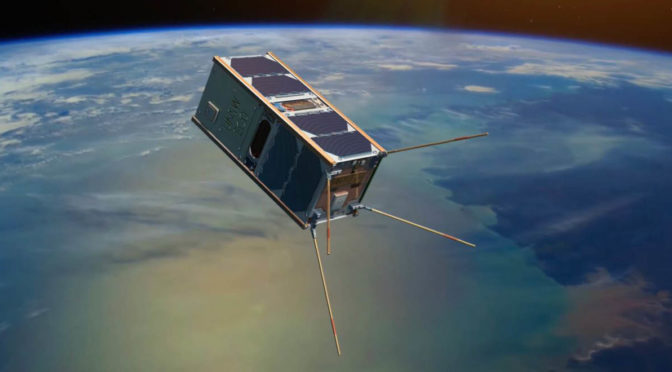
The next steps in best practice industry-research collaboration for technology transfer are:

  1. Manage risk
  2. Use your teams to best effect and
  3. Measure your impact

To learn more about these, please watch this space for subsequent posts.

– James Dalton, gemaker

research-industry collaboration

Lift-off for Australian CubeSats!

Featured image above: Artist’s impression of the UNSW-EcO cubesat in space. Credit: UNSW Australia

Three Australian research satellites – the first in 15 years – blasted off on Wednesday 19th April from Cape Canaveral and arrived at the International Space Station on Saturday. They will soon be deployed in orbit to explore the little-understood region above Earth known as the thermosphere.

The trio, two of them built at UNSW Australia, are part of an international QB50 mission, a swarm of 36 small satellites – known as ‘cubesats’ and weighing about 1.3 kg each – which will carry out the most extensive measurements ever undertaken of the thermosphere, a region between 200 and 380 km above Earth.

This poorly-studied and usually inaccessible zone of the atmosphere helps shield Earth from cosmic rays and solar radiation, and is vital for communications and weather formation.

cubesats

Three Australian research satellites blast off from Cape Canaveral. Credit: UNSW

Twenty-eight of the QB50 satellites, including the three Australian cubesats, were aboard the Atlas 5 rocket when it launched from Cape Canaveral Air Force Station in Florida.

The three Australian satellites are UNSW-EC0, built by UNSW’s Australian Centre for Space Engineering Research (ACSER) which will study the atomic composition of the thermosphere along with new robust computer chips and GPS; INSPIRE-2, a project led by the University of Sydney and involving UNSW and the Australian National University which was also partly built at ACSER; and SuSAT, a joint project between by the University of Adelaide and the University of South Australia.

cubesats

The INSPIRE-2 cubesat

“These are the first Australian satellites to go into space in 15 years,” says Andrew Dempster, director of the Australian Centre for Space Engineering Research (ACSER) at UNSW, and a member of the advisory council of the Space Industry Association of Australia.

“There have only been two before: Fedsat in 2002 and WRESAT in 1967. So we’ve got more hardware in space today than Australia’s had in its history.”

Sometime in May, the first 20 cubesats – including INSPIRE-2 and SUSat – will be deployed from the International Space Station, or ISS, via a Nanoracks launcher, a ‘cannon’ that will eject them at a height of 380 km (the same as the ISS), and they will drift down to a lower orbit where they can begin their measurements. UNSW-EC0 will be deployed with the remaining seven other cubesats around June 17.

cubesats

The Japanese robotic arm of the ISS hosts the Nanoracks CubeSat launcher. Credit: UNSW

Also aboard the Atlas 5 rocket is Biarri Point, a cubesat for defence applications testing carrying new GPS technology developed by UNSW’s ACSER and Australia’s Defence Science and Technology Group. It is part of a four-nation defence project between Australia, the US, the UK and Canada that will see the launch of another two cubesats over the next year. The remaining eight QB50 cubesat will be launched separately into orbit by an Indian rocket later in May.

“This zone of the atmosphere is poorly understood and really hard to measure,” says Elias Aboutanios, project leader of the UNSW-EC0 cubesat and deputy director of ACSER.

“It’s where much of the ultraviolet and X-ray radiation from the Sun collides with Earth, influencing our weather, generating auroras and creating hazards that can affect power grids and communications.

“So it’s really important we learn a lot more about it. The QB50 cubesats will probably tell us more than we’ve ever known about the thermosphere,” he says.

cubesats

Project leader of the UNSW-EC0 cubesat and deputy director of ACSER, Elias Aboutanios. Credit: UNSW

QB50 is a collaboration of more than 50 universities and research institutes in 23 countries, headed by the von Karman Institute (VKI) in Belgium. “This is the very first international real-time coordinated study of the thermosphere phenomena,” says VKI’s Davide Masutti.

“The data generated by the constellation will be unique in many ways and they will be used for many years by scientists around the world.”

Both the QB50 and Biarri projects show what Australia can do in the new age of cubesats, dubbed ‘Space 2.0’, that allows companies and researchers to develop new space applications and devices and launch them at much lower cost.

“It proves that, even with modest resources, Australians can be players in space industry and research,” says Joon Wayn Cheong, a research associate at UNSW’s School of Electrical Engineering and Telecommunications and technical lead of the UNSW-EC0 cubesat.

“UNSW-EC0 and INSPIRE-2 prove we can devise and build space-ready hardware which can tolerate the punishing strain of blast-off and the harsh conditions of space.”

cubesats

The team that built the UNSW-Ec0 and INSPIRE-2 satellites. Credit: Herzliya Science Centre

Mark Hoffman, UNSW’s Dean of Engineering, agrees. “We used to think of space as a place only big-budget space agencies could play in. The advent of cheap and powerful cubesats has made space accessible as never before, and that’s going to be great for industry and research applications. I’m delighted to see UNSW playing a leading role in this emerging sector in Australia. “

Each QB50 cubesat carries instruments with its own engineering and scientific goals. UNSW-EC0, for example, has three other experiments: a robust computer chip designed to avoid crashing in the harsh radiation of space, as some satellites and space probes are forced to do when hit by cosmic rays; a space-borne GPS to enable satellites to cluster together in swarms; and test a super-reliable computer microkernel in the harsh radiation of space.

In addition, UNSW-EC0’s chassis is made entirely from 3D-printed thermoplastic, itself an experiment to test the reliability of using  3D-printing to manufacture satellites, making them cheaper and much more customisable.

This information was first shared by UNSW Australia on 19 April 2017. Read the original article here, or watch the video below.

E-cigarettes point to babies at risk

Featured image: baby with asthma receives treatment through an inhaler. Credit: Thinkstock

A study of the effects of smoking electronic cigarettes during pregnancy has been hailed by the Thoracic Society of Australia and New Zealand (TSANZ) in its stand against legalising nicotine in e-cigarettes.

Using a mouse model and human lung cells, the UTS Molecular Biosciences Research Team study, led by Pawan Sharma, David Chapman and Brian Oliver, found e-cigarette vaping among expectant mothers increased the risk and severity of allergic asthma in their babies.

“E-cigarettes are being regarded as a tool to help quit smoking, so we considered the effect of maternal e-cigarette vaping an important area to look in to,” says Sharma.

“Our study indicated e-vaping in pregnancy was associated with reduced lung function and an increased risk of asthma in the mothers’ offspring. These findings show that e-cigarette use during pregnancy should not be considered safe.”

The UTS team’s e-cigarette research is supported by an international study in which laboratory trials concluded that when e-cigarettes are used as a healthier substitute for tobacco smoking during pregnancy, mothers may still be posing significant neurological risks to their unborn offspring.

Earlier this year, Australia’s drug regulator, the Therapeutic Goods Administration (TGA) rejected an application to relax the ban on e-cigarettes containing nicotine.

Professor Peter Gibson, TSANZ President, says the evidence does not support the lifting of the ban.

“While electronic cigarettes are likely to be less dangerous than smoking cigarettes, they are not harmless,” he says

“We have an increasing body of evidence pointing to the harms of e-cigarettes containing nicotine.”

Australia’s ban on e-cigarettes containing nicotine was introduced in 2009. In September 2016, an application to the TGA proposed nicotine in e-cigarettes at certain concentrations should be exempt on the basis that they provide an alternative pathway for smokers who are unable or unwilling to quit. The TGA decided in March to continue the ban.

Chapman says e-cigarettes still expose users to numerous toxic compounds.

“It is unknown whether a reduction in these compounds equates to improved health outcomes. Nicotine is a highly addictive compound and itself leads to detrimental health outcomes.”

This article on e-cigarette research was first published by UTS on 13 April 2017. Read the original article here.

Mental health emergency

World-first research by beyondblue and the Bushfire and Natural Hazards CRC will invite up to 20,000 current and former personnel from 34 police and emergency organisations across Australia to participate in a survey about their mental health and risk of suicide.

As part of the National mental health and wellbeing study of police and emergency services, beyondblue is working closely with employers, personnel and their families on practical strategies to improve the mental health of police and emergency services workers and volunteers.

It is the first time data is being collected on a national scale from police and emergency service organisations. The emergency services health research is being conducted in three phases after qualitative analysis was gathered in phase one last year.

From August 2017, police and emergency service workers will be surveyed about their wellbeing; common mental health conditions; suicide risk; stigma; help-seeking behaviour; and factors supporting, or jeopardising, mental health in the workplace.

The University of Western Australia and Roy Morgan Research are working together on phase two of the emergency services health study, which is expected to conclude in December.

The Bushfire and Natural Hazards CRC has provided a funding contribution to the study and will support beyondblue’s work.

“The only national statistic we have about the mental health of police and emergency service workers is a devastating one – 110 Australian police and emergency services workers died by suicide between 2010 and 2012,” says beyondblue CEO Georgie Harman.

“Beyondblue’s reputation is based on its use of scientifically sound, evidence-based research from which we build and develop programs to promote a better understanding of depression and anxiety and suicide prevention.”

Bushfire and Natural Hazards CRC CEO Dr Richard Thornton says the project will provide important information to understand both the number of people affected and the range of issues they face.

“The understanding we gain will be used to design interventions to support them and their families and improve personal, family and agency outcomes,” says Thornton.

In phase one, completed in November last year by Whereto Research, current and former police and emergency service employees, volunteers and family members were interviewed about their experiences of mental health conditions in which participants felt at risk of suicide.

Initial findings suggest:

  • the nature of the stigma associated with mental health conditions differs across police, fire and rescue and ambulance services;
  • although exposure to trauma is seen as an underlying cause for post-traumatic stress disorder, workplace culture and practices also contribute to the prevalence of mental health conditions;
  • working in police and emergency services, particularly for volunteers, can support workers’ mental health.

“In phase three, beyondblue will work alongside police and emergency service organisations to identify strategies to practically address the issues raised by the findings of this research,” says Harman.

These evidence-based strategies will support individuals, improve organisational culture and address systemic concerns that impact on mental health and wellbeing across the sector nationally.

They will be developed in collaboration with a cross-section of the police and emergency services sector including agencies, unions, government departments, individuals and family and community groups around Australia.

This article on emergency services health research was first published by the Bushfire and Natural Hazards CRC. Read the original article here.

Building healthy bones

Developed in South Australia by researchers at Flinders University in collaboration with the Commonwealth Scientific and Industrial Research Organisation (CSIRO), the lobster shell and seaweed snack aims to be a highly nutritious alternative to dairy products.

Known as SeaNu, it is being created to address the increasing number of children who shun milk products because of cultural or personal reasons. The jelly is aimed for commercial release in Australia in early 2018 with an Asian launch to follow soon after.

Director of the Centre for Marine Bioproducts Development at Flinders University Professor Wei Zhang says SeaNu will target global health markets but is best suited for Asia because of the high regard for Australian marine products.

“In Australia, one in six people avoid diary and that applies to children also,” he says.

“In general, calcium deficiency is a global issue and there is a need for products that have no dairy.

“Many Asian countries also do not typically eat large amounts of dairy products and we are hoping to definitely target there soon after we commercialise the product in Australia.”

SeaNu  is a product of Flinders University technology that reconstitutes biological material to make it suitable for human consumption.

The biorefinery technology takes the seaweed and lobster shell, formulating it into a small jelly for children to take to school in their lunchboxes.

Professor Zhang, who is president of the Australia-NZ Marine Biotechnology Society, says farmed and wild seaweed are widely used in Asian countries and some parts of Europe as vitamin and mineral supplements.

Seaweed is not only rich in trace minerals, calcium and vitamins but is a low-calorie source of protein and fibre, responsible for up to 20 per cent of the Asian diet. The seaweed food ingredients business is worth an estimated US$1 billion dollars. Lobster shell is also high in calcium and protein.

Professor Zhang says while seaweed has a major nutritional benefit in food, the research team is working on developing a range of different products including cosmetics and biofuel.

SeaNu was presented in Melbourne at the end of the CSIRO’s 12-week ON Accelerate Program, which pairs researchers with mentors to help them move their ideas from the lab, out to investors, and then to consumers.

The ON Demo Night in April gave teams the opportunity to pitch their innovations to an audience of industry experts, investors and potential partners for further funding and support for commercialisation.

Seaweed researcher Peng Su and nutritionist Dr Rebecca Perry from Flinders Partners, along with Dr Michael Conlon and Dr Damien Belobrajdic from CSIRO were also part of the SeaNu team.

The seaweed snack is still in its prototype phase but is being refined for taste and texture so it can meet its projected launch date of January 2018.

– Caleb Radford

This article was first published by The Lead. Read the original article here.

Australia’s science vision centres on collaboration

Featured image: Australian Minister for Industry, Innovation and Science, the Hon Arthur Sinodinos, addresses the National Press Club at Science meets Parliament 2017

The Minister for Industry, Innovation and Science, the Hon Arthur Sinodinas, highlighted collaboration and ensuring all Australians understood the benefits of science as key areas of focus for the Government’s science ‘vision’ in an address to the National Press Club.

The Hon Sinodinas is the fourth Minister for Science in four years. This was his inaugural address to what Australia’s Chief Scientist Alan Finkel termed the ‘network of nerds’, a gathering of over 200 of Australia’s most senior scientists at Science meets Parliament.

Sinodinas said innovation has become a buzzword that “excites socially mobile, inner-city types; but for other Australians, creates anxiety – about job losses and insecurity.”

However Australians need to be prepared for disruption as “the new constant”, he warned.

“We need to manage the transition from the resources boom to more balanced, broad-based growth.

“This is against the backdrop of heightened uncertainty and slower economic growth, and a yearning for more protectionist measures.”

Sinodinas went on to quote Atlassian co-founder and highly successful tech entrepreneur Mike Canon-Brookes, who recently questioned if the government was “dodging the question of job losses as a result of innovative change.”

“The Government has started a conversation with the Australian people to address just that question. We’re about helping your business to respond to disruption and stay viable in the future. We want to create a culture of innovation across the board.”

Australia’s climate science and energy future

Overall, the mood at Science meets Parliament, which brings 200 science, technology, engineering and maths professionals and researchers to Canberra to pitch their programs to politicians – about a third of whom volunteer their time – was positive and researchers were happy to be heard.

national press club address

Science meets Parliament brings together 200 STEM professionals, researchers and Australian politicians.

“Science meets Parliament is a great event. It is about recognising the contribution of scientists. Scientists and politicians should be natural communicators,” said Sinodinas.

He also addressed criticisms of the Government’s commitment to climate change science at the National Press Club address.

“We haven’t turn our back on climate science, we made sure it is properly looked after and protected and that will provide its own insight into climate science information. We are also trying to deal with this issue at the same time as we deal with the affordability and reliability of energy.”

Science at the forefront of the next election

Last night both the Minister and Opposition Leader the Hon Bill Shorten presented their vision of science at a gala dinner. Sinodinas extolled Australia’s national research infrastructure, including the Australian Synchrotron and the Square Kilometre Array, a 3000-dish radio antennae that will offer an unique glimpse into the universe’s early history. He also emphasised we need to “nail collaboration”.

“As a country, if we want to have control over our economic destiny, we want to have world class companies operating out of Australia. To do that we need to nail collaboration.

“Finding the money for the next stage of the research infrastructure is a challenge.”

Shorten also highlighted collaboration as an essential goal, and reiterated the Opposition’s goal to invest 3% of GDP in science R&D by 2030.

“Science research and innovation are not niche areas. They should be frontline for all of us.

“The issues that scientists deal with are political and there needs to be this engagement,” said Shorten.

“Science research and innovation are economic, environmental and practical issues that are vital to adapting to technological change and will allow us to compete in the Asian market. It shapes the way that we learn and teach.”

national press club address

Opposition Leader the Hon Bill Shorten with Refraction Media Head of Content Heather Catchpole (left) and CEO Karen Taylor-Brown (right)

He also emphasized the need for job security for postgraduate researchers, a sentiment widely echoed by scientists attending the Science meets Parliament event.

“For all of those postdoc researchers who spend years, we owe you certainty in terms of support,” said Shorten.

“We can’t complain about fake news when the facts don’t suit the stories. We see you as essential to the future. Science will be at the forefront of the next election.”

– Heather Catchpole