
All posts by Heather Catchpole

Thriving in a disruptive world

First of all, let me say that I really jumped at the chance to speak to the summit when I was offered the opportunity because I think it’s a good topic, at the right time, and it’s very important that it’s being done by the Financial Review, which over decades has built up its reputation for being an economically rational voice in the Australian policy debate – and boy, do we really need those voices going forward.

And as Minister for Industry Innovation and Science, my job is to be a voice for rationality, to be a voice for articulating where we’re going in terms of the future, but I need your help. It’s a coalition of the willing and I want to talk a bit about that today.

So for me, when I became Industry Minister at the beginning of this year I said I wanted to make collaboration a hallmark of my efforts in the portfolio, and this summit is a really valuable opportunity for government, entrepreneurs and researchers to collaborate, to listen, and to formulate ideas on how to maximise the benefits of the age of disruption.

Innovation by degrees

I labelled my talk – a footnote almost – Thriving in a Disruptive World, because that’s what Australians will do. I’m relentlessly optimistic about this. I don’t buy the line that we can’t do it. I don’t necessarily believe we can do it the American way, the Israeli way, the Chinese way, the Singaporean way; we’ve got to do it the Australian way, building on our own attributes and on the strengths we have as a country.

And, yes, it means being clear-eyed about where we have problems and difficulties and confronting them, but also being, I think, to some extent charitable to ourselves and accepting there are things we are really good at, and how do we build on those to create what I believe can be one of the most technologically advanced and prosperous countries in the world? I think that’s very important from my point of view.

When I became Minister, I became Minister for Industry, for Innovation and for Science. I’ve got a threefold responsibility, and since becoming Minister I’ve worked to complete the transformation of the Industry part of the portfolio. Industry policy is no longer about protection, it’s not about shielding people from the forces of digital transformation or the work of the future, and I will have more to say about that later. Industry policy is about economic transformation through innovation, which takes many forms.

We’ve got to remember, innovation can be very incremental, it can be very straightforward in response to changes in market conditions, all the way through to the creation of new products, processes and services that maximise the benefits of our first-class scientific and research base.

The fourth revolution

Now, we are in the midst of a fourth industrial revolution. Bill Ferris today was right to talk about the fact that we’re in the middle of this revolution and we’ve got all of this competition going on, where markets and platforms are changing faster than ever before and technological transformation will change every job in every industry.

And we, as a government, are not pretending that we can put our heads in the sand and protect those jobs that are threatened by technological change. I saw a headline in the Fin Review the other day which sort of implied that. That was wrong. The Industry portfolio is moving on and the industry settings in this country are moving on.

Now, we can’t force entrepreneurs to make particular investments, just as we cannot order businesses to adopt specific technologies or command communities to embrace certain industries. We can, however, help to create the conditions for them to innovate, and this means engendering, principally, a culture of collaboration between business, academia, research bodies and government, and it means providing the platforms and the skills that enable Australians to transform their business. It means reshaping our business models to meet new competition, new markets, and new demands, and this is how we’re transforming the portfolio – industry policy in the 21st century.

Areas of innovation and change

It will be a surprise to some of you that- let me take a very prosaic example. Australia’s manufacturing industry is in many ways now becoming more of an exemplar of innovation and change. This is an industry in which big change is underway, particularly as we restructure the auto industry.

Now, that’s a big challenge, to take an industry which had been on the Government teat for 40 or 50 years and to take it through a process of transformation; to put behind car assembly and to say in the future we’re going to focus on high end design, we’re going to focus on smart manufacturing; and we’re doing this through government programs.

Where a government has provided protection over time, there is an obligation to help those industries to actually adjust and then become self-sustaining, and that’s what we’re doing.

We’re providing funds to businesses like Blown Plastics in Adelaide, which have literally transformed themselves from making car parts to supplying complex parts for medical devices. Companies like Marand Precision Engineering – a Melbourne-based company established by a former Holden worker.

Marand supplies advanced industrial precision tools to a range of industries: automotive, mining, aerospace, defence and more. So manufacturing in this country is looking different. It’s servicing global markets with complex goods and services, where the only way to compete successfully is to transform, to be ahead of global trends, and to integrate into global supply chains.

Show me the money

And, yes, we’ve had to put money into this. You have to grease the wheels of change. But that’s how industry policy and that’s how innovation actually occurs on the ground: you provide the conditions and you help companies through.

We can’t help every company, and we’ve actually got Bill Ferris looking at the effectiveness of the assistance we already provide, because, of course, you can’t provide assistance to every company, nor should you have to. We ultimately want companies to stand on their own feet, but we need to find ways that government best assists by providing the right platforms and the right infrastructure.

Now, where is all this leading? Why are we doing all this? Why do we transform industry sectors? Why do we bother? Isn’t it easier politically to just prop a sector up? And even in sectors like steel or rail, where we’re looking at what the future holds for them, we’re saying to them: we’ll help you, we’ll assist you – whether it’s Arrium in Adelaide, whether it’s rail procurement and manufacturing in Australia – if you can become globally competitive. That is the sine qua non of this, that assistance is provided to help transform these industries and to provide the basis for globally competitive activities.

The innovation mindset

Now, what is the vision with this innovation culture that I’m talking about here? I really want it to be the analogue of the adjustment process that we’ve established over the last 20 or 30 years through decades of micro reform. See, what happened with micro reform over the last 20 or 30 years is that we created a very powerful adjustment mechanism in the economy which means that the booms and the busts of the ’80s and ’90s – Michael will remember them well; he was writing about this stuff in Canberra in the Press Gallery.

Remember, every time, inflation would go up, wages would go up, interest rates would go up, the economy would crash. That’s gone. Through the Asian Financial Crisis, through the resources boom of the last few years, look at the way we have accommodated those changes.

There is a powerful adjustment mechanism in the economy, but there’s another adjustment mechanism I want in the economy, and that is the shift to this innovation mindset with a global outlook. So that when we are looking at how we diversify our economy, we’re creating companies and enterprises and entrepreneurs and risk-takers who command a premium in the marketplace because they are producing something no one else can produce, they’re ahead of the curve – very important for us to be able to do that.

And that can help to offset some of the oscillations and the ups and downs we’ve seen of the commodity economy. We ultimately want an economy where overseas people say, this is an economy based on innovation. Yes, we’ll have our resources still, we’ll have our agriculture, we’ll have our services, but across the economy we will be known for being innovative and smart in all of those areas. That’s why I now talk about smart manufacturing; I don’t talk about manufacturing anymore, it’s smart.

Now, there’s been criticism about the Government’s rhetoric around innovation ever since the election, and this is a fair point that we took a bit of a shellacking in the election, there’s no doubt about it, about the term innovation. And people said, oh, that’s equated with people losing their jobs. People are frightened. And people were right to say that when you talk about something in the broad and there’s lots of people out there making lots of money, but making all sorts of predictions about all sorts of jobs that could be lost because of technological change and everything else that’s happening.

We’ve been hearing this for decades, for generations – I’ll come back to it – my point is this: and it’s true that the word innovation, unless you give it some specificity, can worry people because until people see that innovation is actually all the things I’ve said before- and this is how we try and explain it on the ground these days. We don’t explain it by talking about the general concept; we talk about the specifics of how innovation works to make things better for your company, for your community, for your business, your industry. And this is how we have to sell it to our fellow Australians and we have to take our fellow Australians with us.

A time for optimism

And you’ll have lots of talk from the Opposition and others in high-minded ways, talking about the work of the future and the future of work and all these big numbers. Well, I’m very optimistic. I’m a technological optimist. I’m an economic rationalist and a technological optimist, and I believe that we will benefit mightily from the changes that are coming, but we have to take people with us, no doubt about it.

All those communities that feel somehow they’re going to miss out on change, that’s part of the role of government, to make sure that people know they’ll get a fair crack of the whip. They’ll get a fair crack of the whip because we’ll make sure structural adjustment programs, we’ll make sure the education and training system, our systems of training and re-training, learning and re-learning, adapt to the new world. Is that hard work? The longer I stay in this portfolio, the more I see those issues around education and training as germane to everything else we’re trying to do. And yes, it is hard work.

We’re a federation; we don’t control all the levers. And yes, we’ve got immigration policy, the states have got vocation, education and training; we’ve got to make sure everything works in tandem. And through various COAG, industry and skills councils, my colleagues and I at the federal level are working with the states to get that greater coordination going on. But we are here to help people through the transition. So for me, I do lie awake worrying about the future of work, but only in the sense that I want to make sure every Australian is reassured we are going to take them on the journey.

The other point I would make going through is that in the period since Malcolm Turnbull launched the National Innovation and Science Agenda, we’ve actually gotten on with implementing it. Whether it’s new tax incentives for early stage investors; changing the rules surrounding venture capital limited partnerships; $200 million CSIRO Innovation Fund for new spin-off companies; half a billion dollar Biomedical Translation Fund to commercialise our great medical discoveries; the money we’re putting into science, technology, engineering and maths at the school level, STEM; the various proposals we’ve got around to support greater women’s participation in STEM as part of all of that; there’s a whole series of things that we’ve done.

We’ve largely implemented that agenda. The bits that are still outstanding – crowd-funding got done the other day finally, wasn’t that great, that was fantastic. Now, it took a bit longer than I would have hoped, but that’s the way the legislative sausage machine works in this country.

The bit that’s still outstanding from my point of view is I’d like to see more done around bankruptcy. I want to make it easier for us to structure and re-structure companies in this country because I think we do it harder than countries like the US, and that’s something we’re working on with the Attorney-General and his people. We’re already seeing results: venture capital investment has reached a record high since our reforms came into effect; investment in early stage venture capital limited partnerships has risen 80 per cent in the last year.

The vibe

There is actually a vibe out there, you can feel it among the start-ups and you can feel it when it comes to the funding. There is a vibe and this is the window of opportunity, and I take the point from those members of the audience who say when you’re on the crest of a wave this is the time to capitalise on it – and you’re right, this is the time to capitalise on it.

We’re also seeing a significant lift in collaboration between business and research communities. Now, I never tire of saying this, Bill Ferris never tires of saying this, Alan Finkel is here: we really punch above our weight when it comes to knowledge creation as a country. This is one of the great secrets of this country and one of the ways in which we will succeed the Australian way. It’s our knowledge creation and the base that provides. But it’s the collaboration, getting that collaboration done between the various sectors – to me that is the big cultural change that has to happen in this country, we are still too siloed.

We did work in NISA 1 with the universities around the incentives for them when it comes to their research grants to be more commercially oriented, more focused on translation of research. But there is a lot more to do, and as one of your speakers alluded to before, government can’t do it all. But the important thing is we look around and I see great models to build on.

I look at what Macquarie Uni have done with their business parks where they are helping to build and reinforce some of our biggest brands, like Cochlear. The University of Wollongong established an Advantage SME program specifically to develop relationships with small business – a one stop shop for SME’s looking to access research capability. I’ve established an advisory committee to look at opportunities for university and innovation precincts. If collaboration is important, apart from the organic collaboration and precincts that we’ve seen develop across this country, what policy measures do we take to really reinforce that if that is the best way, or one of the best ways to get collaboration?

Bill Ferris, I know has some other ideas. I have no doubt he will tell you about them later, but my point is I’m looking at this in a very excited way. The Australian Nuclear Science & Technology Organisation is an exemplar; it’s leading the way with its planned innovation precinct, enabled by legislation I got through the Parliament last week that will see scientific partners, businesses and graduates crowding around Australia’s Centre of Nuclear Capability and Expertise at Lucas Heights. There’ll be a graduate institute, a technology park, and the world’s first nuclear science and technology innovation incubator. Think about that, the world’s first, and that’ll be at Lucas Heights, and they’ll look at how they roll this out across the country.

Now, there’s a lot more that has to happen. Bill Ferris, his hair has gone prematurely grey because he’s been asked to produce by later this year a plan, a strategic plan for our innovation, science and research system to 2030.

As I alluded to before, part of that plan is about how do we get the best value out of all the money we’re spending already, whether it’s the R&D tax incentive which we’ve been having a look at, whether it’s the way we spread money across industry capability, whether it’s through our entrepreneurs programs, accelerating commercialisation, the ways in which we provide money to industry for research and commercialisation. Are we doing it the best way? Is it the most effective? Are we getting the best value-add?

But Bill will also be looking at what the system looks like in 2030, and also what does that mean in terms of the resource base for the sector by 2030. We’re also looking at whether we have national missions which actually allow us to crystallise and bring together various parts of the innovation and science system to work on big themes, as a way to not only achieve big things, but also to make sure that that brings the rest of the system with it and actually encourages the sort of collaboration and change that we’re talking about.

Leading by example

Now, government has to lead by example. Government can talk about it, government can speak, government can disperse money, but a very important way that we can lead by example is actually create customers in the private sector.

So for example, for this cultural change that we’re talking about for ICT, government leading by example includes the Digital Transformation Agency under the leadership of Angus Taylor. He’s been doing good work when it comes to how the Government uses digital products and processes.

The Government is targeting an increase of 10 per cent in value of ICT contracts going to SMEs. That’ll be $650 million of extra money flowing to innovative Australian companies, because the best assistance for an SME is to get a contract.

The same is happening with what we’re doing around our defence spending – $195 billion over the next 10 years. I want to squeeze every last dollar of national benefit out of that money. We want to get world-first capability, but we also want to get world-first spin-offs for the rest of Australian industry.

Look at the way in which American defence spending, American space spending powered the American economy. This defence spending, which includes a major portion of next generation innovation programming, which includes cooperative research centres focused on defence projects and all the rest of it, which includes an innovation hub and a new industry defence capability centre, that provides us with a powerful mechanism, along with the demand that will come from the naval shipbuilding program and the other elements of capability development, for us to create the basis of really smart manufacturing.

And what we’re about is, where possible with industry policy, to actually create new industries, new opportunities. The Government will have more to say about this next week in relation to the space industry, which we see as an immense opportunity for growth. We’ve been reviewing our space industry capability; it’s underway now, and the review will provide a framework for our sector to grow. It’ll report over the next little while.

But my point is this: I look at space, I look at defence, I look at cyber-security and I see industries of the future where we can be global leaders – not in every aspect; we choose our niches.

The other thing I look at – and it comes back to my technological optimism about the Australian way – is that we actually do big science in this country really well, and as a result of the National Innovation and Science Agenda we’ve committed 2.3 billion over 10 years to critical research infrastructure, like the Australian Synchrotron in Melbourne, which is part now of ANSTO, which is creating great cancer-zapping drugs, for example – I can put it no more technically than that – which is creating all sorts of nuclear science and medicine, which is world-leading.

The Square Kilometre Array, we’re putting up to $300 million towards that. Our fantastic astronomy project which will complement the work we did in the Budget, where we put over a hundred million into the European Southern Observatory for more astronomy work, which with instrumentation and the capabilities that go with that create great global opportunities for collaboration.

Because countries overseas want to cooperate with scientists and researchers who have access to globally competitive infrastructure, and that’s what we’re doing here. We’re creating globally competitive infrastructure which attracts those scientists, those researchers who want to work here. That is one of our great attributes.

I put out a national science statement in March at the Press Club. One of the points I made there was our commitment to basic science. As a country, one of our strengths is basic science, and basic science is blue sky. Even when science fails, you learn something.

The important point about basic science is you don’t know what it leads to, what opportunities it leads to. As a country, we have great attributes in basic science. So part of my job as Innovation Minister is to make sure appropriate resources go to basic science, and then we are linking it up in the way that Bill and others are talking about in terms of commercialisation and translation.

Quantum computing

I want to talk briefly about the quantum computing company, Silicon computing company that I launched the other day. I had hoped it would be a $100 million company; it’s an $83 million company at the moment. Any of you got an extra $17 million; we will gladly take it at this stage. Federal Government, state government, Telstra, CBA, University of New South Wales, a consortium of other universities, are working on quantum computing. This is a bet that Malcolm Turnbull took in the National Innovation Science Agenda.

We said we’d put money behind this, because if we can be world leaders in quantum computing, think of the opportunities that come with that. And if you link that up with what the University of Sydney are doing with their alliance with Microsoft, which is looking at creating an ecosystem around quantum computing in the Sydney Basin; that is about how you establish world-leading research and applied capability and the spin-offs that go with that.

But you’ve got to do the science; you’ve got to understand the science. You can’t be just a fast follower or a fast adopter; you’ve actually got to do the science, and if you do the science you’ll get the results. So again, this is a big bet for this country. The amounts initially sound modest, but it’s a big bet for this country.

What do I lie awake at night worrying about? Well, many things I suppose, but in this portfolio I really want to nail the digital economy. I really want to nail this because there’s no doubt in my mind that we’ve got more to do. I really want to nail Industry 4.0, the industrial internet, the internet of things, whatever you want to call it.

I’m working with my colleague Angus Taylor, who’s looking at smart cities and how they operate in the context of the internet of things. We recently signed an agreement with Germany’s Platform Industrie 4.0 which ensures Australia takes a proactive role in developing and adopting international standards.

We need to be ahead of the curve in adopting these standards for our businesses to have access to global value-chains and remain competitive. This is what governments do best, this sort of stuff – get in on the ground floor, help develop the standards, and those standards then govern how these technologies are used, and you’re in on the ground floor of that, you can take advantage of that.

I mentioned cyber-security earlier, which is related to this. We have both a challenge in terms of cyber resilience across the economy, and we are working on that through our cyber-security strategy we released last year. But on top of that, I want Australia – because of our capabilities – to be, if not number one, one of the top countries in the world when it comes to cyber-security. Yes, there’s Israel, there’s China, there’s Russia, there’s America. They’re all doing things, but we can do it really well.

And I go around, I see the work of the Cyber Security Growth Network under the former head of security at Atlassian, and I look at the work that they do and I know they’re on the right track. They’re focused on how do we make sure the public dollars contribute to this, that they’re not fragmented; how do we make sure we’re appropriately skilling the country and we’ve got the right sort of regulations and framework?

The digital economy

So I want to nail the digital economy, and later today, we’re releasing a paper about what are the next steps when it comes to digital economy. We want a conversation with the public about that, and where do we take it next? This is not a top-down approach. I don’t believe in people coming along, giving you a lecture about what should happen, when; I believe in the wisdom of crowds, that’s one of the reasons I’m here today. It’s very important for us to draw on your knowledge about where you think things should go.

On the future of work, my colleague Michaelia Cash and I are working within Government on a more articulated set of policies around how we address the sort of issues I mentioned earlier, and that will include more and more of our colleagues. I haven’t gone out there and spoken much about it, because frankly I think we’ve got to do the work and we’ve got to listen to people and their perspectives more. But what is important to me about this, as I said before, is we take everybody with us when it comes to the future of work.

And the other point I want to make about the future of work is I don’t want this to be a new frontier for warfare over industrial relations. I want us to work in a way which goes with the grain of market forces, which facilitates disruption, but in a way which helps to look after people. I don’t want it to be an excuse for further re-regulation of the labour market. Yes, we’ve got to look after people, but in a way which is consistent with the grain of market forces so we maximise the benefits of the change. As I said before, this portfolio’s not about protection anymore, it’s about going forward.

Now, ladies and gentlemen, I’ve probably overtaxed you. I want to conclude on this note: I was reading- no, I was watching a TED Talk, and then I said I must get the book. It was by Tom Friedman – great writer. He’s just written a book about thanks for being late, which is a bit like, you know, you should pause to reflect.

I won’t explain the title any more than that. But the point he made is, you know, we’ve got this exponential increase in our capabilities across the economy, across the society. We can all feel it. There’s a lot going on. We can feel the pace. You know, the industrial revolution, the steam revolution, you go through all the revolutions, even though they were pretty quick, they were pretty fast, this feels really fast.

He said, you know what? We also need to lift our human capabilities, and that’s a much bigger task. It’s a much bigger task. And part of the task, as I see it, in lifting our human capabilities is that we all take leadership, whether it’s government leading by example where it can, you in the business sector leading by example.

My advice to you in dealing with issues where you’re seeking to get support is look at your stakeholders; who are your stakeholders; who are your coalition of the willing and how do you work with them to get what you’re talking about?

We hear a lot of talk in Australia that we don’t have a burning platform, we’re too complacent – 26 years of growth, we’ve made it through, employment’s growing, manana, we can worry about all this tomorrow. Well, you know, Winston Churchill used to talk about the fact that an optimist sees the opportunity in every difficulty and a pessimist sees the difficulty in every opportunity. I’m relentlessly an optimist.

You’re here today because you are optimists and because you want us – all of us – to live up to the highest levels of the human spirit, and that spirit is one of inquiry, it’s one of hope, it’s about how we work relentlessly to improve the human condition.

So ladies and gentlemen, Government is doing what it can. It can do more. It can always do more, and you can do more, but ultimately let’s create that sense of urgency, that sense of cultural change, because without that cultural change – in an Australian way; I’m not saying we change our culture – but in an Australian way, let’s create that platform for the future and make what is the best country in the world even better.

Thank you.

Text of this speech was originally posted on the website of the Minister for Innovation, Industry and Science. 
Reaching out to our Indigenous family across the world

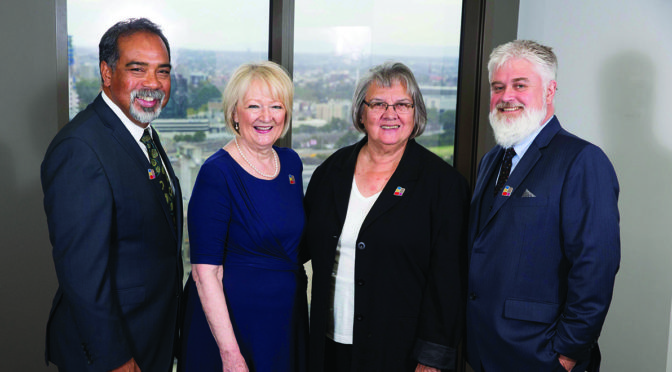
The purpose of the Lowitja Institute Aboriginal and Torres Strait Islander Health CRC is to value the health and wellbeing of Australia’s First Peoples. As members of a global Indigenous family, we extend that purpose to our brothers and sisters across the world.

With that in mind, two 2016 activities were key achievements: a collaboration with The Lancet – published in April by the prestigious medical journal under the title ‘Indigenous and Tribal peoples’ health (The Lancet–Lowitja Institute Global Collaboration): a population study’ – and our first international Indigenous health and wellbeing conference.

The collaboration established a clear picture of Indigenous and
Tribal health relative to benchmark populations. It included data on 28 Indigenous populations from 23 countries covering approximately half the world’s 300 million Indigenous people.

What was critical – and unique to this study – was the participation of 65 contributors who were able to identify, at country level, the best-quality data available. Contributors came from all the major global regions: Africa, Asia, the Americas, the Pacific and Arctic Circle.

These regions of the world were also represented in our November conference when, underpinned by a strong cultural and scientific framework, more than 700 delegates met to celebrate, share and strengthen Indigenous knowledges.

Over three days, the program included keynote addresses by national and international experts, sessions arranged around the themes of identity, knowledge and strength, and a conference statement asserting that Indigenous peoples across the world have the right to self-determination, which, in turn underpins the right to health.

Through this work, the Lowitja Institute CRC supports networks of knowledge and collaboration, engages with the 2030 Sustainability Goals to which Australia is a signatory, and connects us to the
wider international community.

Delivering expertise for Australia’s critical infrastructure

Pipelines are not something at the front of everybody’s mind, but the crucial piping infrastructure that invisibly links our national, regional and city areas is an integral part of the energy industry and a key focus of the Energy Pipelines Cooperative Research Centre (EPCRC).

A return in excess of $4.50 for every dollar the EPCRC spends is a tangible measure of the success of this well-established CRC.

Now in its seventh year, the EPCRC is currently working on four key program areas: more efficient use of materials; life extension of new and existing pipelines; advanced design and construction; and public safety and security of supply.

“The suite of topics is quite broad. We cover projects from basic materials research, and welding, corrosion and crack management, through to age maintenance, quality of coatings of pipelines, and cathodic protection [a mechanism used to reduce and prevent corrosion]. And how you do that is a mixture of both science and real-world experience,” says EPCRC CEO David Norman.

“What we have set up to deliver is an agenda of applied research driven by industry needs.”

The National Facility for Pipeline Coating Assessment (NFPCA) is a perfect example of how the EPCRC works via research to assist industry. An initiative of the CRC, the NFPCA is an independent facility established to perform oil and gas pipeline coating testing services.

“One of the things that industry needed was an ability to test coatings and one of the things we’ve been able to do is to satisfy that local need,” Norman says.

Prior to the establishment of the NFPCA, companies had to send coatings overseas to have them assessed. Now samples can be sent to Victoria to be tested, saving shipping costs and wait times, as well as growing local industry.

The EPCRC is now planning its next 10 years and is looking at how it can continue to add value to industry and the nation through its research projects. The organisation is also reaching out to the broader industry to identify the new challenges for which targeted research can assist with solutions through to 2030.

“By pooling our resources more widely across a whole industry, we have achieved things that never would have occurred if left to just one or two companies,” Norman explains.

“The CRC Programme is an excellent mechanism to bring together groups to tackle challenges and deliver solutions,” he adds.

The three key themes developing for the future are: life cycle management of pipelines, including research to better optimise how pipelines are designed and built, operated and decommissioned; security of supply with regards to urbanisation, public safety, and management by planning authorities; and future fluids and pipeline opportunities in the future energy transition.

As the world moves to lower carbon and potentially zero emissions, pipelines will have a critical role through their use for services other than for what they were originally designed – such as the role of storing gas in pipes rather than just transportation.

“We’ve been able to demonstrate that we provide in dollar terms in excess of what the average CRC provides for every dollar invested,” Norman says.

“We are excited for what the future holds as we continue to work closely with industry.”

– Penny Pryor

Mining the skies

Just three kilometres in diameter, asteroid 1986DA is a fairly tiny affair by astronomical standards. Yet it contains astonishing wealth. Using radar, astronomers have discovered 1986DA is mainly made up of iron and nickel.

“Essentially, it is a ball of naturally occurring stainless steel,” says Serkan Saydam, a UNSW expert on the mining of off-Earth objects.

Asteroid 1986DA is also estimated to contain more than 10,000 tonnes of gold and 100,000 tonnes of platinum.

The prospect of such mineral riches excites some entrepreneurs. These visionaries picture a fleet of robot spaceships crossing the Solar System to mine its interplanetary resources. This would also open worlds like the Moon and Mars to human colonisation.

With its vast mining experience, Australia is keen to ensure it is in the vanguard of these operations. Hence the appointment of Saydam as an associate professor of mining at UNSW, where he is putting together a small team of off-Earth mining experts. The work of Saydam’s honours student Georgia Craig on asteroid 1986DA highlights the importance of the careful planning that will be needed in future – and the problems that lie ahead.

Named after the year in which it was discovered, asteroid 1986DA orbits the Sun 75 million kilometres from Earth and is rated by the International Astronomical Union as a Near Earth Object, or NEO. But calculations by Saydam show that 1986DA is still too remote to be mined economically. On the other hand, his research suggests that if the asteroid were half its current distance from Earth, it could be viable to exploit.

That is good news because there are about two million other near-Earth asteroids orbiting the Sun. If we can find a better-placed candidate, it could become a target for mining operations. Hence the activities of companies like Planetary Resources (see ‘Frontier horizon’, above) which is preparing to carry out detailed surveys of NEOs to find one best suited for mining operations.

Asteroids like 1986DA are not the only targets for future missions. Other types of asteroids contain far less mineral wealth, but much more water. That could be crucial, says Saydam. “Water will be our prime source of fuel in space, and finding sources will be a priority. Hydrolysis of water produces hydrogen and oxygen, which can be burned together as fuel, and used in space shuttles and/or satellites. To put it bluntly: water is going to be the currency of space.”

Worlds like Jupiter’s moon Europa, which has a vast ocean below its frozen surface, and Saturn’s tiny Enceladus, which vents water into space, would be good targets but are too remote.

“We will have to find water much nearer to home, and given that we have to start somewhere, Mars is the logical place to begin our hunt for water on another world,” says Sophia Casanova, a geologist and PhD candidate who is now studying off-Earth mining at UNSW. “Finding and extracting water will be crucial for setting up colonies there.”

The trouble is that, while the poles of Mars have ice, they are too cold and inhospitable to provide homes for early colonists. By contrast, Mars’s equatorial region is warmer and more amenable but lacks water – at least on the surface. “That means we will have to seek it underground,” says Casanova, whose research is now focused on finding ways to pinpoint rich deposits of clays and hydrate deposits at lower latitudes on Mars. “There could be some kind of artesian wells, but we have no evidence of their existence as yet. So we will probably have to use hydrate minerals.”

But how can we extract water from rocks? Casanova explains: “You could put your minerals in a chamber and heat them to extract the water. Alternatively, you could use microwave generators that heat the underground to break up the rocks and release the water that way.”

At NASA’s Jet Propulsion Laboratory in California, Saydam’s team has developed models to evaluate multiple off-Earth mining scenarios.

Another practical problem concerns the use of seismic detectors. On Earth, a charge is set off and seismic waves that bounce off subterranean deposits reveal their presence. But as a tool for exploring other worlds, the technique is poorly developed. “Some seismic measurements were taken of the Moon by Apollo astronauts, and that’s about it,” says Michael Dello-Iacovo, a former geophysicist and now a PhD candidate at UNSW. “An early Mars lander was designed to do that but crashed. Now the Mars InSight Mission is being prepared to carry out seismic studies but will not be launched until 2018.”

Seismic waves may behave very differently on asteroids or other planets, says Dello-Iacovo. “There will be no atmosphere, and virtually no gravity, and we have no idea how that will affect seismic wave behaviours. My research is aimed at tackling that problem,” adds Dello-Iacovo, who is spending a year at JPL working on methods for improving our understanding of asteroid interiors.

“We still don’t know if asteroids have solid cores or are just piles of rubble held together loosely,” Dello-Iacovo says. “If the latter, they might break apart if only a small force is applied to them during a mining operation.”

A host of ethical and legal issues also need to be overcome, says Saydam. “What treaties are we going to have to set up to exploit space? And what would happen if we suddenly turned a rare metal like platinum into a commonplace one by bringing huge chunks back to Earth? We could trigger a crash in international metal markets.

“On the other hand, off-Earth mining has the potential to trigger great expansion in the global economy and we must make sure that Australia can influence that through its research capabilities. We also need to make sure we have trained manpower to take advantage of this great adventure.”

– Robin McKie

Silicon champions

Imagine a soccer grand final where a team of fully autonomous humanoid robots beats the latest winners of the World Cup, all within the official guidelines of FIFA.  

This is the long-term vision for RoboCup, an international robot soccer championship that highlights the latest developments in artificial intelligence (AI) and robotics research. 

Since first entering RoboCup in 1999, UNSW’s team rUNSWift has been a consistent leader in the competition. The team, made up of a mix of the university’s top engineering students and robotics experts, has taken out five world titles, most recently in 2014 and 2015. Only one other team, Germany’s B-Human (a joint team from the University of Bremen and the German Research Centre for Artificial Intelligence, or DFKI) have managed to equal them.

“This is the ‘space race’ of robotics,” says Maurice Pagnucco, Deputy Dean (Education) of UNSW’s Faculty of Engineering and Head of the School of Computer Science and Engineering. “What we learn from robots playing soccer can be applied to industry and help us solve difficult, real-world problems.”  

The competition is a standard platform league of fully autonomous Nao humanoid robots, which compete against each other in teams of five. With no physical advantage, what differentiates the teams from each other is the software and AI the engineers create in the months leading up to the competition. Once the game kicks off, the robots are on their own. 

 “The design process is challenging, as we have to create software that’s robust enough to handle the different situations a soccer player may face,” says software engineer Sean Harris, rUNSWift’s successful leader in 2014 and 2015. “The robot must react quickly and effectively in a variety of unknown situations.”  

It’s this ability to respond quickly that has set rUNSWift apart from other teams competing for the world title. Over hours of simulations and machine learning tests, the UNSW squad has developed a walking code that enables the robots to walk faster than most of their competitors.  

“We start by designing the larger components, and then work our way down to the details of how each component will operate,” says Harris, who now creates software for Cruise GM’s self-driving cars. “We test several different approaches on a weekly basis and fine-tune the best for each task.”

RoboCup winners cannot rest on their laurels. Each year, the software developed by the winning team is shared with all other teams, forcing the technology to accelerate to stay ahead.

RoboCup attracts interested scouts from leading technology brands, such as Google, Microsoft and Dell. It will be held in Sydney in 2019 and is expected to attract up to 600 teams and 20,000 spectators.

– Gemma Conroy

Fight club at cybersecurity MOOC

In 2012, the Australian Prime Minister’s Office – together with Cisco, Microsoft and Facebook – established an annual hacking competition to find the next generation of web security talent. Student teams from across the country compete in the 24-hour hackathon. And every year, for the past four, Richard Buckland’s students have blown the competition away – taking 1st, 2nd  and 3rd.  “Every year, we blitz it,” says Buckland, head of the Security Engineering Lab and a professor of cyber security at UNSW’s School of Computer Science and Engineering and creator of a cybersecurity MOOC (massive open online course). “So I think we’re doing something right.”

What he does right is organise courses that teach cybersecurity through a series of hands-on exercises, using cloak-and-dagger collaborative games that ignite his students’ enthusiasm. This approach flips the standard teaching model, so that students are taught offence as a way to develop defence; and, in the process, come to understand the mindset of the hacker.

“In addition, we partner with experts to bring in real-world scenarios to the classroom,” Buckland says. Sometimes, these are industry gurus in banking and telecommunications. Sometimes they are badass hackers.

“I can give the students an overview and tell them the theoretical aspects, but then we have cyber community leaders show them how to actually do it,” he says. “I think the role of teachers is to lift our students up above us.” 

Cyber defender Richard Buckland at work with students.

The program’s alumni have brought this collaborative ethos into the corporate world. “I’ve seen the emergence of a community of security professionals who work together, not just for the interests of their own company, but for security in general,” says Buckland.

There is a huge supply and demand problem for cybersecurity professionals. A recent report by US-based market research company Cybersecurity Ventures estimates cybercrime cost companies US$4 trillion in 2015, and is set to rise to US$8 trillion annually by 2021. 

It’s a criminal epidemic that can only be fought by cybersecurity experts, a profession that is itself growing at a rate of 18% annually, according to the US Bureau of Labor Statistics. 

Cisco estimates there are more than a million unfilled security jobs worldwide. “In the early days, companies just repurposed rebels and old-style malcontent hackers, dressing them in suits and paying them lots of money,” says Buckland. “That was a really great solution. Until the pool ran dry.”

Now that cybersecurity experts need to be mass produced, the burden is falling to universities. “But no one worldwide really knows how to do it – there isn’t yet expertise on training up the rebels and breakers you want.” 

Teaching the mindset of a hacker via cybersecurity MOOC

To help quench demand, Buckland is developing a series of massive open online courses (MOOCs) for anyone to learn cybersecurity, as part of a A$1.6 million SEC.EDU partnership with the Commonwealth Bank of Australia to expand UNSW’s cybersecurity teaching resources and curriculum.

Already, almost 20,000 budding cyber defenders have signed up to the introductory cybersecurity MOOC, 60% of them from Australia, ranging from information technology professionals wanting to brush up on the latest technical knowhow, to schoolchildren – even miners and taxi drivers who want to reskill.

Perhaps most crucial are the many teachers and lecturers taking the course, exponentially increasing Buckland’s reach. “For university academics who have been brought up in a traditional non-hacker way, cyber is a little bit scary to teach,” he says. “Academics can borrow our lecture notes and course materials, or just be influenced to – I hope – become believers in the particular way we teach cyber.”  

Buckland’s cybersecurity MOOC is hosted on Open Learning, Australia’s first MOOC provider and a company he co-founded in 2012 with former student and now chief executive Adam Brimo. Designed to deliver more engaging courses online, the platform features lecture videos and exercises, along with wikis and social media-style technologies to allow people to interact and collaborate.

And Buckland is not just focusing on young adults and professionals. Aiming to instil a cybersecurity mentality at an early age, he goes into primary schools to teach kids the basic mindset of a hacker and how to protect against cybercrime. “I’m trying to get the kids to scam each other in a controlled way, because I think then they get to understand how scams work and how to be defensive against them.”

– Ben Skuse

Featured image: Suzanne Elworthy

Read about the collaborative opportunities presented by cybersecurity challenges here.

University innovation strategy

In the face of disruption and funding scrutiny, Monash University Vice Chancellor and Universities Australia Chair, Professor Margaret Gardner is seeking to re-direct the spotlight to the areas in which university innovation strategy is delivering success.

As the keynote speaker at the 2017 AFR Higher Education Summit in September, Gardner questioned the government’s proposed funding cuts and implored policy makers to examine where university innovation strategy is leading instead of examining ways to improve, bemoaning the present and ignoring the past.

“Reform is a grand word, and there’s always room to challenge the way universities are shaped and operated,” said Gardner. “But good strategy should begin by understanding what we do well.”

Three key strengths of universities as outlined by Professor Gardner

  1. Australian universities are ranked at number 3 over in the world, behind the USA at number one and the UK at number two. Half of all Australian universities are in the top 400, an enviable position for any sector of national endeavour.
  2. International demand for education is driven by reputation and the top 100 rankings. In 2016, higher education was a $22 billion export industry with 350,000 international students choosing Australian universities for their studies. It’s reported that international students spend double in the wider economy than they do in fees so the flow on effect can be felt broadly.
  3. The social and economic benefits of education lead to higher skilled workforce with more resilience. Education supports a nation’s economic development and leads to more people leading healthy lives. Australian levels of attainment are high.

Gardner rejects “…a discussion of presumed inefficiencies instead of acknowledgement of success” as the optimum starting point, but agrees that to survive and succeed, universities must take risks and be entrepreneurial.

“In universities I see graduates with big aspirations, researchers with grand designs,” Gardner continued. “The shaping of this debate is in our hands.” – Karen Taylor-Brown

Read next: Bringing business to uni or 6 Disruptive university technologies.

The sunshine factory

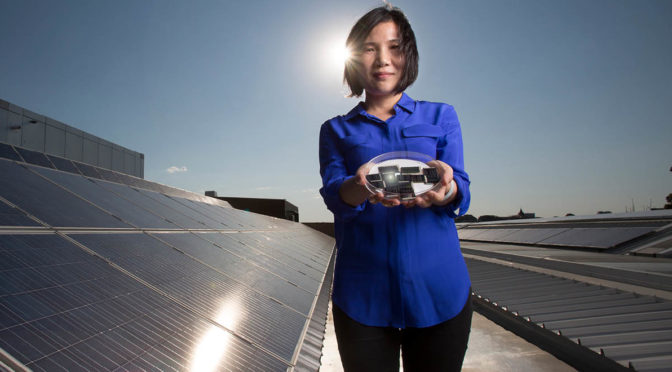
Featured image above: World record holder Xiaojing Hao with CZTS thin-film cells atop the Tyree Energy Technologies Building at UNSW’s Kensington campus.

Xiaojing Hao couldn’t sleep. Two weeks earlier, the UNSW engineer had sent a thin black tile, barely the size of a fingernail, to the US for testing, and she was waiting anxiously for the results. Her PhD students were equally on edge.

It was midnight when Hao checked her email one more time. It was official: her team had broken a solar cell world efficiency record. “I was full of joy at the achievement,” Hao recalls. “I shared the good news with my team immediately – we made it!”

Hao’s thin black tile had become the newest champion in the solar cell race: one of seven world records UNSW photovoltaics researchers broke in 2016. Efficiency records are not just notches in the scientists’ belts. The more sunlight solar cells can convert, the less manufacturing, transport, installation and wiring is needed to deliver each watt – moving solar energy closer and closer to knocking coal off its perch as the cheapest form of energy.

UNSW photovoltaics researchers, led by Martin Green – often dubbed the ‘father of photovoltaics’  – have held world records for efficiencies in solar cells in 30 of the past 33 years. And with its strong track record in research commercialisation, UNSW’s prototype technology is setting the trends for the commercial solar market.

Meanwhile, their focus is on developing the next generation of solar cells – pushing forward to a zero-emission future. 

Martin Green and Wei Zhang measure the adhesion between metal contacts and solar cells.

Making a commercially viable product

Hao moved to Sydney in 2004 from China, where the solar industry is booming. A materials engineer by training, Hao was intrigued by the frontline photovoltaic research on thin-film solar cells at UNSW.

These cells have benefits over the more traditional silicon cells. The manufacturing process doesn’t require high temperature steps. They can also be much thinner than bulky wafer silicon, and so could engender new solar applications: imagine solar-powered electric cars,  building-integrated solar cells or photovoltaic glazing on windows.

So far, the thin-film uptake in the markets has been sluggish: commercial thin-film cells make up only around 8% of the solar market. The problem is that the commercial products available, cadmium telluride and copper indium gallium selenide (CIGS), are made of toxic or rare materials: cadmium is highly toxic and tellurium is about as abundant as gold.

So Hao decided to go back a step. “We’re trying to make the whole world ‘green’, right?” she says. “So, we should choose materials that are non-toxic and cheap, and that would ensure their deployment in the future – without constraint on raw materials.”

Finding a material worth investigating

Her quest for a greener world began in 2011, after she returned from maternity leave. Hao and her PhD supervisor, Martin Green, knew what they were looking for: a mix of elements that would absorb and conduct energy from sunlight, and are commonly found in nature.

“We worked our way through the periodic table for materials that met those criteria – CZTS was the one that popped out at you as worthy of investigation,” Green explains.

In 2012 CZTS – copper, zinc, tin and sulphide – was recorded for the first time in the solar cell efficiency tables, an internationally curated list of solar cell performance. Inclusion in the tables means a new cell has been independently tested for efficiency by a recognised test centre, and indicates the new cell has features that will be interesting for the photovoltaic community.

Hao began making her own version of the CZTS cell, looking for defects, ironing out the kinks and pushing efficiencies, bit by bit.

At the basic level, all solar cells absorb photons from sunlight and funnel them into an electric current. Hao discovered that tiny holes in her CZTS cells, formed as the components were baked during production, acted like a roadblock for that charge. By adding a microscopic grid layer through the cells, her team stopped these holes from forming, and raised their efficiency to 7.6% in a 1cm2 cell.

That was Hao’s first world record. By changing the buffer that helps the CZTS cell collect charge, the team could further tweak the current flow and voltage output. This buffer netted Hao another world record in September 2016 – a 9.5% efficiency for a 0.24cm2 cell, beating a 9.1% record previously held by Toyota.

“We’re completely leading CZTS solar cell technology at the moment,” Hao says with a smile.

The energy output of Xiaojing Hao’s CZTS cells are tested.

According to Hao, these records have already sparked interest from Chinese, US partners China Guodian Corp – one of the five largest power producers in China – and Baosteel, the giant state-owned iron and steel company based in Shanghai.

Hao is also in talks with thin-film manufacturers MiaSolé of the US, Sweden’s  Midsummer and Solar Frontier in Japan. The companies are commercial producers of CIGS cells and their production lines use similar methods; Hao says they could easily adapt them
for CZTS production.

Hao believes efficiencies of above 15% will start moving CZTS to the commercial market. She is already well on her way, aiming to bring her CZTS cells to 13% efficiency by 2018.

Taking on the solar cell market

After four decades in photovoltaics research at UNSW, Martin Green has a healthy scepticism when it comes to marrying new breakthrough technologies with commercial markets. “The solar industry is just so huge that you need enormous resources to introduce a new product to the market – and there’s a huge risk associated with that,” he says.

With a firm grip on 90% of the commercial solar cell market, “the situation with silicon is a bit like that of the internal combustion engine,” Green explains. “That engine is not the best fossil fuel engine, but the huge industry supporting it means it has been very difficult to displace.”

But CZTS does not need to compete with silicon – the two can complement each other. Silicon absorbs red light better than blue, while CZTS absorbs blue wavelengths better. A CZTS layer on top of a silicon cell can catch the wavelengths silicon does not use efficiently. Green says the big silicon manufacturers could trial the new CZTS technology by selling these ‘stacked cells’ as a premium product line.

“Companies that are well established would be interested in exploring that space – it just seems like a natural evolutionary path for photovoltaic technology,” he says.

Collaborating with the competition

Just a few labs down the corridor of the Tyree Energy Technologies Building at UNSW’s Kensington campus, Anita Ho-Baillie is working with Green to put another ‘stackable’ thin-film solar cell through its paces.

In 2009, a material called perovskite arrived on the thin-film solar cell stage with an efficiency of 3.8%. Perovskites have since shot up in efficiency ratings faster than any other solar cell technology.

After Ho-Baillie’s team found a new way to apply perovskite to a surface in an even layer, their solar cells broke three more world records in 2016. Her next step is to make perovskites more durable to match the current lifetime of silicon solar cells – an essential prerequisite for large-scale commercial deployment.

Anita Ho-Baillie with her record-setting perovskite cells.

As the leader of the perovskites project in UNSW-based Australian Centre for Advanced Photovoltaics (ACAP), Ho-Baillie stands at the nexus of Australia’s greatest cluster of scientists pushing thin-film technologies forward. 

This alliance consists of six research organisations around Australia: the national research agency, CSIRO; Melbourne’s Monash University and the University of Melbourne; the University of Queensland in Brisbane; the Australian National University in Canberra; and UNSW in Sydney.

ACAP director Martin Green says, “We’ve been able to draw on the expertise of all these groups and come at problems from different angles, so it’s really put us in a good spot internationally”.

Ho-Baillie admits balancing collaboration with competition is tricky in a field where everyone is trying to claim the top spot. “It’s hard, but we find working together really helps,” she says. 

Much like CZTS and other thin films, perovskite cells are flexible, making them a perfect candidate for energy-harvesting glazes on building materials, cars or windows. But Ho-Baillie has even greater ambitions: with their low weight-to-power ratio, perovskites would be perfect for supplying precious energy to spacecraft, where every kilo counts. 

“Perovskites came from nowhere,” she says. “Now I think they will lead us to something that we never even thought would work.”

Improving the cost of solar energy by 150 fold

Thin films are making their mark, but Green is also working to squeeze more energy from sunlight using silicon, smashing two more world records in 2016. Using specialised mirrors and prisms, Mark Keevers from Green’s team pushed silicon cells to collect concentrated sunlight with 40.6% efficiency, and unconcentrated sunlight at 34.5%.

Mark Keevers made silicon cells more efficient using specialised mirrors and prisms.

Although these prototypes are perfect for soaking up photons on solar tower ‘concentrators’ with heavy-duty efficiency, their manufacturing costs are too high to make them viable in the consumer market.

But on the rooftop, silicon is still king. And it’s thanks to plunging costs made possible by a UNSW-led boom in silicon solar cell production in China, which now provides more than half the world’s solar cells.

In 1995, Green and his long-term collaborator Stuart Wenham – along with (then) PhD student Shi Zhengrong – started solar cell company Pacific Solar in Australia.

Solar pioneers Martin Green and Stuart Wenham

After six years racking up a wealth of management and manufacturing know-how, Zhengrong returned to his native China and founded the silicon solar manufacturing company Suntech Power in 2001, using technology developed at UNSW to dramatically reduce costs.

By 2005, Zhengrong became the world’s first ‘solar billionaire’, and a wave of Chinese companies hit the market, following Suntech’s recipe. The global solar industry was growing at an average 41% year-on-year. And within a decade, China’s market share of the global photovoltaic industry had grown from near zero to over 55%. Suntech itself delivered more than 13 million solar panels to 80 countries.

Where photovoltaic solar cells used to deliver one watt for US$76.67 in 1977,  that’s down to just US49¢ today. That’s a 150-fold improvement in the 40 years Green has been in the field.

“Shi was the right person at the right place and the right time to move in both Chinese and Western cultures,” Green says.

“It’s interesting to ponder what would have happened if UNSW hadn’t kick-started the Chinese industry.”

Breaking through the next barrier of photovoltaic research

With plunging module prices, rising efficiencies and more durable cells, why is the world still relying on coal for the lion’s share of its electricity needs? 

Perhaps it’s not the solar technology that we’re waiting for. A fundamental challenge remains: how to store the energy we can now capture from sunlight for later use.

“I think photovoltaics has already reached the tipping point – the efficiency and cost is already able to compete with fossil fuels,” says Wenham. “I think the next breakthrough needs to be in energy storage, to bring down that cost enough to make photovoltaics usable everywhere at any time.”

This doesn’t mean UNSW photovoltaics scientists are calling it a day. Instead, they continue to push silicon to its limits, while new technologies, such as Hao’s record-breaking CZTS tile, are racing to catch up to silicon’s powerhouse.

“Solar technology will continue to be higher-efficiency, lower-cost – and will keep getting better,” says Wenham. “The more we develop photovoltaic technology, the easier the transition will become.”

“We’ve reached a new era where coal is no longer the cheapest way of making electricity – it’s solar,” says Green. “And the exciting thing about that is – I regard solar as still in a very primitive stage of development, so there is plenty more cost reduction to come.”

– Viviane Richter

Photography: Quentin Jones

For more stories at the forefront of engineering research, check out Ingenuity magazine.

Recommended for you: The Quantum Gamble

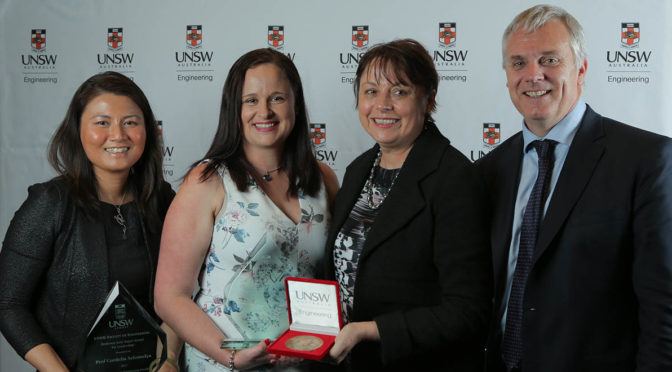
UNSW Women in Engineering Awards

They are named for some of Australia’s top research leaders and exemplify commercial outcomes from research. Yet the UNSW Women in Engineering Awards night this year also showed how far there is to go in approaching gender equity in one of the most inequitable fields of employment in Australia.

While some of the world’s leading engineers – responsible for world record solar efficiencies, in high performing perovskite solar cells for example – were recognised through the awards; students, research leaders and industry also heard of the barriers that persist in recruiting young women into engineering.

Engineering skills are central to leadership – trained in analytical approaches, problem solving and focussed on the big picture, it’s a critical path for tomorrow’s leaders.

A problem of supply

In 2016 just 13% of Australian engineers were women. Many come to engineering careers through UNSW Sydney, which as the largest engineering faculty accounts for 20% of the Australian engineering graduates that fill just one-third of the 18,000 engineering positions available each year.

The UNSW Women in Engineering Awards are designed to showcase excellence in engineering and also provide clear role models for young women. The university goes to considerable lengths to improve diversity in student intakes – making individual calls to women offered places at the university to encourage them to accept the offer. 

UNSW Women in Engineering Awards showcases strong role models

The Ada Lovelace Medal for an Outstanding Woman Engineer was awarded to Kathryn Fagg, Reserve Bank board member and President, Chief Executive Women. The Maria Skyllas-Kazacos Young Professional Award for Outstanding Achievement was won by Narelle Underwood, Director of Survey Operations at Spatial Services, a division of the NSW Department of Finance, Services. Prof Cordelia Selomulya, Professor, Monash University was awarded The Judy Raper Award for Leadership.

The UNSW Women in Engineering Awards are named after two of Australia’s leading engineer researchers, Maria Skyllas-Kazacos and Judy Raper.

Maria Skylass-Kazacos is one of Australia’s first female professors in chemical engineering. Judy Raper is ‎Deputy Vice-Chancellor (Research) at University of Wollongong.

The award attributions are included below.

The Ada Lovelace Medal for an Outstanding Woman Engineer

Kathryn Fagg is a chemical engineer by training who has held technical and leadership roles in the petroleum, banking, steel-making and logistics sectors. She now serves on the board of the Reserve Bank of Australia, is Chairman at Melbourne Recital Centre, and holds Non-executive Director roles at Boral, Djerriwarrh Investments, Incitec Pivot and Breast Cancer Network of Australia. She also serves as President of Chief Executive Women and speaks publicly on issues relating to gender equity in business.

The Judy Raper Award for Leadership

Cordelia Selomulya UNSW women engineering awards

Professor Cordelia Selomulya leads the Monash Biotechnology and Food Engineering group and is director of both the Australia-China Joint Research Centre for Future Dairy Manufacturing, and the Graduate Industry Research Partnership for the Food and Dairy industry. Professor Selomulya leads the Monash Advanced Particle Engineering Laboratory in interdisciplinary research on the design of nanoparticle vaccines and mesoporous materials. She has designed a more efficient DNA vaccine delivery system for malaria using magnetic nanoparticles, revealed the role of nanoparticle adjuvants for ovarian cancer vaccines, and developed multi-stage vaccines for malaria.

The Maria Skyllas-Kazacos Young Professional Award for Outstanding Achievement

Narelle Underwood UNSW women engineering awards

Narelle Underwood is the Surveyor-General of NSW and Director of Survey Operations at Spatial Services, a division of the NSW Department of Finance, Services and Innovation. She is the first woman to ever be appointed to the role in any Australian state. As Surveyor General she is the President of the Board of Surveying and Spatial Information (BOSSI), Chair of the Geographical Names Board, NSW Surveying Taskforce and the Surveying and Mapping Industry Council.

Top 10 Science Meets Business Innovations

Featured image above: Australian icebreaker Aurora Australis 

1 THE CURE

TECHNOLOGY/PROGRAM: PRMT5 inhibitors

IMPACT: The Cancer Therapeutics CRC (CTx), with its UK-based commercialisation partner, Cancer Research Technology, has licensed rights to a program of small molecule drugs called PRMT5 inhibitors to MSD (Merck in the US and Canada) in a multimillion-dollar deal. PRMT5 drugs have clinical potential in both cancer and non-cancer blood disorders. The deal involved an upfront payment of $21 million and potential payments in excess of $700 million. A minimum of 70% of those payments will be returned to CTx.

Cancer Therapeutics CRC


2 INNOVATION IN EXPLORATION

TECHNOLOGY/PROGRAM: RoXplorer®

IMPACT: The new RoXplorer® will help access previously hard to locate greenfields (unchartered) mineral deposits beneath the barren surface rocks, which obscure mineralised rocks in about 80% of Australia. RoXplorer® will drill at around one sixth the cost of conventional diamond drilling techniques and be much safer. This will help reverse a two decades old trend which has seen Australia’s share of the world’s expenditure on mineral exploration drop from one quarter to one eighth.

Deep Exploration Technology CRC


3 SAVING EVERY DROP

TECHNOLOGY/PROGRAM: Aquarevo

IMPACT: Each of the 44 homes in Australia’s first water sensitive community, Aquarevo, in Lyndhurst, Victoria, requires approximately 70% less mains water than a regular suburban house. The homes catch, filter and treat most of their own water supply. Houses are plumbed with three types of water – drinking, recycled and rainwater – which means drinking water won’t
be flushed down the toilet. The project was developed in conjunction with Villawood properties and South East Water.

CRC for Water Sensitive Cities


4 DRIVING ON EMPTY

TECHNOLOGY/PROGRAM: eBus

IMPACT: A partnership of the AutoCRC, Swinburne University of Technology’s Electric Vehicle Laboratory and Bustech (part of Transit Australia Group), this is the first electric bus to be designed, engineered and manufactured in Australia. The buses are, on average, 80% cheaper to maintain than the current diesel buses. Each seat has a USB charger for mobile devices and the buses seat 50 passengers. Late last year, Bustech signed a deal to produce buses for the South Australian government.

Excellerate Australia (Automotive Australia 2020 CRC)


5 THE DEMISE OF CASH

TECHNOLOGY/PROGRAM: digi.cash

IMPACT: digi.cash is a system that allows the issuing and circulation of many different kinds of electronic cash. It can be stored on phones, computers or an external storage drive like a USB and can be sent the same way as any other file. The digi.cash founder Andreas Furche says it is “much faster than Blockchain-based so-called cryptocurrencies, and much better suited for centrally issued financial instruments, like national currencies, or shares”.

Capital Markets CRC digi.cash


6 SAFETY FIRST

TECHNOLOGY/PROGRAM: “If It’s Flooded, Forget it” campaign

IMPACT: Multimedia communications encouraging specific behaviour during disasters can be challenging. The BNHCRC has proven that use of the right visual imagery in official emergency warning communications assist people to act appropriately. Early versions of the “If it’s Flooded, Forget it” preparedness campaign inadvertently showed people engaged in “exactly the activity that we are trying to prevent” according to QUT’s Professor Vivienne Tippett, who is a BNHCRC lead researcher. New versions of the campaign involve a 4WD coming to a flooded waterway and deciding not to drive through, “the behaviour we’re trying to encourage”.

Bushfire and Natural Hazards CRC


7 SWIMMING UPSTREAM

TECHNOLOGY/PROGRAM: Carp bio-control virus

IMPACT: Carp are one of the worst introduced freshwater aquatic species in Australia with an economic impact estimated at up to $500 million per year. A new carp bio-control virus with potential to kill up to 95% of individual carp is ready to be released.  “Ten years of CRC research has basically given the answer the carp bio-control agent is safe and useable,” says Invasive Animals CRC communications manager, Ian McDonald. The virus will be most effective in the first couple of years of use.

Invasive animals CRC


8 AIMING HIGH

TECHNOLOGY/PROGRAM: International collaboration on laser signals

IMPACT: In collaboration with the Japanese space agency, JAXA, researchers from the CRC for Space Environment Management sent a beam of light, via an electro-optic laser from Mt Stromlo in Canberra, 6.7 million km away to an accelerating Japanese satellite called Hayabusa 2. It showed that a laser of this capacity can reach space debris in near-Earth orbit and is a significant step towards being able to more accurately track and eventually manoeuvre space debris (see “Shining a light on space debris”).

CRC for Space Environment Management 


9 FIGHTING MORE THAN FIRES

TECHNOLOGY/PROGRAM: Assessing measurement of toxic chemicals

IMPACT: PFOS (perfluorooctane sulfonate) and PFOA (perfluorooctanoic acid) are common toxic synthetic fluorinated chemicals. While being phased out, they are still encountered in fire-fighting chemicals. The National Measurement Institute collaborated with EPA Victoria on a CRC CARE project to conduct Australia’s first proficiency studies for these contaminants. These studies are an important tool for assessing contamination.

CRC CARE


10 ON THIN ICE

TECHNOLOGY/PROGRAM: Totten Glacier thinning

IMPACT: Taking advantage of a long crack that opened up in sea ice (which is normally impenetrable to ships), ACE CRC researchers used Australia’s icebreaker Aurora Australis to confirm that the Totten Glacier, East Antarctica’s largest glacier, is melting from below as warm ocean water reaches the ice shelf. Totten has the highest basal melt rate among Eastern Antarctic ice shelves and contains enough ice to raise global sea levels by about 3.5m if it melted completely.

 Antarctic Climate and Ecosystems CRC

Molecular warfare

Featured image above: Cyrille Boyer of UNSW’s School of Chemical Engineering. Credit: Quentin Jones

We often picture disease-causing bacteria as an invading army of individual cells. But in fact, these pathogens find strength in numbers, glomming onto each other and coating the surfaces around them in near-indestructible protective sheets called biofilms.  

These biofilms pose an enormous problem in medicine. They can form directly on lungs, wounds or other living tissue, and can contaminate medical devices such as catheters, prosthetic joints and other implants. Food production, water treatment, and other industrial facilities can also fall victim to their powers. Many types of biofilms resist antibiotics, and the bacteria they’re built from churn out toxins that make their human hosts sick. Yet, no good way exists to destroy them. 

Cyrille Boyer, a polymer chemist and Co-Director of the Australian Centre for Nanomedicine at UNSW in collaboration with Dr Nicolas Barraux, believes that a nanomaterial he designed – a polymer-coated iron oxide particle that heats up when a magnetic field is applied – can provide a solution.

In December 2015, he and his colleagues reported in Nature’s open access journal Scientific Reports that using these nanoparticles to raise the temperature of a biofilm by just a few degrees caused it to break apart.

bacterial biofilm

bacterial biofilm

Biofilm of staphylococcus aureus (or ‘golden staph’) on a catheter; bloodstream infections with this bacteria kill 20 to 35% of patients within a year.

Solo-swimming bacteria are much more susceptible to antibiotics, Boyer explains, so the researchers could then send in another type of particle to deliver medicine that kills off the bugs. They are now planning on testing the particles in live mice and discussing a potential partnership with a company interested in taking the method into clinical development.  

Polymer chemist Eva Harth from Vanderbilt University in Tennessee, describes it as an out-of-the-box strategy to treat a long-intractable problem.

This paper shows that a polymer construct can be much more effective than a traditional drug,” she says. 

“There’s an enormous need for new technologies” for breaking up biofilms, says Rodney Dolan, Director of the Biofilms Laboratory at the US Centers for Disease Control and Prevention. “It’s a very creative, very interesting approach, particularly combining particles with magnetic fields to localise and control the effect.” 

Smart, easy, elegant solution

Boyer is a master of materials, and his specialty is controlling the effects of the nanoparticles and polymers he creates.

“In my team, we are looking at how to make smarter nanoparticles, where the nanoparticle acts in response to an external signal,” he says.

In 2015, Boyer was awarded the Australian Prime Minister’s Prizes for Science Malcolm McIntosh Prize for Physical Scientist of the Year for his work using light to catalyse the assembly of polymers with distinct properties. Although the biofilm-busting technique doesn’t employ light, it’s right in line with Boyer’s vision of building ‘smart’ particles whose behaviour can be controlled for therapeutic purposes.  

Boyer created his iron oxide particles in response to a discovery made by microbiologist Nicolas Barraud at the Institut Pasteur in Paris, France. The two met by chance, when Barraud, then based at UNSW, was attending a conference out of town. He popped
in on a talk Boyer was giving about polymers that release nitric oxide.
“It was a serendipitous meeting,” he says. “We realised we were working at the same university, a few buildings across.”  

Barraud was studying the basic properties of biofilm formation and dispersal, and had recently discovered that nitric oxide could break up biofilms. Back in Sydney, he asked Boyer if he could try the polymers described in the talk. Boyer was happy to comply, and the approach worked relatively well, according to both researchers.

They published a couple of papers, filed a patent, and are still pursuing the project — but the drawback was that nitric oxide is a gas, which makes it difficult to spatially and temporally control its release.

Barraud had also discovered that giving biofilms a tiny temperature boost made the bacteria move and shake, ultimately disbanding them, but he couldn’t work out how to apply the discovery. Then one day, over a beer, Boyer mentioned that he could create particles that induce local heating. “I’ve worked with chemists before,” Barraud says, “and usually as soon as you get into the lab you run into problems. But with Cyrille’s polymer, it was very straightforward,” he says.  

That’s because in this project and others, Boyer focuses on identifying simple, well-worked-out polymerisation methods that can be used in specific applications. “Very precise materials that are easy to make – that’s the key,” says Harth. “It’s smart, easy, and elegant – that’s what he’s after.”

– Alla Katsnelson

For more stories at the forefront of engineering research, check out Ingenuity magazine.

Recommended for you: The Sunshine Factory

Improving alertness in critical environments

Who would seek treatment from a drunk doctor? Nobody, and nor would any health professional want to work under the influence of alcohol. But a “sleepy brain” is a lot like a “drunk brain” – affecting reaction time, memory, performance and judgement – yet doctors, nurses and many other workers can have schedules that lead to high levels of sleepiness.

It’s a big risk for industry, and for the community. The Australian Medical Association has previously recognised that “fatigue can impair judgement and work performance, and potentially affect patient care and the wellbeing of doctors”.

“These schedules have developed over the past century without thinking much about the role of sleep,” says Professor Steven Lockley, who leads the Safety and Productivity Improvements Program at the Cooperative Research Centre for Alertness, Productivity and Safety (Alertness CRC).

“And it’s not optimal from a performance and patient safety point of view.”

In order to address this unmet need, the Alertness CRC has developed a set of recommendations that includes advice on the maximum number of consecutive shifts, the maximum number of consecutive night shifts, the maximum shift duration and interval between shifts and the preferred shift rotation sequences. Rolling out similar recommendations in a UK hospital led to a 30% reduction in medical error rates.

Now, the Alertness CRC is combining IT with its knowledge of schedule design. Partnering with Melbourne-based tech company Opturion, the team has integrated the recommendations into state-of-the-art rostering technology, combining logistical planning and workplace sleepiness reduction into a single, cost-effective software tool.

This ‘Alert Safe’ scheduling tool has initially been developed for healthcare settings, but will be rolled out across all sectors where shift work is common. A series of ongoing studies will measure the impact of this solution on both workplace performance and cost benefit.

“It’s a global issue,” says Opturion CEO Alan Dormer. “There’s no reason this can’t translate to every market across many continents.”

– Lauren Martin

For more CRC discovery, check out KnowHow 2017

Recommended for you: The Bigger Picture

Lifting Australia’s innovation performance

For the last two and a half decades Australia has enjoyed sustained economic growth, booming employment and favourable living standards. But in more recent years, the country’s high labour costs have forced many companies to source products and services overseas, leading to a slump in Australian productivity.

With increasingly tough competition from developing nations this trend is set to continue, leaving legitimate concerns about our ability to thrive as a commodity-based economy; and therefore our future prosperity.

Meanwhile, the word ‘Innovation’ has dominated political and business discourse for quite some time – portrayed by Prime Minister Malcolm Turnbull as the silver bullet to transitioning Australia’s economy.

But if ‘Innovation’ is to successfully create long-term productivity growth across all sectors, it needs to be more than just a buzzword. Optimising R&D, reforming our approach to risk and entrepreneurship, transforming our scientific and digital capabilities and growing the industries of the future. These are all complex, weighty challenges, demanding not just significant investment, but genuine structural change.

Innovation and Science Australia (ISA) was launched in December 2015 as part of the Government’s National Innovation and Science Agenda (NISA). It is an independent statutory board responsible for researching, planning and advising the Government on all innovation, science and research matters.

ISA Chair Bill Ferris AC spoke to us in an exclusive interview, ahead of his presentation at the AFR Innovation Summit, and in the lead up to ISA’s highly anticipated 2030 Strategic Plan for Australian innovation. He acknowledges a number of challenges facing the nation in becoming a top-tier innovation nation.

One of his primary concerns is ensuring our education system is equipping Australian school leavers and VET and higher education graduates for the continuing wave of technological change and the shift to a highly innovative Australian economy and society.

“Alarming decline in student participation and performance in STEM subjects is a significant challenge for the Australian economy moving into a more innovative and technologically enabled future”, he says.

ISA’s 2030 Strategic Plan will set out five key imperatives for lifting Australia’s innovation performance and will align these five imperatives with twenty plus key recommendations to government.

Hear more from Mr Ferris about Australia’s innovation strategy at the Australian Financial Review’s Innovation Summit in Sydney on 19-20 September.

Learn more and book your place here.

– Amy Sarcevic, Informa Australia

The quantum gamble

Quantum trailblazers: Andrew Dzurak  and Andrea Morello 

Andrea Morello is not what you expect when you think of quantum computing. Tall, lizard-thin and sporting a luxuriant ponytail and greying goat-patch beneath his lower lip, in skin-tight pants and a pendant, he has an intense gaze that could almost hold you in a trance.

“There were no silicon qubits before we started working on this,” says Morello, winner of the American Physical Society’s inaugural Rolf Landauer and Charles H. Bennett Award in quantum computing in 2017 for work some deemed almost impossible.

“We’ve really contributed to making it work, and it’s now created a field. And we’re in the lead.”

In this, Morello is part of a two-man act. His friend and one-time mentor, Andrew Dzurak, who has been working on silicon quantum computing concepts since 1998, lured the young Italian postdoctoral fellow from the University of British Columbia in Canada – where he’d been working at TRIUMF, the venerable national physics laboratory.

Andrew Dzurak (left) and Andrea Morello outside clean rooms at the UNSW node of the Australian National Fabrication Facility. Behind them are PhD student Ruichen Zhao and postdocs Tuomo Tanttu and Kok Wai Chan, dressed to avoid contamination of sensitive silicon nanoscale devices.

Morello joined Dzurak in 2006 as a senior research associate at what eventually became UNSW’s Centre for Quantum Computation and Communication Technology (CQC2T).

The challenge? To build on UNSW’s promising work on solid-state quantum devices, utilising the fuzzy superpositioned data that is a feature of quantum computers – known as quantum bits, or ‘qubits’– and develop techniques for quantum control of single atoms in silicon.


“They’re aiming to build qubits that could one day be easily fabricated – and scaled up to the thousands, millions and billions.”


A decade later, the duo are in the hot seat of what has been called the ‘space race of the century’: the global effort to build super-powerful quantum computers that could solve problems beyond the practical reach of even today’s best computers, like integer factorisation or the simulation of quantum many-body systems.

And at CQC2T, the duo are key players in the world’s largest collaboration working to create a complete ecosystem for universal quantum computing.

Unlike almost every other major group elsewhere, CQC2T’s quantum computing effort is obsessively focused on creating solid-state devices in silicon, the heart of the US$380 billion global semiconductor industry that makes all of the world’s computer chips.

And they’re not just creating ornate designs to show off how many qubits can be packed together, but aiming to build qubits that could one day be easily fabricated – and scaled up to the thousands, millions and billions.

“The infrastructure you need to make the kind of silicon qubit devices we build is unheard of in a university environment,” says Morello.

“There’s basically no one else in a university setting that has access to these sort of advanced facilities.”

Dzurak, bespectacled and with a mop of tousled hair and a penchant for sharp jackets, is the man who makes that infrastructure possible. After a PhD at the University of Cambridge, where he had been working on gallium arsenide quantum dots to investigate fundamental physics phenomena, he joined UNSW in 1994 to establish Australia’s highest resolution electron-beam lithography capability, building devices as small as 10 nanometres.

He then became one of the architects of the UNSW node of the Australian National Fabrication Facility, an advanced nanoscale manufacturing hub with a complete silicon metal-oxide-semiconductor process line – the precise infrastructure needed to make silicon qubit devices, and he now serves as director of UNSW’s 750m2 facility.

“The complexity of the infrastructure necessary to fabricate at that scale and with that level of precision is only found in billion-dollar factories where silicon integrated circuits are made,” says Dzurak.

“Our goal is to develop, and demonstrate, the science and engineering of building a 10 qubit silicon device within five years. Ideally, you want to get to 10 qubits using a method that doesn’t substantially deviate from the way that a billion transistors are put on a chip.”

Morello adds: “If you can do that, then you’ve hit the jackpot, because we would then know how to make a qubit chip at scale and sell it at an affordable price.”

Dzurak agrees: “A big challenge is to actually get near 10 qubits. Once you get to that scale, the pathway forward becomes much clearer. Once we have shown the scientific and technical basis for 10 qubits, then our aim is to prove that you can use it to make 100, or 1,000 or 10,000.”

And this is the core of the gamble that UNSW and its six corporate and three government backers, its 12 university and research institute partners – and, in a sense, Australia – is making: that the three elegant designs for making qubit chips in silicon developed by CQC2T’s researchers will be much more feasible, more practical and easier to scale than any of the other technologies under development.

A million times faster than your computer

The heart of a modern computer is the microprocessor, or CPU (central processing unit), a complete computation engine on a single chip. Information is represented by bits, a binary code (yes/no, on/off) which is always either a 0 or a 1. Each of the 0s or 1s is called a ‘binary digit’, or bit, the core of the binary code that drives today’s computers.

This binary code is translated into instructions, which create everything from large calculations to luscious graphics on a screen. While computers these days are extremely fast, the mathematics of binary operations have limits – they still require calculations to be one after another, in a serial fashion, essentially in the same way as by hand. Even when multiple CPUs break down this task, such as in parallel processing, they still do it sequentially.

Computers cannot defy the mathematics of binary operations; all they can do is make those calculations faster and faster, by increasing the number of transistors on a chip, and making the transistors so small and responsive that they can switch over a billion times per second. Which is why modern chips pack hundreds of millions of transistors on a silicon chip the size of a fingernail.

A dilution refrigerator, which cools silicon chips down to 0.01 degree above absolute zero. Credit: Quentin Jones

Binary code is processed in circuits called logic gates, made from a number of transistors strung together. Logic gates compare patterns of bits, and turn them into new patterns of bits, with the output from one gate feeding the input of the next, and so on. If done in a human brain, this would be called ‘addition’, ‘subtraction’ or ‘multiplication’.

A quantum computer exponentially expands the vocabulary of binary code words by using two spooky principles of quantum physics, namely ‘entanglement’ and ‘superposition’.

Qubits can store a 0, a 1, or an arbitrary combination of 0 and 1 at the same time. Multiple qubits can be made in superposition states that have strictly no classical analogue, but constitute legitimate digital code in a quantum computer.

And just as a quantum computer can store multiple values at once, so it can process them simultaneously. Instead of working in series, it can work in parallel, doing multiple operations at once.

Only when you try to interrogate what state the calculation is in at any given moment – by measuring it – does this state ‘collapse’ into one of its many possible states, giving you the answer to your calculation problem.

If software algorithms can be designed to make use of superposition and entanglement to arrive at an answer in a much smaller number of steps, the ability of a quantum computer to work in parallel would make it, in many cases, millions of times faster than any conventional computer.

How fast is that? One way to measure the processing speed of computers is to calculate their number of ‘flops’, or FLoating-point OPerations per Second.

Today’s typical desktop computers run at gigaflops (billions of flops, or 109). By comparison, the world’s fastest supercomputer, China’s Sunway TaihuLight, runs at 93 petaflops (93 quadrillion flops, or around 1017) – but it relies on 10 million processing cores and uses massive amounts of energy.

In comparison, even a small 30-qubit universal quantum computer could, theoretically, run at the equivalent of a classical computer operating at 10 teraflops (10 trillion flops, or 1012 ), according to David Deutsch, at the University of Oxford’s Centre for Quantum Computation.

Granted, quantum computers are not measured in flops – in fact, they just don’t operate like the computers we’ve come to know at all. But it’s this promise of extraordinary processing power, plus the fact we’re reaching the limits of what can be done with classical computers, that make them such an intoxicating prospect.

Racing the world’s top companies

The big players in quantum computing research are the UK, Australia, Canada and the USA, according to Ned Allen, chief scientist at Lockheed Martin in Bethesda, Maryland, USA. But there are many more rookies playing hard to catch up.

“There are significant investments being made in Russia and practically every other developed country,” says Tim Polk, former assistant director of cybersecurity at the White House’s Office of Science and Technology Policy.


“All groups are racing to achieve ‘quantum supremacy’, in which a quantum computer performs a calculation faster than any known computer could. While an important milestone, this alone will not determine the winner.”


It’s not just computing: the unique properties of the quantum world are also revolutionising everything from sensing, measurement and imaging, to navigation and communications, with a plethora of useful applications in healthcare, defence, oil and gas discovery, flood prevention, civil engineering, aerospace and transport.

It’s being called the Second Quantum Revolution: the first rewrote the rules that govern physical reality, while the second takes those rules and uses them to develop new technologies.

The UK is investing US$76 million a year in quantum technologies, the USA some US$260 million, China US$158 million and Germany US$90 million, according to a UK Government Office for Science report. Another by consulting firm McKinsey estimated that, in 2015, there were 7,000 people working in quantum technology research worldwide, with a combined budget of US$1.5 billion.

However, it’s in quantum computing where the race is fiercest. Tech giants Intel, Microsoft, IBM and Google are all ploughing tens of millions of dollars, mostly betting on different horses – or, like Intel, on a few (see ‘Designs for a universal quantum computer’, page 26 of Ingenuity magazine).

Because the need for the faster calculations promised by quantum computing are so urgent, and the potential payoff so large, some have settled on an interim solution: an ‘adiabatic’ quantum processor that can solve specific problems, such as finding the global minimum value of a highly complex function.

A nifty example of this approach was developed by Canada’s D-Wave Systems, which uses a kind of quantum tunnelling, coupled with binary inputs from classical computers, to develop a near-range solution to complex calculations.

But D-Wave’s computers don’t always provide the most efficient, exact solution; and while rapid, they are not always faster than a classical supercomputer.

The quantum states of its qubits are more fragile, and their manipulation less precise – all of which narrows its usefulness to optimisation problems that need to be solved fast but don’t need to be perfect, such as pattern recognition and anomaly detection. Which is why Google and Lockheed Martin have each bought one of the US$10 million machines.

Nevertheless, D-Wave’s design doesn’t have the flexibility in the interaction between qubits to be a truly universal quantum computer – one that can perform a broad range of computations much faster than a classical computer; in some cases, exponentially faster.

And that’s the holy grail.

This race, however, is still wide open, with competing technologies in play, all exploring different approaches to achieve the same goal.

Ideal problems for a quantum computer

Dzurak was recruited to UNSW by Bob Clark, a former Australian Navy officer and one-time chief defence scientist who is considered a visionary and one of the few Australians bestowed with a US Secretary of Defense Medal.

Clark joined the navy at 15, rose to lieutenant, then left to complete a PhD in physics at UNSW and later at the University of Oxford, where he ended up heading a research group in experimental quantum physics at the famed Clarendon Laboratory, before returning to his alma mater in 1991.

At UNSW, Clark founded the centre that is now CQC2T, pushing for the creation of nanofabrication facilities. In 1997, Bruce Kane, then a senior research associate at UNSW, hit upon a new architecture that could make a silicon-based quantum computer a reality.

His colleagues were enthralled, and Clark pressed Kane to develop the idea, and patent it. Kane’s 1998 Nature paper has now been cited over 2,500 times.

Engineer Joanna Szymanska (left) training PhD student Nai Shyan Lai in silicon wafer processing at UNSW’s nanofabrication laboratories. Credit: Quentin Jones

Kane’s paper also sparked the interest of Michelle Simmons, then a research fellow at the University of Cambridge’s renowned Cavendish Laboratory who’d gained an international reputation for her work in quantum electronics.

“I wanted to build something – something that could prove to be useful,” she recalls. Whereas in Britain, she worked “with pessimistic academics who will tell you a thousand reasons why your ideas will not work … Australia offered the freedom of independent fellowships and the ability to work on large-scale projects.”

She joined UNSW in 1999, became a founding member of CQC2T, and in 2010 took over as director. Simmons now leads the UNSW-based collaboration of more than 180 researchers across six Australian universities – UNSW, Melbourne, Queensland, Griffith, Sydney and the Australian National University – as well as Australia’s Defence Science and Technology Group and the Australian Signals Directorate.

International partners include the universities of Tokyo, Wisconsin-Madison, Purdue, Singapore National and Oxford, Germany’s Max Planck and Walter Schottky institutes, and corporate partners IBM Research, Toshiba, Zyvex and Quintessence.

Recently, the UNSW quantum computing effort – its funding renewed for another seven years – has attracted another A$70 million from the Australian government, the Commonwealth Bank of Australia and telecom giant Telstra to create a consortium that will commercialise the three unique architectures they have developed. Discussions underway with additional partners will likely take this sum to A$100 million.

Michelle Simmons. Credit: Quentin Jones

For Simmons, it’s the sheer range of problems quantum computers can solve that excites her, “problems where computers work on large databases or consider lots of variables, such as predicting the weather, stockmarkets, optimising speech, facial and object recognition such as in self-driving cars, looking at optimising aircraft design, targeting drug development to a patient’s DNA … [These are] ideal problems for a quantum computer.”

Along with CQC2T colleague Sven Rogge, Dzurak, Morello and Simmons are the architects of the three related yet unique approaches to quantum computing (see ‘UNSW three ways of making a silicon qubit’, page 26 of Ingenuity magazine).

Dzurak’s approach uses quantum dots, which are nano-scale semiconductor devices that straddle the behaviour of semi-conductors and discrete molecules.

In a 2015 paper in Nature, Dzurak’s team detailed the first quantum logic gate in silicon, showing quantum calculations could be performed between two qubits in silicon, leading Physics World to name it one of the top 10 advances of the year. His name is on more than 150 scientific papers and he’s a co-inventor on 11 patents.

Morello’s team was the first to demonstrate the read-out and the control of the quantum state of a single electron and a single nuclear spin in silicon. In a 2014 paper in Nature Nanotechnology, they set the record for how long a quantum superposition state can be held in the solid state, exceeding 30 seconds – 10-fold better than before.

This helped him, with just 50 scientific papers under his belt, to win the Landauer-Bennett Award in 2017, “for remarkable achievements in the experimental development of spin qubits in silicon”.

Simmons’s group has developed the world’s smallest transistors and the narrowest conducting wires in silicon made with atomic precision. In a 2015 Science Advances paper, her group –working with Lloyd Hollenberg at The University of Melbourne – outlined a complete architecture for an error-corrected quantum computer, using atomic-scale qubits aligned to control lines inside a 3D design.

Simmons has published over 400 papers, has her name on seven patents, and a slew of prizes, including the Foresight Institute’s 2016 Feynman Prize for her experimental work in atomic electronics. In 2017, she was in Paris to collect the L’Oréal-UNESCO For Women in Science Award.

Rogge works closely with Simmons’s team to help understand fundamental issues related to the qubit environment. In a 2013 Nature paper, Rogge’s team detailed how to couple a silicon qubit to photons for quantum interconnects, and in a 2016 Nature Nanotechnology paper – in collaboration with the universities of Melbourne and Purdue – showed how to pinpoint a phosphorus atom in silicon with absolute atomic accuracy.

“In many ways, the quantum dots and the phosphorous atom approach, although different, are very complementary,” Morello says of UNSW’s chip designs.

“Some could be made in a silicon foundry in one go, others require a serial manufacturing process. But some are almost identical.”

What will quantum supremacy look like?

No-one yet knows what qubit design will eventually power a universal quantum computer. Or what technological approach will create the most efficient universal quantum computer that can be scaled up, at a reasonable cost, to solve the curly problems beyond the ken of supercomputers today.

All groups are racing to achieve ‘quantum supremacy’, in which a quantum computer performs a calculation faster than any known computer could. While an important milestone, this alone will not determine the winner. That will take a decade – or more – to settle.

History is replete with examples where it’s not the best technology that gains a foothold, or the cheapest, or even the one that scales up fastest. Cars, light bulbs, video recorders, nuclear reactors – all have seen less than optimal designs rise to prominence.

And occasionally, better designs make a comeback, like electric cars; or designs that were once thought to be in competition – like AC versus DC for electricity, or AM versus FM for radio – carve out their own niches.

It’s also possible quantum computing will not be like classical computing, with a ‘one size fits all’ approach winning out. And it will take a long time for a standard to emerge, as it did with today’s computers. It took four generations of computers to get from bulky vacuum tube circuitry and magnetic drum memory to the multi-core CPUs with silicon semiconductor logic gates common today.

It may be that some chip designs are very powerful for specific uses, whereas others will be more easily adapted to universal computations. In all cases, it’s unlikely quantum computers will grace desktops of the future: because they require specific environments – a vacuum and low temperatures – they will most likely be used via cloud-based computing access from central sites.

“I’m passionate about it because we’ve got a chance,” says Dzurak. “And if we make it work, then it’s something that could change the world.”

– Wilson da Silva

For more stories at the forefront of engineering research, check out Ingenuity magazine.

Connecting with the community

Featured image above: Artist Nancy Nyanyana Jackson working in the Warakurna Artist Studio. Credit: Rhett Hammerton

Asking the question, “So, what do you want from the research?” seemed a somewhat unusual start to a project working with Aboriginal tour operators in the Kimberley, in the north of Western Australia. But it shouldn’t be, says Damien Jacobsen, principal research leader of the Aboriginal and Torres Strait Islander Tourism Product project for the CRC for Remote Economic Participation (CRC REP) based in Alice Springs. 

“For us, good practice in collaborative research means we are asking people what they want, we are being completely transparent and we are bringing them into the process so that they understand us too,” says Jacobsen.

The Tourism Product project was one of 12 projects set up under CRC REP’s mandate to investigate and provide practical responses to the diverse and complex issues that drive Aboriginal and Torres Strait Islander participation in the economy.

The challenges underpinning efforts to increase economic participation are immense. And the first challenge  is understanding that while “economic participation” may sound fairly straightforward, Western and Indigenous paradigms for what this means are very different.

“The primary concerns for Aboriginal and Torres Strait Islander people in tourism are the wellbeing of their people, their country and their culture,” says Jacobsen.

“Being in business is the means to those ends. That’s why it’s important to do this background research to help businesses be smarter so that Indigenous people can achieve the goals they are working towards.”

Fast facts

  • 200  Aboriginal Community Researchers are provided with training and employment in CRC REP research projects.
  • 90% of all Aboriginal and Torres Strait Islander artworks sell for less than $1,000.
  • 21 tourism operators worked with the CRC REP to help grow their businesses.
  • There has been a 50% drop in the average price of Aboriginal and Torres Strait Islander paintings since 2005.
  • 70% of funding for small Indigenous art centres comes from grants.
  • 14,000 Aboriginal and Torres Strait Islander people are working as artists.

Challenges revealed by the Tourism Project

Researchers on the tourism project went to remote communities without preconceived research questions. They explored only themes that tourism business operators wanted, such as how to establish business clusters to share capacity and knowledge. The project also provided non-Indigenous stakeholders with insights into how Indigenous businesses operate.   

Challenges to remote business include: being located vast distances from markets; limited human resources and support networks; extreme seasons and weather; high running costs, for example more expensive fuel and food; and limited connectivity (sometimes phone lines do not work for weeks).

“Conducting truly collaborative research in remote Australia means having a heightened awareness of what it means to be in remote Australia. And you need an appropriate amount of time and be mindful that it will take a while to get hold of people,” says Jacobsen.

A mindful and value-based approach is something that Tim Acker, principal research leader for the Aboriginal and Torres Strait Islander Art Economies project, also advocates, adding that without it, projects miss out on true collaboration and effective results.

“For example, the better projects I’ve seen have had researchers spending weeks or a couple of months getting to know people. That’s what leads to mutual success in a research project,” says Acker.

Clifford Coulthard (far right), a member of the Adnyamathanha Traditional Lands Association, interprets Aboriginal rock art to visitors at Iga Warta in the Flinders Ranges, South Australia

Getting to the heart of Aboriginal Art

When talking about Aboriginal and Torres Strait Islander businesses, Indigenous art comes to most people’s minds. But despite the high profile, there have been big knowledge gaps about the business of art and opportunities for growth.

Acker and the team from the Art Economies project collaborated with more than 170 art businesses, 82 out of Australia’s 87 art centres, four of the five peak bodies from various states, all eight government agencies involved in the sector, plus 900 art buyers at three national art fairs. It is an impressive rollcall.

As a result, CRC REP has built the most credible dataset on the Indigenous art economy to date. Acker says this is because they invested in co-design (with longer research timeframes than usual thanks to the CRC program) and the time needed to develop relationships.

“The primary goal was returning something of value to the sector. This meant for the first couple of years we did a lot of talking. Presenting at events, meeting with people, negotiating with people to contribute data and time,” says Acker.

Why would people want to share data?

Acker says that the crystal-clear focus on applying research to tangible elements (like finances and the mechanics of how the industry works) and very clear communication about what the research intended to do, was at the centre of project activities.

“The lens we started with was: why would people want to share data with us? What’s in it for them to spend time working with us when most people are often overworked, under-resourced and stressed out?” explains Acker.

A tangible benefit for art centres was receiving comprehensive data and better information tools which they can use to run their businesses more effectively. The project adapted existing computer software used in the sector and now, at the push of a button, art centre managers can see production, provenance and sales data. They can also explore a decade of trend data and compare their centre to others across the country. The research results are part of a growing asset.

Ultimately no one knows what the final results will be, requiring an element of trust from participants. The way a project is framed – with clear communication, empathy and understanding – can make all the difference, says Gabrielle Sullivan, former manager of Martumili Artists in the Pilbara, Western Australia, and now CEO of public company Indigenous Art Code.

“Right from the beginning, I felt that the researchers understood art centres and the challenges we face, such as under-resourcing and a lack of time,” she says.

“Through really clear, concise communication it was very easy to understand what was required of us and we could see the immediate benefit of better data and information, which we could use in our business.

“We knew by contributing data, along with other art centres, this would also help paint a picture of what’s happening across Australia,” she says.

Gabrielle Sullivan (on the roof), CEO of Indigenous Art Code, helps pack the Martumili Artists’ vehicle in the Pilbara region of Western Australia.

Sullivan says results from the project have helped explain why art centres are important for artists and communities. The research has also helped uncover where centres can improve, for example, in achieving gender balance among the artists connected with the centres as well as strategies to recruit and retain art centre staff.

Translating the research into real outcomes

The Art Economies project results are being widely used. The statistics of how important art is in the value chain have been useful for negotiating funding with government agencies and for accurately representing the art sector to inform the private member’s bill introduced by the Hon Bob Katter MP to federal parliament in February, says Sullivan.

“It’s so important for agencies to make sure research is going to be beneficial and not just so someone can get a PhD,” she adds.

There is an underlying sense of researcher fatigue in remote communities, where people think, “Oh yes, here’s another researcher”, and Acker has some very specific advice for people wanting to embark on a collaborative journey.

“Go slowly; relationships are primary, whether at the individual, community or wider regional level,” he says.

According to Acker and Jacobsen, the key considerations for good collaborative research projects are: resources and time; researchers familiar with the sector; openness to building relationships; taking a personalised approach to participants; being visible in the community; and plenty of good and releavant communication.

Acker adds that ultimately, conducting effective collaborative research is all about straightforward human connections and giving the space and time to allow them to happen. And knowing whether you’re doing a good job can sometimes come down to the simplest of indicators.

“If people didn’t want to talk to me anymore, I would take that as a sign it wasn’t working. But where I had that ongoing relationship and the participants wanted to keep connecting, that was a sign we were on the right track,” says Jacobsen. 

Find out more at crc-rep.com/research

– Claire Harris

For more CRC discovery, check out KnowHow 2017

The gathering storm

Storm ready: (left to right) Christopher Drummond, Kristen Splinter, Mitchell Harley and Ian Turner. Credit: Grant Turner

At least 600 times over the four years he was earning the ‘Dr’ before his name, Mitchell Harley methodically combed northern Sydney’s Narrabeen-Collaroy beach on Australia’s east coast. Back and forth, like a kid mowing a vast sandy lawn, Harley rode a tech-packed quadbike, collecting data, logging his position on the beach – on the planet – to within 15 millimetres.

“I knew every grain of sand,” he jokes. The 3.6 km arc of sand, stretching and shrinking with the seasons and the storms, is etched in his memory.

In 2010, when Harley moved to Ferrara, Italy, for coastal engineering work, he could still picture Narrabeen Head rising in the north; the rocky cliffs to the south; seas reaching out to the eastern horizon; and westward, the line of beachfront homes facing the waves and surfing the ever-rising tide of coastal property values.  

Narrabeen-Collaroy is Australia’s longest-running coastal monitoring program and one of few sites worldwide to have been measured over 40 years, starting with a handful of scientists in the 1970s with nothing but graduated poles and measuring tape.


“If you continue for long enough, you see all sorts of patterns that have never been seen before.”


Their work has grown into a rich archive for UNSW’s Water Research Laboratory. The program won global renown in April 2016 when the data was published in the Nature journal Scientific Data. 

Unusually, the lab made the data freely available for anyone seeking to understand beach erosion and the impact of climate change on our coasts.

“Many coastal-monitoring measurements start and happen for a year or two, or at most five years,” says the lab’s director, Ian Turner, who oversees both its academic research team and high-end applied-research consulting group.

“But if you continue for long enough,” says Harley, one of Turner’s senior research associates at the lab, “you see all sorts of patterns that have never been seen before.” 

Patterns in the Narrabeen-Collaroy data show that El Niño and La Niña cycles can intensify coastal hazards. Across the Pacific, we now expect changing storm patterns associated with extreme coastal flooding and erosion.

This rich data set emphasises that sea-level rise is not the only factor in coastal vulnerability – the patterns of storm erosion, and their increasing impact at the coast, are becoming more apparent, too.  

Not your big-picture climate change

Patterns are an engineer’s bread and butter. And they are what led UNSW engineers Ashish Sharma and Conrad Wasko to look for changes in the way that rain falls, in an article published in Nature Geoscience (June 2015) and in Geophysical Research Letters (April 2016) with colleague Seth Westra from the University of Adelaide.

Any third-year engineering student learns to study rainfall’s temporal patterns – because the ‘when and where’ of downpours is crucial to design structures able to withstand flooding when it occurs.

“This is something nobody in the climate community knows about; it’s a very engineering-specific thing,” Sharma says. 

“The climate guys think about big-picture stuff – things that happen over continents, over years.

“We are talking about a storm that might last 15 or 20 minutes, and it can create a flood. That is what we need to consider to design a little spillway, a little culvert, the foundations, or the plinth level of a house.” 

UNSW engineer Ashish Sharma

The ways in which rain falls in a warming climate’s increasingly intense storms seemed to Sharma an obvious area to investigate. So he and his team systematically gathered all the independent data meticulously collected at schools and post offices across the nation, some of it for 200 years. Because Australia is so vast, the data covers all of the world climate zones, save for polar ones.

Among the insights drawn from the data, Sharma explains, is that as the atmosphere warms, not only do storms become more intense, they get ‘peakier’. At its peak, rain falls faster and over smaller areas. You get intense downpours, in smaller windows of time and space. 

“It was a very clear result; it wasn’t one of those wobbly messages that often comes with research papers,” Sharma says. “It was black and white. Rising temperatures exacerbate damaging flooding.”

Sharma presented his results across North America and Europe throughout 2016. The research has implications not just for developed nations (Australia has already partly adjusted its national flood-planning guidelines as a result of the research), but also for cities like Jakarta, Mumbai and Karachi, places which will have more and more instances of floods, according to climate models. And they will likely be lethal. 

Alarm bells

Harley was back on the Narrabeen-Collaroy beach. The air was still; his nerves were alert: something extraordinary was going on. He readied the technology at the lab’s disposal: drones, jet skis and a twin-engine airplane loaded with the laser sensing technology LiDAR, plus the building-mounted cameras and lasers that were always taking thousands of photos every hour and scanning the beach four times a second, day and night. 

In five decades of close observation, Narrabeen-Collaroy had not seen a storm like this.


“It showed six-and-half metre waves to hit on Sunday – that’s reasonably big for our coast, but not massive. The really concerning thing was the direction they were coming from.”


Like all coastal engineers, those at UNSW’s Water Research Laboratory (WRL) work at the dynamic nexus of sand and sea. At Narrabeen-Collaroy, it’s also the location of some very expensive residential property. 

On Monday, 30 May 2016, as happens every day, Harley collected the forecast from Australia’s national weather agency, the Bureau of Meteorology. Routine work; run it through the algorithms the lab had developed to predict storm impacts on the beach.

Then the data for the coming Sunday – 5 June 2016 – came back. And it went off the charts. Harley ran it again. Off the charts again. It wasn’t just that the waves would be big.

“It showed six-and-half metre waves to hit on Sunday – that’s reasonably big for our coast, but not massive,” Harley says. 

“The really concerning thing was the direction they were coming from.”  

Generally, the March-August storms that hit this part of the Southern Hemisphere come from the south. Australians call them East Coast lows (akin to American Nor’easters). But this one looked to be hitting from east-northeast.

“I’d seen storms from that direction during my PhD that were a lot less intense, but I had been surprised how much damage even small storms did,” Harley says. “So imagine, twice as big, from that direction. I almost literally spat out my coffee.”

To make it a triple-threat, the storm would coincide with king tides.

“Biggest of the year,” Harley says. “Water levels then are several tens of centimetres higher than usual, so the waves are already going to attack higher up the beach than they normally would.”


“In future decades, what’s now a king tide will be an average high tide. And we’ll still have king tides.”


This potentially epic event was still days away. And the forecast would ebb and flow over the next 48 hours, along with Harley’s adrenaline.  

Tested

The WRL team was aiming for something rare and precious in coastal-monitoring: accurate pre-storm data. All around the world, researchers collect copious data after a storm. But they rarely see storms coming in time to mobilise detailed recording immediately beforehand. The comparison, however, is what is most telling.  

With careful measurements before and after a big storm, the team could accurately analyse the impact of storms and the resulting erosion and damage. They would be able to understand much more about how sand moves, and then accurately model and predict the impact of future storms, Turner says. 

He tells the story of Albert Einstein warning his son off studying sedimentary transport because it was too complicated. Climate change, Turner laughs, only adds to the complexity.  

“Sea levels are rising, and we should anticipate a shift in wave patterns,” Turner says. “Not necessarily bigger storms, not necessarily more storms, but storms from different directions.” 

The team had been preparing for this one. Over recent years, they’d come up with the algorithms that triggered Harley’s initial alert. They had also put together detailed mobilisation procedures jointly with the state’s Office of Environment & Heritage, which suppled staff, jet skis and boats. These were about to be thoroughly tested. 

“We had to develop our own internal storm-warning system,” Turner says, brandishing the laminated plan-on-a-page he carries everywhere, “because we had to get out onto the beach in the 48 hours before the storm to measure the data we really wanted.

“It wasn’t by chance that we were there.” 

Coast guards: (left to right) Mitchell Harley, Grantley Smith and Ian Turner. Credit: Quentin Jones

Calm before the storm

On Wednesday prior to the storm, the Pacific seas were, in Harley’s words, “like a mill pond”. The dead-calm conditions ensured the jet skis could go out to survey the sand to a depth of 20m, and Water Research Laboratory pilots could fly the lab’s drones overhead.

The quadbikes, now in touch with 15 to 20 geostationary satellites, GPS-checked every aspect of the beach. A UNSW Aviation plane flew above with its mounted LiDAR, making three-dimensional scans of the whole area.  

A disappointed local surfer asked Harley what all the activity was about.

“I said, ‘Looks like there’s going to be a massive storm on Sunday, so we’re doing measurements ahead of it.’ And he’s like, ‘Nah, mate, you’re wrong. You guys have got to ask the surfers. They know best.’” 

As the weekend neared, the lab forecast increasingly showed a major storm event. The last tool Turner decided to deploy was a sophisticated – and expensive – wave buoy.

There was a good chance the storm would claim it. The buoy is capable of measuring every wave as it is about to hit the beach. They had to risk it, Turner decided. On Friday, a boat anchored the buoy 300m out to sea. They waited. 

$56 million damage to property

When the storm hit on Sunday, the impact was dramatic, and the engineers captured it all – the science and the sensation. Global media relayed Harley’s social media posts – such as “About six houses cracking up right now at #Collaroy with #kingtide. Grave conditions #SydneyStorm” – almost in real-time.

Residents were evacuated, roads closed. A swimming pool slipped into the sea, building foundations fell, emergency services struggled with more than 10,000 requests for help.

At Collaroy, more than half a dozen houses were severely damaged by the storm that left an estimated $56 million worth of damage in its wake. Worse, across Australia, at least five lives were lost to floods and wild surf.

The beach itself lost 50m in width. It was the largest erosion event recorded during Narrabeen-Collaroy’s 40-year monitoring program. Harley marvels that 12 million cubic metres of sand – “enough to fill the international Melbourne Cricket Ground stadium seven times, to the brim” – shifted during the storm.

Before and after: aerial drone view of a section of the Narrabeen-Collaroy beach foreshore before the 2016 superstorm (above, June 1) and after (left, June 7).

The expensive buoy survived, and like the rest of the WRL tools, delivered much valuable information. 

“In future decades, what’s now a king tide will be an average high tide. And we’ll still have king tides,” Turner says. The storm came from an unusual direction, as did the waves, accounting for the severity of the overall damage.

Relatively subtle changes. Huge impact.  

“We are heavily focused now on being able to model and predict and indeed to forecast that type of event,” Turner says. Now they have the very precise data they need on which to base that kind of analysis. 

And with it, researchers around the world can begin to build vastly more accurate coastal erosion models, to predict damage days before a storm hits.

Finding answers

The WRL team wants to build a national network of monitoring sites, to add to the insights from Narrabeen-Collaroy and other places. The lab has plans to develop and test a national coastal hazard and coastal erosion early-warning system, similar to those currently being developed in the USA and Europe, to identify and predict likely storm-affected areas down to a few metropolitan blocks, or whether the northern, middle or southern end of a beach will be hit the hardest.

There are still many questions.

“Where do we need to focus our resources? Where do we need to evacuate people? Where do we need to sand-bag?” says Turner.

WRL engineers are also in long-term planning discussions about the value of seawalls, sand nourishment and other buffer zones, or of beachfront-property acquisition and restoration. They’re helping raise and answer critical questions about how we protect infrastructure like arterial roads, ports, harbours and oil refineries. 

“Now climate change is an important part of the picture, how do we adapt and modify as the opportunities arise?” Turner says. “Populations are increasing, and our infrastructure is increasing – we have to come up with solutions.”

– Lauren Martin

To read more stories from the frontline of engineering research, check out Ingenuity magazine.

Securing Australia’s agricultural future

Featured image above: Bactericera cockerelli. Credit: Department of Agriculture and Food, Western Australia

The ever-growing importance of plant biosecurity in Australia can be seen from the gradual evolution of the Cooperative Research Centres dedicated to it. What began as the Tropical Plant Pathology CRC in 1992 morphed into the CRC for Tropical Plant Protection in 1999, then into the CRC for National Plant Biosecurity in 2005 and finally the Plant Biosecurity CRC (PBCRC) in 2012.

PBCRC will close in mid-2018, having brought together 27 multinational partners across agriculture and the environment, including almost all key biosecurity agencies in Australia as well as industry partners. At the same time, it is laying the foundations to bring 26 years’ of research and development to fruition in the form of a permanent national research agency to support plant biosecurity in Australia.

“From our point of view, Australia absolutely needs a strong, national biosecurity research and innovation system,” says current PBCRC CEO Dr Michael Robinson. Hence, PBCRC’s proposed SmartBiosecurity initiative.

The SmartBiosecurity proposal outlines a structure that shares responsibility for biosecurity between the Commonwealth and states, but also industry, research organisations and the broader public.

“What we’ve proposed looks a bit like a permanent Cooperative Research Centre; all the key biosecurity players are partners in the system,” says Robinson. “The Commonwealth provides the core funding, which is the glue for others like the states, research agencies, and industry bodies to come on board and help fund this national effort.”

The importance of such an agency is illustrated by the recent discovery of the tomato potato psyllid (pictured above right) in Western Australia. It is a sap-sucking insect that could potentially cost the horticultural sector millions of dollars. There are already reports that one producer has had to abandon its export market plan because of the outbreak.

PBCRC has been working on the psyllid for some time, and is helping deliver an evidence-based outbreak response; for example, using its research into the ecology of the psyllid, its alternative hosts, and diagnostic methods for the destructive zebra chip disease that can be vectored by the pest.

“The work we’re doing covers the whole biosecurity continuum, from reducing the risk of something entering in the first place by better understanding what the risks are and where to target surveillance operations, through to more rapid detection and better responses to the incursions, plus all the market access issues,” Robinson says.

“It’s a very broad portfolio that impacts the whole biosecurity space and it goes to the very heart of Australia’s high-quality produce reputation,” he explains. “Science is the currency of biosecurity and a partnership approach is critical for agriculture and our environment.”

Find out more at pbcrc.com.au

– Bianca Nogrady

For more CRC discovery, check out KnowHow 2017

Organ weaver

Featured image above: Professor Melissa Knothe Tate, Paul Trainor Chair of Biomedical Engineering, UNSW Sydney. Credit: Quentin Jones

Melissa Knothe Tate is equally comfortable with a microchip as a Petri dish. It’s the same for her research, which occupies the intersection between biophysics and cutting-edge engineering. “We intentionally go after the hardest research questions, which have gone unanswered because no current method exists to answer them. We develop new approaches and technologies to make the problem tenable.”

One of these new technologies made waves in 2015. “Our turbocharged electron microscope enables anyone to navigate and explore the ecosystem of the human body,” she says. Dubbed ‘Google Maps for the body’, the new imaging technique – originally developed by German high-tech manufacturer Zeiss to scan silicon wafers for defects – allows scientists to zoom in and out, from the scale of a whole joint down to a single cell.

The process uses similar algorithms as Google Maps to cope with the huge amount of data and stitch the images together into one zoomable picture. Not only does this offer unprecedented insight into how body processes work at different scales, but can also image areas as large as the human hip in hours – which would have previously taken decades.

The system cannot yet scan living patients, but is a launching off point to investigating how large scale pathologies like joint failure relate to cellular health, says Knothe Tate.

More recently, Knothe Tate has been applying her unique skills to weaving tissue patterns made by human cells. She optimises and scales the images using computer-aided design software to reveal the precise pattern of fibres of elastin (which makes tissues elastic) and collagen (which makes tissues tough) in tissues. The pattern is then entered into a 3D printing system or a computer-controlled, 19th-century wooden weaver’s loom that can weave up to 5,000 different threads independently.

Tissue patterns that offer strength, elasticity, smart responses and other advantageous properties can be applied to a host of different materials, including nylon, glass, titanium and silk.

“The sky is the limit for multifunctional textiles made in this fashion,” says Knothe Tate.

It opens the possibility for new fabrics, not only in the biomedical industry, but the transport and safety industries too. Her ultimate aim? To make tissue herself.

“We recently had a breakthrough in engineering multicellular architectures using methods found in nature. Once we can form these templates, then the cells do the work of creating the proteins, which get secreted to form tissue.”

– Ben Skuse

Cleaning up toxic threats

Professor Ravi Naidu deals in staggering numbers: five trillion pieces of plastic debris in the ocean; seven million premature deaths linked to air pollution; three new potential toxins a day from nearly 150,000 registered chemicals.

The growing list of everyday dangers in our air, water, food and goods tempts you to bury your head in the ground – until you realise that almost one-fifth of China’s soil is contaminated and, more worryingly, less than 1% of the world’s five million potentially contaminated sites have been properly assessed or remediated.

As CEO and managing director of CRC CARE (Contamination Assessment and Remediation of the Environment) Naidu is confronting all this head-on. In Australia, he’s helping communities living around some of the country’s 55,000 abandoned mines; working with firefighters on the chemical hazards that many flame-extinguishing foams contain; advising petroleum, mining and defence organisations on contaminants; and developing a harmonised national regulatory framework.

But like pollutants, solutions need to cross borders. The CRC CARE team – which Naidu describes as “a mini United Nations” – works to build capacity in developing nations, too, training professionals who can build clean-up teams at home and beyond.

At CleanUp India in December, CRC CARE launched the Indian node of its ambitious globalCARE Initiative – bringing together international scientists, regulators, industry and community groups to share knowledge and find local environmental remedies.  

“The pace of remediation is not as fast as we would like,” says Naidu, who is also global innovation chair and director at the University of Newcastle’s Global Centre for Environmental Remediation.

“According to a 2012 WHO report, nearly 13 million people died as a result of living or working in a polluted environment. Compare that figure to the estimated 1.5 million deaths that were directly caused by diabetes – a disease we hear about all the time.

“We’re dealing with a massive problem, not just in Australia but globally, and unless we do something, it’s going to continue to kill people.” – Lauren Martin

Find out more at crccare.com

For more CRC discovery, check out KnowHow 2017

New science magazine INGENUITY launched

Featured image above: At the launch of INGENUITY with UNSW Dean of Engineering Mark Hoffman, Refraction Media cofounders Karen Taylor-Brown and Heather Catchpole, and UNSW Engineering’s senior communications advisor Wilson da Silva

INGENUITY, a new science magazine focusing on the frontiers of engineering research at UNSW and with a global distribution, was launched on Tuesday by UNSW’s Dean of Engineering, Mark Hoffman.

“We are, without question, a powerhouse of engineering research in Australia,” said Hoffman. “With nine schools, 32 research centres and participating or leading 10 Cooperative Research Centres, we do truly amazing research – among the world’s best. And we work with more than 500 partners in industry and government to bring the fruits of that research to society.

“We have capacity to do more, as many potential research partners in Australia and overseas are not necessarily aware of the breadth and depth of what we do,” he added. “If we are to have the greatest impact in the world at large, as a university and as engineers, we need to get our research out to the world.  And the creation of INGENUITY is part of that effort.”

Hoffman said the magazine was one of a number of initiatives UNSW Engineering is pursuing to enhance the Faculty’s global impact and its academic and research excellence.

“In May, we hosted the first Ingenuity Fellow, a journalist-in-residence program for overseas science journalists. Our inaugural recipient was Rebecca Morelle, global science correspondent for BBC News in London, and she spent three weeks on-campus meeting some of our best minds and most impressive innovators. And last month, we held a sold-out public event with Peter Norvig, Research Director at Google, talking about Google’s approach to artificial intelligence and machine learning.

“We mean to not just be the leading engineering faculty in the country but, in a global industry, to be seen as one of the great engineering faculties of the world,” he concluded.

Through engaging storytelling by some of the country’s finest science writers, stylish design and beautiful photography, INGENUITY will bring to life the Faculty’s work in areas like quantum computing, bionic vision, solar energy, water and city environments, artificial intelligence, biomedical instrumentation, robotics, advanced polymers, space research, materials and membranes, cyber security and sustainable design.

The free magazine is being distributed to senior executives of Australia’s largest corporations, federal and state parliamentarians and senior government officials, scientific and industry collaborators of UNSW’s Faculty of Engineering globally, as well as science and technology journalists worldwide. The print edition is also being distributed to Australian embassies and trade offices overseas, and at the biennial World Conference of Science Journalists and the Annual Meeting of the American Association for the Advancement of Science.
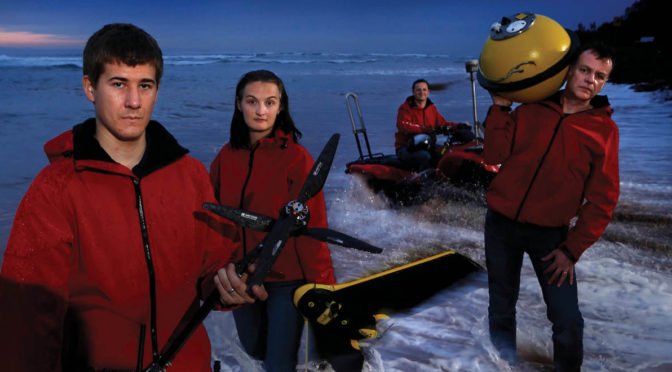
The magazine is produced by specialist custom publishing house Refraction Media, whose clients include Google, the CRC Association, the Office to the Chief Scientist and ANSTO, and who was named Best Small Publisher in 2015 at the annual Publish Awards.

“Quality long-form journalism in science and technology is hard to come by in Australia,” said Wilson da Silva, the faculty’s senior communications advisor and former editor-in-chief of COSMOS magazine, which he co-founded with Alan Finkel, now Australia’s Chief Scientist. “There’s a wealth of great research stories to tell at UNSW, and we hope that everyone, including the general public, will enjoy the quality writing in INGENUITY and the great stories of Australian research excellence it has to tell.”

How to receive INGENUITY:

This information was first shared by UNSW Engineering on 5 July 2017. 

Superstars of STEM announced today!

Thirty female scientists and technologists have been named the first Superstars of STEM – ready to smash stereotypes and forge a new generation of role models for young women and girls.

More than 300 applicants vied for a spot to be a Superstar, with the successful candidates to receive training and development to use social media, TV, radio and public speaking opportunities to carve out a more diverse face for science, technology, engineering and mathematics (STEM).

Announced today by the Minister for Industry, Innovation and Science, Senator the Hon Arthur Sinodinos AO, the women will learn how to speak about their science and inspire others to consider a career in STEM.

Science & Technology Australia President-Elect, Professor Emma Johnston, said studies in the USA and other countries similar to Australia had shown female STEM professionals were significantly under-represented.

“Superstars of STEM is the first program of its kind and will prove vital for the future of STEM in Australia,” Professor Johnston said.

“Often when you ask someone to picture or draw a scientist, they will immediately think of an old man with white hair and a lab coat.

“We want Australian girls to realise that there are some amazing, capable and impressive women working as scientists and technologists too, and that they work in and out of the lab in places you might not expect,” she said.

“Science and technology have made our lives longer, happier, healthier and more connected – with more girls considering STEM careers, we have the potential to achieve so much more.”

Professor Johnston said the participants in this world-first program hailed from nearly every state and territory; from the public, academic and private sectors; and from all sorts of scientific and technological backgrounds.

“Participants are working in archaeology, robotics, medicine, cider research, pregnancy health, education, psychology and so much more,” she said.

“We have forensic scientists, biologists, mathematicians, agricultural scientists, neuroscientists, engineers, cancer researchers, ecologists, computer scientists, and chemists – just to name a few.”

Professor Johnston also acknowledged the support that will allow the program to thrive, including vital funding through the Department of Industry, Innovation and Science’s Women in STEM and Entrepreneurship grant program.

“Over the next year, we look forward to working with partners like Women in STEMM Australia; the Australian Science Media CentreGE and many others to provide these 30 Superstars with valuable communications skills and opportunities to use them,” Professor Johnston said.

“We will be working to make sure you’ll be seeing many more women on your TV screens, hearing them on your radios, and reading about them online.”

“We also hope to support many more women in the years to come by extending Superstars of STEM beyond its pilot year. The universal popularity of the program in its inaugural year shows there is great interest for it to continue.”

The Superstars of STEM program will also include a mentoring component, designed to link participants with inspiring women in their sector who can provide insights into leadership in their field. Participants will also be required to share their stories at local High Schools to ensure they are connecting with young Australian women with an interest in STEM.

Of the final 30, 8 are from Victoria, 8 from New South Wales, 5 from South Australia, 5 from Queensland, 2 from Tasmania and 2 from the ACT. You can meet them by heading to the Superstars of STEM page.

This article was first published by Science & Technology Australia. Read the original article here

If you’d like to read more stories about STEM superstars, click here

Preventing soil erosion with nuclear know-how

Scientists from the Australian Nuclear Science and Technology Organisation (ANSTO) and Macquarie University have combined their respective backgrounds in nuclear science and geomorphology to determine rates of soil erosion across catchments in Asia and the Pacific.

The study, using fallout radionuclides, is part of a technical cooperation project under the Regional Cooperative Agreement for Asia and the Pacific, funded by the International Atomic Energy Agency.

Soil erosion reduces land productivity and degrades soil, and can be caused by poor agricultural practices. Understanding the causes and rates of soil erosion is essential for maintaining productive agricultural landscapes, food security and the surrounding environment.

“Nuclear techniques give us an opportunity to look at the longer term patterns of soil erosion and deposition through strategic sampling and analysis,” says Dr Tim Ralph, senior lecturer at Macquarie University’s Department of Environmental Sciences. “Instead of monitoring soil erosion for many years, selective samples can be used to interpret the pattern of erosion over the past 10 or 20 years, or longer.”

The soil samples were analysed by ANSTO scientists for radioactive isotopes, such as naturally occurring Lead 210 (210Pb). “Within your soil profile, you can also see high levels of 210Pb in the top of your profile, and then the deeper you go, the more it has decayed away,” says Professor Henk Heijnis, senior principal research scientist and leader of environmental research within the Nuclear Science and Technology cluster at ANSTO.

“If you have soil erosion, you don’t see that decay of 210Pb with the profile. You might see very low values right at the top; that means the top has disappeared and nothing is accumulating at that time,” explains Heijnis.

Samples were also analysed for compound specific stable isotopes of carbon, oxygen and nitrogen, which are produced by various crops in different amounts. These elements accumulate in deposition sites at the bottom of a catchment and can help determine, particularly across larger catchment areas, which crops are contributing to erosion.

“The analysis at the deposition site for compound-specific stable isotopes will give you a list of crops and land uses,” Heijnis says. “The relative abundance of these compounds will tell you the contribution of each of the types of land use and crops.”

Understanding the causes and rates of erosion and which agricultural practices are contributing to erosion will inform steps to mitigate the effects of these practices, such as terracing slopes or planting crops that can assist in soil stability.

“One of the big things this project did was to build a regional database of soil erosion based on these radionuclide techniques, so that we can now get a picture of the extent of erosion throughout Asia and the Pacific,” Ralph explains.

Scientists are continuing to construct the database of natural and unnatural erosion rates across different catchments. Ralph says the data to date shows that erosion rates were hugely variable between countries and even between different land uses within a single catchment.

There are plans for a future project to look at soil and water quality and soil structure, which would further add to the erosion database.

Find out more at ansto.gov.au

– Laura Boness 

The bigger picture

Featured image above: the Medical Technologies and Pharmaceuticals Industry Growth Centre, MTPConnect

The Growth Centres launched in October 2015 with $250 million in government funding to 2019/2020. With six now up and running, new collaborations, with the CRCs and others, are beginning to bear fruit.

Take the pioneering idea of using a 3D printer to build joints and limbs damaged through cancer or trauma. The Medical Technologies and Pharmaceuticals (MTP) Industry Growth Centre, MTPConnect, extended BioFab3D@ACMD a grant to set up Australia’s first robotics and biomedical engineering centre within a hospital.

A group of researchers, clinicians, engineers and industry partners will work together to build organs, bones, brain, muscle, nerves and glands – almost anything that requires repair – for patients based at St Vincent’s Hospital Melbourne. One of the big benefits is that the 3D printing will be more cost-effective for patients.

The path for BioFab3D from clever research to commercial success is still a long, complicated one. Collaboration is key and BioFab3D is working with St Vincent’s Hospital Melbourne, University of Melbourne, University of Wollongong, RMIT University and Swinburne University of Technology.

According to Sue MacLeman, CEO of MTPConnect, Australia has many strong and innovative medical and health groups that are on the cusp of realising their full commercial potential.

This is where CRCs come in. “CRCs already have research before it is picked up by the multinationals,” she explains. MacLeman says MTPConnect works with 12 CRCs and aims to help drive their commercial success.

“The MTP sector is hindered by constraints including a lack of collaboration between business and research, skills shortages, the need for more focused investment, and the need for more streamlined and harmonised regulatory and market access frameworks,” says MacLeman.

To meet these challenges the Australian government has provided six Growth Centres (see “Six of the best” below) with funding to help smart projects realise their full potential.

“Growth Centres have an enormous range of things to do. Everyone wants them to do everything. They work in tight timeframes,” explains Professor Robert Cowan, CEO of The HEARing CRC, which has been meeting with MTPConnect.

“We have 48,000 people in our sector, but we can’t speak to all of those people,” explains MacLeman. The MTP is well served by membership organisations such as Medicines Australia, the Medical Technology Association of Australia, and ARCS Australia (previously the Association of Regulatory and Clinical Scientists), adds MacLeman. It has signed a number of memorandums of understandings (MOUs) with membership associations to appreciate what is important in the sectors, particularly global best practice.
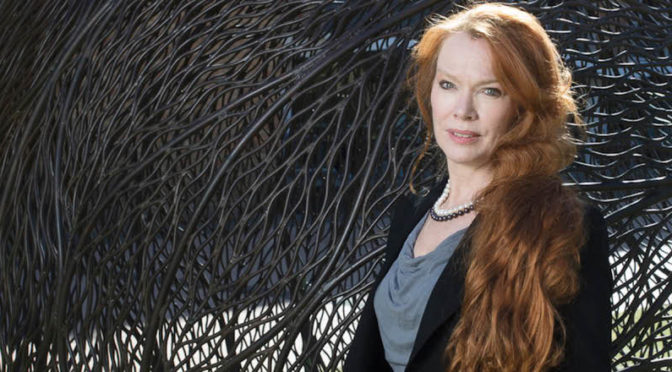
But Growth Centres need to remain independent, not heavily skewed to certain groups, says MacLeman.

“What is important is that we don’t take paid membership. You can sign up and showcase your work, but we want to keep it independent and not to be seen as a lobby group.

“That is very powerful for us. To have a strategic voice and a lot of alignment.”

Collaboration was essential for The HEARing CRC when it recently trialled an electrode that released an anti-inflammatory drug into the cochlear post-implantation. The trial brought together devices, drugs, analysts and the ethical and regulatory approvals.

“This new electrode array helps reduce inflammation and the growth of fibrous tissue around the electrode array triggered by the body’s immune response,” says Cowan.

Unlike a drug trial that involves hundreds and thousands of patients, the trial could be tested on a small number of people undergoing surgery. The world-first study was only possible through an interdisciplinary team of researchers, engineers and clinicians from Cochlear, the Royal Victorian Eye and Ear Hospital, the Royal Institute for Deaf and Blind Children’s Sydney Cochlear Implant Centre, The University of Melbourne and the University of Wollongong.

Cowan says he expects MTPConnect will provide assistance to med-tech companies and research institutes in finding and developing new markets, collaborators and investors for Australian medical technologies.

Growth centres for the future of mining

The mining industry is also tapping into groundbreaking research coming out of universities through CRCs and engaging with the new mining equipment, technology and services (METS) growth centre, METS Ignited.

Extracting minerals from the Earth has become much more challenging. Mineral grades are dropping as reserves are being used up and environmental issues are impacting on mining operations. As a result, mining companies are looking at new ways to extract minerals, using technology as cost-effectively as possible.

“The downturn in the mining market is really focusing the mind,” explains Clytie Dangar, general manager, stakeholder engagement at the CRC for Optimising Resource Extraction (CRC ORE). “We can’t afford to stand still.”
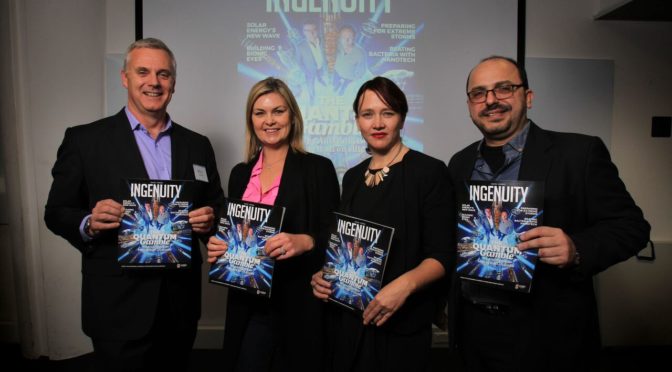
CRC ORE has around 20 active research programs that span robotics, mathematics, data science, predictive modelling as well as broad engineering that focuses on blasting techniques and efficiently extracting minerals from waste. Dangar says the CRC has total funding of $110 million up until mid-2020. This is made up of $37 million from the government and the balance from industry.

CRC ORE and METS Ignited signed a MOU in January to work together to improve commercialisation and collaboration outcomes for Australian METS companies.

Australia has the world’s largest reserves of diamonds, gold, iron ore, lead, nickel, zinc and rutile (a major mineral source of titanium), according to METS Ignited. “Australia is at the forefront of mining innovation over the years. A lot of countries have looked at Australia, certainly over the boom years. The challenge is to stay there when the money isn’t there and the nature of the reserves has changed. One way is to utilise the skill set,” says Dangar.

With sharp falls in commodity prices, mining companies are keen to participate in game-changing technology, she says. CRC ORE is engaging with big miners, such as Newcrest and BHP Billiton. It’s also tapped into the $90 billion mining sector, together with universities and PhD students who are carrying out innovative research.

The role of the Growth Centre is to link up all the stakeholders and capture the research, says Dangar.

“It is important to be well engaged. Our job as a CRC is to translate the needs of the miners to the researchers and make sure the researchers are addressing those issues.

“It is very applied because we have a short timeline. We must meet our guidelines and we provide small buckets of funds in grants,” says Dangar.

The key is being nimble as well as courageous in supporting research, even though it may not always work, says Dangar. CRC ORE is not in the business of funding long-term research with a horizon of seven to 10 years, but prefers a two- to three-year timeframe.

“In the past, there was a natural tension between METS and miners, but now they can’t wait until it is up and running,” explains Dangar. “Miners need to support METS earlier.”

Some of Australia’s step-change advances in mining include flotation to separate materials, bulk explosives, mechanised mining and large mills. One of the biggest issues for miners is how to separate metal from rock more efficiently. Dangar says CRC ORE is working on solving this problem to lower unit costs, and reduce energy and water consumption. Some of these approaches helped Newcrest Mining get better mineral grades at a cheaper cost at its Telfer mine in Western Australia.

“A lot of mining companies had their own research departments, but some of the issues are industry-wide issues, and it is better to be collaborative than go it alone,” says Dangar.

Six of the best

1. The Advanced Manufacturing Growth Centre Ltd (AMGC) is working with the Innovative Manufacturing CRC, which kicked off in the 2015 CRC funding round. In February, the AMGC funded Geelong’s Quickstep Holdings, a manufacturer of advanced carbon fibre composites, to the tune of $500,000. The AMGC believes the project has the potential to generate export revenue in excess of $25 million.

2. The Australian Cyber Security Growth Network is an industry-led organisation that will develop the next-generation products and services required to live and work securely in our increasingly connected world.

3. Food Innovation Australia Ltd (FIAL), based at the CSIRO in Victoria, works closely with the relevant CRCs. CRCs have a long history of work in food and agriculture and have included the Seafood CRC, Future Farm CRC, CRC for Innovative Food products and many more.

4. MTPConnect covers the medical technologies and pharmaceuticals sector and includes the Wound Management Innovation CRC, Cancer Therapeutics CRC and HEARing CRC as members, among others.

5. National Energy Resources Australia (NERA) is the Oil, Gas and Energy Resources Growth Centre, and will work with the CRC for Contamination Assessment and Remediation of the Environment (CRC CARE) to “encourage industry-focused research and unlock commercial opportunities”.

6. NERA also has links with the mining equipment, technology and services growth centre, METS Ignited, which works closely with the CRC for Optimising Resource Extraction (CRC ORE).

– Susan Hely

Navigating the future of GPS

The world’s most accurate GPS service could be on its way to Australia, thanks to collaboration between the Cooperative Research Centre for Spatial Information (CRCSI), Geoscience Australia and Land Information New Zealand.

The pilot project, called a Satellite Based Augmentation System (SBAS), will improve GPS accuracy from several metres to less than one metre – and potentially down to a few centimetres.

“This is the first opportunity we’ve had to test this technology in Australia,” says Dr John Dawson from Geoscience Australia. “It’s also enabling us to test the next generation of this technology, and it really will provide unprecedented positioning accuracy for Australia and New Zealand.”

GPS satellites orbit at a constant, relatively well-known height above the Earth. They transmit precise time signals by measuring the difference between those time signals and its own clock, a GPS receiver can figure out how far away the satellites are. With three or more signals from different satellites, the receiver can calculate where it is on the surface of the Earth.

But these signals from space aren’t perfect. They are affected by variations in the satellite’s clocks and orbit, and by conditions in the atmosphere between the satellite and receiver. These error sources mean that the usual accuracy of a position calculated using GPS is five to 10 metres.

SBAS will use stationary receivers across the continent to measure these errors, calculate a correction, then broadcast that correction to GPS users using another satellite. With this data, the accuracy of a GPS location can be improved to less than a metre.

“We anticipate that most Australians’ devices will be able to see that signal, and exploit the improved positioning,” says Dawson.

“What we’ll be trialling, for the first time in the world, is a new sort of correction message that has the potential to get accuracy down to 10cm,” says Dr Phil Collier, research director at CRCSI.

“Our role will be to work with organisations across industry to run trials, demonstrations and research projects to find out what applications exist for this technology, and what the benefits are to those sectors,” he says.

“For precision agriculture, for example, where tractors are driving themselves around, an accuracy of 5cm means they’re not running over crops in the paddock.”

CRCSI and Geoscience Australia are seeking expressions of interest from industry to test potential applications of the new system, which is expected to begin operation from July 2017.

“This capability opens up a raft of applications in many fields. Mining, agriculture, transportation – the higher precision is a very tantalising prospect,” says Collier.

For more information, visit crcsi.com.au

– Rockwell McGellin

Read more CRC discovery in KnowHow 2017