STEM skills strategy as national endeavour, says Department of Defence.
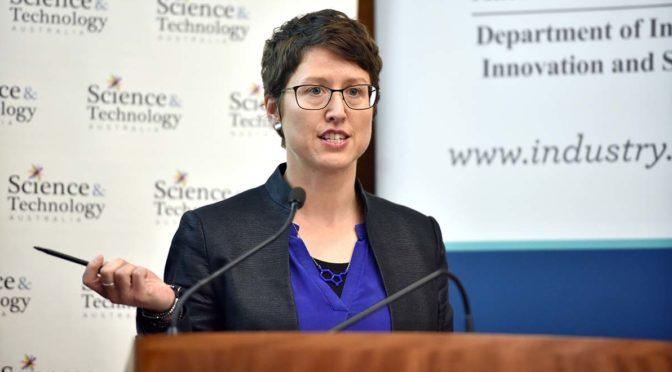
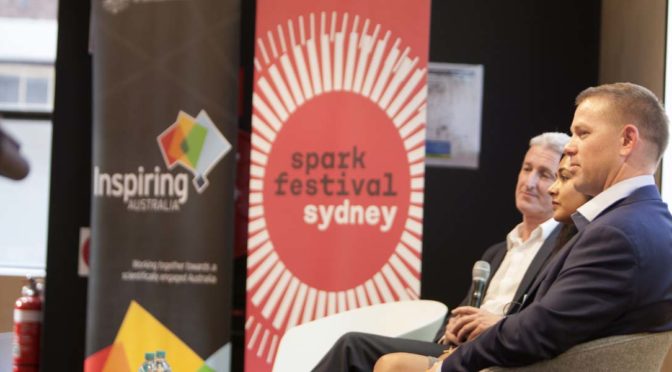
Senator the Hon. Marise Payne, Minister of Defence implored Australians to ‘let loose their inner geek’ at the inaugural STEM in Defence, co-presented by the Australian Defence Magazine and Informa, held in Canberra on 30th of November.
“It’s not possible to overstate the level of challenge we are faced with,” the Senator said when talking about the critical need to rapidly drive a STEM-skilled workforce, a concept echoed across the day by representatives from the Department of Defence, Defence Science Technology group (DST) and industry partners including Boeing, BAE Systems and Navantia Australia.
“We are changing the shape of our workforce and our recruitment messages needs to reflect that,” she continued, advising a broad, cross-agency approach to avoid inter-departmental ‘cannibalization’ of talent.
Matt Ramage, Assistant Secretary, Defence Industry, Department of Defence also recognised that a Defence STEM strategy is a national endeavor rather than a Defence endeavor. The Department of Defence, he believes, will play a critical role but will need to work with other parts of industry to raise the broader level of STEM skills in all Australians.
“With the continuous shipbuilding program in South Australia, specific skills will be required,” Mr Ramage said. “And more advertising and promoting of the Defence Industry as a career path for young Australians is needed.”
The common perception remains that a career in Defence involves front-line combat and uniforms. However the sophistication and breadth of skills required over the next 40 years is staggering. The DST has $1.6 billion allocated to innovation initiatives over the next ten years, including $730 million for the Next Generation Technology Fund.
The Defence STEM strategy will reference five domains. The domains of land, sea and air have been included since World War One. Newly added are cyber and space.
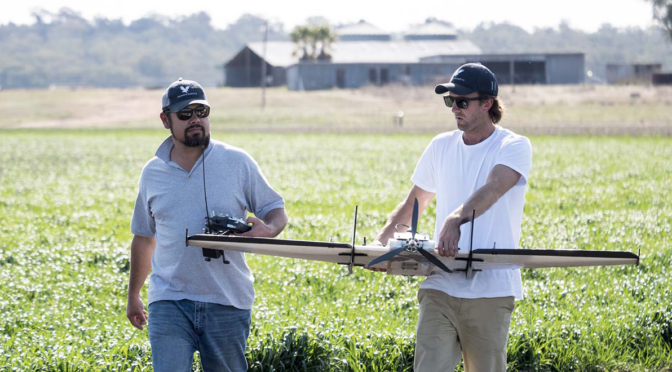
“Scientists will be just as important as our front line soldiers and their ability to cut code quickly will be critical,” said Army Drones Programs Brigadier, Chris Mills, Director General Modernisation – Army. Unmanned aerial systems including drones that use swarm mentality will shape the future of Defence. Soldiers at all levels will need to understand and engage comfortably with these technologies.
The future Defence workforce is not confined to the Defence Force. The Defence Industry includes thousands of businesses, men and women across the country who aren’t in the Defence Force but they use their skills to supply and support it. It’s equally important to companies in the Defence industry that Australia builds its STEM capacity.
Shelley Willsmore from BAE Systems explained that 60% of their workforce is STEM related but 35% of their workers are already aged over 50 years.
“Looking at the growth that’s about to hit us, we see the challenges” she said. With the increase in shipbuilding, BAE Systems plans to recruit 2000 STEM graduates by 2018 and they need to look at new avenues to attract people at all levels of their careers.
The challenge is to communicate the full breadth of high tech jobs in the Defence force, added Pauline Richards, Director – Human Resources at Navantia Australia. “Australia will be at the forefront of the shipbuilding industry. We need to sell our industry as an industry where you can gain more than you ever thought possible.”
Artificial Intelligence (AI) continues to disrupt industry and experts say that we need to focus on unique human skills.
A recent report by economics and strategy consulting firm AlphaBeta predicts that AI could replace 3 million Australian workers by 2030, based on the growing rate of job automation. They report that one third of the entire Australian workforce reportedly spent 70% of their time on automatable tasks, putting them most at risk of redundancy.
Professor Toby Walsh, a leading researcher in AI at UNSW and author of Android Dreams: The Past, Present and Future of AI, says that the consequences will be significant. “If we do nothing… a lot of people will be put out of work, and won’t have the skills for any of the new jobs that are created by technology.”
He says that as AI become more prevalent across all industries, we need to make significant societal changes to education, employment and taxation: “If we do, then the machines can take the sweat and we can focus on the finer things in life.”
AI is proving to be excellent in performing repetitive tasks which many of us find tiresome. Some of the innovations are particularly surprising. Lawyers are employing AI-assistants which laboriously scan legislation and case law for them. Doctors are digitising paperwork with data-processing tools, freeing up their time for patients. Even journalists could soon be using AI-driven fake news detectors to ensure accurate reporting.
Here are just a selection of the latest AI tools which are causing an industry upheaval in medicine, law and journalism.
Medicine: superhuman therapists to the rescue
New Scientist recently published an article declaring that AI will soon be a standard part of your medical care, heralding “the rise of the superhuman doctor”. According to Isaac Kohane, head of Biomedical Informatics at Harvard Medical School, AI is poised to change the very delivery of healthcare by equipping medical professionals with enhanced abilities.
IBM estimate that medical images currently account for at least 90% of human data. To save radiologists from repetitively viewing thousands of medical images, deep learning algorithms are being optimised for healthcare by companies such as IBM (Watson), the Fraunhofer Institute for Medical Image Computing (MEVIS) and GE Healthcare (Arterys). These tools carry out tasks such as detecting and tracking the progression of tumours, detecting diabetic retinopathy and diagnosing cardiovascular disease.
AI-based diagnostic and treatment-recommendation tools have attracted their fair share of controversy, with critics stating that they are expensive and time consuming to link with patient medical records. But AI developers are confident that AI is highly capable of improving health care. AI has the potential to ease the burden of administrative tasks, such as the digital form-filing of patient data. This frees up doctors to take more detailed patient histories and keep on top of the latest research.
Law: AI smooths out divorce and fights your parking fines for you
File this under one of the most unexpected automation processes you’ve ever heard of:www.wevorce.com is a self-guided divorce solution which has been developed to handle divorces more efficiently. After clients provide their information, it uses an algorithm to predict how the divorce will progress and then provides services based on the predictions. It’s just one example of the ways in which legal services are being disrupted by AI.
The world’s first AI lawyer, ROSS, is being used by US bankruptcy law firm BakerHostetler to digest thousands of pages of legal research. The Chief information officer, Bob Craig, refutes concerns that legal jobs will be taken over by AI. “ROSS is not a way to replace our attorneys – it is a supplemental tool to help them move faster”, he says. With AI capable of combing through hundreds of pages of case law, lawyers can then focus on tailoring legal solutions to their clients.
As AI increasingly spreads its roots in the legal sphere, there is a huge opening in the market for legal tech, according to Australian online legal publication BucketOrange. Stanford Uni student Joshua Browder has created a “DoNotPay” chatbot which has successfully appealed thousands of parking tickets. As the potential for technologically advanced legal services grows, tech-minded law graduates will only find their career opportunities expanding.
Journalism: rise of the robot reporters
AI-driven tools could soon be assisting journalists with video production, compiling poll information (particularly during elections) and collecting information from on-the-ground sources at news events. Reporters are excited that AI could take over journalistic “grunt work”, freeing up journalists for more creative and complex assignments.
AI could also help fight “churnalism” (stories which are not properly fact-checked or researched). AI can already recognise basic storylines using natural language programming (NLP) techniques. The next step would be to sample a range of versions of a story from various sources, says Kurt Barling, Professor of Journalism at Middlesex University. Algorithms could then identify bias, which could be flagged by statements such as “you couldn’t make it up”.These tools could help journalists gauge the integrity of tweets and news alerts to nip the spread of fake news in the bud.
The Australian developed ClaimBuster uses NLP to identify factual claims within text, but is so far only used as a fact-checking tool by (human) journalists. Completely automated fact checkers, such as Factmata, are still in development.
Nevertheless, the complete replacement of journalists by “robot reporters” remains highly unlikely, according to an Oxford University study. In a recent opinion piece for The Japan Times, the editor of Kyodo News wrote that although AI could take over simple announcements, it could never replace investigative reporting, provide deep analysis or produce emotional profile pieces.
The human advantage
Amongst all of these new innovations, it’s worth remembering that there are aspects of every job that AI will never be able replace. Walsh believes that “to stay ahead of the machines, we need to focus on areas where humans have an edge”. This includes creativity, emotional intelligence and the ability to make the right judgment under pressure: human capacities which will remain valued in every role.
I recently watched the federal treasurer, Scott Morrison, proudly proclaim that Australia was in “surprisingly good shape”. Indeed, Australia has just snatched the world record from the Netherlands, achieving its 104th quarter of growth without a recession, making this achievement the longest streak for any OECD country since 1970.
Australian GDP growth has been trending down for over forty years
Source: Trading Economics, ABS
I was pretty shocked at the complacency, because after twenty six years of economic expansion, the country has very little to show for it.
For over a quarter of a century our economy mostly grew because of dumb luck. Luck because our country is relatively large and abundant in natural resources, resources that have been in huge demand from a close neighbour.
That neighbour is China.
Out of all OECD nations, Australia is the most dependent on China by a huge margin, according to the IMF. Over one third of all merchandise exports from this country go to China- where ‘merchandise exports’ includes all physical products, including the things we dig out of the ground.
Source: Austrade, IMF Director of Trade Statistics
Outside of the OECD, Australia ranks just after the Democratic Republic of the Congo, Gambia and the Lao People’s Democratic Republic and just before the Central African Republic, Iran and Liberia. Does anything sound a bit funny about that?
Source: Austrade, IMF Director of Trade Statistics
As a whole, the Australian economy has grown through a property bubble inflating on top of a mining bubble, built on top of a commodities bubble, driven by a China bubble.
Unfortunately for Australia, that “lucky” free ride is just about to end.
Societe Generale’s China economist Wei Yao said recently, “Chinese banks are looking down the barrel of a staggering $1.7 trillion — worth of losses”. Hyaman Capital’s Kyle Bass calls China a “$34 trillion experiment” which is “exploding”, where Chinese bank losses “could exceed 400% of the U.S. banking losses incurred during the subprime crisis”.
A hard landing for China is a catastrophic landing for Australia, with horrific consequences to this country’s delusions of economic grandeur.
Delusions which are all unfolding right now as this quadruple leveraged bubble unwinds. What makes this especially dangerous is that it is unwinding in what increasingly looks like a global recession– perhaps even depression, in an environment where the U.S. Federal Reserve (1.25%), Bank of Canada (1.0%) and Bank of England (0.25%) interest rates are pretty much zero, and the European Central Bank (0.0%), Bank of Japan (-0.10%), and Central Banks of Sweden (-0.50%) and Switzerland (-0.75%) are at zero or negative interest rates.
Summary of Current Interest Rates from Central Banks (16th October 2017). Source: Global-rates.com
As a quick refresher of how we got here, after the Global Financial Crisis, and consequent recession hit in 2007 thanks to delinquencies on subprime mortgages, the U.S. Federal Reserve began cutting the short-term interest rate, known as the ‘Federal Funds Rate’ (or the rate at which depository institutions trade balances held at Federal Reserve Banks with each other overnight), from 5.25% to 0%, the lowest rate in history.
When that didn’t work to curb rising unemployment and stop growth stagnating, central banks across the globe started printing money which they used to buy up financial securities in an effort to drive up prices. This process was called “quantitative easing” (“QE”), to confuse the average person in the street into thinking it wasn’t anything more than conjuring trillions of dollars out of thin air and using that money to buy things in an effort to drive their prices up.
Systematic buying of treasuries and mortgage bonds by central banks caused the face value of on those bonds to increase, and since bond yields fall as their prices rise, this buying had the effect of also driving long-term interest rates down to near zero.
Both short and long term rates were driven to near zero by interest rate policy and QE. Source: Bloomberg, CME Group
In theory making money cheap to borrow stimulates investment in the economy; it encourages households and companies to borrow, employ more people and spend more money. An alternative theory for QE is that it encourages buying hard assets by making people freak out that the value of the currency they are holding is being counterfeited into oblivion.
Almost all flows into the equity market have been in the form of buybacks. Source: BofA Merrill Lynch Global Investment Strategy, S&P Global, EPFR Global, Convexity Maven
In literally a “WTF Chart of the Day” on September 11, 2017, it was reported that the central bank of Japan now holds 75% of all ETFs. No, not ‘owns units in three out of four ETFs’ — the Bank of Japan now owns three quarters of all assets by market value in all Japanese exchange traded funds.
In today’s world Hugo Chavez wouldn’t need to nationalise assets, he could have just printed money and bought them on the open market.
Bank of Japan now owns 75% of all Japanese ETFs. Source: Zerohedge
Europe and Asia were dragged into the crisis, as major European and Asian banks were found holding billions in toxic debt linked to U.S. subprime mortgages (more than 1 million U.S. homeowners faced foreclosure). One by one, nations began entering recession and repeated attempts to slash interest rates by central banks, along with bailouts of the banks and various stimulus packages could not stymie the unfolding crisis. After several failed attempts at instituting austerity measures across a number of European nations with mounting public debt, the European Central Bank began its own QE program that continues today and should remain in place well into 2018.
In China, QE was used to buy government bonds which were used to finance infrastructure projects such as overpriced apartment blocks, the construction of which has underpinned China’s “miracle” economy. Since nobody in China could actually afford these apartments, QE was lent to local government agencies to buy these empty flats. Of course this then led to a tsunami of Chinese hot money fleeing the country and blowing real estate bubbles from Vancouver to Auckland as it sought more affordable property in cities whose air, food and water didn’t kill you.
QE was only intended as a temporary emergency measure, but now a decade into printing and the central banks of the United States, Europe, Japan and China have now collectively purchased over US$19 trillion of assets. Despite the lowest interest rates in 5,000 years, the global economic growth in response to this money printing has continued to be anaemic. Instead, this stimulus has served to blow asset bubbles everywhere.
Total assets held by major central banks. Source: Haver Analytics, Yardeni Research
This money printing has lasted so long that the US economic cycle is imminently due for another downturn- the average length of each economic cycle in the U.S. is roughly 6 years. By the time the next crisis hits, there will be very few levers left for central banks to pull without getting into some really funny business.
How these central banks plan to sell these US$19 trillion in assets someday without completely blowing up the world economy is anyone’s guess. That’s about the same in value as trying to sell every single share in every single company listed on the stock markets of Australia, London, Shanghai, New Zealand, Hong Kong, Germany, Japan and Singapore. I would think a primary school student would be able to tell you that this is all going to end up going horribly wrong.
To put into perspective how perverted things are right now, in September 2017, Austria issued a 100 year euro denominated bond which yields a pathetic 2.1% per annum. That’s for one hundred years. The buyers of these bonds, who, on the balance of probability, were most likely in high school or university during the global financial crisis, think that earning a miniscule 2.1% per annum every year over 100 years is a better investment than well anything else that they could invest in- stocks, real estate, you name it, for one hundred years. They are also betting that inflation won’t be higher than 2.1% on average for one hundred years, because otherwise they would lose money. This is even though in 20 years time they’ll be holding a bond with 80 years left to go to be paid out in a currency that may no longer exist. The only way the value of these bonds will go up is if the world continues to fall apart, causing the European Central Bank to cut its interest rate further and keep it lower for 100 years. Since the ECB refinancing rate is currently zero percent, that would mean that if you wanted to borrow money from the European Central Bank, it would literally have to pay you for the pleasure of borrowing money from it. The other important thing to remember is that on maturity, everyone that bought that bond in September will be dead.
So if one naively were looking at markets, particularly the commodity and resource driven markets that traditionally drive the Australian economy, you might well have been tricked into thinking that the world was back in good times again as many have rallied over the last year or so.
The initial rally in commodities at the beginning of 2016 was caused by a bet that more economic stimulus and industrial reform in China would lead to a spike in demand for commodities used in construction. That bet rapidly turned into full blown mania as Chinese investors, starved of opportunity and restricted by government clamp downs in equities, piled into commodities markets.
This saw, in April of 2016, enough cotton trading in a single day to make a pair of jeans for everyone on the planet, and enough soybeans for 56 billion servings of tofu, according to Bloomberg in a report entitled “The World’s Most Extreme Speculative Mania Unravels in China”.
Market turnover on the three Chinese exchanges jumped from a daily average of about $78 billion in February to a peak of $261 billion on April 22, 2016 — exceeding the GDP of Ireland. By comparison, Nasdaq’s daily turnover peaked in early 2000 at $150 billion.
While volume exploded, open interest didn’t. New contracts were not being created, volume instead was churning as the hot potato passed between speculators, most commonly in the night session, as consumers traded after work. So much so that sometimes analysts wondered whether the price of iron ore is set by the market tensions between iron ore miners and steel producers, or by Chinese taxi drivers trading on apps.
Average futures contract holding times for various commodities. Source: Bloomberg
In April 2016, the average holding period for steel rebar and iron ore contracts was less than 3 hours. The Chief Executive of the London Metal Exchange, said “Why should steel rebar be one of the world’s most actively-traded futures contracts? I don’t think most people who trade it know what it is”.
Steel, of course, is made from iron ore, Australia’s biggest export, and frequently the country’s main driver of a trade surplus and GDP growth.
Australia is the largest exporter of iron ore in the world, with a 29% global share in 2015–16 and 786Mt exported, and at $48 billion we’re responsible for over half of all global iron ore exports by value. Around 81% of our iron ore exports go to China.
Unfortunately, in 2017, China isn’t as desperate anymore for iron ore, where close to 50% of Chinese steel demand comes from property development, which is under stress as house prices temper and credit tightens.
In the first half of 2017 alone, a further 120 million tonnes of low-grade steel capacity was ordered to close because of pollution. This represents 11 percent of the country’s steel capacity and 15 percent of annual output. While this will more heavily impact Chinese-mined ore than generally higher-grade Australian ore, Chinese demand for iron ore is nevertheless waning.
Iron ore fines 62% Fe CFR Futures. Source: Investing.com
While the price of iron ore briefly rallied after the U.S. election in anticipation of increasingly less likely Trumponomics, DBS Bank expects that global demand for steel will remain stagnant for at least the next 10–15 years. The bank forecasts that prices are likely to be rangebound based on estimates that Chinese steel demand and production have peaked and are declining, that there are no economies to buffer this slowdown in China, and that major steel consuming industries are also facing overcapacity issues or are expected to see lower growth.
Australian Premium Coking Coal FOB $/tonne. Source: Mining.com
There are two main types of coal- thermal coal, which is burnt as fuel, and coking coal, which is used in the manufacture of steel. The prospects for coking coal are obviously tied to the prospects of the steel market, which are not particularly good.
Thermal coal, on the other hand, is substantially on the nose, and while usage is still climbing in non-OECD nations, it is already in terminal decline in OECD nations. Recently, in April 2017, the United Kingdom experienced its first day without burning coal for electricity since the industrial revolution in the 1800s.
Australia’s main export markets for coal are Japan and China, two markets in which the use of coal is forecast to decline through 2040.
Australia’s top export market for coal is Japan, and the unfortunate news is that the ramp up in coal exports here is a short lived adaptation after power companies idled their nuclear reactors in the wake of the Fukushima disaster. Between a zombie economy and fertility levels far below the replacement rate, Japan’s population is shrinking and thus naturally net electricity generation has also been declining in Japan since 2010.
Coal exports rely on substantial investment by investors who build significant infrastructure, like ports and rail, the cost of which is shared among users according to volume. If a coal company defaults then the remaining coal companies pay extra to collectively cover the loss. A single failure can significantly increase the cost to the other users and can in turn cause pressure on the remaining partners. As this happens, their bonds get downgraded causing balance sheet erosion that ultimately can impact project viability.
Despite all of this, some in government can’t get their head around why the Big Four banks and major investment banks including, Citigroup, JPMorgan, Goldman Sachs, Deutsche Bank, Royal Bank of Scotland, HSBC and Barclays are not keen to fund the gargantuan Carmichael coal project in Queensland’s Galilee Basin.
The now former deputy Prime Minister of Australia, Barnaby Joyce, a New Zealand-Australian politician who served unconstitutionally as the Deputy Prime Minister of Australia, wants Australian taxpayers to be the lenders of last resort to Adani, an Indian miner, for $900 million to build a rail line from their proposed Carmichael Thermal Coal Mine to the port at Abbot Point, where it would be shipped to India. Adani is looking for a handout because, unsurprisingly, the banks knocked them back because the project was too risky and the public backlash against the project has been overwhelming. If it does go ahead, it is likely to be a rail line to nowhere, because by the time it opens, there is a chance that the project will be unviable.
Unless the government steps in, it’s increasingly more likely that the project will go the way of the Wiggins Island coal export terminal, the fraught development originally conceived by Glencore and seven other project partners in 2008, at the literal top of the market for coal. Since conception, three of the project’s original proponents — Caledon Coal, Bandanna Energyand Cockatoo Coal — have gone into administration. Only one of the project’s three stages has been completed, at twice the estimated cost. The five remaining take-or-pay owners have been left with more than US$4 billion in debt to repay and hope is fading on any any chance of refinancing before it all falls due.
Furthermore, global policy to limit the rise in temperatures by 2% could result in a 40% drop in the trade of thermal coal, which would cut Australia’s exports of such by 35%, according to a study by Wood Mackenzie. In 2014, thermal coal was 51% of our coal exports by volume, and this is precisely the type of coal that will be mined by Adani at Carmichael.
Given that Baarnaby’s service was ruled invalid, one can only hope that his actions regarding Government funding for the Adani project might also be invalidated and we can put this flawed project to bed.
Recent events have given manifest life to Mark Carney’s landmark 2015 speech in which Carney, the Governor of the Bank of England, warned that if the world is to limit global warming to below 2 degrees, then the estimates for how much carbon the world can burn makes between 66% and 80% of global oil, gas and coal reserves unusable.
In an essay last year, David Fickling wrote “More than half the assets in the global coal industry are now held by companies that are either in bankruptcy proceedings or don’t earn enough money to pay their interest bills, according to data compiled by Bloomberg. In the U.S., only three of 12 large coal miners traded on public markets escape that ignominious club, separate data show”.
So while our politicians gaze wistfully in parliaments at a lump of coal, undoubtedly the days are clearly numbered for our second largest export.
Losing coal as an export will blow a $34 billion dollar per annum hole in the current account, and there’s been no foresight by successive governments to find or encourage modern industries to supplant it.
Australian Treasurer Scott Morrison gazes wistfully at a lump of coal. Source: AAP, Lukas Coch
Across the entire industry revenue has dropped significantly while costs have continued to rise.
China credit impulse leads its manufacturing index (which in turn fuels commodities). Source: PIMCO
According to the Australian Bureau of Statistics, in 2015–16 the entire Australian mining industry which includes coal, oil & gas, iron ore, the mining of metallic & non-metallic minerals and exploration and support services made a grand total of $179 billion in revenue with $171 billion of costs, generating an operating profit before tax of $7 billion which representing a wafer thin 3.9% margin on an operating basis. In the year before it made a 8.4% margin.
Collectively, the entire Australian mining industry (ex-services) would be loss making in 2016–17 if revenue continued to drop and costs stayed the same. Yes, the entire Australian mining industry.
Collectively, the entire Australian mining industry (ex-services) would be loss making in 2016–17 if revenue continued to drop and costs stayed the same. Source: Australian Bureau of Statistics
Our “economic miracle” of 104 quarters of GDP growth without a recession today doesn’t come from digging rocks out of the ground, shipping the by-products of dead fossils and selling stuff we grow any more. Mining, which used to be 19% of GDP, is now 6.8% and falling. Mining has fallen to the sixth largest industry in the country. Even combined with agriculture the total is now only 10% of GDP.
Operating profit before tax by Australian Industry- the entire small and medium mining industry collectively has been loss making from 2014–16 on an operating basis. Source: Australian Bureau of Statistics
To make matters worse, in 2017 there has been a sharp downturn in Chinese credit impulse (rate of change), which is combined with a negative, and falling global credit impulse. According to PIMCO’s Gene Fried “the question now is not if China slows, but rather how fast”. This will cause even more problems for Australia’s flagging resources sector.
China’s contribution to the global credit impulse (market GDP weighted). Source: PIMCO
This is even before the exit of Australia’s last two remaining car manufacturers, Toyota and Holden, who both shut up shop in 2017. Ford closed last year.
Australian Manufacturing Employment and Hours Worked. Source: AI Group
In the 1970s, Australia was ranked 10th in the world for motor vehicle manufacturing. No other industry has replaced it. Today, the entire output of manufacturing as a share of GDP in Australia is half of the levels where they called it “hollowed out” in the U.S. and U.K.
Manufacturing value add (% of GDP) for Australia. Source: World Bank & OECD
With an economy that is 68% services, as I believe John Hewson put it, the entire country is basically sitting around serving each other cups of coffee or, as the Chief Scientist of Australia would prefer, smashed avocado.
David Llewellyn-Smith recently wrote that this is unsurprising as “the Australian economy is now structurally uncompetitive as capital inflows persistently keep its currency too high, usually chasing land prices that ensure input costs are amazingly inflated as well.
Wider tradables sectors have been hit hard as well and Australian exports are now a lousy 20% of GDP despite the largest mining boom in history.
The other major economic casualty has been multifactor productivity (the measure of economic performance that compares the amount of goods and services produced to the amount of combined inputs used to produce those goods and services). It has been virtually zero for fifteen years as capital has been consistently and massively mis-allocated into unproductive assets. To grow at all today, the nation now runs chronic twin deficits with the current account (value of imports to exports) at -2.7% and aBudget deficit of -2.4% of GDP.”
The Reserve Bank of Australia has cut interest rates by 325 basis points since the end of 2011, in order to stimulate the economy, but I can’t for the life of me see how that will affect the fundamental problem of gyrating commodity prices where we are a price taker, not a price maker, into an oversupplied market in China.
This leads me to my next question- where has this growth come from?
In 2016, 67% of Australia’s GDP growth came from the cities of Sydney and Melbourne where both State and Federal governments have done everything they can to fuel a runaway housing market. The small area from the Sydney CBD to Macquarie Park is in the middle of an apartment building frenzy, alone contributing 24% of the country’s entire GDP growth for 2016, according to SGS Economics & Planning.
This can only be described as completely “insane”.
That was the exact word used by Jonathan Tepper, one of the world’s top experts in housing bubbles, to describe “one of the biggest housing bubbles in history”. “Australia”, he added, “is the only country we know of where middle-class houses are auctioned like paintings”.
An Auctioneer yells out bids in the middle class suburb of Cammeray. Source: Reuters
Our Federal government has worked really hard to get us to this point.
Many other parts of the world can thank the Global Financial Crisis for popping their real estate bubbles. From 2000 to 2008, driven in part by the First Home Buyer Grant, Australian house prices had already doubled. Rather than let the GFC take the heat out of the market, the Australian Government doubled the bonus. Treasury notes recorded at the time say that it wasn’t launched to make housing more affordable, but to prevent the collapse of the housing market.
Already at the time of the GFC, Australian households were at 190% debt to net disposable income, 50% more indebted than American households, but then things really went crazy.
The government decided to further fuel the fire by “streamlining” the administrative requirements for the Foreign Investment Review Board so that temporary residents could purchase real estate in Australia without having to report or gain approval.
It may be a stretch, but one could possibly argue that this move was cunningly calculated, as what could possibly be wrong in selling overpriced Australian houses to the Chinese?
I am not sure who is getting the last laugh here, because as we subsequently found out, many of those Chinese borrowed the money to buy these houses from Australian banks, using fake statements of foreign income. Indeed, according to the AFR, this was not sophisticated documentation — Australian banks were being tricked with photoshopped bank statements that can be bought online for as little as $20.
UBS estimates that $500 billion worth of “not completely factually accurate” mortgages now sit on major bank balance sheets. How much of that will go sour is anyone’s guess.
Llewellyn-Smith writes, “Five prime ministers in [seven] years have come and gone as standards of living fall in part owing to massive immigration inappropriate to economic circumstances and other property-friendly policies. The most recent national election boiled down to a virtual referendum on real estate taxation subsidies. The victor, the conservative Coalition party, betrayed every market principle it possesses by mounting an extreme fear campaign against the Labor party’s proposal to remove negative gearing. This tax policy allows more than one million Australians to engage in a negative carry into property in the hope of capital gains. In a nation of just 24 million, 1.3 million Australians lose an average of $9,000 per annum on this strategy thanks to the tax break.”
Private sector wage price index (annual percentage). Source: SMH, Australian Bureau of Statistics
Household income growth has collapsed since 2008 from over 11% to just 3% in 2015, 2016 and 2017. This is one sixth the rate that houses went up in Sydney in the last year.
Unemployment rate and Employment growth. Source: ABS, RBA, UBS
Foreign buying driving up housing prices has been a major factor in Australian housing affordability, or rather unaffordability.
Urban planners say that a median house price to household income ratio of 3.0 or under is “affordable”, 3.1 to 4.0 is “moderately unaffordable”, 4.1 to 5.0 is “seriously unaffordable” and 5.1 or over “severely unaffordable”.
Demographia International Housing Affordability Survey. Source: Demographia
At the end of July 2017, according to Domain Group, the median house price in Sydney was $1,178,417 and the Australian Bureau of Statistics has the latest average pre-tax wage at $80,277.60 and average household income of $91,000 for this city. This makes the median house price to household income ratio for Sydney 13x, or over 2.6 times the threshold of “severely unaffordable”. Melbourne is 9.6x.
This is before tax, and before any basic expenses. The average person takes home $61,034.60 per annum, and so to buy the average house they would have to save for 19.3 years- but only if they decided to forgo the basics such as, eating. This is neglecting any interest costs if one were to borrow the money, which at current rates would approximately double the total purchase cost and blow out the time to repay to around 40 years.
Ex-deputy leader of the Liberal Party, Barnaby Joyce, recently said to ABC Radio, “Houses will always be incredibly expensive if you can see the Opera House and the Sydney Harbour Bridge, just accept that. What people have got to realise is that houses are much cheaper in Tamworth, houses are much cheaper in Armidale, houses are much cheaper in Toowoomba”. Fairfax, the owner of Domain, or more accurately, Domain, the owner of Fairfax, also agrees that “There is no housing bubble, unless you are in Sydney or Melbourne”.
Now probably unbeknownst to Barnaby, who might be more familiar with the New Zealand housing market, in the Demographia International Housing Affordability survey for 2017 Tamworth ranked as the 78th most unaffordable housing marketing in the world. No, you’re not mistaken, this is Tamworth, New South Wales, a regional centre of 42,000 best known as the “Country Music Capital of Australia” and for the ‘Big Golden Guitar’.
If you used the current Homesales.com.au data, which has the average house price at $394,212, or 6.6x, Tamworth would be in the top 40 most unaffordable housing markets in the world. Yes, Tamworth. Yes, in the world. Unfortunately for Barnaby, Armidale and Toowoomba don’t fare much better.
Tamworth, which at current prices would be in the top 40 most unaffordable housing markets tracked by Demographia in the world. Really? Source: GP Synergy
Out of a total of 406 housing markets tracked globally by Demographia, eight (or 40%) of the twenty least affordable housing markets in the world were in Australia, including in addition to Sydney and Melbourne such exotic places as Wingcaribbee, Tweed Heads, the Sunshine Coast, Port Macquarie, the Gold Coast, and Wollongong. Looking at all regional Australian housing markets, they found 33 of 54 markets “severely unaffordable”.
The 20 most unaffordable housing markets in the world. Source: Demographia,13th Annual Demographic International Housing Affordability Survey:2017
If you borrowed the whole amount to buy a house in Sydney, with a Commonwealth Bank Standard Variable Rate Home Loan currently showing a 5.36% comparison rate (as of 7th October 2017), your repayments would be $6,486 a month, every month, for 30 years. The monthly post tax income for the average wage in Sydney ($80,277.60) is only $5,081.80 a month.
Commonwealth Bank Standard Variable Rate Home Loan for the average house. Source: CBA as of 7th October 2017
In fact, on this average Sydney salary of $80,277.60, the Commonwealth Bank’s “How much can I borrow?” calculator will only lend you $463,000, and this amount has been dropping in the last year I have been looking at it. So good luck to the average person buying anything anywhere near Sydney.
Federal MP Michael Sukkar, Assistant Minister to the Treasurer, says surprisingly that getting a “highly paid job” is the “first step” to owning a home. Perhaps Mr Sukkar is talking about his job, which pays a base salary of $199,040 a year. On this salary, the Commonwealth Bank would allow you to just borrow enough- $1,282,000 to be precise– to buy the average home, but only provided that you have no expenses on a regular basis, such as food. So the Assistant Minister to the Treasurer can’t really afford to buy the average house, unless he tells a porky on his loan application form.
The average Australian is much more likely to be employed as a tradesperson, school teacher, postman or policeman. According to the NSW Police Force’s recruitment website, the average starting salary for a Probationary Constable is $65,000 which rises to $73,651 over five years. On these salaries the Commonwealth Bank will lend you between $375,200 and $419,200 (again provided you don’t eat), which won’t let you buy a house really anywhere.
Residential Mortgages as a percentage of total loans. Source: IMF (2015)
It’s actually worse in regional areas where Bendigo Bank and the Bank of Queensland are holding huge portfolios of mortgages between 700 to 900% of their market capitalisation, because there’s no other meaningful businesses to lend to.
Australian banks’ mortgage exposure as a percentage of market capitalisation. Source: Roger Montgomery, Company data
I’m not sure how the fundamentals can possibly be justified when the average person in Sydney can’t actually afford to buy the average house in Sydney, no matter how many decades they try to push the loan out.
Mortgage Stress Trends to Oct 2017. Source: Digital Finance Analytics
Indeed Digital Finance Analytics estimated in a October 2017 report that 910,000 households are now estimated to be in mortgage stress where net income does not covering ongoing costs. This has skyrocketed up 50% in less than a year and now represents 29.2% of all households in Australia. Things are about to get real.
Probability of default in 30, 90 days across Australian demographics in October 2017. Source: Digital Finance Analytics
It’s well known that high levels of household debt are negative for economic growth, in fact economists have found a strong link between high levels of household debt and economic crises.
This is not good debt, this is bad debt. It’s not debt being used by businesses to fund capital purchases and increase productivity. This is not debt that is being used to produce, it is debt being used to consume. If debt is being used to produce, there is a means to repay the loan. If a business borrows money to buy some equipment that increases the productivity of their workers, then the increased productivity leads to increased profits, which can be used to service the debt, and the borrower is better off. The lender is also better off, because they also get interest on their loan. This is a smart use of debt. Consumer debt generates very little income for the consumer themselves. If consumers borrow to buy a new TV or go on a holiday, that doesn’t create any cash flow. To repay the debt, the consumer generally has to consume less in the future. Further, it is well known that consumption is correlated to demographics, young people buy things to grow their families and old people consolidate, downsize and consume less over time. As the aging demographic wave unfolds across the next decade there will be significantly less consumers and significantly more savers. This is worsened as the new generations will carry the debt burden of student loans, further reducing consumption.
Parody of Sydney real estate, or is it?
So why are governments so keen to inflate housing prices?
The government loves Australians buying up houses, particularly new apartments, because in the short term it stimulates growth — in fact it’s the only thing really stimulating GDP growth.
Australia has around $2 trillion in unconsolidated household debt relative to $1.6 trillion in GDP, making this country in recent quarters the most indebted on this ratio in the world. According to Treasurer Scott Morrison 80% of all household debt is residential mortgage debt. This is up from 47% in 1990.
Australia Household Debt to GDP. Source: Bank for International Settlements, Macro Business
Everyone’s too busy watching Netflix and cash strapped paying off their mortgage to have much in the way of any discretionary spending. No wonder retail is collapsing in Australia.
Governments fan the flame of this rising unsustainable debt fuelled growth as both a source of tax revenue and as false proof to voters of their policies resulting in economic success. Rather than modernising the economy, they have us on a debt fuelled housing binge, a binge we can’t afford.
We are well past overtime, we are into injury time. We’re about to have our Minksy moment: “a sudden major collapse of asset values which is part of the credit cycle.”
Such moments occur because long periods of prosperity and rising valuations of investments lead to increasing speculation using borrowed money. The spiraling debt incurred in financing speculative investments leads to cash flow problems for investors. The cash generated by their assets is no longer sufficient to pay off the debt they took on to acquire them. Losses on such speculative assets prompt lenders to call in their loans. This is likely to lead to a collapse of asset values. Meanwhile, the over-indebted investors are forced to sell even their less-speculative positions to make good on their loans. However, at this point no counterparty can be found to bid at the high asking prices previously quoted. This starts a major sell-off, leading to a sudden and precipitous collapse in market-clearing asset prices, a sharp drop in market liquidity, and a severe demand for cash.
The Governor of the People’s Bank of China recently warned that extreme credit creation, asset speculation and property bubbles could pose a “systemic financial risk” in China. Zhou Xiaochuan said “If there is too much pro-cyclical stimulus in an economy, fluctuations will be hugely amplified. Too much exuberance when things are going well causes tensions to build up. That could lead to a sharp correction, and eventually lead to a so-called Minsky Moment. That’s what we must really guard against”. A Minsky moment in China would be an extreme event for the parasite on the vein of Chinese credit stimulus- the Australian economy.
Today 42% of all mortgages in Australia are interest only, because since the average person can’t afford to actually pay for the average house- they only pay off the interest. They’re hoping that value of their house will continue to rise and the only way they can profit is if they find some other mug to buy it at a higher price. In the case of Westpac, 50% of their entire residential mortgage book is interest only loans.
This is the final stage of an asset bubble before it pops.
Today residential property as an asset class is four times larger than the sharemarket. It’s illiquid, and the $1.5 trillion of leverage is roughly equivalent in size to the entire market capitalisation of the ASX 200. Any time there is illiquidity and leverage, there is a recipe for disaster- when prices move south, equity is rapidly wiped out precipitating panic selling into a freefall market with no bids to hit.
ASX200 by market capitalisation, Big 4 banks top and Macquarie on the left (arrows). Source: IRESS
You don’t read objective reporting on property in the Australian media, which Llewelyn-Smith from Macro Business calls “a duopoly between a conservative Murdoch press and liberal Fairfax press. But both are loss-making old media empires whose only major growth profit centres are the nation’s two largest real estate portals, realestate.com.au and Domain. Neither report real estate with any objective other than the further inflation of prices. In the event that the Australian bubble were to pop then Australians will certainly be the last to know and the propaganda is so thick that they may never find out until they actually try to sell.”
Take, for example, this recent headline from the Fairfax owned Sydney Morning Herald on March 1st 2017, “Meet Daniel Walsh, the 26-year-old train driver with $3 million worth of property”. It appeared in the property section, which for Fairfax today sits on the homepage of their masthead publications, such as the Sydney Morning Herald, immediately below the top headlines for the day and above State News, Global Politics, Business, Entertainment, Technology and the Arts. The article holds up 26 year old Daniel, who services five million dollars worth of property with a train driver’s salary and $2,000 a week of positive cash flow.
This is what the Australian press more commonly holds up as a role model to young people. Not a young engineer who has developed a revolutionary new product or breakthrough, but an over leveraged train driver with a property portfolio on mostly borrowed money where a 1% move in interest rates will wipe out the entirety of this cash flow.
Yet this young train driver isn’t an isolated case, there are literally hoards of these young folk parlaying one property debt onto another in the mistaken belief that property prices only ever go up. Jennifer Duke, an “audience-driven reporter, with a background in real estate and finance” from Domain, also promotes Robert, a 20 year old, who had managed to accumulate three properties in two years using an initial $60,000 gift from his mum. Jeremy, a 24 year old accountant, has 8 properties with a loan to value ratio of 70%, Edward, a 24 year old customer service representative, has 6 propertiesdespite a debt level of 69% and a salary under $50,000, and Taku, the Uber driver, has 8 properties, with plans for 10 covered by a net equity position of only $1 million by November 2017.
How a train driver can service five million dollars of property on $2,000 a week of positive cash flow comes through the magic of cross-collateralised residential mortgages, where Australian banks allow the unrealised capital gain of one property to secure financing to purchase another property. This unrealised capital gain substitutes for what normally would be a cash deposit. This house of cards is described by LF Economics as a “classic mortgage ponzi finance model”. When the housing market moves south, this unrealised capital gain will rapidly become a loss, and the whole portfolio will become undone. The similarities to underestimation of the probability of default correlation in Collateralised Debt Obligations (CDOs), which led to the Global Financial Crisis, are striking.
Fairfax’s pre-IPO real estate website Domain runs these stories every week across the capital city main mastheads enticing young people into property flipping as a get rich quick scheme. All of them are young, with low incomes, leveraging one property purchase on to another.
At Fairfax — whose latest half year 2017 financial results had Domain Group EBITDA at $57.3 million and the entire Australian Metro Media which includes Australia’s premier mastheads Australian Financial Review, Sydney Morning Herald, the Age, Digital Ventures, Life and Events EBITDA at $27.7 million — property is clearly the most important section of all.
In between holding up this 26 year old train driving property tycoon as something to aspire to, Jennifer has penned other noteworthy articles, such as “No surprise the young support lock-out laws” which parroted incredulous propagandaclaiming that young people supported laws designed to shut down places where young people go — Sydney’s major entertainment districts.
As if the Australian economy needed further headwinds, the developer-enamoured evangelical right have crucified NSW’s night time economy. Reactionary puritans and opportunists alike seized on some unfortunate incidents involving violence to simply close the economy at night. NSW State Government, City of Sydney, Casinos, NSW Police, public health nannies, property-crazy media and, of course, property developers had the collective interest to manufacture and blow up a fake health & safety issue to create lockout laws — and then instituted broad night time economic terraforming policies designed to herd patrons to large casinos so they could become permanent monopoly owners of the night time economy in Sydney and Brisbane, while conveniently damaging the balance sheets of small businesses located in competing entertainment areas, so the property could be demolished and turned into apartment blocks.
Property watching at Fairfax has become a fetish. Almost on a daily basis Lucy Macken, Domain’s Prestige Property Reporter, publishes a gossip column of who bought what house, complete with the full address and photos of the exterior and interior and any financial information she can glean about them. I know of one person whose house was robbed — completely cleaned out — shortly after Macken published their full address. Perhaps that was a coincidence, but I am utterly amazed that Fairfax senior management allows this column to exist given the risks it poses to the people whose houses and private details are splashed across its pages.
Fairfax, to be fair, is not without its fair share of great journalists, albeit a species rapidly becoming extinct, who are very well aware of what is really going on. Elizabeth Farrelly writes, “Just when you thought the government couldn’t get any madder or badder in its overarching Mission Destroy Sydney — when it seemed to have flogged every floggable asset, breached every democratic principle, whittled every beloved park, disempowered every significant municipality and betrayed every promise of decency, implicit or explicit — it now wants to remove council planning powers. The excuse, naturally, is ‘probity’. Somehow we’re meant to believe that locally elected people are inherently more corrupt than those elected at state level, and that this puts local decision-making into the greedy mitts of Big Developers”.
However, despite the picture Domain would like to paint, young people with jobs aren’t responsible for driving house prices up, in fact their ownership is at an all time low.
To put this 40,149 in comparison, in the latest 12 months to the end of April 2017, according to the Australian Bureau of Statistics, a total of 57,446 new residential dwellings were approved in Greater Sydney, and 56,576 in Greater Melbourne.
This brings me onto Australia’s third largest export which is $22 billion in “education-related travel services”. Ask the average person in the street, and they would have no idea what that is and, at least in some part, it is an $18.8 billion dollar immigration industry dressed up as “education”. You now know what all these tinpot “english”, “IT” and “business colleges” that have popped up downtown are about. They’re not about providing quality education, they are about gaming the immigration system.
In 2014, 163,542 international students commenced English language programmes in Australia, almost doubling in the last 10 years. This is through the booming ELICOS (English Language Intensive Courses for Overseas Students) sector, the first step for further education and permanent residency.
This whole process doesn’t seem too hard when you take a look at what is on offer. While the federal government recently removed around 200 occupations from the Skilled Occupations List, including such gems as Amusement Centre Manager (149111), Betting Agency Manager (142113), Goat Farmer (121315), Dog or Horse Racing Official (452318), Pottery or Ceramic Artist (211412) and Parole Officer (411714) — you can still immigrate to Australia as a Naturopath (252213), Baker (351111), Cook (351411), Librarian (224611) or Dietician (251111).
Believe it or not, up until recently we were also importing Migration Agents (224913). You can’t make this up. I simply do not understand why we are importing people to work in relatively unskilled jobs such as kitchen hands in pubs or cooks in suburban curry houses.
At its peak in October 2016, before the summer holidays, there were 486,780 student visa holders in the country, or 1 in 50 people in the country held a student visa. The grant rate in 4Q16 for such student visa applications was 92.3%. The number one country for student visa applications by far was, you guessed it, China.
While some of these students are studying technical degrees that are vitally needed to power the future of the economy, a cynic would say that the majority of this program is designed as a crutch to prop up housing prices and government revenue from taxation in a flagging economy. After all, it doesn’t look that hard to borrow 90% of a property’s value from Australian lenders on a 457 visa. Quoting directly from one mortgage lender, “you’re likely to be approved if you have at least a year on your visa, most of your savings already in Australia and you have a stable job in sought after profession” — presumably as sought after as an Amusement Centre Manager. How much the banks will be left to carry when the market turns and these students flee the burden of negative equity is anyone’s guess.
In a submission to a senate economics committee by Lindsay David from LF Economics, “We found 21 Australian lending institutions where there is evidence of people’s loan application forms being fudged”.
Ken Sayer, Chief Executive of non-bank Mortgage House said “It is much bigger than everyone is making it out to be. The numbers could be astronomical”.
So we are building all these dwellings, but they are not for new Australian home owners. The Westpac-Melbourne Institute has overall consumer sentiment for housing at a 40 year low of 10.5%.
Instead we are building these dwellings to be the new Swiss Bank account for foreign investors.
Share of consumers saying ‘wisest place for saving’ is real estate. Source: ABS, RBA, Westpac, Melbourne Institute, UBS
Foreign investment can be great as long as it flows into the right sectors. Around $32 billion invested in real estate was from Chinese investors in 2015–16, making it the largest investment in an industry sector by a country by far. By comparison in the same year, China invested only $1.6 billion in our mining industry. Last year, twenty times more more money flowed into real estate from China than into our entire mineral exploration and development industry. Almost none of it flows into our technology sector.
Approvals by country of investor by industry sector in 2015–6. Source: FIRB
The total number of FIRB approvals from China was 30,611. By comparison. The United States had 481 approvals.
In fact it doesn’t seem that hard to get FIRB approval in Australia, for really anything at all. Of the 41,450 applications by foreigners to buy something in 2015–16, five were rejected. In the year before, out of 37,953 applications zero were rejected. Out of the 116,234 applications from 2012 to 2016, a total of eight were rejected.
Applications for FIRB consideration, approved versus rejected 2012–13 to 2015–6. Source: FIRB
According to Credit Suisse, foreigners are acquiring 25 percent of newly completed housing supply in NSW, worth a total of $39 billion.
Demand for Property from Foreign Buyers in NSW (% of total, unstacked). Source: NAB, SBS
In some circumstances, the numbers however could be much higher. Lend Lease, the Australian construction goliath with over $15 billion in revenue in 2016, stated in that year’s annual report that over 40% of Lend Lease’s apartment sales were to foreigners.
I wouldn’t have a problem with this if it weren’t for the fact that this is all a byproduct of central bank madness, not true supply and demand, and people vital for running the economy can’t afford to live here any more.
What is also remarkable about all of this is that technically, the Chinese are not allowed to send large sums of money overseas. Citizens of China can normally only convert US$50,000 a year in foreign currency and have long been barred from buying property overseas, but those rules have not been enforced. They’ve only started cracking down on this now.
Despite this, up until now, Australian property developers and the Australian Government have been more than happy to accommodate Chinese money laundering.
After the crackdown in capital controls, Lend Lease says there has been a big upswing with between 30 to 40% of foreign purchases now being cash settled. Other developers are reporting that some Chinese buyers are paying 100% cash. The laundering of Chinese cash into property isn’t unique to Australia, it’s just that Transparency International names Australia, in their March 2017 report as the worst money laundering property market in the world.
Australia is not alone, Chinese “hot money” is blowing gigantic property bubbles in many other safe havens around the world.
But combined with our lack of future proof industries and exports, our economy is complete stuffed. And it’s only going to get worse unless we make a major transformation of the Australian economy.
We can’t rely on property to provide for our future. In 1880, Melbourne was the richest city in the world, until it had a property crash in 1891 where house prices halved causing Australia’s real GDP to crash by 10 per cent in 1892 and 7 per cent the year after. The depression of the 1890s caused by this crash was substantially deeper and more prolonged than the great depression of the 1930s. Macro Business points out that if you bought a house at the top of the market in 1890s, it took seventy years for you to break even again.
Australia CQ Real Housing Price Index 1890–2016. Source: LF Economics, Macro Business
Instead of relying on a property bubble as pretense that our economy is strong, we need serious structural change to the composition of GDP that’s substantially more sophisticated in terms of the industries that contribute to it.
Australia’s GDP of $1.6 trillion is 69% services. Our “economic miracle” of GDP growth comes from digging rocks out of the ground, shipping the by-products of dead fossils, and stuff we grow. Mining, which used to be 19%, is now 7% and falling. Combined, the three industries now contribute just 12% of GDP thanks to the global collapse in commodities prices.
If you look at businesses as a whole, Company tax hasn’t moved from $68 billion in the last three years — our companies are not making more profits. This country is sick.
Indeed if you look at the budget, about the only thing going up in terms of revenue for the federal government are taxes on you having a good time- taxes on beer, wine, spirits, luxury cars, cigarettes and the like. It would probably shock the average person on the street to discover that the government collects more tax from cigarettes ($9.8 billion) than it collects from tax on superannuation ($6.8 billion), over double what it collects from Fringe Benefits Tax ($4.4 billion) and over thirteen times more tax than it does from our oil fields ($741 million).
Just compare these numbers: $15 billion is over double what the government projects it will collect from petrol excise in that year ($7.15b), 21 times what it will collect from luxury car tax ($720m), 27 times what it will collect from taxes on imported cars ($560m) and 89 times what it will collect from customs duty on textile and footwear imports ($170m).
As a sign of how addicted to taxing you the government has become, look at the myriad of taxes on cars — high import duties, stamp duty and a luxury car tax — these were designed to protect a car manufacturing industry which doesn’t exist anymore. Yet the government is still increasing them. We closed the last factory this year. These taxes are not only blatant cash grabs but serve to stifle the deployment of electric cars, which have hit a dead end in Australia. Likewise, the taxes on textile and footwear imports were originally designed to protect our textiles, an industry that has now collapsed and that lost 30% of its manufacturing workers this year.
If you look through federal budget forecasts, taxes on cigarettes is the only thing practically floating the federal government’s finances other than wishful thinking in forward projections. Which is, of course, some other future administration’s problem.
How they think they can raise $15 billion in taxes per year on cigarettes — a product that costs a cent per stick to make and will retail for almost $2 a stick in 2020 — without creating a thriving black market, another Pablo Escobar and throwing hundreds, perhaps thousands of people in jail, who will decide unwisely to participate in that black market, astounds me. But that’s how the government decides to plug the hole in its accounts instead of cutting spending.
Of course like so many things this all gets sold to you, the general population, under the banner of “health and safety”- and it’s easy to sell because all you need to do is parade out a few patronising doctors. The truth is that it’s really just for the health and safety of the government budget, because the economy is really, really sick.
If the government wants to fix the budget, I would have thought the most practical way to do it would be to find ways to grow the economy. You’ll never wean the government off wasteful spending no matter who is in power. The politicians, after all, need to keep that up in order to buy votes through profligate policies such as welfare for the middle class.
They are even proposing banning the $100 note, so that when the RBA drives interest rates negative, you won’t be able to withdraw your hard earned funds in cash so easily. You’ll either have to spend it or have the rude shock of the bank taking money out of your account each month rather than earning interest.
Here’s a crazy idea: the dominant government revenue line is income tax. Income tax is generated from wages. Education has always been the lubricant of upward mobility, so perhaps if we find ways to encourage our citizens to study in the right areas — for example science & engineering — then maybe they might get better jobs or create better jobs and ultimately earn higher wages and pay more tax.
Instead the government proposed the biggest cuts to university funding in 20 years with a new “efficiency dividend” cutting funding by $1.2 billion, increasing student fees by 7.5 percent and slashing the HECS repayment threshold from $55,874 to $42,000. These changes would make one year of postgraduate study in Electrical Engineering at the University of New South Wales cost about $34,000.
We should be encouraging more people into engineering, not discouraging them by making their degrees ridiculously expensive. In my books, the expected net present value of future income tax receipts alone from that person pursuing a career in technology would far outweigh the short sighted sugar hit from making such a degree more costly — let alone the expected net present value of wealth creation if that person decides to start a company. The technology industry is inherently entrepreneurial, because technology companies create new products and services.
Speaking of companies, how about as a country we start having a good think about what sorts of industries we want to have a meaningful contribution to GDP in the coming decades?
For a start, we need to elaborately transform the commodities we produce into higher end, higher margin products. Manufacturing contributes 5% to GDP. In the last ten years, we have lost 100,000 jobs in manufacturing. Part of the problem is that the manufacturing we do has largely become commoditised while our labour force remains one of the most expensive in the world. This cost is further exacerbated by our trade unions — in the case of the car industry, the government had to subsidise the cost of union work practices, which ultimately failed to keep the industry alive. So if our people are going to cost a lot, we better be manufacturing high end products or using advanced manufacturing techniques otherwise other countries will do it cheaper and naturally it’s all going to leave.
Last year, for example, 30.3% of all manufacturing jobs in the textile, leather, clothing & footwear industries were lost in this country. Yes, a third. People still need clothes, but you don’t need expensive Australians to make them, you can make them anywhere.
That’s why we need to seriously talk about technology, because technology is the great wealth and productivity multiplier.
However the thinking at the top of government is all wrong.
I recently heard a speech by the Chief Scientist of Australia where he held up a smashed avocado on toast as a prime example of Australian innovation. Yes, smashed avocado on toast. I am not sure which Australian company has the patent on smashed avocados on toast — it’s too surreal to even think about.
Australian Innovation according to the Chief Scientist of Australia. Source: ChiefScientist.gov.au
You can throw as much automation, AI and robotics at an iron ore mine as technologically possible, but it doesn’t change the fact that mines are, and always will be wasting assets that output a commodity for which we are a price taker, not a price maker, into what is currently an oversupplied global market. An iron ore mine, not matter how advanced, is not a long term scalable productivity multiplier; it is a resource to be extracted with finite supply. Once it’s gone, the robots will be dormant.
A semiconductor fabrication plant on the other hand, makes automation of the mine possible. It powers the robotics, the AI and the software — not just for the iron ore mine, but factories and businesses all over the world. It’s the real productivity and wealth multiplier. It’s a long term sustainable, competitive advantage. Smart and efficient resource extraction is just an application of this technology.
That’s why we shouldn’t get confused about what is a technology company, because there is no other industry that can create such immense wealth, with such capital efficiency and long term benefit to the world, as the technology industry.
Today, the largest public company in the world, Apple, is a technology company. Apple’s market capitalisation of $810 billion is bigger than the entire US retail market sector. Its revenue of over $215 billion generates over US$2 million dollars per employee per year. And that’s just the company directly. Think of all the business, jobs, wealth creation and benefits to society that have come indirectly from using the company’s computers, mobile devices, software, services and products.
The largest four companies by market capitalisation globally as of the end of Q2 2017 globally were Apple, Alphabet, Microsoft and Amazon. Facebook is eight. Together, these five companies generate over half a trillion dollars in revenue per annum. That’s equivalent to about half of Australia’s entire GDP. And many of these companies are still growing revenue at rates of 30% or more per annum.
These are exactly the sorts of companies that we need to be building.
With our population of 24 million and labour force of 12 million, there’s no other industry that can deliver long term productivity and wealth multipliers like technology. Today Australia’s economy is in the stone age. Literally.
By comparison, Australia’s top 10 companies are a bank, a bank, a bank, a mine, a bank, a biotechnology company (yay!), a conglomerate of mines and supermarkets, a monopoly telephone company, a supermarket and a bank.
We live in a monumental time in history where technology is remapping and reshaping industry after industry — as Marc Andreessen said “Software is eating the world!” — many people would be well aware we are in a technology gold rush.
And they would be also well aware that Australia is completely missing out.
Most worrying to me, the number of students studying information technology in Australia has fallen by between 40 and 60% in the last decade depending on whose numbers you look at. Likewise, enrollments in other hard sciences and STEM subjects such as maths, physics and chemistry are falling too. Enrolments in engineering have been rising, but way too slowly.
This is all while we have had a 40% increase in new undergraduate students as a whole.
Women once made up 25 percent of students commencing a technology degree, they are now closer to 10 percent.
All this in the middle of a historic boom in technology. This situation is an absolute crisis. If there is one thing, and one thing only that you do to fix this industry, it’s get more people into it. To me, the most important thing Australia absolutely has to do is build a world class science & technology curriculum in our K-12 system so that more kids go on to do engineering.
In terms of maths & science, the secondary school system has declined so far now that the top 10% of 15-year olds are on par with the 40–50% band of of students in Singapore, South Korea and Taiwan.
For technology, we lump a couple of horrendous subjects about technology in with woodwork and home economics. In 2017, I am not sure why teaching kids to make a wooden photo frame or bake a cake are considered by the department of education as being on par with software engineering. Yes there is a little bit of change coming, but it’s mostly lip service.
Meanwhile, in Estonia, 100% of publicly educated students will learn how to code starting at age 7 or 8 in first grade, and continue all the way to age 16 in their final year of school.
At my company, Freelancer.com, we’ll hire as many good software developers as we can get. We’re lucky to get one good applicant per day. On the contrary, when I put up a job for an Office Manager, I received 350 applicants in 2 days.
But unfortunately the curriculum in high school continues to slide, and it pays lip service to technology and while kids would love to design mobile apps, build self-driving cars or design the next Facebook, they come out of high school not knowing that you can actually do this as a career.
I’ve come to the conclusion that it’s actually all too hard to fix — and I came to this conclusion a while ago as I was writing some suggestions for the incoming Prime Minister on technology policy. I had a good think about why we are fundamentally held back in Australia from major structural change to our economy to drive innovation.
I kept coming back to the same points.
The problems we face in terraforming Australia to be innovative are systemic, and there is something seriously wrong with how we govern this country.
There are problems throughout the system, from how we choose the Prime Minister, how we govern ourselves, how we make decisions, all the way through.
For a start, we are chronically over governed in this country. This country has 24 million people. It is not a lot. By comparison my website has about 26 million registered users. However this country of 24 million people is governed at the State and Federal level by 17 parliaments with 840 members of parliament. My company has a board of three and a management team of a dozen.
Half of those parliaments are supposed to be representatives directly elected by the people. Frankly, you could probably replace them all with an iPhone app. If you really wanted to know what the people thought about an issue, technology allows you to poll everyone, everywhere, instantly. You’d also get the results basically for free. I’ve always said that if Mark Zuckerberg put a vote button inside Facebook, he’d win a Nobel Peace Prize. Instead we waste a colossal $122 million on a non-binding plebiscite to ask a yes/no question on same sex marriage that shouldn’t need to be asked in the first place, because those that it affects would almost certainly want it, and those that it doesn’t affect should really butt out and let others live their lives as they want to.
Instead these 840 MPs spend all day jeering at each other and thinking up new legislation to churn out.
In 1991, the late and great Kerry Packer said “I mean since I grew up as a boy, I would imagine, that through the parliaments of Australia since I was 18 or 19 years of age till now, there must be 10,000 new laws been passed, and I don’t really think it’s that much better place, and I would like to make a suggestion to you which I think would be far more useful. If you want to pass a new law, why don’t you only do it when you’ve repealed an old one. I mean this idea of just passing legislation, legislation, every time someone blinks is a nonsense. Nobody knows it, nobody understands it, you’ve got to be a lawyer, they’ve got books up to here. Purely and simply just to do the things we used to do. And every time you pass a law, you take somebody’s privileges away from them.”
Last year the Commonwealth parliament alone spewed out 6,482 pages of legislation, adding to over 100,000 pages already enacted. That’s not even looking at State Governments.
In Australia, the average person in the street might think that the way that you get into the Prime Minister’s office is by being elected by the people. Since 1966, this has only been true about 40% of the time.
In fact, of the 15 Prime Ministers since Menzies, only six have come into the office via being elected by the people. Yes, only six since 1966. They were Gough Whitlam in 1972, Bob Hawke in 1983, John Howard in 1996, Kevin Rudd in 2007 and Tony Abbott in 2013 and Malcolm Turnbull in 2016.
The typical way to get into the Prime Minister’s office in Australia is not by being voted in, but by stabbing the incumbent in your own party in the back. Or in the case of Malcolm Fraser, getting the Governor General to do your dirty work for you. That’s how 60% of our Prime Ministers have gotten into office since we stopped using pounds Sterling as currency. It’s crazy.
In the technology industry we had high hopes for number fifteen but it looks like we might be onto our sixteenth very shortly.
I say it looks like we might be onto number 16 shortly as the Australian government is currently in the grips of a major political crisis. A crisis for the absurd reason that a large number of our politicians do not know they were a dual citizen of another country (or worse, they tried to hide it)! In Australia this is not allowed under section 44 of the Constitution. On almost a daily basis, members of parliament across the political spectrum have been found to be dual citizens of other countries. This has happened to such an extent that the coalition government has now lost its majority and is teetering at the brink of collapse.
The level of incompetence from these politicians that spend all day dreaming up rules about how we all should live our lives and standards to that our businesses must submit to is astounding, not to mention their parties. I would have thought that the first page of the “So you want to be a politician?” checklist that each party handed out to bright young recruits would have said “Have you stolen any money? Are you a drug addict? Have you fiddled with any kids? Are you a citizen of another nation? Then the career of a politician probably isn’t for you!”.
Now how the sixteenth Prime Minister will pick their team is completely crazy. The problem is section 64 of the Constitution. This is the part that says that federal Ministers — members of the executive — must sit in Parliament. This is nuts.
Not so long ago the former Minister of Trade for Indonesia, Tom Lembong, visited my company. Tom’s entire career has been in private equity and banking. He’d never been in politics before- Jokowi simply asked him to be Minister of Trade. Similarly the Minister for Communications, Rudiantara, spent his entire career running telecommunications companies. In Indonesia they vote for the President & Vice President, and then separately for the legislature. The President can pick his own team for the executive. This is how you get good people in government, because you can pick people with real world domain expertise to run a portfolio. In Australia we end up with lawyers, evangelicals or career politicians. People who don’t have a clue about their portfolio. Imagine trying to run a company, but instead of of being able to pick the best engineer to be Vice President of Engineering, you have to pick it from a pool of lawyers, crazy people or card carrying political hacks. How can we have a science, technology and engineering focused agenda, which the country critically needs, when this is how cabinet gets chosen?
Then we have the problems that are a result of regulatory duplication, confusion and duplication of responsibilities or the mindless populism of absurd policies of the State Governments. Here I think we have some of the biggest problems.
I ended up doing Electrical Engineering completely by accident. I went to one of the best private schools in the country. When I graduated, at careers day, nobody talked about engineering. In fact, nobody even mentioned the word engineering throughout my entire schooling. I honestly thought it had something to do with driving a train.
I was disheartened to go back to that same school, Sydney Grammar, to talk at careers day. The students still thought that engineering had something to do with driving a train.
This is completely nuts, when I told the students that by working in engineering you get to design satellites, self driving cars, virtual reality helmets, design rockets like those SpaceX will one day send to Mars or build the next Facebook, many in the room got excited. Just they didn’t have a clue how to head towards a career in engineering because it wasn’t mentioned once to them in thirteen years of schooling. It’s not just my old school, almost all the schools are like this.
So how do you fix K-12 education in this country so that we can drive innovation in the future? It’s the remit of the bureaucracy of the State Governments.
Trying to get them to all agree to modernise the economy is an exercise in futility. Since taking power, the NSW Government has sold 384 Department of Education properties. That is despite leaked Department of Education documents that report NSW is facing an influx of 15,000 school students a year, and will require $10.8 billion in funding for 7,500 new classrooms and buildings over just 15 years.
If you look at their profit & loss statements you’ll see the bizarre way in which State Governments think.
The biggest revenue generator for NSW is payroll tax. In NSW companies pay $8.4 billion dollars as a result of this idiotic tax which is basically a penalty imposed on you for hiring a lot of people. $8.4 billion that could be better used employing more people. If I hire a lot of people, I should get a discount, not a penalty.
The second is stamp duty & land tax. NSW collects $7.8 billion of stamp duty. This is a tax that simply makes it expensive to transact. The stamp duty on an average house in Sydney is $42,000, or about 70% of the average NSW citizens’ post tax annual income. The average person has to work for most of year just to be able to transact in the housing market. The illiquidity this tax causes will be one of the biggest pain points behind a housing crash.
The State Government then tries to build a road between all these apartments, and because property and construction costs are too high, Westconnex, a 33 kilometer road, will cost between $20 and $40 billion. Trump’s wall, which is 1600 km long is costed at around $15 billion.
When the NSW government proposes to build a 14 kilometer tunnel to Manly, it’s costed at $14 billion dollars. That’s $1 million dollars per metre just to build. At $14 billion, that’s about the same price Gotthard tunnel cost, which is the deepest and longest tunnel in the world which goes for 57 kilometers under the Swiss Alps, 2.3 km below the surface of the mountains above and through 73 different kinds of rock at temperatures of up to 46 degrees. Yet a tunnel to Manly costs New South Wales the same price.
This is the absurdity of how State Governments think and operate.
Something is clearly very wrong.
New South Wales also collects $2.4 billion in fees for access to roads, and fines for actually using them. Fines which are erratically enforced through the strategic placement of cameras in areas of maximal revenue, random busts on jaywalkers, through to the ridiculous 350% increase in fines on cyclists for not wearing a helmet, when all the public health policy globally says it’s better to have your citizens ride bikes and get healthy.
It’s so absurd that in NSW a kid riding home on his bike without a helmet now gets fined more ($319) than the speeding driver doing almost 80kms/hr in a 60 zone that ran over him ($269).
Of course, this gets sold to you again under the banner of “health and safety”. But that’s all a load of crap. The only health and safety it’s ensuring is the health and safety of government finances.
This is why I wouldn’t hold your breath for the deployment of electric cars in Australia. State governments will get a rude shock when all of a sudden car ownership collapses and there are no more fines from speeding, red light cameras or poor driving, let alone a crash in fees from parking meters and parking levies. State governments simply won’t let it happen. They’ll also find an excuse to still stop and search your car even though driving under the influence won’t be an adequate excuse anymore.
Why is this important? Well if you are trying to attract young smart people to come back to Australia to join the technology industry, it’s a bit hard when the hashtag #nannystate is trending on Twitter.
After that, all you are left with of any size are gambling and betting taxes. In NSW this is $2.1 billion. The NSW Government is so addicted to gambling revenue that it has shut down most of Sydney’s nightlife in order to boost this line item by funneling people into the casino or pokies rooms, which has the added benefit that they can turn those entertainment areas into apartment blocks for more stamp duty & land tax.
Again, of course, the general public has all been taken for fools because once more it has been sold to you under the guise of “health and safety”. It’s a bit hard to enact structural change in the economy by building a technology industry when every second twenty year old wants to leave because you’ve turned the place into a derelict bumpkin country town.
A little while ago I was sent an essay by Paul Graham of YCombinator, the greatest technology incubator in the world entitled “How to make Pittsburgh into a Startup Hub”. The main thesis of this essay was to make it somewhere that 25–29 year olds want to live — build restaurants, cafes, bars and clubs- places that young people want to be.
About young people he said:
I’ve seen how powerful it is for a city to have those people. Five years ago they shifted the center of gravity of Silicon Valley from the peninsula to San Francisco. Google and Facebook are on the peninsula, but the next generation of big winners are all in SF. The reason the center of gravity shifted was the talent war, for programmers especially. Most 25 to 29 year olds want to live in the city, not down in the boring suburbs. So whether they like it or not, founders know they have to be in the city. I know multiple founders who would have preferred to live down in the Valley proper, but who made themselves move to SF because they knew otherwise they’d lose the talent war.
He then went on to say:
It seems like a city has to be very socially liberal to be a startup hub, and it’s pretty clear why. A city has to tolerate strangeness to be a home for startups, because startups are so strange. And you can’t choose to allow just the forms of strangeness that will turn into big startups, because they’re all intermingled. You have to tolerate all strangeness.
Sydney will never be a technology hub if all the young people want to flee overseas.
You’re kidding yourself if you think they are going to come back one day. In the last 18 years that I have been running technology companies in Australia, out of the scores that have left I’d estimate that less than 10 percent come back. They are at the time of their lives where when they go overseas they usually meet a boy or a girl and eventually settle down.
Not so long ago the topic of Innovation was discussed on ABC’s Q&A.
Stephen Merity asked: “I’m an Australian programmer working on machine learning and artificial intelligence in San Francisco after studying at Harvard. I want to return to Australia but I fear it won’t ever be the right choice. Research and educational funding has been slashed, the FTTP NBN has been abolished, and my most competent engineer friends have been left with the choice of leaving home for opportunities or stunting themselves by staying in Australia. Even if all that was fixed, it’s not enough to just prevent brain drain, we need to attract the world’s best talent to Australia. Does the Liberal government truly believe their lacklustre policies can start fixing this divide?”
The response from Labor’s Ed Husic was “Okay. So on the issue of the brain drain, you can take it two ways. Obviously you can, as Stephen was saying, there is some negative factors that drove him away and I’ve had a father email me of a son who said “I had to leave because I didn’t have opportunities, I had to go elsewhere to pursue”, in terms of his science career, you know, pursue opportunity elsewhere. I actually also see the positive in that, you know, a lot of the start-ups, a lot of people that are moving overseas are pursuing opportunity to grow and they’re going to gain experience and potentially come back and replenish our pool. The key for us is if people are leaving, what’s being done to backfill the places? What’s being done to replenish the talent pool?”
This is like a business saying well we have no customer retention because our product is crap, so let’s go find some new customers.
I taught Stephen Merity here at the University of Sydney. He also worked for me at Freelancer. He’s one of the top graduates in computer science that this University and country has ever produced. He’s never coming back.
What about trying to attract more senior people to Sydney?
I’ll tell you what my experience was like trying to attract senior technology talent from Silicon Valley.
I called the top recruiter for engineering in Silicon Valley not so long ago for Vice President role. We are talking a top role, very highly paid. The recruiter that placed the role would earn a hefty six figure commission. This recruiter had placed VPs at Twitter, Uber, Pinterest.
The call with their principal lasted less than a minute “Look, as much as I would like to help you, the answer is no. We just turned down [another billion dollar Australian technology company] for a similar role. We tried placing a split role, half time in Australia and half time in the US. Nobody wanted that. We’ve tried in the past looking, nobody from Silicon Valley wants to come to Australia for any role. We used to think maybe someone would move for a lifestyle thing, but they don’t want to do that anymore.
“It’s not just that they are being paid well, it’s that it’s a backwater and they consider it as two moves — they have to move once to get over there but more importantly when they finish they have to move back and it’s hard from them to break back in being out of the action.
“I’m really sorry but we won’t even look at taking a placement for Australia”.
We have serious problems in this country. And I think they are about to become very serious. We are on the wrong trajectory.
I’ll leave you now with one final thought.
Harvard University created something called the Economic Complexity Index. This measure ranks countries based upon their economic diversity- how many different products a country can produce- and economic ubiquity- how many countries are able to make those products.
Where does Australia rank on the global scale?
Worse than Mauritius, Macedonia, Oman, Moldova, Vietnam, Egypt and Botswana.
Worse than Georgia, Kuwait, Colombia, Saudi Arabia, Lebanon and El Salvador.
Sitting embarrassingly and awkwardly between Kazakhstan and Jamaica, and worse than the Dominican Republic at 74 and Guatemala at 75,
Australia ranks off the deep end of the scale at 77th place.
Australia’s ranking in the Harvard Economic Complexity Index 1995–2015. Source: Harvard
77th and falling. After Tajikistan, Australia had the fourth highest loss in Economic Complexity over the last decade, falling 18 places.
Australia keeps good company in the Harvard Economic Complexity Index at position #77. Source: Harvard
“We took the view in the 1970s — it’s the old cargo cult mentality of Australia that she’ll be right. This is the lucky country, we can dig up another mound of rock and someone will buy it from us, or we can sell a bit of wheat and bit of wool and we will just sort of muddle through … In the 1970s … we became a third world economy selling raw materials and food and we let the sophisticated industrial side fall apart … If in the final analysis Australia is so undisciplined, so disinterested in its salvation and its economic well being, that it doesn’t deal with these fundamental problems … Then you are gone. You are a banana republic.”
Looks like Paul Keating was right.
The national conversation needs to change, now.
– Matt Barrie (co-authored with Craig Tindale)
Click here to read CSIRO CEO Dr Larry Marshall’s National Press Club Address and read about how to lift Australia’s innovation performance here.
Innovation is the new black. Governments and industry alike are talking about the importance of it and trying to stimulate it. While in an increasingly competitive marketplace innovation is key to a business’ ability to develop and maintain an advantage, an innovation is only as good as your ability to exploit it. And I mean ‘exploit’ in the positive connotation of the word, to make full use of, and derive benefit from, an innovation. For intellectual property to be an effective commercial tool it needs to be effectively identified and managed. You need to know what you have that is worth protecting and why it needs to be protected.
There are a variety of intellectual property rights available to protect innovations, including patents, trade marks, industrial designs, copyright and plant breeders’ rights. (In some cases trade secrets may also be applicable, however, these have associated risks.) Typically of most importance are patents, trade marks and industrial designs. Trade marks provide legal protection for signs distinguishing the goods and services of one provider or manufacturer from those of another. Industrial designs protect the visual appearance of a product. The intellectual property right that underlies the functionality of an innovation (whether a new product, a process for making something or a method for doing something) is patent protection.
If a new innovation is to make it to market and be able to be exploited, some form of exclusivity is typically required to turn a good idea and a potentially useful innovation into a commercially viable product, process or method. Thus, intellectual property protection is an important consideration in product development and for gaining a competitive edge in a fast moving marketplace. But it is not only of relevance to entrepreneurs, but also to researchers with no intention to commercialise research themselves. Without the initial protection of a patent or patent application there is typically little or no incentive for a prospective investor, licensee or assignee to commit the time and money required to translate the results of important research into a viable product, process or method. Moreover, protecting intellectual property signals to investors a willingness and a commitment to seeing research translated into meaningful commercial (including clinical) outcomes and can provide a source of funding to pursue future research.
From a practical perspective, it is never too late to implement intellectual property strategies, and to focus not just on innovating but also on creating, protecting and exploiting intellectual property rights to ensure the full potential of your innovations can be realised.
Over the coming months we will be exploring a number of intellectual property issues of relevance to researchers and to business.
– Dr Gavin Recchia
Dr Gavin Recchia is a patent attorney and Principal of Davies Collison Cave. Find out more about building better relationships between innovative research and industry here.
You’re on your roof, surrounded by floodwater. You’re trying to decide if you should risk death by dehydration if you stay put, or death by drowning if you try to swim to freedom. But wait…is that a drone approaching? A compact drone touches down beside you, laden with food and water. Another maps your location in a fly-by, sending your coordinates to a heavy-lifting drone, which soon arrives to winch you to safety. UAV (unmanned aerial vehicle) tech to the rescue.
Already used to carry out post-disaster aerial assessment, drones could soon be saving lives autonomously.
Humanitarian delivery drones
Last year, a Domino’s pizza made history as the first commercial food delivery by UAV. The delivery took place in New Zealand using a drone called Flirtey, co-created by Australian entrepreneur and CEO Matthew Sweeney, who is now turning his attention to the delivery of essential supplies to war and disaster zones.
Traditional humanitarian food drops using cargo planes (with or without parachutes attached to the packages) are often expensive, inefficient in comparison to road convoys and present a hazard to civilians. Winds present a technical challenge and they require a wide open drop zone, making them an avenue of last resort only.
Drones provide a degree of flight control which could avoid these issues. A UK company called Windhorse Aero is developing a lightweight, potentially even edible, UAV for aid delivery. In future iterations, parts of the frame and electronics could be made of food to maximise the delivery of supplies. Using Flirtey, Sweeney has demonstrated the delivery of packages of pharmaceuticals, while other startups such as Zipline Internationals are using drones in Rwanda to deliver blood for transfusions.
Rescue drones
As weight lifting capabilities of drones improve, they have the capacity to delivery rescue ropes and life jackets when rescue crews are unable to reach people in danger. Griff Aviation recently announced that they have developed a people-lifting UAV, capable of lifting a payload of up to 225kg. It has been designed especially for the armed forces, fire fighters and search and rescue teams.
Across Australia, drones are being rolled out across fire-fighting units and can provide real time assessment of areas too dangerous to access, as well as providing rapid damage assessments . The next step is drones with firefighting capabilities. Global security and aerospace company Lockheed Martin is working on its unmanned K-MAX cargo helicopter, which has been demonstrated to both identify and put out a fire.
Dr Catherine Ball, CEO of drone education program SheFlies and co-creator of the World of Drones Congress, says that there needs to be a greater focus on the capabilities of “drones for good. We have a moral obligation to take on technologies that will potentially save lives.”
– Larissa Fedunik
Discover more about Australia’s drone revolution and read Dr Ball’s startup story here.
In a ceremony in Beijing’s Great Hall of the People in April 2016, Australian Prime Minister Malcolm Turnbull and China’s Premier Li Keqiang signed off on one of the most ambitious government-backed international research initiatives in recent history: the new Australian technology park.
For the first time, the China Torch Program will establish a science park outside China, on the UNSW campus in Sydney, giving Australia access to one of the world’s largest and most successful entrepreneurship programs. The program accelerates innovation by strategically locating Chinese businesses, universities and research organisations in science and technology.
Since 1988, 156 Torch Program high-tech zones and science parks, hosting over 50,000 companies, have been built across China. The Torch R&D budget is more than A$40 billion – and Torch companies account for more than 11% of China’s GDP. “Securing the Torch Project is an incredible recognition of how well UNSW is respected within China, based on our longstanding history,” says Mark Hoffman, Dean of Engineering at UNSW.
“It recognises that Australian technologies can play a significant role in industrial global development; and clearly China sees an opportunity that isn’t currently being exploited.”
Hoffman says the Torch concept has been very successful in producing the kinds of close relationships between industry and universities that lead to commercialisation.
“That’s a gap that Australia doesn’t exploit for a whole range of reasons, but a lot of Chinese industry does very well out of the university system within China. I think they’re seeing that Australia – particularly UNSW – presents considerable opportunity in that regard,” says Hoffman.
Australia lacks companies large enough to make significant investments in technologies, and has less industrial diversity, he says. This new Australian technology park could be a game-changer.
UNSW Torch project: Australian technology park
The UNSW Torch project started operating in August 2016, and between them, 20 companies have already committed over A$60 million to Phase One of the project. By 2020, a five-hectare precinct will be underway, with a focus on cutting-edge innovation and R&D in energy and environment, advanced materials and biotechnology. Deloitte Access Economics estimates Torch companies could return some A$1.1 billion to the Australian economy.
Hoffman says a Torch Precinct in Australia will mean significant funds flowing into the country to fund local research. “This is work that simply wouldn’t be funded otherwise,” he says. He dismisses concerns about potential missed opportunities for manufacturing in Australia, as unrealistic. “If manufacturers in Australia wanted to do this, they would be doing it,” he says. “Under Torch, Australia will certainly get returns for that research.”
He believes the Torch Precinct directly supports a key UNSW mission – great research. “And in a global environment, research only becomes great when it benefits society and the world.”
Hoffman’s involvement in Torch goes back a long way. In 2014, as Pro Vice-Chancellor Research, he led the first UNSW roadshow to visit Torch Parks and various companies in China, and began building those relationships. Two more roadshows and many subsequent researcher visits cultivated that initial seed, he says, as did long-term alumni relationships. UNSW has hosted students from China since the early 1950s.
“The work in photovoltaics has a very close link to our alumni group. Many of the significant Chinese solar cell manufacturing companies are UNSW alumni,” he says. “We’ve got Australian companies keen to be involved with this network because it provides them with important linkages to Chinese industry.”
Torch Project Manager Yuan Wang has a crucial role in developing the new Australian technology park. The senior chemical engineering academic has put most of her other work on hold to get the project up and running. “We’re all very excited about this. One of our first aims is to secure more than A$100 million in research funding from Chinese industry partners,” she says.
Phase One allows five years to secure that funding. During this period, a Torch Technology Business Incubator will be established on UNSW’s Randwick campus, housing up to 100 staff. UNSW has released about 1,000m2 of prime laboratory and office space on its Kensington campus in Sydney for the Torch Program.
A scheme to encourage student start-up businesses will also launch in Phase One. Supported by the Chinese and Australian governments, it will include large-scale student start-up competitions open to young Chinese entrepreneurs currently studying in Australia, and to young Australians seeking to export their ideas to China.
Phase Two involves building infrastructure – labs, offices, accommodation and recreational facilities – on a UNSW-affiliated five-hectare science park near the existing campus. Tus-Holdings, a Beijing-based science-park development company backed by Tsinghua University, is contracted to do a feasibility study for Phase Two, assessing proposed sites, and investigating Australian policy and projected investment returns, to ensure the university gets the maximum financial return on the Australian technology park.
The Phase Two site is expected to provide an Australian research and development base for up to 10 major Chinese companies, together with a Technology Business Incubator supporting up to a 100 Chinese and Australian small enterprises.
But right now, Phase One is the focus. Four priority research areas – materials, energy, the environment and life sciences – have been identified. Wang is working on growing potential Category 3 funding (industry-funded contract research), improving connections with industry and increasing social engagement.
She already has around A$68 million in funds under ‘serious negotiation’, along with some A$26 million already committed. “It’s expanding more and more. We’re strong in manufacturing, ICT and social science, and there are more and more academics becoming involved, which is very promising,” says Wang.
“The main challenge is to find the most suitable partners in China, and align with the research strength at UNSW. Meanwhile, we’re just cracking on with our research, building partnerships, and getting some very initial-stage incubators on campus.”
Don’t be fooled by the diminutive size of the UNSW-EC0 cubesat. This 1.8kg miniature satellite may be small, but the team who built it have high ambitions.
The miniature satellite is part of the European-led QB50 mission to explore Earth’s least understood atmospheric layer: the thermosphere. Built by a team at Sydney’s Australian Centre for Space Engineering Research (ACSER), the satellite was deployed, along with a constellation of 35 other cubesats, from the International Space Station in June 2017.
The thermosphere, between 200 and 380km above Earth, is a region vital for communications and weather formation and helps shield Earth from radiation from the Sun and harsh cosmic rays – a region where temperatures can hit 2,500˚C (4,500˚F). It’s here auroras form their flickering curtains of light, and where ultraviolet and X-ray radiation from the Sun can cause potentially catastrophic solar storms that can knock out power grids and communications. Yet until now, the region has been largely uncharted.
The objective of the QB50 project, led by Belgium’s Von Karman Institute for Fluid Dynamics and involving 28 nations, is to understand the atomic composition of this region. UNSW-EC0 carries a miniaturised Ion Neutral Mass Spectrometer that will collect measurements useful for weather modelling and prediction.
“This is the most extensive exploration of the lower thermosphere ever, collecting measurements in the kind of detail never before tried,” says Elias Aboutanios, UNSW-EC0’s project leader. “The satellites will operate for three to nine months – and may stay up for up to a year – before their orbits decay and they re-enter the atmosphere and burn up.”
As it drifts lower, the satellite will measure various points of the thermosphere and send the data to a global network of ground stations.
The ACSER team packed other unique experiments aboard UNSW-EC0. It carries UNSW’s new Namuru space-borne GPS, much more accurate thanks to higher-resolution positioning, which is needed in space, especially for formation flying of satellites planned for the future.
Another technology being tested is the seL4bit SBC, a super reliable capability-based software microkernel developed at UNSW; and the RUSH Field-Programmable Gate Array, a robust chip designed to self-correct errors caused by random cosmic rays in space, which can scramble today’s computer chips. It is designed to self-correct errors and allow rapid recovery from a glitch without shutting down or stopping what it is doing, and is a novel, and potentially valuable, approach being tested in space for the first time.
In another first, the team 3D-printed the satellite’s metal-coated thermoplastic skin, in a new process dubbed RAMSES (Rapid Manufacture of Space-Exposed Structures). This allows for greater customisation, while both speeding up the production rate and lowering costs, says technical lead Joon Wayn Cheong. If UNSW-EC0 holds up and performs as planned, the 3D-printed cubesat could be the model for future, more ambitious designs.
Eyes on the sky
Three Australian cubesats were built for the QB50 project, two of them at ACSER, and they are the first satellites made locally in 15 years. But there are likely to be many more.
“It’s an example of the philosophy behind ‘Space 2.0’, where the big expensive agency-driven satellites are being replaced by disruptive low-cost access to space,” says Andrew Dempster, Director of ACSER.
Its other QB50 cubesat was INSPIRE-2, developed jointly with the University of Sydney and Canberra’s Australian National University. This cubesat will measure the plasma density and electron temperature in the thermosphere.
“The QB50 mission is an opportunity to show what we can do at ACSER,” adds Dempster.
ACSER is also a partner in Biarri, a cubesat mission for the Five Eyes intelligence alliance of Australia, New Zealand, Canada, the UK and the USA, to explore cubesat formation flying, verify the performance of UNSW’s Namuru GPS receivers and improve electro-optic systems used for precision orbital tracking. And ACSER is a global leader in the emerging field of off-Earth mining, holding annual forums at which international participants explore how to mine space for water and minerals. It has constructed risk-based financial and technical models to evaluate multiple space-borne mining scenarios, and developed optimised mining systems to extract water on Mars.
Read about the five steps Australia can take to build an effective space agency here.
Drone data is an unexplored industry where Australia could become a key player in the global UAV (unmanned aerial vehicle) market, predicted to reach $11.2 billion by 2020.
Ball describes Australia as the “perfect test bed for collaborations”. Unlike in many other countries, Australian airspace regulation easily allows for trials, tests and training. While Australia might not be at the forefront of drone manufacturing, Ball told the SmB audience that we can easily become a leader in smart operation if we use drone data wisely.
“People make decisions worth billions of dollars based on this information”, said Ball. Ball and Phinn presented an overview of how drone data is being used in agriculture, ecology and climate forecasting in order to benefit the economy, environment and communities.
What is Earth Observation (EO)?
The gathering of Earth information via remote sensing and on-ground techniques.
What is remote sensing?
The acquisition of information without making physical contact, normally using satellite- or aircraft-based technologies.
What is a drone?
An unmanned aerial vehicle (UAV).
What are the benefits of drone data?
Drones often provides better resolution than satellite imaging, which can be adversely affected by cloud-based cover, and they negate the need to put people at risk when on-the-ground data may be dangerous to obtain.
Agricultural boost: increasing crop yield by 166%
Using infrared mapping, drones can predict crop yield and provide an early warning of crop stress to boost agribusiness.
WA-based agricultural UAV provider Stratus Imaging says that farmers can potentially increase their yield from $3,000 to $5,000 per tonne, and for a fraction of the cost of satellite imaging.
Oaklands strawberry farm director John Allen is excited about the benefits of the technology: “[Infestations] can do a lot of damage, so to find that five days earlier…could save thousands of dollars”.
Ecology: achieving a synergistic picture
Drones are increasingly being employed in the race to save our environment.
Dr Arko Lucieer, Associate Professor in Remote Sensing at the University of Tasmania, has invested in drones worth over $60,000 to monitor the health of native flora. “Linking ground, air and satellite data leads to a much better understanding of ecologically meaningful properties”, says Lucieer.
Wildlife populations can also benefit, says conservation ecologist Associate Professor Lian Pin Koh from the University of Adelaide. Koh is tracking yellow-footed wallabies in South Australia, where drones can cover large areas more efficiently than ground-based mapping and for lower costs than manned aircraft.
Natural disaster alerts: protection from fires, floods and storms
Sophisticated data engines to improve bushfire and flood forecasting are in the works. The Resilient Information Systems project combines satellite and drone data in a decentralised information network with enhanced bushfire prediction capabilities. Another CRC project is creating highly accurate 3D maps of the Clarence River, which will lead to better flood evacuation plans.
Drones could even prevent blackouts due to fallen power lines. Inspecting vegetation in power line corridors costs Ergon Energy $80 million per year, costs which would be slashed by optimised UAVs .
Ball sees “massive potential in drones as part of business and economic growth”, as well as benefits for the community and environment.
Leaders from both academia and business agree that the best way to foster innovation in science and technology is by getting researchers, business and startups working together.
We’ve prepared this two-part Relationship Guide to canvass the issues and promote the assistance and support available to researchers who want to interact more closely with industry. Read Part 1 here.
Businesses look to universities and research institutes for new knowledge that can help them scale up and innovate their products and services. By accessing the latest research findings, businesses of all kinds can improve their efficiency and profit. At the same time, researchers can create sustainable jobs, novel solutions and global pathways for their knowledge. While there’s robust support available to facilitate research-business relationships, it can be hard for a business to find the knowledge they need. Cultural differences and misunderstandings can also get in the way.
Get out of your bubble!
The best way for researchers to find new opportunities is by networking, knocking on doors and telling others about their discoveries. There will be no collaborative opportunities for those that can’t be found and the new commercial engagement KPIs attached to federal research funding provide strong incentives for all academic researchers to widely communicate the value and potential of their work.
It’s all in the timing
Academics might resist the faster timeframes imposed by businesses seeking knowledge input in order to take a product to market, but unless researchers are prepared to respond to commercial timeframes and develop a sense of urgency, there’s a chance that opportunities will pass them by. No matter how closely a research project aligns with a commercial product, the early bird will get the worm.
Knowledge exchange
Universities are increasingly supporting students and academics to acquire the skills they need to explore commercial opportunities, with assistance provided by way of incubators, accelerators, short courses and government support. Learn more about some of the initiatives that help facilitate and accelerate research-business partnerships: Tech Connect, AMSI Intern, CSIRO’s ON, Cicada Innovations and Data 61’s Ribit and Expert Connect platforms.
Don’t rely on government support
While a broad range of government support is available to help researchers get started, Appen founder Dr Julie Vonwiller warns that to succeed, a product must be able to stand alone on its own merit in a marketplace without the need for ongoing subsidies.
Publish or perish?
There’s often a tension between publishing and protecting knowledge with IP, but patent attorney Dr Gavin Recchia says it’s all about getting the timing right.
It’s a team sport
Business owners Dr Alan Taylor and Dr Julie Vonwiller say the entrepreneurial journey requires a vast array of skills and talents and innovation all the way along as a business evolves.
“I would like to begin by acknowledging the Ngunnawal and Ngambri people as the Traditional Owners of the land that we are on today, and pay my respect to their Elders past and present.
Thank you all for being here today, and a special hello to CSIRO’s partners and collaborators in the room, we couldn’t deliver profound national benefit from science without you.
I will note one of the faces missing today, our Minister, Arthur Sinodinos, and send him our best wishes for a speedy recovery.
Today in Australia, we can reach customers anywhere on the planet, but our competitors can come at us from any direction & we may never see them coming.
We are more connected to the rest of the world than ever before.
Today our world is flat – but a flattened world comes at a cost: it makes it too easy to lie down.
We used to be a nation of proud innovators, Aussie ingenuity created industries out of a barren landscape.
But as we’ve become more connected to the rest of the world, our reliance on Aussie ingenuity has waned.
Instead of pride in our powers of innovation, we’re now proud early adopters of solutions from across the seas.
So today I want to tell you about a new chapter in your national science agency, a chapter written to solve these seemingly un-solvable problems – because that’s what science does.
I’m going to talk to you about three changes at CSIRO: Speed; Market Vision; and Reinvention.
Speed to take science off the lab bench and turn it into real world benefit at an accelerated pace, recognising the speed of change in the world around us.
Market Vision to find the pivot in our national industries that will secure our advantage, before someone else beats us to it.
And reinvention to realise the next leaps forward for each of our industries.
CSIRO isn’t changing because science has changed but because in times of change it’s easy to forget that we’ve been here before.
We’ve been disrupted.
We’ve closed down old industries and we’ve created new ones.
And the answers weren’t always obvious, but we knew where to start looking.
Today, the word ‘innovation’ means something different to everyone.
The most recent Australian Innovation System report highlighted this by defining two kinds of “innovation”.
There’s “new to market”, when a business invests in their own novel products.
Only 5.5% of Australian companies do this.
Then there’s “new to business” innovation, which is just adopting someone else’s idea.
19% of Australian businesses copy innovation.
The rate of Australian innovation has declined consistently since the Global Financial Crisis, making us no longer an innovation leader, but an innovation follower.
It’s probably no surprise I’m a big fan of innovation.
I was offered a bet of $50 not to say ‘innovation’ today and I realised in that moment, just how much of a buzzword it has become.
Why?
Innovation has become synonymous with automation – which in turn has become synonymous with up to 40% of jobs being lost – not just for us but for our children
Today I want to give you a few reasons to come back to science, to feel optimistic about our future, and perhaps to even get a glimpse of these ephemeral “jobs of the future” we keep hearing about.
100 years ago, a visionary Prime Minister – Billy Hughes surveyed the serious challenges facing a fledgling nation, and called for an organisation of scientists to re-shape Australia’s destiny.
I’m deeply honoured to lead that organisation, our national science agency, the CSIRO – or sih-roh.
Billy wanted what you want: solutions from science. That‘s innovation.
Over the past 100 years, we’ve solved problems as wide-ranging as this wide, brown land itself:
We controlled pests like rabbits with myxomatosis and tackled flies with dung beetles.
We re-invented industries like cotton and barley to give Australia an unfair advantage.
And we transformed the world with breakthrough inventions like ultrasound imaging and fast WiFi.
But today, Australia faces a completely different set of challenges: digitisation, automation, and globalisation.
Once again, our people fear an uncertain future.
And yet, the answers are right under our nose – and on our backs.
Australian science is in your cotton shirt, and in your wool suit, and in the permanent pleat.
It’s the polymer bank notes in your wallet, and the wireless in your phone.
You’re seeing the world through extended wear contact lenses, watching an ultrasound image of a baby yet to be born – and when they are, they’ll be wrapped in a wool blanket washed in Softly.
So why should we look to science?
Because in every recession, in every revolution, in every major shift of an economy around the world – science has created the new industries that emerged from the turmoil, and those new industries created new value that grew the economy.
Those science enabled industries – created the jobs of the future.
That’s the power of science, that’s why CSIRO is here.
Let me take you out of this luxurious air-conditioned room, far away from all this technology, far back in time, back to Australia’s beginnings.
Australians have historically been phenomenal innovators, going all the way back, at least 65,000 years: from rendering poisonous seeds edible, to the aerodynamic genius of the boomerang, to the environmentally attuned practise of ‘firestick farming’, which still informs CSIRO’s controlled burning practices today.
Australia’s first people invented incredible breakthroughs to support life down under.
Even as Australia became more connected to other nations, we took pride in our own ingenuity.
In fact, let me tell you briefly about one invention that was masterminded not in isolation to the rest of the world, but right under its very nose.
In the 1940s and 50s, the textiles industry was disrupted by synthetics, most notably the invention of polyester.
Australia’s wool industry had to respond – but the process of spinning wool into fabric hadn’t changed in more than 200 years, since the ‘spinning jenny’ was invented in England in 1764.
Then one wet Wednesday in February 1961, CSIRO physicists David Henshaw and Gordon Walls unravelled the challenge that had tied their peers up in knots.
Instead of reinventing the spinning process, they reinvented the wool itself.
They called it self-twisting yarn, created with a new kind of machine.
The pair were given a shed with a workbench, hidden at the back of the crowded CSIRO buildings in Geelong where they secretly tinkered with the new machine.
They formed a partnership with Repco and built six machines, all hidden out the back of the Geelong site.
The team wore suits made from the new yarn, which none of the experts in their building realised – nor did the hundreds of overseas textile experts visiting the site.
The Prime Minister, Sir Robert Menzies, was given Clan Menzies tartan curtains for his study made from the new self-twisting yarn – but not even he was told of the new process.
Finally, after feeding thousands of metres of fabric into commercial outlets, CSIRO revealed its machine to the public in 1970.
It was smaller, quieter, used less power, and spun wool 12 times faster than anything on the planet.
By 1976, more than 1,600 machines had been exported & Australian wool was once again competitive with synthetics, breathing new life into one of Australia’s greatest industries, & securing wool industry jobs for generations yet to come.
But the story doesn’t end there.
The following decade, we developed ‘Sirospun’ to spin and twist yarns in one operation, cutting costs by 40%.
And it still isn’t over – as you’ll see later today.
Australia’s history shows we have a rich heritage of innovation – so why have we self-twisted this yarn?
Why are we more comfortable adopting other people’s innovation than investing in our own?
Maybe it’s complacence bred from our world record economic growth; or maybe we’ve become sceptical about the value of innovation.
Whatever the cause, Australians don’t look to science for solutions the way they used to anymore.
And what’s wrong with that, I hear you ask.
Why should we risk money inventing things here when we can ride on the coattails of other countries who do it better anyway?
Let me tell you about another place where scientific endeavour was the envy of the world
The Library at Alexandria, was lauded as a citadel of scientific revelation in its day.
And yet, Carl Sagan wrote that with all that potential at their fingertips:
“The vast population of the city had not the vaguest notion of the great discoveries taking place within the Library…
“The scientists never grasped the potential of machines to free people.
“The great intellectual achievements of antiquity had few immediate practical applications.
“Science never captured the imagination of the multitude…
“When, at long last, the mob came to burn the Library down, there was nobody to stop them.”
But after the flames burned out, and the ashes were scattered to the four winds – so too Alexandria, the greatest city the world had seen – was nothing, no hope, no future – gone, in a moment of madness.
I heard the story of Alexandria, when I was a kid in primary school, & it gave me a profound sense of loss, until someone inspired me once more.
It was my science teacher Sally Kerwin who made me love Physics.
Cast your own minds back – I bet each of you remembers a teacher who inspired you, who changed the way you saw the world, who lit a spark of curiosity that still sparkles today.
When I interned at CSIRO in 1984, my supervisor, John McCallum taught me: if you don’t deliver it, you haven’t really done it.
Science innovation is different to other definitions of innovation – it creates new value that grows the economy – it’s literally the gift that keeps on giving.
When I saw the deep impact CSIRO’s science was having on industry, it gave me a sense of the higher purpose of science to transform lives.
It fired my conviction that science should never be hidden from the people, as it was in Alexandria, but instead, a visible part of making life better.
It was a lesson I’d learn over and over again.
My PhD advisor Jim Piper taught me that science solves problems.
And thank you Jim, for being an inspiration, and for being here today.
Later, my PhD examiner at Stanford, Bob Byer taught me scientists create companies.
When I visit classrooms, I see that love of science burning brightly in the eyes of students as they begin to understand the rich complexity of the world around them
But fewer students are following that passion into university, and fewer still into their careers.
That last lesson – that science creates companies – isn’t one we teach here in Australia.
I lived that lesson for 26 years, commercialising science in Silicon Valley.
The invention that got me hooked on founding companies was the world’s first solid-state green laser to cure blindness in diabetics.
Our product was so unique, so high value, enabled by science solving an impossible problem that we could afford to manufacture it domestically, driving local jobs, and economic growth.
Innovation is about highest value not lowest price, lowest price is a race to the bottom.
Silicon Valley’s foundation was the silicon chip, the science that created Intel.
Intel manufactured domestically, retrained automotive and white goods workers and created massive economic value.
Scientists create companies; Science creates Industries; Industries create the jobs of the future.
Then Intel expanded to Israel, and laid the foundation for Israel’s own innovation ecosystem.
Science created thriving ecosystems that drove platforms of prosperity for generations.
In Australia, we don’t have that ecosystem… not yet.
But CSIRO can do for Australia what Intel did for Silicon Valley and Israel.
I’m not saying we should copy other country’s innovation, that’s not very innovative.
We have our own potential, our own strengths, and our own opportunities – Australia will be its own, unique ecosystem.
But as our traditional Australian industries are disrupted, we must not allow other countries to seize the opportunities we have at our fingertips.
The world is racing to turn their science into solutions, if we don’t keep up, we will lose our place in the world.
I said we were writing a new chapter for CSIRO – it’s about three changes: speed, vision, and reinvention.
First speed – because we are in an innovation race – we’re increasing speed through two new programs, with support from the National Innovation and Science Agenda.
Two years ago, we created the national science accelerator, called ON.
ON teaches Australian scientists how to build a bridge from lab bench to customer.
It’s designed to take the best ideas from the whole Australian research sector out into market, speeding up their ability to make a difference in people’s lives.
More than 200 teams, from 30 institutions, have taken their benchtop breakthroughs to beta concepts.
It brings the entire research sector closer to Australian industry – aiming squarely at our ranking as one of the lowest collaborating nations in the OECD.
These amazing solutions from science include:
A polymer you spray onto soil to lock in moisture and fertiliser for crops, while reducing evaporation and nutrient run-off into nearby bodies of water… like the Great Barrier Reef.
It’s called Transpirational, from growing melons in Finley, NSW, to tomatoes Echuca, Victoria, Transpirational is transforming agriculture.
Sedimentary run-off is the most consistent threat to the Great Barrier Reef, so we care a lot about it.
There’s a livestock feed supplement made from seaweed that’s lower cost and more nutritious, and reduces methane emissions from cattle.
It’s called FutureFeed, and it’s going to really help beef production and reduce our national emissions.
And there’s a facial recognition technology that identifies when non-verbal patients are in pain. It’s called ePat, and it accelerated so fast, it’s already delivered product to market and exited on the ASX.
These are just three examples out of 200 teams delivering Australia’s brilliant science into the hands of real people where it can solve real problems.
And they’re creating some of the jobs of the future, in AgTech, eco-farming and MedTech.
But we also know that in Australia, science is perceived as a risky investment.
That’s why last week we launched Main Sequence Ventures, the national Innovation Fund, also created by NISA.
The Fund is designed to bridge the challenges that many deep science ideas face when starting up.
It will support new start-ups, and existing SMEs engaged in the translation of science from all Australian Universities, once again, strengthening our national innovation ecosystem.
The Fund will back great Australian science – because sScience creates new industries, new companies and new jobs.
Very appropriately the Fund includes money created by another Australian innovation, WiFi.
Like WiFi, the name of the Fund comes from space science.
Few stars make it to the Main Sequence, but when they do, they burn longer and brighter, and nurture growth for all around them.
Growth of Australia’s own, unique innovation strengths – a lot like that shed, out the back in Geelong.
Last week we announced the first investments:
Q-CRTL is developing firmware to control the chaos of quantum computing;
Morse Micro is developing low-energy WiFi to connect everything to everything;
Intersective provides experiential learning to retrain us for those jobs of the future; and
Maxwell MRI is using Artificial Intelligence to detect prostate cancer.
Again, we can see here the industries of the future: quantum computing, the internet of things, and better healthcare through Artificial Intelligence.
So with ON taking Australian research from benchtop to beta; and Main Sequence Ventures funding the jump from beta to buyer; CSIRO is speeding up the creation the industries of the future.
The second change I want to talk about is market vision; a fundamental shift from science push, to market pull.
Companies like Intel had a vision of computers that others couldn’t see because it was impossible, but science makes the impossible, possible.
So Intel used science to make their vision happen.
We have a market vision for Australia’s future, one that’s already beginning to deliver.
To deepen the connection between our science and the needs of industry, over the past 12 months we’ve developed a series of Industry Roadmaps, in partnership with Industry Growth Centres.
They pinpoint Australia’s opportunities to transform our major industries with science, and there’s a common thread running through them – sometimes it’s self-twisting wool, sometimes carbon fibre.
Commodities compete on price – unique products compete on value.
Science creates new value.
In the past, we’ve unleashed our science on the world as an idea, undeveloped like a raw material dug from the ground.
And much like our mineral wealth, which we’ve dug up and shipped away, our ideas have realised their potential elsewhere, creating value, jobs and opportunity in other countries.
This isn’t sustainable.
For decades, we’ve made money exporting mineral sands, worth pennies per pound.
It’s time to shift our focus to creating our own high value products.
We started with a small step, by turning sand into titanium ink for 3D printing.
Then we thought bigger, and created this replacement sternum that saved a young woman in NYC – a first for the US.
And in so doing, propelling a small Aussie SME called Anatomics to the world stage.
We’ve seen where this story leads before: Intel turned sand, into a unique high value material, silicon.
With the right market vision, science is the fulcrum to pivot our economy.
Now I can tell you the rest of the wool story…
After reinventing wool, we partnered with another Aussie SME called Textor to invent a novel way to weave paper in three dimensions.
The novel process required a completely new approach to manufacturing, but the resulting paper was so absorbent, it’s now being used in nappies around the world by Kimberly Clarke.
But that’s still not the end of the story, because next they looked at new kind of fibre.
Carbon fibre is a next generation material, delivering ultra-low weight, superb stiffness, and high conductivity.
It’s being used in everything from bicycles and tennis rackets; to wind turbine blades; right through to my personal favourite: aviation and space.
In fact, we’ve already helped yet another Aussie SME Carbon Revolution to develop carbon fibre wheels, for the latest model Ford Mustang.
But, carbon fibre is only made by a handful of manufacturers around the world, each of whom hold their own secret, patented recipe.
In partnership with Deakin University, CSIRO has cracked the carbon fibre code.
Today, I’m thrilled to reveal one of the first pieces of carbon fibre made from scratch in Australia, from Australia’s own top secret recipe.
Just as their forebears created new industries and jobs in wool with their invention, the CSIRO and Deakin team has taken the first step towards reinventing generations of new jobs in carbon fibre manufacturing here in Australia – not very far, in fact, from that historic shed in Geelong.
It’s also worth noting that our Advanced Manufacturing Industry Roadmap has mapped the path for carbon fibre in Australia over the coming years, and the future is in good shape.
So we’re picking up the pace with ON and Main Sequence Ventures, and we’re delivering higher value and vision to industry.
The third and final change I want to talk about today is the power of science to re-invent.
Science creates new value when it makes the impossible possible,
It inspires us to take leaps of faith into the future, well beyond what seems possible today.
It inspired me as a kid in primary school, watching the Moon landing.
And it inspires kids in schools today, entranced by our Pluto fly-by or the Cassini crash into Saturn – all three of which, were received, by the way, by Australia’s national science agency right here in the ACT, as part of our 50 year partnership with NASA.
So to ensure our reach exceeds our gaze, we’ve created six Future Science Platforms, or FSPs, each closely aligned with the market vision we created for re-inventing each of Australia’s major industries.
Now I could tell you about Environomics, or Synthetic Biology or Deep Earth Imaging or Digiscape or Probing Biosystems or Active integrated matter – but we’ll never get to your questions if I go into that kind of detail.
So suffice it to say the 60 or so scientists we’re hired to realise these ambitions are making outstanding progress.
Instead, let me do you one better and tell you about two new FSPs that we haven’t even announced yet, which are designed to create industries that don’t even exist yet.
The first is Hydrogen Energy.
We invented the Hydrogen “cracker” – it creates hydrogen from ammonia.
Ammonia is already transported all around the world using existing liquid fuel infrastructure, so it’s faster in every sense than charging an electric car.
In May, we launched a project with BOC, Hyundai and Toyota to turn ammonia, into fuel for cars.
Not only is hydrogen a renewable energy source, but it’s also energy storage, something we need to stabilise the grid as we introduce more renewables.
Those same renewables – like solar energy – can produce Hydrogen directly, enabling Aussie sunshine to be exported around the world as a renewable liquid energy.
The second new industry is Precision Health – creating a healthier future for all Australians.
We all know Australia has exceptional medical research, but it is largely focused on treatment rather than prevention.
We’re creating new foods and new diagnostics to reduce diabetes, obesity, infectious diseases and certain cancers.
In fact, we’ve demonstrated the first scientific proof that data saves lives.
We developed new software tools to accurately forecast demand and help ensure access to emergency care and a hospital bed, and we’re currently rolling this out in Queensland hospitals.
The tools have 90% accuracy, and if the entire country used the tool, we could save a huge $23 million from the health budget every year.
In partnership with universities and industry, our Future Science Platforms are imagining – and creating – the industries of the future, that will grow the jobs of the future, that we and our children need.
We’ll have more to share tomorrow about our $5 million investment in these two new FSPs later this week.
I hope today I’ve reassured you, and perhaps even intrigued you, that your National Science Agency is
Speeding up the delivery of solutions from science,
Has a Market Vision to see the global changes, before they hit us, so the science is ready when they do; and
Is Reinventing industries to deliver the jobs of the future.
I hope you’re also a little more optimistic about Australia’s future now that you’ve had a glimpse of these ephemeral “jobs of the future”.
How our children’s imaginations will turn the commodities of old into custom aerospace or electric car components, or unique foods that extend life itself, or export 100% renewable clean fuels to power the engine of the world.
But my biggest hope is that as a nation, we will start to back ourselves again – because if we don’t, we can’t possibly succeed in tomorrow’s world.
We may have grown complacent, and we may be a little sceptical about innovation in an era of automation.
That might be what they thought in Alexandria, but we’ve come a long way since then.
CSIRO has opened the doors of the library. You don’t need a library card, you don’t even need to be quiet – in fact we want to hear you loud and clear.
Your national science agency is exactly that: Yours.
We’re here to make science deliver the jobs of the future that you and all Australians need, today and in the future, regardless of skills, expertise, or background.
If we don’t back our own abilities, we will see these industries – and the jobs they create – being developed in other countries, at our expense.
In times of change, it’s easy to forget that we’ve been here before.
We’ve been disrupted.
We’ve reinvented old industries, and we’ve created new ones.
We’ve woven our own success and we’ve spun out new industries – and not just the ones relating to fibre.
Tec.Fit founder Tim Allison is a business owner bringing cutting edge technology applications to the global fashion industry. Using an innovative scanning app that outputs 3D models and measurements, Tec.Fits allows couturiers and customers to bypass the need to be in the same room when producing customised clothing. Australia’s emerging research talent is now contributing to Tec.Fit’s success.
Tec.Fit solves problems like poorly fitted garments when purchased online. It also offers the fashion industry scalable solutions for bespoke, custom designed clothing like suits, wedding attire and uniforms.
Coming from an international consumer tech background, Allison describes his business as one of the thousands of global companies that are disrupting e-commerce and the designer fashion industries.
Allison is now working with three Australian universities to develop the technology he needs to take his business to the next level by developing next generation 3D printers that can output at scale.
Working with AMSIIntern, a Commonwealth Government funded scheme that rebates engagement with PhD candidates in industry, Allison has been able to engage three PhD students as interns. Tec.Fit is working with PhD candidates from Swinburne, RMIT and Deakin universities and is on the hunt for a fourth PhD candidate to join the Sydney team.
While he knew from the start exactly what skillsets and specific expertise he needed from researchers, it took Allison about 12 months to find the right collaborator.
“I had one professor who said to me: ‘Tim I can definitely do your project – it’s no problem at all – but I am going to need to do eighteen more months of research.’ Eighteen months is a lifetime in technology terms!” said Allison.
Other difficulties he experienced along the way included negotiating with universities on IP ownership and getting priorities aligned with academic partners.
Tec.Fit founder TIm Allison
AMSIIntern Postgraduate Program
The AMSIIntern Postgraduate Program is a unique model for innovation that seeks to connect PhD candidates at universities across Australia with emerging business opportunities. The program builds valuable partnerships between industry and academia to create more collaboration and research commercialisation.
Business Development Manager Mark Ovens says that the AMSIIntern model is all about putting bright students into industry to give them critical workplace skills that enhance their specialist STEM research skills. Ovens describes the program as a stealthy means of uncovering hidden talent that is lurking in the depths of a research school rather than actively looking for work. While there is ample opportunity available, Ovens says that academic institutions can be slow in responding to the opportunities offered by business.
“In Canada, from where this program has evolved, they are placing hundreds of PhD students into industry each year. Around 50% of students have access to industry experience as a part of their doctoral experience. “In Australia the challenge for AMSI is to increase the intern programs per year with industry partners and we need help from all Australian Universities to supply the PhD’s students.” he said.
Ovens said that the scheme needs stronger support from both academia and industry to ensure that current PhD students get the chance to develop valuable industry experience before they graduate. With all Australian universities eligible to access AMSIIntern programs, the scheme provides a unique opportunity for businesses to access research talent.
“There is no employment. Rather, industry partners provide a contract for service and AMSIIntern liases with the relevant university so that the student gets paid a stipend by them,” say Ovens.
“The program allows industry partners to trial candidates during the 3–5 months for cultural and skills fit. At the end of a project they can release students to return to their studies, or if they have completed their degree, they can give them a job.”
Ovens says that the scheme is above all a low risk strategy.
“It’s also low cost with potential high returns as industry partners keep any IP that may result, making it easier to engage with universities,” he added.
Ovens said the project experience of the postgraduate student is at the heart of the scheme.
“Coached by their academic supervisor, industry experience brings new thinking, new ideas and experimentation to bear on challenges that the student must solve – an invaluable, real-world experience that will only enhance their future careers whether in academia or industry.”
Leaders from both academia and business agree that the best way to foster innovation in science and technology is by getting researchers, business and startups working together.
We’ve prepared this two-part Relationship Guide to canvass the issues and promote the assistance and support available to researchers who want to interact more closely with industry.
As part of the 2017 Spark Festival, Inspiring Australia NSW hosted a forum to explore what it would take to create more value from publicly funded knowledge.
Participants discussed what needs to change in universities to better prepare researchers for the future.
The 2017 Global Innovation Index ranks Australia 23rd in the world, behind China, New Zealand, Hong Kong and Singapore. While Australia is placed 10th in terms of “knowledge workers” it scores a low 52nd for innovation linkages and 48th for knowledge absorption. This is despite our ranking in the top 10 worldwide for innovation input – infrastructure, human capital, market sophistication and education.
So what’s not working in our research-business relationships and how can we fix it?
Changing the culture
With the next generation of STEM researchers often being trained by academics who lack the expertise, training and knowledge to commercialise research knowledge, there’s a pressing need for universities to think more innovatively about education and industry engagement. Even when an opportunity does not exactly align with a researcher’s particular interests, there may still be collaborative partnerships to explore.
Moving between academia and industry
When microbiologist Dr Dharmica Mistry left academia to enter industry, she felt like she was jumping to the dark side and abandoning a research career forever. The founder and Chief Scientist at BCAL Diagnostics, a biotech company commercialising a blood test for breast cancer screening, would like academics to be able to move more freely between the academic and commercial worlds.
Communicating is not a hobby
Dr Noushin Nasiri develops novel sensors that can detect disease in human breath. When the post doctorate researcher began talking publicly about her research and its application as an affordable, nanoscale diagnostic device, four industry partners made contact to explore commercial opportunities. But communicating research, she says, is still seen as a hobby.
A shared vision
Professor Veena Sahajwalla says that in order to develop commercialisation outcomes, it is critical for researchers to be able to both articulate the value and potential application of their work and also to understand the needs of the industry partner and their vision for the future.
Business can access research knowledge
AusIndustry Innovation Facilitator Gary Colquhoun helps Australian businesses identify opportunities for research collaboration to address their knowledge gaps in all kinds of ways, driving business innovation and creating a positive impact on the economy.
Sustainable startups
Shelley Copsey leads New Ventures and Commercialisation at Data61 and is working with research startups to help them develop the sustainability and longevity they need to build a product pipeline. She says that to successfully commercialise knowledge, researchers must develop the skills to build solid relationships with multiple research organisations as well as in-house R&D capability.
– Jackie Randles
Click here for Research and industry – A relationships guide (Part 2).
Senator Simon Birmingham’s September declaration that Australia would establish a space agency created a buzz across the space sector.
The announcement was unexpected. Few anticipated any government commitment until after Dr Megan Clark’s expert panel reported on Australia’s space industry capability in March 2018.
Establishing an agency is a sensible decision and rightly has bipartisan support. But the hard work in determining the shape of the agency has only just begun.
In forming the new agency, much has already been said about what it might do. But how the agency is set up will be just as important to success.
My five steps to an effective agency are: include both “new” and “old” space, give the agency actual power, make the most of the space “brain drain” and work cooperatively with the Department of Defence.
The new pathway to space
The most startling recent evolution in space is that there is more money on the table. Venture capital funding for space projects in each of 2015 and 2016 exceeded the total of all venture capital investments in space since 2000.
Australia has more than 43 small businesses focused on the space sector. This growth has been driven by a rapidly falling cost to participate in space activities. The cost and weight of satellites has plummeted as the technologies that deliver small, affordable smartphones found space applications.
Innovation, competition and ride-sharing on launch vehicles – think Elon Musk’s Space X and Auckland-based startup Rocket Lab – have reduced per-kilo prices to space, and costs will likely fall further.
In this rapidly changing environment, here are my five recommendations for space agency success.
1. Grow the ‘new space’ market
The “new space” market is characterised by projects focused on commercial return, particularly small satellites. This is a fast growing sector with existing companies that can deliver Australian technology jobs and export revenue.
To make the most of this existing pool of potential, the agency should fund widely with small amounts, just enough to prove concepts or encourage commercial participation. It should draw on venture capital in assembling this portfolio, as the CSIRO and the UK Space Agency are doing.
2. Do not neglect ‘old space’
Despite the hype around small satellites and commercial space, Australia should not neglect altogether the “old space” of large, reliable and expensive satellites. These are still the mainstay of the industry, and the training ground from which many startups spring.
Precisely because the work proceeds more slowly, old space offers steady cash flow to complement the precarious financing arrangements of many of the new space businesses. New space companies that can also sell hardware or services to old space companies are particularly valuable.
The path here is clear: the agency should work closely with existing trade programs to help the Australian space industry break into global supply chains, in particular helping business navigate restrictive foreign export and labour laws.
Images such as this one collected by NASA’s Suomi NPP satellite can be used to detect bushfires in remote Australia. Credit: NASA
3. Give the space agency ‘teeth’
It is not enough for the agency to develop a paper vision for the Australian space sector; it needs the power to make it a reality.
Now state and territory governments are joining the fray. South Australia recently launched a Space Industry Centre, and in October Australian Capital Territory Chief Minister Barr visited SpaceX and other aerospace giants on the US West Coast “to discuss opportunities”.
Australia’s agency needs the authority to impose national strategic discipline. The government could give the agency undisputed policy authority, for example, by making it a small group within Prime Minister and Cabinet. Or the agency could be given purse-string power by allocating the civilian federal space budget through it rather than the existing patchwork of agencies.
Anything less will make the agency a contested and ineffective leader for the Australian space sector.
4. Bring back home-grown talent
There is a wealth of Australians who have gone overseas to pursue space careers. Many were back home for September’s International Astronautical Congress in Adelaide, and were keen to contribute to the success of the agency.
The federal government should be flexible enough to include these dynamic individuals and accelerate the first years of the agency. For example, somebody like Christopher Boshuizen, the Australian co-founder of space startup Planet – on the path to “unicorn” US$1 billion valuation – would be a great asset working on behalf of Australian space startups.
Such talent would kick-start the late-blooming agency with world-class credibility and instant connections to global activity.
5. Work with Defence
A civilian space agency needs to establish a relationship of mutual respect with the Department of Defence space sector, while each maintains primacy in its own sphere.
Defence has substantial space experience, both directly and through Australia’s US alliance. And investments in national security space dwarf civilian spend. For example, Defence recently announced a decade-long program worth A$500 million to develop domestic satellite imagery capabilities.
With the right relationship, Defence would increase access to the agility and innovation of the commercial sector and the civilian agency would benefit from the experience of Defence personnel.
As Senator Birmingham announced Australia’s plans to the world’s largest civilian space conference (September 2017’s International Astronautical Congress), he was speaking to many who have lived through Australia’s big talk on space. We’ve experienced failed launch proposals on Christmas Island and Cape York, and the rise and fall of the Hawke government’s “Australian Space Office”.
Birmingham made an announcement on the biggest possible stage. The “how” will be as important as the “what” if we are to make good this time on high expectations.
low-cost, low earth orbiting satellites to solve communications issues across a wide range of industries from defence to agriculture, developed by by Myriota and the University of South Australia; and
‘green steel’ from recycled plastics and rubber tyres using a technique developed by UNSW and Arrium Ltd.
Successes like these all start somewhere – sparked by an opportunity or a conversation. STA’s event Science meets Business provides you with the opportunity to find your spark.
Got an idea that needs some research?
We’ll have a range of scientists and technologists in attendance, all with a passion and desire to work with business leaders like yourself.
Got some research that you want to commercialise?
We’ll have a range of investors, entrepreneurs, and influential members of the business community taking part in November, who are ready and willing to share their experiences and advice. We hope you will be keen to share yours too!
Speakers will include Ministers, Shadow Ministers, and Australia’s highest profile business and STEM leaders, and the day-long event will include numerous opportunities to expand your network and meet other like-minded professionals.
2016 wrap up
Around 200 leaders from research, the private sector and government gathered in Melbourne in October for Science & Technology Australia’s second annual Science meets Business.
Through presentations and lively discussion, the event examined cultural, policy and economic barriers to better collaboration between the STEM research sector and the corporate sector of all sizes.
Keynote speaker Joanna Batstone, head of IBM Research Australia and Chief Technology Officer, IBM Australia and New Zealand, kicked off the day with an inspiring keynote and success stories of corporate investment in R&D.
Assistant Minister for Industry, Innovation and Science Hon Craig Laundy MP and Shadow Minister for Innovation, Industry and Science Senator Kim Carr gave the Government and Opposition perspectives.
Panels on the nexus between Government, research and industry, entrepreneurship, emerging technology and hunting for the next big thing featured a wealth of experience and wisdom from a range of leaders in industry, science, universities and agencies. – Kylie Walker, CEO, Science & Technology Australia
Autonomous 3D mapping drones are being utilised to improve efficiencies in agtech, a key growth area for Australian businesses.
Tapping into state-of-the-art research at UNSW has helped startup company Agronomeye develop sophisticated drone technology that provides precision monitoring data that can be used in agriculture.
Connecting business with research
Co-founder Stu Adam said that by flying drones across large crop areas, Agronomeye enables farmers to survey large areas of land to analyse crop and livestock health. These metrics greatly assist in agriculture management.
“With some farmers needing to survey around 10,000 hectares, you can imagine how much crop health can vary on one agriculture business,” said Adam, who developed the technology in partnership with UNSW through the TechConnect program.
TechConnect is part of the NSW Government’s $18 million Boosting Business Innovation Program designed to provide small businesses access to research organisations. The program’s objective is to build strong local business communities and stimulate economic growth in metropolitan and regional NSW.
TechConnect enabled Adam to tap into research knowledge, technical skills and world-class facilities to develop sophisticated, Geographic Information Systems (GIS) software.
How to partner with a university
A key challenge for Agronomeye was to develop robust systems for monitoring vast amounts of land and creating accessible pixel data. Another was manufacturing lightweight drone technology that could also withstand climate variables and harsh environmental conditions.
“We spoke to developers across the globe and no one was able to provide the solution we required and the team at UNSW ended up being a perfect fit,” said Adam.
“Partnering with the university exposed us to the best minds and technology available and has given us the tools we require to create efficiencies across cropping regimes.”
Adam says that by capturing accurate and actionable data for farmers, Agronomeye provides the information for highly targeted testing rather than random sampling. Drones can fly over large swathes of crop and use cameras and sensors to find variability in the planting area.
This allows the farm manager or agronomist to pinpoint possible problem sites and do highly targeted tests such as soil sampling, leaf-tissue testing and better manage their problems through variable rates of inputs such as fertilizer to meet the nutritional requirements of the crop.
“The technology provides massive efficiencies, better management of inputs and increased crop yield as a result,” he added.
UNSW’s Entrepreneur in residence Danielle Neale said that similar engagements between business and researchers are starting to develop long term relationships.
“All of NSW’s universities use the NSW Government’s “Boost” funding in different ways. At UNSW, our strategy is to find industry partners who can work with our researchers to spark new commercialisation journeys,” she said.
“Businesses are asked to make a contribution that is matched by the university through Tech Vouchers.”
UNSW industry partners also gain access to free courses at the Michael Crouch Innovation Centre, from design thinking and lean startup to digital fabrication.
TechConnect provides eligible businesses with up to $15,000 funding through TechVouchers. Businesses can also access other funding programs through the TechConnect initiative that gives start-up entrepreneurs, regional and metropolitan SMEs an ecosystem to innovate the future of technology.
More about Boosting Business Innovation
The $18 million Boosting Business Innovation Program is designed to provide small businesses access to research organisations. Its objective is to foster:
a networked innovation ecosystem across NSW
additional external funding
more small to medium enterprises that can scale up and innovate
more regional start-up sectors
innovation clusters across the state
access to high tech equipment and technical expertise research by SMEs and start-ups through TechVouchers
Companies developing new ways to diagnose cancer, platforms to connect work and learning, next generation WiFi chips and quantum computing firmware are among the first to receive investment from Main Sequence Ventures, manager of the $200 million CSIRO Innovation Fund.
Acting Minister for Industry, Innovation and Science, Senator the Hon Michaelia Cash, says the launch of Main Sequence Ventures is an important step to ensure we can further harness Australian innovation to create new enterprises and the jobs of tomorrow.
“As part of the Turnbull Government’s National Innovation and Science Agenda, the CSIRO Innovation Fund is designed to ensure our world-class research can be turned into the jobs and economic growth of the future,” says Minister Cash.
Main Sequence Ventures will support new spin-out and start-up companies, and SMEs engaged in the translation of research generated in the Australian publicly funded research sector.
Main Sequence Ventures’ first investments in Q-Ctrl, Intersective, Morse Micro and Maxwell MRI are expected to create more than 60 new jobs.
CSIRO Chief Executive Larry Marshall says Australia has never been short of great ideas, but the value is rarely captured domestically. Australia’s scientists are world leaders, but investing in science driven innovation is hard – it needs the horsepower of Australia’s national science agency behind it.
“Science can drive change across the economy despite global disruption, improve our nation’s health and sustainability and make business globally competitive.
“This is a team Australia effort, with the Fund investing in the best ideas across the research community. This will help Australia better capture the value of science, deliver impact and drive the jobs and industries of the future,” says Dr Marshall.
Main Sequence Ventures is led by veteran venture capitalist Bill Bartee along with a team of venture capitalists and entrepreneurs with extensive experience in science and technology.
“Our first investments are giving us a great start in backing ambitious entrepreneurs to build important and growing companies,” says Mr Bartee.
“Q-Ctrl has the potential to provide the firmware framework for quantum computers, Morse Micro is building the next generation of WiFi chip, Intersective is using data science to better equip our workers for the future and Maxwell MRI is changing the way we detect and diagnose prostate cancer.
“This is some of the best and most exciting research from the Australian innovation sector, and we look forward to working with them to realise their potential in the commercial market.
“We at Main Sequence Ventures know that this is only the beginning, and many more high-potential companies will be able to grow from our investments. We look forward to working with Australia’s deep tech founders to build epic companies.”
This information on the CSIRO Innovation Fund was first shared by CSIRO on 30 October 2017.
These female mentors are binning the traditional image of a scientist and writing their own rules. The Superstars of STEM program is gathering a whole host of Australian business women, scientists and technologists to act as role models for the new generation of young women and girls in STEM education.
“We have gathered together an extremely impressive group of women, and I am proud to see so many decision makers and influencers in Australian business, technology, science, research and the media taking part,” says Professor Emma Johnston, mentor and President of Science & Technology Australia.
Mentors in the program include Hon Terri Butler MP; former ABC Catalyst presenter, Dr Jonica Newby; Vice-Chancellor at Adelaide University, Professor Tanya Munro; co-founder and CEO of Refraction Media, Karen Taylor-Brown; and representatives of Google, GE and ASX100.
“Linking participants with women who are already public figures, we intend for them to provide our Superstars with insights into how they can become public advocates for their science too.”
The program was designed to equip participants with the confidence to enter into STEM education or the workforce, to face Australia’s growing need for skilled scientists and technologists. “STEM skills will become increasingly important for the Australian workforce, and the more young people who find an interest in science and technology, the better off Australia will be,” Professor Johnston said.
The all-female cast of mentors hopes to reframe the tired old image of Einstein in a lab coat as representative of scientists today. “Many of the mentors involved would have faced similar perceptions in their own careers, and I’m excited to show Australians that your typical scientist is harder to pinpoint – it could be someone just like you.”
To find out more and see the full list of mentors and participants, visit the STA website.
INGENUITY magazine, the UNSW Engineering’s research showcase, topped hundreds of publications last week with its story on quantum computing in silicon. Quantum Gamble was awarded Best Single Article of the Year at the annual Publish Awards.
Journalist Wilson da Silva, Editor-at-Large of COSMOS Magazine, and Editor of INGENUITY, took out the award against strong competition, with judges praising the clarity and insight of the article. The article covers all five of the leading designs for quantum computing, which could revolutionise cryptography, payments and exponentially increase computing speeds.
It focusses on the combined efforts of UNSW engineers Professors Andrea Morello and Andrew Dzurak and Scientia Professor Michelle Simmons in the quest for quantum computing in silicon, which would dramatically improve the commercialisation capacity of quantum computing elements.
“Science has thrilling stories to tell. Even a complex topic like quantum mechanics has drama, tension and a deeply human story of people on a quest,” said da Silva.
“That’s definitely the case with this story, which has dozens of competing teams, five mind-boggling designs, the world’s best minds and a race to build the most powerful computer ever devised. All I had to do was find a path through one the most complex topics in science in a way that highlighted that drama.
“I am delighted to win, but could not have done it without the help and support of the researchers involved, who patiently worked with me on almost a dozen drafts, and the creativity and tolerance of Refraction Media, who laboured assiduously to make the article a success.”
The Publish Awards recognises the best work in consumer, business-to-business and custom publishing across print and digital.
INGENUITY is a new annual publication, styled as a popular science magazine, which applies a journalistic feature-based review of the best research and innovation undertaken in the preceding year at the Faculty of Engineering of the University of New South Wales in Sydney.
Dom Price, futurist and head of R&D at Australia’s most successful startup tech firm Atlassian has an impassioned and personal plea for academic researchers: stop hoarding, let go and act now!
Speaking to science and technology researchers, business owners who’ve commercialised research and fledgling research-based startups, Price stressed that perfection is the enemy of progress.
“You need to have progress and a little bit of perfection. ‘Scrappiness’ should be part of innovation!” he said.
Price’s view on how to get scientists to focus on progress is to start by sharing unfinished research early.
His opening address to Inspiring Australia’s Commercialising Research forum held at Sydney School of Entrepreneurship Monday as part of the Spark Festival warned that if scientists continued to hoard knowledge in a quest to attain perfection, they will certainly miss opportunities to scale up and translate their research into useful, global solutions.
Research is a skill not a job
Adding to this provocation, Price referred to research as a skill – one among many other skills required to scale up knowledge and build large-scale businesses that are capable of global reach. While he appealed to businesses to give researchers the freedom and time to “do the scary stuff,” Price argued that maintaining a sense of urgency was critical in order for Australian scientists to be able to take advantage of commercial opportunities as they arose.
Speakers and delegates participating in the half-day Commercialising Research forum challenged traditional research-business stereotypes and looked at the culture and collaborations necessary to achieve translational opportunities in building Australia’s most successful startups. How do you turn pure research into something that works for the commercial sector and society as a whole?
The initial panel pondered whether academics are insular and business short-sighted. Chaired by Refraction Media’s Heather Catchpole, they considered the need for researchers to “go and knock on industry doors” and “… even annoy them a bit”.
UNSW’s Laureate Professor Veena Sahajwalla, director of Sustainable Materials Research & Technology, stressed not only the importance of leveraging research funding, but the importance of businesses to leverage research. Sahajwalla also urged researchers to share their vision in order to seek investment.
Investor Martin Duursma from Main Sequence Ventures echoed her call for researchers to talk themselves up. There was also a plea to researchers from Tim Allison, the CEO of TechFit, a company currently partnering with four universities, to please stay in Australia.
New frameworks for graduates
A recurring theme throughout the forum was for stronger engagement with the industry and business sectors so that research driven start-ups can work. Many participants called for new frameworks to involve PhD students in industry settings early in their studies and better mechanisms to assist early career researchers to develop industry networks.
An exciting element of the forum was listening to researchers discuss their commercialisation journeys and hearing from business owners who are successfully breaking the mould.
A highlight was a commercialisation masterclass during which Dr Noushin Nasiri was coached by patent attorney Dr Gavin Recchia, entrepreneur Natasha Rawlings and business advisor Dr Julie Wheway, who has specialist expertise in research commercialisation.
The young UTS post-doctorate researcher has invented nanoscale breath sensing technology that has attracted much interest from industry. A skilled science communicator, Nasiri has spoken publicly about her work, including at FameLab and TedX Sydney. She enjoys the contrast science communication offers to remaining isolated in the laboratory and on the publishing trail.
Nasiri’s communication efforts have paid off handsomely with offers now coming her way. But she needs support to navigate her future. The expert panel advised her on the next steps, raising issues like IP, future goals, teams and support.
Echoing Prof Sahajwalla from the first session, Nasiri’s message to other researchers is to embrace science communication through any and every forum available so as to present research findings to a wider audience. You never know where this may lead.
Yes, you can fail in research
Another speaker was Dr Dharmica Mistry from BCAL Diagnostics who is developing a novel blood test for breast cancer. Her message was that failure is okay – but you need to learn and move on quickly.
“You need to feel safe enough to have a go,” she said, adding that she found the hardest part of setting up a business to be managing expectations, timelines and shareholder demands. Learning on-the-job was the most important part of the journey.
For Prof Michael Whithford, founder of Modular Photonics and Director of the OptoFab Node, the hardest part of the commercial journey was managing human dynamics, personalities and skill sets. Other challenges have been working out the best rate of growth for his company. Whithford believes that to fully develop research talent, “… you need to push researchers in their natural direction and support cultivation”.
Spark Festival continues throughout the week, with many more forums on offer.
Follow the new Research Futures channel to explore how academia, government and business can find better ways to ensure effective transition from research knowledge to scalable, global commercial outcomes.
The Commercialising Research forum held at Sydney School of Entrepreneurship was convened by Jackie Randles, Manager Inspiring Australia (NSW) as part of the 2017 Spark Festival. Join the conversation at #researchfutures#sparkfest
Winner of the 2017 Prime Minister’s Prize for Science
What can kangaroos and platypus tell us about sex and humanity?
Distinguished Professor Jenny Graves AO FAA
Professor Jenny Graves AO has transformed our understanding of how humans and all vertebrate animals evolved and function. In the course of her work, she has kick-started genomic and epigenetic research in Australia, and predicted the disappearance of the male chromosome.
Australia’s pouched and egg-laying mammals are a fantastic source of genetic variation because they last shared a common ancestor with placental mammals so long ago. They are truly independent experiments in mammalian evolution.
Jenny Graves’ life’s work has used marsupials and monotremes, birds and lizards, to understand the complexity of the human genome and to reveal new human genes.
She has transformed our understanding of how sex chromosomes work and how they evolved, predicting the decline of the Y chromosome.
Her research has contributed to a deeper understanding of the immune system; prion diseases, blood proteins, and helped understand the tumour driving the Tasmanian devil to extinction.
In a collaboration between La Trobe University and The University of Canberra, she’s studying how bearded dragons change sex in response to temperature, a critical issue as the climate warms.
For her pioneering investigations of the genetics of sex, Professor Jenny Graves AO receives the $250,000 Prime Minister’s Prize for Science.
2017 Prime Minister’s Prize for Innovation
How Australian dairy milk is saving the world’s teeth
Laureate Professor Eric Reynolds AO FICD FTSE FRACDS
Thirty years ago, a young dental researcher discovered a protein in dairy milk that repairs and strengthens teeth. Today, that protein, sold as Recaldent, is used by millions of people every day as they chew gum and visit the dentist.
The inventor, Eric Reynolds, now leads the University of Melbourne’s dental school and travels the world, working with Australian and global businesses to create new products to further improve oral health.
Products using Recaldent have generated sales of over $2 billion to-date, and it has been estimated they’ve saved over $12 billion in dental treatment costs worldwide.
But he’s not finished on his mission to save the world’s teeth. His team have also developed a test and vaccine for severe gum disease which are now being commercialised by CSL and their partners.
“Oral diseases are the most prevalent diseases of humankind,” Eric says. One in four Australians have cavities and/or gum disease and the cost of treatment in Australia alone is over $8 billion.
For inventing and commercialising Recaldent, Professor Eric Reynolds receives the $250,000 Prime Minister’s Prize for Innovation.
2017 Frank Fenner Prize for Life Scientist of the Year
Unravelling the complexity of height, intelligence, obesity and schizophrenia
Professor Jian Yang
The publication of the human genome near fifteen years ago revealed that the human genome is complicated. Jian Yang has created pioneering new techniques to unravel that complexity and solve the ‘missing heritability paradox’.
His work will enable researchers to determine the genetic factors behind complex diseases, opening the way to new drugs and better genomic risk prediction.
Some aspects of the human genome are ‘simple’ – red hair, Huntington’s disease, and haemophilia for example are determined by changes on one or a few genes. Most inherited traits are far more complex and current gene analysis tools can only track down a small fraction of the DNA variants responsible for many inherited conditions.
Jian Yang developed a new statistical method to analyse genomic variation and showed that genetic variation in obesity, cognitive ability, and schizophrenia are due to the contribution of a large number of genetic variants across the genome.
So, to understand the heritability of complex traits and diseases we will have to analyse the genomes of hundreds of thousands, even millions of people. Jian is now creating the tools to enable these large analyses. Thousands of geneticists around the world are already using his software.
Professor Jian Yang receives the $50,000 Frank Fenner Prize for Life Scientist of the Year for creating ways to understand inherited traits and the human genome.
2017 Malcolm McIntosh Prize for Physical Scientist of the Year
Watching the processes of life
Professor Dayong Jin
We need new ways to detect the early stages of disease and cancer. Dayong Jin believes the key is for physicists, biologists, engineers and doctors to work together. And that’s what he’s doing with his team at the University of Technology, Sydney
He has created new kinds of microscopes that allow us to watch molecules at work inside living cells. Using quantum dots, lasers, nanocrystals and other technologies, these microscopes will allow us to watch the inner workings of our immune system, see how bacteria become resistant to antibiotics, and to find one cancer cell amongst millions of healthy cells. He’s working with Olympus to commercialise his inventions.
But his personal vision goes much further.
He believes that his technologies will enable portable, easy to use devices to detect the first signs of disease, evidence of drugs, or of toxins in food and the environment. With the support of the Australian Research Council he’s working to give Australian companies the opportunity to create these new devices.
For creating new technologies to image the processes of life, Professor Dayong Jin receives the $50,000 Malcolm McIntosh Prize for Physical Scientist of the Year.
2017 Prime Minister’s Prize for Excellence in Science Teaching in Primary Schools
The outdoor classroom
Mr Neil Bramsen
In the outdoor classroom at Mount Ousley Public School in Wollongong, primary students are watching and recording bird sightings. They’re down at the beach assessing the level of marine debris. They’re reading, or just thinking, in the butterfly garden.
“The outdoor classroom is probably my favourite place to be,” says Neil Bramsen, Mount Ousley’s assistant principal. And it extends far beyond the school. Students have talked with astronauts on the International Space Station and made global connections through Skype with schools in Africa and America.
Neil sees science as an enabler of learning across the curriculum. “It’s a way of hooking kids into learning. We want kids to enjoy school. It’s got to be a balance of fun and learning.”
Mr Neil Bramsen receives the Prime Minister’s Prize for Excellence in Science Teaching in Primary Schools for his innovative partnerships with scientists, the community and other schools to foster students’ enthusiasm, knowledge and skills in science.
2017 Prime Minister’s Prize for Excellence in Science Teaching in Secondary Schools
Bringing science alive
Mr Brett McKay
Kirrawee High School has a rich history in sport and music. Its alumni include six Olympic athletes and several leading musicians. Today, thanks to the work of Brett McKay over the past twenty years, Kirrawee has become a force in science education as well.
Brett McKay is Head Teacher Science, at Kirrawee. As a physics and science teacher he has overseen a four-fold increase in students taking physics. Many have gone on to careers in science around the world. He has inspired young women to consider science careers. A recent year 11 student recently said, “Thanks to Mr McKay… I found my love and passion for science and a highly possible career path for me.”
Importantly he’s brought science to life for students not considering science as a career. He recognises that we all need a grounding in science to make informed decisions in the modern world.
And he’s shared his knowledge of science teaching with his peers through the Science Teachers Association of NSW and with primary schools in his area. He is seen as an encouraging, resourceful, and engaging teacher who brings science alive for students.
Mr Brett McKay receives the Prime Minister’s Prize for Excellence in Science Teaching in Secondary Schools for his achievements in inspiring his students to love science and to use it in their daily lives.
The Fourth Industrial Revolution has opened up unprecedented opportunities driven by data, and the innovation potential for cross disciplinary work across science and engineering is enormous.
But Australia lags far behind other countries in commercialisation, and many national programs are underway to redress this shortfall. Part of the problem is the difficulty in building collaboration between research and industry, so much so that CSIRO Chairman David Thodey recently remarked in a blogpost entitled “Business science harmony long overdue”:
“We may be “mates” but sadly, we are not naturally good collaborators. Maybe it is our sweeping plains and the tyranny of distance, but compared with other nations – and yes, most of them more densely populated than ours – our best and brightest in science and industry do not have a strong record of working together.”
Diverse program facilitating collaboration
A forum on Monday will examine how research in exciting new technology areas is opening up new businesses opportunities as expert knowledge is taken to market. Part of the Spark Festival, the Commercialising research forum looks at how scientists are translating their knowledge in both academic and commercial environments.
On the program are investors, business leaders and science and engineering researchers that have founded companies as well as those working in universities.
We’re in a new age of research discovery across the full spectrum of science disciplines. In areas from physics and quantum, astronomy and space to artificial intelligence, machine learning, genomic medicine and biotechnology, cutting edge research is underway in a variety of settings.
But a worrying gap remains between business and industry. And the innovation hubs of each sector rarely collide. While some researchers collaborate comfortably with industry and entrepreneurs, others are more hesitant about venturing beyond the world of academia.
University working with industry
Dr Noushin Nasiri is a post doctorate researcher from UTS, whose breath sensing technology has attracted much interest from industry.
A scientist who has always imagined herself working in a university rather than in industry, Noushin is now ready to consider a wider range of options.
She’ll participate in a masterclass with an expert panel of advisors who have been enlisted to help the materials engineer consider the possibilities of commercialisation.
Her coaches include a patent attorney, an entrepreneur and business advisors with specialist expertise in research commercialisation.
Having never considered starting a company nor interacting with industry at any level, Noushin is one of a growing number of early career researchers becoming more open to the idea of research commercialisation.
“I would love to establish my own laboratory in order to conduct more research into sensing devices,” she said. “Working with an industrial partner would enable me to achieve this goal more quickly than by pursuing an academic career path – but as a researcher I have never acquired the business skills to interact with such offers.”
While the end goal for academic researchers like Noushin is to continue pursuing their research, the reality is that funding remains a challenge. If they develop business acumen and begin to understand the process of taking research knowledge to market, new opportunities will open up.
Also sharing his experiences at the forum will be former banker, entrepreneur and scientist Dr Alan Taylor Alan, Executive Chairman at Clarity Pharmaceuticals, a company focused on developing radiopharmaceuticals for the treatment of cancer and other diseases.
With significant experience in capital raisings, mergers and acquisitions, Alan’s experience across a broad range of industries including healthcare and life sciences, technology, and resources will be instructive to researchers considering a career in industry.
Bringing tech to community
Another inspiring story will be shared by Dr Dharmica Mistry, the founder and Chief Scientist at BCAL Diagnostics, a small Australian biotechnology company developing a revolutionary blood test for the detection of breast cancer.
Her insight into the potential of fatty acids in the blood stream, to indicate the presence of breast cancer, led to the filing of an international patent and was the basis for the formation of BCAL Diagnostics in 2010.
Despite an initial lack of resources, Dharmica has doggedly pursued her vision to develop BCAL’s technology as an accurate, early test for the presence of breast cancer, for women of all ages, worldwide.
This determination has resulted in her leading an international collaboration with researchers in Kentucky, San Francisco and Dublin, as well as in New South Wales, with the aim of bringing the technology from a research finding to the wider community.
Building connections
While many science and technology researchers working in universities have very little experience with industry, they are keen to know more and new programs are being established to build these links. At the same time universities are increasingly supporting researchers to acquire the support they need to explore commercial opportunities.
And a growing number of business owners are looking to academic research institutes for expert knowledge.
The forum will canvas a wide range of examples of how researchers are working with industry to create new products and services and develop stronger relationships. Their respective tribes may be poles apart, but there’s a willingness to come together and find a new way of working, and this is critical for Australia’s future.
Results of the 2017 Global Innovation Index released in June show another poor ranking with Australia falling to just 23rd in the world, behind China, New Zealand, Hong Kong and Singapore. While Australia was placed 10th in terms of “knowledge workers” it scores a low 52nd for innovation linkages and 48th for knowledge absorption.[1]
And this is despite scoring in the top 10 worldwide for innovation input – infrastructure, human capital, market sophistication and education.
With the CSIRO’s $200 million innovation fund about to be released through Main Sequence Ventures, it is anticipated that more inventions from Australian publicly funded research organisations will be commercialised in the years to come. So the time is ripe for researchers, business and startups to start talking. – Jackie Randles
Speakers
Research leaders from Sydney’s universities, Data 61 and the CSIRO will join industry representatives to discuss the broad range of opportunities for today’s scientists as well as how they are working to overcome barriers to research interaction with industry. All our speakers are enthusiastic to candidly share their experiences and ideas with the aim of helping others interact more successfully.
Confirmed speakers include:
Dom Price, Head of R & D, Atlassian
Martin Duursma, Main Sequence Ventures
Professor Veena Sahajwalla, UNSW
Tim Allison, Tec.Fit
Dr. Julie Vonwiller, Appen
Shelley Copsey, Data61
Dr Julie Wheway, gemaker
Dr Gavin Recchia, Davies Collison Cave
Dr Alan Taylor, Clarity Pharmaceuticals
A/Prof Darren Saunders, UNSW
Dr Ben McNeil, Thinkable
Professor Zdenka Kuncic, University of Sydney
Dr Gary Colquhoun, AusIndustry
Dr Noushin Nasiri, UTS
Dr Dharmica Mistry, BCAL Diagnostics
Dr Ben McNeil, Thinkable.org
Dr Ben Wright, Cicada Innovations
Dr Michael Whitford, Modular Photonics
Event details
Date and Time: 2:00 pm – 7:30 pm, Monday 16 October 2017 Location: Sydney School of Entrepreneurship, 651-731 Harris Street, Ultimo Cost: Free with registration. Register to attend
[1] The index, released by INSEAD, Cornell University and the World Intellectual Property Organisation, collates 81 indicators in 127 countries to rank them in terms of innovation inputs and outputs.
Featured image above: Gernot Heiser. Credit: Quentin Jones
We trust computer systems every day – but trusted systems are rarely entirely trustworthy. Laptops can crash, servers can freeze, and personal details can be stolen. Even pacemakers can be hacked.
“The complexity of the systems we’re building has grown much faster than our ability to deal with it,” says Gernot Heiser, a professor of operating systems at UNSW and chief research scientist at Australia’s digital research network, Data61, a division of the national science agency CSIRO. “The result is an appalling lack of dependability.
“As critical tasks like controlling medical devices, mobile phones, industrial plants and airplanes become ever more technology-dependent, trust should not be taken for granted,” he adds.
Is it even possible to write truly trustworthy code? Heiser thinks so – which is why he has spent the past decade developing secure microkernels, the core on which dependable operating systems can be built. By itself, a microkernel does not provide useful services, but contains the core mechanisms on which to build them.
Working with UNSW colleagues Gerwin Klein and Kevin Elphinstone, Heiser sparked excitement among experts when the team proved that all 7,500 lines of C code in his seL4 microkernel were mathematically correct. May not sound like much, but this is incredibly difficult to achieve.
“It is hard to comment on this achievement without resorting to clichés,” quipped Lawrence Paulson, a noted leader in theorem proving and a professor of computational logic at the University of Cambridge.
June Andronick, a principal research scientist at Data 61, who specialises in the verifiability of software systems, adds: “What Heiser and his team have done, and keep doing, is to strengthen the guarantees that can be provided about software by orders of magnitude, while maintaining very good performance for real-world use.”
A big test of Heiser’s seL4 microkernel came in 2015, when the US Defense Advanced Research Projects Agency gave hackers unfettered access to the on-board computer of an autonomous Boeing AH-6 helicopter gunship. Their task was to hijack the microkernel and take control. While hackers easily commandeered the helicopter when it hosted other software, they could not crack the on-board computer when it ran on seL4 .
A predecessor of the secure seL4 software – known as OKL4 – may already be in your pocket. Heiser set up Open Kernel Labs in 2006 to commercialise his OKL4 microkernel. The company was later bought by General Dynamics, after which “our technology ended up in the pockets of billions of consumers,” says Heiser. OKL4 is now on the security processor of all Apple iOS devices.
But there are still important weaknesses. “Observing exact timings of actions can leak secrets, via so-called ‘timing side channels’, giving attackers the ability to eavesdrop on communication or even masquerade their malicious code as legit services,” says Heiser. His team is now working to prevent such failures by blocking any given process from unduly influencing the execution speed of another process – and eventually proving that this works.
The second weakness is price. The development cost of the seL4 microkernel was about three times that of comparable unverified, vulnerable software. But Heiser thinks he can make the software affordable for everyone.
“If we manage to eliminate this factor-three cost gap to standard software, we’re totally changing the world of software systems.”
– Ben Skuse
For more stories at the forefront of engineering research, check out Ingenuity magazine.
Dr Noushin Nasiri is looking at how to commercialise research. A post doctorate researcher from UTS, whose breath sensing technology has attracted much interest from industry, Noushin always imagined herself working in a university rather than in industry, but is now ready to consider a wider range of options. A panel of experts looks at how Noushin can move forward in working with industry from within academia.
How to commercialise research – The scientist
A great idea plus communicating it widely – Noushin Nasiri
My research has the potential to create my own company, but I am not interested in that – my passion is research so I want to stay in the lab and have my own group. But I don’t want to just publish papers in high-impact journals, I want to commercialise my work.
In an academic career, you move from PhD to postdoc. You are encouraged to be isolated and then publish a high-impact factor paper that’s highly cited. In the 3rd year of my PhD I told my supervisor I wanted to go on a journey with science communication. Yet in research, science communication is seen as a hobby rather than a requirement – it’s “harmless”.
I started with the 3 min thesis competition, then Famelab and then presented at TedX, which was a turning point in my life. I presented my research in a variety of environments over eight months. My colleagues told me to go back to the lab! But when I went back to academia at UTS I was approached by four companies interested in investment in my research.
I think there is a big gap at university in that science communication is seen as a hobby. I think it’s something necessary that should be taught as part of your degree.
Since I was a kid I wanted to be a teacher. Then I thought it would be easier to be a professor at uni. If I had to have my own company, I think I’d still like to do research. My own research is very broad, and there are many diseases that the device I’ve created can work across.
I still need to learn how to commercialise research. The sensors can save human lives, so if you commercialise it you can get this out to market. We want to commercialise it but we still need to get advice from people who are experienced in commercialisation.
If you want to commercialise research and bring your idea to the world, my advice is to work with university incubators, learn some of the hands-on commercialisation skills, and have conversations about customer evaluation, and whether there are customers for your product. It’s about birthing your idea into a company.
Investors look for three things: people, product and opportunities – and that is where customer evaluation is really helpful. Are people going to pay for this, and if so, how much? As a venture capitalist you need to report to your shareholders, and know what the research is going to look like in five years’ time. The missing piece for Noushin is the team and the customer potential – how much will it cost to commercialise and how will people pay for it?
We’ve hear a lot about communicating. I agree wholeheartedly with that. Publish or perish is a myth – it’s untrue that there’s tension between publishing your research and protecting it via IP. It’s just a matter of timing – the publishing needs to come after patenting.
If you are in an area that has commercialisation potential then IP is important. Think about whether you need patent protection in place before you go out with the information. Until you have the IP locked away, keep communicating – but keep it general. Go an talk to the tech transfer office at your uni, get them to talk about IP professionals about your ideas. There’s a whole suite of different forms of IP and you need to find out what is the best possible protection for you.
Many people think commercialisation and entrepreneurship is an either/or journey. You can be both and can be a scientific entrepreneur, or someone who works entrepreneurially within your organisation. If you are thinking about what your customer needs, then you are on that entrepreneurial journey.
When people invest in tech they are investing in you, and what you will come up with in the future also. We need to improve the way we communicate in a positive sense, and be better at talking things up.
The Commercialising Research forum on Monday 16 October from 2 pm at Sydney School of Entrepreneurship in Ultimo is a chance for the research, startup and business communities to come together with people from different professional backgrounds to discuss the process of research commercialisation and how scientists translate cutting edge research in a variety of settings.
Thriving economies need both blue sky and applied research. Some research begins and doesn’t necessarily end. There’s no telling where blue sky research may lead, and the open-endedness of academia has led to some of the world’s most profound discoveries.
Other research lends itself more easily to commercialisation. Academia and business might be like chalk and cheese, but these sectors are increasingly collaborating to create new products and services, using scientific knowledge to benefit the community. This forum, developed in partnership with Sydney’s research community, looks at culture and collaboration between researchers and the business/startup world.
Discuss the issues with science and engineering researchers that have founded companies and are collaborating with industry and entrepreneurs to progress exciting scitech innovation – both within and outside of universities and medical research environments.
Networking drinks and canapés will be served at the end of formal proceedings. Don’t miss this chance to meet people from diverse professional backgrounds and discover how to take advantage of the assistance available to help commercialise research knowledge.
Date and Time: 2:00 pm – 7:30 pm, Monday 16 October, 2017




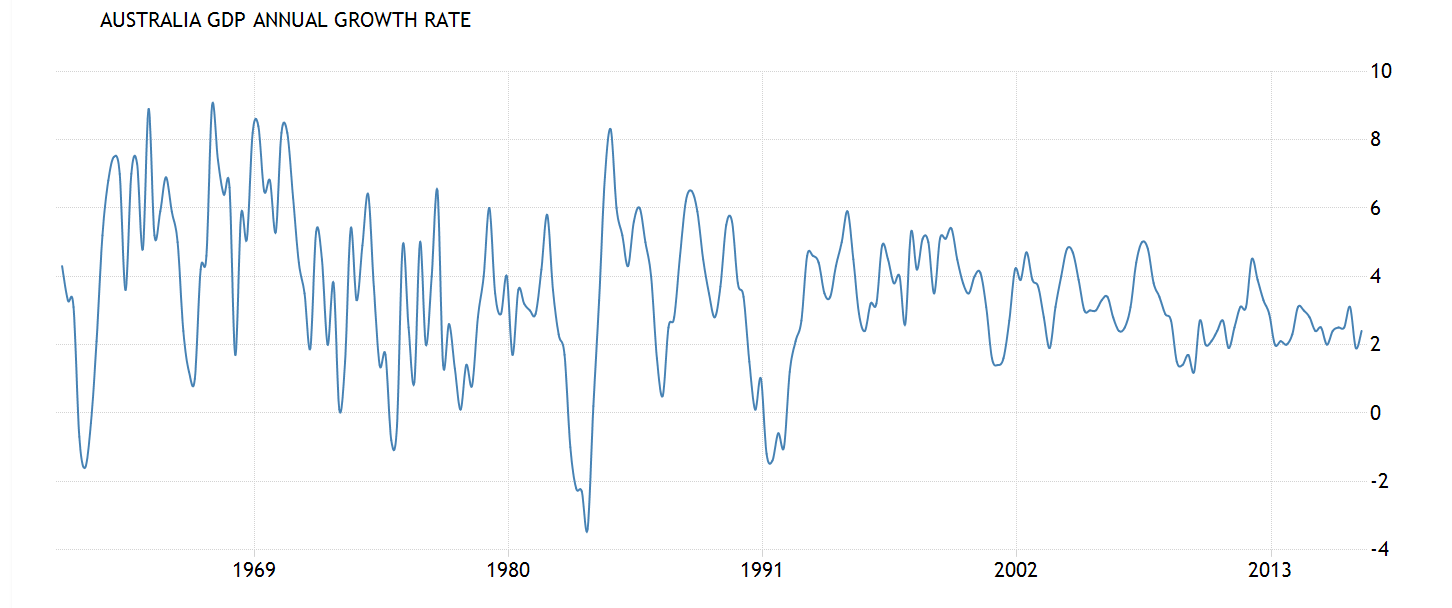
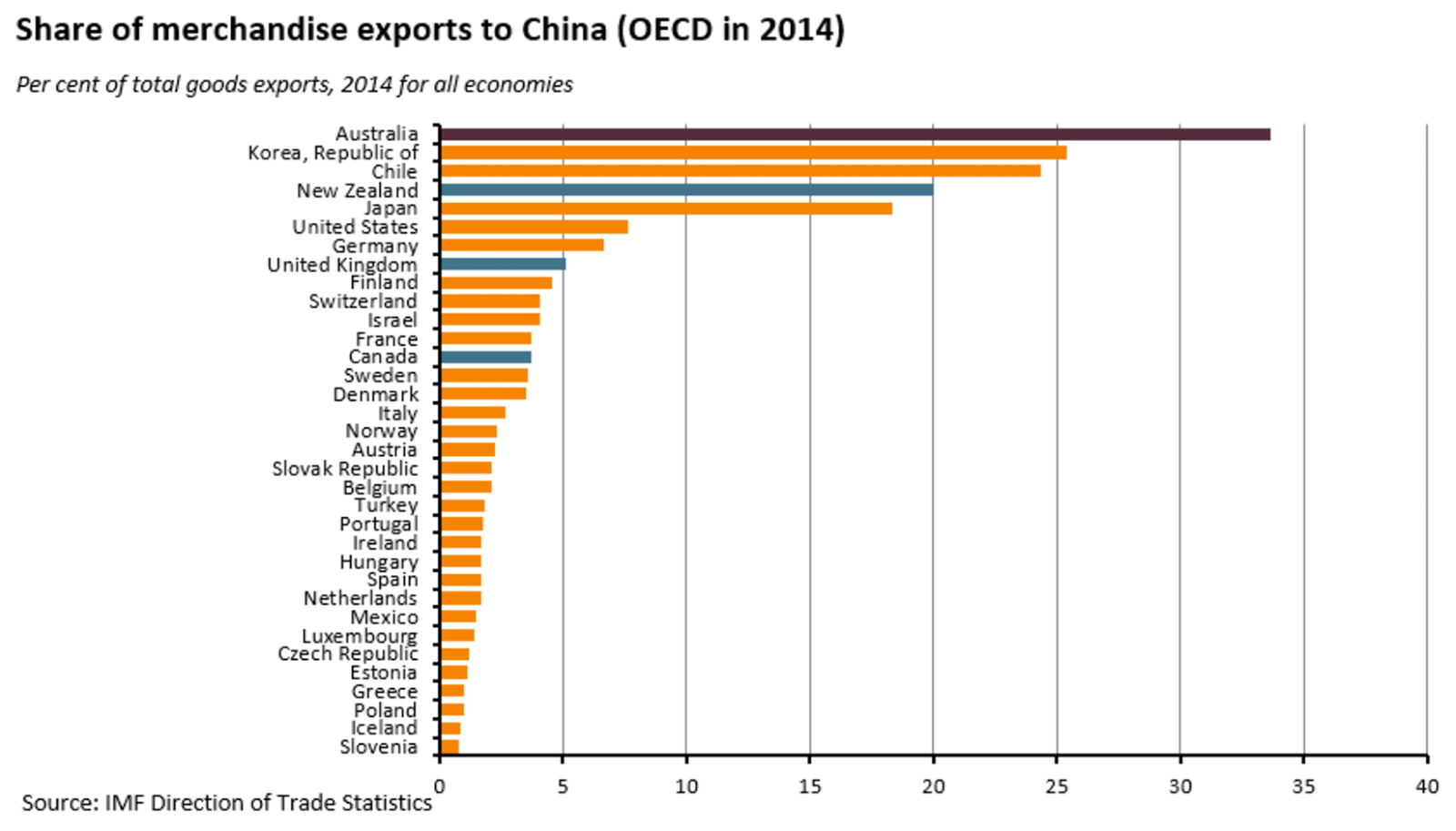
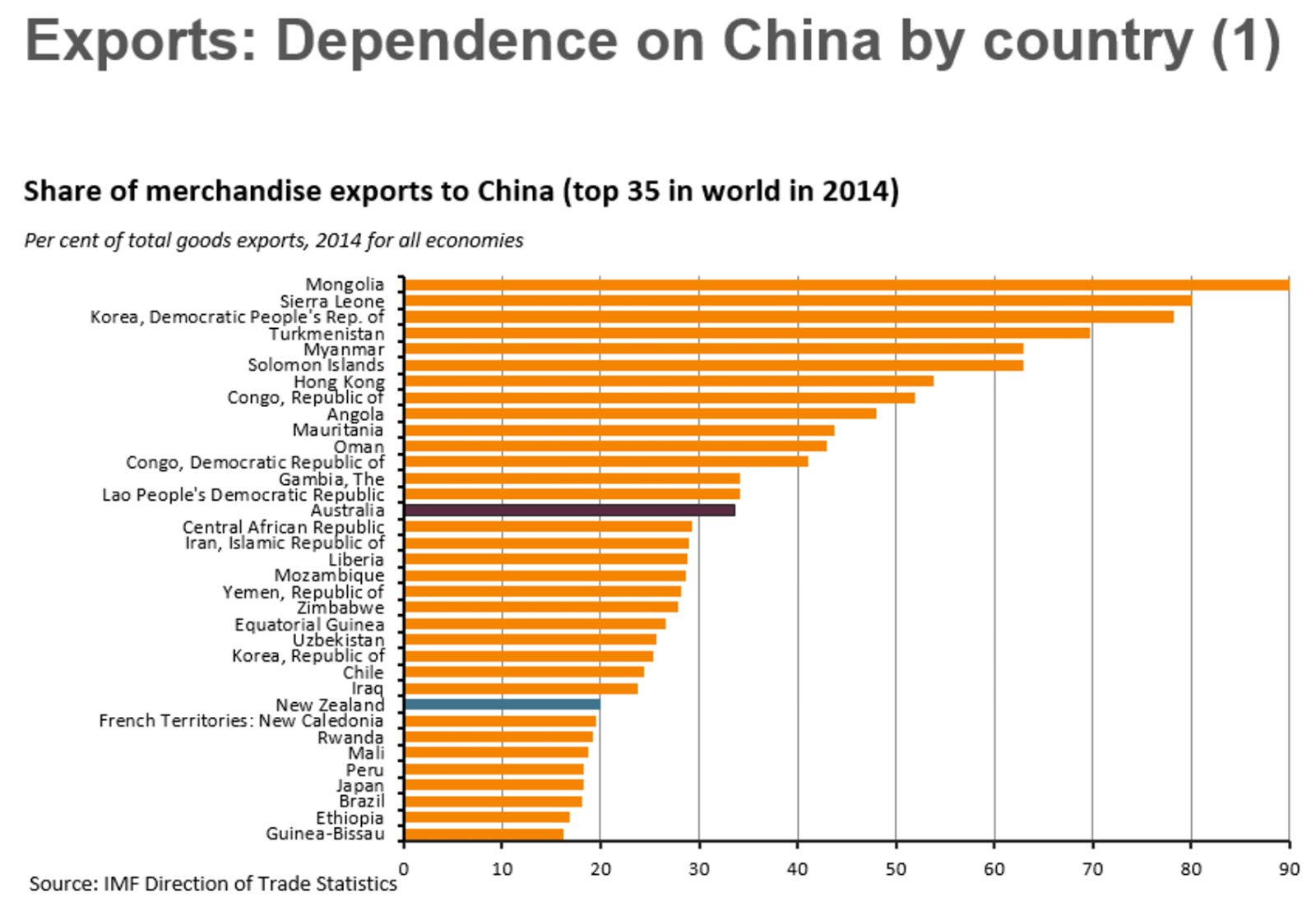
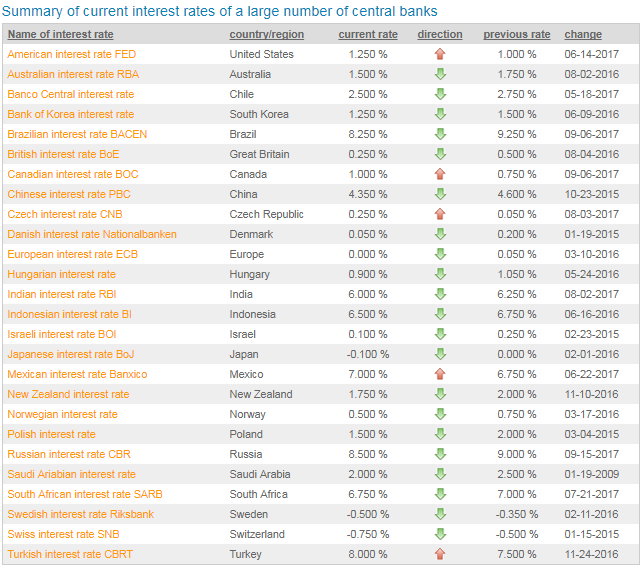
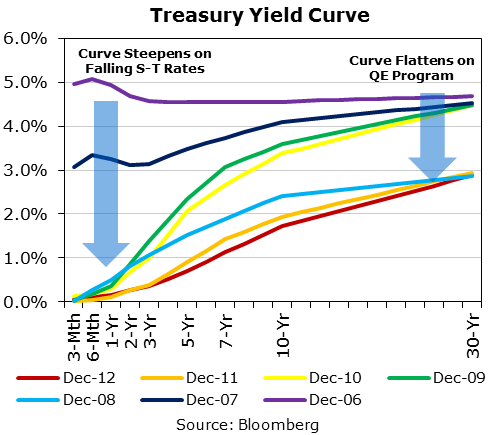
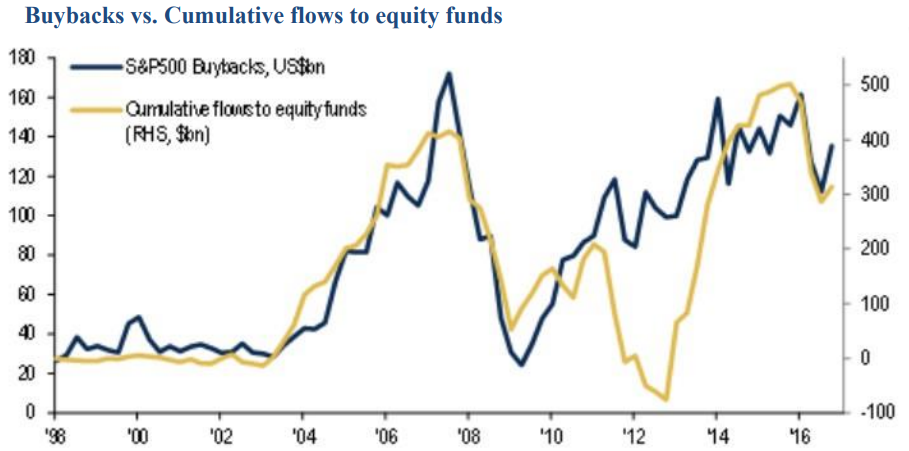
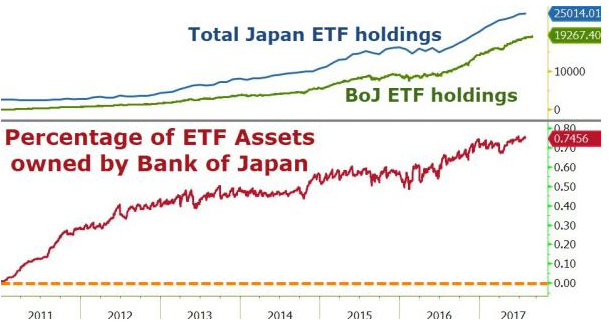
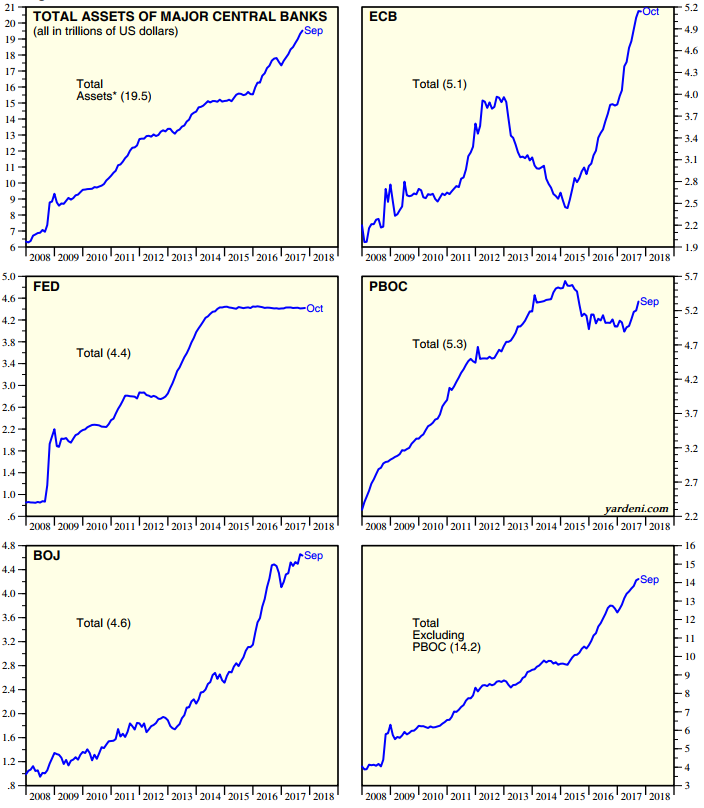

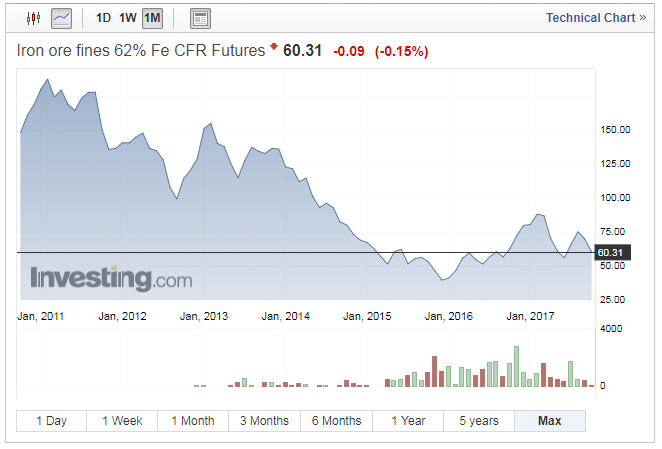
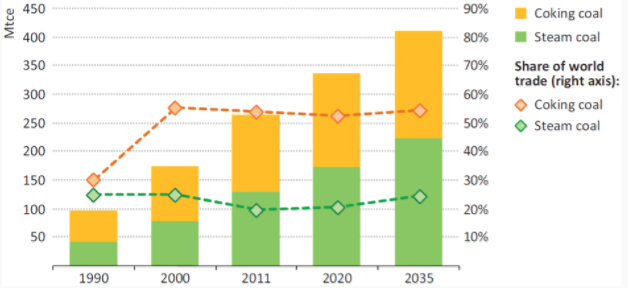
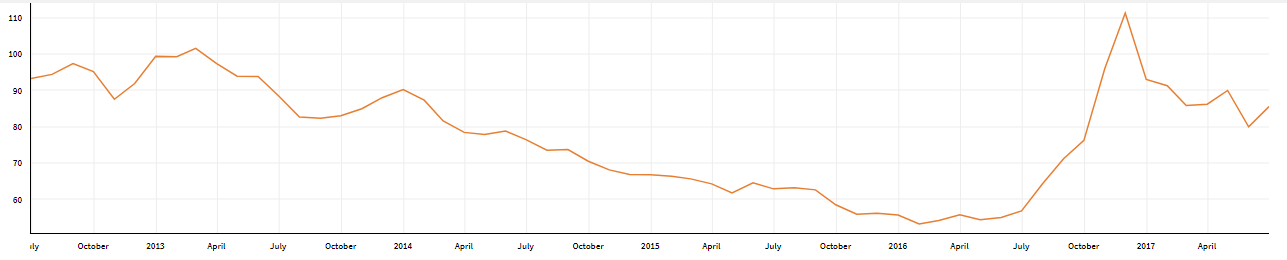

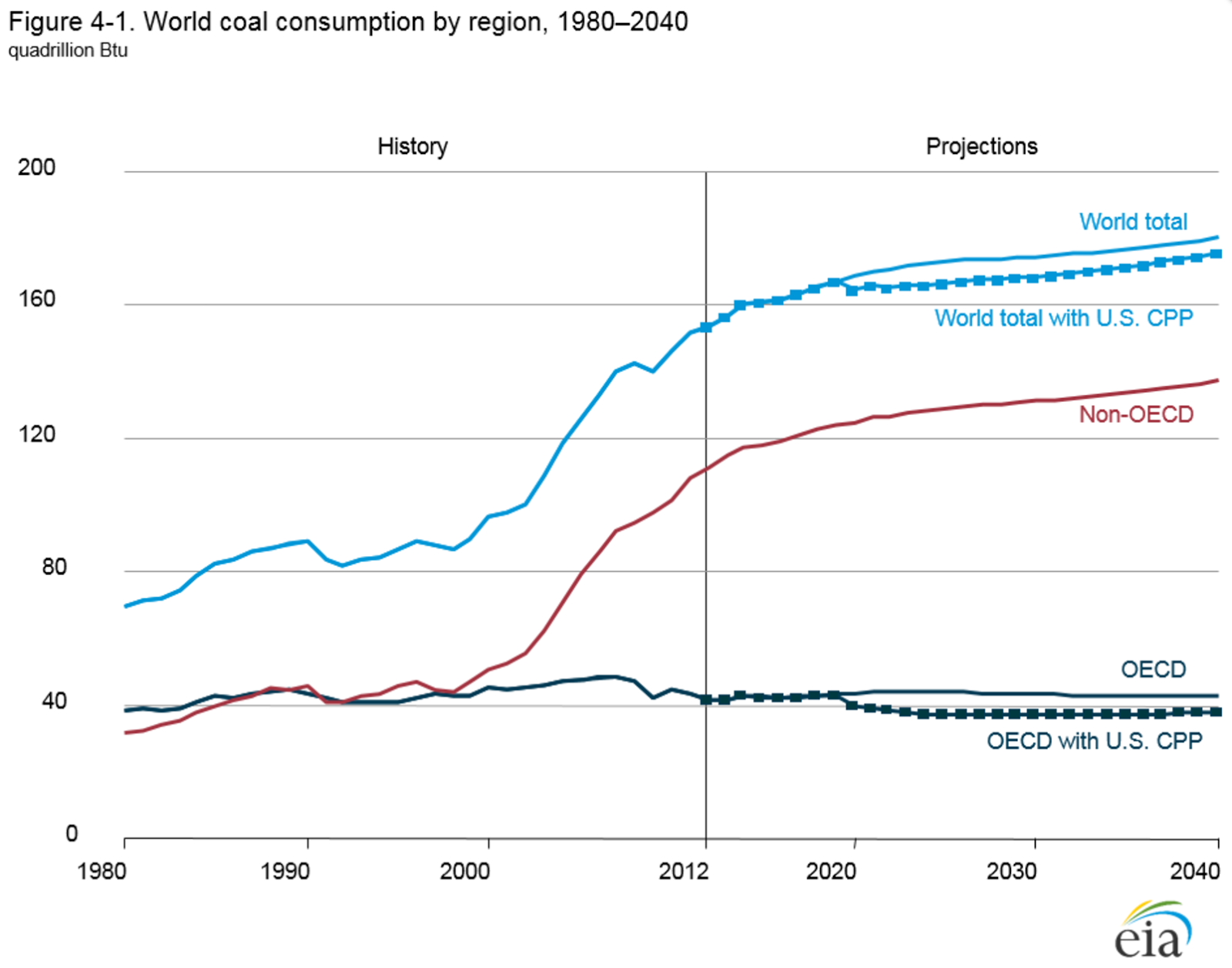
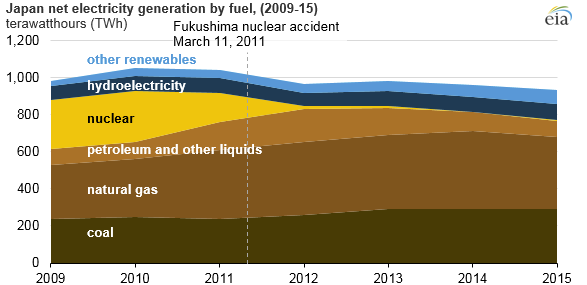

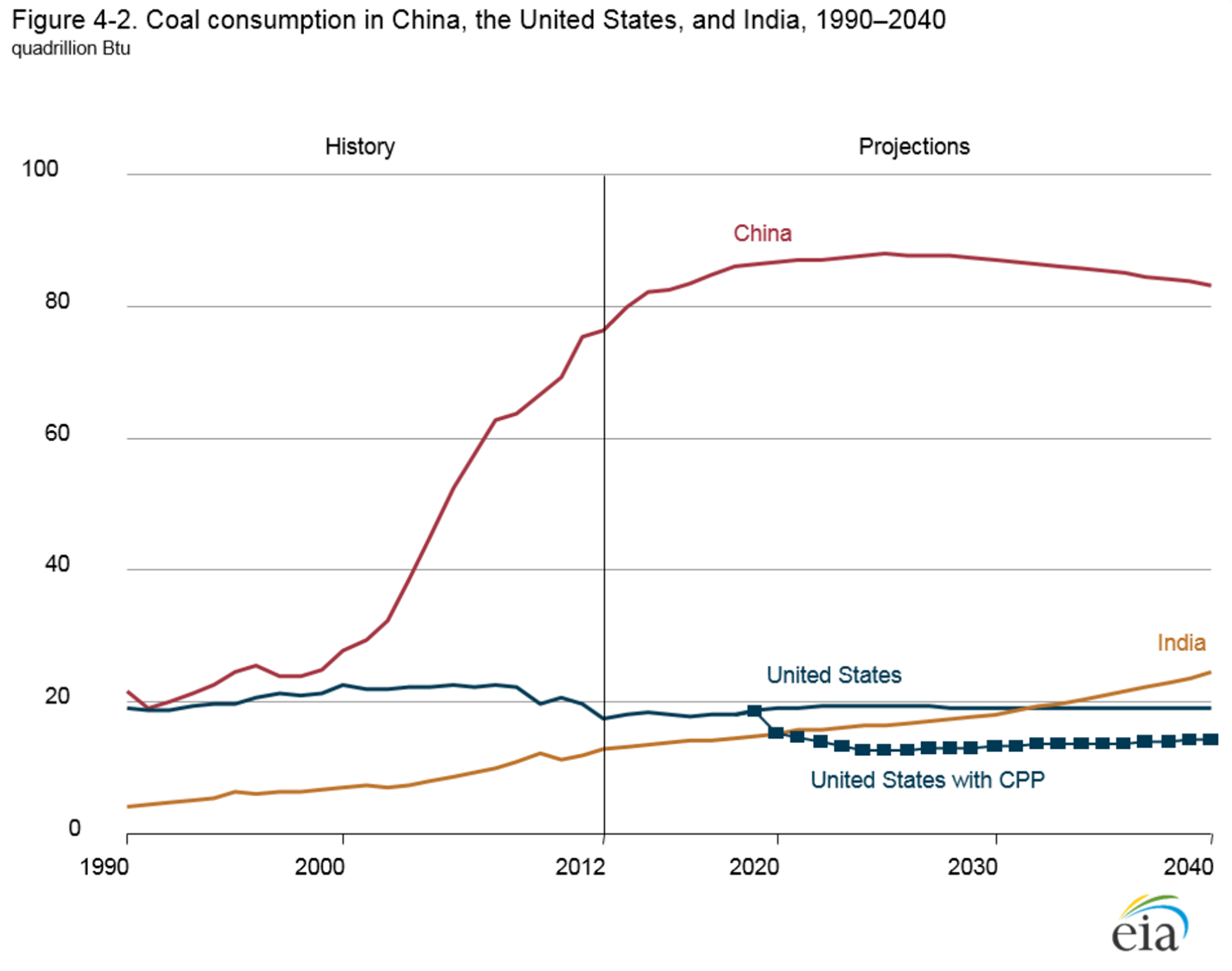


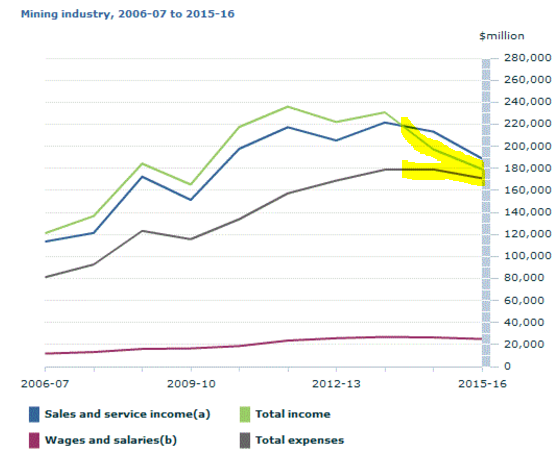
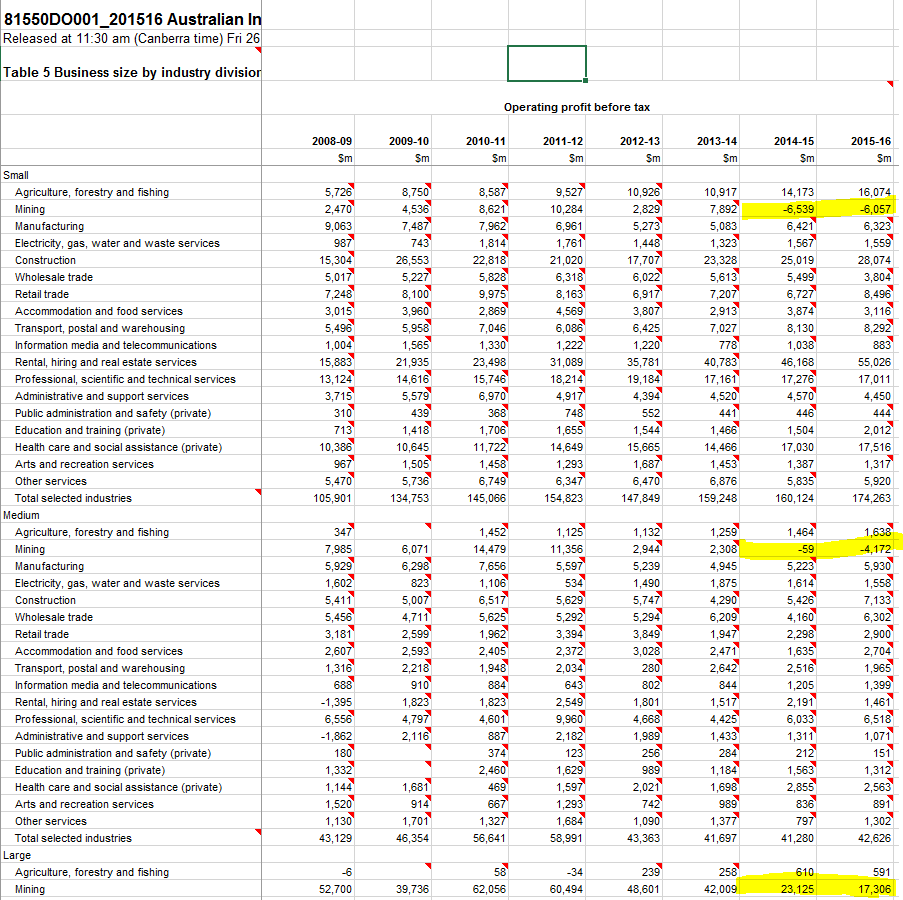
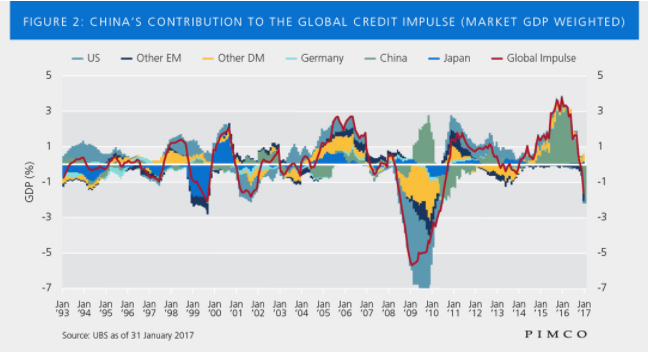
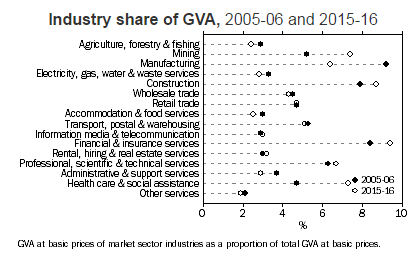
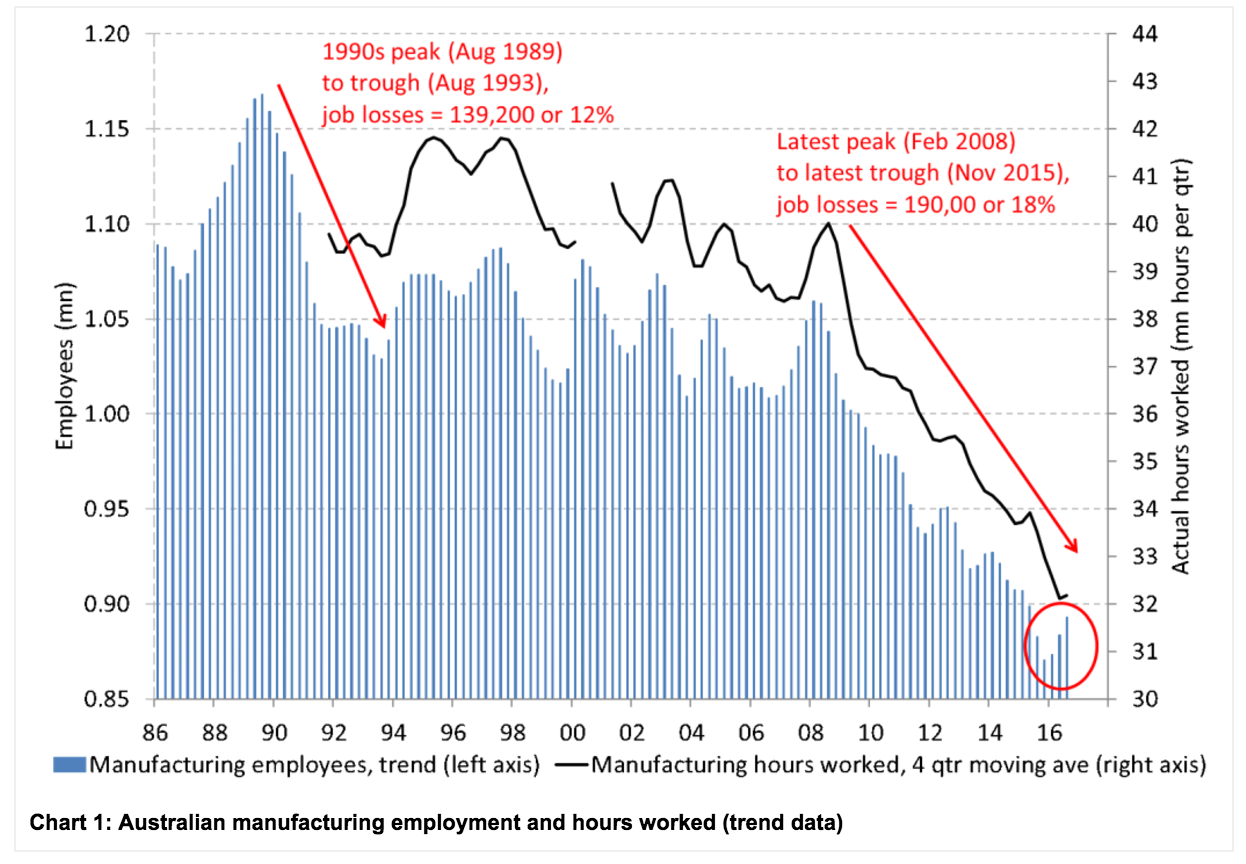
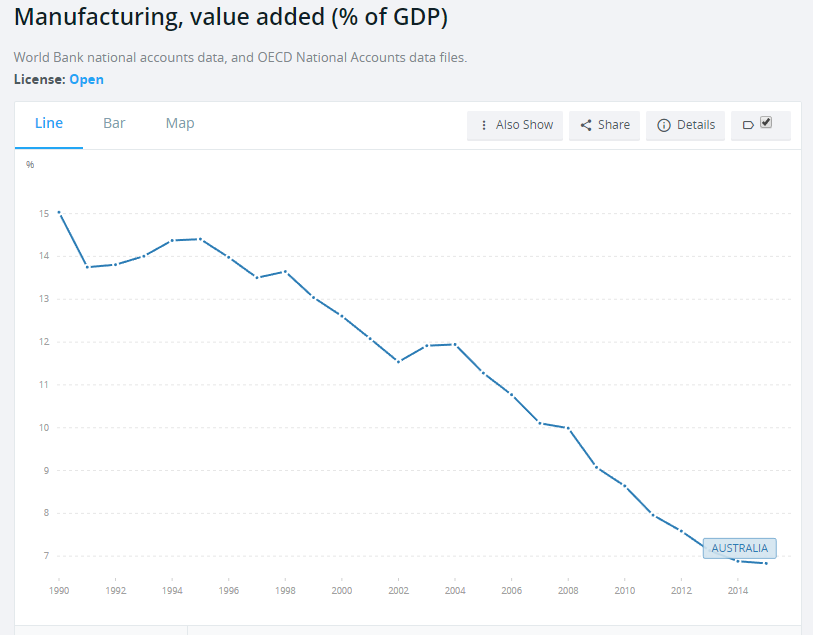
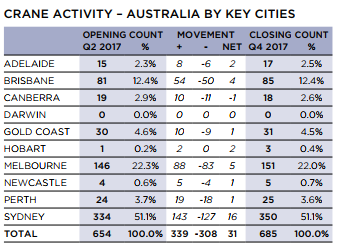
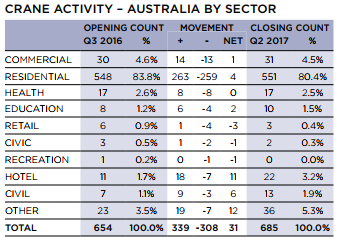
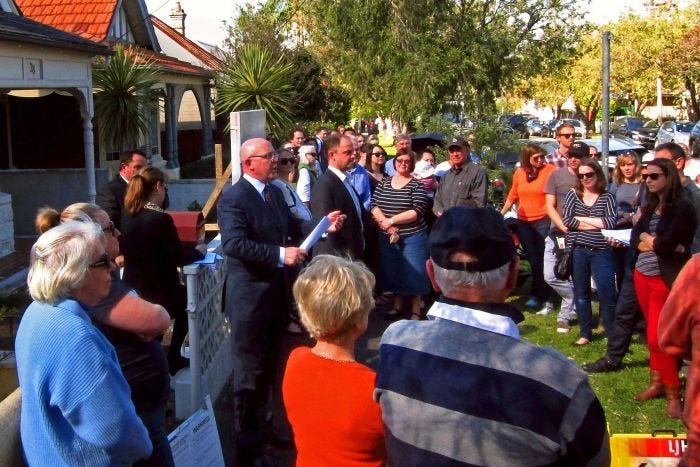


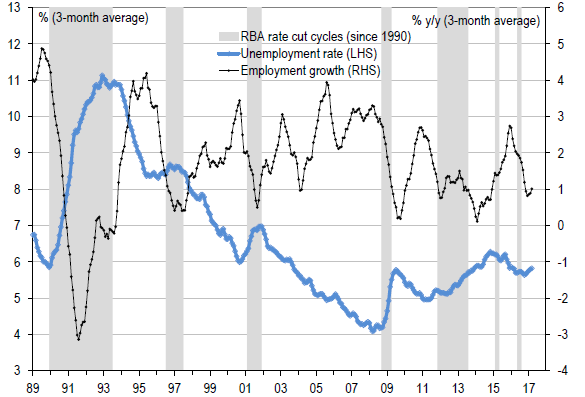

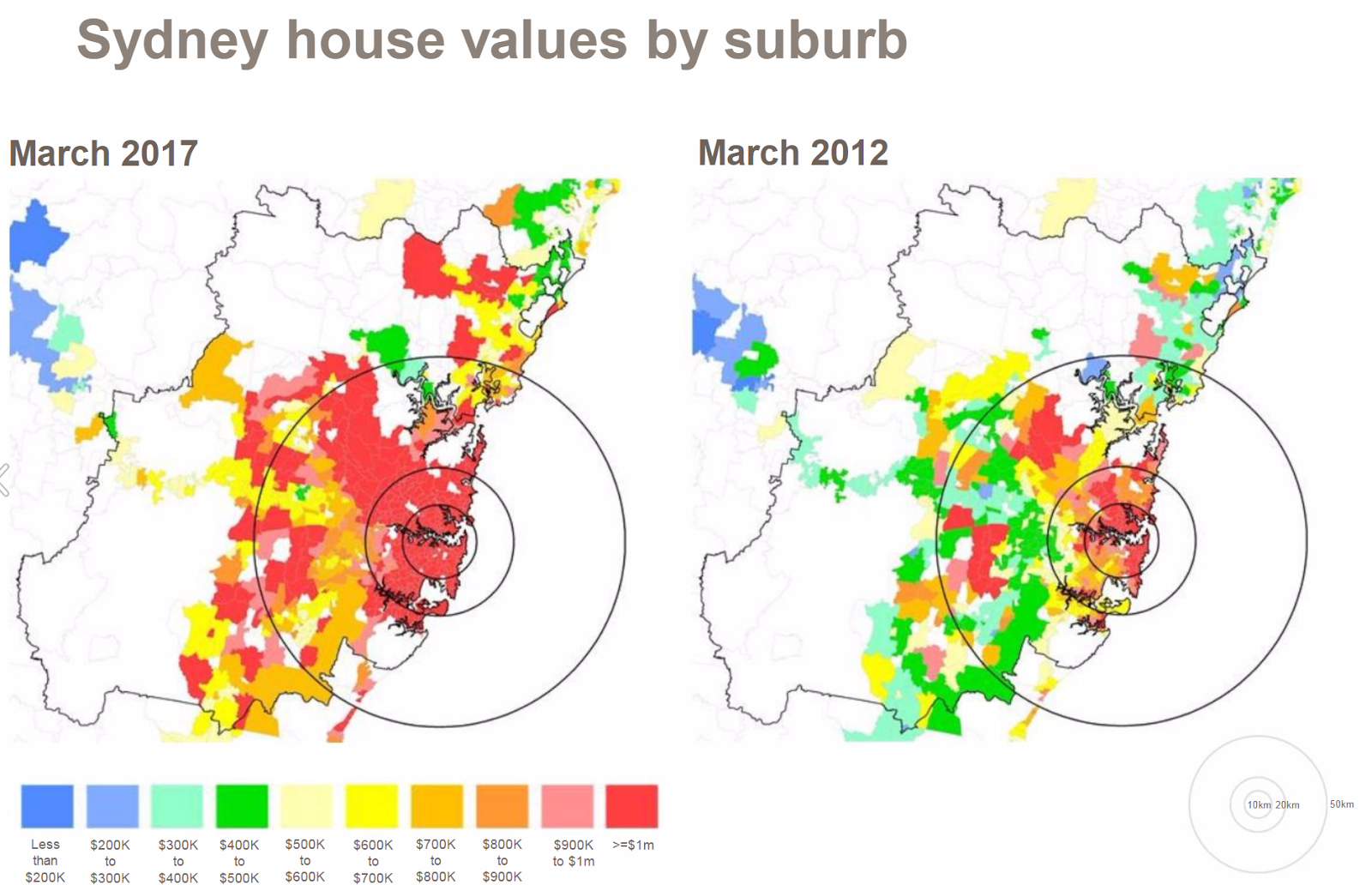
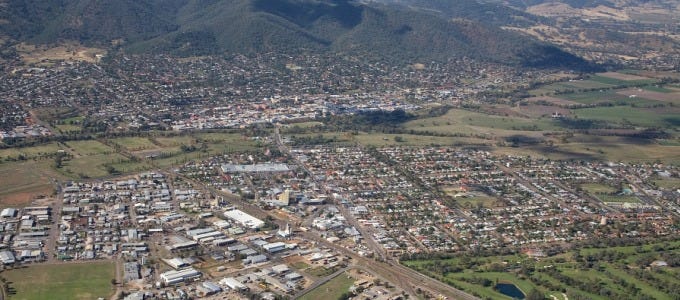
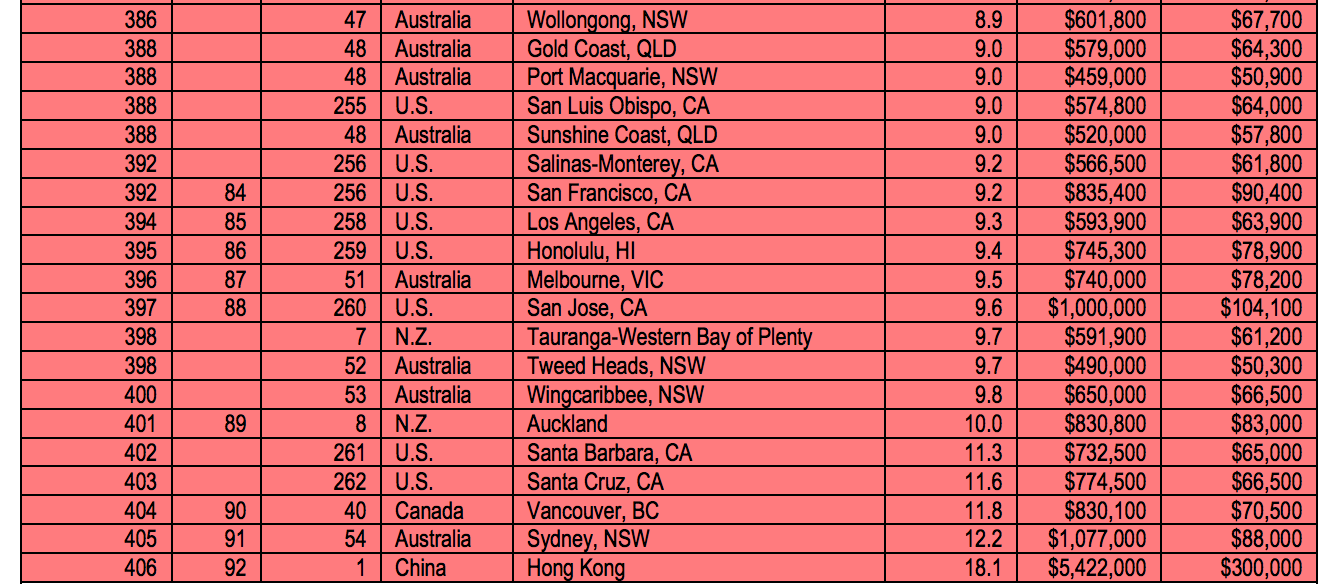
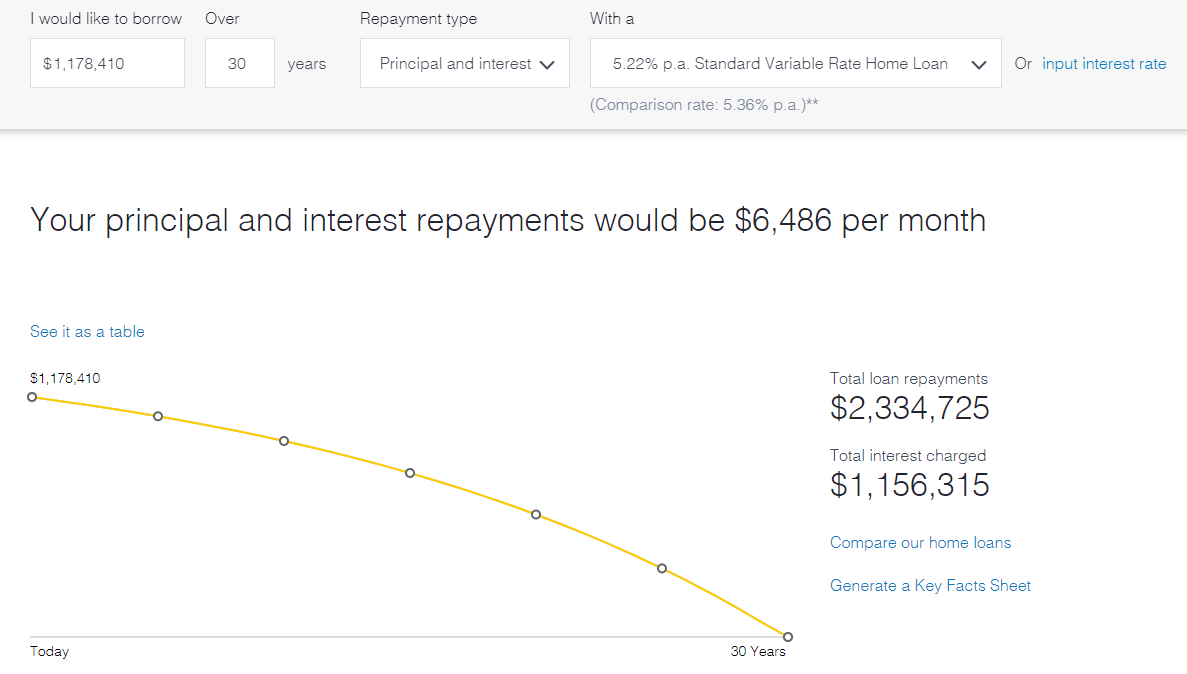
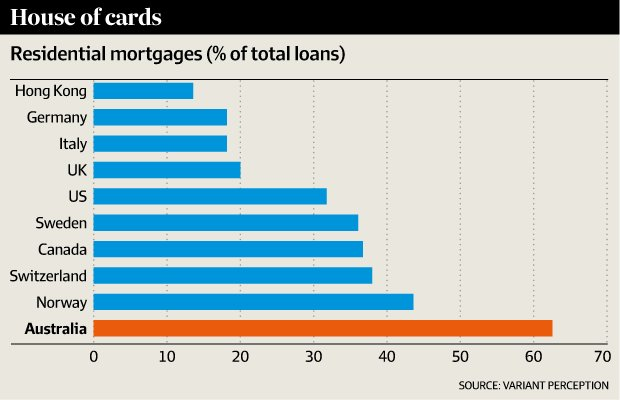


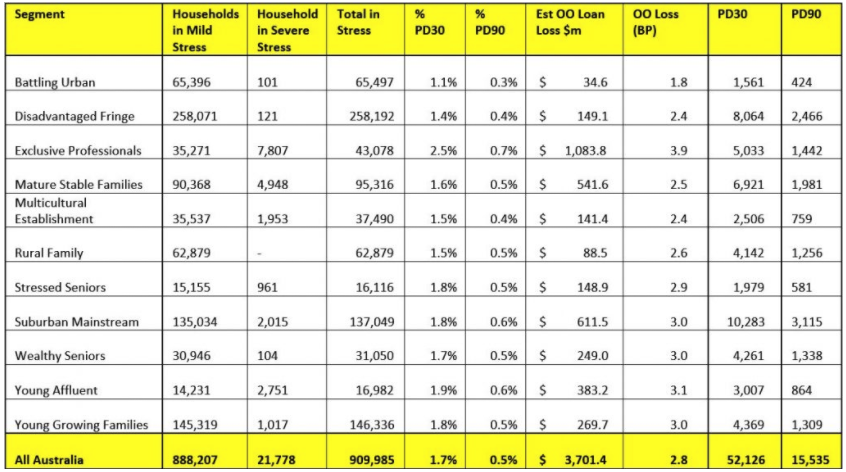

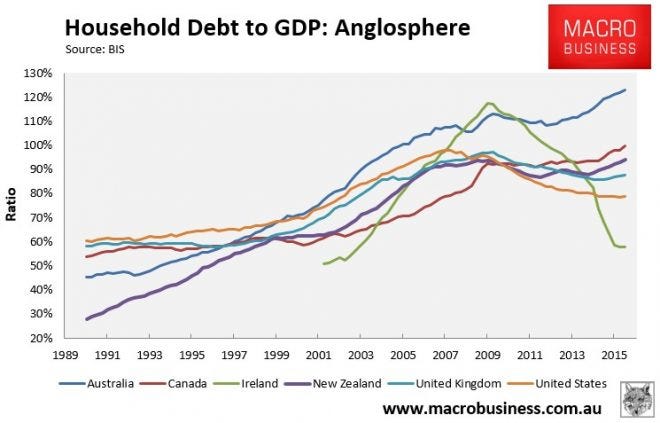
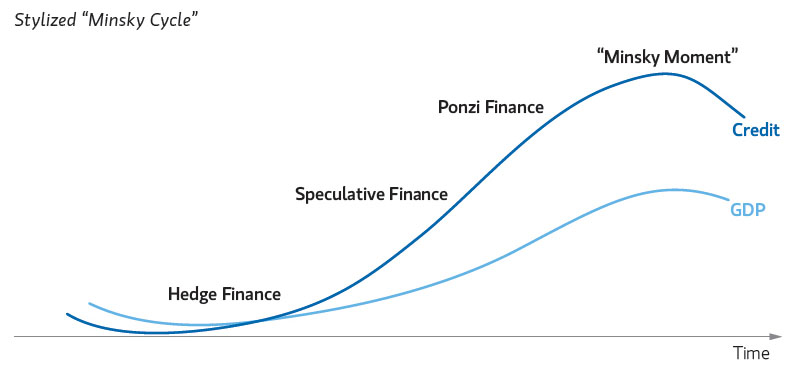
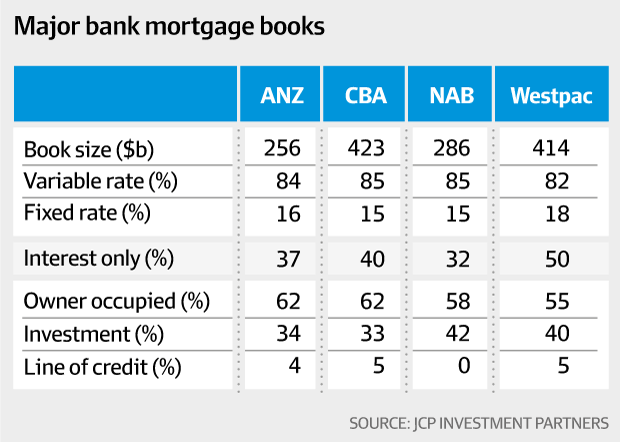
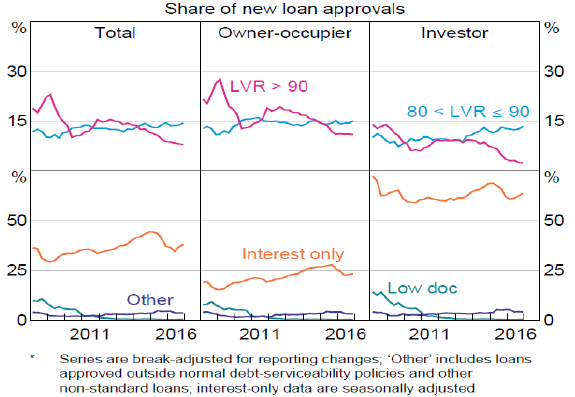

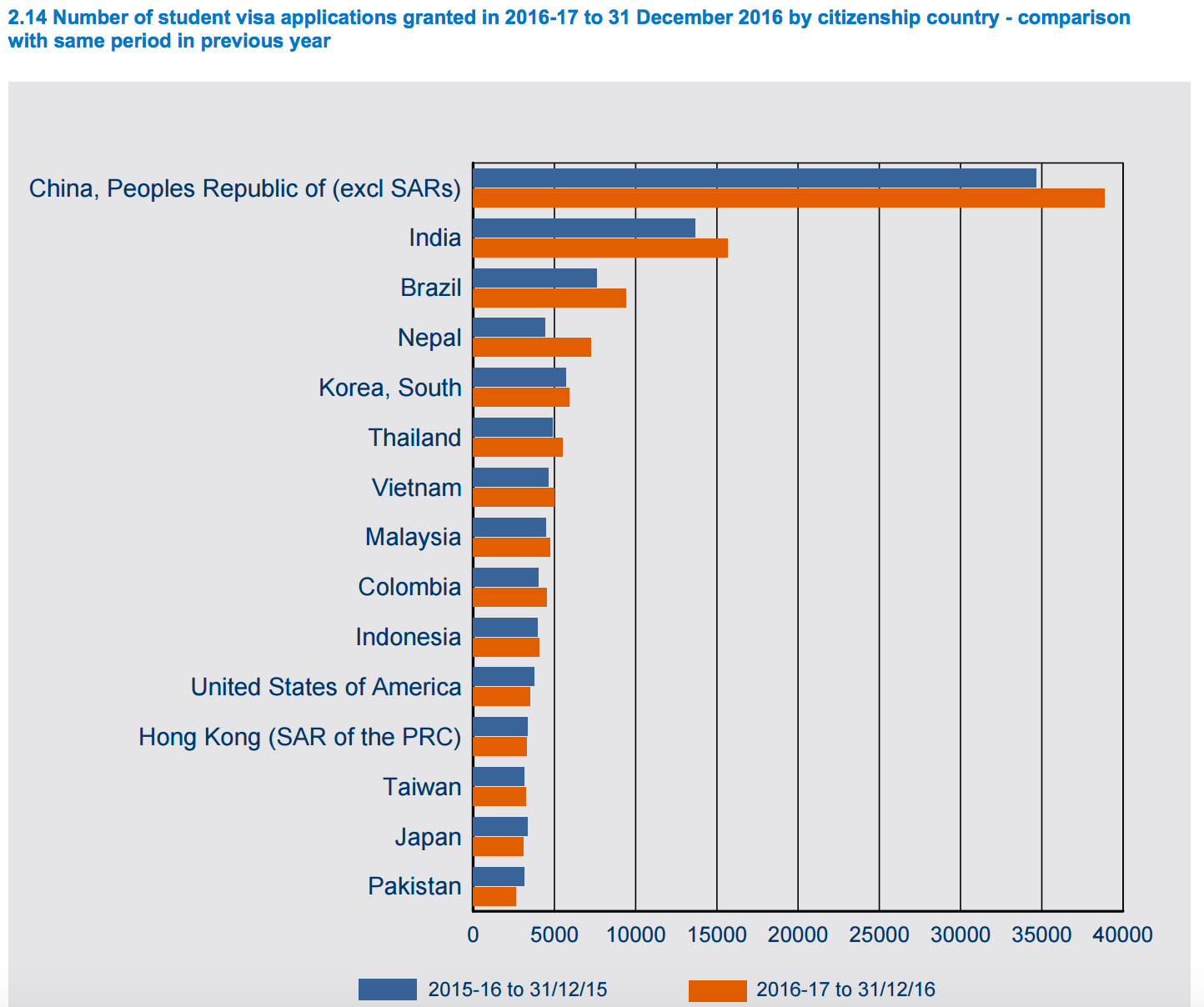
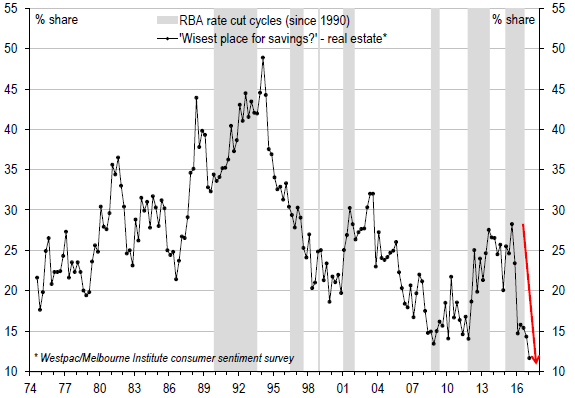
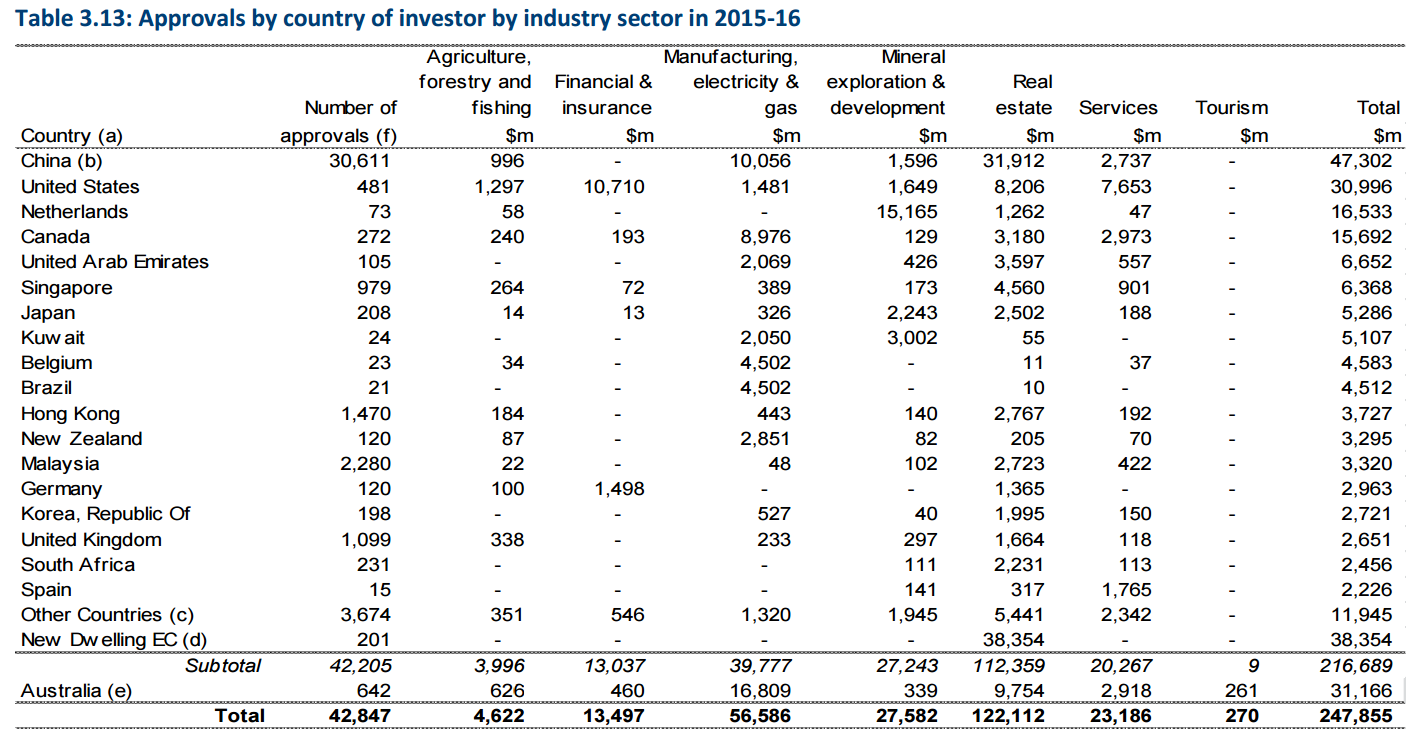
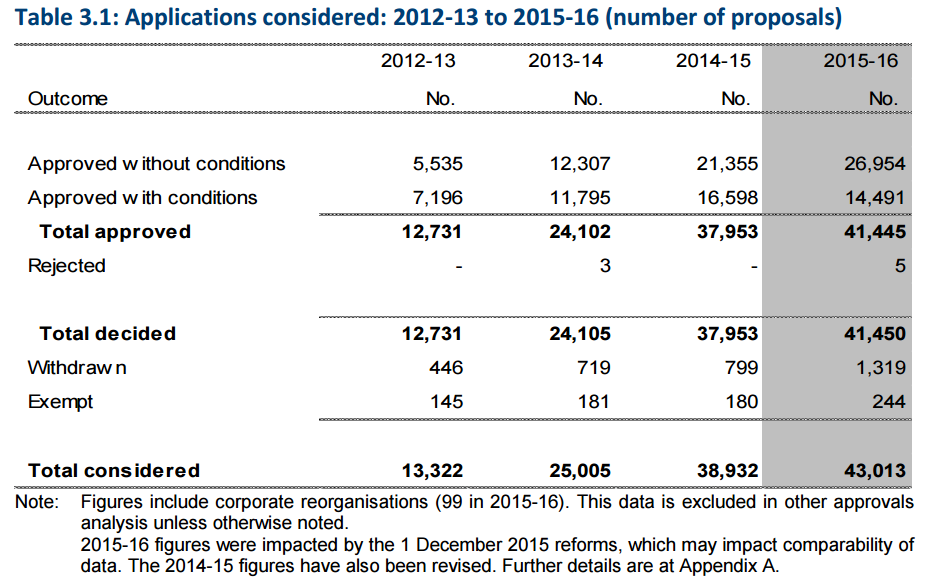
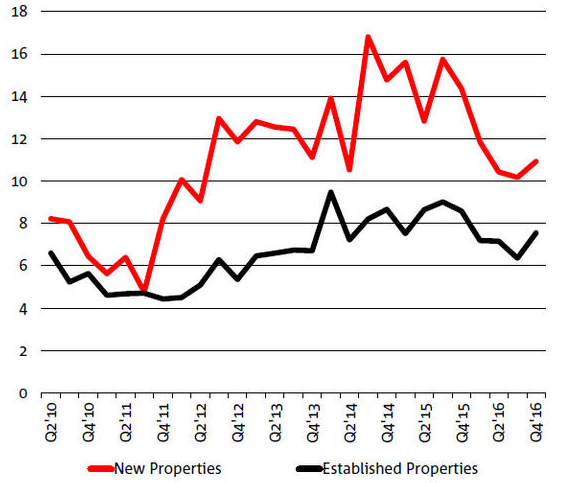
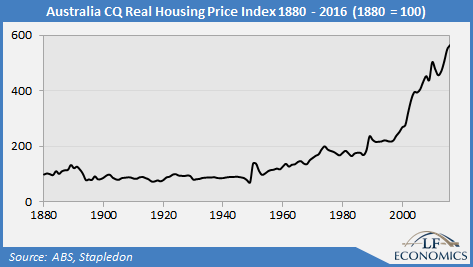

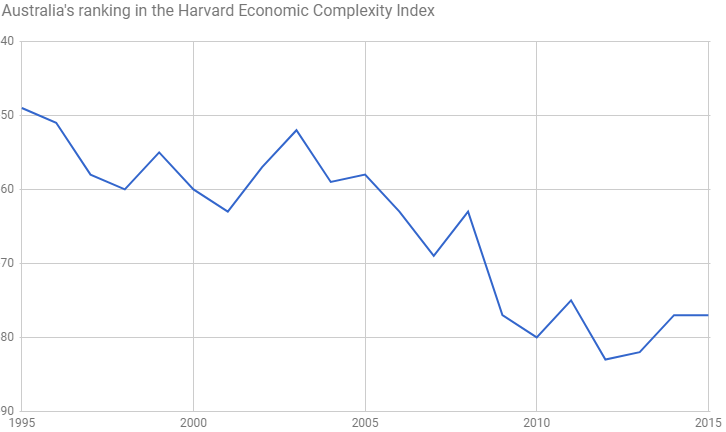







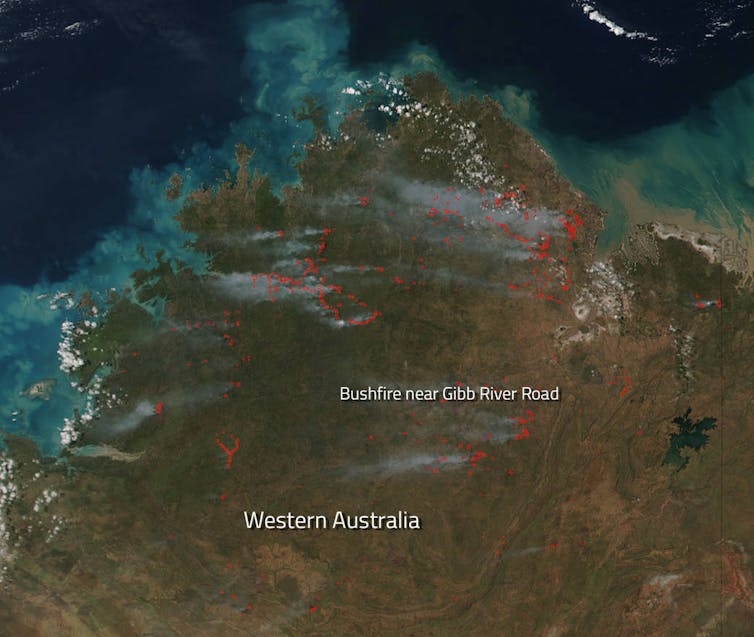
 Birmingham made an announcement on the biggest possible stage. The “how” will be as important as the “what” if we are to make good this time on high expectations.