Tag Archives: science

Parents and schools connect

Developed by MGM Wireless Limited in Adelaide, South Australia, School Star is a secure mobile phone app that keeps parents in the loop about attendance, functions and other school news.

MGM Wireless invented the world’s first SMS based automated communication solution for schools in 2002.

Almost 1300 schools from around Australia use MGM’s communications system and half of them will be active users of the new School Star app within the next six months.

MGM Wireless CEO Mark Fortunatow said the company plans to take the app internationally after its success in Australia.

“We are formulating plans and strategies and hope to move in to the United States and Canada by the end of the calendar year,” he says.

“We also have partners and people in Shenzhen and Singapore that we have been working with for some time and have a network in place there already.”

School Star has a Facebook-styled news feed that can be regularly updated and is the only school app that allows direct two-way messaging between parents and schools with an SMS failover.

“Parents need a feedback loop. School Star does that and a number of other things that no other school app does,” Fortunatow says.

“Communication through other school apps gets to about 40% of the intended recipients at best.

“School Star will automatically send messages and content by SMS instead if parents run out of mobile data or don’t have access to Wi-Fi – so schools will reach almost 100% of parents.

“It is also unique because it promises a secure environment where only approved users can access school information.”

Schools install MGM’s content management system and enter in relevant news and information for parents.

Parents and students then register themselves using a secure two-factor verification process and once complete will allow users access to school information.

Only registered users from the current school database can use the school specific School Star app. It also allows the schools to ‘lock out’ unwanted users.

MGM ensures that sensitive information like names, photographs, dates, and places are kept secure at all times.

“Schools are loving School Star – they can publish news and send messages with a smooth interface and easy integration path,” Fortunatow says.

“News articles are easy to create, and parents love keeping in touch with what’s going on at the school.”

“School Star includes an engagement dashboard with state-of-the-art analytics so schools know which content is working best.”

School Star is available to download for free in the App Store and Google Play in Australia and will be available in the United States and Canada later this year.

– Caleb Radford

This article was first published by The Lead South Australia on 27th April 2016. Read the original article here.

Brain-powered bionic spine

Featured image above: Strentrode. Credit: University of Melbourne

A few years ago, Australian neurology resident Dr Thomas Oxley set out to design a device that uses brain waves to power prosthetic limbs. Today, Oxley’s revolutionary invention is about to enter human trials, giving hope that millions of people paralysed by injury or stroke will soon be able to walk again.

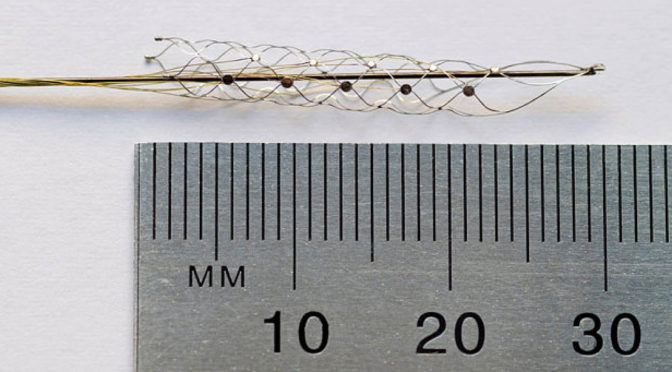
Oxley’s futuristic device – a tiny stent-electrode or ‘stentrode’ –  also promises to predict and halt epileptic seizures and assist people with a range of conditions, from motor neurone and Parkinson’s diseases to compulsive disorders and depression.

In a nutshell, the matchstick-sized gadget will be inserted, without invasive surgery, into a blood vessel next to the brain’s motor cortex. From there it will detect and translate neural activity, such as the intention to walk, and send commands wirelessly to exoskeleton legs.

Detect, translate, transmit and walk. That’s what scientists call brain-machine interface, and it begins with straightforward day surgery to thread the stent up the groin to the brain.

Trials with sheep, published in February 2016 in Nature Biotechnology, revealed that the animals were fine. They were walking and eating within an hour, and had no side effects.

If all goes according to plan following human trials in 2017, Oxley predicts the stentrode could be on the market by the early 2020s.

“We’ve been able to create the world’s first minimally invasive brain recording device that is implanted without high-risk open brain surgery,” says Oxley.

bionic spine

Strentrode diagram. Credit: University of Melbourne

The road to commercialisation

Oxley is in New York to do a two-year fellowship in cerebral angiography at Mount Sinai Hospital, a specialty which employs non-invasive procedures to visualise blood vessels in the brain. It’s a skill directly related to his work in vascular bionics, exploiting the body’s blood vessels and veins for technologically enhanced therapeutic ends.

Remarkably, Oxley co-invented the stentrode while he was a Melbourne University doctoral student, along with MU collaborator Dr Nicholas Opie, a biomechanical engineer.

In 2012 the pair co-founded a startup company called SmartStent Pty Ltd  to refine and prepare the stentrode for market.

Their goal: commercialise what promises to be one of the world’s most important medical inventions.

After building hundreds of stentrode prototypes, the next step is testing the technology with people. “We’re trying to raise A$4 million for the first human trials at Royal Melbourne Hospital,” Oxley notes. “We’re hoping to begin in late 2017.”

Given the life-changing and commercial potential of the stentrode, it’s little wonder that SmartStent moved to Silicon Valley in April 2016. There, Oxley, Opie and cardiologist Rahul Sharma, with Cedars-Sinai Health System in Los Angeles, established Synchron Inc. as their new corporate headquarters. SmartStent remains the Australian subsidiary.

Clearly, Oxley is a man on the move. Given his family tree, it was inevitable. While he was born in Melbourne, until age nine Oxley lived in Geneva, Switzerland, where his father Alan, a former diplomat, was Australia’s Ambassador for Trade. Then it was on to New York when his dad became Australian Ambassador to the General Agreement in Tariffs and Trade (GATT), the predecessor of the World Trade Organization.

The Oxley family is littered with creative people. Oxley has two older sisters. Harriet is a theatre set and costume designer, and Anna is in banking. His mother Sandra completed a Masters in computing science at Columbia University while Alan was at the GATT.

So where did Oxley’s interest in the brain come from? In his early teens Oxley had developed “a bit of an obsession with the brain and consciousness”.

“Dad was intellectually challenging. I figured it would be a smarter move to become interested in areas he didn’t understand,” Oxley replies.

Solving the mysteries of the brain

Medicine seemed a good choice for a kid keen to reverse engineer the brain to solve the mysteries of human consciousness. So Oxley went off to Monash Medical School in Melbourne, finishing in 2006. He completed his residency in internal medicine at Melbourne’s The Alfred Hospital in 2009.

“Then I took a year off to go travelling,” recalls Oxley, who didn’t begin his neurology residency until 2011. “I was travelling and intellectually exploring.”

The Defense Advanced Research Projects Agency (DARPA) was on his ‘to visit’ list. DARPA is an arm of the US Department of Defense. Located in Arlington, Virginia, the agency is responsible for developing emerging military technologies, including biotechnology.

“I’d been reading about their prosthetic limb work for a couple of years,” says Oxley, who got in touch with neurologist Colonel Geoffrey Ling, director of DARPA’s Biotechnologies Office.

After an initial chat, Ling was sufficiently impressed to invite his visitor to develop what Oxley claims became a “pretty blue sky, out there” proposal.

The result? Oxley left Virginia with a promise of US$1.3 million and instructions to put a team together to create and test his device.

“After all that excitement, I came home and had to start my neurology residency. It was a steep learning curve,” says Oxley, who had to tread carefully as a junior resident with potentially large research funding coming in.

Fortunately, Oxley’s PhD supervisor and mentor, Professor Terry O’Brien, was Oxley’s academic champion. He helped negotiate the occasionally challenging politics and opened doors to the range of experts Oxley needed to set up the DARPA-inspired Vascular Bionics Laboratory  at Melbourne University. The two men even leveraged DARPA’s investment into over A$4 million, with grants from Australia’s National Health and Medical Research Council and other Australian bodies.

Oxley completed his residency in 2013, and submitted his doctorate in February 2016. But the rest isn’t history. There’s a stentrode to trial and commercialise. An invention which O’Brien calls the ‘Holy Grail’ of bionics.

– Leigh Dayton

This article was first published by Australian Unlimited on 02 May 2016. Read the original article here.

Australia’s first nanoscience facility launched

Leading scientific figures, pioneers and representatives from key organisations internationally are visiting Sydney for today’s launch of the Australian Institute for Nanoscale Science and Technology (AINST) – and the official opening of its headquarters – the most advanced facility for nanoscience in the region – where design, fabrication and testing of devices can occur under one roof.

Officially opening the new $150 million Sydney Nanoscience Hub will be Australian Academy of Science’s President Andrew Holmes AM. Senior executives from Microsoft in the USA are also visiting to tour the building, and scientists speaking at the launch include one of Israel’s top physicists, Moti Segev – whose centre at the Technion is collaborating on a project with the University of Sydney and the NSW Government.

Nanoscience is expected to be more impactful this century than the industrial revolution in the 19th century. But “the buildings in which we work, rather than our imaginations, are what’s been limiting the science,” says Associate Professor Michael Biercuk, formerly a consultant to the US government organisation the Defense Advanced Research Projects Agency (DARPA) and now the research leader of a quantum flagship in AINST.

More than six years in the making, the award-winning Sydney Nanoscience Hub was co-funded with $40 million from the federal government, includes teaching spaces alongside publicly available core research facilities that will support  fundamental research as well as the work of startups and established industry.

AINST hosts some of the capabilities of the Australian National Fabrication Facility and of the Australian Microscopy and Microanalysis Research Facility – both co-funded by the National Collaborative Research Infrastructure Strategy (NCRIS). Researchers at the Institute contribute to two Australian Council Centres of Excellence:  the Centre for Ultrahigh bandwidth Devices for Optical Systems (CUDOS); and the Centre for Engineered Quantum Systems (EQuS).

Professor Benjamin Eggleton, the Director of CUDOS who also heads the photonics flagship at AINST, says photonics (the study of photons – the building blocks of light) was already delivering real-world solutions: “Photonics is the backbone of the internet and underpins a $7 trillion industry,” Eggleton says.

“Our team has led the world in photonic-based chip processing and we are now working on building a photonic chip – or a lab on a chip – that may one day be compatible with mobile phones, enabling them to sense environmental pollution or be used for testing blood samples to diagnose health issues.”

Vice-Chancellor Dr Michael Spence says the University-wide AINST reached across traditional disciplinary boundaries.

“The Australian Institute for Nanoscale Science and Technology continues the University of Sydney’s tradition in addressing multidisciplinary issues in a unique way to ensure that we are ready to solve the great challenges of science, engineering and beyond,” he says.

AINST Director, Professor Thomas Maschmeyer, will also head one of five initiating flagships – in energy and environment – and this month announced an investment valued at $11 million from the United Kingdom into a university nano spin-off.

“There is little doubt that society must progressively transition to non-fossil-based energy,” Maschmeyer says.

Professor David Reilly, research leader of the AINST’s quantum measurement and control flagship, says breakthroughs at the nanoscale hold the key to major advances in areas such as artificial intelligence and security.

“The challenge for us over the next few years is to take the physics results that we have probing the basic phenomena of quantum mechanics and see those results turn into technologies.”

Director of the Sydney Nanoscience Hub building Professor Simon Ringer says new science would be enabled through this purpose-built facility for nanoscience – the first in Australia.

“This is the best building of its kind in our region. It will allow us to operate research instruments that enable us to ask questions at the frontiers of science.”

AINST Director of Community and Research, Professor Zdenka Kuncic says the ‘rules of the game’ in nanoscience were still being worked out.

“Perhaps the most exciting aspect of nanoscience is the potential for new discoveries, including in health and medicine,” she says.

“We have only scratched the surface of the new knowledge that remains to be revealed.”

This article was first published by The University of Sydney on 20 April 2016. Read the original article here.

Innovation in life sciences

The community of Australian life science innovators are clever, focused and driven. Yet many fail to achieve their commercial goals. Sometimes this because of the science – which is not yet sufficiently developed for the commercial path.

Sometimes it is inexperienced management or governance. But usually, the key barrier is access to capital. Australia has talent and good ideas aplenty, but our small economy and lack of risk capital produces challenges not seen in bigger economies, like the USA. “Yes,” I hear you saying.

What about other smaller nations? It is true that some Scandinavian countries and Israel perform very well. But when the culture, government structures, location and many other factors are taken into account, the comparisons with Australia – although very useful– are not equivalent.

In order to optimise our performance and deliver both social and economic benefits, the current conversation at the Federal level is well directed. We need an approach that is system-oriented; that considers the international exemplars and how they can be applied in the Australian context, and pays attention to capital access.


“The strength of biotechnology for our economic future is clear, but to realise its vast potential will take radically new thinking and an entrepreneurial attitude.”


When the Biomedical Translation Fund (BTF) was announced as part of the Turnbull Government’s National Innovation and Sciences Agenda (NISA) in December 2015, it was welcomed by AusBiotech as a game-changing package that will transform Australia’s ability to commercialise.

The biotechnology and medical technology sectors are particularly excited by the ability of the program’s investment to be a multiplier and make available much-needed capital to translate our research from universities and medical research institutes into products and services – including medical therapies and cures, medical devices, digital heath solutions, diagnostics and vaccines.

Fund manager, GBS Ventures, which specialises in the life sciences has invested $400 million in 30 companies in recent years and reports it has attracted $5 in private money for every $1 of public money invested.

So far as this can be extrapolated to the new fund, the BTF could be the catalyst for over $2.5 billion to flow into the sector.

The BTF is envisaged as a for-profit investment program of $250 million that is to be matched by an additional $250 million from private investors, so creating a $500 million capital pool available for commercialisation of biotech and medtech projects.

Funding would be engaged, inter alia, before and during clinical trials and product registration stages. The investments by the BTF and its private co-investors are likely to fall in the range of $5 million to $20 million per project.

This is great news for a cash-starved sector.

The strength of biotechnology for our economic future is clear, but to realise its vast potential will take radically new thinking and an entrepreneurial attitude. How we make and fund these new technologies by attracting capital is key.

AusBiotech is pleased to see the Government has been listening to calls for a focus on translation.

Australian life science companies attracted almost $2 billion in deals over the last 18 months, which illustrates that the sector is attractive to investors and demonstrates a good pool of quality technology, talent and opportunity that the BTF will now exploit. Finance from the BTF, along with the R&D Tax Incentive scheme is a powerful, one-two punch that will make a material difference to success in life sciences.

Dr Anna Lavelle

Chief Executive Officer, AusBiotech

Read next: Professor Peter Coaldrake AO, Vice-Chancellor of QUT on Overcoming academic barriers to innovation.

Spread the word: Help to grow Australia’s innovation knowhow! Share this piece using the social media buttons below.

Be part of the conversation: Share your ideas on innovating Australia in the comments section below. We’d love to hear from you!

Women in STEM: Mathilde Desselle

Featured image above by Nathan Barden

Desselle is a programme coordinator for outreach for the Community for Open Antimicrobial Drug Discovery (CO-ADD) at The University of Queensland’s Institute for Molecular Bioscience. She is looking for the next antibiotic in engaging academic chemists worldwide in an open-access compound screening program and setting up international partnerships. Desselle has eight years’ experience driving engagement strategies for medical research programs and facilities. She is passionate about finding innovative approaches to drive transformational change and solutions to diagnose, track and treat infectious diseases.

Desselle is a board director for the Queensland-based Women in Technology peak industry body for women in science and technology careers, and for the Tech Girls Movement foundation, promoting positive role models to encourage and raise awareness of STEM careers for girls.

Desselle completed a double Masters degree in bioengineering and business from the Catholic University of Lille and a Masters of International Economics from the University of the Littoral Opal Coast in France in 2008.

What do you think is the most important character trait in a successful scientist?

“I would say having a drive. It takes passion, tenacity, and a vision to lead successful research initiatives, and I believe having an articulate “why” is essential to feed them. Don’t we always go back to what drives us when celebrating successful outcomes and overcoming rejection and failures?”

What is one thing you would change to improve the gender balance in senior ranks of scientists?

“Ending the ‘manel’. I would ask the 32 Australian universities and research institutes who are part of the SAGE pilot, an initiative of the Australian Academy of Science and the Academy of Technological Sciences and Engineering that addresses gender equity in the science, technology, engineering, maths and medicine (STEMM) sectors, to make the following pledge: striving to achieve gender balance in all conferences and panel discussions they are hosting and organising.”

What support structures did/do you have in place that have facilitated your success?

“I will forever be grateful to the mentors who have pushed me outside of my comfort zone. We also have world-class facilities in Australia enabling ground-breaking research and innovative collaborative projects. I am looking for the next antibiotic to combat drug-resistant infections, and it takes advanced scientific, technological and administrative systems to function.”

If at times your confidence is a little shaky, where do you turn?

“I can count on a very supportive network of women and men around me, on their experiences and their expertise. There is always someone I can turn to for addressing concerns or uncertainties. I also practice mindfulness and Harvard Business School social psychologist Professor Amy Cuddy’s “power poses”. Watch her Ted Talk on body language and challenge your inner wonder woman!”

What is your ideal holiday – and do you work on your holiday?

“My ideal holiday is being out horse riding on trails or beaches all day in New Zealand or in the USA. After I get off the saddle, I still follow up on pressing matters, and never lose an occasion to meet or connect with someone I could follow up with for professional matters, so I guess I rarely completely switch off.”

Follow Mathilde Desselle on Twitter: @mathildesselle

This article was first published by Women in Science AUSTRALIA. Read the original article here.

Top 25 insights: venture capital

All research and development (R&D) spin-offs have significant risk attached to their commercialisation, but some cannot overcome the negative perception of that risk to attract the necessary capital.

Here, nine of the Top 25 Science meets Business R&D spin-off companies explain what it was about their product or business strategy that inspired confidence in their investors that theirs would be a viable business venture. 


ACRUX DDS PTY LTD

“An excellent intellectual property position is a key starting point. This is in addition to having a proven concept or great technology. A quality team to back up project execution is paramount. Understanding and being able to explain where your commercialised projects will fit into a market segment in terms of the need they will meet is also important.”

Michael Kotsanis_intext

– Michael Kotsanis, Chief Executive Officer


SMARTCAP TECHNOLOGIES PTY LTD

SmartCap Technologies is a spinoff from CRCMining. CRCMining carries out industry directed research, which ensured that the research into fatigue management technologies was a high priority for the mining industry at the project’s inception.

In SmartCap’s case, the industry support was sufficiently high that Anglo American, one of the world’s largest mining companies, in conjunction with CRCMining, co-funded the development of the prototype commercial SmartCap products.

This ‘incubation’ of the SmartCap technology by a significant end user was extremely important to advancing from research into prototype products. 

The prototype products performed sufficiently well for SmartCap to be selected by two other large mining companies for large supply contracts for fatigue monitoring technology.

So the support of significant end users, along with the commercial contracts the company had in place at that time, provided potential investors with the confidence to invest in SmartCap Technologies.”

– Kevin Greenwood, Chief Operating Officer


PHARMAXIS LTD

Pharmaxis has been restructured following a regulatory setback for our lead product. Rebuilding investor confidence has been critical to our longer term success. To do this we focused on three things:

1. transparency – explaining the business model and being clear about the risks as well as the opportunity;

2. building in meaningful milestones which marked development steps that significantly reduced risk and provided opportunities to realise value;

3. hitting milestones and delivering realistic objectives.”

venture capital

– Gary J Phillips, Chief Executive Officer


ADMEDUS

“I think there are a number of reasons investors are drawn to our business: Admedus has two technology platforms which diversifies the risk for investors; we have a product on market; and we are generating revenue.

The first of the two platforms is our regenerative tissue platform, where we use our proprietary ADAPT tissue engineering process to turn xenograft tissue into collagen bio-scaffolds for soft tissue repair. The second is our Immunotherapies platform, where we work with renowned scientist Professor Ian Frazer and his team to develop therapeutic vaccines for the treatment and prevention of infectious diseases and cancers.

Our lead regenerative tissue product CardioCel, which is used to repair and reconstruct congenital heart deformities and more complex heart defects, has made the journey from prototype to commercial product and is on the market in the USA, Europe and parts of Asia.

Frazer’s previous success with the human papillomavirus vaccine (HPV) program that lead to the USD$2 billion product, Gardasil, is well-recognised and gives investors further confidence in our immunotherapy work.

As a result, Admedus has a good balance of validated science via approved products and an exciting product pipeline working with successful scientists. This balance, along with our diversified program portfolio, gives investors confidence in our business. “

venture capital

– Dr Julian Chick, Chief Operating Officer


REDFLOW

“1. Marketing Potential

2. Uniqueness of the product

3. Difficult to replicate”

Stuart Smith_intext

– Stuart Smith, Chief Executive Officer


CATAPULT GROUP INTERNATIONAL LTD

Catapult‘s initial funding came from the Australian Institute of Sport (AIS), the birthplace of the project that led to the commercialisation of Catapult, and the Australian government

Because the technology was engineered to take elite athlete monitoring from the laboratory to the field, value was seen in the data immediately as there was no precedent for this type of information. A new product category had been formed and Australian Olympians were now able to train in their performance sweet spot without getting injured because their coaches had objective data to guide their lead up to big events.

So this combination of pioneering a new industry in a popular space (elite sport), with the ability to create immediate value, certainly helped with the initial funding.”

Shaun_intext

– Shaun Holthouse, Chief Executive Officer


SPINIFEX PHARAMCEUTICALS PTY LTD

“Neuropathic pain is a large unmet medical need because the currently available drug treatments either lack efficacy and/or have dose-limiting side-effects.

Due to this, my patent-protected angiotensin II type 2 (AT2) receptor antagonist technology – encompassing a potentially first-in-class novel analgesic for the treatment of often intractable neuropathic pain conditions – attracted initial seed capital investment from the Symbiosis Group, GBS Ventures and Uniseed Pty Ltd. In total $3.25M was raised and in mid-2005 the spin-out company, Spinifex Pharmaceuticals was formed by UniQuest Pty Ltd, the main commercialisation company of The University of Queensland.

The raison d’etre for Spinifex Pharmaceuticals at that time was to develop AT2 receptor antagonists as efficacious, well-tolerated first-in-class novel analgesics for relief of neuropathic pain. 

In 2006, I discovered that AT2 receptor antagonists also alleviated chronic inflammatory pain in a rat model. This was quite unexpected as clinically available drug treatments for neuropathic pain, such as tricyclic antidepressants and newer work-alikes as well as gabapentin and pregabalin, do not alleviate chronic inflammatory pain conditions such as osteoarthritis. Thus the potential for small molecule AT2 receptor antagonists to alleviate chronic inflammatory pain conditions was patent protected by UniQuest Pty Ltd in 2006 and subsequently in-licensed to Spinifex Pharmaceuticals for commercialisation. 

As both neuropathic pain and chronic inflammatory pain are large unmet medical needs, Spinifex Pharmaceuticals was able to raise additional venture capital from the initial investors as well as from Brandon Capital to fund Investigational New Drug (IND)-enabling Good Laboratory Practice (GLP) toxicology and safety pharmacology studies, as well as early phase human clinical trials. “

– Professor Maree Smith, Executive Director of the Centre for Integrated Preclinical Drug Development and Head of the Pain Research Group at The University of Queensland


iCETANA

“A different technique or approach to tackling a large and growing global market opportunity.”

– Gary Pennefather, Chief Executive Officer


ENGENEIC LTD

“Investors understood that the intellectual property would be generated in-house and there was no “stacking” from the beginning.

We were fortunate at the outset to meet two venture capitalists and a number of high net worth individuals who saw the potential upside in our business plan, had already had some success with investing in biotech – e.g. Biota – and did not ask ‘who else is in?’.  

That being said, we had very limited time and money to show proof of concept, and only after that and our first patent, did we convince those investors that we had something viable.”

HimanshuandJennifer_intext

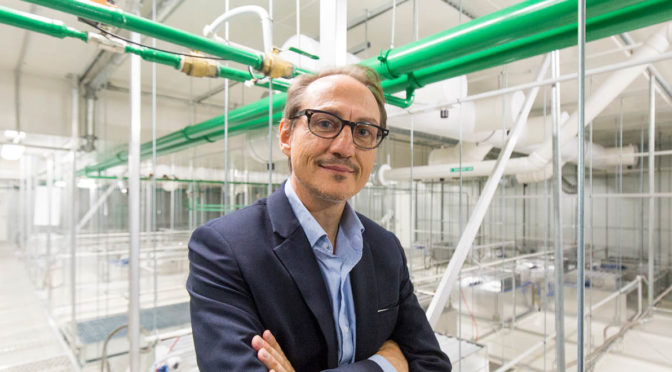
– Dr Jennifer Macdiarmid, pictured above with Dr. Himanshu Brahmbhatt, joint Chief Executive Officers and Directors 


Click here to see the full list of Top 25 Science meets Business R&D spin-off companies.

Top 25 R&D spin-offs

For a country that makes up just 0.3% of the world’s population, Australia packs a heavyweight punch in science – generating 3.9% of the world’s research publications. However taking that research to market has proved a broader challenge.

Fostering the commercialisation of research success and encouraging collaboration between industry and researchers is at the forefront of the government’s renewed focus on scientific innovation, with over $1.1 billion earmarked to kickstart the “ideas boom” as part of the National Innovation and Science Agenda.

“Collaboration is key to turning Australian ideas into viable and lucrative commercial products and services,” says Christopher Pyne, Minister for Industry, Innovation and Science, adding that high-tech knowhow plus innovative R&D will drive jobs and wealth in the future.

“We must capitalise on the opportunities that are presenting themselves in the economic transition taking place in Australia by being agile, innovative and creative,” Pyne says.

He notes a range of measures, including the $155 million Industry Growth Fund and the R&D Tax Incentive program, are supporting firms to innovate and drive investment into new high-growth industry sectors.

From industry-funded ventures to university spin-offs and rising star start-ups, these are the Science Meets Business Top 25 Australian research and development spin-off companies.

Click here to see the full list, or continue reading. For further insights from the leaders of the Top 25 R&D spin-off companies, read their interviews on attracting venture capital, learning from overseas marketsgetting past the valley of death, overcoming major start-up challenges and starting up.


FIBROTECH THERAPEUTICS PTY LTD


TYPE: NOT LISTED

CEO: Darren Kelly

SOLD FOR: US$557.5 million

INNOVATION RATIO*: 0.15


Fibrotech develops novel drug candidates to treat fibrosis (tissue scarring) associated with chronic conditions such as heart failure, kidney and pulmonary disease, and arthritis. The company spun out of research by Professor Darren Kelly at the University of Melbourne in 2006, and its principal asset is a molecule, FT011, which helps prevent kidney fibrosis associated with diabetes. In May 2014, in one of Australia’s biggest biotech deals at the time, Fibrotech was acquired by Shire, a Dublin-based pharmaceutical company, for an initial payment of US$75 million. Further payments, based on a series of milestones, will bring the total value of the sale to US$557.5 million, and the deal was awarded Australia’s best early stage venture capital deal in 2014. At the time of the sale, FT011 was in Phase 1b trials for the treatment of renal impairment in diabetics – a market worth US$4 billion annually.

*Innovation ratio = patents published/cited

Founder, CEO & director of Fibrotech Therapeutics, Professor Darren Kelly

Founder, CEO & director of Fibrotech Therapeutics, Professor Darren Kelly


SPINIFEX PHARMACEUTICALS PTY LTD


TYPE: LISTED

MARKET VALUE: $264 million

CEO/President: Dr Tom McCarthy

INNOVATION RATIO: 0.13

SOLD FOR: acquired by Novartis for US$200 million up-front payment plus milestone payments


Spinifex Pharmaceuticals was launched in 2005 to commercialise chronic pain treatments developed by Professor Maree Smith of The University of Queensland. Pharmaceuticals giant Novartis acquired the company in 2015 for a total of US$725 million, based on the promising results in Phase 1b and Phase 2 clinical trials. Spinifex’s treatment targets nerve receptors on peripheral nerves rather than pain receptors in the brain, making it possible to treat the pain from causes such as shingles, chemotherapy, diabetes and osteoarthritis without central nervous system side-effects such as tiredness and dizziness.

Dr Tom McCarthy_intext

CEO/President of Spinifex Pharmaceuticals, Dr Tom McCarthy


ADMEDUS LTD


TYPE: LISTED

MARKET VALUE: $61.88 million

COO: Julian Chick

INNOVATION RATIO: 0.02

REVENUE: $10.2 million


Admedus is a diversified healthcare company with interests in vaccines, regenerative medicine, and the sale and distribution of medical devices and consumables. Currently, the company is developing vaccines for herpes simplex virus and human papillomavirus based on Professor Ian Frazer’s groundbreaking vaccine technology. In the regenerative medicine field, Admedus is the vendor of CardioCel®, an innovative single-ply bio-scaffold that can be used in the treatment of congenital heart deformities and complex heart defects.


BIG 3 – RESMED LTD


TYPE: LISTED

MARKET VALUE: $7.85 billion

CEO: Michael J Farrell

INNOVATION RATIO: 0.02

REVENUE: $1.68 billion


For more than 25 years, ResMed has been a pioneer in the treatment of sleep-disordered breathing, obstructive pulmonary disease and other chronic diseases. The company was founded in 1989 after Professor Colin Sullivan and University of Sydney colleagues developed nasal continuous positive airway pressure – the first successful, non-invasive treatment for obstructive sleep apnoea. Today, the company employs more than 4000 people in over 100 countries, delivering treatment to millions of people worldwide.


BIODIEM LTD


TYPE: NOT LISTED

CEO/Executive Director: Julie Phillips

INNOVATION RATIO: 0.22

REVENUE: $203,809


BioDiem specialises in the development and commercialisation of vaccines and therapies to treat infectious diseases. The Live Attenuated Influenza Virus vaccine technology provides a platform for developing vaccines, including one for both seasonal and pandemic influenza. BioDiem’s subsidiary, Opal Biosciences, is developing BDM-I, a compound that offers a possible avenue for the treatment of infectious diseases that resist all known drugs.


VAXXAS PTY LTD


TYPE: NOT LISTED

CEO/Director: David Hoey


Vaxxas is pioneering a needle-free vaccine delivery system, the Nanopatch, which delivers vaccines to the abundant immunological cells just under the skin’s surface. Preclinical studies have shown that vaccines are effective with as little as one-hundredth of a conventional dose when delivered via a Nanopatch. In 2014, Vaxxas was selected by the World Economic Forum as a Technology Pioneer, based on the potential of Nanopatch to transform global health.


6 ACRUX DDS PTY LTD


TYPE: LISTED

MARKET VALUE: $122.39 million

CEO: Michael Kotsanis

INNOVATION RATIO: 0.01

REVENUE: $25.4 million

Biotech company Acrux was incorporated in 1998 after researchers at Monash University developed an effective new spray-on drug delivery technology that improved absorption through the skin and nails. In 2010, Acrux struck a US$335 million deal with global pharmaceutical company Eli Lilly for AxironTM, a treatment for testosterone deficiency in men. It was the largest single product licensing agreement in the history of Australian biotechnology.

CEO of Acrux, Michael Kotsanis

CEO of Acrux, Michael Kotsanis


PHARMAXIS LTD


MARKET VALUE: $72.9 million

CEO: Gary J Phillips

INNOVATION RATIO: 0.76

REVENUE: $59.25 million

Listed on the ASX in 2003, Pharmaxis has two products on the market: Bronchitol, a treatment for cystic fibrosis; and Aridol, a lung function test to diagnose and assess asthma. In 2015, Pharmaxis sold the rights to a treatment for the liver condition nonalcoholic steatohepatitis, to Boehringer Ingelheim in a deal that could be worth US$750 million.

Garyphillips_in text

CEO of Pharmaxis, Gary J Phillips


OPTHEA PTY LTD


TYPE: LISTED

MARKET VALUE: $42.80 million

CEO/MD: Dr Megan Baldwin

INNOVATION RATIO: 0.01

REVENUE: $939,008

With a focus on ophthalmology, Opthea’s main product is OPT-302 – a treatment for wet age-related macular degeneration – which is currently in a Phase 1/2a clinical trial. Wet macular degeneration is the leading cause of blindness in the Western world. Opthea was formerly known as Circadian Technologies, acting as a biotechnology investment fund before transitioning to developing drugs in 2008.


BENITIC BIOPHARMA LTD


TYPE: LISTED

MARKET VALUE: $63.01 million

CEO: Greg West

INNOVATION RATIO: 0.14

REVENUE: $1.37 million

Benitec Biopharma’s leading product is DNA-directed RNA interference (ddRNAi) – a platform for silencing unwanted genes as a treatment for a wide range of genetic conditions. ddRNAi has broad applications, and can assist with conditions as diverse as neurological, infectious and autoimmune diseases, as well as cancers. The company’s current focus inludes hepatitis B and C, wet age-related macular degeneration and lung cancer.


10 CATAPULT GROUP INTERNATIONAL LTD


TYPE: LISTED

MARKET VALUE: ~$256 million

CEO: Shaun Holthouse

REVENUE: $11.8 million

Catapult makes athletic performance monitoring systems using global and local positioning technologies for more than 750 elite teams, universities and institutions worldwide. The technology was commercialised in 2006 and its IPO in December 2014 raised more than $12 million from investors – including from US billionaire Mark Cuban.

CEO of Catapult, Shaun Holthouse

CEO of Catapult, Shaun Holthouse


11 SMARTCAP TECHNOLOGIES PTY LTD


CEO: Dush Wimal

INNOVATION RATIO: 0.03

TYPE: NOT LISTED

Using a wearable electroencephalograph (EEG), SmartCap monitors driver fatigue by measuring changes in brain activity without significant discomfort or inconvenience. It notifies users when they are fatigued and what time of day they’re most at risk. SmartCap was formally EdanSafe, a CRCMining spin-off company.

CEO of Smartcap, Dush Wimal

CEO of Smartcap Technologies, Dush Wimal


BIG 3 – COCHLEAR LTD


TYPE: LISTED

MARKET VALUE: $4.8 billion

INNOVATION RATIO: 0.05

CEO/PRESIDENT: Chris Smith

REVENUE: $925.6 million

Cochlear delivers hearing to over 400,000 people worldwide through products like the cochlear implant. Pioneered by the University of Melbourne’s Professor Graeme Clark and developed with assistance from The HEARing CRC, the bionic devices were first successfully implanted by the Royal Victorian Eye and Ear Hospital for people with moderate to profound hearing loss. The global company now employs 2800 staff and assists people in 100 countries.

CEO/President of Cochlear, Chris Smith

CEO/President of Cochlear, Chris Smith


12 ECOULT PTY LTD


TYPE: NOT LISTED

CEO: John Wood

Founded by the CSIRO in 2007 to commercialise the UltraBattery, Ecoult was acquired by the East Penn Manufacturing Company in 2010. The UltraBattery makes it possible to smooth out the peaks and troughs in renewable power, functioning efficiently in a state of partial charge for extended periods.


13 QUICKSTEP HOLDINGS LTD


MARKET VALUE: $87.09 million

CEO/MD: David Marino

INNOVATION RATIO: 0.04

REVENUE: $39.51 million

Composite materials company Quickstep was founded in 2001 to commercialise their patented manufacturing process. Working with the aerospace, automotive and defence industries, Quickstep supplies advanced carbon fibre composite panels for high technology vehicles. In 2015, the company increased its manufacturing capacity, establishing an automotive production site in Victoria in addition to their aerospace production site in NSW.


14 ENGENEIC LTD


TYPE: NOT LISTED

JOINT CEOs/DIRECTORS: Dr Jennifer MacDiarmid and Dr Himanshu Brahmbhatt

MARKET VALUE: $178 million

INNOVATION RATIO: 0.03

EnGeneIC’s cancer treatment platform, the EnGeneIC Dream Vector (EDVTM), is a first-in-class cytoimmunotherapy.

The EDV is a nanocell mechanism for delivering drugs and functional nucleic acids and can target tumours without coming into contact with normal cells, greatly reducing toxicity. Above all, the EDV therapeutic stimulates the adaptive immune response, thereby enhancing anti-tumour efficacy. More than 260 patents support the technology, developed entirely by EnGeneIC, giving the company control over its application.

Joint CEOs and directors of EnGeneIC, Dr Jennifer MacDiarmid and Dr Himanshu Brahmbhatt

Joint CEOs and directors of EnGeneIC, Dr Jennifer MacDiarmid and Dr Himanshu Brahmbhatt


15 SNAP NETWORK SURVEILLANCE PTY LTD


TYPE: NOT LISTED

CEO: Simon Langsford

CTO/FOUNDER: Dr Henry Detmold

Snap’s FMx is a unique approach to video surveillance that forms cameras into a network based on artificial intelligence that learns relationships between what the cameras can see. It enables advanced real-time tracking and easier compilation of video evidence. Developed at the University of Adelaide’s Australian Centre for Visual Technologies, the system is operational at customer sites in Australia, Europe and North America.


16 ORTHOCELL LTD


TYPE: LISTED

MARKET VALUE: $32.89 million

MD: Paul Anderson

INNOVATION RATIO: 0.81

REVENUE: $1.69 million

Orthocell develops innovative technologies for treating tendon, cartilage and soft tissue injuries. Its Ortho-ATI™ and Ortho-ACI™ therapies, for damaged tendons and cartilage, use the patient’s cells to assist treatments. Its latest product, CelGro™, is a collagen scaffold for soft tissue and bone regeneration.


17 REDFLOW


TYPE: LISTED

MARKET VALUE: $111.3 million

CEO: Stuart Smith

INNOVATION RATIO: 0.16

REVENUE: $265,436

As the demand for effective energy storage grows, RedFlow’s zinc-bromide flow batteries are gaining attention. RedFlow has outsourced its manufacturing to North America to keep up with demand, while the company’s research and development continues in Brisbane.

CEO of Redflow, Stuart Smith

CEO of Redflow, Stuart Smith


18 MINIFAB PTY LTD


TYPE: NOT LISTED

CEO: Dr Erol Harvey

INNOVATION RATIO: 2

Since 2002, precision engineering company MiniFAB has completed more than 900 projects for customers across the globe. MiniFAB provides a complete design and manufacturing service, and has developed polymer microfluidic and microengineered devices for medical and diagnostic products, environmental monitoring, food packaging and aerospace.


19 RAYGEN RESOURCES PTY LTD


TYPE: NOT LISTED

CEO: Robert Cart

INNOVATION RATIO: 0.74

RayGen’s power generation method involves an ultra high efficiency array of photovoltaic cells, which receive focused solar energy from heliostats (mirrors) that track the sun, resulting in high performance at low cost. In December 2014, RayGen and the University of New South Wales (UNSW) collaborated to produce the highest ever efficiency for the conversion of sunlight into electricity. The independently verified result of 40.4% efficiency for the advanced system is a game changer, now rivalling the performance of conventional fossil power generation.

Robert Cart_intext

CEO of RayGen Resources, Robert Cart


BIG 3 – CSL LTD


TYPE: LISTED

MARKET VALUE: $44.93 billion

CEO/MD: Paul Perreault

INNOVATION RATIO: 0.05

REVENUE: US$5.6 million

CSL is Australia’s largest biotechnology company, employing over 14,000 people across 30 countries. The company began in 1916, when the Commonwealth Serum Laboratories was founded in Melbourne. It was incorporated in 1991, and listed on the ASX in 1994. Since that time, CSL has acquired established plasma protein maker CSL Behring, and Novartis’ influenza vaccine business, and has become a global leader in the research, manufacture and marketing of biotherapies.


20 CARNEGIE WAVE ENERGY LTD


TYPE: LISTED

MARKET VALUE: $88.38 million

MD: Dr Michael Ottaviano

INNOVATION RATIO: 0.21

REVENUE: $1.72 million

Carnegie Wave Energy’s CETO technology converts ocean swell into zero-emission renewable power and desalinated freshwater. Ten years of research at test sites off the coast of Western Australia, along with over $100 million in local and foreign investment, has helped grow the company’s global profile.

A recent £2 million grant from the Scottish government boosted stock prices.


21 DYESOL LTD


TYPE: LISTED

MD: Richard Caldwell

MARKET VALUE: $110.13 million

INNOVATION RATIO: 0.12

REVENUE: $1.44 million

Dyesol Limited (ASX: DYE) is a renewable energy supplier and leader in Perovskite Solar Cell (PSC) technology – 3rd Generation photovoltaic technology. The company’s vision is to create a viable low-cost source of electricity with the potential to disrupt the global energy supply chain and energy balance.

MD of Dyesol, Richard Caldwell

MD of Dyesol, Richard Caldwell


22 EVOGENIX LTD


TYPE: NOT LISTED

SOLD FOR: $207 million

INNOVATION RATIO: 0.11

EvoGenix began as a startup in 2001 to commercialise EvoGene™, a powerful method of improving proteins, developed by the CSIRO and the CRC for Diagnostics. It acquired US company Absalus Inc in 2005, then merged with Australian biotechnology company Peptech in 2007, to form Arana Therapeutics. In 2009, Cephalon Inc bought the company for $207 million.


23 MURADEL PTY LTD


TYPE: NOT LISTED

CEO/MD: David Lewis

REVENUE: $4.18 million

With a vision to create sustainable energy through renewable biofuels, Muradel is a joint venture between the University of Adelaide, Murdoch University and SQC Pty Ltd. Their $10.7 million Demonstration Plant converts algae and biosolids into green crude oil. Muradel has plans for upgrades to enable the sustainable production of up to 125,000 L of crude oil, and to construct a commercial plant capable of supplying over 50 megalitres of biocrude from renewable feedstocks.


24 iCETANA


TYPE: NOT LISTED

CEO: Gary Pennefather

INNOVATION RATIO: 0.05

iCetana’s ‘iMotionFocus’ technology employs machine learning to determine what is the ‘normal’ activity viewed by each camera in a surveillance system and alerts operators when ‘abnormal’ events occur. This enables fewer operators to monitor more cameras with greater efficiency.


25 PHYLOGICA LTD


TYPE: LISTED

MARKET VALUE: $33.82 million

CEO: Dr Richard Hopkins

INNOVATION RATIO: 0.09

Phylogica is a drug discovery service, and the owner of Phylomer® Libraries, the largest and most structurally diverse suite of natural peptides. It has worked with some of the world’s largest drug companies, including Pfizer and Roche, to uncover drug candidates.


The Top 25 Science Meets Business R&D spin-off companies was written by Refraction Media in consultation with universities, industry and funding bodies, and supported by data from Thomson Reuters.

The research compiled by Refraction was judged by a panel comprising of: Dr Peter Riddles, biotechnology expert and director on many start-up enterprises; Dr Anna Lavelle, CEO and Executive Director of AusBiotech; and Tony Peacock, Chief Executive of the Cooperative Research Centres Association. The panel considered the following: total market value, annual turnover, patents awarded and cited, funding and investment, growth year-on-year, social value, overseas expansion and major partnerships.


Women in science and business

Academia has a checkered history of elevating women in science. While many leading women scientists to-date have acted as truly innovative researchers – Marie Curie for example – much of the way science is celebrated has innate bias.

Scientists are ranked by academic achievement – promotions and grants, recognition and awards – all emphasising papers published and cited, fellowships received and so on.

Enabling women in science

Australia needs to clearly develop a new platform of scientific achievement – in which, according to the $1.1 billion National Innovation and Science Agenda (NISA), innovation is “critical to improving Australia’s competitiveness, standard of living, high wages and generous social welfare net”.

NISA notes several important factors, but fails to clearly set an agenda for women in science to succeed within the new innovation framework. For instance, it cites:

“We will introduce, for the first time, clear and transparent measures of non-academic impact and industry engagement when assessing university research performance.”

These factors are also critical in removing barriers to career advancement for women in science who have taken a career break, and whose academic output is less than men in equivalent positions as a result.

It also notes that women hold “around a quarter of STEM [science, technology, engineering and maths] and ICT [information and communications technology] related jobs and are significantly underrepresented in high-level research positions. We need to engage more girls in STEM and computing, and provide pathways to progress their interest across the education system and into careers.”

To address this NISA has earmarked $13 million to improve opportunities for women in science and STEM more broadly. How this money will be spent is unclear.

There is a strong and clear need to alter the way that scientific achievements are acknowledged when looking at scientists’ track records, grants eligibility and promotional opportunities. We need to reward collaboration, to allow other career achievements along with citations and impact factor to be part of the recognition process.

We need to alter many things about the way scientists are recognised to promote women in science, from looking for bias in the language we use to valuing the mentorship provided by scientists in a more inclusive and meaningful way.

There needs to be flexibility, appropriate leave and allowances for travel factored into work in science. Education around bias is important, and much could be learned from the corporate sector here.

This is not the time to take baby steps in addressing gender equity for women in science. We need to take great strides, and look to the government for greater leadership in addressing this sooner rather than later.

– Heather Catchpole, Editor, KnowHow magazine

Science Meets Business women’s success stories

Science Meets Business profiles celebrate the women in science today.

[huge_it_portfolio id=”3″]

Smart ASD detection tool

An estimated one in 50 children have an Autism Spectrum Disorder (ASD). Research from La Trobe University’s Olga Tennison Autism Research Centre (OTARC) shows that the majority of these children are not diagnosed until they are four years old, more than two years after they can be reliably diagnosed and receive life-changing intervention.

The technique underlying ASDetect has been used over the past decade by hundreds of maternal and child health nurses in Australia, as well as early childhood professionals around the world. It has proven to be more than seven times more accurate than the next best tool in the early identification of autism.

Salesforce developed the ASDetect app on a pro bono basis as part of the company’s 1-1-1 integrated philanthropy model, where the company donates 1% of its employee’s time, its products and its equity to support the not-for-profit sector. A team of Salesforce engineers, designers and developers volunteered their time to build the app on the Salesforce platform.

The app uses questions drawn from breakthrough research by La Trobe’s Dr Josephine Barbaro. It gives parents access to video footage from actual clinical assessments and clearly demonstrates the context and expected key behaviours of children at each age.

“ASDetect is an empowering tool for parents who may feel their children are developing differently than expected and are looking for answers. The new ASDetect app is an ideal way to share proven techniques with thousands of parents,” says Barbaro.

Through a series of videos and questions, ASDetect guides parents through the identification of potential “red flag” signs of ASD. These “red flags” can be raised when young children repeatedly do not:

  • make consistent eye contact;
  • share smiles;
  • show their toys to others;
  • play social games;
  • point to indicate interest;
  • respond when their name is called.
Smart ASD Detection Tool

Screenshot of ASDetect app being used by Olga Tennison Autism Research Centre.

“All typically developing infants are motivated to be social, look at other people’s faces, learn from them and copy. Children with ASD are not doing this – and we can now accurately identify this at a much younger age and take action, with the help of parents,” says Barbaro.

The app combines Barbaro’s assessment questions with videos demonstrating the ‘red flag’ behaviours critical in determining the likelihood of ASD in children as young as 12 months. Parents view two videos: one showing a child with ASD, the other showing a typically developing child. Parents then answer questions regarding their own child. The information entered by the parents is automatically sent to OTARC’s database, which also runs on the Salesforce platform, where analysis of individual results is completed. Parents are then sent information via a notification through the app, with advice as to whether they should seek professional help. As ASD can emerge over time, ASDetect includes assessments for children aged 12, 18 and 24 months.

“This is not a replacement for professional assessment; however ASDetect will provide parents with an indication as to whether they should seek a professional opinion from a doctor at a time when intervention will have the biggest impact,” says Barbaro.

Dan Bognar, Senior Vice President, Salesforce APAC says: “The ASDetect app is a great example of leveraging the power of the Salesforce platform to improve the capabilities of health providers and treatment for individuals. Being able to deploy on a global scale means that organisations like OTARC can make a significant impact on society.”

“The development of ASDetect highlights our ethos of giving back as well as our commitment to improving the local communities we operate in. It has been incredibly rewarding for everyone involved, and we look forward to seeing the results of this important initiative,” says Bognar.

Watch ASDetect in action:

https://www.youtube.com/watch?v=uCaQ8ThNyDI

This information was first shared in a press release by La Trobe University on 14 February 2016. Read the press release here

Innovation and Science on Turnbull agenda

Prime Minister Malcolm Turnbull recently announced the creation of a National Innovation and Science Agenda which includes funding, tax incentives and a strong focus on education initiatives to up the ante for Australia in terms of its innovation output.

The policy comes off the back of increased push since the Prime Minister gained office on the need to position Australia more strongly in the global economy and to facilitate a rapid move from traditional income from resources and manufacturing to one based on ‘ideas and entrepreneurship’.

Early announcements include:

  • $8 million in a network of incubators helping start-ups get the resources, knowledge and networks they need to take their ideas to the world
  • New arrangements to encourage collaboration between researchers and industry, including streamlining and refocussing a greater proportion of research block grant funding toward collaboration, with an addition $127 million in funding
  • Over 10 years: $520 million for the Australian Synchrotron, $294 million for the Square Kilometre Array, and $1.5 billion for the National Collaborative Research Infrastructure Strategy (NCRIS)
  • A $36 million Global Innovation Strategy to support businesses and researchers to collaborate with their global counterparts on research with landing pads established for Australian entrepreneurs and startups in Tel Aviv, Silicon Valley and three other key locations
  • $99 million investment in programmes to boost digital literacy and skills in science, technology, engineering and mathematics (STEM) amongst young Australians
  • $13 million to increasing opportunities for women in research, STEM industries, startups and entrepreneurial firms

The Minister for Industry, Innovation and Science, Christopher Pyne, said: “The release of the Agenda is just the beginning. The next step will be a national discussion around this new way of thinking and doing, and the importance of innovation and science to our future.

“We will highlight the successes to date and inspire all Australians to be involved in shaping our future and harnessing the potential of our ideas,” Mr Pyne said.

More on this to come.

– Heather Catchpole

Growth factor

The Jack Hills are part of an ancient landscape of scorched red earth in the Pilbara region of Western Australia. But it wasn’t until 2001, when a rock from the hills was brought 800 km south to Curtin University’s John De Laeter Centre for Isotope Research (JDLC), that scientists discovered just how ancient this landscape really is. The Curtin scientists dated zircon crystals in the sample at 4.4 billion years, making it the oldest known Earth rock.

This groundbreaking research required a sophisticated measurement of trace elements in the crystal, and there are very few facilities in the world where this could have taken place. Zircon traps uranium in its crystal structure when it is formed. In principle, the radioactive decay of uranium into lead is like a ticking clock. If you can accurately measure how much lead has been created and how much uranium remains in a particular sample, you can work out when the crystal was formed. To do this, and to arrive at an age with an uncertainty of just 0.2%, Curtin researchers called upon the $4 million Sensitive High Resolution Ion Micro Probe (SHRIMP), the flagship technology of the JDLC. There are fewer than 20 SHRIMPs in the world, and Curtin is home to two of them.

“Zircon is like diamond – it’s forever,” explains JDLC Director, Professor Brent McInnes. Being a very hard and chemically inert material, zircon lasts for billions of years. The JDLC has world-renowned expertise in dating rocks by analysing the uranium-lead decay process in zircon.

The JDLC is also regularly put to more practical uses, such as aiding resource exploration in Western Australia. The SHRIMPs are the centrepieces of a suite of equipment worth $25 million, including scanning electron microscopes, transmission electron microscopes, ion beam milling instruments, laser probes and mass spectrometers.

“We are an open access lab,” explains McInnes. “These instruments can run 24 hours a day, seven days a week.” The JDLC collaborates with research groups around the world and also assists the Geological Survey of Western Australia to make maps used to attract investment in mining and petroleum exploration. Chinese Academy of Geological Sciences researchers use the instruments to do similar work in China, controlling the Perth-based SHRIMPs remotely from Beijing.

The JDLC facilities have also been used to solve practical problems for industry partners. When exploration company Independence Group NL found tin in a gravel bed at the base of a WA river, they turned to the JDLC to help identify the origins of the ore. Was it from a local source or had it been transported from elsewhere and deposited in the riverbed? Using SHRIMP, the JDLC team measured the quantities of trace uranium and lead elements in the tin ore cassiterite and calculated its age. When they performed similar measurements on zircon from local granite, they found its age was the same. This showed the tin was local, and helped the Independence Group pinpoint the precise locations to drill exploratory holes. “We have an incredible set of research tools that can be deployed to help industry reduce the risks and costs of exploration,” says McInnes.

“Recognising the gap, Curtin has set up a dedicated funding program, called Kickstart, to help translate lab research into commercial ventures.”


Collaborating with industry is a commonplace activity for John Curtin Distinguished Professor and Deputy Pro Vice Chancellor – Faculty of Science and Engineering, Moses Tadé. Industry possesses considerable experts, he says, yet still tends to approach academics when looking at something more fundamental. Tadé’s group brings a range of skills to the table, including expertise in multi-scale modelling, computational flow dynamics, reaction engineering and optimisation modelling. Collaboration is highly beneficial for both sides, he says.

Ongoing projects include the development of solid oxide fuel cells with a Melbourne-based fuel cell company, and a project in partnership with a petroleum industry multinational to remove mercury from oil and gas.     In recent years, sponsorship from leading minerals and exploration companies Chevron Australia and Woodside Energy has supported the growth of the Curtin Corrosion Engineering Industry Centre, of which Tadé is Director. The Centre looks to develop practical solutions to the problem of corrosion in gas pipelines, which can lead to costly leaks and dangerous explosions.

In another project, led by chemical engineer Professor Vishnu Pareek, Curtin has teamed up with Woodside to develop a more efficient way to regasify liquefied natural gas. Currently, natural gas from Australia is liquified so it can be transported efficiently by ship to overseas markets, particularly China. But once it gets there, the regasification process can burn up to 2% of the product. A new process being developed at Curtin uses the energy in the ambient air to aid regasification – a more efficient solution that will both increase profits and reduce CO2 emissions. “It’s very exciting,” says Tadé. “A big thing for the environment.”

Curtin has become a busy hub of innovation, with a spate of spin-off companies being created to translate the research. “We have a focused effort on commercialisation and research outcomes,” explains Rohan McDougall, Director of IP Commercialisation at Curtin.

Public funding of science and engineering research can often only take new technology to a certain level of development such as ‘proof-of-concept’. Securing funds from investors to turn pre-commercial work into a real-world product is tough as investors are wary at this early high-risk stage. “The gap is traditionally known as the ‘valley of death’,” says McDougall. Recognising this gap, Curtin has set up a dedicated funding program, called Kickstart, to help translate lab research into commercial ventures.

in-text1

The John De Laeter Centre for Isotope Research, led by Professor Brent McInnes (left) – which has a team of scientists, including Associate Professor Noreen Evans (right), and a $25 million suite of equipment – assists resource exploration in Western Australia.

The John De Laeter Centre for Isotope Research, led by Professor Brent McInnes (above top) – which has a team of scientists, including Associate Professor Noreen Evans (above bottom), and a $25 million suite of equipment – assists resource exploration in Western Australia.

As well as the extra funding, commercialisation is aided at Curtin by strong links with the venture capital community and industry, which advise on commercialisation routes and intellectual property. The university also encourages an innovation environment by running contests in which staff and students describe technologies they     are working on and that may have commercial applications.

This commercialisation focus has reaped dividends in terms of successful spin-off companies. In the medical space, Neuromonics sells a device for the treatment of the auditory condition tinnitus. In digital technology, iCetana has developed a video analytics technology for security applications. Skrydata, a data analytics company, provides a service for extracting patterns from big data. Sensear has developed sophisticated hearing equipment technology for high-noise environments such as oil and gas facilities.

One of the biggest recent success stories has been Scanalyse, which in 2013 won the prestigious Australian Museum Rio Tinto Eureka Prize for Commercialisation of Innovation. Scanalyse grew out of a collaboration between Curtin and Alcoa, one of the world’s largest aluminium producers. Alcoa called on Curtin’s experts to find a way to analyse the grinders used in their mills. Every time a grinder wore out, it was costing ~$100,000/hour in downtime. It was crucial to monitor the condition of these machines, but this required someone to climb inside and take measurements. Through their 2005 collaboration with Alcoa, spatial scientists at Curtin developed a laser scanning system capable of measuring 10 million points in just 30 minutes.

“At the same time, they developed a software tool that could be applied more generally,” explains McDougall. “So the business was established to look at the application of that technology to mills and other mine site equipment.”

Scanalyse has since found customers in more than 20 countries and is making an impact worldwide. In 2013, it was bought by Finnish engineering giant Outotec.

Cathal O’Connell

Partnering for research impact

The Cooperative Research Centres Program (CRC) links research, education and end users, creating a synergy that fosters innovation. Now in its 24th year, the program has led to the development of beneficial new technologies in areas as diverse as contact lenses, financial markets and advanced composite materials.

Defence is just one beneficiary of the CRC Program. For example, lifesaving improvements have been made to body armour and vehicle protection as a result of research into advanced materials and manufacturing techniques.

Safeguarding Australia will depend on our ability to use science and technology to increase the effectiveness of our people and systems. No single research organisation can meet all of Australia’s future needs – collaboration is key. The CRC Program has enabled participants – universities, publicly-funded research organisations and industry – to significantly increase the impact of their science and technology through teamwork.

“No single research organisation can meet all of Australia’s future needs – collaboration is key.”

The Defence Science and Technology Organisation (DSTO) is supporting the new Data to Decisions CRC. This CRC will focus on creating the tools, techniques and workforce to unlock big data. Specific areas include tracking and sensor fusion techniques, visual analytics, cyber data, elastic search tools, speech and text processing, and detecting objects of interest in large imagery datasets.

Through the CRC Program, DSTO will continue to work with industry and publicly-funded agencies to create a vibrant culture of innovation, nurture the next generation of scientists and ensure that research has real impact.

– Dr Alex Zelinsky

Australia: nation of inventors or innovators?

If Australia wants to become more than just a land made up of quarries, farms and tourist beaches, it has to ensure more scientists and engineers are trained to drive innovation, warns Dr Katherine Woodthorpe, Chair of the Antarctic Climate and Ecosystems Cooperative Research Centre, and panellist at last week’s inaugural Science Meets Business event.

The event, hosted by Science and Technology Australia, aimed to “kickstart a reshaped and refreshed conversation on ways to boost collaboration between Australia’s great businesses and scientists”.

Speakers at the event came from a wide range of industry, government and research, each presenting their ideas for an innovative future.

Keynote speaker Dr Larry Marshall, CEO of CSIRO, celebrated ‘deep tech’ as an ecosystem of plenty, responsible for 100% of US jobs last year. In his experience, deep tech entrepreneurship creates a virtuous cycle of innovation.

Marshall wants to meet industry halfway, working together to understand what customers want. This is not an overnight solution, he warned. “Both CSIRO and Australia will be in beta for the next five years.”

In exploring problems of “diagnosis and lifting the game”, Ken Boal, Vice President at CISCO Australia and New Zealand, said businesses should lean in more, connect with universities and help in the translation of research to the wider community.

Australia: nation of inventors or innovators?

Intrinsic to this translation of research outcomes is a STEM outreach program to schools. Professor Ian Frazer AC, Head of the Diamantina Institute at the University of Queensland, identified the roots of the problem beginning where schools focus on students achieving high-performance marks. Science is tough, and often students are advised to choose an easier subject to maximise their score. He also emphasised the need to place greater value on science and teachers.

Hugh Bradlow, Telstra’s Chief Scientist, suggested that technology could be part of the education solution. If technology is able to reduce costs of education, then perhaps we can pay our teachers more and attract a higher calibre of staff, he proposed.

The Hon Karen Andrews MP, representing Prime Minister Malcolm Turnbull, believes business and science need each other, and Australia needs both. Even though we don’t know what the jobs of the future are going to be, we know there will be core skills required, like coding and data science, she explained. Maths and statistics will be in high demand, alongside creative thinking and entrepreneurship. Andrews is putting together an action plan to connect industry and research.

While the official announcement was still under wraps, Australia’s next Chief Scientist Alan Finkel encouraged a celebration of Australia’s achievements and an effort to build upon the engagement that already exists, like relationships between Rio Tinto and the University of Sydney, and GlaxoSmithKline and Monash University.

Woodthorpe suggested that superannuation funds have a role to play in Australia’s innovation growth, and that fund managers need to realise this in order to support their next generation of members. Another barrier to innovation is the lack of digital experience in the top 300 ASX companies. Boards need to see technology as a future business model, not a piece of equipment, she said.

Newly returned from the US and now heading up Commercial Strategy at the Kinghorn Centre for Clinical Genomics at the Garvan Institute, Dr Russell J Howard has had recent success at raising capital for a new venture. He believes the three key imperatives to commercialisation success are:

  1. To nurture smart capital, and to show founders how to create good intellectual property;
  2. To create an innovative environment;
  3. To enable access to experienced management – people who have experience in commercialisation.

Finally, Mr Peter Yates AM, Deputy Chairman of the Myer Family Investments talked about his own support of start-ups. He likes to collect entrepreneurs rather than artists – in 15 years both have usually increased in value!

– Karen Taylor-Brown, CEO and Publisher at Refraction Media

Portrait of an engineer-politician

A passionate engineer, Karen Andrews is proof that studying science, technology, engineering and maths (STEM) can propel you along an exciting and varied career path.

This path has led to her current role as Assistant Minister for Science and Federal Member for McPherson in Queensland. The engineer in her, however, is omnipresent.

“I’m delighted that my role in politics takes me right into the engineering sphere,” Karen says. “I always enjoyed being an engineer, and quite frankly if I get the opportunity to introduce myself as an engineer or a politician, I will always go for engineer.”

Karen’s interest in engineering started early. “When I was eight years old I remember being absolutely fascinated by the washing machine,” says Karen, recounting a childhood memory, “and how the agitator turned the same amount in a clockwise and anti-clockwise direction every time.”

This curiosity of how things work drove Karen to study engineering at Queensland University of Technology (QUT), where, in 1983, she and a fellow student were the first two female graduates in mechanical engineering from the university.

Karen Andrews

Karen Andrews, Assistant Minister for Science

According to Graduate Careers Australia, with women representing less than 9% of bachelor degree graduates in mechanical engineering in 2014, and the gender imbalance increasing as female participation in STEM wanes, there is still a dearth of women entering STEM.

As a trailblazer for women in engineering, Karen believes barriers to women entering STEM can be overcome.

“Some of the limitations are self-imposed,” Karen believes. “We should be making sure that as girls are going through the education system, they understand that every career choice is open to them. And with careers advisors too, we have to make sure there isn’t an unintentional gender bias in the advice that’s being given to women.”

After graduating, Karen cut her teeth working at power stations and petrochemical sites across Queensland and interstate. This was the mid-1980s, a time of significant industrial volatility in the Australian oil industry.

Karen’s supervisory role often meant receiving delegations from shop stewards; individuals elected by workers to represent them in dealings with management. “Shop stewards were pointing out to me the reasons why they couldn’t do the things I was asking them to do,” says Karen, as she described some of her early experiences in this demanding environment. “This encouraged me to go off and study industrial relations (IR). I was attracted to IR to see how I could make things better at the work place.”

As a natural communicator, Karen pursued her interests in IR joining the Chamber of Manufacturers as an industrial advocate in the Metals, Engineering and Construction industry.

“If you’re going to communicate, first and foremost you have to be a good listener,” explains Karen. “You have to listen to what people are saying to you in the first place before you can respond and work through a solution.”

With Karen’s communication skills honed in IR, and refined while running her own Human Resources and IR consultancy, Karen decided to pursue a long-held interest in politics. And with characteristic drive and determination she was elected for the seat of McPherson, southern Gold Coast in 2009.

“The adversarial parts of IR are similar to the adversarial parts of politics, says Karen. “In IR you are working closely with employers and employees trying to achieve an outcome that’s in the best interests of that business. The same thing applies in politics, but on a larger scale because you’re looking at what is in the best interests of Australia.”

Karen’s engineering background and career path afford her a unique perspective on the potential future for STEM in Australia.

“I think there will be exciting new careers in analysing big data,” says Karen. “So we’ll need people who are going to be able to analyse that data and turn it into usable information. So I think there will be plenty of opportunities for data analysts and people with higher maths skills.”

“There will also be lots of opportunities in the coming years in astronomy, and particularly is marine sciences where we are already world-leaders,” says Karen.

– Carl Williams

The role of science and innovation in a 21st century government

Australia’s new prime minister, Malcolm Turnbull, has announced what he calls a “21st-century government”. This article is part of The Conversation’s series focusing on what such a government should look like.

Change is in the air. According to our new Prime Minister Malcolm Turnbull, his will be a 21st century government. But what does this entail? And what is the role of science and innovation in such a government?

The challenge for a genuinely 21st century Australian government is how to wrap its arms around the future in such a way that it improves Australia’s ability to capitalise on its research capacity and create new jobs, industries and opportunities for the coming century.


A 21st century ministry

The expanded Industry, Innovation and Science portfolio will now encompass digital technology and engineering, which together comprise the engine that has driven explosive growth in Silicon Valley, Israel and other forward-looking places.

We need to invest broadly in science research to feed the technology and engineering engine. But how do we bridge the funding “valley of death” between research and industry, and convert our excellent research outcomes into proven technologies?

We have companies aplenty that can pick up and commercialise proven technologies, but they are rightly cautious about licensing the rights to research outcomes. To address this problem, the US government directly invests nearly ten times more than we do as a percentage of GDP to fund business feasibility studies intended to convert research outcomes into proven technologies.

To drive our innovation agenda harder, a 21st century government could consider grants and development contracts specifically to support the translation of research outcomes into proven technologies.

Private sector investment into Australian start-up companies is lacking. In the US and Israel, more than 10% of GDP derives from venture-capital backed companies. In Australia it is 0.2%.

If we could increase the contribution to the economy by these companies from 0.2% to, say, 2%, then the benefits would be significant. To do so we will need to encourage new domestic and international sources of private funding, teach skills in technology assessment, and give further consideration to the rules around employee stock options and crowd-sourced funding.


Thinking big

At the same time, the fresh line-up of political leaders can help advance the national psyche beyond a state of gloom. They can acknowledge the fantastic benefits innovation has already brought to established industries.

Banking and resources, for example, have invested heavily in innovation to improve efficiency, and the largest iron mining companies in Australia continue to operate with positive operating margins despite depressed international prices.

Science and technology advances operate across broad sectors of the economy, contributing to accelerated growth in major export industries such as agriculture. Improvements to farm machinery and practices will make our farming more efficient, while adoption of digital technology to track our goods from field to retail outlet will provide the proof of origin that will allow our exporters to charge premium prices.

To the extent that the government will invest in new programs to support innovation, they should be carefully conceived, long term and national in scope, and large in scale. At the same time, existing programs could be consolidated to focus on those that have the most impact.


Sink or swim

I sometimes hear criticism of the Australian workforce, but I strongly disagree with that criticism. I have employed many engineers and scientists in the US and in Australia, and the Australian staff have been every bit as talented and dedicated as their US counterparts.

Unfortunately, unlike in the US, a substantial fraction of our creative workforce is locked out of commercial development activities because of the lack of mobility between university and industry jobs.

A 21st century government could help by adopting ratings systems that measure and reward engagement between universities and industry, and value time spent by research staff working in industry as much as they value publications and citations.

Of course, like footballers, innovators thrive when the rules of the game are clear and consistently applied. Industry is as one with government in recognising the importance of strong regulations. What is needed in most industries is a lead regulator to coordinate the regulatory oversight.

This approach does not replace the expertise of the various regulators, it just coordinates them. The key is for regulations to enable rather than stifle innovation while ensuring that community concerns and safety requirements are properly addressed.

We are already operating in an era of digital disruption. Science and technology will further dominate our future as we build a world ever more like those imagined by science fiction. In this world, machines offer their services to each other, buy and sell products and exchange information in real time. Manufacturing and service provision will be highly flexible and products will be individualised to customer needs.

Our industries must be agile and ready to transform, so that they will add value in a complex global supply chain, thereby creating new wealth that will be invested in services, health and other industries, with net creation of jobs.

The only thing we know for sure is that the next ten years will change more rapidly than the past ten years. I am confident that as the newly appointed Minister for Industry, Innovation and Science, Christopher Pyne, recognises the urgency to embrace these changes and will introduce policies and practices to capture the opportunities in what is proving to be a sink or swim world. The latter is preferable.

– , Chancellor, Monash University

This article was first published by The Conversation US on 27 September 2015. Read the original article here.

Celebrating Australian succcess

Success lay with the University of Melbourne, which won Best Commercial Deal for the largest biotech start-up in 2014; the Melbourne office of the Defence Science and Technology Group, which won Best Creative Engagement Strategy for its ‘reducing red tape’ framework; and Swinburne University for the People’s Choice Award.

“These awards recognise research organisations’ success in creatively transferring knowledge and research outcomes into the broader community,” said KCA Executive Officer, Melissa Geue.

“They also help raise the profile of research organisations’ contribution to the development of new products and services which benefit wider society and sometimes even enable companies to grow new industries in Australia.”

Details of the winners are as follows:

The Best Commercial deal is for any form of commercialisation in its approach, provides value-add to the research institution and has significant long term social and economic impact:

University of Melbourne – Largest bio tech start-up for 2014

This was for Australia’s largest biotechnology deal in 2014 which was Shire Plc’s purchase of Fibrotech Therapeutics P/L – a University of Melbourne start-up – for US$75 million upfront and up to US$472m in following payments. Fibrotech develops novel drugs to treat scarring prevalent in chronic conditions like diabetic kidney disease and chronic kidney disease. This is based on research by Professor Darren Kelly (Department of Medicine St. Vincent’s Hospital).

Shire are progressing Fibrotech’s lead technology through to clinical stages for Focal segmental glomerulosclerosis, which is known to affect children and teenagers with kidney disease. The original Fibrotech team continues to develop the unlicensed IP for eye indications in a new start-up OccuRx P/L.

Best Creative Engagement Strategy showcases some of the creative strategies research organisations are using to engage with industry partner/s to share and create new knowledge:

Defence Science and Technology Group –Defence Science Partnerships (DSP) reducing red tape with a standardised framework

The DSP has reduced transaction times from months to weeks with over 300 agreements signed totalling over $16m in 2014-15. The DSP is a partnering framework between the Defence Science Technology Group of the Department of Defence and more than 65% of Australian universities. The framework includes standard agreement templates for collaborative research, sharing of infrastructure, scholarships and staff exchanges, simplified Intellectual Property regimes and a common framework for costing research. The DSP was developed with the university sector in a novel collaborative consultative approach.

The People’s Choice Awards is open to the wider public to vote on which commercial deal or creative engagement strategy project deserves to win. The winner this year, who also nabbed last years’ award is:

Swinburne University of Technology – Optical data storage breakthrough leads the way to next generation DVD technology – see DVDs are the new cool tech

Using nanotechnology, Swinburne Laureate Fellowship project researchers Professor Min Gu, Dr Xiangping Li and Dr Yaoyu Cao achieved a breakthrough in data storage technology and increased the capacity of a DVD from a measly 4.7 GB to 1,000 TB. This discovery established the cornerstone of a patent pending technique providing solutions to the big data era. In 2014, start-up company, Optical Archive Inc. licensed this technology. In May 2015, Sony Corporation of America purchased the start-up, with knowledge of them not having any public customers or a final product in the market. This achievement was due to the people, the current state of development and the intellectual property within the company.

This article was shared by Knowledge Commercialisation Australia on 11 September 2015. 

Forest decline is slowing

Forests worldwide are declining but the rate of decline is slowing due to improved forest management, according to the most comprehensive long-term forest survey ever completed.

The review of 25 years of forest management in 234 countries was conducted by Dr Sean Sloan and Dr Jeff Sayer of James Cook University, in conjunction with dozens of international researchers and the Food and Agricultural Organization of the United Nations.

The study found that the global deforestation rate since 2010 – 3.3 million hectares per year – is less than half that during the 1990s (7.2 million hectares per year).

This global slowdown is due to better management of tropical forests. Since 2010 the tropics lost 5.5 million hectares of forest per year, compared to 9.5 million hectares per year during the 1990s.

Sub-tropical, temperate, and boreal climatic regions had relatively stable forest areas.

Logging operation in Sumatra.

Logging operation in Sumatra.

Satellite data showed tropical forests degraded (damaged but not cleared) since 2000 are six times as extensive as all tropical deforestation since 1990, far more than in other climatic regions.

“While some of this tropical degradation reflects the temporary impacts of logging, the real fear is that much is the leading edge of gradual forest conversion,” Sloan says.

High rates of tropical deforestation and degradation mean that tropical forests were a net emitter of carbon to the atmosphere, unlike forests of other climatic regions.

“But tropical forests are emitting only slightly more carbon than they are absorbing from the atmosphere due to regrowth, so with slightly better management they could become a net carbon sink and contribute to fighting climate change,” Sloan says.

Despite growing demand for forest products, rates of plantation afforestation have fallen since the 2000s and are less than required to stop natural forest exploitation. Demand for industrial wood and wood fuel increased 35% in the tropics since 1990.

“The planting of forests for harvest is not increasing as rapidly as demand, so natural forests have to take the burden,” Sloan says.

Northern, richer countries had steady or increasing forest areas since 1990. Their forests are increasingly characterised by plantations meant for harvest.

While natural forests expanded in some high-income countries, collectively they declined by 13.5 million hectares since 1990, compared to a gain of 40 million hectares for planted forests.

Sloan says that investment in forest management in poorer tropical countries where management and deforestation were worst may herald significant environmental gains.

“But attention must extend beyond the forest sector to agricultural and economic growth, which is rapid in many low-income and tropical countries and which effect forests greatly,” Sayer says.


Background to Study

The Food and Agricultural Organization (FAO) released the Global Forest Resources Assessment 2015 (FRA 2015) on September 7 2015. The FAO began publishing FRA reports in 1948 to assess the global state of forest resources, given concerns over shortages of forest products. The FAO has published FRA reports at regular intervals since on the basis of individual reports from countries, numbering 234 for the FRA 2015. FRA reports now survey a wide array of forest ecological functions, designations, and conditions in addition to forest areas for each country.

For the first time, the FRA 2015 report was realised by dozens of international experts who undertook independent analyses of FRA data, resulting in 13 scholarly articles published in a special issue of the journal Forest Ecology and Management (2015 volume 352).

The data and trends highlighted in these articles are a significant advance for the global scientific and conservation communities. This article constitutes one of 13 published in Forest Ecology and Management and integrates their major findings.


This article was first published by James Cook University on 8 September 2015. Read the original article here.

Australia Asia innovation

This is the intro to our nine-part series on Australia Asia innovation. Read the next story here.

The massive industrialisation and rocketing populations of China, India and other rapidly developing nations have triggered a major shift from the previous century’s Euro- and US-centric economy to a predominantly Asian one. Australia is well placed to cash in on this market, thanks to some special advantages, such as proximity and shared time zones.

But that might not be enough, some academics warn. The University of Melbourne’s Professor Tim Lindsey, Malcolm Smith Professor of Asian Law, urges Australia to engage more effectively with these nations to avoid being a “bit player” in the Asian century.

Nevertheless, when we looked into the track record of Australian commercialisation in Asia, we found Australia had already achieved some major technological successes – nine of which are profiled in this in-depth series.

One of Australia’s most renowned innovation success stories, Cochlear Ltd – which has had strong partnerships with three successive Cooperative Research Centres (CRCs) – cites China as “a huge potential market”, according to CEO Dr Chris Roberts.

Meanwhile, VisionCRC, in partnership with Zhongshan Ophthalmic Centre in China, has demonstrated a new generation of optical products that can slow the progression of myopia (short-sightedness) in children aged 6-12.

Rubicon Water – an offshoot of the CRC for Sensor Signal and Information Processing and a partner of the University of Melbourne – has developed a water-management system in China’s drought-stricken Yellow River Basin that could improve water efficiency by up to 20% and be implemented at one-quarter of the cost of traditional systems.

Then there is MBD Energy, which is looking to tackle China’s unique $250 million algae problem along the Shandong coast between Shanghai and Beijing. MBD aims to turn those algal blooms into useful, natural soil conditioners.

Many other organisations built on CRC research or collaboration are looking to Asia for research and industry partnerships, clients and customers, taking Australia Asia innovation partnerships to extraordinary new heights. – Heather Catchpole

Next: Irrigation innovation

Australia could lead in cybersecurity research

This article is part of The Conversation’s series on the Science and Research Priorities recently announced by the Federal Government. You can read the introduction to the series by Australia’s Chief Scientist, Ian Chubb, here.


Alex Zelinsky

Chief Defence Scientist, Defence Science and Technology

The national science and research priorities have been developed with the goal of maximising the national benefit from research expenditure, while strengthening our capacity to excel in science and technology.

Cybersecurity has been identified as a research priority due to Australia’s increasing dependence on cyberspace for national well-being and security. Cyberspace underpins both commercial and government business; it is globally accessible, has no national boundaries and is vulnerable to malicious exploitation by individuals, organised groups and state actors.

Cybersecurity requires application of research to anticipate vulnerabilities, strengthen cyber systems to ward off attacks, and enhance national capability to respond to, recover from, and continue to operate in the face of a cyber-attack.

Cyberspace is a complex, rapidly changing environment that is progressed and shaped by technology and by how the global community adopts, adapts and uses this technology. Success in cyberspace will depend upon our ability to “stay ahead of the curve”.

Research will support the development of new capability to strengthen the information and communications systems in our utilities, business and government agencies against attack or damage. Investment will deliver cybersecurity enhancements, infrastructure for prototype assessment and a technologically skilled workforce.

Accordingly, priority should be given to research that will lead to:

  1. Highly secure and resilient communications and data acquisition, storage, retention and analysis for government, defence, business, transport systems, emergency and health services
  2. Secure, trustworthy and fault-tolerant technologies for software applications, mobile devices, cloud computing and critical infrastructure
  3. New technologies for detection and monitoring of vulnerabilities and intrusions in cyber infrastructure, and for managing recovery from failure. Alex Zelinsky is Chief Defence Scientist at Defence Science and Technology Organisation.
Cybersecurity is becoming an increasingly important area for research in Australia.

Cybersecurity is becoming an increasingly important area for research in Australia.


Andrew Goldsmith
Director of the Centre for Crime Policy and Research, Flinders University

Sensible science and research on cybersecurity must be premised upon informed, rather than speculative, “what if”, analysis. Researchers should not be beholden to institutional self-interest from whichever sector: government; business; universities; or security/defence agencies.

We need to be clear about what the cybersecurity threat landscape looks like. It is a variable terrain. Terms such as “cyber-terrorism” tend to get used loosely and given meanings as diverse as the Stuxnet attack and the use of the internet by disenchanted converts to learn how to build a pipe bomb.

We need to ask and answer the question: who has the interest and the capability to attack us and why?

References to “warfare” can be misleading. A lot of what we face is not “war” but espionage, crime and political protest. More than two decades into the lifecycle of the internet, we have not yet had an electronic Pearl Harbour event.

Cybersecurity depends upon human and social factors, not just technical defences. We need to know our “enemies” as well as ourselves better, in addition to addressing technical vulnerabilities.

We should be sceptical about magic bullet solutions of any kind. Good defences and secure environments depend upon cooperation across units, a degree of decentralisation, and built-in redundancy.

Andrew Goldsmith is Strategic Professor of Criminology at Flinders University.


Jodi Steel
Director, Security Business Team at NICTA

Cybersecurity is an essential underpinning to success in our modern economies.

It’s a complex area and there are no magic bullet solutions: success requires a range of approaches. The national research priorities for cybersecurity highlight key areas of need and opportunity.

The technologies we depend on in cyberspace are often not worthy of our trust. Securing them appropriately is complex and often creates friction for users and processes. Creation of secure, trustworthy and fault-tolerant technologies – security by design – can remove or reduce security friction, improving overall security posture.

Australia has some key capabilities in this area, including cross-disciplinary efforts.

The ability to detect and monitor vulnerabilities and intrusions and to recover from failure is critical, yet industry reports indicate that the average time to detect malicious or criminal attack is around six months. New approaches are needed, including improved technological approaches as well as collaboration and information sharing.

Success in translating research outcomes to application – for local needs and for export – will be greater if we are also able to create an ecosystem of collaboration and information sharing, especially in the fast-moving cybersecurity landscape.

Jodi Steel is Director, Security Business Team at NICTA.


Vijay Varadharajan
Director, Advanced Cyber Security Research Centre at Macquarie University

Cyberspace is transforming the way we live and do business. Securing cyberspace from attacks has become a critical need in the 21st century to enable people, enterprises and governments to interact and conduct their business. Cybersecurity is a key enabling technology affecting every part of the information-based society and economy.

The key technological challenges in cybersecurity arise from increased security attacks and threat velocity, securing large scale distributed systems, especially “systems of systems”, large scale secure and trusted data driven decision making, secure ubiquitous computing and pervasive networking and global participation.

In particular, numerous challenges and opportunities exist in the emerging areas of cloud computing, Internet of Things and Big Data. New services and technologies of the future are emerging and likely to emerge in the future in the intersection of these areas. Security, privacy and trust are critical for these new technologies and services.

For Australia to be a leader, it is in these strategic areas of cybersecurity that it needs to invest in research and development leading to new secure, trusted and dependable technologies and services as well as building capacity and skills and thought leadership in cybersecurity of the future.

Vijay Varadharajan is Director: Advanced Cyber Security Research Centre at Macquarie University.

Cybercrime is a growing problem, and it'll take concerted efforts to prevent it escalating further. Brian Klug/Flickr, CC-BY NC

Cybercrime is a growing problem, and it’ll take concerted efforts to prevent it escalating further. Brian Klug/Flickr, CC-BY NC


Craig Valli
Director of Security Research Institute at Edith Cowan University

ICT is in every supply chain or critical infrastructure we now run for our existence on the planet. The removal or sustained disruption of ICT as a result of lax cybersecurity is something we can no longer overlook or ignore.

The edge between cyberspace and our physical world is blurring with destructive attacks on physical infrastructure already occurring. The notion of the nation state, and its powers and its abilities to cope with these disruptions, are also significantly being challenged.

The ransacking of countries’ intellectual property by cyber-enabled actors is continuing unabated, robbing us of our collective futures. These are some of the strong indicators that currently we are getting it largely wrong in addressing cybersecurity issues. We cannot persist in developing linear solutions to network/neural security issues presented to us by cyberspace. We need change.

The asymmetry of cyberspace allows a relatively small nation state to have significant advantage in cybersecurity, Israel being one strong example. Australia could be the next nation, but not without significant, serious, long-term, collaborative investments by government, industry, academy and community in growing the necessary human capital. This initiative is hopefully the epoch of that journey.

Craig Valli is Director of Security Research Institute at Edith Cowan University.


Liz Sonenberg
Professor of Computing and Information Systems, and Pro Vice-Chancellor (Research Collaboration and Infrastructure) at University of Melbourne

There are more than two million actively trading businesses in Australia and more than 95% have fewer than 20 employees. Such businesses surely have no need for full-time cybersecurity workers, but all must have someone responsible to make decisions about which IT and security products and services to acquire.

At least historically, new technologies have been developed and deployed without sufficient attention to the security implications. So bad actors have found ways to exploit the resulting vulnerabilities.

More research into software design and development from a security perspective, and research into better tools for security alerts and detection is essential. But such techniques will never be perfect. Research is also needed into ways of better supporting human cyberanalysts – those who work with massive data flows to identify anomalies and intrusions.

New techniques are needed to enable the separation of relevant from irrelevant data about seemingly unconnected events, and to integrate perspectives from multiple experts. Improving technological assistance for humans requires a deep understanding of human cognition in the complex, mutable and ephemeral environment of cyberspace.

The cybersecurity research agenda is thus only partly a technical matter: disciplines such as decision sciences, organisational behaviour and international law all must play a part.

Liz Sonenberg is Professor, Computing and Information Systems, and Pro Vice-Chancellor (Research Collaboration and Infrastructure) at University of Melbourne.


Sven Rogge
Professor of Physics and Program Manager at the Centre for Quantum Computation & Communication Technology at UNSW

Cybersecurity is essential for our future in a society that needs to safeguard information as much as possible for secure banking, safe transportation, and protected power grids.

Quantum information technology will transform data communication and processing. Here, quantum physics is exploited for new technologies to protect, transmit and process information. Classical cryptography relies on mathematically hard problems such as factoring which are so difficult to solve that classical computers can take decades. Quantum information technology allows for an alternative approach to this problem that will lead to a solution on a meaningful timescale, such as minutes in contrast to years. Quantum information technology allows for secure encoding and decoding governed by fundamental physics which is inherently unbreakable, not just hard to break.

Internationally, quantum information is taking off rapidly underlined by large government initiatives. At the same time there are commercial investments from companies such as Google, IBM, Microsoft and Lockheed Martin.

Due to long term strategic investments in leading academic groups Australia remains at the forefront globally and enjoys a national competitive advantage in quantum computing and cybersecurity. We should utilise the fact that Australia is a world leader and global player in quantum information science to provide many new high technology industries for its future.

Sven Rogge is Professor of Physics at UNSW Australia.

This article was originally published on The Conversation and shared by Edith Cowan University on 10 July 2015. Read the original article here.


Read more in The Conversation Science and Research Priorities series.

The future of manufacturing in Australia is smart, agile and green

On the road: research can improve transport across Australia

Research priority: make Australia’s health system efficient, equitable and integratedThe Conversation

Brace yourselves

Innovation works something like this. A research scientist has a brilliant idea. It’s developed into a product and commercialised. The general public love it and buy lots. The developers become wealthy. Many lives are greatly improved.

Sorry, let’s try again.

A research scientist has a brilliant idea. An arduous process follows to develop a product. Once it’s finally on the market, the public are afraid/suspicious of the underlying technology. Commercialisation fails. Few lives are improved.

Reality lies somewhere in between. Why? Let’s begin with a simple definition: innovation is doing clever stuff in a smarter way for a good outcome. It can be about a product, process or service. The impact can be grand or incremental.

To some, innovation means certain economic growth and social betterment. Examples of brilliant science leading to great products with huge consumer demand are smartphones, WiFi, organic light emitting diode televisions, robotics.

Planet-wide changes, such as population and climate, create unique challenges needing new solutions. Science, coupled with innovation, has the potential to create such solutions… if we get the innovation side right.

Unfortunately for Australia, 21st century innovation isn’t based on the good fortunes of geography, geology and climate. We’ve long relied on digging up resources and selling them overseas, or on fattening sheep and exporting them.

Now as Professor Ian Chubb, Australia’s Chief Scientist, articulates: “There’s no question that at some point our economy is going to have to shift and become substantially different from what it is now and be based on innovation.”

300 9516382_ml

There is a clear and growing chasm between where we are and need to be. Australia’s challenge is to bridge that gap and move towards a sustainable economy less vulnerable than the one to which we are sentimentally attached that’s previously yielded the nation’s prosperity.

Australia does good science and is, sometimes, creative. But we have a poor record of commercialising good science and understanding innovation. The 2012 Innovation System Report points to a shortage of management education and innovative culture and highlights an imbalance between government versus private R&D spending. There’s a lack of: R&D growth in key areas; business access to publicly funded research expertise; mobility of researchers between academia and business; and a concerted national science, technology and innovation strategy.

Increasingly, research highlights the importance of incorporating consumer needs into successful innovation strategies to ensure acceptance of new products or services. There are examples – such as genetically modified (GM) crops as an agricultural productivity solution – in which developers provide answers where few people saw a problem. Alternatively, members of the public may believe research wrongly crosses an ethical divide – embryonic stem cell research is an example. Public rejection also occurs with solutions such as nanotechnologies, where misinformation about risks dominates information flow about the science.

It’s not just about selling products harder or better explaining the science. I’ve spent years in discussions with people opposed to GM, nanotechnology and vaccinations and their issues are rarely with the science. It’s more about personal values: from concerns about messing with nature and ethical fears over genetic information misuse; to opposition against monopolising agri-conglomerates. Align a product with public values and it has a better chance of a dream run. Clash with those values and there could be trouble.

It makes sense to ask end-users what they want. If the public had been consulted about GM science back in the mid-1990s, for example, we may not have seen agricultural firms using the technology to develop herbicide- or pesticide-resistant broadacre crops, but perhaps non-food crops that produce pharmaceuticals or healthier foods, with more public support.

More contentious and innovative research is currently underway in Australia. The potential benefits are enormous. But their applications will need strong institutional support and community endorsement, skilled developers and sufficient funds for commercialisation. A lot of very clever people will need to cooperate in new ways to share old wisdom and new ways of thinking.

Craig square

Craig Cormick is Manager of National Operations, CSIRO Education

This is an edited version of an article from The Curious Country, ANU Press, 2013

How does 3D printing work?

Dr Martin Leary from the School of Aerospace, Mechanical and Manufacturing Engineering explains how 3D printing works in a short video, as part of RMIT’s “How Things Work” YouTube series.

For more details, and for a transcript of the video, visit the RMIT website.

This video was first published by RMIT University on 3 December 2014 as part of RMIT’s “How Things Work” YouTube series.

Happy gaming

Young and well CRC researcher Dr Daniel Johnson and his team at the Queensland University of Technology’s Games Research and Interaction Design Lab are exploring positive links between gaming and wellbeing. Johnson completed a year as a postdoctoral fellow at the University of Cambridge Well-being Institute in the UK before returning home to Australia to work at QUT.

“Historically, there has been a huge focus on the potential negative impacts of video games,” says Johnson. “So as a first step, we undertook a large-scale review of the literature relating to the positive impacts.”

In their experimental trials, the team monitor biometrics, such as brain activity, heart rate and muscle activation, in participants playing video games.

They have found clear evidence of a positive link between gaming and self-esteem, optimism and relationships. In collaboration with Smiling Mind, a not-for-profit initiative to engage young Australians in meditation, the results are being applied to improve physical and mental health.

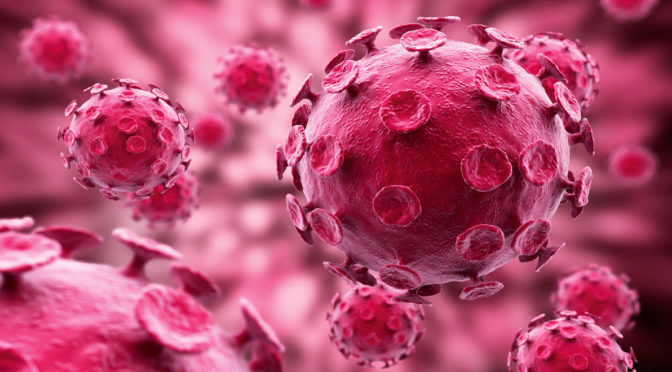
“We are working towards a more broad-ranging view of the potential benefits of gaming and a deeper understanding of what types of games and features of games have a positive influence for which people,” says Johnson.

His overall advice is to “enjoy video games as part of a balanced diet. But think mindfully about what you play, how you play and how it makes you feel.”