Tag Archives: science magazines online

Dragonfly eyes inspire machine vision

Mechanical Engineering PhD Student Zahra Bagheri at the University of Adelaide in South Australia says that despite having low visual acuity and brains no bigger than a grain of rice, dragonflies are remarkably good at tracking prey.

“They’re not like mammals which have developed very good brains, and they have very low resolution eyes compared to other animals, but they can catch their prey more than 97 per cent of the time while they’re moving at very high speeds in very cluttered environments,” Bagheri says.

“That means they have adopted very efficient methods for target tracking.”

Bagheri is part of a team of engineers and neuroscientists that have used those methods to develop a machine vision algorithm that can be applied in a virtual reality simulation, allowing an artificial intelligence system to ‘pursue’ an object.

Her project is a combination of neuroscience, mechanical engineering and computer science, building on years of research in to insect vision already undertaken at the University of Adelaide.

Zahra Bagheri and Benjamin Cazzolato with the robot that will use the newly developed machine vision algorithm.

Zahra Bagheri and Benjamin Cazzolato with the robot that will use the newly developed machine vision algorithm.

“Detecting and tracking small objects against complex backgrounds is a highly challenging task. Consider a cricket or baseball player trying to take a match-winning catch in the outfield,” Bagheri explains.

“They have seconds or less to spot the ball, track it and predict its path as it comes down against the brightly coloured backdrop of excited fans in the crowd – all while running or even diving towards the point where they predict it will fall!”

This is known as selective attention. Dr Steve Wiederman is leading the dragonfly project, and conducted the original research recording the responses of neurons in the dragonfly brain.

“Selective attention is fundamental to humans’ ability to select and respond to one sensory stimulus in the presence of distractions,” Dr Wiederman says.

“Precisely how this works in biological brains remains poorly understood, and this has been a hot topic in neuroscience in recent years,” he says.

“The dragonfly hunts for other insects, and these might be part of a swarm – they’re all tiny moving objects. Once the dragonfly has selected a target, its neuron activity filters out all other potential prey.”

“It has diverse applications. It can be used in surveillance, wildlife monitoring, smart cars and even bionic vision.”

The team has emulated that ability with their algorithm. Rather than trying to perfectly centre the target in its field of view, Bagheri says the system locks on to the background and lets the target move against it.

“This reduces distractions from the background and gives time for underlying brain-like motion processing to work. It then makes small movements of its gaze and rotates towards the target to keep the target roughly frontal,” Bagheri says.

Because the algorithm is based on a dragonfly’s small brain and limited vision, it can rival insects’ abilities as well as those of more elaborate machine vision systems – all with relatively low complexity.

“It’s shown that we can do it with very low resolution cameras and very limited computational resources. It doesn’t need high-performance computers or anything like that.”

This bio-inspired “active vision” system has been tested in virtual reality worlds composed of various natural scenes. The Adelaide team has found that it performs just as robustly as the state-of-the-art engineering target tracking algorithms, while running up to 20 times faster.

“We are hoping to test it on a robot – we’re working on that right now. It has diverse applications. It can be used in surveillance, wildlife monitoring, smart cars and even bionic vision.”

Bagheri is lead author of the paper, titled Properties of Neuronal Facilitation that Improve Target Tracking in Natural Pursuit Simulations, which was published this week in the Journal of The Royal Society Interface.

This article was published on The Lead on the 11th June 2015. Read the original article.

Australia’s energy future

Australia’s renewable resources include wind, solar, wave and geothermal energy, and there’s significant research happening to improve generation and storage technologies to overcome the inherent disadvantage of intermittent flow.

The Australian Renewable Energy Agency (ARENA) has completed 32 projects and is managing more than 200 others, including several large-scale solar photovoltaic (PV) plants and wind farms, which are considered the most advanced technologies in terms of making a short-term impact on our renewable electricity generation.

Australia’s CRC for Renewable Energy (ACRE), which operated 1996–2004, developed a state-of-the-art facility for testing grid-connected renewable energy systems, as well as small-capacity wind turbines for remote generation.

Australian scientists at the CRC for Polymers (CRC-P) have made big strides in the development of flexible, lightweight solar cells, which CEO Dr Ian Dagley describes as the “antithesis” of rigid rooftop solar cells. These lightweight cells offer intriguing possibilities: their flexibility means they can be placed on a variety of surfaces, from walls to windows, and they can operate indoors to help charge electrical devices.

They’re also attractive because they’re considerably cheaper to manufacture than silicon solar cells. Dagley says his CRC-P team has been working on refining the manufacturing technique, which uses low-cost components and reel-to-reel printers. One of the goals is to increase the lifespan of the cells, which is about five years, whereas rigid cells last roughly 30 years.

Meanwhile, the CRC for Low Carbon Living (CRCLCL) is looking at ways to dramatically reduce greenhouse gas emissions by developing smarter, more energy efficient buildings and cities. CEO Dr Deo Prasad says lower carbon buildings can be realised by optimising design to ensure maximum energy efficiency, through integration of next-generation technologies, such as solar PV cladding and heat and electricity capture systems for on-site energy offsets, and by using more sustainable building materials that need less energy to extract, process and manufacture. At the suburb and city scale, Prasad says decentralised renewable energy generation, reliable storage and smart grids, linked with information and communications technology-based intelligence, will lower carbon impacts.

“We recognise there is not going to be a silver bullet solution to carbon reductions,” says Prasad. “The approach needs to be holistic and driven by industry and governments.”

There are challenges associated with increased renewable energy levels, but Australia’s National Electricity Market seems to be handling integration well so far, says Dr Iain MacGill, joint director of the UNSW Centre for Energy and Environmental Markets. Studies by the Australian Energy Market Operator show it’s possible to operate the national grid with 100% renewables. “It won’t be cheap – just a lot cheaper than unchecked climate change,” MacGill says.

Russell Marsh, director of policy for the Clean Energy Council, emphasises the importance of commitment. “Investors need long-term certainty to ensure a rate of return,” says Marsh. “The Federal Government needs to lock in a firm, long-term target.”

MacGill agrees that the right policies can incentivise investment, but adds that it requires leadership and social consensus. “Australia is contradictory on clean energy. We have an early history and remarkable success in renewable energy deployment, and fantastic renewable resources. But we are also among the world’s largest coal and gas exporters,” he says.

“Will we take a leadership role, or do all we can to keep our international coal and gas customers buying from us?”

energy5


Remodelling energy

While coal and gas continue to be our dominant energy sources, the once-burgeoning renewables industry has been hindered by the Federal Government’s recent review of the Renewable Energy Target (RET). The review recommended scrapping the 20% target for renewable electricity generation by 2020, resulting in political deadlock and investor uncertainty across the renewable energy sector.

Bloomberg New Energy Finance’s Australian head, Kobad Bhavnagri, says the review was especially damaging because it came “very close to making retroactive changes to a policy”.

“Whenever retroactive changes are made to policy it becomes, essentially, Ebola for investors,” he says. “When governments act unpredictably and destroy the value of existing assets, it scares people – for a long time.”

Australia generates more carbon emissions per person than any other OECD country. One-third are generated by the electricity sector, in which coal and natural gas account for roughly 85% of generating capacity. Renewables, mostly from hydropower, account for about 15%.

Reaching the 20% target during the next five years will not be cheap. At the time of the review it was estimated that another $18 billion of investment would be required to reach the target.

But the costs associated with increased generating capacity are yet to be weighed against the costs of potentially catastrophic climate change. Scientists have warned a 2°C increase in overall average temperatures from pre-industrial levels is the limit our planet can withstand before the effects of climate change become irreversible.

In December 2014, following the release by the International Energy Agency (IEA) of its report World Energy Outlook 2015, the agency’s chief economist and director of global energy economics, Dr Fatih Birol, told Bloomberg’s Business Week that global investment in renewable energy needs to quadruple to a yearly average of $1.6 trillion until at least 2040, to stay below that warming threshold.

Some of the world’s biggest economies have taken note. Estimates by the Climate Interactive indicate the US-China emissions deal, if implemented in full, could keep some 580 billion tonnes of CO2 out of the atmosphere between now and 2030 – more than all global fossil fuel emissions from 1990 to 2013.

In 2014 – while China spent US$64 billion on large-scale clean energy projects, increasing its 2013 total by about US$10 billion – the USA spent nearly US$13 billion on utility-scale renewables and continued to expand production of its almost carbon-neutral shale gas reserves (see here for Australia’s progress).

Research by Bloomberg New Energy Finance found Australian investment in large-scale renewable energy in 2014 was US$223 million – the lowest in more than a decade. 2014 saw Australia nose-dive from 11th largest investor in commercial clean energy projects to 39th, behind developing nations such as Honduras and Myanmar.


The 2040 outlook

If Australia is serious about boosting its capacity for renewable energy, 2040 is a good deadline, says Iain MacGill, joint director (engineering) for the Centre for Energy and Environmental Markets at UNSW Australia – by then we’ll need “a major infrastructure transition”.

Russell Marsh is Director of Policy for the Clean Energy Council, the peak body representing Australia’s clean energy sector. “With the right level of support we could see the deployment of renewable energy at least double between 2020–2040,” he says. “But if the target is not extended beyond 2020, it is unlikely that we will see further growth.”

This view is backed by the Australian government’s Bureau of Resources and Energy Economics (BREE). In a November 2014 report looking towards mid-century electricity production, it reported “In the absence of potential new policy initiatives, the relative shares of fossil fuels and renewables in electricity generation are not likely to change significantly”.

In fact, BREE’s projections show renewable generating capacity remaining stable, meeting 20% of Australia’s total demand from 2020–2050. In this scenario, coal-fired power would still account for 65% of electricity by mid-century.

There are concerns that the current policy uncertainty is reaching a tipping point, which could see companies exiting Australia or going into distress.

Policy uncertainty  is taking a toll on  the business end of renewable energy.

Policy uncertainty is taking a toll on the business end of renewable energy.

In July 2014, RenewEconomy reported that Recurrent Energy, a US solar power plant developer being acquired by Canadian Solar, was planning to cease its Australian operations, citing concerns over policy uncertainty. Several other large international renewable energy companies, including Spain’s Acciona and US-based First Solar, have warned of possible exits, should the Renewable Energy Target be amended.

MacGill says exits are inevitable. “Why would an internationally focused renewable energy company stay if there is no prospect for their projects to go forward?

“They can, should and will depart at some point,” he says. “And with their departure, we will lose institutional capacity – such as people, money and industrial knowhow – which will inevitably
slow our ability to deploy clean energy, and increase its costs.”

Marsh agrees the risk to the industry is significant. “Every day, week and month that goes by with a cloud hanging over support for the renewable energy industry are days, weeks and months when our international competitors are racing ahead of us – and reaping billions of dollars in investment in this global growth market.”

Dr Deo Prasad, CEO of the CRC for Low Carbon Living, says that while the effects aren’t as dramatic, policy uncertainty also impacts the research community, especially “end-user driven projects where collaboration is essential”.

“Many a research direction and focus has had to change over the years, for the worse, due to policy uncertainty,” he adds.

Myles Gough

CRC for Low Carbon Living

CRC for Polymers (CRC-P)

Transforming innovation in Australia

When it comes to fostering innovation and the commercialisation of world class research, there is something the United States has that we lack. We ought to learn from the successes of the US in this area, and emulate one program they have pioneered to give our own innovative industries a much needed kickstart.

For dozens of Australian researchers returning to the country after working in the US, the lack of an equivalent to the US’s Small Business Innovation Research (SBIR) scheme here reflects a major hole in our innovation ecosystem.

Charles Wessner, Professor at Georgetown University and Director of the Global Innovation Policy unit, says the SBIR scheme triggered a fundamental shift in attitudes in American universities when it was introduced in 1982.

According to Wessner, before SBIR, the Dean of a faculty would ask young academics how many publications were going to come out of their latest piece of research.

Thirty years on, the Dean is now asking whether the research can be converted into a product or service, and whether they should spin it out of the university to access SBIR funding. It has been a profound change of mindset, says Wessner.


Simple but effective

The SBIR scheme is a fairly simple design that hasn’t changed much since its introduction. US government agencies, which undertake more than US$100 million worth of R&D outside the agency, are required to allocate 2.8% of their R&D budget to these programs. Currently, eleven federal agencies participate in the program.

Each agency takes an active role in calling for R&D – “solicitations” is the term used in the US, and with a completely straight face – for areas of concern to them. For example, the US Department of Agriculture this year is calling for projects in 10 areas. They are unsurprising fields, like “aquaculture” and “biofuels and biobased products”, but with a bit more specificity under them.

Any small business (1–500 employees) can then bid to undertake projects against those solicitations. The US Department of Agriculture issues solicitations once a year, receives about 500 applications for “Phase 1” projects (those up to US$100,000 over up to eight months) and funds about 15–20% of them. If a project is success at Phase 1, they can apply for a Phase II award, which can be up to US$500,000 over two years. Some departments have further, larger Phase III stages, although the USDA doesn’t.

For the Department of Defense (DoD), 2.8% of its extramural R&D spend is a very large amount of money indeed. Moreover, if the Department of Defense is soliciting proposals for new work, it is very likely it’ll become the first customer of that small business if the project is successful.

The DoD already has a stake in the product, and is thinking about how it might work in its own ecosystem. Given the extreme complexity of military procurement procedures, having the DoD already staked in your product is a major advantage to a new company.

Carry on Phase II and then Phase III funding, sometimes in multiple series, are available in much larger amounts from the bigger agencies, and can run to tens of millions of dollars.

Don’t imagine that means all SBIR projects are short-term or lack scientific challenges. The US Navy uses about 1.4 billion tonnes of fuel annually, and the head of its energy program, Captain Jim Goudreau, said climate change transcends politics when you are talking about that much fuel.

He pointed out that the US military is already affected by climate change in many practical ways, like having less available live fire practice days each year in California. And as he said at the TechConnect World audience in Washington last week, the Navy is contracting for materiel to be delivered in 2040, which needs to be effective into the 2070s and 2080s. So it needs to cope with a changing climate.


Pull and push

At the TechConnect meeting in Washington last week, there were literally dozens of US federal groups talking to the science and business community about their innovation needs. Big departments, like defence and energy, are represented by many specialised teams seeking out companies to work for them.

It is “customer pull” in its rawest form. The science community is here in big numbers offering new technologies to the market. When “science push” and “customer pull” mix, then the chances of successful innovation rise to a new level.

At the same time in Philadelphia, the gigantic annual biotechnology conference, BIO, was underway with more than 15,000 participants from across the globe. The two big US science funding agencies – the National Science Foundation (NSF) and the National Institutes of Health (NIH) were there in force helping their SBIR companies meet up with big pharma and other collaborators to bring technologies to market.

It’s like a science festival writ large, but also in extreme detail, as companies search for new opportunities from the vast American research community.


Could it work in Australia?

The recent joint paper from Ian Macfarlane and Christopher Pyne, “Boosting Commercialisation of Research”, floated the idea that Australia needs an “SBIR-like” scheme. The Academy of Technological Sciences and Engineering (ATSE) has often pointed out that the lack of such a scheme is a gaping hole in the Australian innovation ecosystem.

We do have some “customer pull” oriented schemes, though. The Rural R&D Corporations definitely fall into this category, as do many of the Cooperative Research Centres (CRCs).

The government’s response to the recent “Miles Review” of the CRC program was to push CRCs to be even more industry-led.

Industry leadership is the mantra for the new Industry Growth Centres, but they are not going to be funding very much research. The ARC’s Linkage Projects and the newer Industrial Transformation Training Centres as well as the NHMRC’s Partnership Centres are each attempts to have push more of the nation’s R&D investment into more market-facing efforts.

But none of these schemes are aimed at boosting innovation from small businesses. Or at least, not exclusively so. They are often encouraged to do so, and make sporadic attempts to improve their small business engagement, but it is clearly a weak spot in the Australian innovation context.

Small businesses that are trying to expand with innovative technologies constantly struggle to raise funds at early stages of development.


Bridging the gap

SBIR is not of itself a scheme for collaboration; the small businesses involved can undertake all the R&D themselves. But the experience in the US is that SBIR fosters collaboration as high technology start-ups seek to source expertise from universities and other research agencies.

Universities immediately increased their rate of spinning out companies on implementation of the scheme in 1982. The SBIR funding attracts further seed and venture capital funding, bridging that “valley of death” between early research funding and the business becoming self-sustaining.

Ultimately, many of the small businesses get bought out by large companies, particularly in the defense and pharmaceutical areas, where massive ongoing investment is needed to introduce new products.

There’s no doubt that an SBIR scheme would fill a major innovation gap in Australia, and no doubt we could make the necessary administrative arrangements. But for an SBIR scheme to truly succeed in Australia, there would be a few hurdles that I’d suggest must be overcome before we spent the first dollar. I call these the “Fair Dinkumness” tests to ensure an Australian flavour.


Fair Dinkumness test 1

Would there be true political support?

Unless a scheme enjoyed bipartisan support, there would be no point in introducing one. With one of the shortest electoral cycles in the world, Australia is at a major disadvantage in terms of stable policy in relation to innovation.

If the political support is there, then an SBIR scheme would need a significant investment of new money. Scrounging money off another under-funded program would simply be setting both up to fail. It takes some time for industry to become confident with new schemes and start to invest in a meaningful way. We’d need a real commitment.


Fair Dinkumness test 2

Would there be true bureaucratic support?

SBIR in the US works because it is a procurement scheme as well as an R&D scheme. The bureaucracy would need to seriously commit to using the scheme to improve its own departmental knowledge or services.

That means a solicited report to the Department of Environment on management of an endangered species would need to be implemented, not just sent to the library. That means the Army would need to buy the better boots from an Australian small business.

This is perhaps a bigger mindset change than either the politicians or the business community, and would need to be monitored closely, even if there was initial high level support.

For a small country such as Australia, it is often easiest to take the pathway of least risk – so Senate Estimates would need to cut bureaucrats some slack for backing Australian inventiveness too.


Fair Dinkumness test 3

Would Australian business truly back it?

If small businesses are formed just to access SBIR money, and want to survive on providing some research to government, then we are no better off. If peak industry bodies view the money as simply an entitlement for their members, then nothing new will happen.

The whole point of giving a big innovative boost to small businesses is to turn them into high-growth businesses. Existing bigger businesses would need to accept that they won’t be able to access the scheme, and they might even be faced with competition from those that do become successful innovators. An SBIR scheme by its very nature involves giving a leg-up to the new players in town, and the incumbent players need to accept that situation.

If the federal government did undertake to create an SBIR-like scheme in Australia, it would easily be the biggest reform of the innovation ecosystem in the country since the Hawke government’s raft of “Clever Country” policies.

It may not be the size of the Medical Research Future Fund as that scheme grows, but it is significantly more complex to implement. There is no doubt the government wants business and research agencies to come together much more closely. An SBIR scheme would be a massive step in that direction.

Tony Peacock

This article was first published by The Conversation on 25 June, 2015. Read the original article here.

Exploring carbon capture and storage futures

The Great Ocean Road, about 200 km southwest of Melbourne, draws millions of tourists to view the spectacular cliffs and limestone stacks known as the Twelve Apostles, carved by relentless Bass Strait waves and winds. But this region is as rich in fossil fuels as it is in scenic beauty, and several commercial gas fields have been opened in the Otway Basin along the continent’s southern margin.

There is also the CRC for Greenhouse Gas Technologies’ (CO2CRC) flagship carbon capture and storage (CCS) trial: the CO2CRC Otway Project – the world’s largest demonstration of its kind.

Since the project started in 2008, the Australian government, US Department of Energy and CRC partners have funded the injection of more than 65,000 tonnes of CO2 into the Otway Basin’s depleted gas fields, without leakage or measurable effect on soil, groundwater or atmosphere.

The project was further boosted by $25 million in Australian government funding in February this year. “The wide-scale deployment of CCS is critical to reduce carbon emissions as quickly and cost-effectively as possible,” says CO2CRC chief executive Tania Constable. “This funding will enable CO2CRC to embark on a new program of research to improve CCS technologies.”


Australia is well-endowed with natural resources. Its known uranium reserves are the world’s largest, and it is rich in natural gas. Traditionally, the most important resource has been coal: Australia has the fourth largest coal reserves globally and is the world’s second biggest coal exporter behind Indonesia. Coal exports – which have grown 5% annually over the past decade – will earn $36 billion in 2014–2015.

Figures like these have led Prime Minister Tony Abbott to declare coal “an essential part of our economic future”. Professor Chris Greig, Director of the University of Queensland’s Energy Initiative, a cohort of research expertise across all energy platforms, anticipates the country will continue to be reliant on fossil fuels, including coal, until at least mid-century. But just how far beyond that depends on how the world – particularly China, one of Australia’s biggest coal customers – addresses future climate change.

In 2014, the US-China emissions deal set China a goal to source 20% of its energy from zero-emissions sources and peak its CO2 emissions by 2030. In August 2014, amid worsening public sentiment over air pollution, the Beijing Municipal Environmental Protection Bureau announced that it would be phasing out coal-fired power in the capital’s six main districts by 2020.

China has been pouring money into the development of renewable energy technologies, spending an estimated US$64 billion on large-scale clean energy projects in 2014 alone. This was five times more than the next biggest spender, according to market analyst Bloomberg New Energy Finance. China is also investing heavily in CCS technologies, with at least 12 projects currently underway.

energyin3


There are several pathways toward reducing emissions from the electricity sector – from the adoption of nuclear energy and greater uptake of renewable sources and natural gas, to more efficient power plants and modified diesel engines that can burn liquefied coal. CCS, however, is one of the most promising methods for reducing emissions from coal-fired power stations. Capture technologies isolate and pump CO2 underground to be stored in the pores of rocks (see graphic page 29).

Rajendra Pachauri, who until early 2015 was Chair of the Intergovernmental Panel on Climate Change, told the UN 2014 Climate Summit in New York, in September 2014: “With CCS it is entirely possible for fossil fuels to continue to be used on a large scale”.

Dianne Wiley, CO2CRC’s program manager for CCS, says CO2 capture technologies are already available to install. Their deployment is limited by high costs, but there have been strong successes. Wiley points to the commercial scale Boundary Dam Integrated Carbon Capture and Sequestration Demonstration Project in Saskatchewan, Canada – the world’s first large-scale power plant to capture and store its carbon emissions – as a good example of what’s possible with CCS technology. It became operational in October 2014 and, its operators say, is already “exceeding performance expectations”. The CAN$1.3 billion cost of the system should drop by around 30% in subsequent commercial plants, says Brad Page, CEO of the Global CCS Institute.


Greig says that investment decisions in favour of CCS in Australia won’t happen until more work is done to find high-capacity storage basins around the continent that can safely and reliably store CO2 emissions for several decades.

Constable says the recent injection of capital from the Federal Government to the Otway Project will help the CRC take the necessary steps to meet this challenge. She says it will “lower the costs of developing and monitoring CO2 storage sites, enhance regulatory capability and build community confidence in geological storage of CO2 as a safe, permanent option for cutting emissions from fossil fuels”.

Retrofitting CCS technology to existing plants isn’t an option: Greig likens that to “building a brand new garage onto the side of a house that’s falling down – you just don’t do it”. CCS would therefore require investment in new coal-fired power stations.

“A well-conceived energy policy for the electricity generation sector would see ageing, low-efficient plants replaced with high-efficiency ultra-supercritical [coal] plants,” says Greig, adding that these plants have lower emissions simply by virtue of their efficiency and could achieve emissions reductions of 25% compared to existing plants.


How CCS works

energyinset1

The first step of carbon capture and storage (CCS) is capture. It involves separating CO2 from other gases in the exhaust stream from a fossil fuel power plant or some other industrial facility. This can be done with solvents that absorb CO2 or with ceramic and polymer membranes that act as filters. Once isolated, CO2 is compressed into a state in which the difference between liquid and gas can no longer be distinguished. It is then transported via pipeline to a prospective storage site. Here, the CO2 is injected into an underground reservoir, such as a geologic formation or depleted oil field. The CO2 has to enter the rocks without fracturing them, and can then be stored underground for thousands of years.

Myles Gough

CO2CRC

Award-winning app boosts mental health help for youth

You are 16 years old and have a secret, which you’ve been carrying around for what feels like your whole life. You feel trapped so you turn to marijuana and alcohol to numb the pain. Your grades begin to slip and your parents are worried so they send you to a psychologist. During your first visit, the clinician in the waiting room starts asking questions, and all you can hear is your heartbeat ringing in your ears.

When it comes to receiving effective mental health treatment, early diagnosis and non-judgmental support are essential. In order to assess what types of treatment options are available, many clinicians start with a verbal assessment. However this verbal assessment is a barrier for many young people, preventing treatment. Psychologist and PhD candidate Sally Bradford recognised that young people between the ages of 12­­–25 could benefit from a different kind of assessment.

“They’re going into an environment where they’re expected to verbally relay everything that is going on in their lives – to tell their deepest, darkest secrets that they may have never said out loud before,” Bradford says. “It can take a long time for them to find the words – especially if the clinician doesn’t ask the right questions,” she says.

As part of her PhD focusing on the use of technology in face-to-face mental health care with young people, Bradford created the electronic psychosocial assessment app called “myAssessment” that helps clinicians evaluate young people quickly and easily. Speaking to the National Mental Health Commission’s review of Australia’s mental health system, this new screening process underscored the need to improve health services and support through innovative technologies.

“The app could be beneficial in any field where you’re needing groups of people to be truthful, and give answers in a way that they do not feel judged,” Bradford says.

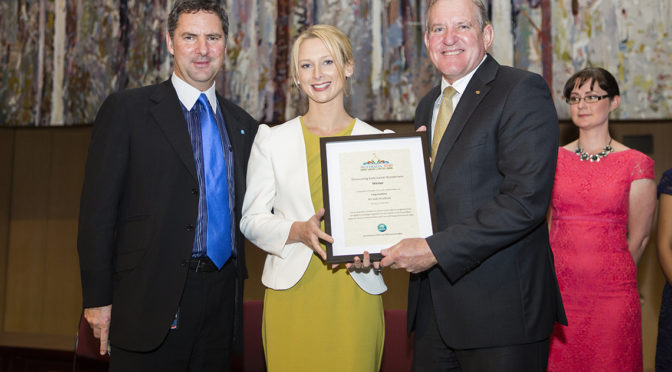
Based on the strides Bradford made in youth mental health with the invention of myAssessment, she was awarded the $5000 top prize at the CRC Association Early Career Research Showcase at the CRCA’s Excellence in Innovation Awards Dinner in Canberra.
240615_mentalhealth7

The app was developed in close conjunction with the Young & Well CRC, youth focus groups and clinicians, and subsequently trialled at a headspace Centre in Canberra over nine months in 2014.

“The app was designed with significant input from young people and clinicians, and puts their needs and requirements first. For clinicians, it follows an evidence-based format and doesn’t require changes to the way they currently provide services. For young people, it’s interactive, engaging, and easy to use,” Bradford says.

240615_mentalhealth3

The way it works is a patient arrives for their appointment. Prior to seeing a clinician, patients complete myAssessment on an iPad in the waiting room. The app is a simple survey, but with a range of different response options. Topics include alcohol and drug habits, sexual preference, eating habits and anxiety and depression. Questions include screening and probing questions. Screening questions can be a yes or a no answer that prompts further questioning: Do you drink? Smoke? Have you tried or used drugs? What have you tried?

A probing question allows for a more comprehensive understanding of the issue, such as, how do you (and your friends) take them? (drugs). After answering and submitting these questions, a personalised ‘Clinician Summary’ details the patient’s risks and strengths, providing the clinician with a foundation for the first interview.

240615_mentalhealth5

Bradford’s trials proved to be particularly enlightening, with an 87% response rate, and ¾ of patients reporting that myAssessment provided them with an “accurate” representation of themselves. The results also showed that young people were up to 10 times more likely to open up about drug and alcohol use, sexuality, and self-harm when the application was used, in comparison to a verbal assessment with the same questions.

“There was a wealth of data generated over the course of the trial, which could be particularly useful for policy reform in the future,” Bradford says.

Kara Norton

Young & Well CRC 

Understanding athletes’ immune function to optimise performance

With the Gold Coast Commonwealth Games looming in 2018, a key concern for athletes will be how to prevent illness from interfering with their training and performance.

This is the focus of new research at Griffith University. Partnering with the Australian Institute of Sport to examine the effects of exercise on the immune system in order to help athletes compete at their best, the research team say that illness during competition can destroy years of effort and dedication.

“On average, highly trained athletes spend 8 to 12 years training to compete at their best,” says Professor David Pyne from Griffith’s Menzies Health Institute Queensland (MHIQ).

“Given the time, effort and financial considerations made by athletes, their coaches and support staff, there is a need to find ways to keep athletes healthy during heavy training, travel and competition.”

Dr Nic West

Dr Nic West

Susceptibility to illness

Professor Allan Cripps, a leading immunology researcher at MHIQ has worked with Pyne and Dr Nic West in a bid to understand why athletes seem prone to illness during heavy training and competition.

“There is evidence that endurance exercise compromises immune function and increases illness in some athletes,” says West. “Intensive exercise, particularly endurance exercise, such as triathlon, long distance swimming and ironman events, can be associated with exercise-induced immune suppression where the number and function of immune cells is decreased and their ability to respond to challenge is lowered.”

For the current study the research team is seeking highly trained male triathletes and iron men between the ages of 18-35 years who undertake 12 hours or more exercise per week.

Athletes will have their immune, gut microbiota and metabolic systems profiled and compared with non-athletes.

A significant benefit of the study is that participants will receive information regarding the status of their own immune function that can be used to tailor individual training programs.

The study is taking place at Griffith University’s Gold Coast campus.

“We hope that participation and knowledge gained from this study will help elite and non-elite athletes to attain their performance goals,” says Pyne.

This article was first published by Griffith University on 16 June, 2015.

Help to combat pest animals is only a click away

The toolkit is a one-stop shop of practical knowledge to arm farmers and land managers with the information and connections they need to combat pest animals.

IA CRC digital communications manager Keryn Lapidge said, “We are pleased to have the Minister for Agriculture, Barnaby Joyce, officially launch PestSmart Connect today, recognising this as an important knowledge hub for tackling pest animal problems such as wild dogs, which have become a really big economic and social issue for Australian farmers.”

The website also links to the FeralScan website and app which provides people with the capability to map pest animal sightings and damage and then to use this information to track and control the problem.

“This website is really strong on connecting people and communities. A feature is the ‘connect’ portal which aims to provide contact details of agencies, organisations and groups that are active in pest animal management and can provide people with services, useful advice or assistance – at a practical on-ground level, but also at a policy level,” she said.

The PestSmart Connect website features pest animal species that are a having a major impact on biodiversity and agriculture in Australia including wild dogs, foxes, feral cats, rabbits and carp. There are handy glovebox guides, videos about trapping and baiting, case studies and links to assistance.

“We hope this will be a useful knowledge hub for farmers and land managers and we plan to continue to improve the resource over time,” Lapidge said.

The PestSmart Connect website www.pestsmart.org.au is the culmination of ten years of information gathering and research by the IA CRC – Australia’s largest integrated pest animal management research organisation.

Minister for Agriculture, Barnaby Joyce, launches the PestSmart Connect website - a handy toolkit of pest animal management information for farmers and land managers.

Minister for Agriculture, Barnaby Joyce, launches the PestSmart Connect website – a handy toolkit of pest animal management information for farmers and land managers.


This article was first published by the Invasive Animals CRC on 16 June, 2015.

Taking medical device from design to life saver

When paramedics or emergency personnel discover a patient who has suffered massive facial or airway trauma, often in situations like a car crash, they may have to perform a cricothyrotomy, which involves stabbing a tube into the patient’s throat so they can breath.

It’s a procedure you want them to get right.

But in these life-threatening situations a paramedic or doctor may have only ever performed the procedure on a training device. It’s therefore doubly important that this device teaches them the correct technique in an accurate and realistic way it’s life or death.

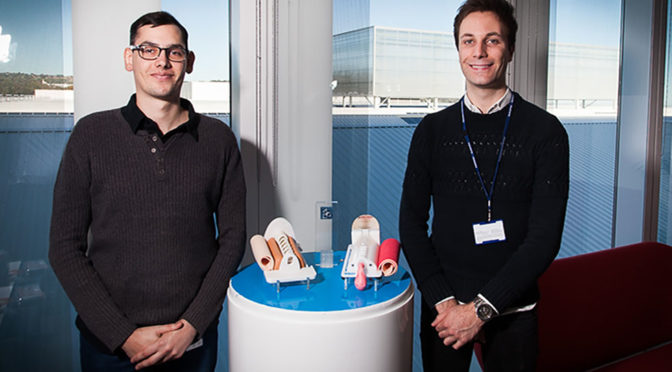
Many doctors will now be training for complicated cricothyrotomies on a German-built Crico Trainer called ‘ADELAIDE’ designed by Robert White and Daniel Weiss in South Australia.

“The procedure, it’s not something that most doctors will have to use,” says White, one half of the WHITE + WEISS design team.

“No one really wants to stick a tube through your throat, but if you need it, they need to know how to do it properly, to prevent you from dying.”

A cricothyrotomy involves sticking a needle and cannula through the Adam’s apple, inserting a guide wire through the cannula in to the windpipe, removing the cannula, making a small incision at the base of the guide wire, threading a Melker Crico kit (an airway catheter and curved dilator) on to the wire, and finally removing the wire  thus clearing the patient’s airway.

Medical students practice the procedure on any number of trainers, simulators and manikins, but as Daniel Weiss says, they are not all very realistic.

“Beyond just the student learning it, it’s about muscle memory,” says Weiss. “In an emergency when you don’t have time to think, you need your muscle memory to work.”

The realistic Crico Trainer ADELAIDE was conceived by White and Weiss during their Masters of Industrial Design at the University of South Australia in 2012. It’s a practical course with real clients who have real design problems.

“This particular project started with the University of Adelaide medical school. They teach their students all sorts of procedures on all sorts of medical trainers. They found that there’s a number of these trainers they weren’t happy with,” White explains.

White and Weiss both decided to tackle the cricothyrotomy device, although they were working separately at the time. They were put in touch with Dr Chris Acott, the Southern Hemisphere’s foremost throat and neck expert.

The two designers attended Dr Acott’s workshops at the Royal Adelaide Hospital, training with doctors, seeing how they use the simulators and using them themselves. They had access to Dr Acott’s collection of Crico Trainers, many of which they realised were “pretty average”.

“The existing trainers were pretty basic,” says White. “There was a basic neck shape with an Adam’s apple and a skin that stretches over the top. They were missing obvious stuff  like a chin  which seems like a really basic thing.”

As they watched some doctors insert a tube and the designers realised they were coming in at an angle that would be impossible on a real person because the chin would be in the way.

“Dr Acott would catch it and remind them that they’d have to come in at an angle,” says White. “But if an instructor missed that, they student is going to learn that procedure incorrectly.”

After eight weeks of designing their individual versions of an improved Crico Trainer, White and Weiss took their prototypes to Dr Acott. He liked aspects of both, and suggested they combine the two.

In 2013 the men decided to continue the project outside of their Masters course, receiving a grant from ITEK, the University of South Australia’s commercialisation arm, to develop a prototype.

They worked through eight prototypes with Dr Acott before arriving at a model everyone was happy with.

It was a significant improvement on the available devices. The chin was an obvious addition, but many other smart touches also improved the usability and accuracy of the trainer.

“It was very cumbersome to put the skin on the old devices,” says White. “Ours is slotted where it can slip through and pull taut. You can use it again and again. We also added multiple layers of skin to add more realism.”

Crico Trainer ADELAIDE

Feel is an important part of the procedure – doctors have to find the Adam’s apple quickly and accurately to perform a cricothyrotomy. The team also added additional layers of skin and a squishy adhesive layer to enhance the feel.

“A lot of simulators are designed to simulate the perfect case scenario,” Weiss says. “But you’re not going to be looking at the perfect 30 year old male every time  there might be damage or irregularities. That’s something we tried to incorporate, making the throat adjustable.”

Once the device was finished, ITEK started to shop the idea around to medical simulation companies. German company VBM Medizintechnik GmbH took an interest.

A licensing agreement was written up, and VBM redeveloped their Crico Trainer from the ground up based on White and Weiss’ design. With a nod to the simulator’s South Australian origins, they named the trainer ADELAIDE, after the capital city of the state, and attached a label crediting White + Weiss and the University of South Australia for the design.

The team also won a number of awards for their design. They received a Gold Student Award from the Design Institute of Australia, a Premier’s Award from the Premier of South Australia, Jay Weatherill, and were national finalists in the James Dyson awards last year.

White + Weiss are working together again, this time employed by the University of South Australia as industrial designers at the Hills Innovation Centre at the industry cluster Tonsley.

Their current project is a nurse call device for aged care residents living with arthritis. Current devices are ill suited for elderly people with dexterity issues.

“They can use this type of device ten to thirty times a day. Most have small, fiddly buttons. They can have a lot of difficulty pressing it,” White says.

Their device doesn’t have a traditional button but rather a soft, flexible silicon bulb with an air pressure switch. Residents can squeeze it with minimal dexterity, use their whole hand or press it against an object. It’s an attractively designed device that lights up when activated – the result of nearly a year’s work.

“It’s currently making its way towards production. It should be underway in the next couple of months, once the tooling is ordered and underway. It should be in production and on the market later this year.”

– Jack Baldwin

This article was first published on The Lead South Australia on 4 June, 2015.

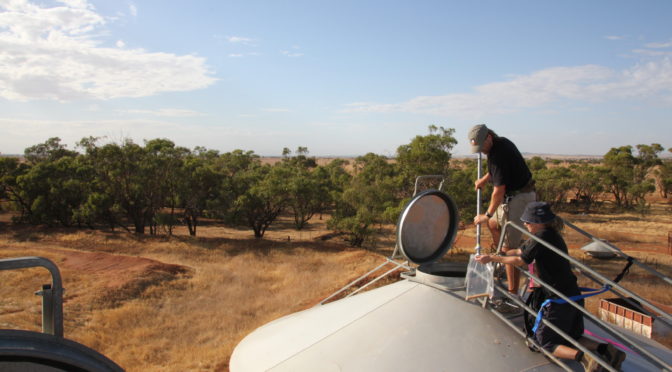
Lending fresh air to grain pest problem

The study is led by the Plant Biosecurity CRC, partnering with the Western Australian grower collective Mingenew-Irwin Group (MIG), and is part of the CRC’s program to find solutions to a global problem in the wheat industry that has intensified during the past decade – phosphine resistance. Phosphine is the industrial fumigant most widely used worldwide to kill and control beetles and weevils in stored grains, but its effectiveness is declining due to the development of resistance.

Former-owned and independent research company Kondinin Group has been engaged to trial an alternative practice called aeration. It’s been around as a concept for a long time but is not widely adopted. It requires cool, dry air to be pumped into stored grain. The CRC study has shown that this can be done simply and economically – and that it works.

“I think it’s pretty exciting in terms of looking for options and alternatives as well as supplementary solutions to combating insects in grain storage,” said Kondinin Group research manager and agricultural engineer Ben White, who has been running the experiment.

White and his team have been testing a simple set-up on 70 tonne cone-bottom silos – the typical type used throughout WA’s wheat belt. At the base of the silo, they place a 550 watt centrifugal fan that’s switched on and off according to ambient humidity and temperature as measured by an aeration controller mounted nearby. The conditions that cause the fan to switch on are determined by simple algorithms, one of which was developed many years ago and licensed by the CSIRO.

The aim is to only run the fans when ambient humidity is below 80%. If air temperature and humidity levels are suitable, air is pumped through the stored grain at the rate of 2–3 L per second, per tonne, which cools the grain. While this doesn’t kill insects, it reduces their activity significantly and creates conditions in which they are unable to breed.

Another benefit identified by the Kondinin trial is that aeration reduces proportions of non-sprouting grains. Aeration has been shown to produce a net benefit of over $2 per tonne, which is $140 per silo, and pays for the aeration system within a year. This is in addition to the other potential savings from reducing or eliminating phosphine use.

Sheila Charlesworth, executive officer for MIG, says the study proves there are economic benefits to aeration, and her growers intend to implement it. In addition, growers from NSW and Queensland who travelled to WA to observe the method have since adopted it in their home states.

– Karen McGhee

www.pbcrc.com.au

Tracing security issues to the source

After running a series of consultation workshops with Australia’s defence and law enforcement agencies, the $80 million CRC has drawn up a five-year research roadmap for its data analytics projects.

These include using data streams to build a Wikipedia-style briefing resource on criminal activity, data privacy protection policies, and integrating different datasets across national and federal law agencies.

The CRC’s chief technical officer Dr Brenton Cooper said building machine learning, or “machine enablement”, is a critical component of data analytics. Sophisticated machines can collate and scan a vast volume of material, and are programmed to pick out key phrases, figures and spikes in social media activity that could be relevant to counterterrorism operations. The information will be used to build digital technology tools for defence.

“We’re building an app called Beat the News,” he said. “The idea is to develop a warning system based on data from a wide range of freely available sources that can map social responses to things such as food prices, cost-of-living pressures, crime rates and local news events.”

The app is being designed as a data analytics tool for defence strategists, and Cooper explained that the system is focused on mapping “population-level events” as reflected by social media patterns, rather than individual use. “We’re not going to be interested in what Joe Bloggs is doing,” Cooper said.

The CRC is also working on a project to build a rapid-response briefing tool that will collate data and present a Wikipedia-style page of information on an emerging threat. Cooper uses the example of a ship that might be suspected of smuggling drugs into Australian waters.

“We’re working on a system that could rapidly pull together all the information that’s needed on that particular ship – where its last port was, where it went on its most recent voyages, and whether any of those ports are implicated in global drug smuggling operations,” he explained.

“Instead of being swamped with information options – which is what happens when you use Google to find something – we’re building a tool that will provide analysts with the information they need, quickly and efficiently.”

Another data issue facing Australia’s police forces, and other law enforcement agencies such as customs, is the lack of a central data repository. Can state and federal data sets be combined? It’s not as simple as it sounds.

“It’s a complex and sensitive area of data management,” Cooper said. “There are questions to be resolved around data ownership, access and responsibility for maintaining a centralised data repository.”

Privacy is also a key research area, as is public education about how data analytics can be used to benefit society. The Cronulla race riots that occurred in Sydney in 2005 predate Twitter by just a year, and Cooper said it’s possible that data analytics of a spike in Twitter activity (had the mini-blog site been around) would have predicted that tensions were likely to erupt.

“People might be uneasy about data analysis of social media activity, but we’re looking at patterns not individuals. It’s a bigger social picture.”

Rosslyn Beeby

www.d2dcrc.com.au

A field guide to frogs can now fit in your pocket

With more than 200 frog species in Australia, compiling an electronic field guide – in the form of an app – would be a daunting task. But that is exactly what JCU researcher Dr Conrad Hoskin and PhD student Stewart MacDonald have achieved, along with Professor Gordon Grigg (UQ) and David Stewart.
After three long years of hard work, the “Frogs of Australia – eGuide” has just been released for sale on iTunes and is compatible with iPhones, iPads and iPod touch.

-ZaWJhP9Dv7pDJy8KymMhOGS_k_oXyYgjPZJxan_bT0

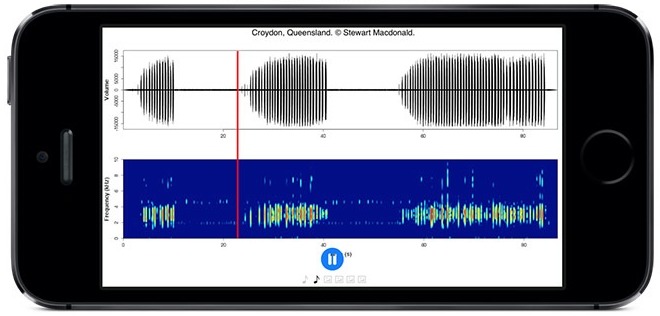
The app is the most comprehensive available on the market, and the only one to feature up-to-date descriptions, location maps, call sounds and images of nearly all 238 known frog species in Australia. (Images and call data are missing for just a few frogs that are extremely rare or thought extinct.)

The app has a number of easy-to-use navigation options and also plots your position and allows you to search for local frogs. “There is nothing like this app on the market,” Dr Hoskin says. “It took the four of us years to complete, with plenty of time and effort going into getting the app together with all the text, maps, photos, and calls.”

“Field guides are really only useful if they’re comprehensive and ours is the only app that covers all currently described frog species,” said Stewart MacDonald, who developed the app.

“We will be constantly updating the app as new frog data comes in, and an Android version is currently in development.”

As for the ethos behind all the hard work that went into making the app, Dr Hoskin says they made it as a resource for the community. “It is important that people learn and love the wonderful world of frogs. It is comprehensive, so that frogs will be identified correctly. Ultimately we hope it will help frogs, the most threatened of all wildlife groups.”

Open your mind

Back in 1990, the internet was just a twinkle in the eye of a few scientists at The European Organization for Nuclear Research (CERN). Mobile phones were awkward bricks wielded by showy stockbrokers. Personal computers had not yet made the transition from the office to the home.

Fast forward 25 years, and more people have access to mobile phones than working toilets. Technology has revolutionised global communications, culture and business. Video chat software Skype has more than 300 million active users.

While three billion of us already have internet access, Google plans to supply the rest using high-altitude balloons (Project Loon) and solar powered drones (Project Titan) to beam wi-fi across developing nations.

Even language is no longer the barrier it used to be, with the advent
of real-time translation technologies enabling communication without a human translator. As of January 2015, we are using Google Translate to make one billion translations per day.

So what do the next 25 years have in store? “The general trend is that technology is becoming more and more a part of everyday life,” says Professor Rafael Calvo, a software engineer at the University of Sydney. While some are questioning how technology may be affecting us adversely, Calvo is researching how computers may
be able to contribute positively to our mental health. “Positive computing is changing the design of technologies to take into account the wellbeing and happiness of people,” he says.

For example, games have been designed to encourage ‘pro-social’ behaviours. In one study at Stanford, researchers built a game where players were either given the power to fly like Superman or take a virtual helicopter ride. After playing, the participants who had the superpower were more likely to help someone in need.

Though computers are traditionally seen to have a blindspot for emotions, recent advances are paving the way for computers to notice and adapt to our moods – a phenomenon called affective computing. “Some new cameras have a setting where they only take a photo when you smile,” says Calvo.

Calvo’s team has developed software to assist moderators of Australia’s leading online youth mental health service, ReachOut.com. It can detect when someone is depressed, and possibly at risk of suicide, and alert a human moderator. His group has also teamed up with the Young and Well CRC to build an online hub where young people can download apps to help improve their wellbeing.

For Calvo, this technology represents a transformation in how software is being made – aiming to improve wellbeing, not just productivity. “Our work is centred on influencing how people develop software. Australia leads the world in this field.”

New technologies could also change the way we learn, says Professor Judy Kay from the University of Sydney. Kay and her team are exploring the use of touchscreen tabletops in the classroom as tools for students to work together. They can also help teachers monitor each group’s work. “This technology can distinguish the actions and speech of each person in a group to determine how well the group is progressing and how well they collaborate,” she says.

The movie Her presents a future in which we will have intelligent virtual personal assistants to help organise our lives. We can already tell Siri to “Call Mum” or ask Google if we need an umbrella today. But this is only the beginning.

Meet Anna Cares. She’s a friendly brunette who lives inside your tablet or smartphone as an intelligent virtual agent. Developed by Clevertar (a spin-out from the computer science labs at Flinders University), Anna is being developed for the aged care space. She can already remind you to take your medication and give timely advice based on the weather.

Dr Martin Luerssen is an artificial intelligence specialist from Flinders who works on the project. He says intelligent assistant technology has been enabled by the convergence of several advances over the past 10 years, including astonishing progress in computational and sensing capabilities, as well as speech and language technologies. Meanwhile, affective computing approaches are bringing improvements to understanding human gestures and expressions.
“This enables us to create very natural, human-like interactions,” says Luerssen.

“By 2040, we expect that there will be more Australians retired than working – we cannot afford not to have this kind of technology,” adds Professor David Powers from Flinders.

We already use voice-operated technology, but now an app called Focus, developed by the Smart Services CRC, enables you to interact hands-free with a smartphone using eye movement alone – for example, you can increase font size with the blink of an eye.

“Australia leads the world in this field.”

By 2040, it is plausible we will be able to control computers with our minds using brain-computer interfaces (BCI), such as a cap covered in electrodes that can transmit brainwaves to a computer via electroencephalogram (EEG). In 2006, technology by BrainGate enabled patients with total ‘locked-in’ syndrome (where a patient is aware but cannot move or communicate verbally due to paralysis) to move a computer cursor just by thinking, thereby giving them a way to communicate. In 2010, Australian entrepreneur Tan Le unveiled a commercially available EEG headset, enabling anyone with careful concentration to give their computer simple instructions with their thoughts.

But the process is slow. “At the moment, typing with BCI can take seconds per character,” says Powers. Flinders University researchers are working on new technologies where users can type by thinking of words rather than just characters, speeding up the process.

In a field where the sudden emergence of a new technology can change the entire landscape in just a year or two, who knows how we will be communicating in 2040?

“One thing I can say with confidence is that we are very bad at predicting the future!” says Kay.

– Cathal O’Connell

youngandwellcrc.org.au

smartservicescrc.com.au

Australia leads in manufacturing innovation

Engineering design and high-value products such as carbon fibre aircraft components are taking Australia to the forefront of global manufacturing innovation.

Australia continues to be a global innovator in manufacturing says Professor Murray Scott, chief executive of the CRC for Advanced Composite Structures (CRC-ACS).

“There are plenty of good news stories to be told about Australian manufacturing. We just need to be reminded of them a bit more often,” he says.

Professor Scott will be speaking on future challenges facing Australia’s manufacturing sector at the CRC Association’s annual conference at Parliament House in Canberra on 26 May. He’ll be part of a panel discussing what drives manufacturing innovation and will be emphasising the role the CRC program has played in creating new products, skills and export markets.

“The CRCs are still the best mechanism for engaging in the kind of long-term, industry-focussed research that’s needed to drive high-impact outcomes for manufacturing,” Professor Scott says.

Over the past 25 years, the CRC program has been behind many success stories in innovative Australian manufacturing, and CRC-ACS has been a standout.

One of its projects – developing technologies for composite wing trailing edge devices such as flaps and ailerons for the Boeing 787 Dreamliner commercial aircraft – is creating more than 3,300 direct and local flow-on jobs in Australia and will earn more than $4 billion in manufacturing export revenue over the life of the aircraft construction program. The production parts are manufactured in Port Melbourne and shipped to the 787 assembly plant in the United States.

And, when the US President Barack Obama visited Australia in 2011, he gave a nod to the project in his speech to federal parliament. “Our workers are creating new partnerships and new products, like the advanced aircraft technologies we build together in Victoria,” President Obama said.

CRC-ACS innovations include novel assembly methods for composite structures, retrofit technologies to improve the crash safety of military helicopters, and lightweight composite clamps to repair oil & gas pipelines.

“Most things in modern society are underpinned by engineering, and Australia already has a global reputation for innovative design. It is one of our acknowledged strengths in manufacturing,” Professor Scott says.

“A major characteristic of the many CRC success stories has been the high knowledge content that has contributed to new products and skills. Developing unique approaches to design and manufacture of high quality products is a critical factor in achieving commercial success, and the CRC program brings industry and researchers together to do that.”

The CRC Association’s annual conference is celebrating 25 years of science impact and achievement by the national research program. The CRCs were created in 1990 to bring scientists and industries together to work on some of the biggest challenges facing Australia.

These have included better bushfire science, manufacturing, digital technology, biosecurity, sustainable farming, water management and mental health issues underpinning the unacceptably high suicide rate among young people.

“The CRCs are an Australian success story. They were designed to create research impact, and their 25 year record of achievement speaks for itself,” says CRC Association chief executive Dr Tony Peacock.

Details of the conference program can be found at http://australia2040.com.au/

Uncertainty the core of policy design

Australia’s politicians should give up the idea of trying to design national policies based on inflexible and failure-prone future forecasts.

“Uncertainty and risk management should be at the core of national policy design,” says Australian National University economist and public policy research fellow, Professor Warwick McKibbin.

“A lot of policies in Australia are designed on the assumption that we can know the future, that it’s predictable. And when that inevitably turns out not to be the case, these policies collapse into chaos amid accusations of mismanagement and broken political promises.”

Professor McKibbin, who is also a non-resident Senior Fellow at the Brookings Institution think-tank in Washington DC, is one of the opening speakers at the Cooperative Research Centres Association’s annual conference at Parliament House in Canberra on 26 May.

The CRC conference is celebrating 25 years of science impact and achievement by the national research program. Federal industry and science minister Ian Macfarlane and Professor McKibbin will be part of an opening session that will present policy perspectives on what the next 25 years may hold for Australian science and innovation.

Professor McKibbin says the failure of Australia’s carbon pricing mechanism, and current uncertainties surrounding the renewable energy industry, should provide valuable lessons for future policy design.

“Climate policy should be designed to better manage risk by creating a flexible framework that balances expected environmental benefits against economic costs over time,” he says.

“It should be policy that encourages innovations, like alternative energy technologies, that will reduce emissions, but it shouldn’t claim to use science to set inflexible and precise targets for emission reduction at a point in time.

“Science should form the basis of a climate or carbon pricing policy, but the policy goals shouldn’t be tied to specific outcomes that claim to be the result of scientific calculations. That’s setting policy up to fail, and it will fail because it doesn’t allow for uncertainty and change.”

Professor McKibbin says a “stable and credible” policy environment is needed to shape Australia’s future in what will be a major global area of innovation.

“There are many ways to price carbon, and Australia needs to look at ways that will balance competing interests both at a national and global level,” he says.

“The best way to do that is plan for change and uncertainty instead of trying to lock down policy into prescriptive detail.”

The CRC program was created in 1990 to bring scientists and industries together to work on some of the biggest challenges facing Australia.

These have included better bushfire science, manufacturing, digital technology, biosecurity, sustainable farming, water management and mental health issues underpinning the unacceptably high suicide rate among young people.

“The CRCs are an Australian success story. They were designed to create research impact, and their 25 year record of achievement speaks for itself,” says CRC Association chief executive Dr Tony Peacock.

Details of the conference program can be found at http://australia2040.com.au/

The need for risk

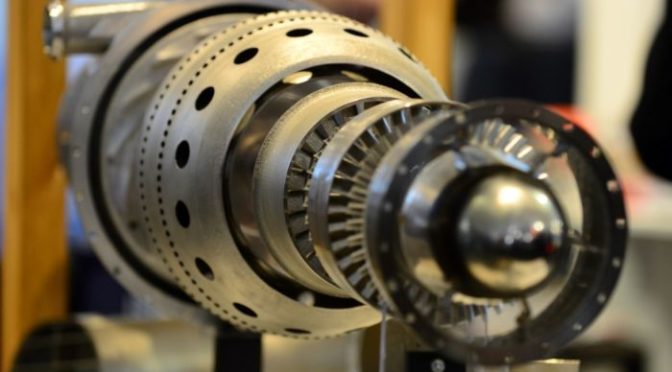
In February 2015, at the Australian International Airshow in Avalon, Victoria, Professor Xinhua Wu unveiled the world’s first 3D-printed jet engine.

Wu is the head of the Monash Centre for Additive Manufacturing (MCAM). The Centre, in collaboration with CSIRO, Deakin University and the University of Queensland, is leading initiatives to develop 3D printing and put Australia at the forefront of the global aerospace industry.

MCAM has partnered with French aerospace company Microturbo (Safran) whose work involves seeking out new manufacturing processes that make components lighter and cheaper than traditional ones, without reduction in performance. The two organisations pooled their expertise in additive manufacturing of metal to print two engines – one on display in Avalon and the other at Safran in Toulouse, France.

Bridging the gap between research and industry remains a goal for many nations, and the example of MCAM is a useful starting point for discussing the role universities could play in this.

Research and development is inherently risky, with high rates of failure. Companies are under pressure to deliver commercial returns to investors, yet the time frame for major innovations to be made often spans decades.

“Universities combine capability with tenacity – and odds are they’ll still be there in 25 years.”

Universities are in a position to assist industry innovation, however, because they have the capacity to apply resources to long-term projects and are willing to allow sufficient time for the process of discovery and application. They combine capability with tenacity. And while there are no guarantees, the odds are good that your university research partner will still be there in five, 10, or 25 years.

The world’s first 3D-printed  jet engine is the result of intense collaboration across academia and industry, led by the Monash Centre for Additive Manufacturing.

The world’s first 3D-printed jet engine is the result of intense collaboration across academia and industry, led by the Monash Centre for Additive Manufacturing.

For maximum benefit, commercially and otherwise, collaborations between industry and academia should focus on building enduring relationships that go beyond a single project or contact. Ideally, these partnerships should facilitate engagement at multiple levels.

Another way to offset the risks of R&D is for universities to address problems that entire industries need to solve, consulting multiple players in those industries to uncover what the major issues are. In the case of MCAM, the need for lighter, stronger parts is common across the aerospace industry, so its relationship with Safran has been a catalyst for relationships with Airbus, Boeing and defence contractor Raytheon.

These relationships are intensely collaborative, as university researchers work with their industry partners from the very early stages of each project.

This process is a far cry from the movie trope of the lone genius scientist who spends years in the laboratory, makes a miraculous discovery and only then emerges into the daylight. It’s about teams of experts investing the precious resources of time and trust for the long term – for it is from this investment that real gains will come.

Professor Margaret Gardner is an Australian academic, community leader and economist, and the current Vice-Chancellor of Monash University.

Professor Margaret Gardner is an Australian academic, community leader and economist, and the current Vice-Chancellor of Monash University.


Medicine by design

IT’S 2040. Jane taps her foot nervously, waiting for her smart watch to link to her oncologist via video. Her cancer-screening blood test (routine at age 45) has found circulating tumour cells. Jane is about to find out what type of cancer she has and what her next steps will be.

Her watch beeps, but it’s not the oncologist. Her health app bursts onto the screen telling her she’s been sitting for too long. Time to get up and move for five minutes… Does she want to listen to dance music? Jane’s not in the mood, but she gets up and paces the room.

Miranda, the oncologist, has most of her patient consultations via online telehealth video conferencing. Her first step following Jane’s blood screen result was to download her patient’s genome. Then she ran a computer program to compare Jane’s genome with the set of blood test results that showed she has breast cancer; revealing its type and the cancer cells’ DNA sequence.

Using data from hundreds of thousands of breast cancer cases worldwide, the program helps Miranda devise an optimised treatment program for Jane. She presses the button to begin the consultation.

Miranda breaks the news gently. Cancer is a worry, of course, she says. But things are so much better than they were 25 years ago. She is confident the imaging will find a tiny primary tumour, which can be removed – in a surgical procedure known as a lumpectomy – and then Jane will have drug therapy for several years, with few side effects, to dramatically reduce the chance of the cancer spreading (metastasising).

Most people beat breast cancer nowadays and there is usually no need for chemotherapy, Miranda reassures her.

“One in two of us will get cancer and one in five of us will die from cancer. One of the challenges at the moment is what’s called ‘treating the undetectable’.”

Science fiction? Yes. But it certainly may become science fact, according to Dr Warwick Tong, CEO of the Cancer Therapeutics CRC (CTx), and Professor Bob Cowan, Chief Executive Officer of the HEARing CRC.


Mopping up cancer

In Tong’s view, blood tests – or ‘liquid biopsies’ – to screen for all types of cancers will become routine. The basic technology already exists, at least for colorectal cancer, he explains.

Tong is spearheading a new approach to cancer drug therapy. While most chemotherapy drugs shrink secondary tumours that result from metastasis, CTx is working on ‘mopping up’ cells that migrate from the original tumour at a very early stage.

“One in two of us will get cancer and one in five of us will die from cancer – and 90% of those deaths are caused by vast metastatic spread,” he says. “One of the challenges at the moment is
what’s called ‘treating the undetectable’. We treat primary cancer pretty well nowadays, but often the disease reoccurs years down the track.”

Drugs used in early stage cancer, alongside treatment of the primary tumour, are called ‘adjuvant’ therapies. But, Tong explains, few pharmaceutical companies are exploring adjuvants because the research is expensive and it’s difficult to prove they work. In fact, most of the few existing adjuvants – such as the drug tamoxifen, which is used for breast cancer – were developed for late cancer and have become adjuvants through chance rather than design.

“The focus of our drug discovery program is ‘adjuvant by design’”, says Tong. And it is work like this at the CTx that may lead to 2040 drugs, similar to those Jane will use.


Treating the individual

Jane’s individual treatment protocol will typify 2040 medicine, explains Cowan. “Up to now, evidence-based medicine has been founded on group analysis. But in 2040, instead of applying group statistics to an individual, we’ll be able to understand their particular risk and make treatments more personal.”

At the heart of this lies our ability to sequence a person’s DNA, which can now be done for just a few hundred dollars.

Cowan predicts that the accumulating digital information on individuals will create a “data storm” and, ironically, as individualised treatment becomes the norm, the data available for group analyses will also massively increase. “So there may be factors we have been unable to identify because of variation in the environment and gene expression, which will become clear when we start to get much larger samples,” he explains.

Drawing on his experience in hearing, Cowan foresees major advances in prosthetics. The hugely successful cochlear implant, developed in conjunction with HEARing CRC, is a prosthetic – the union of an artificial device with the human brain. “Australia leads the world in cochlear implants,” he says.

Sadly, one of the major drivers for prosthetics is war. The ravages of landmines and improvised explosive devices have brought increased funding for the development of better prosthetic limbs. The aim now is to marry the prosthetic more intimately with the individual’s own nervous system: something that requires new approaches for regenerating nerve connections.

Cowan’s vision for prosthetics is exciting: “You’ll simply think ‘pick up
the glass’ and your prosthetic arm will execute all the necessary movements as your own arm did in the past.”

creening computational specialist Rebecca Moss at the Cancer Therapeutics CRC  High Throughput Chemical Screening Lab.

Screening computational specialist Rebecca Moss at the Cancer Therapeutics CRC High Throughput Chemical Screening Lab.


Cost-effective medicine

Forecasts for 2040 predict that the
human population will include twice as many people aged 65 or over, which is concerning to Cowan because it means that a greater proportion of people will have problems with hearing and cognition.

“More and more we are going to see the need for reducing the strain
on the health system,” he says, adding that telehealth will be a very important aspect of this. “We need to deliver systems through our broadband network.” Treating more people at home, under medical supervision, rather than in hospital, is the way ahead, he says.

“We need to change the way that we do diagnosis, and involve the individual in managing their own health,” Cowan says, explaining that the technology is already here and it’s the healthcare delivery system that needs to change. “We have technology now that allows us to have a clinician based in Sydney programming a cochlear implant for a child in Samoa.”

The successful translation of Australian research into practice will be vital. “Australian basic medical research is excellent,” Cowan says. “We punch above our weight internationally. But, unless we take knowledge gained from research and translate it into a clinical application, it doesn’t make an economic return for Australia.

“To do that you need to involve clinicians from day one, which is exactly the approach of the medical CRCs.”

Clare Pain

www.cancercrc.com

www.hearingcrc.org

Growing the north

NEW OPPORTUNITIES abound for Australia’s farm industries to expand food exports into Asian markets following landmark free trade agreements with Japan and Korea in 2014.

The Japan-Australia Economic Partnership Agreement (JAEPA) came into force on 15 January 2015, allowing Australian exporters to benefit from two rounds of tariff cuts in the first half of this year. The Korea-Australia Free Trade Agreement (KAFTA) took effect on 12 December 2014, and eliminates tariffs for 84% of Australia’s exports to Korea.

Minister for Industry and Science, Ian Macfarlane, welcomed the agreements as delivering long-term benefits to the national economy, particularly to research and agriculture.

“This is a huge opportunity as Japan is our second largest trading partner and Korea is our fourth, with combined two-way goods and services trade worth more than $100 billion,” he said.

Beef, dairy, honey, herbs, cordials, juices and soft drinks were just a few examples of homegrown food exports that will benefit from greater access to Asian markets, he said.


OVER 25 YEARS, the CRC Program has helped target and secure access to Asia for some of Australia’s biggest food export industries. Australian scientists working in areas such as plant and livestock genetics, food processing, soil nutrients, biosecurity, and improved supply chain management have been vital to establishing links with Asian universities and business leaders.

The Australian Seafood CRC developed new markets for dried, salted and brined products such as mussels, scallops and squid in Japan and Hong Kong. The former CRC for Beef Genetic Technologies used genomics to improve the quality of beef export products and secure new markets in Asia, and the Sheep CRC has made Australian lamb a premium product.

The Desert Knowledge CRC, which transitioned into the CRC for Remote Economic Participation (CRC-REP) and its research consultancy Ninti One, also worked on developing primary industry opportunities for Northern Australia that could benefit Indigenous communities. These include precision pastoral management technologies, potential bush food industries and barramundi aquaculture.

The Asian Development Bank estimates that Asia will account for almost half of the world’s economic output by 2050, and there will be strong global competition for the region’s markets and investment. Australia currently accounts for only 5% of global food trade, although our food exports are worth more than $30 billion a year. At current production levels, we could supply around 2% of Asia’s food requirements. But could we increase that figure significantly if Northern Australia was developed to grow, and transport, more crops for Asian markets?


IN 2014, THE COALITION government commissioned a White Paper on Developing Northern Australia – an area north of the Tropic of Capricorn stretching around three million square kilometres across Western Australia, the Northern Territory and Queensland.

A decade ago, agricultural production in Northern Australia was worth around $4.4 billion a year, and was dominated by beef, sugar and bananas. By 2010, this grew to $5.2 billion – around 11% of Australia’s total agricultural production – and included crops such as guar beans, chia, chickpeas, soybeans and wild rice.

In a submission to the Federal Government’s National Food Plan Green Paper in 2012, Australian-owned company SunRice emphasised the critical role of water in food production.

“This is a huge opportunity… with combined two-way goods and services trade worth more than $100 billion.”

“Australia’s food security is directly related to water security,” the SunRice submission said. “At the peak of the recent drought when water allocations to rice farmers were reduced to almost zero, rice production in Australia fell from an annual average above one million tonnes to just 19,000 tonnes. This level of production was far short of meeting even our domestic needs, and is a prime example of the importance of water in growing food to feed our nation and others.”

Rice is being grown again in the Burdekin region in north Queensland, and there are suggestions that improved genetics and better understanding of the northern climate could secure Australia’s rice industry against future dramatic production losses due to prolonged drought.


AUSTRALIA IS A GLOBAL leader in sustainable rice production, with around 1500 farms in New South Wales and Victoria feeding up to 20 million people a day around the world.

Our rice farmers are the world’s most water efficient, using 50% less water than the global average to produce each kilogram of rice. They were also Australia’s first farm sector to develop a biodiversity strategy and a plan to reduce greenhouse emissions.

shutterstock_27665581

Australian-owned company SunRice submitted a statement to the Australian Federal Government emphasising that our future food security relies on the availability of water.

Rice was an early, and enduring, success story for the CRCs. The CRC for Sustainable Rice Production started in 1997 at the Yanco Agricultural Institute, near Leeton in the Murrumbidgee Irrigation Area, and concluded on 30 June 2005. It is a classic example of how a CRC can fast-track research results by working with partners in academic research, industry, government and – in this case, specifically – rice research colleagues in China and Japan. In just over seven years, the CRC’s many achievements included better pest controls, improved plant breeding systems, better milling and drying techniques, sustainable irrigation levels, a groundwater management program that was adopted as a UNESCO benchmark, new rice-based food products, and an assessment of salt tolerant wild rice varieties that could be grown in Northern Australia.

In 2003, the CRC’s director Dr Laurie Lewin was awarded one of Australia’s most prestigious science awards, the Farrer Memorial Medal, for his work with the CRC in breeding new rice varieties that are better suited to Australian conditions. In his recipient’s oration, Lewin stressed the importance of genetics to future global food security.

“Recent improvements in plant breeding have been rapid and it is now an exciting time to be involved in this science,” he said. “The rice genome has been sequenced and breeders now have a range of exciting tools to meet the important challenges. It is only 50 years since the Watson and Crick model for DNA was published, but the new genetics has given access to new tools including genetic markers and genetic transformation techniques.”


THE CSIRO ESTIMATES that the area for potential irrigated agriculture, supported by groundwater, in Northern Australia is between 50,000–120,000 ha. But water is only part of the solution to developing northern agriculture and new markets in Asia.

In a Food and Fibre Supply Chain study with the Australian Bureau of Agricultural and Resource Economics, the CSIRO identified three challenges to expanding agriculture in the north to supply Asian markets: sourcing capital investment, cost-efficient production and supply, and establishing new and viable export markets.

GrowNORTH is a research and development consortium that evolved from a Federal Government pledge to develop a northern agriculture CRC, prior to Macfarlane and Prime Minister Tony Abbott announcing plans to create five Industry Growth Centres under the Industry Innovation and Competitiveness Agenda.

“The north isn’t likely to become Asia’s food bowl, but it has the potential to become a reliable and important exporter of high quality food and seriously smart research skills.”

GrowNORTH CEO Mike Guerin says that harnessing the economic potential of the north proved to be “a wicked problem” – a social planning term that means there are complex and often conflicting interdependencies – in the past, chiefly because of “imposed ideas” that ignored geographic, social and climatic differences.

“Large-scale agriculture in the north is a high risk investment, and there have been failures in the past largely because of inadequate planning, financing and management. There’s also been a tendency to ignore, or attempt to work against, what makes the north a unique region,” he says.

“Sustainable development in the north is possible, but it must benefit all Australians. It can’t be viewed as a kind of frontier goldrush for lucrative Asian markets. The north isn’t likely to become Asia’s food bowl, but it has the potential to become a reliable and important exporter of high quality food and seriously smart research skills.

“If we get it right – and we accept that we will need to take the time, resources and patience to do that – Australia can gain a global reputation for using transformative research and economic modelling to create a world-class example of sustainable regional development.

“We will be a world leader in sustainable development, and researchers will come to the north to see how it’s done.”


GUERIN SAYS RESEARCH must look at “bigger picture” issues
in the north, rather than narrowly focusing on advancing single industries.

“We need to look at infrastructure, community support, building a skilled workforce that lives in the north, environmental outcomes, competing land uses and ways that agricultural diversity can benefit local economies,” he says.

“It’s a huge undertaking, and there will be valuable lessons along the way, but the benefits will be significant.”

Rod Reeve, managing director of the CRC-REP, says that building
robust local economies across remote areas in the north is vital to the region’s development. The CRC is working on plans to create more than 100 new Aboriginal and Torres Strait Islander businesses in the north over the next decade, as well as more than 1200 small-to-medium enterprises.

It also aims to increase the productivity of remote pastoral
industries by around $300 million, and has developed a technology that could revolutionise the way cattle are managed in rangelands across the world. Reeve explains this technology as a remote sensing system that allows pastoral station managers to track and weigh cattle at watering points across a huge area, and to manage nutritional feeding programs.

“It’s an innovative system that gathers data on things like the numbers and profiles of the herd, conditions for market, growth rates and whether cows are pregnant or dry,” he says.

“All this can be done remotely, and potentially could replace the expense of aerial mustering which stresses cattle and makes them lose condition.”

The technology was developed by Ninti One and is in the final stages of a pilot study prior to commercialisation and local manufacture.

“We’re hoping it can be manufactured in Alice Springs,” says Reeve. “All the technology has been tested and developed in remote areas in the north, so it would be great to see its commercialisation go on to benefit a local economy.

Rosslyn Beeby

seafoodcrc.com

sheepcrc.org.au

crc-rep.com

nintione.com.au

The next 25 years of Australian R&D

Federal cabinet ministers, CRC program leaders and policy experts will discuss the research challenges of the next 25 years in areas such as manufacturing, health, communications and the development of Australia’s north next week as part of the Australia 2040 forum.

The designs, products and services developed by CRCs are part of our everyday life; from soft contact lenses and tooth mousse that helps repair dental enamel to new materials for aircraft wing surfaces that reduce fuel use and cut global carbon emissions. In food alone, CRCs have transformed the quality of Australian lamb, assessed salt tolerance in rice, improved the health of commercial pig herds, and developed new strategy for fisheries in the face of rising ocean temperatures.

The CRCs were established in 1990 to bring scientists and industries together to work on some of the biggest challenges facing Australia. These have included better bushfire science, manufacturing, digital technology, biosecurity, sustainable farming, water management and mental health issues underpinning the unacceptably high suicide rate among young people.

“The CRCs are an Australian success story. They were designed to create research impact, and their 25 year record of achievement speaks for itself,” says CRC Association chief executive Dr Tony Peacock.

“It’s a unique program and it works equally well across economic, social and environmental research areas. The critical factor in their success is that each CRC has well-defined goals and their management, research and industry investors all agree on those goals and work toward them.”

Peacock says economic analysis has shown that while the CRCs represent less than 1.6% of Federal science funding, they drive a further $4 in investment for every dollar invested by the government.

“The CRCs have always aimed for what is now recognised as vitally important to Australia’s future – creating research impact,” he says.

The CRC’s annual conference will open on 25 May, with former CSIRO chief executive Megan Clark delivering the Ralph Slatyer address on science and society at the Australian War Memorial theatre.

On 26 May, there will be a one-day forum at Parliament House, where speakers will include Federal industry minister Ian Macfarlane, communication minister Malcolm Turnbull and CRC leaders Dr Jane Burns (Young & Well CRC), Professor Mike Aitken (Capital Markets CRC) and Professor Murray Scott (CRC for Advanced Composite Structures).

Details of the conference program can be found at http://australia2040.com.au/

Drone used to drop beneficial bugs on corn crop

Photograph courtesy of Ausveg and Vegetables Australia

During his Summer Science Scholarship at UQ, Mr Godfrey investigated if drones could be used to spread the beneficial Californicus mite, a predatory mite which feeds on pest leaf eating mites onto crops infected with two spotted mites.

Godfrey said two spotted mites ate chlorophyll in leaves, reducing plant vigour and crop yield.

“As corn grows, it is very difficult to walk between the crop to spread beneficial bugs,” he said.

“A drone flying over the crop and distributing the insects from above is a much more efficient and cost-effective method.”

Godfrey began his project at the Agriculture and Remote Sensing Laboratory at UQ’s Gatton Campus, learning how drones function, before spending time at Rugby Farms to gain insight into potential uses for drones.

“I built a specific drone for the project, tailoring the number of propellers, stand, and size of the motor to suit the drone’s application,” he said.

“My initial concept for the ‘Bug Drone’ came from a seed spreader, and in the end I built an attachment to the drone that can be used to spread the mites over the crop from the air.”

2015-04-29_1605Initial designs using a cylinder-shaped container to hold the mites weren’t practical as it couldn’t hold enough of the predatory mites to make the process efficient.

“I used corflute material to make a large enough storage device for the mites,” Mr Godfrey said.

“The seed spreader then acts as the distributer as it has a small motor powering it.”

The device is controlled remotely from the ground.

“We’ve tested the product at Rugby Farms and I’ve successfully proved the concept that drones can be used to spread beneficial bugs,” Mr Godfrey said.

“There is still a lot of work to be done, but the most difficult part is to work out how to control the volume of bugs being distributed at the one time.

“The next step is to monitor the crops and to see what happens after the bugs have been dropped.

“Remote sensing with precision agriculture is an interesting field, and it has opened my eyes to the career opportunities in this field,” he said.

Students can study precision agriculture at The University of Queensland Gatton in a course run by Associate Professor Kim Bryceson who also manages the Agriculture and Remote Sensing Laboratory.

Farmers wired up

Professor Ian Atkinson, the Director of JCU’s eResearch program, leads the Digital Homestead research project that set out in 2012 to evaluate how information and communications technology, particularly NBN and sensor technologies, could improve northern cattle grazing.

The program was started with $700,000 from the Queensland Smart State grant and brought together researchers from JCU, CSIRO, QUT and the Queensland Department of Agriculture and Fisheries.

The team fitted solar powered behaviour and tracking collars to cows and installed walk-over weigh stations to monitor their condition. They used satellite technology to keep an eye on pasture performance and grazing capacity and sensors to collect data on weather and water levels in dams.

They then tied all the inputs together into a ‘digital dashboard’ farmers could access from their PCs, providing real-time statistics on cattle and the property at a glance.

Atkinson said the parts of the system were relatively simple, but once they were integrated and connected they made a great difference. “Farmers don’t want shiny gadgets. It’s simple, on-farm analytics that can make a significant difference to profits,” he said.

“We’re currently focused on integration, and translation of research. There is some great stuff coming, and the industry needs to get ready to take best advantage of it,” he said. “Extras such as bore monitoring, farm security and even open gate alarms are, or soon will be available, and the priority now is to get the system into the hands of farmers and business as the true NBN roll-out reaches more rural areas within the next year.”

The research team carried out trials at CSIRO’s Landsdown Research Station near Townsville and in September last year began a commercial stage trial at the Queensland Department of Agriculture, Fisheries and Forestry’s SpyGlass Research Station near Charters Towers.

The next stage will involve working with industry to develop strategies and process to translate the research outcomes into the hands of producers.

 The Northern Australian beef industry returns about $5.7 billion a year to the Australian economy and accounts for about 5 per cent of all jobs in the north.

Eyes on the ground

Dog ‘Facebook’ to manage Aussie pest problem

Facial recognition technology is  being used by the Invasive Animals CRC  to identify, track and control  wild dog populations, which cause  significant damage to Australian farms.

Facial recognition technology is being used by the Invasive Animals CRC to identify, track and control wild dog populations, which cause significant damage to Australian farms.

It’s estimated that wild dogs cost Australian farmers more than $65 million each year – a small part of the estimated $1 billion annual price of animal pests to agriculture. Pest monitoring is an important part of ensuring control strategies are effective, and automated technologies that promise more efficient and detailed monitoring are under investigation.

Southern Downs Regional Council in Queensland is working with Australian agricultural tech company Ninox Robotics to spot wild dogs and other pests in their region. The project involves using unmanned aerial vehicles (drones) equipped with thermal imaging cameras, which can map dozens of square kilometres of countryside in a few hours.

The Invasive Animals CRC (IA CRC), NSW Department of Primary Industries and CRC partners have developed camera trap technology with facial recognition software – similar to that used by Facebook to tag your friends – to identify individual dogs and help combat the wild dog problem. Initial tests in northern NSW were able to pinpoint individual dogs with 87% accuracy. The researchers are seeking further funding to turn the technology into user-friendly software for widespread use.

Future versions could monitor other pests including feral cats, and threatened species, says IA CRC researcher Paul Meek. “Technology is providing us with new opportunities to carry out research and management,” says Meek. “And it’s already changing the way we do things.”


Drones streamline cattle musters

iStock_000035347982_LargeMustering cattle on large Australian stations is a time consuming, expensive and sometimes dangerous operation. Before mustering can begin, graziers need to locate livestock using helicopters, horses, quadbikes and motorbikes, sometimes setting up remote camps.

By mapping the cattle’s location, drone technology under development by the CSIRO could potentially halve mustering costs, says project leader and farming systems specialist Dr Dave Henry. Using an off-the-shelf drone and thermal camera, the researchers accurately located cattle on the Lansdown Research Station near Townsville in 2013, and they are seeking funding for large-scale trials – the next step towards a marketable product.

“Technology is providing us with new opportunities to carry out research and management.”

Using sensors, drones could also monitor feed in paddocks, optimising animal production and minimising environmental impact. “Ultimately, graziers and land managers could manage cattle and their environment, and their whole farm business, in a more precise, timely and informed manner,” says Henry.


Satellites drive precision tractors

Precision agriculture uses sensing technologies, from satellites to drones, to help automate tasks like sowing and harvesting. The benefits of satellite positioning in agriculture are substantial, with an analysis by Allen Consulting predicting it will pump up to $28 billion into the Australian economy by 2030.

Improved satellite positioning in agriculture will yield greater navigational accuracy for unmanned farming vehicles such as drones and automated tractors.

Improved satellite positioning in agriculture will yield greater navigational accuracy for unmanned farming vehicles such as drones and automated tractors.

A collaboration including the CRC for Spatial Information (CRCSI) and the Japan Aerospace Exploration Agency has developed positioning technology for a driverless tractor using GPS and the Japanese Quasi-Zenith Satellite System (QZSS). In summer trials in the Riverina, NSW, the tractor navigated rows of crops to an accuracy of 5 cm.

Existing technologies rely on mobile phone coverage and a costly, dense network of ground-based antennas called reference stations. These improve the accuracy of the machinery’s satellite-derived position from several metres to a few centimetres.

But mobile coverage and expensive antennas “are barriers to adoption in remote Australia,” says Dr Phil Collier, CRCSI research director. The researchers’ alternative requires fewer reference stations, instead transmitting position corrections to the tractor via a satellite communication channel unique to QZSS. This approach promises multiple benefits for farmers in remote areas.
Traversing the same ground each time, the tractors use less fuel and reduce erosion. The day may even come where fleets of robotic tractors work overnight, says Collier.


Managing bushfire threat

Automation can also play a major role in predicting and managing the threat of bushfires. Typically, emergency services and researchers rely upon observations by satellites, from aircraft and on the ground.

Drones could provide valuable extra data, says Dr Thomas Duff, a Bushfire & Natural Hazards CRC researcher at the University of Melbourne who specialises in simulations that predict fire behaviour. In contrast to helicopters, unmanned vehicles eliminate risks to pilots, and are cheaper and more manoeuvrable, enabling more detailed observations.

With Country Fire Authority Victoria, researchers at the CSIRO
are using drones to make observations of controlled fires for use in bushfire simulations. The RISER (Resilient Information Systems for Emergency Response) collaboration based at the University of Melbourne is monitoring grasslands to better understand how they dry out each year. Duff says this research is critical to more accurate predictions of fire behaviour.

invasiveanimals.com

crcsi.com.au
bnhcrc.com.au

3D body scanning helps build fighting force of the future

The $1 million project run the University’s School of Health Science uses ‘digital anthropometry’ to customise the internal specifications of Navy submarines and ships, and to improve the design of uniforms and specialist clothing.

The population is generally taller and wider than they were 30 years ago and lead researcher and senior lecturer Dr Grant Tomkinson says the data will inform decisions around working environments such as the height and width of doorways and the length and width of bunks in submarines.

“Submarines are built to last across many generations, 20 to 30 years or more,” Dr Tomkinson says.

“So while we have a piece of machinery that can last for many decades, the average sailor – just like the average person – is changing over time. People are now on average about an inch or so taller, and a bit wider, than they were 30 years ago.

“It is a way of surveying body size and shape for the Navy which will give them some good predictions on how they might change in the future, and then how their equipment and machines should look.”

Dr Tomkinson and colleague Dr Nathan Daniell are working with a team of postgraduate and undergraduate students to measure 1500 Navy personnel based in New South Wales and Western Australia.

“Our survey of body size and shape uses both traditional methods and a digital approach,” Dr Tomkinson says.

“We use a 3D whole-body scanner, which is like stepping into a large changing room and 15 seconds later we get a 3D image of your body that we can extract measurements from at a later stage.

“It captures about half a million data points on the surface of the body and then we can measure dimensions like waist circumference without needing the person again in the future.”

Dr Tomkinson says the team is contracted to take about 90 measurements of the body, including standard measurements like circumferences, heights, lengths and breadths of the arms, legs and torso.

“We’re also doing some customised measurements such as eye spacing to help viewing through periscopes, head measurements for helmet fit, hand length to navigate controls, and the length from the knees to the buttocks to help with seating size,” Dr Tomkinson says.

“If you’re not fitting in your environment well, you’re not going to be as efficient and it will create more stress and strain. You’re more likely to have more niggles, and those niggles can lead to injuries. The main driver behind this research is ergonomics – to optimise the fit of the person to the environment, help them work better and ultimately build a stronger defence force.”

Captain (Dr) Simon Reay Atkinson said the Royal Australian Navy and the Australian Defence Test & Evaluation Organisation (ADTEO) are collaborating with UniSA and DSTO in the research to solve real-world Defence problems.

“We live in a world in which we can no longer isolate the information from the technological from the human. In this world we need to better fit our people to the work spaces and organisations they occupy, such as operations rooms, so they can solve pressing problems, healthily and over prolonged periods away from Base Ports,” Captain Atkinson says.

This article was first published in The Lead South Australia on 16 April.

Designing the future

Mr David Hobbs demonstrates the OrbIT Gaming System and Orby Controller to a young child. Photo courtesy of the South Australian Department of State Development.

Laura Diment and David Hobbs are both former students and now staff at the new Flinders University campus at Tonsley, a world-class facility that brings multiple disciplines of STEM research together with industry. Diment and Hobbs began their Biomedical Engineering studies within the School of Computer Science, Engineering and Mathematics (CSEM), and have each received international acclaim for developing assistive technologies that enable children with disabilities to make the most out of the creative potential of modern software.

Hobbs, currently completing a PhD in rehabilitative engineering, has received significant attention for his work creating an accessible computer gaming system that incorporates a unique orb-shaped controller nicknamed ‘Orby’. The novel trackball controller can be operated without the need for fine motor skills. This makes it accessible for children with cerebral palsy, who are often unable to use mainstream controllers.

The novel trackball controller nicknamed 'Orby'.

The novel trackball controller nicknamed ‘Orby’.

The gaming system and 15 interactive games developed for Orby have been a huge success with the 18 families that trialled the technology, with most reporting increased social closeness for the period Orby was in their homes.

For Hobbs, whose main motivation for studying engineering is the potential to ‘give back’ to society, this is an ideal result. He is now in the processes of commercialising Orby and hopes it will eventually be available to families, though is quick to note the difficulties in finding a balance between the inevitable costs of research and development and creating an affordable end product.

It is clear, however, that Hobbs relishes the challenge; a past recipient of both Fulbright and Churchill scholarships, he is determined to keep building upon assistive capacity of the technology. Trials will soon begin investigating the potential of Orby to help in the recovery of stroke patients.

Making a splash

laura_thumb

First-class Honours student, Laura Diment, is also keen to use her STEM skills to help people who need it most. Diment chose to spend her compulsory five-month industry placement during her third year of study at a leading rehabilitation centre in Toronto, Canada – following the footsteps of Hobbs, who mentored her exchange from back in Australia. Here, she began creating Splashboard, an art program that uses Microsoft Kinect’s infrared technology to enable children with cerebral palsy to create musical art on screen. The technology can track movement in three dimensions, allowing children to interact with buttons on screen that trigger colour tools and sound by waving their arms.

Diment, who has since won a number of awards nationally and internationally for her creation, acknowledges the benefits of the opportunity to build industry partnerships early on in her Biomedical Engineering degree. “The future really is about connecting the industry and research earlier on, because they know what’s going to be beneficial in the long run.”

From these solid foundations in research and industry, Diment looks to be building a formidable career. She starts her PhD in Oxford as a John Monash scholar later this year, where her research will focus on creating a future in which developing countries have access to the skills and expertise necessary to design their own assistive technologies, rather than having to rely on Western-developed finished products that are ‘posted across’.

Much the same as Hobbs, Diment is confident in the capacity of STEM careers to create a better world. “We are designing the future,” she says.

With such bold ambitions, it seems only fitting that these two are working in Flinders’ new campus in the Tonsley business hub. The centre is quite literally amplifying the work that STEM disciplines at Flinders are capable of; the Biomedical Engineering discipline now takes up more than double its original size in order to make the most of the opportunities in this new environment. “People can come to us or work alongside us; it’s much more flexible and approachable.” Hobbs is grateful to have had the opportunity to help shape the new campus; “It’s a once in a generational opportunity… now it’s really up to us to maximise what we’ve been given and to do the best job we can.”

Breana Macpherson-Rice

Cooking with gas

Wholesale natural gas prices – driven largely by demand in Asia – are more than double the prices modelled by many economists back in 2011. And while the Australian government has applauded the booming Liquefied Natural Gas (LNG) industry in Queensland in its energy green paper for becoming the “first in the world to bring onshore coal seam gas [CSG] to export markets”, this development will see domestic gas prices increase significantly.

“There was this view that we would have a gas boom like the US did,” says Professor Chris Greig, Director of the University of Queensland’s Energy Initiative. “That’s not a reality… It’s too expensive in Australia and the value opportunities are too significant in Asia. The nature of most gas developments in Australia is going to be such that we’re never going to have an abundance of super cheap gas that can realistically compete with coal.”

Yet investment in the sector is booming. According to the energy green paper, almost $200 billion in capital investment has been committed for new LNG projects across Australia.

Petroleum engineer Brian Evans from Curtin University in Western Australia expects that CSG will be produced and used for electricity for the next 30–50 years – and possibly longer given the number of untested basins.

From an emission-reduction standpoint, shale gas is the preferred option. It’s much deeper underground than CSG, which means extraction is less likely to affect shallow groundwater tables. And the process by which shale is deposited doesn’t create carbon dioxide, meaning when the gas is burned, there is next to no CO2 emitted. “The production of shale gas in the US has single-handedly reduced the country’s greenhouse gas outputs,” says Evans.

Australia boasts enough discovered shale gas reserves to easily power the country at its current population for the next 100 years – possibly up to 300 years as the potential to recover more gas improves. Evans expects it will be at least 10–15 years before shale gas is making any real impact to Australia’s electricity generating capacity because of the costs associated with extraction and set-up, as the gas is located in remote regions where there’s no infrastructure, such as pipelines and roadways. The mission of the Energy Pipelines CRC, set up in 2010 and with an additional five years of funding to date, is to facilitate such an expansion by supporting the energy pipelines industry within Australia.

In order to deploy any of these technologies, develop a new gas market, or assist the transition toward renewables, Greig says the government needs to incentivise the corporate sector to invest on projects with 40–50 year outlooks.

“What we’re seeing from government is very short-term decision making,” he says. “Somewhere in government, someone needs to develop a long-term vision for the energy sector, and the electricity sector, which has bi-partisan support. And only then can we build policies that enable us to move toward that long-term vision.”

Roll of the DICE

A report by the Climate Council, an organisation reconstructed through crowd funding from the abolished Climate Commission, suggests that by 2030 more than 65% of the country’s coal-fired power stations will be more than 40 years old. These will need to be either retired or replaced.

In an opinion piece for Business Spectator, Climate Council executives Tim Flannery and Andrew Stock suggested this is “the ideal time to begin phasing out inefficient power stations and fundamentally rethinking our energy system” by ramping up our renewable energy generation and storage capacity.

“A well-conceived energy policy for the electricity generation sector would see ageing, low-efficient plants replaced with high-efficiency ultra-supercritical [coal] plants,” says Professor Chris Greig, Director of the University of Queensland’s Energy Initiative.

These plants have lower emissions simply by virtue of their efficiency, and could achieve emissions reductions of 25% compared to existing plants, says Greig.

Another option in reducing emissions and continuing to rely on coal is to replace ageing power plants with smaller, modular facilities that use a technology called the Direct Injection Carbon Engine (DICE). First demonstrated by US engineers more than 20 years ago, the DICE is a modified diesel engine that can generate electricity by burning coal that has been finely ground-up and mixed with water.

With the DICE, air is compressed inside a cylinder by a rotating piston. As the air is being compressed, the slurry is directly injected into the chamber at a precise moment.

The heat of the pressurised air causes the slurry to combust and the intense heat and pressure inside the engine creates mechanical energy, which can drive a turbine and generate electricity.

This is similar to the way heavy fuel oils are injected into conventional diesel engines on transport trucks, and ensures good control over the heat release rate, as well as high-efficiency combustion of slurries made from varying qualities of coal. Carbon capture systems can also be integrated onto the engines to minimise emissions.

The CSIRO has developed methods to produce more cost-effective fuels that work inside much larger engines. Their work has sparked renewed interest in DICE systems for a range of electricity generation applications.

Louis Wibberley, the principal investigator, says DICE systems are more efficient than conventional coal-fired power stations and can achieve up to 40% emissions reductions with black coal, and up 50% reductions with brown coal.

– Myles Gough