Tag Archives: research

Robot automates bacteria screening in wine samples

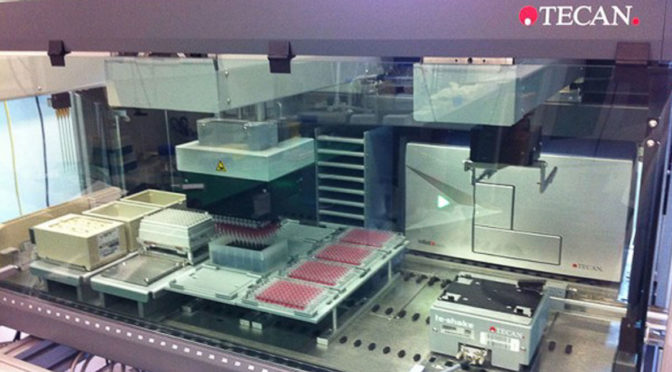
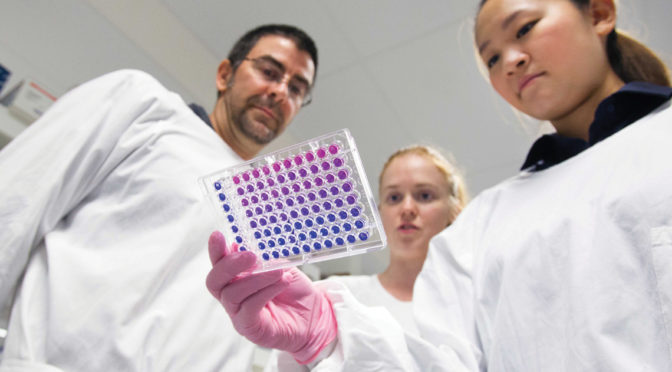
A robotic liquid handling system at the Australian Wine Research Institute (AWRI) is automating the screening of large numbers of malolactic bacteria strains.

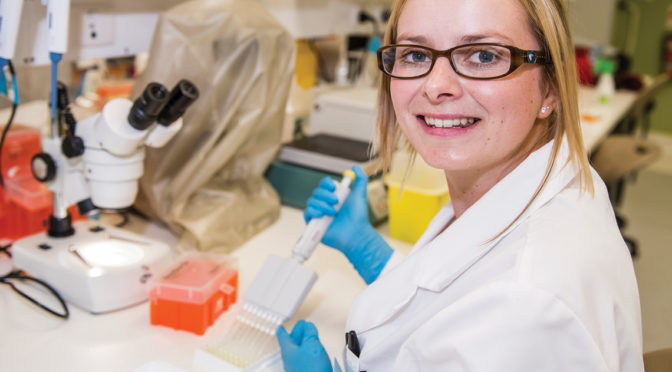
Using miniaturised wine fermentations in 96-well microplates, the Tecan EVO 150 robotic system is screening bacteria for MLF efficiency and response to wine stress factors such as alcohol and low pH.

The bacteria are sourced from the AWRI’s wine microorganism culture collection in South Australia and elsewhere.

The robot can prepare and inoculate multiple combinations of bacteria strains and stress factors in red or white test wine, and then analyse malic acid in thousands of samples over the course of the fermentation.

In one batch, for example, 40 bacteria strains can be screened for MLF efficiency and response to alcohol and pH stress in red wine, with over 6000 individual L-malic acid analyses performed.

The AWRI says that this high-throughput approach provides a quantum leap in screening capabilities compared to conventional MLF testing methods and can be applied to a range of other research applications.

Additionally, the phenotypic data obtained from this research is being further analysed with genomic information, which will identify potential genetic markers for the stress tolerances of malolactic strains.

First published at foodprocessing.com.au on 22 July. Read the original article here.

This article was also published by The Lead on 22 July 2015. Read the article here.

Frog researchers help kids make great leaps in literacy

Researchers from the Far North Queensland university worked with children’s author, Emma Homes, to create a kids’ book, The Vanishing Frogs of Cascade Creek – now shortlisted for a Wilderness Society fiction prize.

“I was interested in the idea of using fictional characters to raise awareness of science. I think people remember more when you tell them a story,” said Homes.

Wildlife diseases such as chytrid fungus, which is killing frogs worldwide, can devastate animal populations, but are often not well publicised or understood by the general public.

That’s where JCU experts Dr Lee Berger and Dr Lee Skerratt came in, to help answer questions about chytrid fungus, and explain how a sick frog might be examined in the laboratory.

“Lee Berger told me about a suitable frog species to cover in the book – the waterfall frog – and its habitat in the rainforest of Northern Queensland. We went for a trip to the Daintree Rainforest together, which was helpful for the writing process,” said Homes.

Berger thinks the books are a fantastic way to educate the general public. “It’s great that these books raise awareness of wildlife disease – a neglected conservation issue.  Similar to weeds and feral animals, introduced diseases can have catastrophic effects but often go under the radar.”

The Vanishing Frogs of Cascade Creek has recently been shortlisted for the Wilderness Society’s Environment Award for Children’s Literature in the fiction category.

 Home’s second book in the ‘Ruthie’ series, Saving Wombats, is informed by Skerrat’s PhD and tackles the disease sarcoptic mange, which can affect wombats and other mammals.

This article was published by James Cook University on 20 July 2015.

JCU_Frogs_210715


Driverless car trials in South Australia

A major European carmaker will conduct the first on-road trials of driverless cars in the Southern Hemisphere in South Australia in November.

The testing by Volvo will be held in conjunction with an international conference on driverless cars in Adelaide.

Volvo will test the same vehicle being used in their “Drive Me” project in Sweden.

South Australia legalized the use of driverless cars on its roads earlier this year.

The testing is part of independent road research agency ARRB’s Australian Driverless Vehicle Initiative.

ARRB Managing Director Gerard Walton said that automated vehicles are a short-term reality that Australia needs to be prepared for.

“The South Australian Government has been quick to recognise this,” he said.

“ARRB will establish how driverless technology needs to be manufactured and introduced for uniquely Australian driving behaviour, our climate and road conditions, including what this means for Australia’s national road infrastructure, markings, surfaces and roadside signage,” said Waldon.

Volvo’s testing will be undertaken in conjunction with Flinders University, Carnegie Mellon University, the RAA and Cohda Wireless.

The Premier of South Australia, Jay Weatherill said the technology promises to not only improve safety, reduce congestion and lower emissions, but also to provide a real opportunity for South Australia to become a key player in the emerging driverless vehicle industry.

“This trial presents a fantastic opportunity for South Australia to take a lead nationally and internationally in the development of this new technology and open up new opportunities for our economy,” he said.

The driverless car trials will take place on an expressway south of the capital city of Adelaide on 7–8 November 2015.

Multiple vehicles will conduct manoeuvres such as overtaking, lane changing, emergency braking and the use of on and off ramps.

The International Driverless Cars Conference will be hosted at the Adelaide Convention Centre and Tonsley precinct on 5–6 November 2015.

This article was first published by The Lead on 21 July 2015. Read the original article here.

Multi-million-dollar deal brings UQ pain drug closer to reality

A chronic pain treatment discovered at The University of Queensland is a step closer to clinical use, with a global pharmaceutical giant acquiring the Australian-founded company developing the drug.

Spinifex Pharmaceuticals has been acquired by Novartis International AG for an upfront cash payment of $US200 million (about $A260 million), plus undisclosed clinical development and regulatory milestone payments.

Spinifex is a biopharmaceutical company founded by UQ commercialisation arm UniQuest.

UQ Vice-Chancellor and President Professor Peter Høj welcomed the acquisition and congratulated those involved.

“This is one of the largest Australian biotech deals in history, and is a stunning outcome for the company, the researchers and the investors,” Professor Høj said.

“Spinifex builds on the unprecedented commercial translation achievements of UQ, which includes the world’s first cancer vaccine, Gardasil.

“It is a shining example of UQ’s determination to take research from excellence to what I call ‘excellence plus’, developing a product that has potential to improve the lives of people around the world.”

Spinifex is developing the drug candidate EMA401, an oral treatment for chronic pain, particularly neuropathic pain (a type of nerve pain), without central nervous system side effects.

The technology is based on a discovery by UQ’s Professor Maree Smith.

Professor Smith said the acquisition brought EMA401 a step closer to the people who needed it most.

“Chronic pain can be a debilitating condition, most commonly associated with cancer chemotherapy, post-herpetic neuralgia (a painful condition that can follow shingles), diabetes, peripheral nerve injury and osteoarthritis.

“It’s wonderful to see this deal eventuate, bringing a much-needed treatment option a little closer to reality for the millions of pain sufferers around the world,” Professor Smith said.

UQ pain researcher Professor Maree Smith

UQ pain researcher Professor Maree Smith

UniQuest CEO Dr Dean Moss said Dr Smith’s work was at the cutting edge of pain research.

“Her achievements and expertise have contributed to the formation of the recently-launched Queensland Emory Drug Discovery Initiative (QEDDI),” Dr Moss said.

QEDDI, a collaboration between UQ and Emory University in the US, will see the development of drugs to combat health issues including cancer, diabetes, inflammatory disorders and infectious diseases.

EMA401 is a novel angiotensin II type 2 (AT2) receptor antagonist being developed as a potential first-in-class oral treatment.

Professor Smith and UQ’s Dr Bruce Wyse’s research identified AT2 receptor antagonists as inhibitors of neuropathic and inflammatory pain in preclinical models.

Spinifex is supported by a syndicate of investors, including UniQuest, NovoVentures (Novo A/S), Canaan Partners, GBS Venture Partners, Brandon Capital Partners and UniSeed (a venture fund operating at the Universities of Melbourne, Queensland and New South Wales).

Australia’s energy future

Australia’s renewable resources include wind, solar, wave and geothermal energy, and there’s significant research happening to improve generation and storage technologies to overcome the inherent disadvantage of intermittent flow.

The Australian Renewable Energy Agency (ARENA) has completed 32 projects and is managing more than 200 others, including several large-scale solar photovoltaic (PV) plants and wind farms, which are considered the most advanced technologies in terms of making a short-term impact on our renewable electricity generation.

Australia’s CRC for Renewable Energy (ACRE), which operated 1996–2004, developed a state-of-the-art facility for testing grid-connected renewable energy systems, as well as small-capacity wind turbines for remote generation.

Australian scientists at the CRC for Polymers (CRC-P) have made big strides in the development of flexible, lightweight solar cells, which CEO Dr Ian Dagley describes as the “antithesis” of rigid rooftop solar cells. These lightweight cells offer intriguing possibilities: their flexibility means they can be placed on a variety of surfaces, from walls to windows, and they can operate indoors to help charge electrical devices.

They’re also attractive because they’re considerably cheaper to manufacture than silicon solar cells. Dagley says his CRC-P team has been working on refining the manufacturing technique, which uses low-cost components and reel-to-reel printers. One of the goals is to increase the lifespan of the cells, which is about five years, whereas rigid cells last roughly 30 years.

Meanwhile, the CRC for Low Carbon Living (CRCLCL) is looking at ways to dramatically reduce greenhouse gas emissions by developing smarter, more energy efficient buildings and cities. CEO Dr Deo Prasad says lower carbon buildings can be realised by optimising design to ensure maximum energy efficiency, through integration of next-generation technologies, such as solar PV cladding and heat and electricity capture systems for on-site energy offsets, and by using more sustainable building materials that need less energy to extract, process and manufacture. At the suburb and city scale, Prasad says decentralised renewable energy generation, reliable storage and smart grids, linked with information and communications technology-based intelligence, will lower carbon impacts.

“We recognise there is not going to be a silver bullet solution to carbon reductions,” says Prasad. “The approach needs to be holistic and driven by industry and governments.”

There are challenges associated with increased renewable energy levels, but Australia’s National Electricity Market seems to be handling integration well so far, says Dr Iain MacGill, joint director of the UNSW Centre for Energy and Environmental Markets. Studies by the Australian Energy Market Operator show it’s possible to operate the national grid with 100% renewables. “It won’t be cheap – just a lot cheaper than unchecked climate change,” MacGill says.

Russell Marsh, director of policy for the Clean Energy Council, emphasises the importance of commitment. “Investors need long-term certainty to ensure a rate of return,” says Marsh. “The Federal Government needs to lock in a firm, long-term target.”

MacGill agrees that the right policies can incentivise investment, but adds that it requires leadership and social consensus. “Australia is contradictory on clean energy. We have an early history and remarkable success in renewable energy deployment, and fantastic renewable resources. But we are also among the world’s largest coal and gas exporters,” he says.

“Will we take a leadership role, or do all we can to keep our international coal and gas customers buying from us?”

energy5


Remodelling energy

While coal and gas continue to be our dominant energy sources, the once-burgeoning renewables industry has been hindered by the Federal Government’s recent review of the Renewable Energy Target (RET). The review recommended scrapping the 20% target for renewable electricity generation by 2020, resulting in political deadlock and investor uncertainty across the renewable energy sector.

Bloomberg New Energy Finance’s Australian head, Kobad Bhavnagri, says the review was especially damaging because it came “very close to making retroactive changes to a policy”.

“Whenever retroactive changes are made to policy it becomes, essentially, Ebola for investors,” he says. “When governments act unpredictably and destroy the value of existing assets, it scares people – for a long time.”

Australia generates more carbon emissions per person than any other OECD country. One-third are generated by the electricity sector, in which coal and natural gas account for roughly 85% of generating capacity. Renewables, mostly from hydropower, account for about 15%.

Reaching the 20% target during the next five years will not be cheap. At the time of the review it was estimated that another $18 billion of investment would be required to reach the target.

But the costs associated with increased generating capacity are yet to be weighed against the costs of potentially catastrophic climate change. Scientists have warned a 2°C increase in overall average temperatures from pre-industrial levels is the limit our planet can withstand before the effects of climate change become irreversible.

In December 2014, following the release by the International Energy Agency (IEA) of its report World Energy Outlook 2015, the agency’s chief economist and director of global energy economics, Dr Fatih Birol, told Bloomberg’s Business Week that global investment in renewable energy needs to quadruple to a yearly average of $1.6 trillion until at least 2040, to stay below that warming threshold.

Some of the world’s biggest economies have taken note. Estimates by the Climate Interactive indicate the US-China emissions deal, if implemented in full, could keep some 580 billion tonnes of CO2 out of the atmosphere between now and 2030 – more than all global fossil fuel emissions from 1990 to 2013.

In 2014 – while China spent US$64 billion on large-scale clean energy projects, increasing its 2013 total by about US$10 billion – the USA spent nearly US$13 billion on utility-scale renewables and continued to expand production of its almost carbon-neutral shale gas reserves (see here for Australia’s progress).

Research by Bloomberg New Energy Finance found Australian investment in large-scale renewable energy in 2014 was US$223 million – the lowest in more than a decade. 2014 saw Australia nose-dive from 11th largest investor in commercial clean energy projects to 39th, behind developing nations such as Honduras and Myanmar.


The 2040 outlook

If Australia is serious about boosting its capacity for renewable energy, 2040 is a good deadline, says Iain MacGill, joint director (engineering) for the Centre for Energy and Environmental Markets at UNSW Australia – by then we’ll need “a major infrastructure transition”.

Russell Marsh is Director of Policy for the Clean Energy Council, the peak body representing Australia’s clean energy sector. “With the right level of support we could see the deployment of renewable energy at least double between 2020–2040,” he says. “But if the target is not extended beyond 2020, it is unlikely that we will see further growth.”

This view is backed by the Australian government’s Bureau of Resources and Energy Economics (BREE). In a November 2014 report looking towards mid-century electricity production, it reported “In the absence of potential new policy initiatives, the relative shares of fossil fuels and renewables in electricity generation are not likely to change significantly”.

In fact, BREE’s projections show renewable generating capacity remaining stable, meeting 20% of Australia’s total demand from 2020–2050. In this scenario, coal-fired power would still account for 65% of electricity by mid-century.

There are concerns that the current policy uncertainty is reaching a tipping point, which could see companies exiting Australia or going into distress.

Policy uncertainty  is taking a toll on  the business end of renewable energy.

Policy uncertainty is taking a toll on the business end of renewable energy.

In July 2014, RenewEconomy reported that Recurrent Energy, a US solar power plant developer being acquired by Canadian Solar, was planning to cease its Australian operations, citing concerns over policy uncertainty. Several other large international renewable energy companies, including Spain’s Acciona and US-based First Solar, have warned of possible exits, should the Renewable Energy Target be amended.

MacGill says exits are inevitable. “Why would an internationally focused renewable energy company stay if there is no prospect for their projects to go forward?

“They can, should and will depart at some point,” he says. “And with their departure, we will lose institutional capacity – such as people, money and industrial knowhow – which will inevitably
slow our ability to deploy clean energy, and increase its costs.”

Marsh agrees the risk to the industry is significant. “Every day, week and month that goes by with a cloud hanging over support for the renewable energy industry are days, weeks and months when our international competitors are racing ahead of us – and reaping billions of dollars in investment in this global growth market.”

Dr Deo Prasad, CEO of the CRC for Low Carbon Living, says that while the effects aren’t as dramatic, policy uncertainty also impacts the research community, especially “end-user driven projects where collaboration is essential”.

“Many a research direction and focus has had to change over the years, for the worse, due to policy uncertainty,” he adds.

Myles Gough

CRC for Low Carbon Living

CRC for Polymers (CRC-P)

Exploring carbon capture and storage futures

The Great Ocean Road, about 200 km southwest of Melbourne, draws millions of tourists to view the spectacular cliffs and limestone stacks known as the Twelve Apostles, carved by relentless Bass Strait waves and winds. But this region is as rich in fossil fuels as it is in scenic beauty, and several commercial gas fields have been opened in the Otway Basin along the continent’s southern margin.

There is also the CRC for Greenhouse Gas Technologies’ (CO2CRC) flagship carbon capture and storage (CCS) trial: the CO2CRC Otway Project – the world’s largest demonstration of its kind.

Since the project started in 2008, the Australian government, US Department of Energy and CRC partners have funded the injection of more than 65,000 tonnes of CO2 into the Otway Basin’s depleted gas fields, without leakage or measurable effect on soil, groundwater or atmosphere.

The project was further boosted by $25 million in Australian government funding in February this year. “The wide-scale deployment of CCS is critical to reduce carbon emissions as quickly and cost-effectively as possible,” says CO2CRC chief executive Tania Constable. “This funding will enable CO2CRC to embark on a new program of research to improve CCS technologies.”


Australia is well-endowed with natural resources. Its known uranium reserves are the world’s largest, and it is rich in natural gas. Traditionally, the most important resource has been coal: Australia has the fourth largest coal reserves globally and is the world’s second biggest coal exporter behind Indonesia. Coal exports – which have grown 5% annually over the past decade – will earn $36 billion in 2014–2015.

Figures like these have led Prime Minister Tony Abbott to declare coal “an essential part of our economic future”. Professor Chris Greig, Director of the University of Queensland’s Energy Initiative, a cohort of research expertise across all energy platforms, anticipates the country will continue to be reliant on fossil fuels, including coal, until at least mid-century. But just how far beyond that depends on how the world – particularly China, one of Australia’s biggest coal customers – addresses future climate change.

In 2014, the US-China emissions deal set China a goal to source 20% of its energy from zero-emissions sources and peak its CO2 emissions by 2030. In August 2014, amid worsening public sentiment over air pollution, the Beijing Municipal Environmental Protection Bureau announced that it would be phasing out coal-fired power in the capital’s six main districts by 2020.

China has been pouring money into the development of renewable energy technologies, spending an estimated US$64 billion on large-scale clean energy projects in 2014 alone. This was five times more than the next biggest spender, according to market analyst Bloomberg New Energy Finance. China is also investing heavily in CCS technologies, with at least 12 projects currently underway.

energyin3


There are several pathways toward reducing emissions from the electricity sector – from the adoption of nuclear energy and greater uptake of renewable sources and natural gas, to more efficient power plants and modified diesel engines that can burn liquefied coal. CCS, however, is one of the most promising methods for reducing emissions from coal-fired power stations. Capture technologies isolate and pump CO2 underground to be stored in the pores of rocks (see graphic page 29).

Rajendra Pachauri, who until early 2015 was Chair of the Intergovernmental Panel on Climate Change, told the UN 2014 Climate Summit in New York, in September 2014: “With CCS it is entirely possible for fossil fuels to continue to be used on a large scale”.

Dianne Wiley, CO2CRC’s program manager for CCS, says CO2 capture technologies are already available to install. Their deployment is limited by high costs, but there have been strong successes. Wiley points to the commercial scale Boundary Dam Integrated Carbon Capture and Sequestration Demonstration Project in Saskatchewan, Canada – the world’s first large-scale power plant to capture and store its carbon emissions – as a good example of what’s possible with CCS technology. It became operational in October 2014 and, its operators say, is already “exceeding performance expectations”. The CAN$1.3 billion cost of the system should drop by around 30% in subsequent commercial plants, says Brad Page, CEO of the Global CCS Institute.


Greig says that investment decisions in favour of CCS in Australia won’t happen until more work is done to find high-capacity storage basins around the continent that can safely and reliably store CO2 emissions for several decades.

Constable says the recent injection of capital from the Federal Government to the Otway Project will help the CRC take the necessary steps to meet this challenge. She says it will “lower the costs of developing and monitoring CO2 storage sites, enhance regulatory capability and build community confidence in geological storage of CO2 as a safe, permanent option for cutting emissions from fossil fuels”.

Retrofitting CCS technology to existing plants isn’t an option: Greig likens that to “building a brand new garage onto the side of a house that’s falling down – you just don’t do it”. CCS would therefore require investment in new coal-fired power stations.

“A well-conceived energy policy for the electricity generation sector would see ageing, low-efficient plants replaced with high-efficiency ultra-supercritical [coal] plants,” says Greig, adding that these plants have lower emissions simply by virtue of their efficiency and could achieve emissions reductions of 25% compared to existing plants.


How CCS works

energyinset1

The first step of carbon capture and storage (CCS) is capture. It involves separating CO2 from other gases in the exhaust stream from a fossil fuel power plant or some other industrial facility. This can be done with solvents that absorb CO2 or with ceramic and polymer membranes that act as filters. Once isolated, CO2 is compressed into a state in which the difference between liquid and gas can no longer be distinguished. It is then transported via pipeline to a prospective storage site. Here, the CO2 is injected into an underground reservoir, such as a geologic formation or depleted oil field. The CO2 has to enter the rocks without fracturing them, and can then be stored underground for thousands of years.

Myles Gough

CO2CRC

Award-winning app boosts mental health help for youth

You are 16 years old and have a secret, which you’ve been carrying around for what feels like your whole life. You feel trapped so you turn to marijuana and alcohol to numb the pain. Your grades begin to slip and your parents are worried so they send you to a psychologist. During your first visit, the clinician in the waiting room starts asking questions, and all you can hear is your heartbeat ringing in your ears.

When it comes to receiving effective mental health treatment, early diagnosis and non-judgmental support are essential. In order to assess what types of treatment options are available, many clinicians start with a verbal assessment. However this verbal assessment is a barrier for many young people, preventing treatment. Psychologist and PhD candidate Sally Bradford recognised that young people between the ages of 12­­–25 could benefit from a different kind of assessment.

“They’re going into an environment where they’re expected to verbally relay everything that is going on in their lives – to tell their deepest, darkest secrets that they may have never said out loud before,” Bradford says. “It can take a long time for them to find the words – especially if the clinician doesn’t ask the right questions,” she says.

As part of her PhD focusing on the use of technology in face-to-face mental health care with young people, Bradford created the electronic psychosocial assessment app called “myAssessment” that helps clinicians evaluate young people quickly and easily. Speaking to the National Mental Health Commission’s review of Australia’s mental health system, this new screening process underscored the need to improve health services and support through innovative technologies.

“The app could be beneficial in any field where you’re needing groups of people to be truthful, and give answers in a way that they do not feel judged,” Bradford says.

Based on the strides Bradford made in youth mental health with the invention of myAssessment, she was awarded the $5000 top prize at the CRC Association Early Career Research Showcase at the CRCA’s Excellence in Innovation Awards Dinner in Canberra.
240615_mentalhealth7

The app was developed in close conjunction with the Young & Well CRC, youth focus groups and clinicians, and subsequently trialled at a headspace Centre in Canberra over nine months in 2014.

“The app was designed with significant input from young people and clinicians, and puts their needs and requirements first. For clinicians, it follows an evidence-based format and doesn’t require changes to the way they currently provide services. For young people, it’s interactive, engaging, and easy to use,” Bradford says.

240615_mentalhealth3

The way it works is a patient arrives for their appointment. Prior to seeing a clinician, patients complete myAssessment on an iPad in the waiting room. The app is a simple survey, but with a range of different response options. Topics include alcohol and drug habits, sexual preference, eating habits and anxiety and depression. Questions include screening and probing questions. Screening questions can be a yes or a no answer that prompts further questioning: Do you drink? Smoke? Have you tried or used drugs? What have you tried?

A probing question allows for a more comprehensive understanding of the issue, such as, how do you (and your friends) take them? (drugs). After answering and submitting these questions, a personalised ‘Clinician Summary’ details the patient’s risks and strengths, providing the clinician with a foundation for the first interview.

240615_mentalhealth5

Bradford’s trials proved to be particularly enlightening, with an 87% response rate, and ¾ of patients reporting that myAssessment provided them with an “accurate” representation of themselves. The results also showed that young people were up to 10 times more likely to open up about drug and alcohol use, sexuality, and self-harm when the application was used, in comparison to a verbal assessment with the same questions.

“There was a wealth of data generated over the course of the trial, which could be particularly useful for policy reform in the future,” Bradford says.

Kara Norton

Young & Well CRC 

Australia’s leaders in research and innovation are honoured

The IP & Science business of Thomson Reuters, the world’s leading provider of intelligent information for businesses and professionals, today is honouring 43 Australians and eight institutions leading scientific research and innovation in Australia at the 2015 Thomson Reuters Australian Citation & Innovation Awards, held today at the University House at the Woodward in Melbourne. Eleven Australian Research Groups have been selected to receive Citation Awards in recognition of their outstanding contribution to research. In addition, Eight Australian organisations have been recognised for their excellence in innovation.

The Australian Nuclear Science and Technology Organisation (ANSTO) has won an Innovation Award in the category: Government (Government or Government funded) for delivering specialised advice, scientific services and products to government, industry, academia and other research organisations through the development of new knowledge, delivery of quality services and support for business opportunities.

Research recipients span myriad areas including astronomy, the environment, oncology, technology and others. Institutional honourees fall within seven categories, separated into large and small-to-medium sized organisations, government institutions, universities and most collaborative organisations. The awards are based on a proprietary methodology and analysis of Thomson Reuters data that recognises domestic innovation and significant research contributions originating in Australia.

“We are very pleased to have the opportunity to honour the individuals and institutions making significant contributions in Research & Innovation,” said Jeroen Prinsen, senior director for Australia and New Zealand, Thomson Reuters.

“Australia plays an important role in the global scholarly and commercial ecosystem and it is through the use of Thomson Reuters data that we are able to qualify and quantify this contribution, and give credit where credit is due. Congratulations to all of today’s honourees.”

The scientific research awards are part of Thomson Reuters Citation Awards and are determined by analysing the volume and impact of a researcher’s contribution to his/her subject area. The recipients were selected using a quantitative process identifying the average number of citations their research generated over a period of time, as indexed in the Thomson Reuters Web of Science®. This covers all articles, reviews and proceedings papers with at least one Australia-based author. The average citation, in turn, reflects its impact and influence on the given subject and the importance attached to it by subsequent research.
The fields from which the Citation Awardees were drawn represent national strengths, either because of the size of the Australian contribution to the global body of knowledge or because of its impact. The wide range of subject areas covered – from astronomy & astrophysics, ecology, and environmental studies to economics, neurosciences and psychology – is an illustration of the strength and diversity of academic research in Australia and a reflection of the innovation inherent among the country’s scientists.

This information was first published on 23 June 2015 by Thomson Reuters.

Understanding athletes’ immune function to optimise performance

With the Gold Coast Commonwealth Games looming in 2018, a key concern for athletes will be how to prevent illness from interfering with their training and performance.

This is the focus of new research at Griffith University. Partnering with the Australian Institute of Sport to examine the effects of exercise on the immune system in order to help athletes compete at their best, the research team say that illness during competition can destroy years of effort and dedication.

“On average, highly trained athletes spend 8 to 12 years training to compete at their best,” says Professor David Pyne from Griffith’s Menzies Health Institute Queensland (MHIQ).

“Given the time, effort and financial considerations made by athletes, their coaches and support staff, there is a need to find ways to keep athletes healthy during heavy training, travel and competition.”

Dr Nic West

Dr Nic West

Susceptibility to illness

Professor Allan Cripps, a leading immunology researcher at MHIQ has worked with Pyne and Dr Nic West in a bid to understand why athletes seem prone to illness during heavy training and competition.

“There is evidence that endurance exercise compromises immune function and increases illness in some athletes,” says West. “Intensive exercise, particularly endurance exercise, such as triathlon, long distance swimming and ironman events, can be associated with exercise-induced immune suppression where the number and function of immune cells is decreased and their ability to respond to challenge is lowered.”

For the current study the research team is seeking highly trained male triathletes and iron men between the ages of 18-35 years who undertake 12 hours or more exercise per week.

Athletes will have their immune, gut microbiota and metabolic systems profiled and compared with non-athletes.

A significant benefit of the study is that participants will receive information regarding the status of their own immune function that can be used to tailor individual training programs.

The study is taking place at Griffith University’s Gold Coast campus.

“We hope that participation and knowledge gained from this study will help elite and non-elite athletes to attain their performance goals,” says Pyne.

This article was first published by Griffith University on 16 June, 2015.

Help to combat pest animals is only a click away

The toolkit is a one-stop shop of practical knowledge to arm farmers and land managers with the information and connections they need to combat pest animals.

IA CRC digital communications manager Keryn Lapidge said, “We are pleased to have the Minister for Agriculture, Barnaby Joyce, officially launch PestSmart Connect today, recognising this as an important knowledge hub for tackling pest animal problems such as wild dogs, which have become a really big economic and social issue for Australian farmers.”

The website also links to the FeralScan website and app which provides people with the capability to map pest animal sightings and damage and then to use this information to track and control the problem.

“This website is really strong on connecting people and communities. A feature is the ‘connect’ portal which aims to provide contact details of agencies, organisations and groups that are active in pest animal management and can provide people with services, useful advice or assistance – at a practical on-ground level, but also at a policy level,” she said.

The PestSmart Connect website features pest animal species that are a having a major impact on biodiversity and agriculture in Australia including wild dogs, foxes, feral cats, rabbits and carp. There are handy glovebox guides, videos about trapping and baiting, case studies and links to assistance.

“We hope this will be a useful knowledge hub for farmers and land managers and we plan to continue to improve the resource over time,” Lapidge said.

The PestSmart Connect website www.pestsmart.org.au is the culmination of ten years of information gathering and research by the IA CRC – Australia’s largest integrated pest animal management research organisation.

Minister for Agriculture, Barnaby Joyce, launches the PestSmart Connect website - a handy toolkit of pest animal management information for farmers and land managers.

Minister for Agriculture, Barnaby Joyce, launches the PestSmart Connect website – a handy toolkit of pest animal management information for farmers and land managers.


This article was first published by the Invasive Animals CRC on 16 June, 2015.

The need for risk

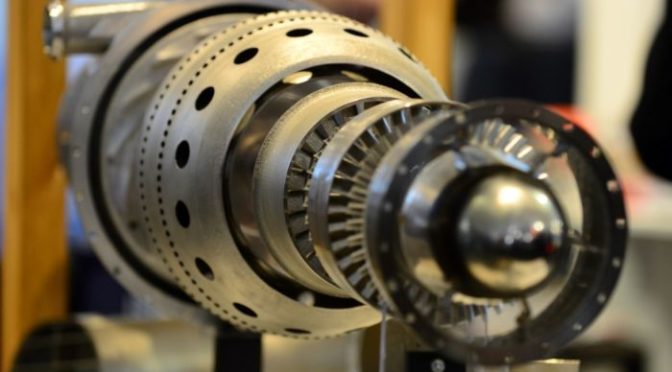
In February 2015, at the Australian International Airshow in Avalon, Victoria, Professor Xinhua Wu unveiled the world’s first 3D-printed jet engine.

Wu is the head of the Monash Centre for Additive Manufacturing (MCAM). The Centre, in collaboration with CSIRO, Deakin University and the University of Queensland, is leading initiatives to develop 3D printing and put Australia at the forefront of the global aerospace industry.

MCAM has partnered with French aerospace company Microturbo (Safran) whose work involves seeking out new manufacturing processes that make components lighter and cheaper than traditional ones, without reduction in performance. The two organisations pooled their expertise in additive manufacturing of metal to print two engines – one on display in Avalon and the other at Safran in Toulouse, France.

Bridging the gap between research and industry remains a goal for many nations, and the example of MCAM is a useful starting point for discussing the role universities could play in this.

Research and development is inherently risky, with high rates of failure. Companies are under pressure to deliver commercial returns to investors, yet the time frame for major innovations to be made often spans decades.

“Universities combine capability with tenacity – and odds are they’ll still be there in 25 years.”

Universities are in a position to assist industry innovation, however, because they have the capacity to apply resources to long-term projects and are willing to allow sufficient time for the process of discovery and application. They combine capability with tenacity. And while there are no guarantees, the odds are good that your university research partner will still be there in five, 10, or 25 years.

The world’s first 3D-printed  jet engine is the result of intense collaboration across academia and industry, led by the Monash Centre for Additive Manufacturing.

The world’s first 3D-printed jet engine is the result of intense collaboration across academia and industry, led by the Monash Centre for Additive Manufacturing.

For maximum benefit, commercially and otherwise, collaborations between industry and academia should focus on building enduring relationships that go beyond a single project or contact. Ideally, these partnerships should facilitate engagement at multiple levels.

Another way to offset the risks of R&D is for universities to address problems that entire industries need to solve, consulting multiple players in those industries to uncover what the major issues are. In the case of MCAM, the need for lighter, stronger parts is common across the aerospace industry, so its relationship with Safran has been a catalyst for relationships with Airbus, Boeing and defence contractor Raytheon.

These relationships are intensely collaborative, as university researchers work with their industry partners from the very early stages of each project.

This process is a far cry from the movie trope of the lone genius scientist who spends years in the laboratory, makes a miraculous discovery and only then emerges into the daylight. It’s about teams of experts investing the precious resources of time and trust for the long term – for it is from this investment that real gains will come.

Professor Margaret Gardner is an Australian academic, community leader and economist, and the current Vice-Chancellor of Monash University.

Professor Margaret Gardner is an Australian academic, community leader and economist, and the current Vice-Chancellor of Monash University.


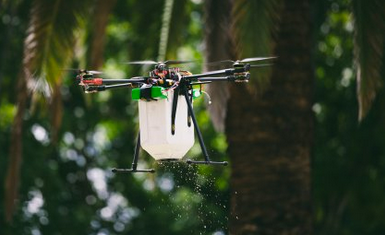
Drone used to drop beneficial bugs on corn crop

Photograph courtesy of Ausveg and Vegetables Australia

During his Summer Science Scholarship at UQ, Mr Godfrey investigated if drones could be used to spread the beneficial Californicus mite, a predatory mite which feeds on pest leaf eating mites onto crops infected with two spotted mites.

Godfrey said two spotted mites ate chlorophyll in leaves, reducing plant vigour and crop yield.

“As corn grows, it is very difficult to walk between the crop to spread beneficial bugs,” he said.

“A drone flying over the crop and distributing the insects from above is a much more efficient and cost-effective method.”

Godfrey began his project at the Agriculture and Remote Sensing Laboratory at UQ’s Gatton Campus, learning how drones function, before spending time at Rugby Farms to gain insight into potential uses for drones.

“I built a specific drone for the project, tailoring the number of propellers, stand, and size of the motor to suit the drone’s application,” he said.

“My initial concept for the ‘Bug Drone’ came from a seed spreader, and in the end I built an attachment to the drone that can be used to spread the mites over the crop from the air.”

2015-04-29_1605Initial designs using a cylinder-shaped container to hold the mites weren’t practical as it couldn’t hold enough of the predatory mites to make the process efficient.

“I used corflute material to make a large enough storage device for the mites,” Mr Godfrey said.

“The seed spreader then acts as the distributer as it has a small motor powering it.”

The device is controlled remotely from the ground.

“We’ve tested the product at Rugby Farms and I’ve successfully proved the concept that drones can be used to spread beneficial bugs,” Mr Godfrey said.

“There is still a lot of work to be done, but the most difficult part is to work out how to control the volume of bugs being distributed at the one time.

“The next step is to monitor the crops and to see what happens after the bugs have been dropped.

“Remote sensing with precision agriculture is an interesting field, and it has opened my eyes to the career opportunities in this field,” he said.

Students can study precision agriculture at The University of Queensland Gatton in a course run by Associate Professor Kim Bryceson who also manages the Agriculture and Remote Sensing Laboratory.

Designing the future

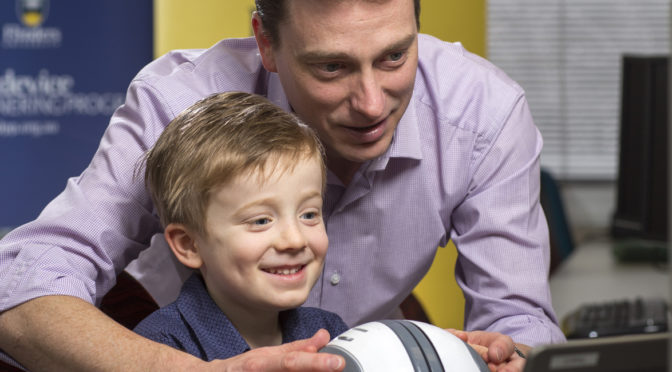
Mr David Hobbs demonstrates the OrbIT Gaming System and Orby Controller to a young child. Photo courtesy of the South Australian Department of State Development.

Laura Diment and David Hobbs are both former students and now staff at the new Flinders University campus at Tonsley, a world-class facility that brings multiple disciplines of STEM research together with industry. Diment and Hobbs began their Biomedical Engineering studies within the School of Computer Science, Engineering and Mathematics (CSEM), and have each received international acclaim for developing assistive technologies that enable children with disabilities to make the most out of the creative potential of modern software.

Hobbs, currently completing a PhD in rehabilitative engineering, has received significant attention for his work creating an accessible computer gaming system that incorporates a unique orb-shaped controller nicknamed ‘Orby’. The novel trackball controller can be operated without the need for fine motor skills. This makes it accessible for children with cerebral palsy, who are often unable to use mainstream controllers.

The novel trackball controller nicknamed 'Orby'.

The novel trackball controller nicknamed ‘Orby’.

The gaming system and 15 interactive games developed for Orby have been a huge success with the 18 families that trialled the technology, with most reporting increased social closeness for the period Orby was in their homes.

For Hobbs, whose main motivation for studying engineering is the potential to ‘give back’ to society, this is an ideal result. He is now in the processes of commercialising Orby and hopes it will eventually be available to families, though is quick to note the difficulties in finding a balance between the inevitable costs of research and development and creating an affordable end product.

It is clear, however, that Hobbs relishes the challenge; a past recipient of both Fulbright and Churchill scholarships, he is determined to keep building upon assistive capacity of the technology. Trials will soon begin investigating the potential of Orby to help in the recovery of stroke patients.

Making a splash

laura_thumb

First-class Honours student, Laura Diment, is also keen to use her STEM skills to help people who need it most. Diment chose to spend her compulsory five-month industry placement during her third year of study at a leading rehabilitation centre in Toronto, Canada – following the footsteps of Hobbs, who mentored her exchange from back in Australia. Here, she began creating Splashboard, an art program that uses Microsoft Kinect’s infrared technology to enable children with cerebral palsy to create musical art on screen. The technology can track movement in three dimensions, allowing children to interact with buttons on screen that trigger colour tools and sound by waving their arms.

Diment, who has since won a number of awards nationally and internationally for her creation, acknowledges the benefits of the opportunity to build industry partnerships early on in her Biomedical Engineering degree. “The future really is about connecting the industry and research earlier on, because they know what’s going to be beneficial in the long run.”

From these solid foundations in research and industry, Diment looks to be building a formidable career. She starts her PhD in Oxford as a John Monash scholar later this year, where her research will focus on creating a future in which developing countries have access to the skills and expertise necessary to design their own assistive technologies, rather than having to rely on Western-developed finished products that are ‘posted across’.

Much the same as Hobbs, Diment is confident in the capacity of STEM careers to create a better world. “We are designing the future,” she says.

With such bold ambitions, it seems only fitting that these two are working in Flinders’ new campus in the Tonsley business hub. The centre is quite literally amplifying the work that STEM disciplines at Flinders are capable of; the Biomedical Engineering discipline now takes up more than double its original size in order to make the most of the opportunities in this new environment. “People can come to us or work alongside us; it’s much more flexible and approachable.” Hobbs is grateful to have had the opportunity to help shape the new campus; “It’s a once in a generational opportunity… now it’s really up to us to maximise what we’ve been given and to do the best job we can.”

Breana Macpherson-Rice

Happy gaming

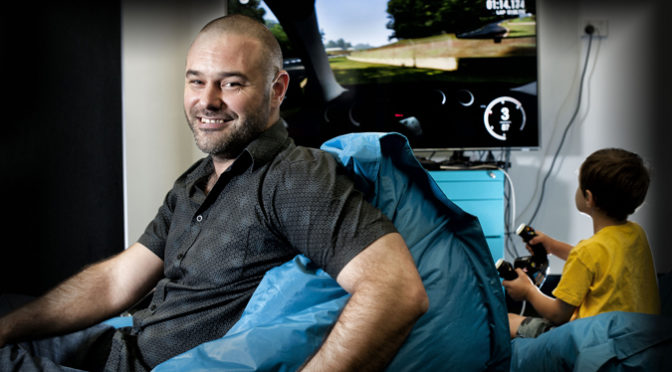
Young and well CRC researcher Dr Daniel Johnson and his team at the Queensland University of Technology’s Games Research and Interaction Design Lab are exploring positive links between gaming and wellbeing. Johnson completed a year as a postdoctoral fellow at the University of Cambridge Well-being Institute in the UK before returning home to Australia to work at QUT.

“Historically, there has been a huge focus on the potential negative impacts of video games,” says Johnson. “So as a first step, we undertook a large-scale review of the literature relating to the positive impacts.”

In their experimental trials, the team monitor biometrics, such as brain activity, heart rate and muscle activation, in participants playing video games.

They have found clear evidence of a positive link between gaming and self-esteem, optimism and relationships. In collaboration with Smiling Mind, a not-for-profit initiative to engage young Australians in meditation, the results are being applied to improve physical and mental health.

“We are working towards a more broad-ranging view of the potential benefits of gaming and a deeper understanding of what types of games and features of games have a positive influence for which people,” says Johnson.

His overall advice is to “enjoy video games as part of a balanced diet. But think mindfully about what you play, how you play and how it makes you feel.”

Eye for detail

FADING VISION

At age 40–45, if you find you have to hold a book further away to read it, you may have developed presbyopia: an ageing-related condition in which the eye’s ability to focus on near objects is reduced as its lens progressively stiffens. At this point in life, some people visit an optometrist for the first time. Suddenly they need glasses – and will for the rest of their lives.

If Dr Paul Erickson has his way, however, future generations may be heading straight to an ophthalmic surgeon to have a revolutionary ‘accommodating gel’ injected into their eyes.

FIELD LEADER

Originally from Pennsylvania, USA, Erickson has led the accommodating gel project since 2010 with significant funding from the Vision CRC. He is the CEO of Brien Holden Vision Pty Ltd and Adventus Technology Inc – companies through which Vision CRC participant the Brien Holden Vision Institute develops and commercialises its technologies.

DEFINING THE PROBLEM

The crystalline lenses in our eyes can adjust their focal length (or ‘accommodate’) by changing shape – bulging or flattening according to the tension in fibres that connect the lens to the circular muscle surrounding the lens capsule. It’s a very flexible lens, but it evolved for a species that lives to around 40 years old, Erickson explains.

“During a person’s life, the lens material loses its softness and flexibility, and at around age 40 the loss begins to accelerate,” he adds. “It reaches a point where it’s very difficult for the stiffer lens to change its shape in order to see at a normal reading distance.”

THE SOLUTION

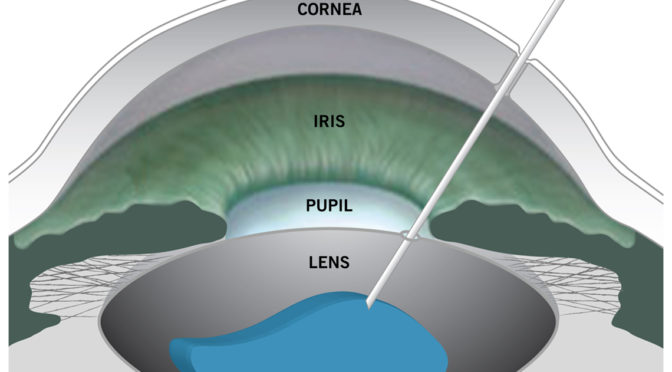
The accommodating gel project aims to replace the stiff natural lens with a new lens made from a siloxane gel – a compound of silicone. First, the non-functioning natural lens would be extracted through a procedure similar to surgery for cataracts (lenses which have become opaque). Then, the gel would be injected into the transparent lens capsule.

Finding a suitable material to replace the lens has been a 20-year search, says Erickson. The requirements are stringent: it must be a moderately viscous liquid that can be injected, and it must polymerise into a soft, flexible gel. It also has to be biocompatible and, of course, transparent. Developed in Australia, the gel is being trialled in rabbits.

“We’re fine-tuning the properties,” says Erickson. “Over the next two to three years, we hope to move into animal models that more closely resemble humans, and then on to human subjects.”

TEAMWORK ADVANCES

Erickson’s team works with the prestigious Bascom Palmer Eye Institute in Florida, USA. The partnership has already led to improved medical microscopic imaging technology for use during the procedure, which could immediately benefit eye surgeons conducting cataract operations, Erickson says.

Targeting kids’ cancer, gene by gene

The personalised medicine platform, which is being developed and applied with the support of the Cancer Therapeutics CRC, will tailor each child’s cancer treatment to the particular genetics of their individual tumour.

Then, using a combination of in vitro cell growth and testing on mice, treatment will be determined by the response in the laboratory of their own cancer cells to drugs.

The project, led by Professor Michelle Haber, Executive Director of Australia’s Children’s Cancer Institute, in collaboration with the National Institutes of Health in the USA, has been kickstarted with approximately $7.5 million in funding from the CRC budget.

CCIA Laboratories, Lowy Institute“Although the survival rate of children’s cancer is now about 80%, this still means that on average about three kids in Australia are dying [from the disease] every week,” said Haber, who won the 2014 NSW Premier’s Award for Outstanding Cancer Research.

She said it was clear that individualised treatment is needed. “Two children can have the same diagnosis, but the standard treatment regimen will work for one child and fail with the other,” she explained.

The first step in the new approach is to take cells from a child’s tumour and run them through a set of molecular profiling tests, which reveal the genetic make-up of the cancer.

Haber’s team will soon settle on a panel of about 80 treatable genetic abnormalities for their targeted molecular profiling tests.
“We’ve trawled through the entire literature, pulling out what is known about genes that may be suitable for molecular targeted drug treatment,” she said. “This hasn’t been done for paediatric cancer before.”

The next step is to grow the child’s tumour cells. This is done either in laboratory flasks or in mice with deficient immune systems, known as ‘avatar mice’.

By rapidly scanning the cells, the researchers can test many drugs, either alone or in combinations, to see whether they knock back the cancer. And they don’t just try cancer drugs. Haber said that drugs as disparate as beta-blockers used in heart disease, as well as malaria drugs, can have anti-cancer effects.

Once a drug is shown to work in vitro, the next step is to use it in the avatar mice.

CCIA Laboratories, Lowy Institute“We have been very excited by the excellent responses of the first patients to have their therapy modified by their treating clinicians, on the basis of information being generated from this new personalised medicine platform,” said Haber.

Clinical trials of the platform, to be spearheaded by Sydney Children’s Hospital, are scheduled for 2017. However, Haber hopes it will be sooner than that.

“The CRC funding is invaluable,” she said. “It is paying for vital staff and their research supplies. Of course, this is just the beginning for the platform and we will only be able to handle a few patients at first.

“Our plan is that, eventually, the treatment platform will be offered to every child in the country who has a high-risk malignancy.”

Clare Pain

Healthier stock for dairy farmers

JANE KELLEY PhD student, LaTrobe University AgriBio

FOR RESEARCHER Jane Kelley, helping an individual farmer is just as rewarding as knowing that she is helping the entire dairy industry overcome one of its biggest threats to milk productivity – a parasite called liver fluke.

“When I finish my lab work, I can email the vet to inform them that they need to treat now,” she says. “The end product for the farmer will be healthier stock, which is important from a welfare perspective and also for increased productivity for the farmer.”

Kelley, who grew up in Gippsland, Victoria, was the recipient of the Dairy Australia Award at the 2014 Science and Innovation Awards for Young People in Agriculture, Fisheries and Forestry. The award came with a grant that has enabled her to use a cutting-edge diagnostic technique to investigate the prevalence and burden of liver fluke on Victorian dairy farms. This is the first time the new technique – developed in 2004 by a group of Spanish scientists – has been used in large-scale field trials in naturally infected cattle.

The liver fluke parasite currently costs the Australian livestock industry $60–90 million every year. Kelley hopes her undergraduate research, which she is now continuing as a PhD student, will help generate improved methods for managing the parasite to a point at which the impact on milk production and animal welfare is minimal.

– Gemma Chilton

Leading sustainable design

With bachelor degrees in civil engineering and science and a PhD in environmental sociology, Dr Briony Rogers is uniquely placed for her present research role. She’s tackling the technical and social challenges required to make our urban water systems more sustainable and resilient to the impacts of climate change, a growing population and increasing urbanisation.

As a civil engineer, Rogers spent five years working for private infrastructure services consultancy GHD where she was responsible for civil engineering design and project management on a range of water infrastructure projects both in Australia and Vietnam. She was passionate about sustainability, but recalls that by the time designs landed on her desk, most of the big decisions influencing sustainability and resilience had already been made.
Rogers decided to take on doctoral research at Monash University and investigate processes of social change in relation to sustainable infrastructure and technology. “I drew on my technical understanding, but with the recognition that to implement new approaches, social systems would have to change as well,” she says.

Now, as a Research Fellow for the Monash University Water for Liveability Centre and the CRC for Water Sensitive Cities, Rogers works with key stakeholders to design strategies and new methods to build the “social capital” required to transform the way we plan, design and manage our urban water systems. Rogers’ interdisciplinary background means she can act as a bridge between various stakeholders, from engineers and ecologists to landscape architects, as well as organisations such as local councils, state government departments and private enterprise.

The big picture goal, Rogers says, is to transition to “water sensitive cities”, in which decentralised, low energy technologies are integrated with centralised networks to build resilience in the face of an unpredictable future. This requires thinking outside the square, she adds, and recognising that water infrastructure “is not just a pipe underground”, but a valuable part of the urban landscape, providing benefits that can enhance the liveability of a city. She gives an example of green cities that are irrigated using harvested stormwater to reduce extreme heat during heatwaves.

“We’ve been building our water systems in large-scale, centralised modes for a couple of hundred years, so it is very difficult to change our approach,” Rogers says. “That’s partly why this type of research is so important – to understand what is locking us into traditional systems, so we can overcome those barriers to support innovation not just in rhetoric, but in practice.”

Rogers was this year selected by the International Social Science Council to be one of 20 early-career World Social Science Fellows in the area of sustainable urbanisation.

– Gemma Chilton

Antarctic robots trawl for climate data

The research, led by ARC Future Fellow Dr Guy Williams and published in November 2014, provides the most complete picture yet of Antarctic sea ice thickness and structure.

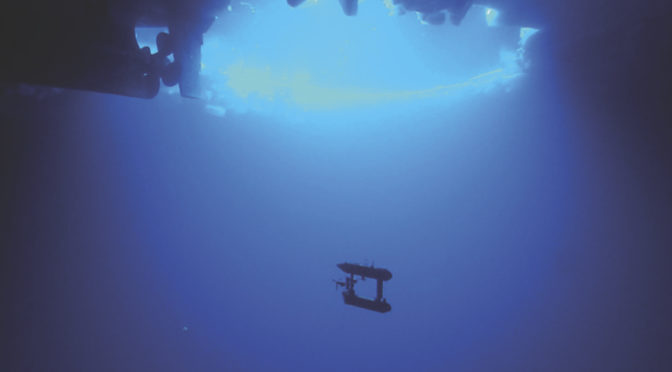
The data was collected by an Autonomous Underwater Vehicle (AUV) deployed during a two-month exploration in late 2012 as part of an international collaboration between polar scientists, including the Antarctic Climate and Ecosystems CRC (ACE CRC). It’s hoped the work will help explain the ‘paradox’ of Antarctic sea ice extent, which has grown slightly during the past 30 years. This is in stark contrast to Arctic sea ice, which has shown a major decline.

Previously, measurements were made via drill holes in the ice and supplemented by visual observations made from icebreakers as they crashed and ploughed through the sea ice zone, said Williams.

In contrast, the AUV gathers information by travelling beneath the ice, producing 3D maps of the underside of the ice based on data captured by a multi-beam sonar instrument. Complex imagery of an area the size of several football fields can be compiled in just six hours.
The manual drill estimates of thickness have never exceeded 5–6 m, but the AUV regularly returned thicknesses over 10 m and up to 16 m.

Autonomous Underwater Vehicles (above) as well as data-gathering seals are revealing surprising global climate effects in the Antarctic.

Autonomous Underwater Vehicles (above) as well as data-gathering seals are revealing surprising global climate effects in the Antarctic.

“This sort of thick ice would simply never be sampled by drilling or observations from ships,” said Williams. “We measured the thickness of 10 double football fields, and found that our traditional method [manual drill lines] would have underestimated the volume by over 20%.”

The researchers can’t yet say that overall Antarctic sea ice thickness is underestimated by this amount. They’ll need to use the AUV over much longer scales – across distances of 1000 km, for example – and directly compare the results with those from traditional methods.

The AUV is one of two new innovative information sources being used by ACE CRC scientists to explore Antarctic sea ice processes and change. They’ve also begun tapping into environmental data gathered in the Southern Ocean by elephant seals. These marine mammals can dive deeper than 1500 m and travel thousands of kilometres in a season.

During the past decade, ecologists and biologists have been equipping them with specialised oceanographic equipment provided by Australia’s Integrated Marine Observing System, to observe where and when they forage.

“These seals had been going to places we could only dream of going with a ship,” said Williams. The first major breakthrough from the seal-gathered data came last year with the confirmation of a new source of Antarctic bottom water, the cold dense water mass created by intense sea ice growth that ultimately influences climate worldwide.

It’s the fourth source to be identified of this influential water mass, and scientists had been looking for it for more than 30 years.
Karen McGhee

www.acecrc.org.au

Pipeline design for a safer future

JUST AFTER 6pm on 9 September 2010, a massive explosion rocked the Californian suburb of San Bruno. Within seconds, a house was engulfed in flames. More homes were soon burning ferociously. The cause was unknown for almost an hour. Some residents thought a plane had crashed at nearby San Francisco Airport. Others believed there had been an earthquake, as San Bruno lies close to the San Andreas Fault.

In fact, a 76 cm gas transmission pipeline had ruptured, killing eight people and destroying 38 homes.

Professor Valerie Linton, CEO of the Energy Pipelines CRC (EPCRC), has a mission to make sure such a pipeline disaster never happens in Australia.

“We’ve got a safety record at least an order of magnitude better than any other country in terms of our operation of energy pipelines. And we want to make sure it stays that way,” she says. “There’s always a risk that somebody gets overly enthusiastic with a digger and makes a hole or fracture in a pipeline. In the worst case, the fracture ‘unzips’ along the pipe. Our researchers have been working to ‘design out’ the possibility of fractures occurring, and that work has been exceptional.”

An Australian gas pipeline being lowered into its trench.

An Australian gas pipeline being lowered into its trench.

The EPCRC is a collaboration between four universities, the Australian Government and members of the Australian Pipeline Industry Association. One particularly significant product of its research is the recently released computer software called EPDECOM, which Linton describes as a leader in its field. Pipeline designers can use the software to determine the steel properties needed to enable the pipeline to withstand damage.

“North American fracture control experts have independently assessed EPDECOM, and it performs better than any other software available,” says Linton.

The CRC is also helping to improve Australian Standard AS2885 that applies to the pipeline industry. This relates to the design, construction, testing, operations and maintenance of gas and petroleum pipelines that operate at pressures above 1050 kPa.

“One of the most direct ways we can influence pipeline safety is to make sure our research findings get incorporated into upgrades of AS2885,” explains Linton.

An independent testing and research laboratory specialising in pipeline coatings opened in March 2104 at Deakin University – a CRC partner. Testing the integrity of pipeline coatings is vital if pipes are to be protected from corrosion.

While much of the EPCRC’s work is in engineering, social science also plays a central role. Dr Jan Hayes, Program Leader for Public Safety and Security of Supply, says inquiries into most accidents do not reveal new types of equipment failure. Usually the technological issues are already understood, but the knowledge isn’t applied because of social issues within organisations.

One of Hayes’ key goals is to harness the learning from pipeline incidents around the world. Hayes has co-authored a book: Nightmare Pipeline Failures: Fantasy Planning, Black Swans And Integrity Management. Its intended audience is senior executives in energy and chemical companies, but it will be publicly available and Linton describes it as “very readable”. The CRC funded Hayes’ research on the San Bruno disaster, which is included in the book. It’s another step towards keeping Australian energy pipelines safe

www.epcrc.com.au

The new class

THERE ARE INCREASING signs that Australian R&D investment in smart sectors such as finance and agriculture is reaping benefits overseas. Federal Trade and Investment Minister Andrew Robb points to a 10.4% rise in annual gross R&D expenditure to $31 billion (by 2012). This is twice the 4.9% per annum average among countries of the Organisation for Economic Co-operation and Development (OECD).

“Australia is a world-class innovation destination,” Robb says. “This is built on solid foundations of modern infrastructure, strong levels of investment, generous research and development incentives, and strong intellectual property protection.” In the Global Innovation Index 2014, Australia achieved its highest rank for innovation inputs, coming in 10th out of 143 countries and placing 22nd for outputs.

“We have seen a near doubling of patents filed abroad by Australian entities over a 10-year period,” says Ben Mitra-Kahn, Chief Economist at IP Australia, the Federal Government’s intellectual property office. He believes this is an encouraging indication that organisations are taking their innovations to foreign markets.

“Our national scientific research organisation, CSIRO, ranks in the top 1% of the world’s scientific institutions [in 15 of 22 research fields],” adds Robb. He cites Australia’s development of the bionic ear and CSIRO’s pioneering wi-fi work as high-profile examples of Australian innovation.

To that list, IP Australia adds ResMed’s patented sleep apnoea devices as well as Sportwool – a composite superfine Merino wool for endurance clothing, developed by CSIRO and WoolMark and adopted by foreign firms.

There’s also: the 3D-absorbent fabric developed by CSIRO and Textor Technologies, which is being used in the next generation nappy by global brand Huggies; Vision CRC’s ongoing work in contact lens technology worn by millions worldwide; and the Total Channel Control System to rejuvenate outdated irrigation systems. Total Channel Control is now used around the world, and was jointly developed by the former CRC for Sensor Signal and Information Processing, and Rubicon Water.

Relatively speaking, Australia’s weakness is innovation outputs. But efforts by many of the CRCs are building global relationships that will continue to boost the nation’s growth. In 2012, a report by Allen Consulting Group (now ACIL Allen Consulting) predicted that $5.9 billion in direct economic impacts would accrue during the five years to 2017 from CRC-produced technologies, products and processes – on top of the $8.6 billion in direct impacts already accrued since the CRC Program began in 1991.

“No one is more interested in or committed to maximising research impact than CRCs,” says Tony Peacock, CEO of the CRC Association.

190115_OS_2Taking finance further 

An example of successful Australian innovation on a global stage is the European Capital Markets CRC (ECMCRC). Established in early 2013 by the Australian-based Capital Markets CRC (CMCRC) in collaboration with European universities, more than seven universities were involved at the time of writing, with plans for at least another seven by early 2015.

The CMCRC was born out of the Securities Industry Research Centre of Asia-Pacific (SIRCA), set up in the 1990s by current CMCRC CEO Professor Michael Aitken as a model under which universities could collaborate and share knowledge and infrastructure and then jointly apply for research funding.

Like its Asia-Pacific predecessor, the CMCRC enables the finance and business departments of Australian universities to build and share valuable infrastructure.

A large amount of time in financial market research is spent collecting and collating data and the CMCRC has developed programs that expedite this process. These innovations also enable the data to be shared, with the result being a drastic reduction in research time.

One of the CMCRC’s earliest and most successful innovations was the SMARTS market surveillance system, which was sold to the US stock exchange NASDAQ in 2010. The proceeds of that sale allowed further developments, such as the Market Quality Dashboard.

“The Market Quality Dashboard takes all that data and produces basic metrics that everyone needs to use to analyse things like transactions costs and market volatility,” Aitken explains. It means researchers and academics no longer need to develop these metrics from scratch, thereby improving productivity.

In Europe, the ECMCRC will attract new members by providing academics and universities with access to these tools.

“What we’re doing is encouraging the universities to get together – by giving them something they couldn’t hope to achieve in a million years – and once they’re together, we collectively apply for funding from the EU to be matched by industry funding, thus sharing the very successful CRC model with other countries,” Aitken says.

The university PhD students who use the data, and are in industry placements, have the joint role of linking the research to commercial applications because they best understand what companies need.

Aitken says the CMCRC has already built three major pieces of technology and created at least 200 new jobs in Australian spin-offs as a result.

“We hope that we will do the same in Europe but we need to get the universities together first,” he says. “By focusing on industry engagement first and foremost, we will build interesting technology for businesses. This will build up ‘brownie points’ with industry partners who will provide access to their unique data, which will in turn foster scholarship.”

CMCRC’s predecessor, SIRCA, has 39 member universities from across the region, and Aitken says there are already plans in place for a capital markets research centre in North America in the next five years.


190115_OSboxA global effort

The area of agriculture and agribusiness is one of Australia’s five key strengths, points out Robb, and agricultural CRCs have also been very proactive when it comes to international cooperation. Two years ago, the Dairy Futures CRC launched a global research project to create the world’s biggest collection of DNA sequence data for dairy herd bulls.

The aim of the 1000 Bulls Genome Project was to build a database of DNA sequences to be used for breeding Australia’s dairy herds. From that data, mutations that affect animal health, welfare and productivity could also be identified.

A scientific paper analysing the genomes of 234 bulls from three dairy cattle breeds – Jersey, Holstein-Friesian and Fleckvieh – was published in the international journal Nature Genetics in July 2014. It explains that the research team identified 28.3 million genetic variants and was able to use the database to identify a recessive mutation linked to embryonic death in dairy cattle. The researchers also identified a dominant mutation linked to chondrodysplasia, a type of bone disease.

“There’s a real opportunity here if we can find the genes affecting traits that are important to dairy farmers, like fertility, milk production and disease resistance,” the project’s leader, Dr Ben Hayes, recently told the ABC’s Country Hour. “We’re combining the DNA information with the herd records that farmers have kept over a large number of years… to sort through those 28 million variants and come down to a few thousand that really do predict milk production, fertility and disease resistance.”

The project involves 20 international research partners from Australia, France, Germany, Canada, Denmark and the USA. Hayes is based at the Victorian Department of Environment and Primary Industries and leads the Dairy Futures CRC’s animal improvement research program – a partnership between dairy farmers, pasture and cattle breeding companies, government and researchers.

Hayes explains that identifying a gene mutation that causes embryonic loss in cows can help farmers build a healthy, more productive dairy herd. “We know that this particular mutation is already present at low frequency in Australian dairy herds. Locating the mutation means we can test for it and avoid matings between animals that both carry the mutation, to keep it from becoming a problem in the future.”

The CRC is also using the project’s genetic sequence data to design improvements in the routine use of DNA to predict the genetic merits of dairy cows.

“The ultimate challenge in making genomic selection more robust is to find the variants that are considered to be causative – the small fraction of all known variants that are responsible for major changes to the function of important genes,” Hayes says.

“We now have data for the entire DNA sequences, including mutations affecting the traits dairy farmers are most interested in. We are tracking down the causative genes for fertility, longevity and meat production, to equip farmers to make more informed breeding decisions and boost the quality of their herds.”


Small pigTHE PORK CRC is another good example of global collaboration. The CRC has strong links with the French National Institute for Agricultural Research (INRA) on genetic research around disease resistance and environmental resilience in pigs. Pork CRC Chief Executive Officer, Dr Roger Campbell, credits the collaboration to the reputation and efforts of their geneticist Dr Susanne Hermesch, an Associate Professor at the Animal Genetics and Breeding Unit, based at the University of New England in NSW. Hermesch says international collaboration is particularly important in her field of pig genetics.

“It’s a small, very specialised field, and you really need to look for collaboration to get the people you want,” she says. Hermesch also has collaborative arrangements with researchers at organisations in New Zealand, Scotland and the Netherlands.

Pork CRC’s attitude towards commercialisation of research at a national level also means that any collaborative international research is quickly adopted in the field.

“Research is part of the adoption process,” says Hermesch. “We are recording information and data on farms in the commercial setting.”

Australian breeding companies collaborate in research, which means they must have faith that the research outcomes will result in commercial benefits for their business.

“This international collaboration is valuable,” adds Hermesch. “I’m pulling people from all over the world into my extended research team with links to the Australian pig industry.”

Campbell expects there to be global advantages from the current genetic research because of these ties.

“The pig industry globally is not all that different,” he says. “I would expect that all geneticists, and therefore all breeding companies, are likely to benefit.”

www.cmcrc.com

www.dairyfuturescrc.com.au

www.visioncrc.org

www.porkcrc.com.au