Tag Archives: webinar

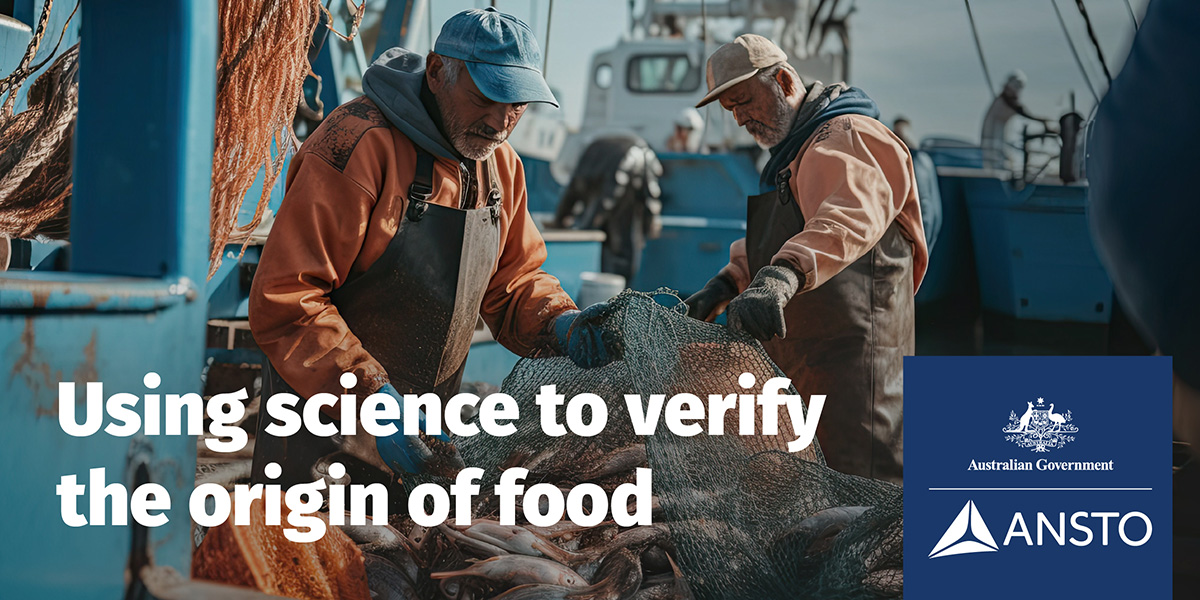
Webinar: Using science to verify the origin of food

Join experts from ANSTO and industry to explore how nuclear science is securing our food future.

Food is vital for our health and wellbeing, but food fraud is a growing global issue. From false labelling to product substitution, fraud costs the global food industry an estimated $40–50 billion USD each year. Even worse, unsafe or contaminated food makes 1.6 million people sick every day.

Today, consumers and regulators expect clear proof of origin. However, traditional methods such as paper-based documentation, genetic testing and chemical profiling can be incomplete, leaving exporters, retailers and consumers exposed to risk.

Join leading experts from ANSTO, government and industry as they unpack the science and technology tackling food fraud and explore how innovation is helping ensure safety, traceability and trust in the global food system.

Register now for this important discussion.

đź“… Date: Wednesday 10 December
⏰ Time: 12 noon AEDT
📍 Online | Free Registration

Be part of the practical science movement protecting Australia’s future — register now.

Featured speakers

Dr Debashish Mazumder, Leader of Food Provenance Research, ANSTO
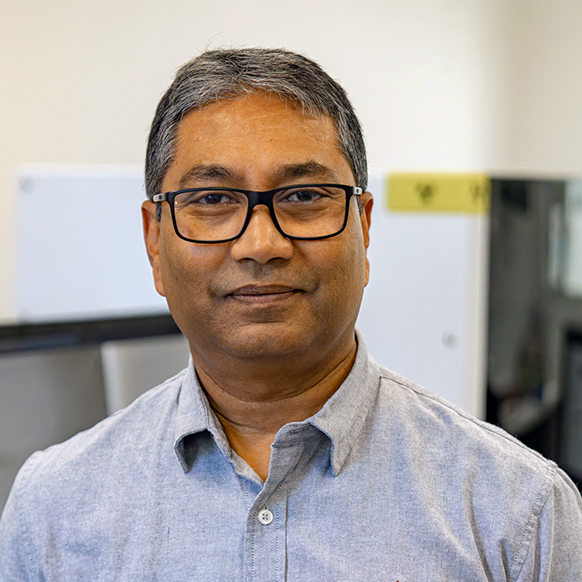
Under Dr Mazumder’s leadership, ANSTO has developed traceability technologies, including field-deployable handheld XRF scanning techniques, to verify the origin of food products. These cutting-edge tools, rigorously validated on seafood and native bushfoods, address critical traceability and biosecurity challenges in trade. These tools help industry safeguard the integrity of their supply chains. Dr Mazumder collaborates with government agencies, industry partners and academic institutions across Australia and the Asia-Pacific region, focusing on food origin and related environmental research.

Erik Poole, Head of Product and Quality,  Sydney Fish Market
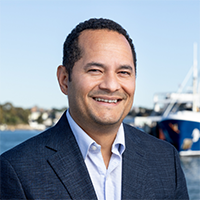
Erik took up a role in quality assurance with Sydney Fish Market in 2005. Prior to this, he worked as a qualified skipper, operating fishing vessels in Papua New Guinea and the Northern Territory, and completed a fisheries science degree at AMC in Tasmania.

Erik is now responsible for overseeing SFM’s QA, food safety, and engagement with stakeholders in the seafood industry, particularly related to quality standards, grading, and technical projects.

Dr Stephen Pahl, Seafood Safety and Market Access Program Leader – Food Sciences, South Australian Research and Development Institute – SARDI

Dr Stephen Pahl is a chemical engineer with research, product development and process improvement expertise within the food, bioproducts and nutraceutical sectors. He obtained his PhD in Chemical Engineering from the University of Adelaide before joining SARDI in 2012.

His core research activities are directed towards food safety and product innovation within the Australian seafood and food manufacturing industries. Dr Pahl also provides technical support to SafeFish on seafood post harvest operations and advice to support Australia’s seafood trade and market access negotiations and helps to resolve barriers to trade.

Dr Patricia Gadd, Science Research Leader and Instrument Scientist, ANSTO
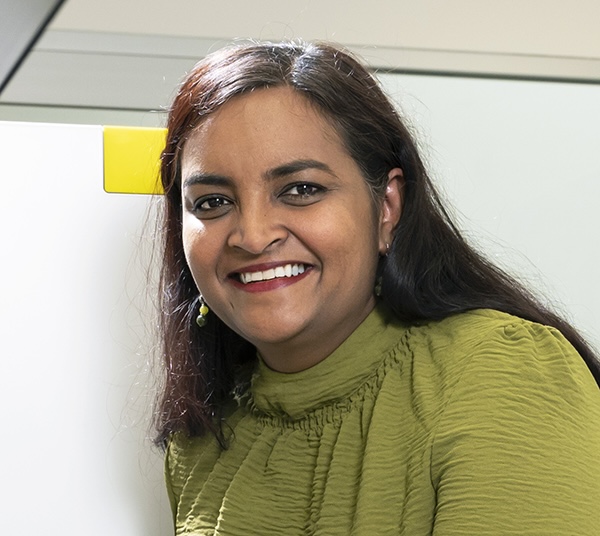
Currently, Patricia Gadd leads the Water Resource Sustainability Program within the Environment Research and Technology Group, whilst running the Itrax Core Scanner Laboratory at ANSTO. She is a much sought after expert in X-ray Fluorescence Spectroscopy (XRF). Patricia developed a world-first non-destructive technique to evaluate tissue. Her use of this technique on seafood profiles led to a new and growing research field at ANSTO, seafood provenance.
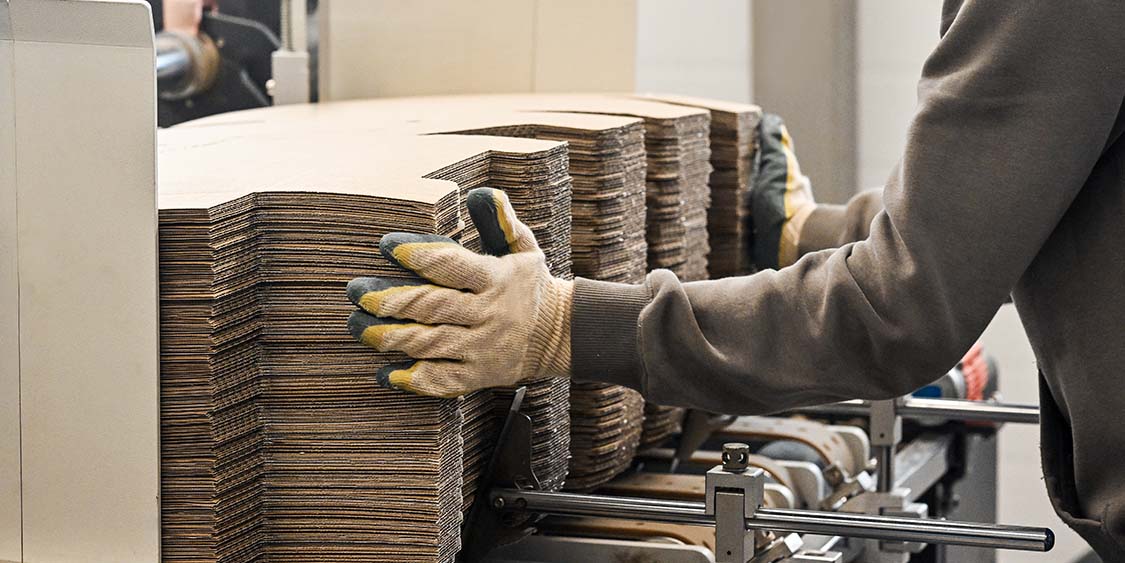

ANSTO Science Series Webinar: Nuclear science reducing PFAS packing risks in Australia

Science and industry unite to advance PFAS-free packaging

PFAS chemicals in packaging pose serious environmental and health risks, but Australia’s packaging industry is leading the way to phase them out. Backed by cutting-edge nuclear science, industry-led action is creating safer packaging solutions for all Australians.

Join ANSTO, Detmold Group, and The Australian Packaging Covenant Organisation (APCO) to explore the science, policy and practical actions behind Australia’s transition to PFAS-free packaging. This session will answer key questions, including:

  • What is PFAS and why is it used in packaging?
  • What are the current and future regulatory requirements?
  • How is PFAS currently tested and what role does ANSTO’s advanced nuclear accelerator technology play in screening for fluorine?
  • What does the PFAS reduction journey look like from an industry perspective?

This 60-minute panel discussion, hosted by well-known science broadcaster Lee Constable, will explore both the challenge of PFAS chemicals and the science-led, industry-driven solutions paving the way for safer, sustainable packaging.

Featuring:

  • Megan Schutte, Strategic Product Development Manager, Detmold Group – innovators committed to PFAS-free packaging products
  • Jonathan Dolan, Senior Government Partnerships Coordinator, The Australian Packaging Covenant Organisation (APCO) – leading the national roadmap to phase out PFAS in packaging
  • Dr Madhura Manohar, Accelerator Scientist, Centre for Accelerator Science, ANSTO – harnessing nuclear science for real-world environmental solutions

đź“… Date: Wednesday 24 September

⏰ Time: 12 noon AEST

Be part of the practical science movement protecting Australia’s future.

This webinar is proudly brought to you by ANSTO

About the speakers

Megan Schutte, Strategic Product Development Manager, Detmold Group

Megan Schutte is a  Strategic Product Development Manager at Detmold Group. Her career began over 14 years ago in FMCG research and development at Unilever, where she progressed through roles in product development, technical innovation leadership, and strategic project delivery. Since immigrating to Australia, Megan has expanded her expertise into the packaging industry, leading new product development, R&D and commercialisation from concept to full-scale manufacturing. Throughout her career, Megan has been passionate about creating products that balance performance, manufacturability and sustainability. She’s also been actively involved in industry conversations around regulatory change. Megan is excited to share industry insights on the journey to removing PFAS from packaging.

Jonathan Dolan, Senior Government Partnerships Coordinator,  Australian Packaging Covenant Organisation (APCO)

Jonathan is APCO’s Senior Government Partnerships Coordinator. After completing a Bachelor’s degree in Government and International Relations at the University of Sydney, he went on to earn a Master’s in Sustainable Development at Macquarie University. Since joining APCO, Jonathan has been involved in developing APCO’s 2030 Strategic Plan and works closely with government and industry stakeholders. He also supports brand owners to navigate packaging regulation, particularly for single-use plastics and PFAS in packaging.

 Dr Madhura Manohar – Accelerator Scientist, Centre for Accelerator Science, ANSTO

Dr Madhura Manohar is an Accelerator Scientist at ANSTO’s Centre for Accelerator Science. Madhura uses accelerator-based techniques to contribute to key areas of research such as screening for PFAS, air pollution research, food provenance, materials research and many more. Madhura has a passion for science that addresses real world challenges for human health and the environment. Her work has meaningful impacts for the research community, industries such as the mining industry, food industry, packaging industry, government regulatory bodies, international agencies such as the UN’s international atomic energy agency and many more. 

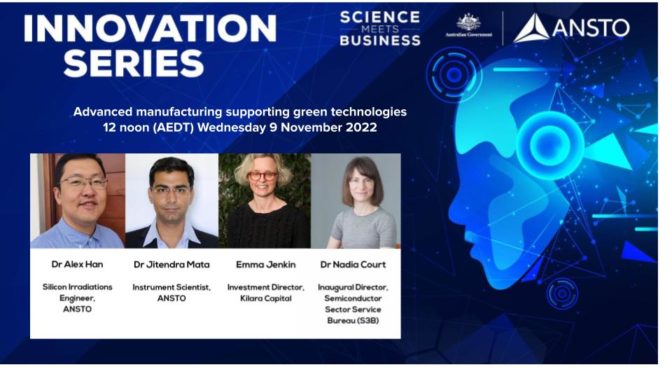
Advanced materials supporting green technologies

Wednesday 9 November 2022 12 noon AEDT

As we see demand for renewable energy and clean technologies at an all-time high, Australia’s manufacturing sector is transforming by embracing green technologies.

Australia’s manufacturing capabilities will play a key role in maintaining a high value, sustainable and prosperous economy for the future.

Through ANSTO, Australia already supplies more than 50% of the global demand for irradiated silicon, used in manufacturing high-tech  products for high-speed trains, EVs, wind turbines and more.

A thriving advanced manufacturing sector will see Australia meet its sustainability targets and lead the world. Discover what the future holds in advancing Australia’s manufacturing capabilities in green technologies and how to work with the organisations and businesses at the cutting edge of this sector.

Wednesday 9 November 2022 12 noon AEST

This webinar is FREE to attend and registration is essential. Secure your spot by clicking the button above.

The Panel

Dr Alex Han, Silicon Irradiations Engineer, ANSTO

Dr. Alex Han is an Silicon Irradiations Engineer at ANSTO. Before joining ANSTO Silicon Alex had about 10 years of experience in advanced silicon solar cell research & manufacturing at the School of Photovoltaics and Renewable Energy, UNSW. His current work at ANSTO focuses on production planning, process optimisation and advanced calibration for silicon irradiations services.

Dr Jitendra Mata, Instrument Scientist, ANSTO

Dr Jitendra Mata is a senior instrument scientist for the Kookaburra an Ultra Small Angle Neutron
Scattering (USANS) instrument (since March 2017) and an instrument associate for the Quokka a
Small Angle Neutron Scattering (SANS) instrument (since July 2018) at Australian Centre for Neutron
Scattering (ACNS), Australian Nuclear Science and Technology Oranisation (ANSTO), Australia. Dr
Mata has been at ANSTO for > 13 years; working as an instrument scientist for the Quokka for 4
years, a research leader at ANSTO Minerals for 3 years, and as a postdoctoral research fellow at the
ACNS for 2 years. He also worked as a postdoctoral research fellow at The Australian National
University with Prof. John White for 3 years.


Dr Mata’s research concerns complex soft materials and has had industrial relevance since his PhD.
He has investigated several areas of soft condensed matter science, such as surfactant and block
copolymer solutions, emulsions, food proteins, hydrogels, and minerals. Dr Mata has co-authored
more than 100 peer reviewed articles including 2 book chapters: all in high impact international
journals. He has also published several scientific reports.

Emma Jenkin, Investment Director, Kilara Capital 

Emma has over 20 years’ experience in finance across portfolio management, fixed income and impact investing. She is considered a climate pioneer and has led a number of domestic and global innovations across the clean energy transition, ESG investing, carbon finance and emissions trading. Initially working in investment banking, she also has entrepreneurial experience working directly in and with start-ups and early-stage ventures and has successfully established partnerships to accelerate innovation and product development. Emma completed a Bachelor of Science majoring in Mathematics and a Bachelor of Commerce and is a passionate STEM advocate.

 Dr Nadia Court, inaugural director of the Semiconductor Sector Service Bureau (S3B).

Dr Nadia Court is the inaugural Director of the Semiconductor Sector Service Bureau (S3B). Until recently, Nadia was the Technical Director of the Research and Prototype Foundry, the University of Sydney’s micro- and nano-fabrication facility and the Sydney Hub of the NSW Node of the Australian National Fabrication Facility (ANFF). Nadia has worked in various roles with ANFF since 2012, both at UNSW and the University of Sydney. Prior to this Nadia spent several years working in the UK on printed electronics and optical communication technologies for the defence industry.

The ANSTO Innovation Series

The ANSTO Innovation Series is a virtual and hybrid meet-up that focuses on the key capacities of ANSTO’s people, partners and facilities and how they are meeting global challenges in sustainable industries, medicine, advanced manufacturing and in accelerating small business.

Delivered as a quarterly webinar, the ANSTO Innovation Series features an expert panel exploring the latest science, industry and start-up opportunities, including innovations in food, energy storage, nuclear medicine and health, engineering new materials and accelerating deep tech business.

The ANSTO Innovation Series is produced in partnership with STEM-specialist publishers, Refraction Media, publishers of Science Meets Business, and hosted by leading science journalist, Lee Constable.

About ANSTO

The Australian Nuclear Science and Technology Organisation (ANSTO) is the home of Australia’s most significant national infrastructure for research. Thousands of scientists from industry and academia benefit from gaining access to state-of-the-art instruments every year.

ANSTO researchers work on global science and technology challenges, and operate landmark research infrastructure including one of the world’s most modern nuclear research reactors, OPAL; as well as a comprehensive suite of neutron beam instruments at the Australian Centre for Neutron Scattering; the Australian Synchrotron; the National Imaging Facility Research Cyclotron; and the Centre for Accelerator Science. ANSTO also hosts the nandin innovation centre, one of Australia’s few deep technology hubs facilitating industry engagement and research translation.

Subscribe to our regular innovation and research news updates to get notification of the webinars.