Tag Archives: society

Dragonfly eyes inspire machine vision

Mechanical Engineering PhD Student Zahra Bagheri at the University of Adelaide in South Australia says that despite having low visual acuity and brains no bigger than a grain of rice, dragonflies are remarkably good at tracking prey.

“They’re not like mammals which have developed very good brains, and they have very low resolution eyes compared to other animals, but they can catch their prey more than 97 per cent of the time while they’re moving at very high speeds in very cluttered environments,” Bagheri says.

“That means they have adopted very efficient methods for target tracking.”

Bagheri is part of a team of engineers and neuroscientists that have used those methods to develop a machine vision algorithm that can be applied in a virtual reality simulation, allowing an artificial intelligence system to ‘pursue’ an object.

Her project is a combination of neuroscience, mechanical engineering and computer science, building on years of research in to insect vision already undertaken at the University of Adelaide.

Zahra Bagheri and Benjamin Cazzolato with the robot that will use the newly developed machine vision algorithm.

Zahra Bagheri and Benjamin Cazzolato with the robot that will use the newly developed machine vision algorithm.

“Detecting and tracking small objects against complex backgrounds is a highly challenging task. Consider a cricket or baseball player trying to take a match-winning catch in the outfield,” Bagheri explains.

“They have seconds or less to spot the ball, track it and predict its path as it comes down against the brightly coloured backdrop of excited fans in the crowd – all while running or even diving towards the point where they predict it will fall!”

This is known as selective attention. Dr Steve Wiederman is leading the dragonfly project, and conducted the original research recording the responses of neurons in the dragonfly brain.

“Selective attention is fundamental to humans’ ability to select and respond to one sensory stimulus in the presence of distractions,” Dr Wiederman says.

“Precisely how this works in biological brains remains poorly understood, and this has been a hot topic in neuroscience in recent years,” he says.

“The dragonfly hunts for other insects, and these might be part of a swarm – they’re all tiny moving objects. Once the dragonfly has selected a target, its neuron activity filters out all other potential prey.”

“It has diverse applications. It can be used in surveillance, wildlife monitoring, smart cars and even bionic vision.”

The team has emulated that ability with their algorithm. Rather than trying to perfectly centre the target in its field of view, Bagheri says the system locks on to the background and lets the target move against it.

“This reduces distractions from the background and gives time for underlying brain-like motion processing to work. It then makes small movements of its gaze and rotates towards the target to keep the target roughly frontal,” Bagheri says.

Because the algorithm is based on a dragonfly’s small brain and limited vision, it can rival insects’ abilities as well as those of more elaborate machine vision systems – all with relatively low complexity.

“It’s shown that we can do it with very low resolution cameras and very limited computational resources. It doesn’t need high-performance computers or anything like that.”

This bio-inspired “active vision” system has been tested in virtual reality worlds composed of various natural scenes. The Adelaide team has found that it performs just as robustly as the state-of-the-art engineering target tracking algorithms, while running up to 20 times faster.

“We are hoping to test it on a robot – we’re working on that right now. It has diverse applications. It can be used in surveillance, wildlife monitoring, smart cars and even bionic vision.”

Bagheri is lead author of the paper, titled Properties of Neuronal Facilitation that Improve Target Tracking in Natural Pursuit Simulations, which was published this week in the Journal of The Royal Society Interface.

This article was published on The Lead on the 11th June 2015. Read the original article.

Transforming innovation in Australia

When it comes to fostering innovation and the commercialisation of world class research, there is something the United States has that we lack. We ought to learn from the successes of the US in this area, and emulate one program they have pioneered to give our own innovative industries a much needed kickstart.

For dozens of Australian researchers returning to the country after working in the US, the lack of an equivalent to the US’s Small Business Innovation Research (SBIR) scheme here reflects a major hole in our innovation ecosystem.

Charles Wessner, Professor at Georgetown University and Director of the Global Innovation Policy unit, says the SBIR scheme triggered a fundamental shift in attitudes in American universities when it was introduced in 1982.

According to Wessner, before SBIR, the Dean of a faculty would ask young academics how many publications were going to come out of their latest piece of research.

Thirty years on, the Dean is now asking whether the research can be converted into a product or service, and whether they should spin it out of the university to access SBIR funding. It has been a profound change of mindset, says Wessner.


Simple but effective

The SBIR scheme is a fairly simple design that hasn’t changed much since its introduction. US government agencies, which undertake more than US$100 million worth of R&D outside the agency, are required to allocate 2.8% of their R&D budget to these programs. Currently, eleven federal agencies participate in the program.

Each agency takes an active role in calling for R&D – “solicitations” is the term used in the US, and with a completely straight face – for areas of concern to them. For example, the US Department of Agriculture this year is calling for projects in 10 areas. They are unsurprising fields, like “aquaculture” and “biofuels and biobased products”, but with a bit more specificity under them.

Any small business (1–500 employees) can then bid to undertake projects against those solicitations. The US Department of Agriculture issues solicitations once a year, receives about 500 applications for “Phase 1” projects (those up to US$100,000 over up to eight months) and funds about 15–20% of them. If a project is success at Phase 1, they can apply for a Phase II award, which can be up to US$500,000 over two years. Some departments have further, larger Phase III stages, although the USDA doesn’t.

For the Department of Defense (DoD), 2.8% of its extramural R&D spend is a very large amount of money indeed. Moreover, if the Department of Defense is soliciting proposals for new work, it is very likely it’ll become the first customer of that small business if the project is successful.

The DoD already has a stake in the product, and is thinking about how it might work in its own ecosystem. Given the extreme complexity of military procurement procedures, having the DoD already staked in your product is a major advantage to a new company.

Carry on Phase II and then Phase III funding, sometimes in multiple series, are available in much larger amounts from the bigger agencies, and can run to tens of millions of dollars.

Don’t imagine that means all SBIR projects are short-term or lack scientific challenges. The US Navy uses about 1.4 billion tonnes of fuel annually, and the head of its energy program, Captain Jim Goudreau, said climate change transcends politics when you are talking about that much fuel.

He pointed out that the US military is already affected by climate change in many practical ways, like having less available live fire practice days each year in California. And as he said at the TechConnect World audience in Washington last week, the Navy is contracting for materiel to be delivered in 2040, which needs to be effective into the 2070s and 2080s. So it needs to cope with a changing climate.


Pull and push

At the TechConnect meeting in Washington last week, there were literally dozens of US federal groups talking to the science and business community about their innovation needs. Big departments, like defence and energy, are represented by many specialised teams seeking out companies to work for them.

It is “customer pull” in its rawest form. The science community is here in big numbers offering new technologies to the market. When “science push” and “customer pull” mix, then the chances of successful innovation rise to a new level.

At the same time in Philadelphia, the gigantic annual biotechnology conference, BIO, was underway with more than 15,000 participants from across the globe. The two big US science funding agencies – the National Science Foundation (NSF) and the National Institutes of Health (NIH) were there in force helping their SBIR companies meet up with big pharma and other collaborators to bring technologies to market.

It’s like a science festival writ large, but also in extreme detail, as companies search for new opportunities from the vast American research community.


Could it work in Australia?

The recent joint paper from Ian Macfarlane and Christopher Pyne, “Boosting Commercialisation of Research”, floated the idea that Australia needs an “SBIR-like” scheme. The Academy of Technological Sciences and Engineering (ATSE) has often pointed out that the lack of such a scheme is a gaping hole in the Australian innovation ecosystem.

We do have some “customer pull” oriented schemes, though. The Rural R&D Corporations definitely fall into this category, as do many of the Cooperative Research Centres (CRCs).

The government’s response to the recent “Miles Review” of the CRC program was to push CRCs to be even more industry-led.

Industry leadership is the mantra for the new Industry Growth Centres, but they are not going to be funding very much research. The ARC’s Linkage Projects and the newer Industrial Transformation Training Centres as well as the NHMRC’s Partnership Centres are each attempts to have push more of the nation’s R&D investment into more market-facing efforts.

But none of these schemes are aimed at boosting innovation from small businesses. Or at least, not exclusively so. They are often encouraged to do so, and make sporadic attempts to improve their small business engagement, but it is clearly a weak spot in the Australian innovation context.

Small businesses that are trying to expand with innovative technologies constantly struggle to raise funds at early stages of development.


Bridging the gap

SBIR is not of itself a scheme for collaboration; the small businesses involved can undertake all the R&D themselves. But the experience in the US is that SBIR fosters collaboration as high technology start-ups seek to source expertise from universities and other research agencies.

Universities immediately increased their rate of spinning out companies on implementation of the scheme in 1982. The SBIR funding attracts further seed and venture capital funding, bridging that “valley of death” between early research funding and the business becoming self-sustaining.

Ultimately, many of the small businesses get bought out by large companies, particularly in the defense and pharmaceutical areas, where massive ongoing investment is needed to introduce new products.

There’s no doubt that an SBIR scheme would fill a major innovation gap in Australia, and no doubt we could make the necessary administrative arrangements. But for an SBIR scheme to truly succeed in Australia, there would be a few hurdles that I’d suggest must be overcome before we spent the first dollar. I call these the “Fair Dinkumness” tests to ensure an Australian flavour.


Fair Dinkumness test 1

Would there be true political support?

Unless a scheme enjoyed bipartisan support, there would be no point in introducing one. With one of the shortest electoral cycles in the world, Australia is at a major disadvantage in terms of stable policy in relation to innovation.

If the political support is there, then an SBIR scheme would need a significant investment of new money. Scrounging money off another under-funded program would simply be setting both up to fail. It takes some time for industry to become confident with new schemes and start to invest in a meaningful way. We’d need a real commitment.


Fair Dinkumness test 2

Would there be true bureaucratic support?

SBIR in the US works because it is a procurement scheme as well as an R&D scheme. The bureaucracy would need to seriously commit to using the scheme to improve its own departmental knowledge or services.

That means a solicited report to the Department of Environment on management of an endangered species would need to be implemented, not just sent to the library. That means the Army would need to buy the better boots from an Australian small business.

This is perhaps a bigger mindset change than either the politicians or the business community, and would need to be monitored closely, even if there was initial high level support.

For a small country such as Australia, it is often easiest to take the pathway of least risk – so Senate Estimates would need to cut bureaucrats some slack for backing Australian inventiveness too.


Fair Dinkumness test 3

Would Australian business truly back it?

If small businesses are formed just to access SBIR money, and want to survive on providing some research to government, then we are no better off. If peak industry bodies view the money as simply an entitlement for their members, then nothing new will happen.

The whole point of giving a big innovative boost to small businesses is to turn them into high-growth businesses. Existing bigger businesses would need to accept that they won’t be able to access the scheme, and they might even be faced with competition from those that do become successful innovators. An SBIR scheme by its very nature involves giving a leg-up to the new players in town, and the incumbent players need to accept that situation.

If the federal government did undertake to create an SBIR-like scheme in Australia, it would easily be the biggest reform of the innovation ecosystem in the country since the Hawke government’s raft of “Clever Country” policies.

It may not be the size of the Medical Research Future Fund as that scheme grows, but it is significantly more complex to implement. There is no doubt the government wants business and research agencies to come together much more closely. An SBIR scheme would be a massive step in that direction.

Tony Peacock

This article was first published by The Conversation on 25 June, 2015. Read the original article here.


Exploring carbon capture and storage futures

The Great Ocean Road, about 200 km southwest of Melbourne, draws millions of tourists to view the spectacular cliffs and limestone stacks known as the Twelve Apostles, carved by relentless Bass Strait waves and winds. But this region is as rich in fossil fuels as it is in scenic beauty, and several commercial gas fields have been opened in the Otway Basin along the continent’s southern margin.

There is also the CRC for Greenhouse Gas Technologies’ (CO2CRC) flagship carbon capture and storage (CCS) trial: the CO2CRC Otway Project – the world’s largest demonstration of its kind.

Since the project started in 2008, the Australian government, US Department of Energy and CRC partners have funded the injection of more than 65,000 tonnes of CO2 into the Otway Basin’s depleted gas fields, without leakage or measurable effect on soil, groundwater or atmosphere.

The project was further boosted by $25 million in Australian government funding in February this year. “The wide-scale deployment of CCS is critical to reduce carbon emissions as quickly and cost-effectively as possible,” says CO2CRC chief executive Tania Constable. “This funding will enable CO2CRC to embark on a new program of research to improve CCS technologies.”


Australia is well-endowed with natural resources. Its known uranium reserves are the world’s largest, and it is rich in natural gas. Traditionally, the most important resource has been coal: Australia has the fourth largest coal reserves globally and is the world’s second biggest coal exporter behind Indonesia. Coal exports – which have grown 5% annually over the past decade – will earn $36 billion in 2014–2015.

Figures like these have led Prime Minister Tony Abbott to declare coal “an essential part of our economic future”. Professor Chris Greig, Director of the University of Queensland’s Energy Initiative, a cohort of research expertise across all energy platforms, anticipates the country will continue to be reliant on fossil fuels, including coal, until at least mid-century. But just how far beyond that depends on how the world – particularly China, one of Australia’s biggest coal customers – addresses future climate change.

In 2014, the US-China emissions deal set China a goal to source 20% of its energy from zero-emissions sources and peak its CO2 emissions by 2030. In August 2014, amid worsening public sentiment over air pollution, the Beijing Municipal Environmental Protection Bureau announced that it would be phasing out coal-fired power in the capital’s six main districts by 2020.

China has been pouring money into the development of renewable energy technologies, spending an estimated US$64 billion on large-scale clean energy projects in 2014 alone. This was five times more than the next biggest spender, according to market analyst Bloomberg New Energy Finance. China is also investing heavily in CCS technologies, with at least 12 projects currently underway.

energyin3


There are several pathways toward reducing emissions from the electricity sector – from the adoption of nuclear energy and greater uptake of renewable sources and natural gas, to more efficient power plants and modified diesel engines that can burn liquefied coal. CCS, however, is one of the most promising methods for reducing emissions from coal-fired power stations. Capture technologies isolate and pump CO2 underground to be stored in the pores of rocks (see graphic page 29).

Rajendra Pachauri, who until early 2015 was Chair of the Intergovernmental Panel on Climate Change, told the UN 2014 Climate Summit in New York, in September 2014: “With CCS it is entirely possible for fossil fuels to continue to be used on a large scale”.

Dianne Wiley, CO2CRC’s program manager for CCS, says CO2 capture technologies are already available to install. Their deployment is limited by high costs, but there have been strong successes. Wiley points to the commercial scale Boundary Dam Integrated Carbon Capture and Sequestration Demonstration Project in Saskatchewan, Canada – the world’s first large-scale power plant to capture and store its carbon emissions – as a good example of what’s possible with CCS technology. It became operational in October 2014 and, its operators say, is already “exceeding performance expectations”. The CAN$1.3 billion cost of the system should drop by around 30% in subsequent commercial plants, says Brad Page, CEO of the Global CCS Institute.


Greig says that investment decisions in favour of CCS in Australia won’t happen until more work is done to find high-capacity storage basins around the continent that can safely and reliably store CO2 emissions for several decades.

Constable says the recent injection of capital from the Federal Government to the Otway Project will help the CRC take the necessary steps to meet this challenge. She says it will “lower the costs of developing and monitoring CO2 storage sites, enhance regulatory capability and build community confidence in geological storage of CO2 as a safe, permanent option for cutting emissions from fossil fuels”.

Retrofitting CCS technology to existing plants isn’t an option: Greig likens that to “building a brand new garage onto the side of a house that’s falling down – you just don’t do it”. CCS would therefore require investment in new coal-fired power stations.

“A well-conceived energy policy for the electricity generation sector would see ageing, low-efficient plants replaced with high-efficiency ultra-supercritical [coal] plants,” says Greig, adding that these plants have lower emissions simply by virtue of their efficiency and could achieve emissions reductions of 25% compared to existing plants.


How CCS works

energyinset1

The first step of carbon capture and storage (CCS) is capture. It involves separating CO2 from other gases in the exhaust stream from a fossil fuel power plant or some other industrial facility. This can be done with solvents that absorb CO2 or with ceramic and polymer membranes that act as filters. Once isolated, CO2 is compressed into a state in which the difference between liquid and gas can no longer be distinguished. It is then transported via pipeline to a prospective storage site. Here, the CO2 is injected into an underground reservoir, such as a geologic formation or depleted oil field. The CO2 has to enter the rocks without fracturing them, and can then be stored underground for thousands of years.

Myles Gough

CO2CRC

Award-winning app boosts mental health help for youth

You are 16 years old and have a secret, which you’ve been carrying around for what feels like your whole life. You feel trapped so you turn to marijuana and alcohol to numb the pain. Your grades begin to slip and your parents are worried so they send you to a psychologist. During your first visit, the clinician in the waiting room starts asking questions, and all you can hear is your heartbeat ringing in your ears.

When it comes to receiving effective mental health treatment, early diagnosis and non-judgmental support are essential. In order to assess what types of treatment options are available, many clinicians start with a verbal assessment. However this verbal assessment is a barrier for many young people, preventing treatment. Psychologist and PhD candidate Sally Bradford recognised that young people between the ages of 12­­–25 could benefit from a different kind of assessment.

“They’re going into an environment where they’re expected to verbally relay everything that is going on in their lives – to tell their deepest, darkest secrets that they may have never said out loud before,” Bradford says. “It can take a long time for them to find the words – especially if the clinician doesn’t ask the right questions,” she says.

As part of her PhD focusing on the use of technology in face-to-face mental health care with young people, Bradford created the electronic psychosocial assessment app called “myAssessment” that helps clinicians evaluate young people quickly and easily. Speaking to the National Mental Health Commission’s review of Australia’s mental health system, this new screening process underscored the need to improve health services and support through innovative technologies.

“The app could be beneficial in any field where you’re needing groups of people to be truthful, and give answers in a way that they do not feel judged,” Bradford says.

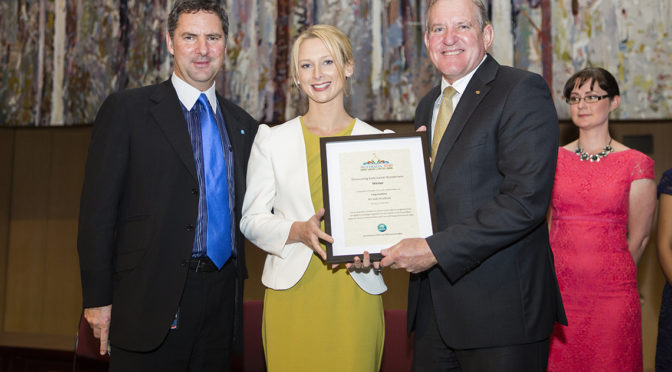
Based on the strides Bradford made in youth mental health with the invention of myAssessment, she was awarded the $5000 top prize at the CRC Association Early Career Research Showcase at the CRCA’s Excellence in Innovation Awards Dinner in Canberra.
240615_mentalhealth7

The app was developed in close conjunction with the Young & Well CRC, youth focus groups and clinicians, and subsequently trialled at a headspace Centre in Canberra over nine months in 2014.

“The app was designed with significant input from young people and clinicians, and puts their needs and requirements first. For clinicians, it follows an evidence-based format and doesn’t require changes to the way they currently provide services. For young people, it’s interactive, engaging, and easy to use,” Bradford says.

240615_mentalhealth3

The way it works is a patient arrives for their appointment. Prior to seeing a clinician, patients complete myAssessment on an iPad in the waiting room. The app is a simple survey, but with a range of different response options. Topics include alcohol and drug habits, sexual preference, eating habits and anxiety and depression. Questions include screening and probing questions. Screening questions can be a yes or a no answer that prompts further questioning: Do you drink? Smoke? Have you tried or used drugs? What have you tried?

A probing question allows for a more comprehensive understanding of the issue, such as, how do you (and your friends) take them? (drugs). After answering and submitting these questions, a personalised ‘Clinician Summary’ details the patient’s risks and strengths, providing the clinician with a foundation for the first interview.

240615_mentalhealth5

Bradford’s trials proved to be particularly enlightening, with an 87% response rate, and ¾ of patients reporting that myAssessment provided them with an “accurate” representation of themselves. The results also showed that young people were up to 10 times more likely to open up about drug and alcohol use, sexuality, and self-harm when the application was used, in comparison to a verbal assessment with the same questions.

“There was a wealth of data generated over the course of the trial, which could be particularly useful for policy reform in the future,” Bradford says.

Kara Norton

Young & Well CRC 

The need for risk

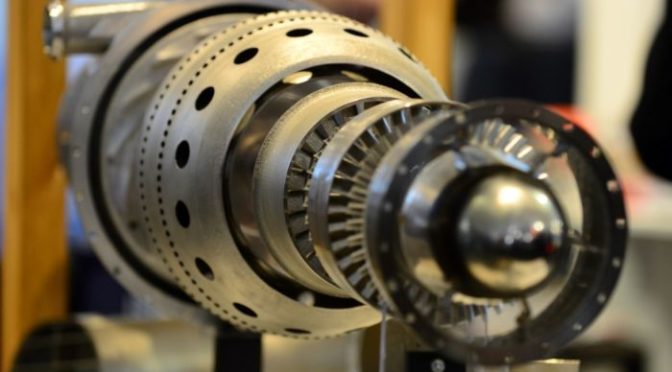
In February 2015, at the Australian International Airshow in Avalon, Victoria, Professor Xinhua Wu unveiled the world’s first 3D-printed jet engine.

Wu is the head of the Monash Centre for Additive Manufacturing (MCAM). The Centre, in collaboration with CSIRO, Deakin University and the University of Queensland, is leading initiatives to develop 3D printing and put Australia at the forefront of the global aerospace industry.

MCAM has partnered with French aerospace company Microturbo (Safran) whose work involves seeking out new manufacturing processes that make components lighter and cheaper than traditional ones, without reduction in performance. The two organisations pooled their expertise in additive manufacturing of metal to print two engines – one on display in Avalon and the other at Safran in Toulouse, France.

Bridging the gap between research and industry remains a goal for many nations, and the example of MCAM is a useful starting point for discussing the role universities could play in this.

Research and development is inherently risky, with high rates of failure. Companies are under pressure to deliver commercial returns to investors, yet the time frame for major innovations to be made often spans decades.

“Universities combine capability with tenacity – and odds are they’ll still be there in 25 years.”

Universities are in a position to assist industry innovation, however, because they have the capacity to apply resources to long-term projects and are willing to allow sufficient time for the process of discovery and application. They combine capability with tenacity. And while there are no guarantees, the odds are good that your university research partner will still be there in five, 10, or 25 years.

The world’s first 3D-printed  jet engine is the result of intense collaboration across academia and industry, led by the Monash Centre for Additive Manufacturing.

The world’s first 3D-printed jet engine is the result of intense collaboration across academia and industry, led by the Monash Centre for Additive Manufacturing.

For maximum benefit, commercially and otherwise, collaborations between industry and academia should focus on building enduring relationships that go beyond a single project or contact. Ideally, these partnerships should facilitate engagement at multiple levels.

Another way to offset the risks of R&D is for universities to address problems that entire industries need to solve, consulting multiple players in those industries to uncover what the major issues are. In the case of MCAM, the need for lighter, stronger parts is common across the aerospace industry, so its relationship with Safran has been a catalyst for relationships with Airbus, Boeing and defence contractor Raytheon.

These relationships are intensely collaborative, as university researchers work with their industry partners from the very early stages of each project.

This process is a far cry from the movie trope of the lone genius scientist who spends years in the laboratory, makes a miraculous discovery and only then emerges into the daylight. It’s about teams of experts investing the precious resources of time and trust for the long term – for it is from this investment that real gains will come.

Professor Margaret Gardner is an Australian academic, community leader and economist, and the current Vice-Chancellor of Monash University.

Professor Margaret Gardner is an Australian academic, community leader and economist, and the current Vice-Chancellor of Monash University.


Science Australia’s business heart

The outcome is loud and clear, the government wants to use CRCs to put science at the heart of Australian business.

CRCs will remain a feature of the Australian innovation landscape. The government only wants to support CRCs that are highly industry focused and only for a single term of up to 10 years. The application process is going to simplified to make it easier and more attractive for business to bid for a CRC.

In a bold and exciting move, they’ll be a new stream in the CRC Program called CRC-Projects (CRC-P). These will again address highly focussed industry issues but at a smaller, more nimble level than a full CRC (which are generally 7 year enterprises of maybe $100 million of activity). CRC-Ps will be up to three years, up to $3.0 million of government support and will be open for application three times a year. This is a huge development to open the CRC Program up more readily to smaller businesses and more specific projects.

Reviewer David Miles recommendations are aimed to discourage CRCs going on for very long terms. While this is a big concern for those addressing long-term innovation issues, the intent is to make the CRC concentrate on solving the problem at hand and exiting, leaving the industry players better off. This is a particularly interesting approach from Mr Miles because, prior to the commencement of his review, there was one train of thought that success in a CRC meant an ongoing body. The previous Parliamentary Secretary, Bob Baldwin, had publicly asked why more CRCs don’t continue as self-sufficient organisations beyond their government funding period?

Miles downplays the importance of an ongoing organisation in his review, making it clear that the real benefits from a CRC come when the industry players involved implement the research.

Miles also sees the industry training role of CRCs as very effective and important, encouraging more of them to do more in training postgraduates for industry roles.

CRCs that are not specifically aimed at solving industry issues are the potential losers in this Review. Time and again, the review says industry should be “front and centre” of the CRC program, arguing that when the Program tries to do everything, it achieves less. But Miles holds out a possible future for “non-industry” CRCs, encouraging other Government departments to directly fund CRCs through the Department of Industry and Science, Miles points out that this happens already (the Department of Defence funds the Defence Materials Technology Centre through the CRC Program). He points out that the CRC model works and is effective, but the Industry Department shouldn’t have to front for the cost of CRCs outside its portfolio area.

So while it is disappointing that some important areas of research may not qualify for CRCs anymore, the government is leaving the door open for other government departments to participate in the CRC Program.

For Australian business, the CRC Program should become more flexible and simpler for them to get involved in.

Dr. Tony Peacock

Chief Executive

Cooperative Research Centres Association


Designing the future

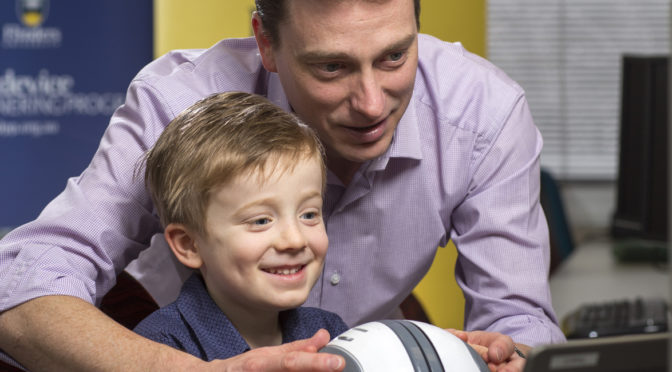
Mr David Hobbs demonstrates the OrbIT Gaming System and Orby Controller to a young child. Photo courtesy of the South Australian Department of State Development.

Laura Diment and David Hobbs are both former students and now staff at the new Flinders University campus at Tonsley, a world-class facility that brings multiple disciplines of STEM research together with industry. Diment and Hobbs began their Biomedical Engineering studies within the School of Computer Science, Engineering and Mathematics (CSEM), and have each received international acclaim for developing assistive technologies that enable children with disabilities to make the most out of the creative potential of modern software.

Hobbs, currently completing a PhD in rehabilitative engineering, has received significant attention for his work creating an accessible computer gaming system that incorporates a unique orb-shaped controller nicknamed ‘Orby’. The novel trackball controller can be operated without the need for fine motor skills. This makes it accessible for children with cerebral palsy, who are often unable to use mainstream controllers.

The novel trackball controller nicknamed 'Orby'.

The novel trackball controller nicknamed ‘Orby’.

The gaming system and 15 interactive games developed for Orby have been a huge success with the 18 families that trialled the technology, with most reporting increased social closeness for the period Orby was in their homes.

For Hobbs, whose main motivation for studying engineering is the potential to ‘give back’ to society, this is an ideal result. He is now in the processes of commercialising Orby and hopes it will eventually be available to families, though is quick to note the difficulties in finding a balance between the inevitable costs of research and development and creating an affordable end product.

It is clear, however, that Hobbs relishes the challenge; a past recipient of both Fulbright and Churchill scholarships, he is determined to keep building upon assistive capacity of the technology. Trials will soon begin investigating the potential of Orby to help in the recovery of stroke patients.

Making a splash

laura_thumb

First-class Honours student, Laura Diment, is also keen to use her STEM skills to help people who need it most. Diment chose to spend her compulsory five-month industry placement during her third year of study at a leading rehabilitation centre in Toronto, Canada – following the footsteps of Hobbs, who mentored her exchange from back in Australia. Here, she began creating Splashboard, an art program that uses Microsoft Kinect’s infrared technology to enable children with cerebral palsy to create musical art on screen. The technology can track movement in three dimensions, allowing children to interact with buttons on screen that trigger colour tools and sound by waving their arms.

Diment, who has since won a number of awards nationally and internationally for her creation, acknowledges the benefits of the opportunity to build industry partnerships early on in her Biomedical Engineering degree. “The future really is about connecting the industry and research earlier on, because they know what’s going to be beneficial in the long run.”

From these solid foundations in research and industry, Diment looks to be building a formidable career. She starts her PhD in Oxford as a John Monash scholar later this year, where her research will focus on creating a future in which developing countries have access to the skills and expertise necessary to design their own assistive technologies, rather than having to rely on Western-developed finished products that are ‘posted across’.

Much the same as Hobbs, Diment is confident in the capacity of STEM careers to create a better world. “We are designing the future,” she says.

With such bold ambitions, it seems only fitting that these two are working in Flinders’ new campus in the Tonsley business hub. The centre is quite literally amplifying the work that STEM disciplines at Flinders are capable of; the Biomedical Engineering discipline now takes up more than double its original size in order to make the most of the opportunities in this new environment. “People can come to us or work alongside us; it’s much more flexible and approachable.” Hobbs is grateful to have had the opportunity to help shape the new campus; “It’s a once in a generational opportunity… now it’s really up to us to maximise what we’ve been given and to do the best job we can.”

Breana Macpherson-Rice

The wider view

THE PLIGHT OF ABORIGINAL, Torres Strait Islander and other people living in remote Australia is a “global shame”, warned Dr Tom Calma in November 2014. Calma is Chair of Ninti One, the not-for-profit organisation that manages the CRC for Remote Economic Participation (CRC-REP).

More than half a million Australians live in remote areas. Occupying a wide range of climate zones across 80% of our landmass, these regions encompass diverse and rich cultures and unique landscapes. This poses big research challenges for the CRCs working there – primarily the CRC-REP and the Lowitja Institute.

Headquartered in Alice Springs, Ninti One has delivered $239 million in social and economic benefits to remote Australia since its inception in 2003. The research is mostly concerned with social good, rather than commercial outcomes, which can make the impact hard to gauge, says Calma. “Research is imperative in order to properly understand and improve the lives of people living in remote Australia,” he says.

Calma is a distinguished Aboriginal leader and elder of the Kungarakan people in the Northern Territory. He cites feral camel management as an example of economic good delivered by Ninti One: 500 rangers were trained to control camel populations and map and maintain waterholes, preventing more than $3 million a year in damage to fences, bores and waterholes in pastoral properties and local communities.

Ninti One has invested $1 million in their Pastoral Precision Project, which uses spatial data to match livestock performance to environmental conditions. The product is now ready for market and is expected to benefit many farmers.

To assist researchers working on these kinds of projects in remote Australia, Ninti One has produced guidelines in conjunction with community members with protocols around confidentiality, for example. “Sometimes researchers need to understand that they cannot write down all the stories,” says Calma. These also advise where research information and recordings should be kept.

Ninti One has trained 90 Aboriginal Community Researchers who live in remote communities to undertake research and surveys in the community.

“They have the capacity to understand the language of the community, as well as all the nuances of behaviours within the community,” says Calma. “In working with a client, they can come up with a good survey tool, apply it and then report back on it. This is integral to getting good information.”

Calma is a critic of what he calls “fly-in, fly-out bureaucrats” who spend a day or two in a community, speak to a few select people and then leave thinking they have an understanding of the region’s issues.

“Our research shows that non-Indigenous or even Indigenous bureaucrats without an understanding of a particular community will come in with preconceived ideas,” he says, adding that this can lead them to frame their questions to get a pre-determined outcome. Aboriginal people then tell bureaucrats what they think they want to hear, or the bureaucrats mistake silence for agreement, Calma explains.

The CRC Program is the only Commonwealth initiative providing a link between industry, academia, government and the communities of remote regions, Calma says.

“We know from past, bitter experience the policies imposed from on high and afar seldom work well in remote Australia. Only when you truly engage the people who live there do you get results.

“At the moment there is evidence that the wellbeing of remote Australians is at increasing risk, and urgent action is needed to reverse this trend and to begin building a more optimistic, prosperous and equitable future for them.”

When the CRC analysed employment across remote Australia, they found that a large percentage of jobs were held by non-Indigenous people with a Year 10 or less level of education, despite “more than adequate numbers of Aboriginal people with Year 10 and above qualifications,” says Rod Reeve, Ninti One’s Managing Director.

Another significant project, led by Professor John Guenther from Flinders University, aims to identify how education can improve outcomes for Aboriginal and Torres Strait Islander people in remote areas. For the Anangu people in Central Australia, Guenther proposed an academy built around a “red dirt” curriculum covering rural economics, local histories, digital literacies and grammar.

The principle behind the academy comes from other projects Ninti One has facilitated, where local and non-local knowledge is shared, and both knowledge systems are treated with equal weight and respect.

“We try to look at an issue from many different directions,” Calma says.

Calma was formerly Aboriginal and Torres Strait Islander Social Justice Commissioner at the Human Rights Commission, which he points out has some aspects in common with Ninti One.

“A human rights-based approach and a community development approach are very similar. They are both about making people the centre of what you do, and we recognise that all our activities are for the constituency of remote Australians.”

http://www.nintione.com.au

http://crc-rep.com

www.lowitja.org.au


Creating Solutions

THE HIGHLY SUCCESSFUL Lowitja Institute, established in 2010 as the national institute for Aboriginal and Torres Strait Islander health research, garnered an additional five years of funding in July 2014. The Institute was built on 14 years of CRCs, beginning with the CRC for Aboriginal and Tropical Health in 1997.

This CRC introduced a new roundtable process, which set research priorities involving the community as well as researchers and policy-makers – changing the way research into Indigenous health took place.

Pat Anderson, Chair of the Lowitja Institute, says the process instituted a new way of commissioning projects, with community leaders at the centre of decision-making. The Institute works collaboratively with stakeholders, building up the research skills of Aboriginal and Torres Strait Island people along the way.

“Our guiding principle has always been that, in order to improve our health, we need to create our own solutions rather than have them imposed upon us,” Anderson said at the opening of the Institute’s new offices in October 2014.

Preventative health is high on the agenda. The CRC recently evaluated Deadly Choices – a program encouraging Aboriginal and Torres Strait Islander people in southern Queensland to make healthy choices around nutrition, physical activity, smoking and use of harmful substances. The seven-week school and community-based chronic disease prevention and education initiative has grown to encompass at least 1000 children from more than 100 schools and community health programs.

While substantial progress has been made in Indigenous people having a greater stake in health service delivery, research and policymaking, Anderson points out there’s a long way to go.

“With life expectancy for Australia’s First Peoples still languishing 11 years behind our fellow countrymen and women, we clearly have our work cut out for us.”