Tag Archives: CSIRO

On the cusp of mass cultural change

The Australian Computer Society has estimated that an additional 100,000 new information and communications technology (ICT) professionals will be needed in Australia over the next five years alone. While this industry continues to grow and impact upon the Australian economy, only 2.8% of females choose ICT as their field.

In my role as head of the School of Computer Science at the University of Adelaide, I hear every year from young women who have been told by someone important in their lives – perhaps a teacher, a family member or a careers counsellor – that computer science is not a job that women do. However, we know that companies with strong gender diversity are more likely to be successful and have higher financial returns. We need to broaden participation in creating and driving technology innovation in our country so that it is reflective of the diverse perspectives and voices that represent our community.

How can we address this gender imbalance within ICT? I believe that the answer lies in our new Australian curriculum and in increasing support for our education system.

Australia is on the verge of a significant change – all Australian students will soon be learning the fundamental concepts of computer science, and will move from being users of technology to creators of their own technology. This is an incredible opportunity for us as a nation to change our culture for women in technology, and more broadly, women in science, technology, engineering and maths (STEM).

Changing stereotypes in STEM on screen

Children start forming their views on what careers are, and whether they are for a man or a woman, from an early age. These views are reinforced by messages from all directions. Very few family films show women in positions of power, or with active careers; only 45% of females in family films are shown to have careers, while STEM male roles outnumber STEM female roles by five to one.

These unconscious biases impact how we, and our children, develop our understanding of who we are, and who we can be. We urgently need to address this if we are to see the diverse technology community that we need.

Connecting STEM professionals with schools

Australian teachers need ongoing support from our industry and university sectors. We need to collectively engage with our schools to help teachers understand and guide technology creation.

Programs such as CSIRO’s Scientists and Mathematicians in Schools program, FIRST Australia and Code Club Australia, among others, provide valuable opportunities to volunteer and support your local communities in understanding STEM. These programs help explore the amazing ability of technology to solve community problems, and work to engage our students. All of our students.

Associate Professor Katrina Falkner

Head of School of Computer Science, University of Adelaide

Read next: The University of Newcastle’s Dr Nikola Bowden addresses misconceptions about the biggest issues for women in STEM.

People and careers: Meet women who’ve paved brilliant careers in STEM here, find further success stories here and explore your own career options at postgradfutures.com.

Spread the word: Help Australian women achieve successful careers in STEM! Share this piece on women in ICT using the social media buttons below.

More Thought Leaders: Click here to go back to the Thought Leadership Series homepage, or start reading the Graduate Futures Thought Leadership Series here.

Eureka Prize Winners of 2016

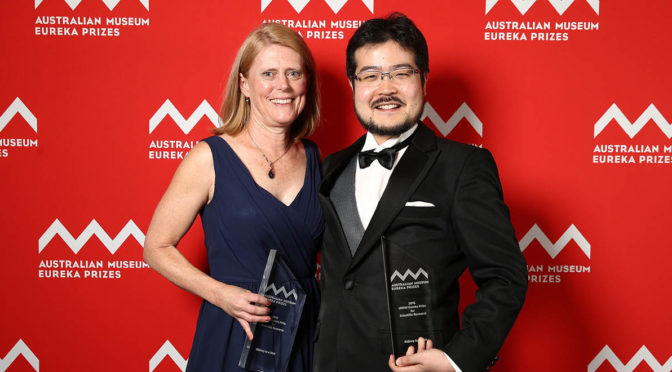
Featured image above: Winners of the 2016 UNSW Eureka Prize for Scientific Research, Melissa Little and Minoru Takasato from the Murdoch Childrens Research Institute. Credit: Australian Museum

Regenerating kidneys, smart plastics, artificial memory cells and a citizen science network that tracks falling meteors. These and many other pioneering scientific endeavours have been recognised in the 2016 annual Australian Museum Eureka Prizes, awarded at a gala dinner in Sydney.

Having trouble with a kidney? It may not be long before you can simply grow a new one. This is the ultimate ambition behind the research of the 2016 UNSW Eureka Prize for Scientific Research winners, which was awarded to Melissa Little and Minoru Takasato from the Murdoch Childrens Research Institute.

They have developed a method of growing kidney tissue from stem cells, and their kidney “organoids” develop all the different types of cells that are needed for kidney function. The kidney tissue is currently used in the lab to model kidney disease and to test new drugs, but one day the technique could be developed to regrow replacement kidneys for transplant.

For his work using the latest in 3D printing and materials technology develop a world centre for electromaterials science, Gordon Wallace, from the University of Wollongong, received the 2016 CSIRO Eureka Prize for Leadership in Innovation and Science.

Some of the materials he and his team are developing include structures that are biocompatible, meaning they can be used inside the body without causing an adverse reaction. These structures can be used to promote muscle and nerve cell growth. Other cells include artificial muscles using carbon nanotubes.

The CSIRO’s Lisa Harvey-Smith has been one of the most vocal and energetic proponents of science in the media and the general public, especially amongst Indigenous communities. It is for her work as the face of the Australian Square Kilometre Array Pathfinder (ASKAP) and communicating astronomy to the public that Harvey-Smith was awarded the 2016 Department of Industry, Innovation and Science Eureka Prize for Promoting Understanding of Australian Science.

Have you ever seen a meteor streak across the sky and wondered where it landed? Phil Bland, from Curtin University, certainly hopes you have. He and his team set up the Desert Fireball Network, which allows members of the public to track meteors as they fall, helping them to identify where they land, and where they came from.

For this, Bland and his team were awarded the 2016 Department of Industry, Innovation and Science Eureka Prize for Innovation in Citizen Science.

But not all the awards went to seasoned researchers. Some were reserved for the next generation of scientific pioneers.

Hayden Ingle, a Grade 6 student from Banksmeadow Primary School in Botany, received the 2016 Sleek Geeks Science Eureka Prize for Primary Schools for his video production, The Bluebottle and the Glaucus. It tells the remarkable tale of a little known sea predator, the tiny sea lizard, or glacus atlantica, and its fascinating relationship with the bluebottle.

Speaking of predators, a video by Claire Galvin and Anna Hardy, Year 10 students at St Monica’s College, Cairns, won the 2016 Sleek Geeks Science Eureka Prize for Secondary Schools for exploring the eating habits of the Barn Owl.

They examined “owl pellets”, which contain the indigestible components of the owl’s last meal, and used them to identify its prey.

Other winners of the 2016 Eureka Prize

Ewa Goldys from Macquarie University and the ARC Centre of Excellence for Nanoscale BioPhotonics and Martin Gosnell from Quantitative Pty Ltd have been awarded the ANSTO Eureka Prize for Innovative Use of Technology for their development of hyperspectral imaging technology, which enables the colour of cells and tissues to be used as a non-invasive medical diagnostic tool.

For his discovery and development of novel treatments for serious brain disorders, Michael Bowen, from the University of Sydney, is the winner of the Macquarie University Eureka prize for Outstanding Early Career Researcher. His research has established oxytocin and novel molecules that target the brain’s oxytocin system as prime candidates to fill the void left by the lack of effective treatments for alcohol-use disorders and social disorders.

For developing a new generation of armoured vehicles to keep Australian soldiers safe in war zones, Thales Australia and Mark Brennan have won the 2016 Defence Science and Technology Eureka Prize for Outstanding Science in Safeguarding Australia.

Davidson Patricia Davidson is Dean of the Johns Hopkins University School of Nursing in Maryland, and has mentored more than 35 doctoral and postdoctoral researchers, working tirelessly and with passion to build the capacity of early career researchers, an achievement that has won her the 2016 University of Technology Sydney Eureka Prize for Outstanding Mentor of Young Researchers.

For taking basic Australian research discoveries and developing them into a new cancer therapy that was approved by the US Food and Drug Administration in April this year, David Huang and his team from the Walter and Eliza Hall Institute of Medical Research has win the 2016 Johnson & Johnson Eureka Prize for Innovation in Medical Research. The drug, venetoclax, was approved for a high-risk sub-group of patients with Chronic Lymphocytic Leukemia and is now marketed in the US.

For creating a three part documentary that portrayed both the good and the evil of uranium in a series seen around the world, Twisting the Dragon’s Tail, Sonya Pemberton, Wain Fimeri and Derek Muller, won the 2016 Department of Industry, Innovation and Science Eureka Prize for Science Journalism.

Sharath Sriram, Deputy Director of the A$30 million Micro Nano Research Facility at RMIT University, has won the 2016 3M Eureka Prize for Emerging Leader in Science for his extraordinary career – during which he and his team have developed the world’s first artificial memory cell that mimics the way the brain stores long term memory.

For bringing together a team with skills ranging from mathematical modelling to cell biology and biochemistry, Leann Tilley and her team from the University of Melbourne have won the 2016 Australian Infectious Diseases Research Centre Eureka Prize for Infectious Disease Research. They have uncovered an important life saving mechanism by which the malaria parasite has developed resistance to what has been previously a widely used and successful malarial treatment.

For recruiting an international team of scientists to measure trace elements in the oceans from 3.5 billion years ago to the present day to understand the events that led to the evolution of life and extinction of life in the oceans, Ross Large from the University of Tasmania and researchers from as far as Russia and the US have won the 2016 Eureka Prize for Excellence in Interdisciplinary Research.

For conducting the world’s first survey of plastic pollutants which has given us a confronting snapshot of the impacts on marine wildlife of the 8.4 million tones of plastic that enters the oceans each year, Denise Hardesty, Chris Wilcox, Tonya Van Der Velde, TJ Lawson, Matt Landell and David Milton from CSIRO in Tasmania and Queensland have won the 2016 NSW Office of Environment and Heritage Eureka Prize for Environmental Research.

The Functional Annotation of the Mammalian Genome (FANTOM5) project produced a map that is being used to interpret genetic diseases and to engineer new cells for therapeutic use. The team led by Alistair Forrest from the Harry Perkins Institute of Medical Research has won the 2016 Scopus Eureka Excellence in International Scientific Collaboration Prize.

– Tim Dean

This article on the Eureka Prize 2016 winners was first published by The Conversation on 31 August 2016. Read the original article here.

Tasmania boosts tourism research

Featured image above: A bright future for Tasmania through tourism research

Visitors to Tasmania are being asked to carry tracking devices to help researchers learn more about where they go and what they do when visiting the island.

The Sense-T Sensing Tourist Travel Project, based at the University  of Tasmania (UTAS), uses real-time data to follow the movements of holidaymakers and answer key questions about their travel behaviour. Using a bespoke app pre-loaded onto a smartphone, researchers can find out exactly how long different cohorts spend walking the coast, looking at art or shopping –  gold-plated data for the state’s booming tourism industry.

The project’s primary focus is on two types of visitors: Australian interstate travellers and tourists from China. Volunteer participants are recruited at the island’s three main entry points – Launceston and Hobart airports and the Spirit of Tasmania – and tracked for up to  10 days.

With tourism accounting for over 8% of the state’s economy, an intelligent and robust understanding of visitor behaviour is crucial to the continued growth of the sector in Tasmania.

The project is being jointly led by two researchers from UTAS, Dr Anne Hardy and Professor Richard Eccleston.

“The project will provide a proof of concept that app-based tracking can replace more traditional surveys of visitor experiences,” says Hardy. “It was designed in conjunction with the Tourism Industry Council of Tasmania, Federal Hotels and Tourism Tasmania, and a wide range of  industry stakeholders have been consulted as part of the project’s design.”

The Sense-T partnership is a collaboration between UTAS, CSIRO and the Tasmanian Government, with funding also contributed by the Federal Government. In addition to the tourism project, it runs sensor-based research on health, agriculture, finance and other key drivers of the Tasmanian economy, with  the aim of “creating a digital view of Tasmania”.

Over 330 tourists took part in the Sensing Tourist Travel Project. The tourism research data collection ended in May 2016 and results are expected by September.

This article was first published by the Australian National Data Service in May 2016. Read the original article here.

Research startups accelerate CSIRO science

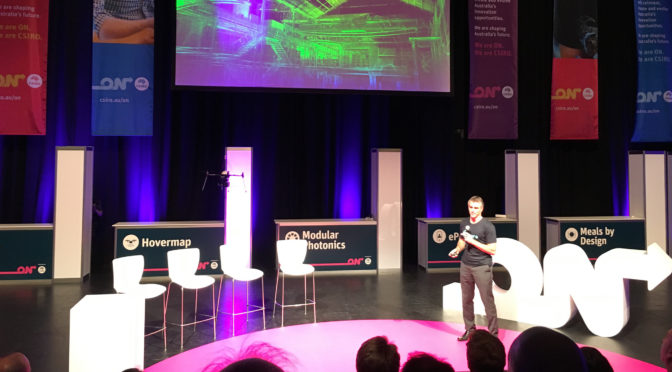
Featured image above: Research startups pitch at the ON Accelerate demo night. Hovermap have developed intelligent software that will allow drones to map indoor environments.

There are now over 30 accelerator and incubator programs in Australia, but CSIRO’s ON accelerator is the only one focused on equipping research startups with the tools they need to grow.

“It’s the first time a program of this sort has been offered for the research community on this scale,” says Elizabeth Eastland, the General Manager for Strategy, Market Vision and Innovation at CSIRO.

Just six months ago, Eastland was the Director of the University of Wollongong’s iAccelerate program, but moved to CSIRO having been “blown away by what this program can offer researchers”.

At the ON Accelerate Demo event held on Thursday 7 July, Eastland introduced 11 research startups who pitched their products to Sydney’s venture capital investors. In contrast to the young faces that dominate many of Australia’s accelerators, last night’s ON cohort were led by experienced researchers, engineers, developers and entrepreneurs.

Two of the research startups revealed big plans for the agriculture industry. A group called Future Feed is selling seaweed supplements that aim to reduce livestock greenhouse gas emissions by 80%. Another team has created wireless trapping technology to help farmers detect fruit fly infestations.

Fruit Fly costs farmers US$30 billion in fruit and vegetable production around the world, but this isn’t the only global challenge that the ON research startups have been tackling. The presenter from Modular Photonics pointed out last night that the world’s internet demand is about to outstrip its fibre capacity.

His group is commercialising new photonics hardware compatible with both old internet fibre and the new fibre being developed by the top telecommunications providers.

On the health front, another of the research startups, ePAT unveiled new facial recognition software to detect pain levels in people who cannot speak, such as children and elderly people with moderate to severe dementia. Their vision is that “no patient who cannot speak will suffer in silence in pain”.

ON Accelerate had major success earlier this year when a German company launched a gluten free beer brewed from barley commercialised by a startup from last year’s ON cohort. That startup, known as Kebari, is in now the process of developing another form of gluten free grain for use in food.

Kebari co-founder and scientist Dr Phil Larkin spoke at yesterday’s research startups event, saying ON Accelerate had taught him about ‘flearning’ – learning from failure – and the importance of interrogating the entire delivery chain to validate the value of a solution.

CSIRO Principal Research Scientist and RapidAIM team leader Dr Nancy Shellhorn said that the program had given her much faster access to the market and much better insight into customer needs.

“It’s given me and the RapidAIM team a runway to the science of the future that will be truly impactful,” said Shellhorn.

Program Mentor Martin Duursma also spoke at the research startups event, saying that startup skills are very transferable to research teams because they are all about trying something, gathering feedback, making improvements and repeating the process.

“Startup skills are really just a variant of the scientific method,” said Duursma.

And scientists will have greater access to the ON research startups program next year, with a dramatic increase in the interest of universities. Eastland says that 21 of Australia’s 40 universities have now signed on to be ON partners. Macquarie University and Curtin University led the pack with their involvement this year. UNSW Australia, the University of Technology Sydney and Monash University are among those jumping on board for the next round.

– Elise Roberts


ON Accelerate Research Startups

The below information was first shared by CSIRO. Read the original list and team members here.

1. Hovermap

The future of asset inspection.

“Every year, Australia loses billions of dollars due to infrastructure failures, spends billions of dollars on inspecting its aging assets and loses some of its bravest men and women who take the risk to do this dull and dangerous job. Utility companies and governments are turning to Unmanned Aerial Vehicles (UAVs) to reduce costs and improve safety. However, current UAVs are ‘dumb and blind’ so require expert pilots and can’t fly in many places.

Our solution is an intelligent UAV with advanced collision avoidance, non-GPS flight and accurate 3D mapping capabilities – all tailored to suit industrial inspection requirements. Hovermap is the ultimate inspection tool of the future that can be used to safely and efficiently inspect hard-to-reach assets and collect extremely high fidelity data in previously unreachable places. It is suitable for inspecting telecommunication towers, bridges, power line assets and smoke stacks. This innovative technology will reduce risks, improve safety and efficiency and lower costs, all of which benefit customers and businesses.”

2. Suricle

Changing the face of polymers.

“We change the face of polymers by embedding functional particles into the surface to give them new and useful properties. Our patented technology paves the way for development of many new, innovative materials and products.

An immediate area of application is to protect high-value marine sensors from biofouling. The unwanted growth of marine organisms causes signal attenuation, sensor malfunction, increased weight and unwanted drag due to ocean currents. There are many thousands of marine sensors deployed globally, costing up to $120K each, which require frequent cleaning to keep them in service.

Suricle are focusing on treating adhesive polymer films with antifouling properties for attachment to sensors to mitigate biofouling. Kits containing this film will be sold via our e-commerce store for application in the field by the end-users, offering savings of thousands of dollars per year in reduced maintenance costs.”

3. RapidAIM

Supporting and growing global fruit and vegetable export markets

“Fruit Fly are the number one biosecurity issue in fruit and vegetable production. Globally US$30b worth of fruit and vegetable production is lost due to fruit fly, and $US18b in global trade is threatened by the pest.

Millions of fruit fly traps across the globe are checked manually, causing delay and risking outbreaks. This can close markets!

RapidAIM is a new era in biosecurity. We provide a service of real-time alerts for the presence and location of fruit fly using wireless trapping technology. This immediate data-driven decision service allows biosecurity agencies, growers and agronomists to respond rapidly to fruit fly detection to control the pest.

This allows for targeted workflow, the protection of existing markets and supports the development of new trading opportunities.”

4. ExByte

Predictive data analytics for preventative maintenance of infrastructure assets including water 

“Each year 7,000 critical water main breaks occur in Australia resulting in billions of dollars in rectification and consequence cost. In contrast, the cost of preventative maintenance is only 10 per cent of the reactive repair cost. The ExByte team has developed a disruptive technology that uses data analytic techniques to predict failure probability based on learned patterns, offering a solution to accurately predict water pipe failures resulting in effective preventative maintenance and a reduction in customer interruptions.”

5. Future Feed

A natural feed additive from seaweed that dramatically reduces livestock methane and increases production.

“The world is under increasing pressure to produce more food and producing more food is contributing to climate change. Livestock feed supplementation with FutureFeed is the solution. It can improve farm profitability and tackles climate change. FutureFeed can also provide farmers access to other income streams through carbon markets and provide access to premium niche markets through a low carbon footprint and environmentally friendly product.”

6. elumin8

An energy efficiency product that empowers households to understand and reduce their energy consumption.

“It is very difficult for households to improve their energy efficiency and transition to a sustainable future as current solutions are boring, costly and confusing. Elumin8 solves this problem by providing tailored energy information via a unique communication channel, allowing homeowners to directly engage with their home in a human and personable way as though it was another member of the family. Elumin8 also guides the household step by step along the journey to energy independence by improving energy efficiency and taking the risk and confusion out of installing solar and batteries.

We do this by collecting electricity data from a single sensor and use unique algorithms to disaggregate the data and determine appliance level consumption. Social media applications and advanced analytics are then utilised to connect the homeowner with their home allowing instant and humanised communication to ensure they are engaged with their energy use.”

7. Coviu

An online face-to-face business transaction platform.

“The way we work is changing. We need tools to enable those changes.

Traditional video conferencing tools are clunky and do not support experts like coaches, clinicians or lawyers in delivering and charging for their professional services online.

Coviu is the solution. Professionals get a frictionless and easy-to-use solution for setting up online consulting rooms and invite clients to rich interactive consults. One click and your client is talking to you in their browser – no software installations, no complicated call setup.

Coviu is a groundbreaking new video and data conferencing technology that works peer-to-peer allowing for massive scalability, speed and affordability.”

8. Reflexivity

A process that helps mining companies proactively manage community sentiment before conflict occurs.

“When resources companies lose the trust of the communities they work alongside, conflict occurs. Projects take twice as long to develop as they did a decade ago and cost 30 per cent more than they should because of social conflict. Companies don’t have the tools to systematically understand what their communities think about them, and communities have few constructive ways to feel heard.

Reflexivity has solved this problem by providing our customers with a sophisticated data analytic engine that translates community survey data we collect into prioritised opportunities for trust building and risk mitigation strategies. Our analytics identify those factors that build and degrade trust in a company, in the minds of community members; our customers are then able to invest resources and energy into the issues that matter most. Using mobile technology, our data streams to our customers in real time via a subscription model.

We have engaged over 14,000 community members in eight countries, and generated $1.5m in revenue in the last three years. And while we started in mining, our process is valuable wherever these relationships are important. We are building a service delivery platform to scale up our process and we are seeking support and advice to turn our successful global research program into a successful global business.”

9. Meals by Design

Healthy convenience never tasted so good!

“Ready-to-eat convenience doesn’t have to result in dissatisfaction and guilt. By bringing together the latest innovations in food manufacturing, including High Pressure Thermal processing, and an understanding of the nutritional needs of a diverse population, cuisine favourites can be prepared in a convenient format without compromising eating satisfaction or, importantly, nutrition.

Meals by Design develops premium and customisable meal solutions that cater to nutritional and functional needs, offering healthy convenience without compromise.”

10. ePAT

Real-time pain assessment through facial recognition technology for patients that cannot verbally communicate.

“Imagine you are in excruciating pain, but you can’t tell anyone. This is the reality for millions of non-communicative people world-wide, such as those with moderate to severe dementia. ePAT’s point of care apps utilise facial recognition technology to detect facial micro-expressions which are indicative of pain, to provide these people with a voice.”

11. Modular Photonics: big fast data

Passive fibre-optic technology that significantly increases data transmission capacity.

“Modular Photonics uses a novel integrated photonic chip to enhance the data rate across existing multimode fibre links by 10x and more. The technology enables multiple data channels in parallel without the length restrictions imposed by conventional multimode fibre links.”

Australian research funding infographic

Featured image above: CSIRO has received significant budget cuts in recent years. Credit: David McClenaghan

The election is rapidly approaching, and all major parties – Liberal, Labor and Greens – have now made announcements about their policies to support science and research.

But how are we doing so far? Here we look at the state of science and research funding in Australia so you can better appreciate the policies each party has announced.

The latest OECD figures show that Australia does not fare well compared with other OECD countries on federal government funding research and development.

As a percentage of GDP, the government only spends 0.4% on research and development. This is less than comparable nations.

CC BY-ND

But looking at total country spending on research and development, including funding by state governments and the private sector, the picture is not so bleak: here Australia sits in the middle among OECD countries.

CC BY-ND

Over the years, there have been hundreds of announcements and new initiatives but this graph indicates that, in general, it has been a matter of rearranging the deck chairs rather than committing to strategic investments in research.

The Paul Keating Labor government made some investments. During the John Howard Liberal government’s years, there were ups and downs. The Kevin Rudd/Julia Gillard Labor governments were mostly up. And in Tony Abbott’s Liberal government, the graph suggests that it was mostly down with science.

CC BY-ND

Over the past decade, there have been some minor changes in funding to various areas, although energy has received the greatest proportional increase.

CC BY-SA

This pie chart reminds us that the higher education sector is a major provider of research and is highly dependent on government funding. It also tells us that business also conducts a great deal of research.

CC BY-ND

The timeline below shows that the government does listen and respond when issues arise. It has recognised the importance of the National Collaborative Research Infrastructure Scheme (NCRIS), the Australian Synchrotron and sustainable medical research funding by different initiatives.

But, sadly, one must remember that funding is effectively being shifted from one domain to another, and it has seldom been the case that significantly new commitments are made. The balance of red and blue shows how one hand gives while the other takes funding away.

CC BY-SA

This useful graph highlights the fact that Australian Research Council (ARC) funding now amounts to little more than the National Health and Medical Research Council’s funding.

This is remarkable, given that the ARC funds all disciplines, including sciences, humanities and social sciences, while the NHMRC essentially focuses on human biology and health.

CC BY-SA

This graphic also highlights the lack of any sustained funding strategy. The only clear trend is that the investment in the ARC has gradually declined and the NHMRC has grown.

This, in part, reflects the undeniable importance of health research. But it is also indicative of effective and coherent organisation and communication by health researchers. This has been more difficult to achieve in the ARC space with researchers coming from a vast array of disciplines.

– Merlin Crossley, Deputy Vice-Chancellor Education and Professor of Molecular Biology, UNSW Australia
– Les Field, Secretary for Science Policy at the Australian Academy of Science, and Senior Deputy Vice-Chancellor, UNSW Australia
This article was first published by The Conversation on June 22 2016. Read the original article here.

Chatting with chatbots

Human communication goes beyond words. It is complex, rich in nuances and frequently includes non-verbal signs. Yet despite our technological limitations it is not impossible for some aspects of communication to be emulated by a machine with surprising effect.

This has been part of the challenge in developing Harlie (Human and Robot Language Interaction Experiment), a smartphone chatbot app developed by researchers from the CSIRO’s e-health research program and the University of Queensland.

It’s primarily aimed at people who may have trouble conversing including those with neurological conditions such as Parkinson’s disease and dementia, or even autism.

The following dialog excerpt took place between a human who has autism, let’s call him Chris (pseudonym), and Harlie.

Harlie: Are you part of a community group?

Chris: Um, yes I am.

Harlie: I see. I hear that community groups often offer the opportunity to craft and build things. Is that something you enjoy doing?

Chris: Oh yes I do. This is really exciting.

Harlie: I see. What kind of things do you wish you could make one day?

Chris: Wooden train.

Harlie: That sounds like a great thing to aspire to. What project would recommended to a beginner like me?

Chris: Uh huh a bird feeder.

Harlie: Thanks. I will add that to my list. What supplies would I need to buy for my toolkit?

Chris: Ah hammer, nails, good supply of wood.

But Harlie, like all other artificial intelligent (AI) programs, has no concept of community groups, woodwork or anything else for that matter. That is to say it has no sentience.

And alas, sentient chatbots are seemingly light years beyond our reach. But is sentience needed to convey ideas, feelings and activities?

To some degree, no.

Chatbot programmers, or botmasters, develop and maintain a large repository of responses to the plethora of input statements that could be made by the user.

The way most modern chatbots operate is illustrated in this figure.

image-20160511-18128-mxft6n

The typical chatbot brain is a tree-like structure. Credit: David Ireland

Phrases that could be uttered by a human are grouped together to form branches. At the end of the branch, is the leaf, or a piece of code that is executed by the machine.

This code could simply be “respond with ‘Hi human'” or it could be a machine learning algorithm determining the appropriate response based on current semantics and context.

This is where the exciting research is happening.

New branches are added continuously through conversations and feedback with potential customers, as is the case with Harlie, or through self-learning as was seen in the disastrous example of Microsoft’s social media chatbot Tay, which was shut down within a day of going live earlier this year after declaring, among other controversial tweets, that “Hitler was right”.

A more successful use of AI was revealed earlier this month in the USA. Students studying artificial intelligence at the Georgia Institute of Technology discovered that “Jill”, one of the teaching assistants responding to their emails regarding a course, was actually a computer powered by IBM’s Watson analytics system.

Jill’s responses were simply based on the answers to questions that previous students had asked about the course. As the college points out, students tend to ask the same questions over and over and after some initial tinkering, Jill was able to answer students with about 97% certainty.

The ELIZA effect

Attempts to create a convincing conversation with a machine have been going on for decades.

The first chatbot was called ELIZA. Developed in 1966, the program was created by Joseph Weizenbaum at MIT. This program was unparalleled because for the first time a machine could seemingly converse with a human.

ELIZA emulated a psychotherapist’s responses to would-be patients in replies generated for typed, text-only conversations.

By identifying key words and phrases, ELIZA was able to respond with surprising intelligibility and insight. In fact, it was so highly personified by some users that they would spend hours conversing and refused to share conversation records with researchers.

This phenomenon become known as the ELIZA effect. An excerpt of a famous ELIZA transcript that was published in 1966 between ELIZA and a young woman is given below.

Human: Well, my boyfriend made me come here.

ELIZA: Your boyfriend made you come here?

Human: He says I’m depressed much of the time.

ELIZA: I am sorry to hear you are depressed.

Human: It’s true. I am unhappy.

ELIZA: Do you think coming here will help you not to be unhappy?

Human: I need some help, that much seems certain.

ELIZA: What would it mean to you if you got some help?

Human: Perhaps I could learn to get along with my mother.

ELIZA: Tell me more about your family.

Modern day

Since ELIZA, computer power has increased at an exponential rate, but how far have we come towards a next generation of chatbots? Voice recognition is now an accepted part of smartphone technology with Google Now and Apple’s Siri. But what about developments in actual conversations with AI?

An annual AI competition is held where human judges speak to different chatbots whose developers are seeking the coveted Loebner prize and the deadline for entries this year is 1 July. The winner is decided by judges who determine the most human-like chatbot.

A prominent entry and winner in 2013 was the Mitsuku chatbot, which was designed for more general typed conversation.

The Mitsuku website provides a Turing test to gauge humans perceptions of the chatbot.

The human user is either connected to a real human or Mitsuku. Results show that on average, 12% of people thought they were talking to a human when in fact they were talking to a machine.

Here is a dialog excerpt from Mitsuku showing her apparent wit:

Human: What’s the difference between a man and a woman?

Mitsuku: A man – a male human being. A woman is a man built to more complete specifications.

Human: That’s not what I meant.

Mitsuku: Oh sorry, what do you mean?

Human: What does a man have a woman doesn’t?

Mitsuku: A well paid job?

Last year’s winner of the Loebner prize was called Rose and it is possible to have a spoken conversation with the chatbot on some web browsers. She too can be quite witty, and talkative too.

The future

Microsoft’s CEO, Satya Nadella said at an event in March that chatbots will have, “as profound an impact as previous shifts we’ve had”. Much like the shift that occurred with the introduction of the graphical user interface, the web browser or touchscreen.

But there are numerous challenges ahead and building a convincing chatbot requires enormous amounts of data and time.

Microsoft’s Tay showed us the dangers of using shortcuts by crowd-sourcing unchecked new branches into Tay’s brain.

In contrast, the Mitsuku developer has taken the long road and constantly refined Mitsuku’s digital brain since 2004.

Nevertheless, the possibility of Harlie helping users who struggle with communication, or of Mitsuku providing a convincing partner, suggests talking machines may go beyond current smartphone use in making hotel bookings and providing directions, and become something much more in the next generation.

– Dr David Ireland, Dr Christina Atay and Dr Jacki Liddle

This article was first published by The Conversation on 18 May 2016. Read the original article here.

Innovating Australia

Australia faces a challenging period in shifting towards an ‘innovation economy’, with a drive towards greater participation in science and technology; an increased focus on commercialisation success; and partnering research with industry. But how will we get there?

In this unique series, leaders from government, industry and academia share their vision for Australia’s innovation future, including Australia’s Chief Scientist Alan Finkel, Telstra’s CTO Vish Nandlall, CEO of AusBiotech Anna Lavelle, entrepreneur, surgeon and inventor Fiona Woods, Chief Defence Scientist Alex Zelinksy, and the Vice Chancellors from QUT, Peter Coaldrake, and Western Sydney Uni Barney Glover, and many more.

Read the Thought Leadership Series: Australia’s Innovation Future, here. Commentaries will be published throughout the week.

The path forward

There is no doubt that Australian R&D often punches far above its weight for the size of the nation’s population. But for too long Australian invention has stalled at the crucial points in moving research from lab to marketplace. From a nation of thinkers, there has been too little product. Buoyed by the rich resources in the landscape, we have rested on our laurels, riding the sheep’s back or relying on our mineral wealth.

There are notable exceptions. Most Australians, for example, are familiar with the success of the cochlear implant, invented by Professor Graeme Clark and pioneered with a team of surgeons at Melbourne’s Royal Victorian Eye and Ear Hospital. This clever little device is now distributed in over 120 countries and has helped over 320,000 hearing-impaired patients. In the inaugural 2016 Top 25 Science Meets Business R&D spin-off list, this and other less familiar success stories – including companies just starting to make their mark – were noted and celebrated.

In December 2015, the Turnbull government pushed an agenda on innovation – the so-called #ideas boom. The innovation agenda clearly indicates that Australia must move from a resource-based economy to a knowledge-based economy. It highlights the poor track record of research commercialisation, and low rates of collaboration between industry and research organisations. The Organisation for Economic Cooperation and Development rates Australia as last or second last on the level of collaboration against other developed nations. So how much further forward does the ideas boom push us, and what more can be done?

The December 2015 agenda throws $1.1 billion towards steps to address stagnation in research commercialisation and business growth in STEM. This includes $200 million industry incentive to work with the CSIRO and Australian universities, and a 20% non-refundable tax offset for early stage investors. There’s also money for Australian businesses looking to relocate overseas, bonuses for universities collaborating and resources allocated towards raising awareness of the importance of STEM in education.

While the money sounds great, transitioning towards a knowledge economy is more than just a fiscal move – it requires a fundamental shift in the notion of what it is to be Australian. The pathway towards this mental reimagining is far from clear, and will involve people in business, education, research and communication industries to change their thinking, develop ideas and set in motion a totally different model of achievement.

In this thought leadership series, those stepping up to deliver on this challenge describe their vision of science, technology, engineering, maths, and medicine – in the way we do the research and in how we benefit from these fields – to describe their first step towards this brave new world. – Heather Catchpole

Read the Thought Leadership Series: Australian Innovation Future, here.

Contributors

Dr Alan Finkel AO, Chief Scientist of Australia

Dr Anna Lavelle, CEO and Executive Director of AusBiotech

Professor Peter Coaldrake AO, Vice-Chancellor of QUT

Dr Krystal Evans, CEO of the BioMelbourne Network

Professor Peter Klinken, Chief Scientist of Western Australia

Professor Barney Glover, Vice-Chancellor and President of Western Sydney University and Dr Andy Marks, Assistant Vice-Chancellor (Strategy and Policy) of Western Sydney University

Dr Cathy Foley, Chief of CSIRO’s Division of Materials Science and Engineering

Dr Alex Zelinsky, Chief Defence Scientist and Head of the Defence Science and Technology Group

Vish Nandlall, Chief Technology Officer of Telstra

Professor Fiona M Wood, FRACS AM, Director of the Burns Service of Western Australia and the Burn Injury Research Unit at the University of Western Australia

Everyday this week

John Pollaers, Chairman of the Australian Advanced Manufacturing Council

Robert Hillard, Managing Partner of Deloitte Consulting

Kim McKay AO, CEO and Executive Director of the Australian Museum

Philip Livingston, Founder and Managing Director of Redback Technologies

Path to a ‘right-skilled’ workforce

The world is changing and changing fast! Several studies, such as Australia’s Future Workforce released by CEDA last year, tell us that 40% of the jobs we know today will not exist in 15 years. So what do we need to do be ready for this? Here is my four-step plan:

1. Need for basic science literacy

The need of a base level of science literacy is growing as our society becomes increasingly dependent on technology and science to support our daily lives[1]. However, the number of school children undertaking science and mathematics in their final years at high school is dropping at alarming rates.

Those who can use devices and engage with new technology are able to participate better in the modern world. Those unable to are left behind.

Because Australia has high labour costs, and as robotics and other automated technologies replace many jobs, school education needs to inspire young Australians to realise that science is both a highly creative endeavour, and a pathway to entrepreneurial and financial success.

We need to inspire a wider range of personality types to consider post-school science and engineering training and education as a pathway to build new businesses.

2. Need to broaden the scope of university education

Currently Australian universities are highly motivated to direct research and teaching activities towards academic excellence, as this is the recognised measure of university performance.

Industry experience and methods of solving industrial problems are not generally seen as components of the metrics of academic excellence.

We need to increase the focus on developing entrepreneurial skills and industry exposure and engagement during university education.


“If we are to achieve improvements in economic stimulus by R&D investment, it will be necessary to lift the skills base and the absorptive capacity of Australian companies.”


3. Need to lift industry skills

It is essential that businesses and technologists better understand people’s needs and wants, so they can be more successful in designing and producing products and services that increase their competitiveness locally, and allow them to enter the global market. They can do this by using the opportunities that digital-, agile-, e- and i-commerce can offer.

If we are to achieve improvements in economic stimulus by R&D investment, it will be necessary to lift the skills base and the absorptive capacity of Australian companies.

Recent statistics demonstrate that Australian manufacturing is characterised by a high vocational education and training (VET) to university-educated workforce ratio. If we are to move to a more advanced industry focus in Australia, this ratio needs to change – not necessarily by reducing the number of VET-qualified employees, but through the development of higher-value positions that necessitate a university science, technology, engineering and mathematics (STEM) educated workforce.

In industrial settings, complexities occur where the adoption of design-led innovation principles can make a difference. Recent research has indicated that the application of design-led innovation by Australian companies can be the forerunner of future success.

4. Embracing the full human potential

As future capacity builds through the initiatives mentioned above, there is a need to engage the full spectrum of capability that is already trained in STEM.

There is latent capability there for the taking if we capitalise on the opportunities that a diverse workforce has to offer.

Development of approaches to attract and retain women, people of different cultures, broader age groups including the young and the old, and all socioeconomic classes, has the potential to lift our workforce skill set.

Time is running out. We need to act now.

Dr Cathy Foley

Deputy Director and Science Director, CSIRO Manufacturing Flagship

Read next: Dr Alex Zelinsky, Chief Defence Scientist and Head of the Defence Science and Technology Group on how National security relies on STEM.

Spread the word: Help to grow Australia’s innovation knowhow! Share this piece using the social media buttons below.

Be part of the conversation: Share your ideas on innovating Australia in the comments section below. We’d love to hear from you!

[1] Science, Technology, Engineering and Mathematics: Australia’s Future, A Report from the Office of the Chief Scientist, September 2014.

The new carbon industry

The Paris 2015 agreement presented cities with a global challenge. “Buildings and cities contribute upwards of 40% of global carbon emissions,” says Professor Deo Prasad, CEO of the Low Carbon Living CRC (CRCLCL).

Leveraging the knowledge of researchers from the CSIRO and five of Australia’s top universities, as well as experts in the field, the CRCLCL is heading up efforts to deliver a low carbon built environment in Australia. Its ambitious aim is to cut residential and commercial carbon emissions by 10 megatonnes by 2020.

“The CRCLCL is at the forefront of driving technological and social innovation in the built environment to reduce carbon emissions,” says Prasad.

Recognised as a world-leading research organisation by the United Nations Environment Programme, the CRCLCL collaborates with industry partners like AECOM and BlueScope, and universities and governments.

“We’re looking to bring emissions down, and in the process we want to ensure global competitiveness for Australian industry by helping to develop the next generation of products, technologies, advanced manufacturing and consulting services,” says Prasad.

CRCLCL activities range from urban sustainable design and solar energy to software and community engagement.

“By working effectively with government, researchers and industry, we employ an ‘end-user’ driven approach to research that maximises uptake and utilisation,” says Prasad.

– Carl Williams

lowcarbonlivingcrc.com.au

Collaborate or crumble

Bookshelves in offices around Australia groan under the weight of unimplemented reports of research findings. Likewise, the world of technology is littered with software and gadgetry that has failed to gain adoption, for example 3D television and the Apple Newton. But it doesn’t have to be this way.

Adoption of research is a critical success measure for Cooperative Research Centres (CRCs). One CRC in particular, the CRC for Water Sensitive Cities, has succeeded in having its research adopted by governments, companies and even the United Nations. Its secret is fruitful collaborations spanning diverse academic disciplines to deliver usable results. These are the kind of collaborations CRCs are well placed to deliver, argues Professor Rebekah Brown, project leader and former Chief Research Officer of the CRC for Water Sensitive Cities and director of the Monash Sustainability Institute.

The best are not always adopted. To change that, says Brown, developers need to know how their research solutions will be received and how to adapt them so people actually want them.

“Physical scientists, for example, benefit from understanding the political, social and economic frameworks they’re operating in, to position the science for real-world application,” she says.

The big-picture questions around knowledge and power, disadvantage and information access, political decision-making, community needs and aspirations, policy contexts and how values are economised – these are the domains of the social sciences. When social science expertise is combined with that of the physical sciences, for example, the research solutions they produce can have a huge impact. In the case of the CRC for Water Sensitive Cities, such solutions have influenced policy, strategy and regulations for the management of urban stormwater run-off, for example. Brown and her colleagues have found it takes a special set of conditions to cultivate this kind of powerful collaborative research partnership.

The CRC for Water Sensitive Cities has seen considerable growth. It started in 2005 as a $4.5 million interdisciplinary research facility with 20 Monash University researchers and PhD students from civil engineering, ecology and sociology. The facility grew over seven years to become a $120 million CRC with more than 85 organisations, including 13 research institutes and other organisations such as state governments, water utilities, local councils, education companies and sustainability consultancies. It has more than 230 researchers and PhD students, and its work has been the basis for strategy, policy, planning and technology in Australia, Singapore, China and Israel.

in text green corridor

Blue and green corridors in urban areas are part of the CRC for Water Sensitive Cities’ research into managing water as the world becomes increasingly urbanised.

In a 2015 Nature special issue, Brown and Monash University colleagues Ana Deletic and Tony Wong, project leader and CEO respectively of the CRC for Water Sensitive Cities, shared their ‘secret sauce’ on bridging the gap between the social and biophysical sciences, which allowed them to develop a partnership blueprint for implementing urban water research.


8 tips to successful collaboration

Rebekah Brown

Professor Rebekah Brown, courtesy of the Monash Sustainability Institute

Cultivating interdisciplinary dialogue and forming productive partnerships takes time and effort, skill, support and patience. Brown and her colleagues suggest the following:

1 Forge a shared mission to provide a compelling account of the collaboration’s overall goal and to maintain a sense of purpose for all the time and effort needed to make it work;

2 Ensure senior researchers are role models, contributing depth in their discipline and demonstrating the skills needed for constructive dialogue;

3 Create a leadership team composed of people from multiple disciplines;

4 Put incentives in place for interdisciplinary research such as special funding, promotion and recognition;

5 Encourage researchers to put their best ideas forward, even if unfinished, while being open to alternative perspectives;

6 Develop constructive dialogue skills by providing training and platforms for experts from diverse disciplines and industry partners to workshop an industry challenge and find solutions together;

7 Support colleagues as they move from being I-shaped to T-shaped researchers, prioritising depth early on and embracing breadth by building relationships with those from other fields;

8 Run special issues of single-discipline journals that focus on interdisciplinary research and create new interdisciplinary journals with T-shaped editors, peer-reviewers or boards.

Source: Brown, R.R, Deletic, A. and Wong, T.H.F (2015), How to catalyse collaboration, Nature, 525, pp. 315-317.


A recent Stanford University study found almost 75% of cross-functional teams within a single business fail. Magnify that with PhD research and careers deeply invested in niche areas and ask people to work with other niche areas across other organisations, and it all sounds impossible. Working against resistance to collaborate requires time and effort.

Yet as research partnerships blossom, so do business partnerships. “Businesses don’t think of science in terms of disciplines as scientists do,” says Brown. “Researchers need to be able to tackle complex problems from a range of perspectives.”

Part of the solution lies in the ‘shape’ of the researchers: more collaborative interdisciplinary researchers are known as ‘T-shaped’ because they have the necessary depth of knowledge within their field (the vertical bar of the T), as well as the breadth (the horizontal bar) to look beyond it as useful collaborators – engaging with different ways of working.

Some scholars, says Brown, tend to view their own discipline as having the answer to every problem and see other disciplines as being less valuable. In some ways that’s not surprising given the lack of exposure they may have had to other disciplines and the depth of expertise they have gained in their own.

“At the first meeting of an interdisciplinary team, they might try to take charge, for example talk but not listen to others or understand their contribution. But in subsequent meetings, they begin to see the value the other disciplines bring – which sometimes leaves them spellbound.

“It’s very productive once people reach the next stage in a partnership where they develop the skills for interdisciplinary work and there’s constructive dialogue and respect,” says Brown.

In a recent article in The Australian, CSIRO chief executive and laser physicist Dr Larry Marshall describes Australians as great inventors but he emphasises that innovation is a team sport and we need to do better at collaboration. He points out that Australia has the lowest research collaboration rates in the Organization for Economic Cooperation and Development (OECD), and attributes this fact to two things – insufficient collaboration with business and scientists competing against each other.

“Overall, our innovation dilemma – fed by our lack of collaboration – is a critical national challenge, and we must do better,” he says.

Brown agrees, saying sustainability challenges like those addressed by the CRC for Water Sensitive Cities are “grand and global challenges”.

“They’re the kind of ‘wicked problem’ that no single agency or discipline, on its own, could possibly hope to resolve.”

The answer, it seems, is interdisciplinary.


Moving forward

Alison Mitchell

Alison Mitchell, courtesy of Vitae

There’s a wealth of great advice that CRCs can tap into. For example the Antarctic Climate & Ecosystems CRC approached statistical consultant Dr Nick Fisher at ValueMetrics Australia, an R&D consultancy specialising in performance management, to find the main drivers of the CRC’s value as perceived by its research partners, so the CRC could learn what was working well and what needed to change.

Fisher says this kind of analysis can benefit CRCs at their formation, and can be used for monitoring and in the wind-up phase for final evaluation.

When it comes to creating world-class researchers who are T-shaped and prepped for research partnerships, Alison Mitchell, a director of Vitae, a UK-based international program dedicated to professional and career development for researchers, is an expert. She describes the Vitae Researcher Development Framework (RDF), which is a structured model with four domains covering the knowledge, behaviour and attributes of researchers, as a significant approach that’s making a difference to research careers worldwide.

The RDF framework uses four ‘lenses’ – knowledge exchange, innovation, intrapreneurship [the act of behaving like an entrepreneur while working with a large organisation] and entrepreneurship – to focus on developing competencies that are part and parcel of a next generation research career. These include skills for working with academic research partners and industry.


– Carrie Bengston

watersensitivecities.org.au

www.acecrc.org.au

Science and business are centre stage

Science and innovation take centre stage today at the government’s launch of its National Science and Innovation Agenda.

High on the list of priorities is the focus on connecting the brightest minds in science and business to drive novel solutions and employment-boosting enterprises.

Refraction Media, publisher of the Science Meets Business website, welcomes the focus on collaborative partnerships between research and industry – connecting science and business.

“Australian scientists are producing world-class research within academia, research institutes and industry,” says Karen Taylor-Brown, Publisher at Refraction Media.

Taylor-Brown cites Australia’s development of the bionic ear and CSIRO’s pioneering wi-fi work as high profile examples of Australian innovation.

Lesser known is the 3D-absorbent fabric developed by CSIRO and Textor Technologies, which is being used in the next generation nappy by global brand Huggies; Vision CRC’s ongoing work in contact lens technology worn by millions worldwide; and the Total Channel Control System to rejuvenate outdated irrigation systems. Total Channel Control is now used around the world, and was jointly developed by the former CRC for Sensor Signal and Information Processing, and Rubicon Water.

“The opportunity lies in opening the doors of science to a dynamic and responsive business community.”

Businesses that work hand in hand with research organisations to innovate are three times more likely to prosper and grow.

– Karen Taylor-Brown

Science Meets Business is an independent news hub that celebrates and shares stories of Australian innovation while connecting the worlds of science and business.

“We need to link problems with skills, and the National Science and Innovation Agenda is certainly a step in the right direction,’ says Taylor-Brown.

Science Meets Business The New Class, how Australian innovation is making an impact on the world stage as businesses and researchers forge ahead into foreign markets

http://sciencemeetsbusiness.com.au/the-new-class/

For more information, contact Refraction Media, Karen@refractionmedia.com.au

Beneath the surface

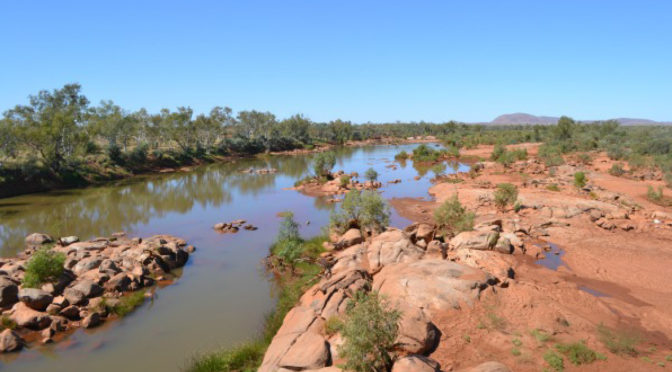
CSIRO scientists have revealed how much water lies beneath the surface of the parched Pilbara landscape in a study to help safeguard the resource as mining and agriculture expands in the region and the climate changes.

The $3.5 m Pilbara Water Resource Assessment project found the area’s extreme heat evaporates up to 14 times more water than falls as rain – highlighting the region’s dependence on groundwater.

The work also revealed 8–30 mm of rainfall is required to make the rivers and streams flow, and that the region is getting hotter and drier in some areas and wetter in others.

CSIRO hydrologist and study leader Dr Don McFarlane says researchers now have a framework to study the impacts of mining and better manage local water use.

The mining industry abstracts about 550 gigalitres of water a year in the area and half of that is used for ore processing, dust suppression and consumption.

Beneath the surface

Iron ore being transported by rail in the Pilbara. Credit: CSIRO

One gigalitre is the equivalent of Subiaco Oval, a stadium in Western Australia, filled to the brim. This figure is expected to double by 2042.

“Mine sites are often separate enough from each other not to interact… however current mining and new mines are increasingly below the water table requiring very large volumes to be extracted and there are several areas where multiple mines are interacting with each other,” Dr McFarlane says.

The Pilbara is a land of extremes, suffering through some of the hottest temperatures in the country, while its unpredictable rainfall comes mostly from summer thunderstorms and cyclones.

“It [the study] puts streamflow and recharge volumes into relative perspective,” he says.

“Nine aquifer types were identified and they interact in complex ways with each other and especially with streamflow.”

Beneath the surface

The pipeline that takes water to the West Pilbara Water Supply Scheme. Credit: CSIRO

In addition, the WA Government is investing $40 million to expand irrigated agriculture and enlarge the Pilbara’s grazing industry.

The research, which was funded by industry and government, analysed climate data since 1910, the relationship between rainfall and runoff since 1961 and how that impacts groundwater levels over an area of 300,000 km– an area which is slightly larger than New Zealand.

The researchers say streamflow leaks through riverbeds and is the main source of aquifer replenishment.

According to the three-year study, groundwater-dependent ecosystems expanded and contracted with the weather but the number has remained stable during the past 23 years.

Dr McFarlane says analysis of satellite remote sensing images could play a role in monitoring the future impacts of climate, grazing, fire, feral animals and mining on groundwater-dependent ecosystems and vegetation.

– 

This article was first published by Science Network Western Australia. Read the original article here.