All posts by Heather Catchpole

Robot automates bacteria screening in wine samples

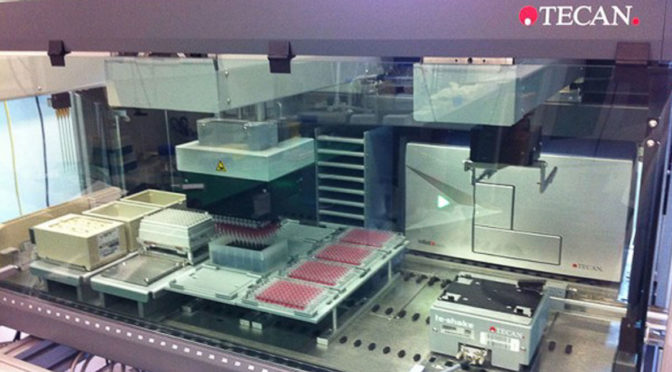
A robotic liquid handling system at the Australian Wine Research Institute (AWRI) is automating the screening of large numbers of malolactic bacteria strains.

Using miniaturised wine fermentations in 96-well microplates, the Tecan EVO 150 robotic system is screening bacteria for MLF efficiency and response to wine stress factors such as alcohol and low pH.

The bacteria are sourced from the AWRI’s wine microorganism culture collection in South Australia and elsewhere.

The robot can prepare and inoculate multiple combinations of bacteria strains and stress factors in red or white test wine, and then analyse malic acid in thousands of samples over the course of the fermentation.

In one batch, for example, 40 bacteria strains can be screened for MLF efficiency and response to alcohol and pH stress in red wine, with over 6000 individual L-malic acid analyses performed.

The AWRI says that this high-throughput approach provides a quantum leap in screening capabilities compared to conventional MLF testing methods and can be applied to a range of other research applications.

Additionally, the phenotypic data obtained from this research is being further analysed with genomic information, which will identify potential genetic markers for the stress tolerances of malolactic strains.

First published at foodprocessing.com.au on 22 July. Read the original article here.

This article was also published by The Lead on 22 July 2015. Read the article here.

Two microbes hold key to superior feed crops

Scientists have identified two microbes that build bigger and more resilient feed crops, potentially boosting farmers’ bottom lines by millions of dollars.

The biotechnology research conducted at Flinders University in South Australia identified two strains of microbes that dramatically increase the ability of lucerne to fix atmospheric nitrogen, boosting the feed crop’s early growth and resilience, and ultimately its yield.

Research by medical biotechnology PhD student Hoang Xuyen Le drew on the hundreds of strains of endophytic actinobacteria, which grow naturally within legume roots. His research isolated and identified two strains of microbes that in laboratory and glasshouse trials were shown to promote growth in the shoots of the legume plants.

The research was supervised by Professor Chris Franco from Flinders and Ross Ballard from South Australian Research and Development Institute (SARDI). A patent has been lodged in relation to the two strains.

Nitrogen is absorbed by the plants through the formation of external nodules by symbiotic rhizobium bacteria that grow in the nodules. Franco says that following the inoculation of the lucerne seeds with spores of the actinobacteria, the nodules grew significantly larger, fixing greater amounts of nitrogen.

“Up to 50 or even 70 per cent more nitrogen was fixed,” says Franco.

The effect was to substantially improve the establishment of the lucerne, increase its resilience in drought conditions and also boost its yield.

“We found that our two main strains gave us a crop yield increase of 40 to 50 per cent in the glasshouse, and we would look for at least a 20 per cent improvement in the field,” says Franco.

He says as much as 25 per cent of the higher levels of nitrogen persisted in the soil, improving the growing conditions for subsequent crops.

The Flinders biotechnologists will now expand their trials on lucerne in the field, and will also look for similar effects in other legume crops, including peas, chick peas and faba and soya beans.

Further research is required to understand the underlying mechanism of the bugs: while it is likely that their natural propensity to produce bioactive compounds is partly responsible for increasing the general robustness of the inoculated lucerne by reducing disease, they may also be encouraging the growth of rhizobium bacteria in the soil.

Franco says that actinobacteria offer an environmentally friendly way of controlling disease, especially fungal root diseases such as Rhizoctonia, reducing the need for fossil-derived pesticides and fertiliser.

The potential to capture atmospheric nitrogen offers a major environmental benefit.

The legume seed crop, based in the South East of South Australia, is the basis of a national feed industry worth close to $100 million a year.

“This is very good news all round,” says Franco.

This article was first published by The Lead on 22 July 2015. Read the original article here.

Frog researchers help kids make great leaps in literacy

Researchers from the Far North Queensland university worked with children’s author, Emma Homes, to create a kids’ book, The Vanishing Frogs of Cascade Creek – now shortlisted for a Wilderness Society fiction prize.

“I was interested in the idea of using fictional characters to raise awareness of science. I think people remember more when you tell them a story,” said Homes.

Wildlife diseases such as chytrid fungus, which is killing frogs worldwide, can devastate animal populations, but are often not well publicised or understood by the general public.

That’s where JCU experts Dr Lee Berger and Dr Lee Skerratt came in, to help answer questions about chytrid fungus, and explain how a sick frog might be examined in the laboratory.

“Lee Berger told me about a suitable frog species to cover in the book – the waterfall frog – and its habitat in the rainforest of Northern Queensland. We went for a trip to the Daintree Rainforest together, which was helpful for the writing process,” said Homes.

Berger thinks the books are a fantastic way to educate the general public. “It’s great that these books raise awareness of wildlife disease – a neglected conservation issue.  Similar to weeds and feral animals, introduced diseases can have catastrophic effects but often go under the radar.”

The Vanishing Frogs of Cascade Creek has recently been shortlisted for the Wilderness Society’s Environment Award for Children’s Literature in the fiction category.

 Home’s second book in the ‘Ruthie’ series, Saving Wombats, is informed by Skerrat’s PhD and tackles the disease sarcoptic mange, which can affect wombats and other mammals.

This article was published by James Cook University on 20 July 2015.

JCU_Frogs_210715


Driverless car trials in South Australia

A major European carmaker will conduct the first on-road trials of driverless cars in the Southern Hemisphere in South Australia in November.

The testing by Volvo will be held in conjunction with an international conference on driverless cars in Adelaide.

Volvo will test the same vehicle being used in their “Drive Me” project in Sweden.

South Australia legalized the use of driverless cars on its roads earlier this year.

The testing is part of independent road research agency ARRB’s Australian Driverless Vehicle Initiative.

ARRB Managing Director Gerard Walton said that automated vehicles are a short-term reality that Australia needs to be prepared for.

“The South Australian Government has been quick to recognise this,” he said.

“ARRB will establish how driverless technology needs to be manufactured and introduced for uniquely Australian driving behaviour, our climate and road conditions, including what this means for Australia’s national road infrastructure, markings, surfaces and roadside signage,” said Waldon.

Volvo’s testing will be undertaken in conjunction with Flinders University, Carnegie Mellon University, the RAA and Cohda Wireless.

The Premier of South Australia, Jay Weatherill said the technology promises to not only improve safety, reduce congestion and lower emissions, but also to provide a real opportunity for South Australia to become a key player in the emerging driverless vehicle industry.

“This trial presents a fantastic opportunity for South Australia to take a lead nationally and internationally in the development of this new technology and open up new opportunities for our economy,” he said.

The driverless car trials will take place on an expressway south of the capital city of Adelaide on 7–8 November 2015.

Multiple vehicles will conduct manoeuvres such as overtaking, lane changing, emergency braking and the use of on and off ramps.

The International Driverless Cars Conference will be hosted at the Adelaide Convention Centre and Tonsley precinct on 5–6 November 2015.

This article was first published by The Lead on 21 July 2015. Read the original article here.

The big business of hearables

It’s Friday night and the restaurant is packed. You’re out with friends and you realise that you can’t follow the conversation. You have to keep asking people to repeat themselves. You could get your ears checked… but you’re not old – how could you already have hearing loss?

Many people may unknowingly expose themselves to high-risk situations that affect their hearing health. Young Australians are particularly at risk through exposure to music players, live music venues and nightclubs where noise can reach dangerous levels.

“Hearing disability is truly the invisible handicap, we don’t see the problem, but it has real impact on the everyday functioning of those who suffer it,” says Professor Robert Cowan, CEO of the HEARing CRC, Australia’s hub for hearing healthcare research.

Part of the problem is the view that hearing loss is only an issue in old age. But the truth is that one in six Australians suffers from some form of hearing loss.

“When people have trouble reading fine print, they will generally straight away visit an optometrist or pick up a pair of magnifier glasses from a chemist, because it’s a socially acceptable disability and there is no associated stigma with wearing glasses,” says Cowan.

“But when someone has a hearing disability, they often choose to ignore it, or to blame others for mumbling or speaking too softly, and as a result they postpone assessment and treatment,” says Cowan.

Turn it up

“Hearing patients and professionals would both benefit from new hearing technology that provided a seamless fit into everyday life,” he says.

There’s plenty of new tech entering the market from consumer electronics powerhouses. According to Business Korea, Samsung is intending to develop a product for 2016, while Apple has already joined forces with hearing aid developers GM ReSound.

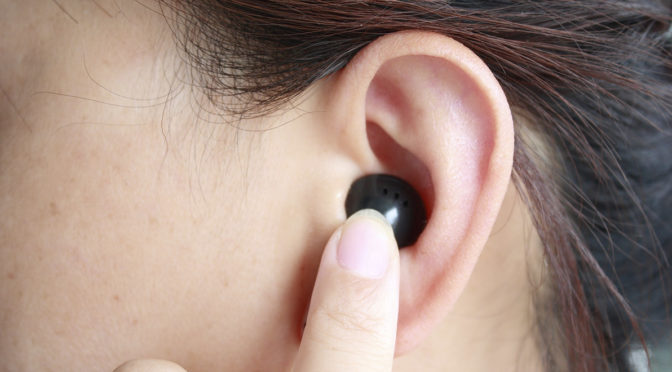
Hearables, as they have been dubbed, are smart ear devices that feature 3D audio notification. By providing users with real time data, they help to build awareness of exposure to high levels of noise or to noisy environment for prolonged periods of time.

“Noise-induced hearing loss is akin to sunburn, it’s a combination of the loudness (i.e. like the UV rating), the duration of any exposure, and the frequency of exposure,” says Cowan.

Take ReSound’s iPhone-connected LiNX headphones. They connect to Apple products and allow the wearer to hone in on or deflect sounds with the touch of a screen, to dial down the noise around you, or direct the speech focus towards your dinner partners and away from the other table’s conversations, for example.

Tech such as this is increasingly big business. Wearable tech company Doppler Labs announced this month that they have raised US$17 million for its Here Active Listening System, that uses two wireless buds and a smartphone app to control what you hear and how you hear it. They also raised US$635,000 directly via crowd funding.

In Australia, Perth-based hearable Nuheara is the first wearables company to list on the ASX. Their tech, which was launched in June 2014, is a hybrid between assisted listening devices, Bluetooth earplugs and noise-cancelling headsets without cables or wires.

Cowan hopes that this technology will change the way people associate hearing aid technology with old age, and spur them to seek help much earlier.

We use our phones every day, and new apps that can help us hear or assess our risk of hearing loss can be at our fingertips, changing the way that we provide hearing healthcare,” he says.

“Hearables will increase our connectivity, and allow for individuals to personalise hearing care like never before.”

Kara J Norton


 – HEARing CRC


Feral cats mapped with new app: FeralCatScan

Feral cats are in the spotlight with the release of a feral cat mapping and reporting app called FeralCatScan which was officially launched today at Melbourne Zoo as part of the Threatened Species Summit.

The app was developed by the Invasive Animals Cooperative Research Centre with funding support from the Australian Government Department of the Environment.

Peter West, project officer for development of the app, said, “The purpose of FeralCatScan is to provide the community and land managers with a tool for real-time reporting of feral cats, any management activities undertaken, photo’s of impacts and, most importantly, using that collective information to identify practical solutions to the feral cat problem.”

“Feral cats are a nation-wide issue needing collective community effort to manage. We are never going to eradicate cats, but we can reduce the impacts on wildlife by ensuring management is done efficiently, effectively and humanely in areas where feral cats are having the most impact on wildlife.”

“Anyone can use the app or website to record feral cat activity and it is really easy to use. If you have seen a feral cat lately then I encourage you to record it in FeralCatScan,” he said.

Hand holds phone bearing screen with the FeralCatScan app displayed

FeralCatScan is available for both iOS and Android devices

The app is also able to be used in the field where mobile reception may be unreliable by storing feral cat records until mobile coverage is available.

Andrew Triggs, Acting Manager of Planning and Adaptive Management with the South Australian Government on Kangaroo Island, has been trialling the app as a feral cat management, planning and reporting tool.

“On Kangaroo Island it has been found that feral cats eat a total of 50 different bird, mammal, reptile and frog species. They also spread diseases to livestock and wildlife. The impact on a small island like this can be substantial and we’re looking at a raft of practical and policy measures to manage the impacts.”

“This app will help us in a practical way to strategically identify feral cat hotspots on the island and more efficiently and effectively plan management activities to protect wildlife and agriculture.”

The app is part of the FeralScan suite of app products and is free to download on the App Store for Apple iOS and Google Play for Android mobile devices. See details at www.feralcatscan.org.au.

This release was first published on http://www.invasiveanimals.com/ on Thursday 16 July 2015.

Innovations in grape growing technology apply across the industry

Challenging and changing conditions have forced South Australian farmers to be smart and economical with their land — stretching all the way back to the stump-jump plough.

Peter Hackworth, Executive Officer of the Wine Grape Council of South Australia, says today’s farmers are no different – and they deserve to be recognised – so he has established the Vinnovation Award.

“I thought there must still be people out there being inventive, but it’s hard for farmers to put their hand up – they’re quite modest people,” Hackworth says.

The awards will be held on 17 July at Adelaide Oval. The four finalists have designed innovative ideas, practices and equipment that will be presented to over 200 wine grape growers.

“The criteria we assess them by is their ability to make an impact, to actually save money and make money, the cost of adopting the practice, and the ability of it to be applied across the state.”

The finalists include systems of delaying ripening across different areas of a vineyard, better sprayers for preventing Eutypa outbreaks, rapid processing of GPS yield data, and a grape bin with inbuilt scales.

“Most of them aren’t interested in commercialising the ideas – they’re just interested in growing grapes – but they’re happy to share them.

“Were looking at getting engineering plans made for the spray unit and the trailer, for example, and make them available so people can make them themselves or have them made.

“It’s classic farming – not wanting to get further away from what they like doing.”

Kim Anderson

Kim Anderson


Maturity delaying techniques for sloping vineyards

Kim Anderson, from the Adelaide Hills, has developed a suite of techniques to ensure more even ripening of his fruit across his sloping property.

Fruit at the top of the block ripens significantly faster (a difference of 1.5 – 2 Baume) than at the bottom, causing management problems come harvest time.

In general, fruit is ripening a month earlier than it was 30 years ago thanks to a warmer climate – the ability to delay and get more even crops is of increasing interest to growers.

Anderson has applied three trial methods. By using herbicide on the undervine grass in the lower block, and keeping it intact on the higher ground until budburst, the soil at the top of the block is kept cooler. At harvest the different between fruit ripeness was only 0.1 Baume.

Another technique was trimming the vines just above the highest fruiting nodes early in the season – this delays ripening by about a month and complements the other techniques well.

Finally, Anderson pruned certain vines very late in the season to delay their development and measured them against a control group. The results were a success.

Anderson’s techniques allow greater uniformity to vine growth stages across a sloping block. There are also advantages to fruit ripening in cooler months, enhancing flavour development and maximising the value of fruit.

Phil Longbottom

Phil Longbottom


Bin Trailer with built in scales

Bill and Phil Longbottom from Padthaway, South Australia, are independent grape growers who supply to a number of processors

Their bins were previously loaded in the vineyard before being driven to and offloaded at a weighing pad. This resulted in under or overloaded grape bins and a higher risk of accident – for example a forklift tipping when handling an overweight bin. There are also price penalties for over-delivering on contracts or overloading trucks.

The solution was to build a dual-axle trailer with suspension and built in scales, that displays a digital readout to the harvester operator. All construction was undertaken on their farm at an estimated cost of $6000.

Benefits of their innovation include being able to offload bins straight on to delivery trucks to save double-handling the grapes, better scheduling for trucks, better yield estimation during picking, reduced noise thanks to suspension, and it removes the problem of variation in volume weight between varieties.

They’ve paid for their device in one season by selling the fruit that is excess to processing contracts to other wineries instead.

Hans Loder

Hans Loder


Rapid GPS yield mapping and analysis

Hans Loder works in mining, but he has an ongoing association with Coonawarra’s Katnook Estate.

Katnook uses GPS yield monitors on its harvesters to accurately track yield across vineyards. The data collected was typically sent for processing in to yield maps that took several months to be processed and delivered, much too late to be of use in harvesting decisions.

Loder developed a script to process the data within 24 hours of the harvester moving through the block. It bypasses expensive mapping software to display data natively in Google Earth.

Pixels are colour coded according to yield for quick analysis. The data is also displayed in much higher resolutions than before – with data points down to 150 mm – allowing investigation of individual vines and selective harvesting of high value fruit.

Katnook reduced its data processing costs by 75 per cent, using the new yield maps to its advantage in pruning, nutrition and weed management.

Ben Blows

Ben Blows

Recirculating cordon sprayer

Ben Blows is an independent grape grower from Macclesfield. Cool and wet climate grapevines, like Blows’ vineyard, are often affected by Eutypa, a fungus which infects pruning wounds and shortens the life of vines significantly.

Blows designed and constructed a recirculating sprayer to reduce the spread of Eutypa. His cordon sprayer uses four nozzles on each side, targeted to hit pruning wounds while allowing spraying at up to seven kilometres per hour.

The sprayer was put together with components from other machinery and vineyard waste, including a mount from a leaf blower, pump from an older sprayer, and 44 gallon drums. The cost of the device was estimated at $6000.

Sprays are applied within 48 hours of completing pruning. The sprayer uses a reduced volume of chemicals, which directly results in savings and allows him to use a smaller tank, limited soil compaction in his high rainfall vineyard.

Long term, Ben expects that the greater protection from Eutypa will significantly improve the commercial life of his vines.

 – Jack Baldwin

This article was originally published on The Lead on 15 July 2015. Read the original article.

Closing the gap

Romlie Mokak, CEO of the Lowitja Institute for Aboriginal and Torres Strait Islander Health Research, is a man with a vision.

“We’ve got a clear agenda for the future and it’s for just 15 years ahead: 2030. This agenda has been agreed upon by governments and Aboriginal and Torres Strait Islander leadership as part of the ‘Close the Gap’ campaign,” said Mokak.

The aim is to eliminate the difference in life expectancy between Aboriginal and Torres Strait Islander people and other Australians by 2030. It’s a big ambition that will take a lot of work.

“It’s essential that solutions in Aboriginal and Torres Strait Islander health and wellbeing come from the people themselves,” he said. A vital step is explicit recognition of Indigenous people in the Australian Constitution, supported by the Recognise Health coalition launched by the Lowitja Institute in March 2015.

“If we hit the target, then by 2040 we will have had 10 years with no gap. We will have a high quality, accessible health system that is culturally appropriate for Aboriginal and Torres Strait Islander people.”

Since 1997, the Lowitja Institute and its predecessor CRCs have led a substantial reform agenda in Aboriginal and Torres Strait Islander health research by working with communities, researchers and policymakers. In partnership with 21 participants, the CRC is poised to make a substantial contribution to the goals for 2030 and towards a 2040 that sees Aboriginal and Torres Strait Islander participation and leadership in all walks of Australian life.

— Clare Pain

lowitja.org.au

Feature image: Smoking ceremony conducted by Wurunjeri Elder Aunty Joy Wandin Murphy at the Lowitja Institute CRC launch in October 2014.


Shark detection

Sharks have an incredible sense of smell, but it is their sense of hearing that could be one of the keys to protecting people at beaches, says a team of researchers led by Dr Christine Erbe from Curtin University’s Centre for Marine Science and Technology.

“We had this idea of trying to figure out what acoustic signatures humans make, whether the sharks can hear them, and, if appropriate, whether we can somehow interrupt that,” says Erbe. These interruptions could then potentially be used to ‘hide’ or ‘mask’ the noises people make in the water from the sharks.

Western Australia is a pertinent place to work on this project, given the debate over baited drum lines to cull sharks, and the project has been funded by Western Australia’s Department of Commerce.

Initial recordings have been made of people in a pool swimming and snorkelling past a hydrophone – a microphone designed to record or listen to underwater sound. Erbe’s team records people swimming and surfing at beaches to see how far their noises travel. These sounds can then be played to sharks in enclosures at Ocean Park Aquarium in Shark Bay to check for any responses.

“If we see responses from the sharks, the next step is to figure out if we can mask the sounds of people in the water using artificial signals,” says Erbe. These artificial signals are band-limited white noise, created digitally. “We can see which frequencies, or part of the human sound signature, could be detected by the sharks and calculate the range limits at which that might occur. We can then design masking signals that fill in around them so those frequencies can’t be detected,” she says. The team will test these masking signals by playing them back to the sharks at Ocean Park Aquarium.

The outline of a shark shows clearly on a scanner used by the Curtin team.

The outline of a shark shows clearly on a scanner used by the Curtin team.

This masking technique is different to other approaches where loud sounds are played at beaches to scare sharks away. The problem with the loud sound approach, says Erbe, is that it potentially interferes with an entire underwater ecosystem. The masking approach, on the other hand, is targeted at frequencies and levels that only sharks can hear in the surf zone. “We’re not looking at scaring the sharks away, we’re just limiting them from detecting humans,” she says.

According to Erbe, a multidisciplinary approach is crucial to solving problems such as shark mitigation, and her team ranges from physicists to acousticians, engineers and marine biologists.

Team member Dr Miles Parsons is leading another project on the sonar detection of sharks with the aim of building an early warning system. “The solution will have to be a combination of detecting sharks and preventing them detecting us,” says Erbe.

Ruth Beran

cmst.curtin.edu.au

Transforming innovation in Australia

When it comes to fostering innovation and the commercialisation of world class research, there is something the United States has that we lack. We ought to learn from the successes of the US in this area, and emulate one program they have pioneered to give our own innovative industries a much needed kickstart.

For dozens of Australian researchers returning to the country after working in the US, the lack of an equivalent to the US’s Small Business Innovation Research (SBIR) scheme here reflects a major hole in our innovation ecosystem.

Charles Wessner, Professor at Georgetown University and Director of the Global Innovation Policy unit, says the SBIR scheme triggered a fundamental shift in attitudes in American universities when it was introduced in 1982.

According to Wessner, before SBIR, the Dean of a faculty would ask young academics how many publications were going to come out of their latest piece of research.

Thirty years on, the Dean is now asking whether the research can be converted into a product or service, and whether they should spin it out of the university to access SBIR funding. It has been a profound change of mindset, says Wessner.


Simple but effective

The SBIR scheme is a fairly simple design that hasn’t changed much since its introduction. US government agencies, which undertake more than US$100 million worth of R&D outside the agency, are required to allocate 2.8% of their R&D budget to these programs. Currently, eleven federal agencies participate in the program.

Each agency takes an active role in calling for R&D – “solicitations” is the term used in the US, and with a completely straight face – for areas of concern to them. For example, the US Department of Agriculture this year is calling for projects in 10 areas. They are unsurprising fields, like “aquaculture” and “biofuels and biobased products”, but with a bit more specificity under them.

Any small business (1–500 employees) can then bid to undertake projects against those solicitations. The US Department of Agriculture issues solicitations once a year, receives about 500 applications for “Phase 1” projects (those up to US$100,000 over up to eight months) and funds about 15–20% of them. If a project is success at Phase 1, they can apply for a Phase II award, which can be up to US$500,000 over two years. Some departments have further, larger Phase III stages, although the USDA doesn’t.

For the Department of Defense (DoD), 2.8% of its extramural R&D spend is a very large amount of money indeed. Moreover, if the Department of Defense is soliciting proposals for new work, it is very likely it’ll become the first customer of that small business if the project is successful.

The DoD already has a stake in the product, and is thinking about how it might work in its own ecosystem. Given the extreme complexity of military procurement procedures, having the DoD already staked in your product is a major advantage to a new company.

Carry on Phase II and then Phase III funding, sometimes in multiple series, are available in much larger amounts from the bigger agencies, and can run to tens of millions of dollars.

Don’t imagine that means all SBIR projects are short-term or lack scientific challenges. The US Navy uses about 1.4 billion tonnes of fuel annually, and the head of its energy program, Captain Jim Goudreau, said climate change transcends politics when you are talking about that much fuel.

He pointed out that the US military is already affected by climate change in many practical ways, like having less available live fire practice days each year in California. And as he said at the TechConnect World audience in Washington last week, the Navy is contracting for materiel to be delivered in 2040, which needs to be effective into the 2070s and 2080s. So it needs to cope with a changing climate.


Pull and push

At the TechConnect meeting in Washington last week, there were literally dozens of US federal groups talking to the science and business community about their innovation needs. Big departments, like defence and energy, are represented by many specialised teams seeking out companies to work for them.

It is “customer pull” in its rawest form. The science community is here in big numbers offering new technologies to the market. When “science push” and “customer pull” mix, then the chances of successful innovation rise to a new level.

At the same time in Philadelphia, the gigantic annual biotechnology conference, BIO, was underway with more than 15,000 participants from across the globe. The two big US science funding agencies – the National Science Foundation (NSF) and the National Institutes of Health (NIH) were there in force helping their SBIR companies meet up with big pharma and other collaborators to bring technologies to market.

It’s like a science festival writ large, but also in extreme detail, as companies search for new opportunities from the vast American research community.


Could it work in Australia?

The recent joint paper from Ian Macfarlane and Christopher Pyne, “Boosting Commercialisation of Research”, floated the idea that Australia needs an “SBIR-like” scheme. The Academy of Technological Sciences and Engineering (ATSE) has often pointed out that the lack of such a scheme is a gaping hole in the Australian innovation ecosystem.

We do have some “customer pull” oriented schemes, though. The Rural R&D Corporations definitely fall into this category, as do many of the Cooperative Research Centres (CRCs).

The government’s response to the recent “Miles Review” of the CRC program was to push CRCs to be even more industry-led.

Industry leadership is the mantra for the new Industry Growth Centres, but they are not going to be funding very much research. The ARC’s Linkage Projects and the newer Industrial Transformation Training Centres as well as the NHMRC’s Partnership Centres are each attempts to have push more of the nation’s R&D investment into more market-facing efforts.

But none of these schemes are aimed at boosting innovation from small businesses. Or at least, not exclusively so. They are often encouraged to do so, and make sporadic attempts to improve their small business engagement, but it is clearly a weak spot in the Australian innovation context.

Small businesses that are trying to expand with innovative technologies constantly struggle to raise funds at early stages of development.


Bridging the gap

SBIR is not of itself a scheme for collaboration; the small businesses involved can undertake all the R&D themselves. But the experience in the US is that SBIR fosters collaboration as high technology start-ups seek to source expertise from universities and other research agencies.

Universities immediately increased their rate of spinning out companies on implementation of the scheme in 1982. The SBIR funding attracts further seed and venture capital funding, bridging that “valley of death” between early research funding and the business becoming self-sustaining.

Ultimately, many of the small businesses get bought out by large companies, particularly in the defense and pharmaceutical areas, where massive ongoing investment is needed to introduce new products.

There’s no doubt that an SBIR scheme would fill a major innovation gap in Australia, and no doubt we could make the necessary administrative arrangements. But for an SBIR scheme to truly succeed in Australia, there would be a few hurdles that I’d suggest must be overcome before we spent the first dollar. I call these the “Fair Dinkumness” tests to ensure an Australian flavour.


Fair Dinkumness test 1

Would there be true political support?

Unless a scheme enjoyed bipartisan support, there would be no point in introducing one. With one of the shortest electoral cycles in the world, Australia is at a major disadvantage in terms of stable policy in relation to innovation.

If the political support is there, then an SBIR scheme would need a significant investment of new money. Scrounging money off another under-funded program would simply be setting both up to fail. It takes some time for industry to become confident with new schemes and start to invest in a meaningful way. We’d need a real commitment.


Fair Dinkumness test 2

Would there be true bureaucratic support?

SBIR in the US works because it is a procurement scheme as well as an R&D scheme. The bureaucracy would need to seriously commit to using the scheme to improve its own departmental knowledge or services.

That means a solicited report to the Department of Environment on management of an endangered species would need to be implemented, not just sent to the library. That means the Army would need to buy the better boots from an Australian small business.

This is perhaps a bigger mindset change than either the politicians or the business community, and would need to be monitored closely, even if there was initial high level support.

For a small country such as Australia, it is often easiest to take the pathway of least risk – so Senate Estimates would need to cut bureaucrats some slack for backing Australian inventiveness too.


Fair Dinkumness test 3

Would Australian business truly back it?

If small businesses are formed just to access SBIR money, and want to survive on providing some research to government, then we are no better off. If peak industry bodies view the money as simply an entitlement for their members, then nothing new will happen.

The whole point of giving a big innovative boost to small businesses is to turn them into high-growth businesses. Existing bigger businesses would need to accept that they won’t be able to access the scheme, and they might even be faced with competition from those that do become successful innovators. An SBIR scheme by its very nature involves giving a leg-up to the new players in town, and the incumbent players need to accept that situation.

If the federal government did undertake to create an SBIR-like scheme in Australia, it would easily be the biggest reform of the innovation ecosystem in the country since the Hawke government’s raft of “Clever Country” policies.

It may not be the size of the Medical Research Future Fund as that scheme grows, but it is significantly more complex to implement. There is no doubt the government wants business and research agencies to come together much more closely. An SBIR scheme would be a massive step in that direction.

Tony Peacock

This article was first published by The Conversation on 25 June, 2015. Read the original article here.

Armour forged through collaboration

Forged from plough parts, heated in a makeshift iron forge and moulded into shape over a Stringybark log, the homemade armour worn by Ned Kelly and his gang is almost as famous as the man himself. Although the suit of armour deflected many bullets, it weighed in at just over 44kg, and left his hands and legs unprotected.

Now, the winner of the Cooperative Research Centres Association (CRC) Award for Excellence in Innovation 2015, the Defence Materials Technology Centre (DMTC), have developed a unique manufacturing process that produces armour with the same level of protection as traditional combat body armour, but is far lighter.

The DMTC developed a cutting edge manufacturing process for shaping ceramic boron carbide armour. Very difficult to manufacture, one of the key issues for the team was maintaining quality control as the material expanded and compressed in response to the heat of the production process.

“Up until recently, body armour design has been relatively simple, durable but so heavy you can’t move quickly…Think: the Ned Kelly suit,” says DMTC CEO Dr Mark Hodge. “Having optimal equipment enhances survivability. Mobility is a significant contributor to personnel protection and with less weight and more mobility, soldiers are able to get out of trouble more quickly,” he says.

Body armour designs trade off protection against weight and bulk reduction with highly protective systems often proving heavy and restrictive. Successive models have been designed to offer more comprehensive levels of protection, with vests made from industrial strength fibres to deform bullets upon impact, and plated metal inserts to provide extra protection to vital areas. Although significantly lighter than Kelly’s original armour, today’s combat body armour remains heavy and unwieldy, a troubling fact as soldiers carry up to 58kg of gear in certain situations.

Untitled-4

As one of the hardest substances known to man, boron carbide is frequently used in the manufacturing of body armour. However up until now it was very difficult to bend boron carbide into a variety of different forms to be used for specific body shapes. As a result, heavier materials had to be used.

With this new near-net shaping technology developed by the DMTC, body armour made purely from boron carbide will allow for manufacturing of lighter armour panels such as helmet inserts and customised ballistic panels for combat vehicles.

The development of the specialised process will yield many benefits for the Australian defence industry, says Hodge. Rather than having to outsource research and development from another country, it is being done right at home. Allowing the defence industry to make adjustments and improvements at any time to accommodate the needs of defence personnel.

Contributions included academic support from The University of Melbourne and Swinburne University of Technology, advice from the DSTO, the Army’s Diggerworks Program, Australian Defence Apparel, and research and manufacturing expertise from BMT, CSIRO, and VCAMM. The collaboration allowed for strides in industrial design capability as well as guidance from the defence department as to what threats the armour should be designed to withstand.

“It would have been impossible to find all the expertise needed for the project under one roof,” Hodge says. “In order to source the appropriate equipment and variety of expertise, we needed a collaborative team that shared a common sense of purpose,” he says.

In the next 25 years Hodge says the integration of the unique net shaping process will be applied broadly to the defence industry due to the extensive use of boron carbide in combat body armour. However, this does not mean that work stops for Hodge.

“Bullets are made to defeat body armour, so we must learn the limits of the material so that we can continue to improve and offer the next level of protection.”

Kara Norton

Defence Materials Technology Centre (DMTC)

Cooperative Research Centres Association (CRC)

Award-winning app boosts mental health help for youth

You are 16 years old and have a secret, which you’ve been carrying around for what feels like your whole life. You feel trapped so you turn to marijuana and alcohol to numb the pain. Your grades begin to slip and your parents are worried so they send you to a psychologist. During your first visit, the clinician in the waiting room starts asking questions, and all you can hear is your heartbeat ringing in your ears.

When it comes to receiving effective mental health treatment, early diagnosis and non-judgmental support are essential. In order to assess what types of treatment options are available, many clinicians start with a verbal assessment. However this verbal assessment is a barrier for many young people, preventing treatment. Psychologist and PhD candidate Sally Bradford recognised that young people between the ages of 12­­–25 could benefit from a different kind of assessment.

“They’re going into an environment where they’re expected to verbally relay everything that is going on in their lives – to tell their deepest, darkest secrets that they may have never said out loud before,” Bradford says. “It can take a long time for them to find the words – especially if the clinician doesn’t ask the right questions,” she says.

As part of her PhD focusing on the use of technology in face-to-face mental health care with young people, Bradford created the electronic psychosocial assessment app called “myAssessment” that helps clinicians evaluate young people quickly and easily. Speaking to the National Mental Health Commission’s review of Australia’s mental health system, this new screening process underscored the need to improve health services and support through innovative technologies.

“The app could be beneficial in any field where you’re needing groups of people to be truthful, and give answers in a way that they do not feel judged,” Bradford says.

Based on the strides Bradford made in youth mental health with the invention of myAssessment, she was awarded the $5000 top prize at the CRC Association Early Career Research Showcase at the CRCA’s Excellence in Innovation Awards Dinner in Canberra.
240615_mentalhealth7

The app was developed in close conjunction with the Young & Well CRC, youth focus groups and clinicians, and subsequently trialled at a headspace Centre in Canberra over nine months in 2014.

“The app was designed with significant input from young people and clinicians, and puts their needs and requirements first. For clinicians, it follows an evidence-based format and doesn’t require changes to the way they currently provide services. For young people, it’s interactive, engaging, and easy to use,” Bradford says.

240615_mentalhealth3

The way it works is a patient arrives for their appointment. Prior to seeing a clinician, patients complete myAssessment on an iPad in the waiting room. The app is a simple survey, but with a range of different response options. Topics include alcohol and drug habits, sexual preference, eating habits and anxiety and depression. Questions include screening and probing questions. Screening questions can be a yes or a no answer that prompts further questioning: Do you drink? Smoke? Have you tried or used drugs? What have you tried?

A probing question allows for a more comprehensive understanding of the issue, such as, how do you (and your friends) take them? (drugs). After answering and submitting these questions, a personalised ‘Clinician Summary’ details the patient’s risks and strengths, providing the clinician with a foundation for the first interview.

240615_mentalhealth5

Bradford’s trials proved to be particularly enlightening, with an 87% response rate, and ¾ of patients reporting that myAssessment provided them with an “accurate” representation of themselves. The results also showed that young people were up to 10 times more likely to open up about drug and alcohol use, sexuality, and self-harm when the application was used, in comparison to a verbal assessment with the same questions.

“There was a wealth of data generated over the course of the trial, which could be particularly useful for policy reform in the future,” Bradford says.

Kara Norton

Young & Well CRC 

Australia’s leaders in research and innovation are honoured

The IP & Science business of Thomson Reuters, the world’s leading provider of intelligent information for businesses and professionals, today is honouring 43 Australians and eight institutions leading scientific research and innovation in Australia at the 2015 Thomson Reuters Australian Citation & Innovation Awards, held today at the University House at the Woodward in Melbourne. Eleven Australian Research Groups have been selected to receive Citation Awards in recognition of their outstanding contribution to research. In addition, Eight Australian organisations have been recognised for their excellence in innovation.

The Australian Nuclear Science and Technology Organisation (ANSTO) has won an Innovation Award in the category: Government (Government or Government funded) for delivering specialised advice, scientific services and products to government, industry, academia and other research organisations through the development of new knowledge, delivery of quality services and support for business opportunities.

Research recipients span myriad areas including astronomy, the environment, oncology, technology and others. Institutional honourees fall within seven categories, separated into large and small-to-medium sized organisations, government institutions, universities and most collaborative organisations. The awards are based on a proprietary methodology and analysis of Thomson Reuters data that recognises domestic innovation and significant research contributions originating in Australia.

“We are very pleased to have the opportunity to honour the individuals and institutions making significant contributions in Research & Innovation,” said Jeroen Prinsen, senior director for Australia and New Zealand, Thomson Reuters.

“Australia plays an important role in the global scholarly and commercial ecosystem and it is through the use of Thomson Reuters data that we are able to qualify and quantify this contribution, and give credit where credit is due. Congratulations to all of today’s honourees.”

The scientific research awards are part of Thomson Reuters Citation Awards and are determined by analysing the volume and impact of a researcher’s contribution to his/her subject area. The recipients were selected using a quantitative process identifying the average number of citations their research generated over a period of time, as indexed in the Thomson Reuters Web of Science®. This covers all articles, reviews and proceedings papers with at least one Australia-based author. The average citation, in turn, reflects its impact and influence on the given subject and the importance attached to it by subsequent research.
The fields from which the Citation Awardees were drawn represent national strengths, either because of the size of the Australian contribution to the global body of knowledge or because of its impact. The wide range of subject areas covered – from astronomy & astrophysics, ecology, and environmental studies to economics, neurosciences and psychology – is an illustration of the strength and diversity of academic research in Australia and a reflection of the innovation inherent among the country’s scientists.

This information was first published on 23 June 2015 by Thomson Reuters.

Understanding athletes’ immune function to optimise performance

With the Gold Coast Commonwealth Games looming in 2018, a key concern for athletes will be how to prevent illness from interfering with their training and performance.

This is the focus of new research at Griffith University. Partnering with the Australian Institute of Sport to examine the effects of exercise on the immune system in order to help athletes compete at their best, the research team say that illness during competition can destroy years of effort and dedication.

“On average, highly trained athletes spend 8 to 12 years training to compete at their best,” says Professor David Pyne from Griffith’s Menzies Health Institute Queensland (MHIQ).

“Given the time, effort and financial considerations made by athletes, their coaches and support staff, there is a need to find ways to keep athletes healthy during heavy training, travel and competition.”

Dr Nic West

Dr Nic West

Susceptibility to illness

Professor Allan Cripps, a leading immunology researcher at MHIQ has worked with Pyne and Dr Nic West in a bid to understand why athletes seem prone to illness during heavy training and competition.

“There is evidence that endurance exercise compromises immune function and increases illness in some athletes,” says West. “Intensive exercise, particularly endurance exercise, such as triathlon, long distance swimming and ironman events, can be associated with exercise-induced immune suppression where the number and function of immune cells is decreased and their ability to respond to challenge is lowered.”

For the current study the research team is seeking highly trained male triathletes and iron men between the ages of 18-35 years who undertake 12 hours or more exercise per week.

Athletes will have their immune, gut microbiota and metabolic systems profiled and compared with non-athletes.

A significant benefit of the study is that participants will receive information regarding the status of their own immune function that can be used to tailor individual training programs.

The study is taking place at Griffith University’s Gold Coast campus.

“We hope that participation and knowledge gained from this study will help elite and non-elite athletes to attain their performance goals,” says Pyne.

This article was first published by Griffith University on 16 June, 2015.

Help to combat pest animals is only a click away

The toolkit is a one-stop shop of practical knowledge to arm farmers and land managers with the information and connections they need to combat pest animals.

IA CRC digital communications manager Keryn Lapidge said, “We are pleased to have the Minister for Agriculture, Barnaby Joyce, officially launch PestSmart Connect today, recognising this as an important knowledge hub for tackling pest animal problems such as wild dogs, which have become a really big economic and social issue for Australian farmers.”

The website also links to the FeralScan website and app which provides people with the capability to map pest animal sightings and damage and then to use this information to track and control the problem.

“This website is really strong on connecting people and communities. A feature is the ‘connect’ portal which aims to provide contact details of agencies, organisations and groups that are active in pest animal management and can provide people with services, useful advice or assistance – at a practical on-ground level, but also at a policy level,” she said.

The PestSmart Connect website features pest animal species that are a having a major impact on biodiversity and agriculture in Australia including wild dogs, foxes, feral cats, rabbits and carp. There are handy glovebox guides, videos about trapping and baiting, case studies and links to assistance.

“We hope this will be a useful knowledge hub for farmers and land managers and we plan to continue to improve the resource over time,” Lapidge said.

The PestSmart Connect website www.pestsmart.org.au is the culmination of ten years of information gathering and research by the IA CRC – Australia’s largest integrated pest animal management research organisation.

Minister for Agriculture, Barnaby Joyce, launches the PestSmart Connect website - a handy toolkit of pest animal management information for farmers and land managers.

Minister for Agriculture, Barnaby Joyce, launches the PestSmart Connect website – a handy toolkit of pest animal management information for farmers and land managers.


This article was first published by the Invasive Animals CRC on 16 June, 2015.

Taking medical device from design to life saver

When paramedics or emergency personnel discover a patient who has suffered massive facial or airway trauma, often in situations like a car crash, they may have to perform a cricothyrotomy, which involves stabbing a tube into the patient’s throat so they can breath.

It’s a procedure you want them to get right.

But in these life-threatening situations a paramedic or doctor may have only ever performed the procedure on a training device. It’s therefore doubly important that this device teaches them the correct technique in an accurate and realistic way it’s life or death.

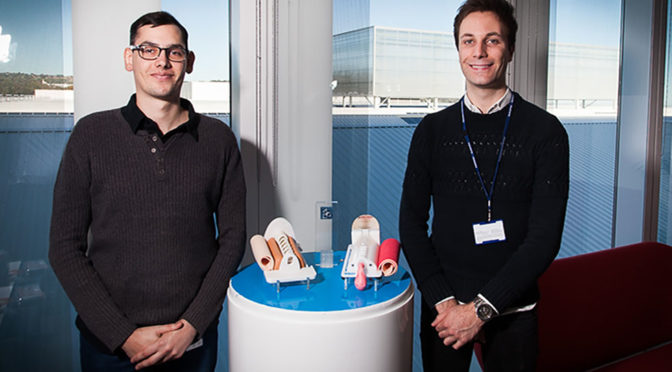
Many doctors will now be training for complicated cricothyrotomies on a German-built Crico Trainer called ‘ADELAIDE’ designed by Robert White and Daniel Weiss in South Australia.

“The procedure, it’s not something that most doctors will have to use,” says White, one half of the WHITE + WEISS design team.

“No one really wants to stick a tube through your throat, but if you need it, they need to know how to do it properly, to prevent you from dying.”

A cricothyrotomy involves sticking a needle and cannula through the Adam’s apple, inserting a guide wire through the cannula in to the windpipe, removing the cannula, making a small incision at the base of the guide wire, threading a Melker Crico kit (an airway catheter and curved dilator) on to the wire, and finally removing the wire  thus clearing the patient’s airway.

Medical students practice the procedure on any number of trainers, simulators and manikins, but as Daniel Weiss says, they are not all very realistic.

“Beyond just the student learning it, it’s about muscle memory,” says Weiss. “In an emergency when you don’t have time to think, you need your muscle memory to work.”

The realistic Crico Trainer ADELAIDE was conceived by White and Weiss during their Masters of Industrial Design at the University of South Australia in 2012. It’s a practical course with real clients who have real design problems.

“This particular project started with the University of Adelaide medical school. They teach their students all sorts of procedures on all sorts of medical trainers. They found that there’s a number of these trainers they weren’t happy with,” White explains.

White and Weiss both decided to tackle the cricothyrotomy device, although they were working separately at the time. They were put in touch with Dr Chris Acott, the Southern Hemisphere’s foremost throat and neck expert.

The two designers attended Dr Acott’s workshops at the Royal Adelaide Hospital, training with doctors, seeing how they use the simulators and using them themselves. They had access to Dr Acott’s collection of Crico Trainers, many of which they realised were “pretty average”.

“The existing trainers were pretty basic,” says White. “There was a basic neck shape with an Adam’s apple and a skin that stretches over the top. They were missing obvious stuff  like a chin  which seems like a really basic thing.”

As they watched some doctors insert a tube and the designers realised they were coming in at an angle that would be impossible on a real person because the chin would be in the way.

“Dr Acott would catch it and remind them that they’d have to come in at an angle,” says White. “But if an instructor missed that, they student is going to learn that procedure incorrectly.”

After eight weeks of designing their individual versions of an improved Crico Trainer, White and Weiss took their prototypes to Dr Acott. He liked aspects of both, and suggested they combine the two.

In 2013 the men decided to continue the project outside of their Masters course, receiving a grant from ITEK, the University of South Australia’s commercialisation arm, to develop a prototype.

They worked through eight prototypes with Dr Acott before arriving at a model everyone was happy with.

It was a significant improvement on the available devices. The chin was an obvious addition, but many other smart touches also improved the usability and accuracy of the trainer.

“It was very cumbersome to put the skin on the old devices,” says White. “Ours is slotted where it can slip through and pull taut. You can use it again and again. We also added multiple layers of skin to add more realism.”

Crico Trainer ADELAIDE

Feel is an important part of the procedure – doctors have to find the Adam’s apple quickly and accurately to perform a cricothyrotomy. The team also added additional layers of skin and a squishy adhesive layer to enhance the feel.

“A lot of simulators are designed to simulate the perfect case scenario,” Weiss says. “But you’re not going to be looking at the perfect 30 year old male every time  there might be damage or irregularities. That’s something we tried to incorporate, making the throat adjustable.”

Once the device was finished, ITEK started to shop the idea around to medical simulation companies. German company VBM Medizintechnik GmbH took an interest.

A licensing agreement was written up, and VBM redeveloped their Crico Trainer from the ground up based on White and Weiss’ design. With a nod to the simulator’s South Australian origins, they named the trainer ADELAIDE, after the capital city of the state, and attached a label crediting White + Weiss and the University of South Australia for the design.

The team also won a number of awards for their design. They received a Gold Student Award from the Design Institute of Australia, a Premier’s Award from the Premier of South Australia, Jay Weatherill, and were national finalists in the James Dyson awards last year.

White + Weiss are working together again, this time employed by the University of South Australia as industrial designers at the Hills Innovation Centre at the industry cluster Tonsley.

Their current project is a nurse call device for aged care residents living with arthritis. Current devices are ill suited for elderly people with dexterity issues.

“They can use this type of device ten to thirty times a day. Most have small, fiddly buttons. They can have a lot of difficulty pressing it,” White says.

Their device doesn’t have a traditional button but rather a soft, flexible silicon bulb with an air pressure switch. Residents can squeeze it with minimal dexterity, use their whole hand or press it against an object. It’s an attractively designed device that lights up when activated – the result of nearly a year’s work.

“It’s currently making its way towards production. It should be underway in the next couple of months, once the tooling is ordered and underway. It should be in production and on the market later this year.”

– Jack Baldwin

This article was first published on The Lead South Australia on 4 June, 2015.

Lending fresh air to grain pest problem

The study is led by the Plant Biosecurity CRC, partnering with the Western Australian grower collective Mingenew-Irwin Group (MIG), and is part of the CRC’s program to find solutions to a global problem in the wheat industry that has intensified during the past decade – phosphine resistance. Phosphine is the industrial fumigant most widely used worldwide to kill and control beetles and weevils in stored grains, but its effectiveness is declining due to the development of resistance.

Former-owned and independent research company Kondinin Group has been engaged to trial an alternative practice called aeration. It’s been around as a concept for a long time but is not widely adopted. It requires cool, dry air to be pumped into stored grain. The CRC study has shown that this can be done simply and economically – and that it works.

“I think it’s pretty exciting in terms of looking for options and alternatives as well as supplementary solutions to combating insects in grain storage,” said Kondinin Group research manager and agricultural engineer Ben White, who has been running the experiment.

White and his team have been testing a simple set-up on 70 tonne cone-bottom silos – the typical type used throughout WA’s wheat belt. At the base of the silo, they place a 550 watt centrifugal fan that’s switched on and off according to ambient humidity and temperature as measured by an aeration controller mounted nearby. The conditions that cause the fan to switch on are determined by simple algorithms, one of which was developed many years ago and licensed by the CSIRO.

The aim is to only run the fans when ambient humidity is below 80%. If air temperature and humidity levels are suitable, air is pumped through the stored grain at the rate of 2–3 L per second, per tonne, which cools the grain. While this doesn’t kill insects, it reduces their activity significantly and creates conditions in which they are unable to breed.

Another benefit identified by the Kondinin trial is that aeration reduces proportions of non-sprouting grains. Aeration has been shown to produce a net benefit of over $2 per tonne, which is $140 per silo, and pays for the aeration system within a year. This is in addition to the other potential savings from reducing or eliminating phosphine use.

Sheila Charlesworth, executive officer for MIG, says the study proves there are economic benefits to aeration, and her growers intend to implement it. In addition, growers from NSW and Queensland who travelled to WA to observe the method have since adopted it in their home states.

– Karen McGhee

www.pbcrc.com.au

Tracing security issues to the source

After running a series of consultation workshops with Australia’s defence and law enforcement agencies, the $80 million CRC has drawn up a five-year research roadmap for its data analytics projects.

These include using data streams to build a Wikipedia-style briefing resource on criminal activity, data privacy protection policies, and integrating different datasets across national and federal law agencies.

The CRC’s chief technical officer Dr Brenton Cooper said building machine learning, or “machine enablement”, is a critical component of data analytics. Sophisticated machines can collate and scan a vast volume of material, and are programmed to pick out key phrases, figures and spikes in social media activity that could be relevant to counterterrorism operations. The information will be used to build digital technology tools for defence.

“We’re building an app called Beat the News,” he said. “The idea is to develop a warning system based on data from a wide range of freely available sources that can map social responses to things such as food prices, cost-of-living pressures, crime rates and local news events.”

The app is being designed as a data analytics tool for defence strategists, and Cooper explained that the system is focused on mapping “population-level events” as reflected by social media patterns, rather than individual use. “We’re not going to be interested in what Joe Bloggs is doing,” Cooper said.

The CRC is also working on a project to build a rapid-response briefing tool that will collate data and present a Wikipedia-style page of information on an emerging threat. Cooper uses the example of a ship that might be suspected of smuggling drugs into Australian waters.

“We’re working on a system that could rapidly pull together all the information that’s needed on that particular ship – where its last port was, where it went on its most recent voyages, and whether any of those ports are implicated in global drug smuggling operations,” he explained.

“Instead of being swamped with information options – which is what happens when you use Google to find something – we’re building a tool that will provide analysts with the information they need, quickly and efficiently.”

Another data issue facing Australia’s police forces, and other law enforcement agencies such as customs, is the lack of a central data repository. Can state and federal data sets be combined? It’s not as simple as it sounds.

“It’s a complex and sensitive area of data management,” Cooper said. “There are questions to be resolved around data ownership, access and responsibility for maintaining a centralised data repository.”

Privacy is also a key research area, as is public education about how data analytics can be used to benefit society. The Cronulla race riots that occurred in Sydney in 2005 predate Twitter by just a year, and Cooper said it’s possible that data analytics of a spike in Twitter activity (had the mini-blog site been around) would have predicted that tensions were likely to erupt.

“People might be uneasy about data analysis of social media activity, but we’re looking at patterns not individuals. It’s a bigger social picture.”

Rosslyn Beeby

www.d2dcrc.com.au

A field guide to frogs can now fit in your pocket

With more than 200 frog species in Australia, compiling an electronic field guide – in the form of an app – would be a daunting task. But that is exactly what JCU researcher Dr Conrad Hoskin and PhD student Stewart MacDonald have achieved, along with Professor Gordon Grigg (UQ) and David Stewart.
After three long years of hard work, the “Frogs of Australia – eGuide” has just been released for sale on iTunes and is compatible with iPhones, iPads and iPod touch.

-ZaWJhP9Dv7pDJy8KymMhOGS_k_oXyYgjPZJxan_bT0

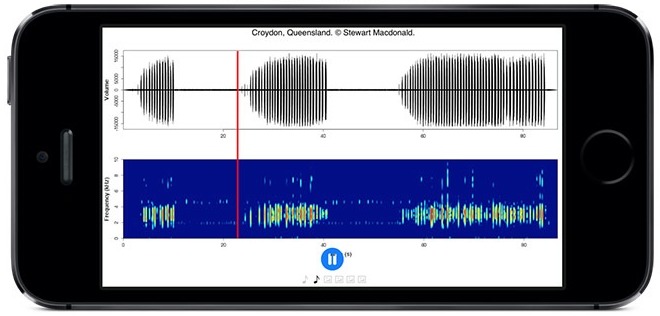
The app is the most comprehensive available on the market, and the only one to feature up-to-date descriptions, location maps, call sounds and images of nearly all 238 known frog species in Australia. (Images and call data are missing for just a few frogs that are extremely rare or thought extinct.)

The app has a number of easy-to-use navigation options and also plots your position and allows you to search for local frogs. “There is nothing like this app on the market,” Dr Hoskin says. “It took the four of us years to complete, with plenty of time and effort going into getting the app together with all the text, maps, photos, and calls.”

“Field guides are really only useful if they’re comprehensive and ours is the only app that covers all currently described frog species,” said Stewart MacDonald, who developed the app.

“We will be constantly updating the app as new frog data comes in, and an Android version is currently in development.”

As for the ethos behind all the hard work that went into making the app, Dr Hoskin says they made it as a resource for the community. “It is important that people learn and love the wonderful world of frogs. It is comprehensive, so that frogs will be identified correctly. Ultimately we hope it will help frogs, the most threatened of all wildlife groups.”

Open your mind

Back in 1990, the internet was just a twinkle in the eye of a few scientists at The European Organization for Nuclear Research (CERN). Mobile phones were awkward bricks wielded by showy stockbrokers. Personal computers had not yet made the transition from the office to the home.

Fast forward 25 years, and more people have access to mobile phones than working toilets. Technology has revolutionised global communications, culture and business. Video chat software Skype has more than 300 million active users.

While three billion of us already have internet access, Google plans to supply the rest using high-altitude balloons (Project Loon) and solar powered drones (Project Titan) to beam wi-fi across developing nations.

Even language is no longer the barrier it used to be, with the advent
of real-time translation technologies enabling communication without a human translator. As of January 2015, we are using Google Translate to make one billion translations per day.

So what do the next 25 years have in store? “The general trend is that technology is becoming more and more a part of everyday life,” says Professor Rafael Calvo, a software engineer at the University of Sydney. While some are questioning how technology may be affecting us adversely, Calvo is researching how computers may
be able to contribute positively to our mental health. “Positive computing is changing the design of technologies to take into account the wellbeing and happiness of people,” he says.

For example, games have been designed to encourage ‘pro-social’ behaviours. In one study at Stanford, researchers built a game where players were either given the power to fly like Superman or take a virtual helicopter ride. After playing, the participants who had the superpower were more likely to help someone in need.

Though computers are traditionally seen to have a blindspot for emotions, recent advances are paving the way for computers to notice and adapt to our moods – a phenomenon called affective computing. “Some new cameras have a setting where they only take a photo when you smile,” says Calvo.

Calvo’s team has developed software to assist moderators of Australia’s leading online youth mental health service, ReachOut.com. It can detect when someone is depressed, and possibly at risk of suicide, and alert a human moderator. His group has also teamed up with the Young and Well CRC to build an online hub where young people can download apps to help improve their wellbeing.

For Calvo, this technology represents a transformation in how software is being made – aiming to improve wellbeing, not just productivity. “Our work is centred on influencing how people develop software. Australia leads the world in this field.”

New technologies could also change the way we learn, says Professor Judy Kay from the University of Sydney. Kay and her team are exploring the use of touchscreen tabletops in the classroom as tools for students to work together. They can also help teachers monitor each group’s work. “This technology can distinguish the actions and speech of each person in a group to determine how well the group is progressing and how well they collaborate,” she says.

The movie Her presents a future in which we will have intelligent virtual personal assistants to help organise our lives. We can already tell Siri to “Call Mum” or ask Google if we need an umbrella today. But this is only the beginning.

Meet Anna Cares. She’s a friendly brunette who lives inside your tablet or smartphone as an intelligent virtual agent. Developed by Clevertar (a spin-out from the computer science labs at Flinders University), Anna is being developed for the aged care space. She can already remind you to take your medication and give timely advice based on the weather.


Dr Martin Luerssen is an artificial intelligence specialist from Flinders who works on the project. He says intelligent assistant technology has been enabled by the convergence of several advances over the past 10 years, including astonishing progress in computational and sensing capabilities, as well as speech and language technologies. Meanwhile, affective computing approaches are bringing improvements to understanding human gestures and expressions.
“This enables us to create very natural, human-like interactions,” says Luerssen.

“By 2040, we expect that there will be more Australians retired than working – we cannot afford not to have this kind of technology,” adds Professor David Powers from Flinders.

We already use voice-operated technology, but now an app called Focus, developed by the Smart Services CRC, enables you to interact hands-free with a smartphone using eye movement alone – for example, you can increase font size with the blink of an eye.

“Australia leads the world in this field.”

By 2040, it is plausible we will be able to control computers with our minds using brain-computer interfaces (BCI), such as a cap covered in electrodes that can transmit brainwaves to a computer via electroencephalogram (EEG). In 2006, technology by BrainGate enabled patients with total ‘locked-in’ syndrome (where a patient is aware but cannot move or communicate verbally due to paralysis) to move a computer cursor just by thinking, thereby giving them a way to communicate. In 2010, Australian entrepreneur Tan Le unveiled a commercially available EEG headset, enabling anyone with careful concentration to give their computer simple instructions with their thoughts.

But the process is slow. “At the moment, typing with BCI can take seconds per character,” says Powers. Flinders University researchers are working on new technologies where users can type by thinking of words rather than just characters, speeding up the process.

In a field where the sudden emergence of a new technology can change the entire landscape in just a year or two, who knows how we will be communicating in 2040?

“One thing I can say with confidence is that we are very bad at predicting the future!” says Kay.

– Cathal O’Connell

youngandwellcrc.org.au

smartservicescrc.com.au

Australia leads in manufacturing innovation

Engineering design and high-value products such as carbon fibre aircraft components are taking Australia to the forefront of global manufacturing innovation.

Australia continues to be a global innovator in manufacturing says Professor Murray Scott, chief executive of the CRC for Advanced Composite Structures (CRC-ACS).

“There are plenty of good news stories to be told about Australian manufacturing. We just need to be reminded of them a bit more often,” he says.

Professor Scott will be speaking on future challenges facing Australia’s manufacturing sector at the CRC Association’s annual conference at Parliament House in Canberra on 26 May. He’ll be part of a panel discussing what drives manufacturing innovation and will be emphasising the role the CRC program has played in creating new products, skills and export markets.

“The CRCs are still the best mechanism for engaging in the kind of long-term, industry-focussed research that’s needed to drive high-impact outcomes for manufacturing,” Professor Scott says.

Over the past 25 years, the CRC program has been behind many success stories in innovative Australian manufacturing, and CRC-ACS has been a standout.

One of its projects – developing technologies for composite wing trailing edge devices such as flaps and ailerons for the Boeing 787 Dreamliner commercial aircraft – is creating more than 3,300 direct and local flow-on jobs in Australia and will earn more than $4 billion in manufacturing export revenue over the life of the aircraft construction program. The production parts are manufactured in Port Melbourne and shipped to the 787 assembly plant in the United States.

And, when the US President Barack Obama visited Australia in 2011, he gave a nod to the project in his speech to federal parliament. “Our workers are creating new partnerships and new products, like the advanced aircraft technologies we build together in Victoria,” President Obama said.

CRC-ACS innovations include novel assembly methods for composite structures, retrofit technologies to improve the crash safety of military helicopters, and lightweight composite clamps to repair oil & gas pipelines.

“Most things in modern society are underpinned by engineering, and Australia already has a global reputation for innovative design. It is one of our acknowledged strengths in manufacturing,” Professor Scott says.

“A major characteristic of the many CRC success stories has been the high knowledge content that has contributed to new products and skills. Developing unique approaches to design and manufacture of high quality products is a critical factor in achieving commercial success, and the CRC program brings industry and researchers together to do that.”

The CRC Association’s annual conference is celebrating 25 years of science impact and achievement by the national research program. The CRCs were created in 1990 to bring scientists and industries together to work on some of the biggest challenges facing Australia.

These have included better bushfire science, manufacturing, digital technology, biosecurity, sustainable farming, water management and mental health issues underpinning the unacceptably high suicide rate among young people.

“The CRCs are an Australian success story. They were designed to create research impact, and their 25 year record of achievement speaks for itself,” says CRC Association chief executive Dr Tony Peacock.

Details of the conference program can be found at http://australia2040.com.au/

Uncertainty the core of policy design

Australia’s politicians should give up the idea of trying to design national policies based on inflexible and failure-prone future forecasts.

“Uncertainty and risk management should be at the core of national policy design,” says Australian National University economist and public policy research fellow, Professor Warwick McKibbin.

“A lot of policies in Australia are designed on the assumption that we can know the future, that it’s predictable. And when that inevitably turns out not to be the case, these policies collapse into chaos amid accusations of mismanagement and broken political promises.”

Professor McKibbin, who is also a non-resident Senior Fellow at the Brookings Institution think-tank in Washington DC, is one of the opening speakers at the Cooperative Research Centres Association’s annual conference at Parliament House in Canberra on 26 May.

The CRC conference is celebrating 25 years of science impact and achievement by the national research program. Federal industry and science minister Ian Macfarlane and Professor McKibbin will be part of an opening session that will present policy perspectives on what the next 25 years may hold for Australian science and innovation.

Professor McKibbin says the failure of Australia’s carbon pricing mechanism, and current uncertainties surrounding the renewable energy industry, should provide valuable lessons for future policy design.

“Climate policy should be designed to better manage risk by creating a flexible framework that balances expected environmental benefits against economic costs over time,” he says.

“It should be policy that encourages innovations, like alternative energy technologies, that will reduce emissions, but it shouldn’t claim to use science to set inflexible and precise targets for emission reduction at a point in time.

“Science should form the basis of a climate or carbon pricing policy, but the policy goals shouldn’t be tied to specific outcomes that claim to be the result of scientific calculations. That’s setting policy up to fail, and it will fail because it doesn’t allow for uncertainty and change.”

Professor McKibbin says a “stable and credible” policy environment is needed to shape Australia’s future in what will be a major global area of innovation.

“There are many ways to price carbon, and Australia needs to look at ways that will balance competing interests both at a national and global level,” he says.

“The best way to do that is plan for change and uncertainty instead of trying to lock down policy into prescriptive detail.”

The CRC program was created in 1990 to bring scientists and industries together to work on some of the biggest challenges facing Australia.

These have included better bushfire science, manufacturing, digital technology, biosecurity, sustainable farming, water management and mental health issues underpinning the unacceptably high suicide rate among young people.

“The CRCs are an Australian success story. They were designed to create research impact, and their 25 year record of achievement speaks for itself,” says CRC Association chief executive Dr Tony Peacock.

Details of the conference program can be found at http://australia2040.com.au/

The need for risk

In February 2015, at the Australian International Airshow in Avalon, Victoria, Professor Xinhua Wu unveiled the world’s first 3D-printed jet engine.

Wu is the head of the Monash Centre for Additive Manufacturing (MCAM). The Centre, in collaboration with CSIRO, Deakin University and the University of Queensland, is leading initiatives to develop 3D printing and put Australia at the forefront of the global aerospace industry.

MCAM has partnered with French aerospace company Microturbo (Safran) whose work involves seeking out new manufacturing processes that make components lighter and cheaper than traditional ones, without reduction in performance. The two organisations pooled their expertise in additive manufacturing of metal to print two engines – one on display in Avalon and the other at Safran in Toulouse, France.

Bridging the gap between research and industry remains a goal for many nations, and the example of MCAM is a useful starting point for discussing the role universities could play in this.

Research and development is inherently risky, with high rates of failure. Companies are under pressure to deliver commercial returns to investors, yet the time frame for major innovations to be made often spans decades.

“Universities combine capability with tenacity – and odds are they’ll still be there in 25 years.”

Universities are in a position to assist industry innovation, however, because they have the capacity to apply resources to long-term projects and are willing to allow sufficient time for the process of discovery and application. They combine capability with tenacity. And while there are no guarantees, the odds are good that your university research partner will still be there in five, 10, or 25 years.

The world’s first 3D-printed  jet engine is the result of intense collaboration across academia and industry, led by the Monash Centre for Additive Manufacturing.

The world’s first 3D-printed jet engine is the result of intense collaboration across academia and industry, led by the Monash Centre for Additive Manufacturing.

For maximum benefit, commercially and otherwise, collaborations between industry and academia should focus on building enduring relationships that go beyond a single project or contact. Ideally, these partnerships should facilitate engagement at multiple levels.

Another way to offset the risks of R&D is for universities to address problems that entire industries need to solve, consulting multiple players in those industries to uncover what the major issues are. In the case of MCAM, the need for lighter, stronger parts is common across the aerospace industry, so its relationship with Safran has been a catalyst for relationships with Airbus, Boeing and defence contractor Raytheon.

These relationships are intensely collaborative, as university researchers work with their industry partners from the very early stages of each project.

This process is a far cry from the movie trope of the lone genius scientist who spends years in the laboratory, makes a miraculous discovery and only then emerges into the daylight. It’s about teams of experts investing the precious resources of time and trust for the long term – for it is from this investment that real gains will come.

Professor Margaret Gardner is an Australian academic, community leader and economist, and the current Vice-Chancellor of Monash University.

Professor Margaret Gardner is an Australian academic, community leader and economist, and the current Vice-Chancellor of Monash University.