All posts by Heather Catchpole

New Zealand welcomes Careers with Code

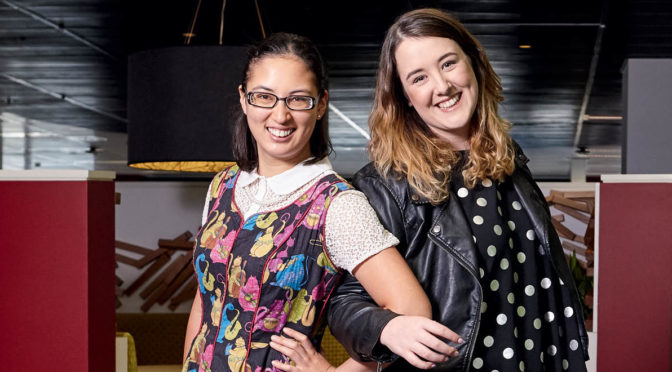
Featured image above: Google software engineers Edwina Mead and Sara Schaare, who graduated from the University of Canterbury and the University of Waikato. Credit: Lauren Trompp, Careers with Code 2016

The Minister for Innovation, the Hon Steven Joyce, launched the inaugural New Zealand edition of Careers with Code in front of an audience of students and educators at Kapiti College, Paraparaumu.

Dedicated to improving diversity in careers with computer science, Careers with Code 2016 smashes stereotypes about the ‘nerdy programmer’ and what computer scientists really do.

Supported by Google, half a million copies of the magazine have been distributed to students in Australia, the United States and now New Zealand since the magazine’s inception in 2014.

“The internet, automation, smart sensors – all of today’s digital technologies contribute about 8% of economic output in New Zealand, while in Australia that contribution is set to grow from 5% to 7% by 2020. Most of this growth will happen outside the areas traditionally associated with tech – like agriculture, health, finance, education,” says Sally-Ann Williams, Google’s Engineering Community and Outreach Manager.

“Careers are no longer as straightforward as they used to be. It used to be that if you studied medicine you’d go on to become a doctor, or if you studied accounting you’d join the professional services. Today, those traditional outcomes aren’t always the norm. Digital disruption is creating a workforce with a greater intersection of disciplinary skills. Areas like finance, advertising, law and agriculture, for example, are increasingly overlapping with core skills in computer science.”

Sara Schaare, who features on this issue’s cover, moved to Sydney from Hamilton, New Zealand and began working on Google Maps in her Honours year while completing a Bachelor of Computing and Mathematical Sciences at the University of Waikato.

“Even though I was interested in computing and video games from an early age, I never really considered computer science as a career.”

“Now I’m working on developing products for emerging markets. One of the most awesome challenges that computer science will overcome is making the interaction between humans and technology seamless and making technology easy for everyone to use.

“That’s why combining computer science with something else you love will ensure the greatest success in your career.”

The magazine features profiles of 40 young people working in computer science, with 60% women. It also features data on the top ten jobs in computer science, and top ten employers in technology in New Zealand and Australia.

By combining computer science with sports, arts, business and law, students equip themselves to be agile workers across career areas that haven’t been invented yet, says Heather Catchpole, head of content at STEM-specialist publishers Refraction Media.

“Careers with Code is about combining computer science skills and computational thinking with goals of global change, new fields or students’ own interests to help them prepare for a future in which digital disruption is constantly shifting their career focus,” says Ms Catchpole.

“Careers with Code is about creating visible role model and job paths for everyone that shows that computer science skills can take you into vastly different career areas, and are essentially creative jobs where females can be part of a collaborative or lead the pack.”

– Heather Catchpole

Click here to read Careers with Code 2016.

Click here to order copies of Careers with Code 2016 in print.

Remote Research Ranges: a startup story

Featured image above: Dr Catherine Ball, Telstra Business Woman of the Year in 2015, and CEO & Founder of geoethics, big data and drones startup Remote Research Ranges. 

When did Remote Research Ranges start and what stage is your business?

RRR is in the first 12 month stage of a startup, but we hit the ground running, and are already in good profit.  Collaboration is the new competition, so we are living that ideal.

What’s the solution your business provides?

RRR is an advisory company around drone technology, big data management, and geoethics (the ethics around geospatial data).  We are providing advice to international clients, state, federal, and local governments, as well as schools, universities, and rangers.

What have been the barriers in growing your business?

One of my biggest problems has been the ability to sit and focus on one particular thing.  When establishing your own business and managing your personal brand you tend to say yes to too much, and can risk spreading yourself too thin. I have learned that ‘No’ is a complete sentence.

What expertise have you tapped into to help you in your business journey?

I have been so lucky, as Telstra Business Woman of the Year (Corporate award 2015) that I have been welcomed into such a helpful and excellent alumni.  The awards opened up networks for me I could never have imagined.  Some of the people I have met have become mentors, sponsors, and even business partners.  It has been a game changing experience.

In your opinion, what is the most valuable thing that would support your business the long term?

I am really looking at longer term projects, such as the World of Drones congress that I am a co-creator of; this is going to be a long running and internationally expanding congress. It will allow me to really focus on fewer projects, as I will have sustainable income, and also develop very strong links across industry, so I have more choice about which projects I would like to work on.

What is the one thing you need to keep reminding yourself daily as a start-up going for sustainable growth?

Every day is a school day and I am learning a lot.  The key for me is to constantly be learning, reaching, and growing.  Looking for the ‘Blue Ocean’ and areas where the niches are either empty, or not created yet.  There is a saying, “the best way to predict the future is to create it” and I couldn’t agree more.

Dr Catherine Ball is CEO & Founder of geoethics, big data and drones startup Remote Research Ranges. 

Meet more of Australia’s leaders and researchers here.

You might also enjoy:

Australia’s most innovative women engineers

App makes research accessible to grapegrowers

The Grapevine Rootstock Selector brings together knowledge from Australian and international research about the specific characteristics of different rootstocks into one independent resource for the Australian grape and wine community.

Wine Australia General Manager Research, Development and Extension Dr Liz Waters said the Grapevine Rootstock Selector is a free tool that helps to share the insights gained from rootstock research in a simple format.

“This work distills the comprehensive research in this area into a useable tool that allows grapegrowers to choose specific rootstocks suited to their individual vineyard’s conditions,” Waters says.

“Planting rootstocks is an excellent way to manage known risks to vine health and supports long-term vineyard sustainability. Research has shown that certain rootstocks have the potential to help improve resilience and efficiency in the vineyard, for example some are highly suited to low-water environments.

“The Grapevine Rootstock Selector has gathered the relevant research literature into one place, to help growers who may be considering rootstocks to see what might be the best options for their vineyard.

“By answering a series of specific questions about their vineyard, growers can use the Grapevine Rootstock Selector to identify a small number of appropriate rootstocks for their vineyard.

“The Grapevine Rootstock Selector highlights the specific characteristics of different rootstocks and provides further information about the grape varieties that have been shown to be suitable for each option.’

The Grapevine Rootstock Selector is based on a tool first developed in 2002 by Yalumba Nursery, the Yalumba Nursery Rootstock Selector.

Wine Australia developed the Grapevine Rootstock Selector in conjunction with Nick Dry of Yalumba Nursery, and Dr Rob Walker and Peter Clingleffer of CSIRO. It draws on peer-reviewed research by Australian and international research organisations on how the rootstocks perform.

Growers are invited to answer seven questions to narrow down the rootstock options:
1. How would you describe your region’s climate?
2. During a drought, how much irrigation water are you likely to have?
3. What is your desired level of vine vigour?
4. What is the salt content of your soil?
5. How does the soil drain at your site?
6. What is the pH of your soil?
7. Do you need rootknot nematode-tolerant rootstocks?

The Grapevine Rootstock Selector can be accessed here.

This information was first shared by Wine Australia on 19 October 2016. Read the original article here.

Horticulture Innovation Centre to increase farm efficiencies

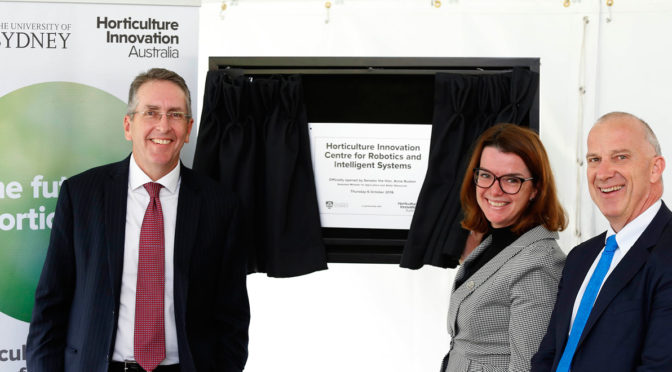
Featured image above: Horticulture Innovation Australia’s CEO John Lloyd with Assistant Minister for Agriculture Anne Ruston and University of Sydney’s Vice Chancellor Michael Spence. Credit:Hort Innovation and USYD

Australia has opened its first horticultural robotics learning and development hub, signifying the industry’s determination to adopt on-farm technologies, ramp up export capacity and develop future leaders in non-traditional areas of horticulture.

Located at the University of Sydney, the Horticulture Innovation Centre for Robotics and Intelligent Systems (HICRIS) will initially host a $10 million commitment to projects in robotics and autonomous technology that aim to increase farm efficiencies.

Horticulture Innovation Australia (Hort Innovation) chief executive John Lloyd says the new centre will help the horticulture industry minimise labour costs and prepare for the future.

“Never before have we seen this level of innovation in the horticulture industry. Through working with the University of Sydney, we have been able to develop technology that can detect foreign matter, robots with that can map tree-crop architecture, and ground-breaking autonomous weed identification and eradication capabilities,” he says.

“Through the Horticulture Innovation Centre for Robotics and Intelligent Systems, this research will be further expanded to investigate capabilities such as automated crop forecasting to predict the best time to harvest and ground penetrating radar sensors to measure things like soil water content.

horticulture innovation

RIPPA trailing precision spray and foreign object identification technology on a farm in Gatton QLD. Credit: Hort Innovation and USYD

“Importantly through our latest work, which is funded through vegetable industry levies and funds from the Australian Government, we are looking at identifying commercial partnerships with the aim of making these new technologies accessible to growers. The development of horticulture technology standards and policies to meet regulations will also be a focus.

“This centre will give current and emerging generations of growers and agri-scientists the resources they need to develop their ideas for the benefit of the industry, and all Australians.”

Lloyd says Horticulture Innovation Australia is delighted to be working with the University of Sydney to achieve results for Australian growers.

This information on the new Horticulture Innovation Centre was first shared by Horticulture Innovation Australia on 6 October 2016. Read the original media release here.

WA women join Antarctic leadership mission

Featured image above: women in sustainability head to Antarctica

A group of female scientists from Western Australia are preparing to embark on a leadership voyage to Antarctica.

The eight local researchers are among 78 women from around the world taking part in Homeward Bound, a 20-day trip that aims to enhance the influence and impact of women in science, and ensure the sustainability of our planet.

One of the youngest participants, PhD student Sandra Kerbler from the ARC Centre of Excellence in Plant Energy Biology at UWA, says she is passionate about women in science and the improving gender inequality they experience.

“Only 10 to 15 per cent of top level scientists are women so there’s not very many of us, and it’s become more and more apparent how prevalent that is as I’ve been going through my studies,” she says.

“I find this really discouraging and I want to be able to fix it in some way.”

Among those joining Kerbler on the voyage—including a potentially hairy crossing of the Drake Passage—are Curtin University sustainability researcher Samantha Hall and SciTech Aboriginal education program coordinator Kathleen Patrick.

Hall says she believes women are often more attracted to sustainability.

“I really think that an integral step to bringing the planet back to being healthy and sustainable is that we need more involvement of women’s voices, and we have to make those voices heard,” she says.

“That was really the brief for Homeward Bound, it was ‘how do we get these voices at the leadership table’.”

Hall, who is a co-founder of Simply Carbon, says finding ways to overcome self-doubt and lack of confidence could help translate more women’s ideas into action, particularly in the start-up and innovation space.

Patrick says the most exciting thing about the expedition for her is the opportunity to network with the other women involved.

“I love meeting other people who are doing similar and different things in other parts of the world, sharing knowledge…and also borrowing ideas and tapping into other people’s programs,” she says.

“For me it’s [about] meeting 77 other women who are kicking goals in their respective fields.”

Ms Kerbler says she is looking forward to doing something she had never even dreamed of before.

“Going to the end of the world is definitely a big highlight for me, learning more about the strategy and leadership skills I’ll need to continue on in science and hopefully make myself a bit more competitive when it comes to my scientific career,” she says.

– Michelle Wheeler

This article about women in sustainability was first published by ScienceNetwork WA on 30 September 2016. Read the original article here.

Cyber warfare: a battle plan

The Australian Cyber Security Centre (ACSC) 2016 Threat Report, just released, has some concerning details about the state of Australia’s cyber security. The report highlights the ubiquitous nature of cyber crime in Australia, the potential of cyber terrorism, and the vulnerability of data stored on government and commercial networks.

Several factors are driving these vulnerabilities. And there is considerable work to do to address them.

The cause

A big driver is the maturation and “professionalisation” of cyber criminals. They have businesses, plans, and online fora (support services offered in many languages). There are even services a potential criminal can easily hire – with botnets used for DDoS attacks going for as little as A$50. DDoS stands for Distributed Denial of Service, and involves attackers sending swarms of bots to overwhelm networks. Recently, DDoS attacks have been getting extremely powerful.

Eugene Kaspersky, chief executive of security group Kaspersky Lab, recently explained that:

“as the criminals mature in their operations, the criminals are now offering … “crime-as-a-service” … they are now moving to attacking transportation, and manufacturing … criminals are now hacking coal mine haulage trains, to steal coal or decreasing temperatures inside fuel tanks to steal 3% of fuel with every tank.”

The internet is a weapon

We have reached the stage at which the internet has been weaponised. This word was previously only used to discuss events such as Stuxnet, which was a cyber attack on an Iranian nuclear facility thought to be carried out by the United States and Israel. I would suggest we can extend this concept and realise that the internet’s corporate, personal and government systems now resemble weapons and weapon systems.

An old-fashioned criminal with a gun could hold up a bank and take customers’ money. Today’s criminal, depending on the size of their network-based “weapon”, can take our money, our data, our secrets, or disempower us by disabling our electricity, gas or water supply.

We are beyond a point of no return in our reliance on computers and networks, and the demand for innovation in technology is heightening our cyber security problem all the time.

So what should we do?

In a recent discussion paper, my colleague Greg Austin and I wrote:

“When it comes to addressing threats from advanced technologies, since Australia is a free and open society facing few enemies, and none that are powerful, the country has been … behind the pace. Awareness in the broader community and even in leadership circles of the threats from advanced technology is quite weak.”

We commended the Turnbull government, its innovation strategy, its Defence White Paper, and its Cyber Security Strategy. However, we also noted that:

“…there is a large gap between US assessments of advanced technology threats and the Australian government’s public assessments. These gaps have important policy implications, as well as negative impacts on the security and prosperity to Australians… The country’s education and training policy needs to make giant steps, of which an enhanced STEM approach is only one, and one that will have no strong pay-offs in the next decade at least.”

We are in a situation where Australia greatly lacks a trained and experienced cyber security workforce. Existing staff are fully stretched. We have only a trickle of students in the right disciplines in the VET and Higher Education pipelines. We also lack a local cyber security industry and we find that cyber security solutions are largely supplied by the United States, Israel, Europe, and Russia. We are forced to believe the vendors’ rhetoric rather than rely on local expertise.

A checklist for national cyber security

To remedy this situation we created a checklist for effective response to the cyber security situation that exists nationally:

  1. The states and Commonwealth should commit to a fast track process to set up a national cyber crime fighting unit to capture and convict more cyber criminals. This should include research staff, funded to at least $20 million per year for ten years.
  2. Australia needs to consider creating a National Cyber Security College to get focus and concentrate expertise. Such a body could help generate the following necessary actions:
  • Establish nationally approved undergraduate curricula across a range of disciplines in cyber security, using rewards to ensure that teaching is carried out to some national established standard.
  • Establish TAFE curricula at Certificate 1-6 since not all jobs are for graduates.
  • Determine a transition plan so professionals from a range of specified disciplines can be upskilled and converted into cyber security professionals.
  • Devise a dedicated, well-funded plan to generate the 8,000 to 10,000 cyber security professionals needed in the next few years.
  • Consider developing a private system and sector-specific initiatives for hybrid education initiatives around the country.

We would not leave our houses unlocked and allow criminals to walk in and steal our possessions. We now need to come up with clever ways of securing the cyber world and protecting Australians and our economy.

– Jill Slay

Director, Australian Centre for Cyber Security, UNSW Australia

This article was first published by The Conversation on October 12 2016. Read the original article here.

Quantum MRI machine to enable drug discovery

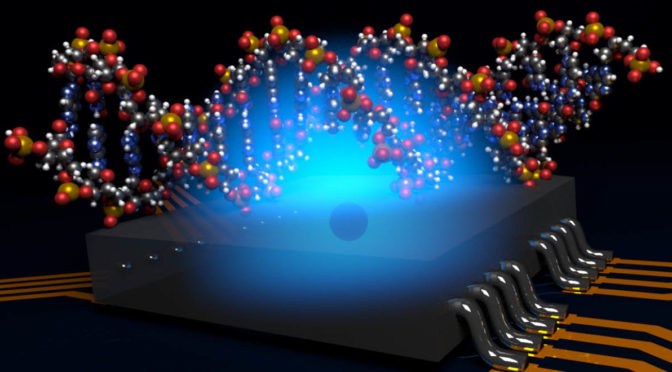
Featured image above: Visualisation of a quantum MRI machine. Credit: University of Melbourne

Researchers at the University of Melbourne have developed a way to radically miniaturise a Magnetic Resonance Imaging (MRI) machine using atomic-scale quantum computer technology.

Capable of imaging the structure of a single bio-molecule, the new system would overcome significant technological challenges and provide an important new tool for biotechnology and drug discovery.

The work was published in Nature Communications, and was led by Professor Lloyd Hollenberg at the University of Melbourne, working closely with researchers at the ARC Centre of Excellence for Quantum Computation and Communication Technology (CQC2T) to design the quantum molecular microscope.

The team propose the use of atomic-sized quantum bits (qubits) normally associated with the development of quantum computers, but here would be employed as highly sensitive quantum sensors to image the individual atoms in a bio-molecule.

“Determining the structure of bio-molecules such as proteins can often be a barrier to the development of novel drugs,” says Hollenberg, Thomas Baker Chair in Physical Biosciences at the University of Melbourne.

“By using quantum sensing to image individual atoms in a bio-molecule, we hope to overcome several issues in conventional biomolecule imaging, ” Hollenberg says.

State-of-the-art techniques create a crystal of the molecule to be studied and use X-ray diffraction to determine the molecules’ average structure. However, the crystallisation and averaging processes may lead to important information being lost. Also, not all bio-molecules can be crystallised – particularly proteins associated with cell membranes, which are critical in the development of new drugs.

“Our system is specifically designed to use a quantum bit as a nano-MRI machine to image the structure of a single protein molecule in their native hydrated environments,” says Hollenberg.

“As part of our research in quantum computing we have also been working on the nearer-term applications of atomic-based quantum technology investigating the use of a single quantum bit as a highly sensitive magnetic field sensor.”

Atomic qubits can be made to exist in two states at the same time, a disturbingly strange property that not only underpins the power of a quantum computer, but also the sensitivity of qubits as nano-sensors.

“In a conventional MRI machine large magnets set up a field gradient in all three directions to create 3D images; in our system we use the natural magnetic properties of a single atomic qubit,” says University of Melbourne PhD researcher Mr. Viktor Perunicic, who was the lead author on the paper.

“The system would be fabricated on-chip, and by carefully controlling the quantum state of the qubit probe as it interacts with the atoms in the target molecule, we can extract information about the positions of atoms by periodically measuring the qubit probe and thus create an image of the molecule’s structure.” says Peruncic.

“The system could be constructed and tested relatively quickly using diamond-based qubits. However, to capture really high resolution molecular images in the longer term, CQC2T’s silicon-based qubits might have the advantage because they have very long quantum coherence,” says Hollenberg.

“The construction of such a quantum MRI machine for single molecule microscopy could revolutionise how we view biological processes at the molecular level, and could lead to the development of new biotechnology and a range of clinical applications.”

This article on the design of a quantum MRI machine was first published by The Melbourne Newsroom on 12 October 2016. Read the original article here.

Maths researchers optimise Woodside’s vessel efficiency

Improving vessel efficiency featured image credit: Woodside Energy Ltd

Oil and gas company Woodside is streamlining its offshore operations with the assistance of new mathematical models developed in collaboration with a team of Curtin University academics.

This collaborative research project has focused on scheduling the support vessels that service Woodside-operated offshore facilities. The vessels are used for delivering supplies and for assisting with oil off-takes to oil tankers.

The most cost-efficient vessel routes are influenced by various constraints, including time windows – most facilities are only open during daylight hours – along with vessel speeds, vessel cargo capacities and the capability of each vessel to assist with oil off-takes, as not every vessel in the fleet is equipped for this operation.

Despite an industry-wide push into ‘big data’ computer technology over the past few years, the mathematical models in this project were so large that state-of-the-art optimisation software packages struggled to find good solutions, and in some cases couldn’t even begin processing the model.

New solution algorithms were consequently devised by the Curtin team and this work has been accepted to appear in the Journal of Industrial and Management Optimisation.

“One outcome of the project was providing Woodside with strong evidence for a business case to reduce the support fleet from four to three vessels – this is a significant saving since the cost of running an additional vessel is considerable,” says Curtin’s Associate Professor Ryan Loxton, who led the project.

“Another outcome was modelling the implications of changing the vessel schedule from a ‘taxi-style’ service whereby vessels would service facilities on demand, to a regular fixed schedule that is easier to deliver in practice.”

The Curtin team’s current focus is on developing more powerful optimisation algorithms that will allow for ‘on the fly’ dynamic optimisation of day-to-day and week-to-week vessel schedules.

“Major challenges include the current dynamic and uncertain operating environment, and the computational demands required. The standard solution algorithms are too slow for the problems that we encounter,” says Curtin’s Dr Elham Mardaneh, who worked on the project.

Although the models were highly customised to suit Woodside’s offshore operations, Mardaneh says that there is also considerable potential to adapt the technology to make optimal routing decisions in other industries such as mining.

“Mine sites also involve difficult vehicle routing problems, such as how to route haul trucks among different locations in the most optimal manner.”

– Blair Price

This article on vessel efficiency was first published by Science Network WA on 24 September 2016. Read the original article here.

6 Disruptive University Technologies

All of these international innovations seek collaboration with businesses for co-development and knowledge transfer. Find out more on the university technology collaboration platform, IN-PART. To find industry-ready technology from Australian universities, visit Source IP.

Interacting with Virtual Reality

Credit: IN-PART

Credit: IN-PART

What is it?

A technology that allows users to interact with and control 3-dimensional virtual images through natural hand gestures.

What are the benefits of this university technology?

This new concept offers an immersive, engaging and responsive experience for users. Using positional trackers a touchless interface can register hand movements to move a 3D visualisation generated through stereoscopy – a technique that creates the illusion of depth in an image. This technology, developed by university researchers from the UK, can be applied in high and low cost applications including mobiles phones, video games, teaching aids, and also visual interfaces for medical purposes. What’s more, depending on the specific technology, the user may not even need to wear a head set!


A Gene Therapy for Major Depression

Credit: Brett Keane, Youtube

What is it?

A method that can change the genetic expression of a protein (p11) responsible for regulating the response of serotonin receptors – the chemical messenger related to mood, appetite and sleep.

Why is this innovative?

Using a virus-mediated gene transfer to alter the protein’s expression, researchers at an Ivy League US university have been able to normalise depression-like behaviour. The advantage of using gene therapy in patients with depression is, that unlike antidepressants or talking therapy – which may not always be effective in the long-term – this innovation provides durable relief from major depressive disorders and treatment-resistant depression.


Solar Power for a Changing Climate

Credit: Karen and Brad Emerson, Flickr

Credit: Karen and Brad Emerson, Flickr

What is it?

An all-weather combined photovoltaic-thermoelectric solar cell, designed to perform under extreme and varying conditions.

What makes this tech so special?

This hybrid solar cell, invented by academics from the Sunshine State, is adaptive and smart. By efficiently transforming excess heat uncaptured by the photovoltaic process, it generates surplus energy and avoids the increased resistance that traditional solar cells face under high temperatures. In snowy situations it can call upon this thermoelectric energy to keep ice-free, and during extreme heat it minimises operation to ensure a prolonged lifetime. All these are vital functions for a solar cell in a climate tending towards extremes.


Harvesting Energy from Vibrating Skyscrapers

Credit: Matthew Wiebe, Unsplash

Credit: Matthew Wiebe, Unsplash

What is it?

A system that can transform earthquake and wind-induced oscillations in high-rise buildings into electricity.

Why is it cool?

With the transition to a sustainable energy economy it’s imperative that every spare vibration is captured. This unique system, developed by researchers at a London university, offers simultaneous vibration suppression and energy harvesting from dynamically excited structures, aka – skyscrapers! The system can be tuned to weather forecasts and early-warning earthquake systems. And to the pleasure of office workers, it’s an on/off system; oscillation dampener by day, renewable energy capture by night.


Wearable Tech to Ward Off Deadly Pests

Credit: Erik F. Brandsborg, Flickr

Credit: Erik F. Brandsborg, Flickr

What is it?

A wearable device that releases micro-doses of scents (such as insect repellent) in response to the sound of a mosquito buzzing.

How might this change lives?

Preventing the transmission of mosquito-borne disease such as the Zika virus, malaria and the West Nile virus is an ongoing global health priority. This technology is being developed by researchers at a prestigious UK university to detect the sound of buzzing mosquitoes within a certain range, and then release repellent within that range to deter the offending pests. The device – which will be able to recognize the sounds of over 2500 breeds of mosquito! – can be easily embedded into an item of jewellery, piece of clothing, or even camping equipment and furniture.


Tunable Manipulation of Advanced Materials

Credit: IN-PART

Credit: IN-PART

What is it?

A micro-scale composite structure, designed so that its surface adhesion can be controlled by the application of a shear force.

Why is it needed?

As our ability to make increasingly delicate and complex materials rapidly grows, so does our need to be able to manipulate and work with these materials in manufacturing processes. In some cases, advanced materials cannot be suitably handled using vacuum or mechanical handling, and glue residues from traditional adhesives are unacceptable. This scalable composite, developed by researchers at an Ivy League university, could be used to manipulate thin layers of delicate materials without damage – simply by applying or removing a force on the composite.


The innovations in this article are hosted on the IN-PART university technology repository, based in the UK. All actively seek engagement and partnerships with businesses. Register to the platform for free to learn more and connect with the researchers.

To view industry-ready technology from Australian universities seeking partnerships, visit Source IP.

This article on disruptive university technology was first shared by IN-PART on 12 July 2016. Read the original article here.

Empowering knowledge transfer

To date TTPs have lacked clear and identifiable career paths.  While commercialising publicly funded research is relatively new, the drive from external stakeholders such as Government and business to “do better” has escalated the need to better define the practice, and outline what is required to effectively put research to use in both an ethical and competent manner.

Knowledge Commercialisation Australasia (KCA) commissioned the development of a world-first career Capability Framework that defines the skills, knowledge, behaviours and values required by a team taking research to market, and outline career paths for those working in the role at different levels. 

Entitled Knowledge Transfer in Australia: Is there a route to professionalism?,  the new Framework is the result of intensive research where 103 TTPs, 31 stakeholders and 64 Australasian organisations were interviewed and surveyed. It describes up to 200 desired capabilities for TTPs, divided into seven clusters and sixteen sub-clusters, and classified by development stages: early-career, mid-career and senior level. 

Infographic

technology transfer professionals

Click the image above to open KCA’s Technology Transfer Professionals infographic.

Results

Study participants perceived the skills of Australasian TTPs to be strong in the area of intellectual property advice and knowledge transfer, plus the qualifications and experience of those in the industry is well respected. The skills requiring the most development are in the areas of business acumen, communications and influence, legal compliance and advice, marketing and relationships, social media, and strategy and results.

KCA Chair and Director of Monash Innovation at Monash University, Dr Alastair Hick says that with increased demand and interest in improving the transfer of research to market, the KCA Framework comes at the right time. 

“To date there has been a lot of discussion about Australia’s record of translating research success into commercial uptake and jobs creation, with much of it focussing on the researcher,” says Hick.  

“However, technology transfer professionals play a vital role in commercialising research out of research organisations so ensuring they have the right skills and development are crucial to this commercial success. The framework is helping us to benchmark our performance and skills and see where KCA can provide additional training opportunities for our members.”

Applications

In March 2015, the Professional Standards Council awarded a $98,000 grant to KCA to develop the framework for the professional competency standards of the technology transfer sector.

“The Capability Framework we have developed provides benchmarks for technology transfer professionals (TTPs), against which the performance of individuals and teams can be measured,” says Hick.

“A digest of the Framework will be provided to KCA Members as a toolkit to improve recruitment practices, select targeted professional development, communicate their capabilities to stakeholders, and enable informed self-assessment and career planning.

“Researchers and industry stakeholders can also use the Framework to improve their understanding of the role of TTPs, thereby promoting more transparent, accountable and productive partnerships.”

Next steps for Technology Transfer Professionals

Recommendations for KCA and similar organisations include the development of a Code of Ethics for the TTP sector; focused education programs to address the identified skills gaps; secondment and mentoring programs involving Technology Transfer Offices and industry stakeholders and a formal processes for stakeholder feedback on the performance of TTPs.

“We are delighted to see this report, as it tackles the issue of advancing knowledge exchange and commercialisation by providing insights to build Australian industry,” says Dr Deen Sanders, Chief Executive Officer of the Professional Standards Council.

“It also shows that this sector is taking a serious and strategic approach to raising standards and becoming a profession,” says Sanders. 

Read the full report here.

This information was first shared by Knowledge Commercialisation Australasia and gemaker on 9 September 2016. Read the original article here.

Engaging industry in research

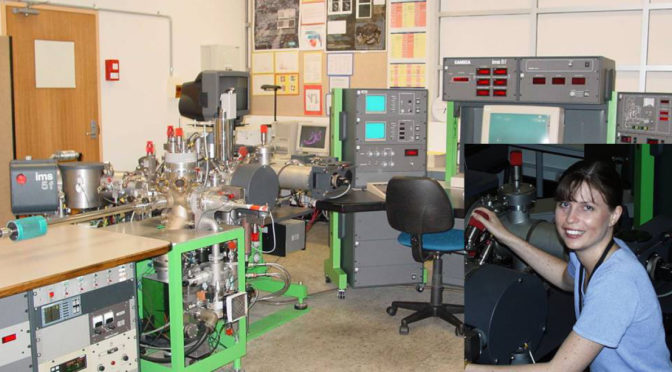
Featured image above: Industry engagement expert Natalie Chapman and the Secondary Ion Mass Spectrometer (SIMS) at ANSTO

The Australian Government is making changes to universities’ funding that will compel researchers to cross the border from Academia into Industryland, to meet and trade with the natives, under the banner of ‘industry engagement’. This is inspiring for some researchers, but nerve-wracking for others.

I empathise with those who feel nervous, because when I was a new researcher, I was sent on a commercialisation mission into Industryland.
Fifteen years ago, I started in a role at ANSTO where I was tasked with operating a SIMS surface science instrument (Secondary Ion Mass Spectrometer) on behalf of clients (researchers from around Australia) and conducting research, as well as being expected to create a spin-off business by finding new clients from research and industry.

This was an ambitious and daunting project. Not only did I have to learn how to operate an extremely complex piece of scientific equipment (it took me six months to achieve competency), but I also had to provide a highly reliable service to existing clients, while finding enough new customers to support the annual operating expenditure.

I had no background in semiconductors (the field of R&D for which the instrument was ideally suited), no knowledge of which research groups or companies (Australian or international) were strong in this field, and no clue how to create a commercial relationship with them. It was a tad overwhelming.

But my scientific training had at least equipped me with problem solving skills, so I took a deep breath and mapped a logical sequence of steps to take to make the task manageable.

Seven key steps towards industry engagement

1. Use the Internet to identify key locals and learn their language

First, I found out how semiconductors worked. Next, I found relevant conferences in Australia and Singapore (the semiconductor capital of South-East Asia). Before attending the conferences, I searched the programs for both research and industry contacts and analysed their use of semiconductors, to make a ‘hit list’ of useful people to connect with.

2. Attend conferences and network as if your funding depends on it

I attended semiconductor and advanced materials workshops and conferences to learn more about these fields and to meet people. I asked lots of questions of everyone I met and explained the capabilities of ANSTO’s instrument to them.

3. Create some industry friendly marketing material

I wrote some simple information which addressed the problems experienced by potential customers and explained how the SIMS could help them. It’s a long walk from authoring a scientific paper to wordsmithing a marketing flier, so if you’re not up for it, use a professional writer. These days everything is visual so if you can use photos, video or animation to help describe complex concepts you’ll have better engagement.

4. Make some cold calls to relevant locals and ask for meetings

I found a semiconductor company (the only one in Australia) located in Homebush and arranged to meet with them. Then I discovered a solar cell manufacturer two doors down and introduced myself to them as well. I contacted wafer fabrication manufacturers in Singapore to learn about that market, what their needs were and how we could assist them.

5. Follow up meetings by sending your marketing materials and invite them to free trial the service

Using the SIMS instrument, I ran free test samples for potential customers so they could see the type of information it was possible to garner from their own samples and lowered the barrier to them buying.

6. Collaborate and cross-promote

I partnered my project with other ANSTO capabilities and experts to offer a packaged solution to clients. This was better value and of interest to clients rather than a small, isolated piece of analysis, which didn’t solve their problem or provide them with advice on how to fix it.

7. Approach the competition and propose a mutually beneficial relationship

After a bit of background research on the competition I approached the largest competitor Evans Analytical Labs (a US based company), to discuss the possibility of partnering with them as their South-east Asian hub, providing services to Singapore and the region.

Did I succeed in establishing an ANSTO colony in Industryland?

Sort of. I certainly found new customers for ANSTO. But the proposed spin-off company was not viable, because the Australian market was simply too small, and to succeed in South-east Asia, we needed a back-up instrument to offer 100% reliable service.

Nonetheless, I returned from my expedition with a new mindset, a new industry engagement skill set and new confidence in my ability to engage with the inhabitants of Industryland, while remaining true to my values and my first love, Science.

– Natalie Chapman, Managing Director, gemaker

You might also be interested in these articles about industry engagement and commercialisation:

Research commercialisation is push and pull

Industry engagement must start at school

Is commercialisation the dark side?

Securing the future of grain

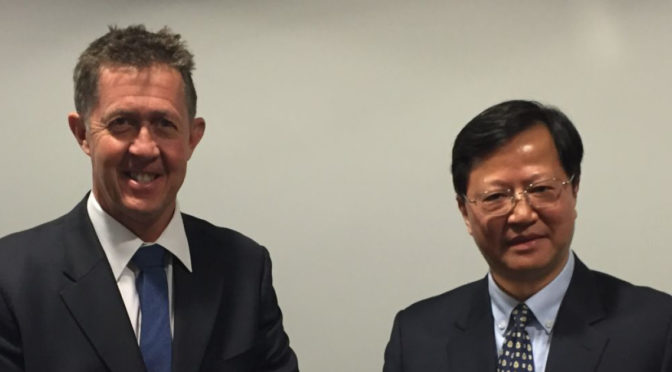
Featured image above: The Hon Luke Hartsuyker and His Excellency Dr Ren Zhengxiao introduce the Australia-China Joint Centre for Postharvest Grain Biosecurity and Quality Research. Credit: Plant Biosecurity CRC

His Excellency Dr Ren Zhengxiao, Administrator of China’s State Administration of Grain, and the Hon Luke Hartsuyker, Assistant Minister to the Deputy Prime Minister, have launched an Australia-China grains biosecurity research centre partnership.

The Australia-China Joint Centre for Postharvest Grain Biosecurity and Quality Research is a partnership between Australia’s Plant Biosecurity Cooperative Research Centre (CRC), Murdoch University and China’s Academy of State Administration of Grain.

With grain Australia’s most significant agricultural export and China the world’s largest producer of wheat, the two countries share similar challenges for their industries.

“Global grain markets are changing and we need to change with them. Established methods for stored grain pest control are facing increased pressure from both regulation and changing market preferences for non-chemical options,” says Dr Michael Robinson, CEO of the Plant Biosecurity CRC.

“A major challenge is increasing insect resistance to the stored grain fumigant phosphine, a mainstay of the grains industry globally,” he says.

The Joint Centre will bring together leading researchers from both China and Australia to work on developing non-chemical controls to manage stored grain pests with the aim of reducing biosecurity and trade risks while providing clean grain.

“This partnership will assist both nations in protecting domestic and international grains markets, maintaining access and ensuring food security,” says Robinson.

The Joint Centre will focus on innovative technologies such as the use of nitrogen for stored grain pest management and ‘lure and kill’ pest control using pheromones and light-based trapping systems. The partnership will work with grain suppliers and companies to commercialise the research and deliver it to industry.

“This agreement has the opportunity to sustain biosecurity research in the grains sector for the long-term,” Robinson says.

“The visit of His Excellency Mr Ren to Australia to launch the Joint Centre shows how important this is for the grains industries of both countries.”

This information on theAustralia-China Joint Centre for Postharvest Grain Biosecurity and Quality Research was first shared by the Plant Biosecurity CRC. Read the original article here. 

Women in STEM: the revolution ahead

On September 8, 70 days after the end of the financial year, Australia marked equal pay day. The time gap is significant as it marks the average additional time it takes for women to work to get the same wages as men.

Optimistically, we’d think this day should slowly move back towards June 30. And there are many reasons for optimism, as our panel of thought leaders point out in our online roundtable of industry, research and government leaders.

Yet celebrating a lessening in inequity is a feel-good exercise we cannot afford to over-indulge in.

While we mark achievements towards improving pipelines to leadership roles, work to increase enrolments of girls in STEM subjects at schools and reverse discrimination at many levels of decision making and representation, the reality is that many of these issues are only just being recognised. Many more are in dire need of being addressed more aggressively.

Direct discrimination against women and girls is something I hear about from mentors, friends and colleagues. It is prevalent and wide-reaching. There is much more we can do to address issues of diversity across STEM areas.

Enrolments of women in STEM degrees vary from 16% in computer science and engineering to 45% in science and 56% in medicine. These figures reinforce that we are teaching the next generation with the vestiges of an education system developed largely by men and for boys. There is a unique opportunity to change this.

Interdisciplinary skills are key to innovation. Millennials today will change career paths more frequently; digital technologies will disrupt traditional career areas. By communicating that STEM skills are an essential foundation that can be combined with your interest, goals or another field, we can directly tap into the next generation. We can prepare them to be agile workers across careers, and bring to the table their skills in STEM along with experiences in business, corporates, art, law and other areas. In this utopian future, career breaks are opportunities to learn and to demonstrate skills in new areas. Part-time work isn’t seen as ‘leaning out’.

We have an opportunity to redefine education in STEM subjects, to improve employability for our graduates, to create stronger, clearer paths to leadership roles, and to redefine why and how we study STEM subjects right from early primary through to tertiary levels.

By combining STEM with X, we are opening up the field to the careers that haven’t been invented yet. As career areas shift, we have the opportunity to unleash a vast trained workforce skilled to adapt, to transition across fields, to work flexibly and remotely.

We need to push this STEM + X agenda right to early education, promoting the study of different fields together, and creating an early understanding of the different needs that different areas require.

This is what drives me to communicate science and STEM through publications such as Careers with Science, Engineering and Code. We want to convey that there are exciting career pathways through studying STEM. But we don’t know what those pathways are – that’s up to them.

Just think how many app developers there were ten year ago – how many UX designers. In 10 or even five years, we can’t predict what the rapidly growing career areas will be. But we can create a STEM aware section of the population and by doing so now, we can ensure that the next generation has an edge in creating and redefining the careers of the future.

Heather Catchpole

Founder and Managing Director, Refraction Media

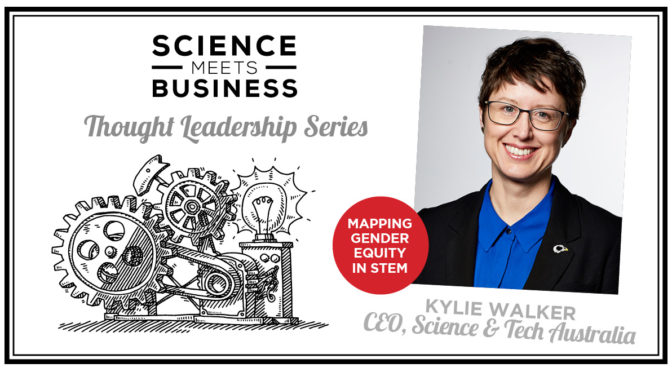
Read next: CEO of Science and Technology Australia, Kylie Walker, smashes all of the stereotypes in her campaign to celebrate Women in STEM.

People and careers: Meet women who’ve paved brilliant careers in STEM here, find further success stories here and explore your own career options at postgradfutures.com.

Spread the word: Help Australian women achieve successful careers in STEM! Share this piece on women combining skills in STEM using the social media buttons below.

More Thought Leaders: Click here to go back to the Thought Leadership Series homepage, or start reading the Graduate Futures Thought Leadership Series here.

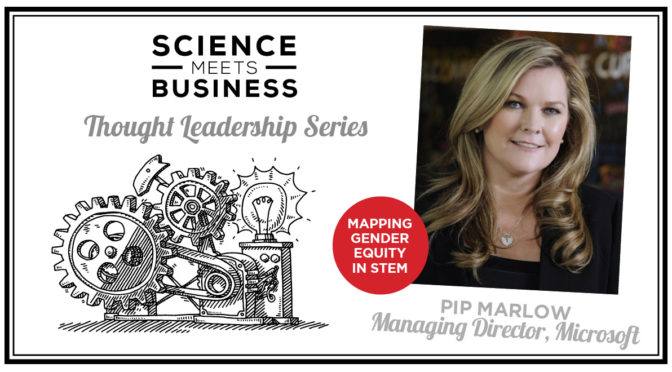
From maths to Microsoft

When girls start school they are just as interested in maths and science as boys. Yet only one quarter of Australia’s STEM workforce are women. What happens along the way? Why don’t more girls opt for a career that involves science, technology, engineering or maths skills?

I was always encouraged by my family to take on any subject at school, which led to my love of numbers. I think maths has a bit of a reputation for being boring – something that’s only useful if you’re planning to become an academic or actuary. But it’s so much more.

From architecture and film animation to photography and my world of software and business management, maths skills open up a whole world of opportunities. I know my career with Microsoft was fuelled by the problem-solving skills that studying maths helped me develop.

Opening up careers for women in STEM is something I am passionate about. I have seen that professional success in many of the ‘non-traditional’ female roles requires reasonable mathematical ability.

But more than a quarter of girls in Australia do not study maths after Year 10. Girls are also underrepresented in most science classes. Without this preliminary education, it’s not surprising girls are steering clear of STEM courses at university as well.


“Programs like DigiGirlz give girls the opportunity to learn about careers in technology, connect with women who have STEM-based jobs and participate in fun, hands-on workshops.”


Not only my daughters’, but most of our kids’ working lives, are going to depend on STEM skills. Already 75% of the fastest growing industries in Australia require knowledge in these areas. If we want girls to take their place in the technologically driven world of tomorrow, we need to make some changes. We need to encourage young girls to continue to explore STEM subjects.

At Microsoft, we’re creating spaces where young women and technology can come together. Programs like DigiGirlz give girls the opportunity to learn about careers in technology, connect with women who have STEM-based jobs and participate in fun, hands-on workshops.

We also need to talk about creativity when we talk about STEM. Behind the best technologies are not only amazing ideas but also creative thinking, yet this magic ingredient is often overlooked.

One way forward is to teach young girls STEM skills that reward their curiosity and creativity by helping them bring their ideas to life. For example, teachers are now helping kids learn coding by playing Minecraft, a computer game that’s popular with both boys and girls, and allows them to create whole worlds only limited by their imagination.

If we want more women to enter careers in STEM, we need to encourage them from day one. Challenging deeply entrenched stereotypes about what girls can and can’t do isn’t going to be easy – but it will be vital for Australia’s future prosperity.

I believe that girls can achieve anything – it’s time they did too.

Pip Marlow

Managing Director, Microsoft Australia

Read next: President of the Australian Academy of Science, Professor Andrew Holmes AM, describes the evolution of culture and structures that underpin STEM and favour men.

People and careers: Meet women who’ve paved brilliant careers in STEM here, find further success stories here and explore your own career options at postgradfutures.com.

Spread the word: Help Australian women achieve successful careers in STEM! Share this piece on the value of maths skills using the social media buttons below.

More Thought Leaders: Click here to go back to the Thought Leadership Series homepage, or start reading the Graduate Futures Thought Leadership Series here.

Everywoman: the modern scientist

I’ve always been a strong proponent and active promoter of women in all fields of endeavour, but for about a decade now my focus has been on promoting the stories of women in STEM (science, technology, engineering and mathematics). So I was somewhat horrified when I took a Harvard University-designed online test designed to detect unconscious gender bias in STEM and found that, when it came to science and technology, I very slightly and subconsciously favoured men.

How could this be? Deep-seated societal programming and a lifetime of hearing ‘he’ as the default is very difficult to undo. Children’s toys and characters in books are often automatically ‘he’: we have to think twice to designate a character as ‘she’. Growing up surrounded by assumptions, words and images that constantly reinforce gender stereotypes, we have our work cut out for us. And when it comes to STEM, those stereotypes are so embedded that even people like me, who actively work against gender stereotypes, unconsciously assume scientists are men.

That’s a tough thing to admit, but I believe it’s important. If I recognise the problem, I can start to do something about it.

There are many important and worthwhile programs aimed at changing the systemic barriers to the retention and advancement of women in STEM. I am so heartened by the rapidly growing volume of excellent work being done in this arena. It’s a significant and meaningful step towards building true equality.

As well as changing the systems in which we work, I believe we also must create new stereotypes. To do that, we need to significantly elevate the visibility of women in STEM, and in particular the visibility of heroines of STEM. We must tell our stories; we must tell them loudly, we must tell them often, and we must tell them in many different ways.


“Changing a stereotype can take generations, and different audiences respond to different story-telling techniques and platforms, so the more people telling success stories of women in STEM at all career stages, the merrier.”


I’m a woman in STEM, but I’m not a researcher or entrepreneur. Instead, my work is to support and elevate scientists and people working in technology. My background is in communication, and my focus has been to find and publicise our success stories. This is not an exclusive or competitive endeavour. Changing a stereotype can take generations, and different audiences respond to different storytelling techniques and platforms, so – as far as I’m concerned – the more people telling success stories of women in STEM at all career stages, the merrier.

We need children’s books featuring women engineers, scientists and technology gurus. We need to celebrate and include women in STEM on social media, in magazines, on daytime TV, on talkback radio, in soapies and the news. We need to see women equally represented on stage at public and private events. We need them on websites, in advertising, and on blogs.

I know the first reference source for many students is Wikipedia, so a few years ago I created the first ‘Women of Science Wikibomb’, with the dual purpose of increasing the (woefully low) percentage of women Wikipedia editors, and increasing the number of Australian women scientists celebrated with their own page on Wikipedia. About 150 science enthusiasts – most of them women – participated all over Australia. Between us, on a single day during National Science Week we created 117 new Wikipedia pages about Australian women scientists. The model has since been replicated by research institutions, museums, governments and big corporations, and the number of Australian women in STEM featured on Wikipedia continues to grow.

I’ve organised nationally broadcast women in STEM events at the National Press Club, supported an outstanding woman scientist to create a Boyer lecture series on Radio National, contributed to creating a national award for women in STEM, and created and produced more than 30 public events featuring women doing extraordinary and fascinating work across the breadth of science, technology, engineering and mathematics.

I’ve also coordinated exclusive interviews in the news media and extensive social media campaigns highlighting the vast range of stories, work and motivations of Australian women in STEM at all levels. Science & Technology Australia will keep adding to that work, but it’s just a small drop in a very large ocean. We need lots and lots more drops (some fabulously clever woman could probably tell me exactly how many drops there are in any given ocean). We need to permanently dislodge the ‘pale, male, and stale’ STEM stereotype and recast the modern scientist as everywoman as well as everyman. We need to normalise the idea of women in STEM so completely that the unconscious bias test becomes obsolete.

The good news is, my nine-year-old daughter counts doctor and engineer among her career aspirations (along with rock star and veterinarian). And my 11-year-old son names among his role models geneticist Professor Suzanne Cory and physicist Professor Tanya Monro. Why? Because they’ve both met a number of women working in science and technology, including those two high-achieving professors. Because they have shelves full of books and games featuring women scientists, engineers and maths whizzes as lead characters. Because their parents routinely show them true stories featuring women working in STEM – as researchers, lab assistants, teachers, policy-makers, entrepreneurs and communicators. Because, for them, the stereotypical scientist is just as likely to be a woman as they are a man.

Kylie Walker

Chief Executive Officer, Science & Technology Australia

Read next: Pip Marlow, Managing Director of Microsoft Australia, on encouraging girls in STEM and the value of maths to future careers.

People and careers: Meet women who’ve paved brilliant careers in STEM here, find further success stories here and explore your own career options at postgradfutures.com.

Spread the word: Help Australian women achieve successful careers in STEM! Share this piece on women in STEM using the social media buttons below.

More Thought Leaders: Click here to go back to the Thought Leadership Series homepage, or start reading the Graduate Futures Thought Leadership Series here.

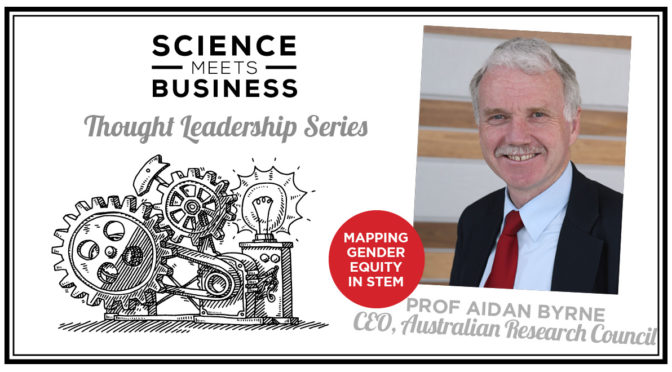
Gender equality in research and physics

The underrepresentation of women in the STEM research sector in Australia is a significant issue. I acknowledge, with some degree of shame, that my own core discipline of physics is one of the worst offenders.

Data from the ARC’s latest Excellence in Research for Australia round indicates that women represent only 16% of academic levels A–E in the physics discipline. As with all other Science, Technology, Engineering and Maths (STEM) disciplines, the fraction is even worse in higher levels — only 10% of physics professorial staff are women.

While this fraction is probably representative of physics around the world, there are some interesting exceptions. For example, in France, the overall rate of women in physics is much stronger (around 26%). As a practitioner of nuclear physics, I was always struck by the much stronger presence of women in that sub-discipline in France. Of course, France has the presence of Marie Curie, who was awarded two Nobel prizes for her contributions to physics and chemistry. Clearly role models matter!

It is with this in mind that at least two dedicated fellowships for exceptional women researchers are awarded under the ARC’s Australian Laureate Fellowships scheme each round. One of these, the Georgina Sweet Australian Laureate Fellowship, is awarded to a female researcher in science and technology. The award is won on the basis of merit, but these researchers are given extra funding to assist them to undertake an ambassadorial role to promote women in research and to mentor early career researchers.


“Australia’s research institutions need to take joint responsibility for the progression and retention of women in the research workforce.”


Australian Laureate Fellows, such as Professors Veena Sahajwalla and Michelle Simmons from UNSW Australia and Professor Nalini Joshi from The University of Sydney, are tremendous role models and are actively encouraging and supporting women to undertake careers in STEM. A fantastic example of this is the Science 50:50 programme, led by Sahajawalla, which aims to inspire Australian girls and young women to pursue degrees and careers in science and technology.

This is a start, but it is not enough. I have been determined to strengthen the ARC’s commitment to gender equality in research through a number of initiatives. We have achieved relatively even success rates for women and men across the schemes of the National Competitive Grants Programme, but we still need significant improvements in the participation rate of women in research.

While the ARC can promote and monitor gender equality in research, Australia’s research institutions need to take joint responsibility for the progression and retention of women in the research workforce. That is why it has been so encouraging to see the research sector’s very strong response to the Science and Gender Equity (SAGE) pilot. This is surely a pivotal step forward, and one we should all support to ensure it succeeds.

Professor Aidan Byrne

Chief Executive Officer of the Australian Research Council (ARC)

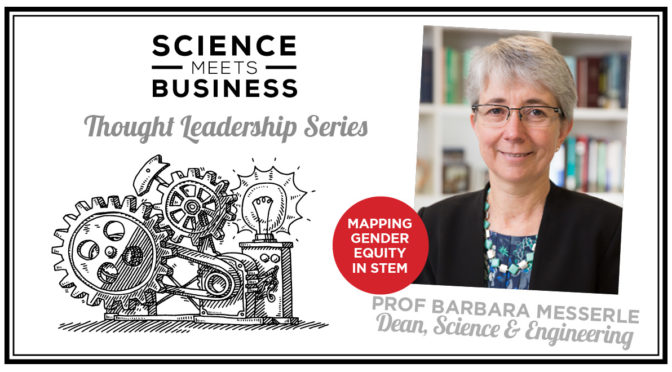
Read next: Macquarie University’s Professor Barbara Messerle highlights the need to celebrate cross-disciplinary role models who have paved non-linear careers from foundations in STEM.

People and careers: Meet women who’ve paved brilliant careers in STEM here, find further success stories here and explore your own career options at postgradfutures.com.

Spread the word: Help Australian women achieve successful careers in STEM! Share this piece on gender equality in research using the social media buttons below.

More Thought Leaders: Click here to go back to the Thought Leadership Series homepage, or start reading the Graduate Futures Thought Leadership Series here.

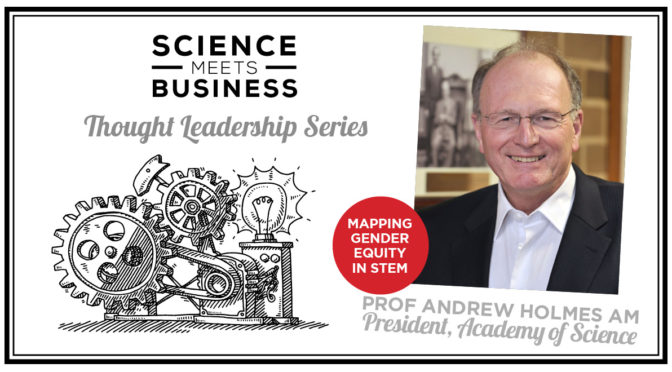
Men of history, women of the future

The modern disciplines and industries of science, technology, engineering and mathematics (STEM) have developed over centuries, from the natural philosophers of the Renaissance to the multi-billion dollar global enterprises of today. With only a few exceptions – Ada Lovelace, Marie Curie and Rosalind Franklin among them – men have dominated the institutions of STEM, brought new technologies and innovations to market, and inevitably reaped the recognition and the rich and varied rewards.

It is hardly surprising, therefore, that the structures and processes that underpin STEM today have evolved in a way that strongly favour men. Reflecting on my own career, I well remember my surprise at being asked to change a regular Saturday morning departmental staff meeting to a time more compatible with the family responsibilities of some of my female colleagues. The request was eminently sensible, but such considerations were only just beginning to register with STEM leaders of the 1990s.

Fast-forward to 2016, and while many of the policies and procedures that support hiring and promotion practices have improved, there remain significant structural and cultural problems that need to be overcome.

There is a sharp and in some cases growing discrepancy in representation of women and men across the academic spectrum, with women holding more than 50% of junior positions across most STEM disciplines, but fewer than 20% of full professorships.

Professor Tanya Monro, Deputy Vice Chancellor of the University of South Australia spoke on this issue with Professors Nalini Joshi and Emma Johnston at the National Press Club in March 2016. She described the ‘motherhood penalty’ that has been shown to affect income, career advancement and perceived competence relative to men and to women without children.

Catherine Osborne also spoke on the ABC Science Show about how the lack of flexibility and the short term nature of contracts offered to early and mid-career scientists – particularly women – forced her out of her chosen profession.

In an effort to address these issues, the Australian Academy of Science and the Australian Academy of Technology and Engineering joined forces in 2015 to launch the Science in Australia Gender Equity (SAGE) initiative that is piloting the Athena SWAN Charter; a UK-based accreditation framework that rewards universities and other research institutions on the basis of how much they do to improve gender equity in STEM.

Thirty of Australia’s 40 universities have now joined the SAGE pilot. So have a number of medical research institutes and research agencies, CSIRO among them. The Academies are grateful to the Australian Government for their support of this initiative through the National Innovation and Science Agenda.

However, the efforts to change the many structural barriers to gender equality in STEM are only the beginning. More insidious, and therefore more difficult to overcome, are the significant cultural norms and unconscious biases that affect day-to-day interactions between men and women working in STEM, as they do throughout society.

There is clearly much to be done. Forward thinking organisations are setting targets for achieving gender balance in senior STEM roles by 2025 or 2030. Between now and then, programs like the SAGE pilot, Male Champions of Change and the Panel Pledge will make a difference, but true change will require leadership and commitment from us all.

Professor Andrew Holmes AM

President, Australian Academy of Science

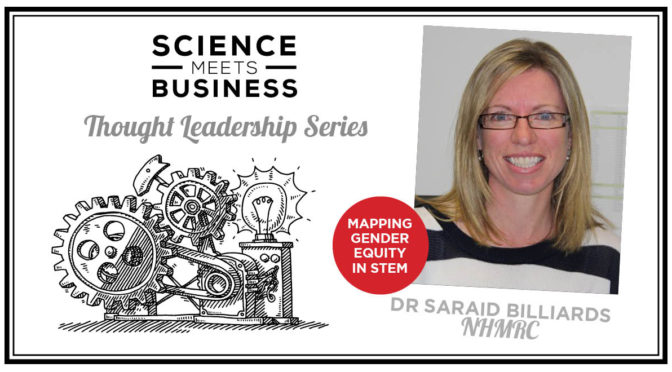
Read next: Dr Saraid Billiards of the NHMRC sheds light on funding reforms that are vital to the retention and progression of women in STEM.

People and careers: Meet women who’ve paved brilliant careers in STEM here, find further success stories here and explore your own career options at postgradfutures.com.

Spread the word: Help Australian women achieve successful careers in STEM! Share this piece on the SAGE pilot using the social media buttons below.

More Thought Leaders: Click here to go back to the Thought Leadership Series homepage, or start reading the Graduate Futures Thought Leadership Series here.

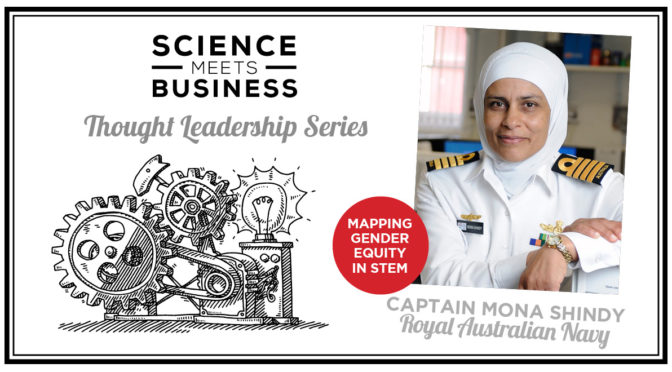
Balancing career and family

People imagine all kinds of life experiences when they ponder what a career in the Royal Australian Navy might offer. Only a small portion of them could ever imagine the range of opportunities available to STEM qualified professionals. The chance to work with cutting edge technologies is not limited to life in the field. Critical work in support of missions occurs everyday in many different environments. The Navy is facilitated by technical and logistics businesses behind the scenes that are amongst the most proficient operations in the world. Careers in the Navy are attracting more and more women each year.

My early career as a woman in the Navy

My 27-year career has not been without challenges. As one of the first female naval officers ever to serve on an Australian warship, the challenges were many and varied.

In the early days, I was a novelty; something foreign in a traditionally male-only environment. There was a need to change peoples’ paradigms of thought about an employee’s suitability, competence and worthiness to lead others.

Through circumstance and rapidly changing policies, I unwittingly become a trailblazer; part of a change that, it would be fair to say, could not be fully understood and meticulously planned before execution.

From those early days when I first took up residence in a cramped three-berth cabin, I learnt as I went – and so did the Navy. In challenging circumstances, away from home for long periods, isolated from my support networks, I made things work. I learned many lessons the hard way, but in the process helped design a better Navy for those who would follow.

Married with children

One of the greatest emotional challenges I faced while serving at sea came after I was married and had children. It was a huge personal struggle even contemplating the idea of leaving my family. There were many times I thought I should leave. I was torn.

When I had first joined the Navy, females were able to choose whether or not they went to sea. But with changing policy it soon became apparent that sea service would be mandatory if I had any chance of progressing through the ranks and receiving the technically challenging and professionally rewarding roles I aspired to. I also really enjoyed my work and was driven to progress.

In the end it was a compromise. I slowed my career during my children’s formative years, and the love and support of my fantastic husband and extended family made balancing career and family manageable, despite remaining difficult on an emotional level.

Balancing career and family

I know many women – and men for that matter – struggle with choices involving balancing career and family and I think the best way to support people is to be honest and truly acknowledge how difficult it often is.

For me, it meant compartmentalising the challenging periods of separation and recognising the sacrifices as short-term compared with a much longer career of professional satisfaction.

These decisions come with varying degrees of difficulty depending on what support networks people have, their level of personal resilience and their own assessment of the opportunity cost. It will never be the same for everyone.

Can women have it all?

One thing I know for sure is that almost anything is possible and for those wondering whether a woman can have it all; I would say yes. But I would also counsel that the pursuit of one desire is almost always at the expense of another. The idea is to be reflective, understand what the risks are, assess what value you place on all aspects of your life and make decisions that work for your circumstances. Always remember that success can take many forms.

With flexible work arrangements, community support programs and different career paths that better cater for the needs of families, many options have been developed during my career. I am glad to have been one of the women who informed these enhancements through experience.

Reflecting on my own career, I feel incredibly privileged to have had so many diverse opportunities for learning and growth. From leading technical teams in operational roles, my career journey has evolved and morphed across a wide range of disciplines. STEM professionals today can expect challenge, growth, diversification and adventure at every stage of what can only be described as an amazingly rewarding career.

Captain Mona Shindy

Directing Staff, Centre for Defence and Strategic Studies, Australian Defence College

Telstra Australian Business Woman of the Year, 2015 

Read next: CEO of the Australian Research Council (ARC) Professor Aidan Byrne discusses women in physics and the ARC’s commitment to women in research careers.

People and careers: Meet women who’ve paved brilliant careers in STEM here, find further success stories here and explore your own career options at postgradfutures.com.

Spread the word: Help Australian women achieve successful careers in STEM! Share this piece on balancing career and family using the social media buttons below.

More Thought Leaders: Click here to go back to the Thought Leadership Series homepage, or start reading the Graduate Futures Thought Leadership Series here.

Smashing the glass ceiling

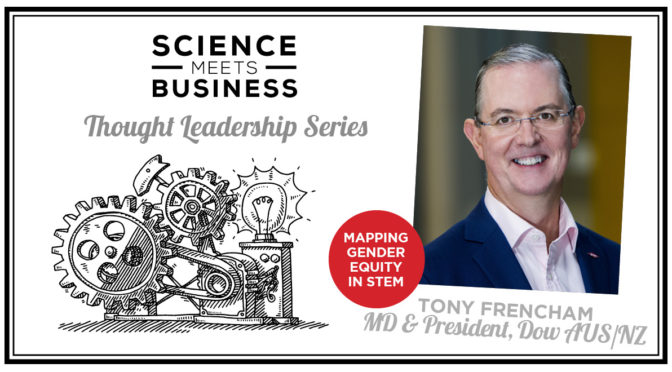
“Science Meets Business” – this is a beautiful thing. It does not get better than that for me, having trained as a scientist and worked for more than 30 years in business, including the past 27 years with Dow, one of the world’s leading science and technology companies.  At Dow we are proud of our mission to combine chemistry, physics and biology to create what is essential for human progress. As our ever growing population faces pressing challenges, we believe that innovation will be the key to addressing the needs of the future.

Implicit in this vision is that graduates in Science, Technology, Engineering and Mathematics (STEM) are readily available to drive innovation and progress humanity and, just as importantly, that the graduate pool reflects the diversity of our society in all its dimensions.

Over recent years, there has been an increasing recognition of the imbalance of women in STEM.  This has culminated in an impressive $13 million of the National Innovation and Science Agenda (NISA) funding being earmarked to support women in STEM careers including support for SAGE, Australia’s Science and Gender Equity initiative to promote gender equity in STEM.

Changing corporate culture

There is a real need for this concerted effort to address gender inequity. According to the Chief Scientist’s March 2016 report, women make up only 16% of Australia’s STEM Workforce.

The good news is that in recent years, a lot has been done to address the gender inequality issues.  We have a strong combination of social awareness, government policy and financial investment, corporate and business buy-in and social consciousness of the issue.

I have recently met a number of female board directors who have openly acknowledged that their appointment is due to the Victorian governments spilling of agency boards and establishing a 50% gender quota requirement. This is one example of real and substantial change.

Across the globe, Dow has over 1,600 employee volunteers, known as STEM Ambassadors, who are helping to bring STEM subjects to life in the classroom, and serving as role models of a diverse STEM workforce.

In partnership with the Women in Business Summit hosted by the American Chamber of Commerce in Japan (ACCJ), Dow has also taken a leadership role to improve STEM career development opportunities for women.  We are progressing slowly, but steadily, with women constituting nearly 60% of new Australian and New Zealand hires at Dow in 2016.

With the $13 million NISA investment and the changing corporate culture, now is the perfect opportunity for young women to seek and develop a career in STEM.

Innovation in general will be the driving force of commercial success, economic growth and national development. A large part of this will come from R&D and innovation in STEM fields.

If the majority of future jobs are yet to be imagined, then women in particular are in a perfect position to seize the opportunity of creating these positions.

The management glass ceiling might exist today, but if the jobs are yet to be invented, then then we have a chance of shattering that ceiling in the future.

Tony Frencham

Managing Director & Regional President, Australia and New Zealand, Dow Chemical Company

Read next: CEO of AECOM Australia and New Zealand Lara Poloni explains why it’s important for women to stay connected with the workplace during a career break.

People and careers: Meet women who’ve paved brilliant careers in STEM here, find further success stories here and explore your own career options at postgradfutures.com.

Spread the word: Help Australian women achieve successful careers in STEM! Share this piece on corporate culture using the social media buttons below.

More Thought Leaders: Click here to go back to the Thought Leadership Series homepage, or start reading the Graduate Futures Thought Leadership Series here.

Changing the way we fund research

Attracting and keeping talented women in science, technology, engineering, maths and medicine (STEMM) fields is not just a matter of equality for the sake of equality. While it is important – young girls and women should have the same opportunities as men – great advances cannot be made without the collective diversity of thinking that both women and men bring to the table.

I feel I have been quite fortunate in my career to date. After my PhD, I left Australia to undertake a postdoc at Harvard with one child – four years later I returned with three.  While my productivity during the postdoc could be argued as lower than average, I was in hindsight insulated from ‘reality’ through the support of an amazing team and a major National Institutes of Health Program Grant.

Returning to Australia, I realised that without real recognition of career disruptions in an individual’s research track record, people like me would be considered ‘uncompetitive’. While this was not the only reason I left research, these hurdles did contribute to identifying my new career path.

While working at the National Health and Medical Research Council (NHMRC) I had the privilege of managing funding schemes worth hundreds of millions of dollars annually to support great health and medical researchers. More importantly, I was able to establish the Women in Health Science Committee.

Through the work of this committee we were able to implement a number of strategies that aimed to both acknowledge the difficulties women face in the field of research, and secondly to address issues around the retention and progression of women in the field. This included consideration of career disruptions, part-time opportunities and making institutions who received NHMRC funds take stock of their gender equity policies and practices. While great advances have been made, there is still so much more that needs to be done and it cannot rely solely on the shoulders of funding agencies.


“If we don’t focus on attracting and retaining bright and intelligent women we will continue to lose the capacity to make real progress in society through poor management of this valuable resource.”


Recently I have joined the Academy of Science to work with the Science in Australia Gender Equality (SAGE) team.  SAGE is a national accreditation program that recognises, promotes and rewards excellence in advancing gender equality and diversity in STEMM in the higher education system.

While it is in its early days, I hope that SAGE or a similar accreditation model becomes a permanent feature of the sector and that funding agencies continue to reform practices to encourage women to be recognised for their efforts. We need many talented and innovative brains working in the STEMM fields.

If we don’t focus on attracting and retaining bright and intelligent women we will continue to lose the capacity to make real progress in society through poor management of this valuable resource.

Dr Saraid Billiards

Director of the Research Grants team at the National Health and Medical Research Council (NHMRC)

Read next: Jacinta Duncan, Director of the Gene Technology Access Centre, says industry-school partnerships are key to a gender balanced STEM workplace.

People and careers: Meet women who’ve paved brilliant careers in STEM here, find further success stories here and explore your own career options at postgradfutures.com.

Spread the word: Help Australian women achieve successful careers in STEM! Share this piece on funding reforms using the social media buttons below.

More Thought Leaders: Click here to go back to the Thought Leadership Series homepage, or start reading the Graduate Futures Thought Leadership Series here.

Industry engagement must start at school

Robotics, artificial intelligence, advanced materials and biotechnology will impact business models from 2018 and employment in engineering, architecture, IT and maths is on the rise. Currently women are significantly underrepresented in these jobs. 

Schools have a major role in promoting female participation in the STEM workforce. The challenge for schools and educators is to help female students understand this new environment and evolve the skills and resilience to operate in the future STEM landscape.

So how can we support female students to pursue STEM careers?

Provide opportunities

A major challenge for schools exists around resourcing and updating teacher knowledge. The Victorian Department of Education established six specialist science and mathematics centres to help schools inspire students in STEM through student programs and teacher professional learning.

These specialist centres collaborate with research institutes and industry to showcase Victorian innovation and entrepreneurial pursuits in STEM. Providing access to research-grade technologies and expertise immerses teachers and students in contemporary science investigations.  It helps girls visualise new STEM pathways and ignites their interest in pursuing studies in science.


“Industry and research institutions can play a pivotal role in supporting schools to bridge the divide between STEM in practice, and STEM in the classroom.”


Enhance motivation

What motivates a female student to engage with STEM? At the very core our answer should include interest and relevance. Relevance showcases how skills and knowledge apply to the world around us. Interest is maintained when students understand and can actively use new skills and knowledge to analyse results, solve problems and discuss issues.

A student will quickly disengage if they do not experience success. A series of sequenced challenges designed to activate thinking and the linking of ideas to create new knowledge supports students to take risks and develop and test theories.

Promote dialogue and skills of negotiation

Girls enjoy learning as a social and collaborative exercise. In this way they can hold meaningful discourse as they interrogate ideas. Providing learning spaces that promote social interaction around artefacts provides a non-threatening method of testing ideas and refining knowledge.

Raise aspirations

Industries want to increase female participation in the workforce as this promotes diversity and has been shown to improve outcomes. Cited barriers to hiring and promoting women include unconscious bias in managers and women’s low confidence and aspirations.

industry-school partnerships

Credit: Future of Jobs Report, World Economic Forum

We all harbour learned stereotypes that are encultured in us and affect decisions. Meeting and collaborating with early and established female career scientists has a positive impact on women’s aspirations. It helps to break down misconceptions surrounding the role of scientists by highlighting the convergence of STEM where collaboration – rather than competition – is key.

Industry and research institutions can play a pivotal role in supporting schools to bridge the divide between STEM in practice, and STEM in the classroom. By partnering with schools to develop meaningful and relevant learning experiences for students, enriched by access to facilities, resources, technologies and expertise, students realise how exciting and diverse a career in STEM can be.

By communicating the need for gender diversity and nurturing STEM skills that will be most valued in the workforce, we can help raise female aspirations as they reflect on subject choice in their senior years.

Jacinta Duncan

Director, Gene Technology Access Centre

Read next: Captain Mona Shindy describes her journey as a pioneer in the Royal Australian Navy.

People and careers: Meet women who’ve paved brilliant careers in STEM here, find further success stories here and explore your own career options at postgradfutures.com.

Spread the word: Help Australian women achieve successful careers in STEM! Share this piece on industry-school partnerships using the social media buttons below.

More Thought Leaders: Click here to go back to the Thought Leadership Series homepage, or start reading the Graduate Futures Thought Leadership Series here.

The power of non-linear role models

The world around us is undergoing rapid transformation by people finding innovative ways to use information and technology to better serve our needs. At the heart of these disruptive innovations are people with deep groundings in science, technology, engineering and maths – the STEM disciplines.

Critically, the number of kids studying subjects in school that lead to STEM courses is decreasing. According the Australian Bureau of Statistics only 29% of STEM graduates are women, and in the key disciplines of IT and engineering this falls to 14%. Low enrolment numbers for women in STEM have been a consistent factor since I was an undergraduate in engineering.

Today, Australia competes in the global race for innovative ideas with only half the team – the male half. If we are to develop new industries that move us beyond Australia’s traditional industries and allow us to be globally competitive, we have to change.

For a start, we have to help our kids, and in particular our girls, understand the wealth of opportunities open to them with a STEM foundation. We need to address any perceived or real bias in our high school exam systems and marking arrangements that discourage kids from taking up studies in maths and science. With the highly competitive nature of the results from high school assessments, we need to work to change views that taking STEM subjects could lead to any disadvantage.

We also have to recognise – as a positive – the fact that many STEM graduates will work in roles outside of the classical STEM disciplines. These are role models for a future in which interdisciplinary graduates are able to contribute to the transformation of traditional industries such as the finance, automotive and healthcare sectors.

In an effort to stimulate interest in STEM early on in schooling, Macquarie University runs the FIRST Robotics program in Australia for children in years K–12, with key sponsorship by Google and Ford. This program gives all participants a chance to work as teams that bring together mechanics, electronics, information processing, design and software development skills to build robots and compete with them.

This is an example of how we can not only inspire school students’ interest in STEM, but create pathways for them to pursue these fields into further study, careers, and entrepreneurship in a variety of areas. Today the program involves 5000 kids from 600 schools, and the total numbers of participants across Australia is rapidly growing.

Having stimulated interest at school, we need examples at universities and in the workplace that highlight the important roles that women with STEM backgrounds occupy. This is vital to improving the pull of women through universities and into industries where they are able to make meaningful contributions.

At Macquarie University, we are actively focused on building women’s participation in world-leading research programs through the Science in Australia Gender Equality (SAGE) program. We are able to celebrate the achievements of our world-leading female researchers, including role models such as Macquarie University’s Professor Ewa Goldys (recent winner of a Eureka Award) and Professor Nicki Packer.

Having shining examples of where STEM can take our young women is key to closing the gender gap. We need to expose women to the right kinds of images and messages, which involves having conversations around the non-traditional and non-linear career pathways available to them.

Professor Barbara Ann Messerle

Executive Dean, Faculty of Science and Engineering, Macquarie University

Read next: Deloitte Partner Elissa Hilliard says raising Australia’s STEM IQ means teaching girls foundational skills in their formative school years.

People and careers: Meet women who’ve paved brilliant careers in STEM here, find further success stories here and explore your own career options at postgradfutures.com.

Spread the word: Help Australian women achieve successful careers in STEM! Share this piece on role models using the social media buttons below.

More Thought Leaders: Click here to go back to the Thought Leadership Series homepage, or start reading the Graduate Futures Thought Leadership Series here.

What can STEM learn from sport?

Australia is a passionate nation.

The recent Olympics triggered my thinking on how passionate we are about winning. I remember a time when Australia was unable to compete against the world class American, Russian and German teams.  Our nation reacted by establishing the government funded Australian Institute of Sport in Canberra (AIS). The AIS acknowledges they are responsible and accountable for Australia’s international sporting success. Australia’s top sporting talent is selected, nurtured, and trained for the purpose of competing against the world’s best. Their success is celebrated, and the cycle continues.

Growing the number of STEM experts in our workforce is no different. If Australia wants to be recognised as a world-class STEM nation, commitment to developing our talent through established strategic programs funded by sustainable investment is essential.

When measuring STEM talent, our focus is on numbers that come out of university. However, consider our athletes for a moment. They have already been training for the better part of a decade.  They don’t arrive at the institute ready to be trained. Junior athletics, swimming squads and after-school sport training are part of most schools and parents’ agenda to develop their children’s skills from a very young age.  If the success of sport is to be replicated for STEM disciplines, then school years should not be overlooked.

Creating a foundation for young women

Traditional education should always be respected and never replaced, however there is always room for flexibility and balance. My own career in IT was shaped by the foundations provided to me by my high school environment. The all-girls school I attended offered Computing Studies as a subject for the Higher School Certificate.  It was only the second year it was offered and approximately 20 students signed up.  It was here, along with my home environment of a tech-savvy family, where I developed foundations in IT.

I pursued a tertiary education in commerce as I initially had no interest in computer science. Nevertheless, my first significant role was working as a computer engineer in IT – a job I landed based on the foundational skills I had acquired through my high school studies. I had found a position where I was able to solve problems while continuing to learn and gain additional certifications. I was the only female in a team of 12, but I didn’t focus on the gender inequality at the time.

Developing Australia’s STEM talent

Innovation requires novel thinking and raising Australia’s STEM IQ to world-class requires a considered and committed long term strategy, including initiatives for supporting women in STEM.

I work for Deloitte in the technology industry alongside women who have studied econometrics, law, accounting, engineering and arts. Deloitte recognises the importance of driving Australia’s STEM agenda and (amongst other initiatives) have selected two female directors from cybersecurity and technology consulting to share their expertise and experiences with young Australian women through an online mentoring platform, Day of STEM.

Our aim is to inspire Australia’s future STEM generation and highlight the real-life opportunities available in professional services firms like Deloitte.

Elissa Hilliard

Partner, Risk Advisory, Deloitte Australia

Read next: Chair of ATSE’s Gender Equity Working Group, Dr Mark Toner, compares the national need for women in STEM with the barriers faced by women on a personal level.

People and careers: Meet women who’ve paved brilliant careers in STEM here, find further success stories here and explore your own career options at postgradfutures.com.

Spread the word: Help Australian women achieve successful careers in STEM! Share this piece on STEM talent using the social media buttons below.

More Thought Leaders: Click here to go back to the Thought Leadership Series homepage, or start reading the Graduate Futures Thought Leadership Series here.