All posts by Heather Catchpole

Disruptors in the digital age and how to be one

What does it take to be a disruptor? Over the last three decades there has been a surge in the number of smaller and nimbler organisations that have successfully unseated larger, more established organisations (including government backed institutions) to offer alternative solutions, features, products, commercial models or entire value chains.

We have all heard the names, but worth repeating (in no particular order) are companies like Microsoft, Google, Facebook, Uber, Airbnb, Alibaba, Amazon, Netflix, Spotify, Tesla, Mahindra, Apple, Xiaomi, IBM, Freelancer, Atlassian, Illumina, Salesforce, Philips, Cochlear, Bristol-Myers Squibb (and the list goes on). All are considered disruptors in their own right because they:

  • Offer new innovative solutions to solve existing unmet needs or problems that have traditionally been considered “too hard to solve” or “not worth solving”. For example, Cochlear (Nucleus Group) developed and commercialised the world’s first multi-channel Cochlear implant and in the process restored hearing to over 400,000 people. Bristol-Myers Squibb developed a drug to combat skin and lung cancer.
  • Offer a different, more compelling and/or commercially attractive alternatives to an existing solution. Xiaomi is beating Apple at its own game by offering technically comparable products at a lower price point, and is also well positioned to sell services directly to their customers or to Salesforce – beating Oracle in the CRM game.
  • Offer new solutions by creating the need (or better articulating the need) and providing engaging and addictive solutions to attract a whole new market. Google, Facebook, Uber and Spotify have all created completely new markets by offering solutions to meet the need for real-time mobile access to information or services, 24/7 connectivity with a social network and cost-effective solutions.

While all three categories above lead to disruption, the last two in particular have been happening more quickly and recently (over the last decade) and are typically attributed to  digital disruption. So then who can lay claim to being a digital disruptor? And is digital disruption a myth or reality?

disruptor

To help understand this let’s start with an attempt at a definition. For me, digital disruption offers a fundamentally better alternative to the present approach for solving a customer problem; in a cheaper, quicker, more convenient and more efficient manner; with technology and data playing key enabling roles to encourage customer participation.

It is not evolutionary change, but radical in the way it changes businesses, markets and societies.

All industries are prone to digital disruption – what differs is the timescale and impact. Some industries, such as music, entertainment and travel, have been impacted overnight.

Others change over a longer period of time, such as transport and healthcare. So if you’re looking to add ‘disruptor’ to your job skills, here are some of the key steps that you may want to consider before proceeding much further.

5 key steps for becoming a disruptor

  1. Get a connected, easy-to-use technology platform – you don’t need to build the next Facebook or Slack, but it sure helps if you have one that customers want to use willingly and can connect seamlessly across their journey of needs.

  2. Use a data processing and insights engine – I was tempted to use big data – but data doesn’t have to be big in order to derive meaningful insights.

  3. Keep the customer at the centre – the customer is a willing, active and vocal participant in the solution, which is designed around them.

  4. Ensure products and services are blended together – this is an area where many organisations falter – recognising when and how to offer products, services or a blended mashup of the two to meet customer needs.

  5. Use business and commercial models that make sense – the final hurdle for most larger companies looking to leverage digital disruption is that they focus on grabbing a bigger piece of the pie to offset their “disruption investment”, or too often pass on the cost to others down the value chain.

Having worked for businesses of different sizes, shapes and scale across the digital disruption spectrum, I have been fortunate enough to observe and actively influence the capacity of an individual, team, business unit or organisation to leverage digital disruption.

How do we leverage digital disruption?

By recognising, managing, mastering and exploiting nine key factors at play.

The following questions are designed to help you better understand your environment in order to be a positive disruptor, and manage the risks and issues it invariably creates.

Let’s start with the external factors

1. Your stakeholders and/or customers – Do you know who they are and are they happy with their current relationship with you; what relationship do they aspire with you; do you/they value that relationship; are you aware of their critical needs; do you give them opportunities to voice their opinions; do you act/respond based on their opinion?

2. Your offering – Is it meeting the critical needs of your stakeholders and customers; is it obvious why your offering makes sense; is it superior to other offerings; is it important/good enough to generate loyalty and advocacy; are the benefits visible and shareable; does it evolve with the customer needs?

3. Business and commercial model – How many intermediaries exist between you and the stakeholder/customer; who creates the most value; who are the primary beneficiaries in this business model; are there commercial incentives for all the players; is the commercial model sustainable?

4. Market Players & Competitors – Who are the main market players; who are the key competitors; how differentiated are their offerings to yours; who are the likely disruptors?

Now let’s investigate the internal factors

5. Clearly articulated sense of purpose (sometimes referred to as vision) – Is the statement of purpose clear; what can you do to contribute to this; is there universal buy-in on this sense of purpose; does it pass the reality test; is there a clear mandate for change?

6. Culture of innovation and experimentation – Is innovation seen as a niche role; how easy is it to experiment on yourselves/stakeholders/customers; do the people, processes and systems support innovation; speed and experimentation; how far can you take an idea before it gets stopped/scrutinised; how high is the risk appetite to disrupt yourselves?

7. Collaboration with partners and experts – Is it easy to collaborate; are there incentives for collaboration; do you have well identified customer champions; do the people, processes and systems support collaboration; do you have access to experts from similar/different industries?

8. Resources and Experience – Do you recruit from outside your industry; do you have a good mix of digital natives and “status quo” folks; is digital seen as a new and exciting capability or as an integral part of your business; is it hard to get funding, resources or sponsorship for new initiatives? 

9. Platform and Data – Have you created a platform for your offerings; is it easy to use; can you plug-in services from other providers; do you have an active plan to manage the data and derive insights from it?

Once you answer these questions you are on your way to joining the ranks of a digital disruptor transforming the marketplace. The often used mantra in the modern business lexicon is “Change is the only constant”. Digital disruption is no exception as it drives and demands significant changes to fundamental assumptions, the status quo, customer expectations, competition, technology, organisational design, complacency and the value chain. In doing so, it creates a new set of risks such as:

  • the potential to disrupt yourself;
  • competition from smaller and more agile players;
  • a whole new level of scrutiny around privacy, security and legal issues;
  • the ability to manage and protect Intellectual Property; 
  • creating inertia driven by uncertainty.

But if you can overcome them the opportunities are significant:

  • opening up new models for value creation;
  • reduce the cost/time for success (or failure);
  • building direct relationship with customers (and build loyalty);
  • being able to compete in a global economy regardless of location;
  • attracting and motivating a high calibre team.

disruptor

In summary, digital disruption is real. A disruptor is no doubt emerging near you and your industry and will result in significant changes to how you interact with your customers and stakeholders.

How can you be a disruptor?

  • Know and build a meaningful relationship with your customer;
  • Accept the blurred lines between product and service;
  • Adopt an ecosystem approach to delivering products and services;
  • Taking a long-term view of success with short term milestones;
  • Be willing to make mistakes and change course;
  • Be prepared to partner and make clear and timely decisions;
  • Build an agile, multi-disciplinary team capable of moving fast;
  • Use data to deliver insights and inform decisions but don’t be a “data-slave”;
  • Stay authentic and relevant in an increasing connected and fragmented world.

The next question is whether or not businesses of today will choose to adapt to this new world or die a slow death by a thousand digital cuts. 

Vishy Narayanan 

Global Digital Transformation Executive

@vaporvish

Read next: Swinburne University’s Beth Webster, Mitchell Adams and Stephen Petrie track the impact of digital disruption on industries that were once considered impervious to technological takeover.

Spread the word: Help Australia become digital savvy nation! Share this piece on digital disruptors using the social media buttons below.

More Thought Leaders: Click here to go back to the Thought Leadership Series homepage, or start reading the Women in STEM Thought Leadership Series here.
Blockchain – dark tech or economic win?

Clayton Christensen is credited with coining the term “disruptive technology” in his 1997 book The Innovator’s Dilemma: When New Technologies Cause Great Firms to Fail.

Christensen writes: “disruptive technologies bring to a market a very different value proposition than had been available previously”.

Some of the best-known cases of disruptive technology include the displacement of offset printing by digital printers and stock exchanges being replaced by electronic communication networks.

In the future, blockchain disruption is set to impact multiple sectors in the economy, such as currency transactions, stock exchanges and even precious stone transactions.

The practical impact of blockchain is that once a transaction has been initiated, the transaction record is simultaneously available to all parties and historical data cannot be altered without broad agreement from the network. This removes the costly and time consuming process of reconciling transactions or other data externally, giving blockchain the potential to make interactions more efficient, less expensive and safer.

Blockchain disruption started coming into people’s consciousness when Blockchain appeared as the underlying platform supporting the crypto-currency Bitcoin, which was somehow implicated in transactions in the shadow world – the “dark web”.

However, like many of the examples in Christensen’s book, it is when innovations transcend their early applications that the real power is obvious. And that is already starting to occur. In late October this year, the Australian Financial Review reported that a shipment of 88 bales of cotton from the US represented “the first time that two independent banks have used a combination of blockchain, smart contracts and the internet of things to facilitate a trade transaction”.

For blockchain to continue to demonstrate its legitimacy in the world beyond the shadows there must be trust and confidence in the system. These will come once market-based and technical challenges are overcome, and include having:

  • a system of international standards that are compatible with regulations and controls in financial systems;
  • clear guidelines for building blockchain applications;
  • relevant privacy and security measures;
  • interoperability between different blockchains to facilitate competition and support innovation.

The need for standardisation in the use of blockchain technology, and international standards in particular, has been recognised by several Australian stakeholders, including the Treasury, the Department of Industry Innovation and Science, the Council of Financial Regulators, Fintech Australia and the ASX. In collaboration with Standards Australia, Australian stakeholders will play a leading role in the development of international standards through the International Standards Organisation (ISO).

The standards to be developed will cover:

  • terminology;
  • process and method;
  • privacy;
  • cybersecurity;
  • interoperability.

In September 2016, ISO approved the establishment of a new technical committee for blockchain – ISO/TC 307 Blockchain and electronic distributed ledger technologies – that will be Chaired by an Australian expert with Standards Australia taking the secretariat. Already 30 other countries have indicated their interest including the UK, US, Germany, South Korea, Japan, Finland and Singapore.

I believe that leading the ISO blockchain committee will place Australia in the perfect position to help inform, shape and influence the future direction of international standards to support the rollout and deployment of blockchain technology in this era of blockchain disruption.

Dr Bronwyn Evans

CEO, Standards Australia

Chair, Industry Growth Centre for Medical Technologies and Pharmaceuticals

Read next: Sanjay Mazumdar, CEO of the Data to Decisions CRC, takes a look at what the national security sector can learn from Big Data disruption.

Spread the word: Help Australia become digital savvy nation! Share this piece on digital disruptors using the social media buttons below.

More Thought Leaders: Click here to go back to the Thought Leadership Series homepage, or start reading the Women in STEM Thought Leadership Series here.
Digital business is every business

Change has always been essential to businesses wishing to maintain relevance and market share. However, the rate of change, driven by Moore’s law – that computing processing power doubles every two years – has been accelerating over the past few decades. So, it’s now difficult to stay abreast of the latest trends, and the threats and opportunities they present.

From new platforms that leverage the sharing economy, such as Airbnb and Uber, to recent advances in social, cognitive and spatial computing, business models are being disrupted in ways many people find difficult to comprehend, let alone respond to in a timely manner.

For example, in a study of corporate longevity by the strategy-consulting firm Innosight, the average tenure of companies in the S&P 500 – the US stock market index of 500 large companies’ market capitalisation – had dropped from 33 years in 1965 to 20 years in 1990, to a forecast of 14 years within the next decade.

In order to stay relevant, organisations need to embrace the reality that all businesses are digital businesses.

It is no longer sufficient to just acknowledge this reality; it must be deeply understood and adopted at all levels of the firm. A good place to start is the famous article by Marc Andreessen: “Why Software is Eating the World”.

Digital disruption is coded in software. Gains in efficiency and accuracy mean that business processes are increasingly being implemented with software – even in long-established firms in traditional industries.

Recent advances in robotic process automation and machine learning are ensuring that this trend will continue, consuming ever-larger sections of the business and displacing workers in lower-end cognitive roles, such as tasks performed in service delivery centres. Yet, developing software in a traditional enterprise is difficult to do well.

Fortunately, software development has itself undergone a number of transformations. The first is the transition from waterfall (a non-iterative approach to software development) to agile approaches to developing software.

This is grounded in the realisation that higher quality software products – those with fewer bugs that meet the business objectives – result when business and IT professionals work closely together to iteratively co-create the solutions.

As cloud computing becomes more ubiquitous, the provision of the hardware upon which the software executes has itself come to be defined in software and hosted by a (trusted) third party.

Cloud hosting has enabled a new range of service offerings, from Infrastructure as a Service (IaaS) to Platforms as a Service (PaaS) to Software as a Service (SaaS), depending how much of the software “stack” is hosted by a third party.

The primary benefits of cloud computing are speed and flexibility. It is possible to “spin-up” (i.e. create) instances of servers to perform tasks in minutes, instead of weeks, and discard them when they are no longer required.

This is particularly useful for workloads that are spiky in nature, such as data analytics, which consume large amounts of computational resources for relatively short periods.

Finally, there’s the rise of DevOps. This describes the merging of software development and operations roles into a single group or team to ensure that changes in software are delivered to the end-users as quickly as possible.

This in turn introduces the benefits of automation to the delivery of software solutions, resulting in the ability to continuously integrate and deliver new versions of software to customers.

Each of these revolutions in software development: agile, cloud and DevOps, allow organisations who implement them to run digital business experiments and innovate more quickly and rigorously than ever before.

If the lessons learned from running these experiments are properly captured and shared, then the result may what MIT systems scientists Peter Senge first forsaw in 1990 – a true “learning organisation”1.

After all, to quote the famous business strategist Arie de Geus: “The ability to learn faster than your competitors may be the only sustainable competitive advantage”.

Dr Crighton Nichols

Technology Innovation Leader, PwC Australia

Read next: Digital transformation executive, Vishy Narayanan, reveals the attributes of a digital disruptor and the keys to transforming your business.

Spread the word: Help Australia become digital savvy nation! Share this piece on digital disruptors using the social media buttons below.

More Thought Leaders: Click here to go back to the Thought Leadership Series homepage, or start reading the Women in STEM Thought Leadership Series here.
1 Senge, P. M. (1990) The Fifth Discipline. The art and practice of the learning organization, London: Random House.

Disrupting terrorism and crime

When people think about digital disruption they usually think of the peer-to-peer accommodation network AirBnB, or the inexpensive ride-sharing app Uber. These businesses have redefined their respective markets – with big data analytics1 underpinning their success.

Despite the fear that disruptive tech will bring with it new threats to security, Australia’s national security has much to benefit from the type of disruption brought about by big data – particularly when it comes to fighting terrorism and crime.

The national security sector faces the most imminent and complex big data challenges. This is because a powerful weapon of today’s terrorist or criminal is their ability to hide in data. They can plan and coordinate an attack or crime with impunity.

The ability for criminals to “hide in data” means that national security agencies are often faced with the daunting task of finding the “needle in the haystack” – where the haystack is growing at a phenomenal rate. In fact, people often comment that national security data analysts are “drowning in data, but starving for information”.

Big data analysts often need to find connections in vast, disparate volumes of data, where connections are imperceptible to humans but can be discovered using smart analytics and machine enablement.

The challenge is made greater by the wide variety of data sources (e.g. texts, voices, images, videos), the ever-increasing size and scale of the data collected, and the organisational and legislative silos impacting data agencies.

The effect of big data means that national security data analysts often spend most of their time collecting data, formatting it for analysis and generating reports, and less of their time doing the analysis. This is referred to as the “bathtub curve”.

The application of big data analytics is aimed at “inverting the bathtub”, which means automating the collection and processing of data to form intelligence. The generation of intelligence reports can also be automated via digital technologies, which enables analysts to spend more time analysing intelligence and making decisions.

The D2D CRC is developing applications to maximise the benefits that Australia’s national security sector can extract from Big Data. They are helping agencies generate timely and accurate intelligence as a powerful weapon against national security threats.

By addressing their big data challenges and applying high-performance analytics, the D2D CRC hopes it can support agencies in predicting threats rather than reacting to catastrophic aftermath. 

Sanjay Mazumdar

CEO, Data to Decisions CRC

Read next: Victoria’s Lead Scientist, Dr Amanda Caples, reveals the major flaw in traditional government approaches to disruption. 

Spread the word: Help Australia become digital savvy nation! Share this piece on digital disruptors using the social media buttons below.

More Thought Leaders: Click here to go back to the Thought Leadership Series homepage, or start reading the Women in STEM Thought Leadership Series here.
1 Big data is a term for any collection of data sets so large and complex they becomes difficult to store, process and analyse using current technologies. Big data analytics is the process of examining these data sets to uncover hidden patterns, unknown correlations, trends and other useful business information. 

Keys to success in a disruptive environment

Governments promote and invest in science and technology to drive productivity for growth and jobs in the longer term. In this context, digital technologies have been the most profound enablers of the modern era.

Many of the impacts of digital technologies have been positive, replacing unsafe or low value work with the creation of adjacent higher-value jobs. However, many firms have failed to understand the impact of digital technologies on their core business. In most cases, businesses have been “disrupted” by new products and services that customers prefer.

Industries that are most ripe for disruption are those that have neglected to invest in the relationship with their customer base. This is why major corporates are investing in digital transformation strategies – to improve service and build customer loyalty in a society where a greater set of options are increasingly available to the consumer through digital services.

At the same time, governments are seeking to engage with citizens in more effective ways. Great economic gains can be made by better coordination of public services and this is typically achieved through the use of digital services.

How can governments assist businesses to prepare for change?

Traditionally, government innovation policies have focused on inputs (science and technology) and government levers (infrastructure, skills, regulation), rather than improving awareness that innovation is a dynamic feedback process driven by the customer and enabled by technology.

Repositioning innovation as a strategic response to a change in customers needs (or wants) will be important in raising the innovation performance and resilience of all businesses across the economy. 

A heightened level of understanding of how customer demand will drive uptake of technology will also be important at the individual level as machine learning and artificial intelligence start to impact highly skilled professions. The proposition from some thought leaders in our community – that jobs in the economy may undergo major shifts every 5–10 years – is plausible. We need to prepare our workforce with the capability for such a scenario, even if we are not certain when it may arise.

Central to such preparation is lifting the science, technology, engineering and mathematics (STEM) proficiency of our society. This is why Federal and State Governments have a particular focus on STEM education.

In parallel, governments are acutely aware that rapid technological change can have social and ethical implications that need to be understood and managed as best we can. There is no question that the “future of work” will be a hot topic in 2017 and one that will require the input of a broad section of the community.

Dr Amanda Caples

Lead Scientist, Victoria

Read next: Director of the Psychology Network, Professor Joachim Diederich, explores the artificially intelligent psychology services that are available anytime, everywhere.

Spread the word: Help Australia become digital savvy nation! Share this piece on digital disruptors using the social media buttons below.

More Thought Leaders: Click here to go back to the Thought Leadership Series homepage, or start reading the Women in STEM Thought Leadership Series here.
Driverless cars disrupting industries and lifestyle

On a recent visit to the USA, I came across several professors and entrepreneurs who held the view that autonomous vehicles would be “an invention with greater significance than the original invention of the automobile”.  

Seeing many of the world’s earliest automobiles in person, at the enlightening Petersen Automotive Museum in Los Angeles, I saw how their design was derived from either a bicycle dispensing with the rider, or a buggy dispensing with the horse.

Autonomous vehicles can be a lot more than just dispensing with the driver. They provide an opportunity for radical rethinking of design and usage.

Massive changes are set to occur in the automobile industry, with many people already choosing to buy rides instead of cars. The continuation of this trend will see today’s car manufacturers and dealerships, rental car companies, taxi companies, ride-sharing companies, bus companies, pickup and delivery services, intercity transportation entities and other transportation services morph into fresh entities with new business models.

Rides will be significantly cheaper than today’s taxis and Ubers, because the major cost – the driver – will be eliminated. For many, it may be financially unattractive to own a car.

Significant lifestyle changes will also be possible. Commuting will no longer be about driving, but focused instead upon working, studying, socialising, entertaining, sleeping, dining and business meetings. Perhaps some rides will be free, funded by face-to-face selling and marketing.  

Long distance commuting will have less of a lifestyle impact, but rural and regional transportation will become more integrated. Travelling between meetings will be quicker and more efficient. The elderly and disabled will be more mobile, with no fears of driving on busy roads and no parking problems.

Think about your current daily activities and how driverless cars will change them! You’ll choose what type of car you need, when you need it, and you’ll travel efficiently. New patterns of life, leisure, work and commuting will emerge. 

With major growth predicted in our cities over the next few decades, pollution-free autonomous vehicles will be a relief in terms of congestion and amenity.

What happens in our cities when all cars become driverless? Roads will carry up to 3-6 times more traffic. Tailgating may be encouraged for less drag, heightened fuel efficiency and maximum utilisation of road real estate. Speed limits will increase, as will lane channelling during peak hours. Cars will no longer need to park on streets meaning defacto clearways, 24/7.  Extra lanes could be added to freeways by making existing lanes narrower. Traffic lights may become superfluous. Cars will reroute depending upon congestion.

Most importantly, roads will be safer, helping to eliminate most of the 34,000 accidents in Australia today at an annual health cost of $16 billion. There will be no guardrails needed if autonomous vehicles are accident free. No acoustic barriers required if all cars are electric. No more driving offences, meaning no fines, no points, fewer police. Drink and drug driving will be eliminated, as will driver distraction from mobile phones. If autonomous cars can see and sense better than humans, and drive without distraction, then pedestrians may be safer as well.

If every car is driverless, we can totally rethink our infrastructure. But the transition won’t come without challenges. How will older cars, driver assisted and driverless cars all coexist in the short to medium term? Will older cars have their own lanes, roads, circuit tracks or specific hours of use? Will they be tolled more to discourage people from driving cars?

For the evolution to autonomous vehicles, digital technology and disruption processes have been converging, resulting in precision GPS, 3D mapping, odometry, deep learning, computer vision, ultrasonic sensors, LiDAR, radar, driver assist options, smartphones, ride sharing and much more new tech. 

The driverless car transition will take several decades with a step-by-step approach. Australia has the opportunity to become a global leader in several fields including design, technology, infrastructure, specialist systems and fitout. There are vast opportunities for innovation and technology for associated spin-off and support industries.

Hollywood’s driverless cars such Herbie (‘The Love Bug’ in 1969) and K.I.T.T. (David Hasselhoff’s ‘Knight Rider’ in 1980) no longer seem like far-fetched dreams. Soon we can turn these dreams into reality for new lifestyles, improved amenity and new industries for Australia.

Simon Maxwell

Managing Director, Information Gateways

Read next: Heather Catchpole, Managing Director of Refraction Media, explains why digital disruption will create your next career.

Spread the word: Help Australia become digital savvy nation! Share this piece on digital disruptors using the social media buttons below.

More Thought Leaders: Click here to go back to the Thought Leadership Series homepage, or start reading the Women in STEM Thought Leadership Series here.
AI psychologists are ready now

The Psychology Network has created one of the world’s first AI psychologists, an artificial ADHD coach called Amy. 

While communication is changing all around us, psychological practice has not fundamentally changed for more than a hundred years. Psychologists deliver services by talking to people in an office environment or out in the field.

While the nature of psychological assessment and therapy may have changed over the years, the formal setting has not: a professional (the psychologist) and a client generally talk one-on-one or in the presence of others.

However, with the arrival of artificial intelligence (AI) in the workplace, the delivery of psychological services is set to change dramatically. Mobile phone apps, for instance, can analyse speech and language to detect indicators of depression and provide instant feedback to both psychologists and clients.

AI psychologists available around the world, 24/7

Although online versions of cognitive-behaviour therapy have been available for more than a decade, what is emerging now are “AI psychologists” – programs that are empowered by vast knowledge bases on mental health and how to solve very human problems.

These programs talk to people in ways that are almost indistinguishable from the ways that human psychologists do. Importantly, they are available anytime, everywhere (on your mobile phone, for example) – and they cost as little as $2/hr. This is psychological expertise on tap, 24/7.

But can psychological therapy work without a shared human experience? Will it be possible for a client to form a bond that is assuring and goes beyond simply using a mobile app? 

I think so. By way of example, a few weeks ago I drove a rental car through a large European city – a place I was visiting for the first time. Given peak hour traffic, narrow streets and a lot of construction, the experience would have been enough to trigger high stress levels. However, I learned to trust the re-assuring voice of my navigation system and the whole experience was as stress-free as I could have hoped for.

Although this is not an example of an AI system, it illustrates the commonplace experience of a machine-generated voice inducing relaxation in a stressful context.

Can humans compete with AI psychologists?

The voices of AI psychologists are now for sale. It is difficult to see how human psychologists can compete with AI psychologists that offer cost-effective coaching and therapy around the clock to thousands of clients at the same time.

By way of example, Tess is a “psychological AI” developed by X2AI, Inc., a corporation based in Delaware. According to X2AI, the program “administers highly personalised psychotherapy, psycho-education, and health-related reminders, on-demand, when and where the mental health professional isn’t”.

Furthermore, the company states that “interaction with Tess is solely through conversation, exclusively via existing communication channels, such as SMS, Facebook Messenger, web browsers, and several other platforms.” And the current patient fee is $US1 per patient/month.

Meet Amy, AI ADHD coach

Amy is an artificial Attention Deficit Hyperactivity Disorder (ADHD) coach developed by the Psychology Network Pty Ltd. Amy has extensive medical and psychological knowledge and the built-in capacity to acquire additional knowledge from mental health experts, which she goes on to apply in her coaching.

Amy’s primary mode of communication is conversation. However, she also provides videos, images and text to educate her users. During conversation, Amy analyses mood problems from the speech and language of its clients. Her knowledge bases are updated frequently to include the latest facts about mental health and ADHD, plus the clinical experience of practicing psychologists.

How does Amy work?

Let’s assume the user experiences challenges such as restlessness and concentration problems. The corresponding symptoms trigger a problem solving process conducted by Amy, the AI system.

The goal is obviously to reduce or eliminate these symptoms but in psychology, it is never that simple. We also want the user to be safe, we want to avoid relapses, and we generally support multiple goals including integration into a family or other social network, and a lifestyle that is healthy and productive.

Amy uses “heuristic search” to determine a path from the starting state (symptoms) to multiple goals states. The path – made up of intermediate states – consists of a selection of psychological methods that have proven useful, such as brain training and relaxation techniques.

All of this is textbook artificial intelligence. The first AI problem solvers were developed more than 50 years ago. What is new is the availability of vast knowledge bases such as SNOMED and YAGO, which can be used as background knowledge. In addition, AI systems can learn how to solve people’s personal problems from human psychologists.

What’s next for psychology?

Psychological practice, as we know it, is a thing of the past. The question is, how can professionals and organisations adjust?

There are still parts of psychological therapy that should not be automated, such as assessing the risk of self-harm. Furthermore, AI systems are hungry for knowledge and the best systems do not only include machine learning but human expertise as well.

There are many opportunities for practicing psychologists to contribute to the development of specialised AI psychologists.

Dr Joachim Diederich

Director, Psychology Network Pty Ltd

Honorary Professorial Fellow, Centre for Mental Health, University of Melbourne

Honorary Professor, School of Information Technology and Electrical Engineering, University of Queensland

Read next: Managing Director of Information Gateways, Simon Maxwell, paints a picture of what future living will look like in the era of autonomous vehicles. 

Spread the word: Help Australia become digital savvy nation! Share this piece on digital disruptors using the social media buttons below.

More Thought Leaders: Click here to go back to the Thought Leadership Series homepage, or start reading the Women in STEM Thought Leadership Series here.
The cloud: understanding opportunities

This is an edited transcript of a speech titled, ‘The cloud: understanding opportunities and challenges’, which was delivered by Dr Balan-Vnuk to the Committee for Economic Development of Australia (CEDA) in May 2016.

The conversation I’d like to have with you is around, “What is the cloud?” – but more importantly, “What is the potential of the cloud to power your business, and what innovation is available to you?”

I’d like to take you back about 150 years, to the invention of the steam locomotive. You can imagine that back in the 1860s people were used to horse drawn carriages – it was nice and quiet, and things moved at a certain pace. And then all of a sudden you had these upstarts with brand new technology that was quite frankly loud, scary and sometimes exploded.

People didn’t understand this new technology – they didn’t understand how steam worked – and so they were incredibly scared and incredibly nervous.

I’m not sure how many of you are aware of the Red Flag Act that was passed in 1865. The most intriguing aspect of that Act was the fact that someone had to walk 60 yards in front of a locomotive with a red flag to warn everyone that it was coming.

I think sometimes we might be a little bit like those folks who saw the first steam locomotive when we come across the cloud. What is it? We don’t understand it. Is it scary? How will it help me?

Embracing a safer future

If we fast forward about 150 years, we see these beautiful new driverless cars that, quite frankly, we would like to drive in. And the reason I think driverless cars are so incredibly important is because the car will be able to brake and react faster than any one of us in the room can.

How does that work? Through hundreds of sensors placed on the car – the tyres, the body of it – testing what surface that car is driving on? Is it bitumen, gravel, or sand? Is it wet, dry, or is there an oil slick? What objects are around that car? Are they stationary, are they moving? Are they moving towards the vehicle? It will react as it needs to in order to keep us safe.

But not only that. This data is also being sent up to the cloud. It’s being aggregated, analysed, dissected and the learnings are being sent back to every single other driverless car so that everyone can benefit from the same learnings to be safe.

My two girls are eight and six, and I’m pretty sure they’ll still get their driver’s licence. Not long after that we’ll probably be driving for fun, taking the car out for a spin, because these cars will actually keep us safer and get us places we need to go in a much more effective manner.

But not everyone has the luxury of having a Tesla, or a beautiful driverless car, for that matter.

Building solutions for those who can’t

I’d like to take you to somewhere very different, to a woman in a Sudanese refugee camp carrying a very heavy load of sticks, who is quite obviously pregnant. Unfortunately this is a scene we’d see in many parts around the world, including Australia. People who have no access to education, to healthcare, to sanitised water; they are at a real disadvantage, and their lives could be at risk.

Two medical students came across some really important information. Maternal anaemia accounts for 20% of maternal deaths globally. And that, in stark figures, is around 115,000 women every year dying from what is actually a preventable disease or condition.

These two students didn’t stop there. Of course the most reliable way to test, “Have I got anaemia?” is through a blood test. But if you can’t do that, the colour of the inside of your eyelid will apparently give a pretty good indication as to whether or not you might be anaemic.

And so these two students – not fazed by the question of, “How do I access technology?” – built a solution on the cloud. In fact, they built a selfie app.

They built an app where you hold on to your eyelid and, with the right lighting conditions, you take a photo of the inside of your eyelid. It gets sent up to the cloud, analysed, aggregated, and then the results come back to you and tell you the probability of you being anaemic.

Now, imagine you’re up in the Coober Pedy, APY lands, you’re pregnant, your nearest doctor is a few hundred kilometres away. You’d want to be able to tell pretty quickly if you’re anaemic and you need some medical assistance.

So these two students from Melbourne won Microsoft’s global Imagine Cup Competition, which is about young people solving solutions of the world using technology. They spent time with Bill Gates and Satya Nadella and they’re well on their way to commercialising that application.

This is the true power of the cloud. It’s the democratisation of technology.

You don’t have to be a BHP employee or an FBI agent or a NASA whiz to access really complex sophisticated technology. You can now access the bits you need to solve the problems that you’re interested in solving.

Blurring the lines between the digital and the physical realms

The Fourth Industrial Revolution is incredibly topical. I would direct you to read an article by Klaus Schwab, who’s one of the co-founders of the World Economic Forum. Schwab really defines the fourth industrial revolution as this blurring between the digital and the physical spheres.

I’m not wearing one, but has someone got a Fitbit on? Or Garmin, a Health Band? We’re using these devices now; it’s testing our heart rate, whether we slept well, whether we’re getting enough exercise. If it’s not already connected to health insurance providers, it’s in progress. Maybe they’ll give me a rebate because I exercise every day.

All of this information about our physical condition is now being sent up to the cloud so we can learn from it. But there are some other really fundamental changes that are happening in this period.

Reaching a market value of $1 billion

It used to take a company around 20 years to reach $1 billion in market valuation. Think about Snapchat and Airbnb; it took them two to three years respectively to reach $1 billion dollars’ worth of valuation.

I can promise you they didn’t do it by signing up and by building on-premises infrastructure. They leveraged the power of the cloud to build a truly global innovative solution that solves major challenges.

Let’s refer to a pyramid, a model you’re all familiar with: Maslow’s Hierarchy of Needs. It’s from humanistic psychology and really saying, look, for us to evolve as people, as humans, we need to get the basics right. The basics are food and shelter. Then once I’ve got that I feel secure, I’ve got a safe place to be. Then I have friends, family, I have intimacy in my life. At that point I’m confident, I’ve got self-esteem, people respect me. And at that point I can really realise my own full potential.

So I’d like to make a comparison to that model, as a framework for thinking about what the cloud can deliver for you and your organisation.

Recognising what the cloud can deliver for your organisation

The very first layer (and this is not discounting the fact that many organisations have on-premises infrastructure, and it’s likely that’s going to have to stay. You’ve got mainframes, there is old legacy technology that needs to stay where it is, and that’s fine. But there are certainly new ways to take advantage of what the cloud is doing.)

The first layer, which is Infrastructure as a Service, we kind of like to call the plumbing. That’s the servers, it’s making sure you’ve got geo-redundancy, you’ve got the patching in place; that the system and the environment itself is healthy and operating successfully.

For many people this is the first step; they’re taking the infrastructure they’ve got on-premises or with a hosting provider and they’re moving it to a cloud that’s global and scalable. But it doesn’t stop there.

The next one is Platform as a Service. One of the Chief Information Officers I work with in the South Australian government said to me, “Look, I’ve got a great information technology (IT) team – fabulous. But they’re busy running IT. I want them to deliver business value. I don’t want them patching servers. I want them working on the business applications that deliver value to our internal stakeholders and to our citizens and our customers”.

So Platform as a Service is really saying, “Someone else takes care of all of the plumbing. I just need it to work, and I build my intellectual property (IP) and my value on top of that”.

Now, getting to Software as a Service, who’s using Twitter, LinkedIn, Hotmail, Gmail? Everyone. That software is a service. It’s there. You sign in, you log in, you use it for what you need to and then you sign out again.

And now this is a really interesting point. If you think about the two medical students, their product is called Eyenaemia. That is Software as a Service. They can make that globally available to anyone and they can earn some money from it.

Equally established businesses now would consume Software as a Service for a customer relationship management solution, or for a productivity and collaboration platform. But equally you can develop services that you can sell and thus create a new business model for your organisation.

Building value from a template

Now, where I think it gets really exciting, is when we start talking about things like machine learning and artificial intelligence (AI). What’s really important about all these things? This is about the commoditisation of data science.

This doesn’t mean we don’t need data scientists. We desperately need more data scientists. But what we then need these people to do is to build value on top of a template.

Why start from scratch if you need to build a fraud detection system? Take a template that exists and customise it with your domain knowledge and expertise, and tailor that for your internal organisation.

Your time to value is incredibly fast, because you’re not starting from scratch. All of the grunt work has been done. You tailor and customise.

There’s an amazing amount of data we’re getting; data could be seen as the new oil in terms of an unlimited resource. It’s how we harness it, and how we use it to glean insights that we’d otherwise have no idea even exist.

Hailing the democratisation of technology

And the part I guess I get most excited about is artificial intelligence. This is where you start to see really interesting things such as conversation as a platform. What does that mean?

Say I’ve got a claim; I don’t want to get on the phone to talk through it because I know I’m going to be on hold for about an hour or two or three. Instead I go to the company’s website. There’s a little bot there that says “chat”. I start to have a conversation.

That’s not a person sitting there. That’s artificial intelligence learning what the intent is behind the questions that people are posing, and responding and trying to probe to give me the information that I need in response. We’re going to see more and more of this, and there are some amazing new APIs and ways of testing and experimenting.

This is true democratisation of technology. You don’t need to be a big player to access this technology and build the billion-dollar data centres. Anyone, students, start-ups, existing businesses, everyone can test this and try it out and see how it works.

So hopefully that gives you a framework of how we see the evolution and the growth of the cloud, and I’m sure there will be more layers above that, which we haven’t even invented yet.

Experimenting within your organisation

If we boil it down to real essentials, the business leader is there to grow profit for the organisation, to retain and grow shareholder value. If you’re a government agency, it’s about delivering effective and efficient customer and citizen services.

How do you do that? With the speed of change that we’re in at the moment, you need to really be very proactive and agile in grasping the opportunities the cloud presents to you.

I’d like to share an example of how some organisations are creating that petri dish of experimentation within their organisation.

I think many of you would know Zara, the fashion house. Their manufacturing line runs at 75% capacity. And you might say, “Well, that’s corporate suicide. Why only run at 75%?”

There’s method behind their madness. When I go into their store, there are video cameras tracking what I’m doing. They’re watching what I look at. They’re watching what clothes I take off the hanger and what clothes I put back. When I walk into the change rooms, what clothes do I choose not to buy?

And you know what? The staff are trained to ask me, and I say, “Well, I didn’t like the jacket, the way the lapel sat, the colour wasn’t quite right”. And they will go back and actually redevelop and redesign their clothes on a four weekly cycle so that they’re much more closely attuned to what their customers want.

In this way, 75% capacity is perfect, because it gives them room and flexibility to be agile and to meet the needs of the customers that they want.

Remembering the value of people

What about our people? It’s challenging in a very, very fast moving time. Our lives, personal and professional, are blurring incredibly. I don’t know how many of you check your phone in the morning for email, check it late at night for email, and maybe in the day you’re doing something personal. Our lives are really blending together.

And so how do we help our people make sure that they don’t get lost in this cacophony? Some of our colleagues out there in the IT space are quite nervous because in reality this means a ton of change for the way that they operate and the way they deliver services and value back to the business.

So I would like to do a very shameless plug for one of our start-ups in Adelaide called Teamgage. They work with us through the Microsoft Innovation Centre.

The team was founded by some people who worked in some incredibly toxic teams. And it was a miserable work environment. And we all know the story: people join companies and they leave managers.

Their premise was, “Well, hang on. Surely if the manager knew or the team leader knew how toxic the environment was, they could have done something about it”.

So they’ve created this amazing 20 second survey. And it truly only takes 20 seconds – we’re piloting it in the Adelaide office, for the team to give feedback.

A dashboard gives me colour charts to see “How is my team feeling?” We take this to our branch meetings and we discuss as a team what the challenges are. What do we need to change? What do we need to address and do differently?

This is an amazing organisation, Teamgage, building an incredible solution, Software as a Service, on a platform where they don’t care what the infrastructure is. They only care about being able to develop their application to serve customers around the world, not just in Adelaide.

Taking advantage of cloud opportunities

We are riding this incredible wave of opportunity. There’s a ton of change. Some organisations are going to coast along the crest of that wave to amazing success. And some others are not going to make it.

We all know the Kodak example. They didn’t make it because they didn’t innovate, they didn’t challenge themselves, they didn’t disrupt themselves and say, “Someone else is going to cannibalise my business, well, I’d better do it first, otherwise I’m totally out of business”.

So as business leaders, as new business leaders and students, really the onus is actually on you to experiment and to try to see how can you take advantage of these technologies for your own business benefit – by delivering profit, shareholder value, and great citizen services that we all expect from our government.

Dr Eva Balan-Vnuk

State Director for South Australia, Microsoft

This speech was first published by the Committee for Economic Development of Australia (CEDA). Read the original text and more of CEDA’s top 10 speeches on disruption and innovation here

Read next: CEO and Managing Director of Blackmores, Christine Holgate, looks at innovation that goes beyond the digital realm.

Spread the word: Help Australia become digital savvy nation! Share this piece on digital disruptors using the social media buttons below.

More Thought Leaders: Click here to go back to the Thought Leadership Series homepage, or start reading the Women in STEM Thought Leadership Series here.
Thinking long-term: is innovation all digital?

This piece on is an edited transcript of comments on given by Christine Holgate as part of a discussion panel held by the Committee for Economic Development of Australia (CEDA) titled ‘Thinking long-term: can industry seize the innovation opportunity?’ Read the original text here.

So often when people talk about innovation they think it’s some new product, or new technological advancement. For me, innovation can be very broad ranging. It’s about doing things differently inside your organisation.

Personally, I think the people at the real coal-face of the organisation often have the best ideas. So by talking to your employees, or talking to your customers, you have a much better chance as an industry to really understand what innovation can do.

Intellectual capital doesn’t always pay off

I believe there’s an opportunity to invest more generally in innovation. Investing in intellectual capital is just like investing in anything else – it doesn’t always pay off.

You see, for every great 10 ideas, only one or two are going to get up. You don’t just need a return from that one or two ideas, you have to consider covering the cost of the ones that don’t work. So you need super-returns.

I went to Israel last year and I could have kicked myself that I hadn’t been earlier in my life. What a fabulous country: no natural resources, but abundant intellectual capital. And it’s a really great reminder what brilliant things can happen if intellectual capital is what you invest in.

Growth means looking beyond Australia

Australia has industries like health, food, education, financial services – not even taking into account our resources – where we are known to be the best in the world. We have the highest quality, the highest standards.

I’m extremely passionate about trying to encourage Australian companies to embrace and grow, not just in the Association of Southeast Asian Nations (ASEAN), but in Asia more broadly.

Thirty-five per cent of global growth is coming from China at the moment. Indonesia is forecast to be the third biggest economy in the world by the year 2030. And yet as a country, we’re investing more money in New Zealand in 2015 than we’re investing in Asia. Why would you do that? Why would you do that when the Australian and New Zealand economy only adds up to about 2% of the world’s economy, and when the other 98% is available to be cultivated?

To get super-returns, can I suggest – as much as I love this country – why would we not go just up the road to Asia? We are so lucky. Now is the time to do it. Because the advances in technology are enabling smaller companies in Australia to really go and take it via social media.

Small can make it big with social media

Blackmores ran a social media campaign on WeChat. If you aren’t familiar with WeChat, it’s how the Chinese communicate; they don’t use Facebook, they use WeChat.

We approached Li Na, the world’s number two women’s tennis player, to support a charity event. We were trying to raise awareness of congenital heart disease in China with children, and we asked Li Na to do it.

I believe we just recorded her in our own office, off the back of someone’s own camera. No big expense. We asked people to log on, hook their mobile phones on to our WeChat account, and to track their steps. And for so many steps we’d give money to the charity.

Within days we had five million hashtags, 800,000 people had logged on, and 25 million steps had been tracked. We just could not believe it.

But you see, that is an example of how small Australian companies can really exploit this wonderful opportunity and get their message out. You no longer have to spend millions to do it, so I think, if you do not go and grab hold of ASEAN: beware. Because the Germans are – and I hate saying that because I love Germany too – 23% of capital investment going into Indonesia is coming from Europe.

Not every milestone is financial

One of the learnings that I’ve experienced is that when change happens, or you’re trying to push for something like moving into China, and regulation evolves, it can be seen as risky.

I think what you have to do is try and educate the shareholders in the market – I don’t mean that in a patronising way. But we need to set milestones other than financial, and try and bring our shareholders on the journey. There are many ways to measure success, and they’re not just financial. I’ll give you an example.

I went to Blackmores’ Chairman of the Board Marcus Blackmore and said, “Marcus, I want to spend all this money in Asia, and try to turn it around, even though generally we aren’t making any profits there, and despite the fact we’ve already been there for 35 years. And I’m not sure when you’re going to see your cash back. I just know we need to do it.” That was my business case.

Why? Because we needed to build a natural hedge in the business, because our raw materials came from overseas, we needed to have diversification of risk, and so I talked through the other strategic reasons.

Generally, Marcus says a business plan is out of date the day the board has signed it off. Which is true, isn’t it? It’s like budgets, budgets change the very next day and you’ve got a different view.

So I think we need to think differently about financial hurdles and how we invest in innovation and opportunities. It’s not just financial – there are very many different other ways to think about it.

Are banks right to consider overseas investment risky?

I don’t think Australian business are doing enough to innovate. But it’s not just because the CEOs or the boards don’t want to, it’s because of a set of circumstances.

If you go to the bank and say “I’d like to build a facility down in Adelaide, can you lend me $10 million?” they will say, “Sure”, and just give you whatever your margin rate is over cash.

Conversely, if you say “I’d like to spend $10 million building a business in China,” they are likely to say “Sure, that’s three times your normal rate.”

So to start off with the banks, they generally make it more expensive for overseas investments, they put that hurdle in because they say it’s higher risk. Potentially it is higher risk, but I would suggest it’s higher risk if you don’t do it.

Free trade agreements are just the first step

Saying all that, I think the free trade agreements with the government are a really positive sign and a really good first step, and I’m really encouraged that Federal Minister for Trade, Tourism and Investment, the Hon. Steve Ciobo is going to take on the great work of former Federal Trade Minister, the Hon. Andrew Robb AO and carry on with it.

It’s not really the tariffs that are the issue. They are a big impediment, but they’re not the issue. For us, for example, in food and health, it’s actually the ingredient strategies and the regulation when you go into a country.

For China I really want to see a recognition of our standards here in Australia, which are the highest in the world. And if we have recognition of them we would be able to take more products in.

China is booming because of the free trade zones. But really to serve a world market you need to be in the broader retail market, and that requires another level. The free trade agreements are just the first step. We now need to free up regulatory barriers.

We need to utilise our international student resources 

The Government can do one thing to help – well, they can do lots of things – but they can do one thing in particular. You ask a lot of small Australian businesses, “Why aren’t you embracing ASEAN or Asia?”

They’ll often say “Because there are so many risks” or “We don’t understand” or “We don’t have the skills”. The language barrier puts off a lot of people.

We have hundreds of thousands of students right now living in Australia. What I would love to see is the government changing the rules on the number of hours these Asian students can work in our society.

Legitimately, they’re only allowed to work 10 hours a week, and so what happens is they can’t get meaningful work. So they end up working as waiters and waitresses, and – whether we like this or not – so often not being paid the correct wage, working more than their 10 hours and being employed illegally.

I say this because I have first-hand experience of how great these students are. We took in a foreign student at Blackmores with the help of Sydney University; a young law student from Korea. He helped Blackmores launch in Korea, and he’s now our junior lawyer.

So as you can see, there’s this wonderful resource not being utilised. While students can legally stay on for a year after graduation, this clause is actually not good enough. These students need to go back to their families and they haven’t got the money for that luxury – and if they’re being sponsored in any way then those businesses want them back.

But while they’re here, let’s have them doing meaningful work. It’s good for them, it’s good for their countries, but selfishly, it’s good for our business.

Long-term government support

In terms of waiting on government for policy changes to encourage better regulation, we have a culture of knocking off politicians as soon as they get voted in. Maybe we need to support our politicians and it’s us as voters who are a part of the issue.

We should respect the people that are voted in, respect the people’s choice in voting them in, and get behind them and help them be successful. We need a long-term government.

Christine Holgate

Chief Executive Officer and Managing Director, Blackmores

This speech on intellectual capital and other innovation opportunities was first published by the Committee for Economic Development of Australia (CEDA). Read the original text and more of CEDA’s top 10 speeches on disruption and innovation here

Read next: Dr Eva Balan-Vnuk, Microsoft’s state director for South Australia, considers how the cloud can lead to the democratisation of technology.

Spread the word: Help Australia become digital savvy nation! Share this piece on intellectual capital and other innovation opportunities using the social media buttons below.

More Thought Leaders: Click here to go back to the Thought Leadership Series homepage, or start reading the Women in STEM Thought Leadership Series here.
New river blindness vaccine begins trial

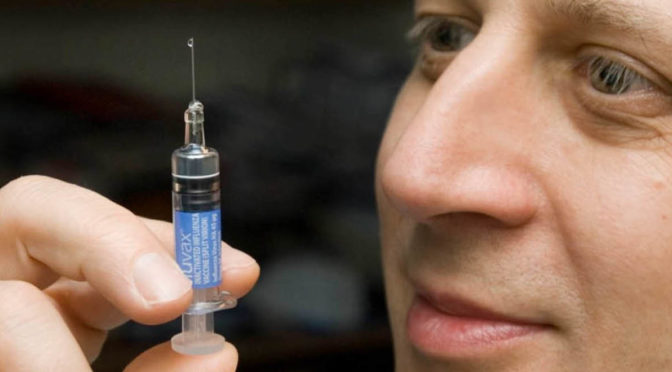
Featured image above: The new vaccine Advax could prevent river blindness, which affects 17 million people globally. Credit: Flinders University 

A new vaccine with the potential to prevent millions of cases of blindness is a step closer to commercialisation.

The river blindness vaccine is being developed using the patented adjuvant technology Advax by biotechnology company Vaxine Pty Ltd in South Australia.

The vaccine, which uses a unique sugar-based adjuvant, is set for cattle trials before the end of the year.

According to the World Health Organisation, river blindness, also known as onchocerciasis, affects about 17 million people globally.

It is spread by blackflies that breed in rivers, infecting humans and cattle with a parasitic worm known as Onchocerca volvulus.

The parasites can cause eye inflammation, bleeding, and other complications that ultimately lead to blindness.

Advax makes the pathogen in the vaccine more easily recognised by the body’s immune system so it can develop appropriate antibodies.

The vaccine is being primed for a cattle trial in the United States after successful testing in mice.

Vaxine Scientific Director Nikolai Petrovsky said the company planned a two-pronged approach to effectively preventing the disease.

“First we’re looking to vaccinate the cattle, which are a breeding ground for the parasite,” he says.

“Then the other side of this is to immunise the children so if they come in contact with the parasite it blocks the infection.

“Our technology is a bit like melding a turbocharger to the engine and in this case makes the vaccine dramatically more powerful.”

Blackflies bite the host, passing on the parasite in the process. The parasitic worms then produce microfilariae that migrate to the skin, eyes and other organs.

Onchocerciasis is a major cause of blindness in African, particularly in the western and central parts of the continent. It is also prevalent in many South American countries.

River blindness is partly responsible for the reduction of economic productivity in many of those areas, causing vast tracts of arable land to be abandoned.

Potential solutions to the problem, such as ivermectin, have been developed but have often led to a resistance to the drugs.

Professor Petrovski says one of the main problems was that other methods used aluminium-based adjuvants, which were not always effective.

“We offer a new alternative that is not only potentially safer because it is a sugar instead of a metal/salt with high toxicity,” he says.

“Our adjuvant also works for a lot of vaccines that wouldn’t work with aluminium. The ones that tried to create an onchocerciasis vaccine didn’t take but ours actually works.”

Vaxine is funded by the US National Institutes of Health to develop polysaccharide adjuvants that have played a vital role in the development of a range of vaccines for infectious diseases, allergies, and cancers.

It is internationally renowned for developing the world’s first swine flu vaccine during the 2009 pandemic and is active on other fronts including Ebola and Zika virus research.

The river blindness vaccine was developed in association with Thomas Jefferson University and the New York Blood Centre in the United States.

The group has received a grant from the US Government for the cattle trial and plans to begin tests in the coming weeks.

The results of the vaccine’s mice trials were published in National Center for Biotechnology Information.

This article was first published by The Lead South Australia on 18 November 2016. Read the original article here.

Blockchain tech shaping spatial information

Blockchain technology is the innovation behind Bitcoin. It has the potential to disrupt many industries by making processes more democratic, secure, transparent and efficient, and is currently approaching the peak of its hype cycle.

In late October, the CRC for Spatial Information (CRCSI) hosted a Student Day Solvathon, which focused on blockchains in spatial technology. Paul X. McCarthy from Online Gravity and Mark Staples from Data61 facilitated discussion and inspired 20 PhD students to think creatively about how blockchain technology could be applied.

The students divided into four teams with each team given the challenge to design an innovative use of blockchain tech in an application area relevant to current CRCSI research programs and initiatives. They created four initiatives:

Blockchain Technology in the Red Meat Supply Chain

This idea taps into the $15.8 billion red meat industry in Australia. With only 35% of cattle currently meeting the Meat Standard Australia (MSA) standard, the traceable open ledger capabilities of a block chain implementation could provide consumers, farmers and suppliers with greater confidence on the certification process. Increased uptake on MSA certification positively impacts the Australian economy as every 1% increase of certified meat equates to $40 million of additional returns.

Differing from traditional centralised database systems, the open ledger system requires the complete life history of a piece of meat to be well documented and made available across all players in the supply chain. Automated transaction verification techniques using location and timestamp from GNSS, RFID or DNA barcode information is added to the blockchain database when the cattle or meat is transported from one location to another. This not only optimises the supply chain, but also adds value to the quality of meat sold to the consumer. All this information will be able to be accessed from a smartphone, where a series of displays showing quality metrics of great interest to the consumer: an environmental score; a wellness score; a taste score; and other extra data that supports the purchase such as recommended or optimised recipe selections for that particular cut. 

Blockchain Technology in Health

Attacks on hospitals and civilian targets are clear violations of international law and an urgent problem in war zones that can be addressed by a new arrangement of existing technologies and organisations. A systematic solution to this could be one which provides transparent, decentralised, immutable, publicly available records of humanitarian activity used to visualise the location of verified humanitarian facilities.

The decentralised nature of a blockchain could allow untrusting involved parties to agree or trust the validity of information. Records can be immutable and transparent, so there would be traceability and increased accountability. If this platform was augmented with crowdsourced data, there could be continuous verification from multiple sources agreeing or converging on the location of a hospital. In essence, this would be decentralising and democratising humanitarian map data in conflict zones to support policy makers, governments, negotiators, experts in international relations and law (UN, WHO) and humanitarian organisations (MSF, Red Cross/Red Crescent).

Blockchain Technology in Land Administration and Cadastre

A new distributed database maintaining transactions is disruptive to many industries. It is producing a time stamped auditing information record. Land administration title offices maintain registries, ownerships, boundaries of private and public properties and keep records of changes to the properties as they happen.

These changes affect mortgages, restrictions, leases and right of ways. Blockchain technology has a huge potential in land administration contexts as governments privatise land registries, or want to publish trusted copy for all stakeholders without delays. Blockchain protocols in land administration offer complete historical transaction of all land title transactions, reducing dependency on central cadastral databases and can minimise the risk of fraud in data manipulation by a single user. In many parts of the world traditional registry and cadastral systems have not been sustainable in this advanced technological world. Urbanisation is at peak and land parcels are increasing day by day and discrepancies still exist whether it is in the developed or developing world.

Blockchain protocol in land registries could have many benefits like cost reduction, smart contracts, efficiency, transparency and long term investment. 

Blockchain Technology for Road Tolling

Alternate fuel sources will require changes in how road user charges are calculated and collected. Deriving charges that are consistent across carbon based fuels, electric vehicles, and other alternatives (such as hydrogen fuel cells) may prove difficult.

Alongside the issue of equitable pricing is the well-known problem that continued increases in the number of road users will lead to increased traffic congestion. However, the emergence of driverless vehicles presents a possible solution to both these problems that can be implemented using the executable contracts that blockchains offer.

Currencies based on blockchain technology allow value to be held in escrow until certain conditions are met. Once these requirements are satisfied the value is distributed to the opposing party (or parties). This occurs based on how the contract is programmed into the blockchain and as such there is no need for a “middleman” (like a bank) or the fee they charge for providing this service.

Our solution is a market based system where travel on a particular road at a particular time is booked in advance (based on the origin and destination of the user). Before departing on the journey the user has certainty as to how much the journey will cost as well as its duration (they will not be inconvenienced by excessive traffic congestion).

This means all space on the road, tracked through time, is allocated. A non-urgent journey may take a less direct route in order to avoid popular roads and reduce the amount paid in road user charges. Alternatively, an urgent journey can be made via the most direct route at a higher price. Because journeys may utilise roads owned by various parties, the planning system will program the appropriate distribution of value into the executable contract. When the conditions are met (i.e. the journey is completed) the contract is executed within the blockchain and the transfer of value from the user to the road owners represents an alternative to traditional road user charges.

Next Steps

The CRCSI is now developing a one to two-year strategy for blockchain research in spatial technology. Seizing the early initiative with blockchain technology will be important for the spatial sector to lead activities in this rapidly growing research and development area.

To find out more, visit the CRCSI website or contact Nathan Quadros at nquadros@crcsi.com.au

– Dr Nathan Quadros, CRCSI Education Manager

This article was first published by the CRCSI on 18 November 2016. Read the original article here.

$7.6 million to take these products to market

Featured image above: A $1 million accelerating commercialisation grant has been granted to Baraja Pty Ltd to develop 3D laser ‘eyes’ for driverless cars.

The Minister for Industry, Innovation and Science, Greg Hunt, has announced the recipients of a new round of funding that aims to speed up commercialisation of innovative intellectual property by Australian entrepreneurs.

The 22 small- to medium-sized businesses will receive grants ranging from $80K to $1 million, and each company will match their funding dollar-for-dollar.

These ‘accelerating commercialisation’ grants are part of a larger program to help Australia’s business sector generate greater returns on investment in research and remain competitive in a changing global economy. Created as part of the National Innovation and Science Agenda, the Entrepreneurs Programme offers access to business management advice, innovation facilitation and incubator support alongside commercialisation funding. 

With a focus on new products and services with high growth potential, the $7.6 million in new grants have been allocated across a range of industries considered key to Australia’s economic future, including artificial intelligence, health, agriculture, education, infrastructure and safety.

Artificial Intelligence

Baraja Pty Ltd has secured the largest commercialisation grant of $1 million to develop 3D laser eyes that will help self-driving cars navigate complex urban environments . Another two Australian companies have received a combined $460K towards their AI projects. Pat Labs Pty Ltd is attempting to humanise conversation with machines in a user’s own language through Project Turing. Ansah Pty Ltd has created AMRIT, an AI tool that assists engineers, technicians and inspectors to maintain and repair aircraft.

Health

3D Morphic have been allocated a quarter of a million dollars towards software that assists medical professionals to plan surgeries more quickly and at reduced cost using custom orthopaedic devices. Medical Exchange Link is commercialising a secure mobile communication app for medical professionals, and CPIE Pharmacy Services R&D are using their $437K grant to produce a portable, single use drug delivery pump for use in home healthcare.

Agriculture

A total of $754K has been granted towards agricultural initiatives. Rapid Phenotyping is developing a platform for rapid crop analysis and breeding. Australian Functional Foods are creating new food and beverage products from cherries and other fruits using a novel fruit processing technology.

Education

Chatty Kids have received almost half a million dollars towards their online platform, which engages Chinese children in reading and speaking English. The Maker’s Empire is planning to enter the international market with a $399K grant towards its 3D Learning Program, which teaches primary school students to how to use 3D printing. 

Infrastructure 

The largest grant allocated to infrastructure has gone to Eaves Water System International. They have received $613K to commercialise a water system that harvests water from the roofs of residential and commercial properties while eliminating pests, contaminants and debris. Other commercialisation grants have gone to Set Metrics, whose cloud-based tool helps commercial building owners optimise their energy use, and Heuch Pty Ltd, who creates solar refrigeration units to provide remote communities with safe food, water, medicine and emergency supplies. 

Safety

The government has also invested almost $1 million in products to support workplace and child safety. Life Cell Marine have put together a flotation device that stores essential safety gear to protect marine workers. USM Pty Ltd are commercialising a personal safety monitor that alerts remote workers of potential hazard locations and provides them with emergency communications. CombiTile are building  safer playgrounds through improved surfaces and drainage, and Spinflector have created a self-cleaning roadside reflector for mine site safety.

Other technologies supported by the Acceleration Commercialisation grants include a recyclable waterproof material, an app to find sporting events by location and another app that helps designers take colours directly from the physical environment into the digital space. To see a full list of projects and grants, click here.

– Elise Roberts

You might also enjoy:

Australian research funding infographic

3D printing turbo-boost for university spin-off

The Monash University-led team who created a 3D printed jet engine last year have enabled a new venture for manufacturing aerospace components in France.

Melbourne-based Amaero Engineering – a spin out company from Monash University’s innovation cluster – has signed an agreement with the University and Safran Power Units to print turbojet components for Safran, the French-based global aerospace and defence company.

“Our new facility will be embedded within the Safran Power Units factory in Toulouse and will make components for Safran’s auxiliary power units and turbojet engines,” says Barrie Finnin, CEO of Monash spin-out company Amaero.

Monash University’s Vice-Provost (Research and Research Infrastructure) Professor Ian Smith says that the Amaero-Safran agreement is an excellent example of the University’s exceptional research having commercial impact on a global scale.

“I am delighted that Monash is contributing to global innovation and attracting business investment with our world-class research. The Amaero-Safran collaboration is a fabulous example of how universities and industry can link together to translate research into real commercial outcomes,” Smith says.

Monash Jet Engine on display at the Avalon Airshow.

Monash Jet Engine on display at the Avalon Airshow.

The world’s first 3D printed jet engine was revealed to the world at the 2015 Melbourne International Airshow. As part of a project supported by the Science and Industry Endowment Fund (SIEF) Safran, Monash University and Amaero, in collaboration with Deakin University and the CSIRO, took a Safran gas turbine power unit from a Falcon executive jet, scanned it and created two copies using their customised 3D metal printers. This research is now being extended further through the support of Australian Research Council’s (ARC) strategic initiative “Industry Transformation Research Hub” and several industrial partners including Safran and Amaero.

“We proved that our team were world-leaders,” says Professor Xinhua Wu, Director of the Monash Centre for Additive Manufacturing. “I’m delighted to see our technology leap from the laboratory to a factory at the heart of Europe’s aerospace industry in Toulouse,” Wu says.

Amaero will establish a new manufacturing facility on the Safran Power Units site in Toulouse using a 3D printing technology known as Selective Laser Melting. They will not only bring the know-how and intellectual property they’ve developed in partnership with Monash University, they will also relocate two of the large printers they have customised for this precise manufacturing task.

Safran Power Units will test and validate the components the team makes, and then the factory will enter serial production, producing components that Safran Power Units will post process, machine and assemble into auxiliary power units and turbojet engines for commercial and defence use. The project team expect that production will commence in the first quarter of 2017.

Hear from Professor Xinhua Wu:

This information on 3D printed jet engine technology was first shared by Science In Public on 8 November 2016. Read the original article here.

You might also enjoy:

How does 3D printing work?

Ensuring shelf-life right from the word ‘grow’

A pair of Curtin University researchers have come up with a way of extending the shelf-life of vegetables, fruit and flowers by slowing down the process that leads to them spoiling. 

The process has the potential to help reduce the billions of tonnes of food that are wasted worldwide each year.

In effect, it also represents a new weapon in the fight to help feed the world’s growing population, estimated to reach more than nine billion people by 2050.

Making food last longer and reducing waste will help feed more people, compared to alternative strategies of having to increase food production.

The process was developed by horticultural researcher Professor Zora Singh and organic chemist Dr Alan Payne.

Food and flowers ripen, and then over ripen and spoil, due to their natural production of ethylene gas.

The researchers have come up with compounds they’ve dubbed ‘ethylene antagonists’ (in chemistry an antagonist is a substance which inhibits another process).

The result is that fruit and vegetables stay fresher for longer, and cut flowers take longer to drop their petals.

“The way these compounds work is that they don’t reduce the production of ethylene, they prevent the fruits, vegetables and flowers from perceiving ethylene,” says Payne.

“Every fruit has a receptor that ethylene binds to.”

“What we’re doing is we’re masking those receptors.”

Singh says up to 44% of fresh food and produce spoils before it reaches consumers, and that half of this is due to ethylene production.

Singh has been working in the food research area for more than two decades and several years ago approached Payne.

“I started to think how could I make a compound that’s easier to make, easier to use and I came up with these compounds that Zora was happy to test on his fruits and flowers,” says Payne.

The pair says their ethylene blockers are more versatile than current methods of increasing shelf-life and can be used pre- or post-harvest as a solid or liquid by spraying, dipping, waxing or fumigation.

“The beauty of these compounds is that we can apply them in the production phase, when the food is growing,” Singh says.

“We tried to make them more user friendly, because it was already being used by the industry.”

Their work won a recent Curtin Commercial Innovation Award.

The researchers and Curtin University have filed a patent and are seeking potential partners to commercialise the technology.

This article was first published by ScienceNetwork WA on 24 October 2016. Read the original article here.

Science key to U.S. standing

Aside from Hillary Clinton’s brief mentions of the need to focus on developing technology and clean energy jobs and addressing climate change, science issues were absent from the first presidential debate.

Unfortunately, this is indicative of how things went throughout the 2016 campaign. Amid all the talk from the leading presidential candidates about how crucial this election was to the future of the United States, science education and research funding – issues directly tied to the U.S. economic standing in the world and to national security – received scant attention from either of the two major candidates.

Science and engineering have driven the U.S. economy since World War II and contributed significantly to American growth during that time. Progress in research paves the way for advancements in health, economic prosperity and national security.

U.S. science

NOAA researcher sampling the atmosphere using an innovative, tethered weather balloon. Credit: Patrick Cullis/NOAA-CIRES, CC BY

Researchers make life-changing discoveries daily. A Boston University engineer is developing a wearable bionic pancreas that could help millions of people with type 1 diabetes (thanks to National Institutes of Health support). National Oceanic and Atmospheric Administration researchers are figuring out how quickly the sun converts oil and gas facility emissions to ozone pollution that harms human health. A collaborative group of scientists, including those here at the University of Kansas-based Centre for Remote Sensing of the Ice Sheets, discovered a vast ice sheet in Greenland was melting faster than believed, with implications for global sea level rise for decades to come.

These are successes – and there are thousands more to point to in fields ranging from biotech to medical research to clean energy. Without such advancement, we risk stagnation in all these areas, threatening the nation’s well-being and international standing, while eroding the role of the U.S. as global leaders in innovation. But recent low levels of federal funding impede the pace of scientific discovery.

A decades-long decline

Years of neglect and unstable funding pushed a 2005 National Academies commission led by retired Lockheed Martin CEO Norman Augustine to recommend increased investments in research and innovation and enhancement of STEM education from elementary to graduate levels. Their seminal report, Rising Above the Gathering Storm, was a wake-up call for policymakers that spurred new ideas and new legislation. Five years later, despite some progress, a National Academies of Sciences, Engineering and Medicine special report echoed many of Augustine’s findings and showed the United States lost even more ground. That trend continues unabated today.

Numerous statistics illustrate this decline. In 2014, the United States had slipped to 10th in research and development investment rankings. Although the U.S. still spends more than any other country on research, its relative investment has declined. If current trends persist, China will likely surpass the U.S. in percentage of GDP investment in R&D within eight years and will outpace U.S. research spending in a decade.

In 2009, for the first time, non-U.S. companies received more than half of the U.S. patents awarded. In high-tech exports – think aircraft, computers, pharmaceuticals – China bypassed the United States as the world leader in patents and is gaining ground as the second-leading publisher of biomedical research journal articles. While increased research and innovation in other countries partially account for some of this trend, many observers also point to real declines in U.S. productivity. For example, the United States approved 157 new drugs from 1996 to 1999, but only 74 from 2006 to 2009.

U.S.

NOAA researcher sampling the atmosphere using an innovative, tethered weather balloon. Credit: Patrick Cullis/NOAA-CIRES, CC BY

Prioritising U.S. science means funding it

Despite its crucial role in driving economic growth, research and development in the STEM fields accounts for only a small portion of the federal budget – currently less than 4%. That’s down from nearly 12% in 1965, during the height of the Space Race.

The Association of American Universities and National Academies of Sciences, Engineering and Medicine have called for sustained 4% annual increases in research funding for key federal agencies, including the NSF, DOE, NIH, NASA and the DOD. The ultimate goal should be a return to investing around 12% of the federal budget in research.

This type of aggressive and sustained growth in research funding provides a second benefit: it sends a signal that the U.S. is serious about holding on to its status as a leader in scientific and engineering innovation. More funding lays the groundwork for long-term stability in the field, especially as the next generation of scientists and engineers make their career-path choices.

Increasing investment and strengthening the pipeline of future scientists and engineers won’t matter, however, if we don’t translate their work into products and services that improve lives. The new president of the United States should prioritise interdisciplinary research and connecting university research with the marketplace in a way that creates new products, technologies and services.

Future scientists must be trained

Uncertain funding opportunities discourage potential scientists and academic researchers – people think twice about signing on to careers that demand decades of training with no guarantee the necessary resources for conducting research will be waiting at the finish line. Adequate and sustained investment in research would address this problem. But another factor has played a major role in the research innovation gap we face: the inadequacy of basic science and math education in the U.S.

U.S. students have slipped to 27th in math and 20th in science in the ranking of 34 nations in the Organisation for Economic Co-operation and Development. To catch up will take time and investment.

U.S. science

NOAA researcher sampling the atmosphere using an innovative, tethered weather balloon. Patrick Cullis/NOAA-CIRES, CC BY


Industry already feels the repercussions of this underinvestment in U.S. science and engineering. American manufacturers have voiced concern about a skills gap in the coming decade. They expect to have 3.5 million jobs to fill, but estimates suggest only about 1.5 million workers are prepared to step in for example with electrical and mechanical technical skills to maintain complex machines for production.

The President’s Council of Advisors on Science and Technology has called for improved STEM education programs. Maths intervention programs and expanded recruitment and training programs for STEM teachers can help. There is still a way to go, but steps like these and strengthening standards even on the K–12 level take us in the right direction. Federal leadership – and funding – can keep improving STEM education on the national agenda.

Eliminate inefficient regulation

Federal support for research is key. But there are also some obstacles posed by current federal regulations. The new president’s leadership could help clear away some of these well-intentioned but burdensome regulations that can hinder or undercut R&D efforts.

President Trump should work with Congress to streamline and eliminate redundant regulations and reporting requirements that even the federal government has already identified as problematic. Studies have found around 40% of time faculty spend on research goes to administrative duties instead of the actual research.

We need to ensure that the most talented foreign-born, U.S.-educated individuals, especially in STEM fields, have the opportunity to become American citizens and contribute to the economy. In addition, with all the talk during the campaign about immigration policy, the candidates should expand their platforms to phase out the 7% cap per country that limits employment-based green cards. I’d argue to replace it with a first-come, first-served system for qualified highly skilled immigrants.

Other forms of regulation can also be costly. Politically motivated intrusions into research funding, such as the ban on federal support for gun violence research, mean we miss the opportunity to address major issues facing society.

Gearing up for a new golden age of research

Trump and Clinton said little about U.S. science and engineering research in their first debate. But science and engineering issues are vital to U.S. prosperity, well-being, status as a global leader and national security. My hope is that we can address these crucial issues – and in essence, determine whether we can avoid the “gathering storm.”

– Bernadette Gray-Little
Chancellor, University of Kansas

This article was first published by The Conversation on 4 October 2016. Read the original article here.

Find the best 5 ways to get to Mars

Featured image above: Could this be your new home? We take a look at the best 5 ways to get to Mars if living on another world is an idea that entices you.

Looking for an escape from planet Earth? We look at the quickest and most likely 5 ways to get to Mars and start your new adventure.

1. Ask a genius

Serial entrepreneur extraordinaire Elon Musk announced earlier this year that Space X has a Mars mission in its sights. In an hour long video, the billionaire founder announced his aim to begin missions to Mars by 2018, and manned flights by 2024. The planned massive vehicles would be capable of carrying 100 passengers and cargo with a ambitious cost of US$200,000 per passenger. He’s joined by other ambitious privately funded projects including Amazon founder Jeff Bezo’s Blue Origin, which describes a reusable rocket booster and separable capsule that parachutes to landing. Meanwhile American inventor and chemical engineer, Guido Fetta has pionered a concept long discussed by the scientific community, electromagnetic propulsion, or EM drive, which creates thrust by bouncing microwave photons back and forth inside a cone-shaped closed metal cavity. Rumours this week from José Rodal from MIT that NASA was ready to release a paper on the process, which would be game-changing for space travel as the concept doesn’t rely on a propellant fuel.

2. Hitch a ride

In November 2016, NASA and CSIRO’s Parkes telescope opened the second of two 34-m dishes that will send and receive data from planned Mars missions, while also listening out for possible alien communications as part of UC-Berkeley-led project called Breakthrough Listen, the largest global project to seek out evidence of alien life. The Southern Hemisphere dish joins others in the US in using signal-processing hardware to sift through radio noise from Proxima b, the closest planet to us outside of the solar system. Whether an alien race would be willing or able to offer humanity a ride off its home planet is another question.

3. Aim high

While they are focused on getting out of the solar system, a team led by Dr. Philip Lubin, Physics Professor at the University of California, Santa Barbara think they could get the travel time to Mars down to just three days (as opposed to six to eight months). Their project, Directed Energy for Relativistic Interstellar Missions, or DEEP-IN, aims initially send “wafer sats”, wafer-scale systems weighing no more than a gram and embedded with optical communications, optical systems and sensors. It’s received funding of US$600,000 to date from NASA Innovative Advanced Concepts, and theoretically could send wafer sats at one-quarter the speed of light – 160 million km an hour – using photonic propulsion. This relies on a laser beam to ‘push’ a incredibly small, thin-sail-like object through space. While it may seem a long shot for passenger travel, the system also has other applications in defence of the Earth from asteroids, comets and other near-earth objects, as well as the exploration of the nearby universe.

deep-laser-sail

Image: An artist’s conception of the laser-led space propulsion. Credit Q. Zhang

4. Volunteer

The Mars One project already has 100 hopeful astronauts selected for its planned one-way trip – out of 202,586 applicants. The project is still at ‘Phase A’ – early concept stage – in terms of actually getting there, but makes the list of the top 5 ways to get to Mars due to the large amount of interest: it has raised US$ 1 million towards developing a practical way to safely land some of these select few on the red Planet.

5. Ask the experts

In 2020, Australia will host the COSPAR scientific assembly, a gathering of 3000 of the world’s top space scientists. The massive conference will no doubt include some of the top minds focussed on this very problem, offering new hope in our long-term quest for planetary travel.

“We come to the table with a bold vision for our nation’s place in science – and through science, our place in space, said Australia’s Chief Scientist, Alan Finkel.

Sapphire Clock ticks towards the attosecond

Featured image above: the sapphire crystal used to make the Sapphire Clock on display at the University of Adelaide. Credit: University of Adelaide

The Cryogenic Sapphire Oscillator, or Sapphire Clock, has been enhanced by researchers from the University of Adelaide in South Australia to achieve near attosecond capability.

The oscillator is 10–1000 times more stable than competing technology and allows users to take ultra-high precision measurements to improve the performance of electronic systems.

Increased time precision is an integral part of radar technology and quantum computing, which have previously relied on the stability of quartz oscillators as well as atomic clocks such as the Hydrogen Maser.

Atomic clocks are the gold-standard in time keeping for long-term stability over months and years. However, electronic systems need short-term stability over a second to control today’s devices.

The new Sapphire Clock has a short-term stability of around 1×10-17, which is equivalent to only losing or gaining one second every three billion years, 1000 times better than commercial atomic clocks over a second.

The original Sapphire Clock was developed by Professor Andre Luiten in 1989 in Western Australia before the team moved to South Australia to continue developing the device at the University of Adelaide.

Lead researcher Associate Professor Martin O’Connor says the development group is in the process of modifying the device to meet the needs of various industries including defence, quantum computing and radio astronomy.

The 100cm x 40cm x 40cm clock uses the natural resonance frequency of a synthetic sapphire crystal to maintain a steady oscillator signal.

O’Connor says the machine could be reduced to 60% of its size without losing much of its capability.

“Our technology is so far ahead of the game, it is now the time to transfer it into a commercial product,” he says.

 “We can now tailor the oscillator to the application of our customers by reducing its size, weight and power consumption but it is still beyond current electronic systems.”

The Sapphire Clock, also known as a microwave oscillator, has a 5cm cylinder-shaped crystal that is cooled to -269C.

Microwave radiation is constantly propagating around the crystal with a natural resonance. The concept was first discovered by Lord Rayleigh in 1878 when he could hear someone whispering far away on the other side of the church dome at St Paul’s Cathedral.

The clock then uses small probes to pick up the faint resonance and amplifies it back to produce a pure frequency with near attosecond performance.

“An atomic clock uses an electronic transition between two energy levels of an atom as a frequency standard,” O’Connor says.

“The atomic clock is what is commonly used in GPS satellites and in other quantum computing and astronomy applications but our clock is set to disrupt these current applications.”

The lab-based version already has an existing customer in the Defence Science and Technology Group (DST Group) in Adelaide, but O’Connor says the research group is also looking for more clients and is in discussion with a number of different industry groups.

The research group is taking part in the Commonwealth Scientific and Industrial Research Organisation’s (CSIRO’s) On Prime pre-accelerator program, which helps teams identify customer segments and build business plans.

Commercial versions of the Sapphire Clock will be made available in 2017.

This article was first published by The Lead on 27 October 2016. Read the original article here.

You might also enjoy:

Micro-Swab enables DNA evidence

L’Oréal Women in Science 2016

Featured image above: L’Oréal Women in Science fellow Dr Camilla Whittington. Credit: University of Sydney

Four researchers from the University of Sydney, the University of Wollongong and the University of Auckland were announced as the 2016 L’Oréal-UNESCO For Women in Science fellowships at a ceremony held in Melbourne on Tuesday.

Early-career veterinary scientists Dr Camilla Whittington and Dr Angela Crean joined chemists Dr Jenny Fisher and Dr Erin Leitao to receive $25,000 each towards a one-year project.

According to L’Oréal, the Women in Science fellowships were established to “support and recognise accomplished women researchers, encourage more young women to enter the profession and to assist them as they progress their careers”. The fellowships began in 1998, and have recognised over 2,000 women around the world since then.

From the University of Sydney:

“Both Dr Whittington and Dr Crean are early career researchers in the Faculty of Veterinary Science, working in the area of reproduction; both are in research positions funded through the Mabs Melville bequest in excess of $7.2m – one of the biggest gifts ever received by Veterinary Science.

Dr Crean’s work with sea squirts and fly sperm

in-text_crean

Dr Angela Crean. Credit: L’Oréal

Dr Crean’s initial research, using the sea squirt as a model organism, showed males can adjust their sperm quality and quantity in response to a perceived risk that their sperm will have to compete against another male’s sperm to fertilise an egg. The sperm quality also had adaptive consequences for both fertilisation and offspring survival.

Similar work using the neriid fly showed sperm quality could be adjusted by the father’s diet and social environment.

The L’Oréal-UNESCO For Women in Science Fellowship will allow Crean to conduct a proof-of-concept study supporting her transition from pure evolutionary research to practical applications in human reproductive health and medicine.

Dr Whittington’s research into pregnant lizards, fish and mammals

in-text_whit

Dr Camilla Whittington. Credit: L’Oréal

Dr Whittington, who last year was one of five University of Sydney researchers who won a 2015 NSW Young Tall Poppy Science Award, is using cutting‐edge techniques to identify pregnancy genes – the instructions in an animal’s DNA causing them to have a live baby rather than laying an egg.

‘Pregnant lizards, fish and mammals face complex challenges, like having to provide nutrients to their embryos and protect them from disease,’ Whittington says.

‘My research suggests that these distantly related animals can use similar genetic instructions to manage pregnancy and produce healthy babies.’

Whittington’s fellowship will allow her to investigate how the complex placenta has evolved independently in mammals, lizards, and sharks to transport large quantities of nutrients to the fetus.”

This information on the L’Oréal women in science was first shared by the University of Sydney on 25 October 2016. Read the original article here.

From the University of Wollongong:

Dr Fisher’s research into compounds that contribute to climate change and air pollution

in-text_uow

Dr Jenny Fisher. Credit: University of Wollongong

“Dr Jenny Fisher from UOW’s Centre for Atmospheric Chemistry studies how different emissions interact with one another.

‘When I was little, I was intrigued by outer space and I knew I wanted to work for NASA. As my career progressed I felt that understanding my own planet was more important to me, so I made the change to researching the chemistry of our atmosphere,’ Fisher says.

Through the financial support provided by the L’Oréal-UNESCO For Women in Science Fellowship, Dr Fisher plans to develop an Australian atmospheric chemistry model, similar to those already successfully used in North America and Europe. Australia provides a unique globally-relevant lens for examining these processes due to the nation’s much lower presence of nitrogen oxides, pollutants that mainly come from human activities like driving cars and burning coal in power plants.

As stricter emission controls are enforced globally, the level of nitrogen oxides elsewhere in the world are predicted to decrease and Australia serves as a window to the expected future pollution outcomes.

The information provided from the model Dr Fisher works on will assist in predicting pollution amounts and their responses to future change. Australia’s much lower nitrogen oxide levels means this atmospheric model will also provide a novel insight into the pre-industrial atmosphere.

Currently, Dr Fisher can only investigate the Australian atmosphere by looking at large areas (~5 million hectares); however with the funding she will work on a more accurate ‘nested’ model, which can show what is occurring within an area more than 60 times smaller. This will enable her to increase the complexity of her atmospheric chemistry research and findings.

‘Winning the fellowship means I will finally be able to apply tools I have used in other global environments to problems that are specific to Australia. This work will help advance scientific understanding of the atmosphere on a global scale — while also providing new insight into what affects our local air quality,’ she says.

Dr Fisher’s work highlights her passion for communities to understand the impact we have on the environment. Her work in unlocking information about the chemistry of our atmosphere will improve our ability to make informed decisions in order to live in a sustainable way.”

This information on the L’Oréal women in science was first shared by the University of Wollongong on 25 October 2016. Read the original article here.
If you enjoyed the L’Oréal women in science, you might also enjoy: Prime Ministers Prizes for Science

What you can do for industry

My team and I have just run a two-day workshop at a Sydney-based university aimed at empowering academic researchers to engage professionally, effectively and sustainably with industry, and it was an eye-opening experience for us all.

As always happens when I teach, I learnt a lot, even though technology transfer is my expertise. I learnt more about what holds researchers back from beneficial partnerships with industry, and shared the joy of ‘A-ha!’ moments, when they realised what they could change or start doing, to seed the relationships they need.

From 1 January 2017, academic researchers will need those ‘A-ha!’ breakthroughs more than ever, as the Australian Government intends to introduce new research funding arrangements for universities that give equal emphasis to success in industry and other end-user engagement as it does to research quality.

After two days exploring industry imperatives and restrictions, and developing skills in market research and commercial communication, I interviewed the 16 participants, to determine any leaps in understanding they had made during the workshop. I found two major developments in their thinking:

1. Looking at the relationship with industry from the other side

‘I need to engage with the needs of the stakeholder,’ said one participant.

‘Go with open questions – don’t make it about you,’ said another.

To paraphrase JFK, academics should ask not what industry can do for them, but what they can do for industry. Only by identifying and understanding the needs of businesses (driven by the needs of customers), can academics think about how outcomes of their research – innovative ideas or new technologies – might solve some problems faced by industry. This is the first step in building a long-term, mutually beneficial relationship.

A particularly switched-on workshop participant realised the value of talking to industry before starting a new research project, then designing the project to deliver a real-world solution, identifying the ‘importance of prior planning – allowing time for the relationship to develop’. A-ha!

For many, the breakthrough came when they realised that this is not selling out – that commercialisation is not the dark side of research. Commercialisation is how researchers can turn their potentially life-saving or world-bettering discoveries into real products or services to make an actual difference in medicine, the environment, space, communications, data, energy, or wherever their passions lie. I have written more about this here.

2. Appreciating the importance and value of social media – especially LinkedIn – in finding industry contacts and maintaining industry partnerships.

‘I need to advertise myself better,’ was one participant’s succinct take-home.

Yes! Otherwise industry will struggle to find you, even if your R&D capabilities are a perfect fit for their needs. It came as a surprise to several academics that the kings and queens of commerce do not spend hours trawling ResearchGate, seeking potential partners, or in many cases even know of it. They hadn’t considered that ResearchGate is a closed door to non-researchers. In contrast, a targeted, professional and proactive presence on LinkedIn will rapidly get a researcher’s foot in the right industry door.

Other breakthroughs in learning about research and industry partnerships

One workshop participant found it enlightening to think about research outcomes ‘in measurable terms’.

Another experienced ‘surprising results from acting outside my comfort level’ when they were tasked with approaching and engage strangers in conversation.

Engaging with industry can be confronting for researchers, requiring investment of time and some additional knowledge and skills, as I know from personal experience, shared here. But what if you consider the potential comfort of ongoing funding from a productive industry partnership, plus the satisfaction of turning your research findings into measurable real-world benefits..?

A-ha!

– Natalie Chapman, Managing Director, gemaker

You might also enjoy this post on research and industry partnerships:

Engaging industry in research

Micro-Swab enables DNA evidence

Featured image above: prototype of the Micro-Swab, a new DNA technology. Credit: Flinders University

The pen-like device is set to help forensic experts extract relatively large amounts of DNA evidence from previously challenging surfaces.

Micro-Swab was developed by researchers at Flinders University in Adelaide, South Australia, and uses fibres soaked in a surfactant to bind to the DNA in fingerprints.

The fibres are attached to a flexible pen-like device, which allows police to obtain genetic material from hard-to-reach surfaces such as gun triggers, ammunition cartridges and the spaces between keys on computer keyboards.

According to a study on its effectiveness published in National Center for Biotechnology Information, the device extracts about 60 per cent more DNA than conventional methods and only takes about 30 seconds to swab, compared with a few hours for current methods.

Micro-Swab lead researcher Professor Adrian Linacre says DNA profiling is essential for building criminal prosecutions. He says the new device will reduce cases of inadmissible evidence.

“Currently only about seven per cent of touch DNA worldwide generates a meaningful profile,” Linacre says.

“That extraction process, even using the best methods, loses about 75 per cent of DNA and if you start off with only enough DNA to start a profile that leaves you with almost nothing.

“It was to the point where police said they no longer bothered trying to test for DNA because it didn’t work. But this is an effective way of building a profile in a single go.”

Linacre says it will not only be effective in obtaining more biological material, it will also reduce the chance of contamination.

The Micro-Swab includes a PCR tube filled with a detergent attached to the head, similar to a cap on a pen.

During extraction, the tube is removed and the fibres rub over the fingerprint, picking up substantial amounts of biological material.

The head is ejected back into the tube using a small piston at the rear of the device and then the tube, which still has residual amounts of the surfactant, is sealed and ready for quantitative PCR.

The standard process for DNA extraction begins with a foam or cotton extraction and takes about two hours before it is taken to the lab.

“We found that if you had the swab moisturised with one per cent Triton-X, a surfactant, that helps encourage the DNA to come off,” Linacre says.

“The downside to this is that you can’t repeat the test but because it is more accurate than doing the normal method, you are far more likely to get something substantial.”

DNA from fingerprints, known as touch DNA, remains the most common type of forensic evidence used in convictions. However, these methods have not been modified in decades and there have been numerous cases of insufficient or false DNA profiling because of inadequate testing or clinical errors.

Linacre says the Micro-Swab will increase the reliability of touch DNA profiling and is also capable of collecting DNA from hair follicles.

He says the device is simple to manufacture and could be 3D printed to increase availability worldwide.

The new DNA technology is expected to be launched in mid-2017.

This article on the new DNA technology Micro-Swab was first published by The Lead on 24 October 2016. Read the original article here.

You might also enjoy:

Is it possible to reverse ageing?

Teachers and postdocs key to innovation

Featured image above: a series of four panels discussed STEM and innovation at the Science Meets Business summit

Australia should ‘hang its head in shame’ over our lack of support for teachers, says Ian Chubb AC, the ex-Chief Scientist of Australia, at the second national Science Meets Business event in Melbourne.

The gathering of CEO’s, board members, government, research leaders and start-ups focussed on improving collaboration and innovation in Australia’s STEM (science, technology, engineering and maths) and startup sectors.

As well as ensuring a strong STEM talent pipeline by improving support for teachers, a ‘simple but elegant’ national, industry-led PhD program is key to an innovative future, ANSTO CEO Adi Paterson said at the summit.

The summit heard how developing visible pathways to careers and skilling up students across humanities and STEM was important both to creating startups and improving existing business.

Labour’s Senator Kim Carr and Liberal Assistant Minister Craig Laundy brought the political grunt to a richly experienced series of four panels that covered taking startups to small to medium enterprises; Australia’s tech expertise; improving collaboration between research, government and industry; and looking for Australia’s ‘next big thing’.

The Science Meets Business summit is run annually by Science and Technology Australia. Science Meets Business publishers Refraction Media support the summit as media partner.

There is a need to refocus what we mean by innovation away from “hipster app developers” Senator Carr said, and towards innovation in existing business.

“It’s not possible to foster innovation without substantial investment in science and research,” said Senator Carr.

In a rare bipartisan agreement between the Liberal and Labour factions, The Honorable Craig Laundy MP also called out the need to solve problems in current business in a largely off-the-cuff speech that emphasised his own background as a publican, where innovation could be a new way to clean the taps – which could have involved three staff previously.

Laundy pointed out that there was a need for business to meet science as well as ‘science meets business’.

Developing language to bring together business, investment, researchers and students was one of the areas where Australia could be doing better, the summit heard.

“Innovation is not startups. We’re talking about the transformation of a whole economy,” said Adrian Turner, CEO of Data 61 and chair of the Cyber Security Growth Centre.

Turner went on to say that Australia must look away from Silicon Valley and towards its own opportunities where deep science meets fast-paced entrepreneurship.

Tech capability, biotech, agricultural innovation and defence were some of the strengths which set Australia apart from the rest of the world, the Science Meets Business summit heard.

“We need to lift the scale of our business-science ambition,” Turner said.

Got an opinion? Share your thoughts here or connect with us on Twitter.

– Heather Catchpole

You might also enjoy:

Innovation breathes new life into old business

Citizen data monitors coral bleaching

Featured image above: a volunteer monitors coral bleaching using Coralwatch’s citizen science survey. Credit: Coralwatch

Who did the research?

CoralWatch, based at the University of Queensland and funded by multiple external organisations.

What is the citizen science project about?

CoralWatch is a citizen data (‘citizen science’) initiative to monitor coral health worldwide. It is the first attempt at providing useful data on coral reef health at large scale with non-invasive tools. Scientists, school groups, dive centres and tourists can measure coral bleaching using the  Coral Health Chart – a simple plastic square – and add their data to the CoralWatch database.

Coral bleaching occurs when increased water temperatures causes coral to expel their symbiotic algae that help absorb nutrients and provide corals vibrant  colour. Rising sea temperatures due to climate change have caused unprecedented levels of coral bleaching.


What is the real-life data impact of the research or project?

Since CoralWatch started in 2002, over 146,000 corals from 1,228 reefs have been surveyed across 70 countries. This data is freely available online for use in scientific analysis and for educational purposes such as school projects.

Several studies have used the CoralWatch data to track the status of coral reefs around the world. The project has also been instrumental in raising public concern on the severity of the ecosystem crisis many reefs are undergoing, such as Australia’s Great Barrier Reef.

Find out more – watch the CoralWatch video


Click here to visit the Coralwatch website.

Share your own story of data impact

Send ANDS your stories using the form on the main #dataimpact page, or help promote these stories on social media using the hashtag #dataimpact.

This article on citizen science was first published by the Australian National Data Service on 21 October 2016. Read the original article here.

You might also like:

Birth defects: a data discovery