Tag Archives: women in stem

NASA’s Women in STEM

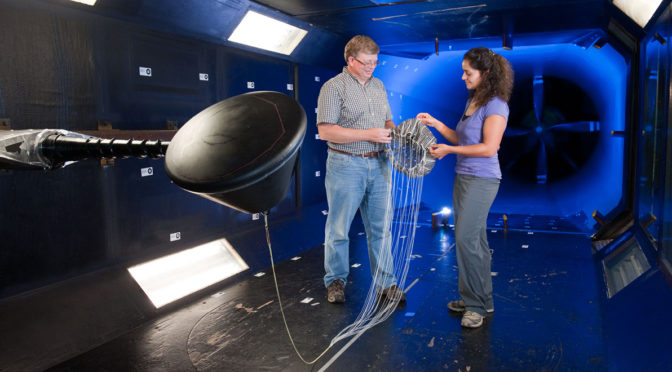
NASA’s Women in STEM featured image above: Anita Sengupta and Donn Liddle stand with a subscale test model of NASA’s Orion spacecraft and its parachute in the low-speed wind tunnel at Texas A&M University. The Orion spacecraft is being designed to take humans farther into space than ever before. Credit: NASA/James Blair

It’s not often that the lead characters in a blockbuster film have careers as particle physicists and nuclear engineers – and even less often that those roles are played by women. But the new “Ghostbusters” film, which features an all-female team of scientists and engineers, busts not just ghosts, but also some of the tropes about what it means to work in science, technology, engineering and maths. It’s an idea that has scientists and engineers at NASA’s Jet Propulsion Laboratory (JPL) excited about how it might inspire the next generation.

So if they don’t spend their days bustin’ ghosts, what do JPL’s “Ghostbusters” do? Here are the stories of three of NASA’s women in science and engineering at JPL whose jobs, much like their “Ghostbusters” counterparts’, are to explore new realms, battle invisible forces and explain the mysteries around us.

Meet NASA’s Women in STEM


The Leader: Anita Sengupta
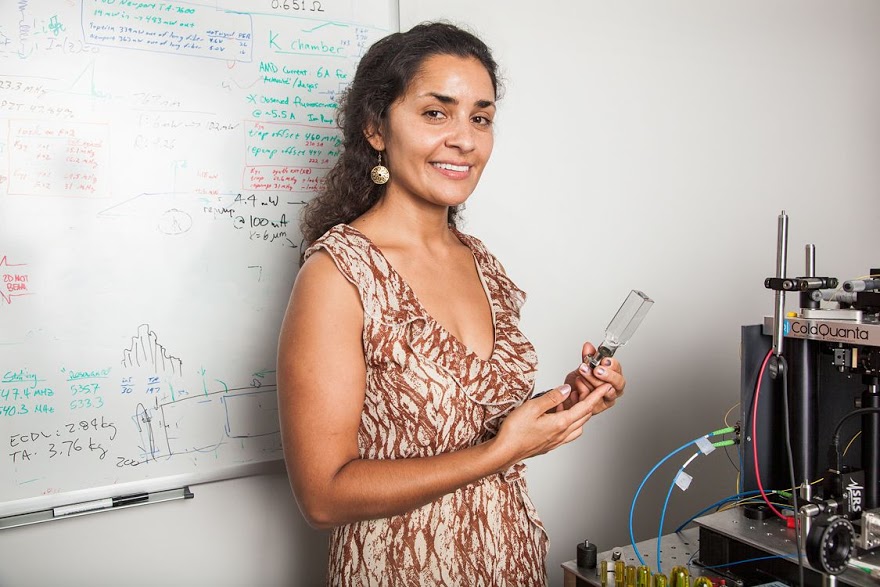
NASA women

Anita Sengupta at JPL. Credit: JPL, NASA

Job title:

Project Manager, Cold Atom Laboratory

What she does:

In a team of professional ghostbusters, Anita Sengupta would most certainly be the enthusiastic and multi-talented leader. She’s already taken on roles developing launch vehicles, the parachute that famously helped land the Mars rover Curiosity, and deep-space propulsion systems for missions to comets and asteroids.

NASA’s Women in STEM featured video above: Sengupta and other members of the entry, descent and landing team for NASA’s Mars rover Curiosity discuss the nail-biting details of the August 2012 landing.

Most recently, she’s carved out a niche as the project manager for an atomic physics mission, called the Cold Atom Laboratory, or CAL.

Since the mission was proposed in 2012, Sengupta has been leading a team of engineers and atomic physicists in developing an instrument that can see the unseen. Their mission is to create an ultra-cold quantum gas called a Bose-Einstein condensate, which is a state of matter that forms only at just above absolute zero. At such low temperatures, matter takes on unique properties that seemingly defy the laws of thermodynamics.

To achieve the feat, the team’s device will be installed on the International Space Station in July 2017, where the microgravity of space will keep the Bose-Einstein condensate suspended long enough for scientists to get a look at how it behaves. Observing this behaviour could lead to groundbreaking discoveries, not least of which is a better understanding of how complexity arises in the universe. The facility could also provide new insights into gravity, super fluidity and dark-matter detection.

“We are opening the doorway into a new quantum realm, so we actually don’t know what we’re going to see,” says Sengupta. “That’s what’s so exciting. It’s about discovery.”

Career trajectory:

Sengupta’s career has been defined by her unique ability to take on challenges in new realms of science and engineering. It’s a trait that closely mimics the fictional character who inspired her as a child: Doctor Who.

“I saw the character of the doctor, who was this very eccentric, but loving, kind and brilliant person,” says Sengupta.

“I decided I would like to be a person who travels in space, who understands and can apply all fields of science and engineering. That motivated me to be involved in space exploration and, of course, get my doctorate.”

After considering majors in astrophysics, astronomy, biology and aerospace engineering, she settled on aerospace engineering because, she says, “I loved fixing things, and the idea of knowing how to build spacecraft just blew my mind.”

She doesn’t regret the decision. It seems she would have stretched the boundaries of whichever path she chose. Currently, she’s serving multiple leadership roles on the Cold Atom Laboratory team while also teaching astronautical engineering classes as an associate professor at the University of Southern California. And she still manages to carve out time for her other passions, which include driving sport motorcycles, snowboarding and flying planes.

On STEM in pop culture:

“It’s important for young people to understand that to be an intellectual or a scientist does not necessarily correspond to being socially awkward or geeky,” says Sengupta. “You have all varieties of people.”

“A lot of people at JPL are musicians or athletes or I’m a motorcyclist. There are people who have these hobbies and interests outside of doing something traditionally nerdy, so it’s a disservice to STEM to paint people in any particular light.”


The Engineer: Luz Maria Martinez Sierra
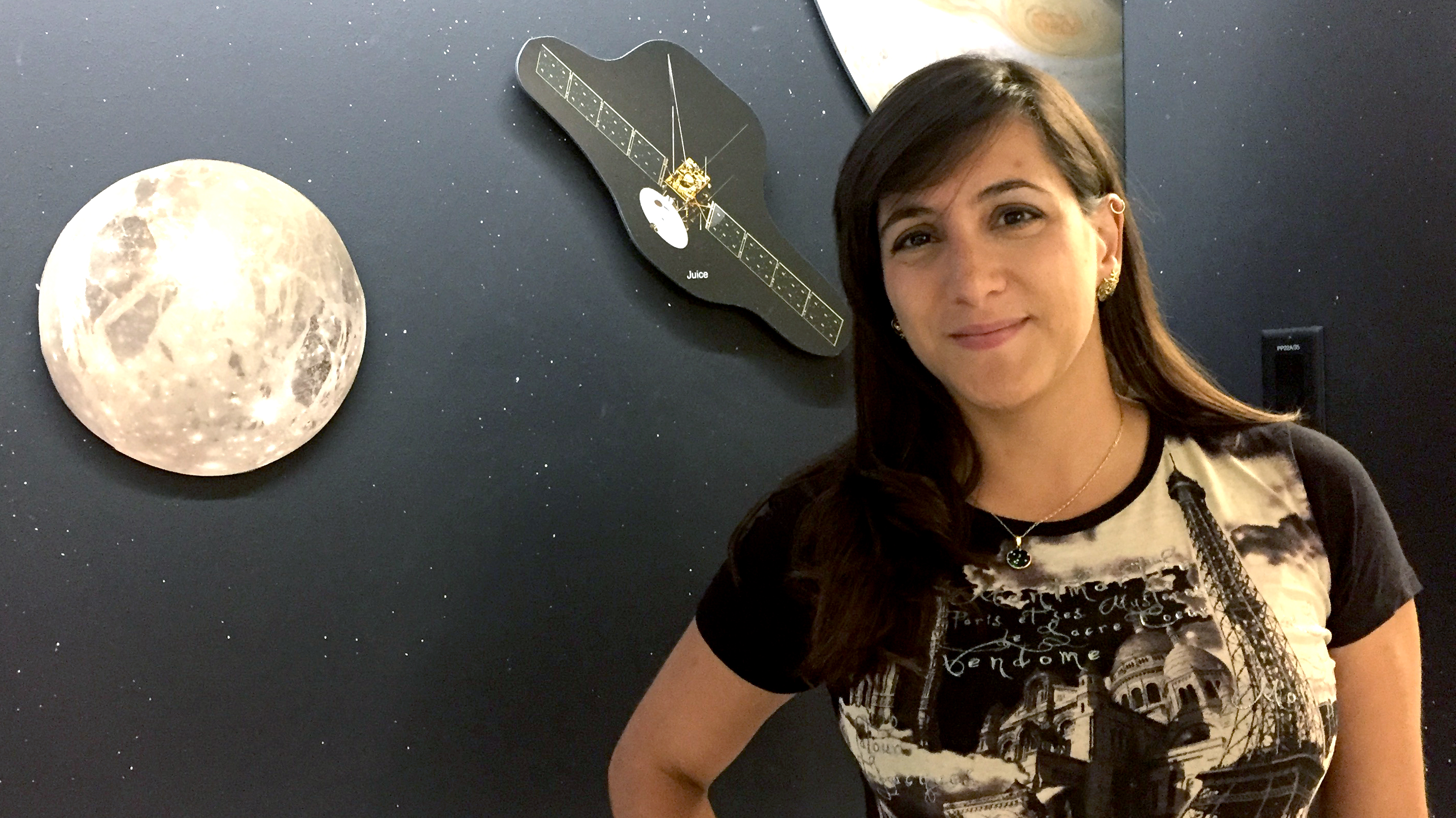
NASA Women

Luz Maria Martinez Sierra at JPL. Credit: JPL, NASA

Job title:

Technologist, Natural Space Environments

What she does:

As a nuclear engineer, Luz Maria Martinez Sierra has never built a ghost-bustin’ proton gun, but she does design defences against invisible forces. In her case, it’s protecting spacecraft from the intense radiation around planets like Jupiter.

“Space is a very hostile environment, and there are a lot of particles and radiation that can be very dangerous to the spacecraft,” says Martinez Sierra. “It’s very important to make sure everything is shielded accordingly, so we run all these simulations to determine, ‘Ok, you will need to protect this and you need to make sure this survives by putting it behind the solar panels.’”

NASA’s Women in STEM featured video above: Part of Martinez Sierra’s work is designing radiation defense systems for spacecraft like the one created for the Juno mission shown in the animation above. Juno arrived at Jupiter on July 4, 2016 and will fly closer to the planet – and its intense radiation – than ever before. Credit: NASA/JPL-Caltech

In addition to shielding spacecraft against radiation, she designs devices that can analyse it to reveal hidden details about planets, moons and other bodies. By looking at the radiation signatures of these bodies, scientists can better understand what they’re made of and whether they might be home to, for example, the ingredients for life.

Career trajectory:

To the unacquainted, a career in nuclear engineering might seem oddly specific, but Martinez Sierra is quick to point out just how many applications it has, even just at NASA. Nuclear engineers might design systems to protect astronauts venturing to places like Mars, build instruments to study the sun and other stars, or work with spacecraft powered by radioactive materials.

For her part, the career path evolved through a love of physics that traces back to high school in her native Colombia.

“I always loved science, even at a young age,” says Martinez Sierra. “And when I took physics in high school, it just clicked. I loved how everything could be described by physics.”

She started attending local astronomy events and later earned a bachelor’s and master’s degree in engineering physics. In 2014, she was accepted into an internship with the laboratory’s Maximizing Student Potential in STEM program, which “taught me how to be part of a working environment, solving problems with a team and making sure that I belonged in this field,” she says.

Soon after Martinez Sierra was hired on at JPL, she parlayed her internship experience into a mentorship role with the National Community College Aerospace Scholars program.
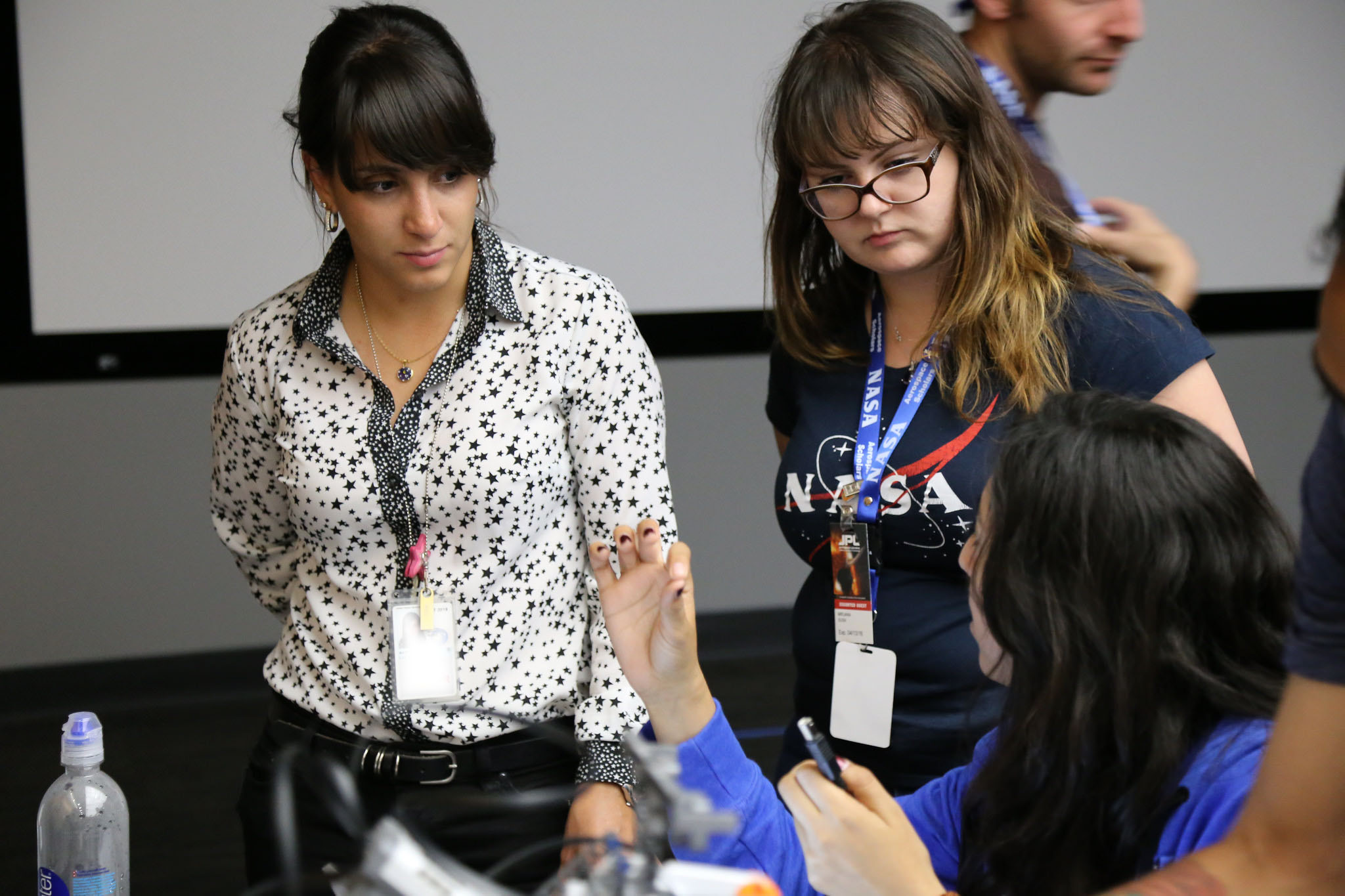
NASA's Women

Martinez Sierra mentors a team of students competing in a Mars rover challenge as part of the National Community College Aerospace Scholars program. Credit: NASA/JPL-Caltech/Lyle Tavernier

“I see myself in them,” says Martinez Sierra of the students she mentored during the program.

“I was lost. I didn’t know what I wanted to study or what I wanted to do in my career or how you go from being in college to being a professional. You don’t see that connection easily. It’s important to help students realise it’s not just magic. You have to pursue it. You have to be proactive.”

That she is. On top of her full-time job and serving as an occasional mentor for students, Martinez Sierra is also earning her doctorate in nuclear engineering.

On STEM in pop culture:

“There are so many different types of engineers and scientists, even at JPL,” says Martinez Sierra. “But they’re always portrayed as the same person in movies and TV shows. I like how in the new ‘Ghostbusters’ movie, the characters are portrayed as these cool people. They’re not boring. They get to play with cool toys and make cool things.”


The Scientist: Jean Dickey

NASA's Women

Jean Dickey in her office at JPL. Credit: JPL, NASA

Job title:

Scientist, Sea Level and Ice

What she does:

While the applications have evolved over her 36-year career at JPL, Jean Dickey’s specialty has always been explaining the mysteries that surround us. Her research focuses on the forces and processes that affect our home planet – everything from Earth’s gravity to changes in length-of-day to its evolving climate. She has published more than 70 papers, which include findings of a possible molten core on the moon and a method for predicting the variations in Earth’s rotation.

“Right now, I’m looking at changes in sea-level rise using data from the Jason and GRACE Earth satellites. There are pockets of warm ocean that explain why Earth’s sea-surface temperature was increasing at a lower rate,” says Dickey, referring to a previously unexplained hiatus in the otherwise strong uptick in surface air temperature. “It’s because the heat was going down deep in the ocean and was not accounted for.”

Data streams in from Earth satellites, airborne missions, and on-the-ground observations, and Dickey’s job is to make sense of it all. It’s a crucial part of understanding what’s happening on our home planet – and beyond.

Career trajectory:

Inspired early on by the success of the Sputnik satellite and the ensuing Space Race, and equipped with an affinity for maths and science, Dickey was the only one of six siblings to study science. When she graduated from Rutgers University in 1976 with a doctorate in physics, she was well accustomed to being the only woman in her classes and on research teams, but she never let that fact stop her.

She chose to specialise in high-energy particle physics, because as she describes it, “it was finding the essence, the basic building blocks of the universe. The quirks, colours and flavours.”

As a postdoc at Caltech, Dickey analysed data from particle experiments that were performed at Fermilab, a particle accelerator just outside of Chicago. She studied the dynamics of particle collisions and interpreted the findings, which meant using specialised software to analyse enormous data sets.

After three years at Caltech, she took on a new role at JPL analysing a much different set of data, but one that was no less intriguing. By studying the round-trip travel time of lasers shot between observatories on Earth and reflectors left on the moon by the Apollo astronauts, Dickey made new discoveries about how the moon oscillates and the Earth rotates, and how small variations can have big impacts on weather, sea level and even space exploration.
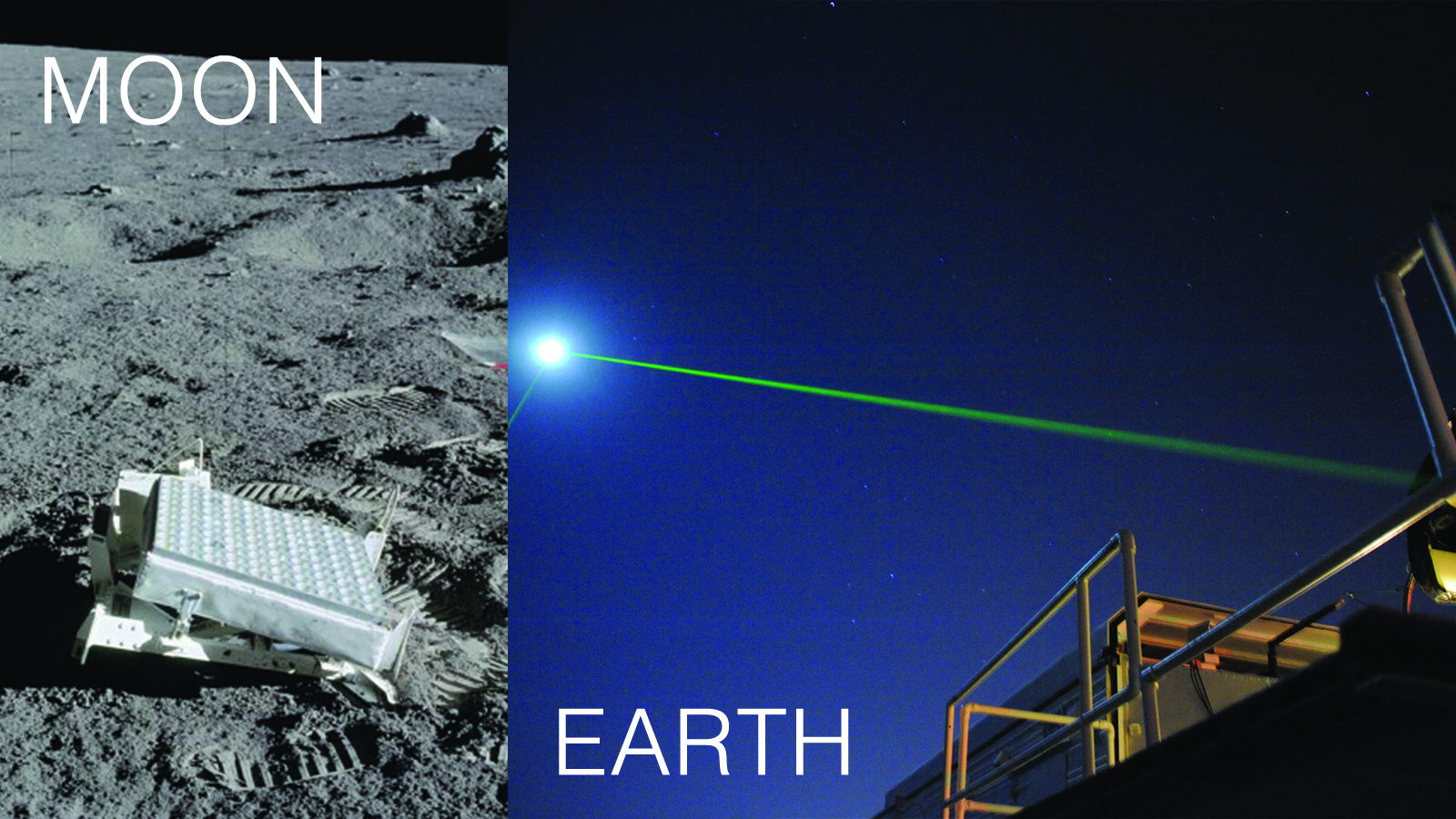
NASA's women

Dickey’s first job at JPL was analysing data from lunar-laser ranging experiments, in which lasers were shot between observatories on Earth (right) and reflectors on the moon left by the Apollo astronauts (left). Credits: NASA

It was a big change from particle physics, but Dickey was hooked.

“I was fascinated by Earth rotation and the processes ongoing here on Earth.”

Ever since, her research has revolved around the undulations, variations and wobbles that influence Earth’s climate, processes and its place in the solar system.

On STEM in pop culture:

“I like to see women in STEM portrayed as smart, caring people,” says Dickey. “I really dislike roles that show women as ‘space cadets,’ so to speak. I think we should be well represented in movies and in the culture.”

– Kim Orr

This article was first published by NASA’s Jet Propulsion Laboratory at the California Institute of Technology. Read the original article here.

How to balance gender in STEM

Sobering statistics on gender disparity were released by the Office of the Chief Scientist in early 2016 as part of a report on STEM-based employment. These followed the federal government’s National Innovation and Science Agenda (NISA) announcement of a $13 million investment to encourage women to choose and stick with STEM careers. So, what are the issues for men and women entering STEM graduate pathways today and how can you change the game?

The rate of increase in female STEM-qualified graduates is outstripping that of males by 6 per cent. Overall, however, women make up just 16% of STEM-qualified people, according to the Chief Scientist’s March 2016 report, Australia’s STEM Workforce.

Recognising that more needs to be done, a cohort of exceptional female and male leaders in academia and industry is developing two strategic approaches that will receive the bulk of the new NISA funding. These are the industry-led Male Champions of Change initiative, and the Science in Australia Gender Equity (SAGE) pilot, run the Australian Academy of Science and the Australian Academy of Technological Sciences and Engineering.

SAGE was founded by Professors Nalini Joshi and Brian Schmidt (a Nobel laureate) with a view to creating an Australian pilot of UK program the Athena SWAN Charter. Established in 2005, Athena SWAN was described by the British House of Commons as the “most comprehensive and practical scheme to improve academics’ careers by addressing gender inequity”.

Since September 2015, 32 organisations have signed up for Australia’s SAGE pilot, which takes a data analysis approach to affect change. Organisations gather information such as the number of women and men hired, trained and promoted across various employment categories. They then analyse these figures to uncover any underlying gender inequality issues, explains Dr Susan Pond, a SAGE program leader and adjunct professor in engineering and information technologies at the University of Sydney. Finally, participating organisations develop a sustainable four-year action plan to resolve the diversity issues that emerge from the analyses.

Women occupy fewer than one in five senior researcher positions in Australian universities and institutes, and there are almost three times as many male than female STEM graduates in the highest income bracket ($104K and above). The Australia’s STEM Workforce report found this wealth gap is not accounted for by the percentage of women with children, or by the higher proportion of females working part-time.

There are, however, some opportunities revealed by the report. While only 13% of engineering graduates are female, 35% of employees with engineering degrees are female, so a larger proportion of women engineers are finding jobs. Across all sectors, however, employment prospects for STEM-qualified women are worse than for non-STEM qualified women – a situation that’s reversed for men.

Part of the problem is that graduates view academic careers as the only outcome of a STEM degree – they aren’t being exposed to careers in industry and the corporate sector, says Dr Marguerite Evans-Galea, a senior research leader at the Murdoch Childrens Research Institute and co-founder of Women in Science Australia.

“There are so many compounding issues in the academic environment: it’s hypercompetitive, you have to be an elite athlete throughout your entire career,” she says. “This impacts women more because they are often the primary caregivers.”

An increased focus on diversity in STEM skills taught at schools, however, is changing the way women relate to careers in the field, Marguerite says.

“There are opportunities for women because, with diversified training, we can realise there is a broad spectrum of careers. A PhD is an opportunity to hone your skills towards these careers.”

In the workforce, more flexible work arrangements and greater technical connectivity are improving conditions for women at the early-career level but, as Marguerite points out, there is still a bottleneck at the top.

“I’m still justifying my career breaks to this day,” she says. “It’s something that travels throughout your entire career – and this needs to change.”

Part of the issue is the way we measure success, as well as gender disparity, on career and grant application review panels – and this won’t change overnight.

“How we define merit may be different if there are more women in the room,” Marguerite adds. “There will be a more diverse range of ideas. Collaborations and engagement with the public may be valued more, as well as your ability to be an advocate and be a role model to other women in STEM. Paired with essential high-quality research, it could provide a broader lens.”

-Heather Catchpole

This article was first published on Postgraduate Futures on 29 May 2016. Read the original article here.

Engineering music video inspires girls

Featured video above: NERVO’s engineering music video aims to get girls switched onto careers in engineering. 

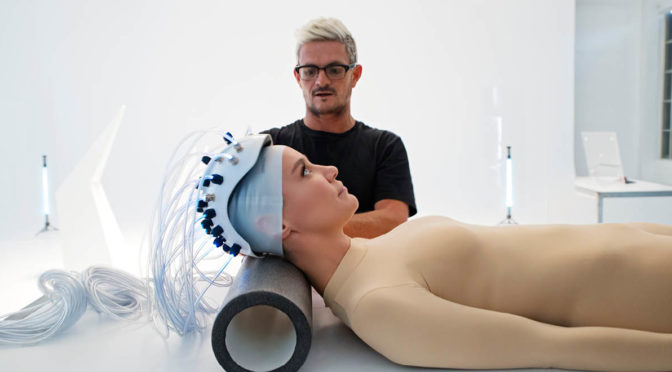
Eight top universities – led by the University of New South Wales – have launched a song and music video by Australia’s twin-sister DJ duo NERVO to highlight engineering as an attractive career for young women.

NERVO, made up of 29-year-old singer-songwriters and sound engineers Miriam Nervo and Olivia Nervo, launched the video clip for People Grinnin’ worldwide on Friday 15 July.

In the futuristic video clip, a group of female engineers create android versions of NERVO in a high-tech lab, using glass touchscreens and a range of other technologies that rely on engineering, highlighting how it is embedded in every facet of modern life.

The song and video clip are part of Made By Me, a national collaboration between UNSW, the University of Wollongong, the University of Western Australia, the University of Queensland, Monash University, the University of Melbourne, the Australian National University and the University of Adelaide together with Engineers Australia, which launched on the same day across the country.

It aims to challenge stereotypes and shows how engineering is relevant to many aspects of our lives, in an effort to to change the way young people, particularly girls, see engineering. Although a rewarding and varied discipline, it has for decades suffered gender disparity and chronic skills shortage.

NERVO, the Melbourne-born electronic dance music duo, pack dancefloors from Ibiza to India and, according to Forbes,  are one of the world’s highest-earning acts in the male-dominated genre. They said the Made by Me project immediately appealed to them.

“When we did engineering, we were the only girls in the class. So when we were approached to get behind this project it just made sense,” they said.

“We loved the chance to show the world that there is engineering in every aspect of our lives,” they said. “We’re sound engineers, but our whole show is only made possible through expert engineering:  the makeup we wear, the lights and the stage we perform on.”

“Engineering makes it all possible, including the music that we make.”

Alexandra Bannigan, UNSW Women in Engineering Manager and Made By Me spokesperson, said the project highlights the varied careers of engineers, and the ways in which engineers can make a real difference in the world. 

“When people think engineering, they often picture construction sites and hard hats, and that perception puts a lot of people off,” she said. “Engineering is more than  that, and this campaign shows how engineering is actually a really diverse and creative career option that offers strong employment prospects in an otherwise tough job market.”

She noted that the partner universities, which often compete for the best students, see the issue as important enough to work together.

“We normally compete for students with rival universities, but this is such an important issue that we’re working together to break down those perceptions,” she said.

Made By Me includes online advertising across desktop and mobiles, a strong social media push, a website telling engineering stories behind the video, links to career sites, as well as the song and video, to be released by Sony globally on the same day. Developed by advertising agency Whybin/TBWA, the campaign endeavours to change the way young people, particularly girls, see engineering.

“We needed to find a way to meet teenagers on home turf and surprise them with an insight into engineering that would open their minds to its possibilities,” said Mark Hoffman, UNSW’s Dean of Engineering. “This is what led to the idea of producing an interactive music video, sprinkled with gems of information to pique the audience’s interest in engineering.”

UNSW has recently accelerated efforts to attract more women into engineering, more than tripling attendance at its annual Women in Engineering Camp, in which 90 bright young women in Years 11 and 12 came to UNSW from around Australia for a week this year to explore engineering as a career and visiting major companies like Google, Resmed and Sydney Water. It has also tripled the number of Women in Engineering scholarships to 15, valued at more than $150,000 annually.

Hoffman, who became Dean of Engineering in 2015, has set a goal to raise female representation among students, staff and researchers to 30% by 2020. Currently, 23% of UNSW engineering students are female (versus the Australian average of 17%), which is up from 21% in 2015. In industry, only about 13% of engineers are female, a ratio that has been growing slowly for decades.

“Engineering has one of the highest starting salaries, and the average starting salary for engineering graduates has been actually higher for women than for men,” said Hoffman. “Name another profession where that’s happening.”

Australia is frantically short of engineers: for more than a decade, the country has annually imported more than double the number who graduate from Australian universities.

Some 18,000 engineering positions need to be filled annually, and almost 6,000 come from engineering students who graduate from universities in Australia, of whom the largest proportion come from UNSW in Sydney, which has by far the country’s biggest engineering faculty. The other 12,000 engineers arrive in Australia to take up jobs – 25% on temporary work visas to alleviate chronic job shortages.

“Demand from industry has completely outstripped supply, and that demand doubled in the past decade,” said Hoffman. “In a knowledge driven economy, the best innovation comes from diverse teams who bring together different perspectives. This isn’t just about plugging the chronic skills gap – it’s also a social good to bring diversity to our technical workforce, which will help stimulate more innovation. We can’t win at the innovation game if half of our potential engineers are not taking part in the race.”

UNSW has also created a new national award, the Ada Lovelace Medal for an Outstanding Woman Engineer, to highlight the significant contributions to Australia made by female engineers.

This information was first shared by the University of New South Wales on 14 July 2016. Read the original article here.
Building STEM skills

There has been a lot of talk about the need to get more students studying STEM skills –science, technology, engineering and mathematics – to equip them for the jobs of tomorrow. For Australia to have the right mix of high value jobs and industries to maintain or improve our quality of life, we need more people with the digital and data-related skills that these jobs require.

A natural assumption would be that the reason we need to encourage students to study science and other STEM skills is to boost our research clout – the cohort of technically trained people within Australia’s university and publicly funded research laboratories. While of course Australia’s research capabilities are a pivotal element of our innovation ecosystem, this misses the point.

In my view, the areas where we desperately need more graduates with STEM skills include industry, government, politics and the entrepreneurial domain.

The ability to use complex data to make evidence-based decisions has never been more critical for decision-making – whether that be in the corporate boardroom, the executive suite, or the cabinet room. Most of the global challenges we face – from climate change to cyber crime – require a sophisticated understanding of STEM and basic STEM skills.

Technology offers solutions to many emerging problems. But experience from the nuclear debate to genetically modified crops tells us that when communities aren’t equipped with a good understanding of the scientific process and complexities behind these issues, it is extraordinarily difficult to secure the societal license required to introduce transformative technological solutions.

But the kicker is entrepreneurship – where young people have some of the best opportunities to harness rapidly emerging technological disruption to create high-value jobs. There is no question that many of these opportunities come from the STEM disciplines. We need to create opportunities where young people studying STEM skills are exposed to entrepreneurial ecosystems, have the chance to see first–hand what it takes and give it a go.


“We can’t afford to wait for more girls to select these traditionally male-dominated careers – we need to be proactive in creating pathways and incentives for girls to enter these fields.”


There are some STEM fields where we need to focus serious effort on getting more girls to engage. In particular, IT and engineering. Both areas are so critical to Australia’s future that we simply can’t afford to be building on half our talent base.

We can’t afford to wait for more girls to select these traditionally male-dominated careers. We need to be proactive in creating pathways and incentives for girls to enter these fields. We also need to provide much better systems and cultures to retain our capable women in STEM and research.

One simple thing we can do is profile and celebrate those female role models who are currently making an impact and are the top of their game in these STEM fields. The recently launched SAGE initiative will be pivotal in helping address the dire under-representation of women at the most senior levels in Australia’s universities and research organisations.

It’s worth noting that research, development, innovation and discovery are all about building from what’s already known. They’re about asking new questions and connecting existing knowledge. This is, at its heart, a creative process. We can’t forget that one of the critical elements in nurturing our most outstanding future engineers and scientists lies in supporting children to engage in the creative arts alongside STEM.

Tanya Monro

Deputy Vice Chancellor Research and Innovation, University of South Australia

Read next: Stephanie Borgman, People Program Specialist at Google Australia/NZ, on how internships offer mutual opportunities for students and businesses.

People and careers: Meet graduates and postgraduates who’ve paved brilliant, cross-disciplinary careers here, find further success stories here and explore your own career options at postgradfutures.com

Spread the word: Help to grow Australia’s graduate knowhow! Share this piece using the social media buttons below.

Be part of the conversation: Share your ideas on creating and propelling top Australian graduates. We’d love to hear from you!

More Thought Leaders: Click here to go back to the Thought Leadership Series homepage, or start reading the Australian Innovation Thought Leadership Series here.

Fast-tracking women in STEM

Featured image above: Jane Elith from the University of Melbourne is an early career researcher, yet in the field of environment and ecology, she is the 11th most cited author worldwide over the past 10 years, and is the only Australian woman on the highly cited list. Women in STEM represent just 18% of academic positions in Australia.

Advocacy for gender equity in science is changing, with men as likely as women to make the case for increased participation for women in STEM, former Sex Discrimination Commissioner Elizabeth Broderick says.

And there’s a simple business case as to why: “No one of us can ever be as good as all of us acting together,” says Broderick, who served as Sex Discrimination Commission from 2007–2015 and in 2010 founded the Male Champions of Change group, which brings together some of Australia’s most influential and diverse male CEOs and Chairpersons.

“Women represent such a small percentage of [staff at the] professorial level and organisation leading level, and yet 50% of our talent resides in women,” Broderick told 320 delegates at the SAGE symposium on Friday 24 June.

SAGE is Australia’s Science and Gender Equity initiative to promote gender equity for women in STEM. Broderick will chair the program, which with the Male Champions of Change group will receive the bulk of the $13 million National Innovation and Science Agenda funding to support women in STEM careers.

Practical initiatives for women in STEM

SAGE runs the Athena Swan Charter, which takes a data analysis approach to effect change in organisations, which then work towards a series of awards based on the success of their gender equity programs.

On Friday SAGE announced that another eight organisations including the Burnet Institute, Federation University Australia, James Cook University, Defence Science and Technology Organisation, Bond University, Macquarie University, University of the Sunshine Coast, and the Australian Astronomical Observatory had signed on for the charter, bringing total participation in Australia to 40 research and academic institutions.

Women make up just 16% of the STEM-qualified workforce, according to the Chief Scientist’s March 2016 report, Australia’s STEM Workforce.

“At a turning point”

“We are at a conscious turning point for enabling equity for women scientists. We need role models that can unconsciously change perceptions,” says Dr Susan Pond AM, Co-Chair of SAGE and Interim Chief Operating Officer and Adjunct Professor in Sustainability at the United States Studies Centre at the University of Sydney.

Broderick adds that while women comprise more than half of graduates and postgrads in STEM, they comprise just 18% of academic positions. “The absence of women perpetuates the absence of women.”

“If we don’t actively and intentionally include women, the system will unintentionally exclude them.”

The gender pay gap also sits at around 18%, Broderick says.

Two practical ways the Male Champions of Change addresses gender equity for women in STEM is through the ’50:50, if not why not’ and the panel pledge, says Broderick.

In the panel pledge, males commit to speaking at events only if there is equal representation by women in STEM, and reserve the right to pull out even at the last minute if this isn’t happening.  The Male Champions of Change developed the ’50:50, if not why not’ slogan in response to gender inequity.

“In our DNA”

Seeking out and addressing gender imbalance “ought to be in our institutional DNA”, Australia’s Chief Scientist, Dr Alan Finkel, told the symposium.

Fewer than one-third of graduates in 2011 (the latest figures available from the Australian census) were women in STEM, says Finkel.

“I look to universities to not just reflect society today, but to model the society of tomorrow.”

– Heather Catchpole

Diversity brings a competitive advantage

Experts increasingly cite diverse thinking as key to securing long-term organisational success. McKinsey and Company‘s 2015 Diversity Matters report found that across the Canada, Latin America, the United Kingdom and the USA, companies in the top quartile for gender diversity were 15% more likely to have financial returns above their national industry medians. But with women comprising a mere 20% of the Australian technology sector, a lack of gender diversity is threatening the competitive advantage of Australian organisations.

Enterprises have long preached the importance of gender diversity. But were their efforts genuine? Or could they have been a strategic guise to project false integrity across an expectant market? There were certainly individuals championing female progression. But the movement was not perceived as integral to success, and so did not become a key priority for most organisations beyond façade – until now.

Times are changing, and innovating to sustain a competitive advantage is now crucial for an enterprise’s survival. With diverse thinking increasingly perceived as a tool to cultivate innovation effectively and inexpensively – why wouldn’t organisations sincerely support female progression within the workplace? After all, it translates into business benefit.

With a more prevalent understanding that female input is essential for a prosperous future, impassive words are finally being put into action. Organisations are now examining approaches to support and progress women within the workplace, and to encourage women to consider a STEM pathway.

Unfortunately, changing business priorities do not always equate to a sudden change in mindset across an entire organisation. Yet with leadership and business strategy genuinely backing female advancement, an unprecedented opportunity presents itself for women – and should be leveraged.

These issues form some of the key themes at the 2016 Women in Tech. conference, which is bring together a group of amazing women and men to address problems in the sector and help all in attendance build their skills and careers. Click here for more information about Women in Tech.

– Yasmine Finbow

Gender equality and innovation

Australia needs to be more innovative in our approach to gender equity. It’s time to do things differently and be bolder in our commitment to diversity.

During my training as a medical researcher, women represented more than 50% of my undergraduate class and almost 75% of my PhD peer group. But the pipeline approach has failed; putting 50% of women into the science system at a junior level has not seen 50% of women in senior leadership pop out the other end. And it’s been this way for more than 20 years.

In 2016 men continue to hold the majority of Australia’s top leadership positions in science, research, innovation and business. The next generation will always be different, but we cannot place the burden of gender equity on those who follow us. We need to lead from the top and from the front, creating a pull-through effect that draws women through the pipeline and enables them to lead.

Insist on inclusiveness

Equity is everyone’s issue, and we need to insist on inclusiveness. Speak up about all male conference panels, research grant teams, boards and committees – especially if you’re involved in them. Call it when you see it, and provide a pathway to change; reach out with the names of women who could participate and promote conscious consideration of diversity.


“Innovation is a people-driven process that thrives on diverse thinking and views. To build a strong, resilient and successful innovation ecosystem, Australia needs to harness the talents of both men and women.”


If it matters, measure it

Everyone is accountable for equity. Scientists and managers alike know you need to measure what matters in order to understand it. Organisations should collect data and report on all aspects of gender equity in the workplace, and be open and transparent in sharing that information.

Look out as well as in

A lack of women in leadership is not unique to the science and research sector. We need to investigate and consider programs and policies that have had impact in other industries. There is no silver bullet solution or single way to address all of the challenges around diversity. We need to do all that we can to support women at all career stages, and at all places along the pipeline.

Innovation is a people-driven process that thrives on diverse thinking and views. To build a strong, resilient and successful innovation ecosystem, Australia needs to harness the talents of both men and women. Diverse teams make better decisions, and to innovate during times of transformation, Australia will need all hands on deck – an inclusive ecosystem that values and promotes women.

Dr Krystal Evans

Chief Executive Officer of the BioMelbourne Network

Learn more: Click here to see a timeline of gender equality in Australian education and the workplace put together by Open Colleges

Read next: Professor Peter Klinken, Chief Scientist of Western Australia on innovation in Western Australia.

Spread the word: Help to grow Australia’s innovation knowhow! Share this piece using the social media buttons below.

Be part of the conversation: Share your ideas on innovating Australia in the comments section below. We’d love to hear from you!

Women in STEM: Mathilde Desselle

Featured image above by Nathan Barden

Desselle is a programme coordinator for outreach for the Community for Open Antimicrobial Drug Discovery (CO-ADD) at The University of Queensland’s Institute for Molecular Bioscience. She is looking for the next antibiotic in engaging academic chemists worldwide in an open-access compound screening program and setting up international partnerships. Desselle has eight years’ experience driving engagement strategies for medical research programs and facilities. She is passionate about finding innovative approaches to drive transformational change and solutions to diagnose, track and treat infectious diseases.

Desselle is a board director for the Queensland-based Women in Technology peak industry body for women in science and technology careers, and for the Tech Girls Movement foundation, promoting positive role models to encourage and raise awareness of STEM careers for girls.

Desselle completed a double Masters degree in bioengineering and business from the Catholic University of Lille and a Masters of International Economics from the University of the Littoral Opal Coast in France in 2008.

What do you think is the most important character trait in a successful scientist?

“I would say having a drive. It takes passion, tenacity, and a vision to lead successful research initiatives, and I believe having an articulate “why” is essential to feed them. Don’t we always go back to what drives us when celebrating successful outcomes and overcoming rejection and failures?”

What is one thing you would change to improve the gender balance in senior ranks of scientists?

“Ending the ‘manel’. I would ask the 32 Australian universities and research institutes who are part of the SAGE pilot, an initiative of the Australian Academy of Science and the Academy of Technological Sciences and Engineering that addresses gender equity in the science, technology, engineering, maths and medicine (STEMM) sectors, to make the following pledge: striving to achieve gender balance in all conferences and panel discussions they are hosting and organising.”

What support structures did/do you have in place that have facilitated your success?

“I will forever be grateful to the mentors who have pushed me outside of my comfort zone. We also have world-class facilities in Australia enabling ground-breaking research and innovative collaborative projects. I am looking for the next antibiotic to combat drug-resistant infections, and it takes advanced scientific, technological and administrative systems to function.”

If at times your confidence is a little shaky, where do you turn?

“I can count on a very supportive network of women and men around me, on their experiences and their expertise. There is always someone I can turn to for addressing concerns or uncertainties. I also practice mindfulness and Harvard Business School social psychologist Professor Amy Cuddy’s “power poses”. Watch her Ted Talk on body language and challenge your inner wonder woman!”

What is your ideal holiday – and do you work on your holiday?

“My ideal holiday is being out horse riding on trails or beaches all day in New Zealand or in the USA. After I get off the saddle, I still follow up on pressing matters, and never lose an occasion to meet or connect with someone I could follow up with for professional matters, so I guess I rarely completely switch off.”

Follow Mathilde Desselle on Twitter: @mathildesselle

This article was first published by Women in Science AUSTRALIA. Read the original article here.

International Women’s Day at Monash

The reflections of these women align with many of the priorities of International Women’s Day, including: helping women and girls achieve their ambitions; promoting gender-balanced leadership; valuing women and men’s contributions equally; and creating inclusive, flexible cultures. 

This video was first published by Monash University on 7 March 2016. Watch the original video here.