Tag Archives: Agriculture

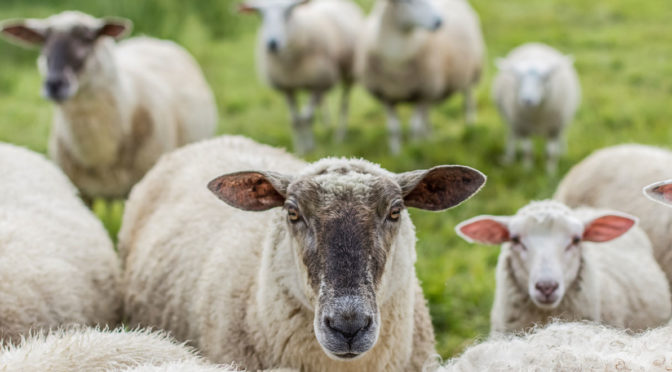
New web-based ram selection app wows sheep breeders

The web-based app was launched today by the Cooperative Research Centre for Sheep Industry Innovation (Sheep CRC). The Sheep CRC developed the tool in conjunction with Telstra, Australia’s leading telecommunications provider, and leading software development company Pivotal Labs in San Francisco.

The NSW Department of Primary Industries has also been extensively involved throughout the development of the app, providing expertise from the initial concept to the final product.

During the final test runs before launch, approximately 20 sheep breeders, commercial producers and advisers previewed the system, which they say will dramatically simplify the ranking and purchase of rams, based on Australian Sheep Breeding Values (ASBVs).

Leading farm adviser Craig Wilson, of Craig Wilson & Associates, NSW, says RamSelect.com.au will take the hard work out of using ASBVs when searching for the right genetics to improve flock productivity. “RamSelect.com.au will be a game changer,” Wilson says. “We have known for a long time that ASBVs allow us to compare animals on genetic merit, without the effect of feeding or environment. The RamSelect app makes it quick and easy to rank animals against individual breeding objectives.

“For a lot of commercial producers, sifting through long lists of objective data was time consuming and difficult work – they can now find the genetics they need in a matter of seconds, and know that the recommendations are supported by objective data from Sheep Genetics.”

Sheep CRC chief executive James Rowe said RamSelect.com.au would also be an important marketing tool for breeders assisting clients to select ram teams.

“More and more commercial breeders are demanding objective ASBV data when shopping for rams,” says Rowe. “RamSelect.com.au ensures ram buyers can quickly check rams on offer against their breeding objective and prepare a ranked list prior to sale day. On sale day the buyer only needs to check the visual traits before making their purchase decisions.”

RamSelect.com.au is accessible on a computer, tablet or phone. It will search the Sheep Genetics databases – MERINOSELECT, LAMBPLAN and DOHNE MERINO – to quickly identify and rank rams for a defined breeding objective.

This article was first published on 23 July 2015 by the Sheep CRC. Read the original article here.

Robot automates bacteria screening in wine samples

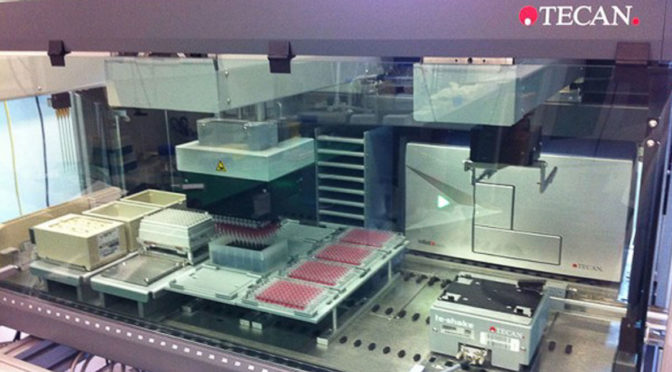
A robotic liquid handling system at the Australian Wine Research Institute (AWRI) is automating the screening of large numbers of malolactic bacteria strains.

Using miniaturised wine fermentations in 96-well microplates, the Tecan EVO 150 robotic system is screening bacteria for MLF efficiency and response to wine stress factors such as alcohol and low pH.

The bacteria are sourced from the AWRI’s wine microorganism culture collection in South Australia and elsewhere.

The robot can prepare and inoculate multiple combinations of bacteria strains and stress factors in red or white test wine, and then analyse malic acid in thousands of samples over the course of the fermentation.

In one batch, for example, 40 bacteria strains can be screened for MLF efficiency and response to alcohol and pH stress in red wine, with over 6000 individual L-malic acid analyses performed.

The AWRI says that this high-throughput approach provides a quantum leap in screening capabilities compared to conventional MLF testing methods and can be applied to a range of other research applications.

Additionally, the phenotypic data obtained from this research is being further analysed with genomic information, which will identify potential genetic markers for the stress tolerances of malolactic strains.

First published at foodprocessing.com.au on 22 July. Read the original article here.

This article was also published by The Lead on 22 July 2015. Read the article here.

Two microbes hold key to superior feed crops

Scientists have identified two microbes that build bigger and more resilient feed crops, potentially boosting farmers’ bottom lines by millions of dollars.

The biotechnology research conducted at Flinders University in South Australia identified two strains of microbes that dramatically increase the ability of lucerne to fix atmospheric nitrogen, boosting the feed crop’s early growth and resilience, and ultimately its yield.

Research by medical biotechnology PhD student Hoang Xuyen Le drew on the hundreds of strains of endophytic actinobacteria, which grow naturally within legume roots. His research isolated and identified two strains of microbes that in laboratory and glasshouse trials were shown to promote growth in the shoots of the legume plants.

The research was supervised by Professor Chris Franco from Flinders and Ross Ballard from South Australian Research and Development Institute (SARDI). A patent has been lodged in relation to the two strains.

Nitrogen is absorbed by the plants through the formation of external nodules by symbiotic rhizobium bacteria that grow in the nodules. Franco says that following the inoculation of the lucerne seeds with spores of the actinobacteria, the nodules grew significantly larger, fixing greater amounts of nitrogen.

“Up to 50 or even 70 per cent more nitrogen was fixed,” says Franco.

The effect was to substantially improve the establishment of the lucerne, increase its resilience in drought conditions and also boost its yield.

“We found that our two main strains gave us a crop yield increase of 40 to 50 per cent in the glasshouse, and we would look for at least a 20 per cent improvement in the field,” says Franco.

He says as much as 25 per cent of the higher levels of nitrogen persisted in the soil, improving the growing conditions for subsequent crops.

The Flinders biotechnologists will now expand their trials on lucerne in the field, and will also look for similar effects in other legume crops, including peas, chick peas and faba and soya beans.

Further research is required to understand the underlying mechanism of the bugs: while it is likely that their natural propensity to produce bioactive compounds is partly responsible for increasing the general robustness of the inoculated lucerne by reducing disease, they may also be encouraging the growth of rhizobium bacteria in the soil.

Franco says that actinobacteria offer an environmentally friendly way of controlling disease, especially fungal root diseases such as Rhizoctonia, reducing the need for fossil-derived pesticides and fertiliser.

The potential to capture atmospheric nitrogen offers a major environmental benefit.

The legume seed crop, based in the South East of South Australia, is the basis of a national feed industry worth close to $100 million a year.

“This is very good news all round,” says Franco.

This article was first published by The Lead on 22 July 2015. Read the original article here.

Help to combat pest animals is only a click away

The toolkit is a one-stop shop of practical knowledge to arm farmers and land managers with the information and connections they need to combat pest animals.

IA CRC digital communications manager Keryn Lapidge said, “We are pleased to have the Minister for Agriculture, Barnaby Joyce, officially launch PestSmart Connect today, recognising this as an important knowledge hub for tackling pest animal problems such as wild dogs, which have become a really big economic and social issue for Australian farmers.”

The website also links to the FeralScan website and app which provides people with the capability to map pest animal sightings and damage and then to use this information to track and control the problem.

“This website is really strong on connecting people and communities. A feature is the ‘connect’ portal which aims to provide contact details of agencies, organisations and groups that are active in pest animal management and can provide people with services, useful advice or assistance – at a practical on-ground level, but also at a policy level,” she said.

The PestSmart Connect website features pest animal species that are a having a major impact on biodiversity and agriculture in Australia including wild dogs, foxes, feral cats, rabbits and carp. There are handy glovebox guides, videos about trapping and baiting, case studies and links to assistance.

“We hope this will be a useful knowledge hub for farmers and land managers and we plan to continue to improve the resource over time,” Lapidge said.

The PestSmart Connect website www.pestsmart.org.au is the culmination of ten years of information gathering and research by the IA CRC – Australia’s largest integrated pest animal management research organisation.

Minister for Agriculture, Barnaby Joyce, launches the PestSmart Connect website - a handy toolkit of pest animal management information for farmers and land managers.

Minister for Agriculture, Barnaby Joyce, launches the PestSmart Connect website – a handy toolkit of pest animal management information for farmers and land managers.


This article was first published by the Invasive Animals CRC on 16 June, 2015.

Lending fresh air to grain pest problem

The study is led by the Plant Biosecurity CRC, partnering with the Western Australian grower collective Mingenew-Irwin Group (MIG), and is part of the CRC’s program to find solutions to a global problem in the wheat industry that has intensified during the past decade – phosphine resistance. Phosphine is the industrial fumigant most widely used worldwide to kill and control beetles and weevils in stored grains, but its effectiveness is declining due to the development of resistance.

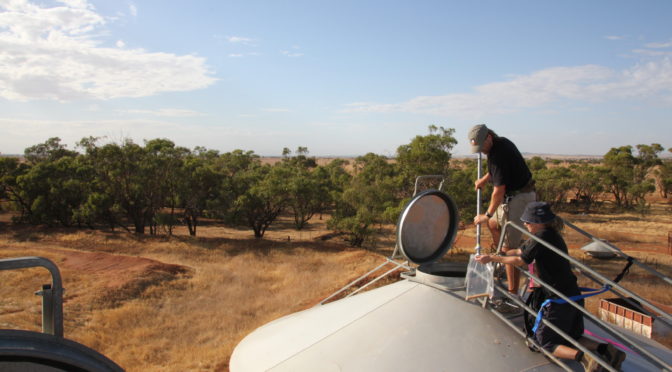
Former-owned and independent research company Kondinin Group has been engaged to trial an alternative practice called aeration. It’s been around as a concept for a long time but is not widely adopted. It requires cool, dry air to be pumped into stored grain. The CRC study has shown that this can be done simply and economically – and that it works.

“I think it’s pretty exciting in terms of looking for options and alternatives as well as supplementary solutions to combating insects in grain storage,” said Kondinin Group research manager and agricultural engineer Ben White, who has been running the experiment.

White and his team have been testing a simple set-up on 70 tonne cone-bottom silos – the typical type used throughout WA’s wheat belt. At the base of the silo, they place a 550 watt centrifugal fan that’s switched on and off according to ambient humidity and temperature as measured by an aeration controller mounted nearby. The conditions that cause the fan to switch on are determined by simple algorithms, one of which was developed many years ago and licensed by the CSIRO.

The aim is to only run the fans when ambient humidity is below 80%. If air temperature and humidity levels are suitable, air is pumped through the stored grain at the rate of 2–3 L per second, per tonne, which cools the grain. While this doesn’t kill insects, it reduces their activity significantly and creates conditions in which they are unable to breed.

Another benefit identified by the Kondinin trial is that aeration reduces proportions of non-sprouting grains. Aeration has been shown to produce a net benefit of over $2 per tonne, which is $140 per silo, and pays for the aeration system within a year. This is in addition to the other potential savings from reducing or eliminating phosphine use.

Sheila Charlesworth, executive officer for MIG, says the study proves there are economic benefits to aeration, and her growers intend to implement it. In addition, growers from NSW and Queensland who travelled to WA to observe the method have since adopted it in their home states.

– Karen McGhee

www.pbcrc.com.au

Drone used to drop beneficial bugs on corn crop

Photograph courtesy of Ausveg and Vegetables Australia

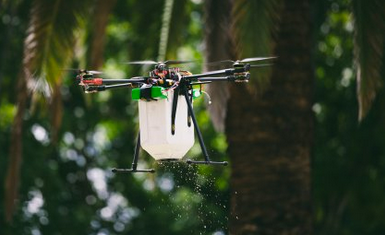
During his Summer Science Scholarship at UQ, Mr Godfrey investigated if drones could be used to spread the beneficial Californicus mite, a predatory mite which feeds on pest leaf eating mites onto crops infected with two spotted mites.

Godfrey said two spotted mites ate chlorophyll in leaves, reducing plant vigour and crop yield.

“As corn grows, it is very difficult to walk between the crop to spread beneficial bugs,” he said.

“A drone flying over the crop and distributing the insects from above is a much more efficient and cost-effective method.”

Godfrey began his project at the Agriculture and Remote Sensing Laboratory at UQ’s Gatton Campus, learning how drones function, before spending time at Rugby Farms to gain insight into potential uses for drones.

“I built a specific drone for the project, tailoring the number of propellers, stand, and size of the motor to suit the drone’s application,” he said.

“My initial concept for the ‘Bug Drone’ came from a seed spreader, and in the end I built an attachment to the drone that can be used to spread the mites over the crop from the air.”

2015-04-29_1605Initial designs using a cylinder-shaped container to hold the mites weren’t practical as it couldn’t hold enough of the predatory mites to make the process efficient.

“I used corflute material to make a large enough storage device for the mites,” Mr Godfrey said.

“The seed spreader then acts as the distributer as it has a small motor powering it.”

The device is controlled remotely from the ground.

“We’ve tested the product at Rugby Farms and I’ve successfully proved the concept that drones can be used to spread beneficial bugs,” Mr Godfrey said.

“There is still a lot of work to be done, but the most difficult part is to work out how to control the volume of bugs being distributed at the one time.

“The next step is to monitor the crops and to see what happens after the bugs have been dropped.

“Remote sensing with precision agriculture is an interesting field, and it has opened my eyes to the career opportunities in this field,” he said.

Students can study precision agriculture at The University of Queensland Gatton in a course run by Associate Professor Kim Bryceson who also manages the Agriculture and Remote Sensing Laboratory.

Eyes on the ground

Dog ‘Facebook’ to manage Aussie pest problem

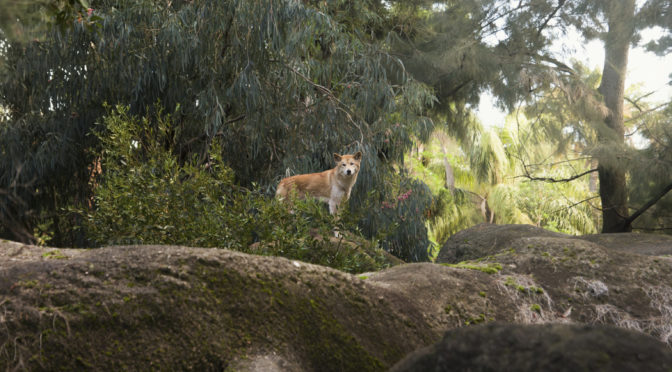
Facial recognition technology is  being used by the Invasive Animals CRC  to identify, track and control  wild dog populations, which cause  significant damage to Australian farms.

Facial recognition technology is being used by the Invasive Animals CRC to identify, track and control wild dog populations, which cause significant damage to Australian farms.

It’s estimated that wild dogs cost Australian farmers more than $65 million each year – a small part of the estimated $1 billion annual price of animal pests to agriculture. Pest monitoring is an important part of ensuring control strategies are effective, and automated technologies that promise more efficient and detailed monitoring are under investigation.

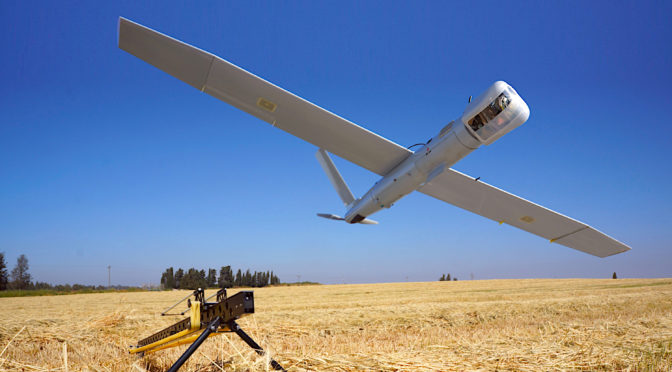
Southern Downs Regional Council in Queensland is working with Australian agricultural tech company Ninox Robotics to spot wild dogs and other pests in their region. The project involves using unmanned aerial vehicles (drones) equipped with thermal imaging cameras, which can map dozens of square kilometres of countryside in a few hours.

The Invasive Animals CRC (IA CRC), NSW Department of Primary Industries and CRC partners have developed camera trap technology with facial recognition software – similar to that used by Facebook to tag your friends – to identify individual dogs and help combat the wild dog problem. Initial tests in northern NSW were able to pinpoint individual dogs with 87% accuracy. The researchers are seeking further funding to turn the technology into user-friendly software for widespread use.

Future versions could monitor other pests including feral cats, and threatened species, says IA CRC researcher Paul Meek. “Technology is providing us with new opportunities to carry out research and management,” says Meek. “And it’s already changing the way we do things.”


Drones streamline cattle musters

iStock_000035347982_LargeMustering cattle on large Australian stations is a time consuming, expensive and sometimes dangerous operation. Before mustering can begin, graziers need to locate livestock using helicopters, horses, quadbikes and motorbikes, sometimes setting up remote camps.

By mapping the cattle’s location, drone technology under development by the CSIRO could potentially halve mustering costs, says project leader and farming systems specialist Dr Dave Henry. Using an off-the-shelf drone and thermal camera, the researchers accurately located cattle on the Lansdown Research Station near Townsville in 2013, and they are seeking funding for large-scale trials – the next step towards a marketable product.

“Technology is providing us with new opportunities to carry out research and management.”

Using sensors, drones could also monitor feed in paddocks, optimising animal production and minimising environmental impact. “Ultimately, graziers and land managers could manage cattle and their environment, and their whole farm business, in a more precise, timely and informed manner,” says Henry.


Satellites drive precision tractors

Precision agriculture uses sensing technologies, from satellites to drones, to help automate tasks like sowing and harvesting. The benefits of satellite positioning in agriculture are substantial, with an analysis by Allen Consulting predicting it will pump up to $28 billion into the Australian economy by 2030.

Improved satellite positioning in agriculture will yield greater navigational accuracy for unmanned farming vehicles such as drones and automated tractors.

Improved satellite positioning in agriculture will yield greater navigational accuracy for unmanned farming vehicles such as drones and automated tractors.

A collaboration including the CRC for Spatial Information (CRCSI) and the Japan Aerospace Exploration Agency has developed positioning technology for a driverless tractor using GPS and the Japanese Quasi-Zenith Satellite System (QZSS). In summer trials in the Riverina, NSW, the tractor navigated rows of crops to an accuracy of 5 cm.

Existing technologies rely on mobile phone coverage and a costly, dense network of ground-based antennas called reference stations. These improve the accuracy of the machinery’s satellite-derived position from several metres to a few centimetres.

But mobile coverage and expensive antennas “are barriers to adoption in remote Australia,” says Dr Phil Collier, CRCSI research director. The researchers’ alternative requires fewer reference stations, instead transmitting position corrections to the tractor via a satellite communication channel unique to QZSS. This approach promises multiple benefits for farmers in remote areas.
Traversing the same ground each time, the tractors use less fuel and reduce erosion. The day may even come where fleets of robotic tractors work overnight, says Collier.


Managing bushfire threat

Automation can also play a major role in predicting and managing the threat of bushfires. Typically, emergency services and researchers rely upon observations by satellites, from aircraft and on the ground.

Drones could provide valuable extra data, says Dr Thomas Duff, a Bushfire & Natural Hazards CRC researcher at the University of Melbourne who specialises in simulations that predict fire behaviour. In contrast to helicopters, unmanned vehicles eliminate risks to pilots, and are cheaper and more manoeuvrable, enabling more detailed observations.

With Country Fire Authority Victoria, researchers at the CSIRO
are using drones to make observations of controlled fires for use in bushfire simulations. The RISER (Resilient Information Systems for Emergency Response) collaboration based at the University of Melbourne is monitoring grasslands to better understand how they dry out each year. Duff says this research is critical to more accurate predictions of fire behaviour.

invasiveanimals.com

crcsi.com.au

bnhcrc.com.au

Healthier stock for dairy farmers

JANE KELLEY PhD student, LaTrobe University AgriBio

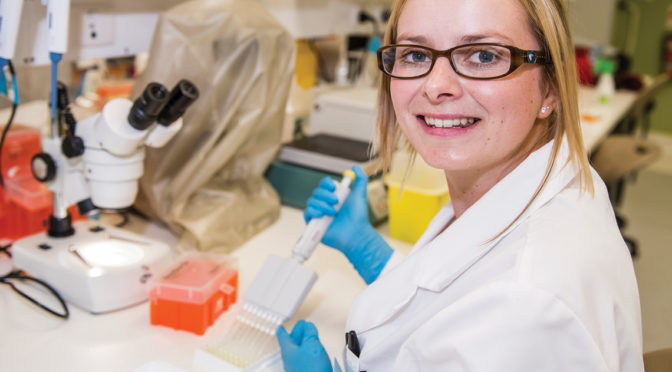
FOR RESEARCHER Jane Kelley, helping an individual farmer is just as rewarding as knowing that she is helping the entire dairy industry overcome one of its biggest threats to milk productivity – a parasite called liver fluke.

“When I finish my lab work, I can email the vet to inform them that they need to treat now,” she says. “The end product for the farmer will be healthier stock, which is important from a welfare perspective and also for increased productivity for the farmer.”

Kelley, who grew up in Gippsland, Victoria, was the recipient of the Dairy Australia Award at the 2014 Science and Innovation Awards for Young People in Agriculture, Fisheries and Forestry. The award came with a grant that has enabled her to use a cutting-edge diagnostic technique to investigate the prevalence and burden of liver fluke on Victorian dairy farms. This is the first time the new technique – developed in 2004 by a group of Spanish scientists – has been used in large-scale field trials in naturally infected cattle.

The liver fluke parasite currently costs the Australian livestock industry $60–90 million every year. Kelley hopes her undergraduate research, which she is now continuing as a PhD student, will help generate improved methods for managing the parasite to a point at which the impact on milk production and animal welfare is minimal.

– Gemma Chilton

Leading sustainable design

With bachelor degrees in civil engineering and science and a PhD in environmental sociology, Dr Briony Rogers is uniquely placed for her present research role. She’s tackling the technical and social challenges required to make our urban water systems more sustainable and resilient to the impacts of climate change, a growing population and increasing urbanisation.

As a civil engineer, Rogers spent five years working for private infrastructure services consultancy GHD where she was responsible for civil engineering design and project management on a range of water infrastructure projects both in Australia and Vietnam. She was passionate about sustainability, but recalls that by the time designs landed on her desk, most of the big decisions influencing sustainability and resilience had already been made.
Rogers decided to take on doctoral research at Monash University and investigate processes of social change in relation to sustainable infrastructure and technology. “I drew on my technical understanding, but with the recognition that to implement new approaches, social systems would have to change as well,” she says.

Now, as a Research Fellow for the Monash University Water for Liveability Centre and the CRC for Water Sensitive Cities, Rogers works with key stakeholders to design strategies and new methods to build the “social capital” required to transform the way we plan, design and manage our urban water systems. Rogers’ interdisciplinary background means she can act as a bridge between various stakeholders, from engineers and ecologists to landscape architects, as well as organisations such as local councils, state government departments and private enterprise.

The big picture goal, Rogers says, is to transition to “water sensitive cities”, in which decentralised, low energy technologies are integrated with centralised networks to build resilience in the face of an unpredictable future. This requires thinking outside the square, she adds, and recognising that water infrastructure “is not just a pipe underground”, but a valuable part of the urban landscape, providing benefits that can enhance the liveability of a city. She gives an example of green cities that are irrigated using harvested stormwater to reduce extreme heat during heatwaves.

“We’ve been building our water systems in large-scale, centralised modes for a couple of hundred years, so it is very difficult to change our approach,” Rogers says. “That’s partly why this type of research is so important – to understand what is locking us into traditional systems, so we can overcome those barriers to support innovation not just in rhetoric, but in practice.”

Rogers was this year selected by the International Social Science Council to be one of 20 early-career World Social Science Fellows in the area of sustainable urbanisation.

– Gemma Chilton