All posts by Heather Catchpole

Energy data assets platform to drive decision-makers

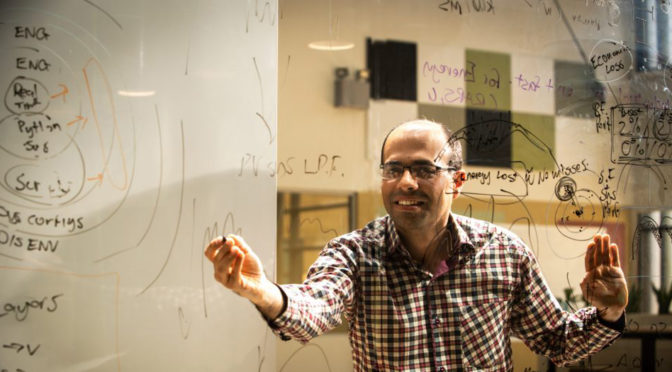
Main image: Dr Nariman Mahdavi Mazdeh is part of the research team centralising Australia’s energy data into the NEAR Program. (Image credit: CSIRO)

Launched on 21 February, the National Energy Analytics and Research ( Program brings together energy data assets from numerous sectors in a convenient, publicly-available resource. The federally-funded platform, accessible at near.csiro.au, is a collaboration between CSIRO, the Department of the Environment and Energy and the Australian Energy Market Operator (AEMO) and brings together comprehensive information, including energy consumption patterns, demographics, building characteristics, appliance uptake, weather statistics, and more.

Currently, this type of data is held by numerous parties, formatted to different standards and access is often restricted. Research scientist Dr Nariman Mahdavi Mazdeh describes the energy data platform as “a one stop shop” for researchers and decision-makers. NEAR hosts data collected from across Australia (from sources such as AEMO, network distributors, energy retailers, smart meter data and energy consumers) and new research outputs that draw upon that data to answer some of the energy sector’s most pressing questions.

CSIRO project leader Dr Adam Berry says that the aim of NEAR is to make energy decision-making easier. “If you have a complex problem in the energy space and need data, you can discover research we’ve been conducting or data sets to conduct your own research,” says Dr Berry.

Some of the energy challenges the data will help address include:

  • Key drivers of energy consumption in Australian households.
  • How energy use has changed Australia-wide over the last decade.
  • National and regional opportunities to develop demand response programs.
  • Identifying risks in periods of system stress.
  • Planning grid upgrades and the integration of renewables.
  • The impact of retail energy tariffs on vulnerable and low-income consumers.

energy data

NEAR infographic (Image credit: CSIRO)

Effective demand response will save on network infrastructure costs, which will translate to lower electricity prices. “The research we’re trying to do contributes to how we can manage energy usage to benefit both the network and consumers,” says Dr Mazdeh.

Dr Berry is enthusiastic about the NEAR Program’s potential to help vulnerable consumers. “Low income households typically have fewer levers to pull in terms of access to distributed renewable energy and they are potentially more exposed to the pressures of cost,” he says. NEAR data is being used to investigate the impacts of retail energy tariffs, particularly in vulnerable consumer sectors. An

NEAR data has already been used in an ACCC Inquiry into retail electricity prices. One of the outcomes of that Inquiry was the development of a reference price, which assists consumers with finding the best deal across energy retailers.

“Who we are as modern Australian energy consumers is changing rapidly, and this is at the heart of the NEAR Program,” says Dr Berry. “We need to make the right decisions to contribute to an effective electricity system.”

For more on CSIRO energy research, read about the CSIRO Energise app here. Research based on surveying the app will also appear on the NEAR platform.

Larissa Fedunik

Curtin home to new geochemistry equipment that unlocks geochemical secrets

AuScope supports the purchase, upgrade and maintenance of geochemical research infrastructure at Curtin and has recently received $5 million in Federal Government funding. The investment will be used on a new replacement Sensitive High-Resolution Ion Microprobe (SHRIMP) age-dating geochemistry instrument, which will be installed at the John de Laeter Research Centre at the University’s Bentley Campus.

Funded through the National Collaborative Research Infrastructure Strategy, the new SHRIMP will enable continued geochemistry research and innovation at the world-leading zircon geochronology facility at the centre.

Curtin University Vice-Chancellor Professor Deborah Terry congratulated the John de Laeter Research Centre team for presenting a strong case for funding to upgrade the existing 25-year-old SHRIMP.

“A quarter of a century ago, Professor John de Laeter led a proposal to commission a new SHRIMP ion microprobe at Curtin, which would subsequently bring about new understandings of the Australian continent, the Earth’s tectonic plates and the age of the Solar System, among other breakthroughs,” Professor Terry said.

“This new SHRIMP instrument will enable the continuation of the important research that has been demonstrated over many years as having tremendous benefit to government, industry and academia.

“The funding allows our researchers to remain working at the forefront of a science that shapes our collective understanding of the Earth and its place in the Universe.”

John de Laeter Research Centre Director Professor Brent McInnes said the SHRIMP instrument had played a huge role in the advancement of geoscience and geochemistry research in Australia and around the globe, enabling new scientific discoveries and reshaping the geological map of Australia.

“The new funding will allow industry, government and academic researchers to undertake new Earth and planetary research, such as those related to deep drilling projects and asteroid sample return missions,” Professor McInnes said.

The John de Laeter Research Centre has strong links with the Geological Survey of Western Australia and Geoscience Australia, and provides geochemistry, geochronology and isotope geoscience data critical to their missions of mapping and understanding the Australian continent and its resources.

AuScope’s SHRIMP instrument forms part of the Earth Composition and Evolution infrastructure  located at Curtin University, The University of Melbourne and Macquarie University.

This article was originally published by Curtin University.

Young innovators of BHP Foundation Science and Engineering Awards 2019

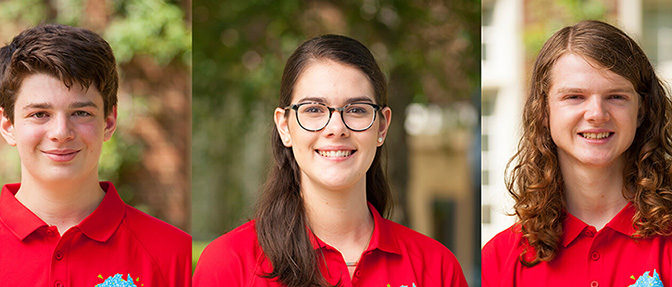
From left: Mitchell Torok (joint winner in Engineering), Macinley Butson (winner in Investigations and the Innovator to Market award) and Isaac Brain (joint winner in Engineering).

The Science and Engineering awards ceremony took place on 5 February and highlights the achievements of secondary students from around the country. This year’s best projects includes a SMART device designed to reduce excess dosage and side effects of radiotherapy in breast cancer patients, a sticker that checks whether solar disinfected water is biologically safe to drink, and a fall-detecting smart watch designed to monitor the wellbeing of elderly patients in nursing care.

The annual Science and Engineering awards are a collaboration between the CSIRO, BHP Foundation and the Australian Science Teachers Association (ASTA). The awards have three categories; Investigations, Engineering, and Innovator to Market. To qualify for the awards, students must first win an ASTA competition, such as the Young Scientist Awards for NSW.

Each category awards a first place winner, who will receive a prize of $4000. These three first place winners, one from each category, will have the chance to later compete in the Intel International Science and Engineering Fair (Intel ISEF) in the USA in May.

Read the profiles of the student winners at www.careerswithSTEM.com.au.

UNSW team exploring mining water on the moon

Image credit: UNSW.
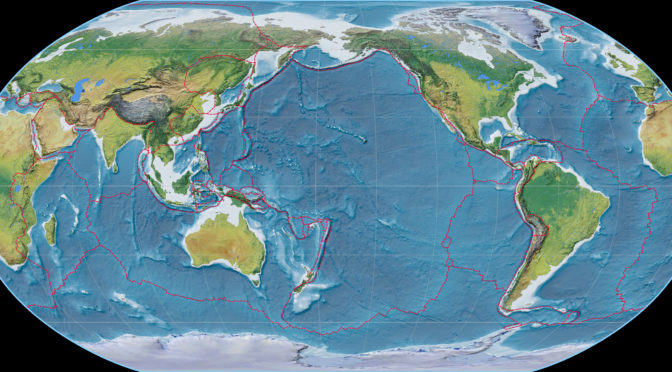
In an announcement on 7 February at the SIAA Space Industry Forum discussing Australia’s role in the Moon Treaty at UNSW, the group outlined steps to put together a multi-university, agency and industry project team to investigate the possibilities of mining on the moon. They also intend to address how that would work under the United Nations’ Moon Treaty. 
 
Professor Andrew Dempster, Director of the Australian Centre for Space Engineering Research at UNSW, believes that Australia is uniquely placed to carve itself a niche in the global space industry by exploiting its position of strength in mining expertise.  
 
“Australia has a natural advantage for off-Earth mining – we have some of the very best mining research, technology and automation tools in the world, and the largest mining companies,” he said. 
 
“While overseas teams have been looking at solving some of the problems behind space mining, our project wants to examine how we could actually get this done, firstly from a practical engineering point of view, but also closing a viable business case.” 
 
The global space industry is expected to grow to A$1 trillion over the next 20 years and Professor Dempster says Australia needs to engage with the space agenda now to secure its ability to compete in this market in the future. 
 
“What we need to do is reduce the perceived risk to potential investors, including large mining companies, in a space mining venture,” he said. 
 
The major deterrent for industry involvement is a lack of understanding of the economics associated with this type of project and the perceived investment risk profile of mining in space.  
 
Professor Dempster, who is working with UNSW mining expert Professor Serkan Saydam, has a goal of reducing the perceived risk of off-Earth mining and offering credible evidence that mining water from the moon can be commercially viable. The hope is to be able to show that it is possible to create the machinery, mining methods, energy resources and communications required to do it.  To that end, they will only consider those options that are most likely to produce positive investment returns. 
 
The best-known commercial application of extracting lunar water is in making rocket fuel. The components of water are hydrogen and oxygen and these can be used to power rockets.  
 
Making rocket fuel out of the water on the moon could significantly cut down on the cost of carrying out space missions. Now, rockets leaving Earth must carry all the fuel they need, which comes at an enormous cost. If rockets could potentially refuel once in space, they could reach distant locations for a lot less money. 
 
Speaking about the project, UNSW Dean of Engineering Mark Hoffman said: “Australia needs to invest in disruptive, innovative technologies to tackle some of our planet’s big challenges and to create new and exciting opportunities for economic growth. 
 
“Projects such as this one will help deepen Australia’s expertise in off-Earth mining and facilitate the growth of the space industry in Australia.” 
 
Professor Dempster said that given sufficient funding, he and his team may be just five to 10 years away from piloting a water mining “proof of concept” operation on the moon.  
 
“Once we prove that the technology exists and major risks can be mitigated, I expect that mining companies will see the commercial potential for this sort of venture and put some dollars towards making it a reality,” he said. 
 
Professor Dempster says that it is likely that we are still decades away from commercial mining operations being established on the moon. 
This article was originally published by UNSW.

Turning jeans into joints: artificial cartilage from denim aerogel

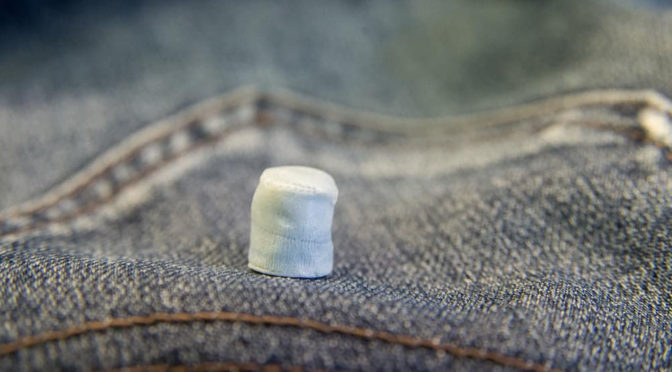
This aerogel, which is synthesised from recycled denim, shares the material properties of joint cartilage. Image credit: Deakin University.

The team, which includes Deakin scientist Dr Nolene Byrne and PhD candidate Beini Zeng, have been pioneering advanced textile recycling methods in a joint project with Deakin’s Institute for Frontier Materials (IFM) and the School of Engineering.

One of their developments has been the use of recycled textiles to form aerogels.  Aerogels are a class of low density materials with a range of applications, which include water filtration and separators in advanced battery technologies.

Denim is an excellent candidate for forming aerogels because the cotton it is woven from is composed of a natural polymer, cellulose. “Cellulose is a versatile renewable material, so we can use liquid solvents on waste denim to allow it to be dissolved and regenerated into an aerogel,” explains Dr Byrne. The process is known as sol gel synthesis.

Aerogels have highly porous structures and extremely low densities. Dr Byrne describes the synthesis of the artificial cartilage aerogel as an unexpected discovery. “It has a unique porous structure and nanoscopic tunnels running through the sample. That’s exactly what cartilage looks like,” she said.

This surprising finding is particularly exciting because of the challenges involved with trying to control the properties of artificial cartilage in tissue engineering. “You can’t 3D print that material,” says Dr Byrne. “Now we can shape and tune the aerogel to manipulate the size and distribution of the tunnels to make the ideal shape.” The pores of the aerogel can be manipulated based on the drying technique – for example, supercritical CO2 drying is used to obtain an aerogel in the form of nanospheres.

The aerogels are now being tested to optimise their mechanical properties. “We are now entering pilot-scale trials and look to be at commercial scale within 3 to 5 years with industry support.”

This unique method of recycling denim will also help contribute to minimising textile waste, says Dr Byrne. “Textile waste is a global challenge with significant environmental implications, and we’ve been working for more than four years to address this problem with a viable textile recycling solution,” she said.

Textile recycling involves the use of chemicals, which can be both expensive and environmentally unfriendly. “We use environmentally-friendly chemicals, and by upcycling our approach to create a more advanced material we can address the limitations affecting other less cost-effective methods,” says Dr Byrne.

For more information, visit the Deakin Institute for Frontier Materials and the ARC Research Hub for Future Fibres.

– Larissa Fedunik

Pioneering quantum physicist to lead Archer’s quantum technology

The new leader was appointed on 17 January 2019. Archer have recently executed an exclusive license agreement on room-temperature quantum technology with the University of Sydney.

Dr Martin Fuechsle, the new Manager of Quantum Technology for Archer, is internationally recognised for developing the smallest transistor, a “single-atom transistor”, and the fabrication of breakthrough quantum computing devices; pioneering achievements that strongly align to Archer’s technology development applications in the global semiconductor and quantum computing industries.

Commenting on the Appointment, Archer CEO Dr Mohammad Choucair said, “Dr Fuechsle is among the few highly talented physicists in the world capable of building quantum devices that push the boundaries of current information processing technology. His skills, experience, and exceptional track record strongly align to Archer’s requirements for developing our key vertical of Quantum Technology, and we look forward to working with him to expand our team and capabilities”.

Dr Martin Fuechsle’s immediate priority will be the technically develop the intellectual property claims in patents which Archer holds exclusive commercial rights to, related to room-temperature quantum computing materials and technology. This will involve applying best practices in the areas of quantum technology, specifically in quantum computing, materials, and spintronics, while advancing Archer’s strategic network in the semiconductor and quantum computing industry.

Successful development of Archer’s room-temperature quantum technology would represent a major global breakthrough in the quantum computing industry, estimated to reach $US29 billion by 2021 and linked to the $US500 billion semiconductor market, catalysed by technical advances that allow for practicality, accessibility, and wide-spread consumer adoption. Patents protecting the Licenced IP have been filed internationally to cover Europe, Australia, United States of America, Japan, Hong Kong, Republic of Korea, and China.

This article was originally published by Archer. Find the full release here.

Australian research commercialisation on the up worldwide

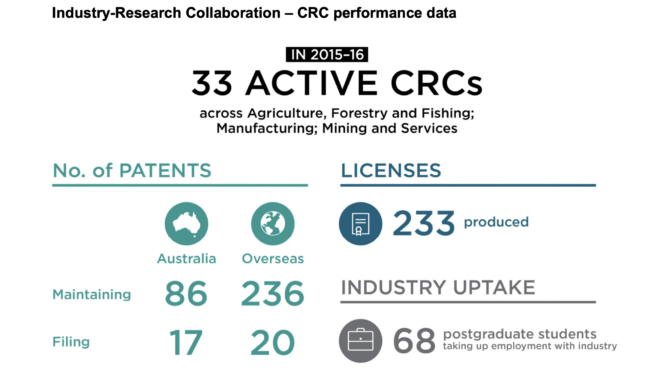
Released on 25 January 2019, the 2018 Snapshot measures Australian research commercialisation and industry engagement based on surveys of universities, medical research institutes (such as QIMR Berghofer and the Walter and Eliza Hall Institute of Medical Research) and publicly funded research agencies.

Performance data collected covers two areas: investment and commercialisation pathways. Investment can be directed into R&D, commercialisation staff and training, while Australian research commercialisation pathways are quantified in terms of metrics such as numbers of patents and licenses produced and industry-research collaborations.

Australian research commercialisation

The data reveals that a notable increase in average R&D expenditure across the surveyed organisations. The extra investment is seen to be paying off: there were more than 18,000 research contracts and collaborations in 2016, generating income of over $1.9 billion. Survey results from 2004 to 2016 show a positive trend in the average number of start-ups created per organisation, the number of provisional applications to apply for patents and the average number of patents granted.

Organisations are also investing in their human potential, with a 35% increase in researchers and students participating in industry training. The industry uptake of postgraduate students is also on the rise.

The top three organisations for producing consultancies, contracts and collaborations with end users were CSIRO, University of Queensland and Monash University. Meanwhile, the top three organisations in terms of Patent Cooperation Treaty (PCT) applications, which signal intents to file patents, were CSIRO, The University of Sydney and Monash University. CSIRO came out on top again in terms of Australian research commercialisation staff, ahead of the University of Queensland and the University of Melbourne.

Dr Erin Rayment, Chair of KnowledgeCommercialisation Australasia (KCA), a non-profit which leads best practice for public research organisations committed to industry engagement, says that Australia is continuing its trajectory as a world player in the research commercialisation space. “It’s great to see a continued increase in start-up growth and licensing deals, signalling an active technology transfer environment,” she said.

“These results tell a story of our world class research organisations working alongside industry to translate great ideas into real world outcomes and create more Australian jobs,” remarked Minister for Industry, Science and Technology Karen Andrews.

The NSRC data is available via the departmental website.

Evidence-based public policy needs engineers

Engineers need to be at the top table too, says Engineers Australia CEO Peter McIntyre.

McIntyre told create it is important that governments of all persuasions move away from populist policy based on opinion rather than fact.

“There’s a trend around the world towards popularism. I don’t think that’s a constructive way for Australia or the world to move forward when there are so many challenging issues facing us,” he said.

“That’s where scientists and engineers will play a role – in supporting governments in proper policy based upon evidence.”

And there are indications that both of the major parties are willing to listen. The Federal Government has recently announced a new National Science and Technology Council (NSTC), which they say will help science and technology gain a stronger voice in the policy process.

For its part, Labor has promised to establish a Prime Minister’s Science and Innovation Council and launch a $1 million inquiry into science and research, if it wins come election time.

McIntyre supports these moves to strengthen the avenues for scientific advice, and looks forward to seeing the detail of how they will be applied. He also believes engineers need to be represented on bodies such as the NSTC to expand theory and research to deployment of practical solutions for the community.

“Where the rubber hits the road is through engineering,” he explained.

Trailing our global competitors

Another Labor election promise is to boost research funding to 3 per cent of GDP by 2030. This has been welcomed by Universities Australia Chief Executive Catriona Jackson, who said Australia must keep pacewith the investments of leading world nations to remain competitive.

McIntyre agreed, pointing out that Australia’s level of research and development funding is below the OECD total of 2.3 per cent of GDP.

“We’re trailing our international competitors … As a modern community, we need to continually invest in R&D,” he said, adding that the level of funding Labor is proposing will require both public and private sector investment.

According to the latest available OECD data (from 2016), Australia’s R&D spending as a percentage of GDP has fallen below China, Slovenia and the Netherlands, although it is still slightly above the UK and Canada.

Engineering thinking is critical

McIntyre said some governments have already engaged chief scientists and engineers to help inform evidence-based policy.

The NSTC will be chaired by Commonwealth Chief Scientist Dr Alan Finkel, who is an engineer. Finkel is a Fellow of Engineers Australia and this year’s recipient of the country’s top engineering award: the Peter Nicol Russell Career Achievement Memorial Medal.

Several state governments also have expert advisors. NSW established a combined Chief Scientist and Engineer position a decade ago. This role is currently filled by roboticist Professor Hugh Durrant-Whyte, who is also an Engineers Australia fellow.

Earlier this year, the Victorian Government followed suit, appointing its first Chief Engineer – Dr Collette Burke – to provide guidance on the state’s infrastructure boom. The ACT has also announced a permanent chief engineer position, with public servant George Tomlins as the interim incumbent. The permanent position is expected to be filled early next year.

McIntyre said he would like to see more state governments appoint chief engineers and scientists. He is also an advocate for having engineers at the “top table” in government advisory boards to lend analytical and critical thinking skills to policy discussions.

While he believes dedicated chief engineer roles are ideal, McIntyre supports combined scientist and engineer positions where budgetary or political concerns make this a more pragmatic approach.

“The critical thing to my mind is there is an opportunity to channel engineering thinking and the concerns of engineers through a senior person at the table in government,” McIntyre said.

This article was originally published on create as “Election time: Evidence-based policy needs engineers to be at the table”.

Tandem solar cell tech now cheaper and more efficient

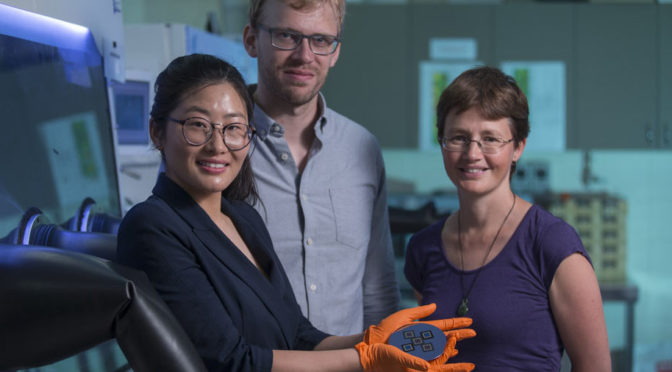
Left to right: Dr Heping Shen, Dr Daniel Jacobs and Professor Kylie Catchpole. Image credit: Lannon Harley, ANU.

Study co-author Dr Heping Shen from the Australian National University School of Engineering says the current solar cell market is dominated by silicon-based technology, which is nearing its efficiency limit. Tandem solar cell technology is a more efficient new alternative.

“In order to continue the transition to a renewable energy based economy, we need to keep reducing the cost of solar energy, and the best way to do that is to increase the efficiency of solar cells,” Dr Shen said.

“If we can have a cheap source of energy that is also clean – who wouldn’t want to use it?”

ANU engineers, in collaboration with researchers from the California Institute of Technology, have developed a way to combine silicon with another material (known as perovskite), to more efficiently convert sunlight into electricity.

The key is the way the materials are joined together to form what’s known as a ‘tandem solar cell’ – essentially one solar cell on top of another. The ANU researchers say theirs is one of the simplest ever developed.

“We have constructed a tandem structure that is unconventional. When engineers combine two cells they usually need to have an interlayer to allow electrical charge to be transferred easily between the two cells, so they can work together,” Dr Shen said.

According to co-author Dr Daniel Jacobs, this is a bit like making a club sandwich with extra bread in the middle – it plays a structural role, but the sandwich would taste better without it.

“We’ve found a new way to simply stack the two cells together so they’ll work efficiently with each other – we don’t need the interlayer, or extra bread, anymore,” Dr Jacobs said.

The tandem solar cell technology minimises energy waste and simplifies the structure, hopefully making it cheaper and easier to produce.

“With tandems it’s crucial to demonstrate a fabrication process that is as simple as possible, otherwise the additional complexity is not worthwhile from a cost perspective”, Dr Jacobs said.

“Our structure involves one less fabrication step, and has benefits for performance too.”

Dr Jacobs says while it can be difficult to combine two materials in a tandem solar cell arrangement, once you get it right the efficiency goes up very quickly, well beyond what is possible with silicon by itself.

“We’ve already reached 24 per cent improvement in efficiency with this new structure, and there’s plenty of room left to grow that figure.”

This study was funded by an Australian Renewable Energy Agency (ARENA) grant, as part of a project in collaboration with UNSW and Monash University.

The research paper is available online.

This article was originally published by the ANU.

Science communication in the “alternative facts” era

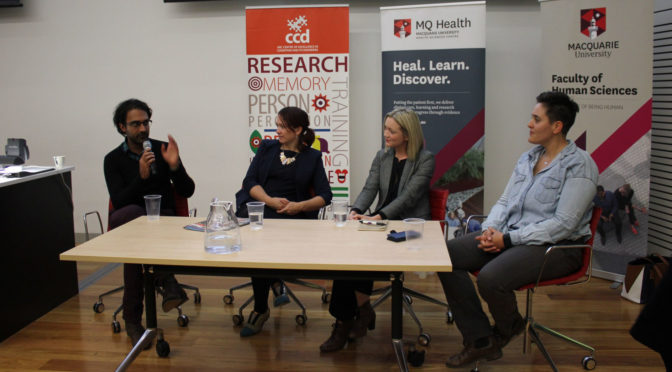
Panel members (left-right): Ketan Joshi,  Heather Catchpole, Lucinda Beaman and Amy Coopes,

From climate change to vaccination and alternative medicine, researchers face problems when they seek to turn evidence into actions through science communication. On the 1st June, 2017, Macquarie University held a public workshop called “Science, Misinformation, and Alternative Facts”.

The interdisciplinary workshop brought together a diverse group of panelists to discuss science and media in our “post-truth” era. Panelists included Ketan Joshi, a communications consultant specialising in clean energy technologies; Heather Catchpole, founder of STEM content producer Refraction Media; Lucinda Beaman, editor of FactCheck at the Conversation and Amy Coopes, journalist turned medical student and cancer researcher.

The panelists discussed the challenges of science communication and potential strategies for closing the gap between evidence and public opinion.

They described how the emergence of anxiety-inducing terms such as “post-truth” and “fake news” have influenced how the general public perceive scientific information, as well as the increasingly curated nature of news by social media. Further challenges discussed included the use of facts out of context and the increasingly politicised nature of science, particularly in climate change and health.

One of the most important takeaways was the emphasis on building relationships between scientists, academics and journalists in order to make the best decisions on how to assess and report scientific information. The panel members also recommended that teachers focus on helping students understand the scientific process so that the next generation is equipped with critical thinking skills.

The recording of the workshop by Jon Brock is now available via the link here. The workshop was coordinated by the Macquarie Research Enrichment Program and co-sponsored by the Faculty of Human Sciences, the Faculty of Medicine and Health Sciences, and the ARC Centre of Excellence in Cognition and its Disorders.

Read more about the workshop at Inspiring Australia.

Quest for missing proteins in rice genome sequencing

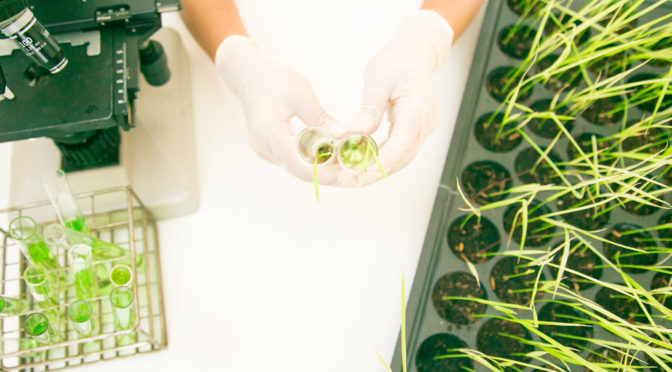
The international team of scientists from Australia, Iran and Japan say there’s an estimated 35,000 proteins encoded by the rice genome sequencing, and yet we still don’t have experimental evidence for 82 per cent of them.

This is important because rice is the major food source for more than half the world’s population, and in order for it to grow in warmer climates and with less water we will need to better understand rice at the molecular level, which means carrying out genome sequencing.

“The genome of rice was completed and published in 2001,” says Professor Paul Haynes from Macquarie University, and a co-author of the new study. “So surely we know enough about it now that we should be able to manipulate how it grows to meet our needs? Well, we don’t.”

“What we have for rice, like most of the well-studied plant and animal species, is a good first approximation of what the gene sequence actually encodes for, but there is still a very large amount of information yet to be confirmed.”

Rice is Australia’s ninth largest agricultural export and generates approximately $800 million in revenue each year, but this productivity comes at a significant cost.

Australian farmers use large amounts of water to irrigate their crops. The increasing demand for this water is threatening the sustainability of their rice production.

“It is imperative that we find ways to make rice better adapted to environments with warmer climates and less available water,” says Paul.

One way to do this would be to give commercial rice varieties some of the characteristics of native Australian varieties of rice, he says.

These plants grow vigorously in many wild areas across Australian without additional watering, in part because their roots grow longer and penetrate deeper into the soil allowing the plants better access to underground reserves of both water and nutrients.

“If we could somehow transform commercial rice varieties so that they grow deeper roots, thereby increasing water uptake efficiency while still retaining high grain yields, we could produce more sustainable plants that would help to future-proof the Australian rice industry,” says Paul.

And that’s why finding rice’s remaining missing proteins and completing the genome sequencing is so critical.

Missing proteins are ones that appear to be encoded in the rice’s genes but have not been experimentally confirmed to exist in the rice itself.

The idea of missing proteins originally arose from researchers working on human genome sequencing, says Paul, but it’s equally applicable to important cereal crops like rice.

The Human Proteome Project is making a map of all the proteins encoded by the human genome, to advance the diagnosis and treatment of disease.

Paul’s team took a similar approach when they looked at rice.

Initially they found that 98.5 per cent of the proteins in rice are considered missing. However by mining publicly available datasets and matching this data with information from the rice genome they were able to reduce this percentage of missing proteins to 82 per cent.

“If we are to continue to feed the ever-increasing number of people on our planet, we really need to produce rice which is more sustainable in terms of better water use and better nutrient uptake, while still maintaining current levels of grain production,” says Paul.

“This will require us to understand rice at the molecular level in a way that we have never done previously.

“It is only by understanding in great detail what happens inside a particular cell that we can really understand what goes on at the whole organism level, and how we can potentially change how that particular organism responds to an external set of circumstances or stimuli.”

The team hopes this study will form the basis of a large-scale scale international collaborative project aimed at identifying all the remaining missing proteins in rice.

The study was published in Molecular Plant and co-authored by researchers from Macquarie University, the Agricultural Biotechnology Research Institute of Iran, the University of Tehran, and the University of Tsukuba.

Originally published via Science in Public.

7 questions with Frankl Open Science founder

Frankl founder, Dr Jon Brock with neuropsychologist and dementia researcher, Professor Greg Savage.

Vast amounts of scientific data are collected every day, but a lack  of data sharing among researchers is resulting in a major research replication crisis. Luckily, startup Frankl Open Science,  the world’s first blockchain-integrated open science platform, has stepped up to address this major opportunity cost.

The platform integrates data sharing into the scientific workflow, allowing for automated, trackable data sharing. Frankl Open Science is the brain-child of cognitive scientist Dr Jon Brock and blockchain guru Peter Godbolt, who set out to create it easier and more rewarding for time-poor scientists to share data. We sat down with Jon to find out about the genesis of Frankl, the startup’s biggest successes and challenges and how open science will benefit the global research community.

1. What’s your career background?

I’ve spent most of my career in academia. I did a PhD in Psychology studying a rare genetic condition called Williams syndrome. I’ve also done research on Down syndrome, dyslexia, and autism.
I worked as a post-doc at Bristol and Oxford Universities in the UK and then spent 10 years at Macquarie University in Sydney where I was an ARC Australian Research Fellow in the Department of Cognitive Science and a Chief Investigator at the ARC Centre of Excellence in Cognition and its Disorders.

2. How did you first identify the business gap that led you to create Frankl?

Frankl is really the intersection of two ideas that arose from my experience as a researcher.
Back in the early 2000s, I was working on a couple of projects with kids with Down syndrome and then kids with autism. I noticed that when I gave them tests that involved using a touchscreen, they seemed to perform much better than they did on more traditional pen and paper tests we were using. It was as if the touchscreen was getting at their true abilities. And so when iPads came out and parents started saying that they were “unlocking” their kids’ abilities, it seemed obvious to me that iPad-based cognitive assessments were the way forward – not just for autistic kids but for everyone.
At the same time, I’ve been getting increasingly involved in the world of open science. Open science is really just the idea that science works best when it’s done transparently. But there are a number of barriers to open science – one of which is that it takes time and effort to do well and there’s actually very little incentive for researchers. For example, the time you spend curating your data, making sure that other people can find it, make sense of it, and actually use it, that’s time that you’re not doing other things like writing papers and grant proposals. A couple of years ago I was talking to a friend, Alex Holcombe, who’s a professor at the University of Sydney. He told me how he programmed his experiments so that all the data curation was effectively built into the data collection. Most people don’t have Alex’s technical skills. So our idea was to build all of these data curation capabilities into the apps we’re making so that anyone can be an open scientist and can share their data in a way that’s meaningful and useful.
It’s good for researchers, but it’s also good for the organizations who are funding research, whether that be government, philanthropy, or business. Ultimately, they want the best return on their investment in science. And giving scientists the tools they need to collaborate and share their data more openly is one of the best ways of achieving that return.

3. What have been the biggest challenges in your first year?

For me personally, the biggest challenge has been getting my head around the technology side of things as well as the business and legal aspects. Frankl co-founder, Peter Godbolt, has been working in tech for a long time – in web and app development and then more recently in blockchain and cryptocurrencies. There are huge opportunities in bringing together the worlds of science and tech, but it’s been really important to make sure we’re not talking past each other or proposing solutions that make sense in one world but not in the other.
This is all made even more challenging by the rapid changes in the tech space over the last year. There’s a lot of uncertainty. For example, we’re using blockchain as part of our solution, creating a supply chain from raw data to scientific paper. When we started Frankl in January, there was a huge amount of excitement about blockchain and cryptocurrencies. Since then, that the bubble has burst. In the long run, that’s a good thing. It means that the projects that survive are going to be the ones who provide a genuine use case for the technology and who actually build products that people want.

4. What’s been the best part and your biggest successes?

The most exciting part for me has been really getting to know some of the tech and then thinking about how that can be applied to solve problems in science. One of the things we’ve been saying all along is that a lot of the solutions already exist. We don’t need to reinvent the wheel. I really believe that.
Probably our biggest success so far was getting an Open Research Fund grant from the Wellcome Trust. The grant was for a simple memory test designed by our collaborator, neuropsychologist Professor Greg Savage, for use with patients with Alzheimer’s and other forms of dementia. But it incorporates lots of features that make it easy for people to store their data securely and share with the right people, both in a research context and as a clinical tool. There were 96 applications and I think just 8 awards, so it was really fierce competition. It’s allowing us to move quickly now on building the software. But it’s also really validating for us to have an organisation like Wellcome say that they believe in what we’re doing.

5. What is your advice for people working in research and looking to move into a startup?

If you’ve got a good idea then it’s definitely worth thinking about a startup. Academics are often quite dismissive of commercialisation – we think of science as this noble pursuit of knowledge and the idea of making money is somehow dirty or a distraction. But sometimes, turning an idea into a business is actually the best way to move things forward and translate an idea or finding into something that actually makes a difference to people’s lives. It might also be more sustainable in the long run. The problem with relying on research grants is that eventually they run out and all your hard work can go to waste if there’s no continuing support. So having a sustainable business model can be a good way of ensuring that you have the most immediate but also the longest lasting impact.

6. How can open science benefit the science research community as a whole?

One way that open science benefits the research community is by giving greater trust in research findings. Science works because you don’t have to trust scientists – you trust the evidence, the data – and because you know how the data were collected and analysed. So the more open it is, the less you have to take on trust. There’s a lot of concern at present about the trustworthiness of scientific findings. When people try and replicate other people’s studies, they often get quite different results. Conducting research more openly is one way of addressing those concerns.
But there’s more to open science than that. Isaac Newton famously talked about “standing on the shoulders of giants”. Science isn’t something that can be done in isolation. We gain new knowledge more quickly if we can build on other people’s work – their ideas, their methods, their data. So open science means more rapid discoveries as well as more reliable findings. For example, we’re increasingly seeing major discoveries being made by people who haven’t actually collected the data themselves but have re-analysed existing data that other researchers have shared openly.
That’s why the organisations that fund research, particularly the big philanthropic organisations like the Gates Foundation and the Wellcome Trust are really pushing researchers to behave more openly. Open science means that they get the biggest knowledge return on their investment in scientists.

7. What does the next 2 years look like for Frankl?

Our priority right now is to push forward with the development of our prototype application. Once people have something concrete – an app they can download and they can run and see where all the data is going – it becomes easier to imagine how the same concept and the same principles can be applied to other scientific contexts.
It also means that we can easily repurpose the code from that first app to build other apps that test slightly different things. That’s where my academic connections are really useful. We’ve got a queue of researchers with apps that they want building. And so in parallel to the app development, we’re busily building relationships with research organisations whose goals align with our own and who see value in Frankl for their researchers. There are lots of opportunities here for cooperative research partnerships, linkage grants and so on.
We’re also increasingly thinking about the direct clinical applications of what we’re doing. The solutions we’re creating for researchers – user-friendly assessment apps, secure data management and permissioned data sharing – are also directly applicable to clinical contexts. For example, parents of kids with disabilities tell us that one of the real challenges they face is getting bounced from one specialist to another, with very little communication between them. Having an app that facilitates sharing of assessment results between clinicians and parents could be incredibly powerful – and empowering.
In the longer term, we’re thinking about the bigger picture in science. It makes sense for us to focus initially on psychology and cognitive science because that’s where we have expertise and we know there’s a big market for cognitive tests. But the general principles of making open science part of a frictionless scientific workflow is something that translates to lots of different areas of research. So we’re always very happy to speak to people in any area of science, tech, or business who can see broader applications for what we’re doing.
Learn more about Frankl Open Science  on their website, Twitter, Facebook and  Bitcoin Talk Forum.

CSIRO invests $35M in future of space technology and AI

The investment will include the development of space technology such as advanced imaging of Earth from satellites, in addition to cutting-edge data science to support the growth of AI technology.

The investment is part of CSIRO’s Future Science Platforms (FSP) portfolio, aimed at dedicating research to new and emerging opportunities for Australia.

They aim to help reinvent old and create new industries, as well as grow the capability of a new generation of researchers through specially-created student places in these ‘future’ fields.

Space Technology and Artificial Intelligence join eight other areas of future science, including in the fields of health and energy.

By 2022, the CSIRO Future Science Platforms program will have invested $205M since it was launched in 2016.

Space Technology will receive $16M to identify and develop the science to leapfrog traditional technologies and find new areas for Australian industry to work in.

It will initially focus on advanced technologies for Earth observation, and then address challenges such as space object tracking, resource utilisation in space, and developing manufacturing and life support systems for missions to the Moon and Mars.

Artificial Intelligence and Machine Learning will receive $19M to target AI-driven solutions for areas including food security and quality, health and wellbeing, sustainable energy and resources, resilient and valuable environments, and Australian and regional security.

The primary research areas include platforms to improve prediction and understanding of complex data; platforms to enable trustworthy inferences and risk-based decisions; and data systems to enable ethical, robust and scalable AI.

CSIRO Chief Executive Dr Larry Marshall said the CSIRO Future Science Platforms have an important role to play in inventing and securing Australia’s path to prosperity.

“Our Future Science Platforms aim to turn Australia’s challenges into opportunities where new science can break through seemingly impossible roadblocks to give Australia an unfair advantages on the world stage,” Dr Marshall said.

“Innovation needs deep collaboration, so our FSPs bring together this nation’s world-class expertise across all fields of science, technology, engineering and maths to deliver real solutions to real world problems.”

“CSIRO is here to solve Australia’s greatest challenges through innovative science and technology – and to do that we have to invest in the big thinking and breakthrough research that will keep us ahead of the curve.”

CSIRO’s investment in Space Technology builds on the launch of CSIRO’s Space Roadmap for Australia and supports the newly formed Australian Space Agency’s goal of tripling the size of the domestic space sector to $10-12bn by 2030.

It will also grow CSIRO’s 75 years of work in space, and role as a leading technology provider to the space sector.

CSIRO is uniquely placed to progress the science and application of Artificial Intelligence and Machine Learning.

The FSP combines the full depth and breadth of CSIRO’s research across all major Australian industries with deep technology expertise to create cutting-edge solutions while ensuring the ethical challenges are understood and protected.

View a full list of CSIRO’s Future Science Platforms.

Originally published by CSIRO.

Launch of deep technology incubator

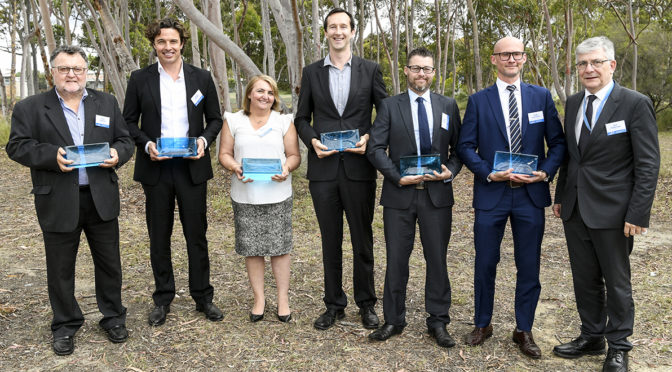
Image: Paul Degnan, Jamie Walden, Maree Stuart, Scott Coleman, Jay Flack, Iwan Cornelius and ANSTO CEO Adi Paterson at the launch.

The full-service innovation hub, which launched on 19 November, enables the best and the brightest minds to come together to foster innovation and change.

Nandin is a deep technology incubator for entrepreneurs, startups and small and medium businesses to embrace challenge-based innovation, design solutions and take science and technology-based products and services to market.

Nandin is significant in its own right, but its opening is also the first realisation of much broader plans for the ANSTO Innovation Precinct, which will foster close engagement between Australian scientists and both local and international businesses.

Nandin has been created from the learning of European leaders in this space, with Dr Markus Nordberg from CERN talking at the launch about the challenges and successes of nuclear science and application of design thinking.

ANSTO’s CEO, Dr Adi Paterson, said he was excited to see what nandin can contribute to the domestic and international science community.

“I am proud to today officially open nandin – the first of its kind facility in Australia, enabling great minds to collaborate, innovate and move closer to overcoming the challenges we currently face,” Dr Paterson said.

“Nandin will create linkages between a variety of organisations, academics and scientists, to utilise all the possibilities of nuclear sciences.”

The name nandin comes from the Dharawal language and means to look ahead. The hub is located on land believed to have been used as a meeting place for Aboriginal groups.

Dr Paterson was joined at the launch by Dr Markus Nordberg, Head of Development and Innovation from CERN – an organisation established in 1954 with a mission to perform world-class research and unite people from all over the world to push the frontiers of science and technology, for the benefit of all.

“It has been a privilege to have Dr Nordberg here today to share his insights on IdeaSquare, a space that brings people together to generate new ideas, the concept from which nandin was born,” said Dr Paterson.

“International partnerships with organisations like CERN provide invaluable global connections that will help us to find innovative ideas and solutions to solve problems sooner and with more efficiency.”

Dr Paterson presented the six nandin members with a ceremonial glass brick to acknowledge them as ‘foundation’ members.

“The ANSTO Innovation Precinct will deliver research solutions for industry to enhance innovation, focused on the areas of health, advanced manufacturing, industry, agriculture, food and nutrition,” he said.

“It will position Southern Sydney at the heart of innovation in Australia, and as nandin is so closely connected to our local community – providing invaluable access to world class researchers and technology.

Originally published by ANSTO. Visit https://innovation.ansto.gov.au/ for more information about the ANSTO Innovation Precinct.

CRC for Low Carbon Living on track to reduce carbon emissions

The goal of the CRC for Low Carbon Living (CRCLCL), which is in its final year of funding, is to achieve 10 megatonnes cumulative reduction in carbon emissions by 2020.  This will provide a projected economic benefit to Australia of $684 million by 2027.

Speaking at its Annual Forum – From Research to Reality – in Adelaide, CRCLCL CEO Scientia Professor Deo Prasad AO said the past six years of low carbon research will significantly help reduce carbon emissions in Australia’s built environment now and into the future, through new technology and changes to policy and human behaviour.

“Our research collaborations with industry and government have proved that a low to zero carbon future is not pie in the sky as our research now becomes a reality and makes a real impact, which is the focus of this Forum,” he said.

“Over 120 projects have produced excellent results, such as the Built to Perform report which proves that changes to the National Construction Code could improve energy efficiency in Australian Buildings by up to 56 per cent and cut household energy bills by $200-900 per year; and a low carbon schools education pilot program, which saved 266 tonnes of carbon emissions in Western Australia, is now a viable ongoing national program called ClimateClever,” said Professor Prasad.

“The Low Carbon Living Australia program, a pilot which helped 80 tourism businesses in the Blue Mountains lower their carbon emissions by 15 per cent, has now been rolled out nationally with partner Eco Tourism Australia; and our Urban Heat Mitigation projects have provided an authoritative new body of Australian research critical to how we keep our cities cool, now and into the future.”

Blockchain technology research for solar energy sharing and pricing which was conducted at one of the CRCLCL’s 16 Living Laboratories – White Gum Valley in Perth – was the foundation of a new business calledPowerLedger, co-founded by the CRCLCL researcher, Dr Jemma Green.  PowerLedger recently won Sir Richard Branson’s Extreme Technology Challenge which provides entrepreneurs an opportunity to “break out of the pack” plus unprecedented access to key investors, innovators and high-profile entrepreneurs.

“Our research has also revealed that 81 per cent of a home’s electricity supply can be met by a combination of solar 3kW PV and a 10KWh battery, and that owner occupiers of net zero energy homes will save $24,935 over their home’s lifetime,” Professor Prasad said.

International keynote speaker, UK policy expert Professor Brian Collins, Professor of Engineering Policy at University College London and Director of the International Centre for Infrastructure Futures, said he was impressed with the CRCLCL’s achievements.

“I’m highly impressed by the work of the CRC, which is crucial for Australia to ensure it has strong, sustainable and liveable cities as it has provided concrete evidence that can help influence change in building codes and government and city policy,” he said.

“Changing how we do things is always a challenge, and it is my experience with policy implementation that sustained research is fundamental to providing evidence and ideas for policy and process changes.  Educating future experts and leaders in low carbon living is critical to ensure that rapid take-up of knowledge and innovation takes place resulting in low carbon services.  More investment in this form of education is overdue,” he said.

“This is a challenge that is being met all around the world and Australia is showing true leadership in this area through the work of the CRCLCL and its partners. We in the UK look forward to greater collaboration in this area of research,” said Professor Collins.


Originally published by the CRC for Low Carbon Living.

Australian cyber security revenue set to triple within a decade

Australian cyber security revenue will soar from A$2 billion in 2016 to A$6 billion by 2026. This comes as part of an upward trend in cyber security spending around the world. US$131 billion was spent on cyber security globally in 2017, with an 88 per cent increase expected by 2026.

With the second-highest ‘cyber maturity’ in the Indo-Pacific and strengths in core skill areas such as quantum computation, wireless technology and high-value hardware, Australia is the ideal growth environment for cyber security businesses.

The statistics have been published in the 2018 update to Australia’s Cyber Security Sector Competitiveness Plan and the first ever Australian Cyber Security Industry Roadmap; both launched on 28 November 2018 by the Australian Minister for Industry, Science and Technology, the Hon Karen Andrews MP.

The 2018 update to Australia’s Cyber Security Sector Competitiveness Plan was developed by AustCyber – the Australian Cyber Security Growth Network, which is part of the Australian Government’s Industry Growth Centres Initiative. The Plan indicates strong growth against the data outlined in the first iteration, released in April 2017, reflecting the rapid evolution of this dynamic sector.

The 2018 update draws on extensive industry consultation and research to provide a fresh picture of the global outlook, the challenges, and the opportunities and priority actions needed to grow a vibrant and globally competitive cyber security sector that enhances Australia’s future economic growth. It also provides a deep dive into the skills and workforce gap, which is one of the key issues impacting the sector’s growth.

The Australian Cyber Security Industry Roadmap brings together the expertise and networks of CSIRO Futures and AustCyber to identify a common vision and map out the road to success in the cyber security sector. World-class scientific and technological expertise is applied to steer business, government and society through the challenges we must navigate over the medium to long term, to seize opportunities across all Australian industries.

CEO of AustCyber, Michelle Price said, “As organisations increasingly rely on digital technologies and the cross sectoral flows of data, the need to protect people and assets from malicious cyber activity is growing. This strong demand for cyber security is creating substantial economic opportunities for Australia and is set to increase cyber security revenue.

“Cyber security is one of the most rapidly expanding sectors worldwide. The aim of the Sector Competitiveness Plan is to invigorate the cyber security industry across business, research and consumer segments to drive growth in the ecosystem, increase exports of Australian solutions, and support Australia to become the leading global centre for cyber security education.”

CSIRO’s Dr Shane Seabrook said, “Cyber security has never been more important, both as an enabler for Australian industry and as a source of economic growth itself. As we integrate data and digital technologies into everything we do, security will be key to our future economic success. International cyber security practices are yet to reach a uniform level – the time to position Australia as a best practice nation for cyber security is now.

“The Cyber Security Roadmap will guide immediate actions that can set the stage for long term success – simultaneously protecting Australia and enabling us to be agile, innovative and competitive on the global stage. We can build our cyber security industry with skills from our world-class education system, testbeds supported by our small but sophisticated market, and alignment with cultures and time zones in our geographic region.”

To help Australia’s cyber security sector pursue growth opportunities and increase cyber security revenue, the Cyber Security Roadmap focuses on digital opportunities likely to be adopted across Australia’s priority growth sectors: Medical Technologies and Pharmaceuticals; Mining Equipment, Technology and Services; Advanced Manufacturing; Oil and Gas; and Food and Agribusiness.

The Cyber Security Sector Competitiveness Plan and Cyber Security Roadmap are available online.

This article was originally published by AustCyber.

Read more about about the Australian cyber security workforce and career opportunities in the Careers with STEM: Code + Cybersecurity Flip Special.

Seafood Industry Australia responds to microplastics in Great Barrier Reef fish

The paper, “Classification of marine microdebris: A review and case study on fish from the Great Barrier Reef, Australia” was published in Scientific Reports by researchers from the Australian Institute of Marine Science.

The paper reveals the diverse and prevalent nature of ingested debris in coral trout from the Great Barrier Reef (GBR) World Heritage Area. Marine debris, including small amounts of microplastics, was found in 95% of the fish collected. CEO of Seafood Industry Australia (SIA), Jane Lovell, responded by saying that “this research is a cause for concern, but ultimately more research needs to be done.”

In the paper, the marine debris ingested by 20 coral trout were examined using methods such as Fourier-Transform Infrared Spectroscopy. The debris was classified into three categories: synthetic, semi-synthetic and naturally-derived.

Synthetics include all microplastics, such as nylon, polyethylene, polypropylene, polystyrene, polyester and polyurethane. Semi-synthetic materials are manufactured synthetically from one or more substances of natural origin (e.g. rayon derived from cellulose) or a composite of both naturally-derived and synthetic materials. Naturally-derived materials include natural fibres derived from plants or animals.

Marine debris was found in 19 of the 20 trout analysed, with a total of 172 individual items collected from the fish. Of these items, 52% were classified as semi-synthetic, 42% as naturally-derived, and 6% as synthetic. These results correlate well with other literature on ingested microdebris in fish. Studies revealed a prevalence of semi-synthetic and naturally-derived fibres, which are often incorrectly reported as microplastics.

The authors point out that in GBR offshore waters, both land-based sources as well as oceanic and shipping sources have been suggested as potential sources for the marine plastic pollution.

The source of textile fibres detected in juvenile coral trout, however, is currently unclear and could be from domestic, land-based and shipping-based sewage discharges. Alternatively, international, unknown sources that deliver fibres to the GBR area through oceanic or atmospheric transport could be the cause.

Ms Lovell says the report “needs to be seen as a call to the community to be really conscious of the amount of plastics they are consuming, how they are consuming it and most importantly how they are disposing of it.”

“People need to take responsibility for their own consumption of plastics and take the steps to make changes, irrespective of plastic-bans and legislative enforcements. Just like the broader community, Australia’s professional fishers care about the health of Australia’s oceans and environment, and we encourage others to do the same.”

The authors note that effects of the ingestion of marine debris on wild fish populations are currently unknown and require further investigation. “We’d like to see more research done looking at what the long-term effect, if any, of ingesting plastics is on spawning and fish mortality,” says Ms Lovell.

The debris was found in the gut of the fish, which is removed prior to human consumption.

– Larissa Fedunik


Antarctic expedition to seek natural atmosphere cleanser in the ice sheet

The elusive molecule would help to cleanse the atmosphere of greenhouse gases and ozone depleting chemicals.

This molecule is the hydroxyl radical and it is often called ‘the detergent of the atmosphere’.

The expedition has departed from Australia’s Casey research station and travelled 125 km to Law Dome which rises to an elevation of 1400 m on the Antarctic coast.

The expeditioners will be in this remote site, living in tents, for nearly three months as they drill 250 m into the ice. Ice cores from this depth contain air, trapped in bubbles, that dates from around 1850 AD.

The hydroxyl radical is a naturally occurring, highly reactive molecule that plays an important role in the atmosphere as a natural air purifier by destroying greenhouse gases and ozone depleting chemicals.

However, we have no knowledge of hydroxyl levels beyond the last five decades, leaving a huge gap in our understanding.

ANSTO’s Dr Andrew Smith is part of the ten member expedition team and said the aim of the expedition is to determine the earlier atmospheric history of the hydroxyl radical, back to around 1850 AD.

“This is an exciting collaboration, which has been four years in the planning and will provide important knowledge to better understand our warming planet,” Dr Smith said.

“In order to study the hydroxyl radical beyond the instrumental record we must use naturally occurring radiocarbon.

“ANSTO’s Centre for Accelerator Science is one of the few laboratories in the world that can make these very challenging measurements.”

The scientists are travelling to Law Dome because it provides the special conditions needed for their research. The very high snowfall traps air quickly and preserves it as bubbles in the ice for millennia.

After the ice cores are collected and melted, the liberated air will be shipped to the University of Rochester to separate the trace gases carbon monoxide and methane.

Once separated, the gases are converted to carbon dioxide which is sealed in glass tubes and delivered to ANSTO. Here it is converted into graphite and measured for radiocarbon in ANSTO’s Centre for Accelerator Science.

The expedition is a US-Australian collaborative project titled ‘Reconstructing Carbon-14 of Carbon Monoxide to Constrain Long-Term Atmospheric Hydroxyl Variability’, led by CSIRO atmospheric scientist Dr David Etheridge and University of Rochester scientist, Dr Vas Petrenko.

Originally published by ANSTO.

Adelaide startup’s Australian first CubeSats launch

The launch lays the foundation for free global connectivity for the industrial Internet of Things (IoT). According to Fleet Space Technologies co-founder and CEO Flavia Tata Nardini, the shoebox-sized Proxima I and II CubeSats are the first to be launched by the Australian private sector. And they lifted off only weeks after Tata Nardini reached out across the Tasman to ask Rocket Lab CEO Peter Beck about working together to “untangle the bottleneck of space”.

The Australian and New Zealand Space Agencies, along with regulatory authorities on both sides of the pond, worked with the two startups to clear regulatory and licensing hurdles in record time.

“The speed was unbelievable,” Tata Nardini told create.

And the launch wasn’t the only speedy part of the process. The two Proxima CubeSats were built in six weeks.

“Nanosatellites can be built in weeks, with a little bit of improvement each time,” Tata Nardini explained.

The bulk of the Proxima manufacture took place in San Francisco with Pumpkin Space Systems. The payload — a radio that controls the satellite’s communications — was built by Fleet Space Technologies in Adelaide.

Big rockets, little satellites

The Proxima CubeSats are the first of a constellation of 100 nanosatellites that Fleet Space Technologies plans to launch into Low Earth Orbit (LEO) by 2022. Fleet will have two more nanosatellites in orbit during the coming weeks, with Centauri I on board SpaceX’s recently delayed Falcon 9 SSO-A mission scheduled to launch from the Vandenberg Air Force Base, California. Centauri II will be hot on its heels, taking flight from an Indian Space Research Organisation (ISRO) PSLV C43 launch vehicle on 27 November.

Tata Nardini said Centauri I will be among 71 CubeSats aboard the Falcon 9, and the media has reported that up to 30 small satellites will be on the ISRO rocket. The SpaceX and ISRO vehicles are considerably heftier than Rocket Lab’s Electron rocket — which is designed specifically for small payloads such as nanosatellites.

Flavia Tata Nardini of Fleet and Australia's space industry
Fleet Space Technologies CEO Flavia Tata Nardini.

“These are big rockets — it’s fascinating to see them dedicating some of their launches to CubeSats,” Tata Nardini added.

Aussie startup Gilmour Space Technologies is also vying to claim its place in the small launch market, and has recently been named in the New York Times as one of only six companies worldwide with the engineering expertise and funding to give Rocket Lab some healthy competition. According to CEO Adam Gilmour, their hybrid-fuelled rocketsare on track for the first commercial launch from Australian soil by 2020.

The next industrial revolution

Fleet’s mission is to “power the next industrial revolution” in sectors such as farming, mining, shipping and logistics. According to Tata Nardini, Fleet’s satellites will “grab the data” from devices in industry.

Last year, Tata Nardini explained to the Engineers Australia Applied IoT Community that industrial clients who purchased sensors, gateways or terminals containing the Fleet Space Technologies communications chip would have free access to Fleet’s satellite constellation.

Even before their first launch, Fleet started generating revenue by connecting customers using existing satellites operated by companies such as Iridium and Inmarsat.

“We’re selling all over the world, proving our IoT approach and how fast we can go with customers,” Tata Nardini said, adding that her company’s CubeSats will provide extra features and redundancy to connect millions of devices.

The real test is in space

The Proxima and Centauri satellites will be monitored in the months after launch to make sure they are working correctly. The Proxima CubeSats have been granted permission to operate in sought-after L-band frequencies, which are used for GPS as they can pass through clouds and tree cover.

The Proxima CubeSats were the first to be launched by the Australian commercial sector. (Image: Fleet Space Technologies)

Fleet is tracking the CubeSats twice a day when they pass over Adelaide. The window is tight — 180 seconds for each transit — but Tata Nardini said that their ground station is capable of meeting the challenge.

Tata Nardini said that the Fleet team had learned a lot through the process of designing and building their four satellites.

“Everything is new at the beginning. The more you do it, the more you own it,” Tata Nardini said.

– Nadine Cranenburgh

This article was originally published on create digital.

Highlights from the Spark Festival’s Spin on Spinouts

This week, the Spark Festival’s ‘The Spin on Spin-Outs’ event showcased five spinout founders who have commercialised research from CSIRO’s Data61.

As founders of new technology-based spin-outs, they discussed what it took to transition from researchers to entrepreneurs, and offered advice on accessing the funding and support required to commercialise research.

We’ve brought you the top tips on launching a successful spinout, from both spinout founders and investors at the event.


Meet the spinout founders;
  • Dr Silvia Pfeiffer is CEO and cofounder of Coviu, a platform that provides universal access to healthcare.
  • Dr Stefan Hrabar is CEO and cofounder of Emesent, a company formed to commercialise cutting edge drone technology developed by CSIRO’s Data61 Robotics Group, providing access to critical data in challenging underground environments.
  • Dr Anna Liu is Head of Public Sector Partnerships at Amazon Web Services. She founded and was CEO of Yuruware, the world’s first Disaster Recovery platform designed to simplify the migration, replication and disaster recovery process.
  • Pete Field is founder of Ayvri, a company using 3D virtual world technology to enable participants in major sporting and adventure events like RedBull’s Wings For Life to preview their adventure and to visualise their race in 3D through live tracking.
  • Matt Barbuto founded Ynomia, a platform that digitises realworld construction projects enabling builders to have visibility over what is moving in and out of the construction site.


Advice from the Founders: How to make the leap into a spinout.


  • Join accelerator programs;

CSIRO’s On Accelerator, and Data 61’s many platforms exist to prepare researchers and their research projects for commercialisation. The programs offer mentors, advisors, and the opportunity to gain entrepreneurial skills. Accelerators “focus you on on your business model,” says Pfeiffer, and “help sort out who are the people that are ready and willing to go out and start a business.”

Accelerators can also be the place to make the right connections. “We got to know some amazing investors and advisors through the ON program,” says Hrabar. “They had seen the journey we’d gone through and understood where we had come from and lined up well from the investment point of view.”


  • Choose the right people to build business relationships.

Get support from others. “You don’t need to be an expert in everything,” says Barbuto. “Knowing your strengths and knowing where you need other people to come in and help – that’s your job as a CEO,” Field agrees.

Seek mentorship from your Board members, and choose investors for what they can bring to benefit you, says Liu. “I wasn’t interested in taking just money because I was looking for business growth advice.”  


  • Get comfortable giving a sales pitch.

Speaking sales can be quite a shift in mindset for a researcher. Be prepared to transition from ‘precise’ researcher, to ‘predictive’ sales person.

“Researchers are taught to be very thorough in everything you do. Creating a start-up is more about predicting the future and there is no hard data. You are making things up,” says Pfeiffer. Be assured that investors understand that it is always a guess when you are talking about markets. You need to be comfortable selling your best guess.


Advice from the Investors: How to impress with your pitch.

In the second half of the event, the panel was joined by investment managers Martin Duursma from Main Sequence Ventures, and Natasha Rawlings from Uniseed.

Here are their best tips for researchers wanting to impress an investor;


  • Know your customers;

Investors want to see that you understand your customer, says Duursma. “Please go out and network in the industry, and ask about their big problems. Go to trade shows, walk the floor, cold call, join associations. Figure out if you’re solving a problem the customer actually has, and if they want your solution.”


  • Speak about your business model;

Talk to investors about the business side of your start-up, not just the tech. “What we really like hearing about is money,” says Rawlings. “Who is your customer? What is your product? How much are you selling it for? What is the margin on that? How many of these things do you think you can sell?” These are the ‘boxes to tick’ to secure a second meeting with an investor.


  • Follow up and follow through;

Investors are looking for signals about you, so be sure to follow through on any promises you make. “If the researcher says ‘yes I’ll get this thing to you by the end of the week, if that thing doesn’t happen, that’s a bad signal,” said Duursma.

“You’ve got to be easy to work with,” said Rawlings. “If you are not easy to work with we probably can’t invest in you no matter how good your tech is.”    

– Carmen Spears


This event was hosted by Inspiring Australia as part of the 2018 Spark Festival.

To see more events from the Spark Festival program click here

To learn more about Inspiring Australia’s activities and achievements click here.

Industry Minister launches 5th anniversary of Careers with STEM

On Friday 2nd November, the Minister for Industry, Science and Technology, the Hon Karen Andrews, MP formally launched the Careers with STEM: Code magazine fifth anniversary edition.

Attending Palm Beach Currumbin State High School in Queensland, Heather Catchpole, Head of Content at Refraction Media lead a panel discussion on the state of future careers and the necessity of STEM skills for tomorrow’s workforce.

“We started Careers with STEM in 2014 in response to an industry need for skilled graduates for the future of work,” says Catchpole.

“Since then we’ve profiled more than 250 people’s paths into STEM careers, reached 250,000 people through our digital platforms and sent 1.25 million magazines to students in Australia, New Zealand and the USA.”

Joining Minister Andrews on the panel was Sally-Ann Williams, Engineering Community and Outreach Manager for Google Australia, Sharon Collins, Head of Future Talent Strategy, Community and Inclusion at Commonwealth Bank, and Jennifer May, Graduate Engineer at Commonwealth Bank and cover star of Careers with STEM: Engineering 2018.

Careers with STEM: Code magazine is one of four annual magazines in the Careers with STEM series produced by Refraction Media. The magazines provide educators, students and parents with employer insights, industry trends, career pathways and inspiring and diverse role models who share their STEM journey.

“By combining skills in STEM (science, technology, engineering and maths) with students’ ‘X’ – their interests, goals and another field, we’re connecting with the students who traditionally might not have seen themselves in a STEM role,” says Catchpole.

Currently, there are 300,000 vacancies in global cybersecurity careers, and it’s expected that we will require 200,000 ICT jobs filled in the next five years in Australia alone. Despite this growing demand, there are fewer than 5000 Australian ICT graduates per year. The latest issue of Code magazine explores opportunities within the fast-growing careers of the entire tech industry, with a bonus flip-issue of Careers with STEM: Cybersecurity.

Since the launch of Careers with STEM: Code magazine 5 years ago, Refraction Media has distributed over 1.25 million copies – for free – to Australian, New Zealand and American high schools.

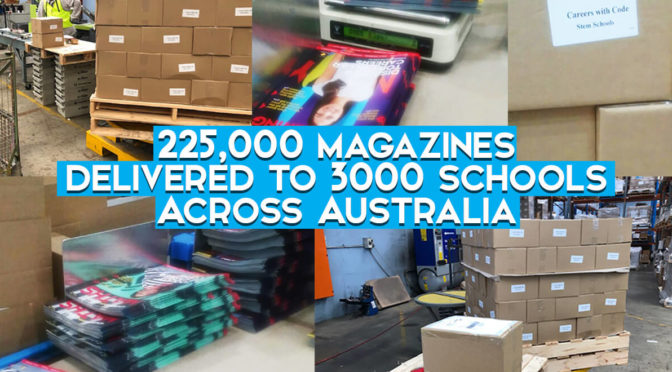
Minister Andrews’ launch of the latest magazine will celebrate a nationwide delivery of 225,000 copies to 3000 high schools around Australia.

Read the Careers with STEM: Code e-magazine here.

New pest monitoring start-up takes aim at fruit flies

Main Image: The team of scientists behind the RapidAIM pest monitoring system: Dr Nancy Schellhorn, Laura Jones, and Darren Moore.

RapidAIM is a real-time pest monitoring system which detects the presence and location of insect pests, cutting down the need for manual monitoring. The data service start-up was founded by agro-ecologist and entomologist Dr Nancy Schellhorn, electronics engineer Darren Moore and research technician Laura Jones within CSIRO. The research scientists have brought together their diverse skill sets across pest management, environmental monitoring and prototype development to develop a next-generation pest monitoring system.

Monitoring for fruit flies and other insect pests is presently done manually. Globally, millions of traps are monitored in crop production every 7-14 days. Manual monitoring is expensive and time-consuming, but essential for managing pest outbreaks. Fruit flies are a particularly costly biosecurity hazard, and are responsible for the yearly loss of US$30 billion of fruit and vegetable production.

Dr Schellhorn and the RapidAIM co-founders spoke to government biosecurity officers, growers and crop advisors to pinpoint the exact information the sector needed to improve pest monitoring strategies. “These insects are small, reproduce quickly and are highly mobile between habitats, so understanding their location and when they show up is pretty critical to delivering sustainable pest control,” explains Dr Schellhorn.

RapidAIM have developed the hardware and software for a grid of smart insect traps which detect the presence of insects and send the data to the cloud for analytics. An alert is then generated for end users through the mobile-linked app. “We use a novel, low-power sensor that provides a behavioural fingerprint of the insects, with real-time information about pest locations,” says Dr Schellhorn. The result is a map of thousands of traps providing accurate surveillance of insects. This helps crop growers respond rapidly in the occurrence of pest outbreaks.

The company has since received a $1.25 million investment from Main Sequence Ventures through the Coalition Government’s CSIRO Innovation Fund, and has also received support from CSIRO’s ON program.

RapidAIM is currently trialling a Beta version of the smart traps in five locations across Australia, working with some of the biggest fruit growers and state agencies, commercial partners and horticultural providers. The trials will compare the automated traps to the currently used manual traps in locations in SA, WA, NSW, VIC and Tasmania.

“We want to work closely with our potential customers so that we deliver a product of value’, says Dr Schellhorn.

The co-founding scientists are enjoying the challenge of bringing their vision to market. “We’re committed to making an impact with our science,” says Dr Schellhorn. “We believe that being involved in the full value chain of understanding the problem and the technology development is critical.”

Dr Schellhorn believes that “talking to potential customers was key in our current technology. The process has been a challenge, but it’s been great learning.”

– Larissa Fedunik

2018 Prime Minister’s Prizes for Science

Main image: Winners of the 2018 Prime Minister’s Prizes for Science (Credit: Prime Minister’s Prizes for Science, Commonwealth Department of Industry, Innovation and Science)

Prime Minister’s Prize for Science: Revealing the breathing Earth


Kurt Lambeck. (Photo Cedit: Prime Minister’s Prizes for Science/WildBear)

Emeritus Professor Kurt Lambeck AO

Emeritus Professor Kurt Lambeck AO has revealed how our planet changes shape—every second, every day, and over millennia. These changes influence sea levels, the movement of continents, and the orbits of satellites.

Kurt’s original work in the 1960s enabled accurate planning of space missions. It led him to use the deformation of continents during the ice ages to study changes deep in the mantle of the planet. It also led to a better understanding of the impact of sea level changes on human civilization in the past, present and future.

Today’s highly accurate GPS-based systems build on his work and enable precision agriculture, new ways to explore for minerals, and the remarkable navigation tools we all use in our smartphones.

For transforming our understanding of our living planet, Kurt Lambeck receives the $250,000 Prime Minister’s Prize for Science. He is an Emeritus Professor at the Australian National University in Canberra.

Prime Minister’s Prize for Innovation: Switching light for faster, more reliable internet

Prime Minister's Prize for Science

The Finisar team: (L to R) Steven Frisken, Simon Poole, Andrew Bartos, and Glenn Baxter (Credit: Prime Minister’s Prizes for Science/WildBear)

inisar have created technologies that make global internet connections faster and more efficient. About half of the world’s internet traffic travels through devices developed by the team and made in Sydney.

The global internet we rely on is carried by optical fibres that link continents, countries and cities. The speed and volume of internet traffic was limited by the need to convert data from light to electrical signals for switching and processing. To tackle the problem, the Finisar team created light-bending switches using prisms, liquid crystals and silicon, which have dramatically improved the capacity and reliability of the internet. One switch can handle a million simultaneous high-definition streaming videos. The team are now working on boosting the capacity of their devices further to meet the demands of 5G and the Internet of Things.

For creating and commercialising technologies that underpin the global internet, Dr Simon Poole, Mr Andrew Bartos, Dr Glenn Baxter and Dr Steven Frisken receive the $250,000 Prime Minister’s Prize for Innovation. Their company, Finisar Australia, is based in Sydney.

Frank Fenner Prize for Life Scientist of the Year: Saving frogs, and revealing new extinction threats

Prime Minister's Prize for Science

Lee Berger (Credit: Prime Minister’s Prizes for Science/WildBear)

Dr Lee Berger

Dr Lee Berger solved the global mystery of disappearing frogs and challenged paradigms about wildlife health, all in the course of her PhD.

Starting in the 1970s frogs disappeared in pristine habitats in Queensland and in Central America. Whole species vanished; there was worldwide concern. Was it pollution or UV from the hole in the ozone layer? Were frogs the ‘canary in the coal mine’? Would we be next?

Lee and her mentors thought that an introduced infection such as a virus could explain the pattern of declines. The dogma of the time was that infectious diseases don’t cause extinctions. Now, thanks to Lee, we know they do. She didn’t find a virus, but she did find a fungus growing on the skin of sick frogs. This chytrid fungus is now known to be the cause of a global mass extinction of frogs. Hundreds of species have declined, and at least six species have disappeared entirely in Australia.

It took over a decade of research and debate to persuade the sceptics. Today, quarantine protocols recognise the threat of disease to biodiversity, recovery programs are designed to reduce the risk of infection, and wildlife health experts are alert to the spread of diseases such as those found in bats and salamanders in recent years.

For solving the mystery of frog extinction, Dr Lee Berger receives the $50,000 Frank Fenner Prize for Life Scientist of the Year. Lee is based in Townsville and holds Adjunct Research Fellowships at James Cook University and the University of Melbourne.

Malcolm McIntosh Prize for Physical Scientist of the Year: Making flexible crystals and new separation technologies

Prime Minister’s Prizes for Science

Jack Clegg (Credit: Prime Minister’s Prizes for Science/WildBear)

Associate Professor Jack Clegg

Our smartphones, like all modern electronic devices, are packed with crystal semiconductors. When we drop them, it’s not just the screen that breaks. Crystals as we know them are brittle, but that will change in the future. Associate Professor Jack Clegg has designed new kinds of crystals that are so flexible you can tie them in a knot. These crystals use common elements such as iron, copper, carbon, oxygen and hydrogen.

He has also created molecules that can be customised to act as sieves for a vast range of manufacturing processes from the oil industry to water filtration and pharmaceuticals. He hopes the first applications will be in drug production where much of the cost of making new drugs is in the purification process. About 15 per cent of the world’s energy use is for separation processes, so more efficient technologies will find eager customers.

For creating flexible crystals and new separation technologies, Associate Professor Jack Clegg receives the $50,000 Malcolm McIntosh Prize for Physical Scientist of the Year.

Prize for New Innovators: A steerable guidewire to improve the treatment of heart disease

Prime Minister’s Prizes for Science

Geoff Rogers (Credit: Prime Minister’s Prizes for Science/WildBear)

Dr Geoff Rogers

Dr Geoff Rogers has created a robotic guidewire that cardiologists can steer with a joystick through the body to reach a damaged artery.

The use of guidewires has replaced open heart surgery for many cardiac patients. However, about 20 per cent of cardiac patients can’t be treated using current guidewire technology, which the cardiologist has to twist and turn by hand to guide it through the arteries. The guidewires can’t always get through.

As an undergraduate engineering student Geoff heard a clinician express his frustration with the technology. So, for his undergraduate project and PhD Geoff invented a steerable guidewire with a diameter of just two human hairs. Following his PhD, he co-founded a company and worked with cardiologists at the Epworth and Melbourne Private Hospitals to develop the IntelliWire.

In 2017 the guidewire and the company were purchased by Merit Medical Systems, a global leader in surgical devices, which is now working to bring the guidewire to market.

Now Geoff is leading two new initiatives: the first as CEO of a biomedical start-up company developing new solutions to antibiotic resistance; the second is a real-time system to adjust car wheel alignment. He’s also mentoring future biomedical entrepreneurs.

For creating and commercialising his pioneering biomedical engineering, Dr Geoff Rogers receives the $50,000 Prize for New Innovators.

Prime Minister’s Prize for Excellence in Science Teaching in Primary Schools: A school where everyone teaches science

Prime Minister’s Prizes for Science

Brett Crawford (Credit: Prime Minister’s Prizes for Science/WildBear)

Mr Brett Crawford

Mr Brett Crawford has transformed science teaching at Warrigal Road State School in Brisbane. All the school’s 50-plus teachers now actively teach science in their classes.

Warrigal Road is a large primary school in Brisbane with more than 1,300 students. The students are from 54 cultures, English is a second language for 60 per cent of them, and there’s also a cohort of hearing-impaired children.

The local high schools have recognised that Warrigal Road students come to them curious about the world and ready for secondary science. Test results back that up, showing the school’s science performance is well above national averages.
Brett is the lead science teacher at the school. He believes that science teaching in primary schools is easy.

Primary school students are curious about the world. You can engage them with simple, inexpensive experiments.

But Brett also knows that many primary school teachers are anxious about teaching science.

So, at Warrigal Road he led a program in which he spent two days every week mentoring his fellow teachers.

The results speak for themselves and other schools are now picking up his ideas and programs.

For creating an environment in which every teacher is engaged in science, Brett Crawford receives the $50,000 Prime Minister’s Prize for Excellence in Science Teaching in Primary Schools. Brett is the lead science teacher at Warrigal Road State School in Brisbane.

Prime Minister’s Prize for Excellence in Teaching in Secondary Schools: Opening young eyes to careers in science, technology, engineering and maths

Prime Minister’s Prizes for Science

Scott Sleap (Credit: Prime Minister’s Prizes for Science/WildBear)

Dr Scott Sleap

Cessnock in New South Wales was traditionally a mining town, but today’s high-value jobs in the Hunter Valley are in agriculture, tourism and increasingly in aerospace. Williamtown is already a maintenance base for Australia’s F/A-18 fighters. Soon it will be a maintenance hub for the Joint Strike Fighter in the Asia-Pacific.

Many of Cessnock’s students don’t believe that the new jobs are for them. Dr Scott Sleap is opening their eyes and showing them that they can participate in the new economy. He’s done that by creating the Cessnock Academy of STEM Excellence, a partnership between Cessnock High School, its feeder primary schools, and local industry.

Students struggling with numeracy are catching up with the help of robotics. A team of Aboriginal girls are making and racing model F1 cars, mentored by Boeing engineers. And the number of students signing up for STEM subjects is growing. NSW Education is now rolling out similar programs in other regional centres.

Dr Scott Sleap receives the $50,000 Prime Minister’s Prize for Excellence in Teaching in Secondary Schools. Scott is Deputy Principal, STEM, for the Cessnock Learning Community.

Originally published by Science in Public.

R&D tax investment takes a hit

The biggest loser appears to be the R&D tax measures for business, reducing from $2.8b to $2.3b, a fall approaching 18%. Some care needs to be exercised as the comparisons given are not final figures; they are the estimated actual figures for 2017-18 and the budget estimate figures for 2018-19. Furthermore, the R&D tax measures are not actually government spending but are revenue foregone by the government, which is perhaps more difficult to estimate.

The full impact of changes to the R&D tax measures are yet to play out. The Ferris, Finkel, Fraser Review of the system was announced as part of the NISA statement in December 2015. The reviewers were asked to “identify opportunities to improve the effectiveness and integrity of the R&D Tax Incentive, including by sharpening its focus on encouraging additional R&D spending”.

The review panel found that the R&D tax measures fell short of meeting their objectives of additionality and spillovers. They recommended six changes, which have been the subject of considerable debate since the public release of the report in September 2016. A “collaboration bonus” recommendation was not taken up, although a number of advocacy groups have continued to press the case. On budget night this year, the government announced a range of measures to “refocus” the R&D tax measures. The refocusing included a crack down on R&D tax claims that push the boundaries of the arrangements, with enhanced integrity, enforcement and transparency arrangements. A consultation process closed 26 July and the final form of the legislation is expected to come before the current parliament.

What we currently know is that the government expects a significant reduction in the total cost of the R&D tax measures from 2017/18 to 2018/19. What we don’t know is how much the reduced expenditure is due to actual reduced R&D spending by companies or whether savings from the crack down and enhanced enforcement are having a great impact. While one still hears horror stories of tax claims for “R&D” that looks far more like business as usual, most of the stories haven’t changed that much from the last big reforms in 2010. Obviously no government wants to provide incentives to companies to simply do what they would have done regardless. Getting that balance right is the key to tax measures for R&D and it will remain a closely watched space over the coming year.

While indirect R&D support to business may be reducing, the direct mechanism through the CRC Program is doing relatively well. Budget figures show an increase of over $30M in the annual allocation to the program over the forward estimates, rising to $192M in 2021-22. The increase is much needed, as it brings the program back toward the level it enjoyed a decade ago. The introduction of the extremely popular CRC-Projects comes from the same budget and they continue to build momentum with business. Demand for CRC-Ps is growing substantially and companies enjoy the simplicity of the grants which foster collaboration between businesses and between business and public research organisations.

The Science, Research and Innovation Budget tables can be viewed here.

– Tony Peacock

Originally published by the Cooperative Research Centres Association.