All posts by Charis Palmer

Industry and university science: partnering for impact 

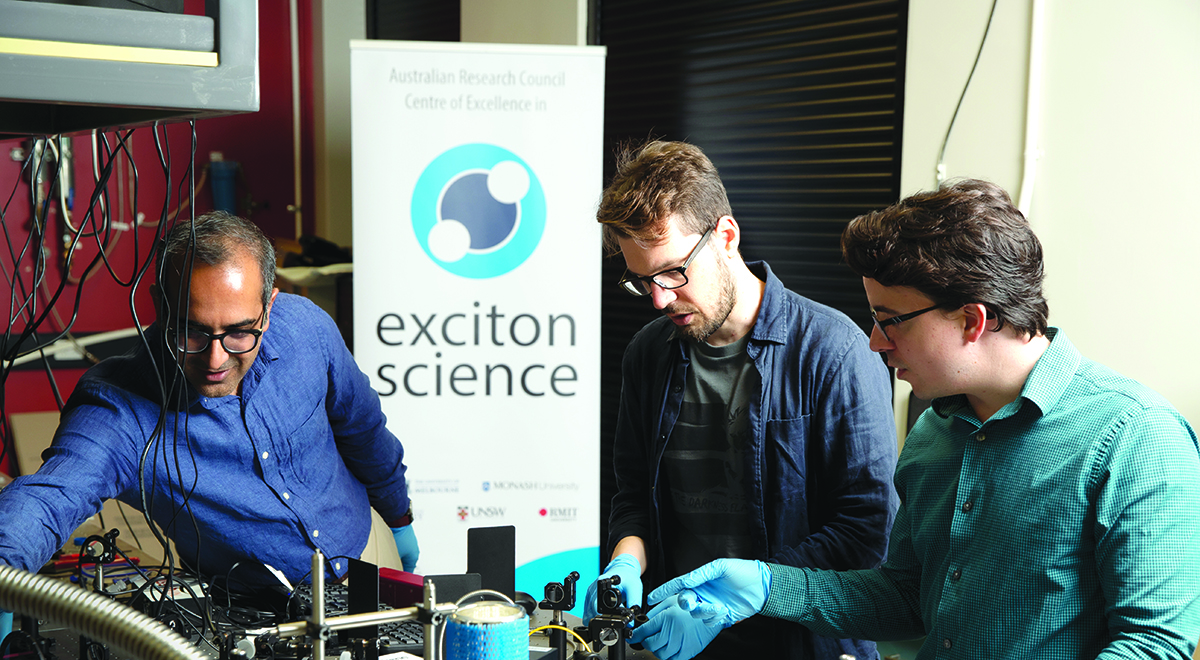
Image: Associate Professor Girish Lakhwani (left) with his team at the University of Sydney Centre of Excellence in Exciton Science. Supplied.

Recent weak National Accounts figures underscore the urgent need for greater investment in research and development to drive Australia’s economic growth. More industry investment is critical and university-industry partnerships are key to this effort, especially for small and medium-sized enterprises (SMEs), which make up over 99% of Australian businesses and contribute a third of the nation’s GDP. 

Large companies dominate mining and finance, but SMEs play a critical role in other sectors, kickstarting innovation, providing localised solutions and adopting new technologies faster to meet emerging market needs. 

“While we outperform in the creation of startups and small businesses against other OECD countries, our industry structure is overly skewed to small businesses with less than 20 employees. It’s hard to compete when you are small,” says Industry Innovation and Science Australia Chair Andrew Stevens. 

Australia’s new science priorities and $392 million Industry Growth Program both call for the nation to address the “missing middle” that has held back Australia’s ability to scale up and absorb innovation. 

“The outcome we need right now is the scaling of small businesses into medium-sized businesses. This will build sovereign capability and economic complexity in Australia,” Stevens says. 

Collaborations with Australian university science are the key to helping businesses scale. 

Collaborations with Australian university science are the key to helping businesses scale. 

Research has found SMEs that collaborate with universities and research institutions experience higher innovation and economic performance. By establishing links with academic researchers, SMEs are able to engage in product and process innovation which, in turn, positively influences revenue growth, access to new markets or higher profitability. 

Australia’s competitive university science schools bring expert problem solvers, lateral thinkers and inquiring and talented students who often go on to work with SMEs that they engage with during their study, says Warwick Dawson, Pro Vice-Chancellor Industry and Engagement at the University of Newcastle

“Universities also bring world class research facilities that no SME would be able to afford to purchase on their own, and access to broader networks and related industry partners, connecting SMEs to each other as well as to researchers,” Dawson adds. 

These unique university advantages are helping small businesses like EM Energy. In the process of trying to build a renewable battery, it found the organic material in it could be used to create hydrogen gas. 

Founders Isabel Toasa and Chris Wilson knew they had made an important discovery, but the company didn’t have the facilities, people or equipment to help them test it. 

During a University of Newcastle event, Toasa serendipitously met materials science researcher Peter Richardson, leading to a research project to test and validate EM Energy’s production of green hydrogen. 

EM Energy became the first recipient of an R&D funding voucher as part of the government-backed Trailblazer for Recycling and Clean Energy (TRaCE), and Wilson says “it’s going to give us access to some of the really great resources within the university, such as the research staff, equipment and labs, helping us to accelerate our research and development activities for the company”. 

Partnering from startup to scale

As the government seeks to incentivise and support the translation of science research into new industries and sustainable products, partnerships like that between the University of Queensland’s Food and Beverage Accelerator and deep-tech company Nourish Ingredients show the benefit of early connections on the path to scaling. 

Nourish Ingredients is working with university scientists at FaBA to research how its new dairy-type lipid ‘Creamilux’ functions for use in various products. 

“Companies have limited control over how an ingredient might be used in the future, so they want to know how their ingredient will interact with other ingredients,” says Professor Jason Stokes, UQ’s Premium Food and Beverage Program lead. 

“They need to understand the product’s technical behaviour at different interfaces and understand the chemistry of how it will act,” Stokes adds. 

Scientist and board chair Dr Leonie Walsh says while industry generally works on shorter time frames than university science, cooperative research centres have shown the benefit of partnerships that go further than early-stage validation of a product. 

Walsh chairs the recently established Solving Plastic Waste CRC, and says she was drawn to it by the strategic approach bid leader Dr Ian Dagley took. 

“He worked with the industry partners and identified what their problems were and the challenges along that plastics value chain. And then, based on those problems and challenges, he then approached the universities to look for the expertise that was best positioned to solve those challenges,” Walsh says. 

The CRC has a combined $140 million in government and industry funding for its initial 10-year lifespan, and Walsh says it has taken a “quality over quantity” approach to partners. 

“There’s a trend with CRCs that suggests ‘bigger is better’, but with the Solving Plastic Waste CRC we really focused on what are those problems and challenges that aren’t being addressed in the value chain today. 

“We knew that if we helped plug those gaps, it would create a quantum effect that would support that whole sector.” 

Walsh also sits on the board of solar thermal storage scale-up RayGen, which she says is constantly working to improve efficiencies in other aspects of its technology. 

“And they work with three universities — UNSW Sydney, University of Adelaide and the Queensland University of Technology — to do that, targeting a specific skill set in areas where there is potential for further development. There are great opportunities to use that calibre of research to help finetune and continue to innovate in the technology area,” Walsh says. 

Training the next generation of innovators

For businesses that are yet to be, universities act as incubators to provide the runway, networks and commercialisation skills necessary while ideas or discoveries are honed. 

Sydney University’s Knowledge Hub, for example, is supporting the work of Associate Professor Girish Lakhwani and Dr Inseong Cho from the university’s Faculty of Science. 

Cho completed his PhD at the University of Wollongong, where he was a member of the ARC Centre of Excellence for Electromaterials Science, and he’s now a member of the ARC Centre of Excellence in Exciton Science at the University of Sydney

The researchers have found a way to manipulate laser light at a fraction of the cost of current technology, which could help drive down costs in industries including telecommunications, medical diagnostics and consumer optoelectronics. 

Teams including Lakhwani and Cho’s took part in a four-day bootcamp and ongoing activities designed to build commercial skills as part of the Sydney Knowledge Hub’s PERIscope Commercialisation Award. 

The program concludes with advice from commercialisation experts on whether the solution should be a new venture, a license with an existing company, or whether it should go back to the lab.

Written by Charis Palmer


First published in Australian University Science, Issue 12

Scientists of the future engaging with industry

Image: Shutterstock

The large research projects conducted by university scientists and industry working together often draw headlines, but in reality partnerships are being forged every day thanks to programs now embedded in undergraduate and postgraduate university science courses. 

For almost 10 years, Work Integrated Learning (WIL) has been an agreed priority for Australian governments, industry groups and universities seeking to improve graduate employability. 

What began as placement of students into workplaces has evolved into true collaboration between industry and the scientists of the future. Industry PhDs, curriculum co-design, and industry based research training have also helped organisations and researchers cultivate the expertise and innovation capability to become industry leaders. 

Deakin Distinguished Professor Liz Johnson leads the university’s education and employability strategy and has also worked with the Australian Council of Deans of Science (ACDS) to champion WIL in science. She says the advent of compulsory WIL for many university science students has helped foster longer-term university-industry collaboration, at a variety of different commitment levels. 

“You end up with this longitudinal relationship, which then complements other sorts of relationships that the industry partner might have with the university, whether it’s around teaching or graduate recruitment,” Johnson says. 

“A startup, for example, probably can’t take on an intern straight away, but they might want to come in and be part of a judging panel or give a talk to students,” Johnson adds. And, she says, given many university science graduates go on to work not as traditional scientists, but directly in industry roles, WIL is a real opportunity for science schools to “make better industry”. 

“Because it’s a three-way partnership. It’s the student, the institution and the industry partner, and you have to have all three of them working tightly together.” 

Australian National University (ANU) Professor and Director of the ACDS Teaching & Learning Centre Susan Howitt agrees once industry and university science partners take the first step with WIL, it then opens up other opportunities. “I think once you’ve established that connection, then it’s easier to think about other options or other ways that we can work together.” 

The more recent development of Industrial Transformation Training Centres supports university science graduates to partner with industry in priority areas for Australia. And degree apprenticeships are now on the horizon. 

“Industry is asking for students that have a wide range of capacities: can they apply the science that they’re doing? Do they have the resilience and persistence to be able to deal with open-ended problems and really complex problem solving, for example,”says Dr Bonnie McBain, WIL leader and senior lecturer at the University of Newcastle

“So if you take it back to the basics of what you are preparing students for, then you see that WIL can take many forms.” This increasingly includes industry projects where students work in teams across disciplines to solve complex or “wicked” problems for industry partners, McBain says. 

“We have a full range of partners from individual contractors who are running their own business to larger organisations. So the model we have tends to be really flexible… and the commitment from the industry partner doesn’t have to be very big.”

Written by Charis Palmer


First published in Australian University Science, Issue 12

Unicorns of Australian biotech innovation revealed in new Phase III Podcast

Science and business journalists Rachel Williamson and Charis Palmer have launched a new Australian podcast with a focus on life science.

The concept for Phase III emerged from widely canvassed views that health innovators are under-represented in mainstream Australian media. As the fourth estate contracts with further senior and specialist journalist redundancies, and newsrooms begin to experiment with artificial intelligence (AI), the time is now for independent, curated journalism. 

Enter, Phase III, a brand new media channel designed to share the inner-workings of the life sciences and biotechnology sector, and the bright minds it attracts.

According to Australia’s leading life sciences industry body, AusBiotech, the country is now home to 178 ASX-listed and more than 1230 private biotechnology companies. It is not an industry for the faint hearted, with the average product life cycle taking around 10-15 years to reach the market – a period often referred to as the “valley of death” due to the complexity and risk profile of business endeavours intrinsically linked to improving lives.

“Phase III exists to take listeners into deeply curated themes and people-centric stories from Australia’s health, life science and biotechnology sectors – a fascinating industry which deserves more time in the limelight than the current media landscape affords,” said Phase III Podcast host, Rachel Williamson.

“Together with Charis Palmer, a highly experienced media executive and producer, we are committing ourselves and our resources to quality storytelling, which informs, teaches and excites our listeners. Phase III is also seeking to uncover the next big opportunities, so for those with a penchant for investing, it will be a place to source thorough and informed market insights too.”

Phase III balances the scientific, human interest and commercial sides of each story, inviting listeners to take a front row seat to examine a sector defined by white-knuckled leadership and brave, life-changing innovation. The first series is now live, exploring the silent killer of kidney disease. 

“Kidney disease is a silent killer, with only 10% of all people knowing they have it before damage has been done. But in the last five years there’s been a surge of work that’s resulted in the FDA approving some blockbuster drugs in the last 18 months. Billion-dollar takeovers are now on the table and a tiny number of Australian biotechs in this sector are at the heart of the action. Our first Phase III series features compelling commentary from those leading this work,” said Phase III Podcast Producer, Charis Palmer.

Interviewees across Phase III series 1, ‘The Silent Killer’, (in order of appearance):

Phase III will be paced at one 30-minute episode per week.

>> Follow Phase III on Linkedin

>> Subscribe to the Phase III email newsletter

>> Donate (via the ‘Support’ button) and/or subscribe to Phase III

Government confirms STEM funding measures with focus on diversity

The Australian Government has released details of additional funding for its diversity in STEM measures, first announced as part of the 2024-25 Federal Budget.

The funding aims to help meet the growing demand for STEM workers by attracting and retaining more people from diverse backgrounds in STEM education and careers. 

The additional funding will scale up existing programs that are already driving positive change including:

  • The Women in STEM and Entrepreneurship grants will receive an additional $8.5 million from 2025-26 to fund long-term projects that support women. This includes First Nations women and women from regional and rural locations. It brings the total funding commitment for this program to $47.5 million. 
  • Science in Australia Gender Equity will receive an additional $7.1 million over 5 years from 2024-25 to deliver an expanded diversity in science accreditation framework for Australia. This will help create safe, diverse and inclusive workplaces in the higher education, research and vocational education sector and combat discrimination in all its forms. It brings the total funding commitment for this program to $10.9 million.
  • Superstars of STEM will receive an additional $3.8 million over 7 years from 2024-25. This will boost the number of diverse role models who can positively influence and inspire people to pursue STEM education and careers. It brings the total funding commitment for this program to $7 million. 
  • The Girls in STEM Toolkit will receive an additional $2.0 million over 5 years from 2024-25 to create a toolkit that supports diversity more broadly. The current toolkit provides resources for students, parents and teachers to encourage girls’ interest in STEM and STEM careers. The additional funding will be used to expand the resources to reach young people from other underrepresented cohorts in STEM through primary and secondary education. This brings the total funding commitment for this program to $3.8 million.
  • STEM Equity Monitor will receive an additional $0.7 million over 6 years from 2024-25. This will facilitate data collection and compilation on additional underrepresented groups in STEM education and organisations. It will also facilitate data-based evaluation of the impact of the department’s diversity programs. This brings the total funding commitment for this program to $3.4 million. 
  • National Youth Science Forum will receive an additional $1.8 million over 4 years from 2024-25 to encourage more young people from diverse backgrounds to pursue STEM education and careers. It brings the total funding for this program to $5.1 million.
  • Elevate: Boosting Women in STEM program will be extended to 2031-32 to allow part-time scholars to finish their study. The program will be renamed to Elevate: Boosting Diversity in STEM. 

Changes to these initiatives are aligned with the recommendations of the independent Pathway to Diversity in STEM Review

The expert panel’s final report, released in February 2024, highlighted ways to break down persistent barriers to diversity in STEM education and careers. It acknowledged that a mix of approaches is needed to tackle the cultural and systemic barriers to diversity in STEM education and jobs. It also recommended expanding existing programs to attract and retain more diverse people along STEM pathways.

Australians are serious tech founders, so it’s time we backed ourselves: Tech23

Australian government and business leaders should start assuming Australia is world class in deeptech, “instead of assuming we’re second best or third best”, Cicada Innovations CEO Sally-Ann Williams has told this year’s Tech23 conference..

Asked by innovation leader Sandy Plunkett why Australian governments consistently fail to procure home-grown tech, Williams said “we don’t actually back ourselves”.

“I’ve been to a few national conferences this year where we’ve had an international speaker come in and talk to us…and quite frankly, I could give you five Australians right now…who have greater knowledge, greater capability, and better businesses that could have been on the stage talking,” Williams said.

She added that the world was at an inflection point in the types of science and engineering businesses that are needed to help people and the planet address current challenges, which presents a real opportunity for Australian innovators.

“We’re actually seeing the deep tech revolution, right? Because we can’t solve these problems that we are facing around health and food and climate with simple solutions,” Williams said.

“And that line that we’re great adopters of technology, can we please just put a nail in the coffin of that?

“Yeah, sure, we adopt it, but we love our homegrown tech. Google Maps…was founded in Australia. Nobody would have Wi-Fi if it wasn’t for us. So we need to back ourselves. We’re bloody good at this. And it’s time we wake up to that.”

The discussion comes amid controversy over the federal and Queensland’s government’s decision to award $840 million to American firm PsiQuantum, to support its attempt to build the world’s first utility-scale fault-tolerant quantum computer in Australia.

Williams added that a systems approach was required, with scientists, engineers, government, community and business coming together to shift the dial. And patience.

“If you think about nurturing a child, you don’t throw them out into the wild three months after they’re born,” Williams said.

“You actually nurture them for a very, very long time, And hopefully train them to be good, responsible citizens in the world, But that takes time, And it takes the same to build businesses. It takes even more to build entire sectors.”

ShanShan Wang, founder of portable oxygen company Roam Technologies, agreed Australia was at an inflection point for commercialisation of deep tech, with AI and machine learning making innovation even more accessible.

“For clinical trials we are one of the best in the world. Why are we not commercialising a lot of these technologies coming out of universities or coming out of industries?” Wang pondered.

“We can compete if not be one of the top games in the business.”

Wang added that more knowledge sharing was required across industry, including openly talking about failure.

“Failure shouldn’t be shamed,” Wang said. “Failure is an opportunity, it’s a learning experience.”

Husic tells quantum startups: ‘We will make the world take notice of your work’

Image: Supplied

Science and innovation minister Ed Husic has told Australian quantum startups like Diraq, Q-CTRL, Silicon Quantum Computing, Quintessence Labs and Quantum Brilliance that he’s determined to make the world take notice of their work.

“And we will make sure through either the quantum strategy or the work that we are doing to put the investment funds around to make it easier for you to get the capital to grow,” Husic said.

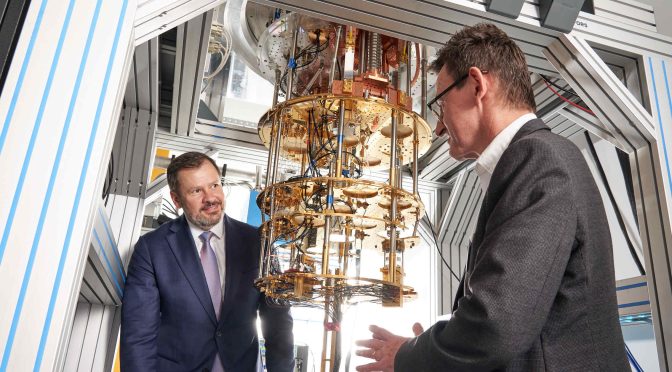
The minister was speaking at the opening of Diraq’s new laboratory at the University of NSW, where Diraq founder Professor Andrew Dzurak said the company was on track to build the world’s first fault-tolerant quantum computer in four year’s time.

Diraq recently raised an additional US$15 million in Series A-2 capital which will be used to expand its team in Australia and to launch in the US.

Husic praised the company for the raising amid a difficult venture capital environment.

“We’ve gotta make it easier,” Husic said. “We want to see more of these firms grow.”

UNSW Vice Chancellor Attila Brungs said: “Although Diraq may be a spin-out company of less than two years old, they’ve been on an incredible journey for more than two decades.”

“The quantum.technology that is Diraq’s core, known as electron spin for CMOS quantum dots, was invented right here at campus. And so this incredible company that Andrew founded leverages over 20 years of engineering and research expertise,” Brungs said.

Chief Scientist Cathy Foley also praised Diraq’s success, reinforcing the role of decades of investment in fundamental science.

“The other thing which I think has been really wonderful to see is Andrew transitioning from being in an amazing university with the whole infrastructure, both state and Commonwealth funding, and then turning that into something where there’s a realisation of the commercial world,” Foley said.

“Actually jumping off the cliff and saying ‘this is something where I believe in what I’ve got. I’m going to attract investors, I’m going to partner globally, and I’m going to be successfully transitioning into a founder of a business’.”

“10 years ago that would not have happened in Australia, but it is happening now,” Foley said.
The federal government’s National Quantum Strategy sets out an ambition to cement Australia as the world’s top destination for quantum talent, but many companies in the sector have found it difficult to recruit locally.

Written by Charis Palmer, Managing Editor, Refraction Media