
Education and research are the twin engines of Australia’s future – powering a highly skilled workforce and driving the innovations needed to meet local and global challenges.
The Federal Government’s 2024 National Science and Research Priorities make this clear: advancing national security, protecting our environment, elevating Aboriginal and Torres Strait Islander knowledges, and progressing to net zero all depend on the talent and discovery generated through our universities.
The opportunity before us is to build a policy and funding environment that accelerates momentum. By creating the invitation and incentives for industry and universities to co-design education programs and research initiatives,
government can help establish a stronger pipeline of talented students who contribute to research and innovation.
There are some models already in existence which point the way forward. Our Software Engineering Degree Apprenticeship at the University of South Australia – delivered in partnership with the Government of South Australia and major industry partners such as BAE Systems – allows our students to earn and study simultaneously, a (l)earning program – while providing industry with direct access to highly skilled graduates.
These enrolled students are paid a wage and their university fees are paid – by their employer. The content of their five-year honours degree has been crafted with inclusion of industry content and curated with that industry. With national policy settings that encourage replication, this kind of Work Integrated Learning (WIL) model could be scaled, boosting STEM capability and delivering benefits for students, universities and industry.
The same opportunity applies to equity. Ensuring that universities – particularly those in rural, regional and low-income communities – have access to baseline research funding to build partnerships will mean more
students can access high-quality science education.
Initiatives such as the Regional Research Collaboration Program already demonstrate the value of targeted investment.
So, by extending and deepening these programs, we can widen participation and ensure academic excellence and career success for many, rather than a select few.
Science education should not be determined by geography or legacy. It should be a national commitment – driven by collaboration and open to all. By prioritising career-ready models and strengthening equitable university/
industry partnerships, Australia stands to build a more resilient and inclusive science ecosystem; to meet challenges from climate change to public health with a collective ambition – and with the means to enact sovereign solutions.
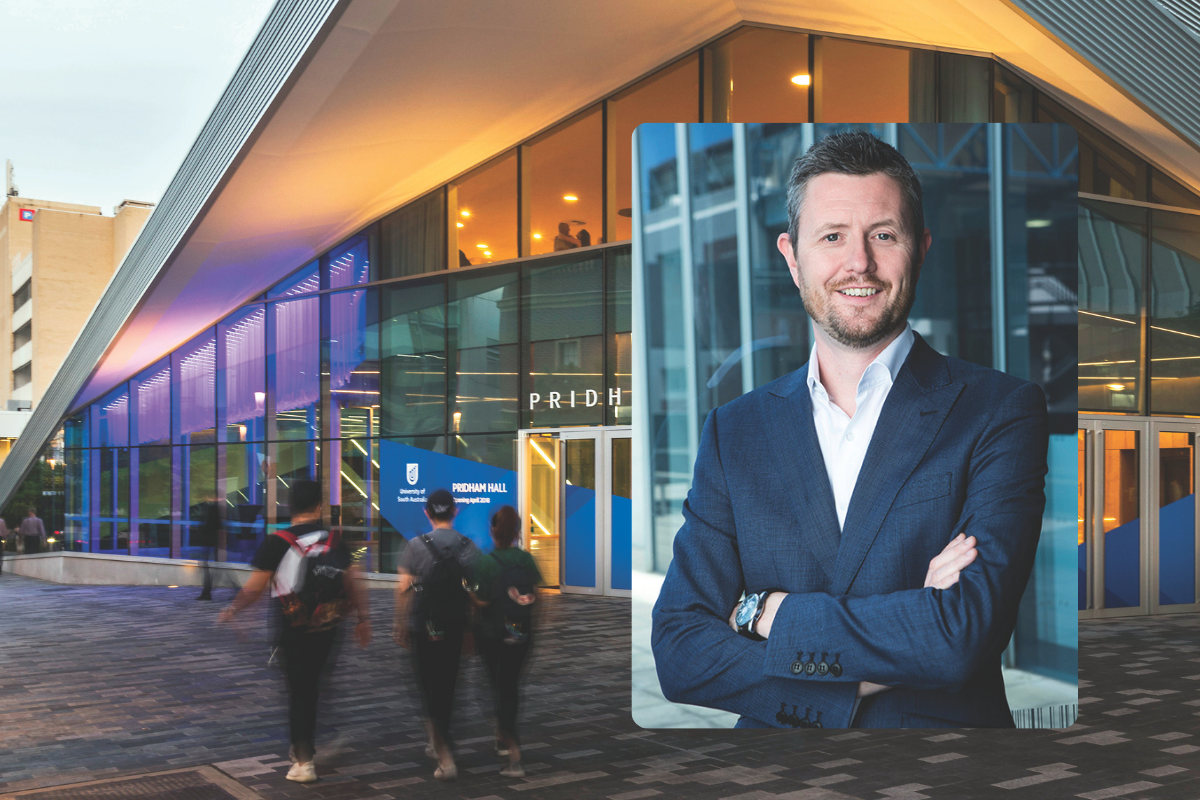
Written by : Professor David Lloyd, Vice Chancellor and President University of South Australia
In addition to roles at the University of South Australia, Professor Lloyd is co-Vice Chancellor of the new Adelaide University, Australia’s newest major university that combines the strengths of the University of Adelaide and the University of South Australia. He is also former chair of Universities
Australia, a member of the Australian Universities Accord Implementation Advisory Committee and has served on the Australian Research Council’s Advisory Committee.