
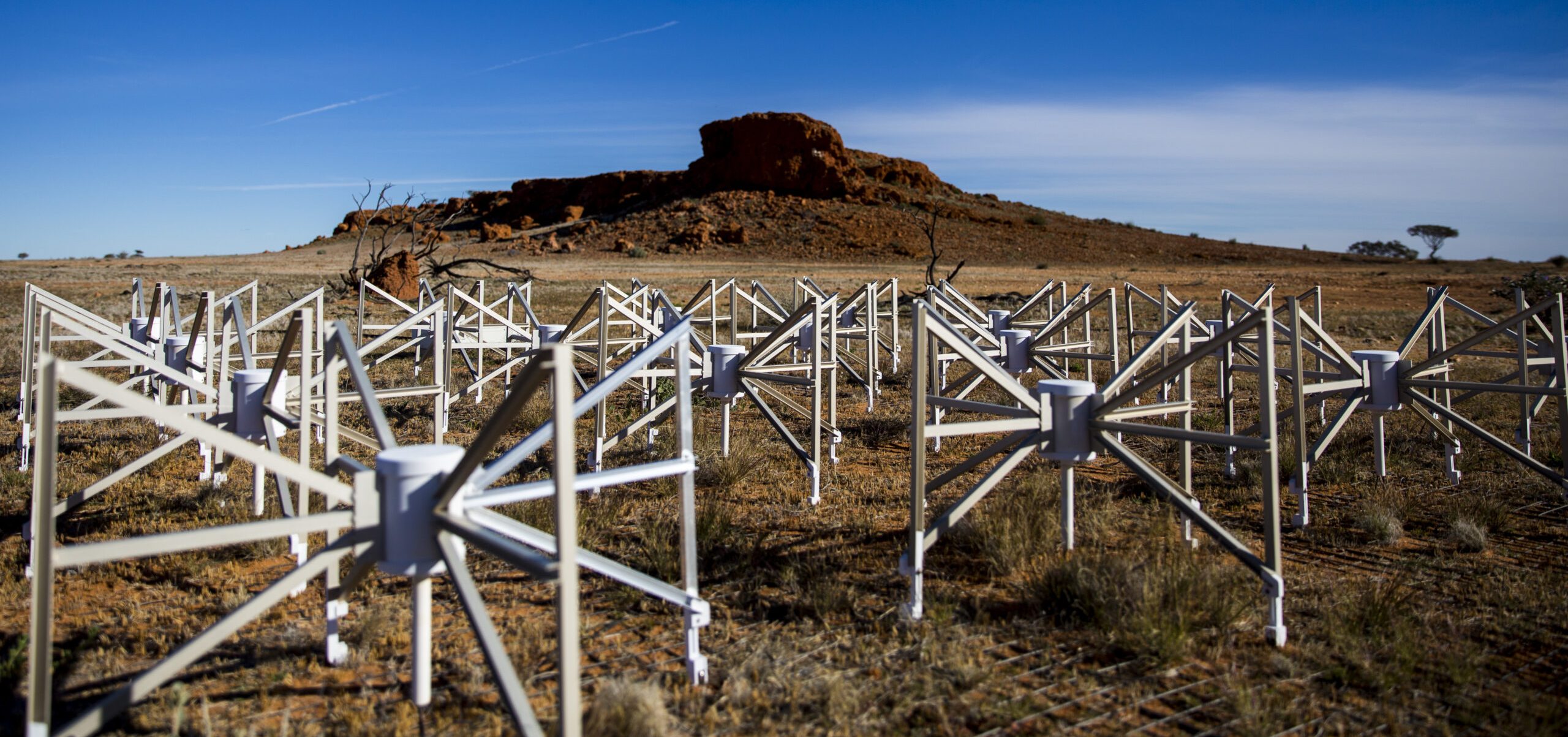
Image: The Murchison Widefield Array, a project of the International Centre for Radio Astronomy Research. Credit: ICRAR/Curtin.
Scientists love the possibilities of a big shiny new instrument. But unfortunately many scientific tools come with a hefty price tag. These are no ordinary tools after all, they are at the extreme of what engineering can produce. That’s why Australian universities have embraced the concept of sharing.
All across Australia, universities buy or barter time in shared facilities in order to do their research. And the philosophy of sharing can pay dividends.
Where a single university might not have the funds to build, maintain and upgrade a high-tech instrument, a shared facility can offer certainty for long-term research.
Scientists can benefit from the expertise of the operators as they take their experimental proposals to them. Experts in microscopy or telemetry, for example, can work with researchers to refine a research proposal using their intimate knowledge of the instrument.
Accessing a shared machine can also bring about serendipitous collaboration with other research groups using the same facility and can increase industry – university collaboration.
Here are three case studies where universities are reaping the benefits of shared infrastructure.
Unlocking the universe
In the red sands of outback Western Australia, huge spider-like metallic instruments stand ready to receive radio waves from outer space. This is the Murchison Widefield Array, a project of the International Centre for Radio Astronomy Research (ICRAR). It is a joint venture between Curtin University and the University of Western Australia (UWA), with funding from the state government, and a key partner in the forthcoming multinational Square Kilometre Array (SKA).
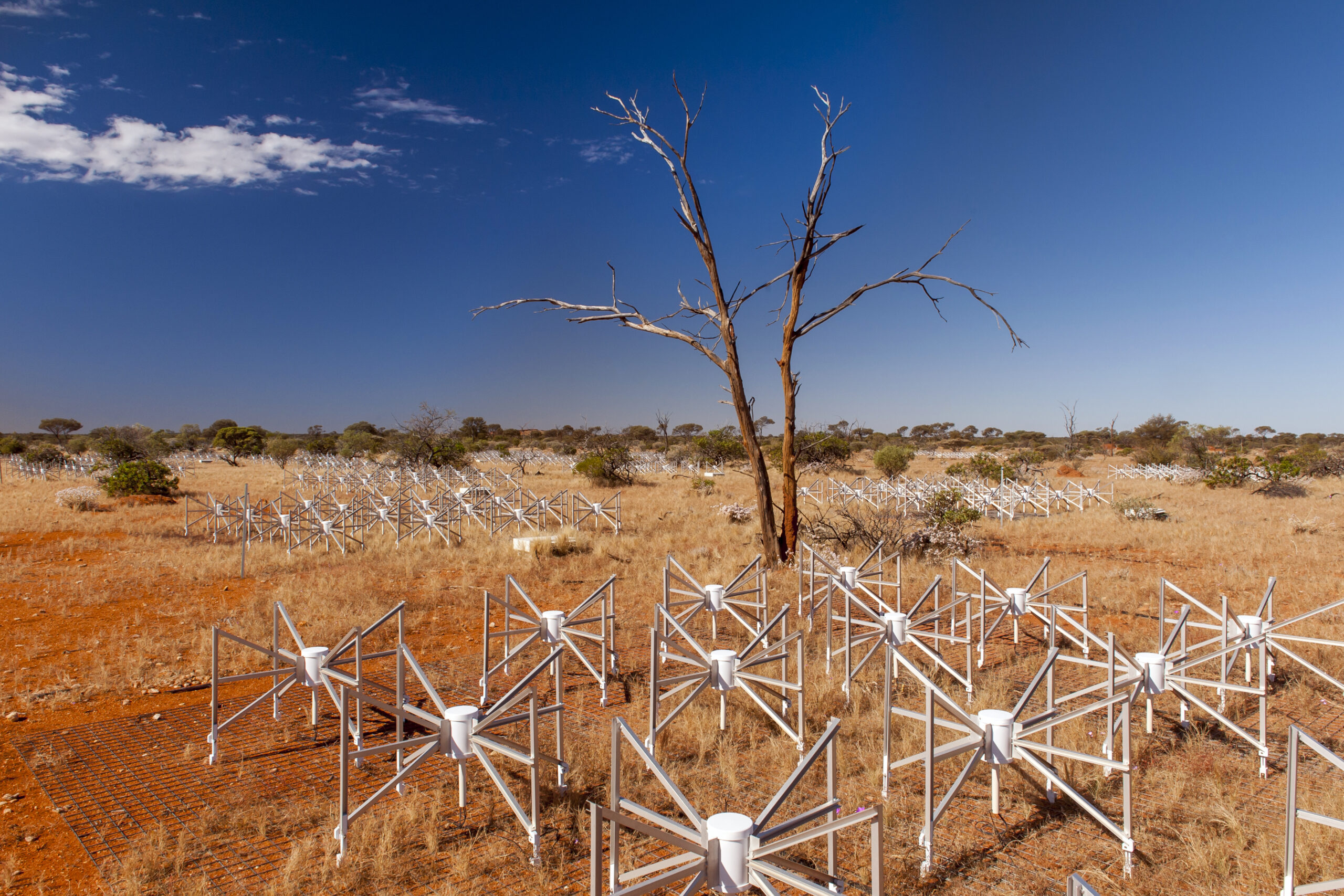
ICRAR was established in 2009 to support Australia’s bid for the world’s largest telescope, the SKA. The bid was successful and WA is reaping the benefits, supporting more than 250 astronomers, researchers, engineers and data experts.
Steven Tingay (Curtin University), deputy executive director of ICRAR, says that tuning into the radio waves of the universe can teach us fundamental things about where atoms and energy came from. “The universe is the biggest physics laboratory that one can imagine,” he says. ICRAR is particularly interested in working out what happened in the 300,000 years after the Big Bang.
The collaborative nature of ICRAR’s existence extends to its research. “Virtually everything that we do has collaboration from multiple Australian universities, CSIRO, and then internationally,” he says.
Professor Simon Ellingsen (UWA), ICRAR executive director and ACDS executive member, agrees that collaboration is key. “ICRAR has a clear goal – to play a crucial role in the international SKA project by attracting leading experts in multiwavelength astronomy, astrophysics, engineering and data-intensive astronomy.”
The benefits of global collaboration are particularly relevant for radioastronomy according to the ICRAR directors.
Other telescopes worldwide can add little pieces to the overall puzzle of what happened after the Big Bang, allowing Australian universities to be at the forefront of cutting-edge physics.
A source of light
Across the road from Monash University in Clayton, in the suburban sprawl of Melbourne, is an enormous, solar-panel festooned bunker. This is the Australian Synchrotron, operated by ANSTO.
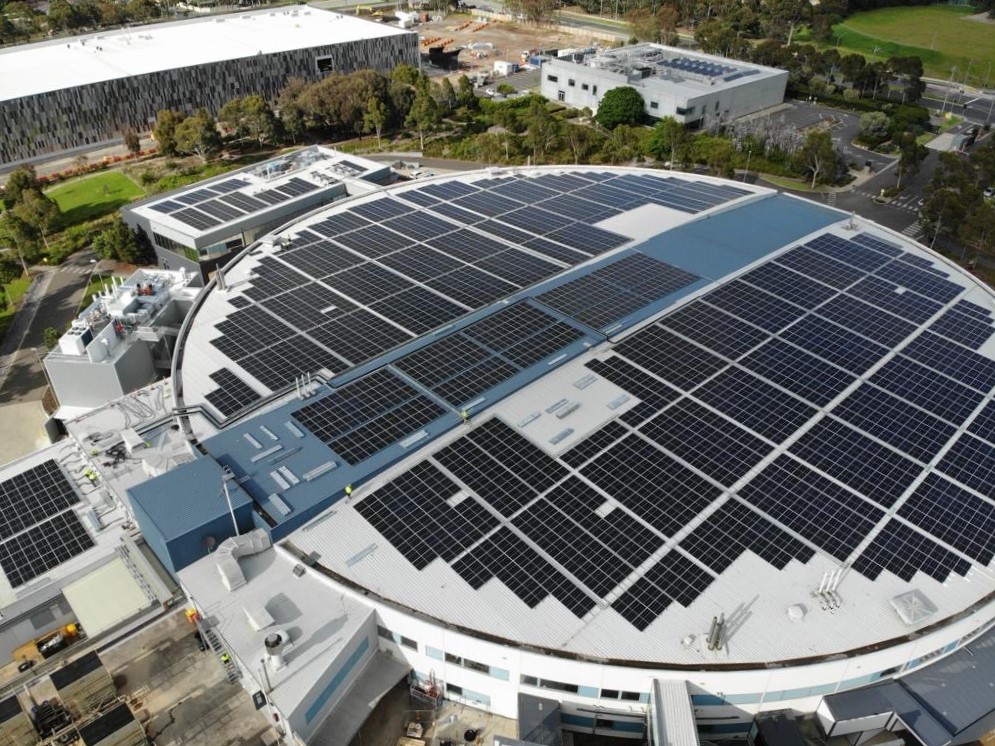
When synchrotron science took off in the late 1970s, Australian researchers were using overseas facilities. In following decades, organisations including the Australian Academy of Science and the Australian Science and Technology Council recognised the need for a national facility.
It took many years of proposals and several funding partners – including the involvement of several universities – to get a project of this scale off the ground. By 2007 the Australian Synchrotron was up and running for experiments.
In effect, it is a very high-tech X-ray machine, in the sense that it uses light to peer beneath the skin of samples and reveal the internal structure. Time with the ‘beamline’ is allocated on the strength of research proposals and every year, Australian universities, industry and a few international universities compete to access the machine.
The light source has been instrumental in applications such as drug discovery, investigating the COVID virus and in the development of flexible electronics.
“It lets us do things that you can’t imagine doing in a laboratory,” says director and professor Michael James.
Co-locating the synchrotron near Monash has created a research ecosystem in outer Melbourne.
Compared with a similar Canadian facility located far from research centres, “we’re much, much more productive than the Canadian light source.”
Searching via supercomputer
Tucked away in a corner of the Australian National University (ANU) is the National Computer Infrastructure (NCI). It draws a staggering 2 megawatts of power to run its 5,000-node supercomputer, named Gadi, meaning “to search” in the language of the local Ngunnawal people. If an Australian university has a big computing job to do, then Gadi is where they turn.
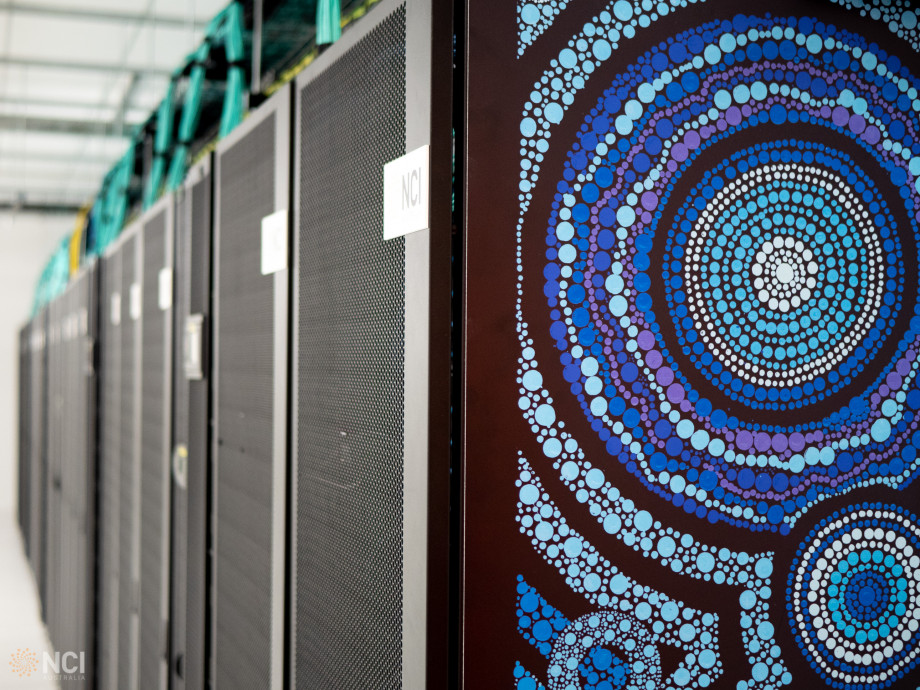
Lindsay Botten, emeritus professor at the ANU was the NCI’s first director and the architect of its collaborative approach to computing. It was late 2008 and he’d come to NCI fresh from writing a successful grant application for a supercomputer in Sydney. Rather than building their own facility, he asked the NSW team whether they would consider sharing the NCI machine. It made financial and logistical sense and so NCI’s role in being the computational support for Australian university research began.
Rather than bidding for time on the computer for individual projects, Botten established a kind of time-share system, where partners were allocated time according to their financial contribution. They could use this time for whatever research they deemed important. The computer has contributed to research across fields such as climate modelling, cancer research, star formation and artificial intelligence.
Written by Sara Phillips